EP4220595A1 - Verfahren und system zur erkennung von vorfällen in einem öffentlichen transportfahrzeug aus audioströmen - Google Patents
Verfahren und system zur erkennung von vorfällen in einem öffentlichen transportfahrzeug aus audioströmen Download PDFInfo
- Publication number
- EP4220595A1 EP4220595A1 EP23152989.2A EP23152989A EP4220595A1 EP 4220595 A1 EP4220595 A1 EP 4220595A1 EP 23152989 A EP23152989 A EP 23152989A EP 4220595 A1 EP4220595 A1 EP 4220595A1
- Authority
- EP
- European Patent Office
- Prior art keywords
- audio stream
- public transport
- transport vehicle
- audio
- incident
- Prior art date
- Legal status (The legal status is an assumption and is not a legal conclusion. Google has not performed a legal analysis and makes no representation as to the accuracy of the status listed.)
- Granted
Links
Images

Classifications
-
- G—PHYSICS
- G08—SIGNALLING
- G08B—SIGNALLING SYSTEMS, e.g. PERSONAL CALLING SYSTEMS; ORDER TELEGRAPHS; ALARM SYSTEMS
- G08B13/00—Burglar, theft or intruder alarms
- G08B13/16—Actuation by interference with mechanical vibrations in air or other fluid
- G08B13/1654—Actuation by interference with mechanical vibrations in air or other fluid using passive vibration detection systems
- G08B13/1672—Actuation by interference with mechanical vibrations in air or other fluid using passive vibration detection systems using sonic detecting means, e.g. a microphone operating in the audio frequency range
-
- G—PHYSICS
- G08—SIGNALLING
- G08B—SIGNALLING SYSTEMS, e.g. PERSONAL CALLING SYSTEMS; ORDER TELEGRAPHS; ALARM SYSTEMS
- G08B29/00—Checking or monitoring of signalling or alarm systems; Prevention or correction of operating errors, e.g. preventing unauthorised operation
- G08B29/18—Prevention or correction of operating errors
- G08B29/185—Signal analysis techniques for reducing or preventing false alarms or for enhancing the reliability of the system
- G08B29/188—Data fusion; cooperative systems, e.g. voting among different detectors
-
- G—PHYSICS
- G08—SIGNALLING
- G08B—SIGNALLING SYSTEMS, e.g. PERSONAL CALLING SYSTEMS; ORDER TELEGRAPHS; ALARM SYSTEMS
- G08B25/00—Alarm systems in which the location of the alarm condition is signalled to a central station, e.g. fire or police telegraphic systems
-
- G—PHYSICS
- G08—SIGNALLING
- G08B—SIGNALLING SYSTEMS, e.g. PERSONAL CALLING SYSTEMS; ORDER TELEGRAPHS; ALARM SYSTEMS
- G08B29/00—Checking or monitoring of signalling or alarm systems; Prevention or correction of operating errors, e.g. preventing unauthorised operation
- G08B29/18—Prevention or correction of operating errors
- G08B29/185—Signal analysis techniques for reducing or preventing false alarms or for enhancing the reliability of the system
- G08B29/186—Fuzzy logic; neural networks
Definitions
- the present invention relates to a method for detecting an incident in a public transport vehicle, in particular in a railway vehicle, from audio streams. It also relates to a system for detecting an incident in a public transport vehicle, in particular in a railway vehicle. It further relates to a public transport vehicle equipped with such a system.
- the field of the invention is the field of incident detection in public transport vehicles, in particular a railway vehicle.
- An object of the present invention is to remedy at least one of the aforementioned drawbacks.
- Another object of the present invention is to propose a solution allowing better incident detection in a public transport vehicle, and in particular in a passenger zone of said public transport vehicle.
- the invention thus proposes to capture an audio stream with a device worn by a person moving in the vehicle and able to be positioned freely within said vehicle.
- the solution according to the invention overcomes the positioning constraints of the audio capture means inherent in state-of-the-art audio surveillance solutions where the audio content is captured by one or more microphones fitted to existing devices. , such as an intercom alarm device or a CCTV camera, whose positioning is chosen to best perform their main function.
- the portable device can be positioned closer to an incident than a fixed device. This proximity makes it possible to increase the chances that the captured audio stream contains more information concerning the incident to be detected and therefore makes it possible to detect an incident during its analysis.
- a portable device can be positioned at locations where it is not possible to install a fixed device, such as for example in the middle of a crowd of people present in a public transport vehicle.
- the solution according to the invention allows better audio coverage than existing solutions, in particular when a plurality of first audio streams are picked up by a plurality of portable devices.
- At least one portable device can be a user device such as a smartphone, a smartwatch, a tablet, a computer, a digital camera, etc.
- At least one portable device can be a so-called public, local device, accessible to anyone moving within said location.
- the steps of transmitting said at least one first audio stream and of analyzing said at least one first audio stream can be performed in real time.
- the transmission of said first audio stream can be started before the end of capture and the analysis of said first audio stream can be started before the transmission is finished. Therefore, it is possible to detect an incident more quickly after it has started.
- the method according to the invention allows better incident detection within a public transport vehicle. Indeed, in addition to the analysis of a first audio stream captured from a free and potentially changing location during the capture, it is possible to analyze a second audio stream captured from a fixed location within said vehicle.
- At least one fixed device can be positioned in a determined zone of interest, such as for example an entrance to said vehicle, while the portable device can be positioned freely, in particular where a fixed device cannot be installed. Consequently, it is possible to better cover the interior of said vehicle for capturing audio streams and incident detection.
- At least one fixed device may be a dedicated device, installed in said public transport vehicle solely for incident detection.
- At least one fixed device may be a microphone fitted to an existing device in said public transport vehicle, such as an intercom alarm device or a video surveillance camera.
- the steps of transmitting said at least one second audio stream and of analyzing said at least one second audio stream can be performed in real time.
- the transmission of said second audio stream can be started before the end of capture and the analysis of said second audio stream can be started before the transmission is finished. Therefore, it is possible to detect an incident more quickly after it takes place.
- At least one intelligent calculation unit can comprise a previously trained neural network for the detection of incidents in audio streams, in particular audio streams picked up within a public transport vehicle.
- the neural network can be a deep neural network, or a convolutional neural network, such as a CNN.
- the training of the neural network can be performed using a training data set, each training data comprising a training audio stream corresponding to an incident and data indicating the nature of the incident, or at least the existence or not of an incident.
- the training of the neural network can be carried out according to a known training algorithm, such as for example the gradient backpropagation method.
- the portable device can for example be determined as being in the public transport vehicle when the last position of its geolocation history corresponds to the current geolocation of said public transport vehicle.
- a plurality of geographical positions included in the geolocation history of said portable device can be compared with a plurality of geolocation data of said vehicle, corresponding for example to the journey made by said vehicle.
- the communications between the communication gateway and the at least one portable device can be wireless communications, more particularly using the LiFi, Wifi and/or Bluetooth protocols.
- the pairing phase may include, prior to the step of sending a connection request, a step of powering up the communication gateway according to a status datum relating to said transport vehicle in common.
- the implementation of the pairing phase can be controlled so that a pairing can only be performed under specific conditions, such as a specific configuration or a moment identified as important.
- At least one status datum relating to the vehicle can be picked up by a sensor placed in or close to said vehicle.
- the status datum can then be transmitted to a system implementing the present invention and in the form of at least one signal, analog or digital.
- the incident detection system makes it possible to freely position a portable device within a public transport vehicle to pick up a first audio stream.
- the system according to the invention also makes it possible to transmit said first audio stream picked up to an analysis device comprising an intelligent calculation unit for analyzing said first audio stream to detect an incident.
- the system according to the invention allows more modular and adaptable audio surveillance coverage according to needs.
- a portable device can be positioned freely, in particular where a fixed device cannot be installed.
- An audio surveillance device can thus be positioned as close as possible to an incident. This proximity makes it possible to increase the chances that the captured audio stream makes it possible to detect an incident during its analysis.
- the system according to the invention allows better incident detection within a transport vehicle. Indeed, in addition to the analysis of a first audio stream captured from a free and potentially changing location during the capture, it is possible to analyze a second audio stream captured from a fixed location within said vehicle.
- At least one fixed device can be positioned in a determined zone of interest, such as for example an entrance to said vehicle, while the portable device can be positioned freely, in particular where a fixed device cannot be installed. Consequently, it is possible to better cover the interior of said vehicle for capturing audio streams and incident detection.
- At least one fixed device may be a dedicated device, installed in said public transport vehicle solely for incident detection.
- At least one fixed device may be a microphone fitted to an existing device in said public transport vehicle, such as an intercom alarm device or a video surveillance camera.
- the system according to the invention may comprise a single analysis device configured to analyze at least one first audio stream picked up by a portable device and at least one second audio stream picked up by a fixed device.
- the system according to the invention can comprise an analysis device dedicated to the analysis of the first audio stream and another analysis device dedicated to the analysis of the second audio stream.
- At least one analysis device and one fixed device can be included in the same device.
- At least one fixed device can be connected by a wired connection to said at least one analysis device.
- said at least one portable device can be configured to transmit in real time to said at least one analysis device a first audio stream picked up and in that said analysis device is configured to analyze in real time the first audio stream transmitted .
- the transmission of said first audio stream can be started before the end of capture and the analysis of said first audio stream can be started before the transmission is finished. Therefore, it is possible to detect an incident more quickly after it takes place.
- said at least one fixed device can be configured to transmit in real time to said at least one analysis device a second captured audio stream and in that said analysis device is configured to analyze in real time the second transmitted audio stream.
- the transmission of said second audio stream can be started before the end of capture and the analysis of said second audio stream can be started before the transmission is finished. Therefore, it is possible to detect an incident more quickly after it takes place.
- the system can also comprise at least one communication gateway to allow a connection between at least one portable device and at least one analysis device.
- the communications between said communication gateway and said at least one portable device can be wireless communications, more particularly using the LiFi, Wifi and/or Bluetooth protocols.
- the communication gateway can be connected by a wired connection to said analysis device.
- the presence of a portable device in said public transport vehicle can be checked during a pairing phase, according to a geolocation history of said device portable device and at least one geolocation datum of said vehicle, so that the gateway allows a connection between said portable device and said analysis device only once the verification is satisfactory.
- At least one communication gateway can allow a connection between at least one fixed device and at least one analysis device.
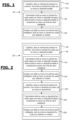
- FIGURE 1 is a schematic representation of a non-limiting exemplary embodiment of a method according to the invention.
- the process 100 illustrated in FIGURE 1 is a method for detecting an incident in a public transport vehicle, in particular in a railway vehicle.
- the person detection method 100 comprises at least one iteration of a so-called detection phase 102 .
- the detection phase 102 comprises a step 104 of capturing in said public transport vehicle at least one audio stream, called first audio stream, by at least one device, called portable, said device comprising at least one audio capturing means and being intended to be worn by a person moving within said public transport vehicle.
- the portable device can be freely positioned in said public transport vehicle.
- the position of said portable device within said vehicle can be changed during the capture.
- the detection phase 102 further comprises a step 106 of transmitting said at least one first audio stream picked up to at least one device, called an analysis device, distinct from said at least one portable device and comprising at least one intelligent calculation unit.
- This transmission step 106 can for example be performed once the capture of a first audio stream is complete.
- the transmission of said first audio stream can be performed in real time.
- the step 106 of transmitting at least one second audio stream is started before the end of the step 104 of capturing at least one first audio stream.
- the detection phase 102 comprises a step 108 of analysis, by said at least one intelligent computing unit, of said at least one first audio stream to detect an incident.
- This analysis step 108 can for example be performed once the transmission of a first audio stream has ended.
- the analysis of said first audio stream can be performed in real time.
- the step 108 of analyzing at least one first audio stream is started before the end of the step 106 of transmitting at least one first audio stream, of preferably from the start of reception of a first audio stream by the analysis device.
- the intelligent calculation unit can for example comprise a previously trained neural network for incident detection in audio streams, in particular audio streams picked up within the public transport vehicle.
- FIGURE 2 is a schematic representation of another non-limiting embodiment of a method according to the invention.
- the process 200 illustrated in FIGURE 2 includes all of the steps of the method 100 described in relation to the FIGURE 1 .
- the detection phase 102 of the method 200 further comprising a step 202 of capturing in said public transport vehicle at least one audio stream, called second audio stream, said fixed device comprising at least one audio capturing means and being provided to be fixed in said public transport vehicle.
- step 202 of capturing at least one second audio stream can be performed in parallel with the step 104 of capturing at least one first audio stream.
- the detection phase 102 of the method 200 further comprises a step 204 of transmitting said at least one second audio stream picked up to said at least one analysis device.
- This transmission step 204 can for example be performed once the capture of a second audio stream is complete.
- the transmission of a second audio stream can be performed in real time.
- the step 204 of transmitting at least one second audio stream is started before the end of the step 202 of capturing at least one second audio stream.
- the detection phase 102 comprises a step 206 of analysis, by said at least one intelligent computing unit, of said at least one second audio stream to detect an incident.
- This analysis step 206 can for example be performed once the transmission of a second audio stream has ended.
- the analysis of said first audio stream can be performed in real time.
- the step 206 of analyzing at least one second audio stream is started before the end of the step 204 of transmitting at least one second audio stream, preferably from the start of the reception of a second audio stream by the analysis device.
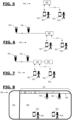
- FIGURE 3 is a schematic representation of another non-limiting embodiment of a method according to the invention.
- the process 300 illustrated in FIGURE 3 comprises a detection phase 102 as previously described in relation to the FIGURE 1 or with the FIGURE 2 .
- the method 300 further comprising, prior to the first iteration of the detection phase 102, a phase 302 of pairing at least one portable device with a communication gateway.
- the pairing phase 302 comprises a step 304 of sending, by at least one portable device, a connection request with at least one analysis device, to a communication gateway, said request comprising a geolocation history of said wearable device.
- Phase 302 further comprises a step 306 of verifying the presence of said portable device in said public transport vehicle as a function of said geolocation history and of at least one geolocation datum of said vehicle.
- the portable device can for example be determined as being in the public transport vehicle when the last position of its geolocation history corresponds to the current geolocation of said public transport vehicle.
- a plurality of geographical positions included in the geolocation history of said portable device can be compared with a plurality of geolocation data of said vehicle, corresponding for example to the journey made by said vehicle.
- Phase 302 further comprises a step 308 of establishment, by said communication gateway, of a connection between said portable device and said analysis device, when the verification is satisfactory.
- This pairing phase 302 thus makes it possible to check whether a portable device is present in said vehicle before allowing it to transmit a first audio stream to an analysis device.
- a device located outside of said vehicle is not capable of transmitting an audio stream picked up outside of said vehicle.
- FIGURE 4 is a schematic representation of another non-limiting embodiment of a method according to the invention.
- the 400 process illustrated in FIGURE 4 includes all of the steps of the method 300 described in relation to the FIGURE 3 .
- the pairing phase 302 of the method 400 further comprising, prior to the step 304 of sending a connection request, a step 402 of powering up said communication gateway according to a status datum relating to said public transport vehicle.
- the implementation of the pairing phase can be controlled so that a pairing can only be performed under specific conditions, such as a specific configuration or a moment identified as important.
- FIGURE 5 is a schematic representation of a non-limiting exemplary embodiment of a system according to the invention.
- the system 500 is an incident detection system in a public transport vehicle, in particular in a railway vehicle, for the implementation of a method 100 described above.
- the example shown in FIGURE 5 system 500 for detecting an incident in a public transport vehicle comprises a number n, greater than or equal to 1, of portable devices 502 1 -502 n , each capable of picking up a first audio stream and designed to be carried by a person 504.
- the reference 502 i can designate any of the portable devices 502 1 -502 n .
- each portable device 502 i is a user device of the smartphone type, each carried by a person, referenced respectively 504 1 -504 n , also designated 504 i below.
- at least one wearable device 502 i may be another wearable device, for example a smartwatch, tablet, computer, digital camera, etc.
- at least one wearable device 502 i may be public, local, accessible to anyone moving within the site. In the latter case, each person 504 i can use a portable device from a distributor or from a distribution zone provided for this purpose.
- the example shown in FIGURE 5 of incident detection system 500 in a public transport vehicle comprises an analysis device 506, distinct from each of the portable devices 502 i and comprising at least one intelligent calculation unit for analyzing at least a first audio stream to detect an incident.
- Each portable device 502 i of the system 500 is in communication with the analysis device 506.
- the first audio stream picked up by each portable device 502 i can be transmitted to the analysis device 506 to be analyzed in order to detect a possible incident. .
- the analysis device 506 can for example be configured to analyze the various first audio streams picked up in any role.
- the analysis device 506 can analyze in parallel and simultaneously a plurality of first audio streams.
- the communications between the analysis device 506 and each portable device 502 i can for example be wireless.
- FIGURE 6 is a schematic representation of another non-limiting embodiment of a system according to the invention.
- Incident Detection System 600 shown in FIGURE 6 includes all elements of the Incident Detection System 500 shown in FIGURE 5 .
- the system 600 is an incident detection system in a public transport vehicle, in particular in a railway vehicle, for the implementation of a method 100, 200, 300 or 400 described above and generally any process according to the invention.
- the incident detection system 600 further comprises a number n, greater than or equal to 1, of fixed devices 602 1 -602 n , each capable of picking up a second audio stream and intended to be fixed in said public transport vehicle .
- the reference 602 i can designate any one of the fixed devices 602 1 -602 n .
- At least one fixed device 602 i can be a dedicated device, installed in said public transport vehicle solely for incident detection.
- At least one fixed device 602 i can be a microphone fitted to an existing device in said public transport vehicle, such as an intercom alarm device or a video surveillance camera.
- each fixed device 602 i is schematically illustrated by a microphone and is connected by a wired connection to the analysis device 506. Thus, each fixed device 602 i is in communication with the analysis device 506. Thus , the second audio stream picked up by each fixed device 602 i can be transmitted to the analysis device 506 to be analyzed in order to detect a possible incident.
- a single analysis device 506 is provided to analyze at least one first audio stream and at least one second audio stream.
- a system according to the invention may comprise an analysis device for analyzing first audio streams and another analysis device for analyzing second audio streams.
- FIGURE 7 is a schematic representation of another non-limiting embodiment of a system according to the invention.
- Incident Detection System 700 shown in FIGURE 7 includes all elements of the Incident Detection System 600 shown in FIGURE 6 .
- the incident detection system 700 further comprises a communication gateway 702 connected by a wired connection to the analysis device 506.
- each fixed device 602 i is connected by a wired connection to the communication gateway 702 .
- the communication platform 702 interfaces each fixed device 602 i with the analysis device 506.
- At least one, in particular each, fixed device 602 i can be connected by a wired connection to the analysis device without going through the communication platform 702 .
- the communication gateway 702 is in wireless communication, for example using the LiFi, Wifi and/or Bluetooth protocols, with each portable device 502 i .
- the communication platform 702 interfaces each portable device 502 i with the analysis device 506.
- the communication platform 702 can, for example, only establish a connection between a portable device 502 i and the analysis device 506 once the presence of the portable device 502 i in the public transport vehicle has been verified.
- This check can for example be made during a pairing phase as described above in relation to the FIGURES 3 and 4 .
- FIGURE 8 is a schematic representation of a non-limiting embodiment of a vehicle according to the invention equipped with a system according to the invention.
- the public transport vehicle 800 illustrated very schematically in FIGURE 8 is a railway vehicle, or a road vehicle.
- the vehicle 800 comprises a zone, called the driver zone 802, reserved for the driver and a zone, called the passenger zone 804, in which the passengers are free to circulate.
- the vehicle 800 is also equipped with a detection system 700 as previously described in relation to the FIGURE 7 .
- the communication platform 702 and the analysis device 506 are arranged in a ceiling 806 of said passenger zone 804.
- the fixed devices 602 1 -602 n are located inside the passenger zone 804 and fixed to the ceiling 806.
- the portable devices 502 1 -502 n are each carried by a person, referenced respectively 504 1 -504 n , moving freely in the passenger zone 804.
Landscapes
- Engineering & Computer Science (AREA)
- Physics & Mathematics (AREA)
- General Physics & Mathematics (AREA)
- Multimedia (AREA)
- Computer Security & Cryptography (AREA)
- Alarm Systems (AREA)
- Electric Propulsion And Braking For Vehicles (AREA)
- Train Traffic Observation, Control, And Security (AREA)
Applications Claiming Priority (1)
| Application Number | Priority Date | Filing Date | Title |
|---|---|---|---|
| FR2200769A FR3132375B1 (fr) | 2022-01-28 | 2022-01-28 | Procédé et système de détection d’incident, dans un véhicule de transport en commun, à partir de flux audio. |
Publications (2)
| Publication Number | Publication Date |
|---|---|
| EP4220595A1 true EP4220595A1 (de) | 2023-08-02 |
| EP4220595B1 EP4220595B1 (de) | 2025-12-31 |
Family
ID=81927664
Family Applications (1)
| Application Number | Title | Priority Date | Filing Date |
|---|---|---|---|
| EP23152989.2A Active EP4220595B1 (de) | 2022-01-28 | 2023-01-24 | Verfahren und system zur erkennung von vorfällen in einem öffentlichen transportfahrzeug aus audioströmen |
Country Status (2)
| Country | Link |
|---|---|
| EP (1) | EP4220595B1 (de) |
| FR (1) | FR3132375B1 (de) |
Citations (2)
| Publication number | Priority date | Publication date | Assignee | Title |
|---|---|---|---|---|
| EP1473709A1 (de) * | 2003-05-02 | 2004-11-03 | Miriad technologies | Verfahren zur Identifizierung von spezifischen Klängen |
| US20140361886A1 (en) * | 2013-06-11 | 2014-12-11 | Vince Cowdry | Gun Shot Detector |
-
2022
- 2022-01-28 FR FR2200769A patent/FR3132375B1/fr active Active
-
2023
- 2023-01-24 EP EP23152989.2A patent/EP4220595B1/de active Active
Patent Citations (2)
| Publication number | Priority date | Publication date | Assignee | Title |
|---|---|---|---|---|
| EP1473709A1 (de) * | 2003-05-02 | 2004-11-03 | Miriad technologies | Verfahren zur Identifizierung von spezifischen Klängen |
| US20140361886A1 (en) * | 2013-06-11 | 2014-12-11 | Vince Cowdry | Gun Shot Detector |
Also Published As
| Publication number | Publication date |
|---|---|
| EP4220595B1 (de) | 2025-12-31 |
| FR3132375A1 (fr) | 2023-08-04 |
| FR3132375B1 (fr) | 2024-01-19 |
Similar Documents
| Publication | Publication Date | Title |
|---|---|---|
| US10061013B2 (en) | Mobile gunshot detection | |
| JP7160454B2 (ja) | 情報を出力するための方法、装置及びシステム、電子デバイス、コンピュータ可読記憶媒体及びコンピュータプログラム | |
| EP3602031B1 (de) | Verfahren zur überwachung von flugzeugmotoren | |
| FR2971386A1 (fr) | Systeme de determination de presence d'un identificateur a l'interieur d'un habitacle | |
| FR2698596A1 (fr) | Système d'enregistrement d'incidents dans un véhicule de transport public de personnes. | |
| EP2105760A1 (de) | Verfahren und System zum Tracking von Sendern | |
| EP3125546B1 (de) | Vorrichtung zur erstellung eines gesicherten bildes eines objekts, entsprechende anlage und entsprechendes verfahren | |
| EP4220595B1 (de) | Verfahren und system zur erkennung von vorfällen in einem öffentlichen transportfahrzeug aus audioströmen | |
| WO2012076711A1 (fr) | Dispositif pour la detection d'evenements. | |
| EP2761602A1 (de) | Verfahren und system zur erkennung von zwischenfällen bei einem leihfahrzeug und automatisiertes leihsystem mit einem derartigen verfahren und system | |
| FR3061687A1 (fr) | Procede et dispositif de surveillance d'un vehicule stationne | |
| FR3047217B1 (fr) | Dispositif de determination de l'etat d'un feu de signalisation, systeme embatque comprenant un tel dispositif, vehicule comprenant un tel systeme et procede de determination associe | |
| FR3058970A1 (fr) | Verrouillage mains libres d'un vehicule automobile | |
| WO2017162974A1 (fr) | Procede et dispositif de commande d'un systeme d'intercommunication | |
| WO2009101325A1 (fr) | Procédé sécurisé de contrôle d'évènement | |
| EP3912882A1 (de) | Verfahren zur kontrolle der sitzbelegung eines fahrzeugs durch passagiere und entsprechende vorrichtungen | |
| WO2022091017A1 (fr) | Système intégré de diagnostic et de maintenance de véhicules et de leur gestion dans un atelier de réparation de véhicules | |
| WO2024074481A1 (fr) | Procédé de caractérisation de la qualité d'un lien radio entre un véhicule et un équipement au sol | |
| EP2712785A1 (de) | Methode zur Überwachung von mehreren Fahrzeugen eines öffentlichen Transportsystems | |
| WO2014170357A1 (fr) | Dispositif de recherche et de sauvetage de victimes | |
| EP3483786B1 (de) | Verfahren zur szenenuberwachung | |
| FR3142430A1 (fr) | Détermination de la fermeture de portes de véhicule ferroviaire par analyse audio et/ou visuelle | |
| EP1814094B1 (de) | System und Verfahren zur Identifizierung von Merkmalen eines Fahrzeugs und Datensammelzentrum, Informationszentrum für dieses System | |
| FR3117425A1 (fr) | Procédé de génération d’au moins un signal de commande pour un casque audio, dispositif électronique de génération, programme d’ordinateur, casque audio et système de diffusion associé | |
| FR3061793A1 (fr) | Procede et dispositif de surveillance d'un vehicule automobile stationne |
Legal Events
| Date | Code | Title | Description |
|---|---|---|---|
| PUAI | Public reference made under article 153(3) epc to a published international application that has entered the european phase |
Free format text: ORIGINAL CODE: 0009012 |
|
| STAA | Information on the status of an ep patent application or granted ep patent |
Free format text: STATUS: THE APPLICATION HAS BEEN PUBLISHED |
|
| AK | Designated contracting states |
Kind code of ref document: A1 Designated state(s): AL AT BE BG CH CY CZ DE DK EE ES FI FR GB GR HR HU IE IS IT LI LT LU LV MC ME MK MT NL NO PL PT RO RS SE SI SK SM TR |
|
| STAA | Information on the status of an ep patent application or granted ep patent |
Free format text: STATUS: REQUEST FOR EXAMINATION WAS MADE |
|
| 17P | Request for examination filed |
Effective date: 20240123 |
|
| RBV | Designated contracting states (corrected) |
Designated state(s): AL AT BE BG CH CY CZ DE DK EE ES FI FR GB GR HR HU IE IS IT LI LT LU LV MC ME MK MT NL NO PL PT RO RS SE SI SK SM TR |
|
| GRAP | Despatch of communication of intention to grant a patent |
Free format text: ORIGINAL CODE: EPIDOSNIGR1 |
|
| STAA | Information on the status of an ep patent application or granted ep patent |
Free format text: STATUS: GRANT OF PATENT IS INTENDED |
|
| INTG | Intention to grant announced |
Effective date: 20250828 |
|
| GRAS | Grant fee paid |
Free format text: ORIGINAL CODE: EPIDOSNIGR3 |
|
| GRAA | (expected) grant |
Free format text: ORIGINAL CODE: 0009210 |
|
| STAA | Information on the status of an ep patent application or granted ep patent |
Free format text: STATUS: THE PATENT HAS BEEN GRANTED |
|
| AK | Designated contracting states |
Kind code of ref document: B1 Designated state(s): AL AT BE BG CH CY CZ DE DK EE ES FI FR GB GR HR HU IE IS IT LI LT LU LV MC ME MK MT NL NO PL PT RO RS SE SI SK SM TR |
|
| REG | Reference to a national code |
Ref country code: CH Ref legal event code: F10 Free format text: ST27 STATUS EVENT CODE: U-0-0-F10-F00 (AS PROVIDED BY THE NATIONAL OFFICE) Effective date: 20251231 Ref country code: GB Ref legal event code: FG4D Free format text: NOT ENGLISH |
|
| REG | Reference to a national code |
Ref country code: DE Ref legal event code: R096 Ref document number: 602023010220 Country of ref document: DE |
|
| REG | Reference to a national code |
Ref country code: IE Ref legal event code: FG4D Free format text: LANGUAGE OF EP DOCUMENT: FRENCH |
|
| REG | Reference to a national code |
Ref country code: CH Ref legal event code: R17 Free format text: ST27 STATUS EVENT CODE: U-0-0-R10-R17 (AS PROVIDED BY THE NATIONAL OFFICE) Effective date: 20260226 |
|
| P01 | Opt-out of the competence of the unified patent court (upc) registered |
Free format text: CASE NUMBER: UPC_APP_0003549_4220595/2026 Effective date: 20260202 |
|
| PGFP | Annual fee paid to national office [announced via postgrant information from national office to epo] |
Ref country code: LU Payment date: 20260226 Year of fee payment: 4 |
|
| REG | Reference to a national code |
Ref country code: CH Ref legal event code: U11 Free format text: ST27 STATUS EVENT CODE: U-0-0-U10-U11 (AS PROVIDED BY THE NATIONAL OFFICE) Effective date: 20260330 |
|
| PGFP | Annual fee paid to national office [announced via postgrant information from national office to epo] |
Ref country code: MC Payment date: 20260225 Year of fee payment: 4 |
|
| REG | Reference to a national code |
Ref country code: LT Ref legal event code: MG9D |
|
| PG25 | Lapsed in a contracting state [announced via postgrant information from national office to epo] |
Ref country code: NO Free format text: LAPSE BECAUSE OF FAILURE TO SUBMIT A TRANSLATION OF THE DESCRIPTION OR TO PAY THE FEE WITHIN THE PRESCRIBED TIME-LIMIT Effective date: 20260331 |
|
| PGFP | Annual fee paid to national office [announced via postgrant information from national office to epo] |
Ref country code: DE Payment date: 20260313 Year of fee payment: 4 |
|
| PG25 | Lapsed in a contracting state [announced via postgrant information from national office to epo] |
Ref country code: FI Free format text: LAPSE BECAUSE OF FAILURE TO SUBMIT A TRANSLATION OF THE DESCRIPTION OR TO PAY THE FEE WITHIN THE PRESCRIBED TIME-LIMIT Effective date: 20251231 Ref country code: HR Free format text: LAPSE BECAUSE OF FAILURE TO SUBMIT A TRANSLATION OF THE DESCRIPTION OR TO PAY THE FEE WITHIN THE PRESCRIBED TIME-LIMIT Effective date: 20251231 |
|
| PGFP | Annual fee paid to national office [announced via postgrant information from national office to epo] |
Ref country code: AT Payment date: 20260301 Year of fee payment: 4 |
|
| PGFP | Annual fee paid to national office [announced via postgrant information from national office to epo] |
Ref country code: BE Payment date: 20260227 Year of fee payment: 4 |
|
| PG25 | Lapsed in a contracting state [announced via postgrant information from national office to epo] |
Ref country code: RS Free format text: LAPSE BECAUSE OF FAILURE TO SUBMIT A TRANSLATION OF THE DESCRIPTION OR TO PAY THE FEE WITHIN THE PRESCRIBED TIME-LIMIT Effective date: 20260331 |
|
| PGFP | Annual fee paid to national office [announced via postgrant information from national office to epo] |
Ref country code: FR Payment date: 20260227 Year of fee payment: 4 |
|
| PGFP | Annual fee paid to national office [announced via postgrant information from national office to epo] |
Ref country code: CH Payment date: 20260330 Year of fee payment: 4 |
|
| PG25 | Lapsed in a contracting state [announced via postgrant information from national office to epo] |
Ref country code: LV Free format text: LAPSE BECAUSE OF FAILURE TO SUBMIT A TRANSLATION OF THE DESCRIPTION OR TO PAY THE FEE WITHIN THE PRESCRIBED TIME-LIMIT Effective date: 20251231 |