EP4221043A2 - Erweiterung von physikalischen downlink-steuerkanälen - Google Patents
Erweiterung von physikalischen downlink-steuerkanälen Download PDFInfo
- Publication number
- EP4221043A2 EP4221043A2 EP23152742.5A EP23152742A EP4221043A2 EP 4221043 A2 EP4221043 A2 EP 4221043A2 EP 23152742 A EP23152742 A EP 23152742A EP 4221043 A2 EP4221043 A2 EP 4221043A2
- Authority
- EP
- European Patent Office
- Prior art keywords
- pdcch
- cell
- lte
- cells
- css
- Prior art date
- Legal status (The legal status is an assumption and is not a legal conclusion. Google has not performed a legal analysis and makes no representation as to the accuracy of the status listed.)
- Pending
Links
Images





Classifications
-
- H—ELECTRICITY
- H04—ELECTRIC COMMUNICATION TECHNIQUE
- H04L—TRANSMISSION OF DIGITAL INFORMATION, e.g. TELEGRAPHIC COMMUNICATION
- H04L5/00—Arrangements affording multiple use of the transmission path
- H04L5/0001—Arrangements for dividing the transmission path
- H04L5/0003—Two-dimensional division
- H04L5/0005—Time-frequency
- H04L5/0007—Time-frequency the frequencies being orthogonal, e.g. OFDM(A) or DMT
- H04L5/001—Time-frequency the frequencies being orthogonal, e.g. OFDM(A) or DMT the frequencies being arranged in component carriers
-
- H—ELECTRICITY
- H04—ELECTRIC COMMUNICATION TECHNIQUE
- H04W—WIRELESS COMMUNICATION NETWORKS
- H04W72/00—Local resource management
- H04W72/20—Control channels or signalling for resource management
- H04W72/23—Control channels or signalling for resource management in the downlink direction of a wireless link, i.e. towards a terminal
-
- H—ELECTRICITY
- H04—ELECTRIC COMMUNICATION TECHNIQUE
- H04L—TRANSMISSION OF DIGITAL INFORMATION, e.g. TELEGRAPHIC COMMUNICATION
- H04L5/00—Arrangements affording multiple use of the transmission path
- H04L5/003—Arrangements for allocating sub-channels of the transmission path
- H04L5/0053—Allocation of signalling, i.e. of overhead other than pilot signals
-
- H—ELECTRICITY
- H04—ELECTRIC COMMUNICATION TECHNIQUE
- H04J—MULTIPLEX COMMUNICATION
- H04J11/00—Orthogonal multiplex systems, e.g. using WALSH codes
- H04J11/0069—Cell search, i.e. determining cell identity [cell-ID]
-
- H—ELECTRICITY
- H04—ELECTRIC COMMUNICATION TECHNIQUE
- H04W—WIRELESS COMMUNICATION NETWORKS
- H04W24/00—Supervisory, monitoring or testing arrangements
-
- H—ELECTRICITY
- H04—ELECTRIC COMMUNICATION TECHNIQUE
- H04W—WIRELESS COMMUNICATION NETWORKS
- H04W24/00—Supervisory, monitoring or testing arrangements
- H04W24/08—Testing, supervising or monitoring using real traffic
-
- H—ELECTRICITY
- H04—ELECTRIC COMMUNICATION TECHNIQUE
- H04W—WIRELESS COMMUNICATION NETWORKS
- H04W4/00—Services specially adapted for wireless communication networks; Facilities therefor
- H04W4/06—Selective distribution of broadcast services, e.g. multimedia broadcast multicast service [MBMS]; Services to user groups; One-way selective calling services
-
- H—ELECTRICITY
- H04—ELECTRIC COMMUNICATION TECHNIQUE
- H04W—WIRELESS COMMUNICATION NETWORKS
- H04W48/00—Access restriction; Network selection; Access point selection
- H04W48/08—Access restriction or access information delivery, e.g. discovery data delivery
- H04W48/10—Access restriction or access information delivery, e.g. discovery data delivery using broadcasted information
-
- H—ELECTRICITY
- H04—ELECTRIC COMMUNICATION TECHNIQUE
- H04W—WIRELESS COMMUNICATION NETWORKS
- H04W48/00—Access restriction; Network selection; Access point selection
- H04W48/08—Access restriction or access information delivery, e.g. discovery data delivery
- H04W48/12—Access restriction or access information delivery, e.g. discovery data delivery using downlink control channel
-
- H—ELECTRICITY
- H04—ELECTRIC COMMUNICATION TECHNIQUE
- H04W—WIRELESS COMMUNICATION NETWORKS
- H04W48/00—Access restriction; Network selection; Access point selection
- H04W48/16—Discovering, processing access restriction or access information
-
- H—ELECTRICITY
- H04—ELECTRIC COMMUNICATION TECHNIQUE
- H04W—WIRELESS COMMUNICATION NETWORKS
- H04W56/00—Synchronisation arrangements
-
- H—ELECTRICITY
- H04—ELECTRIC COMMUNICATION TECHNIQUE
- H04W—WIRELESS COMMUNICATION NETWORKS
- H04W72/00—Local resource management
- H04W72/04—Wireless resource allocation
-
- H—ELECTRICITY
- H04—ELECTRIC COMMUNICATION TECHNIQUE
- H04W—WIRELESS COMMUNICATION NETWORKS
- H04W72/00—Local resource management
- H04W72/12—Wireless traffic scheduling
- H04W72/1263—Mapping of traffic onto schedule, e.g. scheduled allocation or multiplexing of flows
- H04W72/1273—Mapping of traffic onto schedule, e.g. scheduled allocation or multiplexing of flows of downlink data flows
-
- H—ELECTRICITY
- H04—ELECTRIC COMMUNICATION TECHNIQUE
- H04W—WIRELESS COMMUNICATION NETWORKS
- H04W76/00—Connection management
- H04W76/20—Manipulation of established connections
-
- H—ELECTRICITY
- H04—ELECTRIC COMMUNICATION TECHNIQUE
- H04W—WIRELESS COMMUNICATION NETWORKS
- H04W8/00—Network data management
- H04W8/26—Network addressing or numbering for mobility support
-
- H—ELECTRICITY
- H04—ELECTRIC COMMUNICATION TECHNIQUE
- H04L—TRANSMISSION OF DIGITAL INFORMATION, e.g. TELEGRAPHIC COMMUNICATION
- H04L5/00—Arrangements affording multiple use of the transmission path
- H04L5/0091—Signalling for the administration of the divided path, e.g. signalling of configuration information
- H04L5/0092—Indication of how the channel is divided
Definitions
- the present invention is directed to wireless communication systems and, more specifically, to extending a Physical Downlink Control CHannel (PDCCH) from supporting communication in a single cell to supporting communication in multiple cells.
- PDCH Physical Downlink Control CHannel
- a communication system includes a DownLink (DL) that supports the transmissions of signals from a Base Station (BS) (or Node B) to User Equipments (UEs), and an UpLink (UL) that supports transmissions of signals from LTEs to the Node B.
- DL DownLink
- UE User Equipment
- UL UpLink
- a LTE also commonly referred to as a terminal or a mobile station, may be fixed or mobile and may be a wireless device, a cellular phone, a personal computer device, etc.
- a Node B is generally a fixed station and may also be referred to as a Base Transceiver System (BTS), an access point, or some other similar terminology.
- BTS Base Transceiver System
- the DL signals include data signals that carry information content, control signals, and Reference Signals (RS), which are also known as pilot signals.
- the Node B transmits data information to a LTE through a Physical Downlink Shared CHannel (PDSCH) and transmits control information to a LTE through a PDCCH.
- PDSCH Physical Downlink Shared CHannel
- the UL signals also include data signals, control signals, and RSs.
- a LTE transmits data information to the Node B through a Physical Uplink Shared CHannel (PUSCH) and transmits control information through a Physical Uplink Control CHannel (PUCCH). It is also possible for LTEs to transmit control information through the PUSCH.
- PUSCH Physical Uplink Shared CHannel
- PUCCH Physical Uplink Control CHannel
- DCI Downlink Control Information
- DCI formats are used to provide DL Scheduling Assignments (SAs) for PDSCH receptions by the LTEs, UL SAs for PUSCH transmissions by the LTEs, or Transmission Power Control (TPC) commands for PUSCH receptions or PUCCH transmissions from the LTEs.
- DCI formats also provide scheduling information for a Paging CHannel (PCH), for a response by the Node B to Random Access CHannels (RACH) transmitted by the UEs, and for Secondary Information Blocks (SIBs) providing broadcast control information from the Node B.
- PCH Paging CHannel
- RACH Random Access CHannels
- SIBs Secondary Information Blocks
- the DCI format for transmitting the TPC commands will be referred to as DCI format 3 and the DCI format for transmitting the scheduling information for the transmission of either PCH, RACH response, or SIBs will be referred to as DCI format 1C.
- the PDCCH is a major part of the total DL overhead and directly impacts the achievable DL cell throughput.
- a conventional method for reducing PDCCH overhead is to scale its size according to the resources required to transmit the DCI formats during a DL Transmission Time Interval (TTI).
- TTI Transmission Time Interval
- OFDMA Orthogonal Frequency Division Multiple Access
- CCFI Control Channel Format Indicator
- PCFICH Physical Control Format Indicator CHannel
- FIG. 1 is a diagram illustrating a structure for the PDCCH transmission in the DL TTI, which for simplicity includes one sub-frame having M OFDM symbols.
- the PDCCH occupies the first N symbols 110.
- the remaining M-N symbols of the sub-frame are assumed to be primarily used for PDSCH transmission 120.
- the PCFICH 130 is transmitted in some sub-carriers, also referred to as Resource Elements (REs), of the first symbol.
- some sub-frame symbols include RS REs, 140 and 150, which are common to all LTEs for each of the Node B transmitter antennas, which in FIG. 1 are assumed to be two.
- the RSs enable a UE to obtain a channel estimate for its DL channel medium and to perform various other measurements and functions.
- the PDSCH typically occupies the remaining REs 160.
- Additional control channels may be transmitted in the PDCCH region but, for brevity, they are not illustrated in FIG. 1 .
- a Physical Hybrid-HARQ Indicator CHannel (PHICH) may be transmitted by the Node B, in a similar manner as the PCFICH, to indicate to groups of LTEs whether or not their previous PUSCH transmission was received by the Node B.
- the Node B separately codes and transmits each DCI format through a PDCCH.
- FIG. 2 is a block diagram illustrating a conventional processing chain for transmitting a DCI format.
- the Medium Access Control (MAC) layer IDentity of the LTE (or UE ID), for which a DCI format is intended masks the Cyclic Redundancy Check (CRC) of the DCI format codeword in order to enable the reference UE to identify that the particular DCI format is intended for the reference LTE.
- CRC Cyclic Redundancy Check
- the masked CRC is then appended to the DCI format bits 250, channel coding 260 is performed, for example, using a convolutional code, followed by rate matching 270 to the allocated PDCCH resources, and then interleaving and modulation 280. Thereafter, a control signal 290 is transmitted.
- a LTE receiver performs the reverse operations of the Node B transmitter to determine whether a DCI format in the PDCCH was intended for the UE.
- FIG. 3 is a block diagram illustrating a conventional processing chain for receiving a DCI format.
- a received control signal i.e., a PDCCH, 310 is demodulated and the resulting bits are de-interleaved 320. Rate matching applied in the Node B transmitter is restored 330, and the output is subsequently decoded 340.
- the DCI format bits 360 are obtained, after extracting the CRC bits 350, which are then de-masked 370 by applying the XOR operation with the LTE ID 380. Thereafter, the UE performs a CRC test 390. If the CRC test passes, the UE considers the DCI format as being valid and determines the parameters for PDSCH reception (DL DCI format) or PUSCH transmission (UL DCI format). If the CRC test does not pass, the UE disregards the DCI format.
- the information bits of the DCI format correspond to several Information Elements (IEs) such as, for example, the Resource Allocation (RA) IE indicating the part of the operating BandWidth (BW) allocated to a LTE for PDSCH reception or PUSCH transmission, the Modulation and Coding Scheme (MCS) IE, the IE related to the HARQ operation, etc.
- IEs Information Elements
- the BW unit for PDSCH or PUSCH transmissions is assumed to consist of several REs, e.g., 12 REs, and will be referred to as a Physical Resource Block (PRB).
- PRB Physical Resource Block
- PDCCHs for a UE are not transmitted at fixed and predetermined locations and do not have predetermined coding rate. Consequently, a UE performs multiple PDCCH decoding operations in each sub-frame to determine whether any of the PDCCHs transmitted by the Node B is intended for the UE.
- the PDCCH REs are grouped into Control Channel Elements (CCEs) in the logical domain. For a given number of DCI format bits as illustrated in FIG. 2 , the number of CCEs for the respective PDCCH transmission depends on the channel coding rate.
- CCEs Control Channel Elements
- the Node B may respectively use a low or high channel coding rate in order to achieve a desired PDCCH BLock Error Rate (BLER). Therefore, a PDCCH transmission to a UE experiencing low DL SINR typically requires more CCEs that a PDCCH transmission to a UE experiencing high DL SINR. Alternatively, different power boosting of CCE REs may also be used in order to achieve a target BLER. Typical CCE aggregation levels for PDCCH transmissions are assumed to follow a "tree-based" structure, for example, 1, 2, 4, and 8 CCEs.
- a LTE may determine a search space for a candidate PDCCH, after it restores the CCEs in the logical domain, according to a common set of CCEs for all UEs in a UE-Common Search Space (UE-CSS) and according to a UE-specific set of CCEs in a LTE-Dedicated Search Space (LTE-DSS).
- the LTE-CSS includes the first C CCEs in the logical domain.
- the LTE-DSS may be determined according to a pseudorandom function having LTE-common parameters as inputs, such as the sub-frame number or the total number of PDCCH CCEs in the sub-frame, and LTE-specific parameters such as the identity assigned to a LTE ( UE_ID ) .
- the CCEs corresponding to PDCCH candidate m can be given by Equation (1).
- N CCE ,k is a total number of CCEs in sub-frame k
- i 0, ⁇ , L - 1
- m 0, ⁇ , M ( L ) -1
- M ( L ) is a number of PDCCH candidates for the respective CCE aggregation levels.
- Exemplary values of M ( L ) for L e ⁇ 1,2,4,8 ⁇ are, respectively, ⁇ 6, 6, 2, 2 ⁇ .
- Y k 0 .
- DCI formats conveying information to multiple UEs, such as DCI format 3 or DCI format 1C, are transmitted in the UE-CSS. If enough CCEs remain after transmitting DCI formats 3 and 1C, the UE-CSS may also convey some DCI formats for PDSCH receptions or PUSCH transmissions by UEs.
- the LTE-DSS exclusively conveys DCI formats for PDSCH receptions or PUSCH transmissions.
- the CCEs for the UE-CSS are placed first in the logical domain (prior to interleaving).
- FIG. 4 illustrates a conventional PDCCH transmission process. After channel coding and rate matching, as illustrated in FIG. 2 , the encoded DCI format bits are mapped to CCEs in the logical domain.
- the DCI format bits may be scrambled 440 using a binary scrambling code, which is typically cell-specific, and are subsequently modulated 450.
- a binary scrambling code which is typically cell-specific
- Each CCE is further divided into mini-CCEs. For example, a CCE including 36 REs can be divided into 9 mini-CCEs, each having 4 REs.
- Interleaving 460 is applied among mini-CCEs (blocks of 4 QPSK symbols).
- a block interleaver may be used where the interleaving is performed on symbol-quadruplets (4 Quadrature Phase Shift Keying (QPSK) symbols corresponding to the 4 REs of a mini-CCE) instead of on individual bits.
- QPSK Quadrature Phase Shift Keying
- the resulting series of QPSK symbols may be shifted by J symbols 470, and then each QPSK symbol is mapped to an RE 480 in the PDCCH region of the DL sub-frame.
- the REs in the PDCCH include QPSK symbols corresponding to DCI format for UE1 494, UE2 495, UE3 496, and LTE4 497.
- LTEs that can only operate over a single carrier (or cell) will be referred to herein as Legacy-LTEs (L-LTEs) while LTEs that can operate over multiple carriers (or cells) will be referred to herein as Advanced-LTEs (A-LTEs).
- L-LTEs Legacy-LTEs
- A-LTEs Advanced-LTEs
- FIG. 5 illustrates a principle of carrier aggregation.
- An operating BW of 100 MHz includes the aggregation of 5 (contiguous, for simplicity) carriers, 521, 522, 523, 524, and 525, each having a BW of 20 MHz.
- the sub-frame structure for communication over multiple carriers includes a PDCCH region, for example, 531 through 535, and a PDSCH region, for example, 541 and 545.
- FIG. 6 is a diagram illustrating a conventional heterogeneous network deployment.
- an area covered by a macro-Node B 610 encompasses areas covered by micro-Node Bs 620 and 630. Because the macro-Node B covers a larger area than a micro-Node B, its transmission power is substantially larger than the transmission power of a micro-Node B. Consequently, for topologies such as illustrated in FIG. 6 , the signals transmitted by a macro-Node B can cause severe interference to the signals transmitted by a micro-Node B. Interference coordination techniques can be applied to PDSCH transmissions to mitigate macro-to-micro interference using different PRBs between PDSCH signal transmissions from the macro-Node B and a micro-Node B. However, such interference coordination is not possible for the PDCCH because the CCEs are pseudo-randomly distributed over the entire operating BW, as was previously described.
- CI Carrier Indicator
- CI IE Cell Indicator
- a CI IE of 2 bits can indicate whether the DCI format is for the macro-cell or for any of a maximum of three micro-cells.
- PDCCH transmission in certain cells may be avoided for practical reasons. For example, it is desirable to avoid PDCCH transmissions in cells with small BW as they are inefficient and lead to large respective overhead. Also, PDSCH transmissions in a cell can be optimized to occur over all DL sub-frame symbols if transmissions of PDCCH and of other supporting signals such as LTE-common RS, are avoided.
- the CI functionality can accommodate:
- FIG. 7 is a diagram illustrating a conventional PUSCH scheduling in the UL of multiple cells through PDCCH transmission in a single cell.
- a PDCCH in a single cell 710 is associated with the UL of two cells, 720 and 730. Consequently, PDCCHs scheduling PUSCH transmissions from Cell 1 and Cell 2 are transmitted in a single cell and the cell of PUSCH transmission can be identified by a CI IE consisting of 1 bit.
- FIG. 8 is a diagram illustrating a conventional PDSCH scheduling in a DL of multiple cells through PDCCH transmission in a single cell.
- FIG. 9 is a diagram illustrating a conventional PDCCH transmission in a first cell (macro-cell) and in a second cell (micro-cell), which may occur to avoid interference in PDCCH transmissions between a macro-cell and a micro-cell.
- both macro-cell and micro-cell may have PDSCH transmissions in Cell1 910 and Cell2 920, the macro-cell transmits PDCCH only in Cell1 and the micro-cell transmit PDCCH only in Cell2.
- the PDCCH size In communication systems having a single cell, the PDCCH is assumed to be limited to a maximum number of M OFDM symbols. In communication systems having multiple cells and having PDCCH transmission in a single cell, this limitation of the PDCCH size may cause scheduling restrictions. In general, the PDCCH size may need to be increased if the PDCCH in one cell performs scheduling in multiple cells.
- modification and expansion is needed in order to transmit multiple DCI formats to a UE in the PDCCH region of a single cell.
- An aspect of the present invention is to provide methods and apparatus for expanding a control region in a single cell from supporting transmission of DCI to a UE for communication over the single cell to supporting transmission of DCI to the UE for communication over multiple cells.
- a conventional control region in a single cell including a LTE-CSS and a UE-DSS and supporting DCI transmission for the single cell, is expanded to support DCI transmission for multiple cells by including either multiple LTE-CSS, each multiple LTE-CSS corresponding to each of the multiple cells, or multiple LTE-DSS, each multiple LTE-DSS corresponding to each of the multiple cells, or both.
- support of DCI transmission for multiple cells, each having a Cell Identity (Cell_ID), through a control region in a single cell is provided by informing the LTE of the Cell_ID for each of the multiple cells and then defining a distinct LTE-DSS for each of the multiple cells in the control region of the single cell, where each distinct LTE-DSS has the same structure as the LTE-DSS for DCI transmission over only the single cell and its location additionally depends only on the respective Cell_ID.
- the DCI is conveyed through DCI formats and DCI formats in each LTE-DSS may include a CI IE that is derived from the Cell_ID.
- support of DCI transmission for multiple cells through a control region in a primary cell is provided by defining a first control region for DCI transmission corresponding to a first set of cells that includes the primary cell, and a second control region for DCI transmission corresponding to a second set of cells including the multiple cells that are not in the first set of cells.
- the first control region includes the same resources as the control region for DCI transmission only in the primary cell.
- the second control region includes resources that would otherwise be used for data transmission in the primary cell.
- OFDM Orthogonal Frequency Division Multiple Access
- SC-FDMA Single-Carrier Frequency Division Multiple Access
- OFDM Frequency Division Multiplexing
- SC-FDMA Single-Carrier Frequency Division Multiple Access
- OFDM Orthogonal Frequency Division Multiple Access
- FDMA Frequency Division Multiplexing
- DFT Discrete Fourier Transform
- an A-LTE is semi-statically configured, for example, through Radio Resource Control (RRC) signaling, the cells over which it may have PDSCH reception or PUSCH transmission.
- RRC Radio Resource Control
- a link between the DL and the UL in those cells may also be configured.
- the inclusion of the CI IE in DCI formats can be either LTE-specific or cell-specific.
- each A-LTE is informed through higher layer signaling (MAC or RRC signaling) whether its assigned DCI formats in a cell include a CI IE.
- MAC or RRC signaling When the CI IE in DCI formats is cell-specific, the Node B may broadcast whether a CI IE is included in the DCI formats.
- the DCI formats having the CI IE may be all DCI formats or a predetermined subset of DCI formats.
- DCI formats in the LTE-CSS may not contain CI while DCI formats in the LTE-DSS may contain CI.
- FIG. 10 is a diagram illustrating a method of informing an A-UE whether a CI IE is included in DCI formats in a LTE-specific manner, according to an embodiment of the present invention.
- an A-UE is configured in the DL of Cell1 1010, Cell2 1020, and Cell3 1030 for PDSCH reception and in the UL of Cell1 1040 and Cell2 1050 for PUSCH transmission.
- the cells of PDCCH transmission are also informed to the A-UE through higher layer signaling.
- a PDCCH is transmitted only in Cell1 1060.
- the DL and UL for Cell1 may correspond to a macro-cell, while the DL and UL of Cell2 may correspond to a first micro-cell and the DL of Cell3, and the UL of Cell2 can correspond to a second micro-cell.
- DCI formats associated with PUSCH transmissions or with TPC for PUSCH or PUCCH transmissions (DCI format 3) will be referred to as UL DCI formats.
- the remaining DCI formats are associated with PDSCH receptions and will be referred to as DL DCI formats.
- DL DCI formats to the UE include a CI IE having 2 bits.
- the CI values of ⁇ 00', '01", and “10” can correspond to Cell1, Cell2, and Cell3, respectively, while the CI value "11" is unused.
- the CI values of '0' and “1" can correspond to Cell1 and Cell2, respectively.
- the number of bits for the CI IE can be different between DL DCI formats and UL DCI formats (including, for example, not having any CI IE bits in UL DCI formats while having CI IE bits in DL DCI formats).
- the association between CI values and Cells may also be implicitly determined. For example, ascending CI values of "00", “01", “10", and “11” can be mapped to Cells in order of increasing carrier frequency.
- CI may not be necessary for cells with different BWs because the respective DCI formats may have different sizes. For example, for 2 cells, where the PDCCH is transmitted only in one cell, the CI inclusion in the DL DCI formats is not necessary if, for example, one cell has a BW of 20 MHz and the other cell has a BW of 5 MHz.
- the primary reason for having a different DCI format size for different BWs is the Resource Allocation (RA) IE in the DCI formats, which should have a larger size for cells with larger BWs, as it addresses a larger number of PRBs.
- RA Resource Allocation
- the transmission of DCI formats to L-UEs is supported with the conventional PDCCH structure.
- the PDCCH transmission to A-UEs having PDSCH reception or PUSCH transmission in the same cell is also supported with the conventional PDCCH structure.
- such A-LTEs will be referred to as Primary-LTEs (P-LTEs) and the cell with the PDCCH transmission as Primary-cell (Pcell).
- P-LTEs Primary-LTEs
- Pcell Primary-cell
- A-UEs having PDSCH reception or PUSCH transmission in a cell other than the Pcell will be referred to as Secondary-LTEs (S-LTEs) and the corresponding cells as Secondary-cells (Scells).
- LTEs receiving PDSCH in Cell1 are P-LTEs and Cell1 is the Pcell
- LTEs receiving PDSCH in Cell2 are S-UEs and Cell2 is a Scell
- An A-UE can be both a P-UE and an S-UE depending on the cell (Pcell or Scell, respectively). Therefore, the classification of an A-UE as a P-LTE or an S-UE is unique for each cell and may be different among cells as an A-LTE can be a P-LTE in the Pcell and the S-LTE in an Scell.
- the conventional PDCCH structure or a separate PDCCH structure may be used.
- the capacity (first M OFDM symbols of the DL sub-frame) of the conventional PDCCH structure is not reached for scheduling P-UEs
- Whether the conventional PDCCH structure or an Extended PDCCH (E-PDCCH) structure is used can be predetermined or be informed by the Node B through broadcast signaling or through LTE-specific higher layer signaling.
- the PDCCH CCEs for an A-UE can be either in the PDCCH or in the E-PDCCH, but not in both.
- Whether an A-UE monitors the PDCCH or the E-PDCCH for scheduling a PDSCH or a PUSCH in a specific cell can be semi-statically configured either through higher layer signaling or through broadcast signaling.
- E-PDCCH in the Pcell is used for scheduling a PDSCH or a PUSCH in Scells, the following is considered, in accordance with an embodiment of the present invention:
- the E-PDCCH provides an extension to the PDCCH and therefore, conveys information of the same nature.
- the E-PDCCH may include a respective PCFICH (referred to as an E-PCFICH) and a PHICH (referred to as an E-PHICH) for PUSCH transmissions in Scells served by the E-PDCCH.
- E-PCFICH referred to as an E-PCFICH
- E-PHICH PHICH
- the DCI formats in the E-PDCCH are transmitted in CCEs, but the CCE allocation is in PRBs as the E-PDCCH is orthogonally multiplexed with the PDSCH.
- the PRBs for the E-PDCCH can be semi-statically or dynamically configured. A semi-static configuration of E-PDCCH PRBs ensures adequate separation in the frequency domain in order to obtain frequency diversity or that the PRBs are selected according to an interference co-ordination technique minimizing interference from adjacent cells.
- the first E-PDCCH symbol can be the first OFDM symbol after the last actual PDCCH OFDM symbol or the first symbol after the last PDCCH OFDM symbol, assuming the maximum number of PDCCH OFDM symbols.
- S-UEs decode the PCFICH to determine the E-PDCCH start.
- the first E-PDCCH symbol is the first symbol after the last PDCCH OFDM symbol assuming the maximum number of PDCCH OFDM symbols, maximum E-PDCCH decoding latency results, but errors from incorrect PCFICH detection, which will lead in PDCCH decoding failure, are avoided.
- the last E-PDCCH symbol can be statically, semi-statically, or dynamically configured.
- the last E-PDCCH symbol can be, for example, the seventh symbol of the DL sub-frame.
- the last E-PDCCH symbol can be informed by the Node B through a broadcast channel.
- the last E-PDCCH symbol can be informed through the E-PCFICH.
- the range of OFDM symbols indicated by the E-PCFICH for the E-PDCCH can be different than the range of OFDM symbols indicated by the PCFICH for the PDCCH.
- the E-PCFICH may also indicate 0 OFDM symbols for the E-PDCCH in which case the E-PCFICH and the E-PHICH may be transmitted in the PDCCH.
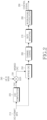
- FIG. 11 illustrates an E-PDCCH multiplexing structure where A-UEs assume a maximum PDCCH size to determine a first E-PDCCH symbol, according to an embodiment of the present invention.
- the PDCCH transmission 1110 has 2 OFDM symbols, out of a maximum of 3 PDCCH OFDM symbols.
- the first E-PDCCH symbol is the first OFDM symbol after the PDCCH transmission, assuming the maximum of 3 OFDM symbols. Therefore, the first E-PDCCH symbol is the fourth OFDM symbol of the DL sub-frame.
- the E-PCFICH transmission (not shown) is always in the first E-PDCCH symbol and, for the structure of FIG. 11 , it indicates that the E-PDCCH is transmitted in 2 OFDM symbols 1120.
- the E-PDCCH transmission PRBs 1130 are semi-statically configured through broadcast signaling by the Node B (for example, in an SIB).
- the E-PDCCH transmission is multiplexed with PDSCH transmissions to various LTEs, 1140, 1150, and 1160.
- PDSCH transmissions to L-LTEs may or may not occur in PRBs used for E-PDCCH transmission.
- PRBs used for E-PDCCH transmission.
- A-UEs can be aware of the E-PDCCH PRBs and apply the appropriate rate matching for their respective PDSCH receptions.
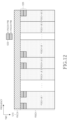
- FIG. 12 illustrates an E-PDCCH multiplexing structure where A-UEs decode a PCFICH to determine an actual PDCCH size and a first E-PDCCH symbol, according to an embodiment of the present invention.
- a PDCCH transmission 1210 has 2 OFDM symbols.
- the first E-PDCCH symbol is the third OFDM symbol, which is the first OFDM symbol after the PDCCH transmission.
- the E-PCFICH transmission (not shown) is always in the first E-PDCCH symbol and, in the structure illustrated in FIG. 12 , it indicates that the E-PDCCH is transmitted in 2 OFDM symbols 1220.
- the E-PDCCH transmission PRBs 1230 are predetermined.
- E-PDCCH If the transmission of DCI formats for multiple Scells is conveyed through the E-PDCCH, in accordance with an embodiment of the present invention, all E-PDCCH CCEs are jointly considered for all Scells, instead of having a separate set of CCEs for each Scell. Therefore, there is only a single set of CCEs in the E-PDCCH, where each S-LTE may have its UE-CSS and its UE-DSS. This also enables the transmission of a single E-PCFICH, instead of multiple E-PCFICH with each one corresponding to a different Scell in the E-PDCCH.
- the LTE-CSS for S-LTEs is separately configured and its size, in number of CCEs, may be broadcasted by the Node B.
- the UE-CSS size may take one of four predetermined values and the Node B broadcasts 2 bits to indicate that value (for example, through an SIB in the Pcell) or to indicate that the UE-CSS size is either 1, 2, 3, or 4 times a basic size of K CCEs.
- the CCEs for the UE-CSS in the E-PDCCH are placed first, i.e., before the CCEs for the LTE-DSS. Once an S-LTE is informed of the LTE-CSS size, it needs to determine the CCEs corresponding to each Scell.
- the S-UE is informed of the order of Scells either through higher layer signaling, for LTE-specific CI configuration, or as part of the system information for cell-specific CI configuration. This is equivalent to an S-LTE being informed of the CI value for its DCI formats.
- the order may be in terms of decreasing BWs, e.g., the larger BWs are ordered first.
- FIG. 13 is a diagram illustrating an assignment of different CI values to different cells, according to an embodiment of the present invention.
- the CCEs for the UE-CSS of the macro-cell 1310 are placed in the PDCCH.
- the CCEs of the UE-CSS of S-UEs are placed in the same order in the logical domain.
- FIG. 14 is a diagram illustrating placement of CCEs for multiple LTE-CSS, according to an embodiment of the present invention.
- the placement of the CCEs for the UE-DSS 1430 occurs after the placement of the CCEs for the UE-CSS in the logical domain.
- the CCEs for the UE-CSS of S-UEs are ordered as illustrated in FIG. 14 to reduce the associated number of Blind Decoding Operations (BDOs) because, for each LTE-CSS, an S-LTE searches a sub-set of the total set of CCEs allocated to the total LTE-CSS. Moreover, by ordering the LTE-CSSs for S-UEs, it is not necessary to include the CI IE in DCI formats transmitted in each LTE-CSS.
- BDOs Blind Decoding Operations
- the ordering of individual LTE-CSS for S-LTEs is not applied and the respective CCEs may be distributed over the entire set of CCEs for the total UE-CSS. Thereafter, CI inclusion in the DCI formats is performed and the LTE search process for DCI formats can be performed for the LTE-DSS of S-UEs as will be described below.
- the UE-CSS remains unchanged, the S-LTEs are treated as P-LTEs with respect to the transmission of DCI format 3 and DCI format 1C in Scells, and there is no differentiation of LTEs into different categories with respect to the LTE-CSS.
- the PCH can be transmitted to all S-UEs in the cell with the PDCCH transmission (Pcell).
- S-UEs acquire the synchronization signal of the cell (such as a macro-cell) with PDCCH transmission (Pcell). Thereafter, the RACH process is completed through the Pcell and no additional RACH response signaling, corresponding to cells without PDCCH transmission (Scells), is necessary.
- the SIBs for cells (such as micro-cells) without PDCCH transmission (Scells) can also be transmitted from the cell (such as macro-cell) with PDCCH transmission (Pcell) using different CRC masks in DCI format 1C to indicate the cell corresponding to the SIB transmission.
- DCI format 3 multiplexes TPC commands corresponding to LTEs in the cell (such as a macro-cell) with PDCCH transmission (Pcell) and to LTEs in the cells (such as micro-cells) without PDCCH transmission (Scells).
- P-LTEs have their LTE-CSS for DCI format transmission in the PDCCH as in a backward compatible system including a single cell.
- LTE-CSS For S-UEs, either a new LTE-CSS is defined in the E-PDCCH, as described above in the first alternative, or no additional UE-CSS is defined and all UEs (P-UEs and S-UEs) use the same UE-CSS in the PDCCH, as described above in the second alternative.
- Equation (2) For the LTE-DSS and single-cell operation, using the previously defined notation, the CCEs corresponding to a PDCCH candidate m are given by Equation (2).
- S k L L ⁇ Y k + m mod ⁇ N CCE , k / L ⁇ + i
- the above UE-DSS structure leads to identical LTE-DSSs for different cells (Pcell or Scells) as they are assumed to share the same LTE-DSS in the E-PDCCH (or in the PDCCH when it supports the transmission of DCI formats for multiple cells).
- the LTE-DSS also depends on the Cell_ID. This can substantially decrease the probability that a DCI format transmission is blocked due to the unavailability of CCEs in the LTE-DSS. Reducing this blocking probability increases the probability that a PDSCH or PUSCH scheduling occurs and therefore, improves the respective DL or UL system throughput and enhances operating quality and reliability.
- the Cell_ID may be the CI value allocated to each cell.
- the UE may be informed of the Cell_ID through higher layer signaling. At least when the cells have equal BWs (and a respective CI is defined), the Cell_ID may be the same as the respective CI.
- the UE may obtain the Cell_ID during initial synchronization with the respective cell, or if the cell does not transmit synchronization signals, the UE may obtain the respective Cell_ID through higher layer signaling from the cell transmitting synchronization signals after synchronization. Additionally, the Cell_ID may be LTE-specific and informed to each UE through higher layer signaling.
- the Cell_ID for each UE can depend on the number of cells the UE is configured for. If UE1 is configured for Cell1 and Cell2, the respective Cell_IDs can be Cell_ID1 and Cell_ID2. If UE2 is configured for Cell2 and Cell3, the respective Cell_IDs can also be Cell_ID1 and Cell_ID2.
- the following example further demonstrates the occurrence of transmission blocking for a DCI format.
- DCI formats to a LTE are transmitted with 4 CCEs, then, as there are only 2 candidates in the LTE-DSS for this CCE aggregation level, transmission of DCI formats for at most 2 cells can be supported (or one cell, for both PDSCH reception and PUSCH transmission).
- the LTE-DSSs for different UEs may have overlapping CCEs, and for this reason it will often be likely that the transmission of a DCI format for only a single cell can be supported.
- an embodiment of the invention to construct separate LTE-DSS for each cell considers that the initialization of the variable Y k includes the Cell_ID.
- Y k includes the Cell_ID.
- an A-LTE receives multiple PDSCH or transmits multiple PUSCH in multiple cells while the respective DCI formats are transmitted in a single cell
- Y -1 ( UE_ID ) ⁇ ( Cell _ ID ) ⁇ 0 for the UE-DSS of the respective cell.
- FIG. 15 illustrates an initialization of a variable Y k with a Cell_ID according to an embodiment of the present invention.
- the binary UE_ID 1510 and the binary Cell_ID 1520 are added by a binary adder 1530 to provide the initial value Y -1 1540 of the variable Y k , randomizing the CCEs in the UE-DSS in sub-frame k for DCI formats corresponding to the respective cell.
- a binary adder 1530 to provide the initial value Y -1 1540 of the variable Y k , randomizing the CCEs in the UE-DSS in sub-frame k for DCI formats corresponding to the respective cell.
- each UE-DSS can be obtained by Equation (3).
- S k , c L L ⁇ Y k + m + ⁇ c mod ⁇ N CCE , k / L ⁇ + i
- the transmission of DCI formats for scheduling in multiple Scells increases the number of BDOs an A-UE performs. Without any restrictions in the locations of these possible DCI formats, this increase in the number of BDOs is linear with the number of Scells. This increases the LTE receiver complexity and also increases the probability of a false CRC test (resulting to a UE incorrectly considering a DCI format as intended for it).
- the UE After the UE identifies a PDCCH for cell c 1 , it performs a number additional BDOs equal to the number of possible aggregation levels to determine if it also has a PDCCH for cell c 2 .
- this number of additional BDOs is 4, as the possible aggregation levels are ⁇ 1,2,4,8 ⁇ . This process can directly extend to additional cells.
- a third design is a combination of the first and second designs, where the aggregation level used for the PDCCH in a reference cell (Pcell) affects the possible aggregation levels for the PDCCH for the remaining cells (Scells) for which a UE is configured.
- the position of the PDCCH for the reference cell affects the possible PDCCH positions for the remaining cells.
- PDCCH extension was compatible with existing single-cell communications.
- PDCCH extension may also be supported in a non-compatible manner.
- a different interpretation of the PCFICH values and a different configuration of the UE-CSS and UE-DSS may apply.
- the PCFICH for non-compatible PDCCH extension can convey more values, which are not predetermined but can semi-statically vary.
- the Node B may broadcast a configuration of PDCCH sizes, from a set of possible configurations, and the PCFICH may then simply indicate one size from the broadcasted configuration of PDCCH sizes.
- the Node B may indicate one of the ⁇ 1, 2, 3, 4 ⁇ , ⁇ 2, 3, 4, 5 ⁇ , ⁇ 3, 4, 5, 6 ⁇ and ⁇ 4, 5, 6, 7 ⁇ , in number of OFDM symbols, for the PDCCH size configuration.
- the 2 bits in the PCFICH can then be used to inform the UEs of the PDCCH size within the configuration broadcasted by the Node B.
- FIG. 16 illustrates a PDCCH size extension by configuring a set of possible values and using a PCFICH to indicate one value in the set, according to an embodiment of the present invention.
- the Node B broadcasts 2 bits, for example, "10", to indicate the PDCCH size configuration of ⁇ 3, 4, 5, 6 ⁇ symbols 1610.
- the PCFICH transmitted in each sub-frame indicates an element from the PDCCH size configuration set, such as, for example, the third element 1620.
- the LTE determines the PDCCH size based on both the broadcasted PDCCH size configuration and the PCFICH value 1630.
- an individual size of the LTE-CSS or UE-DSS can also be configured.
- the Node B may broadcast the UE-CSS size. Consequently, A-UEs can know that the UE-CSS size may have one of four predetermined values and the Node B simply broadcasts 2 bits to indicate that value or to indicate that the LTE-CSS size is 1, 2, 3, or 4 times the basic LTE-CSS size of 16 CCEs.
- the indication of the UE-CSS size may also be implicit based on the PDCCH configuration size. For example, if the Node B broadcasts the third PDCCH configuration size in FIG.
- A-UEs can identify that the UE-CSS is 3 times the basic UE-CSS size of 16-CCEs, i.e., the UE-CSS size is 48 CCEs or it is determined by the third element in a configured set of UE-CSS sizes such as, for example, a set of ⁇ 16, 28, 36, 44 ⁇ CCEs.
- FIG. 17 illustrates explicit and implicit indication by the Node B of a UE-CSS size to A-UEs, according to an embodiment of the present invention.
- the Node B informs A-UEs of the UE-CSS size through a broadcast channel, e.g., an SIB transmission.
- a broadcast channel e.g., an SIB transmission.
- the Node B transmits 2 bits with a value "10" to indicate 36 CCEs, which is the third element in a set of 4 possible LTE-CSS sizes 1710.
- A-UEs upon reception of that broadcast information, determine the LTE-CSS for each cell 1720, as described above, for PDCCH extension compatible with legacy systems.
- the Node B broadcasts the PDCCH size configuration (for example, in an SIB), as described in FIG.
- A-UEs determine the UE-CSS size and the LTE-CSS for each cell.
- the Node B may broadcast the third PDCCH size configuration 1730 and the then A-LTEs determine the LTE-CSS size to be 36 CCEs 1740.
Landscapes
- Engineering & Computer Science (AREA)
- Signal Processing (AREA)
- Computer Networks & Wireless Communication (AREA)
- Computer Security & Cryptography (AREA)
- Databases & Information Systems (AREA)
- Multimedia (AREA)
- Mobile Radio Communication Systems (AREA)
Applications Claiming Priority (4)
| Application Number | Priority Date | Filing Date | Title |
|---|---|---|---|
| US24638709P | 2009-09-28 | 2009-09-28 | |
| US24638009P | 2009-09-28 | 2009-09-28 | |
| EP10075539.6A EP2302830B1 (de) | 2009-09-28 | 2010-09-28 | Erweiterung des physischen Downlink-Steuerkanals |
| EP20180344.2A EP3731451B1 (de) | 2009-09-28 | 2010-09-28 | Erweiterung des physischen downlink-steuerkanals |
Related Parent Applications (2)
| Application Number | Title | Priority Date | Filing Date |
|---|---|---|---|
| EP20180344.2A Division EP3731451B1 (de) | 2009-09-28 | 2010-09-28 | Erweiterung des physischen downlink-steuerkanals |
| EP10075539.6A Division EP2302830B1 (de) | 2009-09-28 | 2010-09-28 | Erweiterung des physischen Downlink-Steuerkanals |
Publications (2)
| Publication Number | Publication Date |
|---|---|
| EP4221043A2 true EP4221043A2 (de) | 2023-08-02 |
| EP4221043A3 EP4221043A3 (de) | 2023-08-16 |
Family
ID=43084468
Family Applications (5)
| Application Number | Title | Priority Date | Filing Date |
|---|---|---|---|
| EP20180344.2A Active EP3731451B1 (de) | 2009-09-28 | 2010-09-28 | Erweiterung des physischen downlink-steuerkanals |
| EP23152740.9A Pending EP4221042A3 (de) | 2009-09-28 | 2010-09-28 | Erweiterung von physikalischen downlink-steuerkanälen |
| EP23152742.5A Pending EP4221043A3 (de) | 2009-09-28 | 2010-09-28 | Erweiterung von physikalischen downlink-steuerkanälen |
| EP23152743.3A Active EP4221044B1 (de) | 2009-09-28 | 2010-09-28 | Erweiterung von physikalischen downlink-steuerkanälen |
| EP10075539.6A Active EP2302830B1 (de) | 2009-09-28 | 2010-09-28 | Erweiterung des physischen Downlink-Steuerkanals |
Family Applications Before (2)
| Application Number | Title | Priority Date | Filing Date |
|---|---|---|---|
| EP20180344.2A Active EP3731451B1 (de) | 2009-09-28 | 2010-09-28 | Erweiterung des physischen downlink-steuerkanals |
| EP23152740.9A Pending EP4221042A3 (de) | 2009-09-28 | 2010-09-28 | Erweiterung von physikalischen downlink-steuerkanälen |
Family Applications After (2)
| Application Number | Title | Priority Date | Filing Date |
|---|---|---|---|
| EP23152743.3A Active EP4221044B1 (de) | 2009-09-28 | 2010-09-28 | Erweiterung von physikalischen downlink-steuerkanälen |
| EP10075539.6A Active EP2302830B1 (de) | 2009-09-28 | 2010-09-28 | Erweiterung des physischen Downlink-Steuerkanals |
Country Status (10)
| Country | Link |
|---|---|
| US (10) | US9295043B2 (de) |
| EP (5) | EP3731451B1 (de) |
| JP (2) | JP5511105B2 (de) |
| KR (6) | KR102095721B1 (de) |
| CN (2) | CN104270237B (de) |
| AU (1) | AU2010298857B2 (de) |
| BR (1) | BR112012006948B1 (de) |
| CA (2) | CA2881659C (de) |
| RU (2) | RU2502192C1 (de) |
| WO (1) | WO2011037439A2 (de) |
Families Citing this family (211)
| Publication number | Priority date | Publication date | Assignee | Title |
|---|---|---|---|---|
| EP2449809A1 (de) * | 2009-07-03 | 2012-05-09 | Nokia Siemens Networks Oy | Erweiterung der reichweite eines physikalischen downlink-steuerkanals |
| CN102036305B (zh) | 2009-09-30 | 2014-05-07 | 华为技术有限公司 | 控制信息的发送和接收方法、装置和通信系统 |
| US8902828B2 (en) * | 2009-10-05 | 2014-12-02 | Qualcomm Incorporated | Carrier indicator field for cross carrier assignments |
| CN102056198B (zh) * | 2009-10-31 | 2015-06-03 | 华为技术有限公司 | 一种下行信道传输及检测方法、装置和系统 |
| CN105208625B (zh) | 2010-01-08 | 2021-05-18 | 索尼公司 | 电子装置和电子装置的通信方法 |
| KR20130006603A (ko) | 2010-02-12 | 2013-01-17 | 인터디지탈 패튼 홀딩스, 인크 | 셀-에지 사용자 성능을 향상시키고 하향링크 협력 컴포넌트 캐리어를 통해 무선 링크 실패 조건을 시그널링하는 방법 및 장치 |
| KR101785656B1 (ko) * | 2010-03-04 | 2017-10-16 | 엘지전자 주식회사 | Ack/nack 신호를 전송하는 방법 및 이를 위한 장치 |
| ES2674141T3 (es) * | 2010-03-31 | 2018-06-27 | Fujitsu Limited | Sistema de comunicación inalámbrico, aparato de comunicación inalámbrica y método de comunicación inalámbrica |
| JP5499216B2 (ja) * | 2010-04-02 | 2014-05-21 | ゼットティーイー コーポレーション | ダウンリンク制御情報の検出方法及び装置 |
| WO2012011239A1 (ja) | 2010-07-21 | 2012-01-26 | パナソニック株式会社 | 基地局装置、端末装置、送信方法及び受信方法 |
| EP2597919B1 (de) | 2010-07-21 | 2023-11-01 | Sun Patent Trust | Basisstation, endgerät, suchraumeinstellverfahren und decodierungsverfahren |
| CN102036411B (zh) * | 2010-12-02 | 2013-06-26 | 大唐移动通信设备有限公司 | 一种进行随机接入的方法及装置 |
| KR101771257B1 (ko) * | 2010-12-03 | 2017-08-25 | 엘지전자 주식회사 | 다중 노드 시스템에서 협력 전송 방법 및 장치 |
| US9559884B2 (en) * | 2011-02-07 | 2017-01-31 | Intel Corporation | Co-phasing of transmissions from multiple infrastructure nodes |
| US9137796B2 (en) * | 2011-02-10 | 2015-09-15 | Lg Electronics Inc. | Method and apparatus for monitoring scheduling information |
| WO2012109542A1 (en) | 2011-02-11 | 2012-08-16 | Interdigital Patent Holdings, Inc | Systems and methods for an enhanced control channel |
| US9544108B2 (en) | 2011-02-11 | 2017-01-10 | Qualcomm Incorporated | Method and apparatus for enabling channel and interference estimations in macro/RRH system |
| US8995400B2 (en) | 2011-02-11 | 2015-03-31 | Qualcomm Incorporated | Method and apparatus for enabling channel and interference estimations in macro/RRH system |
| US9426703B2 (en) * | 2011-02-11 | 2016-08-23 | Qualcomm Incorporated | Cooperation and operation of macro node and remote radio head deployments in heterogeneous networks |
| CN103563270A (zh) | 2011-02-11 | 2014-02-05 | 韩国电子通信研究院 | 使用多传送和接收点的无线通信系统 |
| US9054842B2 (en) | 2011-02-14 | 2015-06-09 | Qualcomm Incorporated | CRS (common reference signal) and CSI-RS (channel state information reference signal) transmission for remote radio heads (RRHs) |
| US9282556B2 (en) * | 2011-02-15 | 2016-03-08 | Kyocera Corporation | Base station and communication method thereof |
| KR101530801B1 (ko) * | 2011-03-01 | 2015-06-22 | 엘지전자 주식회사 | 무선 통신 시스템에서 상향링크 harq 수행 방법 및 장치 |
| KR20130119484A (ko) * | 2011-03-01 | 2013-10-31 | 엘지전자 주식회사 | 다중 노드 시스템에서 단말의 제어 정보 검색 방법 및 장치 |
| KR101919780B1 (ko) | 2011-03-03 | 2018-11-19 | 엘지전자 주식회사 | 무선 통신 시스템에서 확인응답 정보를 전송하는 방법 및 장치 |
| US10638464B2 (en) * | 2011-04-01 | 2020-04-28 | Futurewei Technologies, Inc. | System and method for transmission and reception of control channels in a communications system |
| EP2695345B1 (de) * | 2011-04-01 | 2020-12-02 | Intel Corporation | Verbesserter knoten b und verfahren zur pdcch-übertragung in einem lte-a-system |
| JP5961853B2 (ja) * | 2011-04-27 | 2016-08-02 | シャープ株式会社 | 端末、基地局、通信システムおよび通信方法 |
| JP5810399B2 (ja) * | 2011-04-27 | 2015-11-11 | シャープ株式会社 | 基地局、端末および無線通信方法 |
| JP5801093B2 (ja) | 2011-04-27 | 2015-10-28 | シャープ株式会社 | 基地局、端末、通信システムおよび通信方法 |
| JP5895356B2 (ja) * | 2011-04-27 | 2016-03-30 | シャープ株式会社 | 基地局、端末および無線通信方法 |
| PT2702706E (pt) * | 2011-04-29 | 2015-04-08 | Ericsson Telefon Ab L M | Controlo descentralizado de redução de interferência num sistema de comunicação sem fios |
| US9295047B2 (en) * | 2011-04-29 | 2016-03-22 | Lg Electronics Inc. | Method for transmitting and receiving downlink control information in a wireless communication system and apparatus for the same |
| JP5285117B2 (ja) * | 2011-05-02 | 2013-09-11 | 株式会社エヌ・ティ・ティ・ドコモ | ユーザ端末、無線基地局装置、無線通信システム及び無線通信方法 |
| JP5396427B2 (ja) * | 2011-05-02 | 2014-01-22 | 株式会社Nttドコモ | 無線基地局装置、ユーザ端末装置、無線通信システム、及び無線通信方法 |
| JP5587824B2 (ja) * | 2011-05-02 | 2014-09-10 | 株式会社Nttドコモ | 無線基地局装置、移動端末装置、無線通信システムおよび無線通信方法 |
| JP5432210B2 (ja) * | 2011-05-02 | 2014-03-05 | 株式会社Nttドコモ | ユーザ端末、無線基地局、下り制御チャネル受信方法及び移動通信システム |
| JP5616284B2 (ja) * | 2011-05-02 | 2014-10-29 | 株式会社Nttドコモ | 基地局装置、移動端末装置、通信システム及び通信方法 |
| DK2892174T3 (en) | 2011-05-03 | 2018-10-29 | Ericsson Telefon Ab L M | Transmission and reception of control data in a communication system |
| WO2012150822A2 (ko) * | 2011-05-03 | 2012-11-08 | 엘지전자 주식회사 | 하향링크 신호 수신방법 및 사용자기기와, 하향링크 신호 전송방법 및 기지국 |
| WO2012150836A2 (ko) * | 2011-05-03 | 2012-11-08 | 엘지전자 주식회사 | 무선 통신 시스템에서 제어 정보의 전송 방법 및 이를 위한 장치 |
| HUE043309T2 (hu) * | 2011-05-03 | 2019-08-28 | Ericsson Telefon Ab L M | Keresési terület alapú vezérlõ csatorna monitoring |
| EP2706688B1 (de) * | 2011-05-04 | 2016-03-23 | LG Electronics Inc. | Suchverfahren für den e-pdcch-bereich |
| US8873489B2 (en) * | 2011-05-05 | 2014-10-28 | Mediatek Inc. | Signaling methods for UE-specific dynamic downlink scheduler in OFDMA systems |
| CN102202415B (zh) * | 2011-05-18 | 2019-01-22 | 中兴通讯股份有限公司 | 一种物理随机接入信道的传输方法和系统 |
| CN102202324B (zh) * | 2011-05-19 | 2013-07-10 | 电信科学技术研究院 | 资源位置指示及信道盲检的方法、系统和装置 |
| WO2012161550A2 (ko) * | 2011-05-25 | 2012-11-29 | 엘지전자 주식회사 | 무선 접속 시스템에서 하향링크 제어 정보 송수신 방법 및 이를 위한 장치 |
| US9419763B2 (en) * | 2011-05-31 | 2016-08-16 | Lg Electronics Inc. | Method for searching for enhanced physical downlink control channel region |
| WO2012169716A1 (ko) * | 2011-06-07 | 2012-12-13 | 엘지전자 주식회사 | 제어정보 송수신 방법 및 송수신 장치 |
| KR102040312B1 (ko) * | 2011-06-07 | 2019-11-04 | 한국전자통신연구원 | 이동 통신 시스템의 제어 정보 전송 및 수신 방법 |
| US9450729B2 (en) * | 2011-06-15 | 2016-09-20 | Lg Electronics Inc. | Method and device for allocating a downlink control channel in a wireless communication system |
| KR101525723B1 (ko) * | 2011-06-15 | 2015-06-03 | 엘지전자 주식회사 | 무선 통신 시스템에서 하향링크 제어 채널 할당 방법 및 장치 |
| AU2012270369B2 (en) * | 2011-06-15 | 2016-07-28 | Samsung Electronics Co., Ltd. | Extension of physical downlink control signaling in a communication system |
| KR101943821B1 (ko) * | 2011-06-21 | 2019-01-31 | 한국전자통신연구원 | 무선 통신 시스템에서 제어채널 송수신 방법 |
| KR101925031B1 (ko) | 2011-06-24 | 2018-12-04 | 엘지전자 주식회사 | 상향링크 제어정보 전송방법 및 사용자기기와, 상향링크 제어정보 수신방법 및 기지국 |
| US9544790B2 (en) | 2011-06-28 | 2017-01-10 | Lg Electronics Inc. | Method for monitoring downlink control information (DCI) and a user equipment using the same |
| EP2728775B1 (de) | 2011-06-29 | 2021-03-03 | LG Electronics Inc. | Verfahren und vorrichtung zum empfang von steuerinformationen in einem drahtlosen kommunikationssystem |
| WO2013002528A2 (ko) * | 2011-06-30 | 2013-01-03 | 엘지전자 주식회사 | 무선 통신 시스템에서 하향링크 제어 채널 할당 방법 및 장치 |
| US8537862B2 (en) | 2011-06-30 | 2013-09-17 | Blackberry Limited | Transmit downlink control information with higher order modulation |
| US20130003604A1 (en) * | 2011-06-30 | 2013-01-03 | Research In Motion Limited | Method and Apparatus for Enhancing Downlink Control Information Transmission |
| KR20130007250A (ko) * | 2011-06-30 | 2013-01-18 | 주식회사 팬택 | 무선통신 시스템에서 제어채널의 전송 장치 및 방법 |
| EP2564611B1 (de) * | 2011-07-01 | 2015-02-18 | Ofinno Technologies, LLC | Synchronisationssignal- und Steuerungsmeldungen in Mehrträger-OFDM |
| WO2013006194A1 (en) | 2011-07-01 | 2013-01-10 | Intel Corporation | Structured codebook for uniform circular array (uca) |
| US8369280B2 (en) | 2011-07-01 | 2013-02-05 | Ofinno Techologies, LLC | Control channels in multicarrier OFDM transmission |
| US8582527B2 (en) | 2011-07-01 | 2013-11-12 | Ofinno Technologies, Llc | Hybrid automatic repeat request in multicarrier systems |
| WO2013005960A2 (ko) * | 2011-07-03 | 2013-01-10 | 엘지전자 주식회사 | 제어 채널 모니터링 방법 및 장치 |
| CN103597891B (zh) * | 2011-07-05 | 2018-05-25 | Hmd全球公司 | 用于无线通信中的资源聚合的方法和装置 |
| CN102256358B (zh) * | 2011-07-08 | 2013-11-20 | 电信科学技术研究院 | 一种数据传输和接收方法、装置及系统 |
| KR101530831B1 (ko) * | 2011-07-12 | 2015-06-24 | 엘지전자 주식회사 | 다중 노드 시스템에서 단말의 제어 정보 검색 방법 및 장치 |
| KR101487653B1 (ko) * | 2011-07-12 | 2015-01-28 | 엘지전자 주식회사 | 다중 노드 시스템에서 단말의 제어 정보 모니터링 방법 및 상기 방법을 이용하는 단말 |
| US9198176B2 (en) | 2011-07-14 | 2015-11-24 | Lg Electronics Inc. | Method of allocating a resource in a wireless communication system and device for same |
| JP5898874B2 (ja) * | 2011-07-15 | 2016-04-06 | 株式会社Nttドコモ | ユーザ端末、無線基地局装置、無線通信システム及び無線通信方法 |
| US9439135B2 (en) | 2011-07-18 | 2016-09-06 | Lg Electronics Inc. | Method and wireless device for monitoring control channel |
| US9515798B2 (en) | 2011-07-20 | 2016-12-06 | Lg Electronics Inc. | Method and apparatus for allocating enhanced physical downlink control channel in wireless access system |
| JP5811443B2 (ja) * | 2011-07-22 | 2015-11-11 | シャープ株式会社 | 端末装置、基地局装置、集積回路および通信方法 |
| JP5895388B2 (ja) | 2011-07-22 | 2016-03-30 | シャープ株式会社 | 端末装置、基地局装置、集積回路および通信方法 |
| WO2013015558A2 (ko) | 2011-07-24 | 2013-01-31 | 엘지전자 주식회사 | 무선 통신 시스템에서 하향링크 제어 채널을 위한 비트 맵핑 방법 및 장치 |
| WO2013015632A2 (ko) | 2011-07-26 | 2013-01-31 | 엘지전자 주식회사 | 무선 통신 시스템에서 제어 정보의 전송 방법 및 장치 |
| US9319192B2 (en) | 2011-07-26 | 2016-04-19 | Lg Electronics Inc. | Method for transmitting control information by a base station in a wireless communication system, and device therefor |
| WO2013013394A1 (zh) * | 2011-07-27 | 2013-01-31 | 富士通株式会社 | 下行链路控制信息发送和接收方法、基站和移动终端 |
| CN103733586B (zh) | 2011-07-28 | 2017-04-05 | Lg电子株式会社 | 在无线接入系统中发送/接收下行控制信息的方法及其用户设备 |
| JP5884152B2 (ja) * | 2011-07-29 | 2016-03-15 | シャープ株式会社 | 基地局、端末、通信システムおよび通信方法 |
| CN102271031B (zh) * | 2011-08-09 | 2018-02-06 | 中兴通讯股份有限公司 | 一种信道信息反馈的方法和系统 |
| CN102355338B (zh) * | 2011-08-11 | 2014-04-02 | 电信科学技术研究院 | 一种信道信息发送方法及装置 |
| CN102932907B (zh) | 2011-08-11 | 2016-03-09 | 华为技术有限公司 | 一种获取同步的处理方法以及设备 |
| US20130201926A1 (en) * | 2011-08-11 | 2013-08-08 | Samsung Electronics Co., Ltd. | System and method for physical downlink control and hybrid-arq indicator channels in lte-a systems |
| JP5927661B2 (ja) * | 2011-08-12 | 2016-06-01 | シャープ株式会社 | 端末装置、基地局装置、集積回路および通信方法 |
| CN102263616B (zh) * | 2011-08-15 | 2018-07-20 | 中兴通讯股份有限公司 | 指示控制信道的方法及装置 |
| CN102263584B (zh) * | 2011-08-19 | 2014-05-07 | 电信科学技术研究院 | 一种信道状态信息非周期性反馈方法及装置 |
| WO2013027926A1 (ko) * | 2011-08-19 | 2013-02-28 | 엘지전자 주식회사 | 무선 통신 시스템에서 기지국이 하향링크 제어 채널을 송신하는 방법 및 이를 위한 장치 |
| CN102958184B (zh) * | 2011-08-25 | 2017-02-22 | 华为技术有限公司 | 下行控制信道传输方法、装置和系统 |
| JP2013055393A (ja) * | 2011-09-01 | 2013-03-21 | Sony Corp | 通信装置、通信方法、通信システムおよび基地局 |
| US20130064216A1 (en) * | 2011-09-12 | 2013-03-14 | Research In Motion Limited | DMRS Association and Signaling for Enhanced PDCCH in LTE Systems |
| CN102316522B (zh) * | 2011-09-21 | 2017-02-08 | 中兴通讯股份有限公司 | 一种控制信令传输资源位置的通知方法及一种终端 |
| CN106793141B (zh) * | 2011-09-29 | 2020-03-31 | 华为技术有限公司 | 增强的物理下行控制信道e-pdcch的传输方法及设备 |
| US20130083746A1 (en) * | 2011-09-30 | 2013-04-04 | Interdigital Patent Holdings, Inc. | Method and apparatus for allocating resources for an enhanced physical hybrid automatic repeat request indicator channel |
| US9232517B2 (en) | 2011-10-04 | 2016-01-05 | Lg Electronics Inc. | Method for scheduling bundling in wireless access system and apparatus for same |
| US8774848B2 (en) | 2011-10-11 | 2014-07-08 | Fujitsu Limited | System and method for enhancing cell-edge performance in a wireless communication network |
| KR101491944B1 (ko) * | 2011-10-18 | 2015-02-12 | 엘지전자 주식회사 | 제어 채널을 디모듈레이션하기 위한 프라이머리 셀 지시 방법 및 장치 |
| IN2014CN03084A (de) * | 2011-11-04 | 2015-07-03 | Intel Corp | |
| US9338774B2 (en) | 2011-11-04 | 2016-05-10 | Lg Electronics Inc. | Method and apparatus for user equipment searching control channel in wireless communication system |
| JP2013098946A (ja) * | 2011-11-07 | 2013-05-20 | Sharp Corp | 端末、基地局、通信システムおよび通信方法 |
| CN102420685B (zh) * | 2011-11-07 | 2014-08-06 | 电信科学技术研究院 | 一种传输控制信息的方法及装置 |
| EP2590350A1 (de) * | 2011-11-07 | 2013-05-08 | Panasonic Corporation | Erweiterte PDCCH-Überlappung mit dem PDCCH-Bereich |
| US9924502B2 (en) | 2011-11-11 | 2018-03-20 | Lg Electronics Inc. | Method and device for obtaining and receiving control information in wireless communication system |
| KR20130054896A (ko) * | 2011-11-17 | 2013-05-27 | 삼성전자주식회사 | 시분할 이중화 통신 시스템에서 물리채널 송수신의 제어 방법 및 장치 |
| WO2013077657A1 (ko) * | 2011-11-23 | 2013-05-30 | 엘지전자 주식회사 | 무선 통신 시스템에서 하향링크 제어 채널을 송수신하는 방법 및 장치 |
| WO2013077517A1 (ko) * | 2011-11-25 | 2013-05-30 | 엘지전자 주식회사 | 무선 통신 시스템에서 기지국이 하향링크 제어 채널을 전송하는 방법 및 이를 위한 장치 |
| KR20130058565A (ko) * | 2011-11-25 | 2013-06-04 | 주식회사 팬택 | 송수신 포인트, 송수신 포인트의 제어 정보 전송 방법, 단말, 및 단말의 제어 정보 수신 방법 |
| KR20140110715A (ko) * | 2011-12-02 | 2014-09-17 | 엘지전자 주식회사 | 무선 통신 시스템에서 단말이 하향링크 제어 채널을 수신하는 방법 및 이를 위한 장치 |
| US8427976B1 (en) | 2011-12-04 | 2013-04-23 | Ofinno Technology, LLC | Carrier information exchange between base stations |
| US9572148B2 (en) | 2011-12-07 | 2017-02-14 | Lg Electronics Inc. | Method and apparatus for transceiving a downlink control channel in a wireless communication system |
| WO2013085336A1 (ko) * | 2011-12-07 | 2013-06-13 | 엘지전자 주식회사 | 무선 통신 시스템에서 하향링크 제어 채널 송수신 방법 및 장치 |
| WO2013089020A1 (ja) * | 2011-12-12 | 2013-06-20 | シャープ株式会社 | 通信システム、移動局装置、基地局装置、通信方法および集積回路 |
| CN102611524B (zh) * | 2011-12-19 | 2015-02-04 | 电信科学技术研究院 | 一种传输信息的方法、系统及设备 |
| US9084252B2 (en) * | 2011-12-29 | 2015-07-14 | Qualcomm Incorporated | Processing enhanced PDCCH (ePDCCH) in LTE |
| CN109245874B (zh) * | 2012-01-09 | 2021-11-19 | 华为技术有限公司 | 一种控制信道传输、接收方法及基站、用户设备 |
| US8606286B2 (en) | 2012-01-16 | 2013-12-10 | Blackberry Limited | E-PDCCH design for reducing blind decoding |
| EP2805437B1 (de) * | 2012-01-19 | 2020-03-04 | Samsung Electronics Co., Ltd. | Vorrichtung und verfahren zur pilotverschlüsselung für verbesserte pdcc |
| CN104067667A (zh) * | 2012-01-23 | 2014-09-24 | 英特尔公司 | 用于集成的多rat异类网络的网络辅助的用户关联和卸载技术 |
| JP5832914B2 (ja) * | 2012-01-27 | 2015-12-16 | シャープ株式会社 | 通信システム、移動局装置、基地局装置、通信方法および集積回路 |
| KR102524731B1 (ko) | 2012-01-27 | 2023-04-21 | 인터디지탈 패튼 홀딩스, 인크 | 다중 캐리어 기반형 및/또는 의사 조합형 네트워크에서 epdcch를 제공하는 시스템 및/또는 방법 |
| US20130195019A1 (en) * | 2012-01-27 | 2013-08-01 | Nokia Corporation | Initial access in cells without common reference signals |
| KR20140128385A (ko) * | 2012-01-30 | 2014-11-05 | 알까뗄 루슨트 | 모바일 송수신기를 위한 장치, 방법, 및 컴퓨터 프로그램과 기지국 송수신기를 위한 장치, 방법, 및 컴퓨터 프로그램 |
| US9179456B2 (en) * | 2012-02-07 | 2015-11-03 | Samsung Electronics Co., Ltd. | Methods and apparatus for downlink control channels transmissions in wireless communications systems |
| US9635658B2 (en) * | 2012-02-27 | 2017-04-25 | Samsung Electronics Co., Ltd. | Adaptation of control signaling transmissions to variations in respective resources |
| EP4007196B1 (de) * | 2012-03-05 | 2023-09-20 | Samsung Electronics Co., Ltd. | Harq-ack-signalübertragung als antwort auf die erkennung eines kontrollkanaltyps im fall von mehreren kontrollkanaltypen |
| US9215058B2 (en) | 2012-03-06 | 2015-12-15 | Blackberry Limited | Enhanced PHICH transmission for LTE-advanced |
| US9924498B2 (en) | 2012-03-12 | 2018-03-20 | Qualcomm Incorporated | Selecting a cell identifier based on a downlink control information |
| WO2013137582A1 (ko) * | 2012-03-15 | 2013-09-19 | 엘지전자 주식회사 | 무선 통신 시스템에서 하향링크 채널의 시작 심볼을 설정하는 방법 및 이를 위한 장치 |
| CN108183773A (zh) | 2012-03-16 | 2018-06-19 | 联发科技股份有限公司 | 解码下行链路控制信息的方法和用户设备 |
| CN104272640B (zh) * | 2012-03-16 | 2017-10-24 | 诺基亚通信公司 | 盲解码 |
| US9526091B2 (en) * | 2012-03-16 | 2016-12-20 | Intel Corporation | Method and apparatus for coordination of self-optimization functions in a wireless network |
| CN103326841B (zh) * | 2012-03-19 | 2019-08-09 | 北京三星通信技术研究有限公司 | 一种配置下行控制信道的搜索空间的方法及设备 |
| US9198181B2 (en) * | 2012-03-19 | 2015-11-24 | Blackberry Limited | Enhanced common downlink control channels |
| CN103327617B (zh) * | 2012-03-20 | 2016-08-17 | 上海贝尔股份有限公司 | 一种资源调度方法和设备 |
| CN103327521B (zh) | 2012-03-20 | 2016-12-14 | 上海贝尔股份有限公司 | 用于分配和检测下行链路控制信道资源的方法以及设备 |
| US9445409B2 (en) | 2012-03-21 | 2016-09-13 | Mediatek, Inc. | Method for search space configuration of enhanced physical downlink control channel |
| US9497756B2 (en) | 2012-03-25 | 2016-11-15 | Comcast Cable Communications, Llc | Base station radio resource management |
| KR102047698B1 (ko) | 2012-04-13 | 2019-12-04 | 엘지전자 주식회사 | 무선 통신 시스템에서 하향링크 제어 채널을 위한 검색 영역을 설정하는 방법 및 이를 위한 장치 |
| US9538502B2 (en) * | 2012-05-01 | 2017-01-03 | Qualcomm Incorporated | Methods and apparatus for managing control and data transmissions for low cost user equipments |
| US9949265B2 (en) | 2012-05-04 | 2018-04-17 | Comcast Cable Communications, Llc | Control channel in a wireless communication system |
| WO2013169165A1 (en) * | 2012-05-11 | 2013-11-14 | Telefonaktiebolaget L M Ericsson (Publ) | Apparatus and method for downlink scheduling |
| JP5726819B2 (ja) * | 2012-05-11 | 2015-06-03 | 株式会社Nttドコモ | 復号方法、無線基地局、ユーザ端末及び無線通信システム |
| JP2013243460A (ja) * | 2012-05-18 | 2013-12-05 | Sharp Corp | 端末、基地局、通信システムおよび通信方法 |
| CN103636271B (zh) | 2012-06-30 | 2019-04-05 | 华为技术有限公司 | 下行控制信息传输方法及基站、终端 |
| CN103580772B (zh) * | 2012-07-18 | 2017-06-06 | 华为技术有限公司 | 数据传输方法、系统及设备,终端获取数据的方法及终端 |
| CN104322121B (zh) * | 2012-07-24 | 2018-05-04 | 华为技术有限公司 | 下行控制信息的发送、接收方法、服务节点及用户设备 |
| US9723602B2 (en) * | 2012-08-03 | 2017-08-01 | Qualcomm Incorporated | Interaction between EPCFICH and EPDCCH in LTE |
| KR101584751B1 (ko) * | 2012-08-16 | 2016-01-12 | 주식회사 케이티 | 송수신 포인트의 상향링크 제어채널 자원 설정 방법, 그 송수신 포인트, 단말의 상향링크 제어채널 자원 매핑방법 및 그 단말 |
| WO2014026335A1 (zh) * | 2012-08-15 | 2014-02-20 | 华为技术有限公司 | 探测信号发送和接收方法、基站和用户设备 |
| CN103686858B (zh) * | 2012-08-31 | 2018-02-06 | 华为技术有限公司 | 上行控制信息的反馈方法、基站及用户设备 |
| AU2013313884B2 (en) * | 2012-09-04 | 2016-10-20 | Samsung Electronics Co., Ltd. | Adaptating a number of aggregation levels for control channel elements |
| CN104662982B (zh) | 2012-09-27 | 2019-02-05 | 华为技术有限公司 | 一种控制信道候选的分配方法及装置 |
| CN104756536B (zh) * | 2012-10-23 | 2019-04-19 | Lg电子株式会社 | 用于在无线通信系统中接收控制信息的方法及装置 |
| CN103812602B (zh) * | 2012-11-09 | 2019-05-28 | 北京三星通信技术研究有限公司 | 盲检公共搜索空间和ue特定搜索空间的方法及设备 |
| WO2014071613A1 (zh) * | 2012-11-09 | 2014-05-15 | 富士通株式会社 | 信息配置方法、信息发送方法、检测方法及其装置、系统 |
| US10477557B2 (en) * | 2012-12-03 | 2019-11-12 | Sony Corporation | Transmission of control information to reduced bandwidth terminals |
| US9832717B2 (en) | 2012-12-19 | 2017-11-28 | Blackberry Limited | Method and apparatus for layer 3 configuration in a heterogeneous network |
| US9036578B2 (en) * | 2012-12-19 | 2015-05-19 | Blackberry Limited | Method and apparatus for control channel configuration in a heterogeneous network architecture |
| GB201300186D0 (en) * | 2013-01-07 | 2013-02-20 | Renesas Mobile Corp | Method and apparatus for extending control signalling in an LTE network |
| CN104919875A (zh) * | 2013-01-16 | 2015-09-16 | 富士通株式会社 | 基站装置、通信方法以及终端装置 |
| WO2014112833A1 (ko) * | 2013-01-17 | 2014-07-24 | 엘지전자 주식회사 | 무선 통신 시스템에서 제어 정보를 수신하는 방법 및 장치 |
| WO2014146251A1 (zh) | 2013-03-19 | 2014-09-25 | 华为技术有限公司 | 控制信息的指示方法及装置 |
| CN104104636B (zh) * | 2013-04-02 | 2017-08-25 | 上海贝尔股份有限公司 | 为基于dm‑rs解调的pbch配置物理资源的方法 |
| US10448351B2 (en) * | 2013-04-02 | 2019-10-15 | Qualcomm Incorporated | Employing neighboring cell assistance information for interference mitigation |
| CN110224799B (zh) * | 2013-04-03 | 2022-09-20 | 交互数字专利控股公司 | 用于公共搜索空间的方法及wtru |
| US20160119940A1 (en) * | 2013-05-15 | 2016-04-28 | Telefonaktiebolaget L M Ericsson (Publ) | Method and bs for identifying ue transmits sr, and method and ue for transmitting sr to bs |
| US9414384B2 (en) * | 2013-09-17 | 2016-08-09 | Telefonaktiebolaget Lm Ericsson (Publ) | State-driven secondary cell activation and deactivation |
| CN110582123B (zh) * | 2014-01-29 | 2021-02-12 | 华为技术有限公司 | 数据传输方法和装置 |
| US11019620B2 (en) | 2014-05-19 | 2021-05-25 | Qualcomm Incorporated | Apparatus and method for inter-band pairing of carriers for time division duplex transmit- and receive-switching and its application to multiplexing of different transmission time intervals |
| US11452121B2 (en) * | 2014-05-19 | 2022-09-20 | Qualcomm Incorporated | Apparatus and method for synchronous multiplexing and multiple access for different latency targets utilizing thin control |
| JP6276892B2 (ja) | 2014-08-11 | 2018-02-07 | テレフオンアクチーボラゲット エルエム エリクソン(パブル) | 無線装置、第1のネットワークノード、およびそれらにおける方法 |
| ES2954737T3 (es) | 2014-09-10 | 2023-11-24 | Ericsson Telefon Ab L M | Nodo de acceso por radio, terminal de comunicación y métodos realizados en el mismo |
| US10264564B2 (en) * | 2015-01-30 | 2019-04-16 | Futurewei Technologies, Inc. | System and method for resource allocation for massive carrier aggregation |
| US11362759B2 (en) * | 2015-04-06 | 2022-06-14 | Samsung Electronics Co., Ltd. | Transmission power control for an uplink control channel |
| KR102734218B1 (ko) | 2015-08-25 | 2024-11-25 | 인터디지탈 패튼 홀딩스, 인크 | 무선 시스템의 프레이밍, 스케줄링, 및 동기화 |
| US10491328B2 (en) * | 2015-08-28 | 2019-11-26 | Intel IP Corporation | Beamformed physical downlink control channels (BPDCCHs) for narrow beam based wireless communication |
| US10757637B2 (en) * | 2015-09-01 | 2020-08-25 | Ntt Docomo, Inc. | User terminal, radio base station, and radio communication method |
| JP7027892B2 (ja) * | 2016-02-03 | 2022-03-02 | ソニーグループ株式会社 | 端末装置および通信方法 |
| KR102820057B1 (ko) * | 2016-02-04 | 2025-06-12 | 한국전자통신연구원 | 통신 네트워크에서 상향링크 전송의 스케쥴링 방법 |
| GB201602150D0 (en) | 2016-02-05 | 2016-03-23 | Nec Corp | Communication system |
| WO2018031111A1 (en) * | 2016-08-09 | 2018-02-15 | Intel IP Corporation | Control channel transmission in new radio access technologies using common search space |
| US10231228B2 (en) * | 2016-09-23 | 2019-03-12 | Mediatek Inc. | Methods of two-stage scheduling in downlink control channel |
| CN109565386A (zh) * | 2016-09-29 | 2019-04-02 | 华为技术有限公司 | 通信方法、终端设备和基站 |
| EP3515144A4 (de) * | 2016-09-29 | 2019-09-11 | Ntt Docomo, Inc. | Benutzerendgerät und drahtloskommunikationsverfahren |
| CN117500060A (zh) * | 2016-12-30 | 2024-02-02 | 华为技术有限公司 | 控制信道的资源指示方法、用户设备和网络设备 |
| WO2018141091A1 (zh) * | 2017-02-04 | 2018-08-09 | 华为技术有限公司 | 发送信息的方法、接收信息的方法和装置 |
| GB2560770A (en) | 2017-03-24 | 2018-09-26 | Nec Corp | Communication system |
| CN110495125B (zh) * | 2017-03-24 | 2022-07-15 | 苹果公司 | 用于传输或接收下行链路控制信息的方法和装置 |
| EP3607793B1 (de) * | 2017-05-04 | 2024-12-04 | Samsung Electronics Co., Ltd. | Bandbreitenteilkonfigurationen für einzelträgerbreitbandoperationen |
| US10897753B2 (en) * | 2017-05-04 | 2021-01-19 | Sharp Kabushiki Kaisha | Systems and methods for supporting multiple allocations in UL/DL grant for a 5G NR UE and gNB |
| EP3429111B1 (de) * | 2017-07-09 | 2021-08-25 | HTC Corporation | Vorrichtung und verfahren zur datenübertragung in bandbreitenteilen |
| DK3627927T3 (da) * | 2017-09-07 | 2023-06-06 | Guangdong Oppo Mobile Telecommunications Corp Ltd | Fremgangsmåde og anordning til informationstransmission |
| CN110351739B (zh) | 2018-04-04 | 2022-03-25 | 展讯通信(上海)有限公司 | 监测pdcch的方法、装置、基站及用户设备 |
| US10966231B2 (en) * | 2018-09-28 | 2021-03-30 | Qualcomm Incorporated | Configuring aggregation level and physical downlink control channel candidates at a user equipment |
| WO2020098718A1 (en) * | 2018-11-12 | 2020-05-22 | Guangdong Oppo Mobile Telecommunications Corp., Ltd. | Apparatus and method for discontinuous reception of same |
| US10797832B2 (en) | 2019-02-14 | 2020-10-06 | Qualcomm Incorporated | Dynamic hybrid automatic repeat request (HARQ) codebook for multi-transmit receive point (TRP) communication |
| US11800518B2 (en) * | 2020-01-22 | 2023-10-24 | Qualcomm Incorporated | Techniques for physical downlink control channel (PDCCH) limits for multiple cells scheduling one cell in a wireless communication system |
| WO2021159252A1 (zh) * | 2020-02-10 | 2021-08-19 | 北京小米移动软件有限公司 | 传输调度方法、装置、通信设备及存储介质 |
| US11523377B2 (en) * | 2020-02-14 | 2022-12-06 | T-Mobile Usa, Inc. | LTE resource allocation controller |
| CN113301650B (zh) * | 2020-02-21 | 2024-06-14 | 维沃移动通信有限公司 | 一种ss的监听方法及设备 |
| US11627470B1 (en) * | 2020-03-06 | 2023-04-11 | T-Mobile Usa, Inc. | Asymmetric dynamic spectrum sharing |
| EP3945692A1 (de) | 2020-07-28 | 2022-02-02 | Comcast Cable Communications LLC | Steuerkanalwiederholung unter verwendung mehrerer coresets |
| WO2022026449A1 (en) | 2020-07-28 | 2022-02-03 | Yunjung Yi | Control channel repetition configuration |
| US12574870B2 (en) | 2020-08-06 | 2026-03-10 | Ofinno, Llc | Common search space repetition |
| EP4085718A4 (de) * | 2020-08-07 | 2024-01-17 | ZTE Corporation | Verfahren und vorrichtungen zum planen mehrerer zellen mit einer einzigen downlink-steuerinformation |
| CN115119212A (zh) * | 2021-03-17 | 2022-09-27 | 中兴通讯股份有限公司 | 一种频谱共享信道资源分配方法、系统和电子设备 |
| CN116017734A (zh) * | 2021-10-19 | 2023-04-25 | 华为技术有限公司 | 一种调度方法及装置 |
| WO2024000441A1 (en) * | 2022-06-30 | 2024-01-04 | Zte Corporation | Multi-cell scheduling and transmission for wireless communications |
| CN117835402A (zh) * | 2022-09-28 | 2024-04-05 | 北京三星通信技术研究有限公司 | 通信方法及电子设备 |
Family Cites Families (38)
| Publication number | Priority date | Publication date | Assignee | Title |
|---|---|---|---|---|
| US20040023874A1 (en) * | 2002-03-15 | 2004-02-05 | Burgess Catherine E. | Therapeutic polypeptides, nucleic acids encoding same, and methods of use |
| RU2205512C1 (ru) * | 2002-04-25 | 2003-05-27 | Приходько Виктор Владимирович | Система подвижной радиосвязи |
| DE602004025918D1 (de) * | 2003-05-12 | 2010-04-22 | Qualcomm Inc | Verfahren und vorrichtung zur verwendung in einem kommunikationssystem |
| JP4577505B2 (ja) | 2005-03-31 | 2010-11-10 | 日本電気株式会社 | 移動体通信システムにおけるダウンリンクrrcメッセージと移動機のセル間移動との競合救済方法 |
| WO2007024099A2 (en) * | 2005-08-24 | 2007-03-01 | Lg Electronics Inc. | Method of transmitting control information for scheduling |
| KR100866225B1 (ko) | 2005-10-05 | 2008-10-30 | 삼성전자주식회사 | 고속 순방향 패킷 접속 시스템을 위한 셀 선택 방법 및 장치 |
| US7751838B2 (en) * | 2006-01-17 | 2010-07-06 | Telefonaktiebolaget L M Ericsson (Publ) | Method and mobile station for synchronizing to a common synchronization channel and obtaining a channel estimate |
| KR100965723B1 (ko) * | 2007-03-21 | 2010-06-24 | 삼성전자주식회사 | 무선통신시스템의 물리하향제어채널의 자원 매핑 방법 및매핑된 물리하향제어채널의 송/수신 장치 |
| US7782749B2 (en) * | 2007-03-21 | 2010-08-24 | Samsung Electronics Co., Ltd | Method for mapping physical downlink control channel to resources and apparatus for transmitting/receiving the mapped physical downlink control channel in a wireless communication system |
| CN101296140B (zh) * | 2007-04-26 | 2011-08-24 | 华为技术有限公司 | 消息传输方法及装置、消息处理方法及装置 |
| US9344259B2 (en) * | 2007-06-20 | 2016-05-17 | Google Technology Holdings LLC | Control channel provisioning and signaling |
| KR100976383B1 (ko) * | 2007-07-05 | 2010-08-18 | 삼성전자주식회사 | 다중 홉 릴레이 방식을 사용하는 광대역 무선 접속 통신시스템에서 중계국이 구성한 브로드캐스트 메시지의 전송정보를 처리하기 위한 장치 및 방법 |
| KR101407136B1 (ko) * | 2007-08-06 | 2014-06-13 | 엘지전자 주식회사 | Tdd 무선 통신 시스템에서의 데이터 전송 방법 |
| MX2010001707A (es) * | 2007-08-14 | 2010-03-11 | Lg Electronics Inc | Metodo para adquiri informacion de region de recurso para canal indicador de solicitud automatica hibrido fisico (phich) y metodo para recibir canal de control de vinculo descendente fisico (pdcch). |
| KR101448309B1 (ko) | 2007-09-28 | 2014-10-08 | 엘지전자 주식회사 | 무선통신 시스템에서 하향링크 제어채널 모니터링 방법 |
| MX2010004691A (es) | 2007-10-29 | 2010-08-04 | Interdigital Patent Holdings | Manejo de respuestas de canal de acceso aleatorio. |
| US8787181B2 (en) * | 2008-01-14 | 2014-07-22 | Qualcomm Incorporated | Resource allocation randomization |
| CN101494892B (zh) * | 2008-01-23 | 2010-09-22 | 大唐移动通信设备有限公司 | 高速下行共享物理信道调制方式的指示、确定方法与装置 |
| US8094701B2 (en) * | 2008-01-31 | 2012-01-10 | Telefonaktiebolaget Lm Ericsson (Publ) | Channel estimation for high data rate transmission using multiple control channels |
| US8483107B2 (en) | 2008-03-16 | 2013-07-09 | Lg Electronics Inc. | Method and apparatus for acquiring resource allocation of control channel |
| KR101487553B1 (ko) * | 2008-03-20 | 2015-01-30 | 엘지전자 주식회사 | 무선 통신 시스템에서 제어채널 모니터링 방법 |
| US8503460B2 (en) * | 2008-03-24 | 2013-08-06 | Qualcomm Incorporated | Dynamic home network assignment |
| CN101252783B (zh) * | 2008-03-27 | 2012-09-05 | 中兴通讯股份有限公司 | 一种资源分配方法 |
| US8326292B2 (en) | 2008-06-03 | 2012-12-04 | Innovative Sonic Limited | Method and apparatus for determining dedicate searching space in physical downlink control channel |
| KR101089838B1 (ko) | 2008-08-13 | 2011-12-05 | 한국전자통신연구원 | 캐리어 집성을 사용하는 통신 시스템 및 상기 통신 시스템에 속하는 기지국 및 단말 |
| CN101404526B (zh) * | 2008-11-03 | 2013-05-01 | 中兴通讯股份有限公司 | 下行控制信息处理方法 |
| US20100120442A1 (en) * | 2008-11-12 | 2010-05-13 | Motorola, Inc. | Resource sharing in relay operations within wireless communication systems |
| KR101513042B1 (ko) | 2008-12-02 | 2015-04-17 | 엘지전자 주식회사 | 신호 전송 방법 및 전송 장치 |
| CN101478808B (zh) | 2009-01-21 | 2014-03-19 | 中兴通讯股份有限公司 | 一种下行控制信息的发送及检测方法 |
| CN101505498B (zh) | 2009-03-17 | 2014-02-05 | 中兴通讯股份有限公司 | 下行控制信息发送方法及相关系统、装置 |
| KR101731333B1 (ko) * | 2009-03-25 | 2017-04-28 | 엘지전자 주식회사 | Ack/nack을 전송하는 방법 및 장치 |
| US8995358B2 (en) | 2009-04-30 | 2015-03-31 | Qualcomm Incorporated | False detection reduction during multi-carrier operation |
| US8340676B2 (en) * | 2009-06-25 | 2012-12-25 | Motorola Mobility Llc | Control and data signaling in heterogeneous wireless communication networks |
| CN102594537B (zh) | 2009-08-28 | 2013-08-14 | 华为技术有限公司 | 确定搜索空间、候选控制信道资源的方法及装置 |
| CN103139819B (zh) | 2009-08-28 | 2016-03-30 | 华为技术有限公司 | 确定搜索空间、候选控制信道资源的方法及装置 |
| US9351293B2 (en) * | 2009-09-11 | 2016-05-24 | Qualcomm Incorporated | Multiple carrier indication and downlink control information interaction |
| US9763197B2 (en) * | 2009-10-05 | 2017-09-12 | Qualcomm Incorporated | Component carrier power control in multi-carrier wireless network |
| US20120113827A1 (en) | 2010-11-08 | 2012-05-10 | Sharp Laboratories Of America, Inc. | Dynamic simultaneous pucch and pusch switching for lte-a |
-
2010
- 2010-09-28 CA CA2881659A patent/CA2881659C/en active Active
- 2010-09-28 KR KR1020197025279A patent/KR102095721B1/ko active Active
- 2010-09-28 AU AU2010298857A patent/AU2010298857B2/en active Active
- 2010-09-28 CN CN201410564589.8A patent/CN104270237B/zh active Active
- 2010-09-28 EP EP20180344.2A patent/EP3731451B1/de active Active
- 2010-09-28 KR KR1020197025276A patent/KR102113066B1/ko active Active
- 2010-09-28 CA CA2771150A patent/CA2771150C/en active Active
- 2010-09-28 RU RU2012117748/07A patent/RU2502192C1/ru active
- 2010-09-28 WO PCT/KR2010/006597 patent/WO2011037439A2/en not_active Ceased
- 2010-09-28 BR BR112012006948-9A patent/BR112012006948B1/pt active IP Right Grant
- 2010-09-28 KR KR1020127011040A patent/KR101783064B1/ko active Active
- 2010-09-28 KR KR1020197025280A patent/KR102095724B1/ko active Active
- 2010-09-28 KR KR1020187024466A patent/KR102017735B1/ko active Active
- 2010-09-28 JP JP2012532006A patent/JP5511105B2/ja active Active
- 2010-09-28 US US12/892,343 patent/US9295043B2/en active Active
- 2010-09-28 EP EP23152740.9A patent/EP4221042A3/de active Pending
- 2010-09-28 CN CN201080043368.6A patent/CN102549944B/zh active Active
- 2010-09-28 EP EP23152742.5A patent/EP4221043A3/de active Pending
- 2010-09-28 EP EP23152743.3A patent/EP4221044B1/de active Active
- 2010-09-28 EP EP10075539.6A patent/EP2302830B1/de active Active
- 2010-09-28 KR KR1020177026720A patent/KR101893460B1/ko active Active
-
2013
- 2013-08-09 RU RU2013137464A patent/RU2617999C2/ru active
- 2013-10-02 US US14/044,480 patent/US9883495B2/en active Active
- 2013-10-10 JP JP2013212628A patent/JP5722977B2/ja active Active
-
2017
- 2017-09-21 US US15/711,669 patent/US11147050B2/en active Active
-
2019
- 2019-08-28 US US16/553,696 patent/US11412493B2/en active Active
- 2019-08-28 US US16/554,108 patent/US11206649B2/en active Active
- 2019-08-28 US US16/554,047 patent/US11191067B2/en active Active
- 2019-08-28 US US16/554,075 patent/US10973017B2/en active Active
- 2019-08-28 US US16/554,088 patent/US11076395B2/en active Active
-
2020
- 2020-06-19 US US16/906,652 patent/US10952205B2/en active Active
-
2022
- 2022-08-08 US US17/882,908 patent/US12160871B2/en active Active
Also Published As
Similar Documents
| Publication | Publication Date | Title |
|---|---|---|
| US12160871B2 (en) | Extending physical downlink control channels | |
| AU2013251187C1 (en) | Extending physical downlink control channels |
Legal Events
| Date | Code | Title | Description |
|---|---|---|---|
| PUAI | Public reference made under article 153(3) epc to a published international application that has entered the european phase |
Free format text: ORIGINAL CODE: 0009012 |
|
| STAA | Information on the status of an ep patent application or granted ep patent |
Free format text: STATUS: THE APPLICATION HAS BEEN PUBLISHED |
|
| PUAL | Search report despatched |
Free format text: ORIGINAL CODE: 0009013 |
|
| AC | Divisional application: reference to earlier application |
Ref document number: 2302830 Country of ref document: EP Kind code of ref document: P Ref document number: 3731451 Country of ref document: EP Kind code of ref document: P |
|
| AK | Designated contracting states |
Kind code of ref document: A2 Designated state(s): AL AT BE BG CH CY CZ DE DK EE ES FI FR GB GR HR HU IE IS IT LI LT LU LV MC MK MT NL NO PL PT RO SE SI SK SM TR |
|
| AK | Designated contracting states |
Kind code of ref document: A3 Designated state(s): AL AT BE BG CH CY CZ DE DK EE ES FI FR GB GR HR HU IE IS IT LI LT LU LV MC MK MT NL NO PL PT RO SE SI SK SM TR |
|
| RIC1 | Information provided on ipc code assigned before grant |
Ipc: H04L 5/00 20060101AFI20230711BHEP |
|
| STAA | Information on the status of an ep patent application or granted ep patent |
Free format text: STATUS: REQUEST FOR EXAMINATION WAS MADE |
|
| 17P | Request for examination filed |
Effective date: 20231121 |
|
| RBV | Designated contracting states (corrected) |
Designated state(s): AL AT BE BG CH CY CZ DE DK EE ES FI FR GB GR HR HU IE IS IT LI LT LU LV MC MK MT NL NO PL PT RO SE SI SK SM TR |
|
| STAA | Information on the status of an ep patent application or granted ep patent |
Free format text: STATUS: EXAMINATION IS IN PROGRESS |
|
| 17Q | First examination report despatched |
Effective date: 20241122 |
|
| GRAP | Despatch of communication of intention to grant a patent |
Free format text: ORIGINAL CODE: EPIDOSNIGR1 |
|
| STAA | Information on the status of an ep patent application or granted ep patent |
Free format text: STATUS: GRANT OF PATENT IS INTENDED |
|
| INTG | Intention to grant announced |
Effective date: 20251016 |
|
| GRAJ | Information related to disapproval of communication of intention to grant by the applicant or resumption of examination proceedings by the epo deleted |
Free format text: ORIGINAL CODE: EPIDOSDIGR1 |
|
| STAA | Information on the status of an ep patent application or granted ep patent |
Free format text: STATUS: EXAMINATION IS IN PROGRESS |
|
| GRAP | Despatch of communication of intention to grant a patent |
Free format text: ORIGINAL CODE: EPIDOSNIGR1 |
|
| STAA | Information on the status of an ep patent application or granted ep patent |
Free format text: STATUS: GRANT OF PATENT IS INTENDED |
|
| INTC | Intention to grant announced (deleted) | ||
| INTG | Intention to grant announced |
Effective date: 20260312 |