EP4221155A1 - Amélioration de chaînage de fonction de service - Google Patents
Amélioration de chaînage de fonction de service Download PDFInfo
- Publication number
- EP4221155A1 EP4221155A1 EP22153767.3A EP22153767A EP4221155A1 EP 4221155 A1 EP4221155 A1 EP 4221155A1 EP 22153767 A EP22153767 A EP 22153767A EP 4221155 A1 EP4221155 A1 EP 4221155A1
- Authority
- EP
- European Patent Office
- Prior art keywords
- service function
- information
- entity
- network
- user data
- Prior art date
- Legal status (The legal status is an assumption and is not a legal conclusion. Google has not performed a legal analysis and makes no representation as to the accuracy of the status listed.)
- Withdrawn
Links
- 230000004044 response Effects 0.000 claims abstract description 44
- 230000006870 function Effects 0.000 claims description 955
- 238000000034 method Methods 0.000 claims description 205
- 238000004891 communication Methods 0.000 claims description 119
- 238000004590 computer program Methods 0.000 claims description 80
- 230000004048 modification Effects 0.000 claims description 56
- 238000012986 modification Methods 0.000 claims description 56
- 238000010586 diagram Methods 0.000 description 43
- 230000008859 change Effects 0.000 description 16
- 238000004808 supercritical fluid chromatography Methods 0.000 description 13
- 238000012545 processing Methods 0.000 description 8
- 238000005538 encapsulation Methods 0.000 description 6
- 238000007726 management method Methods 0.000 description 6
- 230000008569 process Effects 0.000 description 6
- KVCQTKNUUQOELD-UHFFFAOYSA-N 4-amino-n-[1-(3-chloro-2-fluoroanilino)-6-methylisoquinolin-5-yl]thieno[3,2-d]pyrimidine-7-carboxamide Chemical compound N=1C=CC2=C(NC(=O)C=3C4=NC=NC(N)=C4SC=3)C(C)=CC=C2C=1NC1=CC=CC(Cl)=C1F KVCQTKNUUQOELD-UHFFFAOYSA-N 0.000 description 5
- 235000019801 trisodium phosphate Nutrition 0.000 description 5
- 238000013475 authorization Methods 0.000 description 4
- 238000012217 deletion Methods 0.000 description 4
- 230000037430 deletion Effects 0.000 description 4
- MAYZWDRUFKUGGP-VIFPVBQESA-N (3s)-1-[5-tert-butyl-3-[(1-methyltetrazol-5-yl)methyl]triazolo[4,5-d]pyrimidin-7-yl]pyrrolidin-3-ol Chemical compound CN1N=NN=C1CN1C2=NC(C(C)(C)C)=NC(N3C[C@@H](O)CC3)=C2N=N1 MAYZWDRUFKUGGP-VIFPVBQESA-N 0.000 description 3
- HCDMJFOHIXMBOV-UHFFFAOYSA-N 3-(2,6-difluoro-3,5-dimethoxyphenyl)-1-ethyl-8-(morpholin-4-ylmethyl)-4,7-dihydropyrrolo[4,5]pyrido[1,2-d]pyrimidin-2-one Chemical compound C=1C2=C3N(CC)C(=O)N(C=4C(=C(OC)C=C(OC)C=4F)F)CC3=CN=C2NC=1CN1CCOCC1 HCDMJFOHIXMBOV-UHFFFAOYSA-N 0.000 description 3
- 238000001514 detection method Methods 0.000 description 3
- 238000013507 mapping Methods 0.000 description 3
- 230000007246 mechanism Effects 0.000 description 3
- XIIOFHFUYBLOLW-UHFFFAOYSA-N selpercatinib Chemical compound OC(COC=1C=C(C=2N(C=1)N=CC=2C#N)C=1C=NC(=CC=1)N1CC2N(C(C1)C2)CC=1C=NC(=CC=1)OC)(C)C XIIOFHFUYBLOLW-UHFFFAOYSA-N 0.000 description 3
- 230000011664 signaling Effects 0.000 description 3
- APWRZPQBPCAXFP-UHFFFAOYSA-N 1-(1-oxo-2H-isoquinolin-5-yl)-5-(trifluoromethyl)-N-[2-(trifluoromethyl)pyridin-4-yl]pyrazole-4-carboxamide Chemical compound O=C1NC=CC2=C(C=CC=C12)N1N=CC(=C1C(F)(F)F)C(=O)NC1=CC(=NC=C1)C(F)(F)F APWRZPQBPCAXFP-UHFFFAOYSA-N 0.000 description 2
- WNEODWDFDXWOLU-QHCPKHFHSA-N 3-[3-(hydroxymethyl)-4-[1-methyl-5-[[5-[(2s)-2-methyl-4-(oxetan-3-yl)piperazin-1-yl]pyridin-2-yl]amino]-6-oxopyridin-3-yl]pyridin-2-yl]-7,7-dimethyl-1,2,6,8-tetrahydrocyclopenta[3,4]pyrrolo[3,5-b]pyrazin-4-one Chemical compound C([C@@H](N(CC1)C=2C=NC(NC=3C(N(C)C=C(C=3)C=3C(=C(N4C(C5=CC=6CC(C)(C)CC=6N5CC4)=O)N=CC=3)CO)=O)=CC=2)C)N1C1COC1 WNEODWDFDXWOLU-QHCPKHFHSA-N 0.000 description 2
- SRVXSISGYBMIHR-UHFFFAOYSA-N 3-[3-[3-(2-amino-2-oxoethyl)phenyl]-5-chlorophenyl]-3-(5-methyl-1,3-thiazol-2-yl)propanoic acid Chemical compound S1C(C)=CN=C1C(CC(O)=O)C1=CC(Cl)=CC(C=2C=C(CC(N)=O)C=CC=2)=C1 SRVXSISGYBMIHR-UHFFFAOYSA-N 0.000 description 2
- IRPVABHDSJVBNZ-RTHVDDQRSA-N 5-[1-(cyclopropylmethyl)-5-[(1R,5S)-3-(oxetan-3-yl)-3-azabicyclo[3.1.0]hexan-6-yl]pyrazol-3-yl]-3-(trifluoromethyl)pyridin-2-amine Chemical compound C1=C(C(F)(F)F)C(N)=NC=C1C1=NN(CC2CC2)C(C2[C@@H]3CN(C[C@@H]32)C2COC2)=C1 IRPVABHDSJVBNZ-RTHVDDQRSA-N 0.000 description 2
- LXRZVMYMQHNYJB-UNXOBOICSA-N [(1R,2S,4R)-4-[[5-[4-[(1R)-7-chloro-1,2,3,4-tetrahydroisoquinolin-1-yl]-5-methylthiophene-2-carbonyl]pyrimidin-4-yl]amino]-2-hydroxycyclopentyl]methyl sulfamate Chemical compound CC1=C(C=C(S1)C(=O)C1=C(N[C@H]2C[C@H](O)[C@@H](COS(N)(=O)=O)C2)N=CN=C1)[C@@H]1NCCC2=C1C=C(Cl)C=C2 LXRZVMYMQHNYJB-UNXOBOICSA-N 0.000 description 2
- 230000005540 biological transmission Effects 0.000 description 2
- 230000001747 exhibiting effect Effects 0.000 description 2
- 238000007689 inspection Methods 0.000 description 2
- 230000003993 interaction Effects 0.000 description 2
- 230000007774 longterm Effects 0.000 description 2
- 238000012423 maintenance Methods 0.000 description 2
- 238000005457 optimization Methods 0.000 description 2
- 239000004065 semiconductor Substances 0.000 description 2
- XGVXKJKTISMIOW-ZDUSSCGKSA-N simurosertib Chemical compound N1N=CC(C=2SC=3C(=O)NC(=NC=3C=2)[C@H]2N3CCC(CC3)C2)=C1C XGVXKJKTISMIOW-ZDUSSCGKSA-N 0.000 description 2
- 238000013519 translation Methods 0.000 description 2
- VCGRFBXVSFAGGA-UHFFFAOYSA-N (1,1-dioxo-1,4-thiazinan-4-yl)-[6-[[3-(4-fluorophenyl)-5-methyl-1,2-oxazol-4-yl]methoxy]pyridin-3-yl]methanone Chemical compound CC=1ON=C(C=2C=CC(F)=CC=2)C=1COC(N=C1)=CC=C1C(=O)N1CCS(=O)(=O)CC1 VCGRFBXVSFAGGA-UHFFFAOYSA-N 0.000 description 1
- ZGYIXVSQHOKQRZ-COIATFDQSA-N (e)-n-[4-[3-chloro-4-(pyridin-2-ylmethoxy)anilino]-3-cyano-7-[(3s)-oxolan-3-yl]oxyquinolin-6-yl]-4-(dimethylamino)but-2-enamide Chemical compound N#CC1=CN=C2C=C(O[C@@H]3COCC3)C(NC(=O)/C=C/CN(C)C)=CC2=C1NC(C=C1Cl)=CC=C1OCC1=CC=CC=N1 ZGYIXVSQHOKQRZ-COIATFDQSA-N 0.000 description 1
- MOWXJLUYGFNTAL-DEOSSOPVSA-N (s)-[2-chloro-4-fluoro-5-(7-morpholin-4-ylquinazolin-4-yl)phenyl]-(6-methoxypyridazin-3-yl)methanol Chemical compound N1=NC(OC)=CC=C1[C@@H](O)C1=CC(C=2C3=CC=C(C=C3N=CN=2)N2CCOCC2)=C(F)C=C1Cl MOWXJLUYGFNTAL-DEOSSOPVSA-N 0.000 description 1
- ABDDQTDRAHXHOC-QMMMGPOBSA-N 1-[(7s)-5,7-dihydro-4h-thieno[2,3-c]pyran-7-yl]-n-methylmethanamine Chemical compound CNC[C@@H]1OCCC2=C1SC=C2 ABDDQTDRAHXHOC-QMMMGPOBSA-N 0.000 description 1
- BYHQTRFJOGIQAO-GOSISDBHSA-N 3-(4-bromophenyl)-8-[(2R)-2-hydroxypropyl]-1-[(3-methoxyphenyl)methyl]-1,3,8-triazaspiro[4.5]decan-2-one Chemical compound C[C@H](CN1CCC2(CC1)CN(C(=O)N2CC3=CC(=CC=C3)OC)C4=CC=C(C=C4)Br)O BYHQTRFJOGIQAO-GOSISDBHSA-N 0.000 description 1
- KCBWAFJCKVKYHO-UHFFFAOYSA-N 6-(4-cyclopropyl-6-methoxypyrimidin-5-yl)-1-[[4-[1-propan-2-yl-4-(trifluoromethyl)imidazol-2-yl]phenyl]methyl]pyrazolo[3,4-d]pyrimidine Chemical compound C1(CC1)C1=NC=NC(=C1C1=NC=C2C(=N1)N(N=C2)CC1=CC=C(C=C1)C=1N(C=C(N=1)C(F)(F)F)C(C)C)OC KCBWAFJCKVKYHO-UHFFFAOYSA-N 0.000 description 1
- CYJRNFFLTBEQSQ-UHFFFAOYSA-N 8-(3-methyl-1-benzothiophen-5-yl)-N-(4-methylsulfonylpyridin-3-yl)quinoxalin-6-amine Chemical compound CS(=O)(=O)C1=C(C=NC=C1)NC=1C=C2N=CC=NC2=C(C=1)C=1C=CC2=C(C(=CS2)C)C=1 CYJRNFFLTBEQSQ-UHFFFAOYSA-N 0.000 description 1
- AYCPARAPKDAOEN-LJQANCHMSA-N N-[(1S)-2-(dimethylamino)-1-phenylethyl]-6,6-dimethyl-3-[(2-methyl-4-thieno[3,2-d]pyrimidinyl)amino]-1,4-dihydropyrrolo[3,4-c]pyrazole-5-carboxamide Chemical compound C1([C@H](NC(=O)N2C(C=3NN=C(NC=4C=5SC=CC=5N=C(C)N=4)C=3C2)(C)C)CN(C)C)=CC=CC=C1 AYCPARAPKDAOEN-LJQANCHMSA-N 0.000 description 1
- IDRGFNPZDVBSSE-UHFFFAOYSA-N OCCN1CCN(CC1)c1ccc(Nc2ncc3cccc(-c4cccc(NC(=O)C=C)c4)c3n2)c(F)c1F Chemical compound OCCN1CCN(CC1)c1ccc(Nc2ncc3cccc(-c4cccc(NC(=O)C=C)c4)c3n2)c(F)c1F IDRGFNPZDVBSSE-UHFFFAOYSA-N 0.000 description 1
- 238000003491 array Methods 0.000 description 1
- 230000000295 complement effect Effects 0.000 description 1
- 238000010276 construction Methods 0.000 description 1
- 238000005516 engineering process Methods 0.000 description 1
- 230000006872 improvement Effects 0.000 description 1
- 229910044991 metal oxide Inorganic materials 0.000 description 1
- 150000004706 metal oxides Chemical class 0.000 description 1
- 230000003068 static effect Effects 0.000 description 1
- 239000013589 supplement Substances 0.000 description 1
- 230000002123 temporal effect Effects 0.000 description 1
- 230000001960 triggered effect Effects 0.000 description 1
Images








Classifications
-
- H—ELECTRICITY
- H04—ELECTRIC COMMUNICATION TECHNIQUE
- H04L—TRANSMISSION OF DIGITAL INFORMATION, e.g. TELEGRAPHIC COMMUNICATION
- H04L67/00—Network arrangements or protocols for supporting network services or applications
- H04L67/50—Network services
- H04L67/60—Scheduling or organising the servicing of application requests, e.g. requests for application data transmissions using the analysis and optimisation of the required network resources
-
- H—ELECTRICITY
- H04—ELECTRIC COMMUNICATION TECHNIQUE
- H04L—TRANSMISSION OF DIGITAL INFORMATION, e.g. TELEGRAPHIC COMMUNICATION
- H04L67/00—Network arrangements or protocols for supporting network services or applications
- H04L67/01—Protocols
- H04L67/10—Protocols in which an application is distributed across nodes in the network
-
- H—ELECTRICITY
- H04—ELECTRIC COMMUNICATION TECHNIQUE
- H04W—WIRELESS COMMUNICATION NETWORKS
- H04W4/00—Services specially adapted for wireless communication networks; Facilities therefor
- H04W4/50—Service provisioning or reconfiguring
Definitions
- Various example embodiments described herein generally relate to service function chaining enhancement. More specifically, various example embodiments relate to measures (including methods, apparatuses and computer program products) for realizing service function chaining enhancement.
- SFC service function chains
- a method of a network exposure function entity comprising receiving a first service function chaining related request from a first network entity, modifying a user data repository entity based on content of said first service function chaining related request, and transmitting a first service function chaining related response towards said first network entity, wherein said service function chaining related request is indicative of one of a demand for creating a service function chain association, a demand for updating said service function chain association, and a demand for deleting said service function chain association.
- a method of a user data repository entity comprising receiving, from a network exposure function entity, a service function chaining related user data repository entity modification operation, and modifying a storage content based on said service function chaining related user data repository entity modification operation, wherein said service function chaining related user data repository entity modification operation is a service function chaining related user data repository entity storing operation including at least a transaction identifier identifying a service function chain association, and in relation to said modifying, the method further comprises storing content of said service function chaining related user data repository entity storing operation as an entry labeled with said transaction identifier.
- a method of a policy control function entity comprising receiving service function chaining information related to a packet data unit session, and creating policy information for said packet data unit session based on said service function chaining information.
- a method comprising determining an association between information on a service function chain comprising at least one service function, information on network traffic to be handled by said service function chain, and information on how to forward said network traffic to the service function chain, wherein said information on network traffic to be handled by said service function chain includes information on at least one of a network traffic type and a definition of communication endpoints for such traffic, and transmitting information on said association towards a first network entity facilitating policy control in a network.
- a method comprising receiving information on an association between information on a service function path which is an instance of a service function chain comprising at least one service function and information on network traffic to be handled by said service function path and information on how to forward said network traffic, wherein said information on network traffic to be handled by said service function path includes information on a combination of a network traffic type and communication endpoints, and creating policy information based on said information on said association.
- an apparatus of a network exposure function entity comprising receiving circuitry configured to receive a first service function chaining related request from a first network entity, modifying circuitry configured to modify a user data repository entity based on content of said first service function chaining related request, and transmitting circuitry configured to transmit a first service function chaining related response towards said first network entity, wherein said service function chaining related request is indicative of one of a demand for creating a service function chain association, a demand for updating said service function chain association, and a demand for deleting said service function chain association.
- an apparatus of a user data repository entity comprising receiving circuitry configured to receive, from a network exposure function entity, a service function chaining related user data repository entity modification operation, and modifying circuitry configured to modify a storage content based on said service function chaining related user data repository entity modification operation, wherein said service function chaining related user data repository entity modification operation is a service function chaining related user data repository entity storing operation including at least a transaction identifier identifying a service function chain association, and the apparatus further comprises storing circuitry configured to store content of said service function chaining related user data repository entity storing operation as an entry labeled with said transaction identifier.
- an apparatus of a policy control function entity comprising receiving circuitry configured to receive service function chaining information related to a packet data unit session, and creating circuitry configured to create policy information for said packet data unit session based on said service function chaining information.
- an apparatus of a network exposure function entity comprising at least one processor, at least one memory including computer program code, and at least one interface configured for communication with at least another apparatus, the at least one processor, with the at least one memory and the computer program code, being configured to cause the apparatus to perform receiving a first service function chaining related request from a first network entity, modifying a user data repository entity based on content of said first service function chaining related request, and transmitting a first service function chaining related response towards said first network entity, wherein said service function chaining related request is indicative of one of a demand for creating a service function chain association, a demand for updating said service function chain association, and a demand for deleting said service function chain association.
- an apparatus of a user data repository entity comprising at least one processor, at least one memory including computer program code, and at least one interface configured for communication with at least another apparatus, the at least one processor, with the at least one memory and the computer program code, being configured to cause the apparatus to perform receiving, from a network exposure function entity, a service function chaining related user data repository entity modification operation, and modifying a storage content based on said service function chaining related user data repository entity modification operation, wherein said service function chaining related user data repository entity modification operation is a service function chaining related user data repository entity storing operation including at least a transaction identifier identifying a service function chain association, and in relation to said modifying, the at least one processor, with the at least one memory and the computer program code, being configured to cause the apparatus to perform storing content of said service function chaining related user data repository entity storing operation as an entry labeled with said transaction identifier.
- an apparatus of a policy control function entity comprising at least one processor, at least one memory including computer program code, and at least one interface configured for communication with at least another apparatus, the at least one processor, with the at least one memory and the computer program code, being configured to cause the apparatus to perform receiving service function chaining information related to a packet data unit session, and creating policy information for said packet data unit session based on said service function chaining information.
- an apparatus comprising determining an association between information on a service function chain comprising at least one service function, information on network traffic to be handled by said service function chain, and information on how to forward said network traffic to the service function chain, wherein said information on network traffic to be handled by said service function chain includes information on at least one of a network traffic type and a definition of communication endpoints for such traffic, and transmitting information on said association towards a first network entity facilitating policy control in a network.
- an apparatus comprising receiving information on an association between information on a service function path which is an instance of a service function chain comprising at least one service function and information on network traffic to be handled by said service function path and information on how to forward said network traffic, wherein said information on network traffic to be handled by said service function path includes information on a combination of a network traffic type and communication endpoints, and creating policy information based on said information on said association.
- an apparatus comprising at least one processor, at least one memory including computer program code, and at least one interface configured for communication with at least another apparatus, the at least one processor, with the at least one memory and the computer program code, being configured to cause the apparatus to perform determining an association between information on a service function chain comprising at least one service function, information on network traffic to be handled by said service function chain, and information on how to forward said network traffic to the service function chain, wherein said information on network traffic to be handled by said service function chain includes information on at least one of a network traffic type and a definition of communication endpoints for such traffic, and transmitting information on said association towards a first network entity facilitating policy control in a network.
- an apparatus comprising at least one processor, at least one memory including computer program code, and at least one interface configured for communication with at least another apparatus, the at least one processor, with the at least one memory and the computer program code, being configured to cause the apparatus to perform receiving information on an association between information on a service function path which is an instance of a service function chain comprising at least one service function and information on network traffic to be handled by said service function path and information on how to forward said network traffic, wherein said information on network traffic to be handled by said service function path includes information on a combination of a network traffic type and communication endpoints, and creating policy information based on said information on said association.
- a computer program product comprising computer-executable computer program code which, when the program is run on a computer (e.g. a computer of an apparatus according to any one of the aforementioned apparatus-related exemplary aspects of the present disclosure), is configured to cause the computer to carry out the method according to any one of the aforementioned method-related exemplary aspects of the present disclosure.
- Such computer program product may comprise (or be embodied) a (tangible) computer-readable (storage) medium or the like on which the computer-executable computer program code is stored, and/or the program may be directly loadable into an internal memory of the computer or a processor thereof.
- Any one of the above aspects enables an efficient creation and management of SFCs to fulfill AFs needs for respective functionality with respect to certain network traffic, to thereby solve at least part of the issues, problems, and/or drawbacks described herein as well as those recognized by a person skilled in the art.
- service function chaining enhancement More specifically, by way of example embodiments, there are provided measures and mechanisms for realizing service function chaining enhancement.
- service function means a service function (e.g. network address translation (NAT), Firewall (FW), deep packet inspection (DPI), application based packet treatment) used singularly or in collaboration with other service functions.
- service chain (or “service function chain”) defines services required and their order to be applied to frames/packets.
- service path means a forwarding path used for delivery of traffic along a service chain.
- a service path may be uni- or bi-directional.
- service node or “service function node” means a physical or virtual element providing one or more service functions.
- Figure 19 is a schematic diagram illustrating terminology used in relation to service function chaining, and in particular provides an overview of service chains and entities involved in service chains as outlined above.
- Traffic sent from a user equipment is transported via a mobile network to a data network (DN), e.g., the Internet.
- DN data network
- N6-LAN Between the mobile network and the actual DN, there may be an N6-LAN on the path, which may offer a wide variety of service functions (SF), to handle user plane traffic between the mobile network and the DN (e.g. content/application servers).
- SF service functions
- SFC service function chains
- FW e.g., FW
- NAT e.g., transmission control protocol / internet protocol (TCP/IP) optimization
- DPI DPI
- An SFC is defined as a logical representation of an ordered set (sequence) of SFs.
- a service function path is an implementation/instance of an SFC.
- an SFC can be implemented as more than one different SFP instances (e.g. different instances / SFPs corresponding to different N6 interfaces between 5GS and the DN).
- the next hop SF may be determined based on the result of traffic processing by the previous SF.
- An SFC is defined as a generally ordered list of SFs that need to successively handle traffic. For example, traffic is first handled by an "SF 1" (e.g. DPI), then by an "SF 2" (e.g. TCP/IP optimization), and lastly by an "SF 3" (e.g. Firewall).
- SF 1 e.g. DPI
- SF 2 e.g. TCP/IP optimization
- SF 3 e.g. Firewall
- N6-LAN and SFC
- 3GPP 3 rd Generation Partnership Project
- the management e.g., making use of deployed service functions in N6-LAN
- SFCs is in 3GPP's scope both for Evolved Packet System (EPS) and 5GC.
- EPS Evolved Packet System
- Steering traffic to predefined SFC(s) is specified in 3GPP via traffic steering control, which is triggered by a policy control function (PCF) or configuration and includes steering the detected service data flows matching application detection filters or service data flow filter(s) in policy and charging control (PCC) rules.
- PCF policy control function
- PCC policy and charging control
- Traffic steering control includes applying a specific N6 traffic steering policy (TSP) to steer traffic to N6 service functions.
- TSP traffic steering policy
- PCF gathers multiple inputs, selects a TSP, and wraps up traffic steering control information in a PCC rule sent to a session management function (SMF).
- SMF session management function
- the traffic steering control information may include a set of data network access identifier(s) (DNAI). For each DNAI, a TSP ID and/or N6 traffic routing information is dynamically provided by an application function (AF). Based on the TSP ID(s), a user plane function (UPF) may exchange traffic with an SFP, e.g., remove or insert VLAN tags on N6 interfaces for downlink (DL) and uplink (UL) packets/frames.
- DNAI data network access identifier(s)
- AF application function
- UPF user plane function
- SFP remove or insert VLAN tags on N6 interfaces for downlink (DL) and uplink (UL) packets/frames.
- an AF can only leverage a fixed chain of functions given the list of available functions.
- a policy and charging rules function supports generation of traffic steering policies for service steering in the SGi-LAN (corresponding to N6-LAN), which ensures a central function controlling all the subscriber related policies within the 3GPP core network architecture.
- an interface called St between the PCRF and a so-called traffic steering support function (TSSF) is defined.
- TSSF traffic steering support function
- This interface enables the PCRF to send traffic steering control information to the TSSF, to ensure that the related TSP(s) are enforced in the SGi-LAN.
- a TSP could also be locally configured in TSSF and might apply to UL traffic, DL traffic, or to both.
- a traffic detection function TDF
- PGW-c packet data network gateway in control plane
- AF-influenced traffic routing is defined, but it is limited to influencing SMF routing decisions for traffic of protocol data unit (PDU) session(s) to a local Data Network (identified by a DNAI).
- the AF influenced traffic steering enforcement control might include per DNAI a reference to a pre-configured traffic steering policy at the SMF.
- a framework can be supported between a network operator and third parties to allow deploying and making use of currently non-existing SFCs, even with new functions (e.g., AF-influenced SFC construction), as well as supporting dynamically created SFCs, which means chains where the next hop service function depends on the outcome of the traffic processing by the current service function.
- new functions e.g., AF-influenced SFC construction
- dynamically created SFCs which means chains where the next hop service function depends on the outcome of the traffic processing by the current service function.
- such framework may incorporate the following steps or principles:
- NEF new network exposure function
- API application programming interface
- the SFC/SFP configuration aims at providing a PCF with information on
- the above information is used by PCF to create PCC rules for PDU sessions.
- example embodiments consider an AF that wants to manage and use SFC(s) created at the N6 boundaries of a 5GC; this AF may belong to the 5GC operator or may be external.
- the SFC configuration may include two main steps, namely
- each SFP might map to a DNAI (to a N6 interface of the 5GC). Actually, there may be more than one SFP instance in a DNAI. In case there is more than one SFP instance in a DNAI, according to example embodiments, the SFP instances are associated with SFP load balancing information that tells 5GC (PCF) which SFP instance to use. According to example embodiments, this SFP load balancing information may contain a priority for the SFP(s) served on a DNAI (allowing SFP(s) to work in active/stand-by mode). According to further example embodiments, this SFP load balancing information may contain a load balancing weight (allowing e.g. the PCF to allocate an SFP instance to PDU sessions based on the weight).
- PCF 5GC
- SFP information is defined and contains
- Example embodiments cover at least the following three alternatives 1 to 3.
- the NEF exposes APIs for the AF to control service function chaining usage over N6.
- the SFC and 5GC management are disjoint.
- the SCO is an OAM entity able to interface with SFs in the N6-LAN but not able to interface with 5GC NFs.
- SFP(s) together with their SFP information are provided to the AF as output of step A) (SFC/SFP creation) for the AF to provide this information to 5GC as part of step B) (association of user traffic with SFP(s)).
- the SCO is an OAM entity able to interface with both SFs in the N6-LAN and 5GC NFs.
- step A) refers just to an SFC identifier that can be used later by the AF to refer to traffic steering policies, because 5GC entities can be directly configured by the SCO. Namely, SFP(s) together with their SFP information are provided directly by the SCO to the PCF.
- mapping from SFC ID to a list of SFP(s) and to their associated "classification" tag is not known by the AF.
- step A) and step B) are bundled.
- the AF provides a list of SFs (as part of create request) that must be in the SFC for a given DNN/S-NSSAI with the corresponding traffic filter, and, as applicable, for a given UE identified by a subscription permanent identifier (SUPI) or group of UE(s) identified by an external group ID.
- SUPI subscription permanent identifier
- the NEF authorizes the AF and also the requested SFCs based on policies, and stores the information in a unified data repository (UDR).
- UDR unified data repository
- the PCF(s) that have subscribed to AF requests receive(s) a " Nudr_DM_Notify " notification of data change from the UDR.
- the PCF will build and create policies for SFC considering the SF instances requested by the AF and provide the policies to the SMF for a given PDU session.
- the SCO may decide to add/remove/change SFP(s). If the SCO adds or removes SFP(s),
- the interface from AF to SCO may go via NEF or use another channel.
- NEF APIs As NEF APIs, the following is proposed:
- FIG. 1 is a block diagram illustrating an apparatus according to at least one example embodiment.
- the apparatus may be a network node or entity 10 such as a network exposure function entity (or a node or entity hosting or implementing such functionality) comprising a receiving circuitry 11, a modifying circuitry 12, and a transmitting circuitry 13.
- the receiving circuitry 11 receives a first service function chaining related request from a first network entity.
- the modifying circuitry 12 modifies a user data repository entity based on content of said first service function chaining related request.
- the transmitting circuitry 13 transmits a first service function chaining related response towards said first network entity.
- said service function chaining related request is indicative of one of a demand for creating a service function chain association, a demand for updating said service function chain association, and a demand for deleting said service function chain association.
- Figure 13 is a schematic diagram of a procedure according to at least one example embodiment.
- the apparatus according to Figure 1 may perform the method of Figure 13 but is not limited to this method.
- the method of Figure 13 may be performed by the apparatus of Figure 1 but is not limited to being performed by this apparatus.
- a procedure comprises an operation of receiving (S131) a first service function chaining related request from a first network entity, an operation of modifying (S132) a user data repository entity based on content of said first service function chaining related request, and an operation of transmitting (S133) a first service function chaining related response towards said first network entity.
- said service function chaining related request is indicative of one of a demand for creating a service function chain association, a demand for updating said service function chain association, and a demand for deleting said service function chain association.
- Figure 2 is a block diagram illustrating an apparatus according to at least one example embodiment.
- Figure 2 illustrates a variation of the apparatus shown in Figure 1 .
- the apparatus according to Figure 2 may thus further comprise a storing circuitry 21, an updating circuitry 22, and/or a deleting circuitry 23.
- At least some of the functionalities of the apparatus shown in Figure 1 may be shared between two physically separate devices forming one operational entity. Therefore, the apparatus may be seen to depict the operational entity comprising one or more physically separate devices for executing at least some of the described processes.
- said first service function chaining related request is indicative of said demand for creating said service function chain association, and said first service function chaining related request includes at least an identifier of a service function chain to be applied to network traffic, information on at least one type of said network traffic, and information on at least one communication endpoint of said network traffic.
- said information on at least one communication endpoint of said network traffic includes at least one communication endpoint identifier corresponding to said at least one communication endpoint, a communication endpoint group identifier corresponding to said at least one communication endpoint, and/or a network domain identifier identifying a network domain associated with said at least one communication endpoint.
- said first service function chaining related request includes at least information on a service function path which is an instance of said service function chain.
- said first service function chaining related request includes at least a transaction identifier identifying said service function chain association.
- Such modifying operation (S132) may comprise an operation of storing said content of said first service function chaining related request to said user data repository entity as an entry labeled with said transaction identifier.
- said first service function chaining related request is indicative of said demand for updating said service function chain association, and said first service function chaining related request includes at least a transaction identifier identifying said service function chain association.
- Such modifying operation (S132) may comprise an operation of updating an entry in said user data repository entity labeled with said transaction identifier based on said content of said first service function chaining related request.
- said first service function chaining related request is indicative of said demand for deleting said service function chain association, and said first service function chaining related request includes at least a transaction identifier identifying said service function chain association.
- Such modifying operation (S132) may comprise an operation of deleting an entry in said user data repository entity labeled with said transaction identifier.
- said information on said service function path contains information on where the service function path is to apply, information on how to forward said network traffic to the service function chain instance corresponding to the service function path, and/or information on load balancing for said service function path defining a relationship of said service function path to other service function paths of said service function chain.
- the relationship may define a priority or priority order.
- said information on how to forward said network traffic to the service function chain includes a network service header, a virtual extensible local area network tag, and/or a generic routing encapsulation tunnel header.
- a method may comprise an operation of receiving a second service function chaining related request from said first network entity, an operation of transmitting said second service function chaining related request towards a second network entity, an operation of receiving a second service function chaining related response from said second network entity, and an operation of transmitting said second service function chaining related response towards said first network entity.
- the second service function chaining related request may be a request utilizing the Nnef_SFCDefinition service mentioned herein.
- said second service function chaining related request is indicative of a demand for a catalogue of service function chains meeting a predetermined criterion
- said second service function chaining related response includes a list including information on at least one service function chain meeting said predetermined criterion.
- said information on said at least one service function chain meeting said predetermined criterion includes an identifier of said at least one service function chain.
- said information on said at least one service function chain meeting said predetermined criterion includes information on at least one service function of said at least one service function chain, and/or information on a service function path which is an instance of said service function chain.
- said second service function chaining related request is indicative of a demand for creation of a new service function chain
- said second service function chaining related response includes an identifier of said new service function chain
- said second service function chaining related request includes information on at least one type of network traffic to which said new service function chain is applicable.
- said second service function chaining related response includes information on a service function path which is an instance of said new service function chain.
- said first service function chaining related request is received before the second service function chaining request.
- said first service function chaining related request is received after the second service function chaining request.
- FIG. 3 is a block diagram illustrating an apparatus according to at least one example embodiment.
- the apparatus may be a network node or entity 30 such as a user data repository entity (or a node or entity hosting or implementing such functionality) comprising a receiving circuitry 31, a modifying circuitry 32, and a storing circuitry 33.
- the receiving circuitry 31 receives, from a network exposure function entity, a service function chaining related user data repository entity modification operation.
- the modifying circuitry 32 modifies a storage content based on said service function chaining related user data repository entity modification operation.
- said service function chaining related user data repository entity modification operation is a service function chaining related user data repository entity storing operation including at least a transaction identifier identifying a service function chain association.
- the storing circuitry 33 stores content of said service function chaining related user data repository entity storing operation as an entry labeled with said transaction identifier.
- Figure 14 is a schematic diagram of a procedure according to at least one example embodiment.
- the apparatus according to Figure 3 may perform the method of Figure 14 but is not limited to this method.
- the method of Figure 14 may be performed by the apparatus of Figure 3 but is not limited to being performed by this apparatus.
- a procedure according to example embodiments comprises an operation of receiving (S141), from a network exposure function entity, a service function chaining related user data repository entity modification operation, and an operation of modifying (S142) a storage content based on said service function chaining related user data repository entity modification operation.
- said service function chaining related user data repository entity modification operation is a service function chaining related user data repository entity storing operation including at least a transaction identifier identifying a service function chain association.
- the procedure according to example embodiments comprises an operation of storing (S143) content of said service function chaining related user data repository entity storing operation as an entry labeled with said transaction identifier.
- Figure 4 is a block diagram illustrating an apparatus according to at least one example embodiment.
- Figure 4 illustrates a variation of the apparatus shown in Figure 3 .
- the apparatus according to Figure 4 may thus further comprise an updating circuitry 41, a deleting circuitry 42, and/or a transmitting circuitry 43.
- At least some of the functionalities of the apparatus shown in Figure 3 may be shared between two physically separate devices forming one operational entity. Therefore, the apparatus may be seen to depict the operational entity comprising one or more physically separate devices for executing at least some of the described processes.
- said service function chaining related user data repository entity storing operation includes at least information on at least one communication endpoint to network traffic of which a service function chain according to said service function chain association is to be applied.
- said information on at least one communication endpoint includes at least one communication endpoint identifier corresponding to said at least one communication endpoint, a communication endpoint group identifier corresponding to said at least one communication endpoint, and/or a network domain identifier identifying a network domain associated with said at least one communication endpoint.
- said service function chaining related user data repository entity modification operation is a service function chaining related user data repository entity updating operation including at least said transaction identifier
- such modifying operation (S142) may comprise an operation of updating an entry labeled with said transaction identifier based on content of said service function chaining related user data repository entity updating operation.
- said service function chaining related user data repository entity modification operation is a service function chaining related user data repository entity deleting operation including at least said transaction identifier, and such modifying operation (S142) according to example embodiments may comprise an operation of deleting an entry labeled with said transaction identifier.
- an method according to example embodiments may comprise an operation of transmitting, towards a policy control function entity, a notification on modification of said storage content.
- FIG. 5 is a block diagram illustrating an apparatus according to at least one example embodiment.
- the apparatus may be a network node or entity 50 such as a policy control function entity (or a node or entity hosting or implementing such functionality) comprising a receiving circuitry 51 and a creating circuitry 52.
- the receiving circuitry 51 receives service function chaining information related to a packet data unit session.
- the creating circuitry 52 creates policy information for said packet data unit session based on said service function chaining information.
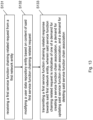
- Figure 15 is a schematic diagram of a procedure according to at least one example embodiment.
- the apparatus according to Figure 5 may perform the method of Figure 15 but is not limited to this method.
- the method of Figure 15 may be performed by the apparatus of Figure 5 but is not limited to being performed by this apparatus.
- a procedure comprises an operation of receiving (S151) service function chaining information related to a packet data unit session, and an operation of creating (S152) policy information for said packet data unit session based on said service function chaining information.
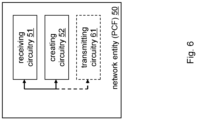
- Figure 6 is a block diagram illustrating an apparatus according to at least one example embodiment.
- Figure 6 illustrates a variation of the apparatus shown in Figure 5 .
- the apparatus according to Figure 6 may thus further comprise a transmitting circuitry 61.
- At least some of the functionalities of the apparatus shown in Figure 5 may be shared between two physically separate devices forming one operational entity. Therefore, the apparatus may be seen to depict the operational entity comprising one or more physically separate devices for executing at least some of the described processes.
- said service function chaining information includes information on a service function path to be applied to network traffic of said packet data unit session, said service function path being an instance of a service function chain, information on at least one type of said network traffic, information on a marking of said at least one type of said network traffic, and/or information on at least one communication endpoint of said network traffic.
- a method according to example embodiments may comprise an operation of transmitting said policy information towards a network entity managing protocol data unit sessions in a mobile network.
- FIG. 7 is a block diagram illustrating an apparatus according to example embodiments.
- the apparatus may be a network node or entity 70 such as a service chain orchestrator entity (or a node or entity hosting or implementing such functionality) comprising a determining circuitry 71 and a transmitting circuitry 72.
- the determining circuitry 71 determines an association between information on a service function chain comprising at least one service function, information on network traffic to be handled by said service function chain, and information on how to forward said network traffic to the service function chain, wherein said information on network traffic to be handled by said service function chain includes information on a network traffic type and/or a definition of communication endpoints for such traffic.
- the transmitting circuitry 72 transmits information on said association towards a first network entity facilitating policy control in a network.
- Figure 16 is a schematic diagram of a procedure according to example embodiments.
- the apparatus according to Figure 7 may perform the method of Figure 16 but is not limited to this method.
- the method of Figure 16 may be performed by the apparatus of Figure 7 but is not limited to being performed by this apparatus.
- a procedure comprises an operation of determining (S161) an association between information on a service function chain comprising at least one service function, information on network traffic to be handled by said service function chain, and information on how to forward said network traffic to the service function chain, wherein said information on network traffic to be handled by said service function chain includes information on a network traffic type and/or a definition of communication endpoints for such traffic, and an operation of transmitting (S162) information on said association towards a first network entity facilitating policy control in a network.
- Figure 8 is a block diagram illustrating an apparatus according to at least one example embodiment.
- Figure 8 illustrates a variation of the apparatus shown in Figure 7 .
- the apparatus according to Figure 8 may thus further comprise a storing circuitry 81, a specifying circuitry 82, a creating circuitry 83, a performing circuitry 84, a notifying circuitry 85, and/or a receiving circuitry 86.
- At least some of the functionalities of the apparatus shown in Figure 7 (or 8 ) may be shared between two physically separate devices forming one operational entity. Therefore, the apparatus may be seen to depict the operational entity comprising one or more physically separate devices for executing at least some of the described processes.
- said network may be a mobile network.
- said service function chain is defined by at least one service function and processing flow order information with respect to said service functions, and wherein said service function chain is associated with a service function chain identifier of said service function chain.
- said information on how to forward said network traffic to the service function chain or path includes information on headers to be added to such traffic before forwarding it.
- said definition of the communication endpoints for such traffic refers to a user equipment, a group of user equipment, a slice, a data network name, any user equipment, and/or any user equipment from a given home network.
- said association between said information on said service function chain, said information on network traffic to be handled by said service function path, and said information on how to forward said network traffic to the service function chain is defined for different service function paths which are instances of the service function chain, wherein each service function path can be associated with network location where this service function path applies.
- This may for example be a DNAI.
- said association between said information on said service function chain, said information on network traffic to be handled by said service function path, and said information on how to forward said network traffic to the service function chain is defined for different service function paths which are instances of the service function chain, wherein each service function path can be associated with different information on how to forward said network traffic to the service function path.
- said service function path is associated with load balancing information for said service function path defining a relationship of said service function path to other service function paths of said service function chain.
- the relationship may define a priority or priority order.
- Such transmitting operation (S162) may comprise an operation of storing the information in a data base that can provide the information to this first network entity facilitating policy control.
- the first network entity may correspond to a policy control function entity mentioned herein.
- Such determining operation (S161) may comprise an operation of specifying said association.
- a method according to example embodiments may comprise an operation of creating said service function path for said service function chain.
- said first network entity is an application function entity.
- a method according to example embodiments may comprise an operation of transmitting a service function chain identifier of said service function chain towards said application function entity.
- a method according to example embodiments may comprise an operation of transmitting a service function chain identifier of said service function chain towards an application function entity.
- a method according to example embodiments may comprise an operation of transmitting said service function chain identifier of said service function chain towards said first network entity, which may correspond to a policy control function entity mentioned herein.
- a method may comprise an operation of performing a change in relation to said service function chain, and an operation of notifying said application function entity on said change in relation to said service function chain, wherein said change in relation to said service function chain includes addition and/or removal of a certain service function path for said service function chain.
- a method according to example embodiments may comprise an operation of receiving, from said application function entity, a request for creation, modification, deletion of said service function chain.
- said request includes information on network traffic to be handled by said service function path and information on how to forward said network traffic.
- the entity performing this method e.g. application function entity, might first receive a positive feedback that the service function chain is created and then link the service function chain to traffic.
- the linking the service function chain to traffic may be effected utilizing the Nnef_SFCInfluence service mentioned herein.
- a method may comprise an operation of receiving a request for a catalogue of service function chains meeting a predetermined criterion, an operation of determining all service function chains matching said predetermined criterion, and an operation of returning said catalogue including all matching service function chains.
- a method may comprise an operation of transmitting a request for a catalogue of service function chains matching a predetermined criterion, and an operation of receiving said catalogue including said service function chain.
- FIG. 9 is a block diagram illustrating an apparatus according to at least one example embodiment.
- the apparatus may be a network node or entity 90 such as an application function entity (or a node or entity hosting or implementing such functionality) comprising a determining circuitry 91 and a transmitting circuitry 92.
- the determining circuitry 91 determines an association between information on a service function chain comprising at least one service function, information on network traffic to be handled by said service function chain, and information on how to forward said network traffic to the service function chain, wherein said information on network traffic to be handled by said service function chain includes information on a network traffic type and/or a definition of communication endpoints for such traffic.
- the transmitting circuitry 92 transmits information on said association towards a first network entity facilitating policy control in a network.
- Figure 17 is a schematic diagram of a procedure according to example embodiments.
- the apparatus according to Figure 9 may perform the method of Figure 17 but is not limited to this method.
- the method of Figure 17 may be performed by the apparatus of Figure 9 but is not limited to being performed by this apparatus.
- a procedure comprises an operation of determining (S171) an association between information on a service function chain comprising at least one service function, information on network traffic to be handled by said service function chain, and information on how to forward said network traffic to the service function chain, wherein said information on network traffic to be handled by said service function chain includes information on a network traffic type and/or a definition of communication endpoints for such traffic, and an operation of transmitting (S172) information on said association towards a first network entity facilitating policy control in a network.
- Figure 10 is a block diagram illustrating an apparatus according to example embodiments.
- Figure 10 illustrates a variation of the apparatus shown in Figure 9 .
- the apparatus according to Figure 10 may thus further comprise a receiving circuitry 101.
- At least some of the functionalities of the apparatus shown in Figure 9 may be shared between two physically separate devices forming one operational entity. Therefore, the apparatus may be seen to depict the operational entity comprising one or more physically separate devices for executing at least some of the described processes.
- said network may be a mobile network.
- said service function chain is defined by at least one service function and processing flow order information with respect to said service functions, and wherein said service function chain is associated with a service function chain identifier of said service function chain.
- said information on how to forward said network traffic to the service function chain or path includes information on headers to be added to such traffic before forwarding it.
- said definition of the communication endpoints for such traffic refers to a user equipment, a group of user equipment, a slice, a data network name, any user equipment, and/or any user equipment from a given home network.
- said association between said information on said service function chain, said information on network traffic to be handled by said service function path, and said information on how to forward said network traffic to the service function chain is defined for different service function paths which are instances of the service function chain, wherein each service function path can be associated with network location where this service function path applies.
- This may for example be a DNAI.
- said association between said information on said service function chain, said information on network traffic to be handled by said service function path, and said information on how to forward said network traffic to the service function chain is defined for different service function paths which are instances of the service function chain, wherein each service function path can be associated with different information on how to forward said network traffic to the service function path.
- said service function path is associated with load balancing information for said service function path defining a relationship of said service function path to other service function paths of said service function chain.
- the relationship may define a priority or priority order.
- Such transmitting operation (S172) may comprise an operation of storing the information in a data base that can provide the information to this first network entity facilitating policy control.
- the first network entity may correspond to a policy control function mentioned herein.
- Such determining operation (S171) may comprise an operation of receiving said information on said association.
- a method according to example embodiments may comprise an operation of transmitting a request for creation of said service function chain.
- said request includes information on network traffic to be handled by said created service function path.
- a method according to example embodiments may comprise an operation of transmitting a request for application of said service function chain to said network traffic towards said communication endpoints towards said first network entity.
- a method may comprise an operation of transmitting a request for a catalogue of service function chains matching a predetermined criterion, and an operation of receiving said catalogue including said service function chain.
- FIG. 11 is a block diagram illustrating an apparatus according to at least one example embodiment.
- the apparatus may be a network node or entity 110 such as a policy control function entity (or a node or entity hosting or implementing such functionality) comprising a receiving circuitry 111 and a creating circuitry 112.
- the receiving circuitry 111 receives information on an association between information on a service function path which is an instance of a service function chain comprising at least one service function and information on network traffic to be handled by said service function path and information on how to forward said network traffic, wherein said information on network traffic to be handled by said service function path includes information on a combination of a network traffic type and communication endpoints.
- the creating circuitry 112 creates policy information based on said information on said association.
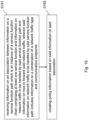
- Figure 18 is a schematic diagram of a procedure according to example embodiments.
- the apparatus according to Figure 11 may perform the method of Figure 18 but is not limited to this method.
- the method of Figure 18 may be performed by the apparatus of Figure 11 but is not limited to being performed by this apparatus.
- a procedure comprises an operation of receiving (S181) information on an association between information on a service function path which is an instance of a service function chain comprising at least one service function and information on network traffic to be handled by said service function path and information on how to forward said network traffic, wherein said information on network traffic to be handled by said service function path includes information on a combination of a network traffic type and communication endpoints, and an operation of creating (S182) policy information based on said information on said association.
- Figure 12 is a block diagram illustrating an apparatus according to at least one example embodiment.
- Figure 12 illustrates a variation of the apparatus shown in Figure 11 .
- the apparatus according to Figure 12 may thus further comprise a transmitting circuitry 121.
- At least some of the functionalities of the apparatus shown in Figure 11 may be shared between two physically separate devices forming one operational entity. Therefore, the apparatus may be seen to depict the operational entity comprising one or more physically separate devices for executing at least some of the described processes.
- a method according to example embodiments may comprise an operation of transmitting said policy information towards a network entity managing protocol data unit sessions in a network.
- the network entity managing protocol data unit sessions in a network may correspond to a session management function entity mentioned herein.
- said network may be a mobile network.
- a method according to example embodiments may comprise an operation of receiving a request for application of said service function chain to said network traffic towards said communication endpoints.
- an SCO is provided as follows.
- Such SCO offers an API to AFs to discover available SFC(s) and to request the creation of new dynamic SFCs. This API may be reached via the NEF.
- the SCO controls a service flow forwarder to create, delete or modify transport/user plane connectivity between the SFs themselves and also to handle traffic coming from UPF(s), e.g., traffic sent from UPF(s) with the "classification" tags to identify (e.g., NSH / VXLAN tag / (GRE) tunnel header) the traffic associated with the SFP.
- UPF User Plane Function
- the SCO controls a service flow forwarder to create, delete or modify transport/user plane connectivity between the SFs themselves and also to handle traffic coming from UPF(s), e.g., traffic sent from UPF(s) with the "classification" tags to identify (e.g., NSH / VXLAN tag / (GRE) tunnel header) the traffic associated with the SFP.
- the SCO may directly update the PCF to provide the PCF with similar information as provided back to the AF in Alternative 1, e.g,
- new northbound services are provided as follows.
- Nnef_SFCDefinition a new northbound service called "Nnef_SFCInfluence”
- Nnef_SFCInfluence a new northbound service
- the SCO is reached via the NEF which provides the northbound service " Nnef_SFCDefinition " that allows an AF to discover, create, modify, and delete SFCs.
- NEF provides the northbound service " Nnef_SFCDefinition " that allows an AF to discover, create, modify, and delete SFCs.
- An AF could also subscribe to be notified when new SFCs are deployed or existing SFCs are undeployed/modified.
- the " Nnef_SFCDefinition " service allows AFs that are not able to interface with the SCO to request the creation of a new SFC via NEF. NEF forwards the request to the SCO and when the SCO, assuming successful SFC instantiation, returns the ID of the created SFC, it forwards the SFC ID of the newly created SFC to the AF.
- the API may return the list of SFP(s) and for each of them the corresponding SFP information.
- the northbound service "Nnef_SFCInfluence” allows an AF to associate the SFC and SFP(s) with certain traffic (identified by traffic filters) and UE(s) (e.g. traffic of a UE, a group of UEs, a (set of) DNN/SNSSAI pair, etc.).
- traffic filters e.g. traffic of a UE, a group of UEs, a (set of) DNN/SNSSAI pair, etc.
- UE(s) e.g. traffic of a UE, a group of UEs, a (set of) DNN/SNSSAI pair, etc.
- it allows an AF to provide SFP(s) and their associated SFP information (as received from SCO possibly via NEF).
- the NEF stores the AF policy in an UDR record whose key corresponds to the description of the set of UE targets.
- the keys for these data in UDR may be structured as shown in the table below.
- AF "Nnef_SFCInfluence” information AF transaction internal ID S-NSSAI and DNN and/or Internal Group Identifier or SUPI
- TSPs are enhanced with SFPs including SFP information, which are called "extended" TSPs.
- PCC rules may be extended to convey the "extended" TSPs (which for example include SFPs with priorities).
- N4 rules may be extended to convey the "extended" TSPs to the UPF for enforcement.
- Figures 20 and 21 show schematic diagrams of signaling sequences according to example embodiments.
- Figure 20 illustrates associating the SFC and SFP(s) with certain traffic and UE(s). Further, Figure 21 illustrates discovering/creating SFC(s).
- Any AF interaction with the network may depend upon proper authentication/authorization of the AF.
- Such authentication/authorization may be implemented with state of the art AF authentication/authorization mechanisms.
- an AF decides that a new SFC is to be created.
- the AF consumes an API exposed by SCO (possibly via the NEF in which case this is using " Nnef_SFCDefinition_Create " ) to request the creation of a new SFC.
- the request may also include N6 instances (identified e.g. by DNAI(s)), where instances of this SFC (e.g. SFP(s)) are to be created.
- SFP(s) e.g. SFP(s)
- the SCO creates the SFC and, at minimum, the SCO returns the SFC ID to the AF.
- the SCO may also return SFPs applicable to the SFC. In this case, each SFP is associated with the SFP information.
- Figure 21 particularly illustrates details of step 1 of Figure 20 . According to example embodiments, these may replace or supplement the description of step 1 of Figure 20 above.
- the AF may, using " Nnef_SFCDefinition_GET " , request a catalog/list of existing SFC(s) matching some criteria (such as SFC involving NFx and NFy; the criteria could also list all existing SFC(s)).
- the NEF validates the request and forwards it to the SCO together with information on the AF ID and on the allowed scope (DNN, S-NSSAI) for the request.
- the SCO responds with the list of SFC(s) that
- the SCO response contains a list of SFC(s) with at least their SFC ID, the ordered set of NFs of the SFC, and possibly, when Alternative 1 applies, the associated SFP(s) together with their SFP information.
- the AF can immediately proceed to step 2 of Figure 20 , e.g., without requesting creation of a new SFC. Otherwise, the AF may proceed with the subsequent step 3 of Figure 21 .
- the AF may, using " Nnef_SFCDefinition_Create " , request a new SFC, as discussed in step 1 of Figure 20 above.
- the SCO returns the SFC ID (potentially together with SFPs applicable to the SFC).
- the AF issues an " Nnef_SFCInfluence_Create " request.
- the SFC profile includes traffic filters of the traffic to which the SFC applies, the identification of the target UE(s) (one UE a group of UE(s) or any UE), possibly the target DNN, S-NSSAI (if this is not provided by the AF, the NEF determines the target DNN(s), S-NSSAI(s) based on the AF ID or AF identifier), and optionally (for Alternative 1) SFPs and their SFP information.
- the request contains also an AF transaction ID.
- the AF invokes a " Nnef_SFCInfluence_Update " or " Nnef_SFCInfluence_Delete " service operation providing the corresponding AF transaction ID.
- the AF reaches the PCF selected for the existing PDU session by configuration or by invoking " Nbsf_management_Discovery " service.
- the " Npcf_PolicyAuthorization " service can be extended to support the scenario where AF/NEF requests to apply an SFC on a single UE identified by its IP address.
- the extended " Npcf_PolicyAuthorization " service allows a direct interaction between AF/NEF and PCF. After AF/NEF discovers the involved PCF(s), it consumes the extended " Npcf_SMPolicyControl " service to update the policy in the PCF(s).
- the NEF ensures the necessary authorization control, including throttling of AF requests and mapping between the information provided by the AF and information needed by the 5GC (this may be implemented as specified in 3GPP TS 23.502).
- Each of the AF Transaction Internal ID and the S-NSSAI and DNN and/or the internal group identifier or SUPI are regarded as Data Key when the AF request information is stored into the UDR.
- the NEF responds to the AF with a " Nnef_SFCInfluence_Create” response or " Nnef_SFCInfluence_Update " response or " Nnef_SFCInfluence_Delete” response, as applicable.
- the PCF(s) that have subscribed to modifications of AF requests receive(s) a " Nudr_DM_Notify " notification of data change from the UDR.
- the PCF determines if existing PDU sessions are potentially impacted by the AF request. For each of these (potentially impacted) PDU sessions, the PCF updates the SMF with corresponding new policy information about the PDU session by invoking an " Npcf_SMPolicyControl_UpdateNotify " service operation (this may be implemented as specified in 3GPP TS 23.502).
- the SMF may take appropriate actions to reconfigure the user plane of the PDU session.
- the network entity may comprise further units that are utilized for its respective operation. However, a description of these units is omitted in this specification.
- the arrangement of the functional blocks of the devices is not construed to limit the disclosure, and the functions may be performed by one block or further split into sub-blocks.
- the apparatus e.g. network node or entity (or some other means) is configured to perform some function
- this is to be construed to be a description stating that a (e.g. at least one) processor or corresponding circuitry, potentially in cooperation with computer program code stored in the memory of the respective apparatus, is configured to cause the apparatus to perform at least the thus mentioned function.
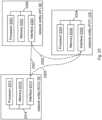
- the apparatus (network node or entity) 10' (corresponding to the network node or entity 10) comprises a processor 221, a memory 222 and an interface 223, which are connected by a bus 224 or the like.
- the apparatus (network node or entity) 30' (corresponding to the network node or entity 30) comprises a processor 221, a memory 222 and an interface 223, which are connected by a bus 224 or the like.
- the apparatus (network node or entity) 50' (corresponding to the network node or entity 50) comprises a processor 221, a memory 222 and an interface 223, which are connected by a bus 224 or the like.
- the apparatuses may respectively be connected via link 225 with another apparatus, e.g. another network node or entity 220, in particular with an interface of said another network node or entity 220.
- the apparatus (network node or entity) 70' (corresponding to the network node or entity 70) comprises a processor 2311, a memory 2312 and an interface 2313, which are connected by a bus 2314 or the like.
- the apparatus (network node or entity) 90' (corresponding to the network node or entity 90) comprises a processor 2321, a memory 2322 and an interface 2323, which are connected by a bus 2324 or the like.
- the apparatus (network node or entity) 110' (corresponding to the network node or entity 110) comprises a processor 2331, a memory 2332 and an interface 2333, which are connected by a bus 2334 or the like.
- the apparatuses may be connected via link 2301, 2302, 2303, respectively.
- the processor 221/2311/2321/2331 and/or the interface 223/2313/2323/2333 may also include a modem or the like to facilitate communication over a (hardwire or wireless) link, respectively.
- the interface 223/2313/2323/2333 may include a suitable transceiver coupled to one or more antennas or communication means for (hardwire or wireless) communications with the linked or connected device(s), respectively.
- the interface 223/2313/2323/2333 is generally configured to communicate with at least one other apparatus, e.g. the interface thereof.
- the memory 222/2312/2322/2332 may store respective programs assumed to include program instructions or computer program code that, when executed by the respective processor, enables the respective electronic device or apparatus to operate in accordance with the example embodiments.
- the respective devices/apparatuses may represent means for performing respective operations and/or exhibiting respective functionalities, and/or the respective devices (and/or parts thereof) may have functions for performing respective operations and/or exhibiting respective functionalities.
- processor or some other means
- the processor is configured to perform some function
- this is to be construed to be a description stating that at least one processor, potentially in cooperation with computer program code stored in the memory of the respective apparatus, is configured to cause the apparatus to perform at least the thus mentioned function.
- an apparatus representing the network node or entity 10 comprises at least one processor 221, at least one memory 222 including computer program code, and at least one interface 223 configured for communication with at least another apparatus.
- the processor e.g. the at least one processor 221, with the at least one memory 222 and the computer program code
- the processor is configured to perform receiving a first service function chaining related request from a first network entity (thus the apparatus comprising corresponding means for receiving), to perform modifying a user data repository entity based on content of said first service function chaining related request (thus the apparatus comprising corresponding means for modifying), and to perform transmitting a first service function chaining related response towards said first network entity, wherein said service function chaining related request is indicative of one of a demand for creating a service function chain association, a demand for updating said service function chain association, and a demand for deleting said service function chain association (thus the apparatus comprising corresponding means for transmitting).
- an apparatus representing the network node or entity 30 comprises at least one processor 221, at least one memory 222 including computer program code, and at least one interface 223 configured for communication with at least another apparatus.
- the processor e.g. the at least one processor 221, with the at least one memory 222 and the computer program code
- the processor is configured to perform receiving, from a network exposure function entity, a service function chaining related user data repository entity modification operation (thus the apparatus comprising corresponding means for receiving), to perform modifying a storage content based on said service function chaining related user data repository entity modification operation, wherein said service function chaining related user data repository entity modification operation is a service function chaining related user data repository entity storing operation including at least a transaction identifier identifying a service function chain association (thus the apparatus comprising corresponding means for modifying), and to perform (relation to said modifying) storing content of said service function chaining related user data repository entity storing operation as an entry labeled with said transaction identifier (thus the apparatus comprising corresponding means for storing
- an apparatus representing the network node or entity 50 comprises at least one processor 221, at least one memory 222 including computer program code, and at least one interface 223 configured for communication with at least another apparatus.
- the processor e.g. the at least one processor 221, with the at least one memory 222 and the computer program code
- the processor is configured to perform receiving service function chaining information related to a packet data unit session (thus the apparatus comprising corresponding means for receiving), and to perform creating policy information for said packet data unit session based on said service function chaining information (thus the apparatus comprising corresponding means for creating).
- an apparatus representing the network node or entity 70 comprises at least one processor 2311, at least one memory 2312 including computer program code, and at least one interface 2312 configured for communication with at least another apparatus.
- the processor e.g. the at least one processor 2311, with the at least one memory 2312 and the computer program code
- the processor is configured to perform determining an association between information on a service function chain comprising at least one service function, information on network traffic to be handled by said service function chain, and information on how to forward said network traffic to the service function chain, wherein said information on network traffic to be handled by said service function chain includes information on a network traffic type and/or a definition of communication endpoints for such traffic (thus the apparatus comprising corresponding means for determining), and to perform transmitting information on said association towards a first network entity facilitating policy control in a network (thus the apparatus comprising corresponding means for transmitting).
- an apparatus representing the network node or entity 90 comprises at least one processor 2321, at least one memory 2322 including computer program code, and at least one interface 2323 configured for communication with at least another apparatus.
- the processor e.g. the at least one processor 2321, with the at least one memory 2322 and the computer program code
- the processor is configured to perform determining an association between information on a service function chain comprising at least one service function, information on network traffic to be handled by said service function chain, and information on how to forward said network traffic to the service function chain, wherein said information on network traffic to be handled by said service function chain includes information on a network traffic type and/or a definition of communication endpoints for such traffic (thus the apparatus comprising corresponding means for determining), and to perform transmitting information on said association towards a first network entity facilitating policy control in a network (thus the apparatus comprising corresponding means for transmitting).
- an apparatus representing the network node or entity 110 comprises at least one processor 2331, at least one memory 2332 including computer program code, and at least one interface 2333 configured for communication with at least another apparatus.
- the processor e.g. the at least one processor 2331, with the at least one memory 2332 and the computer program code
- the processor is configured to perform receiving information on an association between information on a service function path which is an instance of a service function chain comprising at least one service function and information on network traffic to be handled by said service function path and information on how to forward said network traffic, wherein said information on network traffic to be handled by said service function path includes information on a combination of a network traffic type and communication endpoints (thus the apparatus comprising corresponding means for receiving), and to perform creating policy information based on said information on said association (thus the apparatus comprising corresponding means for creating).
- respective functional blocks or elements as described herein can be implemented by any means, either in hardware and/or software, respectively, if it is only adapted to perform the described functions of the respective parts.
- the mentioned method steps can be realized in individual functional blocks or by individual devices, or one or more of the method steps can be realized in a single functional block or by a single device.
- any method step is suitable to be implemented as software or by hardware without changing the idea of the present disclosure.
- Devices and means can be implemented as individual devices, but this does not exclude that they are implemented in a distributed fashion throughout the system, as long as the functionality of the device is preserved.
- Software in the sense of the present description comprises software code as such comprising code means or portions or a computer program or a computer program product for performing the respective functions, as well as software (or a computer program or a computer program product) embodied on a tangible medium such as a computer-readable (storage) medium having stored thereon a respective data structure or code means/portions or embodied in a signal or in a chip, potentially during processing thereof.
- Such measures may, for example, comprise receiving a first service function chaining related request from a first network entity, modifying a user data repository entity based on content of said first service function chaining related request, and transmitting a first service function chaining related response towards said first network entity, wherein said service function chaining related request is indicative of one of a demand for creating a service function chain association, a demand for updating said service function chain association, and a demand for deleting said service function chain association.
Landscapes
- Engineering & Computer Science (AREA)
- Computer Networks & Wireless Communication (AREA)
- Signal Processing (AREA)
- Data Exchanges In Wide-Area Networks (AREA)
Priority Applications (1)
| Application Number | Priority Date | Filing Date | Title |
|---|---|---|---|
| EP22153767.3A EP4221155A1 (fr) | 2022-01-27 | 2022-01-27 | Amélioration de chaînage de fonction de service |
Applications Claiming Priority (1)
| Application Number | Priority Date | Filing Date | Title |
|---|---|---|---|
| EP22153767.3A EP4221155A1 (fr) | 2022-01-27 | 2022-01-27 | Amélioration de chaînage de fonction de service |
Publications (1)
| Publication Number | Publication Date |
|---|---|
| EP4221155A1 true EP4221155A1 (fr) | 2023-08-02 |
Family
ID=80121697
Family Applications (1)
| Application Number | Title | Priority Date | Filing Date |
|---|---|---|---|
| EP22153767.3A Withdrawn EP4221155A1 (fr) | 2022-01-27 | 2022-01-27 | Amélioration de chaînage de fonction de service |
Country Status (1)
| Country | Link |
|---|---|
| EP (1) | EP4221155A1 (fr) |
Citations (1)
| Publication number | Priority date | Publication date | Assignee | Title |
|---|---|---|---|---|
| WO2021017381A1 (fr) * | 2019-07-31 | 2021-02-04 | Huawei Technologies Co., Ltd. | Systèmes et procédés de prise en charge de direction de trafic par l'intermédiaire d'une chaîne de fonctions de service |
-
2022
- 2022-01-27 EP EP22153767.3A patent/EP4221155A1/fr not_active Withdrawn
Patent Citations (1)
| Publication number | Priority date | Publication date | Assignee | Title |
|---|---|---|---|---|
| WO2021017381A1 (fr) * | 2019-07-31 | 2021-02-04 | Huawei Technologies Co., Ltd. | Systèmes et procédés de prise en charge de direction de trafic par l'intermédiaire d'une chaîne de fonctions de service |
Non-Patent Citations (1)
| Title |
|---|
| 3GPP TS 23.502 |
Similar Documents
| Publication | Publication Date | Title |
|---|---|---|
| CN114651477B (zh) | 用于用户面处理的系统和方法 | |
| US10805268B2 (en) | Method and apparatuses for enabling routing of data packets between a wireless device and a service provider based in the local service cloud | |
| US10382226B2 (en) | Integrated services processing for mobile networks | |
| WO2021017381A1 (fr) | Systèmes et procédés de prise en charge de direction de trafic par l'intermédiaire d'une chaîne de fonctions de service | |
| WO2020035051A1 (fr) | Systèmes et procédés pour permettre une communication privée au sein d'un groupe d'équipements d'utilisateurs | |
| US20210112127A1 (en) | Communication method and apparatus | |
| EP4243379B1 (fr) | Procédés, systèmes et supports lisibles par ordinateur pour découvrir des producteurs de service de fonction de réseau dans un réseau hiérarchique | |
| US20210091994A1 (en) | Network slicing with smart contracts | |
| US11770325B2 (en) | Automatically selecting an optimized communication channel for communications with a deflect in an overlay network | |
| CN111936993A (zh) | 保护在核心网络域之间传送的消息 | |
| US11483279B2 (en) | Domain name system as an authoritative source for multipath mobility policy | |
| US10455641B2 (en) | Protocol data unit management | |
| US20170118081A1 (en) | Network-based policy control for hybrid accesses | |
| US20250126466A1 (en) | Error message generation and processing | |
| Guttman et al. | Path to 5G: A control plane perspective | |
| WO2022232445A2 (fr) | Système, classificateur et procédé de gestion de trafic reposant sur une politique de réseau de flux de données | |
| US8675669B2 (en) | Policy homomorphic network extension | |
| EP3011448A1 (fr) | Sélection de machines virtuelles ou d'entités de réseau virtualisé | |
| US20240430207A1 (en) | Ingress gateway with data flow classification functionality | |
| EP4221155A1 (fr) | Amélioration de chaînage de fonction de service | |
| EP3125634A1 (fr) | Procédé de transmission de message et dispositif noeud basés sur une sélection de réseau et une configuration temporelle | |
| JP2026501258A (ja) | ホームルーティングセッションブレイクアウトのためにトラフィックロードポリシをvplmnに伝達するための方法および装置 | |
| US12519732B1 (en) | Classifier for network policy-based traffic management | |
| US20250168755A1 (en) | Provisioning in-network computing services in cellular core networks | |
| GB2633010A (en) | Enablement and control of distribution of compute operations in networks |
Legal Events
| Date | Code | Title | Description |
|---|---|---|---|
| PUAI | Public reference made under article 153(3) epc to a published international application that has entered the european phase |
Free format text: ORIGINAL CODE: 0009012 |
|
| STAA | Information on the status of an ep patent application or granted ep patent |
Free format text: STATUS: REQUEST FOR EXAMINATION WAS MADE |
|
| 17P | Request for examination filed |
Effective date: 20220127 |
|
| AK | Designated contracting states |
Kind code of ref document: A1 Designated state(s): AL AT BE BG CH CY CZ DE DK EE ES FI FR GB GR HR HU IE IS IT LI LT LU LV MC MK MT NL NO PL PT RO RS SE SI SK SM TR |
|
| STAA | Information on the status of an ep patent application or granted ep patent |
Free format text: STATUS: THE APPLICATION IS DEEMED TO BE WITHDRAWN |
|
| 18D | Application deemed to be withdrawn |
Effective date: 20240203 |