EP4223379A1 - Procédé, appareil et dispositif de traitement de jeu en nuage, et support de stockage - Google Patents
Procédé, appareil et dispositif de traitement de jeu en nuage, et support de stockage Download PDFInfo
- Publication number
- EP4223379A1 EP4223379A1 EP22794414.7A EP22794414A EP4223379A1 EP 4223379 A1 EP4223379 A1 EP 4223379A1 EP 22794414 A EP22794414 A EP 22794414A EP 4223379 A1 EP4223379 A1 EP 4223379A1
- Authority
- EP
- European Patent Office
- Prior art keywords
- client
- cloud gaming
- processing resource
- stream processing
- instance
- Prior art date
- Legal status (The legal status is an assumption and is not a legal conclusion. Google has not performed a legal analysis and makes no representation as to the accuracy of the status listed.)
- Pending
Links
Images





Classifications
-
- A—HUMAN NECESSITIES
- A63—SPORTS; GAMES; AMUSEMENTS
- A63F—CARD, BOARD, OR ROULETTE GAMES; INDOOR GAMES USING SMALL MOVING PLAYING BODIES; VIDEO GAMES; GAMES NOT OTHERWISE PROVIDED FOR
- A63F13/00—Video games, i.e. games using an electronically generated display having two or more dimensions
- A63F13/50—Controlling the output signals based on the game progress
- A63F13/52—Controlling the output signals based on the game progress involving aspects of the displayed game scene
-
- A—HUMAN NECESSITIES
- A63—SPORTS; GAMES; AMUSEMENTS
- A63F—CARD, BOARD, OR ROULETTE GAMES; INDOOR GAMES USING SMALL MOVING PLAYING BODIES; VIDEO GAMES; GAMES NOT OTHERWISE PROVIDED FOR
- A63F13/00—Video games, i.e. games using an electronically generated display having two or more dimensions
- A63F13/85—Providing additional services to players
- A63F13/86—Watching games played by other players
-
- A—HUMAN NECESSITIES
- A63—SPORTS; GAMES; AMUSEMENTS
- A63F—CARD, BOARD, OR ROULETTE GAMES; INDOOR GAMES USING SMALL MOVING PLAYING BODIES; VIDEO GAMES; GAMES NOT OTHERWISE PROVIDED FOR
- A63F13/00—Video games, i.e. games using an electronically generated display having two or more dimensions
- A63F13/30—Interconnection arrangements between game servers and game devices; Interconnection arrangements between game devices; Interconnection arrangements between game servers
- A63F13/35—Details of game servers
- A63F13/355—Performing operations on behalf of clients with restricted processing capabilities, e.g. servers transform changing game scene into an encoded video stream for transmitting to a mobile phone or a thin client
-
- A—HUMAN NECESSITIES
- A63—SPORTS; GAMES; AMUSEMENTS
- A63F—CARD, BOARD, OR ROULETTE GAMES; INDOOR GAMES USING SMALL MOVING PLAYING BODIES; VIDEO GAMES; GAMES NOT OTHERWISE PROVIDED FOR
- A63F13/00—Video games, i.e. games using an electronically generated display having two or more dimensions
- A63F13/55—Controlling game characters or game objects based on the game progress
-
- A—HUMAN NECESSITIES
- A63—SPORTS; GAMES; AMUSEMENTS
- A63F—CARD, BOARD, OR ROULETTE GAMES; INDOOR GAMES USING SMALL MOVING PLAYING BODIES; VIDEO GAMES; GAMES NOT OTHERWISE PROVIDED FOR
- A63F13/00—Video games, i.e. games using an electronically generated display having two or more dimensions
- A63F13/70—Game security or game management aspects
- A63F13/77—Game security or game management aspects involving data related to game devices or game servers, e.g. configuration data, software version or amount of memory
-
- A—HUMAN NECESSITIES
- A63—SPORTS; GAMES; AMUSEMENTS
- A63F—CARD, BOARD, OR ROULETTE GAMES; INDOOR GAMES USING SMALL MOVING PLAYING BODIES; VIDEO GAMES; GAMES NOT OTHERWISE PROVIDED FOR
- A63F13/00—Video games, i.e. games using an electronically generated display having two or more dimensions
- A63F13/80—Special adaptations for executing a specific game genre or game mode
- A63F13/847—Cooperative playing, e.g. requiring coordinated actions from several players to achieve a common goal
-
- H—ELECTRICITY
- H04—ELECTRIC COMMUNICATION TECHNIQUE
- H04N—PICTORIAL COMMUNICATION, e.g. TELEVISION
- H04N21/00—Selective content distribution, e.g. interactive television or video on demand [VOD]
- H04N21/20—Servers specifically adapted for the distribution of content, e.g. VOD servers; Operations thereof
- H04N21/25—Management operations performed by the server for facilitating the content distribution or administrating data related to end-users or client devices, e.g. end-user or client device authentication, learning user preferences for recommending movies
- H04N21/258—Client or end-user data management, e.g. managing client capabilities, user preferences or demographics, processing of multiple end-users preferences to derive collaborative data
- H04N21/25808—Management of client data
- H04N21/25825—Management of client data involving client display capabilities, e.g. screen resolution of a mobile phone
-
- H—ELECTRICITY
- H04—ELECTRIC COMMUNICATION TECHNIQUE
- H04N—PICTORIAL COMMUNICATION, e.g. TELEVISION
- H04N21/00—Selective content distribution, e.g. interactive television or video on demand [VOD]
- H04N21/20—Servers specifically adapted for the distribution of content, e.g. VOD servers; Operations thereof
- H04N21/25—Management operations performed by the server for facilitating the content distribution or administrating data related to end-users or client devices, e.g. end-user or client device authentication, learning user preferences for recommending movies
- H04N21/258—Client or end-user data management, e.g. managing client capabilities, user preferences or demographics, processing of multiple end-users preferences to derive collaborative data
- H04N21/25866—Management of end-user data
- H04N21/25875—Management of end-user data involving end-user authentication
-
- H—ELECTRICITY
- H04—ELECTRIC COMMUNICATION TECHNIQUE
- H04N—PICTORIAL COMMUNICATION, e.g. TELEVISION
- H04N21/00—Selective content distribution, e.g. interactive television or video on demand [VOD]
- H04N21/20—Servers specifically adapted for the distribution of content, e.g. VOD servers; Operations thereof
- H04N21/25—Management operations performed by the server for facilitating the content distribution or administrating data related to end-users or client devices, e.g. end-user or client device authentication, learning user preferences for recommending movies
- H04N21/266—Channel or content management, e.g. generation and management of keys and entitlement messages in a conditional access system, merging a VOD unicast channel into a multicast channel
- H04N21/2662—Controlling the complexity of the video stream, e.g. by scaling the resolution or bitrate of the video stream based on the client capabilities
-
- H—ELECTRICITY
- H04—ELECTRIC COMMUNICATION TECHNIQUE
- H04N—PICTORIAL COMMUNICATION, e.g. TELEVISION
- H04N21/00—Selective content distribution, e.g. interactive television or video on demand [VOD]
- H04N21/40—Client devices specifically adapted for the reception of or interaction with content, e.g. set-top-box [STB]; Operations thereof
- H04N21/47—End-user applications
- H04N21/478—Supplemental services, e.g. displaying phone caller identification, shopping application
- H04N21/4781—Games
-
- H—ELECTRICITY
- H04—ELECTRIC COMMUNICATION TECHNIQUE
- H04N—PICTORIAL COMMUNICATION, e.g. TELEVISION
- H04N21/00—Selective content distribution, e.g. interactive television or video on demand [VOD]
- H04N21/60—Network structure or processes for video distribution between server and client or between remote clients; Control signalling between clients, server and network components; Transmission of management data between server and client, e.g. sending from server to client commands for recording incoming content stream; Communication details between server and client
- H04N21/65—Transmission of management data between client and server
- H04N21/658—Transmission by the client directed to the server
- H04N21/6582—Data stored in the client, e.g. viewing habits, hardware capabilities, credit card number
-
- H—ELECTRICITY
- H04—ELECTRIC COMMUNICATION TECHNIQUE
- H04N—PICTORIAL COMMUNICATION, e.g. TELEVISION
- H04N21/00—Selective content distribution, e.g. interactive television or video on demand [VOD]
- H04N21/60—Network structure or processes for video distribution between server and client or between remote clients; Control signalling between clients, server and network components; Transmission of management data between server and client, e.g. sending from server to client commands for recording incoming content stream; Communication details between server and client
- H04N21/65—Transmission of management data between client and server
- H04N21/658—Transmission by the client directed to the server
- H04N21/6587—Control parameters, e.g. trick play commands, viewpoint selection
-
- A—HUMAN NECESSITIES
- A63—SPORTS; GAMES; AMUSEMENTS
- A63F—CARD, BOARD, OR ROULETTE GAMES; INDOOR GAMES USING SMALL MOVING PLAYING BODIES; VIDEO GAMES; GAMES NOT OTHERWISE PROVIDED FOR
- A63F2300/00—Features of games using an electronically generated display having two or more dimensions, e.g. on a television screen, showing representations related to the game
- A63F2300/50—Features of games using an electronically generated display having two or more dimensions, e.g. on a television screen, showing representations related to the game characterized by details of game servers
- A63F2300/55—Details of game data or player data management
- A63F2300/552—Details of game data or player data management for downloading to client devices, e.g. using OS version, hardware or software profile of the client device
-
- A—HUMAN NECESSITIES
- A63—SPORTS; GAMES; AMUSEMENTS
- A63F—CARD, BOARD, OR ROULETTE GAMES; INDOOR GAMES USING SMALL MOVING PLAYING BODIES; VIDEO GAMES; GAMES NOT OTHERWISE PROVIDED FOR
- A63F2300/00—Features of games using an electronically generated display having two or more dimensions, e.g. on a television screen, showing representations related to the game
- A63F2300/60—Methods for processing data by generating or executing the game program
- A63F2300/66—Methods for processing data by generating or executing the game program for rendering three dimensional images
Definitions
- the present disclosure relates to the technical field of computers, and in particular to the technical field of cloud gaming, and specifically to processing of cloud gaming.
- Cloud gaming refers to a game based on cloud computing.
- a general process of cloud gaming is as follows.
- a user requests to start cloud gaming by using a terminal, and the cloud gaming starts a cloud gaming instance in the cloud.
- the user logs in to the cloud gaming instance through the terminal to operate the cloud gaming instance, that is, playing the cloud gaming.
- all cloud gaming instances run on a cloud gaming server, and the cloud gaming server compresses a game picture obtained by rendering and then transmits the compressed game picture to the terminal of the user for presentation by using a network.
- the terminal detects an operation event of the user, such as a touchscreen event or a keyboard mouse event, the terminal transmits the operation event to the cloud gaming server by using the network, so as to operate the cloud gaming.
- a cloud gaming processing method, apparatus, and device, and a storage medium are provided, so as to improve flexibility and diversity of a cloud gaming operation mode.
- a cloud gaming processing method includes:
- a cloud gaming processing apparatus includes a media coding module and a media transmission module.
- the media transmission module is configured to receive an access request of a second client for a cloud gaming instance.
- the cloud gaming instance is created in response to a play request of a first client for a cloud gaming, the first client is bound to a first stream processing resource of the cloud gaming instance, and data is transmitted between the cloud gaming instance and the first client by using the first stream processing resource.
- Both the media coding module and the media transmission module are configured to create a second stream processing resource of the cloud gaming instance in response to the access request of the second client.
- the first stream processing resource is different from the second stream processing resource.
- the media transmission module is further configured to bind the second stream processing resource to the second client; and transmit data between the second client and the cloud gaming instance by using the second stream processing resource.
- a cloud gaming processing device includes: a processor, configured to execute a computer program; and a computer-readable storage medium storing a computer program, where the computer program is loaded and executed by the processor to implement the foregoing cloud gaming processing method.
- a computer-readable storage medium storing a computer program is provided according to embodiments of the present disclosure.
- the computer program is read and executed by a processor of a computer device to cause the computer device to implement the foregoing cloud gaming processing method.
- a computer program product or a computer program is provided according to embodiments of the present disclosure.
- the computer program product or the computer program includes computer instructions, and the computer instructions are stored in a computer-readable storage medium.
- a processor of a computer device reads the computer instructions from the computer-readable storage medium, and executes the computer instructions, to cause the computer device to perform the foregoing cloud gaming processing method.
- a first stream processing resource of the cloud gaming instance is allocated to the first client, and the first client is bound to the first stream processing resource.
- Data is transmitted between the cloud gaming instance and the first client by using the first stream processing resource.
- a second client may request to access to the cloud gaming instance created by the first client.
- a second stream processing resource of the cloud gaming instance is allocated to the second client, and the second stream processing resource is bound to the second client.
- Data is transmitted between the second client and the cloud gaming instance by using the second stream processing resource.
- each client accessed to the same cloud gaming instance is bound to a separate stream processing resource of the cloud gaming instance, and transmits data by using the separate stream processing resource bound to the client.
- targeted and independent coding traffic control and quality control can be performed on different clients by using the corresponding stream processing resources, and different stream processing resources are independent of each other, so that data is transmitted efficiently and stably between the client and the cloud gaming instance.
- Cloud computing may refer to a mode of delivery and use of an Internet Technology (IT) infrastructure, and may refer to obtaining a required resource in an on-demand and easy-to-scale manner by using a network.
- Generalized cloud computing refers to a mode of service delivery and use, and a required service is obtained through a network in an on-demand and easy-to-scale manner. This service may be related to IT, software, the Internet, or other services.
- Cloud computing is a product of development and convergence of conventional computers and network technologies such as grid computing, distributed computing, parallel computing, utility computing, network storage, virtualization, load balancing, and the like.
- cloud computing With the development of the Internet, real-time data streams, and connection devices, and the development of demands for search services, social networks, mobile commerce, and open collaboration, cloud computing rapidly develops. Unlike the previous parallel distributed computing, cloud computing can revolutionize the entire Internet mode and enterprise management mode.
- a blockchain is a new application mode of computer technologies such as distributed data storage, peer-to-peer transmission, a consensus mechanism, and an encryption algorithm.
- the blockchain is essentially a decentralized database and is a string of data blocks generated through association by using a cryptographic method. Each data block includes information of a batch of network transactions, the information being used for verifying the validity of information of the data block (anti-counterfeiting) and generating a next data block.
- the blockchain ensures that data cannot be tampered with or forged according to cryptography.
- An implementation principle of cloud gaming includes the following aspects (1) to (4).
- a terminal for example, a mobile phone or a personal computer(PC)
- a cloud gaming server allocates and runs a container for each client participating in the cloud gaming.
- Running a container means starting a cloud gaming instance, that is, the user playing the cloud gaming once corresponds to one cloud gaming instance. For example, the user enters the cloud gaming by using a client of the cloud gaming, and plays the game.
- the cloud gaming server starts and runs a container on the cloud, that is, starts and runs a cloud gaming instance.
- the cloud gaming instance corresponds to the client used by the user, and the cloud gaming instance provides a game interface of the cloud gaming for the client of the cloud gaming.
- the client of the cloud gaming displays the game interface returned by the cloud gaming instance corresponding to the client.
- the client of the cloud gaming reports operation data generated by these operations to the cloud gaming server.
- the cloud gaming server refreshes the game interface of the cloud gaming according to the operation data in the corresponding cloud gaming instance, and returns the refreshed game interface to the client of the cloud gaming for displaying.
- the cloud gaming instance created in the cloud gaming server is destroyed automatically.
- the operation performed by the user on the game interface may include a move operation, a selection operation, and the like.
- the user moves a game role from a first position in the game interface to a second position in the game interface.
- the user selects a game control in the game interface (such as tapping, double tapping, and long pressing).
- the operation data generated by the operation may include operation touchscreen coordinates.
- the user moves the game role from the first position in the game interface to the second position in the game interface.
- the operation data may include coordinates of the first position in the game interface and coordinates of the second position in the game interface.
- the operation data may include coordinates of the game control in the game interface.
- a user is generally allowed to operate only a cloud gaming instance to which the user logs in, resulting in lack of flexibility and diversity of a cloud gaming operation mode.
- a series of solutions in which multiple operations are performed on the same cloud gaming instance in the cloud gaming are proposed.
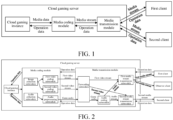
- FIG. 1 is a schematic diagram of a cloud gaming processing solution according to an exemplary embodiment of the present disclosure.
- multiple (two or more) clients may access to the same cloud gaming instance of cloud gaming.
- a first client and a second client access to the same cloud gaming instance.
- the first client and the second client share the same stream processing resource, and the cloud gaming instance performs data transmission with the first client or the second client by using the shared stream processing resource.
- the stream processing resource is a tool (for example, a hardware or software program) that processes various types of data such as media streams and operation data involved in a play process of the cloud gaming.
- the stream processing resource may include a codec resource, a transmission control resource, and the like.
- the codec resource may be configured to perform encoding processing or decoding processing
- the transmission control resource may be configured to perform data transmission, transmission control, and the like.
- the codec resource may be provided by a media coding module
- the transmission control resource may be provided by a media transmission module.
- a cloud gaming server transmits a media stream in the cloud gaming instance to the first client and the second client by using the stream processing resource; when the first client requests to operate the cloud gaming instance, the cloud gaming server receives operation data of the first client by using the stream processing resource; and when the second client requests to operate the cloud gaming instance, the cloud gaming server receives operation data of the second client by using the stream processing resource.
- the shared stream processing resource may be provided by the media coding module and the media transmission module.
- the media coding module provides one path of codec resource, and the media transmission module provides one path of transmission control resource.
- the first client and the second client share the same stream processing resource, that is, the first client and the second client share the same path of codec resource and the same path of transmission control resource.
- the media coding module may be configured to collect media data in the cloud gaming instance, and the media data may include a game picture and game audio. After the media data in the cloud gaming instance is collected, the media coding module may perform coding processing on the collected media data to obtain a media stream.
- the media stream may include a video stream and an audio stream.
- the media transmission module may be configured to forward the media stream to the first client and the second client.
- the media transmission module may transmit the operation data of the first client to the media coding module, and the media coding module injects the operation data of the first client into the cloud gaming instance, so as to operate the cloud gaming instance.
- the media transmission module may transmit the operation data of the second client to the media coding module, and the media coding module injects the operation data of the second client into the cloud gaming instance, so as to operate the cloud gaming instance.
- multiple clients can access to the same cloud gaming instance of the cloud gaming, and multiple operations are performed on the same cloud gaming instance, thereby improving flexibility and diversity of a cloud gaming operation mode to a certain extent.
- the stream processing resource is shared by the multiple clients.
- the multiple clients easily preempt the resource among each other, resulting in a delay in a transmission process of a media stream and a low definition of the media stream.
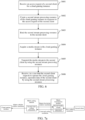
- FIG. 2 is a schematic diagram of a cloud gaming processing solution according to another exemplary embodiment of the present disclosure.
- multiple (two or more) clients can access to the same cloud gaming instance of cloud gaming, and multiple operations can be performed on the same cloud gaming instance.
- a first client and a second client access to the same cloud gaming instance.
- each client accessing to the same cloud gaming instance is bound to a separate stream processing resource of the cloud gaming instance, and performs data transmission by using the separate stream processing resource bound to the client.
- the first client accessing to the cloud gaming instance is bound to a first stream processing resource, and may perform data transmission between the cloud gaming instance and the first client by using the first stream processing resource bound to the first client.
- the first stream processing resource may include a separate codec resource and a separate transmission control resource.
- the codec resource in the first stream processing resource may be provided by a first video coding submodule, and the transmission control resource in the first stream processing resource may be provided by a first media stream transmission submodule.
- a data transmission process performed by using the first stream processing resource between the cloud gaming instance and the first client may be implemented as follows.
- the first video coding submodule may be configured to perform coding processing on a game picture collected from the cloud gaming instance, and transmit a first video stream obtained through coding to the first media stream transmission submodule.
- the first media stream transmission submodule may transmit a first media stream including the first video stream and an audio stream to the first client.
- the first media stream transmission submodule may transmit operation data of the first client to the first video coding submodule, and the first video coding submodule injects the operation data of the first client into the cloud gaming instance.
- the second client accessing to the cloud gaming instance is bound to a second stream processing resource, and may perform data transmission between the cloud gaming instance and the second client by using the second stream processing resource bound to the second client.
- the second stream processing resource may include a separate codec resource and a separate transmission control resource.
- the codec resource of the second stream processing resource may be provided by a second video coding submodule, and the transmission control resource of the second stream processing resource may be provided by a second media stream transmission submodule.
- a data transmission process performed by using the second stream processing resource between the cloud gaming instance and the second client may be implemented as follows.
- the second video coding submodule may be configured to perform coding processing on a game picture collected from the cloud gaming instance, and transmit a second video stream obtained through coding to the second media stream transmission submodule.
- the second media stream transmission submodule may transmit a second media stream including the second video stream and an audio stream to the second client.
- the second media stream transmission submodule may transmit operation data of the second client to the second video coding submodule, and the second video coding submodule injects the operation data of the second client into the cloud gaming instance.
- stream processing resources independent of each other are utilized, it is advantageous to separately perform targeted and independent coding traffic control and quality control on different client, and different stream processing resources are independent of each other, so that data is transmitted efficiently and stably between the client and the cloud gaming instance.
- FIG. 3 is a schematic architecture diagram of a cloud gaming processing system according to an exemplary embodiment of the present disclosure.
- a cloud gaming processing system 30 may include a first terminal 301, a second terminal 302, a third terminal 303, and a server 304.
- the cloud gaming processing system 30 includes the first terminal 301, the second terminal 302, and the third terminal 303.
- the first terminal 301, the second terminal 302 or the third terminal 303 may be a smartphone, a tablet computer, a notebook computer, a desktop computer, an on-vehicle device, a smart speaker, a smartwatch, or the like, but are not limited thereto.
- the first terminal 301 may run a first client of the cloud gaming; the second terminal 302 may run a second client of the cloud gaming, and the third terminal 303 may run an observer client.
- the first client, the second client, and the observer client may be any one of the following: an independent application program, an API, or a software development kit (SDK).
- the server 304 of the cloud gaming may be an independent physical server, or may be a server cluster or a distributed system formed by multiple physical servers, or may be a cloud server that provides a basic cloud computing service such as a cloud service, a cloud database, cloud computing, a cloud function, cloud storage, a network service, cloud communication, a middleware service, a domain name service, a security service, a content delivery network (CDN), big data and an artificial intelligence platform.
- the first terminal 301, the second terminal 302, the third terminal 303, and the server 304 of the cloud gaming may be directly or indirectly connected to each other in a wired or wireless communication manner.
- the connection manner is not limited in the present disclosure.
- the server 304 may include a cloud gaming instance, a media coding module, and a media transmission module.
- the media coding module may include an image collection submodule, an audio collection submodule, an audio preprocessing submodule, and at least one video coding submodule.
- the media coding module includes a first video coding submodule and a second video coding submodule.
- the image collection submodule may be configured to collect a game picture in a cloud gaming instance.
- the audio collection submodule may be configured to collect a game audio in the cloud gaming instance.
- the first video coding submodule may be configured to perform coding processing on the collected game picture, and transmit a first video stream obtained through coding to the media transmission module.
- the second video coding submodule may be configured to perform coding processing on the collected game picture, and transmit a second video stream obtained through coding to the media transmission module.
- the audio preprocessing submodule may be configured to: perform audio preprocessing on the collected game audio, and transmit a game audio subjected to the audio preprocessing to the media transmission module.
- the audio preprocessing refers to simple processing performed on the game audio before coding.
- the audio preprocessing can improve coding efficiency of the game audio.
- the audio preprocessing may include performing noise reduction processing on the game audio, extracting an audio feature of the game audio, and the like.
- the media transmission module may include an audio coding submodule, a forwarding submodule, and at least one media stream transmission submodule.
- the media transmission module includes a first media stream transmission submodule and a second media stream transmission submodule.
- the forwarding submodule may be configured to perform data forwarding.
- the forwarding submodule may be configured to forward the first video stream transmitted by the first video coding submodule to the first media stream transmission submodule.
- the forwarding submodule may be further configured to forward the second video stream transmitted by the second video coding submodule to the second media stream transmission submodule, and the forwarding submodule may be further configured to forward the pre-processed game audio transmitted by the audio preprocessing submodule to the audio coding submodule.
- the audio coding submodule may be configured to perform coding processing on the game audio subjected to the audio preprocessing, to obtain an audio stream, and forward the audio stream to the first media stream transmission submodule and the second media stream transmission submodule.
- the first media stream transmission submodule may be configured to transmit a first media stream composed of the first video stream and the audio stream to the first client and the observer client.
- the second media stream transmission submodule may be configured to transmit a second media stream composed of the second video stream and the audio stream to the second client.
- the first video coding submodule may provide a coding and decoding resource of the first stream processing resource, and the first media stream transmission submodule may provide a transmission control resource of the first stream processing resource. That is, the first video coding submodule and the first media stream transmission submodule jointly provide the first stream processing resource.
- the first stream processing resource is bound to the first client, and data transmission may be performed between the cloud gaming instance and the first client by using the first stream processing resource.
- a data transmission process performed by using the first stream processing resource between the cloud gaming instance and the first client may be implemented as follows.
- the first video coding submodule may perform coding processing on a game picture collected from the cloud gaming instance, and transmit a first video stream obtained through coding to the first media stream transmission submodule.
- the first media stream transmission submodule may transmit a first media stream including the first video stream and an audio stream to the first client.
- the first media stream transmission submodule may transmit operation data of the first client to the first video coding submodule, and the first video coding submodule injects the operation data of the first client into the cloud gaming instance.
- the first client is bound to the first stream processing resource, thereby implementing efficient and stable data transmission between the first client and the cloud gaming instance.
- the second video coding submodule may provide a coding and decoding resource of the second stream processing resource, and the second media stream transmission submodule may provide a transmission control resource of the second stream processing resource. That is, the second video coding submodule and the second media stream transmission submodule jointly provide the second stream processing resource.
- the second stream processing resource is bound to the second client, and data transmission may be performed between the cloud gaming instance and the second client by using the second stream processing resource.
- a data transmission process performed by using the second stream processing resource between the cloud gaming instance and the second client may be implemented as follows.
- the second video coding submodule may perform coding processing on the collected game picture, and transmit the coded second video stream to the second media stream transmission submodule.
- the second media stream transmission submodule may transmit a second media stream including the second video stream and an audio stream to the second client.
- the second media stream transmission submodule may transmit operation data of the second client to the second video coding submodule, and the second video coding submodule injects the operation data of the second client into the cloud gaming instance.
- the second client is bound to the second stream processing resource, thereby implementing efficient and stable data transmission between the second client and the cloud gaming instance.
- the first stream processing resource may perform traffic control in a process of transmitting the first media stream.
- a specific process of traffic control is as follows.
- the first media stream transmission submodule may further transmit a network probe packet to the first client, and receive network information fed back by the first client.
- the network probe packet refers to a probe tool package for detecting a network congestion situation.
- the network information refers to network congestion information.
- the first media stream transmission submodule may transmit a first traffic control instruction to the first video coding submodule.
- the first traffic control instruction may be used for instructing the first video coding submodule to increase a media coding rate in the first video coding submodule, increase a frame rate of a media frame in the first video coding submodule, and the like.
- the first media stream transmission submodule may transmit a second traffic control instruction to the first video coding submodule.
- the second traffic control instruction may be used for instructing the first video coding submodule to reduce a media coding rate in the first video coding submodule, reduce a frame rate of a media frame in the first video coding submodule, discard some media frames in the first media stream, and the like.
- the media coding rate may be the number of bits of a media stream transmitted within a unit time (for example, 1 second).
- a higher media code rate indicates a clearer game picture.
- a lower media code rate indicates a blurred game picture.
- the frame rate of the media frame may be the number of media frames in an encoded media stream within a unit time (for example, 1 second).
- a higher frame rate of the media frame indicates a smoother game picture.
- a lower frame rate of the media frame indicates a more freezing game picture. In this manner, traffic control can be performed on the first client in a targeted and independent manner, thereby effectively reducing a delay generated in the process of transmitting the media stream to the first client, and improving definition and fluency of the media stream.
- the second stream processing resource may perform traffic control in a process of transmitting the second media stream.
- a specific process of traffic control is as follows.
- the second media stream transmission submodule may further transmit a network probe packet to the second client, and receive network information fed back by the second client.
- the second media stream transmission submodule may transmit a first traffic control instruction to the second video coding submodule.
- the first traffic control instruction may be used for instructing the second video coding submodule to increase a media coding rate in the second video coding submodule, increase a frame rate of a media frame in the second video coding submodule, and the like.
- the second media stream transmission submodule may transmit a second traffic control instruction to the second video coding submodule.
- the second traffic control instruction may be used for instructing the second video coding submodule to reduce a media coding rate in the second video coding submodule, reduce a frame rate of a media frame in the second video coding submodule, discard some media frames in the second media stream, and the like.
- traffic control can be performed on the second client in a targeted and independent manner, thereby effectively reducing a delay generated in the process of transmitting the media stream to the second client, and improving definition and fluency of the media stream.
- operation data of a client that has an operation permission for the cloud gaming instance may be injected into the cloud gaming instance, and operation data of a client that does not have an operation permission for the cloud gaming instance is discarded in a transmission process.
- the first video coding submodule may discard the operation data of the first client.
- the second video coding submodule may discard the operation data of the second client. In this manner, permission control can be performed on each client that accesses to the cloud gaming instance by discarding operation data, thereby being beneficial to permission control on all clients accessing to the cloud gaming instance.
- the cloud gaming instance can support real-time transmission parameter modification.
- a client that accesses to the cloud gaming instance may transmit a transmission parameter setting request to the media transmission module.
- the media transmission module corrects an original transmission parameter in response to the transmission parameter setting request.
- the media coding module may encode and process a game picture by using the corrected transmission parameter. For example, if the first client that accesses to the cloud gaming instance transmits a media coding rate setting request to the first media stream transmission submodule, the first media stream transmission submodule may correct an original media coding rate according to a media coding rate requested in the media coding rate setting request, and then transmit the corrected media coding rate to the first video coding submodule.
- the first video coding submodule may perform coding processing on the game picture by using the corrected media coding rate.
- the second media stream transmission submodule may correct an original media frame rate according to a media frame rate requested in the media frame rate setting request, and then transmit the corrected media frame rate to the second video coding submodule.
- the second video coding submodule may perform coding processing on the game picture by using the corrected media frame rate.
- An observer client accessing to a cloud gaming instance may share a stream processing resource in the cloud gaming instance.
- the observer client may be a client used by a tester of cloud gaming, and the observer client is configured to monitor a data transmission process based on the stream processing resource.
- one stream processing resource may be selected from existing stream processing resources of the cloud gaming instance, and the selected stream processing resource is bound to the observer client.
- the process of selecting one stream processing resource from the existing stream processing resources of the cloud gaming instance may include randomly selecting one stream processing resource from the existing stream processing resources of the cloud gaming instance for binding.
- the existing stream processing resources of the cloud gaming instance are the first stream processing resource and the second stream processing resource
- one of the first stream processing resource and the second stream processing resource may be selected.
- the first stream processing resource is selected for being bound to the observer client.
- the process of selecting one stream processing resource from the existing stream processing resources of the cloud gaming instance may further include selecting a specified stream processing resource from the existing stream processing resources of the cloud gaming instance for binding.
- the existing stream processing resources of the cloud gaming instance are the first stream processing resource and the second stream processing resource. Assuming that the specified stream processing resource is the first stream processing resource, the observer client may be bound to the first stream processing resource.
- the observer client may parse and display a game picture in the first media stream, so as to verify whether the game picture is clear and smooth.
- the observer client only observes the game picture, and does not participate in traffic control. Therefore, the observer client can effectively reduce resource consumption and save transmission bandwidth by sharing the first stream processing resource with the first client.
- the cloud gaming server allows multiple clients to access and operate the same cloud gaming instance, thereby effectively improving flexibility and diversity of the cloud gaming operation mode.
- the cloud gaming server creates and binds an independent stream processing resource to each client of the multiple clients that access to the same cloud gaming instance, and any stream processing resource can perform data transmission between a client bound to the stream processing resource and the cloud gaming instance, thereby efficiently and stably performing data transmission.
- any stream processing resource can perform targeted and independent traffic control on a client bound to the stream processing resource, thereby effectively reducing a delay generated in a media stream transmission process, and effectively improving definition and fluency of the media stream.
- a stream processing resource bound to the client can perform permission control on the client by discarding operation data, thereby being beneficial to permission control on all clients of the cloud gaming instance.
- the client can flexibly and efficiently modify the transmission parameter in real time according to a requirement, and the stream processing resource bound to the client can flexibly and efficiently modify or correct the transmission parameter in real time according to a modification requirement of the client.
- the cloud gaming processing solution proposed in this embodiment of the present disclosure may be combined with a blockchain.
- a client of cloud gaming or a cloud gaming server may be a node in a blockchain network.
- a process of binding between the client and the stream processing resource, and a process of data transmission between the client and the cloud gaming instance by using the stream processing resource may be uploaded to the blockchain for storage.
- the media stream and operation data involved in this embodiment of the present disclosure may be stored in the blockchain in a form of a block.
- a binding relationship between the client and the stream processing resource may be stored in the blockchain in a form of a block. Based on a feature that a block in the blockchain cannot be tampered with or forged, the binding between the client and the stream processing resource is more secure and reliable, and the data transmission performed by using the stream processing resource between the client and the cloud gaming instance is more secure and reliable.
- the cloud gaming processing system described in the embodiments of the present disclosure is intended to more clearly describe the technical solutions in the embodiments of the present disclosure, and do not constitute a limitation on the technical solutions provided in the embodiments of the present disclosure.
- a person of ordinary skill in the art may learn that, with evolution of the system and appearance of a new service scenario, the technical solutions provided in the embodiments of the present disclosure also apply to a similar technical problem.
- FIG. 4 is a schematic flowchart of a cloud gaming processing method according to an exemplary embodiment of the present disclosure.
- the cloud gaming processing method may be performed by a cloud gaming processing device provided in the embodiment of the present disclosure.
- the cloud gaming processing device may be the cloud gaming server 304 in the cloud gaming processing system 30 shown in FIG. 3 .
- the cloud gaming processing method may include steps S401 to S404.
- step S401 an access request of a second client for a cloud gaming instance is received.
- the cloud gaming instance is created in response to a play request of a first client for a cloud gaming, the first client is bound to a first stream processing resource of the cloud gaming instance, and data is transmitted between the cloud gaming instance and the first client by using the first stream processing resource.
- the cloud gaming server receives the play request of the first client for the cloud gaming, the number of cloud gaming instances created in the cloud gaming may be obtained.
- the cloud gaming server may create a cloud gaming instance in response to the play request of the first client for the cloud gaming, create the first stream processing resource, bind the first stream processing resource to the first client, and perform data transmission between the cloud gaming instance and the first client by using the first stream processing resource.
- the instance creation threshold may refer to an upper limit of the number of cloud gaming instances that are allowed to be created for one cloud gaming. For example, the upper limit of the number of cloud gaming instances that are allowed to be created for one cloud gaming is 50,000.
- a processor of the cloud gaming may return a cloud gaming instance creation failure notification to the first client.
- the first client may re-initiate a play request for the cloud gaming.
- the first client may queue until the number of cloud gaming instances created in the cloud gaming does not exceed (that is, is less than or equal to) the instance creation threshold, and the cloud gaming server creates the cloud gaming instance.
- the data transmission performed between the cloud gaming instance and the first client by using the first stream processing resource may include: acquiring a media stream in the cloud gaming instance; transmitting the media stream (for example, the foregoing first media stream) to the first client by using the first stream processing resource; and receiving, in a case that the first client requests to operate the cloud gaming instance, operation data of the first client by using the first stream processing resource.
- the access request of the second client for the cloud gaming instance is triggered to be transmitted by using a sharing password.
- the cloud gaming server receives a sharing request of the first client for the cloud gaming instance.
- the cloud gaming server may return a sharing password of the cloud gaming instance to the first client in response to the sharing request of the first client, so that the first client shares the sharing password with a client other than the first client.
- the first client may share the sharing password with the second client.
- the second client may input the sharing password into the second client, for example, may input the sharing password into a cloud gaming participation interface of the second client, so as to trigger the second client to transmit an access request for the cloud gaming instance to the cloud gaming server.
- the sharing password may refer to a participating link of the cloud gaming.
- the second client may trigger, by directly clicking the sharing password shared by the first client, to transmit an access request for the cloud gaming instance to the cloud gaming server.
- the sharing password may include an identifier of the cloud gaming instance and a login password of the cloud gaming instance.
- the identifier of the cloud gaming instance may be used for identifying the cloud gaming instance, so that it can be ensured that the cloud gaming instance that the second client requests to access to is a cloud gaming instance shared by the first client.
- the login password of the cloud gaming instance may be used for verifying an identity of the second client. For example, the login password of the cloud gaming instance inputted by the second client may be compared with the login password of the cloud gaming instance stored in the cloud gaming server. If the two login passwords are same, the verification succeeds, and the second client is allowed to access to the cloud gaming instance. If the two login passwords are different, the verification fails, and the second client is prohibited to access to the cloud gaming instance.
- the identity of the second client is verified by using the login password of the cloud gaming instance, thereby ensuring that the second client accessing to the cloud gaming instance is trusted.
- step S402 a second stream processing resource of the cloud gaming instance is created in response to the access request of the second client.
- a second stream processing resource of the cloud gaming instance may be created in response to the access request of the second client.
- the second stream processing resource may be provided by the second video coding submodule and the second media stream transmission submodule.
- the second video coding submodule may be configured to perform coding processing on a game picture of a collected cloud gaming instance, and transmit a second video stream obtained through coding to the second media stream transmission submodule.
- the second media stream transmission submodule may be configured to transmit a second media stream composed of a second video stream and an audio stream to the second client.
- the first stream processing resource is different from the second stream processing resource.
- the access request of the second client may include a user identifier (user ID2) of the second client and a first access policy (Exclusive policy).
- the first access policy may be used for indicating that a type of the second client is a user type.
- the process of creating the second stream processing resource of the cloud gaming instance may include: allocating an access session identifier (SDK Session ID2) to the second client according to the user identifier of the second client; and generating the second stream processing resource of the cloud gaming instance and an identifier (CG Session ID2) of the second stream processing resource according to the first access policy.
- SDK Session ID2 access session identifier
- CG Session ID2 an identifier
- the second stream processing resource and the corresponding identifier may be generated in real time.
- step S403 the second stream processing resource is bound to the second client.
- the second stream processing resource may be bound to the second client.
- the process of binding the second stream processing resource to the second client includes: establishing a binding relationship between the access session identifier of the second client and the identifier of the second stream processing resource, thereby binding the second stream processing resource to the second client.
- step S404 data is transmitted between the second client and the cloud gaming instance by using the second stream processing resource.
- data transmission may be implemented between the second client and the cloud gaming instance by using the second stream processing resource.
- the data transmission performed between the second client and the cloud gaming instance by using the second stream processing resource may include: acquiring a media stream (for example, the foregoing second media stream) in the cloud gaming instance; transmitting the media stream to the second client by using the second stream processing resource; and receiving, in a case that the second client requests to operate the cloud gaming instance, operation data of the second client by using the second stream processing resource.
- a third client may be a client that requests to access to the cloud gaming instance other than the first client and the second client.
- the cloud gaming server may receive an access request of the third client for the cloud gaming instance.
- the access request of the third client may carry a user identifier (user ID3) of the third client and an access policy.
- user ID3 user identifier
- FIG. 5 is a schematic flowchart of a response process of an access request of a client according to an exemplary embodiment of the present disclosure. As shown in FIG.
- the cloud gaming server may create a third stream processing resource of the cloud gaming instance in response to the access request of the third client, bind the third stream processing resource to the third client, and perform data transmission by using the third stream processing resource between the third client and the cloud gaming instance.
- the cloud gaming server may check whether a stream processing resource created according to the first access policy exists in the cloud gaming instance.
- the second access policy may be used for indicating that a type of the third client is an observer (for example, the third client may be the observer client mentioned in the foregoing embodiment).
- one of the first stream processing resource and the second stream processing resource may be selected in response to the access request of the third client.
- the selected stream processing resource is bound to the third client.
- Data transmission is performed between the third client and the cloud gaming instance by using the selected stream processing resource.
- the process of selecting one stream processing resource from the first stream processing resource and the second stream processing resource of the cloud gaming instance may include: randomly selecting one stream processing resource from the first stream processing resource and the second stream processing resource of the cloud gaming instance. For example, the first stream processing resource may be selected.
- the process of selecting one stream processing resource from the first stream processing resource and the second stream processing resource of the cloud gaming instance may include: selecting a specified one stream processing resource from the first stream processing resource and the second stream processing resource of the cloud gaming instance. Assuming that the specified stream processing resource is the first stream processing resource, the selected stream processing resource is the first stream processing resource. If the stream processing resource created according to the first access policy does not exist in the cloud gaming instance, the third stream processing resource of the cloud gaming instance may be created in response to the access request of the third client, the third stream processing resource is bound to the third client, and data transmission is performed between the third client and the cloud gaming instance by using the third stream processing resource.
- the process of creating a third stream processing resource of the cloud gaming instance, and binding the third stream processing resource to the third client may include: allocating an access session identifier (SDK Session ID3) to the third client according to the user identifier of the third client; generating the third stream processing resource of the cloud gaming instance and an identifier (CG Session ID3) of the third stream processing resource according to the first access policy; and establishing a binding relationship between the access session identifier of the third client and the identifier of the third stream processing resource.
- SDK Session ID3 access session identifier
- CG Session ID3 an identifier of the third stream processing resource according to the first access policy
- the process of binding the selected stream processing resource to the third client may include: establishing a binding relationship between the access session identifier of the third client and the identifier (CG Session ID1) of the first stream processing resource.
- multiple clients are allowed to access to and operate the same cloud gaming instance, thereby effectively improving flexibility and diversity of a cloud gaming operation mode.
- a separate stream processing resource is created and bound to each client of the multiple clients that access to the same cloud gaming instance, and any stream processing resource of the cloud gaming instance is used for performing data transmission between a client bound to the stream processing resource and the cloud gaming instance.
- targeted and independent coding traffic control and quality control can be performed on all clients by using each stream processing resource, and different stream processing resources are independent of each other, so that data is transmitted efficiently and stably between the client and the cloud gaming instance.
- a binding relationship between the second client and the second stream processing resource is established; and when operation data of the second client is received, the second stream processing resource bound to the second client can be quickly determined based on the binding relationship, and the operation data of the second client is injected into the cloud gaming instance by using the second stream processing resource.
- a media stream of the cloud gaming instance is obtained, a second client bound to the second stream processing resource can be quickly determined based on the binding relationship, so that the media stream can be quickly forwarded to the second client by using the second stream processing resource, thereby effectively improving accuracy of data transmission and reducing a delay in a data transmission process.
- FIG. 6 is a schematic flowchart of a cloud gaming processing method according to another exemplary embodiment of the present disclosure.
- the cloud gaming processing method may be performed by a cloud gaming processing device provided in the embodiment of the present disclosure.
- the cloud gaming processing device may be the cloud gaming server 304 in the cloud gaming processing system 30 shown in FIG. 3 .
- the cloud gaming processing method may include steps S601 to S606.
- step S601 an access request of a second client for a cloud gaming instance is received.
- the cloud gaming instance is created in response to a play request of a first client for a cloud gaming, the first client is bound to a first stream processing resource of the cloud gaming instance, and data is transmitted between the cloud gaming instance and the first client by using the first stream processing resource.
- step S602 a second stream processing resource of the cloud gaming instance is created in response to the access request of the second client.
- the access request of the second client may include a user identifier of the second client and a first access policy, and the first access policy may be used for indicating that a type of the second client is a user type.
- the process of creating the second stream processing resource of the cloud gaming instance may include: allocating an access session identifier to the second client according to the user identifier of the second client; and generating the second stream processing resource of the cloud gaming instance and an identifier of the second stream processing resource according to the first access policy.
- step S603 the second stream processing resource is bound to the second client.
- the second stream processing resource may be bound to the second client.
- the process of binding the second stream processing resource to the second client includes: establishing a binding relationship between the access session identifier of the second client and the identifier of the second stream processing resource, so as to bind the second stream processing resource to the second client.
- step S604 a media stream in the cloud gaming instance is acquired.
- step S605 the media stream is transmitted to the second client by using the second stream processing resource.
- step S606 in a case that the second client requests to operate the cloud gaming instance, operation data of the second client is received by using the second stream processing resource.
- the cloud gaming instance can support real-time transmission parameter modification.
- a client that accesses to the cloud gaming instance may transmit a transmission parameter setting request to the cloud gaming server.
- the cloud gaming server may correct an original transmission parameter in response to the transmission parameter setting request; and may encode and process a game picture by using the corrected transmission parameter.
- the transmission parameter may include at least one of the following: a media coding rate, a media frame rate, and a resolution.
- the media coding rate may be the number of bits of a media stream transmitted within a unit time (for example, 1 second).
- a higher media coding rate indicates a clearer game picture.
- a lower media coding rate indicates a blurred game picture.
- the frame rate of the media frame may be the number of media frames in an encoded media stream within a unit time (for example, 1 second).
- the resolution may include a device resolution and a coding resolution.
- the device resolution may also be referred to as a display resolution, which refers to the number of horizontal pixels and the number of vertical pixels on all visible areas on a display screen of a device.
- the device resolution is 720 ⁇ 960, which indicates that 720 pixels are horizontally displayed and 960 pixels are vertically displayed on all visible areas of the display screen of the device.
- the device coding rate cannot be changed once determined.
- the coding resolution may be the number of horizontal pixels and the number of vertical pixels in an encoded game picture.
- the coding resolution is 720 ⁇ 960, indicating that 720 pixels are horizontally displayed and 960 pixels are vertically displayed in the encoded game picture.
- the cloud gaming server may receive, by using the first stream processing resource, the device resolution transmitted by the first client.
- the device resolution may be a device resolution of a first terminal running the first client, and the device resolution of the first terminal may be the number of horizontal pixels and the number of vertical pixels on all visible areas of a display screen of the first terminal.
- the device resolution of the first terminal is 720 ⁇ 960, which indicates that 720 pixels are horizontally displayed and 960 pixels are vertically displayed on all visible areas of the display screen of the first terminal.
- the cloud gaming server may set a container window resolution of the cloud gaming instance according to the device resolution.
- the process of setting the container window resolution of the cloud gaming instance according to the device resolution may include: setting a first ratio of the cloud gaming instance to be the same as a second ratio of the first terminal.
- the first ratio is a ratio of the number of horizontal pixels to the number of vertical pixels in the container window of the cloud gaming instance
- the second ratio is a ratio of the number of horizontal pixels to the number of vertical pixels in the display screen of the first terminal.
- the container window resolution of the cloud gaming instance may be set to 1080 ⁇ 1440, and the ratio of the number of horizontal pixels to the number of vertical pixels is 0.75.
- the cloud gaming server may further transmit the container window resolution to the first client by using the first stream processing resource.
- operation touchscreen coordinates may be converted according to the device resolution and the container window resolution.
- first operation touchscreen coordinates in the device resolution may be converted into second operation touchscreen coordinates in the container window resolution.
- the container window resolution of the cloud gaming instance cannot be changed once determined. If a third ratio in the coding resolution set by the client accessing to the cloud gaming instance is different from the first ratio, the game picture in the encoded media stream is stretched and deformed. Therefore, the third ratio in the coding resolution set by the client needs to be the same as the first ratio in the cloud gaming instance all the time.
- the third ratio is a ratio of the number of horizontal pixels to the number of vertical pixels in the coding resolution set by the client.
- the second client is used as an example. After the second client accesses to the cloud gaming instance, the cloud gaming server may transmit the container window resolution to the second client by using the second stream processing resource.
- operation touchscreen coordinates may be converted according to the device resolution and the container window resolution.
- the cloud gaming server may further receive, by using the second stream processing resource, a resolution setting request transmitted by the second client.
- the resolution setting request may carry a coding resolution that is requested to be set by the second client.
- the cloud gaming server may correct, according to the container window resolution, the coding resolution that is requested to be set; and may perform, by using the corrected coding resolution, coding processing on a media stream transmitted by using the second stream processing resource.
- the process of correcting, by the cloud gaming server according to the container window resolution, the coding resolution that is requested to be set may include: setting the third ratio of the coding resolution that is requested to be set to be the same as the first ratio of the cloud gaming instance. For example, if the coding resolution requested by the second client is 480P, the coding resolution requested to be set may be corrected according to the container window resolution 1080 ⁇ 1440, and the corrected coding resolution is 480 ⁇ 640.
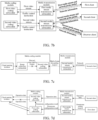
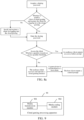
- FIG. 7a is a schematic flowchart of a resolution setting process according to an exemplary embodiment of the present disclosure.
- the second client is used as an example.
- the second video coding submodule may transmit the container window resolution of the cloud gaming instance to the second media stream transmission submodule.
- the container window resolution of the cloud gaming instance is 1080 ⁇ 1440.
- the second media stream transmission submodule may correct the coding resolution requested to be set according to the container window resolution to obtain the corrected coding resolution.
- the coding resolution requested to be corrected is 480P
- the corrected coding resolution is 480 ⁇ 640.
- the second media stream transmission submodule may transmit the corrected coding resolution to the second video coding submodule, and the second video coding submodule may perform, by using the corrected coding resolution, coding processing on a media stream to be transmitted to the second client.
- the cloud gaming server can modify or correct the transmission parameter in real time according to the transmission parameter setting request of the client accessing to the cloud gaming instance, thereby flexibly and efficiently meet a transmission parameter setting requirement of the client accessing to the cloud gaming instance.
- the cloud gaming instance may further support traffic control in a data transmission process.
- the cloud gaming server may transmit a network probe packet to the second client, and receive network information fed back by the second client by using the second stream processing resource.
- the network probe packet refers to a probe tool package for detecting a network congestion situation.
- the network information refers to network congestion information.
- the cloud gaming server may modify a data volume of the network probe packet, and modify the transmission parameter of the second stream processing resource according to the network information.
- the process of modifying a data volume of the network probe packet, and modifying a transmission parameter of the second stream processing resource according to the network information may include: reducing the data volume of the network probe packet, and performing first modification on the transmission parameter of the second stream processing resource in a case that the network information indicates that network congestion occurs; and increasing the data volume of the network probe packet, and performing second modification on the transmission parameter of the second stream processing resource in a case that the network information indicates that network congestion does not occur.
- the first modification may include at least one of the following: reducing a media coding rate in the second stream processing resource, reducing a frame rate of a media frame in the second stream processing resource, or discarding some media frames in the second stream processing resource.
- the second modification may include at least one of the following: increasing a media coding rate in the second stream processing resource or increasing a frame rate of a media frame in the second stream processing resource.
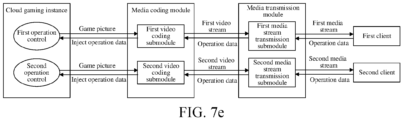
- FIG. 7b is a schematic flowchart of a traffic control process according to an exemplary embodiment of the present disclosure.
- a traffic control process between the second client and the cloud gaming instance is used as an example for description herein.
- a traffic control process between the first client and the cloud gaming instance is similar to the traffic control process between the second client and the cloud gaming instance. Details are not described herein again.
- the traffic control process shown in FIG. 7b may include the following steps.
- the second media stream transmission submodule may transmit the second media stream including a second video stream and an audio stream to the second client.
- the second media stream transmission submodule may further transmit a network probe packet to the second client, and receive network information fed back by the second client.
- the second media stream transmission submodule may transmit a traffic control instruction to the second video coding submodule according to the network information. If the network information indicates that no network congestion occurs, the second media stream transmission submodule may transmit a first traffic control instruction to the second video coding submodule.
- the first traffic control instruction may be used for instructing the second video coding submodule to increase a media coding rate in the second video coding submodule, increase a frame rate of a media frame in the second video coding submodule, and the like. If the network information indicates that network congestion occurs, the second media stream transmission submodule may transmit a second traffic control instruction to the second video coding submodule.
- the second traffic control instruction may be used for instructing the second video coding submodule to reduce a media coding rate in the second video coding submodule, reduce a frame rate of a media frame in the second video coding submodule, discard some media frames in the second media stream, and the like.
- the second media stream transmission submodule may transmit the second media stream and the network probe packet to the second client by using an unreliable transmission protocol.
- the unreliable transmission protocol may include a Real-time Transport Protocol (RTP).
- RTP Real-time Transport Protocol
- TCP Transmission Control Protocol
- a packet cannot be lost or retransmission due to packet loss causes an increased delay in a case of network congestion, transmission efficiency of TCP is low in a case of network congestion.
- the unreliable transmission protocol RTP may be used for transmitting a media stream and a network probe packet.
- a packet may be actively discarded in a case of network congestion, thereby effectively reducing a transmission delay in a case of network congestion.
- the second media stream transmission submodule may receive, by using a protocol with a feedback mechanism, the network information fed back by the second client.
- the protocol with a feedback mechanism may include an RTP Control Protocol (RTCP), and the network information may include an RTCP receiver report (RTCP RR).
- RTCP RTP Control Protocol
- RTCP RR RTCP receiver report
- the client feeds back network information once a target time period expires.
- the target time period may be, for example, 100 milliseconds.
- the second video coding submodule takes a period of time to modify the transmission parameter such as the media coding rate and the media frame rate in response to the traffic control instruction.
- modifying the transmission parameter may cause a delay.
- some media frames in the media stream are discarded to rapidly reduce the media coding rate.
- FIG. 7c is a schematic flowchart of a media frame discarding process according to an exemplary embodiment of the present disclosure. As shown in FIG. 7c , when network information indicates that sudden network congestion occurs, the second media stream transmission submodule may transmit a media frame discarding request to the second video coding submodule.
- the second video coding submodule may discard some collected media frames according to a frame discarding policy after the image collection submodule collects the game picture.
- the process of discarding some collected media frames according to the frame discarding policy may include: discarding some collected media frames according to a target ratio.
- the target ratio may be one third, one tenth, one two-hundredth, or the like of the number of media frames collected by the image collection submodule.
- the media coding module and the media transmission module in the cloud gaming server may jointly perform traffic control, thereby effectively reducing the transmission delay of the media stream, improving quality of the game picture in the media stream, and performing efficient and stable data transmission between the client and the cloud gaming instance.
- the cloud gaming instance may further support permission control in a data transmission process.
- the cloud gaming server may configure a permission for the second client according to a permission setting request of the first client.
- the permission may include at least one of the following: an operation permission for the cloud gaming instance or a browsing permission for the cloud gaming instance.
- the operation permission for the cloud gaming instance refers to a permission to operate the cloud gaming instance.
- the browsing permission for the cloud gaming instance refers to a permission to browse the game picture of the cloud gaming instance. A user with a browsing permission for the cloud gaming instance can only browse a game picture of another user operating the cloud gaming instance, and cannot operate the cloud gaming instance.
- the cloud gaming server may discard the operation data of the second client when receiving the operation data of the second client by using the second stream processing resource. If the second client has the operation permission for the cloud gaming instance, the cloud gaming server may inject the operation data of the second client into the cloud gaming instance when receiving the operation data of the second client by using the second stream processing resource.
- the operation data may include at least one of the following: touch operation data (for example, the foregoing operation touchscreen coordinates), text input data, voice input data, Global Positioning System (GPS) data, sensor data, or the like.
- FIG. 7d is a schematic flowchart of a permission control process according to an exemplary embodiment of the present disclosure.
- the first media stream transmission transport submodule provides a permission setting interface (HTTP Restful interface).
- the first client may transmit a permission setting request to the first media stream transmission submodule by using the permission setting interface of the first media stream transmission submodule, and request to configure a permission for the second client, so that the first media stream transmission submodule may configure a permission for the second client according to the permission setting request of the first client, and transmit a permission configuration result to the first video coding submodule.
- the first video coding submodule may forward the permission configuration result to the second video coding submodule.
- the second video coding submodule may discard the operation data of the second client. If the permission configuration result indicates that the second client has the operation permission for the cloud gaming instance, the second video coding submodule may inject the operation data of the second client into the cloud gaming instance to operate the cloud gaming instance.
- permission control of the cloud gaming instance is implemented by injecting operation data or discarding operation data. Operation data of a client that has operation permission for the cloud gaming is injected into the cloud gaming instance, and operation data of a client that does not have operation permission for the cloud gaming is discarded in a transmission process, thereby effectively enriching an operation mode of the cloud gaming.
- the cloud gaming instance may further support simultaneous operations of multiple users. It is assumed that two users, that is, the first client and the second client, operate the cloud gaming instance.
- the first client may be mapped to a first operation control in the cloud gaming instance
- the second client may be mapped to a second operation control in the cloud gaming instance. Both the first operation control and the second operation control may be joysticks in the cloud gaming instance.
- FIG. 7e is a schematic flowchart of operating a cloud gaming instance by multiple users according to an exemplary embodiment of the present disclosure. As shown in FIG. 7e , when receiving operation data of the first client by using the first stream processing resource, the processor of the cloud gaming may inject the operation data of the first client into the first operation control, so as to control the first operation control to operate the cloud gaming instance.
- the first media stream transmission submodule may receive the operation data of the first client, and transmit the received operation data of the first client to the first video coding submodule.
- the first video coding submodule may inject the operation data of the first client into the first operation control, so as to control the first operation control to operate the cloud gaming instance.
- the first video coding submodule acquires a game picture of the cloud gaming instance
- the first video coding submodule may perform coding processing on the game picture to obtain a first video stream, and transmit the first video stream to the first media transmission submodule.
- the first media transmission submodule transmits the first media stream including a first video stream and an audio stream to the first client.
- the cloud gaming server may inject the operation data of the second client into the second operation control, so as to control the second operation control to operate the cloud gaming instance.
- the second media stream transmission submodule may receive the operation data of the second client, and transmit the received operation data of the second client to the second video coding submodule.
- the second video coding submodule may inject the operation data of the second client into the second operation control, so as to control the second operation control to operate the cloud gaming instance.
- the second video coding submodule may perform coding processing on the game picture to obtain a second video stream, and transmit the second video stream to the second media transmission submodule. Then the second media transmission submodule transmits the second media stream including a second video stream and an audio stream to the first client.
- the first client being mapped to the first operation control in the cloud gaming instance may include the following two cases. There is a mapping relationship between an identifier of the first stream processing resource and an identifier of the first operation control, that is, a binding relationship is established between the identifier of the first stream processing resource and the identifier of the first operation control. Alternatively, the operation data transmitted by the first client carries the identifier of the first operation control.
- the second client being mapped to the second operation control in the cloud gaming instance may include the following two cases. There is a mapping relationship between an identifier of the second stream processing resource and an identifier of the second operation control, that is, a binding relationship is established between the identifier of the second stream processing resource and the identifier of the second operation control. Alternatively, the operation data transmitted by the second client carries the identifier of the second operation control.
- the cloud gaming instance supports simultaneous injection of operation data by multiple clients, thereby effectively enriching an operation mode of the cloud gaming.
- the cloud gaming server may modify or correct the transmission parameter in real time according to the transmission parameter setting request of the client accessing to the cloud gaming instance, thereby flexibly and efficiently meet a transmission parameter setting requirement of the client accessing to the cloud gaming instance.
- the media coding module and the media transmission module in the cloud gaming server can jointly perform traffic control, thereby effectively reducing the transmission delay of the media stream, improving quality of the game picture in the media stream, and performing efficient and stable data transmission between the client and the cloud gaming instance.
- the cloud gaming instance further supports permission control.
- Operation data of a client that has operation permission for the cloud gaming may be injected into the cloud gaming instance, and operation data of a client that does not have operation permission for the cloud gaming is discarded in a transmission process, thereby effectively enriching an operation mode of the cloud gaming.
- the cloud gaming instance further supports simultaneous operations of multiple users, that is, multiple clients accessing to the cloud gaming instance all can inject operation data into the cloud gaming instance, thereby further enriching an operation mode of the cloud gaming.
- the cloud gaming processing solution mentioned in the foregoing embodiments may be applied to two game scenarios, that is, a host user teaching cloud gaming and multiple Arcade game users operating cloud gaming.
- the two game scenarios are described separately.
- a first client may be a host client used by the host user, and a second client may be an audience client used by an audience user.
- the audience user may include at least one, that is, the audience client may include at least one.
- the audience client may include at least one.
- a case in which one audience user is included is used as an example for description.
- a cloud gaming server may create a cloud gaming instance according to a play request of the host client for the cloud gaming, create a first stream processing resource of the cloud gaming instance, and bind the host client to the first stream processing resource.
- the cloud gaming instance and the host client may perform data transmission by using the first stream processing resource.
- the play request of the cloud gaming is generated by the host client in response to a cloud gaming play operation of the host user.
- FIG. 8a is a schematic interface diagram of a cloud gaming operation according to an exemplary embodiment of the present disclosure.
- a service interface 80 of the host client displays multiple pieces of game information of the cloud gaming (for example, an icon of cloud gaming and an illustration of cloud gaming) and a game control of the cloud gaming.
- the client of the host user may generate a play request for the cloud gaming 2, and transmit the play request for the cloud gaming 2 to the cloud gaming server.
- the cloud gaming server may create a cloud gaming instance of the cloud gaming 2 in response to the play request of the host client for the cloud gaming 2. If the cloud gaming instance is successfully created, the host client may display a game interface 81 of the cloud gaming instance of the cloud gaming 2.
- the instance creation threshold refers to an upper limit of the number of cloud gaming instances that are allowed to be created for the cloud gaming.
- the processor of the cloud gaming may return a cloud gaming instance creation failure notification to the host client.
- the host client may output, in the service interface 80, a creation failure prompt message 802 (for example, "there is no idle device currently, please wait patiently in queue” shown in FIG. 8a ) according to the cloud gaming instance creation failure notification.
- the host client needs to wait until creation qualification of the cloud gaming instance is met (that is, the number of created cloud gaming instances in the cloud gaming 2 does not exceed the creation threshold), and the cloud gaming server may create a game instance of the cloud gaming 2 for the play request for the cloud gaming 2. If the cloud gaming instance is successfully created, the host client may display the game interface 81 of the cloud gaming instance of the cloud gaming 2.
- FIG. 8b is a schematic diagram of an interface of a cloud gaming sharing operation according to an exemplary embodiment of the present disclosure.
- the game interface 81 of the cloud gaming 2 is displayed on the host client, and the game interface 81 may include a sharing control 811 of the cloud gaming instance.
- the sharing control 811 of the cloud gaming instance is selected, the host client may transmit a sharing request for the cloud gaming instance to the cloud gaming server.
- the cloud gaming server After receiving the sharing request of the host client for the cloud gaming instance, the cloud gaming server returns a sharing password of the cloud gaming instance to the host client in response to the sharing request of the host client.
- the host client may output a sharing password of the cloud gaming instance to the game interface 81.
- the sharing password may include an identifier of the cloud gaming instance and a login password of the cloud gaming instance, as shown in FIG. 8b , the sharing password 812 "Your account password is: 0021".
- the host client may transmit the sharing password of the cloud gaming instance to the audience client.
- FIG. 8c is a schematic flowchart of an access procedure of a cloud gaming instance according to an exemplary embodiment of the present disclosure.
- the audience user when the audience user obtains the sharing password and a terminal used by the audience user does not install a client of the cloud gaming (that is, the audience client is not installed), the audience user needs to download and install, in the terminal, a client for logging in to the cloud gaming.
- the audience user may input the sharing password in the audience client, for example, may input the sharing password in a game participation interface of the audience client.
- the audience client may transmit an access request to the cloud gaming server.
- the sharing password may be a participating link of the cloud gaming. If the terminal of the audience user installs the client of the cloud gaming, the audience user may directly click the sharing password in a host live streaming interface displayed on the audience client, or the audience user may directly click the sharing password in the host client shared with the audience client, so that the access request is triggered to be transmitted to the cloud gaming server. If the number of clients that have accessed to the cloud gaming instance of the cloud gaming 2 exceeds an access number threshold, the cloud gaming server may return an access failure notification to the audience client. After receiving the access failure notification, the audience client may output an access failure prompt to the audience user according to the access failure notification.
- content of the access failure prompt may be "The access locations of the cloud gaming 2 are full".
- the access number threshold refers to an upper limit of the number of clients that are allowed to access to the cloud gaming instance of the cloud gaming 2. If the number of clients that have accessed to the cloud gaming instance of the cloud gaming 2 does not exceed the access number threshold, the audience client is allowed to access to the cloud gaming instance. After the audience client successfully accesses to the cloud gaming instance, the cloud gaming server may create a second stream processing resource of the cloud gaming instance, and bind the audience client to the second stream processing resource. Data transmission may be performed between the cloud gaming instance and the audience client by using the second stream processing resource.
- the host client Before the audience client accesses to the cloud gaming instance, the host client has an operation permission for the cloud gaming instance, that is, the host client can operate the cloud gaming instance.
- the cloud gaming server may configure a permission for the audience client according to a permission setting request of the host client.
- the permission may include at least one of the following: an operation permission for the cloud gaming instance or a browsing permission for the cloud gaming instance.
- the operation permission for the cloud gaming instance refers to a permission to operate the cloud gaming instance.
- the browsing permission for the cloud gaming instance refers to a permission to browse the game picture of the cloud gaming instance. A user with a browsing permission for the cloud gaming instance can only browse a game picture of another user operating the cloud gaming instance, and cannot operate the cloud gaming instance.
- the cloud gaming server configures the operation permission of the cloud gaming instance for the audience client according to the permission setting request of the host client.
- the operation data of the audience client is injected into the cloud gaming instance, and the audience client may operate the cloud gaming instance.
- the host client may browse the game picture of the cloud gaming instance controlled by the audience client, and output a control prompt 813 (for example, "the audience client is controlling" shown in FIG. 8b ) in the game interface 81.
- the cloud gaming server configures the browsing permission of the cloud gaming instance for the audience client according to the permission setting request of the host client. In this case, the operation data of the audience client is discarded in a process of being transmitted to the cloud gaming instance, the audience client cannot operate the cloud gaming instance, but can only browse the game picture of the cloud gaming instance controlled by the host client.
- a process in which the first client triggers creation of the cloud gaming instance and a process in which the second client accesses to the cloud gaming instance are similar to those in the game scenario in which the host user teaches cloud gaming, and details are not described herein again.
- a difference between the game scenario in which multiple Arcade game users operate cloud gaming and the game scenario in which the host user teaches cloud gaming is as follows.
- the permission of the second client for the cloud gaming instance is configured by the cloud gaming server in response to the permission setting request of the first client. Only one of the host client and audience client has the operation permission of the cloud gaming instance, and the other client has the browsing permission of the cloud gaming instance.
- all clients accessing to the cloud gaming instance have the operation permission of the cloud gaming, and can operate the cloud gaming instance.
- the first client is mapped to a first operation control, and the first client selects a double-player mode on the game interface.
- the second client accesses to the cloud gaming instance, the second client is mapped to a second operation control.
- the user of the first client may inject operation data of the first client into the first operation control, so as to control the first operation control to operate the first gladiator in the cloud gaming instance according to the injected operation data.
- the user of the second client may inject operation data of the second client into the second operation control, so as to control the second operation control to operate the second gladiator in the cloud gaming instance according to the injected operation data, so as to implement two-player combat.
- the host client may transmit a permission setting request to the cloud gaming server, thereby implementing switching and transfer of the operation permission between the host client and the audience client, and thus meeting a game requirement of the host user during teaching. It may be learned from the foregoing game scenario in which multiple Arcade game users operating cloud gaming, that multiple clients accessing to the cloud gaming instance have the operation permission for the cloud gaming instance, and all the clients can operate the cloud gaming instance, thereby meeting a game requirement of multi-user participation.
- the cloud gaming processing solution mentioned in this embodiment of the present disclosure can enrich a cloud gaming play scenario.
- each client participating in the cloud gaming has an independent stream processing resource, so that a data transmission between the client and the cloud gaming instance is efficiently and smoothly performed, and a game picture displayed on each client is clear and smooth, thereby effectively improving game participation experience of the user.
- FIG. 9 is a schematic structural diagram of a cloud gaming processing apparatus according to an exemplary embodiment of the present disclosure.
- the cloud gaming processing apparatus 90 may be disposed in a cloud gaming processing device, and the cloud gaming processing device may be the server 304 in the cloud gaming processing system shown in FIG. 3 .
- the cloud gaming processing apparatus 90 may be configured to perform steps in the method embodiment shown in FIG. 4 or FIG. 6 , and the cloud gaming processing apparatus 90 may include a media transmission module 901 and a media coding module 902.
- the media transmission module 901 is configured to receive an access request of a second client for a cloud gaming instance.
- the cloud gaming instance is created in response to a play request of a first client for a cloud gaming, the first client is bound to a first stream processing resource of the cloud gaming instance, and data is transmitted between the cloud gaming instance and the first client by using the first stream processing resource.
- the media coding module 902 and the media transmission module 901 each are configured to create a second stream processing resource of the cloud gaming instance in response to the access request of the second client.
- the media transmission module 901 is further configured to bind the second stream processing resource to the second client; and transmit data between the second client and the cloud gaming instance by using the second stream processing resource.
- the access request of the second client carries a user identifier of the second client and a first access policy.
- the first access policy is used for indicating that a type of the second client is a user type.
- Both the media coding module 902 and the media transmission module 901 are configured to: create a second stream processing resource of the cloud gaming instance in response to the access request of the second client, by performing operations of:
- the media transmission module 901 is configured to perform operations of: establishing a binding relationship between the access session identifier of the second client and the identifier of the second stream processing resource, so as to bind the second stream processing resource to the second client.
- the media transmission module 901 is further configured to perform operations of:
- the media transmission module 901 is configured to perform operations of:
- the media transmission module 901 is further configured to operations of: transmitting a network probe packet to the second client by using the second stream processing resource, and receiving network information fed back by the second client; and modifying a data volume of the network probe packet and modifying a transmission parameter of the second stream processing resource according to the network information.
- the media transmission module 901 is configured to perform operations of:
- the first modification includes at least one of the following: reducing a media coding rate in the second stream processing resource, reducing a frame rate of a media frame in the second stream processing resource, or discarding some media frames in the second stream processing resource.
- the second modification includes at least one of the following: increasing a media coding rate in the second stream processing resource or increasing a frame rate of a media frame in the second stream processing resource.
- the media transmission module 901 is further configured to configure a permission for the second client according to a permission setting request of the first client.
- the permission includes at least one of the following: an operation permission for the cloud gaming instance or a browsing permission for the cloud gaming instance.
- the media coding module 902 is further configured to discard, in a case that the second client does not have the operation permission for the cloud gaming instance, operation data of the second client when the operation data of the second client is received by using the second stream processing resource.
- the first client is mapped to a first operation control in the cloud gaming instance
- the second client is mapped to a second operation control in the cloud gaming instance.
- the media coding module 902 is further configured to inject the operation data of the first client into the first operation control, so as to control the first operation control to operate the cloud gaming instance.
- the media coding module 902 is further configured to inject the operation data of the second client into the second operation control, so as to control the second operation control to operate the cloud gaming instance.
- the media transmission module 901 is further configured to receive, by using the first stream processing resource, a device resolution transmitted by the first client.
- the media coding module 902 is further configured to set a container window resolution of the cloud gaming instance according to the device resolution.
- the media transmission module 901 is further configured to transmit the container window resolution to the first client by using the first stream processing resource.
- the media transmission module 901 is further configured to transmit the container window resolution to the second client by using the second stream processing resource after the second client accesses to the cloud gaming instance;
- the media coding module 902 is further configured to perform, by using the corrected coding resolution, coding processing on a transmitted media stream.
- the media transmission module 901 is further configured to receive a sharing request of the first client for the cloud gaming instance; and return a sharing password of the cloud gaming instance to the first client in response to the sharing request of the first client, so that the first client shares the sharing password with a client other than the first client.
- the sharing password includes an identifier of the cloud gaming instance and a login password of the cloud gaming instance.
- Transmitting of the access request of the second client is triggered by using the sharing password after the second client obtains the sharing password.
- units of the system for cloud gaming processing apparatus 90 shown in FIG. 9 may be separately or wholly combined into one or several other units, or one (or more) of the units herein may further be divided into multiple smaller units in functions. In this way, same operations can be implemented, and implementation of the technical effects of the embodiments of the present disclosure is not affected.
- the foregoing units are divided based on logical functions.
- a function of one unit may be implemented by multiple units, or functions of multiple units are implemented by one unit.
- the cloud gaming processing apparatus 90 may further include other units.
- the functions may also be cooperatively implemented by other units and may be cooperatively implemented by multiple units.
- a computer program (including program code) that can perform the steps in the corresponding method shown in FIG. 4 or FIG. 6 may be run on a general computing device, such as a computer, which includes processing elements and storage elements such as a central processing unit (CPU), a random access memory (RAM), and a read-only memory (ROM), to construct the cloud gaming processing apparatus 90 shown in FIG. 9 and implement the cloud gaming processing method in the embodiments of the present disclosure.
- the computer program may be recorded in, for example, a computer-readable storage medium, and may be loaded into the foregoing computing device by using the computer-readable storage medium, and run in the computing device.
- a first stream processing resource of the cloud gaming instance is allocated to the first client, and the first client is bound to the first stream processing resource.
- the first client performs data transmission with the cloud gaming instance by using the first stream processing resource.
- a second client may request to access to the cloud gaming instance created by the first client.
- a second stream processing resource of the cloud gaming instance is allocated to the second client, and the second stream processing resource is bound to the second client. Data is transmitted between the second client and the cloud gaming instance by using the second stream processing resource.
- the embodiments of the present disclosure support multiple operations on the same cloud gaming instance, that is, allowing multiple clients (for example, the first client and the second client) to access and operate the same cloud gaming instance, thereby effectively improving flexibility and diversity of a cloud gaming operation mode.
- each client accessed to the same cloud gaming instance is bound to a separate stream processing resource of the cloud gaming instance, and performs data transmission by using the separate stream processing resource bound to the client.
- targeted and independent coding traffic control and quality control can be performed on all clients by using each stream processing resource, and different stream processing resources are independent of each other, thereby performing data transmission efficiently and stably between the client and the cloud gaming instance.
- FIG. 10 is a schematic structural diagram of a cloud gaming processing device according to an exemplary embodiment of the present disclosure.
- the cloud gaming processing device 100 includes at least a processor 1001, a computer readable storage medium 1002, and a communication interface 1003.
- the processor 1001, the computer readable storage medium 1002, and the communication interface 1003 may be connected to each other by using a bus or in another manner.
- the communication interface 1003 may be configured to receive a play request of a first client, an access request of a second client, operation data of the first client, operation data of the second client, and the like.
- the communication interface 1003 may further transmit a media stream to the first client, transmit a media stream to the second client, and the like.
- the computer readable storage medium 1002 may be stored in a memory, the computer readable storage medium 1002 is configured to store a computer program, and the computer program includes a computer instruction.
- the processor 1001 is configured to execute the computer instruction.
- the processor 1001 (or referred to as a central processing unit (CPU)) is a computing core and a control core of the cloud gaming processing device 100, is suitable for implementing one or more computer instructions, and is specifically suitable for loading and executing one or more computer instructions to implement a corresponding method procedure or a corresponding function.
- CPU central processing unit
- a computer storage medium is further provided according to an embodiment of the present application.
- the computer-readable storage medium is a memory device in a cloud gaming processing device 100 and is configured to store programs and data. It may be understood that the computer-readable storage medium 1002 herein may include an internal storage medium of the cloud gaming processing device 100 and certainly may also include an extended storage medium supported by the cloud gaming processing device 100.
- the computer-readable storage medium provides storage space, and the storage space stores an operating system of the cloud gaming processing device 100.
- the storage space further stores one or more computer instructions suitable for being loaded and executed by the processor 1001.
- the computer instructions may be one or more computer programs (including program code).
- the computer-readable storage medium 1002 herein may be a high-speed RAM, or may be a non-volatile memory, such as at least one magnetic disk storage.
- the computer storage medium may be at least one computer-readable storage medium located far away from the foregoing processor 1001.
- the cloud gaming processing device 100 may be the server 304 in the cloud gaming processing system shown in FIG. 3 .
- the computer readable storage medium 1002 stores a computer program, and the computer program includes one or more computer instructions.
- the processor 1001 loads and executes the one or more computer instructions to implement corresponding steps in the method embodiment shown in FIG. 4 or FIG. 6 .
- the computer instruction in the computer readable storage medium 1002 is loaded by the processor 1001 to perform the cloud gaming processing method provided in the foregoing optional implementations.
- a first stream processing resource of the cloud gaming instance is allocated to the first client, and the first client is bound to the first stream processing resource.
- the first client performs data transmission with the cloud gaming instance by using the first stream processing resource.
- a second client may request to access to the cloud gaming instance created by the first client.
- a second stream processing resource of the cloud gaming instance is allocated to the second client, and the second stream processing resource is bound to the second client. Data is transmitted between the second client and the cloud gaming instance by using the second stream processing resource.
- the embodiments of the present disclosure support multiple operations on the same cloud gaming instance, that is, allowing multiple clients (for example, the first client and the second client) to access and operate the same cloud gaming instance, thereby effectively improving flexibility and diversity of a cloud gaming operation mode.
- each client accessing to the same cloud gaming instance is bound to a separate stream processing resource of the cloud gaming instance, and performs data transmission by using the separate stream processing resource bound to the client.
- targeted and independent coding traffic control and quality control can be performed on all clients by using each stream processing resource, and different stream processing resources are independent of each other, thereby performing data transmission efficiently and stably between the client and the cloud gaming instance.
- a storage medium is provided according to an embodiment of the present disclosure.
- the storage medium is configured to store a computer program.
- the computer program is configured to perform the methods provided in the foregoing embodiments.
- a computer program product or a computer program is provided according to embodiments of the present disclosure.
- the computer program product or the computer program includes computer instructions, and the computer instructions are stored in a computer-readable storage medium.
- a processor of a computer device reads the computer instructions from the computer-readable storage medium, and executes the computer instructions, so that the computer device performs the cloud gaming processing method provided in the various implementations.
Landscapes
- Engineering & Computer Science (AREA)
- Multimedia (AREA)
- Signal Processing (AREA)
- Computer Security & Cryptography (AREA)
- Databases & Information Systems (AREA)
- Business, Economics & Management (AREA)
- General Business, Economics & Management (AREA)
- Human Computer Interaction (AREA)
- Computer Graphics (AREA)
- Information Transfer Between Computers (AREA)
- Two-Way Televisions, Distribution Of Moving Picture Or The Like (AREA)
- Pinball Game Machines (AREA)
Applications Claiming Priority (2)
| Application Number | Priority Date | Filing Date | Title |
|---|---|---|---|
| CN202110463379.XA CN112870711B (zh) | 2021-04-28 | 2021-04-28 | 一种云游戏的处理方法、装置、设备及存储介质 |
| PCT/CN2022/082147 WO2022227938A1 (fr) | 2021-04-28 | 2022-03-22 | Procédé, appareil et dispositif de traitement de jeu en nuage, et support de stockage |
Publications (2)
| Publication Number | Publication Date |
|---|---|
| EP4223379A1 true EP4223379A1 (fr) | 2023-08-09 |
| EP4223379A4 EP4223379A4 (fr) | 2024-06-12 |
Family
ID=76040754
Family Applications (1)
| Application Number | Title | Priority Date | Filing Date |
|---|---|---|---|
| EP22794414.7A Pending EP4223379A4 (fr) | 2021-04-28 | 2022-03-22 | Procédé, appareil et dispositif de traitement de jeu en nuage, et support de stockage |
Country Status (5)
| Country | Link |
|---|---|
| US (2) | US12330067B2 (fr) |
| EP (1) | EP4223379A4 (fr) |
| JP (1) | JP7750613B2 (fr) |
| CN (1) | CN112870711B (fr) |
| WO (1) | WO2022227938A1 (fr) |
Families Citing this family (14)
| Publication number | Priority date | Publication date | Assignee | Title |
|---|---|---|---|---|
| CN112870711B (zh) * | 2021-04-28 | 2021-07-16 | 腾讯科技(深圳)有限公司 | 一种云游戏的处理方法、装置、设备及存储介质 |
| CN113209632B (zh) * | 2021-06-08 | 2022-08-12 | 腾讯科技(深圳)有限公司 | 一种云游戏的处理方法、装置、设备及存储介质 |
| CN113778589A (zh) * | 2021-08-20 | 2021-12-10 | 广州虎牙科技有限公司 | 屏幕适配方法、服务器、智能终端、电子设备及存储介质 |
| CN113423018B (zh) | 2021-08-24 | 2021-11-02 | 腾讯科技(深圳)有限公司 | 一种游戏数据处理方法、装置及存储介质 |
| CN114130007B (zh) * | 2021-12-01 | 2025-12-23 | 咪咕互动娱乐有限公司 | 云游戏的控制方法、电子设备及可读存储介质 |
| CN114210050B (zh) * | 2021-12-14 | 2025-10-28 | 广州虎牙科技有限公司 | 云游戏运行方法、系统及云游戏服务器 |
| CN114422823A (zh) * | 2021-12-27 | 2022-04-29 | 炫彩互动网络科技有限公司 | 一种改进的云游戏流稳定传输方法 |
| CN114598931A (zh) * | 2022-03-08 | 2022-06-07 | 杭州雾联科技有限公司 | 一种多开云游戏的串流方法、系统、装置及介质 |
| CN114653056A (zh) * | 2022-03-28 | 2022-06-24 | 深圳市瑞云科技有限公司 | 一种多人异地同玩云游戏的方法 |
| CN114849224B (zh) * | 2022-05-06 | 2025-10-14 | 咪咕互动娱乐有限公司 | 一种信息处理方法、装置、设备及可读存储介质 |
| CN115364477B (zh) * | 2022-09-09 | 2025-10-14 | 网易(杭州)网络有限公司 | 云游戏控制方法、装置、电子设备及存储介质 |
| CN118105718B (zh) * | 2022-11-30 | 2025-07-15 | 花瓣云科技有限公司 | 一种显示方法、终端和系统 |
| CN116328290A (zh) * | 2023-05-22 | 2023-06-27 | 安徽海马云科技股份有限公司 | 实现云游戏联机对战的方法、装置、存储介质及电子设备 |
| CN121116626A (zh) * | 2025-09-08 | 2025-12-12 | 北京大禹智芯科技有限公司 | 一种gpu资源动态分配方法、装置、电子设备及介质 |
Family Cites Families (74)
| Publication number | Priority date | Publication date | Assignee | Title |
|---|---|---|---|---|
| US4894774A (en) * | 1986-10-15 | 1990-01-16 | Mccarthy Patrick J | Lookahead pipeline for processing object records in a video system |
| CA2144253C (fr) * | 1994-04-01 | 1999-09-21 | Bruce F. Naylor | Systeme et methode de generation d'images video comprimees |
| CA2180899A1 (fr) * | 1995-07-12 | 1997-01-13 | Yasuaki Honda | Mise a jour synchrone de sous-objets dans un systeme d'utilisation collective d'espace tridimensionnel en realite virtuelle, et methode connexe |
| US6785329B1 (en) * | 1999-12-21 | 2004-08-31 | Microsoft Corporation | Automatic video object extraction |
| KR100451584B1 (ko) * | 2001-12-20 | 2004-10-08 | 엘지전자 주식회사 | 웨이블릿 변환과 움직임 추정을 이용한 동영상 부호화 및복호화 장치 |
| US6868439B2 (en) * | 2002-04-04 | 2005-03-15 | Hewlett-Packard Development Company, L.P. | System and method for supervising use of shared storage by multiple caching servers physically connected through a switching router to said shared storage via a robust high speed connection |
| US6980599B2 (en) * | 2002-06-04 | 2005-12-27 | Koninklijke Philips Electronics N.V. | Video decoding system and method having post-processing to reduce sharpness prediction drift |
| US8366552B2 (en) * | 2002-12-10 | 2013-02-05 | Ol2, Inc. | System and method for multi-stream video compression |
| US20090118019A1 (en) * | 2002-12-10 | 2009-05-07 | Onlive, Inc. | System for streaming databases serving real-time applications used through streaming interactive video |
| US7515156B2 (en) * | 2003-01-08 | 2009-04-07 | Hrl Laboratories, Llc | Method and apparatus for parallel speculative rendering of synthetic images |
| US20060052168A1 (en) * | 2003-01-16 | 2006-03-09 | Sabian Group Inc. | System method and platform for online gaming |
| JP2005267347A (ja) * | 2004-03-19 | 2005-09-29 | Nippon Telegr & Teleph Corp <Ntt> | 仮想空間共有装置 |
| US8572280B2 (en) * | 2004-05-06 | 2013-10-29 | Valve Corporation | Method and system for serialization of hierarchically defined objects |
| EP1766987A1 (fr) * | 2004-05-27 | 2007-03-28 | Vividas Technologies Pty Ltd | Decodage adaptatif de donnees video |
| US7458894B2 (en) * | 2004-09-15 | 2008-12-02 | Microsoft Corporation | Online gaming spectator system |
| US7240162B2 (en) * | 2004-10-22 | 2007-07-03 | Stream Theory, Inc. | System and method for predictive streaming |
| US7382381B2 (en) * | 2004-10-22 | 2008-06-03 | Hewlett-Packard Development Company, L.P. | Graphics to video encoder |
| EP1669947A1 (fr) * | 2004-12-10 | 2006-06-14 | Aruze Corporation | Machine et système de jeu |
| US7796095B2 (en) * | 2005-03-18 | 2010-09-14 | Ati Technologies Ulc | Display specific image processing in an integrated circuit |
| EP1958159A2 (fr) * | 2005-12-05 | 2008-08-20 | Vollee Ltd. | Procede et systeme pour permettre a un utilisateur de jouer a un jeu sur grand ecran au moyen d'un dispositif mobile |
| US7789758B2 (en) * | 2006-03-10 | 2010-09-07 | Electronic Arts, Inc. | Video game with simulated evolution |
| US20100060640A1 (en) * | 2008-06-25 | 2010-03-11 | Memco, Inc. | Interactive atmosphere - active environmental rendering |
| AU2007203533B2 (en) * | 2006-07-31 | 2009-11-19 | Videobet Interactive Sweden AB | Information updating management in a gaming system |
| US9630104B2 (en) * | 2006-10-23 | 2017-04-25 | Konrad V. Sherinian | Systems, methods, and apparatus for transmitting virtual world content from a server system to a client |
| US7934058B2 (en) * | 2006-12-14 | 2011-04-26 | Microsoft Corporation | Predictive caching of assets to improve level load time on a game console |
| US8632407B2 (en) * | 2007-08-01 | 2014-01-21 | Cfph, Llc | General gaming engine |
| CN102160086B (zh) * | 2008-07-22 | 2016-04-27 | 黎明游戏有限责任公司 | 用于仿真中的物理交互的系统和方法 |
| US20100161384A1 (en) * | 2008-12-18 | 2010-06-24 | Wells Matthew D | System and Method for Presenting Content |
| US20100161348A1 (en) * | 2008-12-19 | 2010-06-24 | Empathic Software Systems | Clinical Management System |
| US8527657B2 (en) * | 2009-03-20 | 2013-09-03 | Sony Computer Entertainment America Llc | Methods and systems for dynamically adjusting update rates in multi-player network gaming |
| CN102405644B (zh) * | 2009-04-21 | 2014-09-10 | 马维尔国际贸易有限公司 | 基于因特网视频内容的经估算质量对视频后处理器的自动调节 |
| US9723319B1 (en) * | 2009-06-01 | 2017-08-01 | Sony Interactive Entertainment America Llc | Differentiation for achieving buffered decoding and bufferless decoding |
| JP5336939B2 (ja) * | 2009-06-15 | 2013-11-06 | キヤノン株式会社 | 画像処理装置、画像処理方法、及びプログラム |
| EP2278550B1 (fr) * | 2009-06-17 | 2013-08-14 | Canon Kabushiki Kaisha | Procédé de codage et décodage d'une séquence de chemin graphique dans un schéma à niveaux |
| US9486701B2 (en) * | 2009-12-30 | 2016-11-08 | Crytek Gmbh | Computer-controlled video entertainment system |
| US8773448B2 (en) * | 2010-04-09 | 2014-07-08 | Intel Corporation | List texture |
| TWI454140B (zh) * | 2010-06-08 | 2014-09-21 | Univ Nat Taiwan | 與影片互動之方法與比賽模擬系統 |
| US8803892B2 (en) * | 2010-06-10 | 2014-08-12 | Otoy, Inc. | Allocation of GPU resources across multiple clients |
| JP5632680B2 (ja) * | 2010-08-25 | 2014-11-26 | 日立アロカメディカル株式会社 | 超音波画像処理装置 |
| JP5576781B2 (ja) * | 2010-12-16 | 2014-08-20 | 株式会社メガチップス | 画像処理システム、画像処理システムの動作方法、ホスト装置、プログラム、およびプログラムの作成方法 |
| KR20120119504A (ko) * | 2011-04-21 | 2012-10-31 | 한국전자통신연구원 | 게임 스트리밍 서비스 시스템 및 방법 |
| JP5076132B1 (ja) * | 2011-05-25 | 2012-11-21 | 株式会社スクウェア・エニックス・ホールディングス | 描画制御装置、その制御方法、プログラム、記録媒体、描画サーバ、及び描画システム |
| WO2013070228A2 (fr) * | 2011-11-10 | 2013-05-16 | Empire Technology Development, Llc | Restitution spéculative à l'aide de données de joueur historiques |
| US20130137518A1 (en) * | 2011-11-29 | 2013-05-30 | Keith V. Lucas | System for Pre-Caching Game Content Based on Game Selection Probability |
| US9313083B2 (en) * | 2011-12-09 | 2016-04-12 | Empire Technology Development Llc | Predictive caching of game content data |
| WO2013089684A2 (fr) * | 2011-12-13 | 2013-06-20 | Empire Technology Development, Llc | Mise en correspondance de restitutions de graphiques pour des dispositifs d'affichage |
| US9095772B2 (en) * | 2012-02-07 | 2015-08-04 | Empire Technology Development Llc | Online gaming |
| CA2886282C (fr) * | 2013-05-23 | 2019-07-23 | Stephan Georgiev | Attribution dynamique de ressources de rendu dans un systeme de jeu en nuage |
| US8860720B1 (en) * | 2014-01-02 | 2014-10-14 | Ubitus Inc. | System and method for delivering graphics over network |
| US9333433B2 (en) * | 2014-02-04 | 2016-05-10 | Sony Computer Entertainment America Llc | Online video game service with split clients |
| US20160259453A1 (en) * | 2015-03-06 | 2016-09-08 | Sony Computer Entertainment America Llc | Dynamic adjustment of cloud game data streams to output device and network quality |
| US10315108B2 (en) * | 2015-08-19 | 2019-06-11 | Sony Interactive Entertainment America Llc | Local application quick start with cloud transitioning |
| EP3341098B1 (fr) * | 2015-09-30 | 2024-03-13 | Sony Interactive Entertainment America LLC | Service de diffusion en continu de démonstration multi-utilisateur pour jeu en nuage |
| CN106110659B (zh) * | 2016-07-15 | 2019-08-06 | 网易(杭州)网络有限公司 | 游戏账户的处理方法及装置 |
| KR102651126B1 (ko) * | 2016-11-28 | 2024-03-26 | 삼성전자주식회사 | 그래픽 프로세싱 장치 및 그래픽스 파이프라인에서 텍스처를 처리하는 방법 |
| US10471360B2 (en) * | 2017-03-06 | 2019-11-12 | Sony Interactive Entertainment LLC | User-driven spectator channel for live game play in multi-player games |
| US10491666B2 (en) * | 2017-04-03 | 2019-11-26 | Sony Interactive Entertainment America Llc | Systems and methods for using a distributed game engine |
| US10610779B2 (en) * | 2017-06-19 | 2020-04-07 | Sony Interactive Entertainment LLC | Methods and systems for scheduling game play of a video game |
| US11014010B2 (en) * | 2017-10-20 | 2021-05-25 | Microsoft Technology Licensing, Llc | State management of dynamic properties |
| US11077362B2 (en) * | 2018-12-03 | 2021-08-03 | Sony Interactive Entertainment LLC | Machine learning driven resource allocation |
| US11133932B2 (en) * | 2018-12-20 | 2021-09-28 | Sony Interactive Entertainment LLC | Secure data channel in a networked gaming system |
| JP7291480B2 (ja) * | 2018-12-28 | 2023-06-15 | 株式会社バンダイナムコエンターテインメント | ゲームシステム、プログラム、サーバ装置及びゲーム提供方法 |
| US10926177B2 (en) * | 2019-03-15 | 2021-02-23 | Sony Interactive Entertainment Inc. | Systems and methods for predicting states by using a distributed game engine |
| CN111818394A (zh) * | 2019-12-11 | 2020-10-23 | 厦门雅基软件有限公司 | 云游戏直播方法、客户端及计算机可读存储介质 |
| KR102954886B1 (ko) * | 2020-02-21 | 2026-04-17 | 삼성전자주식회사 | 엣지 컴퓨팅 서비스를 이용한 오브젝트 렌더링 방법 및 장치 |
| CN111586164B (zh) * | 2020-05-06 | 2023-08-15 | 上海达龙信息科技有限公司 | 远程云桌面的分享、接替、信息处理方法及电子设备 |
| CN111773737A (zh) * | 2020-06-17 | 2020-10-16 | 咪咕互动娱乐有限公司 | 云游戏代打方法及装置、服务器和存储介质 |
| CN111773660A (zh) * | 2020-07-03 | 2020-10-16 | 珠海金山网络游戏科技有限公司 | 一种云游戏处理系统、方法及装置 |
| CN112370776A (zh) * | 2020-10-20 | 2021-02-19 | 珠海西山居移动游戏科技有限公司 | 通过动态限帧提升云游戏流畅度的方法、装置及介质 |
| CN112351302B (zh) * | 2020-11-24 | 2023-03-24 | 网易(杭州)网络有限公司 | 基于云游戏的直播交互方法、装置及存储介质 |
| CN112565802B (zh) * | 2020-11-30 | 2023-07-21 | Oppo广东移动通信有限公司 | 直播交互方法、系统、服务器及存储介质 |
| CN112516589B (zh) * | 2020-12-16 | 2024-07-09 | 网易(杭州)网络有限公司 | 直播中游戏商品互动方法、装置、计算机设备及存储介质 |
| CN112473133B (zh) * | 2020-12-16 | 2024-07-19 | 杭州雾联科技有限公司 | 一种云游戏响应的方法、系统、设备及可读存储介质 |
| CN112870711B (zh) * | 2021-04-28 | 2021-07-16 | 腾讯科技(深圳)有限公司 | 一种云游戏的处理方法、装置、设备及存储介质 |
-
2021
- 2021-04-28 CN CN202110463379.XA patent/CN112870711B/zh active Active
-
2022
- 2022-03-22 WO PCT/CN2022/082147 patent/WO2022227938A1/fr not_active Ceased
- 2022-03-22 JP JP2023548745A patent/JP7750613B2/ja active Active
- 2022-03-22 EP EP22794414.7A patent/EP4223379A4/fr active Pending
- 2022-11-30 US US18/072,632 patent/US12330067B2/en active Active
-
2025
- 2025-05-28 US US19/221,301 patent/US20250288911A1/en active Pending
Also Published As
| Publication number | Publication date |
|---|---|
| US12330067B2 (en) | 2025-06-17 |
| CN112870711B (zh) | 2021-07-16 |
| WO2022227938A1 (fr) | 2022-11-03 |
| CN112870711A (zh) | 2021-06-01 |
| EP4223379A4 (fr) | 2024-06-12 |
| US20230096900A1 (en) | 2023-03-30 |
| US20250288911A1 (en) | 2025-09-18 |
| JP2024509060A (ja) | 2024-02-29 |
| JP7750613B2 (ja) | 2025-10-07 |
Similar Documents
| Publication | Publication Date | Title |
|---|---|---|
| US12330067B2 (en) | Cloud gaming processing method, apparatus, and device, and storage medium | |
| US20230032554A1 (en) | Data processing method and apparatus, and storage medium | |
| CN113209632B (zh) | 一种云游戏的处理方法、装置、设备及存储介质 | |
| US10298721B2 (en) | Method and system to determine a work distribution model for an application deployed on a cloud | |
| JP6310073B2 (ja) | 描画システム、制御方法、及び記憶媒体 | |
| US8621069B1 (en) | Provisioning a computing application executing on a cloud to a client device | |
| US8860720B1 (en) | System and method for delivering graphics over network | |
| CN103023872A (zh) | 一种云游戏服务平台 | |
| CN115794139B (zh) | 镜像数据处理方法、装置、设备以及介质 | |
| US20220210513A1 (en) | Start-up performance improvement for remote computer application | |
| CN104144351A (zh) | 应用虚拟化平台的视频播放方法和装置 | |
| CN115364477B (zh) | 云游戏控制方法、装置、电子设备及存储介质 | |
| WO2024066828A1 (fr) | Procédé et appareil de traitement de données, dispositif, support de stockage lisible par ordinateur, et produit-programme d'ordinateur | |
| KR20130026609A (ko) | 멀티미디어 클라우드 시스템의 클라이언트에서 멀티미디어 클라우드 서비스 제공 장치 및 방법, 그리고 멀티미디어 클라우드 시스템의 소셜 네트워크 서비스 서버에서 멀티미디어 클라우드 서비스 제공 방법 | |
| WO2024037110A1 (fr) | Procédé et appareil de traitement de données, dispositif et support | |
| US20210154576A1 (en) | Vector graphics-based live streaming of video games | |
| CN113797526B (zh) | 一种数据处理方法、装置、设备以及介质 | |
| KR101480140B1 (ko) | 멀티 인젝션 서버 및 그 방법 | |
| US11870830B1 (en) | Embedded streaming content management | |
| CN118694957A (zh) | 视频解码方法、装置、计算机设备、介质及产品 | |
| HK40046378B (en) | Cloud game processing method, apparatus and device, and storage medium | |
| HK40046378A (en) | Cloud game processing method, apparatus and device, and storage medium | |
| US12210794B2 (en) | Multimedia redirection in collaborative sessions on virtual desktops | |
| CN119449699B (zh) | 数据处理方法、装置、电子设备及计算机可读存储介质 | |
| CN118267700A (zh) | 云游戏的图像处理方法、装置、计算机设备、介质及产品 |
Legal Events
| Date | Code | Title | Description |
|---|---|---|---|
| STAA | Information on the status of an ep patent application or granted ep patent |
Free format text: STATUS: THE INTERNATIONAL PUBLICATION HAS BEEN MADE |
|
| PUAI | Public reference made under article 153(3) epc to a published international application that has entered the european phase |
Free format text: ORIGINAL CODE: 0009012 |
|
| STAA | Information on the status of an ep patent application or granted ep patent |
Free format text: STATUS: REQUEST FOR EXAMINATION WAS MADE |
|
| 17P | Request for examination filed |
Effective date: 20230503 |
|
| AK | Designated contracting states |
Kind code of ref document: A1 Designated state(s): AL AT BE BG CH CY CZ DE DK EE ES FI FR GB GR HR HU IE IS IT LI LT LU LV MC MK MT NL NO PL PT RO RS SE SI SK SM TR |
|
| REG | Reference to a national code |
Ref country code: DE Ref legal event code: R079 Free format text: PREVIOUS MAIN CLASS: A63F0013520000 Ipc: A63F0013860000 |
|
| A4 | Supplementary search report drawn up and despatched |
Effective date: 20240510 |
|
| RIC1 | Information provided on ipc code assigned before grant |
Ipc: A63F 13/77 20140101ALI20240503BHEP Ipc: A63F 13/55 20140101ALI20240503BHEP Ipc: A63F 13/52 20140101ALI20240503BHEP Ipc: A63F 13/86 20140101AFI20240503BHEP |
|
| DAV | Request for validation of the european patent (deleted) | ||
| DAX | Request for extension of the european patent (deleted) |