EP4223536A1 - Rouleau de détection - Google Patents
Rouleau de détection Download PDFInfo
- Publication number
- EP4223536A1 EP4223536A1 EP23155170.6A EP23155170A EP4223536A1 EP 4223536 A1 EP4223536 A1 EP 4223536A1 EP 23155170 A EP23155170 A EP 23155170A EP 4223536 A1 EP4223536 A1 EP 4223536A1
- Authority
- EP
- European Patent Office
- Prior art keywords
- roller
- rubber
- sensors
- electrical connection
- conductor foil
- Prior art date
- Legal status (The legal status is an assumption and is not a legal conclusion. Google has not performed a legal analysis and makes no representation as to the accuracy of the status listed.)
- Withdrawn
Links
Images


Classifications
-
- B—PERFORMING OPERATIONS; TRANSPORTING
- B41—PRINTING; LINING MACHINES; TYPEWRITERS; STAMPS
- B41F—PRINTING MACHINES OR PRESSES
- B41F31/00—Inking arrangements or devices
- B41F31/26—Construction of inking rollers
-
- B—PERFORMING OPERATIONS; TRANSPORTING
- B41—PRINTING; LINING MACHINES; TYPEWRITERS; STAMPS
- B41F—PRINTING MACHINES OR PRESSES
- B41F13/00—Common details of rotary presses or machines
- B41F13/08—Cylinders
-
- B—PERFORMING OPERATIONS; TRANSPORTING
- B41—PRINTING; LINING MACHINES; TYPEWRITERS; STAMPS
- B41F—PRINTING MACHINES OR PRESSES
- B41F33/00—Indicating, counting, warning, control or safety devices
- B41F33/02—Arrangements of indicating devices, e.g. counters
-
- F—MECHANICAL ENGINEERING; LIGHTING; HEATING; WEAPONS; BLASTING
- F16—ENGINEERING ELEMENTS AND UNITS; GENERAL MEASURES FOR PRODUCING AND MAINTAINING EFFECTIVE FUNCTIONING OF MACHINES OR INSTALLATIONS; THERMAL INSULATION IN GENERAL
- F16C—SHAFTS; FLEXIBLE SHAFTS; ELEMENTS OR CRANKSHAFT MECHANISMS; ROTARY BODIES OTHER THAN GEARING ELEMENTS; BEARINGS
- F16C13/00—Rolls, drums, discs, or the like; Bearings or mountings therefor
-
- F—MECHANICAL ENGINEERING; LIGHTING; HEATING; WEAPONS; BLASTING
- F16—ENGINEERING ELEMENTS AND UNITS; GENERAL MEASURES FOR PRODUCING AND MAINTAINING EFFECTIVE FUNCTIONING OF MACHINES OR INSTALLATIONS; THERMAL INSULATION IN GENERAL
- F16C—SHAFTS; FLEXIBLE SHAFTS; ELEMENTS OR CRANKSHAFT MECHANISMS; ROTARY BODIES OTHER THAN GEARING ELEMENTS; BEARINGS
- F16C17/00—Sliding-contact bearings for exclusively rotary movement
- F16C17/12—Sliding-contact bearings for exclusively rotary movement characterised by features not related to the direction of the load
- F16C17/24—Sliding-contact bearings for exclusively rotary movement characterised by features not related to the direction of the load with devices affected by abnormal or undesired positions, e.g. for preventing overheating, for safety
- F16C17/246—Sliding-contact bearings for exclusively rotary movement characterised by features not related to the direction of the load with devices affected by abnormal or undesired positions, e.g. for preventing overheating, for safety related to wear, e.g. sensors for measuring wear
-
- F—MECHANICAL ENGINEERING; LIGHTING; HEATING; WEAPONS; BLASTING
- F16—ENGINEERING ELEMENTS AND UNITS; GENERAL MEASURES FOR PRODUCING AND MAINTAINING EFFECTIVE FUNCTIONING OF MACHINES OR INSTALLATIONS; THERMAL INSULATION IN GENERAL
- F16C—SHAFTS; FLEXIBLE SHAFTS; ELEMENTS OR CRANKSHAFT MECHANISMS; ROTARY BODIES OTHER THAN GEARING ELEMENTS; BEARINGS
- F16C19/00—Bearings with rolling contact, for exclusively rotary movement
- F16C19/52—Bearings with rolling contact, for exclusively rotary movement with devices affected by abnormal or undesired conditions
- F16C19/522—Bearings with rolling contact, for exclusively rotary movement with devices affected by abnormal or undesired conditions related to load on the bearing, e.g. bearings with load sensors or means to protect the bearing against overload
-
- F—MECHANICAL ENGINEERING; LIGHTING; HEATING; WEAPONS; BLASTING
- F16—ENGINEERING ELEMENTS AND UNITS; GENERAL MEASURES FOR PRODUCING AND MAINTAINING EFFECTIVE FUNCTIONING OF MACHINES OR INSTALLATIONS; THERMAL INSULATION IN GENERAL
- F16C—SHAFTS; FLEXIBLE SHAFTS; ELEMENTS OR CRANKSHAFT MECHANISMS; ROTARY BODIES OTHER THAN GEARING ELEMENTS; BEARINGS
- F16C41/00—Other accessories, e.g. devices integrated in the bearing not relating to the bearing function as such
Definitions
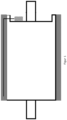
- the present invention relates to a roller with at least one embedded sensor.
- Rollers coated with elastomers are used in many industrial processes, for example in the printing industry, especially in offset printing and packaging production.
- Such rollers have a rigid core, typically made of metal or non-metal materials, such as carbon fiber or glass fiber reinforced plastics.
- One or more layers of an elastomeric material, in particular rubber or polyurethane, are located on the core.
- the elastomer covers can usually be replaced on rollers; they are subject to wear and tear.
- rollers have been used for a long time, little information is available about what actually happens inside the roller. Many steps in the use of rollers are therefore based on empirical values.
- EP 1 493 565 describes a roller with an integrated pressure sensor.
- DD233653 from 1984, which also wants to install sensors in rollers.
- the basic idea is known, there are no corresponding products on the market.
- the object of the present invention was to improve the use of rollers.
- the roller should have the service life that users in the industrial sector expect.
- a roller with one or more embedded sensors is thus produced.
- a roller core or a roller core with at least one reference layer is provided.
- Suitable materials for roll cores are, in particular, metals, carbon fiber reinforced plastics and glass fiber reinforced plastics.
- the sensors used according to the invention are embedded, ie covered by elastomeric reference layers on the roller. In some embodiments, there is also at least one reference layer among the sensors used.
- a reference ply is a layer of an elastomeric material that substantially completely covers the roll on the mantle surface.
- Conductor foils are also referred to as “flexible electronics” or “flex circuits”. It is a flexible substrate on which electronic components are mounted. An overview of such products can be found, for example, in Wong, William S.; Salleo, Alberto (2009). "Flexible Electronics (Materials and Applications)". Electronic Materials: Science. Electronic Materials: Science & Technology. 11 .
- conductor foils are typically only developed for occasional mechanical loads, for example on a laptop to connect the motherboard to the screen, they can surprisingly be protected by embedding them in the roll material so that they survive the load in a roll, the mechanical load caused by elastic deformations occur billions of times over the lifetime of a roller.
- Suitable conductor foils have a plastic substrate that includes, for example, polyimide, polyamide, polyimide-polyamide copolymers, polyetheretherketones (PEEK) or polyester. Particularly preferred products are referred to as Flex PCB.
- such conductor foils have an electrical connection for connection to evaluation electronics.
- the one or more electronic sensors used according to the invention on the conductor foil are mounted on the roller core or on an existing reference layer and the electrical connection is routed along the roller core.
- Suitable sensors are, for example, temperature sensors, pressure sensors, force sensors, position sensors, vibration sensors, strain sensors. In some cases, sensors can also capture multiple pieces of information at the same time, such as piezoelectric sensors. Additional sensors such as acceleration and position sensors can also be integrated in the evaluation electronics, which are also placed on the roller or the axle.
- several sensors are located along the core of the roll, for example in the middle, in the edge area and another sensor in between, so that information is obtained over the entire width of the roll.
- the electrical connection is also designed as a conductor foil.
- the connector is a cable.
- adhesion promoters are, in particular, the adhesion promoters customary in the rubber industry for rubber-substrate connections.
- a protective lacquer is applied before the adhesion promoter.
- Such protective lacquers are commercially available and known to those skilled in the art. Lacquers for protecting printed circuit boards, for example, are out DE69905846T2 known.
- the roller cover is then completed by applying additional layers of rubber or polyurethane.
- the coating is carried out by making up calender plates from a rubber mixture.
- production is also possible via an extrusion process or in mold casting or rotational molding.
- an elastomer layer with a higher hardness than the general coating material is applied to reference layers in the area of the sensor or sensors, and then the sensor or sensors.
- an elastomer layer with a higher Shore hardness can also be applied to the sensor, i.e. before the roller is further coated, so that the sensor is first embedded in an elastomer layer of higher hardness, which is then surrounded by the roller covering.
- a harder layer is mounted only below the sensor or sensors, with softer layers at least above.
- a harder layer is mounted only above the sensor or sensors, with softer layers at least above.
- a harder layer is mounted below and above the sensor or sensors, with softer layers at least above.
- such a harder elastomer layer is not required in its entirety. In some embodiments, it is sufficient to mount them in the area of the sensor or sensors.
- the roller can be recoated without dismantling the sensors.
- a harder elastomer layer has a hardness of at least 20 ShoreA more than the hardness of the roller cover.
- the roll covering could be formed from covering layers with a general Shore hardness of 50 Shore A.
- a typical harder elastomer layer would then have 80-90 Shore A, for example.
- a suitable harder elastomer layer has a hardness of 80 Shore D, for example.
- a conversion from Shore A and Shore D can be done, for example K. Trobisch: "On the relationship between Shore A and Shore D hardness”. In: “Caoutchouc, Rubber, Plastics” magazine 34, No. 5 (1989), pp. 347-349 take place.
- Suitable elastomers for the roll cover are in particular natural rubber (NR), isoprene rubber (IR), butadiene rubber (BR), ethylene propylene rubber (EPDM, EPM), styrene butadiene rubber (SBR), acrylonitrile butadiene rubber (NBR, HNBR, XNBR), butyl rubber (IIR, XIIR), chloroprene rubber (CR), acrylate rubber (ACM, AEM), epichlorohydrin rubber (CO, ECO, ETER), silicone rubber, fluorosilicone rubber, fluororubber, Chlorosulfonated polyethylene (CSM rubber) to name.
- Polyurethane is also a common elastomer for rollers.
- the rubber mixture according to the invention is vulcanized in the usual way after application.
- roller surface is then ground and the electrical connection is connected to the evaluation electronics.
- the grinding step may also include side trimming of the rubber or polyurethane. It is crucial that the electrical connection is not damaged during lateral trimming.
- the roller has a hardness of less than 100 Shore A.
- the method comprises a roller core with a layer of an elastomer with a Shore D hardness of 70-90, thereon an assembly of sensors, another layer of an elastomer with a Shore D hardness of 70-90 and subsequent coating, vulcanization and finishing.
- An embedded temperature sensor can then detect heating due to higher internal friction due to higher speed or contact force in less than 120 s.
- An essential advantage of the invention is that a sensor-integrated roller is produced in which the sensors are not destroyed by use in the machine (especially in industrial applications) and in which the main function is not impaired by the built-in sensors.
- the roller can be optimally adjusted using the data obtained from the sensors, which increases its service life.
- the sensors can be used to obtain information about changes in the properties of the roll, which can lead to an optimization of production by changing the rolls.
- the evaluation electronics is attached to a roller axis or a roller face and can then become a transmit data wirelessly to another reading device.
- Corresponding transmission standards are known to those skilled in the art.
- the subject matter of the invention is also a roller with an embedded sensor, which can be obtained by the method according to the invention.
- the roll cover When applying the roll cover to the core, it is typically applied beyond the core and then cut. It is important that the electrical connection is not damaged.
- rollers are used in which the roller core has a recess on one end.
- the electrical connection can be routed through a hole on the edge of the core shroud.
- the sensors used can be used to determine a wide variety of information about the roller and its operating status. For example, the approach to different operating states results in acceleration values, temperatures and rates of change for the various measurement parameters. If the values deviate from a desired standard curve, there may be a malfunction, a misalignment of the roller or swelling or shrinkage of the roller, which can be detected early in this way. Changes in the dynamic-mechanical stress on the elastomer result in short-term temperature changes due to the viscoelastic properties. It has been shown that locally different dynamic stresses can be detected within a few seconds as measurable temperature changes on the sensors. Ideally, imminent problems in the process can be eliminated before rejects or faulty batches are produced.
- a deviation in the temperature development across the roller width can also indicate an incorrect adjustment or a problem with the bearing.
- smaller temperature differences across the roll width can be used to aid in roll adjustment to detect uniform adjustment across the entire roll width.
- the product service life can also be extrapolated from the acceleration values and the load caused by speed and temperature.
- a change in temperature development can provide information about roll wear.
- Vibrations can be used to detect surface damage on the roller.
- a roller with a metal core that was undercut on the front side and a hole through the shell was provided with a first calender layer of hard rubber made of highly crosslinked natural rubber (ebonite) with a Shore hardness of 80 Shore D.
- a conductor foil with five temperature sensors, previously coated with adhesion promoter, was applied across the entire width of the rollers and the electrical connection was routed through the hole.
- Another layer of hard rubber with a Shore hardness of 80 Shore D was then applied using calendering technology.
- 5 layers of EPDM soft rubber with 80 Shore A were assembled.
- the roller was vulcanized, ground and cut to core length at the edge. Since the connecting cable was in the hole, it was not damaged when cutting.
- the roller was then mounted on an axle and evaluation electronics connected to the connecting cable.
- the evaluation electronics transmitted data to an EDP system via Bluetooth. The system was able to transfer to cloud storage and display the data on a website.
- a roller with a metal core and a groove on one end face was provided with a calender layer of acrylonitrile-butadiene rubber with a Shore A hardness of 80.
- a conductor foil with five temperature sensors was applied using adhesion promoter across the entire width of the rollers and the electrical connection was routed through the groove.
- a further layer of acrylonitrile butadiene rubber with a Shore A hardness of 80 was then applied, followed by 5 layers of an acrylonitrile butadiene rubber with a Shore A hardness of 30.
- the roller was vulcanized, ground and cut at the edge. Since the connecting cable lay in the groove, it was not damaged when cutting.
- the roller was then mounted on an axle and evaluation electronics connected to the connecting cable.
- the evaluation electronics transmitted data to an EDP system via Bluetooth. The system was able to transfer to cloud storage and display the data on a website.
Landscapes
- Engineering & Computer Science (AREA)
- General Engineering & Computer Science (AREA)
- Mechanical Engineering (AREA)
- Rolls And Other Rotary Bodies (AREA)
Priority Applications (1)
| Application Number | Priority Date | Filing Date | Title |
|---|---|---|---|
| EP26151651.2A EP4707624A3 (fr) | 2022-02-04 | 2023-02-06 | Rouleau de détection |
Applications Claiming Priority (2)
| Application Number | Priority Date | Filing Date | Title |
|---|---|---|---|
| EP22155233 | 2022-02-04 | ||
| EP22181021 | 2022-06-24 |
Related Child Applications (1)
| Application Number | Title | Priority Date | Filing Date |
|---|---|---|---|
| EP26151651.2A Division EP4707624A3 (fr) | 2022-02-04 | 2023-02-06 | Rouleau de détection |
Publications (1)
| Publication Number | Publication Date |
|---|---|
| EP4223536A1 true EP4223536A1 (fr) | 2023-08-09 |
Family
ID=85132900
Family Applications (2)
| Application Number | Title | Priority Date | Filing Date |
|---|---|---|---|
| EP23155170.6A Withdrawn EP4223536A1 (fr) | 2022-02-04 | 2023-02-06 | Rouleau de détection |
| EP26151651.2A Pending EP4707624A3 (fr) | 2022-02-04 | 2023-02-06 | Rouleau de détection |
Family Applications After (1)
| Application Number | Title | Priority Date | Filing Date |
|---|---|---|---|
| EP26151651.2A Pending EP4707624A3 (fr) | 2022-02-04 | 2023-02-06 | Rouleau de détection |
Country Status (1)
| Country | Link |
|---|---|
| EP (2) | EP4223536A1 (fr) |
Citations (9)
| Publication number | Priority date | Publication date | Assignee | Title |
|---|---|---|---|---|
| DD233653A1 (de) | 1984-12-29 | 1986-03-05 | Polygraph Leipzig | Verfahren zum messen von kraeften und mechanischen spannungen zwischen zylindern und walzen an druckmaschinen |
| DE19910197C1 (de) * | 1999-03-09 | 2000-10-26 | Continental Ag | System und Verfahren zur Überwachung einer Walze mit einem Walzenkern und einem Walzenmantel |
| DE10144103A1 (de) * | 2001-05-15 | 2002-11-21 | Paul Sauer Gmbh & Co Walzenfab | Verfahren und Vorrichtung zur Steuerung von technischen Maschinen, Anlagen und Vorrichtungen |
| DE69905846T2 (de) | 1998-12-21 | 2003-11-06 | Sony Chemicals Corp., Tokio/Tokyo | Flexible Leiterplatte, Polyamidsäure und diese enthaltende Polyamidsäure-Lack |
| EP1493565A2 (fr) | 2003-07-01 | 2005-01-05 | Koenig & Bauer Aktiengesellschaft | Rouleau avec capteur de pression sur la surface circumférentielle |
| DE102005023331A1 (de) * | 2005-05-17 | 2006-11-23 | Gummiwerk Kraiburg Gmbh & Co. Kg | Druckzylinder und Verfahren zur Herstellung eines Druckzylinders, insbesondere für den Flexodruck |
| DE102007052295A1 (de) * | 2007-10-31 | 2009-05-07 | Manroland Ag | Druckmaschine mit einer Vorrichtung zur kontaktlosen Messdatenerfassung |
| WO2009144271A1 (fr) * | 2008-05-28 | 2009-12-03 | Felix Böttcher Gmbh & Co. Kg | Rouleau pour machine d'impression |
| EP2444681A2 (fr) * | 2010-10-22 | 2012-04-25 | Paul Sauer GmbH & Co. Walzenfabrik KG | Rouleau ou élément de rouleau doté d'une gaine en élastomère |
-
2023
- 2023-02-06 EP EP23155170.6A patent/EP4223536A1/fr not_active Withdrawn
- 2023-02-06 EP EP26151651.2A patent/EP4707624A3/fr active Pending
Patent Citations (9)
| Publication number | Priority date | Publication date | Assignee | Title |
|---|---|---|---|---|
| DD233653A1 (de) | 1984-12-29 | 1986-03-05 | Polygraph Leipzig | Verfahren zum messen von kraeften und mechanischen spannungen zwischen zylindern und walzen an druckmaschinen |
| DE69905846T2 (de) | 1998-12-21 | 2003-11-06 | Sony Chemicals Corp., Tokio/Tokyo | Flexible Leiterplatte, Polyamidsäure und diese enthaltende Polyamidsäure-Lack |
| DE19910197C1 (de) * | 1999-03-09 | 2000-10-26 | Continental Ag | System und Verfahren zur Überwachung einer Walze mit einem Walzenkern und einem Walzenmantel |
| DE10144103A1 (de) * | 2001-05-15 | 2002-11-21 | Paul Sauer Gmbh & Co Walzenfab | Verfahren und Vorrichtung zur Steuerung von technischen Maschinen, Anlagen und Vorrichtungen |
| EP1493565A2 (fr) | 2003-07-01 | 2005-01-05 | Koenig & Bauer Aktiengesellschaft | Rouleau avec capteur de pression sur la surface circumférentielle |
| DE102005023331A1 (de) * | 2005-05-17 | 2006-11-23 | Gummiwerk Kraiburg Gmbh & Co. Kg | Druckzylinder und Verfahren zur Herstellung eines Druckzylinders, insbesondere für den Flexodruck |
| DE102007052295A1 (de) * | 2007-10-31 | 2009-05-07 | Manroland Ag | Druckmaschine mit einer Vorrichtung zur kontaktlosen Messdatenerfassung |
| WO2009144271A1 (fr) * | 2008-05-28 | 2009-12-03 | Felix Böttcher Gmbh & Co. Kg | Rouleau pour machine d'impression |
| EP2444681A2 (fr) * | 2010-10-22 | 2012-04-25 | Paul Sauer GmbH & Co. Walzenfabrik KG | Rouleau ou élément de rouleau doté d'une gaine en élastomère |
Non-Patent Citations (2)
| Title |
|---|
| K. TROBISCH: "Über den Zusammenhang zwischen Shore A- und Shore D-Härte", KAUTSCHUK, GUMMI, KUNSTSTOFFE, vol. 34, no. 5, 1989, pages 347 - 349 |
| WONG, WILLIAM S.SALLEO, ALBERTO: "Electronic Materials: Science", vol. 11, 2009, ELECTRONIC MATERIALS: SCIENCE & TECHNOLOGY, article "Flexible Electronics (Materials and Applications" |
Also Published As
| Publication number | Publication date |
|---|---|
| EP4707624A3 (fr) | 2026-05-20 |
| EP4707624A2 (fr) | 2026-03-11 |
Similar Documents
| Publication | Publication Date | Title |
|---|---|---|
| EP0978589A2 (fr) | Dispositif de réduction active de vibrations non-voulues d'un rouleau rotatif; Dispositif pour traiter une bande de matériau, en particulier de papier ou carton; Rouleau | |
| DE3416210C2 (fr) | ||
| EP1400378A1 (fr) | Transpondeur pour pneu | |
| DE112017004864T5 (de) | Pedalvorrichtung | |
| EP3415759B1 (fr) | Membrane dotée des structures conductrices | |
| EP3134240B1 (fr) | Rouleau de guidage d'une paire de rouleaux d'alimentation d'un dispositif de granulation pour la granulation de rubans de matière polymère | |
| WO2008074501A1 (fr) | Dispositif de dépistage précoce de défaillances sur des machines et/ou sur leurs éléments | |
| EP2242004B1 (fr) | Composant | |
| EP2527809A1 (fr) | Dispositif de détection | |
| EP2480800B1 (fr) | Palier à douille élastomérique comprenant un tube externe en plastique | |
| EP4707624A2 (fr) | Rouleau de détection | |
| EP1783270B1 (fr) | Rouleau en caoutchouc avec revêtement en polyurethane resistant à l'abrasion | |
| DE202013003665U1 (de) | Wälzlager mit schichtweise aufgebauten Komponenten | |
| DE19930600A1 (de) | Vorrichtung zum aktiven Schwächen unerwünschter Schwingungen einer rotierenden Walze, Vorrichtung zum Behandeln einer Materialbahn, insbesondere aus Papier oder Karton, Walze | |
| WO2018077502A1 (fr) | Bandage plein | |
| DE102010049457A1 (de) | Walze oder Walzenelement mit verstärktem Walzenmantel | |
| DE102004020898A1 (de) | Vorrichtung und Verfahren zum Messen und Anpassen des Anpressdruckes von Messern | |
| WO2025087619A1 (fr) | Rouleau ayant un blindage pour capteurs | |
| DE102021005558B3 (de) | Messrolle zum Feststellen einer Eigenschaft eines über eine Messrolle geführten bandförmigen Guts sowie Verwendung einer solchen Messrolle | |
| EP4581206B1 (fr) | Rouleau et appareil de presse | |
| EP1331305A2 (fr) | Cylindre mesureur | |
| EP0846879A2 (fr) | Laminoir | |
| AT504091A2 (de) | Walze für eine faserstoffbahn-herstellungsmaschine | |
| DE102023129526B4 (de) | Elastomer-Metall-Lager mit wenigstens einem Sensor | |
| DE102023129527B4 (de) | Elastomer-Metall-Lager mit wenigstens einem Sensor |
Legal Events
| Date | Code | Title | Description |
|---|---|---|---|
| PUAI | Public reference made under article 153(3) epc to a published international application that has entered the european phase |
Free format text: ORIGINAL CODE: 0009012 |
|
| STAA | Information on the status of an ep patent application or granted ep patent |
Free format text: STATUS: THE APPLICATION HAS BEEN PUBLISHED |
|
| AK | Designated contracting states |
Kind code of ref document: A1 Designated state(s): AL AT BE BG CH CY CZ DE DK EE ES FI FR GB GR HR HU IE IS IT LI LT LU LV MC ME MK MT NL NO PL PT RO RS SE SI SK SM TR |
|
| STAA | Information on the status of an ep patent application or granted ep patent |
Free format text: STATUS: REQUEST FOR EXAMINATION WAS MADE |
|
| 17P | Request for examination filed |
Effective date: 20240207 |
|
| RBV | Designated contracting states (corrected) |
Designated state(s): AL AT BE BG CH CY CZ DE DK EE ES FI FR GB GR HR HU IE IS IT LI LT LU LV MC ME MK MT NL NO PL PT RO RS SE SI SK SM TR |
|
| STAA | Information on the status of an ep patent application or granted ep patent |
Free format text: STATUS: EXAMINATION IS IN PROGRESS |
|
| 17Q | First examination report despatched |
Effective date: 20250714 |
|
| STAA | Information on the status of an ep patent application or granted ep patent |
Free format text: STATUS: THE APPLICATION HAS BEEN WITHDRAWN |
|
| 18W | Application withdrawn |
Effective date: 20260114 |