EP4228285A1 - Procédé et dispositif de commande audio - Google Patents
Procédé et dispositif de commande audio Download PDFInfo
- Publication number
- EP4228285A1 EP4228285A1 EP20959087.6A EP20959087A EP4228285A1 EP 4228285 A1 EP4228285 A1 EP 4228285A1 EP 20959087 A EP20959087 A EP 20959087A EP 4228285 A1 EP4228285 A1 EP 4228285A1
- Authority
- EP
- European Patent Office
- Prior art keywords
- broadcast
- sink
- channel
- control device
- bis
- Prior art date
- Legal status (The legal status is an assumption and is not a legal conclusion. Google has not performed a legal analysis and makes no representation as to the accuracy of the status listed.)
- Withdrawn
Links
Images


Classifications
-
- H—ELECTRICITY
- H04—ELECTRIC COMMUNICATION TECHNIQUE
- H04H—BROADCAST COMMUNICATION
- H04H20/00—Arrangements for broadcast or for distribution combined with broadcast
- H04H20/65—Arrangements characterised by transmission systems for broadcast
- H04H20/71—Wireless systems
-
- H—ELECTRICITY
- H04—ELECTRIC COMMUNICATION TECHNIQUE
- H04R—LOUDSPEAKERS, MICROPHONES, GRAMOPHONE PICK-UPS OR LIKE ACOUSTIC ELECTROMECHANICAL TRANSDUCERS; ELECTRIC HEARING AIDS; PUBLIC ADDRESS SYSTEMS
- H04R1/00—Details of transducers, loudspeakers or microphones
- H04R1/10—Earpieces; Attachments therefor ; Earphones; Monophonic headphones
- H04R1/1041—Mechanical or electronic switches, or control elements
-
- H—ELECTRICITY
- H04—ELECTRIC COMMUNICATION TECHNIQUE
- H04L—TRANSMISSION OF DIGITAL INFORMATION, e.g. TELEGRAPHIC COMMUNICATION
- H04L65/00—Network arrangements, protocols or services for supporting real-time applications in data packet communication
- H04L65/60—Network streaming of media packets
- H04L65/61—Network streaming of media packets for supporting one-way streaming services, e.g. Internet radio
- H04L65/611—Network streaming of media packets for supporting one-way streaming services, e.g. Internet radio for multicast or broadcast
-
- H—ELECTRICITY
- H04—ELECTRIC COMMUNICATION TECHNIQUE
- H04R—LOUDSPEAKERS, MICROPHONES, GRAMOPHONE PICK-UPS OR LIKE ACOUSTIC ELECTROMECHANICAL TRANSDUCERS; ELECTRIC HEARING AIDS; PUBLIC ADDRESS SYSTEMS
- H04R1/00—Details of transducers, loudspeakers or microphones
- H04R1/10—Earpieces; Attachments therefor ; Earphones; Monophonic headphones
- H04R1/1016—Earpieces of the intra-aural type
-
- H—ELECTRICITY
- H04—ELECTRIC COMMUNICATION TECHNIQUE
- H04R—LOUDSPEAKERS, MICROPHONES, GRAMOPHONE PICK-UPS OR LIKE ACOUSTIC ELECTROMECHANICAL TRANSDUCERS; ELECTRIC HEARING AIDS; PUBLIC ADDRESS SYSTEMS
- H04R5/00—Stereophonic arrangements
- H04R5/033—Headphones for stereophonic communication
-
- H—ELECTRICITY
- H04—ELECTRIC COMMUNICATION TECHNIQUE
- H04S—STEREOPHONIC SYSTEMS
- H04S1/00—Two-channel systems
- H04S1/007—Two-channel systems in which the audio signals are in digital form
-
- H—ELECTRICITY
- H04—ELECTRIC COMMUNICATION TECHNIQUE
- H04W—WIRELESS COMMUNICATION NETWORKS
- H04W4/00—Services specially adapted for wireless communication networks; Facilities therefor
- H04W4/80—Services using short range communication, e.g. near-field communication [NFC], radio-frequency identification [RFID] or low energy communication
-
- H—ELECTRICITY
- H04—ELECTRIC COMMUNICATION TECHNIQUE
- H04L—TRANSMISSION OF DIGITAL INFORMATION, e.g. TELEGRAPHIC COMMUNICATION
- H04L65/00—Network arrangements, protocols or services for supporting real-time applications in data packet communication
- H04L65/1066—Session management
- H04L65/1083—In-session procedures
-
- H—ELECTRICITY
- H04—ELECTRIC COMMUNICATION TECHNIQUE
- H04R—LOUDSPEAKERS, MICROPHONES, GRAMOPHONE PICK-UPS OR LIKE ACOUSTIC ELECTROMECHANICAL TRANSDUCERS; ELECTRIC HEARING AIDS; PUBLIC ADDRESS SYSTEMS
- H04R2420/00—Details of connection covered by H04R, not provided for in its groups
- H04R2420/07—Applications of wireless loudspeakers or wireless microphones
-
- H—ELECTRICITY
- H04—ELECTRIC COMMUNICATION TECHNIQUE
- H04R—LOUDSPEAKERS, MICROPHONES, GRAMOPHONE PICK-UPS OR LIKE ACOUSTIC ELECTROMECHANICAL TRANSDUCERS; ELECTRIC HEARING AIDS; PUBLIC ADDRESS SYSTEMS
- H04R3/00—Circuits for transducers
- H04R3/12—Circuits for transducers for distributing signals to two or more loudspeakers
Definitions
- the present disclosure relates to the communication field, and more specifically, to an audio control method and device.
- Bluetooth Low Energy also known as Low Energy Bluetooth
- BLE Bluetooth Low Energy
- a Bluetooth headset can establish a wireless connection with a music playback device to play music.
- the Bluetooth headset can establish a wireless connection with a mobile phone to make and receive calls. How to control audio playback based on BLE is a problem that needs to be considered.
- Embodiments of the present disclosure provide an audio control method and device, which can conveniently support audio control of the device.
- An embodiment of the present disclosure provides an audio control method, including:
- An embodiment of the present disclosure provides an audio control method, including:
- An embodiment of the present disclosure provides an audio control method, including:
- An embodiment of the present disclosure provides a control device, including:
- An embodiment of the present disclosure provides a first broadcast sink, including:
- An embodiment of the present disclosure provides a second broadcast sink, including:
- An embodiment of the present disclosure provides a control device, including a processor and a memory.
- the memory is configured to store a computer program
- the processor is configured to call and run the computer program stored in the memory to cause the control device to perform the above-mentioned audio control method.
- An embodiment of the present disclosure provides an audio receiving device, including a processor and a memory.
- the memory is configured to store a computer program
- the processor is configured to call and run the computer program stored in the memory to cause the audio receiving device to perform the above-mentioned audio control method.
- An embodiment of the present disclosure provides a chip configured to implement the above audio control method.
- the chip includes: a processor, configured to call and run a computer program from a memory to cause a device installed with the chip to perform the audio control method as described above.
- An embodiment of the present disclosure provides a computer-readable storage medium for storing a computer program which, when being executed by a device, causes the device to perform the above-mentioned audio control method.
- An embodiment of the present disclosure provides a computer program product including computer program instructions that cause a computer to perform the audio control method as described above.
- An embodiment of the present disclosure provides a computer program which, when running on a computer, causes the computer to perform the audio control method as described above.
- the BIS to be synchronized to by the second broadcast sink is controlled based on the notification information from the first broadcast sink, which can conveniently support the audio control of the device.
- GSM Global System of Mobile communication
- CDMA Code Division Multiple Access
- WCDMA Wideband Code Division Multiple Access
- GPRS General Packet Radio Service
- LTE Long Term Evolution
- LTE-A Advanced long term evolution
- NR New Radio
- NTN Non-Terrestrial Network
- UMTS Universal Mobile Telecommunication System
- WLAN Wireless Local Area Network
- Wi-Fi Wireless Fidelity
- 5G 5th-Generation
- D2D Device to Device
- M2M Machine to Machine
- MTC Machine Type Communication
- V2V Vehicle to Vehicle
- V2X Vehicle to everything
- the communication system in the embodiments of the present disclosure can be applied to a carrier aggregation (CA) scenario, a dual connectivity (DC) scenario, or a standalone (SA) deployment scenario.
- CA carrier aggregation
- DC dual connectivity
- SA standalone
- the communication system in the embodiments of the present disclosure may be applied to an unlicensed spectrum, where the unlicensed spectrum may also be considered as a shared spectrum; or, the communication system in the embodiments of the present disclosure may also be applied to a licensed spectrum, where the licensed spectrum can also be considered as an unshared spectrum.
- the terminal device may also be referred to as User Equipment (UE), an access terminal, a subscriber unit, a subscriber station, a mobile station, a remote station, a remote terminal, a mobile device, a user terminal, a terminal, a wireless communication device, a user agent, a user device, or the like.
- UE User Equipment
- the terminal device may be a station (ST) in the WLAN, or may be a cellular phone, a cordless phone, a Session Initiation Protocol (SIP) phone, a Wireless Local Loop (WLL) station, a personal digital Personal Digital Assistant (PDA) device, a handheld devices with wireless communication capabilities, a computing device or other processing devices connected to a wireless modem, an in-vehicle device, a wearable device, a terminal device in next-generation communication systems such as a NR network, or a terminal device in a future evolved public land mobile network (PLMN) network, etc.
- ST station
- PDA Personal Digital Assistant
- the terminal device can be deployed on land, including indoor or outdoor, handheld, wearable, or vehicle-mounted; or it can be deployed on water (such as on a ship, etc.); or it can be deployed in the air (such as on an airplane, a balloon, a satellite, etc.).
- the terminal device may be a mobile phone, a Pad, a computer with a wireless transceiving function, a Virtual Reality (VR) terminal device, an Augmented Reality (AR) terminal device, a wireless terminal device in industrial control, a wireless terminal device in self driving, a wireless terminal device in remote medical, a wireless terminal device in smart grid, a wireless terminal device in transportation safety, a wireless terminal device in smart city, a wireless terminal device in smart home, or the like.
- VR Virtual Reality
- AR Augmented Reality
- the terminal device may also be a wearable device.
- the wearable device can also be referred to as a wearable smart device, which is a general term for wearable devices which are designed and developed by using wearable technology to intelligently design and develop everyday wear, such as glasses, gloves, watches, clothing and shoes.
- the wearable device is a portable device that is directly worn on the body or integrated into user's clothes or accessories.
- the wearable device is not only a hardware device, but also realizes powerful functions through software support, data interaction, and cloud interaction.
- the wearable smart device includes full-featured and large-sized devices of which complete or partial functions can be achieved without relying on smart phones, such as smart watches or smart glasses, and devices which focus on only a certain type of application function and need to cooperate with other devices such as smart phones, such as various smart bracelets and smart jewelry for physical sign monitoring.
- the network device can be a device used to communicate with a mobile device.
- the network device can be an access point (AP) in WLAN, a Base Transceiver Station (BTS) in GSM or CDMA, or a NodeB (NB) in WCDMA, and can also be an Evolutional Node B (eNB or eNodeB) in LTE, a relay station, an access point, a vehicle-mounted device, a wearable device, a network device (gNB) in a NR network, a network device in future evolutional PLMN network, a network device in a NTN network, or the like.
- AP access point
- BTS Base Transceiver Station
- NB NodeB
- gNB network device
- future evolutional PLMN a network device in a NTN network, or the like.
- the network device may have a mobile feature, for example, the network device may be a moving device.
- the network device may be a satellite or a balloon station.
- the satellite may be a low earth orbit (LEO) satellite, a medium earth orbit (MEO) satellite, a geostationary earth orbit (GEO) satellite, a High Elliptical Orbit (HEO) satellite, etc.
- the network device may also be a base station set in a location such as on land or in water.
- the network device may provide services for a cell, and the terminal device communicates with the network device through transmission resources (for example, frequency domain resources, or spectrum resources) used by the cell.
- the cell may be a cell corresponding to the network device (e.g., a cell corresponding to the base station), or belong to a macro base station or a base station corresponding to a small cell.
- the small cell herein can include a Metro cell, a Micro cell, a Pico cell, a Femto cell, etc., which are characterized in small coverage and low transmission power, and are suitable for providing high-rate data transmission services.
- system and “network” are often used interchangeably herein.
- the term “and/or” used herein is merely to describe relative relationships of relative objects, indicating that there can be three kinds of relationships. For example, A and/or B can indicate three cases where A exists alone, A and B exist simultaneously, or B exists alone.
- the character “f” used herein generally indicates that the related objects before and after this character are in an "or” relationship.
- indicate mentioned in the embodiments of the present disclosure may be a direct indication or an indirect indication, or may represent an associated relationship. For example, if A indicates B, it may represent that A directly indicates B, for example, B can be obtained from A; or it may represent that A indicates B indirectly, for example, A indicates C, and B can be obtained from C; or it may represent that there is an associated relationship between A and B.
- corresponding may indicate that there is a direct or indirect corresponding relationship between two objects, or may indicate that there is an associated relationship, a relationship of indicating and being indicated, or a relationship of configuring and being configured between the two objects, and so on.
- LE Audio is a new generation of Bluetooth audio technology that can provide more powerful Bluetooth functions for the wireless audio market, including:
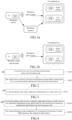
- a LE audio system may include three roles of a Broadcast Source, a Broadcast Sink and a Broadcast Assistant.
- the roles of the broadcast source and the broadcast assistant may be located on different devices.
- the broadcast source may also be called a broadcast audio source, and may be provided in a terminal device having an audio playback function, such as a television (TV) and a mobile phone.
- the device where the broadcast source is located can serve as a Broadcast Media Sender (BMS).
- BMS Broadcast Media Sender
- the Broadcast Assistant can be provided on a device having a control function.
- the broadcast sink may also be called a broadcast audio sink, which includes headsets such as Earbud Left/Right and other devices.
- the device where the broadcast audio sink is located can serve as a Broadcast Media Receiver (BMR).
- BMR Broadcast Media Receiver
- the broadcast audio sink permits an external device, the broadcast assistant, to complete the work of scanning and detecting broadcast audio sources on behalf of itself.
- the broadcast assistant detects the broadcast and directly sends synchronization information of the broadcast audio source to the two earbuds through the LE connection, to start binaural playback. With the assistance of the broadcast assistant, switching between monaural and binaural modes can be performed.
- the basic principle of this example is the same as that in FIG. 1a , and the primary difference is that the Broadcast Source and Broadcast Assistant roles of the LE audio system can be located on the same device.
- the device where the broadcast source and broadcast assistant are located can serve as the BMS.
- the device where the broadcast audio sink is located can serve as the BMR.
- the broadcast assistant indicates the left and right earbuds (Earbud Left/Right) to synchronize to left and right channels respectively to enter the binaural playback mode.
- the broadcast assistant receives notification information sent by the earbud device that stops the playback, searches for another earbud that is in the same Coordinated Set as the earbud, and indicates that earbud to stop synchronizing to the BIS corresponding to the current channel and start synchronizing to the BIS corresponding to a mono channel.
- the newly-connected earbud sends notification information to request for broadcast synchronization information.
- the broadcast assistant sends the synchronization information (SyncInfo) to the earbud, and the earbud starts to synchronize to the BIS corresponding to a target channel (left channel or right channel).
- the broadcast assistant searches for the other earbud that is in the same coordinated set as the earbud, and indicates that earbud to stop synchronizing to the BIS corresponding to the mono channel and start to synchronize to the BIS corresponding to the target channel (left channel or right channel).
- FIG. 2 is a schematic flowchart of an audio control method 200 according to an embodiment of the present disclosure.
- the method can optionally be applied to the systems shown in Figures 1a and 1b , but is not limited thereto.
- the method includes at least some of the following contents.
- a control device receives notification information from a first broadcast sink.
- control device controls a Broadcast Isochronous Stream (BIS) synchronized to by a second broadcast sink based on the notification information.
- BSS Broadcast Isochronous Stream
- the control device such as the broadcast assistant may receive a notification message from the first broadcast sink such as a Bluetooth headset.
- the notification message may include at least one of an identifier of the first broadcast sink, an identifier of a coordinated set to which the first broadcast sink belongs, or an identifier of the second broadcast sink.
- the control device may send a control command to the second broadcast sink, so as to control the second broadcast sink to synchronize to the BIS.
- the method further includes: the control device searches for a second broadcast sink in the same coordinated set as the first broadcast sink.
- the coordinated set may be used for a group of devices configured to support a particular scenario.
- the coordinated set can include a pair of hearing aids, a pair of headsets (earbuds), or a speaker set, and devices in the coordinated set can receive multi-channel audio and respond to the control command in a coordinated manner.
- the coordinated set may have corresponding identification.
- the notification information may include the identification of the coordinated set.
- the control device may determine the coordinated set based on the identification of the coordinated set to which the first broadcast sink belongs, and then search for the identification of the second broadcast sink included in the coordinated set, and then the control device can control the BIS synchronized to by the second broadcast sink.
- the notification information is used to notify the control device that the first broadcast sink stops synchronizing to Periodic Advertising, and based on the notification information, the control device controls the BIS that the second broadcast sink synchronizes to, including: the control device indicates the second broadcast sink to stop synchronizing to the BIS corresponding to a second channel, and to start synchronizing to the BIS corresponding to the mono channel.
- the periodic advertising may include multiple types of BISs, for example, a BIS corresponding to the left channel, a BIS corresponding to the right channel, and a BIS corresponding to the mono channel. That first broadcast sink stops synchronizing to the periodic advertising means that it stops synchronizing to the BIS.
- the first broadcast sink such as an earbud
- the first broadcast sink can also notify the control device that it needs to switch to the monaural playback mode.
- the notification For example, in the monaural playback mode, if the control device receives notification information that the first broadcast sink stops synchronizing to the periodic advertising, that is, the first broadcast sink stops playing back the BIS corresponding to the first channel, it can be determined that it needs to switch to the monaural playback mode.
- the notification message carries the indication information of the monaural playback mode.
- a trigger control is provided on the earbud, and when the trigger control is triggered, indication information for mode switching is sent.
- the earbud is provided with a sensor such as an infrared sensor, a gravity sensor, etc., which can detect a state where the earbud is taken out of the ear or inserted into the ear, and then the indication information for the mode switching can be sent. Further, if one of the two earbuds in the binaural playback mode is taken out of the ear, the removed earbud may send indication information for switching to the monaural playback mode.
- control device may send a control command to the second broadcast sink.
- the control command may indicate the second broadcast sink to stop playing the BIS corresponding to the second channel and start synchronizing to the BIS corresponding to the mono channel.
- the notification information is used to request the control device to send broadcast synchronization information
- the method further includes: the control device sends the broadcast synchronization information to the first broadcast sink to indicate the first broadcast sink to start synchronizing to the BIS corresponding to the first channel.
- the first broadcast sink such as the earbud
- the first broadcast sink can also notify the control device that it needs to switch to the binaural playback mode.
- the notification carries the indication information of the binaural playback mode.
- a trigger control is provided on the earbud, and when the trigger control is triggered, indication information for the mode switching is sent.
- the earbud is provided with a sensor such as an infrared sensor, a gravity sensor, etc., which can detect the state that the earbud is taken out of the ear or inserted into the ear, and then the indication information for the mode switching can be sent. Further, if an earbud paired with the other earbud in the monaural playback mode is inserted into the ear, the earbud inserted into the ear can send indication information for switching to the binaural mode.
- a sensor such as an infrared sensor, a gravity sensor, etc.
- control device controls the BIS synchronized to by the second broadcast sink based on the notification information, including: the control device indicates the second broadcast sink to stop synchronizing to the BIS corresponding to the mono channel, and to start synchronizing to the BIS corresponding to the second channel.
- the control device if it switches from the monaural playback mode to the binaural playback mode, the control device not only sends the broadcast synchronization information to the first broadcast sink, but also sends a control command to the second broadcast sink.
- the control command may instruct the second broadcast sink to stop synchronizing to the BIS corresponding to the mono channel and start synchronizing to the BIS corresponding to the second channel.
- the first broadcast sink synchronizes to the BIS corresponding to the first channel
- the second broadcast sink synchronizes to the BIS corresponding to the second channel, and thus it successfully switches to the binaural playback mode.
- the notification information includes at least one of a source address type, a source address and an advertising set identification (Advertising_SID).
- the advertising set identification may also be referred to as a broadcast set identification.
- the address type, the address, and the SID included in the notification information can be used to identify a broadcast source; the address type and address can be used to identify the device of the broadcast source; and the SID can be used to identify a specific broadcast instance of the device (a device may be deployed with more than one broadcast instance).
- the first broadcast sink and the second broadcast sink are earbud devices.
- the first channel is a left channel
- the second channel is a right channel
- the first broadcast sink is a left earbud device
- the second broadcast sink is a right earbud device.
- the first channel is a right channel
- the second channel is a left channel
- the first broadcast sink is a right earbud device
- the second broadcast sink is a left earbud device.
- the method further includes: the control device establishes a synchronization relationship between the broadcast source and the first and second broadcast sinks, so as to instruct the first broadcast sink to synchronize to the BIS corresponding to the first channel and the second broadcast sink to synchronize to the BIS corresponding to the second channel.
- the control device may send a control command to a group of broadcast sinks in the same coordinated set, so as to establish the synchronization relationship between the broadcast source such as an audio playback device, for example a TV or a mobile phone, and a group of broadcast sinks.
- the control device sends to the left earbud device a control command of synchronizing to the BIS corresponding to the left channel, and sends to the right earbud device a control command of synchronizing to the BIS corresponding to the right channel.
- the control device sends to the left earbud device a control command of synchronizing to the BIS corresponding to the left channel, and sends to the right earbud device a control command of synchronizing to the BIS corresponding to the right channel.
- it enables the binaural playback mode for the left and right earbud devices.
- control device is a broadcast assistant.
- the broadcast assistant can be provided in the control device, and the broadcast source can be provided in another device.
- the broadcast assistant and broadcast source can be independent devices.
- the broadcast assistant discovers and synchronizes to the broadcast source through scanning, a connection can be established between the broadcast assistant and the broadcast sink, and the broadcast assistant sends synchronization information to the broadcast sink via the connection.
- control device includes a broadcast source and a broadcast assistant.
- the broadcast assistant and the broadcast source may be provided in the same device, such as the control device in the embodiment of the present disclosure.
- the periodic advertising received by the broadcast assistant from the broadcast source includes at least one of the following BISs:
- the broadcast source is a broadcast audio source.
- the convenient audio control of the device can be supported.
- the BIS that one earbud synchronizes to can be controlled based on the notification information of the other earbud, so that convenient and fast switching between the binaural playback mode and the monaural playback mode can be performed, which optimizes the audio playback effect and improves the user experience.
- FIG. 3 is a schematic flowchart of an audio control method 300 according to an embodiment of the present disclosure.
- the method can optionally be applied to the systems shown in Figures 1a and 1b , but is not limited thereto.
- the method includes at least some of the following contents.
- a first broadcast sink sends notification information to a control device.
- the notification information is used to indicate the control device to control a Broadcast Isochronous Stream (BIS) synchronized to by a second broadcast sink.
- BAS Broadcast Isochronous Stream
- the second broadcast sink is in the same coordinated set as the first broadcast sink.
- the method further includes: the first broadcast sink stops synchronizing to periodic advertising, and the notification information is used to notify the control device that the first broadcast sink stops synchronizing to the periodic advertising.
- the notification information is used to request the control device to send broadcast synchronization information
- the method further includes: the first broadcast sink receives the broadcast synchronization information from the control device, and starts to synchronize to the BIS corresponding to a first channel.
- the first broadcast sink and the second broadcast sink are earbud devices.
- the first channel is a left channel
- the second channel is a right channel
- the first broadcast sink is a left earbud device
- the second broadcast sink is a right earbud device.
- the first channel is a right channel
- the second channel is a left channel
- the first broadcast sink is a right earbud device
- the second broadcast sink is a left earbud device.
- control device is a broadcast assistant.
- control device includes a broadcast source and a broadcast assistant.
- the periodic advertising received by the broadcast assistant from the broadcast source includes at least one of the following BISs:
- the broadcast source is a broadcast audio source
- the broadcast sink is a broadcast audio receiver
- the method 300 performed by the first broadcast sink in the embodiment reference may be made to relevant descriptions regarding the first broadcast sink such as the first earbud device in the foregoing method 200, and details are not repeated here for the sake of brevity.
- FIG. 4 is a schematic flowchart of an audio control method 400 according to an embodiment of the present disclosure.
- the method can optionally be applied to the systems shown in Figures 1a and 1b , but is not limited thereto.
- the method includes at least some of the following contents.
- a second broadcast sink receives indication information from a control device, where the indication information is determined by the control device based on notification information of a first broadcast sink.
- the second broadcast sink synchronizes to a Broadcast Isochronous Stream (BIS) based on the indication information.
- BSS Broadcast Isochronous Stream
- the notification information is used to notify the control device that the first broadcast sink stops synchronizing to periodic advertising, and the second broadcast sink synchronizes to the BIS based on the indication information, including: the second broadcast sink stops synchronizing to the BIS corresponding to a second channel, and starts synchronizing to the BIS corresponding to a mono channel.
- the notification information is used to request the control device to send broadcast synchronization information
- the second broadcast sink synchronizes to the BIS based on the indication information, including: the second broadcast sink stops synchronizing to the BIS corresponding to a mono channel, and starts synchronizing to the BIS corresponding to a second channel.
- the first broadcast sink and the second broadcast sink are earbud devices.
- the first channel is a left channel
- the second channel is a right channel
- the first broadcast sink is a left earbud device
- the second broadcast sink is a right earbud device.
- the first channel is a right channel
- the second channel is a left channel
- the first broadcast sink is a right earbud device
- the second broadcast sink is a left earbud device.
- control device is a broadcast assistant.
- control device includes a broadcast source and a broadcast assistant.
- the periodic advertising received by the broadcast assistant from the broadcast source includes at least one of the following BISs:
- the broadcast source is a broadcast audio source
- the broadcast sink is a broadcast audio receiver
- the audio control method of the present disclosure can be suitable for switching between monaural playback and binaural playback based on Low Energy (LE) broadcast audio.
- LE Low Energy
- TWS True Wireless Stereo
- LE Audio technology includes a series of Profiles/Services, each of the services is responsible for a different function.
- the main Profiles/Services involved in LE broadcast audio include Basic Audio Profile (BAP) and Broadcast Audio Scan Service (BASS), but there is no monaural-binaural switching mechanism set for the TWS products. In products such as TWS headsets, switching between monaural and binaural playback modes is an important function.
- BAP Basic Audio Profile
- BASS Broadcast Audio Scan Service
- the embodiments of the present disclosure can provide a switching mechanism between the binaural and monaural playback modes of the TWS headsets based on the broadcast audio, examples of which are as follows.
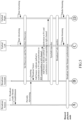
- the broadcast source configures periodic advertising, which can contain three BIS audio streams corresponding to a left channel, a right channel and a mono channel, respectively.
- This scheme is applicable to the situation that the broadcast source and the broadcast assistant are located in different devices.
- the process of the scheme can mainly include the following.
- a broadcast sink such as Earbud Left/Right establishes a synchronization relationship (that is, Broadcast Audio Stream synchronization) with the broadcast source, with assistance of the broadcast assistant.
- the Earbud Left and Earbud Right synchronize to the BISs corresponding to the left and right channels respectively, and play music in a binaural mode. For example, the Earbud Left and Earbud Right respectively start advertising.
- the broadcast assistant can perform processes of Coordinated Set Discovery and Set Members Discovery.
- the broadcast assistant scans the broadcast source, and receives the Periodic Advertising (PA) sent by the broadcast source to the broadcast assistant. If the broadcast assistant detects Add Source by scanning, it can instruct the earbud to synchronize to the PA and synchronize to the BIS corresponding to a target channel. For example, it instructs the left earbud to synchronize to the PA and synchronize to the BIS corresponding to the left channel, and instructs the right earbud to synchronize to the PA and synchronize to the BIS corresponding to the right channel.
- PA Periodic Advertising
- the broadcast assistant transfers synchronization information (SyncInfo transfers) to the left and right earbuds, and transfers broadcast codes (Broadcast Code transfers).
- the left and right earbuds play Media Streaming respectively.
- the Broadcast Audio Stream synchronization is performed between the broadcast source and the left and right earbuds.
- the user triggers switching to the monaural playback mode. For example, taking off an earbud or triggering a mode switching control by the user, etc., may trigger switching to the monaural playback mode, for example, causing the right earbudf to enter an idle state.
- triggering of the right earbud is described by way of example, and triggering of the left earbud is of similar principles, the example of which is not repeated here.
- the right earbud sends notification information to notify the broadcast assistant that the right earbud has stopped synchronizing to the periodic advertising.
- the notification message sent by the right earbud includes a periodic advertising synchronization state PA_Sync_State (Not synchronized to PA), indicating that it is not synchronized to the periodic advertising.
- the broadcast assistant searches for the other earbud (which may be called a target earbud) that is in the same coordinated set as the earbud through the received notification information.
- the broadcast assistant modifies the broadcast source, instructs the found target earbud to stop synchronizing to the BIS corresponding to the left channel, and to start synchronizing to the BIS corresponding to the mono channel, to enter the monaural playback mode.
- the target earbud such as the left earbud, updates media streaming. In this mode, the broadcast audio stream synchronization is performed between the broadcast source and the left earbud.
- the user triggers to switch to the binaural playback mode.
- the user can trigger switching to the binaural playback mode by wearing the other earbud in the monaural playback mode or triggering the mode switching control. Assuming that the user still triggers the right earbud, the binaural playback mode is triggered, and the right earbud enters an active state.
- the right earbud sends notification information to the broadcast assistant, so as to request the broadcast assistant to send broadcast synchronization information.
- the notification information may carry a source address type (Source_Address_Type), a source address (Source_Address), an advertising set identification (Advertising_SID), and the like.
- the notification message from the right earbud may also include a periodic advertising synchronization state PA_Sync_State (SyncInfo Request), indicating that the right earbud requests the broadcast synchronization information.
- the broadcast assistant sends the broadcast synchronization information (SyncInfo) to the right earbud.
- Synchronization information Synchronization information
- the right earbud starts to synchronize to the BIS corresponding to the right channel, to enter a music playplayback state (playing Media Streaming).
- the broadcast assistant searches for the other earbud that is in the same coordinated set as the earbud through the received notification information.
- the broadcast assistant can modify the broadcast source, instructs the found target earbud to stop synchronizing to the BIS corresponding to the mono channel, and to start synchronizing to the BIS corresponding to the left channel, to enter the binaural playback mode.
- the target earbud such as the left earbud, updates media streaming. In this mode, the broadcast audio stream synchronization is performed between the broadcast source and the left and right earbuds.
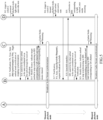
- the broadcast source configures periodic advertising, which can contain three BIS audio streams corresponding to a left channel, a right channel and a mono channel, respectively.
- This scheme is applicable to the situation where the Broadcast Source and the Broadcast Assistant are on the same device. As shown in FIG. 6 , the process of this scheme mainly includes the following.
- the broadcast sink such as Earbud Left/Right establishes a synchronization relationship (that is, Broadcast Audio Stream synchronization) with the broadcast source, with the assistance of the broadcast assistant.
- the left earbud and the right earbud are synchronized to the BISs corresponding to the left and right channels respectively, and play music in the binaural mode.
- the broadcast assistant and broadcast source can perform processes of Coordinated Set Discovery and Set Members Discovery.
- the right earbud sends notification information to notify the broadcast assistant that the right earbud has stopped synchronizing to the periodic advertising.
- the broadcast assistant searches for the other earbud that is in the same coordinated set as the earbud through the received notification information.
- the broadcast assistant instructs the found target earbud to stop synchronizing to the BIS corresponding to the left channel, and to start synchronizing to the BIS corresponding to the mono channel, to enter the monaural playback mode.
- the right earbud sends notification information to the broadcast assistant, so as to request the broadcast assistant to send broadcast synchronization information.
- the notification information may carry a source address type (Source_Address_Type), a source address (Source_Address), an advertising set identification (Advertising_SID), and the like.
- the broadcast assistant sends the broadcast synchronization information (SyncInfo) to the right earbud.
- Synchronization information Synchronization information
- the right earbud starts synchronizing to the BIS corresponding to the right channel, to enter the music playing state.
- the broadcast assistant searches for the other earbud that is in the same coordinated set as the earbud through the received notification information.
- the broadcast assistant instructs the found target earbud to stop synchronizing to the BIS corresponding to the mono channel, and to start synchronizing to the BIS corresponding to the left channel, to enter the binaural playback mode.
- the schemes in the embodiments of the present disclosure support switching between monaural playback and binaural playback of TWS Bluetooth headsets based on LE broadcast audio, ensuring that TWS products based on next-generation Bluetooth audio provide good consuming user experience.
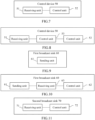
- FIG. 7 is a schematic block diagram of a control device 50 according to an embodiment of the present disclosure.
- the control device 50 may include the following.
- control device further includes: a search unit 53, configured to search for a second broadcast sink in the same coordinated set as the first broadcast sink.
- the notification information is used to notify the control device that the first broadcast sink stops synchronizing to periodic advertising
- the control unit is further configured to instruct the second broadcast sink to stop synchronizing to the BIS corresponding to a second channel, and to start synchronizing to the BIS corresponding to a mono channel.
- the notification information is used to request the control device to send broadcast synchronization information
- the control unit is further configured to send the broadcast synchronization information to the first broadcast sink to instruct the first broadcast sink to start synchronizing to the BIS corresponding to a first channel.
- control unit is further configured to instruct the second broadcast sink to stop synchronizing to the BIS corresponding to the mono channel, and to start synchronizing to the BIS corresponding to the second channel.
- the notification information includes at least one of a source address type, a source address and an advertising set identification.
- the first broadcast sink and the second broadcast sink are earbud devices.
- the first channel is a left channel
- the second channel is a right channel
- the first broadcast sink is a left earbud device
- the second broadcast sink is a right earbud device.
- the first channel is a right channel
- the second channel is a left channel
- the first broadcast sink is a right earbud device
- the second broadcast sink is a left earbud device.
- control unit is further configured to establish a synchronization relationship between the broadcast source and the first and second broadcast sinks, so as to instruct the first broadcast sink to synchronize to the BIS corresponding to the first channel and the second broadcast sink to synchronize to the BIS corresponding to the second channel.
- control device is a broadcast assistant.
- control device includes a broadcast source and a broadcast assistant.
- the periodic advertising received by the broadcast assistant from the broadcast source includes at least one of the following BISs:
- the broadcast source is a broadcast audio source
- the broadcast sink is a broadcast audio sink.
- the control device 50 in the embodiment of the present disclosure can implement the corresponding functions of the control device in the foregoing method embodiments.
- each module (sub-module, unit or component, etc.) in the control device 50 reference can be made to the corresponding descriptions in the above method embodiments, details of which will not be repeated here.
- the functions described in respect to various modules (sub-modules, units or components, etc.) in the control device 50 of the embodiment of the present disclosure can be implemented by different modules (sub-modules, units or components, etc.), or by the same module (sub-module, unit or component, etc.).
- FIG. 9 is a schematic block diagram of a first broadcast sink 60 according to an embodiment of the present disclosure.
- the first broadcast sink 60 may include:
- the second broadcast sink is in the same coordinated set as the first broadcast sink.
- the first broadcast sink further includes: a control unit 62, configured to stop synchronizing to periodic advertising, wherein the notification information is used to notify the control device that the first broadcast sink stops synchronizing to the periodic advertising.
- the notification information is used to request the control device to send broadcast synchronization information
- the first broadcast sink further includes: a receiving unit 63, configured to receive the broadcast synchronization information from the control device, and to start synchronizing to the BIS corresponding to the first channel.
- the first broadcast sink and the second broadcast sink are earbud devices.
- the first channel is a left channel
- the second channel is a right channel
- the first broadcast sink is a left earbud device
- the second broadcast sink is a right earbud device.
- the first channel is a right channel
- the second channel is a left channel
- the first broadcast sink is a right earbud device
- the second broadcast sink is a left earbud device.
- control device is a broadcast assistant.
- control device includes a broadcast source and a broadcast assistant.
- the periodic advertising received by the broadcast assistant from the broadcast source includes at least one of the following BISs:
- the broadcast source is a broadcast audio source
- the broadcast sink is a broadcast audio sink.
- the first broadcast sink 60 in the embodiment of the present disclosure can implement the corresponding functions of the first broadcast sink in the foregoing method embodiments.
- each module (sub-module, unit or component, etc.) in the first broadcast sink 60 reference can be made to the corresponding description in the above method embodiments, details of which are not repeated here.
- the functions described in respect to the modules (sub-modules, units or components, etc.) in the first broadcast sink 60 of the embodiments of the present disclosure can be implemented by different modules (sub-modules, units or components, etc.), or can be implemented by the same module (sub-module, unit or component, etc.).
- FIG. 11 is a schematic block diagram of a second broadcast sink 70 according to an embodiment of the present disclosure.
- the second broadcast sink 70 may include:
- the notification information is used to notify the control device that the first broadcast sink stops synchronizing to periodic advertising
- the control unit is further configured to stop synchronizing to the BIS corresponding to a second channel, and start synchronizing to the BIS corresponding to a mono channel.
- the notification information is used to request the control device to send broadcast synchronization information
- the control unit is further configured to stop synchronizing to the BIS corresponding to the mono channel, and start synchronizing to the BIS corresponding to the second channel.
- the first broadcast sink and the second broadcast sink are earbud devices.
- the first channel is a left channel
- the second channel is a right channel
- the first broadcast sink is a left earbud device
- the second broadcast sink is a right earbud device.
- the first channel is a right channel
- the second channel is a left channel
- the first broadcast sink is a right earbud device
- the second broadcast sink is a left earbud device.
- control device is a broadcast assistant.
- control device includes a broadcast source and a broadcast assistant.
- the periodic advertising received by the broadcast assistant from the broadcast source includes at least one of the following BISs:
- the broadcast source is a broadcast audio source
- the broadcast sink is a broadcast audio sink.
- the second broadcast sink 70 in the embodiment of the present disclosure can implement the corresponding functions of the second broadcast sink in the foregoing method embodiments.
- each module (sub-module, unit or component, etc.) in the second broadcast sink 70 reference can be made to the corresponding description in the above method embodiments, details of which are not repeated here.
- the functions described in respect to the modules (sub-modules, units or components, etc.) in the second broadcast sink 70 of the embodiments of the present disclosure can be implemented by different modules (sub-modules, units or components, etc.), or can be implemented by the same module (sub-module, unit or component, etc.).
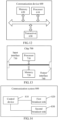
- FIG. 12 is a schematic structural diagram of a communication device 600 according to an embodiment of the present disclosure.
- the communication device 600 includes a processor 610, and the processor 610 can call and run a computer program from a memory, to cause the communication device 600 to carry out the methods in the embodiments of the present disclosure.
- the communication device 600 may further include a memory 620.
- the processor 610 may call and run a computer program from the memory 620, to cause the communication device 600 to implement the methods in the embodiments of the present disclosure.
- the memory 620 may be a separate device independent of the processor 610, or may be integrated in the processor 610.
- the communication device 600 may further include a transceiver 630, and the processor 610 may control the transceiver 630 to communicate with other devices, and specifically, to send information or data to the other devices or receive information or data sent by other devices.
- the transceiver 630 may include a transmitter and a receiver.
- the transceiver 630 may further include an antenna, and the number of the antennas may be one or more.
- the communication device 600 may be the control device, the first broadcast sink or the second broadcast sink in the embodiments of the present disclosure, and the communication device 600 may implement corresponding processes implemented by the control device, the first broadcast sink or the second broadcast sink in the methods of the embodiments of the present disclosure, which are not repeated here for the sake of brevity.
- FIG. 13 is a schematic structural diagram of a chip 700 according to an embodiment of the present disclosure.
- the chip 700 includes a processor 710 which can call and run a computer program from a memory to implement the methods in the embodiments of the present disclosure.
- the chip 700 may further include a memory 720.
- the processor 710 can call and run a computer program from the memory 720, so as to implement the methods performed by the control device, the first broadcast sink or the second broadcast sink in the embodiments of the present disclosure.
- the memory 720 can be a separate device independent of the processor 710, or can be integrated in the processor 710.
- the chip 700 can further include an input interface 730.
- the processor 710 can control the input interface 730 to communicate with other devices or chips, and specifically, to obtain information or data transmitted by other devices or chips.
- the chip 700 can further include an output interface 740.
- the processor 710 can control the output interface 740 to communicate with other devices or chips, and specifically, to output information or data to other devices or chips.
- the chip may be applied to the control device, the first broadcast sink or the second broadcast sink in the embodiments of the present disclosure, and the chip may implement corresponding processes implemented by the control device, the first broadcast sink or the second broadcast sink in the methods of the embodiments of the present disclosure, which are not repeated here for the sake of brevity.
- the chip applied to the control device, the first broadcast sink or the second broadcast sink may be the same chip or different chips.
- the chip mentioned in the embodiments of the present disclosure can also be referred to as a system-level chip, a system chip, a chip system, or a system-on-chip.
- the processor mentioned above may be a general-purpose processor, a digital signal processor (DSP), a field programmable gate array (FPGA), an application specific integrated circuit (ASIC) or other programmable logic devices, transistor logic devices, discrete hardware components, etc.
- DSP digital signal processor
- FPGA field programmable gate array
- ASIC application specific integrated circuit
- the general-purpose processor mentioned above may be a microprocessor or any conventional processor.
- the memory mentioned above may be either volatile memory or non-volatile memory, or may include both volatile and non-volatile memories.
- the non-volatile memory may be a read-only memory (ROM), a programmable read-only memory (PROM), an erasable programmable read-only memory (EPROM), an electrically programmable erase programmable read-only memory (electrically EPROM, EEPROM) or a flash memory.
- the volatile memory may be a random access memory (RAM).
- the memory in the embodiments of the present disclosure can also be a Static RAM (SRAM), a Dynamic RAM (DRAM), a Synchronous DRAM (SDRAM), a Double Data Rate SDRAM (DDR SDRAM), an Enhanced SDRAM (ESDRAM), a Synch Link DRAM (SLDRAM), a Direct Rambus RAM (DR RAM), among others. That is to say, the memory in the embodiments of the present disclosure is intended to include but is not limited to these and any other suitable types of memories.
- SRAM Static RAM
- DRAM Dynamic RAM
- SDRAM Synchronous DRAM
- DDR SDRAM Double Data Rate SDRAM
- ESDRAM Enhanced SDRAM
- SLDRAM Synch Link DRAM
- DR RAM Direct Rambus RAM
- FIG. 14 is a schematic block diagram of a communication system 800 according to an embodiment of the present disclosure.
- the communication system 800 includes a control device 810, a first broadcast sink 820 and a second broadcast sink 830.
- the control device 810 is configured to receive notification information from the first broadcast sink; and the control device controls a Broadcast Isochronous Stream (BIS) synchronized to by the second broadcast sink based on the notification information.
- BIS Broadcast Isochronous Stream
- the first broadcast sink 820 is configured to send the notification information to the control device, where the notification information is used to indicate the control device to control the Broadcast Isochronous Stream (BIS) synchronized to by the second broadcast sink.
- BIS Broadcast Isochronous Stream
- the second broadcast sink 830 is configured to receive indication information from the control device, the indication information being determined by the control device based on the notification information of the first broadcast sink; and synchronize to the Broadcast Isochronous Stream (BIS) based on the indication information.
- BIS Broadcast Isochronous Stream
- the control device 810 can be configured to implement the corresponding functions implemented by the control device in the above methods
- the first broadcast sink 820 can be configured to implement the corresponding functions implemented by the first broadcast sink in the above methods
- the second broadcast sink 830 can be configured to implement corresponding functions implemented by the second broadcast sink in the foregoing methods.
- the control device 810 can be configured to implement the corresponding functions implemented by the control device in the above methods
- the first broadcast sink 820 can be configured to implement the corresponding functions implemented by the first broadcast sink in the above methods
- the second broadcast sink 830 can be configured to implement corresponding functions implemented by the second broadcast sink in the foregoing methods.
- the above embodiments may be implemented entirely or partly by software, hardware, firmware or any combination thereof.
- software it can be implemented entirely or partly in the form of a computer program product.
- the computer program product includes one or more computer instructions.
- the computer can be a general-purpose computer, a dedicated computer, a computer network, or other programmable devices.
- the computer instructions can be stored in a computer-readable storage medium, or transmitted from one computer-readable storage medium to another.
- the computer instructions can be transmitted from a website, a computer, a server, or a data center to another website site, computer, server or data center in a wired manner such as through a coaxial cable, an optical fiber or a digital subscriber line (DSL) or in a wireless manner such as an infrared, wireless, microwave manner or the like.
- a computer-readable storage medium may be any available medium that can be accessed by a computer or a data storage device such as a server or data center integrated with one or more available media.
- the available medium may be a magnetic medium (such as a floppy disk, a hard disk, a magnetic tape), an optical medium (such as a DVD), or a semiconductor medium (such as a solid state disk (SSD)).
- sequence numbers of the above-mentioned processes do not mean the performing order, and the performing order of the processes should be determined according to the functions and the internal logic thereof, and should not compose any limitation on the implementations of the embodiments of the present disclosure.
Landscapes
- Engineering & Computer Science (AREA)
- Signal Processing (AREA)
- Physics & Mathematics (AREA)
- Acoustics & Sound (AREA)
- Multimedia (AREA)
- Computer Networks & Wireless Communication (AREA)
- Health & Medical Sciences (AREA)
- General Health & Medical Sciences (AREA)
- Otolaryngology (AREA)
- Headphones And Earphones (AREA)
Applications Claiming Priority (1)
| Application Number | Priority Date | Filing Date | Title |
|---|---|---|---|
| PCT/CN2020/124551 WO2022087924A1 (fr) | 2020-10-28 | 2020-10-28 | Procédé et dispositif de commande audio |
Publications (2)
| Publication Number | Publication Date |
|---|---|
| EP4228285A1 true EP4228285A1 (fr) | 2023-08-16 |
| EP4228285A4 EP4228285A4 (fr) | 2024-01-03 |
Family
ID=81383453
Family Applications (1)
| Application Number | Title | Priority Date | Filing Date |
|---|---|---|---|
| EP20959087.6A Withdrawn EP4228285A4 (fr) | 2020-10-28 | 2020-10-28 | Procédé et dispositif de commande audio |
Country Status (4)
| Country | Link |
|---|---|
| US (1) | US20230269012A1 (fr) |
| EP (1) | EP4228285A4 (fr) |
| CN (1) | CN116097663A (fr) |
| WO (1) | WO2022087924A1 (fr) |
Cited By (3)
| Publication number | Priority date | Publication date | Assignee | Title |
|---|---|---|---|---|
| WO2025037737A1 (fr) * | 2023-08-17 | 2025-02-20 | 삼성전자주식회사 | Dispositif électronique, procédé et support de stockage non transitoire lisible par ordinateur pour transfert de service audio |
| WO2025042020A1 (fr) * | 2023-08-20 | 2025-02-27 | 삼성전자 주식회사 | Dispositif électronique pour assister la transmission d'un signal publicitaire pour un service bis, et procédé de fonctionnement associé |
| EP4598070A4 (fr) * | 2023-10-30 | 2026-03-11 | Samsung Electronics Co Ltd | Dispositif électronique permettant de fournir un service audio et son procédé de fonctionnement |
Families Citing this family (12)
| Publication number | Priority date | Publication date | Assignee | Title |
|---|---|---|---|---|
| US12120582B2 (en) * | 2019-06-03 | 2024-10-15 | Intellectual Discovery Co., Ltd. | Method, apparatus and computer program for broadcast discovery service in wireless communication system, and recording medium therefor |
| US12335171B2 (en) * | 2021-09-23 | 2025-06-17 | Apple Inc. | Low latency orthogonal frequency division multiple access transmission scheme |
| CN118872280A (zh) * | 2022-06-30 | 2024-10-29 | 海信视像科技股份有限公司 | 显示设备、蓝牙设备和数据处理方法 |
| CN115278332B (zh) * | 2022-06-30 | 2025-05-30 | 海信视像科技股份有限公司 | 一种显示设备、播放设备和数据传输方法 |
| CN115459869B (zh) * | 2022-10-27 | 2023-07-04 | 广东保伦电子股份有限公司 | 一种基于fm收发模块的同步广播方法、广播设备及系统 |
| US12543130B2 (en) * | 2023-01-20 | 2026-02-03 | Qualcomm Incorporated | Angle of arrival-based location determination using periodic advertising synchronization |
| CN116527785A (zh) * | 2023-05-18 | 2023-08-01 | 展讯半导体(成都)有限公司 | 一种数据传输方法、装置、芯片及模组设备 |
| CN116546445A (zh) * | 2023-05-29 | 2023-08-04 | 天键电声股份有限公司 | 一种基于LE-audio智能手表的数据传输方法、装置 |
| US20250208825A1 (en) * | 2023-12-20 | 2025-06-26 | Qualcomm Incorporated | Proximity based broadcast onboarding for audio devices |
| EP4601301A4 (fr) * | 2023-12-29 | 2026-01-21 | Samsung Electronics Co Ltd | Dispositif électronique de gestion de service de diffusion et procédé de fonctionnement associé |
| WO2025192999A1 (fr) * | 2024-03-14 | 2025-09-18 | 엘지전자 주식회사 | Appareil et procédé d'élimination d'ea et de pa dans la diffusion en continu de signal audio multicanal |
| CN121262434A (zh) * | 2024-06-25 | 2026-01-02 | 海信视像科技股份有限公司 | 显示设备及声道配置方法 |
Family Cites Families (10)
| Publication number | Priority date | Publication date | Assignee | Title |
|---|---|---|---|---|
| KR100662204B1 (ko) * | 2005-08-02 | 2006-12-27 | 엘지전자 주식회사 | 무선 헤드셋의 제어장치 및 방법 |
| JP2009152666A (ja) * | 2007-12-18 | 2009-07-09 | Toshiba Corp | 音響出力制御装置、音響再生装置および音響出力制御方法 |
| US20100020982A1 (en) * | 2008-07-28 | 2010-01-28 | Plantronics, Inc. | Donned/doffed multimedia file playback control |
| US8559651B2 (en) * | 2011-03-11 | 2013-10-15 | Blackberry Limited | Synthetic stereo on a mono headset with motion sensing |
| CN105491469A (zh) * | 2014-09-15 | 2016-04-13 | Tcl集团股份有限公司 | 一种基于耳机佩戴状态控制音频输出模式的方法及系统 |
| CN104883644A (zh) * | 2015-03-31 | 2015-09-02 | 联想(北京)有限公司 | 一种信息处理方法和电子设备 |
| US20160359925A1 (en) * | 2015-06-08 | 2016-12-08 | Lg Electronics Inc. | Method and apparatus for transmitting and receiving data in wireless communication system |
| US10148453B2 (en) * | 2016-02-24 | 2018-12-04 | Qualcomm Incorporated | Using update slot to synchronize to Bluetooth LE isochronous channel and communicate state changes |
| CN109379490B (zh) * | 2018-09-30 | 2021-02-05 | Oppo广东移动通信有限公司 | 音频播放方法、装置、电子设备及计算机可读介质 |
| CN112789866B (zh) * | 2018-12-24 | 2022-07-12 | 华为技术有限公司 | 应用于tws耳机单双耳切换的音频数据传输方法及设备 |
-
2020
- 2020-10-28 WO PCT/CN2020/124551 patent/WO2022087924A1/fr not_active Ceased
- 2020-10-28 CN CN202080103397.0A patent/CN116097663A/zh active Pending
- 2020-10-28 EP EP20959087.6A patent/EP4228285A4/fr not_active Withdrawn
-
2023
- 2023-04-27 US US18/308,206 patent/US20230269012A1/en active Pending
Cited By (4)
| Publication number | Priority date | Publication date | Assignee | Title |
|---|---|---|---|---|
| WO2025037737A1 (fr) * | 2023-08-17 | 2025-02-20 | 삼성전자주식회사 | Dispositif électronique, procédé et support de stockage non transitoire lisible par ordinateur pour transfert de service audio |
| WO2025042020A1 (fr) * | 2023-08-20 | 2025-02-27 | 삼성전자 주식회사 | Dispositif électronique pour assister la transmission d'un signal publicitaire pour un service bis, et procédé de fonctionnement associé |
| EP4535842A4 (fr) * | 2023-08-20 | 2025-04-30 | Samsung Electronics Co., Ltd | Dispositif électronique pour assister la transmission d'un signal publicitaire pour un service bis, et procédé de fonctionnement associé |
| EP4598070A4 (fr) * | 2023-10-30 | 2026-03-11 | Samsung Electronics Co Ltd | Dispositif électronique permettant de fournir un service audio et son procédé de fonctionnement |
Also Published As
| Publication number | Publication date |
|---|---|
| CN116097663A (zh) | 2023-05-09 |
| EP4228285A4 (fr) | 2024-01-03 |
| US20230269012A1 (en) | 2023-08-24 |
| WO2022087924A1 (fr) | 2022-05-05 |
Similar Documents
| Publication | Publication Date | Title |
|---|---|---|
| US20230269012A1 (en) | Audio control method and device | |
| US20230106792A1 (en) | Indication Method and Related Device | |
| US20230117911A1 (en) | Condition-based secondary node or primary secondary cell change method and device | |
| US10834765B2 (en) | Apparatus, system and method of setting up a connection for communication between NAN devices | |
| US10069883B2 (en) | Apparatus, system and method of communicating in a multicast group | |
| US12262426B2 (en) | Dual 5G connection mechanisms to support multi-operators with different service traffic simultaneously | |
| JP2021503804A (ja) | V2x搬送波アグリゲーションのための同期 | |
| US11576133B2 (en) | Timing synchronization of 5G V2X sidelink transmissions | |
| EP4250866A1 (fr) | Procédé de communication sans fil et dispositif terminal | |
| CN110546989B (zh) | 无线通信系统中的电子设备以及无线通信方法 | |
| US20230107139A1 (en) | Relay discovery method and terminal | |
| US20230070801A1 (en) | Multicast downlink service notification method, terminal device and network device | |
| WO2024027412A1 (fr) | Procédé de communication, appareil de communication et système de communication | |
| WO2022032453A1 (fr) | Procédé d'optimisation de radiomessagerie et dispositif de réseau | |
| WO2016106755A1 (fr) | Procédé, dispositif et système de prise en charge de transmission de service de diffusion mbms | |
| US20250310746A1 (en) | Node identification using sidelink in a wireless communications network | |
| CN116489799A (zh) | 一种广播通信方法和装置 | |
| WO2022198466A1 (fr) | Procédé de découverte et terminal | |
| CN116491162A (zh) | 进入连接态的方法和终端设备 | |
| JP2024521609A (ja) | 端末機器が位置するトラッキングエリアの指示方法及びネットワーク機器 | |
| WO2023206548A1 (fr) | Procédé de communication, dispositif de réseau et dispositif terminal | |
| EP4224986A1 (fr) | Procédé de détermination de schéma de relais et dispositif | |
| WO2022027526A1 (fr) | Procédé d'accès, dispositif terminal et dispositif réseau | |
| CN115150971B (zh) | 一种实现双链接的方法、装置及可读存储介质 | |
| WO2026065344A1 (fr) | Procédé de synchronisation et dispositif de communication |
Legal Events
| Date | Code | Title | Description |
|---|---|---|---|
| STAA | Information on the status of an ep patent application or granted ep patent |
Free format text: STATUS: THE INTERNATIONAL PUBLICATION HAS BEEN MADE |
|
| PUAI | Public reference made under article 153(3) epc to a published international application that has entered the european phase |
Free format text: ORIGINAL CODE: 0009012 |
|
| STAA | Information on the status of an ep patent application or granted ep patent |
Free format text: STATUS: REQUEST FOR EXAMINATION WAS MADE |
|
| 17P | Request for examination filed |
Effective date: 20230509 |
|
| AK | Designated contracting states |
Kind code of ref document: A1 Designated state(s): AL AT BE BG CH CY CZ DE DK EE ES FI FR GB GR HR HU IE IS IT LI LT LU LV MC MK MT NL NO PL PT RO RS SE SI SK SM TR |
|
| REG | Reference to a national code |
Ref country code: DE Ref legal event code: R079 Free format text: PREVIOUS MAIN CLASS: H04R0003120000 Ipc: H04W0004800000 |
|
| A4 | Supplementary search report drawn up and despatched |
Effective date: 20231204 |
|
| RIC1 | Information provided on ipc code assigned before grant |
Ipc: H04R 1/10 20060101ALN20231128BHEP Ipc: H04R 3/12 20060101ALI20231128BHEP Ipc: H04L 65/611 20220101ALI20231128BHEP Ipc: H04W 4/80 20180101AFI20231128BHEP |
|
| DAV | Request for validation of the european patent (deleted) | ||
| DAX | Request for extension of the european patent (deleted) | ||
| STAA | Information on the status of an ep patent application or granted ep patent |
Free format text: STATUS: THE APPLICATION IS DEEMED TO BE WITHDRAWN |
|
| 18D | Application deemed to be withdrawn |
Effective date: 20240622 |