EP4231560A1 - Anpassung von hybriden automatischen wiederholungsanfragen - Google Patents
Anpassung von hybriden automatischen wiederholungsanfragen Download PDFInfo
- Publication number
- EP4231560A1 EP4231560A1 EP23151520.6A EP23151520A EP4231560A1 EP 4231560 A1 EP4231560 A1 EP 4231560A1 EP 23151520 A EP23151520 A EP 23151520A EP 4231560 A1 EP4231560 A1 EP 4231560A1
- Authority
- EP
- European Patent Office
- Prior art keywords
- preconfigured
- data
- transmissions
- automatic repeat
- hybrid automatic
- Prior art date
- Legal status (The legal status is an assumption and is not a legal conclusion. Google has not performed a legal analysis and makes no representation as to the accuracy of the status listed.)
- Pending
Links
Images

Classifications
-
- H—ELECTRICITY
- H04—ELECTRIC COMMUNICATION TECHNIQUE
- H04L—TRANSMISSION OF DIGITAL INFORMATION, e.g. TELEGRAPHIC COMMUNICATION
- H04L1/00—Arrangements for detecting or preventing errors in the information received
- H04L1/08—Arrangements for detecting or preventing errors in the information received by repeating transmission, e.g. Verdan system
-
- H—ELECTRICITY
- H04—ELECTRIC COMMUNICATION TECHNIQUE
- H04L—TRANSMISSION OF DIGITAL INFORMATION, e.g. TELEGRAPHIC COMMUNICATION
- H04L1/00—Arrangements for detecting or preventing errors in the information received
- H04L1/12—Arrangements for detecting or preventing errors in the information received by using return channel
- H04L1/16—Arrangements for detecting or preventing errors in the information received by using return channel in which the return channel carries supervisory signals, e.g. repetition request signals
- H04L1/18—Automatic repetition systems, e.g. Van Duuren systems
- H04L1/1812—Hybrid protocols; Hybrid automatic repeat request [HARQ]
-
- H—ELECTRICITY
- H04—ELECTRIC COMMUNICATION TECHNIQUE
- H04L—TRANSMISSION OF DIGITAL INFORMATION, e.g. TELEGRAPHIC COMMUNICATION
- H04L1/00—Arrangements for detecting or preventing errors in the information received
- H04L1/12—Arrangements for detecting or preventing errors in the information received by using return channel
- H04L1/16—Arrangements for detecting or preventing errors in the information received by using return channel in which the return channel carries supervisory signals, e.g. repetition request signals
- H04L1/18—Automatic repetition systems, e.g. Van Duuren systems
- H04L1/1809—Selective-repeat protocols
-
- H—ELECTRICITY
- H04—ELECTRIC COMMUNICATION TECHNIQUE
- H04L—TRANSMISSION OF DIGITAL INFORMATION, e.g. TELEGRAPHIC COMMUNICATION
- H04L1/00—Arrangements for detecting or preventing errors in the information received
- H04L1/12—Arrangements for detecting or preventing errors in the information received by using return channel
- H04L1/16—Arrangements for detecting or preventing errors in the information received by using return channel in which the return channel carries supervisory signals, e.g. repetition request signals
- H04L1/18—Automatic repetition systems, e.g. Van Duuren systems
- H04L1/1822—Automatic repetition systems, e.g. Van Duuren systems involving configuration of automatic repeat request [ARQ] with parallel processes
-
- H—ELECTRICITY
- H04—ELECTRIC COMMUNICATION TECHNIQUE
- H04L—TRANSMISSION OF DIGITAL INFORMATION, e.g. TELEGRAPHIC COMMUNICATION
- H04L1/00—Arrangements for detecting or preventing errors in the information received
- H04L1/12—Arrangements for detecting or preventing errors in the information received by using return channel
- H04L1/16—Arrangements for detecting or preventing errors in the information received by using return channel in which the return channel carries supervisory signals, e.g. repetition request signals
- H04L1/18—Automatic repetition systems, e.g. Van Duuren systems
- H04L1/1867—Arrangements specially adapted for the transmitter end
-
- H—ELECTRICITY
- H04—ELECTRIC COMMUNICATION TECHNIQUE
- H04L—TRANSMISSION OF DIGITAL INFORMATION, e.g. TELEGRAPHIC COMMUNICATION
- H04L1/00—Arrangements for detecting or preventing errors in the information received
- H04L1/12—Arrangements for detecting or preventing errors in the information received by using return channel
- H04L1/16—Arrangements for detecting or preventing errors in the information received by using return channel in which the return channel carries supervisory signals, e.g. repetition request signals
- H04L1/18—Automatic repetition systems, e.g. Van Duuren systems
- H04L1/1867—Arrangements specially adapted for the transmitter end
- H04L1/1896—ARQ related signaling
-
- H—ELECTRICITY
- H04—ELECTRIC COMMUNICATION TECHNIQUE
- H04W—WIRELESS COMMUNICATION NETWORKS
- H04W28/00—Network traffic management; Network resource management
- H04W28/02—Traffic management, e.g. flow control or congestion control
-
- H—ELECTRICITY
- H04—ELECTRIC COMMUNICATION TECHNIQUE
- H04W—WIRELESS COMMUNICATION NETWORKS
- H04W28/00—Network traffic management; Network resource management
- H04W28/02—Traffic management, e.g. flow control or congestion control
- H04W28/04—Error control
-
- H—ELECTRICITY
- H04—ELECTRIC COMMUNICATION TECHNIQUE
- H04W—WIRELESS COMMUNICATION NETWORKS
- H04W28/00—Network traffic management; Network resource management
- H04W28/02—Traffic management, e.g. flow control or congestion control
- H04W28/06—Optimizing the usage of the radio link, e.g. header compression, information sizing, discarding information
-
- H—ELECTRICITY
- H04—ELECTRIC COMMUNICATION TECHNIQUE
- H04W—WIRELESS COMMUNICATION NETWORKS
- H04W84/00—Network topologies
- H04W84/02—Hierarchically pre-organised networks, e.g. paging networks, cellular networks, WLAN [Wireless Local Area Network] or WLL [Wireless Local Loop]
- H04W84/04—Large scale networks; Deep hierarchical networks
- H04W84/06—Airborne or Satellite Networks
Definitions
- Various example embodiments described herein relate to the field of wireless communications.
- LTE long-term evolution
- 5G networks may be provided also using low earth orbit satellite system.
- Hybrid automatic repeat request transmissions are used in long-term evolution (LTE) systems in a stop-and-wait mechanism.
- LTE long-term evolution
- the use of low earth orbit satellite system introduces an additional delay to the stop-and-wait mechanism that is longer than the delay in terrestrial networks.
- an apparatus comprising at least one processor and at least one memory including computer program code, the at least one memory and the computer program code being configured to, with the at least one processor, cause the apparatus at least to perform: transmitting a preconfigured number of transmissions of a first data with hybrid automatic repeat requests consecutively without waiting between the transmissions for response to any of the requests, wherein the preconfigured number is an integer and greater than one.
- the at least one memory and the computer program code are configured to, with the at least one processor, cause the apparatus further to perform: transmitting, while waiting for response to the requests transmitted with the first data, the preconfigured number of consecutive transmissions of further data, and reusing at least one hybrid automatic repeat request identifier, which was used with at least one of the requests transmitted with the first data, with the transmissions of the further data.
- the at least one memory and the computer program code are configured to, with the at least one processor, cause the apparatus further to perform: using a data indicator field in a downlink control indicator to indicate reuse of the hybrid automatic repeat request identifier.
- the at least one memory and the computer program code are configured to, with the at least one processor, cause the apparatus further to perform: changing the data indicator field to allow associating a response to a corresponding transmission when using the at least one hybrid automatic repeat request identifier more than once.
- the at least one memory and the computer program code are configured to, with the at least one processor, cause the apparatus further to perform: reusing hybrid automatic repeat request identifiers used for the first data for transmissions of further data in response to receiving a first response with acknowledgement without waiting for all responses.
- the at least one memory and the computer program code are configured to, with the at least one processor, cause the apparatus further to perform prior to transmitting: estimating radio frequency (RF) conditions, determining, based on the radio frequency conditions estimated, the preconfigured number amongst two or more preconfigured numbers, which are integers and at least one of the two or more preconfigured numbers is greater than one, wherein the two or more preconfigured numbers are associated with respective two or more target block error rates, a preconfigured number with a target block error rate, and using the preconfigured number determined and an associated target block error rate for the transmissions with the hybrid automatic repeat requests.
- RF radio frequency
- a method comprising: transmitting a preconfigured number of transmissions of a first data with hybrid automatic repeat requests consecutively without waiting between the transmissions for response to any of the requests, wherein the preconfigured number is an integer and greater than one.
- the method further comprises transmitting, while waiting for response to the requests transmitted with the first data, the preconfigured number of consecutive transmissions of further data, and reusing at least one hybrid automatic repeat request identifier, which was used with at least one of the requests transmitted with the first data, with the transmissions of the further data.
- the method further comprises estimating radio frequency (RF) conditions, determining, based on the radio frequency conditions estimated, the preconfigured number amongst two or more preconfigured numbers, which are integers and at least one of the two or more preconfigured numbers is greater than one, wherein the two or more preconfigured numbers are associated with respective two or more target block error rates, a preconfigured number with a target block error rate, and using the preconfigured number determined and an associated target block error rate for the transmissions with the hybrid automatic repeat requests.
- RF radio frequency
- a computer-readable medium comprising program instructions for causing an apparatus to perform at least the following: transmitting a preconfigured number of transmissions of a first data with hybrid automatic repeat requests consecutively without waiting between the transmissions for response to any of the requests, wherein the preconfigured number is an integer and greater than one.
- the computer-readable medium further comprises program instructions for causing the apparatus to further perform at least the following: transmitting, while waiting for response to the requests transmitted with the first data, the preconfigured number of consecutive transmissions of further data, and reusing at least one hybrid automatic repeat request identifier, which was used with at least one of the requests transmitted with the first data, with the transmissions of the further data.
- the computer-readable medium further comprises program instructions for causing the apparatus to further perform at least the following: estimating radio frequency (RF) conditions, determining, based on the radio frequency conditions estimated, the preconfigured number amongst two or more preconfigured numbers, which are integers and at least one of the two or more preconfigured numbers is greater than one, wherein the two or more preconfigured numbers are associated with respective two or more target block error rates, a preconfigured number with a target block error rate, and using the preconfigured number determined and an associated target block error rate for the transmissions with the hybrid automatic repeat requests.
- RF radio frequency
- the computer-readable medium is a non-transitory computer-readable medium.
- a computer program comprising instructions for causing an apparatus to perform at least the following: transmitting a preconfigured number of transmissions of a first data with hybrid automatic repeat requests consecutively without waiting between the transmissions for response to any of the requests, wherein the preconfigured number is an integer and greater than one.
- the computer program further comprises instructions for causing the apparatus to further perform at least the following: estimating radio frequency (RF) conditions, determining, based on the radio frequency conditions estimated, the preconfigured number amongst two or more preconfigured numbers, which are integers and at least one of the two or more preconfigured numbers is greater than one, wherein the two or more preconfigured numbers are associated with respective two or more target block error rates, a preconfigured number with a target block error rate, and using the preconfigured number determined and an associated target block error rate for the transmissions with the hybrid automatic repeat requests.
- RF radio frequency
- UMTS universal mobile telecommunications system
- UTRAN radio access network
- LTE long term evolution
- WLAN wireless local area network
- WiFi worldwide interoperability for microwave access
- PCS personal communications services
- WCDMA wideband code division multiple access
- UWB ultra-wideband
- IMS Internet Protocol multimedia subsystems
- FIG. 1 depicts examples of simplified system architectures only showing some elements and functional entities, all being logical units, whose implementation may differ from what is shown.
- the connections shown in FIG. 1 are logical connections; the actual physical connections may be different. It is apparent to a person skilled in the art that the system typically comprises also other functions and structures than those shown in FIG. 1 .
- FIG. 1 shows a part of an exemplifying radio access network.
- FIG. 1 shows user devices 101, 101' configured to be in a wireless connection on one or more communication channels with a node 102.
- the node 102 is further connected to a core network 105.
- the node 102 may be an access node such as (e/g)NodeB providing or serving devices in a cell.
- the node 102 may be a non-3GPP access node.
- the physical link from a device to a (e/g)NodeB is called uplink or reverse link and the physical link from the (e/g)NodeB to the device is called downlink or forward link.
- (e/g)NodeBs or their functionalities may be implemented by using any node, host, server or access point etc. entity suitable for such a usage.
- a communications system typically comprises more than one (e/g)NodeB in which case the (e/g)NodeBs may also be configured to communicate with one another over links, wired or wireless, designed for the purpose. These links may be used for signalling purposes.
- the (e/g)NodeB is a computing device configured to control the radio resources of communication system it is coupled to.
- the NodeB may also be referred to as a base station, an access point or any other type of interfacing device including a relay station capable of operating in a wireless environment.
- the (e/g)NodeB includes or is coupled to transceivers. From the transceivers of the (e/g)NodeB, a connection is provided to an antenna unit that establishes bi-directional radio links to devices.
- the antenna unit may comprise a plurality of antennas or antenna elements.
- the (e/g)NodeB is further connected to the core network 105 (CN or next generation core NGC).
- the counterpart on the CN side can be a serving gateway (S-GW, routing and forwarding user data packets), packet data network gateway (P-GW), for providing connectivity of user devices (UEs) to external packet data networks, or mobile management entity (MME), or access and mobility management function (AMF), etc.
- S-GW serving gateway
- P-GW packet data network gateway
- MME mobile management entity
- AMF access and mobility management function
- the user device also called UE, user equipment, user terminal, terminal device, etc.
- UE user equipment
- user terminal terminal device
- any feature described herein with a user device may be implemented with a corresponding apparatus, such as a relay node.
- a relay node is a layer 3 relay (self-backhauling relay) towards the base station.
- the user device typically refers to a device (e.g. a portable or non-portable computing device) that includes wireless mobile communication devices operating with or without a subscriber identification module (SIM), including, but not limited to, the following types of devices: a mobile station (mobile phone), smartphone, personal digital assistant (PDA), handset, device using a wireless modem (alarm or measurement device, etc.), laptop and/or touch screen computer, tablet, game console, notebook, and multimedia device.
- SIM subscriber identification module
- a mobile station mobile phone
- smartphone personal digital assistant
- PDA personal digital assistant
- handset device using a wireless modem (alarm or measurement device, etc.)
- laptop and/or touch screen computer tablet, game console, notebook, and multimedia device.
- a device may also be a nearly exclusive uplink only device, of which an example is a camera or video camera loading images or video clips to a network.
- a device may also be a device having capability to operate in Internet of Things (IoT) network which is a scenario in which objects are provided with the ability to transfer data over a network without requiring human-to-human or human-to-computer interaction, e.g., to be used in smart power grids and connected vehicles.
- the user device may also utilise cloud.
- a user device may comprise a user portable device with radio parts (such as a watch, earphones, eyeglasses, other wearable accessories, or wearables) and the computation is carried out in the cloud.
- the device (or in some embodiments a layer 3 relay node) is configured to perform one or more of user equipment functionalities.
- the user device may also be called a subscriber unit, mobile station, remote terminal, access terminal, user terminal or user equipment (UE) just to mention but a few names or apparatuses.
- CPS cyber-physical system
- ICT devices sensors, actuators, processors micro-controllers, etc.
- Mobile cyber physical systems in which the physical system in question has inherent mobility, are a subcategory of cyber-physical systems. Examples of mobile physical systems include mobile robotics and electronics transported by humans or animals.
- apparatuses have been depicted as single entities, different units, processors and/or memory units (not all shown in FIG. 1 ) may be implemented.
- 5G enables using multiple input - multiple output (MIMO) antennas, many more base stations or nodes than the LTE (a so-called small cell concept), including macro sites operating in co-operation with smaller stations and employing a variety of radio technologies depending on service needs, use cases and/or spectrum available.
- 5G mobile communications supports a wide range of use cases and related applications including video streaming, augmented reality, different ways of data sharing and various forms of machine type applications (such as (massive) machine-type communications (mMTC), including vehicular safety, different sensors, and real-time control.
- 5G is expected to have multiple radio interfaces, namely below 6GHz, cmWave and mmWave, and also being integrable with existing legacy radio access technologies, such as the LTE.
- Integration with the LTE may be implemented, at least in the early phase, as a system, where macro coverage is provided by the LTE and 5G radio interface access comes from small cells by aggregation to the LTE.
- 5G is planned to support both inter-RAT operability (such as LTE-5G) and inter-RI operability (inter-radio interface operability, such as below 6GHz - cmWave, below 6GHz - cmWave - mmWave).
- inter-RAT operability such as LTE-5G
- inter-RI operability inter-radio interface operability, such as below 6GHz - cmWave, below 6GHz - cmWave - mmWave.
- One of the concepts considered to be used in 5G networks is network slicing in which multiple independent and dedicated virtual sub-networks (network instances) may be created within the same infrastructure to run services that have different requirements on latency, reliability, throughput, and mobility.
- the current architecture in LTE networks is fully distributed in the radio and fully centralized in the core network.
- the low latency applications and services in 5G require to bring the content close to the radio which leads to local break out and multi-access edge computing (MEC).
- MEC multi-access edge computing
- 5G enables analytics and knowledge generation to occur at the source of the data. This approach requires leveraging resources that may not be continuously connected to a network such as laptops, smartphones, tablets and sensors.
- MEC provides a distributed computing environment for application and service hosting. It also has the ability to store and process content in close proximity to cellular subscribers for faster response time.
- Edge computing covers a wide range of technologies such as wireless sensor networks, mobile data acquisition, mobile signature analysis, cooperative distributed peer-to-peer ad hoc networking and processing also classifiable as local cloud/fog computing and grid/mesh computing, dew computing, mobile edge computing, cloud-let, distributed data storage and retrieval, autonomic self-healing networks, remote cloud services, augmented and virtual reality, data caching, Internet of Things (massive connectivity and/or latency critical), critical communications (autonomous vehicles, traffic safety, real-time analytics, time-critical control, healthcare applications).
- technologies such as wireless sensor networks, mobile data acquisition, mobile signature analysis, cooperative distributed peer-to-peer ad hoc networking and processing also classifiable as local cloud/fog computing and grid/mesh computing, dew computing, mobile edge computing, cloud-let, distributed data storage and retrieval, autonomic self-healing networks, remote cloud services, augmented and virtual reality, data caching, Internet of Things (massive connectivity and/or latency critical), critical communications
- the communication system is also able to communicate with other networks, such as a public switched telephone network or the Internet 106, or utilise services provided by them.
- the communication network may also be able to support the usage of cloud services, for example at least part of core network operations may be carried out as a cloud service (this is depicted in FIG. 1 by "cloud" 107).
- the communication system may also comprise a central control entity, or a like, providing facilities for networks of different operators to cooperate for example in spectrum sharing.
- Edge cloud may be brought into a radio access network (RAN) by utilizing network function virtualization (NVF) and software defined networking (SDN).
- RAN radio access network
- NVF network function virtualization
- SDN software defined networking
- Using the technology of edge cloud may mean access node operations to be carried out, at least partly, in a server, host or node operationally coupled to a remote radio head or base station comprising radio parts. It is also possible that node operations will be distributed among a plurality of servers, nodes or hosts.
- Application of cloud RAN architecture enables RAN real time functions being carried out at the RAN side (in a distributed unit, DU 102) and non-real time functions being carried out in a centralized manner (in a centralized unit, CU 104).
- 5G may also utilize satellite communication to enhance or complement the coverage of 5G service, for example by providing backhauling.
- Possible use cases are providing service continuity for machine-to-machine (M2M) or Internet of Things (IoT) devices or for passengers on board of vehicles, or ensuring service availability for critical communications, and future railway/maritime/aeronautical communications.
- Satellite communication may utilise geostationary earth orbit (GEO) satellite systems, but also low earth orbit (LEO) satellite systems, in particular mega-constellations (systems in which hundreds of (nano)satellites are deployed).
- GEO geostationary earth orbit
- LEO low earth orbit
- mega-constellations systems in which hundreds of (nano)satellites are deployed.
- Each satellite 103 in the mega-constellation may cover several satellite-enabled network entities that create on-ground cells.
- the on-ground cells may be created through an on-ground relay node 102 or by a gNB located on-ground or in a satellite.
- the depicted system is only an example of a part of a radio access system and in practice, the system may comprise a plurality of (e/g)NodeBs, the user device may have an access to a plurality of radio cells and the system may comprise also other apparatuses, such as physical layer relay nodes or other network elements, etc. At least one of the (e/g)NodeBs or may be a Home(e/g)NodeB. Additionally, in a geographical area of a radio communication system a plurality of different kinds of radio cells as well as a plurality of radio cells may be provided.
- Radio cells may be macro cells (or umbrella cells) which are large cells, usually having a diameter of up to tens of kilometres, or smaller cells such as micro-, femto- or picocells.
- the (e/g)NodeBs of FIG. 1 may provide any kind of these cells.
- a cellular radio system may be implemented as a multilayer network including several kinds of cells. Typically, in multilayer networks, one access node provides one kind of a cell or cells, and thus a plurality of (e/g)NodeBs are required to provide such a network structure.
- a network which is able to use “plug-and-play" (e/g)NodeBs includes, in addition to Home (e/g)NodeBs (H(e/g)NodeBs), a home node B gateway, or HNB-GW (not shown in FIG. 1 ).
- HNB-GW HNB Gateway
- a HNB Gateway (HNB-GW) which is typically installed within an operator's network may aggregate traffic from a large number of HNBs back to a core network.
- An apparatus configured to send hybrid automatic repeat request (HARQ) transmissions may be configured to use a blind HARQ mechanism, for example as described below with FIG. 2 to 7 .
- HARQ hybrid automatic repeat request
- FIG. 2 illustrates an example functionality of an apparatus configured to send HARQ transmissions using a blind mechanism.
- the preconfigured number N is an integer and greater than 1.
- a preconfigured number N is selected in block 201.
- the preconfigured number N of transmissions with hybrid automatic repeat requests are transmitted in block 202 consecutively without waiting for a response to any of the requests between the transmissions, that is, blindly.
- the block 201 may be omitted and the process starts from block 202.
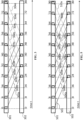
- FIG. 3 illustrates an example of how to implement the blind mechanism, for example, the process described in block 202 of FIG. 2 .
- Times demonstrated here are just examples and depend on, for example, distances between a transmitting entity 301 and a receiving entity 302.
- the transmitting entity 301 may be the node described with FIG. 1 above possibly using a satellite system, for example, an access node such as gNodeB located on ground or in a satellite.
- the transmitting entity 301 may be the user device described with FIG. 1 above.
- the receiving entity 302 may be the user device described with FIG.
- the receiving entity 302 may be the node described with FIG. 1 above using a satellite.
- FIG. 4 illustrates an example functionality of an apparatus configured to send HARQ transmissions using a blind mechanism and a reuse of HARQ identifiers in different data packets.
- LTE long-term evolution
- FDD frequency division duplex
- 5G allows for up to sixteen different HARQ identifiers.
- 3GPP 3 rd Generation Partnership Project
- a data indicator for example, a new data indicator (NDI) bit may be toggled to separate HARQ ID reuse instances in order to make HARQ ID reuse transparent to the receiving entity. Therefore, the transmitting entity is able to match HARQ ID reuse instances of different data packet transmissions to corresponding ACK/NACK responses.
- NDI new data indicator
- the process continues from block 202 in FIG. 2 .
- the process verifies in block 401 if a response to the preconfigured number of transmissions with HARQ of the first data is received. If a response is received (block 401: yes), the process continues in block 402 with a transmission depending on the response. If the response is an acknowledgement (ACK), the process continues with a transmission of another data packet. If the response received is a negative acknowledgement (NACK) for the preconfigured number of transmissions, the process continues with sending the information of a failure in transmissions to a higher level, for example, radio link control (RLC) for a possible retransmission of the same data packet.
- RLC radio link control
- the preconfigured number of transmissions with hybrid automatic repeat requests of a further data is transmitted in block 403 reusing at least one hybrid automatic repeat request identifier that was used with at least one of the requests transmitted with the first data.
- FIG. 5 illustrates an example of how the process of FIG. 4 described above may be implemented. Times demonstrated here are just examples and depend on, for example, distances.
- the preconfigured number of transmissions with HARQ is determined to be two.
- up to 8 different HARQ identifiers 503 may be used parallelly in the transmission, for example, the transmissions of the first set of data may use HARQ identifiers 1-5.
- the transmissions of the second set of data may use HARQ identifiers 1-8, and thus, the HARQ identifiers 1-5 would be reused for the transmissions of the second set of data without waiting for the responses to the transmissions of the first set of data.
- FIG. 6 illustrates an example functionality of an apparatus configured to send HARQ transmissions using a blind mechanism and early stopping.
- a preconfigured number N is determined in block 601.
- the preconfigured number N is an integer and greater than 1.
- a set of data for transmissions is selected in block 602 to be a first set of data.
- a counter for transmissions i is set in block 603 to 1.
- a transmission with HARQ of the set of data selected is transmitted in block 604. It is then resolved in block 605 if an acknowledgement response to the transmission is received. If the acknowledgement response is received (block 605: yes), a set of data to be transmitted is selected in block 606 to be a further set of data, at least one of the HARQ identifiers is reused in block 607 for transmissions of the set of data selected, and the counter i is set in block 603 to 1.
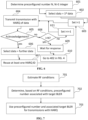
- FIG. 7 illustrates an example functionality of an apparatus configured to send an adaptive number of HARQ transmissions using a blind mechanism and an adaptive target block error rate (BLER) based on radio frequency conditions.
- BLER target block error rate
- radio frequency (RF) conditions are estimated in block 701.
- the preconfigured number is determined in block 702 based on the radio frequency conditions among two or more preconfigured numbers associated with two or more target block error rates.
- a preconfigured number of the two or more preconfigured numbers may be associated with more than one of the two or more target block error rates, and a target block error rate of the two or more target block error rates may be associated with more than one of the two or more preconfigured numbers.
- the two or more preconfigured numbers are integers and at least one of the two or more numbers is greater than one.
- the preconfigured number and the associated target block error rate are used in block 703 for transmissions with hybrid automatic repeat requests.
- introducing the blind HARQ mechanism would reduce the delays caused by the use of low earth orbit satellite system for cellular services.
- the blocks, and related functions described above by means of FIG. 2 to 7 are in no absolute chronological order, and some of them may be performed simultaneously or in an order differing from the given one. Other functions can also be executed between them or within them, and/or other rules applied or selected. Some of the blocks or part of the blocks or one or more pieces of information can also be left out or replaced by a corresponding block or part of the block or one or more pieces of information.
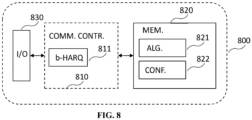
- FIG. 8 illustrates an apparatus comprising a communication controller 810 such as at least one processor or processing circuitry, and at least one memory 820 including a computer program code (software, algorithm) ALG. 821, wherein the at least one memory and the computer program code (software, algorithm) are configured, with the at least one processor, to cause the respective apparatus to carry out any one of the embodiments, examples and implementations described above.
- the apparatus of FIG. 8 may be an electronic device, for example a transmitter for a user device, an access node/base station/gNB, a scheduler, or a scheduling apparatus.
- the memory MEM. 820 may be implemented using any suitable data storage technology, such as semiconductor based memory devices, flash memory, magnetic memory devices and systems, optical memory devices and systems, fixed memory, and removable memory.
- the memory may comprise a configuration storage CONF. 822, such as a configuration database, for at least storing one or more configurations and/or corresponding parameters/parameter values, for example the criteria to use for decision(s), or the counter value, or number of sensed consecutive idle slots.
- the memory 820 may further store a data buffer for uplink data waiting for transmission and/or downlink data waiting to be decoded.
- the memory 820 may further store a data buffer for scheduling data for determining scheduling prioritization order, for example, priority values, weight values, average opportunistic proportional gain values, average allocated resources values, and/or instantaneous relevance values.
- the apparatus 800 may further comprise a communication interface I/O 830 comprising hardware and/or software for realizing communication connectivity according to one or more radio communication protocols.
- the communication interface 830 may provide the apparatus with radio communication capabilities with one or more base stations (access nodes) of a wireless network.
- the communication interface may comprise standard well-known components such as an amplifier, filter, frequency-converter, (de)modulator, and encoder/decoder circuitries and one or more antennas. Digital signal processing regarding transmission and/or reception of signals may be performed in a communication controller 810.
- the communication interface may comprise one or more antenna arrays providing the apparatus with capability of forming directive transmission radio beams and the reception radio beams.
- the communication controller 810 may comprise one or more joint blind HARQ circuitry b-HARQ 811 configured to perform sending the HARQ transmissions according to any one of the embodiments/examples/implementations described above.
- Communication controller 810 may control information exchange relating to communication services and sensing services.
- the apparatus 800 may further comprise an application processor (not illustrated in FIG. 8 ) executing one or more computer program applications that generate a need to transmit and/or receive data.
- the application processor may execute computer programs forming the primary function of the apparatus. For example, if the apparatus is a sensor device, the application processor may execute one or more signal processing applications processing measurement data acquired from one or more sensor heads. If the apparatus is a computer system of a vehicle, the application processor may execute a media application and/or an autonomous driving and navigation application.
- circuitry refers to all of the following: (a) hardware-only circuit implementations, such as implementations in only analog and/or digital circuitry, and (b) combinations of circuits and soft-ware (and/or firmware), such as (as applicable): (i) a combination of processor(s) or (ii) portions of processor(s)/software including digital signal processor(s), software, and memory(ies) that work together to cause an apparatus to perform various functions, and (c) circuits, such as a microprocessor(s) or a portion of a microprocessor(s), that require software or firmware for operation, even if the software or firmware is not physically present.
- This definition of 'circuitry' applies to all uses of this term in this application.
- the term 'circuitry' would also cover an implementation of merely a processor (or multiple processors) or a portion of a processor and its (or their) accompanying software and/or firmware.
- the term 'circuitry' would also cover, for example and if applicable to the particular element, a baseband integrated circuit or applications processor integrated circuit for a mobile device or a similar integrated circuit in a sensor, a cellular network device, or another network device.
- At least some of the processes described in connection with FIG. 2 to 7 may be carried out by an apparatus comprising corresponding means for carrying out at least some of the described processes.
- the apparatus may comprise separate means for separate phases of a process, or means may perform several phases or the whole process.
- Some example means for carrying out the processes may include at least one of the following: detector, processor (including dual-core and multiple-core processors), digital signal processor, controller, receiver, transmitter, encoder, decoder, memory, RAM, ROM, software, firmware, display, user interface, display circuitry, user interface circuitry, user interface software, display software, circuit, antenna, antenna circuitry, and circuitry.
- the at least one processor, the memory, and the computer program code form processing means or comprises one or more computer program code portions for carrying out one or more operations according to any one of the embodiments/examples/implementations described herein.
- the apparatus carrying out any of the embodiments comprises a circuitry including at least one processor and at least one memory including computer program code.
- the circuitry When activated, the circuitry causes the apparatus to perform at least some of the functionalities according to any one of the embodiments/examples/implementations of FIG. 2 to 7 , or operations thereof.
- the techniques and methods described herein may be implemented by various means. For example, these techniques may be implemented in hardware (one or more devices), firmware (one or more devices), software (one or more modules), or combinations thereof.
- the apparatus(es) of embodiments may be implemented within one or more application-specific integrated circuits (ASICs), digital signal processors (DSPs), digital signal processing devices (DSPDs), programmable logic devices (PLDs), field programmable gate arrays (FPGAs), processors, controllers, micro-controllers, microprocessors, other electronic units designed to perform the functions described herein, or a combination thereof.
- ASICs application-specific integrated circuits
- DSPs digital signal processors
- DSPDs digital signal processing devices
- PLDs programmable logic devices
- FPGAs field programmable gate arrays
- processors controllers, micro-controllers, microprocessors, other electronic units designed to perform the functions described herein, or a combination thereof.
- the implementation can be carried out through modules of at least one chip set (e.g., procedures, functions, and so on) that perform the functions described herein.
- the software codes may be stored in a memory unit and executed by processors.
- the memory unit may be implemented within the processor or externally to the processor. In the latter case, it can be communicatively coupled to the processor via various means, as is known in the art.
- the components of the systems (apparatuses) described herein may be rearranged and/or complemented by additional components in order to facilitate the achievements of the various aspects, etc., described with regard thereto, and they are not limited to the precise configurations set forth in the given Figures, as will be appreciated by one skilled in the art.
- Embodiments/examples/implementations as described may also be carried out in the form of a computer process defined by a computer program or portions thereof. Embodiments of the methods described in connection with FIG. 2 to 6 may be carried out by executing at least one portion of a computer program comprising corresponding instructions.
- the computer program may be in source code form, object code form, or in some intermediate form, and it may be stored in some sort of carrier, which may be any entity or device capable of carrying the program.
- the computer program may be stored on a computer program distribution medium readable by a computer or a processor.
- the computer program medium may be, for example but not limited to, a record medium, computer memory, read-only memory, electrical carrier signal, telecommunications signal, and software distribution package, for example.
- the computer program medium may be a non-transitory medium, for example. Coding of software for carrying out the embodiments as shown and described is well within the scope of a person of ordinary skill in the art.
- a computer-readable medium comprises said computer program.
- the non-transitory medium may be a non-transitory computer readable medium comprising program instructions for causing an apparatus to perform at least the following: determining a fixed number, wherein the fixed number is an integer and greater than one, and sending the fixed number of hybrid automatic repeat request transmissions consecutively without waiting for response.
Landscapes
- Engineering & Computer Science (AREA)
- Computer Networks & Wireless Communication (AREA)
- Signal Processing (AREA)
- Physics & Mathematics (AREA)
- Astronomy & Astrophysics (AREA)
- General Physics & Mathematics (AREA)
- Mobile Radio Communication Systems (AREA)
Applications Claiming Priority (1)
| Application Number | Priority Date | Filing Date | Title |
|---|---|---|---|
| FI20225149 | 2022-02-18 |
Publications (1)
| Publication Number | Publication Date |
|---|---|
| EP4231560A1 true EP4231560A1 (de) | 2023-08-23 |
Family
ID=84981257
Family Applications (1)
| Application Number | Title | Priority Date | Filing Date |
|---|---|---|---|
| EP23151520.6A Pending EP4231560A1 (de) | 2022-02-18 | 2023-01-13 | Anpassung von hybriden automatischen wiederholungsanfragen |
Country Status (3)
| Country | Link |
|---|---|
| US (1) | US11870585B1 (de) |
| EP (1) | EP4231560A1 (de) |
| CN (1) | CN116633497A (de) |
Families Citing this family (2)
| Publication number | Priority date | Publication date | Assignee | Title |
|---|---|---|---|---|
| US20240325886A1 (en) * | 2023-03-30 | 2024-10-03 | Netflix, Inc. | Systems and methods for capturing and utilizing video game input states |
| US12539462B2 (en) | 2023-03-30 | 2026-02-03 | Netflix, Inc. | Systems and methods for executing feedback signatures on a second screen device to convey occurrences of events in connection with a video game |
Citations (1)
| Publication number | Priority date | Publication date | Assignee | Title |
|---|---|---|---|---|
| US20200067656A1 (en) * | 2017-05-05 | 2020-02-27 | Huawei Technologies Co., Ltd. | Method and Device for Transmitting Data |
Family Cites Families (21)
| Publication number | Priority date | Publication date | Assignee | Title |
|---|---|---|---|---|
| CN101043306A (zh) | 2006-03-24 | 2007-09-26 | 华硕电脑股份有限公司 | 无线通讯系统处理重传封包的方法及其相关装置 |
| WO2016154899A1 (en) | 2015-03-31 | 2016-10-06 | Panasonic Intellectual Property Corporation Of America | Wireless communication method, user equipment and enodb |
| US10931409B2 (en) | 2016-09-26 | 2021-02-23 | Telefonaktiebolaget Lm Ericsson (Publ) | Configurable timing relationship and HARQ operational parameters |
| US10595336B2 (en) * | 2016-11-15 | 2020-03-17 | Huawei Technologies Co., Ltd. | Systems and methods for grant-free uplink transmissions |
| EP3718231B1 (de) * | 2017-11-30 | 2023-09-27 | Telefonaktiebolaget LM Ericsson (publ) | Verbesserter harq-algorithmus für grosse umlaufverzögerungsverbindungen |
| US12389384B2 (en) * | 2018-04-04 | 2025-08-12 | Telefonaktiebolaget Lm Ericsson (Publ) | Methods and systems for performance enhancement of downlink shared channels |
| WO2020044409A1 (ja) * | 2018-08-27 | 2020-03-05 | 株式会社Nttドコモ | ユーザ端末及び無線通信方法 |
| WO2020068973A1 (en) * | 2018-09-25 | 2020-04-02 | Idac Holdings, Inc. | Methods, devices, and systems for supporting harq on v2x |
| WO2020067750A1 (ko) * | 2018-09-27 | 2020-04-02 | 엘지전자 주식회사 | Harq-ack 정보를 전송하는 방법 및 통신 장치 |
| US12388573B2 (en) | 2019-03-29 | 2025-08-12 | Qualcomm Incorporated | Dynamically configurable acknowledgement procedures |
| WO2020200267A1 (en) * | 2019-04-03 | 2020-10-08 | Mediatek Singapore Pte. Ltd. | Two-stage sidelink control information for sidelink communications |
| EP4008148B1 (de) * | 2019-08-01 | 2024-10-23 | FG Innovation Company Limited | Verfahren und vorrichtung zur downlink-übertragung in ntn |
| EP4049392B1 (de) * | 2019-10-22 | 2024-04-17 | Telefonaktiebolaget LM Ericsson (publ) | Statistische kanalzustandsinformationsmeldung |
| US12301361B2 (en) * | 2019-11-07 | 2025-05-13 | Lg Electronics Inc. | Method, user equipment, apparatus and computer-readable storage medium for transmitting HARQ-ACK codebook, and method and base station for receiving HARQ-ACK codebook |
| SG10202001575XA (en) * | 2020-02-21 | 2021-09-29 | Panasonic Ip Corp America | Communication apparatuses and communication methods for utilization of reserved resource |
| KR20210113921A (ko) * | 2020-03-09 | 2021-09-17 | 삼성전자주식회사 | 무선 통신 시스템에서 데이터 전송을 위한 장치 및 방법 |
| US12335892B2 (en) * | 2020-04-01 | 2025-06-17 | Qualcomm Incorporated | Data channel timelines in wireless communications systems |
| WO2021253158A1 (en) * | 2020-06-15 | 2021-12-23 | Zte Corporation | Wireless data transmissions using parity blocks |
| CN113839757A (zh) * | 2020-06-24 | 2021-12-24 | 北京三星通信技术研究有限公司 | 上行控制信息发送方法、接收方法、终端及基站 |
| US12167437B2 (en) * | 2020-10-08 | 2024-12-10 | Electronics And Telecommunications Research Institute | Method and apparatus for uplink transmissions with different reliability conditions |
| US12414113B2 (en) * | 2021-06-16 | 2025-09-09 | Samsung Electronics Co., Ltd. | Downlink control information for multi-cell scheduling |
-
2023
- 2023-01-13 EP EP23151520.6A patent/EP4231560A1/de active Pending
- 2023-02-14 US US18/109,331 patent/US11870585B1/en active Active
- 2023-02-15 CN CN202310117665.XA patent/CN116633497A/zh active Pending
Patent Citations (1)
| Publication number | Priority date | Publication date | Assignee | Title |
|---|---|---|---|---|
| US20200067656A1 (en) * | 2017-05-05 | 2020-02-27 | Huawei Technologies Co., Ltd. | Method and Device for Transmitting Data |
Non-Patent Citations (4)
| Title |
|---|
| ERICSSON: "On DRX, LCP, timing, HARQ, SR/BSR, and CG and SPS", vol. RAN WG2, no. Electronic meeting; 20210519, 10 May 2021 (2021-05-10), XP052007458, Retrieved from the Internet <URL:https://ftp.3gpp.org/tsg_ran/WG2_RL2/TSGR2_114-e/Docs/R2-2106089.zip R2-2106089 - On DRX LCP timing HARQ SR BSR and CG and SPS.docx> [retrieved on 20210510] * |
| NOKIA ET AL: "HARQ for NB-IoT/eMTC over NTN", vol. RAN WG1, no. e-Meeting; 20210519 - 20210527, 12 May 2021 (2021-05-12), XP052011426, Retrieved from the Internet <URL:https://ftp.3gpp.org/tsg_ran/WG1_RL1/TSGR1_105-e/Docs/R1-2105407.zip R1-2105407.docx> [retrieved on 20210512] * |
| OPPO: "On UL data transmission without UL grant", vol. RAN WG1, no. Reno, USA; 20171127 - 20171201, 18 November 2017 (2017-11-18), XP051369700, Retrieved from the Internet <URL:http://www.3gpp.org/ftp/tsg%5Fran/WG1%5FRL1/TSGR1%5F91/Docs/> [retrieved on 20171118] * |
| SIERRA WIRELESS: "Multiple TB Grant Design for Unicast", vol. RAN WG1, no. Gothenburg, Sweden; 20180820 - 20180824, 10 August 2018 (2018-08-10), XP051515737, Retrieved from the Internet <URL:http://www.3gpp.org/ftp/tsg%5Fran/WG1%5FRL1/TSGR1%5F94/Docs/R1%2D1808355%2Ezip> [retrieved on 20180810] * |
Also Published As
| Publication number | Publication date |
|---|---|
| US11870585B1 (en) | 2024-01-09 |
| CN116633497A (zh) | 2023-08-22 |
Similar Documents
| Publication | Publication Date | Title |
|---|---|---|
| CN110366257B (zh) | 配置为提供具有增强的资源分配的无线接入的网络节点 | |
| US20240179548A1 (en) | Indicating beam failure in multiple transmission reception point operation | |
| EP4231560A1 (de) | Anpassung von hybriden automatischen wiederholungsanfragen | |
| US20240187914A1 (en) | Methods and apparatuses for controlling small data transmission on uplink | |
| EP3857951B1 (de) | Logische kanalzellenbegrenzung | |
| US11800514B2 (en) | Configuration for uplink signals over fronthaul interface | |
| EP4387118A1 (de) | Hybride strahlformung für uplink-übertragung | |
| US11997504B2 (en) | Dynamic spectrum sharing reduced overhead operation | |
| US12185360B2 (en) | Processing rules for resource elements | |
| WO2020120825A1 (en) | Packet communications | |
| US11337100B1 (en) | Transfer of channel estimate in radio access network | |
| US11057063B1 (en) | Dual-band digital pre-distortion | |
| US20250039703A1 (en) | Beam link failure status information | |
| WO2025243127A1 (en) | Resuming radio resource management measurements | |
| US20220030588A1 (en) | Resource Allocation for Data Transmission | |
| EP4346146A1 (de) | Bestimmung der wellenform für uplink-übertragung | |
| US20240284473A1 (en) | Utilizing bits of waveform dependent dci fields introduced by dynamic waveform switching | |
| WO2021047767A1 (en) | Mobility of integrated access and backhaul nodes | |
| US11863288B2 (en) | Relaying transmissions | |
| US20250106668A1 (en) | Measurements for one or more inter-cell purposes | |
| US20240292296A1 (en) | Device to network relay | |
| US20240388963A1 (en) | Enhancing split bearer data transfer | |
| WO2025219834A1 (en) | Method for indicating capability information for improving channel estimation accuracy | |
| WO2025219836A1 (en) | Method for indicating capability information for improving channel estimation accuracy | |
| WO2025243126A1 (en) | Resuming radio resource management measurements |
Legal Events
| Date | Code | Title | Description |
|---|---|---|---|
| PUAI | Public reference made under article 153(3) epc to a published international application that has entered the european phase |
Free format text: ORIGINAL CODE: 0009012 |
|
| STAA | Information on the status of an ep patent application or granted ep patent |
Free format text: STATUS: THE APPLICATION HAS BEEN PUBLISHED |
|
| AK | Designated contracting states |
Kind code of ref document: A1 Designated state(s): AL AT BE BG CH CY CZ DE DK EE ES FI FR GB GR HR HU IE IS IT LI LT LU LV MC ME MK MT NL NO PL PT RO RS SE SI SK SM TR |
|
| STAA | Information on the status of an ep patent application or granted ep patent |
Free format text: STATUS: REQUEST FOR EXAMINATION WAS MADE |
|
| 17P | Request for examination filed |
Effective date: 20240223 |
|
| RBV | Designated contracting states (corrected) |
Designated state(s): AL AT BE BG CH CY CZ DE DK EE ES FI FR GB GR HR HU IE IS IT LI LT LU LV MC ME MK MT NL NO PL PT RO RS SE SI SK SM TR |
|
| STAA | Information on the status of an ep patent application or granted ep patent |
Free format text: STATUS: EXAMINATION IS IN PROGRESS |
|
| 17Q | First examination report despatched |
Effective date: 20251218 |