EP4231734B1 - Verfahren und vorrichtung zum senden von hilfsressourcensätzen, verfahren und vorrichtung zum empfangen von hilfsressourcensätzen - Google Patents
Verfahren und vorrichtung zum senden von hilfsressourcensätzen, verfahren und vorrichtung zum empfangen von hilfsressourcensätzen Download PDFInfo
- Publication number
- EP4231734B1 EP4231734B1 EP20957971.3A EP20957971A EP4231734B1 EP 4231734 B1 EP4231734 B1 EP 4231734B1 EP 20957971 A EP20957971 A EP 20957971A EP 4231734 B1 EP4231734 B1 EP 4231734B1
- Authority
- EP
- European Patent Office
- Prior art keywords
- assistance
- resource set
- control information
- resource
- sidelink control
- Prior art date
- Legal status (The legal status is an assumption and is not a legal conclusion. Google has not performed a legal analysis and makes no representation as to the accuracy of the status listed.)
- Active
Links
Images



Classifications
-
- H—ELECTRICITY
- H04—ELECTRIC COMMUNICATION TECHNIQUE
- H04W—WIRELESS COMMUNICATION NETWORKS
- H04W4/00—Services specially adapted for wireless communication networks; Facilities therefor
- H04W4/30—Services specially adapted for particular environments, situations or purposes
- H04W4/40—Services specially adapted for particular environments, situations or purposes for vehicles, e.g. vehicle-to-pedestrians [V2P]
-
- H—ELECTRICITY
- H04—ELECTRIC COMMUNICATION TECHNIQUE
- H04L—TRANSMISSION OF DIGITAL INFORMATION, e.g. TELEGRAPHIC COMMUNICATION
- H04L5/00—Arrangements affording multiple use of the transmission path
- H04L5/003—Arrangements for allocating sub-channels of the transmission path
- H04L5/0053—Allocation of signalling, i.e. of overhead other than pilot signals
-
- H—ELECTRICITY
- H04—ELECTRIC COMMUNICATION TECHNIQUE
- H04W—WIRELESS COMMUNICATION NETWORKS
- H04W4/00—Services specially adapted for wireless communication networks; Facilities therefor
- H04W4/30—Services specially adapted for particular environments, situations or purposes
- H04W4/40—Services specially adapted for particular environments, situations or purposes for vehicles, e.g. vehicle-to-pedestrians [V2P]
- H04W4/46—Services specially adapted for particular environments, situations or purposes for vehicles, e.g. vehicle-to-pedestrians [V2P] for vehicle-to-vehicle communication [V2V]
-
- H—ELECTRICITY
- H04—ELECTRIC COMMUNICATION TECHNIQUE
- H04W—WIRELESS COMMUNICATION NETWORKS
- H04W4/00—Services specially adapted for wireless communication networks; Facilities therefor
- H04W4/70—Services for machine-to-machine communication [M2M] or machine type communication [MTC]
-
- H—ELECTRICITY
- H04—ELECTRIC COMMUNICATION TECHNIQUE
- H04W—WIRELESS COMMUNICATION NETWORKS
- H04W72/00—Local resource management
- H04W72/20—Control channels or signalling for resource management
-
- H—ELECTRICITY
- H04—ELECTRIC COMMUNICATION TECHNIQUE
- H04W—WIRELESS COMMUNICATION NETWORKS
- H04W72/00—Local resource management
- H04W72/20—Control channels or signalling for resource management
- H04W72/25—Control channels or signalling for resource management between terminals via a wireless link, e.g. sidelink
-
- H—ELECTRICITY
- H04—ELECTRIC COMMUNICATION TECHNIQUE
- H04W—WIRELESS COMMUNICATION NETWORKS
- H04W76/00—Connection management
- H04W76/10—Connection setup
- H04W76/14—Direct-mode setup
Definitions
- the disclosure relates to the field of communication technology, in particular to a method for sending an assistance resource set and an apparatus for sending an assistance resource set, a method for receiving an assistance resource set and an apparatus for receiving an assistance resource set, and a storage medium.
- user equipment A that is for the Sidelink communication can send an assistance resource set to user equipment B whose resource selection mode is Mode2, and the user equipment B may consider it when performing resource selection on its own data transmission.
- the user equipment A sends the assistance resource set for resource selection.
- Intel Corporation 'Summary#4 for AI 7.2.4.2.2 Mode-2 Resource Allocation'
- 3GPP Draft R1-191 1683 - Summary#4 of 5G V2X MODE 2 V), 3rd Generation Partnership Project (3GPP), Mobile Competence Centre; 650, Route des Lucioles, F-06921 Sophia-Antipolos Cedex, France; Vol. RAN WG1, no.
- the disclosure provides a method and an apparatus for sending an assistance resource set and a method and an apparatus for receiving an assistance resource set, and a storage medium.
- a method for sending an assistance resource set, performed by a first device is provided as defined by claim 1.
- the second stage sidelink control information includes a first information field for indicating a time domain resource of the assistance resource set and a second information field for indicating a frequency domain resource of the assistance resource set.
- the second stage sidelink control information further includes a first bit size corresponding to the first information field and a second bit size corresponding to the second information field.
- the first bit size is determined based on a number of slots of the time domain resource of the assistance resource set and an indication granularity of the first information field
- the second bit size is determined based on a number of subchannels where the frequency domain resource of the assistance resource set is located and an indication granularity of the second information field.
- the second stage sidelink control information includes a first information field for indicating a time domain resource of the assistance resource set.
- the time domain resource of the assistance resource set includes a time domain resource of a first time domain length starting from a first start position, in which the first start position is a start position of a resource selection window of a second device.
- the time domain resource of the assistance resource set includes a time domain resource of a first time domain length starting from a second start position, in which the second start position is a position of a preset slot offset after a time point of sending an assistance resource report.
- the time domain resource of the assistance resource set includes all or part of slot resources located in the resource selection window of the second device, and the all or part of slot resources are consecutive slot resources.
- the first time domain length is pre-configured via a radio resource control signaling.
- the preset slot offset is a preset fixed offset, or the preset slot offset is determined based on a pre-configured set of slot offsets.
- the second stage sidelink control information further includes a destination ID and a source ID of the assistance resource set.
- the second stage sidelink control information further includes second stage sidelink control information A or second stage sidelink control information B.
- a method for receiving an assistance resource set, performed by a second device is provided as defined by claim 8.
- the second stage sidelink control information includes a first information field for indicating a time domain resource of the assistance resource set and a second information field for indicating a frequency domain resource of the assistance resource set.
- the second stage sidelink control information further includes a first bit size corresponding to the first information field and a second bit size corresponding to the second information field.
- the first bit size is determined based on a number of slots of the time domain resource of the assistance resource set and an indication granularity of the first information field
- the second bit size is determined based on a number of subchannels where the frequency domain resource of the assistance resource set is located and an indication granularity of the second information field.
- the second stage sidelink control information includes a first information field for indicating a time domain resource of the assistance resource set.
- the time domain resource of the assistance resource set includes a time domain resource of a first time domain length starting from a first start position, in which the first start position is a start position of a resource selection window of the second device.
- the time domain resource of the assistance resource set includes a time domain resource of a first time domain length starting from a second start position, in which the second start position is a position of a preset slot offset after a time point of sending an assistance resource report.
- the time domain resource of the assistance resource set includes all or part of slot resources located in the resource selection window of the second device, and the all or part of slot resources are consecutive slot resources.
- the first time domain length is pre-configured via a radio resource control signaling.
- the preset slot offset is a preset fixed offset, or the preset slot offset is determined based on a pre-configured set of slot offsets.
- the second stage sidelink control information further includes a destination ID and a source ID of the assistance resource set.
- the second stage sidelink control information further includes second stage sidelink control information A or second stage sidelink control information B.
- the method further includes: selecting a resource for data transmission based on the second stage sidelink control information.
- an apparatus for sending an assistance resource set, implemented by a first device is provided as defined by claim 14.
- an apparatus for receiving an assistance resource set, implemented by a second device is provided as defined by claim 15.
- the technical solution provided by the embodiments of the disclosure may include the following beneficial effects.
- the first device determines and sends the second stage sidelink control information.
- the second stage sidelink control information includes an information field for indicating assistance resources. Therefore, the transmission and indication of the assistance resource set can be realized based on the second stage sidelink control information.
- the method for sending or receiving an assistance resource set provided in embodiments of the disclosure may be performed in a sidelink system shown in FIG. 1 .
- a network device configures various transmission parameters for data transmission for a sidelink device 1.
- the sidelink device 1, a sidelink device 2 and a sidelink device 3 perform sidelink communication.
- a communication link between the network device and a sidelink device is an up-and-down link, and a link between one sidelink device and another sidelink device is a sidelink.
- a communication scenario of sidelink communication between the sidelink devices can be a Vehicle to Everything (V2X) service scenario, in which V represents a vehicle-mounted device and X represents any object interacting with the vehicle-mounted device.
- the current X includes vehicle-mounted devices, handheld devices, traffic roadside infrastructure and network.
- An information mode of V2X interaction includes interactions of Vehicle to Vehicle (V2V), Vehicle to Infrastructure (V2I), Vehicle to Pedestrian (V2P), and Vehicle to Network (V2N).
- 5G NR technology is used in 3GPP Rel-16 to support new V2x communication services and scenarios, such as Vehicles Platooning, Extended Sensors, Advanced Driving, and remote driving.
- V2x sidelink can provide higher communication rate, shorter communication delay, and more reliable communication quality.
- the communication scenario of sidelink communication between the sidelink devices may also be a Device to Device (D2D) communication scenario.
- the sidelink devices that perform sidelink communication in the embodiments of the disclosure may include various handheld devices, vehicle devices, wearable devices, computing devices, or other processing devices connected to a wireless modem, and various forms of User Equipment (UE), Mobile Stations (MS), terminals, and Terminal Equipment, that have wireless communication capabilities.
- UE User Equipment
- MS Mobile Stations
- Terminal Equipment Terminal Equipment
- Enhancement of the NR Sidelink can improve transmission reliability and reduce latency.
- the 3GPP work group reached a conclusion that an approach for assisting in resource selection between user equipment is expected to be found.
- two UEs are specified.
- UE A is an assistance UE of UE B
- the UE B is a UE that may select a resource for data to be sent by the UE B itself.
- the UE A may determine a set of resources and sends the set of resources to the UE B by means of Mode2.
- the UE B may consider the set of resources sent by the UE A when performing resource selection. That is, it can be understood that the UE B uses an assistance resource set assistance mechanism to perform the resource selection.
- the UE B can send data to the UE A and/or other UEs.
- a sending mode and an indicating mode of the assistance resource set is not studied. That is, how the UE A sends the assistance resource set to the UE B and how the UE A indicates the assistance resource set sent to the UE B are yet to be studied.
- the embodiments of the disclosure provide a method for sending an assistance resource set and a method for receiving an assistance resource set by designing a new Second stage sidelink Control Information (second SCI).
- the second SCI includes an information field for indicating an assistance resource set, to realize the indication of the assistance resource set.
- a device providing the assistance resource set sends the second SCI to a device using the assistance resource set assistance mechanism to perform resource selection, thereby realizing the sending of the assistance resource set.
- the device that provides the assistance resource set is referred to as a first device and the device that uses the assistance resource set assistance mechanism to perform resource selection is referred to as a second device.
- FIG. 2 is a flowchart of a method for sending an assistance resource set according to an embodiment. As shown in FIG. 2 , the method for sending an assistance resource set is performed by a first device. The method includes the following steps.
- a second SCI is determined, in which the second SCI includes an information field for indicating assistance resources.
- the second SCI is sent.
- the first device determines and sends the second SCI.
- the second SCI includes the information field for indicating the assistance resources. Therefore, the transmission and indication of the assistance resource set can be realized based on the second SCI can be realized.
- the assistance resource set is a set of time domain resources and frequency domain resources, which may include time domain resources, frequency domain resources, and/or time-frequency resources.
- the second SCI includes a first information field for indicating a time domain resource of the assistance resource set and a second information field for indicating a frequency domain resource of the assistance resource set.
- the first device sends the assistance resource set to the second device, and may also send data to the second device.
- the time domain resource and the frequency domain resource of the assistance resource set may be indicated by a bitmap.
- the second SCI may include a bit size for indicating the time domain resource of the assistance resource set and a bit size for indicating the frequency domain resource of the assistance resource set.
- the bit size for indicating the time domain resource of the assistance resource set is referred to as a first bit size
- the bit size for indicating the frequency domain resource of the assistance resource set is referred to as a second bit size. That is, the first bit size corresponds to the first information field, and the second bit size corresponds to the second information field.
- the second SCI includes the first information field for indicating the time domain resource of the assistance resource set and the second information field for indicating the frequency domain resource of the assistance resource set, and also includes the first bit size corresponding to the first information field and the second bit size corresponding to the second information field.
- the first bit size may be determined based on a number of slots of the time domain resource of the assistance resource set and an indication granularity of the first information field.
- the second bit size is determined based on a number of subchannels where the frequency domain resource of the assistance resource set is located and an indication granularity of the second information field.
- Radio Resource Control (RRC) signaling pre-configures a granularity for indicating the time domain resource of the assistance resource set, and the indication granularity of the first information field may be determined based on the granularity of the time domain resource of the assistance resource set pre-configured via the RRC signaling.
- RRC signaling pre-configures a granularity for indicating the frequency domain resource of the assistance resource set, and the indication granularity of the second information field may be determined based on the granularity of the frequency domain resource of the assistance resource set pre-configured via the RRC signaling.
- information fields included in the second SCI may be as shown in Table 1 below.
- the Recommend Frequency resource represents a frequency domain resource of the assistance resource set sent and recommended by the first device.
- a bitmap is used to indicate a subchannel where the frequency domain resource of the assistance resource set is located.
- a length (the second bit size) of the Recommend Frequency resource field is N subChannel SL indication granularity .
- N subChannel SL indication granularity For example, there are 10 subchannels in the frequency domain resource of the assistance resource set, and 1 bit is used to indicate 2 subchannels, i.e., the indication granularity is 2, thus a length (the second bit size) of a frequency domain resource field of the assistance resource set is 5 bits.
- a value of the indication granularity is a fixed value, and the indication granularity may be pre-configured via the RRC signaling, or may be pre-defined.
- the Recommend time resource represents a time domain resource of the assistance resource set sent and recommended by the first device.
- a bitmap is used to indicate a slot where the time domain resource of the assistance resource set is located.
- a length (a bit size) corresponding to the Recommend time field is Nslot indication granularity .
- Nslot indication granularity For example, a number of slots occupied by the time domain resource of the assistance resource set sent and recommended by the first device is 10 slots, and 1 bit is used to indicate 2 slots, i.e., the indication granularity is 2, thus a length (the first bit size) of a time domain resource field of the assistance resource set is 5 bits.
- a value of the indication granularity is a fixed value, and may be pre-configured via the RRC signaling, or may be pre-defined.
- the second SCI includes the first information field for indicating the time domain resource of the assistance resource set and the second information field for indicating the frequency domain resource of the assistance resource set, so as to indicate both the time domain resource and the frequency domain resource of the assistance resource set, and to indicate the time domain resource and the frequency domain resource of the assistance resource set in a very precise indication manner.
- the assistance resource set contains a recommended time domain resource.
- the second SCI includes the first information field for indicating the time domain resource of the assistance resource set, so as to indicate the time domain resource of the assistance resource set.
- the time domain resource in the assistance resource set can be determined by the second device through demodulating SCI and measuring Reference Signal Receiving Power (RSRP) of a Demodulation Reference Signal (DMRS) in mode2.
- RSRP Reference Signal Receiving Power
- DMRS Demodulation Reference Signal
- the second SCI includes an information field of Recommend Time resource information.
- the second SCI also includes the first bit size corresponding to the first information field.
- the first bit size is determined based on the number of slots of the time domain resource in the assistance resource set and the indication granularity of the first information field.
- the indication granularity of the first information field may be pre-configured via the RRC signaling or may be predefined.
- the time domain resource of the assistance resource set in the embodiment of the disclosure may be all or part of consecutive time domain resources within a resource selection window of the second device, and has a specified time domain resource range.
- the time domain resource range of the time domain resource of the assistance resource set may be indicated in different ways.
- the time domain resource of the assistance resource set includes a time domain resource of a first time domain length starting from a first start position.
- the first start position is a start position of a resource selection window of a second device.
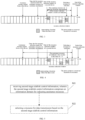
- FIG. 3 is a schematic diagram of an indication range of a time domain resource of an assistance resource set according to an embodiment of the disclosure.
- the indication range of the time domain resource of the assistance resource set starts from the start position of the resource selection window of the second device.
- the indication range is at a fixed portion of the slots in the resource selection window, but not beyond an end of the resource selection window of the second device at slot position n1+T2.
- the resource selection window of the second device in the R16 standard is [n1+T1, n1+T2].
- the n1 is a slot for the second device to perform resource selection under the assistance resource set assistance mechanism.
- the values of T2 are different for different devices.
- the first device determines the start position of the resource selection window of the second device through a physical layer control signaling sent by the second device.
- the time domain resource of the assistance resource set includes a time domain resource of a first time domain length starting from a second start position.
- the second start position is a position of a preset slot offset after a time point of sending an assistance resource report. That is, an indication range of the time domain resource of the assistance resource set is a usage condition of a resource starting from slot n+ ⁇ T, and ⁇ T is the preset slot offset.
- the preset slot offset is a preset fixed offset, or the preset slot offset is determined based on a pre-configured set of slot offsets, which may be, for example, a subset of the pre-configured set of slot offsets.
- FIG. 4 is a schematic diagram of an indication range of a time domain resource of an assistance resource set according to an embodiment of the disclosure.
- the indication range of the time domain resource of the assistance resource set is the usage condition of the resource starting from the slot n+ ⁇ T
- ⁇ T is the slot offset.
- the slot offset is understood as a duration in which the second device processes the assistance resource set from the first device.
- the second device receives the assistance resource set from the first device at a slot n, it determines that the assistance resource set is the usage condition of the resource starting from the slot n+ ⁇ T.
- the first time domain length indicated by the time domain resource of the assistance resource set is a slot resource condition of a first slot length m still starting from the slot n+ ⁇ T, but not exceeding an end slot position n1+T2 of the resource selection window of the second device.
- the indication range of the time domain resource of the assistance resource set is the usage condition of the resource starting from the slot n+ ⁇ T, so that the signaling overhead for indicating the assistance resource set is relatively small.
- ⁇ T is a fixed value. In another implementation , ⁇ T is a flexible value. In an example, ⁇ T is a certain ⁇ T in the pre-configured set of slot offsets. For example, ⁇ T is a pre-configured set ⁇ T1, ⁇ T2, ⁇ T3, ⁇ T4 ⁇ .
- an offset field can be added to indicate a specific value of ⁇ T. For example, if there are multiple assistance resource sets sent by the first device to the second device, 2 bits are used to indicate the specific value of ⁇ T. Different ⁇ T indicate different assistance resource sets sent by the first device to the second device.
- the indication range of the time domain resource in the assistance resource set may include the following three manners.
- the indication range is a range of a resource usage condition in a fixed number (m) of slots starting from the resource selection window of the UE B.
- the indication range is a range of a resource usage condition in a fixed number (m) of m slots starting from the slot n+ ⁇ T, and ⁇ T is the pre-configured fixed offset value.
- the indication range is a range of a resource usage condition in a fixed number (m) of m slots starting from the slot n+ ⁇ T, and ⁇ T is the pre-configured set of offsets.
- m slots in the embodiments of the disclosure may be understood as all slot resources or part of slot resources in the resource selection window of the second device, and the all slot resources or the part of slot resources are consecutive slot resources.
- the second SCI involved may be understood as the second SCI dedicated to indicating the assistance resource set.
- the second SCI dedicated to indicating the assistance resource set may be newly designed in an embodiment of the disclosure, which is referred to hereinafter as new second SCI.
- the first device sends the new second SCI to the second device, and the new second SCI carries assistance resource set information, so as to send the assistance resource set to the second device.
- the first device after the first device sends first SCI, the first device sends the assistance resource set independently in a form of the second SCI. That is, the first device sends the assistance resource set to the second device and does not send data to the second device at the same time. That is, the new second SCI sent by the first device to the second device in this embodiment of the disclosure does not need to include information fields related to scheduling data in SCI2-A and SCI2-B.
- fields in the first SCI are directly transmitted on a control channel without modification, and the new second SCI2 (for example, referred to as second SCI2-C) is designed.
- the new second SCI 2-C carries an information field indicating the assistance resource set, namely, a field of assistance resource set time domain resource and an information field of assistance resource set frequency domain resource information in Table 1.
- the new second SCI2-C also includes a destination ID and a source ID of the assistance resource set.
- the new second SCI2-C includes the destination ID and the source ID.
- the new second SCI2-C includes a first information field for indicating the time domain resource of the assistance resource set and a second information field for indicating the frequency domain resource of the assistance resource set, i.e., an information field of Recommend Frequency resource information and an information field of Recommend time resource information, to indicate the time domain resource and the frequency domain resource recommended by the first device to the second device.
- the new second SCI2-C also includes a field of Destination ID and a field of Source ID.
- the new second SCI2-C also includes a bit size corresponding to each information field.
- the new second SCI2-C includes a first information field for indicating the time domain resource of the assistance resource set. That is, the assistance resource set contains the recommended time domain resource, and only the time domain resource may be indicated. It is understood that, although the frequency domain resource is not indicated in the assistance resource set, the second device may determine it by demodulating SCI and measuring RSRP of DMRS in Mode 2. This way of indicating the time domain resource of the assistance resource set can reduce the overhead of control information and solve the half-duplex problem.
- the new second SCI2-C also includes a field of destination ID and a field of source ID.
- the new second SCI2-C also includes a bit size corresponding to each information field. The information fields included in the new second SCI2-C are shown in the following Table 3. Table 3 Information field Size (bit) Recommend time resource Nslot indication granularity Destination ID 16 Source ID 8
- the second SCI for indicating the assistance resource set may be a new second SCI designed by adding an information field for indicating the assistance resource set to the existing first SCI.
- it may still be called second SCI 2-C.
- the existing two-stage SCI transmission mode of V2X is used to send the assistance resource set. That is, the information fields in the existing first SCI are unchanged, and a new second SCI is added.
- the existing first SCI includes bits (00 and 01) for indicating the second SCI, i.e., bits for indicating second SCI 2-A and second SCI 2-B.
- R16 reserves two types of bits (10 and 11) to design a new second SCI. That is, the first SCI includes a new type of bits (10 and 11) to indicate a new second SCI that is different from second SCI 2-A and second SCI 2-B.
- the newly designed second SCI includes a first information field for indicating the time domain resource of the assistance resource set, a second information field for indicating the frequency domain resource of the assistance resource set, and related information fields of the second SCI 2-A and the second SCI 2-B.
- information fields of the Recommend Frequency resource and the Recommend Time resource are added to the existing second SCI.
- the control information is to schedule transmission of the data.
- the existing information fields of the second SCI 2-A and the second SCI 2-B are used for Hybrid Automatic Repeat reQuest (HARQ) feedback of data, so the information fields of the Recommend Frequency resource and the Recommend Time resource may be added to the existing second SCI 2-A and the second SCI 2-B.
- HARQ Hybrid Automatic Repeat reQuest
- the new second SCI carrying the assistance resource set sent by the first device to the second device is designed.
- the resource set recommended for data transmission performed by the second device is indicated in the assistance resource set.
- the new second SCI indicates both the time domain resource and the frequency domain resource of the assistance resource set, or only indicates the time domain resource of the assistance resource set.
- the frequency domain resource in the assistance resource set is indicated by a bitmap.
- a frequency domain indication range is recommended frequency domain resources within a range of subchannels used by the UE A.
- An indication granularity for indicating the frequency domain resource is pre-configured by the RRC signaling.
- the time domain resource in the assistance resource set is also indicated using a bitmap.
- An indication granularity for indicating the time domain resource is pre-configured by the RRC signaling.
- the indicated time domain length pre-configured by RRC signaling is m slots.
- the second device receives the second SCI sent by the first device, and can perform resource selection based on the second SCI.
- FIG. 5 is a flowchart of a method for receiving an assistance resource set according to an embodiment. As shown in FIG. 5 , the method for receiving an assistance resource set is performed by a second device. The method includes the following step.
- step S21 second SCI is received, the second SCI includes an information field for indicating assistance resources.
- the second SCI received by the second device has the same format as the second SCI sent by the first device.
- the second SCI includes a first information field for indicating a time domain resource of the assistance resource set and a second information field for indicating a frequency domain resource of the assistance resource set.
- the second SCI further includes a first bit size corresponding to the first information field and a second bit size corresponding to the second information field.
- the first bit size is determined based on a number of slots of the time domain resource of the assistance resource set and an indication granularity of the first information field
- the second bit size is determined based on a number of subchannels where the frequency domain resource of the assistance resource set is located and an indication granularity of the second information field.
- the second SCI includes a first information field for indicating a time domain resource of the assistance resource set.
- the time domain resource of the assistance resource set includes a time domain resource of a first time domain length starting from a first start position, in which the first start position is a start position of a resource selection window of a second device.
- the time domain resource of the assistance resource set includes a time domain resource of a first time domain length starting from a second start position, in which the second start position is a position of a preset slot offset after a time point of sending an assistance resource report.
- the time domain resource of the assistance resource set includes all or part of slot resources located in the resource selection window of the second device, and the all or part of slot resources are consecutive slot resources.
- the first time domain length is pre-configured via a RRC signaling.
- the preset slot offset is a preset fixed offset, or the preset slot offset is determined based on a pre-configured set of slot offsets.
- the second SCI further includes a destination ID and a source ID of the assistance resource set.
- the information field for indicating the assistance resources in the second SCI is indicated by a reserved bit for an information field of a second SCI format in first SCI.
- the second SCI further includes second SCI2-A or second SCI2-B.
- the method further includes the following steps.
- a resource for data transmission is selected based on the second SCI.
- the method for sending an assistance resource set and the method for receiving an assistance resource set provided by the embodiments of the disclosure can be used in a process of interaction between the first device and the second device for sending and receiving the assistance resource set.
- the first device and the second device have the corresponding functions to realize the method for sending an assistance resource set and the method for receiving an assistance resource set involved in the above embodiments, which is not limited in the embodiments of the disclosure.
- the embodiments of the disclosure also provide an apparatus for sending an assistance resource set and an apparatus for receiving an assistance resource set.
- the apparatus for sending an assistance resource set and the apparatus for receiving an assistance resource set contain hardware structures and/or software modules that perform the respective functions.
- the embodiments of the disclosure can be implemented in the form of hardware or a combination of hardware and computer software. Whether a particular function is performed as hardware or hardware driven by computer software depends on the particular application and design constraints of the technical solution. Those skilled in the art may use different approaches for each particular application to implement the described function, but such implementation should not be considered outside the scope of the technical solutions of the embodiments of the disclosure.
- the second SCI includes a first information field for indicating a time domain resource of the assistance resource set and a second information field for indicating a frequency domain resource of the assistance resource set.
- the second SCI further includes a first bit size corresponding to the first information field and a second bit size corresponding to the second information field.
- the first bit size is determined based on a number of slots of the time domain resource of the assistance resource set and an indication granularity of the first information field
- the second bit size is determined based on a number of subchannels where the frequency domain resource of the assistance resource set is located and an indication granularity of the second information field.
- the second SCI includes a first information field for indicating a time domain resource of the assistance resource set.
- the time domain resource of the assistance resource set includes a time domain resource of a first time domain length starting from a first start position, in which the first start position is a start position of a resource selection window of a second device.
- the time domain resource of the assistance resource set includes a time domain resource of a first time domain length starting from a second start position, in which the second start position is a position of a preset slot offset after a time point of sending an assistance resource report.
- the time domain resource of the assistance resource set includes all or part of slot resources located in the resource selection window of the second device, and the all or part of slot resources are consecutive slot resources.
- the first time domain length is pre-configured via a RRC signaling.
- the preset slot offset is a preset fixed offset, or the preset slot offset is determined based on a pre-configured set of slot offsets.
- the second SCI further includes a destination ID and a source ID of the assistance resource set.
- the information field for indicating the assistance resource in the second SCI is indicated by a reserved bit for an information field of a second SCI format in first SCI.
- the second SCI further includes second SCI A or second SCI B.
- FIG. 7 is a block diagram of an apparatus for receiving an assistance resource set according to an embodiment. As shown in FIG. 7 , the apparatus 200 for receiving an assistance resource set is implemented by a second device. The apparatus 200 includes: a receiving unit 201.
- the receiving unit 201 is configured to receive second SCI, in which the second SCI includes an information field for indicating assistance resources.
- the second SCI includes a first information field for indicating a time domain resource of the assistance resource set and a second information field for indicating a frequency domain resource of the assistance resource set.
- the second SCI further includes a first bit size corresponding to the first information field and a second bit size corresponding to the second information field.
- the first bit size is determined based on a number of slots of the time domain resource of the assistance resource set and an indication granularity of the first information field
- the second bit size is determined based on a number of subchannels where the frequency domain resource of the assistance resource set is located and an indication granularity of the second information field.
- the second SCI includes a first information field for indicating a time domain resource of the assistance resource set.
- the time domain resource of the assistance resource set includes a time domain resource of a first time domain length starting from a first start position, in which the first start position is a start position of a resource selection window of a second device.
- the time domain resource of the assistance resource set includes a time domain resource of a first time domain length starting from a second start position, in which the second start position is a position of a preset slot offset after a time point of sending an assistance resource report.
- the time domain resource of the assistance resource set includes all or part of slot resources located in the resource selection window of the second device, and the all or part of slot resources are consecutive slot resources.
- the first time domain length is pre-configured via a RRC signaling.
- the preset slot offset is a preset fixed offset, or the preset slot offset is determined based on a pre-configured set of slot offsets.
- the second SCI further includes a destination ID and a source ID of the assistance resource set.
- the information field for indicating the assistance resources in the second SCI is indicated by a reserved bit for an information field of a second SCI format in first SCI.
- the second SCI further includes second SCI A or second SCI B.
- the apparatus 200 further includes: a processing unit 202.
- the processing unit 202 is configured to select a resource for data transmission based on the second SCI.
- FIG. 8 is a block diagram of a device 300 for sending or receiving an assistance resource set according to an embodiment.
- the device 300 can be a mobile phone, a computer, a digital broadcast terminal, a message sending and receiving device, a game console, a tablet device, a medical device, a fitness device, or a personal digital assistant.
- the device 300 includes one or more of the following components: a processing component 302, a memory 304, a power component 306, a multimedia component 308, an audio component 310, an input/output (I/O) interface 312, a sensor component 314, and a communication component 316.
- the processing component 302 typically controls overall operations of the device 300, such as the operations associated with display, telephone calls, data communications, camera operations, and recording operations.
- the processing component 302 may include one or more processors 320 to execute instructions to perform all or part of the steps in the above described methods.
- the processing component 302 may include one or more modules which facilitate the interaction between the processing component 302 and other components.
- the processing component 302 may include a multimedia module to facilitate the interaction between the multimedia component 308 and the processing component 302.
- the memory 304 is configured to store various types of data to support the operation of the device 300. Examples of such data include instructions for any applications or methods operated on the device 300, contact data, phonebook data, messages, pictures, video, etc.
- the memory 304 may be implemented using any type of volatile or non-volatile memory devices, or a combination thereof, such as a Static Random Access Memory (SRAM), an Electrically Erasable Programmable Read-Only Memory (EEPROM), an Erasable Programmable Read-Only Memory (EPROM), a Programmable Read-Only Memory (PROM), a Read-Only Memory (ROM), a magnetic memory, a flash memory, a magnetic or optical disk.
- SRAM Static Random Access Memory
- EEPROM Electrically Erasable Programmable Read-Only Memory
- EPROM Erasable Programmable Read-Only Memory
- PROM Programmable Read-Only Memory
- ROM Read-Only Memory
- the power component 306 provides power to various components of the device 300.
- the power component 306 may include a power management system, one or more power sources, and any other components associated with the generation, management, and distribution of power in the device 300.
- the multimedia component 308 includes a screen providing an output interface between the device 300 and the user.
- the screen may include a Liquid Crystal Display (LCD) and a Touch Panel (TP). If the screen includes the touch panel, the screen may be implemented as a touch screen to receive input signals from the user.
- the touch panel includes one or more touch sensors to sense touches, swipes, and gestures on the touch panel. The touch sensors may not only sense a boundary of a touch or swipe action, but also sense a period of time and a pressure associated with the touch or swipe action.
- the multimedia component 308 includes a front-facing camera and/or a rear-facing camera.
- the front-facing camera and/or the rear-facing camera can receive external multimedia data.
- Each front-facing camera and rear-facing camera may be a fixed optical lens system or has focal length and optical zoom capability.
- the audio component 310 is configured to output and/or input audio signals.
- the audio component 310 includes a microphone (MIC) configured to receive an external audio signal when the device 300 is in an operation mode, such as a call mode, a recording mode, and a voice recognition mode.
- the received audio signal may be further stored in the memory 304 or transmitted via the communication component 316.
- the audio component 310 further includes a speaker to output audio signals.
- the I/O interface 312 provides an interface between the processing component 302 and peripheral interface modules, such as a keyboard, a click wheel, buttons, and the like.
- the buttons may include, but are not limited to, a home button, a volume button, a starting button, and a locking button.
- the sensor component 314 includes one or more sensors to provide status assessments of various aspects of the device 300. For instance, the sensor component 314 may detect an open/closed status of the device 300, relative positioning of components, e.g., the display and the keypad, of the device 300, a change in position of the device 300 or a component of the device 300, a presence or absence of user contact with the device 300, an orientation or an acceleration/deceleration of the device 300, and a change in temperature of the device 300.
- the sensor component 314 may include a proximity sensor configured to detect the presence of nearby objects without any physical contact.
- the sensor component 314 may also include a light sensor, such as a Complementary Metal Oxide Semiconductor (CMOS) or Charge-Coupled Device (CCD) image sensor, for use in imaging applications.
- CMOS Complementary Metal Oxide Semiconductor
- CCD Charge-Coupled Device
- the sensor component 314 may also include an accelerometer sensor, a gyroscope sensor, a magnetic sensor, a pressure sensor, or a temperature sensor.
- the communication component 316 is configured to facilitate communication, wired or wirelessly, between the device 300 and other devices.
- the device 300 can access a wireless network based on a communication standard, such as Wi-Fi, 2G or 3G, or a combination thereof.
- the communication component 316 receives a broadcast signal or broadcast associated information from an external broadcast management system via a broadcast channel.
- the communication component 316 further includes a Near Field Communication (NFC) module to facilitate short-range communication.
- the NFC module may be implemented based on a RF Identification (RFID) technology, an Infrared Data Association (IrDA) technology, an Ultra-Wide Band (UWB) technology, a Blue Tooth (BT) technology, and other technologies.
- RFID RF Identification
- IrDA Infrared Data Association
- UWB Ultra-Wide Band
- BT Blue Tooth
- the device 300 may be implemented with one or more Application Specific Integrated Circuits (ASICs), Digital Signal Processors (DSPs), Digital Signal Processing Devices (DSPDs), Programmable Logic Devices (PLDs), Field Programmable Gate Arrays (FPGAs), controllers, micro-controllers, microprocessors or other electronic components, for performing the above described method.
- ASICs Application Specific Integrated Circuits
- DSPs Digital Signal Processors
- DSPDs Digital Signal Processing Devices
- PLDs Programmable Logic Devices
- FPGAs Field Programmable Gate Arrays
- controllers micro-controllers, microprocessors or other electronic components, for performing the above described method.
- non-transitory computer readable storage medium including instructions, such as the memory 304, executable by the processor 320 in the device 300, for performing the above method.
- the non-transitory computer-readable storage medium may be a ROM, a Random Access Memory (RAM), a CD-ROM, a magnetic tape, a floppy disc, and an optical data storage device.
- the term “plurality” in the disclosure refers to two or more, and that other quantifiers are similar.
- the term “and/or” describes the association relation of associated obj ects, indicating that there may be three types of relations, for example, A and/or B, which may mean: A exists alone, A and B both exist, or B exists alone.
- the character “j” generally indicates an “or” relation between the preceding and following associated objects.
- the singular forms “a”, “said” and “the” are also intended to include plural forms, unless the context clearly indicates otherwise.
- first, and second, etc. are used to describe various types of information, but such information should not be limited to these terms. These terms are used only to distinguish information of the same type from one another and do not indicate a particular order or level of importance. In fact, the expressions “first”, and “second” can be used interchangeably. For example, without departing from the scope of this disclosure, first information may also be referred to as second information. Similarly, the second information may also be referred to as the first information.
Landscapes
- Engineering & Computer Science (AREA)
- Signal Processing (AREA)
- Computer Networks & Wireless Communication (AREA)
- Mobile Radio Communication Systems (AREA)
Claims (15)
- Verfahren zum Senden eines Hilfsressourcensatzes, das von einer ersten Vorrichtung durchgeführt wird, umfassend:Senden von Erststufen-Sidelink-Steuerinformationen an ein zweites Gerät;Bestimmen (S11) von Zweitstufen-Sidelink-Steuerinformationen, wobei die Zweitstufen-Sidelink-Steuerinformationen ein Informationsfeld zum Anzeigen eines Hilfsressourcensatzes umfassen; wobei die Zweitstufen-Sidelink-Steuerinformationen durch ein Informationsfeld eines Zweitstufen-Sidelink-Steuerinformationsformats in den Erststufen-Sidelink-Steuerinformationen angezeigt werden; undSenden (S12) der Zweitstufen-Sidelink-Steuerinformationen an das zweite Gerät, wobei die Zweitstufen-Sidelink-Steuerinformationen so konfiguriert sind, dass sie das zweite Gerät bei der Ressourcenauswahl unterstützen.
- Verfahren nach Anspruch 1, wobei die Zweitstufen-Sidelink-Steuerinformationen umfassen:
ein erstes Informationsfeld zur Angabe einer Zeitbereichsressource des Hilfsressourcensatzes und ein zweites Informationsfeld zur Angabe einer Frequenzbereichsressource des Hilfsressourcensatzes. - Verfahren nach Anspruch 2, wobei die Zweitstufen-Sidelink-Steuerinformationen ferner eine erste Bitgröße entsprechend dem ersten Informationsfeld und eine zweite Bitgröße entsprechend dem zweiten Informationsfeld umfassen.
- Verfahren nach Anspruch 3, wobei die erste Bitgröße auf der Grundlage einer Anzahl von Schlitzen bzw. Slots der Zeitbereichsressource des Hilfsressourcensatzes und einer Anzeigegranularität des ersten Informationsfeldes bestimmt wird und die zweite Bitgröße auf der Grundlage einer Anzahl von Unterkanälen, in denen sich die Frequenzbereichsressource des Hilfsressourcensatzes befindet, und einer Anzeigegranularität des zweiten Informationsfeldes bestimmt wird.
- Verfahren nach einem der Ansprüche 1 bis 4, wobei die Zweitstufen-Sidelink-Steuerinformationen ferner eine Ziel-ID und eine Quell-ID des Hilfsressourcensatzes umfassen.
- Verfahren nach einem der Ansprüche 1 bis 4, wobei die Zweitstufen-Sidelink-Steuerinformationen ferner Zweitstufen-Sidelink-Steuerinformationen A oder Zweitstufen-Sidelink-Steuerinformationen B umfassen.
- Verfahren nach einem der Ansprüche 1 bis 6, wobei sich die Zweitstufen-Sidelink-Steuerinformationen von den Zweitstufen-Sidelink-Steuerinformationen 2-A und den Zweitstufen-Sidelink-Steuerinformationen 2-B unterscheidet.
- Verfahren zum Empfangen eines Hilfsressourcensatzes, das von einem zweiten Gerät durchgeführt wird, umfassend:Empfangen von Erststufen-Sidelink-Steuerinformationen von einem ersten Gerät;Empfangen (S21) von Zweitstufen-Sidelink-Steuerinformationen, wobei die Zweitstufen-Sidelink-Steuerinformationen ein Informationsfeld zum Anzeigen von Hilfsressourcen umfassen; wobei die Zweitstufen-Sidelink-Steuerinformationen durch ein Informationsfeld eines Zweitstufen-Sidelink-Steuerinformationsformats in den Erststufen-Sidelink-Steuerinformationen angezeigt werden; wobei die Zweitstufen-Sidelink-Steuerinformationen so konfiguriert sind, dass sie die zweite Vorrichtung bei der Ressourcenauswahl unterstützen.
- Verfahren nach Anspruch 8, wobei die Zweitstufen-Sidelink-Steuerinformationen umfassen:
ein erstes Informationsfeld zur Angabe einer Zeitbereichsressource des Hilfsressourcensatzes und ein zweites Informationsfeld zur Angabe einer Frequenzbereichsressource des Hilfsressourcensatzes. - Verfahren nach Anspruch 9, wobei die Zweitstufen-Sidelink-Steuerinformationen ferner eine erste Bitgröße entsprechend dem ersten Informationsfeld und eine zweite Bitgröße entsprechend dem zweiten Informationsfeld umfassen;
die erste Bitgröße auf der Grundlage einer Anzahl von Schlitzen bzw. Slots der Zeitdomänenressource des Hilfsressourcensatzes und einer Anzeigegranularität des ersten Informationsfeldes bestimmt wird, und die zweite Bitgröße auf der Grundlage einer Anzahl von Unterkanälen, in denen sich die Frequenzdomänenressource des Hilfsressourcensatzes befindet, und einer Anzeigegranularität des zweiten Informationsfeldes bestimmt wird. - Verfahren nach einem der Ansprüche 8 bis 10, wobei die Zweitstufen-Sidelink-Steuerinformationen ferner eine Ziel-ID und eine Quell-ID des Hilfsressourcensatzes umfassen.
- Verfahren nach Anspruch 7, ferner umfassend:
Auswählen (S22) einer Ressource für die Datenübertragung auf der Grundlage der Zweitstufen-Sidelink-Steuerinformationen. - Verfahren nach einem der Ansprüche 8 bis 12, wobei die Zweitstufen-Sidelink-Steuerinformationen sich von den Zweitstufen-Sidelink-Steuerinformationen 2-A und den Zweitstufen-Sidelink-Steuerinformationen 2-B unterscheiden.
- Vorrichtung (100) zum Senden eines Hilfsressourcensatzes, die in einer ersten Vorrichtung implementiert ist, aufweisend:eine erste Sendeeinheit, die konfiguriert ist, um Erststufen-Sidelink-Informationen an ein zweites Gerät zu senden;eine Bestimmungseinheit (101), die konfiguriert ist, um Zweitstufen-Sidelink-Steuerinformationen zu bestimmen, wobei die Zweitstufen-Sidelink-Steuerinformationen ein Informationsfeld zum Anzeigen von Hilfsressourcen umfassen; wobei die Zweitstufen-Sidelink-Steuerinformationen durch ein Informationsfeld eines Sidelink-Steuerinformationsformats der zweiten Stufe in den Erststufen-Sidelink-Steuerinformationen angezeigt werden, undeine zweite Sendeeinheit (102), die konfiguriert ist, um die Zweitstufen-Sidelink-Steuerinformationen zu senden, wobei die Zweitstufen-Sidelink-Steuerinformationen konfiguriert sind, um das zweite Gerät bei der Ressourcenauswahl zu unterstützen.
- Vorrichtung (200) zum Empfangen eines Hilfsressourcensatzes, das in einer zweiten Vorrichtung implementiert ist, aufweisend:eine erste Empfangseinheit, die konfiguriert ist, um Erststufen-Sidelink-Steuerinformationen von einem ersten Gerät zu empfangen;eine zweite Empfangseinheit (201), die konfiguriert ist, um Zweitstufen-Sidelink-Steuerinformationen zu empfangen, wobei die Zweitstufen-Sidelink-Steuerinformationen ein Informationsfeld zum Anzeigen von Hilfsressourcen umfassen; wobei die Zweitstufen-Sidelink-Steuerinformationen durch ein Informationsfeld eines Sidelink-Steuerinformationsformats der zweiten Stufe in den Erststufen-Sidelink-Steuerinformationen angezeigt werden; wobei die Zweitstufen-Sidelink-Steuerinformationen konfiguriert sind, um die zweite Vorrichtung bei der Ressourcenauswahl zu unterstützen.
Applications Claiming Priority (1)
| Application Number | Priority Date | Filing Date | Title |
|---|---|---|---|
| PCT/CN2020/121982 WO2022082382A1 (zh) | 2020-10-19 | 2020-10-19 | 辅助资源集发送接收方法、装置及存储介质 |
Publications (3)
| Publication Number | Publication Date |
|---|---|
| EP4231734A1 EP4231734A1 (de) | 2023-08-23 |
| EP4231734A4 EP4231734A4 (de) | 2023-11-15 |
| EP4231734B1 true EP4231734B1 (de) | 2024-12-04 |
Family
ID=74697370
Family Applications (1)
| Application Number | Title | Priority Date | Filing Date |
|---|---|---|---|
| EP20957971.3A Active EP4231734B1 (de) | 2020-10-19 | 2020-10-19 | Verfahren und vorrichtung zum senden von hilfsressourcensätzen, verfahren und vorrichtung zum empfangen von hilfsressourcensätzen |
Country Status (6)
| Country | Link |
|---|---|
| US (1) | US20240023138A1 (de) |
| EP (1) | EP4231734B1 (de) |
| CN (1) | CN112438057B (de) |
| ES (1) | ES3000108T3 (de) |
| FI (1) | FI4231734T3 (de) |
| WO (1) | WO2022082382A1 (de) |
Families Citing this family (10)
| Publication number | Priority date | Publication date | Assignee | Title |
|---|---|---|---|---|
| CN113660700A (zh) * | 2020-05-12 | 2021-11-16 | 维沃移动通信有限公司 | 信息发送方法、资源处理方法、装置及电子设备 |
| EP4224924A4 (de) * | 2020-10-22 | 2023-11-15 | Huawei Technologies Co., Ltd. | Drahtloskommunikationsverfahren, -vorrichtung und -system |
| US20220182970A1 (en) * | 2020-12-09 | 2022-06-09 | Qualcomm Incorporated | Paging on sidelink |
| CN115243232B (zh) * | 2021-04-23 | 2026-04-07 | 华为技术有限公司 | 资源确定方法及通信装置 |
| CN115459890A (zh) * | 2021-06-08 | 2022-12-09 | 索尼集团公司 | 用于无线通信的发送电子设备、接收电子设备以及方法 |
| WO2023028926A1 (zh) * | 2021-09-01 | 2023-03-09 | 北京小米移动软件有限公司 | 基于辅助信息进行资源选择的方法、装置及存储介质 |
| CN114223300B (zh) * | 2021-11-03 | 2026-04-21 | 北京小米移动软件有限公司 | 基于辅助资源集进行通信的方法、装置及存储介质 |
| CN116471571A (zh) * | 2022-01-11 | 2023-07-21 | 华为技术有限公司 | 发送信息的方法和通信装置 |
| WO2023137763A1 (zh) * | 2022-01-24 | 2023-07-27 | 北京小米移动软件有限公司 | 一种资源指示方法、资源确定方法及其装置 |
| CN115004732B (zh) * | 2022-04-18 | 2025-06-06 | 北京小米移动软件有限公司 | 一种基于辅助资源集进行通信的方法、装置及存储介质 |
Family Cites Families (10)
| Publication number | Priority date | Publication date | Assignee | Title |
|---|---|---|---|---|
| CN107027184B (zh) * | 2016-02-02 | 2020-01-14 | 电信科学技术研究院 | 一种下行控制信息传输方法及装置 |
| CN116405902A (zh) * | 2018-08-10 | 2023-07-07 | 中兴通讯股份有限公司 | 车联网中直通链路的资源配置方法及装置 |
| JP7434331B2 (ja) * | 2019-01-11 | 2024-02-20 | オッポ広東移動通信有限公司 | サイドリンク通信の方法、端末機器及びネットワーク機器 |
| KR102230054B1 (ko) * | 2019-01-23 | 2021-03-19 | 엘지전자 주식회사 | Nr v2x의 2단계 sci 전송 |
| US11229042B2 (en) * | 2019-02-12 | 2022-01-18 | Lenovo (Singapore) Pte. Ltd. | Method and apparatus for determining and communicating multi-stage sidelink control information |
| CN118764146A (zh) * | 2019-03-26 | 2024-10-11 | 北京三星通信技术研究有限公司 | 控制信息的传输方法、装置、电子设备及存储介质 |
| WO2020197300A1 (en) * | 2019-03-26 | 2020-10-01 | Samsung Electronics Co., Ltd. | Method and apparatus for transmitting control information, electronic device, and storage medium |
| US20200229171A1 (en) * | 2019-04-02 | 2020-07-16 | Intel Corporation | Methods of autonomous resource selection in new radio (nr) vehicle-to-everything (v2x) sidelink communication |
| CN113660701A (zh) * | 2020-05-12 | 2021-11-16 | 维沃移动通信有限公司 | 信息传输方法、装置及电子设备 |
| US11968697B2 (en) * | 2020-08-14 | 2024-04-23 | Qualcomm Incorporated | Spatial reuse for sidelink communications |
-
2020
- 2020-10-19 CN CN202080002917.9A patent/CN112438057B/zh active Active
- 2020-10-19 US US18/032,525 patent/US20240023138A1/en active Pending
- 2020-10-19 ES ES20957971T patent/ES3000108T3/es active Active
- 2020-10-19 EP EP20957971.3A patent/EP4231734B1/de active Active
- 2020-10-19 WO PCT/CN2020/121982 patent/WO2022082382A1/zh not_active Ceased
- 2020-10-19 FI FIEP20957971.3T patent/FI4231734T3/fi active
Also Published As
| Publication number | Publication date |
|---|---|
| WO2022082382A1 (zh) | 2022-04-28 |
| US20240023138A1 (en) | 2024-01-18 |
| ES3000108T3 (en) | 2025-02-27 |
| EP4231734A4 (de) | 2023-11-15 |
| FI4231734T3 (fi) | 2025-01-08 |
| CN112438057B (zh) | 2023-09-01 |
| EP4231734A1 (de) | 2023-08-23 |
| CN112438057A (zh) | 2021-03-02 |
Similar Documents
| Publication | Publication Date | Title |
|---|---|---|
| EP4231734B1 (de) | Verfahren und vorrichtung zum senden von hilfsressourcensätzen, verfahren und vorrichtung zum empfangen von hilfsressourcensätzen | |
| US20230362739A1 (en) | Communication method, communication apparatus and storage medium | |
| US12574183B2 (en) | Method for indicating or determining transmission configuration indication states, and device, and computer storage medium | |
| US12120064B2 (en) | Method and device for transmitting control information | |
| EP4057549A1 (de) | Rückkopplungsverfahren, rückkopplungsgerät und speichermedium | |
| EP4231674A1 (de) | Ressourcenauswahlverfahren, ressourcenauswahlvorrichtung und speichermedium | |
| US20240397532A1 (en) | Methods for determining cfr, and communication device and storage medium | |
| CN110383749B (zh) | 控制信道发送、接收方法、装置及存储介质 | |
| CN111357320B (zh) | 通信处理方法、装置及计算机存储介质 | |
| CN112690035B (zh) | 辅助资源集确定方法、装置及存储介质 | |
| EP3742838A1 (de) | Informationsübertragungsverfahren, vorrichtung und system sowie speichermedium | |
| EP4255072A1 (de) | Verfahren und vorrichtung zur übertragung von uplink-steuerungsinformationen und speichermedium | |
| CN111226457B (zh) | 资源配置方法、装置、通信设备及存储介质 | |
| EP4683404A1 (de) | Kommunikationsverfahren und -vorrichtung sowie lesbares speichermedium | |
| CN114631353B (zh) | 通信方法及装置、用户设备及存储介质 | |
| CN113115592B (zh) | Harq-ack传输方法及装置、通信设备 | |
| EP4465715A1 (de) | Verfahren und vorrichtung zur bestimmung eines funkrufanzeigebits sowie kommunikationsvorrichtung und speichermedium | |
| EP4510661A1 (de) | Verfahren und vorrichtung zur drahtlosen übertragung sowie kommunikationsvorrichtung und speichermedium | |
| CN116707735B (zh) | 下行控制信息配置方法、装置、通信设备及存储介质 | |
| CN113892280B (zh) | 基于辅助信息进行资源选择的方法、装置及存储介质 | |
| RU2820333C1 (ru) | Способ и устройство для определения набора вспомогательных ресурсов, а также носитель данных | |
| CN116234036B (zh) | 辅助请求的发送方法、辅助请求的接收方法及其装置 | |
| CN115088309B (zh) | 信息传输方法、装置、通信设备和存储介质 | |
| EP4322557A1 (de) | Informationsübertragungsverfahren und -vorrichtung, kommunikationsvorrichtung und speichermedium | |
| EP4447575A1 (de) | Verfahren und vorrichtung zur bestimmung eines ersten funkrufrahmens entsprechend einer funkruffrühanzeige (pei) und lesbares speichermedium |
Legal Events
| Date | Code | Title | Description |
|---|---|---|---|
| STAA | Information on the status of an ep patent application or granted ep patent |
Free format text: STATUS: THE INTERNATIONAL PUBLICATION HAS BEEN MADE |
|
| PUAI | Public reference made under article 153(3) epc to a published international application that has entered the european phase |
Free format text: ORIGINAL CODE: 0009012 |
|
| STAA | Information on the status of an ep patent application or granted ep patent |
Free format text: STATUS: REQUEST FOR EXAMINATION WAS MADE |
|
| 17P | Request for examination filed |
Effective date: 20230509 |
|
| AK | Designated contracting states |
Kind code of ref document: A1 Designated state(s): AL AT BE BG CH CY CZ DE DK EE ES FI FR GB GR HR HU IE IS IT LI LT LU LV MC MK MT NL NO PL PT RO RS SE SI SK SM TR |
|
| REG | Reference to a national code |
Ref country code: DE Ref legal event code: R079 Free format text: PREVIOUS MAIN CLASS: H04W0072000000 Ipc: H04L0005000000 Ref country code: DE Ref legal event code: R079 Ref document number: 602020042821 Country of ref document: DE Free format text: PREVIOUS MAIN CLASS: H04W0072000000 Ipc: H04L0005000000 |
|
| A4 | Supplementary search report drawn up and despatched |
Effective date: 20231018 |
|
| RIC1 | Information provided on ipc code assigned before grant |
Ipc: H04W 76/14 20180101ALI20231012BHEP Ipc: H04W 72/20 20230101ALI20231012BHEP Ipc: H04L 5/00 20060101AFI20231012BHEP |
|
| DAV | Request for validation of the european patent (deleted) | ||
| DAX | Request for extension of the european patent (deleted) | ||
| REG | Reference to a national code |
Ref country code: DE Ref legal event code: R079 Ref document number: 602020042821 Country of ref document: DE Free format text: PREVIOUS MAIN CLASS: H04L0005000000 Ipc: H04W0004460000 |
|
| GRAP | Despatch of communication of intention to grant a patent |
Free format text: ORIGINAL CODE: EPIDOSNIGR1 |
|
| STAA | Information on the status of an ep patent application or granted ep patent |
Free format text: STATUS: GRANT OF PATENT IS INTENDED |
|
| RIC1 | Information provided on ipc code assigned before grant |
Ipc: H04W 76/14 20180101ALI20240703BHEP Ipc: H04W 72/20 20230101ALI20240703BHEP Ipc: H04W 72/25 20230101ALI20240703BHEP Ipc: H04L 5/00 20060101ALI20240703BHEP Ipc: H04W 4/46 20180101AFI20240703BHEP |
|
| INTG | Intention to grant announced |
Effective date: 20240716 |
|
| P01 | Opt-out of the competence of the unified patent court (upc) registered |
Free format text: CASE NUMBER: APP_46033/2024 Effective date: 20240808 |
|
| GRAS | Grant fee paid |
Free format text: ORIGINAL CODE: EPIDOSNIGR3 |
|
| GRAA | (expected) grant |
Free format text: ORIGINAL CODE: 0009210 |
|
| STAA | Information on the status of an ep patent application or granted ep patent |
Free format text: STATUS: THE PATENT HAS BEEN GRANTED |
|
| AK | Designated contracting states |
Kind code of ref document: B1 Designated state(s): AL AT BE BG CH CY CZ DE DK EE ES FI FR GB GR HR HU IE IS IT LI LT LU LV MC MK MT NL NO PL PT RO RS SE SI SK SM TR |
|
| REG | Reference to a national code |
Ref country code: CH Ref legal event code: EP |
|
| REG | Reference to a national code |
Ref country code: DE Ref legal event code: R096 Ref document number: 602020042821 Country of ref document: DE |
|
| REG | Reference to a national code |
Ref country code: IE Ref legal event code: FG4D |
|
| REG | Reference to a national code |
Ref country code: SE Ref legal event code: TRGR |
|
| REG | Reference to a national code |
Ref country code: FI Ref legal event code: FGE |
|
| REG | Reference to a national code |
Ref country code: NL Ref legal event code: FP |
|
| REG | Reference to a national code |
Ref country code: ES Ref legal event code: FG2A Ref document number: 3000108 Country of ref document: ES Kind code of ref document: T3 Effective date: 20250227 |
|
| REG | Reference to a national code |
Ref country code: LT Ref legal event code: MG9D |
|
| PG25 | Lapsed in a contracting state [announced via postgrant information from national office to epo] |
Ref country code: HR Free format text: LAPSE BECAUSE OF FAILURE TO SUBMIT A TRANSLATION OF THE DESCRIPTION OR TO PAY THE FEE WITHIN THE PRESCRIBED TIME-LIMIT Effective date: 20241204 |
|
| PG25 | Lapsed in a contracting state [announced via postgrant information from national office to epo] |
Ref country code: BG Free format text: LAPSE BECAUSE OF FAILURE TO SUBMIT A TRANSLATION OF THE DESCRIPTION OR TO PAY THE FEE WITHIN THE PRESCRIBED TIME-LIMIT Effective date: 20241204 |
|
| PG25 | Lapsed in a contracting state [announced via postgrant information from national office to epo] |
Ref country code: NO Free format text: LAPSE BECAUSE OF FAILURE TO SUBMIT A TRANSLATION OF THE DESCRIPTION OR TO PAY THE FEE WITHIN THE PRESCRIBED TIME-LIMIT Effective date: 20250304 |
|
| PG25 | Lapsed in a contracting state [announced via postgrant information from national office to epo] |
Ref country code: LV Free format text: LAPSE BECAUSE OF FAILURE TO SUBMIT A TRANSLATION OF THE DESCRIPTION OR TO PAY THE FEE WITHIN THE PRESCRIBED TIME-LIMIT Effective date: 20241204 Ref country code: GR Free format text: LAPSE BECAUSE OF FAILURE TO SUBMIT A TRANSLATION OF THE DESCRIPTION OR TO PAY THE FEE WITHIN THE PRESCRIBED TIME-LIMIT Effective date: 20250305 |
|
| PG25 | Lapsed in a contracting state [announced via postgrant information from national office to epo] |
Ref country code: RS Free format text: LAPSE BECAUSE OF FAILURE TO SUBMIT A TRANSLATION OF THE DESCRIPTION OR TO PAY THE FEE WITHIN THE PRESCRIBED TIME-LIMIT Effective date: 20250304 |
|
| REG | Reference to a national code |
Ref country code: AT Ref legal event code: MK05 Ref document number: 1749435 Country of ref document: AT Kind code of ref document: T Effective date: 20241204 |
|
| PG25 | Lapsed in a contracting state [announced via postgrant information from national office to epo] |
Ref country code: SM Free format text: LAPSE BECAUSE OF FAILURE TO SUBMIT A TRANSLATION OF THE DESCRIPTION OR TO PAY THE FEE WITHIN THE PRESCRIBED TIME-LIMIT Effective date: 20241204 |
|
| PG25 | Lapsed in a contracting state [announced via postgrant information from national office to epo] |
Ref country code: PL Free format text: LAPSE BECAUSE OF FAILURE TO SUBMIT A TRANSLATION OF THE DESCRIPTION OR TO PAY THE FEE WITHIN THE PRESCRIBED TIME-LIMIT Effective date: 20241204 |
|
| PG25 | Lapsed in a contracting state [announced via postgrant information from national office to epo] |
Ref country code: IS Free format text: LAPSE BECAUSE OF FAILURE TO SUBMIT A TRANSLATION OF THE DESCRIPTION OR TO PAY THE FEE WITHIN THE PRESCRIBED TIME-LIMIT Effective date: 20250404 |
|
| PG25 | Lapsed in a contracting state [announced via postgrant information from national office to epo] |
Ref country code: PT Free format text: LAPSE BECAUSE OF FAILURE TO SUBMIT A TRANSLATION OF THE DESCRIPTION OR TO PAY THE FEE WITHIN THE PRESCRIBED TIME-LIMIT Effective date: 20250404 |
|
| PG25 | Lapsed in a contracting state [announced via postgrant information from national office to epo] |
Ref country code: EE Free format text: LAPSE BECAUSE OF FAILURE TO SUBMIT A TRANSLATION OF THE DESCRIPTION OR TO PAY THE FEE WITHIN THE PRESCRIBED TIME-LIMIT Effective date: 20241204 |
|
| PG25 | Lapsed in a contracting state [announced via postgrant information from national office to epo] |
Ref country code: RO Free format text: LAPSE BECAUSE OF FAILURE TO SUBMIT A TRANSLATION OF THE DESCRIPTION OR TO PAY THE FEE WITHIN THE PRESCRIBED TIME-LIMIT Effective date: 20241204 Ref country code: AT Free format text: LAPSE BECAUSE OF FAILURE TO SUBMIT A TRANSLATION OF THE DESCRIPTION OR TO PAY THE FEE WITHIN THE PRESCRIBED TIME-LIMIT Effective date: 20241204 |
|
| PG25 | Lapsed in a contracting state [announced via postgrant information from national office to epo] |
Ref country code: SK Free format text: LAPSE BECAUSE OF FAILURE TO SUBMIT A TRANSLATION OF THE DESCRIPTION OR TO PAY THE FEE WITHIN THE PRESCRIBED TIME-LIMIT Effective date: 20241204 |
|
| PG25 | Lapsed in a contracting state [announced via postgrant information from national office to epo] |
Ref country code: CZ Free format text: LAPSE BECAUSE OF FAILURE TO SUBMIT A TRANSLATION OF THE DESCRIPTION OR TO PAY THE FEE WITHIN THE PRESCRIBED TIME-LIMIT Effective date: 20241204 |
|
| REG | Reference to a national code |
Ref country code: DE Ref legal event code: R097 Ref document number: 602020042821 Country of ref document: DE |
|
| PG25 | Lapsed in a contracting state [announced via postgrant information from national office to epo] |
Ref country code: DK Free format text: LAPSE BECAUSE OF FAILURE TO SUBMIT A TRANSLATION OF THE DESCRIPTION OR TO PAY THE FEE WITHIN THE PRESCRIBED TIME-LIMIT Effective date: 20241204 |
|
| PLBE | No opposition filed within time limit |
Free format text: ORIGINAL CODE: 0009261 |
|
| STAA | Information on the status of an ep patent application or granted ep patent |
Free format text: STATUS: NO OPPOSITION FILED WITHIN TIME LIMIT |
|
| 26N | No opposition filed |
Effective date: 20250905 |
|
| PGFP | Annual fee paid to national office [announced via postgrant information from national office to epo] |
Ref country code: NL Payment date: 20251021 Year of fee payment: 6 |
|
| PGFP | Annual fee paid to national office [announced via postgrant information from national office to epo] |
Ref country code: DE Payment date: 20251021 Year of fee payment: 6 |
|
| PGFP | Annual fee paid to national office [announced via postgrant information from national office to epo] |
Ref country code: GB Payment date: 20251022 Year of fee payment: 6 |
|
| PGFP | Annual fee paid to national office [announced via postgrant information from national office to epo] |
Ref country code: FI Payment date: 20251028 Year of fee payment: 6 Ref country code: IT Payment date: 20251024 Year of fee payment: 6 |
|
| PGFP | Annual fee paid to national office [announced via postgrant information from national office to epo] |
Ref country code: FR Payment date: 20251030 Year of fee payment: 6 |
|
| PGFP | Annual fee paid to national office [announced via postgrant information from national office to epo] |
Ref country code: BE Payment date: 20251021 Year of fee payment: 6 |
|
| PGFP | Annual fee paid to national office [announced via postgrant information from national office to epo] |
Ref country code: SE Payment date: 20251021 Year of fee payment: 6 |
|
| PGFP | Annual fee paid to national office [announced via postgrant information from national office to epo] |
Ref country code: ES Payment date: 20251216 Year of fee payment: 6 |