EP4233910A2 - Méthodes de traitement de maladies cholestatiques - Google Patents
Méthodes de traitement de maladies cholestatiques Download PDFInfo
- Publication number
- EP4233910A2 EP4233910A2 EP23175851.7A EP23175851A EP4233910A2 EP 4233910 A2 EP4233910 A2 EP 4233910A2 EP 23175851 A EP23175851 A EP 23175851A EP 4233910 A2 EP4233910 A2 EP 4233910A2
- Authority
- EP
- European Patent Office
- Prior art keywords
- elafibranor
- pbc
- patients
- treatment
- liver
- Prior art date
- Legal status (The legal status is an assumption and is not a legal conclusion. Google has not performed a legal analysis and makes no representation as to the accuracy of the status listed.)
- Withdrawn
Links
Images
Classifications
-
- A—HUMAN NECESSITIES
- A61—MEDICAL OR VETERINARY SCIENCE; HYGIENE
- A61K—PREPARATIONS FOR MEDICAL, DENTAL OR TOILETRY PURPOSES
- A61K31/00—Medicinal preparations containing organic active ingredients
- A61K31/185—Acids; Anhydrides, halides or salts thereof, e.g. sulfur acids, imidic, hydrazonic or hydroximic acids
- A61K31/19—Carboxylic acids, e.g. valproic acid
- A61K31/192—Carboxylic acids, e.g. valproic acid having aromatic groups, e.g. sulindac, 2-aryl-propionic acids, ethacrynic acid
-
- A—HUMAN NECESSITIES
- A61—MEDICAL OR VETERINARY SCIENCE; HYGIENE
- A61K—PREPARATIONS FOR MEDICAL, DENTAL OR TOILETRY PURPOSES
- A61K31/00—Medicinal preparations containing organic active ingredients
- A61K31/56—Compounds containing cyclopenta[a]hydrophenanthrene ring systems; Derivatives thereof, e.g. steroids
- A61K31/575—Compounds containing cyclopenta[a]hydrophenanthrene ring systems; Derivatives thereof, e.g. steroids substituted in position 17 beta by a chain of three or more carbon atoms, e.g. cholane, cholestane, ergosterol, sitosterol
-
- A—HUMAN NECESSITIES
- A61—MEDICAL OR VETERINARY SCIENCE; HYGIENE
- A61K—PREPARATIONS FOR MEDICAL, DENTAL OR TOILETRY PURPOSES
- A61K45/00—Medicinal preparations containing active ingredients not provided for in groups A61K31/00 - A61K41/00
- A61K45/06—Mixtures of active ingredients without chemical characterisation, e.g. antiphlogistics and cardiaca
-
- A—HUMAN NECESSITIES
- A61—MEDICAL OR VETERINARY SCIENCE; HYGIENE
- A61P—SPECIFIC THERAPEUTIC ACTIVITY OF CHEMICAL COMPOUNDS OR MEDICINAL PREPARATIONS
- A61P1/00—Drugs for disorders of the alimentary tract or the digestive system
- A61P1/16—Drugs for disorders of the alimentary tract or the digestive system for liver or gallbladder disorders, e.g. hepatoprotective agents, cholagogues, litholytics
-
- A—HUMAN NECESSITIES
- A61—MEDICAL OR VETERINARY SCIENCE; HYGIENE
- A61P—SPECIFIC THERAPEUTIC ACTIVITY OF CHEMICAL COMPOUNDS OR MEDICINAL PREPARATIONS
- A61P9/00—Drugs for disorders of the cardiovascular system
-
- A—HUMAN NECESSITIES
- A61—MEDICAL OR VETERINARY SCIENCE; HYGIENE
- A61K—PREPARATIONS FOR MEDICAL, DENTAL OR TOILETRY PURPOSES
- A61K2121/00—Preparations for use in therapy
-
- A—HUMAN NECESSITIES
- A61—MEDICAL OR VETERINARY SCIENCE; HYGIENE
- A61K—PREPARATIONS FOR MEDICAL, DENTAL OR TOILETRY PURPOSES
- A61K2300/00—Mixtures or combinations of active ingredients, wherein at least one active ingredient is fully defined in groups A61K31/00 - A61K41/00
Definitions
- the present invention relates to the field of medicine, in particular the treatment of cholestatic diseases, and more specifically PBC and/or PSC.
- the present invention is dedicated to cholestasis or cholestatic diseases, also mainly characterized by two distinct pathologies: PBC (Primary Biliary Cholangitis, previously named Primary Biliary Cirrhosis (Beuers et al, 2015)) and/or PSC (Primary Sclerosing Cholangitis).
- PBC Primary Biliary Cholangitis, previously named Primary Biliary Cirrhosis (Beuers et al, 2015)
- PSC Primary Sclerosing Cholangitis
- Bile is a digestive liquid that is made in the liver. It travels through the bile ducts to the gallbladder and the small intestine, where it helps digest fats and fatty vitamins.
- Cholestasis is a condition that results from an impairment of bile formation or bile flow to the gallbladder and duodenum (first section of the small intestine).
- the effects of cholestasis are profound and widespread, leading to worsening liver disease and systemic illness, liver failure, and the need for liver transplantation.
- Intrahepatic cholestasis primarily involves the bile canaliculi and the intrahepatic bile ducts.
- Extrahepatic cholestasis involves the extrahepatic ducts, the common hepatic duct or the common bile duct.
- PBC Primary Biliary Cholangitis
- bile ducts tube-like structures that carry bile
- the bile ducts are destroyed by inflammation. This causes bile to remain in the liver, where gradual injury damages liver cells and causes cirrhosis, or scarring of the liver.
- PBC is considered as a rare disease, with a prevalence of 40 cases per 100000.
- the diagnosis of PBC is typically established between the ages of 30 and 60 years. PBC develops in all races, and 90% of cases occur in women. The disease accounts for 2 to 3% of deaths due to cirrhosis (Boonstra et al, 2012; Zetterman, 2015).
- Primary Biliary Cholangitis was previously named Primary Biliary Cirrhosis, but health officials from around the world have overwhelmingly supported changing the name of Primary Biliary Cirrhosis to Primary Biliary Cholangitis. Since cirrhosis occurs only in the late stage, the name primary biliary cirrhosis is actually a misnomer for patients in the earlier stages of the illness. Changing the name to primary biliary cholangitis will better serve patients and the medical community worldwide (Beuers et al, 2015).
- PBC advances slowly. Many patients lead active and productive lives for more than 10 to 15 years after diagnosis. Patients who show no symptoms at the time of diagnosis often remain symptom-free for years. Patients who have normal liver tests on treatment may have a normal life expectancy. PBC is a chronic illness and may lead to life-threatening complications, especially after cirrhosis develops.
- AMAs anti-mitochondrial antibodies
- liver enzymes such as alkaline phosphatase.
- Ursodeoxycholic acid (UDCA) and Obeticholic acid (OCA) are the only therapies approved by the FDA for the treatment of PBC (Purohit & Cappell, 2015).
- UDCA is the first line therapy for PBC but is efficient in only 60% of patients. The other 40% respond weakly or not at all to the treatment, and are therefore at high risk of developing cirrhosis, liver insufficiency, and ultimately requiring a liver transplantation.
- PSC Primary Sclerosing Cholangitis
- PSC PSC advances very slowly. Many patients may have the disease for years before symptoms develop. Symptoms may remain at a stable level, they may come and go, or they may progress gradually. Liver failure may occur 10-15 years after diagnosis, but this may take even longer for some PSC patients. Many people with PSC will ultimately need a liver transplant, typically about 10 years after being diagnosed with the disease. PSC may also lead to bile duct cancer. Endoscopy and MRI tests may be done to monitor the disease. Many people with PSC do not get symptoms, especially in the early stages of the disease. When symptoms do occur the most common are fatigue, pruritus, or itching of the skin, and jaundice, a yellowing of the skin and eyes. These symptoms may come and go, but they may worsen over time. As the disease continues, the bile ducts may become infected, which can lead to episodes of fever, chills and abdominal pain.
- UDCA treatment may be beneficial for some patients, there is currently no therapy that significantly reduces the risk of death or the need for liver transplantation, which still remains the only solution for patient survival.
- Elafibranor is being developed by Genfit for the treatment of non-alcoholic steatohepatitis.
- the present inventors herein show that the profile of Elafibranor also makes it a therapeutic asset for the treatment of PBC.
- the present invention relates to elafibranor for use for the treatment of a cholestatic disease.
- the present invention also provides the use of elafibranor in the preparation of a pharmaceutical composition for treating a cholestatic disease.
- the present invention also discloses the use of elafibranor in the manufacture of a medicament for treating a cholestatic disease.
- the present invention further relates to a method for treating a cholestatic disease in a subject in need thereof, comprising administering a therapeutic effective amount of elafibranor, in particular thereby inducing a reduction in cholestasis.
- elafibranor is administered at a dose varying between 0.01 mg and 1 g per administration, preferentially from 1 mg to 150 mg per administration, and more preferably from 70 mg to 130 mg. In a particular embodiment, elafibranor is administered once a day. In another particular embodiment, elafibranor is administered once a day at a dose of 80 or 120 mg
- the invention also provides a pharmaceutical composition comprising compound elafibranor for use for treating a cholestatic disease.
- the pharmaceutical composition may be formulated in the form of injectable suspensions, gels, oils, pills, tablets, suppositories, powders, gel caps, capsules, aerosols or means of galenic forms or devices assuring a prolonged and/or slow release.
- the pharmaceutical composition comprises compound elafibranor and a pharmaceutically acceptable carrier and/or excipient.
- the invention also discloses a kit for treating a cholestatic disease or for use for treating a cholestatic disease, the kit comprising elafibranor.
- the disclosed method, compound, uses, composition or kit concern the treatment of a cholestatic disease preferably selected in the group consisting in Primary Biliary Cholangitis, Primary Sclerosing Cholangitis, Intrahepatic Cholestasis of Pregnancy, Progressive Familial Intrahepatic Cholestasis, Biliary atresia, Cholelithiasis, Infectious Cholangitis, Cholangitis associated with Langerhans cell histiocytosis, Alagille syndrome, Nonsyndromic ductal paucity, Drug-induced cholestasis, and Total parenteral nutrition - associated cholestasis.
- the cholestatic disease is PBC or PSC.
- the cholestatic disease is PBC.
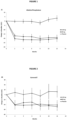
- NASH patients treated with both elafibranor doses improved alkaline phosphatase levels compared to placebo group.
- NASH patients treated with both elafibranor doses improved ⁇ -GT levels compared to placebo group.
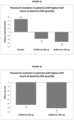
- Figure 3a NASH patients treated with both elafibranor doses (80mg and 120mg) improved C4 levels compared to placebo group.
- Figure 3b Patients treated with both elafibranor doses (80mg and 120mg) improved C4 levels reported to placebo.
- Cholestasis or cholestatic disease is defined as a decrease in bile flow due to impaired secretion by hepatocytes (hepato-cellular cholestasis) or to obstruction of bile flow through intra- or extrahepatic bile ducts (obstructive cholestasis).
- hepatocytes hepato-cellular cholestasis
- obstructive cholestasis cholestasis
- cholestasis is any condition in which the flow of bile from the liver is slowed or blocked.
- cholestatic diseases are Primary Biliary Cholangitis (PBC) (formely named Primary Biliary Cirrhosis), Primary Sclerosing Cholangitis (PSC), Intrahepatic Cholestasis of Pregnancy (ICP), Progressive Familial Intrahepatic Cholestasis (PFIC), Biliary atresia, Cholelithiasis, Infectious Cholangitis, Cholangitis associated with Langerhans cell histiocytosis, Alagille syndrome, Nonsyndromic ductal paucity, Drug-induced cholestasis, Total parenteral nutrition (TPN)-associated cholestasis.
- PBC Primary Biliary Cholangitis
- PSC Primary Sclerosing Cholangitis
- ICP Intrahepatic Cholestasis of Pregnancy
- PFIC Progressive Familial Intrahepatic Cholestasis
- Biliary atresia Cholelithiasis
- the subject to be treated has PBC.
- PBC is characterized by changes in many blood biochemical parameters. Patients' sera show the enhanced activity of alkaline phosphatase (ALP), ⁇ -glutamyltransferase (gamma glutamyltranspeptidase, ⁇ -GT), 5'-nucleotidase (5'-NT), and leucineaminopeptidase (LAP), the higher levels of bile acids, cholesterol, phospholipids, copper, ⁇ -globulins, and bilirubin, and the lower level of total protein mainly at the expense of albumin fractions.
- ALP alkaline phosphatase
- ⁇ -glutamyltransferase gamma glutamyltranspeptidase, ⁇ -GT
- 5'-NT 5'-nucleotidase
- LAP leucineaminopeptidase
- the patient has PBC and responds at least partly to UDCA. In another embodiment, the patient has PBC and does not respond adequately to UDCA. In a particular embodiment, elafibranor is administered, preferably orally, to a patient with PBC and inadequate response to UDCA, in particular at a dose of 80 or 120 mg.
- an effective amount or “therapeutic effective amount” refers to an amount of the compound sufficient to produce the desired therapeutic result and elafibranor is administered in amounts that are sufficient to display the desired effect.
- the desired effect is an improvement in alkaline phosphatase and/or ⁇ -GT levels signing a reduction in cholestasis.
- the invention also relates to elafibranor for use in the improvement of ALP and/or ⁇ -GT levels in a subject in need thereof.
- elafibranor is administered for lowering the activity of ALP and/or ⁇ -GT.
- elafibranor is administered to a subject with PBC for normalizing ALP, albumin and/or bilirubin level(s).
- the subject is with PBC and the treatment results in a level of ALP lower than 1.67 ⁇ ULN (upper limit of normal) and total bilirubin within normal limit.
- the reference range of total bilirubin is 0.2-1.2 mg/dL.
- the reference range of direct bilirubin is 0.1-0.4 mg/dL.
- elafibranor is administered for decreasing ALP level by at least 15%.
- the subject is with PBC and the treatment results in a level of ALP lower than 2 ⁇ ULN (upper limit of normal) and total bilirubin within normal limit.
- elafibranor is administered for decreasing ALP level by at least 40%.
- elafibranor is administered to a subject with PBC, to improve bile acids level such as CDCA, cholic acid, litocholic acid and DCA levels.
- bile acids level such as CDCA, cholic acid, litocholic acid and DCA levels.
- elafibranor is administered for improving Paris I, Paris II, Toronto I, Toronto II or UK-PBC risk score.
- elafibranor is administered to a subject with PBC for:
- treatment refers to therapy, prevention, or prophylaxis of a cholestatic disease in a subject in need thereof.
- the treatment involves the administration of elafibranor (such as via the administration of a pharmaceutical composition comprising elafibranor) to a subject (e.g. a patient) having a declared disease to prevent, cure, delay, reverse, or slow down the progression of the disease, improving thereby the condition of patients.
- a treatment may be also administered to subjects that are either healthy or at risk of developing a cholestatic disease.
- subject refers to a mammal and more particularly a human.
- the subjects to be treated according to the invention can be appropriately selected on the basis of several criteria associated with cholestatic pathological processes such as previous and/or present drug treatments, associated pathologies, genotype, exposure to risk factors, as well as any other relevant biomarker that can be evaluated by means of any suitable immunological, biochemical, or enzymatic method.
- the subject to be treated is with PBC, as characterized as follows:
- Elafibranor can have different stable isomeric forms.
- Synthesis of elafibranor can for example be carried out as described for compound 29 in WO2004/005233 .
- Elafibranor can be formulated as pharmaceutically acceptable salts, being slightly- or nontoxic salts obtained from organic or inorganic bases or acids of elafibranor. These salts can be obtained during the final purification step of the compound or by incorporating the salt into the previously purified compound.
- compositions comprising elafibranor for the treatment of cholestatic diseases can comprise one or several excipients or vehicles, acceptable within a pharmaceutical context (e.g. saline solutions, physiological solutions, isotonic solutions, etc., compatible with pharmaceutical usage and well-known by one of ordinary skill in the art).
- These compositions can comprise one or several agents or vehicles chosen among dispersants, solubilisers, stabilisers, preservatives, etc.
- Agents or vehicles useful for these formulations are particularly methylcellulose, hydroxymethylcellulose, carboxymethylcellulose, polysorbate 80, mannitol, gelatin, lactose, vegetable oils, acacia, liposomes, etc.
- compositions can be formulated in the form of injectable suspensions, gels, oils, pills, suppositories, powders, gel caps, capsules, aerosols, etc., eventually by means of galenic forms or devices assuring a prolonged and/or slow release.
- agents such as cellulose, carbonates or starches can advantageously be used.
- Elafibranor may be administered in an efficient amount by using a pharmaceutical composition as above-defined.
- Elafibranor can be administered in different ways and in different forms that allow administering said compounds in a therapeutically effective amount.
- it can be administered in a systematic way, per os, by parenteral route, by inhalation, or by injection, such as for example intravenously, by intra-muscular route, by subcutaneous route, by transdermal route, by intra-arterial route, etc.
- Oral administration is the preferential route of administration for pharmaceutical compositions comprising elafibranor for the treatment of a cholestatic disease.
- elafibranor can be administered for the treatment of a cholestatic disease at doses varying between 0.01 mg and 1 g per administration, preferentially from 1 mg to 150 mg per administration, and more preferably from 70 mg to 130 mg. Administration can be performed daily or even several times per day, if necessary.
- elafibranor is administered once a day.
- elafibranor is administered once a day at a dose of 80 or 120 mg.
- the invention relates to the use of elafibranor for the treatment of a cholestatic disease, in combination with at least one other therapeutically active agent.
- the other active agent may in particular be selected from other anti-cholestatic agents such as UDCA or OCA.
- the invention thus also relates to the combination of elafibranor with UDCA or OCA.
- the invention also relates to the combination of elafibranor with an anti-cholestatic agent.
- Other anti-cholestatic agents include, without limitation:
- Illustrative apical sodium-codependent bile acid transporter inhibitors include, without limitation, A-4250 ; volixibat ; maralixibat formely SHP-625 ; GSK-2330672 ; elobixibat and CJ-14199.
- Illustrative bile acids include, without limitation, obeticholic acid and ursodiol (UDCA).
- Illlustrative cathepsin inhibitors include, without limitation, VBY-376 ; VBY-825 ; VBY-036 ; VBY-129 ; VBY-285 ; Org-219517 ; LY3000328 ; RG-7236 and BF/PC-18.
- Illustrative CCR antagonists include, without limitation, cenicriviroc (CCR2/5 antagonist); PG-092 ; RAP-310 ; INCB-10820 ; RAP-103 ; PF-04634817 and CCX-872.
- Illustrative CD40 inhibitors include, without limitation, FFp-104 ; xl-050 ; DOM-0800 ; XmAb-5485 ; KGYY-15 ; FFP-106 ; TDI-0028 and ABI-793.
- Illustrative CD80 inhibitors include, without limitation, RhuDex ; FPT-155 ; ToleriMab ; galiximab ; SCH-212394 ; IGM-001 ; ASP-2408 and SCH-204698.
- Illustrative dual NOX (NADPH oxidase) 1&4 inhibitors include, without limitation, GKT-831 (formerly GKT137831) and GKT-901.
- Illustrative Farnesoid X receptor (FXR) agonists include, without limitation, obeticholic acid ; GS-9674 ; LJN-452 ; EDP-305 ; AKN-083 ; INT-767 ; GNF-5120 ; LY2562175 ; INV-33 ; NTX-023-1 ; EP-024297 ; Px-103 and SR-45023.
- Illustrative Fibroblast Growth Factor 19 (FGF-19) recombinants include, without limitation, NGM-282.
- Illustrative Fractalkine ligand inhibitors include, without limitation, E-6011 and KAN-0440567.
- Illustrative ileal sodium bile acid cotransporter inhibitors include, without limitation, A-4250 ; GSK-2330672 ; volixibat; CJ-14199 and elobixibat.
- Illustrative monoclonal antibodies include, without limitation, bertilimumab ; NGM-313 ; IL-20 targeting mAbs ; fresolimumab (antiTGF ⁇ ) formely GC1008 ; timolumab formely BTT-1023 ; namacizumab ; omalizumab ; ranibizumab ; bevacizumab ; lebrikizumab ; epratuzumab ; felvizumab ; matuzumab ; monalizumab ; reslizumab and inebilizumab.
- Illustrative PPAR alpha agonists include, without limitation, fenofibrate, ciprofibrate, pemafibrate, gemfibrozil, clofibrate, binifibrate, clinofibrate, clofibric acid, nicofibrate, pirifibrate, plafibride, ronifibrate, theofibrate, tocofibrate and SR10171;
- Illustrative PPAR gamma agonists include, without limitation, Pioglitazone, deuterated pioglitazone, Rosiglitazone, efatutazone, ATx08-001, OMS-405 , CHS-131, THR-0921, SER-150-DN, KDT-501, GED-0507-34-Levo, CLC-3001 and ALL-4.
- Illustrative PPAR delta agonists include, without limitation, GW501516 (Endurabol or ( ⁇ 4-[( ⁇ 4-methyl-2-[4-(trifluoromethyl)phenyl]-1,3-thiazol-5-yl ⁇ methyl)sulfanyl]-2-methylphenoxy ⁇ acetic acid)) or MBX8025 (Seladelpar or ⁇ 2-methyl-4-[5-methyl-2-(4-trifluoromethyl- phenyl)-2H-[I,2,3]triazol-4-ylmethylsylfanyl]-phenoxy ⁇ -acetic acid) or GW0742 ([4-[[[2-[3-fluoro-4-(trifluoromethyl)phenyl]-4-methyl-5-thiazolyl]methyl]thio]-2-methyl phenoxy]acetic acid) or L165041 or HPP-593 or NCP-1046.
- GW501516 Endurabol or ( ⁇ 4-[( ⁇ 4-methyl-2-[
- Illustrative PPAR alpha/gamma agonists include, without limitation, Saroglitazar, Aleglitazar, Muraglitazar, Tesaglitazar and DSP-8658.
- illustrative PPAR alpha/delta agonists include, without limitation, T913659.
- Illustrative PPAR gamma/delta agonists include, without limitation, linoleic acid (CLA) and T3D-959.
- Illustrative PPAR alpha/gamma/delta agonists include, without limitation, IVA337, TTA (tetradecylthioacetic acid), Bavachinin, GW4148, GW9135, Bezafibrat, Lobeglitazone, and CS038.
- the present invention provides methods of treating a cholestatic disease comprising the administration of elafibranor or the combination of the invention, in particular in the form of a pharmaceutical composition containing this compound.
- the present invention also provides a kit for treating a cholestatic disease comprising elafibranor, optionally in combination to another anti-cholestatic agent as described above.
- Example 1 ALP and ⁇ GT dosages
- elafibranor doses 80mg and 120mg
- improved liver function tests ALT, ⁇ GT and alkaline phosphatase
- lipid parameters triglycerides, LDLcholesterol, HDL-cholesterol
- elafibranor has consistently shown a significant decrease in liver enzymes, notably in ALP.
- a decrease in ALP levels is recognized as a particularly relevant surrogate marker for the treatment of PBC, and was recently used as the basis for FDA approval of OCA in this indication.
- the subjects show a dose-related improvement in their disease as shown by a decrease in ALP and ⁇ GT.
- Example 2 C4 dosage
- the effect of elafibranor was further tested in relation to parameters more directly related to cholestatic diseases than ALP and ⁇ GT levels. Thus, it was explored whether treated subjects show a decrease in plasma total bile acids.
- the measurement of serum 7 ⁇ -hydroxy-4-cholesten-3-one (7 ⁇ -HCO, or 7 ⁇ C4, or C4) is a method for monitoring the enzymatic activity of hepatic cholesterol 7 ⁇ -hydroxylase, the rate-limiting and major regulatory enzyme in the synthesis of bile acids.
- a decrease in C4 level reflects a decrease in total bile acids in the patient.
- elafibranor was orally administered at a dose of either 80mg or 120mg per day over 52 weeks.
- a total of 62 NASH patients with high ALP levels were randomized: 23 in the placebo group, 16 in the elafibranor 80mg group and 23 in the elafibranor 120mg group.
- Bile acids precursor levels were improved in the patients having received both elafibranor doses, in a dose-dependent manner.
- a multicenter, double-blind, randomized, placebo-controlled, phase 2 study clinical trial is conducted in patients with Primary Biliary Cholangitis and inadequate response to ursodeoxycholic acid to evaluate the efficacy and safety of treatment with elafibranor given orally (80mg daily and 120mg daily) for 12 weeks.
- the primary objective is to compare the effect of daily oral administration of elafibranor 80mg and 120 mg on changes in serum alkaline phosphatase (ALP) to that of placebo in patients with PBC and inadequate response to ursodeoxycholic acid (UDCA).
- ALP serum alkaline phosphatase
- UDCA ursodeoxycholic acid
- the secondary objectives are:
- a central randomization system will be used (interactive voice/web response system [IVRS/IWRS]).
- the primary endpoint is the relative change in serum ALP from baseline to end of treatment in each elafibranor arm, compared to placebo
- elafibranor induces a significant reduction in serum ALP from baseline to end of treatment, compared to placebo. In addition, it is expected that elafibranor induces significant improvement in at least one of the secondary endpoints.
Landscapes
- Health & Medical Sciences (AREA)
- Veterinary Medicine (AREA)
- Public Health (AREA)
- General Health & Medical Sciences (AREA)
- Animal Behavior & Ethology (AREA)
- Life Sciences & Earth Sciences (AREA)
- Pharmacology & Pharmacy (AREA)
- Chemical & Material Sciences (AREA)
- Medicinal Chemistry (AREA)
- Epidemiology (AREA)
- General Chemical & Material Sciences (AREA)
- Organic Chemistry (AREA)
- Nuclear Medicine, Radiotherapy & Molecular Imaging (AREA)
- Chemical Kinetics & Catalysis (AREA)
- Bioinformatics & Cheminformatics (AREA)
- Engineering & Computer Science (AREA)
- Gastroenterology & Hepatology (AREA)
- Cardiology (AREA)
- Heart & Thoracic Surgery (AREA)
- Pharmaceuticals Containing Other Organic And Inorganic Compounds (AREA)
- Acyclic And Carbocyclic Compounds In Medicinal Compositions (AREA)
- Medicinal Preparation (AREA)
- Steroid Compounds (AREA)
- Heterocyclic Carbon Compounds Containing A Hetero Ring Having Nitrogen And Oxygen As The Only Ring Hetero Atoms (AREA)
Applications Claiming Priority (3)
| Application Number | Priority Date | Filing Date | Title |
|---|---|---|---|
| EP16305381 | 2016-03-31 | ||
| PCT/EP2017/057634 WO2017167935A1 (fr) | 2016-03-31 | 2017-03-30 | Méthodes de traitement de maladies cholestatiques |
| EP17713332.9A EP3435996B1 (fr) | 2016-03-31 | 2017-03-30 | Elafibranor pour l'utilisation dans le traitement de la cholangite biliaire primitive |
Related Parent Applications (2)
| Application Number | Title | Priority Date | Filing Date |
|---|---|---|---|
| EP17713332.9A Division-Into EP3435996B1 (fr) | 2016-03-31 | 2017-03-30 | Elafibranor pour l'utilisation dans le traitement de la cholangite biliaire primitive |
| EP17713332.9A Division EP3435996B1 (fr) | 2016-03-31 | 2017-03-30 | Elafibranor pour l'utilisation dans le traitement de la cholangite biliaire primitive |
Publications (2)
| Publication Number | Publication Date |
|---|---|
| EP4233910A2 true EP4233910A2 (fr) | 2023-08-30 |
| EP4233910A3 EP4233910A3 (fr) | 2024-01-17 |
Family
ID=55661352
Family Applications (3)
| Application Number | Title | Priority Date | Filing Date |
|---|---|---|---|
| EP25170190.0A Pending EP4559481A3 (fr) | 2016-03-31 | 2017-03-30 | Méthodes de traitement de maladies cholestatiques |
| EP17713332.9A Active EP3435996B1 (fr) | 2016-03-31 | 2017-03-30 | Elafibranor pour l'utilisation dans le traitement de la cholangite biliaire primitive |
| EP23175851.7A Withdrawn EP4233910A3 (fr) | 2016-03-31 | 2017-03-30 | Méthodes de traitement de maladies cholestatiques |
Family Applications Before (2)
| Application Number | Title | Priority Date | Filing Date |
|---|---|---|---|
| EP25170190.0A Pending EP4559481A3 (fr) | 2016-03-31 | 2017-03-30 | Méthodes de traitement de maladies cholestatiques |
| EP17713332.9A Active EP3435996B1 (fr) | 2016-03-31 | 2017-03-30 | Elafibranor pour l'utilisation dans le traitement de la cholangite biliaire primitive |
Country Status (31)
| Country | Link |
|---|---|
| US (1) | US11185519B2 (fr) |
| EP (3) | EP4559481A3 (fr) |
| JP (1) | JP7010836B2 (fr) |
| KR (1) | KR102338085B1 (fr) |
| CN (2) | CN109152756B (fr) |
| AU (1) | AU2017242819B2 (fr) |
| CA (1) | CA3018132C (fr) |
| CY (2) | CY1127813T1 (fr) |
| DK (1) | DK3435996T3 (fr) |
| EA (1) | EA038386B1 (fr) |
| ES (1) | ES3030999T3 (fr) |
| FI (2) | FI3435996T3 (fr) |
| FR (1) | FR25C1041I1 (fr) |
| HR (1) | HRP20250776T1 (fr) |
| HU (2) | HUE071511T2 (fr) |
| IL (2) | IL311687A (fr) |
| LT (2) | LT3435996T (fr) |
| MD (1) | MD3435996T2 (fr) |
| MX (2) | MX2021015783A (fr) |
| NL (1) | NL301342I2 (fr) |
| NO (1) | NO2025045I1 (fr) |
| NZ (1) | NZ785185A (fr) |
| PH (1) | PH12018502056B1 (fr) |
| PL (1) | PL3435996T3 (fr) |
| PT (1) | PT3435996T (fr) |
| RS (1) | RS66930B1 (fr) |
| SG (1) | SG11201808222RA (fr) |
| SI (1) | SI3435996T1 (fr) |
| SM (1) | SMT202500241T1 (fr) |
| WO (1) | WO2017167935A1 (fr) |
| ZA (1) | ZA201807084B (fr) |
Families Citing this family (22)
| Publication number | Priority date | Publication date | Assignee | Title |
|---|---|---|---|---|
| US20130108573A1 (en) | 2011-10-28 | 2013-05-02 | Lumena Pharmaceuticals, Inc. | Bile Acid Recycling Inhibitors for Treatment of Hypercholemia and Cholestatic Liver Disease |
| AU2012328526B2 (en) | 2011-10-28 | 2017-05-25 | Shire Human Genetic Therapies, Inc. | Bile acid recycling inhibitors for treatment of pediatric cholestatic liver diseases |
| US12053445B2 (en) | 2016-03-31 | 2024-08-06 | Genfit | Methods of treatment of cholestatic diseases |
| CA3051977A1 (fr) * | 2017-02-24 | 2018-08-30 | Genfit | Compositions pharmaceutiques pour polytherapie |
| WO2019099761A1 (fr) * | 2017-11-16 | 2019-05-23 | Teva Pharmaceuticals International Gmbh | Formes à l'état solide d'elafibranor |
| WO2019186410A1 (fr) * | 2018-03-27 | 2019-10-03 | Lupin Limited | Formes solides d'élafibranor et leurs procédés |
| EP3863623A1 (fr) | 2018-10-11 | 2021-08-18 | Centre national de la recherche scientifique | Traitement de maladies associées à des destructions du système biliaire |
| CN111320609A (zh) | 2018-12-13 | 2020-06-23 | 拓臻股份有限公司 | 一种THRβ受体激动剂化合物及其制备方法和用途 |
| EP3923943B1 (fr) * | 2019-02-12 | 2024-07-31 | Mirum Pharmaceuticals, Inc. | Réponse dépendant du génotype et de la dose à un asbti chez des patients ayant une déficience de pompe d'exportation de sel biliaire |
| EP3937906A1 (fr) * | 2019-03-13 | 2022-01-19 | Novartis AG | Composition pharmaceutique |
| CA3130713A1 (fr) * | 2019-04-09 | 2020-10-15 | Peggy Parroche | Combinaison de nitazoxanide et d'elafibranor pour le traitement de maladies immunitaires ou d'une inflammation |
| AU2020336272A1 (en) | 2019-08-23 | 2022-04-14 | Terns Pharmaceuticals, Inc. | Thyroid hormone receptor beta agonist compounds |
| WO2021050945A1 (fr) | 2019-09-12 | 2021-03-18 | Terns, Inc. | Composés agonistes du récepteur bêta de l'hormone thyroïdienne |
| CN110548118B (zh) * | 2019-10-21 | 2021-09-14 | 江苏省中医院 | 一种具有防治原发性胆汁性胆管炎的中药复方及其制备方法与应用 |
| MX2022009776A (es) * | 2020-02-10 | 2022-09-09 | Genfit | Tratamiento de la colangitis biliar primaria con elafibranor. |
| US12522564B2 (en) * | 2020-02-10 | 2026-01-13 | Genfit | Polymorphs of elafibranor |
| JP2023526410A (ja) * | 2020-05-18 | 2023-06-21 | ジェンフィット | 原発性硬化性胆管炎の治療のためのエラフィブラノール |
| CA3193057A1 (fr) | 2020-08-25 | 2022-03-03 | Eli Lilly And Company | Polymorphes d'un inhibiteur de ssao |
| CN115884765A (zh) * | 2020-08-26 | 2023-03-31 | 基恩菲特公司 | 用于治疗原发性胆汁性胆管炎的组合物和方法 |
| KR20250012564A (ko) * | 2022-05-19 | 2025-01-24 | 타이라 바이오사이언시스, 인크. | Ppar 효현제 및 fgfr4 저해제를 이용한 치료법 |
| US12296050B2 (en) | 2023-10-05 | 2025-05-13 | Mirum Pharmaceuticals, Inc. | Pharmaceutical compositions comprising maralixibat and uses thereof |
| WO2025075624A1 (fr) * | 2023-10-05 | 2025-04-10 | Mirum Pharmaceuticals, Inc. | Compositions pharmaceutiques contenant du maralixibat et leurs utilisations |
Citations (1)
| Publication number | Priority date | Publication date | Assignee | Title |
|---|---|---|---|---|
| WO2004005233A1 (fr) | 2002-07-08 | 2004-01-15 | Genfit | Derives de 1,3-diphenylprop-2-en-1-one substitues, preparation et utilisations |
Family Cites Families (4)
| Publication number | Priority date | Publication date | Assignee | Title |
|---|---|---|---|---|
| US20070197606A1 (en) | 2006-02-22 | 2007-08-23 | Burczynski Frank J | Use of ppar agonists as anti-oxidants |
| LT2641596T (lt) * | 2009-11-26 | 2018-08-10 | Genfit | 1,3-difenilprop-2-en-1-ono darinių panaudojimas kepenų sutrikimų gydymui |
| EA036404B1 (ru) * | 2015-02-06 | 2020-11-06 | Интерсепт Фармасьютикалз, Инк. | Фармацевтические композиции для комбинированной терапии |
| CA3051977A1 (fr) * | 2017-02-24 | 2018-08-30 | Genfit | Compositions pharmaceutiques pour polytherapie |
-
2017
- 2017-03-30 SM SM20250241T patent/SMT202500241T1/it unknown
- 2017-03-30 CA CA3018132A patent/CA3018132C/fr active Active
- 2017-03-30 ES ES17713332T patent/ES3030999T3/es active Active
- 2017-03-30 MX MX2021015783A patent/MX2021015783A/es unknown
- 2017-03-30 IL IL311687A patent/IL311687A/en unknown
- 2017-03-30 JP JP2018550793A patent/JP7010836B2/ja active Active
- 2017-03-30 EA EA201892202A patent/EA038386B1/ru unknown
- 2017-03-30 WO PCT/EP2017/057634 patent/WO2017167935A1/fr not_active Ceased
- 2017-03-30 AU AU2017242819A patent/AU2017242819B2/en active Active
- 2017-03-30 HR HRP20250776TT patent/HRP20250776T1/hr unknown
- 2017-03-30 EP EP25170190.0A patent/EP4559481A3/fr active Pending
- 2017-03-30 DK DK17713332.9T patent/DK3435996T3/da active
- 2017-03-30 PH PH1/2018/502056A patent/PH12018502056B1/en unknown
- 2017-03-30 RS RS20250623A patent/RS66930B1/sr unknown
- 2017-03-30 SG SG11201808222RA patent/SG11201808222RA/en unknown
- 2017-03-30 HU HUE17713332A patent/HUE071511T2/hu unknown
- 2017-03-30 NZ NZ785185A patent/NZ785185A/en unknown
- 2017-03-30 PL PL17713332.9T patent/PL3435996T3/pl unknown
- 2017-03-30 SI SI201731612T patent/SI3435996T1/sl unknown
- 2017-03-30 EP EP17713332.9A patent/EP3435996B1/fr active Active
- 2017-03-30 EP EP23175851.7A patent/EP4233910A3/fr not_active Withdrawn
- 2017-03-30 US US16/090,415 patent/US11185519B2/en active Active
- 2017-03-30 CN CN201780020144.5A patent/CN109152756B/zh active Active
- 2017-03-30 IL IL261935A patent/IL261935B2/en unknown
- 2017-03-30 MX MX2018011738A patent/MX388863B/es unknown
- 2017-03-30 MD MDE20190147T patent/MD3435996T2/ro unknown
- 2017-03-30 CN CN202210467808.5A patent/CN114796237B/zh active Active
- 2017-03-30 KR KR1020187031600A patent/KR102338085B1/ko active Active
- 2017-03-30 LT LTEPPCT/EP2017/057634T patent/LT3435996T/lt unknown
- 2017-03-30 FI FIEP17713332.9T patent/FI3435996T3/fi active
- 2017-03-30 PT PT177133329T patent/PT3435996T/pt unknown
-
2018
- 2018-10-24 ZA ZA2018/07084A patent/ZA201807084B/en unknown
-
2025
- 2025-06-11 CY CY20251100372T patent/CY1127813T1/el unknown
- 2025-09-12 CY CY2025027C patent/CY2025027I1/el unknown
- 2025-09-12 NL NL301342C patent/NL301342I2/nl unknown
- 2025-09-15 LT LTPA2025535C patent/LTPA2025535I1/lt unknown
- 2025-09-22 HU HUS2500039C patent/HUS2500039I1/hu unknown
- 2025-09-23 FI FIC20250032C patent/FIC20250032I1/fi unknown
- 2025-09-30 NO NO2025045C patent/NO2025045I1/no unknown
- 2025-10-21 FR FR25C1041C patent/FR25C1041I1/fr active Active
Patent Citations (1)
| Publication number | Priority date | Publication date | Assignee | Title |
|---|---|---|---|---|
| WO2004005233A1 (fr) | 2002-07-08 | 2004-01-15 | Genfit | Derives de 1,3-diphenylprop-2-en-1-one substitues, preparation et utilisations |
Non-Patent Citations (9)
| Title |
|---|
| ALI ABYRNE TLINDOR K: "Orphan drugs in development for primary biliary cirrhosis: challenges and progress", ORPHAN DRUGS: RESEARCH AND REVIEWS, 2015, pages 83 - 97 |
| BEUERS UGERSHWIN MEGISH RGINVERNIZZI PJONES DELINDOR KMA XMACKAY IRPARES ATANAKA A: "Changing nomenclature for PBC: from 'cirrhosis' to 'cholangitis", GUT, vol. 64, 2015, pages 1671 - 1672 |
| BOONSTRA KBEUERS UPONSIOEN CY: "Epidemiology of primary sclerosing cholangitis and primary biliary cirrhosis: a systematic review", J HEPATOL, vol. 56, 2012, pages 1181 - 1188, XP028410091, DOI: 10.1016/j.jhep.2011.10.025 |
| BOURSIER JABDELMALEK MCALDWELL SDRENTH JANSTEE QMHUM DHANF RROUDOT AMEGNIEN SSTAELS B: "Elafibranor, an Agonist of the Peroxisome Proliferator-Activated Receptor-alpha and -delta, Induces Resolution of Nonalcoholic Steatohepatitis Without Fibrosis Worsening", GASTROENTEROLOGY, vol. 150, 2016, pages 1147 - 1159 |
| GHONEM NSASSIS DNBOYER JL: "Fibrates and cholestasis", HEPATOLOGY, vol. 62, 2015, pages 635 - 643, XP071561750, DOI: 10.1002/hep.27744 |
| LENS SLEOZ MNAZAL LBRUGUERA MPARES A: "Bezafibrate normalizes alkaline phosphatase in primary biliary cirrhosis patients with incomplete response to ursodeoxycholic acid", LIVER INT, vol. 34, 2014, pages 197 - 203 |
| PUROHIT TCAPPELL MS: "Primary biliary cirrhosis: Pathophysiology, clinical presentation and therapy", WORLD J HEPATOL, vol. 7, 2015, pages 926 - 941, XP055723924, DOI: 10.4254/wjh.v7.i7.926 |
| RESHETNYAK VL: "Primary biliary cirrhosis: Clinical and laboratory criteria for its diagnosis", WORLD J GASTROENTEROL, vol. 21, 2015, pages 7683 - 7708 |
| ZETTERMAN R: "Finding the Patient With Primary Biliary Cirrhosis", MEDSCAPE, NEWS & PERSPECTIVE, 2015 |
Also Published As
Similar Documents
| Publication | Publication Date | Title |
|---|---|---|
| EP3435996B1 (fr) | Elafibranor pour l'utilisation dans le traitement de la cholangite biliaire primitive | |
| US11331292B2 (en) | Methods of treatment of cholestatic diseases | |
| US12290498B2 (en) | Methods of treatment of cholestatic diseases | |
| HK40096516A (en) | Methods of treatment of cholestatic diseases | |
| HK40002034B (en) | Elafibranor for use in the treatment of primary biliary cholangitis | |
| HK40002034A (en) | Elafibranor for use in the treatment of primary biliary cholangitis | |
| BR112018069023B1 (pt) | Métodos de tratamento de doenças colestáticas |
Legal Events
| Date | Code | Title | Description |
|---|---|---|---|
| PUAI | Public reference made under article 153(3) epc to a published international application that has entered the european phase |
Free format text: ORIGINAL CODE: 0009012 |
|
| STAA | Information on the status of an ep patent application or granted ep patent |
Free format text: STATUS: THE APPLICATION HAS BEEN PUBLISHED |
|
| AC | Divisional application: reference to earlier application |
Ref document number: 3435996 Country of ref document: EP Kind code of ref document: P |
|
| AK | Designated contracting states |
Kind code of ref document: A2 Designated state(s): AL AT BE BG CH CY CZ DE DK EE ES FI FR GB GR HR HU IE IS IT LI LT LU LV MC MK MT NL NO PL PT RO RS SE SI SK SM TR |
|
| P01 | Opt-out of the competence of the unified patent court (upc) registered |
Effective date: 20230929 |
|
| REG | Reference to a national code |
Ref country code: DE Ref legal event code: R079 Free format text: PREVIOUS MAIN CLASS: A61K0045060000 Ipc: A61K0031192000 |
|
| PUAL | Search report despatched |
Free format text: ORIGINAL CODE: 0009013 |
|
| AK | Designated contracting states |
Kind code of ref document: A3 Designated state(s): AL AT BE BG CH CY CZ DE DK EE ES FI FR GB GR HR HU IE IS IT LI LT LU LV MC MK MT NL NO PL PT RO RS SE SI SK SM TR |
|
| RIC1 | Information provided on ipc code assigned before grant |
Ipc: A61P 1/16 20060101ALI20231212BHEP Ipc: A61K 45/06 20060101ALI20231212BHEP Ipc: A61K 31/575 20060101ALI20231212BHEP Ipc: A61K 31/192 20060101AFI20231212BHEP |
|
| REG | Reference to a national code |
Ref country code: HK Ref legal event code: DE Ref document number: 40096516 Country of ref document: HK |
|
| STAA | Information on the status of an ep patent application or granted ep patent |
Free format text: STATUS: THE APPLICATION IS DEEMED TO BE WITHDRAWN |
|
| 18D | Application deemed to be withdrawn |
Effective date: 20240718 |