EP4233914A2 - Systèmes et procédés relatifs à des applications médicales de formulations de polymère synthétique - Google Patents
Systèmes et procédés relatifs à des applications médicales de formulations de polymère synthétique Download PDFInfo
- Publication number
- EP4233914A2 EP4233914A2 EP23168595.9A EP23168595A EP4233914A2 EP 4233914 A2 EP4233914 A2 EP 4233914A2 EP 23168595 A EP23168595 A EP 23168595A EP 4233914 A2 EP4233914 A2 EP 4233914A2
- Authority
- EP
- European Patent Office
- Prior art keywords
- foam
- pressurized
- therapeutic composition
- gas
- composition
- Prior art date
- Legal status (The legal status is an assumption and is not a legal conclusion. Google has not performed a legal analysis and makes no representation as to the accuracy of the status listed.)
- Pending
Links
- 239000000203 mixture Substances 0.000 title claims abstract description 217
- 238000009472 formulation Methods 0.000 title abstract description 112
- 229920001059 synthetic polymer Polymers 0.000 title abstract description 60
- 238000000034 method Methods 0.000 title abstract description 32
- 229920000642 polymer Polymers 0.000 claims abstract description 115
- 230000000740 bleeding effect Effects 0.000 claims abstract description 21
- 239000000126 substance Substances 0.000 claims abstract description 16
- 239000006260 foam Substances 0.000 claims description 110
- 239000000243 solution Substances 0.000 claims description 108
- 229920001983 poloxamer Polymers 0.000 claims description 55
- 239000007788 liquid Substances 0.000 claims description 52
- 238000005187 foaming Methods 0.000 claims description 50
- RVGRUAULSDPKGF-UHFFFAOYSA-N Poloxamer Chemical compound C1CO1.CC1CO1 RVGRUAULSDPKGF-UHFFFAOYSA-N 0.000 claims description 33
- 229960000502 poloxamer Drugs 0.000 claims description 29
- 208000027418 Wounds and injury Diseases 0.000 claims description 24
- 230000001225 therapeutic effect Effects 0.000 claims description 24
- 239000007864 aqueous solution Substances 0.000 claims description 21
- 208000009344 Penetrating Wounds Diseases 0.000 claims description 17
- 206010052428 Wound Diseases 0.000 claims description 17
- 210000000683 abdominal cavity Anatomy 0.000 claims description 16
- LVGUZGTVOIAKKC-UHFFFAOYSA-N 1,1,1,2-tetrafluoroethane Chemical compound FCC(F)(F)F LVGUZGTVOIAKKC-UHFFFAOYSA-N 0.000 claims description 15
- 238000001879 gelation Methods 0.000 claims description 13
- 230000002441 reversible effect Effects 0.000 claims description 13
- 150000001350 alkyl halides Chemical class 0.000 claims description 12
- 230000008859 change Effects 0.000 claims description 10
- 239000003814 drug Substances 0.000 claims description 9
- 230000009969 flowable effect Effects 0.000 claims description 9
- 229940124597 therapeutic agent Drugs 0.000 claims description 7
- 210000000115 thoracic cavity Anatomy 0.000 claims description 4
- 239000000839 emulsion Substances 0.000 claims description 3
- 208000015181 infectious disease Diseases 0.000 claims description 3
- 230000001580 bacterial effect Effects 0.000 claims description 2
- 230000036760 body temperature Effects 0.000 claims description 2
- 238000010792 warming Methods 0.000 claims 1
- 230000007246 mechanism Effects 0.000 abstract description 22
- 239000000523 sample Substances 0.000 abstract description 18
- 230000037361 pathway Effects 0.000 abstract description 9
- 238000003780 insertion Methods 0.000 abstract description 6
- 230000037431 insertion Effects 0.000 abstract description 6
- 210000003200 peritoneal cavity Anatomy 0.000 abstract description 6
- 230000005540 biological transmission Effects 0.000 abstract description 3
- 238000012549 training Methods 0.000 abstract description 3
- 239000007789 gas Substances 0.000 description 90
- 208000032843 Hemorrhage Diseases 0.000 description 41
- 239000000499 gel Substances 0.000 description 25
- HQPMKSGTIOYHJT-UHFFFAOYSA-N ethane-1,2-diol;propane-1,2-diol Chemical compound OCCO.CC(O)CO HQPMKSGTIOYHJT-UHFFFAOYSA-N 0.000 description 24
- 229920001993 poloxamer 188 Polymers 0.000 description 24
- IAYPIBMASNFSPL-UHFFFAOYSA-N Ethylene oxide Chemical compound C1CO1 IAYPIBMASNFSPL-UHFFFAOYSA-N 0.000 description 19
- 229920001577 copolymer Polymers 0.000 description 18
- 208000014674 injury Diseases 0.000 description 17
- GOOHAUXETOMSMM-UHFFFAOYSA-N Propylene oxide Chemical compound CC1CO1 GOOHAUXETOMSMM-UHFFFAOYSA-N 0.000 description 16
- 210000004204 blood vessel Anatomy 0.000 description 13
- 239000012071 phase Substances 0.000 description 13
- XLYOFNOQVPJJNP-UHFFFAOYSA-N water Substances O XLYOFNOQVPJJNP-UHFFFAOYSA-N 0.000 description 13
- 239000008280 blood Substances 0.000 description 12
- 210000004369 blood Anatomy 0.000 description 12
- 238000002156 mixing Methods 0.000 description 12
- 239000003795 chemical substances by application Substances 0.000 description 11
- 230000000694 effects Effects 0.000 description 11
- 241001465754 Metazoa Species 0.000 description 10
- 210000001015 abdomen Anatomy 0.000 description 10
- 210000000056 organ Anatomy 0.000 description 10
- 229920001992 poloxamer 407 Polymers 0.000 description 10
- CURLTUGMZLYLDI-UHFFFAOYSA-N Carbon dioxide Chemical compound O=C=O CURLTUGMZLYLDI-UHFFFAOYSA-N 0.000 description 8
- 230000006378 damage Effects 0.000 description 8
- 206010053567 Coagulopathies Diseases 0.000 description 7
- 230000003187 abdominal effect Effects 0.000 description 7
- 230000008901 benefit Effects 0.000 description 7
- 230000035602 clotting Effects 0.000 description 7
- 238000002474 experimental method Methods 0.000 description 7
- 230000023597 hemostasis Effects 0.000 description 7
- 239000000463 material Substances 0.000 description 7
- 238000012360 testing method Methods 0.000 description 7
- 210000001519 tissue Anatomy 0.000 description 7
- 230000008733 trauma Effects 0.000 description 7
- 229920001400 block copolymer Polymers 0.000 description 6
- 239000000047 product Substances 0.000 description 6
- 239000003381 stabilizer Substances 0.000 description 6
- 206010061249 Intra-abdominal haemorrhage Diseases 0.000 description 5
- 230000001154 acute effect Effects 0.000 description 5
- 239000003242 anti bacterial agent Substances 0.000 description 5
- 230000034994 death Effects 0.000 description 5
- 231100000517 death Toxicity 0.000 description 5
- 230000007423 decrease Effects 0.000 description 5
- 229930195733 hydrocarbon Natural products 0.000 description 5
- 150000002430 hydrocarbons Chemical class 0.000 description 5
- -1 putties Substances 0.000 description 5
- GQPLMRYTRLFLPF-UHFFFAOYSA-N Nitrous Oxide Chemical compound [O-][N+]#N GQPLMRYTRLFLPF-UHFFFAOYSA-N 0.000 description 4
- 210000003815 abdominal wall Anatomy 0.000 description 4
- 229910002092 carbon dioxide Inorganic materials 0.000 description 4
- 239000001569 carbon dioxide Substances 0.000 description 4
- 238000001816 cooling Methods 0.000 description 4
- 230000002439 hemostatic effect Effects 0.000 description 4
- 238000011065 in-situ storage Methods 0.000 description 4
- 238000002347 injection Methods 0.000 description 4
- 239000007924 injection Substances 0.000 description 4
- 238000002350 laparotomy Methods 0.000 description 4
- 238000002360 preparation method Methods 0.000 description 4
- 230000002829 reductive effect Effects 0.000 description 4
- 238000003860 storage Methods 0.000 description 4
- 230000004083 survival effect Effects 0.000 description 4
- 239000004215 Carbon black (E152) Substances 0.000 description 3
- 229920001661 Chitosan Polymers 0.000 description 3
- FAPWRFPIFSIZLT-UHFFFAOYSA-M Sodium chloride Chemical compound [Na+].[Cl-] FAPWRFPIFSIZLT-UHFFFAOYSA-M 0.000 description 3
- 241000282898 Sus scrofa Species 0.000 description 3
- 238000013461 design Methods 0.000 description 3
- 238000011156 evaluation Methods 0.000 description 3
- 230000008569 process Effects 0.000 description 3
- 230000004044 response Effects 0.000 description 3
- 238000005507 spraying Methods 0.000 description 3
- 238000003756 stirring Methods 0.000 description 3
- 238000011477 surgical intervention Methods 0.000 description 3
- 238000001356 surgical procedure Methods 0.000 description 3
- 230000009885 systemic effect Effects 0.000 description 3
- 208000018680 Abdominal injury Diseases 0.000 description 2
- 241000219823 Medicago Species 0.000 description 2
- 238000011887 Necropsy Methods 0.000 description 2
- ZTHYODDOHIVTJV-UHFFFAOYSA-N Propyl gallate Chemical compound CCCOC(=O)C1=CC(O)=C(O)C(O)=C1 ZTHYODDOHIVTJV-UHFFFAOYSA-N 0.000 description 2
- 230000002411 adverse Effects 0.000 description 2
- 229940088710 antibiotic agent Drugs 0.000 description 2
- 238000013459 approach Methods 0.000 description 2
- 230000004888 barrier function Effects 0.000 description 2
- 230000000975 bioactive effect Effects 0.000 description 2
- 238000006243 chemical reaction Methods 0.000 description 2
- 238000007906 compression Methods 0.000 description 2
- 230000006835 compression Effects 0.000 description 2
- 230000007812 deficiency Effects 0.000 description 2
- 239000000645 desinfectant Substances 0.000 description 2
- 229940079593 drug Drugs 0.000 description 2
- 230000007613 environmental effect Effects 0.000 description 2
- 239000002874 hemostatic agent Substances 0.000 description 2
- 239000000017 hydrogel Substances 0.000 description 2
- 238000001727 in vivo Methods 0.000 description 2
- 230000001939 inductive effect Effects 0.000 description 2
- 230000002262 irrigation Effects 0.000 description 2
- 238000003973 irrigation Methods 0.000 description 2
- 210000004185 liver Anatomy 0.000 description 2
- 210000004072 lung Anatomy 0.000 description 2
- 210000004379 membrane Anatomy 0.000 description 2
- 239000012528 membrane Substances 0.000 description 2
- 238000012986 modification Methods 0.000 description 2
- 230000004048 modification Effects 0.000 description 2
- 239000001272 nitrous oxide Substances 0.000 description 2
- 229960000665 norflurane Drugs 0.000 description 2
- 125000006353 oxyethylene group Chemical group 0.000 description 2
- 230000036961 partial effect Effects 0.000 description 2
- 239000008177 pharmaceutical agent Substances 0.000 description 2
- 239000000546 pharmaceutical excipient Substances 0.000 description 2
- 229940124531 pharmaceutical excipient Drugs 0.000 description 2
- 239000003805 procoagulant Substances 0.000 description 2
- 230000002035 prolonged effect Effects 0.000 description 2
- 239000003380 propellant Substances 0.000 description 2
- 230000000717 retained effect Effects 0.000 description 2
- 238000007789 sealing Methods 0.000 description 2
- 239000011780 sodium chloride Substances 0.000 description 2
- 238000012546 transfer Methods 0.000 description 2
- 230000000472 traumatic effect Effects 0.000 description 2
- 238000011179 visual inspection Methods 0.000 description 2
- UCTWMZQNUQWSLP-VIFPVBQESA-N (R)-adrenaline Chemical compound CNC[C@H](O)C1=CC=C(O)C(O)=C1 UCTWMZQNUQWSLP-VIFPVBQESA-N 0.000 description 1
- 229930182837 (R)-adrenaline Natural products 0.000 description 1
- 206010058808 Abdominal compartment syndrome Diseases 0.000 description 1
- 239000005995 Aluminium silicate Substances 0.000 description 1
- 229920000945 Amylopectin Polymers 0.000 description 1
- 206010002329 Aneurysm Diseases 0.000 description 1
- 241000894006 Bacteria Species 0.000 description 1
- 102100023804 Coagulation factor VII Human genes 0.000 description 1
- 102000008186 Collagen Human genes 0.000 description 1
- 108010035532 Collagen Proteins 0.000 description 1
- RYGMFSIKBFXOCR-UHFFFAOYSA-N Copper Chemical compound [Cu] RYGMFSIKBFXOCR-UHFFFAOYSA-N 0.000 description 1
- 206010059866 Drug resistance Diseases 0.000 description 1
- 108010023321 Factor VII Proteins 0.000 description 1
- 108010054265 Factor VIIa Proteins 0.000 description 1
- 108010049003 Fibrinogen Proteins 0.000 description 1
- 102000008946 Fibrinogen Human genes 0.000 description 1
- CEAZRRDELHUEMR-URQXQFDESA-N Gentamicin Chemical compound O1[C@H](C(C)NC)CC[C@@H](N)[C@H]1O[C@H]1[C@H](O)[C@@H](O[C@@H]2[C@@H]([C@@H](NC)[C@@](C)(O)CO2)O)[C@H](N)C[C@@H]1N CEAZRRDELHUEMR-URQXQFDESA-N 0.000 description 1
- 229930182566 Gentamicin Natural products 0.000 description 1
- 206010019027 Haemothorax Diseases 0.000 description 1
- 208000002623 Intra-Abdominal Hypertension Diseases 0.000 description 1
- 208000034693 Laceration Diseases 0.000 description 1
- 206010067125 Liver injury Diseases 0.000 description 1
- OVRNDRQMDRJTHS-FMDGEEDCSA-N N-acetyl-beta-D-glucosamine Chemical compound CC(=O)N[C@H]1[C@H](O)O[C@H](CO)[C@@H](O)[C@@H]1O OVRNDRQMDRJTHS-FMDGEEDCSA-N 0.000 description 1
- CBENFWSGALASAD-UHFFFAOYSA-N Ozone Chemical compound [O-][O+]=O CBENFWSGALASAD-UHFFFAOYSA-N 0.000 description 1
- BQCADISMDOOEFD-UHFFFAOYSA-N Silver Chemical compound [Ag] BQCADISMDOOEFD-UHFFFAOYSA-N 0.000 description 1
- 108090000190 Thrombin Proteins 0.000 description 1
- 108010000499 Thromboplastin Proteins 0.000 description 1
- 102000002262 Thromboplastin Human genes 0.000 description 1
- 206010053476 Traumatic haemorrhage Diseases 0.000 description 1
- 229910021536 Zeolite Inorganic materials 0.000 description 1
- 206010000269 abscess Diseases 0.000 description 1
- DPXJVFZANSGRMM-UHFFFAOYSA-N acetic acid;2,3,4,5,6-pentahydroxyhexanal;sodium Chemical compound [Na].CC(O)=O.OCC(O)C(O)C(O)C(O)C=O DPXJVFZANSGRMM-UHFFFAOYSA-N 0.000 description 1
- 239000000443 aerosol Substances 0.000 description 1
- 150000001298 alcohols Chemical class 0.000 description 1
- 150000001299 aldehydes Chemical class 0.000 description 1
- 235000012211 aluminium silicate Nutrition 0.000 description 1
- DIZPMCHEQGEION-UHFFFAOYSA-H aluminium sulfate (anhydrous) Chemical compound [Al+3].[Al+3].[O-]S([O-])(=O)=O.[O-]S([O-])(=O)=O.[O-]S([O-])(=O)=O DIZPMCHEQGEION-UHFFFAOYSA-H 0.000 description 1
- 150000001413 amino acids Chemical class 0.000 description 1
- 229940035674 anesthetics Drugs 0.000 description 1
- 230000003466 anti-cipated effect Effects 0.000 description 1
- 229940121375 antifungal agent Drugs 0.000 description 1
- 229940030225 antihemorrhagics Drugs 0.000 description 1
- 239000004599 antimicrobial Substances 0.000 description 1
- 230000004872 arterial blood pressure Effects 0.000 description 1
- 230000010065 bacterial adhesion Effects 0.000 description 1
- 230000003115 biocidal effect Effects 0.000 description 1
- 230000032770 biofilm formation Effects 0.000 description 1
- 239000013060 biological fluid Substances 0.000 description 1
- 230000000903 blocking effect Effects 0.000 description 1
- 230000017531 blood circulation Effects 0.000 description 1
- 239000001768 carboxy methyl cellulose Substances 0.000 description 1
- 239000001913 cellulose Substances 0.000 description 1
- 229920002678 cellulose Polymers 0.000 description 1
- 229920001436 collagen Polymers 0.000 description 1
- 150000001875 compounds Chemical class 0.000 description 1
- 238000010276 construction Methods 0.000 description 1
- 229910052802 copper Inorganic materials 0.000 description 1
- 239000010949 copper Substances 0.000 description 1
- 230000001934 delay Effects 0.000 description 1
- 230000000779 depleting effect Effects 0.000 description 1
- 238000002405 diagnostic procedure Methods 0.000 description 1
- HNPSIPDUKPIQMN-UHFFFAOYSA-N dioxosilane;oxo(oxoalumanyloxy)alumane Chemical compound O=[Si]=O.O=[Al]O[Al]=O HNPSIPDUKPIQMN-UHFFFAOYSA-N 0.000 description 1
- 238000007907 direct compression Methods 0.000 description 1
- 238000006073 displacement reaction Methods 0.000 description 1
- 230000010102 embolization Effects 0.000 description 1
- 238000005516 engineering process Methods 0.000 description 1
- 229960005139 epinephrine Drugs 0.000 description 1
- 230000029142 excretion Effects 0.000 description 1
- 238000013401 experimental design Methods 0.000 description 1
- 229940012413 factor vii Drugs 0.000 description 1
- 229940012414 factor viia Drugs 0.000 description 1
- 229940012952 fibrinogen Drugs 0.000 description 1
- 238000011049 filling Methods 0.000 description 1
- 239000003193 general anesthetic agent Substances 0.000 description 1
- 238000007429 general method Methods 0.000 description 1
- 229960002518 gentamicin Drugs 0.000 description 1
- PCHJSUWPFVWCPO-UHFFFAOYSA-N gold Chemical compound [Au] PCHJSUWPFVWCPO-UHFFFAOYSA-N 0.000 description 1
- 239000008187 granular material Substances 0.000 description 1
- 231100000753 hepatic injury Toxicity 0.000 description 1
- 230000002631 hypothermal effect Effects 0.000 description 1
- 230000000642 iatrogenic effect Effects 0.000 description 1
- 238000000338 in vitro Methods 0.000 description 1
- 239000004615 ingredient Substances 0.000 description 1
- 208000037817 intestinal injury Diseases 0.000 description 1
- 238000007912 intraperitoneal administration Methods 0.000 description 1
- 230000000302 ischemic effect Effects 0.000 description 1
- NLYAJNPCOHFWQQ-UHFFFAOYSA-N kaolin Chemical compound O.O.O=[Al]O[Si](=O)O[Si](=O)O[Al]=O NLYAJNPCOHFWQQ-UHFFFAOYSA-N 0.000 description 1
- 239000007791 liquid phase Substances 0.000 description 1
- 230000007774 longterm Effects 0.000 description 1
- 238000007726 management method Methods 0.000 description 1
- 238000004519 manufacturing process Methods 0.000 description 1
- 238000010907 mechanical stirring Methods 0.000 description 1
- 108700005457 microfibrillar Proteins 0.000 description 1
- 238000012544 monitoring process Methods 0.000 description 1
- 239000000178 monomer Substances 0.000 description 1
- 229950006780 n-acetylglucosamine Drugs 0.000 description 1
- 238000002355 open surgical procedure Methods 0.000 description 1
- 239000007800 oxidant agent Substances 0.000 description 1
- 238000012856 packing Methods 0.000 description 1
- 238000007911 parenteral administration Methods 0.000 description 1
- 230000000149 penetrating effect Effects 0.000 description 1
- 230000035515 penetration Effects 0.000 description 1
- 210000004303 peritoneum Anatomy 0.000 description 1
- 230000002085 persistent effect Effects 0.000 description 1
- 230000000704 physical effect Effects 0.000 description 1
- 230000035479 physiological effects, processes and functions Effects 0.000 description 1
- 201000003144 pneumothorax Diseases 0.000 description 1
- 231100000614 poison Toxicity 0.000 description 1
- 229920000515 polycarbonate Polymers 0.000 description 1
- 239000004417 polycarbonate Substances 0.000 description 1
- 235000013824 polyphenols Nutrition 0.000 description 1
- UMPKMCDVBZFQOK-UHFFFAOYSA-N potassium;iron(3+);oxygen(2-) Chemical compound [O-2].[O-2].[K+].[Fe+3] UMPKMCDVBZFQOK-UHFFFAOYSA-N 0.000 description 1
- 230000002265 prevention Effects 0.000 description 1
- 230000001737 promoting effect Effects 0.000 description 1
- 229940075579 propyl gallate Drugs 0.000 description 1
- 235000010388 propyl gallate Nutrition 0.000 description 1
- 239000000473 propyl gallate Substances 0.000 description 1
- 239000008213 purified water Substances 0.000 description 1
- 238000003908 quality control method Methods 0.000 description 1
- 150000003856 quaternary ammonium compounds Chemical class 0.000 description 1
- 229920005604 random copolymer Polymers 0.000 description 1
- 238000005057 refrigeration Methods 0.000 description 1
- 239000004627 regenerated cellulose Substances 0.000 description 1
- 238000001223 reverse osmosis Methods 0.000 description 1
- 238000012552 review Methods 0.000 description 1
- 229910052709 silver Inorganic materials 0.000 description 1
- 239000004332 silver Substances 0.000 description 1
- 229910021647 smectite Inorganic materials 0.000 description 1
- 235000019812 sodium carboxymethyl cellulose Nutrition 0.000 description 1
- 229920001027 sodium carboxymethylcellulose Polymers 0.000 description 1
- 241000894007 species Species 0.000 description 1
- 239000007921 spray Substances 0.000 description 1
- 239000013589 supplement Substances 0.000 description 1
- 239000000725 suspension Substances 0.000 description 1
- TXEYQDLBPFQVAA-UHFFFAOYSA-N tetrafluoromethane Chemical compound FC(F)(F)F TXEYQDLBPFQVAA-UHFFFAOYSA-N 0.000 description 1
- 238000002560 therapeutic procedure Methods 0.000 description 1
- 229920001187 thermosetting polymer Polymers 0.000 description 1
- 229960004072 thrombin Drugs 0.000 description 1
- 231100000331 toxic Toxicity 0.000 description 1
- 230000002588 toxic effect Effects 0.000 description 1
- 239000003440 toxic substance Substances 0.000 description 1
- GYDJEQRTZSCIOI-LJGSYFOKSA-N tranexamic acid Chemical compound NC[C@H]1CC[C@H](C(O)=O)CC1 GYDJEQRTZSCIOI-LJGSYFOKSA-N 0.000 description 1
- 229960000401 tranexamic acid Drugs 0.000 description 1
- 102000027257 transmembrane receptors Human genes 0.000 description 1
- 108091008578 transmembrane receptors Proteins 0.000 description 1
- 230000008736 traumatic injury Effects 0.000 description 1
- 229920000428 triblock copolymer Polymers 0.000 description 1
- 210000004291 uterus Anatomy 0.000 description 1
- 239000005526 vasoconstrictor agent Substances 0.000 description 1
- 238000013022 venting Methods 0.000 description 1
- 210000001835 viscera Anatomy 0.000 description 1
- 238000012800 visualization Methods 0.000 description 1
- 239000001993 wax Substances 0.000 description 1
- 238000005303 weighing Methods 0.000 description 1
- 239000010457 zeolite Substances 0.000 description 1
Images






Classifications
-
- A—HUMAN NECESSITIES
- A61—MEDICAL OR VETERINARY SCIENCE; HYGIENE
- A61K—PREPARATIONS FOR MEDICAL, DENTAL OR TOILETRY PURPOSES
- A61K8/00—Cosmetics or similar toiletry preparations
- A61K8/02—Cosmetics or similar toiletry preparations characterised by special physical form
- A61K8/04—Dispersions; Emulsions
- A61K8/046—Aerosols; Foams
-
- A—HUMAN NECESSITIES
- A61—MEDICAL OR VETERINARY SCIENCE; HYGIENE
- A61B—DIAGNOSIS; SURGERY; IDENTIFICATION
- A61B17/00—Surgical instruments, devices or methods
- A61B17/0057—Implements for plugging an opening in the wall of a hollow or tubular organ, e.g. for sealing a vessel puncture or closing a cardiac septal defect
-
- A—HUMAN NECESSITIES
- A61—MEDICAL OR VETERINARY SCIENCE; HYGIENE
- A61K—PREPARATIONS FOR MEDICAL, DENTAL OR TOILETRY PURPOSES
- A61K47/00—Medicinal preparations characterised by the non-active ingredients used, e.g. carriers or inert additives; Targeting or modifying agents chemically bound to the active ingredient
- A61K47/06—Organic compounds, e.g. natural or synthetic hydrocarbons, polyolefins, mineral oil, petrolatum or ozokerite
- A61K47/24—Organic compounds, e.g. natural or synthetic hydrocarbons, polyolefins, mineral oil, petrolatum or ozokerite containing atoms other than carbon, hydrogen, oxygen, halogen, nitrogen or sulfur, e.g. cyclomethicone or phospholipids
-
- A—HUMAN NECESSITIES
- A61—MEDICAL OR VETERINARY SCIENCE; HYGIENE
- A61K—PREPARATIONS FOR MEDICAL, DENTAL OR TOILETRY PURPOSES
- A61K47/00—Medicinal preparations characterised by the non-active ingredients used, e.g. carriers or inert additives; Targeting or modifying agents chemically bound to the active ingredient
- A61K47/30—Macromolecular organic or inorganic compounds, e.g. inorganic polyphosphates
- A61K47/34—Macromolecular compounds obtained otherwise than by reactions only involving carbon-to-carbon unsaturated bonds, e.g. polyesters, polyamino acids, polysiloxanes, polyphosphazines, copolymers of polyalkylene glycol or poloxamers
-
- A—HUMAN NECESSITIES
- A61—MEDICAL OR VETERINARY SCIENCE; HYGIENE
- A61K—PREPARATIONS FOR MEDICAL, DENTAL OR TOILETRY PURPOSES
- A61K9/00—Medicinal preparations characterised by special physical form
- A61K9/10—Dispersions; Emulsions
- A61K9/12—Aerosols; Foams
- A61K9/122—Foams; Dry foams
-
- A—HUMAN NECESSITIES
- A61—MEDICAL OR VETERINARY SCIENCE; HYGIENE
- A61L—METHODS OR APPARATUS FOR STERILISING MATERIALS OR OBJECTS IN GENERAL; DISINFECTION, STERILISATION OR DEODORISATION OF AIR; CHEMICAL ASPECTS OF BANDAGES, DRESSINGS, ABSORBENT PADS OR SURGICAL ARTICLES; MATERIALS FOR BANDAGES, DRESSINGS, ABSORBENT PADS OR SURGICAL ARTICLES
- A61L24/00—Surgical adhesives or cements; Adhesives for colostomy devices
- A61L24/001—Use of materials characterised by their function or physical properties
- A61L24/0026—Sprayable compositions
-
- A—HUMAN NECESSITIES
- A61—MEDICAL OR VETERINARY SCIENCE; HYGIENE
- A61L—METHODS OR APPARATUS FOR STERILISING MATERIALS OR OBJECTS IN GENERAL; DISINFECTION, STERILISATION OR DEODORISATION OF AIR; CHEMICAL ASPECTS OF BANDAGES, DRESSINGS, ABSORBENT PADS OR SURGICAL ARTICLES; MATERIALS FOR BANDAGES, DRESSINGS, ABSORBENT PADS OR SURGICAL ARTICLES
- A61L24/00—Surgical adhesives or cements; Adhesives for colostomy devices
- A61L24/001—Use of materials characterised by their function or physical properties
- A61L24/0042—Materials resorbable by the body
-
- A—HUMAN NECESSITIES
- A61—MEDICAL OR VETERINARY SCIENCE; HYGIENE
- A61L—METHODS OR APPARATUS FOR STERILISING MATERIALS OR OBJECTS IN GENERAL; DISINFECTION, STERILISATION OR DEODORISATION OF AIR; CHEMICAL ASPECTS OF BANDAGES, DRESSINGS, ABSORBENT PADS OR SURGICAL ARTICLES; MATERIALS FOR BANDAGES, DRESSINGS, ABSORBENT PADS OR SURGICAL ARTICLES
- A61L24/00—Surgical adhesives or cements; Adhesives for colostomy devices
- A61L24/04—Surgical adhesives or cements; Adhesives for colostomy devices containing macromolecular materials
- A61L24/046—Surgical adhesives or cements; Adhesives for colostomy devices containing macromolecular materials obtained otherwise than by reactions only involving carbon-to-carbon unsaturated bonds
-
- A—HUMAN NECESSITIES
- A61—MEDICAL OR VETERINARY SCIENCE; HYGIENE
- A61B—DIAGNOSIS; SURGERY; IDENTIFICATION
- A61B17/00—Surgical instruments, devices or methods
- A61B17/00491—Surgical glue applicators
- A61B2017/00495—Surgical glue applicators for two-component glue
-
- A—HUMAN NECESSITIES
- A61—MEDICAL OR VETERINARY SCIENCE; HYGIENE
- A61B—DIAGNOSIS; SURGERY; IDENTIFICATION
- A61B17/00—Surgical instruments, devices or methods
- A61B17/00491—Surgical glue applicators
- A61B2017/00522—Sprayers
-
- A—HUMAN NECESSITIES
- A61—MEDICAL OR VETERINARY SCIENCE; HYGIENE
- A61B—DIAGNOSIS; SURGERY; IDENTIFICATION
- A61B17/00—Surgical instruments, devices or methods
- A61B2017/00743—Type of operation; Specification of treatment sites
- A61B2017/00778—Operations on blood vessels
-
- A—HUMAN NECESSITIES
- A61—MEDICAL OR VETERINARY SCIENCE; HYGIENE
- A61B—DIAGNOSIS; SURGERY; IDENTIFICATION
- A61B17/00—Surgical instruments, devices or methods
- A61B2017/00743—Type of operation; Specification of treatment sites
- A61B2017/00818—Treatment of the gastro-intestinal system
-
- A—HUMAN NECESSITIES
- A61—MEDICAL OR VETERINARY SCIENCE; HYGIENE
- A61B—DIAGNOSIS; SURGERY; IDENTIFICATION
- A61B17/00—Surgical instruments, devices or methods
- A61B2017/00831—Material properties
- A61B2017/00884—Material properties enhancing wound closure
-
- A—HUMAN NECESSITIES
- A61—MEDICAL OR VETERINARY SCIENCE; HYGIENE
- A61B—DIAGNOSIS; SURGERY; IDENTIFICATION
- A61B17/00—Surgical instruments, devices or methods
- A61B2017/00831—Material properties
- A61B2017/00889—Material properties antimicrobial, disinfectant
-
- A—HUMAN NECESSITIES
- A61—MEDICAL OR VETERINARY SCIENCE; HYGIENE
- A61B—DIAGNOSIS; SURGERY; IDENTIFICATION
- A61B17/00—Surgical instruments, devices or methods
- A61B2017/00831—Material properties
- A61B2017/00893—Material properties pharmaceutically effective
-
- A—HUMAN NECESSITIES
- A61—MEDICAL OR VETERINARY SCIENCE; HYGIENE
- A61B—DIAGNOSIS; SURGERY; IDENTIFICATION
- A61B17/00—Surgical instruments, devices or methods
- A61B2017/00831—Material properties
- A61B2017/00898—Material properties expandable upon contact with fluid
-
- A—HUMAN NECESSITIES
- A61—MEDICAL OR VETERINARY SCIENCE; HYGIENE
- A61L—METHODS OR APPARATUS FOR STERILISING MATERIALS OR OBJECTS IN GENERAL; DISINFECTION, STERILISATION OR DEODORISATION OF AIR; CHEMICAL ASPECTS OF BANDAGES, DRESSINGS, ABSORBENT PADS OR SURGICAL ARTICLES; MATERIALS FOR BANDAGES, DRESSINGS, ABSORBENT PADS OR SURGICAL ARTICLES
- A61L2300/00—Biologically active materials used in bandages, wound dressings, absorbent pads or medical devices
- A61L2300/40—Biologically active materials used in bandages, wound dressings, absorbent pads or medical devices characterised by a specific therapeutic activity or mode of action
- A61L2300/404—Biocides, antimicrobial agents, antiseptic agents
-
- A—HUMAN NECESSITIES
- A61—MEDICAL OR VETERINARY SCIENCE; HYGIENE
- A61L—METHODS OR APPARATUS FOR STERILISING MATERIALS OR OBJECTS IN GENERAL; DISINFECTION, STERILISATION OR DEODORISATION OF AIR; CHEMICAL ASPECTS OF BANDAGES, DRESSINGS, ABSORBENT PADS OR SURGICAL ARTICLES; MATERIALS FOR BANDAGES, DRESSINGS, ABSORBENT PADS OR SURGICAL ARTICLES
- A61L2300/00—Biologically active materials used in bandages, wound dressings, absorbent pads or medical devices
- A61L2300/40—Biologically active materials used in bandages, wound dressings, absorbent pads or medical devices characterised by a specific therapeutic activity or mode of action
- A61L2300/418—Agents promoting blood coagulation, blood-clotting agents, embolising agents
-
- A—HUMAN NECESSITIES
- A61—MEDICAL OR VETERINARY SCIENCE; HYGIENE
- A61L—METHODS OR APPARATUS FOR STERILISING MATERIALS OR OBJECTS IN GENERAL; DISINFECTION, STERILISATION OR DEODORISATION OF AIR; CHEMICAL ASPECTS OF BANDAGES, DRESSINGS, ABSORBENT PADS OR SURGICAL ARTICLES; MATERIALS FOR BANDAGES, DRESSINGS, ABSORBENT PADS OR SURGICAL ARTICLES
- A61L2430/00—Materials or treatment for tissue regeneration
- A61L2430/36—Materials or treatment for tissue regeneration for embolization or occlusion, e.g. vaso-occlusive compositions or devices
Definitions
- the present disclosure relates generally to the medical field, and more particularly, to systems and methods relating to the medical applications of synthetic polymer formulations.
- the present invention relates to systems and devices for delivering resorbable synthetic polymer formulations to the body.
- a wide variety of diagnostic and/or therapeutic procedures involve the delivery of synthetic polymers to the body.
- One objective is to provide hemostasis of bleeding vessels and other organs. This bleeding may be internal or external in nature and from all sites on the body.
- Another objective is to provide the delivery of pharmaceutical agents (e.g. hemostatic agents, antibiotics, anesthetics). This delivery may be to all sites on the body, internal or external.
- the literature discloses various known systems and methods related to delivering hemorrhage control to the body.
- U.S. Patent No. 8,828,050 B2 to Gregory et al. describes an applicator for delivering a plurality of sponges capable of expanding upon contact with a liquid to a body cavity.
- Related product information from RevMedx, Inc. regarding their Xstat products describe hemostatic devices for the treatment of gunshot and shrapnel wounds that work by injecting a group of small, rapidly-expanding sponges into wound cavities using a syringe-like applicator. In the wound, the sponges expand and swell to fill the wound cavity to create a temporary barrier to blood flow and provide hemostatic pressure.
- this system is not ideally set up to inject sponges throughout the abdominal cavity. It also can only access the abdominal cavity through an existing penetrating trauma wound, therefore making it of little use in the setting of blunt abdominal trauma.
- Product information from Arsenal Medical describes a hardening foam that binds to intra-abdominal tissues to reduce and stop bleeding.
- the provider injects two liquid polymers from a canister, via a large naked needle, into the abdominal cavity. Upon combination inside, these ingredients react to envelop and harden around the internal organs.
- U.S. Patent Publication Nos. 2014/0271531 A1 , 2014/0316012 A1 , 2013/0317418 A1 , and 2014/0271533 A1 to Freyman et al. describe injection of prepolymer that reacts with water to cause an in-situ forming polymer foam for embolizing or occluding cavities (e.g. aneurysm, lung, vessel). However, this also becomes a hard foam that is not easily reversible. It also must react with water within the body, which may result in variable response depending on the dampness of that particular body cavity. It is further described for injection into smaller lumen cavities and not those with very large volumes, such as the peritoneal cavity.
- U.S. Patent Publication No. 2002/0122771 A1 to Holland et al. shows a wound dressing hydrogel that can be sprayed on as a liquid and then crosslink or otherwise thicken to form a hydrogel in situ with similar limitations.
- U.S. Patent No. 8,668,899 B2 to Dowling et al. describes a sprayable polymeric foam hemostat for both compressible and non-compressible (intracavitary) acute wounds.
- This foam comprises a hydrophobically-modified polymer (e.g. hm-chitosan) or related amphiphilic polymers that anchor themselves within the membrane of cells in the vicinity of the wound.
- hm-chitosan hydrophobically-modified polymer
- this polymer is not easily washed away and needs to be broken down before excretion from the body.
- Chitosan and related substances are additionally not synthetically formulated, which may lead to quality control issues and difficulty in manufacturing.
- this product and related hemostatic foams do not have a means for inducing physical tamponade within the body from the controllable transmission of higher pressures.
- Prior art includes multiple uses of polymers for hemostasis. These include examples of gels, putties, and waxes to assist with tamponade of bleeding. Examples include U.S. Patent No. 8,497,408 B2 to Winek et al. U.S. Patent Publication Nos. 2004/0013715A1 to Winek et al. , 2003/0095945 A1 to Levey et al. , 2006/0100370 A1 to Wellisz et al. , 2009/0286886 A1 to Fisher et al.
- inverse thermosensitive polymers i.e. inverse or reverse thermosensitive, thermosetting, phase, or thermally viscosifying polymers
- inverse thermosensitive polymers i.e. inverse or reverse thermosensitive, thermosetting, phase, or thermally viscosifying polymers
- Several publications describe use of inverse thermosensitive polymers to provide temporary embolization of a vessel via intravascular gel injection, such as U.S. Patent Publication No. 2005/0008610 A1 to Schwarz et al. , 2005/0147585 A1 to Schwarz , 2011/0087207 A1 to Vogel et al , and 2008/0181952 A1 to Vogel et al.
- these do not spread via foam to provide hemostasis throughout a larger area and volume.
- 2007/0191768 A1 to Kolb (with related U.S. Patent No. 8,062,282 ) provides a method for occluding a body lumen by placing the tip of a catheter into a lumen, spraying thermosensitive polymer, and then withdrawing the tip. However, this requires at least partial withdrawal of the catheter tip while spraying directly in the area of interest.
- U.S. Patent Publication No. 2008/0208163 A1 to Wilkie discloses the use of an inverse thermosensitive polymer to control biological fluid flow by an in situ formed polymer plug. However, this gel or solution also needs to be directly injected through a catheter to a specific site.
- 2008/0031847 A1 to Cohn et al. (with related U.S. Patent Publication No. 2013/0158589 ) describes a method and kit for treating lacerations and puncture wounds using an inverse thermosensitive polymer.
- this polymer does not foam and is rather a liquid that becomes a gel after spraying it from a syringe or tube. These are thus not amenable to spread throughout a larger area or volume (e.g. via injection into a large body cavity, such as the peritoneal cavity).
- thermosensitive polymers for the delivery of different pharmaceutical agents, although not specifically utilized with foam delivery.
- U.S. Patent Nos. 4,474,752 to Haslam et al. and 6,316,011 B1 to Ron et al. and U.S. Patent Publication No. 2011/0294760 A1 to Bahulekar et al.
- the present invention overcomes and substantially alleviates the deficiencies in the prior art by providing improved systems and methods relating to synthetic polymer formulations.
- the present invention relates to systems and devices for delivering synthetic polymers to a body cavity (e.g. abdominal cavity) to reduce and/or stop bleeding.
- a body cavity e.g. abdominal cavity
- the synthetic polymer formulation may be provided in the form of an aqueous solution, gel, or foam.
- the synthetic polymer formulation can be cleared by the body, such that there is no need for subsequent physical removal (e.g. resorbable).
- emergency personnel can rapidly deploy the system to deliver polymer formulation to the body to reduce or stop bleeding in the out-of-hospital or in-hospital environments, including under battlefield and mass casualty conditions.
- the polymer may be used externally.
- an initial percutaneous access pathway into a body cavity is surgically established (e.g. laparotomy trocar, open surgical procedure) and connected to a delivery apparatus.
- an initial percutaneous access pathway is formed similar to the device and/or method described in U.S. Patent Applications Ser. Nos. 13/961,422 and 14/581,339 , previously incorporated by reference herein.
- such a delivery device uses a probe and needle mechanism that automatically stops the advance of the device upon insertion into a body cavity or space (e.g. abdominal cavity), which minimizes user error and improves patient safety.
- the probe of the delivery device is hollow and allows transmission of a synthetic polymer formulation with or without additional substances from a holding chamber or canister to flow through the device and hollow probe into the patient's anatomic cavity or space of interest.
- the polymer is initially contained within a canister, from which it is dispensed via tubing and/or other mechanism.
- Canisters for delivering substances under pressure are well known in the art and different embodiments utilize different types of expansion tanks, which under some embodiments contain one or more of the following features: aerosol, screw-on, easy click on, pierceable. These deliver the polymer in a pre- and/or post-foaming gel configuration.
- these canisters contain one or more propellent gases, as is well established in the art.
- the propellent gas is kept separate from the polymer to be delivered by a membrane and/or bag, so that it can transmit pressure but does not directly mix with the agent to be delivered to the body.
- the synthetic polymer formulation expands once reaching the body cavity or space (e.g. abdominal cavity) to reduce and/or stop bleeding.
- the injected material does not need to chemically react inside the abdominal cavity, rather its innate properties and/or a propellant pushing the material into the cavity causes it to expand once reaching the desired space.
- the polymer formulation expands to partially or fully fill the cavity and provide pressure, physical tamponade, and/or deliver bioactive substances to prevent, reduce, and/or stop bleeding.
- valves e.g. control, regulator, pressure, vent, relief, head pressure, dispensing, one-way, poppet
- valves e.g. control, regulator, pressure, vent, relief, head pressure, dispensing, one-way, poppet
- Examples include both single and double stage regulators. They can be an integral device with an output pressure setting, a restrictor and a sensor all in the one body, or consist of a separate pressure sensor, controller and flow valve.
- main on-off valve e.g. ball valve
- the insertion of polymer formulation into the cavity terminates at a set volume.
- the system controls pressure so as to maximize hemostasis while minimizing injury from high pressure (e.g. abdominal compartment syndrome, intestinal injury, high peak lung pressure).
- the system allows controlled pressure to be delivered and/or maintained to a selected body area (e.g. body cavity) by the user (e.g. under manual and/or automated control).
- the user utilizes an incorporated pressure gauge to determine how much formulation and thus pressure to deliver.
- the user opens the main on-off valve of the system, which then delivers formulation to maintain a set pressure within a cavity being treated while open.
- the system is set for a specific pressure profile and it automatically stops delivery at a peak pressure and/or adds additional polymer at lower pressures to deliver the desired pressure profile.
- the device delivers polymer to a body cavity to a peak pressure of 60 mmHg, at which time it automatically stops additional polymer delivery. For the first 5 minutes of delivery, the device works to maintain a pressure between 50-60 mmHg (e.g. above the patient's mean arterial pressure), delivering more polymer if the pressure falls below the lower cutoff (i.e. 50 mmHg) and stopping delivery if it reaches the maximum set (i.e. 60 mmHg). Under some embodiments, the device then has other pressure settings for one or more subsequent time periods (e.g. pressure set to 5-10 mmHg for the next 60 minutes).
- the present invention contains one or more additional substances to assist with preventing, slowing, and/or stopping bleeding.
- additional substances include, but are not limited to, components of the intrinsic clotting pathway (e.g. factors XI, IX, VIII); components of the extrinsic clotting pathway (e.g.
- the present invention contains one or more additional substances to assist with preventing, slowing, and/or stopping bacterial and/or other infections.
- additional substances include, but are not limited to, antimicrobial agents (e.g. antibiotics), disinfectants (e.g. alcohols, aldehydes, oxidizing agents, phenolics, quaternary ammonium compounds, silver-based products, copper-based produces, and/or other disinfectants), and/or other agents (e.g. antifungals).
- a synthetic polymer with one or more of these additional substances is delivered into a body cavity.
- a synthetic polymer with one or more of these additional substances is sprayed or otherwise delivered to an external wound or area.
- the present invention contains one or more of the previously mentioned additional substances at normal concentrations for administration in the body.
- the present invention contains one or more of the previously mentioned additional substances at concentrations higher than could be used via oral and/or parenteral administration because it is delivered directly to a cavity and/or space.
- the body cavity and/or space has a high concentration of the additional substance, but there is a lower concentration systemically or away from that cavity and/or space. This allows a high concentration at the needed site but a lower concentration away from it, which minimizes systemic and/or more distal side effects.
- a clotting agent could be used at very high concentration when administered directly to the abdominal cavity, to cause clotting of any traumatic bleeding vessels there, when administering such a high concentration of the agent is not possible via oral and/or parenteral rout because it would cause systemic clotting of healthy vessels in the body.
- an antibiotic such as gentamicin could be deployed at very high concentrations in the abdominal cavity, which if given via parenteral route would have toxic effects.
- the present invention has one or more of the following characteristics: it is field-adapted with a small size, easily fitting into a medical field kit; it has a delivery device for safe and rapid deployment by medics or other non-surgeon providers; it is stable without need for refrigeration, with the ability to maintain activity under the environmental extremes experienced in military operations; it is rapidly applied to penetrate deep into intra-abdominal injuries of all shapes and sizes; it induces hemostasis; it provides a delivery mechanism for a wide range of additional bioactive clotting agents; it prevents bacterial adhesion and/or biofilm formation; it inhibits drug-resistance mechanisms in multidrug-resistant strains of bacteria; it is partially or fully resorbable by the body; it has a low risk of complications; it is not exothermic and/or has minimal risk of iatrogenic thermal injury to organs; it is transparent does not discolor the abdominal organs; it is water soluble; it may be quickly and easily washed away for easy removal if needed for emergent laparo
- the synthetic polymer formulation comprises a solution of one or more copolymers of ethylene oxide (EO) and propylene oxide (PO) (e.g. in an aqueous solution), in combination with one or more volatile or gaseous expanding and/or propelling components which is dissolved in, or evenly dispersed throughout, said copolymer solution.
- Such copolymers may be a random or block copolymer of EO and PO having an average molecular mass of about 1 kg/mol to about 100 kg/mol, and a mass ratio of EO to PO of between 5:95 to 95:5.
- the block copolymer is a poloxamer.
- Poloxamers are linear A-B-A triblock copolymers of EO and PO having the general formula (EO) x (PO) y (EO) x , where x and y represent the number of EO and PO monomer units in the block.
- Different poloxamers having a molecular mass in the range of about 1kg/mol to about 15kg/mol and EO:PO ratios by mass of between 8:2 and 1:9 are commercially available, (e.g., PLURONIC ® copolymers from BASF).
- the block copolymer is a poloxamer produced in NF grade for medical applications, and which is approved for pharmaceutical use.
- Examples include poloxamers P188, P237, P338 and P407, also known as Pluronic ® F68, F87, F108 and F127; the ranges of molecular mass and mass % of EO (as oxyethylene) for each of these poloxamers is shown in Figure 15 .
- the one or more volatile expanding and/or propelling components is a compressed gas or volatile liquid that is dissolved within or evenly dispersed throughout the polymer solution under elevated pressure.
- the compressed gas or volatile liquid expands and/or evaporates into a gaseous form due to the decrease in pressure as it is released from its storage container, thereby causing the polymer solution to foam (e.g. within the body cavity).
- This gas or volatile liquid may be any one of the many medical grade gases suitable to be delivered to the body.
- this gas or volatile liquid is one or more organohalide compound, such as a fluorinated hydrocarbon (i.e. hydrofluorocarbon, or HFC) or a perfluorocarbon.
- the synthetic polymer formulation is mixed with 1,1,1,2-tetrafluoroethane (i.e. norflurane, R-134a) in liquid form under a pressure of 100 pounds per square inch (psi).
- This mixture of polymer and hydrofluorocarbon provides a foaming polymer solution once discharged from the storage canister.
- no chemical reaction with any components within the body e.g. water is required to cause the synthetic polymer formulation to foam.
- the synthetic polymer formulation is an aqueous solution of a block copolymer (e.g. a poloxamer) of a suitable type and in an adequate concentration to exhibit reverse phase change properties, such that the solution increases markedly in viscosity (e.g. forming a strong gel when it is warmed) and decreases in viscosity when it is cooled.
- a block copolymer e.g. a poloxamer
- this reverse phase change can be tailored to occur over a desired temperature range such that the solution is a low viscosity liquid at temperatures below that anticipated to occur in the body, for example less than about 5-10°C but is a highly viscous gel at temperatures above about 20-30°C.
- the reverse phase properties of such a block copolymer solution provide a key advantage of the current invention, such that after delivery to the body (e.g. into the an internal cavity, sprayed externally) that the synthetic polymer formulation is as viscous as possible and have the form of a highly viscous gel in order to exert the maximum hemostatic effect by physical tamponade (i.e., by providing a physical barrier to resist the flow of blood from damaged blood vessels).
- physical tamponade i.e., by providing a physical barrier to resist the flow of blood from damaged blood vessels.
- the reverse phase characteristics of the polymer solution and the properties of the expanding gas are arranged such that the cooling effect due to expansion of the gas as the solution is discharged ensures that the polymer solution is in low viscosity liquid form as it exits the storage container, thereby facilitating rapid delivery to the patient.
- the body temperature of the patient causes the polymer solution to increase in viscosity, forming a highly viscous gel foam, which provides a much stronger tamponing effect than could be achieved if the polymer solution remained in the liquid form.
- An additional advantage of the reverse phase properties of the polymer solution is that the viscous gel can later be easily removed, if necessary, by cooling (e.g. by irrigation with cool water or normal saline within the abdominal cavity) whereupon it reverts to liquid form.
- the present invention provides systems and methods relating to synthetic polymer formulations within animals, especially humans.
- the device can be made in varying lengths, sizes and capacities, and the precise composition of the synthetic polymer formulation, the amount delivered and the rate and pressure at which it is delivered may be varied appropriately to treat adults, children, and infants. While the invention has been described with a certain degree of particularity, it is manifest that many changes may be made in the details of construction and the arrangement of components without departing from the spirit and scope of this disclosure. It is understood that the invention is not limited to the embodiments set forth herein for purposes of exemplification and that elements of certain embodiments can be combined with elements of other embodiments.
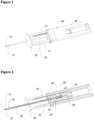
- Figure 1 and 2 illustrate one embodiment of part of the present invention.
- distal shall refer to the end of the device farthest away from the user, while proximal shall refer to the end of the device closest to the user.
- stabilizer 30 initially extends distally from holder 40 along the tract of needle 20, to provide a mechanism for automatically halting the forward movement of needle tip 22 and probe tip 52 upon penetration into a body cavity (e.g. peritoneal cavity).
- Holder 40 has one or more phalanges 49 that are resiliently biased medially, but when pushed laterally by probe holder 60 are caused to interact with grooves 34 on rods 32 so as to halt the movement of stabilizer 30 in respect to holder 40.
- probe holder 60 Biased by spring 80, in its distal position probe holder 60 extends tip 52 of probe 50 out distally from tip 22 of needle 20. Additionally, this pushes phalange(s) 49 laterally to reversibly lock with grooves 34 and inhibit the movement of rod(s) 32 and thus stabilizer 30 in relation to the rest of device 10.
- probe tip 52 When needle 20 pierces the skin and enters into a cavity (e.g. peritoneal cavity), probe tip 52 to moves proximally in reference to needle tip 22. This causes holder 60 on probe 50 to also move proximally in reference to housing 40. This in turn allows phalanges 49, which are biased medially, to move medially and thus unlock from groove(s) 34 to allow rod 32 and thus stabilizer 30 to move in relation to housing 40.
- phalanges 49 which are biased medially, to move medially and thus unlock from groove(s) 34 to allow rod 32 and thus stabilizer 30 to move in relation to housing 40.
- spring 80 is free to move probe tip 52 distally in reference to needle tip 22, which allows holder 60 to move distally in reference to housing 40 and thus forces phalange(s) 49 laterally to again lock with grooves 34 and inhibit the movement of rod(s) 32 and thus stabilizer 30 in relation to housing 40. This, in turn, prevents needle tip 22 from moving further into the cavity, thus minimizing the chances of injuring vital structures.
- there is an airtight seal between probe 50 and housing hole 42 which may include the use of an O-ring and/or other sealing mechanisms.
- connection port 90 Reversibly or irreversibly connected to connection port 90, in some embodiments via standard luer lock, is a standard, high-pressure, tapered, or otherwise configured tube (not shown) from a delivery container, such as one shown in Figures 3, 4 , or 5 and described below.
- polymer formulation e.g. as a partial or complete liquid, or as foam
- polymer formulation travels through the connection tubing, and proceeds through the continuous pathway within the portion of the device shown in Figures 1 and 2 to be dispensed into the body cavity of interest.
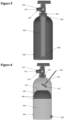
- FIG. 3 illustrates a delivery container suitable for holding and delivery of the synthetic polymer formulation under one embodiment.
- the body of the delivery container consists of a pressurizable vessel 102 with a closure 112 containing a suitable release valve mechanism 114.
- the vessel, closure, and release valve can withstand an internal pressure (e.g. up to 200 pounds per square inch).
- the vessel is divided into an upper space 110, and a lower space 104, by a freely-moving piston 108.
- the piston 108 bears a pressure-tight seal 106 that prevents movement of liquid or gas from one space into the other.
- the seal 106 may be integral to the piston or may be created using a separate sealing component such as an O-ring.
- the release valve mechanism opens into an exit nozzle 116 which has an appropriate means (illustrated in Figure 3 as a male threaded connector 118 as an example) to attach the delivery container to a suitable delivery device (e.g. the device illustrated in Figures 1 and 2 via the aforementioned tubing and described above).
- the vessel also contains a gas-tight valve 120 or other similar means to allow a gas or volatile liquid to be introduced into the lower space 104.
- the upper space 110 contains the synthetic polymer formulation optionally mixed with a first compressed gas or volatile liquid (the "expanding gas") which causes the synthetic polymer formulation to foam when released from the delivery container.
- the lower space 104 contains a second gas or other highly volatile liquid (the "driving gas").
- the driving gas may be either be introduced into the lower space of the delivery container prior to use (e.g. at the time the container is initially filled with the synthetic polymer formulation) or it may be introduced into the lower space of the delivery container at the time of use (e.g. by connection to an external source such as compressed air supply or a pressurized gas cylinder).
- a key feature of this embodiment is that the driving gas in the lower space 104 is physically separated from the synthetic polymer formulation in the upper space 110.
- An advantage of this embodiment is that the pressure of the driving gas in the lower space 104 can be arranged to always exceed the pressure of the expanding gas in the upper space 110 until the contents of upper space 110 have been sufficiently discharged from the container, thereby maintaining the expanding gas in a compressed form until the synthetic polymer formulation has been released via the valve mechanism 114 into the exit nozzle 116.
- Figure 4 illustrates a delivery container suitable for holding and delivery of the synthetic polymer formulation under another embodiment.
- the body of the delivery container consists of a pressurizable vessel 130 with a closure 132 containing a suitable release valve mechanism 140 and rated for an internal pressure (e.g. up to 200 pounds per square inch).
- a flexible, gas impermeable bag 134 is attached with a gas-tight seal 136 to the closure 132, thereby separating the inside of the vessel into two separate spaces.
- One of said spaces is the interior of the bag 134; this "internal space” communicates with the exit nozzle 142 via the release valve mechanism 140.
- the other space, "external space” 138 is the actual or potential space between the outside of the bag 134 and the inside wall of the vessel 130.
- the release valve mechanism 140 opens into an exit nozzle 142 with an appropriate means (illustrated in Figure 4 as a male threaded connector 144 as an example) which allows the delivery container to be attached to a suitable delivery device such as described above.
- the vessel also contains a gas-tight valve or 146 or other similar means, such as a gas-tight elastomeric septum, to allow a gas or volatile liquid to be introduced into the external space 138.
- the bag 134 contains the synthetic polymer formulation optionally mixed with an expanding gas which causes the synthetic polymer formulation to foam when released from the delivery container.
- the external space 138 contains a second gas or other highly volatile liquid (the "driving gas").
- the driving gas may be introduced into the external space of the delivery container 138 via the valve or septum or other means 146 either prior to use, (e.g. at the time the container is initially filled with the synthetic polymer formulation) or alternatively at the time of use (e.g. by connection to an external source such as compressed air supply or a pressurized gas cylinder).
- This embodiment shares a key feature to that shown in Figure 3 , namely that the synthetic polymer formulation expanding gas is physically separated from the driving gas, such that the pressure of the driving gas outside of the bag can be arranged to always exceed the pressure of the expanding gas in the upper space until the contents of the discharged from the container, thereby maintaining the expanding gas in a compressed form until the synthetic polymer formulation has been released via the valve mechanism 140 into the exit nozzle 142.
- Figure 5 illustrates a container suitable for holding and delivery of the synthetic polymer formulation under another embodiment.
- the body of the delivery container consists of a vessel 160 with a closure 162 containing a suitable release valve mechanism 170 and can hold an internal pressure (e.g. up to 200 pounds per square inch).
- the release valve mechanism opens into an exit nozzle 172 with an appropriate means (illustrated in Figure 5 as a male threaded connector 174 as an example) which allows the delivery container to be attached to a suitable delivery device such as described above.
- a "dip-tube" 164 is attached via a gas-tight connection 166 to the closure 162 and extends towards the bottom of the vessel.
- the dip tube is designed to ensure that the lower end 168 always remains open during use, by using a tube slightly shorter than the internal height of the vessel below the closure, or by making a cut-out in or near to the end of the tube.
- the vessel contains the synthetic polymer formulation mixed with a compressed gas or volatile liquid.
- the compressed gas or volatile liquid when the release valve is opened, the compressed gas or volatile liquid initially expands or evaporates to expel the synthetic polymer solution from the container, and subsequently also causes the synthetic polymer solution to foam once it has been released via the valve mechanism 170 and enters the exit nozzle 172.
- this embodiment does not employ a physically separate expanding gas and driving gas. Instead a compressed gas or volatile liquid either contained within or in contact with the synthetic polymer formulation propels the formulation out of the delivery container.
- the compressed gas or volatile liquid causes the synthetic polymer formulation to foam after it has been dispensed from the container.
- the synthetic polymer formulation is delivered by opening the releasing valve by pushing a button, pulling a tab, or other manually-activated releasing mechanism.
- the delivery of the synthetic polymer formulation may be controlled automatically or semi-automatically by sensing when the probe has entered the cavity space, or in response to absolute pressure or changes in pressure within the cavity (e.g. by a sensor mechanism within the cavity itself or connected to the dispersal path earlier within the system).
- Such control mechanisms may be used to initiate the delivery of the polymer formulation, to override user-activated delivery under some circumstances (e.g. stopping delivery after a certain amount of time), and/or to control the polymer formulation flow rate or the maximum or minimum pressure developed within the body cavity (e.g. through a regulator mechanism).
- Such control mechanisms may also allow for adjustment of the pressure developed within the body cavity by administering additional polymer formulation or by venting any excess, either manually or in an automated manner under feedback control.
- valves e.g. control, regulator, pressure, vent, relief, head pressure, dispensing, one-way, poppet
- valves e.g. control, regulator, pressure, vent, relief, head pressure, dispensing, one-way, poppet
- Examples include both single and double stage regulators. They can be an integral device with an output pressure setting, a restrictor and a sensor all in the one body, or consist of a separate pressure sensor, controller and flow valve.
- main on-off valve e.g. ball valve
- the delivery container is partially or completely integrated into the delivery device, to minimize parts.
- a delivery container ( Figure 6 ) was constructed having clear walls to enable direct visualization of the polymer formulation.
- the delivery container shown in Figure 6 has the same design and components as illustrated and described in Figure 3 , with the addition of a stirring paddle 122 within the upper space attached to a rotating shaft 126, which communicates with the exterior of the container via a pressure-tight rotary seal 124.
- This arrangement allows the synthetic polymer formulation and the compressed gas or volatile liquid (the expanding gas) to be added to the container sequentially and then mechanically stirred and mixed together within the container by rotating the shaft 126.
- the general method for preparation of every formulation was as follows:
- Reverse osmosis purified water was chilled in a laboratory refrigerator to approximately 4°C before use.
- the required mass of chilled water was first weighed into a suitable laboratory pail and the calculated amount of poloxamer was then slowly added to the pail under constant mixing using a high-shear mechanical stirrer. After all the poloxamer had been added, a lid was placed onto the pail and it was transferred to a refrigerator. Periodically, the pail was removed from the refrigerator and the contents were re-mixed using the mechanical stirrer, after which it was returned to the refrigerator. The process was repeated until the poloxamer was completely dissolved, which required up to 2 days for the highest concentration solutions.
- Poloxamer solution Both delivery container valves 114 (upper valve) and 120 (lower valve) were opened and positive air pressure was applied to the upper valve to cause the piston to move to the bottom of the container. The delivery container was placed on a balance and tared. Approximately 450 mL of the cold poloxamer solution (at approximately 4°C) was then added to the upper space 110 of the delivery container through the upper valve, and the total mass of the added solution was recorded. A positive air pressure was then applied via the lower valve to move the piston upwards sufficiently to expel any remaining air from the upper space, after which both valves were closed.
- 1,1,1,2-tetrafluoroethane A pressurized cylinder of 1,1,1,2-tetrafluoroethane (TFE) was attached to the exit nozzle 116 via a length of flexible high-pressure tubing, and the delivery container was replaced on the balance and tared again. The upper valve of the delivery container was then opened, and liquid 1,1,1,2-tetrafluoroethane was dispensed slowly from the pressurized cylinder until the desired mass of TFE had been transferred into the delivery container. The upper valve was then closed, and the delivery container was pressurized to 100 psi with air via the lower valve to ensure that all the added TFA, which has a vapor pressure of 71 psi at 20°C, was compressed back into liquid form.
- TFE 1,1,1,2-tetrafluoroethane
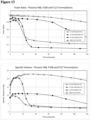
- both the cold poloxamer solution and the TFE were added, they were mixed together under pressure using the stirring paddle 122 attached to an electric drill. During mixing, care was taken to ensure the temperature always remained below the gelation temperature for the species of poloxamer being used and its concentration in solution ( Figure 17 ).
- the two components both initially clear liquids, rapidly blended together to form a macroscopically homogeneous emulsion that has a much higher viscosity than either individual component. (Note that the contents remained below the gelation temperature of the poloxamer solution throughout the mixing process). Mixing appeared to be complete within 2-3 minutes; no further change was noticeable with prolonged stirring.
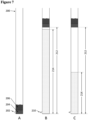
- the volume and stability of the foam produced by each foaming polymer formulation was assessed using a simple foam height testing apparatus as shown in Figures 7A, 7B, and 7C .
- the apparatus ( Figure 7A ) consists of a vertically mounted 120 cm high and 6.06 cm internal diameter clear polycarbonate tube 200. The lower end of the tube is sealed except for a 1 cm diameter input port 202 through which the foam is introduced.
- the tube contains a piston of negligible mass 204 which seals the tube, but which can move freely up and down.
- a column of water 206 is layered above the piston, the height of which provides a reproducible and easily measured pressure against the expansion of the foam.
- the delivery container was attached via a flexible tube to the port 202 and the foaming polymer formulation was introduced into the testing apparatus after which the input port was closed ( Figure 7B ).
- the precise mass of foaming polymer formulation added to each tube was measured by weighing the delivery container before and after the polymer formulation was dispensed. After the initial expansion, the foam column slowly collapsed leaving just expanding gas in the upper region of the tube as shown in Figure 7C .
- the Foam Ratio which is the height of foam column divided by the total piston displacement (i.e., the height of the foam column plus the height of the gas-filled space above the foam)
- the Specific Volume which is the volume of the foam column (i.e., the height of the foam column x the cross-sectional area of the tube) divided by the total mass of the polymer formulation added to the tube.
- Test Design The principal goal of the experiments presented herein was to evaluate the potential utility of the foaming polymer formulations to control noncompressible hemorrhage within a specific body cavity (i.e. noncompressible intra-abdominal hemorrhage within the peritoneal cavity). Therefore, the height of the water column (and hence the pressure resisting the expansion of the foam) was set at approximately 13.5 cm to simulate the upper limit of normal intra-abdominal pressure (i.e. approximately 10 mmHg). For all studies TFA was used as the expanding gas. Each polymer formulation was evaluated in triplicate.
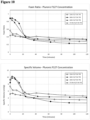
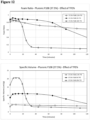
- Example results from the foam height testing are shown in graphical form in Figures 8 - 13 and are summarized numerically in Figure 16 .
- the upper graph shows the Foam Ratio (FR) over time for a two-hour period.
- FR Peak shows the proportion of the expanding gas within the foam at any time point
- FR Peak shows the proportion of gas that is initially incorporated into the foam
- FR 60 is a measure of the collapse of the foam over time.
- the percentage ratio of FR 60 to FR Peak relates the height of the foam after 60 minutes compared to the peak foam height and is therefore an indicator of foam stability (Foam Stability Index, FSI).
- the lower panel of each Figure shows the Specific Volume (SV) of the foam over the two-hour observation period.
- SV is a measure of the total volume of the foam normalized for the mass of the formulation that was dispensed and is therefore a function of both the overall volume of the expanding gas and the proportion of the expanding gas that is contained within the foam at any given time.
- the SV will increase slightly over time as the system reaches equilibrium temperature and the total gas volume continues to slowly expand.
- the FR is a ratio of the total foam volume to the total gas volume and therefore is not affected in the same way by changes in temperature).
- the maximum Specific Volume (SV Peak ) and Specific Volume after 60 minutes (SV 60 ) are shown in Figure 16 .
- Figure 8 shows the results for Pluronic F68 solutions at three different concentrations, 37.5%, 41%, and 45% w/w. After dispensing, each formulation rapidly filled the tube with a fine-textured foam containing small evenly-sized bubbles.
- the FR Peak values ( Figure 16 ) ranged from 0.94 to 0.96, indicating that 94% to 96% of the expanding gas was initially entrapped within the foam.
- the foams were stable and subsided only very slowly over the two-hour observation period, as evidenced by FR 60 values from 0.89 to 0.92, and a corresponding Foam Stability Index (FSI) of 92%-98%.
- the SV values were also similar for all three concentrations tested, ranging from 21 to 25.5 cm 3 /gram.
- FIG. 10 shows the results for Pluronic F127 solutions at four different concentrations, 25%, 30%, 34%, and 37.5% w/w blended with 5% by weight TFE.
- the lowest (25%) and highest (37.5%) concentrations produced foams that only partially filled the tube when first dispensed; for these concentrations the FR Peak values of 0.57 and 0.44 indicate that a large proportion of the TFE was not incorporated into the foam as it formed.
- the two intermediate concentrations, 30% and 34% produced a foam that initially filled most of the tube (FR Peak of 0.90 - 0.91) but which quickly collapsed.
- the Foam Stability Index for the 30% and 34% w/w Pluronic F127 formulations was 26% and 38% respectively, much lower than was observed for the Pluronic F68 formulations.
- the FSI was not calculated for the two formulations which failed to expand properly initially.
- the SV values observed for the Pluronic F127 solutions were consistent with the limited expansion and reduced stability of the foam as shown by the FR data, and do not provide significant further information.
- the SV Peak for the 10% TFE formulation was 11.4 cm 3 /g compared to 9.2 cm 3 /g for the 5% TFE formulation, indicating that only about 20% of the additional TFE had been incorporated into the foam.
- Figure 12 shows the data for Pluronic F108 at 37.5% w/w with different proportions of TFE in the blend - 2.5%, 5%, and 10%.
- Each formulation initially produced a (visually) good-quality foam which expanded to fill most of the tube.
- FR Peak ranged from 0.86 to 0.92.
- the foams remained stable for about 15 minutes.
- the 10% TFE foam collapsed quickly, reaching a FR of about 0.12 by 40 minutes.
- the 2.5% and 5% TFE foams subsided relatively slowly.
- the difference in stability is captured in the FSI values.
- the SV graphs show that each formulation initially expanded to approximately the expected volume based upon the TFE content: SV Peak was 4.2, 11.1, and 20.6 cm 3 /g for the 2.5%, 5%, and 10% TFE formulations respectively.
- Pluronic F68 formulations consistently produced a uniform and stable foam which captured and retained most of the expanding gas without significant collapse for at least two hours; these results were observed over a range of Pluronic F68 concentrations and a 2-fold difference in TFE content.
- Pluronic F108 formulations behaved in a similar manner to Pluronic F68, but with one notable difference: although the foam produced using 10% TFE as the expanding gas initially reached approximately the same SV, it collapsed more quickly for F108 than F68 (30 minutes vs. >2 hours). Foams produced using Pluronic F127 also collapsed within 30 minutes; these foams also had a lower peak SV than was achieved with F68 or F108.
- a foaming Pluronic F68-based formulation was selected for evaluation as a potential interventional treatment in a porcine model of acute traumatic non-compressible abdominal hemorrhage.
- NCTH non-compressible torso hemorrhage
- the foaming Pluronic F68 formulation was evaluated in six anesthetized adult male Yorkshire swine. All animals were splenectomized prior to the study, and a pressure sensor was placed laparoscopically into the abdomen to allow monitoring the intra-abdominal pressure (IAP).
- IAP intra-abdominal pressure
- the injured liver was allowed to bleed for 10 minutes prior to intervention.
- the foaming Pluronic F68 formulation was delivered to the abdominal cavity via a laparoscopic trocar until the IAP reached 60mmHg, which was achieved in approximately 1-2 minutes.
- the foaming Pluronic F68 formulation was found to have formed a thick viscous translucent gel in contact with the intra-abdominal organs.
- the gel did not interfere with the visibility of, or access to, the damaged organ and was easily removed by hand or by irrigation with cold liquid.
- Non-foaming reverse phase Pluronic solutions have been successfully employed and commercialized for control or prevention of bleeding from small blood vessels during surgical procedures, and their wider use has also been proposed for the emergency management of other types of hemorrhage, such as bleeding from deep wounds or within a body cavity, which can be difficult to control by other means such as direct compression.
- all reverse phase solutions have certain inherent characteristics which have hitherto limited their suitability for emergency use and/or for control of severe hemorrhage:
- the foaming formulations described herein also require a much smaller amount of the Pluronic solution to completely fill the wound or body cavity than would be needed for a non-foaming solution.
- a suitable foaming polymer solution can expand at least 25-fold after it is dispensed. Consequently, the total heat capacity of the foam will be much lower than an equivalent final volume of a non-foaming solution, and therefore the amount of heat absorbed by the foamed polymer solution will also be proportionately lower.
- the foam has a thermal insulating effect because it greatly reduces mixing due to convection, which would otherwise occur if the solution was in liquid form. The insulating effect will tend to retain the heat in the layer of foam in contact with, or in close proximity to, the internal surfaces of the cavity, thereby promoting gelation precisely where it is required, while slowing the rate of heat transfer to the bulk of the polymer solution.
- the system may also contain a means for blocking exit of the foam from part of the cavity (e.g. an inflatable balloon, packing) to allow for use.
- a means for blocking exit of the foam from part of the cavity e.g. an inflatable balloon, packing
- the synthetic polymer formulation could be inserted into a cavity via other means (e.g. simple tubing, naked needle, Veress needle, open surgical approach, direct spray) and that the synthetic polymer formulation could be used without the delivery device or the delivery device could be used to deliver other materials.
- Examples provide a pressurized therapeutic composition configured to be stored in a valved container designed to maintain the composition under pressure and dispense the composition upon opening the valve thereof, the composition comprising a copolymer solution of a copolymer of ethylene oxide and propylene oxide in an aqueous solution combined with an organic liquefied gas, wherein said organic liquified gas is dissolved in or evenly dispersed throughout the copolymer solution so as to cause the copolymer solution to foam after the composition is dispensed from the container.
- the copolymer has an average molecular mass of about 1 kg/mol to about 50 kg/mol, and a mass ratio of ethylene oxide to propylene oxide of between 25:75 to 95:5.
- the copolymer of ethylene oxide and propylene oxide is a poloxamer selected from the group consisting of: P188, P237, P338 and P407; and the concentration of the poloxamer in the aqueous solution is between about 25% and about 50% w/w.
- the copolymer of ethylene oxide and propylene oxide is poloxamer P188; and the concentration of poloxamer in the aqueous solution is between about 40% and about 50% w/w.
- the organic liquified gas comprises between about 2.5% and about 20% of the total mass of the composition.
- the organic liquified gas is a hydrocarbon.
- the organic liquified gas is carbon dioxide.
- the organic liquified gas is a haloalkane or a blend of haloalkanes.
- the organic liquified gas is a hydrofluorocarbon or a blend of hydrofluorocarbons.
- the hydrofluorocarbon is 1,1,1,2-Tetrafluoroethane or a blend of 1,1,1,2-Tetrafluoroethane with other hydrofluorocarbons.
- Examples provide a method for delivering a therapeutic thermoreversible composition to the body, comprising: preparing a thermoreversible aqueous polymer solution comprising a suitable polymer at a concentration that will give a predetermined gelation temperature; blending the thermoreversible aqueous polymer solution with a compatible liquefied gas at a pressure that exceeds the vapor pressure of the liquified gas; transferring the thermoreversible polymer solution/liquified gas blend into a valved container which maintains the blend at a pressure higher than the vapor pressure of the liquified gas; opening the valve on the container, to dispense the thermoreversible polymer solution/liquified gas blend; wherein adiabatic expansion of the liquefied gas rapidly cools the thermoreversible polymer solution to below the predetermined gelation temperature, causing the thermoreversible polymer solution to change from a highly viscous gel to a flowable liquid while being dispensed, thereby eliminating the need to pre-chill
- the compatible liquefied gas is selected from the group consisting of: nitrous oxide, carbon dioxide, hydrocarbons, and haloalkanes.
- the thermoreversible aqueous polymer solution contains a polymer which causes the thermoreversible composition to become a foam after it is dispensed.
- the thermoreversible aqueous polymer solution contains one or more poloxamers selected from the group consisting of: P188, P237, P338 and P407; and the total concentration of poloxamers in the aqueous solution is between about 25% and about 50% w/w.
- thermoreversible aqueous polymer solution contains poloxamer P188 at a concentration of between about 40% and about 50% w/w.
- an apparatus is attached to the valved container to allow the thermoreversible composition to be delivered into a body cavity or a penetrating wound.
- thermoreversible composition is delivered as a foam into a body cavity or a penetrating wound rather than as a liquid, such that the total amount of the aqueous polymer solution required to fill the body cavity or penetrating wound with the thermoreversible composition is significantly reduced.
- thermoreversible composition is delivered as a foam into a body cavity or a penetrating wound rather than as a liquid, such that a controllable and measurable positive pressure is exerted by the composition against the surfaces of the organs within the body cavity or against the tissue surfaces within a wound.
- controllable and measurable positive pressure exerted by the composition within the body cavity or penetrating wound resists the flow of blood from damaged or severed blood vessels to provide a means to control hemorrhage in sites which are not amenable to direct physical compression.
- the composition exerts a controllable and measurable positive pressure within the abdomen or penetrating wound which resists the flow of blood from damaged or severed blood vessels; and upon contact with the tissue surfaces, the temperature of the thermoreversible composition increases, causing the composition to transform from a flowable liquid into a highly viscous gel which also resists the flow of blood from damaged or severed blood vessels to provide a means to control incompressible hemorrhage.
- thermoreversible composition is delivered as a foam into the abdominal cavity; the thermoreversible composition exerts a controllable and measurable positive pressure within the abdomen which resists the flow of blood from damaged or severed blood vessels; and upon contact with the abdominal walls and organs, the temperature of the thermoreversible composition increases, causing the composition to transform from a flowable liquid into a highly viscous gel which also resists the flow of blood from damaged or severed blood vessels toprovide a means to control incompressible abdominal hemorrhage.
- a method for controlling hemorrhage inside a body cavity or penetrating wound by delivering a foaming composition into said body cavity or penetrating wound, in which; the foaming composition is sterile, biocompatible, and substantially chemically inert; the foaming composition is provided as a single component that is ready to use, and does not need to be either combined with a second component or cooled by external means before or during delivery to the body; and the foaming composition does not solidify after delivery but rather forms an aqueous gel which can be easily removed by hand, by suction, and by rinsing with water or saline, if surgical intervention is subsequently required.
- the foaming composition may be partially or fully removed by peritoneal lavage; or the foaming composition may be left in situ to be absorbed or resorbed by the body.
- the foaming composition comprises a thermoreversible aqueous polymer solution blended with a liquified gas; the foaming composition is maintained under pressure in substantially liquid form until delivered to the body, whereupon a decrease in pressure causes the foaming composition to expand into a foam; and the thermoreversible aqueous polymer solution undergoes a phase change from a flowable liquid to a viscous gel after coming into contact with the body.
- thermoreversible aqueous polymer solution comprises a polymer that is FDA approved as pharmaceutical excipient and is suitable for delivery of drugs and other active therapeutic agents to the body. In some examples the thermoreversible aqueous polymer solution comprises one or more active therapeutic agents to the body. In some examples the thermoreversible aqueous polymer solution comprises a procoagulant agent. In some examples the thermoreversible aqueous polymer solution comprises an antibacterial agent.
Landscapes
- Health & Medical Sciences (AREA)
- Life Sciences & Earth Sciences (AREA)
- Chemical & Material Sciences (AREA)
- Veterinary Medicine (AREA)
- Animal Behavior & Ethology (AREA)
- General Health & Medical Sciences (AREA)
- Public Health (AREA)
- Epidemiology (AREA)
- Surgery (AREA)
- Engineering & Computer Science (AREA)
- Materials Engineering (AREA)
- Medicinal Chemistry (AREA)
- Pharmacology & Pharmacy (AREA)
- Dispersion Chemistry (AREA)
- Molecular Biology (AREA)
- Chemical Kinetics & Catalysis (AREA)
- Cardiology (AREA)
- Nuclear Medicine, Radiotherapy & Molecular Imaging (AREA)
- Medical Informatics (AREA)
- Heart & Thoracic Surgery (AREA)
- Biomedical Technology (AREA)
- General Chemical & Material Sciences (AREA)
- Birds (AREA)
- Oil, Petroleum & Natural Gas (AREA)
- Inorganic Chemistry (AREA)
- Proteomics, Peptides & Aminoacids (AREA)
- Biophysics (AREA)
- Medicinal Preparation (AREA)
- Infusion, Injection, And Reservoir Apparatuses (AREA)
- External Artificial Organs (AREA)
- Pharmaceuticals Containing Other Organic And Inorganic Compounds (AREA)
Applications Claiming Priority (2)
| Application Number | Priority Date | Filing Date | Title |
|---|---|---|---|
| US201862643846P | 2018-03-16 | 2018-03-16 | |
| EP19163317.1A EP3539571B1 (fr) | 2018-03-16 | 2019-03-15 | Systèmes et procédés relatifs à des applications médicales de formulations de polymère synthétique |
Related Parent Applications (2)
| Application Number | Title | Priority Date | Filing Date |
|---|---|---|---|
| EP19163317.1A Division-Into EP3539571B1 (fr) | 2018-03-16 | 2019-03-15 | Systèmes et procédés relatifs à des applications médicales de formulations de polymère synthétique |
| EP19163317.1A Division EP3539571B1 (fr) | 2018-03-16 | 2019-03-15 | Systèmes et procédés relatifs à des applications médicales de formulations de polymère synthétique |
Publications (2)
| Publication Number | Publication Date |
|---|---|
| EP4233914A2 true EP4233914A2 (fr) | 2023-08-30 |
| EP4233914A3 EP4233914A3 (fr) | 2023-10-18 |
Family
ID=65818255
Family Applications (2)
| Application Number | Title | Priority Date | Filing Date |
|---|---|---|---|
| EP19163317.1A Active EP3539571B1 (fr) | 2018-03-16 | 2019-03-15 | Systèmes et procédés relatifs à des applications médicales de formulations de polymère synthétique |
| EP23168595.9A Pending EP4233914A3 (fr) | 2018-03-16 | 2019-03-15 | Systèmes et procédés relatifs à des applications médicales de formulations de polymère synthétique |
Family Applications Before (1)
| Application Number | Title | Priority Date | Filing Date |
|---|---|---|---|
| EP19163317.1A Active EP3539571B1 (fr) | 2018-03-16 | 2019-03-15 | Systèmes et procédés relatifs à des applications médicales de formulations de polymère synthétique |
Country Status (2)
| Country | Link |
|---|---|
| US (3) | US11207060B2 (fr) |
| EP (2) | EP3539571B1 (fr) |
Families Citing this family (4)
| Publication number | Priority date | Publication date | Assignee | Title |
|---|---|---|---|---|
| US12239572B2 (en) | 2021-07-29 | 2025-03-04 | Critical Innovations, LLC | Wound treatment device |
| CN114870066A (zh) * | 2022-04-21 | 2022-08-09 | 田耿家 | 一种用于慢性创面治疗的功能性敷料、其制剂及制法 |
| EP4321116B1 (fr) * | 2022-08-11 | 2026-01-14 | Critical Innovations, LLC | Système de voie d'accès percutané |
| US12410293B2 (en) | 2022-11-07 | 2025-09-09 | Critical Innovations Llc | Systems and methods relating to medical applications of inverse thermosensitive polymer foam formulations |
Citations (31)
| Publication number | Priority date | Publication date | Assignee | Title |
|---|---|---|---|---|
| US4474752A (en) | 1983-05-16 | 1984-10-02 | Merck & Co., Inc. | Drug delivery system utilizing thermosetting gels |
| US6316011B1 (en) | 1998-08-04 | 2001-11-13 | Madash, Llc | End modified thermal responsive hydrogels |
| US20020122771A1 (en) | 2000-09-23 | 2002-09-05 | Troy Holland | Spray hydrogel wound dressings |
| US20030095945A1 (en) | 1999-10-29 | 2003-05-22 | Children's Hospital Los Angeles | Bone hemostasis method and materials |
| US20030203044A1 (en) | 2002-04-26 | 2003-10-30 | Moravec Anthony J. | Wound-treating gel |
| US20040013715A1 (en) | 2001-09-12 | 2004-01-22 | Gary Wnek | Treatment for high pressure bleeding |
| US20050008610A1 (en) | 2003-03-24 | 2005-01-13 | Alexander Schwarz | Temporary embolization using inverse thermosensitive polymers |
| US20050147585A1 (en) | 2003-11-06 | 2005-07-07 | Pluromed, Inc. | Internal clamp for surgical procedures |
| US20060100370A1 (en) | 2003-02-12 | 2006-05-11 | Wellisz Tadeusz Z | Random and non-random alkylene oxide polymer alloy compositions |
| US20060193899A1 (en) | 1998-08-14 | 2006-08-31 | Incept Llc | Methods of using in situ hydration of hydrogel articles for sealing or augmentation of tissue or vessels |
| US20070191768A1 (en) | 2006-02-13 | 2007-08-16 | Fossa Medical, Inc. | Methods and Apparatus for Temporarily Occluding Body Lumens |
| US20080031847A1 (en) | 2005-12-22 | 2008-02-07 | Pluromed, Inc. | Methods and kits for treating lacerations and puncture wounds using inverse thermosensitive polymers |
| US20080181952A1 (en) | 2006-12-11 | 2008-07-31 | Pluromed, Inc. | Perfusive Organ Hemostasis |
| US20080208163A1 (en) | 2007-02-22 | 2008-08-28 | Pluromed, Inc. | Use of Reverse Thermosensitive Polymers to Control Biological Fluid Flow Following a Medical Procedure |
| US20090041824A1 (en) | 2007-08-07 | 2009-02-12 | Arsenal Medical, Inc. | Method and apparatus for composite drug delivery medical devices |
| US20090286886A1 (en) | 2006-05-22 | 2009-11-19 | Fisher Timothy C | Resorbable polymer compositions for use in medicine, dentistry, and surgery |
| US20110087207A1 (en) | 2008-02-29 | 2011-04-14 | Pluromed, Inc. | Local embolization using thermosensitive polymers |
| US20110202016A1 (en) | 2009-08-24 | 2011-08-18 | Arsenal Medical, Inc. | Systems and methods relating to polymer foams |
| US20110294760A1 (en) | 2009-06-01 | 2011-12-01 | Tyrx Pharma, Inc. | Compositions and Methods for Preventing Sternal Wound Infections |
| US20120107439A1 (en) | 2009-08-24 | 2012-05-03 | Arsenal Medical, Inc. | In situ forming hemostatic foam implants |
| US20120265287A1 (en) | 2009-08-24 | 2012-10-18 | Arsenal Medical, Inc. | In-Situ Forming Foams for Treatment of Aneurysms |
| US20130110066A1 (en) | 2011-11-01 | 2013-05-02 | Arsenal Medical | Foam and Delivery System for Treatment of Postpartum Hemorrhage |
| US20130317418A1 (en) | 2009-08-24 | 2013-11-28 | Toby Freyman | In-situ Forming foams with outer layer |
| US8668899B2 (en) | 2009-11-13 | 2014-03-11 | University Of Maryland, College Park | Advanced functional biocompatible foam used as a hemostatic agent for compressible and non-compressible acute wounds |
| US8828050B2 (en) | 2009-05-04 | 2014-09-09 | Oregon Biomedical Engineering Institute | Hemorrhage control devices and methods |
| US20140271531A1 (en) | 2013-03-15 | 2014-09-18 | Toby Freyman | In-Situ Forming Foam for Endoscopic Lung Volume Reduction |
| US20140271533A1 (en) | 2013-03-15 | 2014-09-18 | Toby Freyman | In-Situ Forming Foam for the Treatment of Vascular Dissections |
| US20140316012A1 (en) | 2013-03-15 | 2014-10-23 | Toby Freyman | In-Situ Forming Foams for Embolizing or Occluding a Cavity |
| US20160256170A1 (en) | 2012-06-25 | 2016-09-08 | Rany Busold | Systems and methods for the treatment of aneurysms |
| US20160271293A1 (en) | 2015-03-17 | 2016-09-22 | Gregory T. Zugates | Methods and materials to treat junctional and pelvic hemorrhage |
| US9616088B2 (en) | 2013-03-13 | 2017-04-11 | Gel-E, Inc. | Advanced functional biocompatible polymer putty used as a hemostatic agent for treating damaged tissue and cells |
Family Cites Families (14)
| Publication number | Priority date | Publication date | Assignee | Title |
|---|---|---|---|---|
| GB9424562D0 (en) | 1994-12-06 | 1995-01-25 | Giltech Ltd | Product |
| US8377114B2 (en) * | 1999-08-09 | 2013-02-19 | Cardiokinetix, Inc. | Sealing and filling ventricular partitioning devices to improve cardiac function |
| GB0127822D0 (en) * | 2001-11-20 | 2002-01-09 | Maelor Pharmaceuticals Ltd | Medical dressings |
| US7229433B2 (en) * | 2003-09-08 | 2007-06-12 | Mullen Gary J | Apparatus for treating pneumothorax and/or hemothorax |
| EP2120561A4 (fr) | 2007-02-19 | 2012-11-21 | Plurogen Therapeutics Inc | Compositions pour traiter des biofilms, et procédés pour leur utilisation |
| CA2686563A1 (fr) | 2007-05-11 | 2008-11-20 | Aeris Therapeutics, Llc | Therapie de reduction de volume de poumon utilisant des polymeres non naturels reticules |
| EP2242476A2 (fr) | 2008-01-14 | 2010-10-27 | Foamix Ltd. | Compositions pharmaceutiques pouvant mousser de poloxamère avec des agents actifs et/ou des cellules thérapeutiques, et utilisations |
| JP5600503B2 (ja) | 2010-07-06 | 2014-10-01 | 株式会社日立国際電気 | 統計解析方法、基板処理システムおよびプログラム |
| US10857100B2 (en) | 2014-04-01 | 2020-12-08 | Tdl Innovations Llc | Methods and compositions for administering an active agent to the pleura of a patient |
| WO2015153540A2 (fr) | 2014-04-01 | 2015-10-08 | TDL Innovations, LLC | Procédés et compositions pour l'administration d'un agent actif à une plèvre d'un patient |
| AU2016209327A1 (en) | 2015-01-20 | 2017-08-10 | Plurogen Therapeutics, Llc | Compositions and methods of treating microbes |
| US12064510B2 (en) | 2016-12-16 | 2024-08-20 | TDL Innovations, LLC | Medical foam for delivery of an active agent |
| WO2021158713A1 (fr) | 2020-02-03 | 2021-08-12 | Tdl Innovations Llc | Compositions de mousse pour le traitement du cancer |
| CA3216267A1 (fr) | 2021-04-22 | 2022-10-27 | Glenn W. Laub | Compositions de mousse pour le traitement d'infections a clostridioides difficile |
-
2019
- 2019-03-15 US US16/354,418 patent/US11207060B2/en active Active
- 2019-03-15 EP EP19163317.1A patent/EP3539571B1/fr active Active
- 2019-03-15 EP EP23168595.9A patent/EP4233914A3/fr active Pending
-
2021
- 2021-12-13 US US17/549,432 patent/US12059141B2/en active Active
-
2024
- 2024-07-01 US US18/760,421 patent/US20240350128A1/en active Pending
Patent Citations (34)
| Publication number | Priority date | Publication date | Assignee | Title |
|---|---|---|---|---|
| US4474752A (en) | 1983-05-16 | 1984-10-02 | Merck & Co., Inc. | Drug delivery system utilizing thermosetting gels |
| US6316011B1 (en) | 1998-08-04 | 2001-11-13 | Madash, Llc | End modified thermal responsive hydrogels |
| US20060193899A1 (en) | 1998-08-14 | 2006-08-31 | Incept Llc | Methods of using in situ hydration of hydrogel articles for sealing or augmentation of tissue or vessels |
| US20030095945A1 (en) | 1999-10-29 | 2003-05-22 | Children's Hospital Los Angeles | Bone hemostasis method and materials |
| US8497408B2 (en) | 2000-09-12 | 2013-07-30 | Virginia Commonwealth University | Treatment for high pressure bleeding |
| US20020122771A1 (en) | 2000-09-23 | 2002-09-05 | Troy Holland | Spray hydrogel wound dressings |
| US20040013715A1 (en) | 2001-09-12 | 2004-01-22 | Gary Wnek | Treatment for high pressure bleeding |
| US20030203044A1 (en) | 2002-04-26 | 2003-10-30 | Moravec Anthony J. | Wound-treating gel |
| US20060100370A1 (en) | 2003-02-12 | 2006-05-11 | Wellisz Tadeusz Z | Random and non-random alkylene oxide polymer alloy compositions |
| US20050008610A1 (en) | 2003-03-24 | 2005-01-13 | Alexander Schwarz | Temporary embolization using inverse thermosensitive polymers |
| US20050147585A1 (en) | 2003-11-06 | 2005-07-07 | Pluromed, Inc. | Internal clamp for surgical procedures |
| US20130158589A1 (en) | 2005-12-22 | 2013-06-20 | Pluromed, Inc. | Methods And Kits For Treating Lacerations And Puncture Wounds Using Inverse Thermosensitive Polymers |
| US20080031847A1 (en) | 2005-12-22 | 2008-02-07 | Pluromed, Inc. | Methods and kits for treating lacerations and puncture wounds using inverse thermosensitive polymers |
| US20070191768A1 (en) | 2006-02-13 | 2007-08-16 | Fossa Medical, Inc. | Methods and Apparatus for Temporarily Occluding Body Lumens |
| US8062282B2 (en) | 2006-02-13 | 2011-11-22 | Fossa Medical, Inc. | Methods and apparatus for temporarily occluding body openings |
| US20090286886A1 (en) | 2006-05-22 | 2009-11-19 | Fisher Timothy C | Resorbable polymer compositions for use in medicine, dentistry, and surgery |
| US20080181952A1 (en) | 2006-12-11 | 2008-07-31 | Pluromed, Inc. | Perfusive Organ Hemostasis |
| US20080208163A1 (en) | 2007-02-22 | 2008-08-28 | Pluromed, Inc. | Use of Reverse Thermosensitive Polymers to Control Biological Fluid Flow Following a Medical Procedure |
| US20090041824A1 (en) | 2007-08-07 | 2009-02-12 | Arsenal Medical, Inc. | Method and apparatus for composite drug delivery medical devices |
| US20110087207A1 (en) | 2008-02-29 | 2011-04-14 | Pluromed, Inc. | Local embolization using thermosensitive polymers |
| US8828050B2 (en) | 2009-05-04 | 2014-09-09 | Oregon Biomedical Engineering Institute | Hemorrhage control devices and methods |
| US20110294760A1 (en) | 2009-06-01 | 2011-12-01 | Tyrx Pharma, Inc. | Compositions and Methods for Preventing Sternal Wound Infections |
| US20110202016A1 (en) | 2009-08-24 | 2011-08-18 | Arsenal Medical, Inc. | Systems and methods relating to polymer foams |
| US20120107439A1 (en) | 2009-08-24 | 2012-05-03 | Arsenal Medical, Inc. | In situ forming hemostatic foam implants |
| US20130317418A1 (en) | 2009-08-24 | 2013-11-28 | Toby Freyman | In-situ Forming foams with outer layer |
| US20120265287A1 (en) | 2009-08-24 | 2012-10-18 | Arsenal Medical, Inc. | In-Situ Forming Foams for Treatment of Aneurysms |
| US8668899B2 (en) | 2009-11-13 | 2014-03-11 | University Of Maryland, College Park | Advanced functional biocompatible foam used as a hemostatic agent for compressible and non-compressible acute wounds |
| US20130110066A1 (en) | 2011-11-01 | 2013-05-02 | Arsenal Medical | Foam and Delivery System for Treatment of Postpartum Hemorrhage |
| US20160256170A1 (en) | 2012-06-25 | 2016-09-08 | Rany Busold | Systems and methods for the treatment of aneurysms |
| US9616088B2 (en) | 2013-03-13 | 2017-04-11 | Gel-E, Inc. | Advanced functional biocompatible polymer putty used as a hemostatic agent for treating damaged tissue and cells |
| US20140271531A1 (en) | 2013-03-15 | 2014-09-18 | Toby Freyman | In-Situ Forming Foam for Endoscopic Lung Volume Reduction |
| US20140271533A1 (en) | 2013-03-15 | 2014-09-18 | Toby Freyman | In-Situ Forming Foam for the Treatment of Vascular Dissections |
| US20140316012A1 (en) | 2013-03-15 | 2014-10-23 | Toby Freyman | In-Situ Forming Foams for Embolizing or Occluding a Cavity |
| US20160271293A1 (en) | 2015-03-17 | 2016-09-22 | Gregory T. Zugates | Methods and materials to treat junctional and pelvic hemorrhage |
Non-Patent Citations (3)
| Title |
|---|
| CLARKE, JR ET AL.: "Time to Laparotomy for Intra-abdominal Bleeding from Trauma Does Affect Survival for Delays Up to 90 Minutes", JOURNAL OF TRAUMA-INJURY INFECTION & CRITICAL CARE, vol. 52, no. 3, 2002, pages 420 - 425 |
| EASTRIDGE ET AL.: "Death on the battlefield (2001-2011): Implications for the future of combat casualty care", J TRAUMA ACUTE CARE SURG, vol. 73, no. 6 |
| JAMES D. ROSS PH D ET AL.: "A Laparoscopic Swine Model of Non-Compressible Torso Hemorrhage", J TRAUMA ACUTE CARE SURG, vol. 77 |
Also Published As
| Publication number | Publication date |
|---|---|
| US20200022688A1 (en) | 2020-01-23 |
| EP3539571A1 (fr) | 2019-09-18 |
| US12059141B2 (en) | 2024-08-13 |
| US20240350128A1 (en) | 2024-10-24 |
| EP3539571B1 (fr) | 2023-05-31 |
| US20220104798A1 (en) | 2022-04-07 |
| US11207060B2 (en) | 2021-12-28 |
| EP4233914A3 (fr) | 2023-10-18 |
Similar Documents
| Publication | Publication Date | Title |
|---|---|---|
| US12059141B2 (en) | Systems and methods relating to medical applications of synthetic polymer formulations | |
| US11298517B2 (en) | Advanced functional biocompatible foam used as a hemostatic agent for non-compressible acute wounds | |
| US10687795B2 (en) | Delivery system for in situ forming foams and methods of using the same | |
| US7731986B2 (en) | Therapeutic foam | |
| ES2804534T3 (es) | Espuma hemostática | |
| JP2010524543A (ja) | 医学的用途のフォーム材料およびその製造方法 | |
| US8048439B2 (en) | Therapeutic foam | |
| US20250368794A1 (en) | Systems and methods relating to medical applications of inverse thermosensitive polymer foam formulations | |
| US12064510B2 (en) | Medical foam for delivery of an active agent | |
| KR102707381B1 (ko) | 트롬빈을 포함하는 지혈제와 카복시메틸키토산 겔이 현장에서 혼합되어 사용되는 지혈용 의료기기 | |
| EP1890678B1 (fr) | Mousse thérapeutique sclérosante contenant du xenon | |
| US20220226625A1 (en) | Advanced functional biocompatible foam used as a hemostatic agent for acute wounds | |
| RU2607321C2 (ru) | Способ остановки внутреннего полостного кровотечения, саморасширяющаяся полиуретановая пена и устройство для осуществления способа | |
| RU2810584C1 (ru) | Термоуправляемая композиция для временной остановки кровотечений |
Legal Events
| Date | Code | Title | Description |
|---|---|---|---|
| PUAI | Public reference made under article 153(3) epc to a published international application that has entered the european phase |
Free format text: ORIGINAL CODE: 0009012 |
|
| STAA | Information on the status of an ep patent application or granted ep patent |
Free format text: STATUS: THE APPLICATION HAS BEEN PUBLISHED |
|
| AC | Divisional application: reference to earlier application |
Ref document number: 3539571 Country of ref document: EP Kind code of ref document: P |
|
| AK | Designated contracting states |
Kind code of ref document: A2 Designated state(s): AL AT BE BG CH CY CZ DE DK EE ES FI FR GB GR HR HU IE IS IT LI LT LU LV MC MK MT NL NO PL PT RO RS SE SI SK SM TR |
|
| REG | Reference to a national code |
Ref country code: DE Ref legal event code: R079 Free format text: PREVIOUS MAIN CLASS: A61K0047340000 Ipc: A61K0047240000 |
|
| PUAL | Search report despatched |
Free format text: ORIGINAL CODE: 0009013 |
|
| AK | Designated contracting states |
Kind code of ref document: A3 Designated state(s): AL AT BE BG CH CY CZ DE DK EE ES FI FR GB GR HR HU IE IS IT LI LT LU LV MC MK MT NL NO PL PT RO RS SE SI SK SM TR |
|
| RIC1 | Information provided on ipc code assigned before grant |
Ipc: A61K 47/34 20170101ALI20230914BHEP Ipc: A61K 8/04 20060101ALI20230914BHEP Ipc: A61K 9/12 20060101ALI20230914BHEP Ipc: A61K 47/24 20060101AFI20230914BHEP |
|
| P01 | Opt-out of the competence of the unified patent court (upc) registered |
Effective date: 20231030 |
|
| STAA | Information on the status of an ep patent application or granted ep patent |
Free format text: STATUS: REQUEST FOR EXAMINATION WAS MADE |
|
| 17P | Request for examination filed |
Effective date: 20240412 |
|
| RBV | Designated contracting states (corrected) |
Designated state(s): AL AT BE BG CH CY CZ DE DK EE ES FI FR GB GR HR HU IE IS IT LI LT LU LV MC MK MT NL NO PL PT RO RS SE SI SK SM TR |
|
| STAA | Information on the status of an ep patent application or granted ep patent |
Free format text: STATUS: EXAMINATION IS IN PROGRESS |
|
| 17Q | First examination report despatched |
Effective date: 20250207 |