EP4234015A2 - Verfahren zur behandlung von testosteronmangel - Google Patents
Verfahren zur behandlung von testosteronmangel Download PDFInfo
- Publication number
- EP4234015A2 EP4234015A2 EP23162149.1A EP23162149A EP4234015A2 EP 4234015 A2 EP4234015 A2 EP 4234015A2 EP 23162149 A EP23162149 A EP 23162149A EP 4234015 A2 EP4234015 A2 EP 4234015A2
- Authority
- EP
- European Patent Office
- Prior art keywords
- oil
- testosterone
- avg
- dose
- max
- Prior art date
- Legal status (The legal status is an assumption and is not a legal conclusion. Google has not performed a legal analysis and makes no representation as to the accuracy of the status listed.)
- Withdrawn
Links
Images





















Classifications
-
- A—HUMAN NECESSITIES
- A61—MEDICAL OR VETERINARY SCIENCE; HYGIENE
- A61K—PREPARATIONS FOR MEDICAL, DENTAL OR TOILETRY PURPOSES
- A61K31/00—Medicinal preparations containing organic active ingredients
- A61K31/56—Compounds containing cyclopenta[a]hydrophenanthrene ring systems; Derivatives thereof, e.g. steroids
- A61K31/565—Compounds containing cyclopenta[a]hydrophenanthrene ring systems; Derivatives thereof, e.g. steroids not substituted in position 17 beta by a carbon atom, e.g. estrane, estradiol
- A61K31/568—Compounds containing cyclopenta[a]hydrophenanthrene ring systems; Derivatives thereof, e.g. steroids not substituted in position 17 beta by a carbon atom, e.g. estrane, estradiol substituted in positions 10 and 13 by a chain having at least one carbon atom, e.g. androstanes, e.g. testosterone
-
- A—HUMAN NECESSITIES
- A61—MEDICAL OR VETERINARY SCIENCE; HYGIENE
- A61K—PREPARATIONS FOR MEDICAL, DENTAL OR TOILETRY PURPOSES
- A61K47/00—Medicinal preparations characterised by the non-active ingredients used, e.g. carriers or inert additives; Targeting or modifying agents chemically bound to the active ingredient
- A61K47/06—Organic compounds, e.g. natural or synthetic hydrocarbons, polyolefins, mineral oil, petrolatum or ozokerite
- A61K47/08—Organic compounds, e.g. natural or synthetic hydrocarbons, polyolefins, mineral oil, petrolatum or ozokerite containing oxygen, e.g. ethers, acetals, ketones, quinones, aldehydes, peroxides
- A61K47/10—Alcohols; Phenols; Salts thereof, e.g. glycerol; Polyethylene glycols [PEG]; Poloxamers; PEG/POE alkyl ethers
-
- A—HUMAN NECESSITIES
- A61—MEDICAL OR VETERINARY SCIENCE; HYGIENE
- A61K—PREPARATIONS FOR MEDICAL, DENTAL OR TOILETRY PURPOSES
- A61K47/00—Medicinal preparations characterised by the non-active ingredients used, e.g. carriers or inert additives; Targeting or modifying agents chemically bound to the active ingredient
- A61K47/06—Organic compounds, e.g. natural or synthetic hydrocarbons, polyolefins, mineral oil, petrolatum or ozokerite
- A61K47/08—Organic compounds, e.g. natural or synthetic hydrocarbons, polyolefins, mineral oil, petrolatum or ozokerite containing oxygen, e.g. ethers, acetals, ketones, quinones, aldehydes, peroxides
- A61K47/14—Esters of carboxylic acids, e.g. fatty acid monoglycerides, medium-chain triglycerides, parabens or PEG fatty acid esters
-
- A—HUMAN NECESSITIES
- A61—MEDICAL OR VETERINARY SCIENCE; HYGIENE
- A61K—PREPARATIONS FOR MEDICAL, DENTAL OR TOILETRY PURPOSES
- A61K47/00—Medicinal preparations characterised by the non-active ingredients used, e.g. carriers or inert additives; Targeting or modifying agents chemically bound to the active ingredient
- A61K47/44—Oils, fats or waxes according to two or more groups of A61K47/02-A61K47/42; Natural or modified natural oils, fats or waxes, e.g. castor oil, polyethoxylated castor oil, montan wax, lignite, shellac, rosin, beeswax or lanolin
-
- A—HUMAN NECESSITIES
- A61—MEDICAL OR VETERINARY SCIENCE; HYGIENE
- A61K—PREPARATIONS FOR MEDICAL, DENTAL OR TOILETRY PURPOSES
- A61K9/00—Medicinal preparations characterised by special physical form
- A61K9/0012—Galenical forms characterised by the site of application
- A61K9/0053—Mouth and digestive tract, i.e. intraoral and peroral administration
-
- A—HUMAN NECESSITIES
- A61—MEDICAL OR VETERINARY SCIENCE; HYGIENE
- A61K—PREPARATIONS FOR MEDICAL, DENTAL OR TOILETRY PURPOSES
- A61K9/00—Medicinal preparations characterised by special physical form
- A61K9/48—Preparations in capsules, e.g. of gelatin, of chocolate
- A61K9/4841—Filling excipients; Inactive ingredients
- A61K9/4858—Organic compounds
-
- A—HUMAN NECESSITIES
- A61—MEDICAL OR VETERINARY SCIENCE; HYGIENE
- A61P—SPECIFIC THERAPEUTIC ACTIVITY OF CHEMICAL COMPOUNDS OR MEDICINAL PREPARATIONS
- A61P5/00—Drugs for disorders of the endocrine system
- A61P5/24—Drugs for disorders of the endocrine system of the sex hormones
- A61P5/26—Androgens
Definitions
- the present invention relates to treatments for testosterone deficiency and, in particular, methods utilizing oral formulations of testosterone esters that optimize the serum testosterone concentration during chronic treatment.
- Testosterone is a primary androgenic hormone produced in the interstitial cells of the testes and is responsible for normal growth, development and maintenance of male sex organs and secondary sex characteristics (e.g., deepening voice, muscular development, facial hair, etc.). Throughout adult life, testosterone is necessary for proper functioning of the testes and its accessory structures, prostate and seminal vesicle; for sense of well-being; and for maintenance of libido, erectile potency.
- Symptoms associated with male hypogonadism include impotence and decreased sexual desire, fatigue and loss of energy, mood depression, regression of secondary sexual characteristics, decreased muscle mass, and increased fat mass.
- hypogonadism in men is a risk factor for osteoporosis, metabolic syndrome, type II diabetes and cardiovascular disease.
- testosterone replacement therapies are commercially available for the treatment of male hypogonadism.
- Pharmaceutical preparations include both testosterone and testosterone derivatives in the form of intramuscular injections, implants, oral tablets of alkylated T (e.g., methyltestosterone), topical gels, or topical patches. All of the current T therapies, however, fail to adequately provide an easy and clinically effective method of delivering T.
- intramuscular injections are painful and are associated with significant fluctuations in serum T levels between doses; T patches are generally associated with levels of T in the lower range of normal (i.e., clinically ineffective) and often cause substantial skin irritation; and T gels have been associated with unsafe transfer of T from the user to women and children.
- Testosterone and its short-chain aliphatic esters are poorly bioavailable prodrugs of testosterone--owing to extensive first pass intestinal and hepatic metabolism.
- long-chain aliphatic esters of testosterone having 16 or more carbons although bioavailable are undergoing very slow hydrolysis in vivo to release effective amounts of free --owing to extensive first pass intestinal and hepatic metabolism.
- long-chain aliphatic esters of testosterone having 16 or more carbons, although bioavailable undergo very slow hydrolysis in vivo and do not release effective amounts of free testosterone.
- testosterone aliphatic ester prodrugs an optimum chain length is required for improved bioavailability, plasma hydrolysis and free testosterone release.
- testosterone and testosterone esters with aliphatic side chains of less than 10 carbons in length are primarily absorbed via the portal circulation resulting in substantial, if not total, first pass metabolism.
- Fatty acid esters of medium and long chain fatty acids i.e., 11 or more carbons
- the formulation of the resulting testosterone ester presents unique challenges.
- the gastrointestinal environment is decidedly aqueous in nature, which requires that drugs must be solubilized for absorption.
- testosterone and particularly its esters are insoluble in water and aqueous media, and even if the T or T ester is solubilized initially in the formulation, the formulation must be able to maintain the drug in a soluble or dispersed form in the intestine without precipitation or, otherwise, coming out of solution.
- Simulated intestinal fluids are frequently employed to optimize the formulation in vitro and correlate the in vitro behavior to in vivo performance as reflected in the pharmacokinetic parameters.
- an oral T formulation must, effectively release T or T ester according to a desired release profile.
- an effective formulation of T or T ester must balance good solubility with optimum release and satisfaction of a targeted plasma or serum concentration profile and therapeutic index requirements for testosterone therapy.
- fatty acid esters of testosterone provide yet another mode of potential delivery of testosterone to the body (i.e., as a "prodrug").
- testosterone can be liberated from its ester via the action of non-specific tissue and plasma esterases.
- log P n-octanol-water partition coefficient
- prodrugs can be absorbed, primarily via the intestinal lymphatics, thus reducing first-pass metabolism by the liver.
- lipophilic compounds having a log P value of at least 5 and oil (triglyceride) solubility of at least 50 mg/mL are transported primarily via the lymphatic system.
- prodrugs of testosterone including testosterone esters
- have not been formulated in a manner to achieve effective and sustained serum testosterone levels at eugonadal levels i.e., average serum T concentration falling in the range of about 300-1100 ng/dL.
- an orally administered pharmaceutical preparation of a testosterone prodrug, including testosterone esters has yet to be approved by the FDA.
- the present invention provides a method of treating chronic testosterone deficiency in a subject in need thereof comprising the steps of:
- the steps a.- c. are repeated until the serum testosterone concentration in the subject is between about 250 and about 700 ng/dL.
- the initial amount of testosterone ester in the oral pharmaceutical composition is equivalent to about 200 mg of testosterone.
- the oral pharmaceutical composition comprises testosterone undecanoate.
- the oral pharmaceutical composition administered comprises about 317mg of testosterone undecanoate.
- the amount of testosterone ester in the administered oral pharmaceutical composition is increased by the equivalent of about 25 to about 50 mg of testosterone when the serum testosterone concentration in the subject is less than about 250 ng/dL, and decreased by the equivalent of about 25 to about 50 mg of testosterone when the serum testosterone concentration in the subject is greater than about 700 ng/dL.
- the dose of testosterone undecanoate in the administered oral pharmaceutical composition is increased by about 40 to about 80 mg measured serum testosterone concentration in the subject is less than about 250 ng/dL, and decreased by about 40 to about 80 mg when the measured serum testosterone concentration in the subject is greater than about 700 ng/dL.
- the oral pharmaceutical composition is administered twice daily.
- the serum testosterone concentration is measured two to six hours after administering the oral pharmaceutical composition. In certain embodiments, the serum testosterone concentration is measured three to five hours after administering the oral pharmaceutical composition.
- the serum testosterone concentration is measured via a radioimmunoassay, an immunometric assay, or a liquid chromatography tandem mass spectrometry (LC-MS/MS) assay.
- a radioimmunoassay an immunometric assay
- a liquid chromatography tandem mass spectrometry LC-MS/MS
- the serum testosterone concentration is measured after at least fourteen days of daily treatment with the oral pharmaceutical composition. In certain embodiments, the serum testosterone concentration is measured after at least thirty days of daily treatment with the oral pharmaceutical composition.
- the oral pharmaceutical composition is administered within about 30 minutes of consuming a meal wherein at least about 20 percent of the calories are derived from fat.
- the oral pharmaceutical composition comprises about 10-20 percent by weight of solubilized testosterone ester, about 5-20 percent by weight of hydrophilic surfactant, about 50-70 percent by weight of lipophilic surfactant; and about 10-15 percent by weight of digestible oil, wherein the oral pharmaceutical composition is free of ethanol, and exhibits a percent (%) in vitro dissolution profile in 5% Triton X-100 solution in phosphate buffer, pH 6.8, that indicates release from the composition of substantially all of the solubilized testosterone ester within about 2 hours.
- the testosterone ester is a short-chain (C 2 -C 6 ) or a medium-chain (C 7 -C 13 ) fatty acid ester.
- the testosterone ester is a medium-chain fatty acid ester selected from the group consisting of testosterone cypionate, testosterone octanoate, testosterone enanthate, testosterone decanoate, and testosterone undecanoate, or combinations thereof.
- the testosterone ester is testosterone undecanoate.
- the hydrophilic surfactant exhibits an HLB of 10 to 45.
- the hydrophilic surfactant is selected from the group consisting of polyoxyethylene sorbitan fatty acid esters, hydrogenated castor oil ethoxylates, polyethylene glycol mono- and di- glycerol esters of caprylic, capric, palmitic and stearic acids, fatty acid ethoxylates, polyethylene glycol esters of alpha-tocopherol and its esters and combinations thereof.
- the hydrophilic surfactant is a hydrogenated castor oil ethoxylate.
- the lipophilic surfactant exhibits an HLB of less than 10. In certain embodiments, the lipophilic surfactant exhibits an HLB of less than 5. In particular embodiments, the lipophilic surfactant exhibits an HLB of 1 to 2.
- the lipophilic surfactant is a fatty acid selected from the group consisting of octanoic acid, decanoic acid, undecanoic acid, lauric acid, myristic acid, palmitic acid, pamitoleic, stearic acid, oleic acid, linoleic acid, alpha- and gamma linolenic acid, arachidonic acid, glyceryl monolinoleate and combinations thereof.
- the digestible oil is a vegetable oil selected from the group consisting of soybean oil, safflower seed oil, corn oil, olive oil, castor oil, cottonseed oil, arachis oil, sunflower seed oil, coconut oil, palm oil, rapeseed oil, black currant oil, evening primrose oil, grape seed oil, wheat germ oil, sesame oil, avocado oil, almond oil, borage oil, peppermint oil and apricot kernel oil.
- the oral pharmaceutical composition comprises one or more additional lipid-soluble therapeutic agents.
- the additional lipid-soluble therapeutic agents are selected from the group consisting of a synthetic progestin, an inhibitor of type-I and/or type II 5 ⁇ -reductase, an inhibitor of CYP3A4, finasteride, dutasteride and combinations thereof.
- the one or more additional lipid-soluble therapeutic agents comprises a second testosterone ester.
- the oral pharmaceutical composition is filled into a hard or soft gelatin capsule.
- the oral pharmaceutical composition is a liquid, semi-solid or solid dosage form.
- the oral pharmaceutical composition exhibits a percent (%) in vitro dissolution profile in 5% Triton X-100 solution in phosphate buffer, pH 6.8, indicating release from the composition of substantially all of the solubilized testosterone ester within about 1 hour.
- the oral pharmaceutical composition comprises: about 10-20 percent by weight of solubilized testosterone undecanoate, about 5-20 percent by weight of a hydrogenated castor oil ethoxylate, about 50-70 percent by weight of oleic acid; and about 10-15 percent by weight of digestible oil, wherein the oral pharmaceutical composition is free of ethanol and exhibits a percent (%) in vitro dissolution profile in 5% Triton X-100 solution in phosphate buffer, pH 6.8 that indicates release from the composition of substantially all of the solubilized testosterone ester within about 2 hours.
- the oral pharmaceutical composition comprises: about 15-20 percent by weight of solubilized testosterone ester, about 5-20 percent by weight of hydrophilic surfactant, about 50-70 percent by weight of lipophilic surfactant; and about 10-15 percent by weight of digestible oil, wherein the oral pharmaceutical composition is free of ethanol and exhibits a percent (%) in vitro dissolution profile in 5% Triton X-100 solution in phosphate buffer, pH 6.8 that indicates release from the composition of substantially all of the solubilized testosterone ester within about 2 hours.
- the oral pharmaceutical composition comprises: about 15-20 percent by weight of solubilized testosterone ester, about 5-20 percent by weight of hydrophilic surfactant, about 50-70 percent by weight of lipophilic surfactant; and about 1-10 percent by weight of polyethylene glycol 8000, wherein the oral pharmaceutical composition is free of ethanol and exhibits a percent (%) in vitro dissolution profile in 5% Triton X-100 solution in phosphate buffer, pH 6.8 that indicates release from the composition of substantially all of the solubilized testosterone ester within about 2 hours.
- the testosterone ester is a short-chain (C 2 -C 6 ) or a medium-chain (C 7 -C 13 ) fatty acid ester.
- the testosterone ester is a medium-chain fatty acid ester selected from the group consisting of testosterone cypionate, testosterone octanoate, testosterone enanthate, testosterone decanoate, and testosterone undecanoate, or combinations thereof.
- the testosterone ester is testosterone undecanoate.
- the hydrophilic surfactant exhibits an HLB of 10 to 45.
- the hydrophilic surfactant is selected from the group consisting of polyoxyethylene sorbitan fatty acid esters, hydrogenated castor oil ethoxylates, polyethylene glycol mono- and di- glycerol esters of caprylic, capric, palmitic and stearic acids, fatty acid ethoxylates, polyethylene glycol esters of alpha-tocopherol and its esters and combinations thereof.
- the hydrophilic surfactant is polyoxyethylene (40) hydrogenated castor oil.
- the lipophilic surfactant exhibits an HLB of less than 10.
- the lipophilic surfactant is a fatty acid selected from the group consisting of octanoic acid, decanoic acid, undecanoic acid, lauric acid, myristic acid, palmitic acid, pamitoleic, stearic acid, oleic acid, linoleic acid, alpha- and gamma linolenic acid, arachidonic acid, glyceryl monolinoleate and combinations thereof.
- the digestible oil is a vegetable oil selected from the group consisting of soybean oil, safflower seed oil, corn oil, olive oil, castor oil, cottonseed oil, arachis oil, sunflower seed oil, coconut oil, palm oil, rapeseed oil, black currant oil, evening primrose oil, grape seed oil, wheat germ oil, sesame oil, avocado oil, almond oil, borage oil, peppermint oil and apricot kernel oil.
- the oral pharmaceutical composition comprises one or more additional lipid-soluble therapeutic agents.
- the additional lipid-soluble therapeutic agents are selected from the group consisting of a synthetic progestin, an inhibitor of type-I and/or type II 5 ⁇ -reductase, an inhibitor of CYP3A4, finasteride, dutasteride and combinations thereof.
- the one or more additional lipid-soluble therapeutic agents comprises a second testosterone ester.
- the oral pharmaceutical composition is filled into a hard or soft gelatin capsule.
- the oral pharmaceutical composition is a liquid, semi-solid or solid dosage form
- the oral pharmaceutical composition exhibits a percent (%) in vitro dissolution profile in 5% Triton X-100 solution in phosphate buffer, pH 6.8, indicating release from the composition of substantially all of the solubilized testosterone ester within about 1 hour.
- the oral pharmaceutical composition comprises: about 15-20 percent by weight of solubilized testosterone undecanoate, about 5-20 percent by weight of a hydrogenated castor oil ethoxylate, about 50-70 percent by weight of oleic acid; and about 10-15 percent by weight of digestible oil, wherein the oral pharmaceutical composition is free of ethanol and exhibits a percent (%) in vitro dissolution profile in 5% Triton X-100 solution in phosphate buffer, pH 6.8,, which indicates release from the composition of substantially all of the solubilized testosterone ester within about 2 hours.
- the oral pharmaceutical composition comprises: about 15-20 percent by weight of solubilized testosterone ester, about 5-20 percent by weight of hydrophilic surfactant, about 50-70 percent by weight of a lipophilic surfactant which is a C 14 -C 24 fatty acid; and about 10-15 percent by weight of digestible oil, wherein the oral pharmaceutical composition exhibits a percent (%) in vitro dissolution profile in 5% Triton X-100 solution in phosphate buffer, pH 6.8 that indicates release from the composition of substantially all of the solubilized testosterone ester within about 2 hours.
- the testosterone ester is a short-chain (C 2 -C 6 ) or a medium-chain (C 7 -C 13 ) fatty acid ester.
- the testosterone ester is a medium-chain fatty acid ester selected from the group consisting of testosterone cypionate, testosterone octanoate, testosterone enanthate, testosterone decanoate, and testosterone undecanoate, or combinations thereof.
- the testosterone ester is testosterone undecanoate.
- the hydrophilic surfactant exhibits an HLB of 10 to 45.
- the hydrophilic surfactant is selected from the group consisting of polyoxyethylene sorbitan fatty acid esters, hydrogenated castor oil ethoxylates, polyethylene glycol mono- and di- glycerol esters of caprylic, capric, palmitic and stearic acids, fatty acid ethoxylates, polyethylene glycol esters of alpha-tocopherol and its esters and combinations thereof.
- the hydrophilic surfactant is a hydrogenated castor oil ethoxylate.
- the lipophilic surfactant exhibits an HLB of less than 10. In certain embodiments, the lipophilic surfactant exhibits an HLB of less than 5. In particular embodiments, the lipophilic surfactant exhibits an HLB of 1 to 2.
- the lipophilic surfactant is a fatty acid selected from the group consisting of octanoic acid, decanoic acid, undecanoic acid, lauric acid, myristic acid, palmitic acid, pamitoleic, stearic acid, oleic acid, linoleic acid, alpha- and gamma linolenic acid, arachidonic acid, glyceryl monolinoleate and combinations thereof.
- the digestible oil is a vegetable oil selected from the group consisting of soybean oil, safflower seed oil, corn oil, olive oil, castor oil, cottonseed oil, arachis oil, sunflower seed oil, coconut oil, palm oil, rapeseed oil, black currant oil, evening primrose oil, grape seed oil, wheat germ oil, sesame oil, avocado oil, almond oil, borage oil, peppermint oil and apricot kernel oil.
- the oral pharmaceutical composition comprises one or more additional lipid-soluble therapeutic agents.
- the additional lipid-soluble therapeutic agents are selected from the group consisting of a synthetic progestin, an inhibitor of type-I and/or type II 5 ⁇ -reductase, an inhibitor of CYP3A4, finasteride, dutasteride and combinations thereof.
- the one or more additional lipid-soluble therapeutic agents comprises a second testosterone ester.
- the oral pharmaceutical composition is filled into a hard or soft gelatin capsule.
- the oral pharmaceutical composition is a liquid, semi-solid or solid dosage form.
- the oral pharmaceutical composition exhibits a percent (%) in vitro dissolution profile in 5% Triton X-100 solution in phosphate buffer, pH 6.8, indicating release from the composition of substantially all of the solubilized testosterone ester within about 1 hour.
- the oral pharmaceutical composition comprises: about 15-20 percent by weight of solubilized testosterone undecanoate, about 5-20 percent by weight of a hydrogenated castor oil ethoxylate, about 50-70 percent by weight of oleic acid; and about 10-15 percent by weight of digestible oil, wherein the oral pharmaceutical composition exhibits a percent (%) in vitro dissolution profile in 5% Triton X-100 solution in phosphate buffer, pH 6.8, which indicates release from the composition of substantially all of the solubilized testosterone ester within about 2 hours.
- the oral pharmaceutical composition comprises: about 15-20 percent by weight of solubilized testosterone ester, about 5-20 percent by weight of hydrophilic surfactant, and greater than about 50 percent by weight of lipophilic surfactant that is a C 14 -C 24 fatty acid.
- the oral pharmaceutical composition further comprises one or more digestible oils.
- the oral pharmaceutical composition exhibits a percent (%) in vitro dissolution profile in 5% Triton X-100 solution in phosphate buffer, pH 6.8, which indicates release from the composition of substantially all of the solubilized testosterone ester within about 2 hours.
- the testosterone ester is a short-chain (C 2 -C 6 ) or a medium-chain (C 7 -C 13 ) fatty acid ester.
- the testosterone ester is a medium-chain fatty acid ester selected from the group consisting of testosterone cypionate, testosterone octanoate, testosterone enanthate, testosterone decanoate, and testosterone undecanoate, or combinations thereof.
- the testosterone ester is testosterone undecanoate.
- the hydrophilic surfactant exhibits an HLB of 10 to 45.
- the hydrophilic surfactant is selected from the group consisting of polyoxyethylene sorbitan fatty acid esters, hydrogenated castor oil ethoxylates, polyethylene glycol mono- and di- glycerol esters of caprylic, capric, palmitic and stearic acids, fatty acid ethoxylates, polyethylene glycol esters of alpha-tocopherol and its esters and combinations thereof.
- the hydrophilic surfactant is a hydrogenated castor oil ethoxylate.
- the lipophilic surfactant exhibits an HLB of less than 10. In certain embodiments, the lipophilic surfactant exhibits an HLB of less than 5. In particular embodiments, the lipophilic surfactant exhibits an HLB of 1 to 2.
- the lipophilic surfactant is a fatty acid selected from the group consisting of octanoic acid, decanoic acid, undecanoic acid, lauric acid, myristic acid, palmitic acid, pamitoleic, stearic acid, oleic acid, linoleic acid, alpha- and gamma linolenic acid, arachidonic acid, glyceryl monolinoleate and combinations thereof.
- the lipophilic surfactant is oleic acid.
- the lipophilic surfactant comprises 50-80 percent by weight of the composition.
- the digestible oil is a vegetable oil selected from the group consisting of soybean oil, safflower seed oil, corn oil, olive oil, castor oil, cottonseed oil, arachis oil, sunflower seed oil, coconut oil, palm oil, rapeseed oil, black currant oil, evening primrose oil, grape seed oil, wheat germ oil, sesame oil, avocado oil, almond oil, borage oil, peppermint oil and apricot kernel oil.
- the oral pharmaceutical composition comprises one or more additional lipid-soluble therapeutic agents.
- the additional lipid-soluble therapeutic agents are selected from the group consisting of a synthetic progestin, an inhibitor of type-I and/or type II 5 ⁇ -reductase, an inhibitor of CYP3A4, finasteride, dutasteride and combinations thereof.
- the one or more additional lipid-soluble therapeutic agents comprises a second testosterone ester.
- the oral pharmaceutical composition is filled into a hard or soft gelatin capsule.
- the oral pharmaceutical composition is a liquid, semi-solid or solid dosage form.
- the composition is free of monohydric alcohol.
- the monohydric alcohol is chosen from C 2 -C 18 aliphatic or aromatic alcohol.
- the monohydric alcohol is chosen from ethanol and benzyl alcohol.
- the oral pharmaceutical composition comprises testosterone undecanote solubilized in a carrier comprising at least one lipophilic surfactant and at least one hydrophilic surfactant in a total lipophilic surfactant to total hydrophilic surfactant ratio (w/w) falling in the range of about 6:1 to 3.5:1, which composition, upon once- or twice-daily oral administration, provides an average serum testosterone concentration at steady state falling in the range of about 300 to about 1100 ng/dL.
- the oral pharmaceutical composition comprises at least one hydrophilic surfactant comprises Cremophor RH 40 (polyoxyethyleneglycerol trihydroxystearate).
- the lipophilic surfactant comprises oleic acid.
- the oral pharmaceutical composition comprises about 18 to 22 percent by weight of a solubilized testosterone undecanoate.
- the testosterone undecanoate is solubilized in a carrier substantially free of ethanol.
- the oral pharmaceutical composition comprises 15 to 17 percent by weight of the at least one hydrophilic surfactant.
- the oral pharmaceutical composition comprises 50 to 55 percent by weight of the at least one lipophilic surfactant.
- the present invention provide a method of treating chronic testosterone deficiency in a subject in need thereof comprising the steps of: administering daily to the subject a morning dose and an evening dose of an oral pharmaceutical composition comprising testosterone undecanoate, wherein each dose is administered within about 30 minutes of consuming a meal, for a period of at least thirty days, measuring the serum testosterone concentration in the subject about three to five hours following the morning administration of the oral pharmaceutical composition, increasing each dose of testosterone undecanoate administered in step a. by about 80 mg when the measured serum testosterone concentration in the subject is less than about 250 ng/dL, decreasing each dose of testosterone undecanoate administered in step a.
- step a when the measured serum testosterone concentration in the subject is greater than about 700 ng/dL, and maintaining each dose of testosterone undecanoate administered in step a. when the measured serum testosterone concentration in the subject is between about 250 ng/dL and 700 ng/dL; and repeating steps a. - c. until the serum testosterone concentration in the subject is between about 250 and 700 ng/dL.
- the oral pharmaceutical composition comprises about 19.8 percent by weight of solubilized testosterone undecanoate, about 51.6 percent by weight of oleic acid, about 16.1 percent by weight of polyoxyethylene (40) hydrogenated castor oil, about 10 percent by weight of borage seed oil, about 2.5 percent by weight of peppermint oil, and about 0.03 percent by weight of butylated hydroxytoluene (BHT).
- each morning and evening dose initially comprises about 317 mg of testosterone undecanoate.
- the oral pharmaceutical compositions provide optimum drug release without compromising the solubilization of the active ingredients.
- the oral pharmaceutical composition exhibits a percent (%) in vitro dissolution profile in 5% Triton X-100 solution in phosphate buffer, pH 6.8, indicating release from the composition of substantially all of the solubilized testosterone ester within about 3 hours, preferably within about 2 hours, and more preferable, release occurs within about 1 hour.
- the oral pharmaceutical composition is administered with a meal that at least 20 percent of the calories are derived from fat.
- any one of the listed items can be employed by itself or in combination with any one or more of the listed items.
- the expression “A and/or B” is intended to mean either or both of A and B, i.e. A alone, B alone or A and B in combination.
- the expression “A, B and/or C” is intended to mean A alone, B alone, C alone, A and B in combination, A and C in combination, B and C in combination or A, B, and C in combination.
- Certain embodiments as disclosed herein provide methods of treating testosterone deficiency or its symptoms and, in particular, optimize the serum testosterone concentration during chronic treatment.
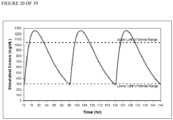
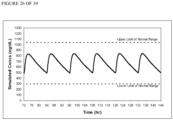
- the present invention provides methods of administering oral pharmaceutical formulations comprising testosterone esters that provide average steady state serum levels (concentrations) of testosterone, which fall within a desired "normal” or eugonadalrange (i.e., about 300-1100 ng/dL) while avoiding the high C max values that are considered by the United States Food and Drug Administration to be undesirable as summarized in Table 1.
- FDA approval guidelines state that less than 85% of treated subjects may have a C max value of 1500 ng/dL or greater, and that none may have a C max value exceeding 2500 ng/dL. Less than 5% of treated subjects may have a C max value falling in the range of 1800-2500 ng/dL.
- the present invention provides a method of treating chronic testosterone deficiency or it symptoms comprising the steps of:
- the administered oral pharmaceutical compositions comprise a hydrophobic testosterone ester dissolved in a lipophilic surfactant and a hydrophilic surfactant.
- a lipophilic surfactant as defined herein has a hydrophilic-lipophilic balance (HLB) less than 10, and preferably less than 5.
- a hydrophilic surfactant as defined herein has an HLB of greater than 10. (HLB is an empirical expression for the relationship of the hydrophilic and hydrophobic groups of a surface-active amphiphilic molecule, such as a surfactant). It is used to index surfactants and its value varies from about 1 to about 45. The higher the HLB, the more water-soluble the surfactant.
- compositions are designed to be self-emulsifying drug delivery systems (SEDDS) and iterations thereof such as self-microemulsified drug delivery systems (SMEDDS) and self-nanoemulsified drug delivery systems (SNEDDS) so that a testosterone ester-containing emulsion, microemulsion, nanoemulsion (or dispersion) is formed upon mixing with intestinal fluids in the gastrointestinal tract.
- SEDDS self-emulsifying drug delivery systems
- SMEDDS self-microemulsified drug delivery systems
- SNEDDS self-nanoemulsified drug delivery systems
- the testosterone ester is a short-chain (C 2 -C 6 ) or a medium-chain (C 7 -C 13 ) fatty acid ester located on the C-17 of the testosterone molecule.
- the testosterone ester is testosterone cypionate, testosterone octanoate, testosterone enanthate, testosterone decanoate, or testosterone undecanoate.
- the testosterone ester is testosterone undecanoate.
- 1 mg of T is equivalent to: 1.39 mg T-enanthate; 1.58 mg T-undecanoate; 1.43 mg T-cypionate, and 1.83 mg T-palmitate.
- the lipophilic surfactant exhibits an HLB of less than 10, preferably less than 5, and more preferably, the lipophilic surfactant exhibits an HLB of 1 to 2.
- Certain lipophilic surfactants suitable in oral compositions of the present invention include fatty acids (C 6 -C 24 , preferably C 10 -C 24 , more preferably C 14 -C 24 ), for example, octanoic acid, decanoic acid, undecanoic acid, lauric acid, myristic acid, palmitic acid, palmitoleic, stearic acid, oleic acid, linoleic acid, alpha- and gamma- linolenic acid, arachidonic acid or combinations thereof.
- the lipophilic surfactant is oleic acid.
- lipophilic surfactants include:
- the lipophilic surfactant is glyceryl monolinoleate.
- the hydrophilic surfactant exhibits an HLB of 10 to 45. Hydrophilic surfactants with an HLB value between 10-15 are particularly preferred.
- a hydrophilic surfactant component may be necessary to achieve desirable dispersability of the formulation in the GI tract and release of the drug. That is, a hydrophilic surfactant, in addition to serving as a secondary solvent, may be required to release the drug from the lipid carrier matrix, or primary solvent. The levels (amounts) of the high HLB surfactant can be adjusted to provide optimum drug release without compromising the solubilization of the active ingredient.
- the hydrophilic surfactant is a polyoxyethylene sorbitan fatty acid ester, hydrogenated castor oil ethoxylate, PEG mono- and diester of palmitic and stearic acid, fatty acid ethoxylate, or combinations thereof.
- the hydrophilic surfactant is a hydrogenated castor oil ethoxylate.
- the hydrophilic surfactant is Cremophor RH 40 (polyoxyethyleneglycerol trihydroxystearate).
- the oral pharmaceutical composition further includes digestible oil.
- a digestible oil is defined herein as an oil that is capable of undergoing de-esterification or hydrolysis in the presence of pancreatic lipase in vivo under normal physiological conditions.
- digestible oils may be complete glycerol triesters of medium chain (C 7 -C 13 ) or long chain (C 14 -C 22 ) fatty acids with low molecular weight (up to C 6 ) mono-, di- or polyhydric alcohols.
- digestible oils for use the oral pharmaceutical composition include: vegetable oils (e.g., soybean oil, safflower seed oil, corn oil, olive oil, castor oil, cottonseed oil, arachis oil, sunflower seed oil, coconut oil, palm oil, rapeseed oil, black currant oil, evening primrose oil, grape seed oil, wheat germ oil, sesame oil, avocado oil, almond, borage, peppermint and apricot kernel oils) and animal oils (e.g., fish liver oil, shark oil and mink oil).
- the digestible oil is a vegetable oil.
- the vegetable oil is soybean oil, safflower seed oil, corn oil, olive oil, castor oil, cottonseed oil, arachis oil, sunflower seed oil, coconut oil, palm oil, rapeseed oil, evening primrose oil, grape seed oil, wheat germ oil, sesame oil, avocado oil, almond oil, borage oil, peppermint oil, apricot kernel oil, or combinations thereof.
- Particularly preferred digestible oils are those with high gamma-linolenic acid (GLA) content such as, black currant oil, primrose oil and borage oil, as well as any other digestible oil that can be enriched in GLA acid through enzymatic processes.
- GLA gamma-linolenic acid
- methods and compositions for modulating i.e., sustaining) the rate of available serum testosterone by incorporating component(s) that may biochemically modulate (1) testosterone ester absorption, (2) testosterone ester metabolism to testosterone, and/or (3) metabolism of testosterone to dihydrotestosterone (DHT).
- component(s) may biochemically modulate (1) testosterone ester absorption, (2) testosterone ester metabolism to testosterone, and/or (3) metabolism of testosterone to dihydrotestosterone (DHT).
- DHT dihydrotestosterone
- the inclusion of medium to long chain fatty acid esters can enhance testosterone ester absorption. In this way, more testosterone ester may stave off hydrolysis in the gut and enter the blood stream. In other words, the fatty acid ester may competitively inhibit esterases that would otherwise metabolize the testosterone ester.
- esters or combinations thereof include botanical extracts or benign esters used as food additives (e.g., propylparaben, octylacetate and ethylacetate).
- Other components that can modulate testosterone ester absorption include "natural” and synthetic inhibitors of 5 ⁇ -reductase, which is an enzyme present in enterocytes and other tissues that catalyzes the conversion of T to DHT. Complete or partial inhibition of this conversion may both increase and sustain increased serum levels of T after oral dosing with testosterone ester while concomitantly reducing serum DHT levels.
- Borage oil which contains a significant amount of the 5 ⁇ -reductase inhibitor, gamma-linolenic acid (GLA), is an example of a "natural” modulator of testosterone ester metabolism.
- GLA gamma-linolenic acid
- GLA could be added directly as a separate component of a testosterone ester formulation of the invention.
- any digestible oil as listed above can be enzymatically enriched in GLA.
- Many natural inhibitors of 5 ⁇ -reductase are known in the art (e.g., epigallocatechin gallate, a catechin derived primarily from green tea and saw palmetto extract from berries of the Serenoa repens species, phytosterols and lycopene), all of which may be suitable in the present invention.
- Non-limiting examples of synthetic 5 ⁇ -reductase inhibitors suitable for use in the present invention include compounds such as finasteride, dutasteride and the like.
- the oral pharmaceutical composition further includes one or more additional lipid-soluble therapeutic agents.
- the agent is a second testosterone ester, a synthetic progestin, an inhibitor of type-I and/or type II 5 ⁇ -reductase, an inhibitor of CYP3A4, finasteride, dutasteride, or combinations thereof.
- the agent is borage oil.
- the agent is peppermint oil and related substances such as menthol and menthol esters.
- the agent is a second testosterone ester.
- Optional cosolvents suitable with the oral pharmaceutical composition are, for example, water, short chain mono-, di-, and polyhydric alcohols, such as ethanol, benzyl alcohol, glycerol, propylene glycol, propylene carbonate, polyethylene glycol (PEG) with an average molecular weight of about 200 to about 10,000, diethylene glycol monoethyl ether (e.g., Transcutol HP), and combinations thereof.
- cosolvents, especially monohydric alcohols are excluded altogether.
- the oral pharmaceutical compositions are free of monohydric alcohols.
- the monohydric alcohols are C 2 -C 18 aliphatic or aromatic alcohols.
- the compositions are free of ethyl or benzyl alcohols.
- the compositions contain between 0% and 10% (w/w) of polyethylene glycol with an average molecular weight of about 8,000 (PEG-8000). In particular embodiments, the compositions contain between 5% and 10% (w/w) of PEG-8000.
- the oral pharmaceutical compositions administered in the present invention are preferably liquid or semi-solid at ambient temperatures. Furthermore, these pharmaceutical compositions can be transformed into solid dosage forms through adsorption onto solid carrier particles, such as silicon dioxide, calcium silicate or magnesium aluminometasilicate to obtain free-flowing powders that can be either filled into hard capsules or compressed into tablets.
- solid carrier particles such as silicon dioxide, calcium silicate or magnesium aluminometasilicate
- free-flowing powders that can be either filled into hard capsules or compressed into tablets.
- solid carrier particles such as silicon dioxide, calcium silicate or magnesium aluminometasilicate
- the term “solubilized” herein should be interpreted to describe an active pharmaceutical ingredient (API), which is dissolved in a liquid solution or which is uniformly dispersed in a solid carrier.
- API active pharmaceutical ingredient
- sachet type dosage forms can be formed and used.
- the oral pharmaceutical composition is filled into a hard or soft gelatin capsule.
- the testosterone ester is a short-chain (C 2 -C 6 ) or a medium-chain (C 7 -C 13 ) fatty acid ester.
- the testosterone ester is testosterone cypionate, testosterone octanoate, testosterone enanthate, testosterone decanoate, or testosterone undecanoate.
- the testosterone ester is testosterone undecanoate.
- the hydrophilic surfactant exhibits an HLB of 10 to 45, and is a polyoxyethylene sorbitan fatty acid ester, hydrogenated castor oil ethoxylate, PEG mono- and di-esters of palmitic and stearic acid, fatty acid ethoxylate, or a combination thereof.
- the hydrophilic surfactant is a hydrogenated castor oil ethoxylate.
- the lipophilic surfactant exhibits an HLB of less than 10, more preferably less than 5, and most preferably between 1 and 2.
- the lipophilic surfactant is octanoic acid, decanoic acid, undecanoic acid, lauric acid, myristic acid, palmitic acid, stearic acid, oleic acid, linoleic acid, or alpha- and gamma- linolenic acid and arachidonic acid.
- the digestible oil is soybean oil, safflower seed oil, corn oil, olive oil, castor oil, cottonseed oil, arachis oil, sunflower seed oil, coconut oil, palm oil, rapeseed oil, evening primrose oil, grape seed oil, wheat germ oil, sesame oil, avocado oil, almond oil, borage oil, peppermint oil, or apricot kernel oil.
- the oral pharmaceutical composition contains one or more additional lipid-soluble therapeutic agents. In certain embodiments, these agents are synthetic progestins, inhibitors of type-I and/or type II 5 ⁇ -reductase, inhibitors of CYP3A4, finasteride, dutasteride and combinations thereof.
- the compositions include borage oil.
- the compositions include peppermint oil.
- compositions include a second testosterone ester.
- the oral pharmaceutical composition exhibits a percent (%) in vitro dissolution profile 5% Triton X-100 solution in phosphate buffer, pH 6.8, and indicating release from the composition of substantially all of the solubilized testosterone ester within about 1 hour.
- the testosterone ester is a short-chain (C 2 -C 6 ) or a medium-chain (C 7 -C 13 ) fatty acid ester.
- the testosterone ester is testosterone cypionate, testosterone octanoate, testosterone enanthate, testosterone decanoate, or testosterone undecanoate.
- the testosterone ester is testosterone undecanoate.
- the hydrophilic surfactant exhibits an HLB of 10 to 45, and is a polyoxyethylene sorbitan fatty acid ester, hydrogenated castor oil ethoxylate, PEG mono- and di-esters of palmitic and stearic acid, fatty acid ethoxylate, or a combination thereof.
- the hydrophilic surfactant is a hydrogenated castor oil ethoxylate.
- the lipophilic surfactant exhibits an HLB of less than 10, more preferably less than 5, and most preferably between 1 and 2.
- the lipophilic surfactant is octanoic acid, decanoic acid, undecanoic acid, lauric acid, myristic acid, palmitic acid, palmitoleic, stearic acid, oleic acid, linoleic acid, alpha- and gamma-linolenic acid, arachidonic acid, glyceryl monolinoleate and combinations thereof.
- the digestible oil is soybean oil, safflower seed oil, corn oil, olive oil, castor oil, cottonseed oil, arachis oil, sunflower seed oil, coconut oil, palm oil, rapeseed oil, evening primrose oil, grape seed oil, wheat germ oil, sesame oil, avocado oil, almond oil, borage oil, peppermint oil, or apricot kernel oil.
- the oral pharmaceutical composition contains one or more additional lipid-soluble therapeutic agents.
- these agents are synthetic progestins, inhibitors of type-I and/or type II 5 ⁇ -reductase, inhibitors of CYP3A4, finasteride, dutasteride and combinations thereof.
- the compositions include borage oil.
- the compositions include peppermint oil.
- compositions include a second testosterone ester.
- the oral pharmaceutical composition exhibits a percent (%) in vitro dissolution profile in 5% Triton X-100 solution in phosphate buffer, pH 6.8, and indicating release from the composition of substantially all of the solubilized testosterone ester within about 1 hour.
- a specific embodiment of the oral pharmaceutical composition comprises: a) 15-20 percent by weight of solubilized testosterone undecanoate; b) 5-20 percent by weight hydrogenated castor oil ethoxylate; b) 50-70 percent by weight of oleic acid; and c) 10-15 percent by weight of digestible oil, that is free of ethanol, and exhibits a percent (%) in vitro dissolution profile in 5% Triton X-100 solution in phosphate buffer, pH 6.8, that indicates release from the composition of substantially all of the solubilized testosterone ester within about 2 hours.
- the testosterone ester is testosterone cypionate, testosterone octanoate, testosterone enanthate, testosterone decanoate, or testosterone undecanoate. In a particular embodiment, the testosterone ester is testosterone undecanoate.
- the hydrophilic surfactant exhibits an HLB of 10 to 45, and is a polyoxyethylene sorbitan fatty acid ester, hydrogenated castor oil ethoxylate, PEG mono- and di-esters of palmitic and stearic acid, fatty acid ethoxylate, or a combination thereof.
- the hydrophilic surfactant is a hydrogenated castor oil ethoxylate.
- the lipophilic surfactant exhibits an HLB of less than 10, more preferably less than 5, and most preferably between 1 and 2.
- the lipophilic surfactant is octanoic acid, decanoic acid, undecanoic acid, lauric acid, myristic acid, palmitic acid, stearic acid, oleic acid, linoleic acid, or linolenic acid.
- the digestible oil is soybean oil, safflower seed oil, corn oil, olive oil, castor oil, cottonseed oil, arachis oil, sunflower seed oil, coconut oil, palm oil, rapeseed oil, evening primrose oil, grape seed oil, wheat germ oil, sesame oil, avocado oil, almond oil, borage oil, peppermint oil, or apricot kernel oil.
- the oral pharmaceutical composition contains one or more additional lipid-soluble therapeutic agents.
- these agents are synthetic progestins, inhibitors of type-I and/or type II 5 ⁇ -reductase, inhibitors of CYP3A4, finasteride, dutasteride and combinations thereof.
- the compositions include borage oil.
- the compositions include peppermint oil.
- compositions include a second testosterone ester.
- the oral pharmaceutical composition exhibits a percent (%) in vitro dissolution profile in 5% Triton X-100 solution in phosphate buffer, pH 6.8, and indicating release from the composition of substantially all of the solubilized testosterone ester within about 1 hour.
- the testosterone ester is a short-chain (C 2 -C 6 ) or a medium-chain (C 7 -C 13 ) fatty acid ester.
- the testosterone ester is testosterone cypionate, testosterone octanoate, testosterone enanthate, testosterone decanoate, or testosterone undecanoate.
- the testosterone ester is testosterone undecanoate.
- the hydrophilic surfactant exhibits an HLB of 10 to 45, and is a polyoxyethylene sorbitan fatty acid ester, hydrogenated castor oil ethoxylate, PEG mono- and di-esters of palmitic and stearic acid, fatty acid ethoxylate, or a combination thereof.
- the hydrophilic surfactant is a hydrogenated castor oil ethoxylate.
- the lipophilic surfactant exhibits an HLB of less than 10, more preferably less than 5, and most preferably between 1 and 2.
- the lipophilic surfactant is octanoic acid, decanoic acid, undecanoic acid, lauric acid, myristic acid, palmitic acid, stearic acid, oleic acid, linoleic acid, or linolenic acid.
- the digestible oil is soybean oil, safflower seed oil, corn oil, olive oil, castor oil, cottonseed oil, arachis oil, sunflower seed oil, coconut oil, palm oil, rapeseed oil, evening primrose oil, grape seed oil, wheat germ oil, sesame oil, avocado oil, almond oil, borage oil, peppermint oil, or apricot kernel oil.
- the oral pharmaceutical composition contains one or more additional lipid-soluble therapeutic agents.
- these agents are synthetic progestins, inhibitors of type-I and/or type II 5 ⁇ -reductase, inhibitors of CYP3A4, finasteride, dutasteride and combinations thereof.
- the compositions include borage oil.
- the compositions include peppermint oil.
- compositions include a second testosterone ester.
- the oral pharmaceutical composition exhibits a percent (%) in vitro dissolution profile in 5% Triton X-100 solution in phosphate buffer, pH 6.8, and indicating release from the composition of substantially all of the solubilized testosterone ester within about 1 hour.
- the oral pharmaceutical composition is administered once or twice daily.
- the serum testosterone concentration is measured three to five hours after administering the oral pharmaceutical composition.
- the serum testosterone concentration is measured after fourteen days of daily treatment with the oral pharmaceutical composition.
- the serum testosterone concentration is measured via radioimmunoassay, immunometric assays, or liquid chromatography tandem mass spectrometry (LC-MS/MS) assays.
- the serum testosterone concentration is measured via a liquid chromatography tandem mass spectrometry (LC-MS/MS) assay.
- the amount of the oral pharmaceutical composition administered is increased by the equivalent of about 50 mg of testosterone when the serum testosterone concentration in the subject is less than 250 ng/dL, and decreased by the equivalent of about 50 mg of testosterone when the serum testosterone concentration in the subject is greater than 700 ng/dL.
- the steps a.- c. are repeated until the serum testosterone concentration in the subject is between 250 and 700 ng/dL.
- the present invention provides a method of treating chronic testosterone deficiency or it symptoms comprising the steps of:
- the oral pharmaceutical compositions provide optimum drug release without compromising the solubilization of the active ingredients.
- the oral pharmaceutical composition exhibits a percent (%) in vitro dissolution profile in 5% Triton X-100 solution in phosphate buffer, pH 6.8, indicating release from the composition of substantially all of the solubilized testosterone ester within about 3 hours, preferably within about 2 hours, and more preferable, release occurs within about 1 hour.
- the oral pharmaceutical composition is administered with a meal that at least 20 percent of the calories are derived from fat.
- the initial amount of testosterone ester in the oral pharmaceutical composition is administered in one or more capsules.
- the initial amount of testosterone ester in the oral pharmaceutical composition is administered in two capsules.
- the oral pharmaceutical composition comprises:
- said composition comprises 15-20 by weight of solubilized testosterone ester.
- said testosterone ester is testosterone undecanoate.
- said hydrophilic surfactant is a hydrogenated castor oil ethoxylate.
- said lipophilic surfactant is glyceryl monolinoleate.
- said oral pharmaceutical composition comprises:
- a method of treating a population of humans suffering from chronic testosterone deficiency comprising the steps of:
- Disclosed herein is a method of treating a population of humans suffering from chronic testosterone deficiency comprising the steps of:
- the objective of the modeling effort was to predict the fractions of the treated patient population likely to have their serum testosterone (T) C avg or C max values fall within designated desired ranges if the patients were to be dosed with an oral testosterone undecanoate (TU) product according to proposed treatment regimens for a pivotal Phase III clinical trial.
- T serum testosterone
- TU oral testosterone undecanoate
- the probability model was based on the pharmacokinetic results obtained from the hypogonadal patient population that participated in the two multidose TU treatments in study LOT-A. As noted previously, 29 hypogonadal males participated in the study, 28 of them completed Treatment Period 1 (300 mg T, as TU, BID) and 24 of them completed Treatment Period 3 (200 mg T, as TU, BID).
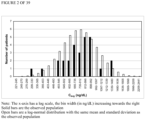
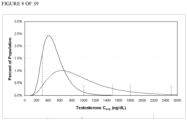
- Figure 1 and Figure 2 show the observed distribution for C avg values in the 24 patients that received 200 mg BID of T, as TU.
- Superimposed on the distribution of observed values in Figure 1 is a theoretical normal distribution profile with the same mean and standard deviation
- superimposed on the observed values in Figure 2 is a theoretical log-normal distribution with the same mean and standard deviation as the log-transformed C avg values. Neither distribution produced a visually superior fit. Because the underlying distribution for the C avg values was still in doubt, the remaining modeling was done twice, i.e., using each of the assumptions, and the final results were examined for sensitivity to this potentially significant assumption.
- AM dose and PM Doses of TU Showed Similar T Pharmacokinetics AM PM 300 mg BID 300 mg BID C max (ng/mL) 1410 ⁇ 771 1441 ⁇ 627 T max (hr) 4.5 ⁇ 2.1 17.9 ⁇ 2.6 C min (ng/mL) 305 ⁇ 161 324 ⁇ 191 AUC (0-12) (ng•hr/mL) 9179 ⁇ 3990 9830 ⁇ 3489 C avg (ng/mL) 765 ⁇ 332 819 ⁇ 291
- the 200 mg BID and 300 mg BID doses with TU showed dose-proportionality for T concentrations after correcting for the baseline T concentrations associated with endogenous T production.
- the mean values for both serum T C avg and C max at both doses are summarized in Table 3.
- the ratios of the means were nearly identical to what was expected based on the theoretical difference in doses.
- Demonstrating dose-proportionality in T response to TU dosing simplified the modeling of alternative dosing regimens with TU, because adjustment to the desired dose could be done simply by direct scaling of the baseline-corrected mean value for the population.
- the variability about the mean was adjusted by assuming a constant coefficient of variation (i.e., the standard deviation varying in direct proportion to the mean). Table 4.
- Baseline concentrations of T were determined prior to the start of the study and immediately prior to the start of each treatment cycle (i.e., after each 7 to 14-day washout period). The washout periods were sufficiently long to assure that T concentrations from the previous dosing cycle were no longer detectable. However, it was discovered that the washout periods were apparently not sufficiently long to assure that endogenous T production had recovered from suppression associated with the administration of exogenous T. Baseline T concentrations progressively decreased with each additional dosing period of the study, as shown in Figure 4 .
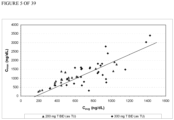
- Figure 5 displays the observed relationship between serum T C avg and C max on Day 7 of TU treatment in study LOT-A.
- the data from Treatment Period 1 (300 mg T as TU, BID) and Treatment Period 3 (200 mg T as TU, BID) are plotted with different symbols, but the relationship is continuous over the combined range associated with the two doses.
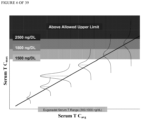
- Figure 6 provides a schematic view of the interplay of C avg , C max and the variability in C max .
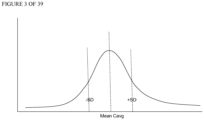
- the distribution of C avg values is uniform along the x-axis, but has a normal or log-normal distribution (e.g., Figure 3 ) that can be characterized by a mean and standard deviation. Since approximately 2/3 of the patients are expected to have serum T C avg values within one standard deviation of the mean, 2/3 of the resulting C max values will be in distributed on both sides of the regression line in Figure 6 and mostly in the region within one standard deviation of the mean C avg for the dose of TU.
- C max values will lie in close proximity to the regression line, but some can be expected to be significantly above or below the regression line. Some of the C max values will fall within the concentration ranges denoted by the orange and red regions in Figure 6 , with the probability of doing so being greater in patients with higher C avg values.
- the total number of patients in the distribution about the regression line should be a small fraction of the total population, and the variation about the mean C max in that region relatively limited, e.g., a value of C max of 250 ng/dL would have a standard deviation of approximately 50 ng/dL, compared to a mean C max of 1000 ng/dL having a standard deviation of 200 ng/dL.
- the number of patients with C max values near the upper extreme of the regression line should also be a small fraction of the total population, but, the variability in C max values would be anticipated to be quite wide, e.g., patients with mean C max value of 2000 ng/dL might have a standard deviation of 400 ng/dL.
- An objective of the modeling process was to determine what fractions of the population would be predicted to have serum T C max values in the concentration ranges symbolized by the three bands of orange through red colors in Figure 6 .
- the lower edges of these three bands represent the 1500 ng/dL, 1800 ng/dL and 2500 ng/dL cutoff values noted in Table 1.
- the fractions of the population predicted to have C max values in each of these bands was calculated by dividing the C avg distribution into a series of 10 ng/dL wide bins, and then determining what fractions of the population within that bin had C max values inside and outside the various acceptance limits noted in Table 1.
- Table 6 summarizes the results generated by the probability model when all patients in the distribution were assumed to be receive a standard 200 mg BID dose of T (as TU) (the "Before Titration” column), and the results after patients at the low end of the distribution (Under-Responders) had their T doses increased to 300 mg BID, and patients at the high end of the distribution (Over-Responders) had their T dose decreased to 100 mg BID (the "After Titration" column). Results are provided in the table for both the normal and log-normal based models.
- the modeling predicts that the minimum efficacy goal (75% of patients with C avg values in the normal range) will be easily met even before a titration decision is made (85% success if normally distributed, 87% success if log-normally distributed), and the predicted success rates will climb another 8% - 12% if the titration step is implemented (to 93% and 97% for normal and log-normal, respectively).
- the models also predict that simply treating all patients with 200 mg BID is likely to result in more than 15% of patients having C max values greater than 1500 ng/dL.
- the predicted over-response rate is slightly higher assuming a normal distribution than assuming a log-normal distribution (22% vs. 18%).
- the predicted incidence rate for over-responders is reduced to approximately the targeted maximum 15% rate indicated in the guidelines (17% for normal, 12% for log-normal).
- the predicted rates for extreme over-responders (C max >2500 ng/dL) is less than 2% at the 200 mg BID dose, but is reduced even further to a predicted rate of 0.1% or less by titrating the over-responders to a 100 mg BID dose. Table 6.
- Table 7 and Table 8 summarize the predicted fractions in the critical categories if the CVs describing the variability about the mean values are either decreased or increased by approximately 15-20%, and if the slope describing the relationship between C avg and C max is increased or decreased by approximately 20%. Table 7 summarizes the results when the modeling assumed the normal distribution, while Table 8 summarizes the results based on a log-normal distribution.
- Table 9 and Table 10 summarize the predicted fractions of subjects in the critical categories if the proposed standard 200 mg BID dose of T (as TU) administered to all patients was either decreased or increased by 25 mg (12.5%). Table 9 summarizes the results when the modeling assumed the normal distribution, while Table 10 summarizes the results based on a log-normal distribution.
- Table 11 and Table 12 summarize the predicted fractions in the critical categories if the baseline T concentrations associated with production of endogenous T was either reduced (from 120 ng/dL to 75 ng/dL) or increased (from 120 ng/dL to 200 ng/dL).
- Table 11 summarizes the results when the modeling assumed the normal distribution
- Table 12 summarizes the results based on a log-normal distribution.
- the model predicts that essentially all the over-responders, and most of the under-responders can have their serum T C avg concentration brought into the normal range without exceeding the C max limitations noted in the guidelines
- the model provided similar results whether the underlying distribution between the T dose and C avg was assumed normal or log-normal.
- the log-normal distribution generally resulted in more optimistic projections from the model.
- the model predictions were sensitive to the postulated relationship between C max /C avg , the steeper the slope of that relationship, the more difficult it being to obtain acceptably low rates of excessive C max values.
- the model predictions were relatively insensitive to the assumed value of the baseline T concentration (a value related to residual endogenous T production).
- Concentration data and pharmacokinetic parameters from hypogonadal male subjects that participated in study LOT-AA and study LOT-BB were combined into a single data set. From study LOT-AA, only the information from Day 7 of Treatment 3 (8 days of treatment with 200 mg BID of T, as TU) was used. Study LOT-AA contributed data from 26 subjects treated for 7 days, and study LOT-BBBB contributed data from 15 subjects treated for 28 days with 200 mg BID of T, as TU. Combining of the data from these two groups of subjects is supported by the finding from study LOT-BBBB that T steady-state is reached in 5-7 days.
- Group 1 is subjects that are “true positives”
- Groups 2 and 3 are “true negatives”
- groups 4 and 5 are “false negatives”
- groups 6 and 7 are “false positives”.
- Groups, 1, 2 and 3 represent successful predictions because C(t) is an appropriate surrogate for C avg ;
- Groups 4, 5, 6 and 7 are prediction failures because C(t) is an inaccurate surrogate for C avg .
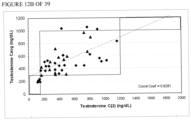
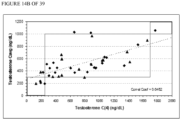
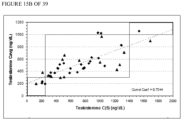
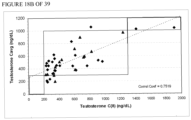
- Table 14 provides the correlation coefficient and regression parameters for each candidate C(t) vs. C avg and C max .
- the samples collected at 6 hours post dose show the highest degree of correlation against both C avg and C max , suggesting that C(6) is the best single point estimator for either C avg or C max .
- C(6) has the lowest coefficient of variation among the 10 candidate C(t) data sets, suggesting it may also be among the least susceptible to between-subject variability.
- C(t) and designated acceptance ranges for C(t) Five combinations of C(t) and designated acceptance ranges for C(t) have been identified that have a 90.2% success rate for predicting C avg values "within range” or "out of range”. They are shaded in Table 15 and Table 16 and are C(1), C(1.5), C(2) and C(6). Two candidate acceptance ranges have been identified for use with C(6).
- C(6) with a designated acceptance range of 250 mg/dL to 1100 ng/dL is felt to be the best choice among these five options because it has the lowest incidence of predicting "false positives", i.e., has the lowest incidence of predicting that a subject has a C avg within the targeted range (300 - 1000 ng/dL), even though the measured C avg was outside the range. It is desirable to minimize the occurrence of this particular outcome since it might result in subjects with higher than desired C avg and C max values not being recognized.
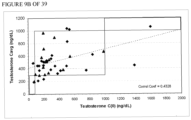
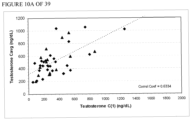
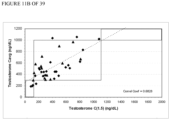
- a set of summary figures are provided end-of-text, which summarize the optimal findings for each of the C(t) and acceptance ranges combinations presented in Table 16.
- Each tableaux contains a graphical display of the correlation between the C(t) and C avg , along with the regression line, a contingency table summarizing the percentage of subjects within each of the designated categories, and a graph that overlays the selected C avg and C(t) ranges from the contingency analysis on the distribution of concentration data.
- the data points that fall within the three red rectangles on a graph are "successes" in that the C(t) surrogate has successfully predicted that the subject's C avg is either within the targeted range or outside the targeted range for C avg .
- Data points outside those red rectangles represent subjects that were not properly categorized, i.e., being either "false negatives" or "false positives”.
- C(6) should be considerably more robust since the same result as is reported in the tables and tableaux holds if the selected lower bound for C(t) takes on any value between 248 and 292 ng/dL (inclusive), and the selected upper bound for C(t) takes on any value between 1048 and 1144 ng/dL (inclusive).
- T concentrations from two populations of study subjects were utilized for this analysis.
- One study provided data from 26 hypogonadal male subjects that received 200 mg BID of T, as TU, for 7 days as the third of four treatments studies in that study protocol.
- the other study provided data from 15 hypogonadal male subjects that received 200 mg BID of T, as TU, for 28 days.
- the second study demonstrated that steady-state was reached in 5-7 days, and so participants in both studies were at steady-state at the time blood samples were collected for assaying of T concentrations.
- a visual review of the clusters of concentration data from the two studies indicates that the results of the two studies were comparable (see Figures 9A - 19B ) - the data from both studies show similar clustering and a large degree of overlap in their range of values.
- the contingency analysis identified 5 alternatives for the C avg surrogate, if examined solely based on the success and failure rates. Separation of the failure rate into its contributing factors, the incidence of "false positives” and incidence of "false negatives”, resulted in the observation that the C(6) data with the narrower C(t) acceptance range (250-1100 ng/dL) had the lowest rate of "false positives" (2.4% vs. 7.3 to 9.8%).
- Serum T concentrations from SEDDS TU have been shown to be dose proportional, after correction for the endogenous T concentration (LOT-A), and the endogenous serum T baseline concentrations has been observed to be between 38 and 126 ng/dL (LOT-BB), with a mean value of 108 ng/dL.
- LOT-A endogenous T concentration
- LOT-BB endogenous serum T baseline concentrations has been observed to be between 38 and 126 ng/dL
- LOT-BB 38 and 126 ng/dL
- Serum T concentration in a blood sample collected 6 hours post-dose, under steady-state dosing conditions (7 or more days after starting treatment) is the suggested surrogate for estimating C avg in the Phase III evaluation of the oral TU product
- Serum T C(6) has the highest correlation, of the tested sample collection times, with both C avg and C max , and controlling C(6) is anticipated to control both serum T C avg and C max .
- Serum T C(6) with a 250-1100 ng/dL acceptance range has the lowest projected rate of false positives, suggesting the choice minimizes the possibility of undetected and uncorrected high T concentrations.
- Serum T C(6) as the surrogate for C avg resulted in a substantial projected reduction in the incidence of C max values greater than 1500 ng/dL. Whereas the pre-titration incidence was observed to be approximately 12%, the post-titration rate, if titration is based on C(6), is projected to be less than 5%.
- Table 1 provides composition details of various formulations of testosterone (T) or testosterone-esters (T-esters), in accordance with the teachings of the instant invention.
- 1 mg of T is equivalent to: 1.39 mg T-enanthate; 1.58 mg T-undecanoate; 1.43 mg T-cypionate, and 1.83 mg T-palmitate.
- TP is a preferred T-ester in some of the formulations listed below.
- the compositions details of Table 1 are based on 800 mg fill weight per '00' hard gelatin capsule. However, at testosterone-ester amounts less than about 100 mg/capsule, the formulations may be proportionally adjusted for smaller total fill weights that would permit use of smaller hard gelatin capsules (e.g., '0' size).
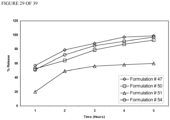
- Table 16 provides composition details of various TP formulations in accordance with the teachings of the instant invention and Figure 28 provides in vitro dissolution of select formulations therein.
- TP may be synthesized through esterification of testosterone with palmitoyl chloride in an acetone/pyridine mixture.
- Testosterone palmitate crude is purified by filtration, crystallized from a methanol/methylene chloride mixture and washed with methanol. When necessary, recrystallization can be done from heptane, followed by washing with methanol.
- Table 16 F No. Composition details (mg/capsule and wt.
- TP Testosterone palmitate
- LBR Labrafil M1944CS
- PRC5 PrecirolATO5
- OA Refined Oleic acid
- SO Refined Soybean oil
- TPGS D- ⁇ -tocopheryl PEG1000 succinate
- CRH 40 polyoxyethyelene (40) hydrogenated castor oil
- L'sol Labrasol
- M'tol Mannitol ** Filled into size"0" capsule (570 mg) or "00"capsule (800mg)
- a preferred formulation of TP in accordance with the present invention is: Component mg/capsule %, w/w Testosterone palmitate 228.32 28.5 Cremophor ® RH40 320.45 40.0 Labrafil ® M 1944 CS 157.02 19.6 Precirol ® ATO 5 95.20 11.9 Total: 800 100.0
- TP may be desirable to reduce the absolute concentration of testosterone and/or an ester thereof in order to promote a relatively faster release of the testosterone and/or ester from within the lipid vehicle. That is, it has been found, surprisingly, that reducing the concentration of TP, may in some cases, confer quicker release kinetics. For example, for significant release of TP within about a two hour period, a concentration of TP of less than about 23 percent by weight. In some embodiment, a weight percentage of less than about 20 is preferred, more preferably a weight percentage of less than about 18, and most preferably a weight percentage of less than about 15. Without being bound by or limited to theory, it is believed that TP at levels greater than about 23 weight percent may, in fact, retard its own release.
- formulations according to the instant invention comprising less than about 23 weight percent TP can release 50 -70 % of the drug at 1 hour and 80 to near 100% at 2 hours.
- formulations according to the instant invention comprising greater than about 23 weight percent TP release less than 5 % of the drug at 1 hr and less than 70% at 6 hours.
- Table 17 provides composition details of various TP formulations that in some cases, are at TP concentrations lower than those in Table 2 and in accordance with the teachings of the instant invention.
- Figure 29 provides in vitro dissolution of select Table 3 formulations.
- Formulation numbers 50, 51 and 54 are preferred embodiments.
- preferred solvents may have the following characteristics: C 4 -C 24 fatty acids and/or their glycerol-, propylene glycol-, polyethylene glycol, sorbitan- mono-/diesters alone and in mixtures.
- Preferred fatty acids and esters are C 8 -C 18 , saturated and unsaturated.
- the solvents include, fatty acid esters with lower alcohols, such as ethyl oleate, ethyl linoleate, isopropyl myristate, isopropylpalmitate, isopropyloleate and isopropyllinoleate.
- fatty acid esters with lower alcohols such as ethyl oleate, ethyl linoleate, isopropyl myristate, isopropylpalmitate, isopropyloleate and isopropyllinoleate.
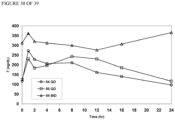
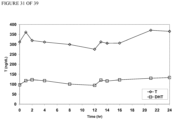
- Formulations 50 and 54 were administered to 6 patients; number 50 was administered once-daily ("QD") in the form of two capsules per dose (100 mg T equivalents/capsule) and number 54 was administered once- and twice-daily ("BID") in the form of three capsules per dose (66 mg T equivalents/capsule).
- QD once-daily
- BID twice-daily
- the mean steady-state profiles after 7 days of treatment with one of the three, respective, regimens are shown in Figure 30 .
- the pharmacokinetic profile for formulation 54 BID was relatively uniform over the entire 24 hr period and had a trough of the mean profile about 70% of the peak of the mean profile. Additional data from formulation 54 include:
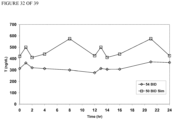
- a simulation of the pharmacokinetic profile of formulation 50 administered BID was performed and compared to the observed profile for formulation 54 administered BID.
- the simulation predicts about a 384 ng/dL increase in C avg over the 24-hour period for formulation 50 over formulation 54 ( Figure 32 ).
- methods and compositions for modulating i.e., sustaining) the rate of available serum testosterone by incorporating component(s) that may biochemically modulate (1) TP absorption, (2) TP metabolism to T, and/or (3) metabolism of T to DHT.
- component(s) that may biochemically modulate (1) TP absorption, (2) TP metabolism to T, and/or (3) metabolism of T to DHT.
- the inclusion of medium to long chain fatty acid esters can enhance TP absorption.
- the present inventors believe that the use of effective amounts fatty acid esters, particularly palmitate esters such as ascorbyl-palmitate, retinyl-palmitate, sorbitan-palmitate and blends thereof may establish competition between said ester and TP for endogenous esterase activity.
- testosterone ester metabolism generally, may be retarded with the administration of an effective amount of an ester of a medium or long chain fatty acid (e.g., esters of oleic acid, linoleic acid, linolenic acid, stearic acid, myristic acid, lauric acid, palmitic acid, capric or decanoic acid octanoic or caprylic acid, pelargonic acid, undecanoic acid, tridecanoic acid, pentadecanoic acid, and the branched chain, cyclic analogues of these acids).
- an ester of a medium or long chain fatty acid e.g., esters of oleic acid, linoleic acid, linolenic acid, stearic acid, myristic acid, lauric acid, palmitic acid, capric or decanoic acid octanoic or caprylic acid, pelargonic acid, undecanoic acid, tridecan
- the fatty acid ester may competitively inhibit esterases that would otherwise metabolize TP.
- Table 4 provides effective amounts of inhibitors of testosterone ester metabolism.
- esters or combinations thereof include botanical extracts or benign esters used as food additives (e.g., propylparben, octylacetate, and ethylacetate).
- TP absorption components that can modulate TP absorption include "natural" and synthetic inhibitors of 5 ⁇ -reductase, which is present in enterocytes and catalyze the conversion of T to DHT. Complete or partial inhibition of this conversion may both increase and sustain increases serum levels of T after oral dosing with TP while concomitantly reducing serum DHT levels.
- Borage oil which contains a significant amount of the 5 ⁇ -reductase inhibitor gamma-linoleic acid (GLA), is an example of a "natural" modulator of TP metabolism.
- GLA gamma-linoleic acid
- GLA could be directly added as a separate component of TP formulations described herein.
- 5 ⁇ -reductase inhibitors include epigallocatechin gallate, a catechin derived primarily from green tea and saw palmetto extract from berries of the Serenoa repens species, all of which may be suitable in the present invention.
- Non-limiting examples of synthetic 5 ⁇ -reductase inhibitors suitable in the present invention include finasteride and dutasteride.
- the present invention contemplates the use of inhibitors of T metabolism via other mechanisms.
- One such point of inhibition may be the cytochrome P450 isozyme CYP3A4 that is present in enterocytes and in liver cells and thus capable of metabolizing testosterone.
- formulations of the present invention include peppermint oil, which is known to contain factors capable of inhibiting CYP3A4.
- Table 18 provides composition details of various TP formulations comprising ingredients to modulate TP absorption (i.e., ascorbyl-palmitate, borage oil and peppermint oil).
- Figures 32 and 33 show representative in vitro dissolution profiles for select TP formulations therein in either phosphate buffer (PBS) or fed-state simulated intestinal fluid (FeSSIF), respectively.
- PBS phosphate buffer
- FeSSIF fed-state simulated intestinal fluid
- drug delivery systems disclosed herein may also be suitable for ameliorating some of the side-effects of certain strategies for male contraception.
- progestin-based male contraception substantially suppresses luteinizing hormone (LH) and follicle-stimulating hormone (FSH), and thereby suppresses spermatogenesis, resulting in clinical azoospermia (defined as less than about 1 million sperm/ml semen for 2 consecutive months).
- administration of progestins also has the undesirable side-effect of significantly reducing steady-state serum testosterone levels.
- a pharmaceutical preparation according to the invention comprising progestin-in an amount sufficient to suppress LH and FSH production-in combination with testosterone.
- the pharmaceutical preparation is for once-daily, oral delivery.
- Drug delivery systems afford the flexibility to achieve desirable pharmacokinetic profiles.
- the formulations can be tailored to deliver medicament in a relatively early peak serum concentration (T max ) or one that appears later. See Figures 20 , 22 , 24 and 26 versus Figures 21 , 23 , 25 and 27 , respectively.
- the formulations may be tailored to have a relative steep or wide drop in drug serum concentration upon obtaining T max . See Figures 20 , 22 , 24 and 26 versus Figures 21 , 23 , 25 and 27 , respectively.
- pharmaceutical preparations of the instant invention may be administered once-daily, twice-daily, or in multiple doses per day, depending on, for example, patient preference and convenience.
- the magnitude and timing of the T max can be affected by not only the type of lipids used, but also the ratios thereof.
- the concentration of the "controlled-release" lipophilic surfactant e.g., Precirol
- the concentration of the other lipophilic solvents e.g., Labrafil M1944CS
- the percentage of "controlled-release" lipophilic surfactant in composition can be increased.
- Figures 29 and 30 show in vitro dissolution curves of TP from three formulations, respectively, in a phosphate buffered dissolution medium incorporatingTritonX-100 as a surfactant in accordance with the present invention.
- inventive formulations described herein enhance absorption of a medicament therein by the intestinal lymphatic system.
- drug delivery systems of the present invention can provide extended release formulations that can deliver testosterone into the serum over several hours.
- the serum half-life of testosterone in men is considered to be in the range of 10 to 100 minutes, with the upper range for testosterone administered in a form (i.e., TU) that favors lymphatic absorption.
- oral dosages of the present invention can be taken by a patient in need of testosterone therapy once every about twelve hours to maintain desirable levels of serum testosterone.
- oral dosages are taken by a patient in need of testosterone therapy once every about twenty-four hours.
- "desirable" testosterone levels are those levels found in a human subject characterized as not having testosterone deficiency.
- Table 2 provides composition details of various formulations of TU, in accordance with the teachings of the instant invention.
- 1 mg of T is equivalent to 1.58 mg T-undecanoate.
- compositions details of Table 19 are based on an approximate fill weight of 800 mg fill weight per '00' hard gelatin capsule. However, at testosterone-ester amounts less than about 100 mg/capsule, the formulations may be proportionally adjusted for smaller total fill weights that would permit use of smaller hard gelatin capsules (e.g., size '0' or smaller size if needed).
- 6 4 19 (152) 50.5 (404) 18 (144) 10 (80) 2.5 (20) 0.02 (0.2) 0.8 (6.4) 806. 6 5 21 (168) 50 (400) 16.5 (132) 10 (80) 2.5 (20) 0.02 (0.2) 0.8 (6.4) 806. 6 6 23 (184) 50 (400) 14.5 (116) 10 (80) 2.5 (20) 0.02 (0.2) 0.8 (6.4) 806. 6 7 25 (200) 50 (400) 12.5 (100) 10 (80) 2.5 (20) 0.02 (0.2) 0.8 (6.4) 806. 6 8 16 (128) 53.5 (428) 18 (144) 10 (80) 2.5 (20) 0.02 (0.2) 0.8 (6.4) 806.
- 6 14 19 (152) 51.5 (412) 17 (136) 10 (80) 2.5 (20) 0.02 (0.2) 0.8 (6.4) 806. 6 15 15 (120) 56.5 (452) 16 (128) 10 (80) 2.5 (20) 0.02 (0.2) 0.8 (6.4) 806. 6 16 17 (136) 54.5 (436) 16 (128) 10 (80) 2.5 (20) 0.02 (0.2) 0.8 (6.4) 806. 6 17 19 (152) 52.5 (420) 16 (128) 10 (80) 2.5 (20) 0.02 (0.2) 0.8 (6.4) 806. 6 18 21 (168) 50.5 (404) 16 (128) 10 (80) 2.5 (20) 0.02 (0.2) 0.8 (6.4) 806.
- Preferred formulations of TU filled into size "00" capsules in accordance with the present invention are: Formulation A Ingredients mg/capsule %, w/w Testosterone Undecanoate 158.3 19.8 Oleic Acid 413.1 51.6 Cremophor RH 40 128.4 16.1 Borage Seed Oil 80.0 10 Peppermint Oil 20.0 2.5 BHT 0.2 0.03 Total 800 100 Formulation B Ingredients mg/capsule %, w/w Testosterone Undecanoate 158.3 19.8 Oleic Acid 412.5 51.6 Cremophor RH 40 128.4 16.0 Peppermint Oil 20.0 2.5 Borage Seed Oil + 0.03% BHT 80.0 10 Ascorbyl Palmitate 0.8 0.1 Total 800 100 Formulation C Ingredients mg/capsule %, w/w Testosterone Undecanoate 120 15 Cremophor RH 40 128 16 Maisine 35-1 504 63 Polyethylene Glycol 8000 48 6 TOTAL 800 100
- Formulation B was studied for its single-day pharmacokinetic profile upon once- or twice-daily administration to hypogonadal men.
- the study was designed as an open-label, single-day dosing, sequential, cross-over, pharmacokinetic study. Twelve (12) hypogonadal men were enrolled after giving written informed consent, and all 12 subjects completed the study. Each subject received a daily dose of Formulation B as follows:
- T 1/2 Median serum T half-life was approximately 15 hours for Regimens 1 and 2; for Regimen 3, T 1/2 was 8 hours.
- serum DHT concentrations increased in concert with serum T levels.
- TU dosed at 200 mg T equivalents BID with food yielded the most promising results with 75% of the subjects achieving a serum T C avg above 300 ng/dL (lower normal eugonadal limit). Similarly, 75% of the subjects achieved an average serum T within the normal range (i.e., 0.03 - 0.1 ng/dL). Those subjects that did not achieve a C avg of at least 300 ng/dL were all above 200 ng/dL, indicating that a modest increase in the TU dose would have been effective oral T replacement therapy in these subjects.
- Serum T and DHT concentrations increased in concert in the majority of subjects regardless of T-ester dose with excellent dose linearity for oral TU was observed when data were corrected for serum T at baseline. Although DHT:T ratios were modestly elevated, any elevation was considered clinically insignificant. Less inter-subject variability was observed with the formulation than equivalent formulations of other T-esters (e.g., TE). Furthermore, in the "BID" dosing regimens, there was no difference in mean peak serum T concentrations or in the 12-hour AUCs between the morning and evening dose.
- Formulation B was studied for its acute tolerability and steady-state serum pharmacokinetic profile at two doses administered twice-daily to hypogonadal men.
- the study was designed as an open-label, repeat dose, cross-over, pharmacokinetic study (with food effect examined in one arm).
- Doses were administered as capsules to subjects 30 minutes after initiation of meals (breakfast and dinner), except for Day 8, when the morning dose was administered fasting.
- Peak exposure (C max ) to T and total exposure (AUC) to T were dose proportional after correction for the endogenous baseline T.
- the time of peak T concentrations (T max ) occurred at approximately 4 hours post-dose with each of the treatments.
- the serum concentrations of both TU and DHTU rise and fall within the dosage interval with concentrations at the beginning and end of the dosing interval being less than 20% of the peak concentration for TU and less than 25% of the peak concentration for DHTU.
- Baseline T concentrations due to endogenous T production decreased progressively for each treatment. The observation is consistent with a progressive and persistent suppression of gonadotropins by exogenous T, thereby resulting in a decreased production of endogenous T. At least partial suppression was maintained over a 14-day washout period.
- Table 21 provides a comparison of steady state AM and PM pharmacokinetics of T with BID Dosing: Table 21.
- Treatment Regimen 1 300 mg T, as TU, BID AM Dose PM Dose Mean ⁇ SEM Mean ⁇ SEM C max (ng/dL) 1410 ⁇ 146 1441 ⁇ 118 T max (hr, time after dose) 4.50 ⁇ 0.39 5.9 ⁇ 0.5 C min (ng/dL) 305 ⁇ 30 324 ⁇ 36
- AUC 0-12 (ng•hr/dL) 9179 ⁇ 754 9830 ⁇ 659 C avg (ng/dL) 765 ⁇ 63 819 ⁇ 55 FI ratio 1.37 ⁇ 0.09 1.36 ⁇ 0.09 C min /C max ratio 0.256 ⁇ 0.029 0.243 ⁇ 0.022
- DHT concentrations tracked T concentrations, although DHT concentrations were only 11-34% of the T concentrations. Conversion of T to DHT showed a slight nonlinearity, increasing at a less than a concentration-proportional rate compared to T.
- the DHT/T ratio was least when T concentrations were highest, and the DHT/T ratio prior to starting TU treatment was approximately 0.1, while during treatment, at steady-state, the mean ratio was 0.24 and ranged from approximately 0.1 to 0.35 depending on the time of sampling after oral TU was administered.
- Formulation B was also studied was to determine the time required to reach steady-state when hypogonadal men are treated for 28 days with twice daily dosing of 200 mg T (as TU) (i.e., 2 capsules/dose).
- the study was designed as an open-label, repeat dose, pharmacokinetic study.
- hypogonadal men were enrolled after giving written informed consent, and all completed the study. Each subject received twice-daily doses of 200 mg T as TU for 28 days.
- each dose-compliant subject received 31 daily doses of 400 mg T as TU (i.e., 200 mg T, BID), and a final morning dose of 200 mg T as TU.
- Doses were administered as capsules, with subjects instructed to take doses 30 minutes after initiation of meals (breakfast and dinner). Table 23 provides the relevant PK data from the study: Table 6.
- R max , R min , R avg are the Maximum ratio, the Minimum ratio and the Time Averaged ratio, respectively for the DHT/T ratio (analogous to C max , C min and C avg )
- an elimination half-life ( ⁇ phase) of about approximately 5 hours was observed compared to a value estimated to be roughly half that (i.e., 2 to 3 hours) based on published serum T profiles after oral dosing of a prior art formulation of TU.
- a long elimination (i.e., terminal) half-life of 29 hrs was also observed with the inventive oral TU formulation. Endogenous T production was suppressed, however, by the administration of exogenous T, with only limited suppression occurring for the first 3 days, and requiring 5-7 days of continued treatment for maximal suppression.
- Concentrations of T and DHT reached steady state by Day 7 of treatment. Concentrations of T and DHT were greater on Day 3 than on Day 5, indicating that a period was required for the exogenously administered T to suppress endogenous T production thus enabling achievement of steady-state in response to oral TU. Indeed, addition of the exogenous T suppressed endogenous T levels from 276 ng/dL pretreatment to 108 ng/dL after 28 days of supplementary T treatment.
- hypogonadal men treated with a formulation of oral TU known in the art, it has been reported that the serum T response observed after 4 weeks of therapy was about 30% less than that observed on the initial day of therapy in hypogonadal men--most of whom had a form of primary hypogonadism and thus low baseline levels of serum T (e.g., ⁇ 100 ng/dL), so the decrease in T cannot be explained by suppression of endogenous T alone].
- Serum DHT concentrations closely tracked T concentrations, with DHT and DHT/T values increasing 4 to 7 fold during treatment. Average DHT/T ratio over a 12-hour dosing interval was 0.245, although values over the dosing interval ranged from a mean maximum ratio of 0.380 to a mean minimum ratio of 0.131. DHT concentrations returned to pretreatment levels within 36 hours of discontinuing treatment with oral TU. However, T concentrations did not return to pretreatment levels as quickly, ostensibly because of the suppression of endogenous T production/release is not as rapidly reversed.
- estradiol (E2) showed a monotonic, progressive increase to the steady state, which was also reached by Day 7 of treatment. E2 concentrations also showed systematic variation over the dosing interval that tracked the changes in T.
- the mean C max , C avg , and C min values for E2 were 30.6 pg/mL, 22.0 pg/mL and 15.5 pg/mL, respectively. E2 concentrations returned to pretreatment levels within 36 hours of discontinuing treatment with oral TU.
- Mean C max , C avg , and C min concentrations at steady state (morning dose of Day 28) for T were 995 ng/dL, 516 ng/dL and 199 ng/dL, respectively.
- Median Tmax for T occurred at 5.0 hours post dose.
- C min averaged 23.5% of C max , resulting in a Fluctuation Index of 156%.
- the elimination half-life of T could only be evaluated in about half the subjects, and its median value in those subjects was 18.4 hours (mean T 1/2 was 29 hours).
- the "normal" diet was, a priori, established as the comparator (i.e., reference diet) for purposes of statistical comparisons.
- Serial blood samples were collected for a total of 24 hours after drug administration to determine serum testosterone and dihydrotestosterone (DHT) levels by liquid chromatography-mass spectroscopy (LC/MS/MS).
- Serum T pharmacokinetic parameters in response to oral TU administered with different diets Fasting 6-10% Fat 20% Fat 30% Fat 50% Fat C
- Dissolution studies of formulations of the present invention were studied in vitro to assess their correlation with the PK profiles observed in vivo.
- the dissolution of Formulation B was studied.
- Andriol Testocaps ® 40 mg TU per softgel dissolved in a mixture of castor oil and propylene glycol laurate
- FeSSIF Fed State Simulated Intestinal Fluid
- the pharmaceutical compositions disclosed herein may also be suitable for ameliorating some of the side-effects of certain strategies for male contraception.
- progestin-based male contraception substantially suppresses luteinizing hormone (LH) and follicle-stimulating hormone (FSH), and thereby suppresses spermatogenesis, resulting in clinical azoospermia (defined as less than about 1 million sperm/mL semen for 2 consecutive months).
- administration of progestins also has the undesirable side-effect of significantly reducing steady-state serum testosterone levels.
- a pharmaceutical preparation according to the invention comprising progestin-in an amount sufficient to suppress LH and FSH production-in combination with testosterone.
- the pharmaceutical preparation is for once-daily, oral delivery.
- Formulations of the present invention can provide extended release formulations that can deliver testosterone into the serum over several hours.
- the half-life of serum testosterone according to the invention is between 3 and 7 hours, preferably greater than 4, 5, or 6 hours.
- the serum half-life of testosterone in men is considered to be in the range of 10 to 100 minutes.
- inventive formulations achieve these results, in one aspect, by enhancing absorption of a medicament therein by the intestinal lymphatic system rather than by way of portal circulation.
- inventive formulations achieve these results, in one aspect, by enhancing absorption of a medicament therein by the intestinal lymphatic system rather than by way of portal circulation.
- Oral dosages of the present invention can be taken by a patient in need of testosterone therapy once every about twelve hours to maintain desirable levels of serum testosterone.
- oral dosages are taken by a patient in need of testosterone therapy once every about twenty four hours.
- "desirable" testosterone levels are those levels found in a human subject characterized as not having testosterone deficiency.
Landscapes
- Health & Medical Sciences (AREA)
- Chemical & Material Sciences (AREA)
- Medicinal Chemistry (AREA)
- Pharmacology & Pharmacy (AREA)
- Life Sciences & Earth Sciences (AREA)
- Animal Behavior & Ethology (AREA)
- General Health & Medical Sciences (AREA)
- Public Health (AREA)
- Veterinary Medicine (AREA)
- Epidemiology (AREA)
- Oil, Petroleum & Natural Gas (AREA)
- Engineering & Computer Science (AREA)
- Chemical Kinetics & Catalysis (AREA)
- General Chemical & Material Sciences (AREA)
- Nutrition Science (AREA)
- Physiology (AREA)
- Diabetes (AREA)
- Endocrinology (AREA)
- Nuclear Medicine, Radiotherapy & Molecular Imaging (AREA)
- Organic Chemistry (AREA)
- Bioinformatics & Cheminformatics (AREA)
- Medicinal Preparation (AREA)
- Pharmaceuticals Containing Other Organic And Inorganic Compounds (AREA)
Applications Claiming Priority (3)
| Application Number | Priority Date | Filing Date | Title |
|---|---|---|---|
| US201361794055P | 2013-03-15 | 2013-03-15 | |
| EP14765688.8A EP2968366A4 (de) | 2013-03-15 | 2014-03-17 | Verfahren zur behandlung von testosteronmangel |
| PCT/US2014/030308 WO2014145518A2 (en) | 2013-03-15 | 2014-03-17 | Methods of treating testosterone deficiency |
Related Parent Applications (1)
| Application Number | Title | Priority Date | Filing Date |
|---|---|---|---|
| EP14765688.8A Division EP2968366A4 (de) | 2013-03-15 | 2014-03-17 | Verfahren zur behandlung von testosteronmangel |
Publications (2)
| Publication Number | Publication Date |
|---|---|
| EP4234015A2 true EP4234015A2 (de) | 2023-08-30 |
| EP4234015A3 EP4234015A3 (de) | 2023-11-22 |
Family
ID=51538485
Family Applications (2)
| Application Number | Title | Priority Date | Filing Date |
|---|---|---|---|
| EP23162149.1A Withdrawn EP4234015A3 (de) | 2013-03-15 | 2014-03-17 | Verfahren zur behandlung von testosteronmangel |
| EP14765688.8A Ceased EP2968366A4 (de) | 2013-03-15 | 2014-03-17 | Verfahren zur behandlung von testosteronmangel |
Family Applications After (1)
| Application Number | Title | Priority Date | Filing Date |
|---|---|---|---|
| EP14765688.8A Ceased EP2968366A4 (de) | 2013-03-15 | 2014-03-17 | Verfahren zur behandlung von testosteronmangel |
Country Status (5)
| Country | Link |
|---|---|
| US (4) | US20140303129A1 (de) |
| EP (2) | EP4234015A3 (de) |
| AU (1) | AU2014232911B2 (de) |
| CA (1) | CA2905703A1 (de) |
| WO (1) | WO2014145518A2 (de) |
Families Citing this family (9)
| Publication number | Priority date | Publication date | Assignee | Title |
|---|---|---|---|---|
| CA2604943C (en) | 2005-04-15 | 2013-09-17 | Clarus Therapeutics, Inc. | Pharmaceutical delivery systems for hydrophobic drugs and compositions comprising same |
| US8492369B2 (en) | 2010-04-12 | 2013-07-23 | Clarus Therapeutics Inc | Oral testosterone ester formulations and methods of treating testosterone deficiency comprising same |
| WO2015193224A1 (en) | 2014-06-17 | 2015-12-23 | Merck Sharp & Dohme B.V. | Stable formulations of testosterone undecanoate |
| US20160184321A1 (en) * | 2014-09-24 | 2016-06-30 | Lipocine Inc. | Compositions and their use in oral dosing regimens |
| CA3177229A1 (en) | 2017-08-30 | 2019-03-07 | Antares Pharma, Inc. | Testosterone ester triglyceride formulations |
| WO2020018974A1 (en) | 2018-07-20 | 2020-01-23 | Lipocine Inc. | Liver disease |
| CN113365635A (zh) * | 2018-12-14 | 2021-09-07 | 阿克罗斯生物制药公司 | 睾酮的活性酯衍生物、组合物和其用途 |
| US11564933B2 (en) | 2019-04-12 | 2023-01-31 | Tolmar, Inc. | Methods of treating testosterone deficiency |
| AU2021216630A1 (en) * | 2020-02-05 | 2022-09-22 | Neurocrine UK Limited | Testosterone containing pharmaceutical composition |
Family Cites Families (4)
| Publication number | Priority date | Publication date | Assignee | Title |
|---|---|---|---|---|
| US8492369B2 (en) * | 2010-04-12 | 2013-07-23 | Clarus Therapeutics Inc | Oral testosterone ester formulations and methods of treating testosterone deficiency comprising same |
| FR2943626B1 (fr) * | 2009-03-30 | 2011-04-22 | Snecma | Dispositif d'avitaillement de propulseurs d'un lanceur |
| NZ602821A (en) * | 2010-04-12 | 2014-07-25 | Clarus Therapeutics Inc | Oral testosterone ester formulations and methods of treating testoterone deficiency comprising same |
| US9034858B2 (en) * | 2010-11-30 | 2015-05-19 | Lipocine Inc. | High-strength testosterone undecanoate compositions |
-
2014
- 2014-03-17 US US14/216,240 patent/US20140303129A1/en not_active Abandoned
- 2014-03-17 AU AU2014232911A patent/AU2014232911B2/en active Active
- 2014-03-17 EP EP23162149.1A patent/EP4234015A3/de not_active Withdrawn
- 2014-03-17 EP EP14765688.8A patent/EP2968366A4/de not_active Ceased
- 2014-03-17 WO PCT/US2014/030308 patent/WO2014145518A2/en not_active Ceased
- 2014-03-17 CA CA2905703A patent/CA2905703A1/en not_active Abandoned
-
2017
- 2017-03-14 US US15/458,240 patent/US20170246184A1/en not_active Abandoned
-
2019
- 2019-03-21 US US16/360,583 patent/US20200054648A1/en not_active Abandoned
-
2020
- 2020-08-24 US US17/001,127 patent/US20210220374A1/en not_active Abandoned
Non-Patent Citations (2)
| Title |
|---|
| CANTRILL, J. A., CLINICAL ENDOCRINOL, vol. 21, 1984, pages 97 - 107 |
| MICHAEL JAY SCHOENFELDEMILY SHORTRIDGEZHANGLIN CUIDAVID MURAM: "Medication Adherence and Treatment Patterns for Hypogonadal Patients Treated with Topical Testosterone Therapy: A Retrospective Medical Claims Analysis", JOURNAL OF SEXUAL MEDICINE, March 2013 (2013-03-01) |
Also Published As
| Publication number | Publication date |
|---|---|
| AU2014232911B2 (en) | 2019-04-04 |
| US20210220374A1 (en) | 2021-07-22 |
| EP2968366A4 (de) | 2016-09-07 |
| WO2014145518A2 (en) | 2014-09-18 |
| CA2905703A1 (en) | 2014-09-18 |
| EP4234015A3 (de) | 2023-11-22 |
| US20200054648A1 (en) | 2020-02-20 |
| AU2014232911A1 (en) | 2015-10-01 |
| US20140303129A1 (en) | 2014-10-09 |
| EP2968366A2 (de) | 2016-01-20 |
| US20170246184A1 (en) | 2017-08-31 |
Similar Documents
| Publication | Publication Date | Title |
|---|---|---|
| US20210220374A1 (en) | Methods of treating testosterone deficiency | |
| US11311555B2 (en) | High-strength testosterone undecanoate compositions | |
| US11179403B2 (en) | Oral testosterone ester formulations and methods of treating testosterone deficiency comprising same | |
| KR101460871B1 (ko) | 경구 테스토스테론 에스테르 제형 및 이를 포함하는 테스토스테론 결핍을 치료하는 방법 | |
| WO2020132163A1 (en) | Methods of treating testosterone deficiency | |
| US12318396B1 (en) | Oral (17-β)-3-oxoandrost-4-en-17-yl tridecanoate therapy | |
| US20200038411A1 (en) | Methods of treating testosterone deficiency | |
| US20240173334A1 (en) | Oral (17-ß)-3-Oxoandrost-4-EN-17-YL Tridecanoate Therapy | |
| WO2024144804A1 (en) | ORAL (17-β)-3-OXOANDROST-4-EN-17-YL TRIDECANOATE THERAPY |
Legal Events
| Date | Code | Title | Description |
|---|---|---|---|
| PUAI | Public reference made under article 153(3) epc to a published international application that has entered the european phase |
Free format text: ORIGINAL CODE: 0009012 |
|
| STAA | Information on the status of an ep patent application or granted ep patent |
Free format text: STATUS: THE APPLICATION HAS BEEN PUBLISHED |
|
| AC | Divisional application: reference to earlier application |
Ref document number: 2968366 Country of ref document: EP Kind code of ref document: P |
|
| AK | Designated contracting states |
Kind code of ref document: A2 Designated state(s): AL AT BE BG CH CY CZ DE DK EE ES FI FR GB GR HR HU IE IS IT LI LT LU LV MC MK MT NL NO PL PT RO RS SE SI SK SM TR |
|
| REG | Reference to a national code |
Ref country code: DE Ref legal event code: R079 Free format text: PREVIOUS MAIN CLASS: A61P0005260000 Ipc: A61K0031568000 |
|
| PUAL | Search report despatched |
Free format text: ORIGINAL CODE: 0009013 |
|
| AK | Designated contracting states |
Kind code of ref document: A3 Designated state(s): AL AT BE BG CH CY CZ DE DK EE ES FI FR GB GR HR HU IE IS IT LI LT LU LV MC MK MT NL NO PL PT RO RS SE SI SK SM TR |
|
| RIC1 | Information provided on ipc code assigned before grant |
Ipc: A61P 5/26 20060101ALI20231016BHEP Ipc: A61K 47/30 20060101ALI20231016BHEP Ipc: A61K 9/48 20060101ALI20231016BHEP Ipc: A61K 31/568 20060101AFI20231016BHEP |
|
| STAA | Information on the status of an ep patent application or granted ep patent |
Free format text: STATUS: REQUEST FOR EXAMINATION WAS MADE |
|
| 17P | Request for examination filed |
Effective date: 20240521 |
|
| RBV | Designated contracting states (corrected) |
Designated state(s): AL AT BE BG CH CY CZ DE DK EE ES FI FR GB GR HR HU IE IS IT LI LT LU LV MC MK MT NL NO PL PT RO RS SE SI SK SM TR |
|
| RAP1 | Party data changed (applicant data changed or rights of an application transferred) |
Owner name: BESINS HEALTHCARE LUXEMBOURG SARL |
|
| STAA | Information on the status of an ep patent application or granted ep patent |
Free format text: STATUS: EXAMINATION IS IN PROGRESS |
|
| 17Q | First examination report despatched |
Effective date: 20250526 |
|
| STAA | Information on the status of an ep patent application or granted ep patent |
Free format text: STATUS: THE APPLICATION IS DEEMED TO BE WITHDRAWN |
|
| 18D | Application deemed to be withdrawn |
Effective date: 20251127 |