EP4236080B1 - Codage et décodage à faible latence de codes polaires à bits inversés - Google Patents
Codage et décodage à faible latence de codes polaires à bits inversés Download PDFInfo
- Publication number
- EP4236080B1 EP4236080B1 EP23180088.9A EP23180088A EP4236080B1 EP 4236080 B1 EP4236080 B1 EP 4236080B1 EP 23180088 A EP23180088 A EP 23180088A EP 4236080 B1 EP4236080 B1 EP 4236080B1
- Authority
- EP
- European Patent Office
- Prior art keywords
- bit
- consecutive elements
- binary sequence
- reversed
- bits
- Prior art date
- Legal status (The legal status is an assumption and is not a legal conclusion. Google has not performed a legal analysis and makes no representation as to the accuracy of the status listed.)
- Active
Links
Images









Classifications
-
- H—ELECTRICITY
- H03—ELECTRONIC CIRCUITRY
- H03M—CODING; DECODING; CODE CONVERSION IN GENERAL
- H03M13/00—Coding, decoding or code conversion, for error detection or error correction; Coding theory basic assumptions; Coding bounds; Error probability evaluation methods; Channel models; Simulation or testing of codes
- H03M13/03—Error detection or forward error correction by redundancy in data representation, i.e. code words containing more digits than the source words
- H03M13/05—Error detection or forward error correction by redundancy in data representation, i.e. code words containing more digits than the source words using block codes, i.e. a predetermined number of check bits joined to a predetermined number of information bits
- H03M13/13—Linear codes
- H03M13/15—Cyclic codes, i.e. cyclic shifts of codewords produce other codewords, e.g. codes defined by a generator polynomial, Bose-Chaudhuri-Hocquenghem [BCH] codes
- H03M13/159—Remainder calculation, e.g. for encoding and syndrome calculation
- H03M13/1595—Parallel or block-wise remainder calculation
-
- G—PHYSICS
- G06—COMPUTING OR CALCULATING; COUNTING
- G06F—ELECTRIC DIGITAL DATA PROCESSING
- G06F17/00—Digital computing or data processing equipment or methods, specially adapted for specific functions
- G06F17/10—Complex mathematical operations
- G06F17/15—Correlation function computation including computation of convolution operations
- G06F17/156—Correlation function computation including computation of convolution operations using a domain transform, e.g. Fourier transform, polynomial transform, number theoretic transform
-
- H—ELECTRICITY
- H03—ELECTRONIC CIRCUITRY
- H03M—CODING; DECODING; CODE CONVERSION IN GENERAL
- H03M13/00—Coding, decoding or code conversion, for error detection or error correction; Coding theory basic assumptions; Coding bounds; Error probability evaluation methods; Channel models; Simulation or testing of codes
- H03M13/03—Error detection or forward error correction by redundancy in data representation, i.e. code words containing more digits than the source words
- H03M13/05—Error detection or forward error correction by redundancy in data representation, i.e. code words containing more digits than the source words using block codes, i.e. a predetermined number of check bits joined to a predetermined number of information bits
- H03M13/11—Error detection or forward error correction by redundancy in data representation, i.e. code words containing more digits than the source words using block codes, i.e. a predetermined number of check bits joined to a predetermined number of information bits using multiple parity bits
- H03M13/1102—Codes on graphs and decoding on graphs, e.g. low-density parity check [LDPC] codes
- H03M13/1105—Decoding
- H03M13/1111—Soft-decision decoding, e.g. by means of message passing or belief propagation algorithms
- H03M13/1125—Soft-decision decoding, e.g. by means of message passing or belief propagation algorithms using different domains for check node and bit node processing, wherein the different domains include probabilities, likelihood ratios, likelihood differences, log-likelihood ratios or log-likelihood difference pairs
-
- H—ELECTRICITY
- H03—ELECTRONIC CIRCUITRY
- H03M—CODING; DECODING; CODE CONVERSION IN GENERAL
- H03M13/00—Coding, decoding or code conversion, for error detection or error correction; Coding theory basic assumptions; Coding bounds; Error probability evaluation methods; Channel models; Simulation or testing of codes
- H03M13/03—Error detection or forward error correction by redundancy in data representation, i.e. code words containing more digits than the source words
- H03M13/05—Error detection or forward error correction by redundancy in data representation, i.e. code words containing more digits than the source words using block codes, i.e. a predetermined number of check bits joined to a predetermined number of information bits
- H03M13/13—Linear codes
-
- H—ELECTRICITY
- H03—ELECTRONIC CIRCUITRY
- H03M—CODING; DECODING; CODE CONVERSION IN GENERAL
- H03M13/00—Coding, decoding or code conversion, for error detection or error correction; Coding theory basic assumptions; Coding bounds; Error probability evaluation methods; Channel models; Simulation or testing of codes
- H03M13/03—Error detection or forward error correction by redundancy in data representation, i.e. code words containing more digits than the source words
- H03M13/05—Error detection or forward error correction by redundancy in data representation, i.e. code words containing more digits than the source words using block codes, i.e. a predetermined number of check bits joined to a predetermined number of information bits
- H03M13/13—Linear codes
- H03M13/19—Single error correction without using particular properties of the cyclic codes, e.g. Hamming codes, extended or generalised Hamming codes
-
- H—ELECTRICITY
- H03—ELECTRONIC CIRCUITRY
- H03M—CODING; DECODING; CODE CONVERSION IN GENERAL
- H03M13/00—Coding, decoding or code conversion, for error detection or error correction; Coding theory basic assumptions; Coding bounds; Error probability evaluation methods; Channel models; Simulation or testing of codes
- H03M13/61—Aspects and characteristics of methods and arrangements for error correction or error detection, not provided for otherwise
- H03M13/611—Specific encoding aspects, e.g. encoding by means of decoding
-
- H—ELECTRICITY
- H03—ELECTRONIC CIRCUITRY
- H03M—CODING; DECODING; CODE CONVERSION IN GENERAL
- H03M13/00—Coding, decoding or code conversion, for error detection or error correction; Coding theory basic assumptions; Coding bounds; Error probability evaluation methods; Channel models; Simulation or testing of codes
- H03M13/65—Purpose and implementation aspects
- H03M13/6561—Parallelized implementations
-
- G—PHYSICS
- G06—COMPUTING OR CALCULATING; COUNTING
- G06F—ELECTRIC DIGITAL DATA PROCESSING
- G06F16/00—Information retrieval; Database structures therefor; File system structures therefor
- G06F16/90—Details of database functions independent of the retrieved data types
- G06F16/901—Indexing; Data structures therefor; Storage structures
- G06F16/9024—Graphs; Linked lists
-
- G—PHYSICS
- G06—COMPUTING OR CALCULATING; COUNTING
- G06F—ELECTRIC DIGITAL DATA PROCESSING
- G06F17/00—Digital computing or data processing equipment or methods, specially adapted for specific functions
- G06F17/10—Complex mathematical operations
- G06F17/16—Matrix or vector computation, e.g. matrix-matrix or matrix-vector multiplication, matrix factorization
-
- H—ELECTRICITY
- H03—ELECTRONIC CIRCUITRY
- H03M—CODING; DECODING; CODE CONVERSION IN GENERAL
- H03M13/00—Coding, decoding or code conversion, for error detection or error correction; Coding theory basic assumptions; Coding bounds; Error probability evaluation methods; Channel models; Simulation or testing of codes
- H03M13/61—Aspects and characteristics of methods and arrangements for error correction or error detection, not provided for otherwise
- H03M13/615—Use of computational or mathematical techniques
- H03M13/617—Polynomial operations, e.g. operations related to generator polynomials or parity-check polynomials
Definitions
- the present disclosure relates generally to communication systems, and more particularly, to performing semi-parallel and/or parallel bit-reversal at a polar encoder and/or polar decoder.
- Wireless communication systems are widely deployed to provide various telecommunication services such as telephony, video, data, messaging, and broadcasts.
- Typical wireless communication systems may employ multiple-access technologies capable of supporting communication with multiple users by sharing available system resources. Examples of such multiple-access technologies include code division multiple access (CDMA) systems, time division multiple access (TDMA) systems, frequency division multiple access (FDMA) systems, orthogonal frequency division multiple access (OFDMA) systems, single-carrier frequency division multiple access (SC-FDMA) systems, and time division synchronous code division multiple access (TD-SCDMA) systems.
- CDMA code division multiple access
- TDMA time division multiple access
- FDMA frequency division multiple access
- OFDMA orthogonal frequency division multiple access
- SC-FDMA single-carrier frequency division multiple access
- TD-SCDMA time division synchronous code division multiple access
- LTE Long Term Evolution
- UMTS Universal Mobile Telecommunications System
- 3GPP Third Generation Partnership Project
- LTE is designed to support mobile broadband access through improved spectral efficiency, lowered costs, and improved services using OFDMA on the downlink, SC-FDMA on the uplink, and multiple-input multiple-output (MIMO) antenna technology.
- MIMO multiple-input multiple-output
- Message encoding may be used in various communication systems (e.g., millimeter-wave (mmW) communication systems) so that errors in a received message may be corrected and/or detected by the decoder of a receiver device.
- Linear block codes are a type of error-correcting codes that may be used by an mmW communications system to encode data in blocks.
- One class of linear block codes are polar codes.
- Polar decoding is conventionally performed using a serial cancellation decoding algorithm.
- the serial cancellation decoding algorithm may perform a soft estimation of the original information encoded by the transmitter device.
- parallelization may not be exploited in implementing the algorithm.
- a polar encoder and/or polar decoder may suffer from low coding/decoding throughput and high latency.
- Linear block codes are a type of error-correcting codes that may be used by an mmW communication system to encode data in blocks.
- One class of linear block codes are polar codes.
- Polar decoding is conventionally performed using a serial cancellation decoding algorithm.
- the serial cancellation decoding algorithm may perform a soft estimation of the original information encoded by the transmitter device.
- parallelization may not be exploited in implementing the algorithm.
- a polar encoder and/or polar decoder may suffer from low coding/decoding throughput and high latency.
- the present disclosure provides a solution by enabling a semi-parallel bit-reversal technique at the polar encoder of a transmitter device and/or the polar decoder of a receiver device such that the latency associated with the serial cancellation decoding algorithm of conventional polar encoding and/or polar decoding techniques may be reduced.
- processors include microprocessors, microcontrollers, graphics processing units (GPUs), central processing units (CPUs), application processors, digital signal processors (DSPs), reduced instruction set computing (RISC) processors, systems on a chip (SoC), baseband processors, field programmable gate arrays (FPGAs), programmable logic devices (PLDs), state machines, gated logic, discrete hardware circuits, and other suitable hardware configured to perform the various functionality described throughout this disclosure.
- processors in the processing system may execute software.
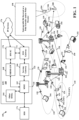
- the UE 104 and/or mmW base station 180 may be configured to perform semi-parallel bit-reversal at a polar encoder and/or polar decoder (198).
- FIG. 2A is a diagram 200 illustrating an example of a DL frame structure in LTE.
- FIG. 2B is a diagram 230 illustrating an example of channels within the DL frame structure in LTE.
- FIG. 2C is a diagram 250 illustrating an example of an UL frame structure in LTE.
- FIG. 2D is a diagram 280 illustrating an example of channels within the UL frame structure in LTE.
- Other wireless communication technologies may have a different frame structure and/or different channels.
- a frame (10 ms) may be divided into 10 equally sized subframes. Each subframe may include two consecutive time slots.
- a resource grid may be used to represent the two time slots, each time slot including one or more time concurrent resource blocks (RBs) (also referred to as physical RBs (PRBs)).
- RBs time concurrent resource blocks
- PRBs physical RBs
- the resource grid is divided into multiple resource elements (REs).
- REs resource elements
- an RB contains 12 consecutive subcarriers in the frequency domain and 7 consecutive symbols (for DL, OFDM symbols; for UL, SC-FDMA symbols) in the time domain, for a total of 84 REs.
- an RB contains 12 consecutive subcarriers in the frequency domain and 6 consecutive symbols in the time domain, for a total of 72 REs.
- the number of bits carried by each RE depends on the modulation scheme.
- the DL-RS may include cell-specific reference signals (CRS) (also sometimes called common RS), UE-specific reference signals (UE-RS), and channel state information reference signals (CSI-RS).
- CRS cell-specific reference signals
- UE-RS UE-specific reference signals
- CSI-RS channel state information reference signals
- FIG. 2A illustrates CRS for antenna ports 0, 1, 2, and 3 (indicated as R 0 , R 1 , R 2 , and R 3 , respectively), UE-RS for antenna port 5 (indicated as R 5 ), and CSI-RS for antenna port 15 (indicated as R).
- FIG. 2B illustrates an example of various channels within a DL subframe of a frame.
- the physical control format indicator channel (PCFICH) is within symbol 0 of slot 0, and carries a control format indicator (CFI) that indicates whether the physical downlink control channel (PDCCH) occupies 1, 2, or 3 symbols ( FIG. 2B illustrates a PDCCH that occupies 3 symbols).
- the PDCCH carries downlink control information (DCI) within one or more control channel elements (CCEs), each CCE including nine RE groups (REGs), each REG including four consecutive REs in an OFDM symbol.
- DCI downlink control information
- CCEs control channel elements
- Each CCE including nine RE groups (REGs), each REG including four consecutive REs in an OFDM symbol.
- a UE may be configured with a UE-specific enhanced PDCCH (ePDCCH) that also carries DCI.
- the ePDCCH may have 2, 4, or 8 RB pairs ( FIG. 2B shows two RB pairs, each subset including one RB pair).
- the physical hybrid automatic repeat request (ARQ) (HARQ) indicator channel (PHICH) is also within symbol 0 of slot 0 and carries the HARQ indicator (HI) that indicates HARQ acknowledgement (ACK) / negative ACK (NACK) feedback based on the physical uplink shared channel (PUSCH).
- the primary synchronization channel (PSCH) is within symbol 6 of slot 0 within subframes 0 and 5 of a frame, and carries a primary synchronization signal (PSS) that is used by a UE to determine subframe timing and a physical layer identity.
- the secondary synchronization channel is within symbol 5 of slot 0 within subframes 0 and 5 of a frame, and carries a secondary synchronization signal (SSS) that is used by a UE to determine a physical layer cell identity group number. Based on the physical layer identity and the physical layer cell identity group number, the UE can determine a physical cell identifier (PCI). Based on the PCI, the UE can determine the locations of the aforementioned DL-RS.
- the physical broadcast channel (PBCH) is within symbols 0, 1, 2, 3 of slot 1 of subframe 0 of a frame, and carries a master information block (MIB).
- some of the REs carry demodulation reference signals (DM-RS) for channel estimation at the eNB.
- the UE may additionally transmit sounding reference signals (SRS) in the last symbol of a subframe.
- SRS sounding reference signals
- the SRS may have a comb structure, and a UE may transmit SRS on one of the combs.
- the SRS may be used by an eNB for channel quality estimation to enable frequency-dependent scheduling on the UL.
- FIG. 2D illustrates an example of various channels within an UL subframe of a frame.
- a physical random access channel (PRACH) may be within one or more subframes within a frame based on the PRACH configuration.
- the PRACH may include six consecutive RB pairs within a subframe.
- PRACH physical random access channel
- the controller/processor 375 provides RRC layer functionality associated with broadcasting of system information (e.g., MIB, SIBs), RRC connection control (e.g., RRC connection paging, RRC connection establishment, RRC connection modification, and RRC connection release), inter radio access technology (RAT) mobility, and measurement configuration for UE measurement reporting; PDCP layer functionality associated with header compression / decompression, security (ciphering, deciphering, integrity protection, integrity verification), and handover support functions; RLC layer functionality associated with the transfer of upper layer packet data units (PDUs), error correction through ARQ, concatenation, segmentation, and reassembly of RLC service data units (SDUs), re-segmentation of RLC data PDUs, and reordering of RLC data PDUs; and MAC layer functionality associated with mapping between logical channels and transport channels, multiplexing of MAC SDUs onto transport blocks (TBs), demultiplexing of MAC SDUs from TBs, scheduling information reporting, error correction
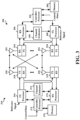
- the transmit (TX) processor 316 and the receive (RX) processor 370 implement layer 1 functionality associated with various signal processing functions.
- Layer 1 which includes a physical (PHY) layer, may include error detection on the transport channels, forward error correction (FEC) coding/decoding of the transport channels, interleaving, rate matching, mapping onto physical channels, modulation/demodulation of physical channels, and MIMO antenna processing.
- the TX processor 316 handles mapping to signal constellations based on various modulation schemes (e.g., binary phase-shift keying (BPSK), quadrature phase-shift keying (QPSK), M-phase-shift keying (M-PSK), M-quadrature amplitude modulation (M-QAM)).
- BPSK binary phase-shift keying
- QPSK quadrature phase-shift keying
- M-PSK M-phase-shift keying
- M-QAM M-quadrature amplitude modulation
- Each stream may then be mapped to an OFDM subcarrier, multiplexed with a reference signal (e.g., pilot) in the time and/or frequency domain, and then combined together using an Inverse Fast Fourier Transform (IFFT) to produce a physical channel carrying a time domain OFDM symbol stream.
- the OFDM stream is spatially precoded to produce multiple spatial streams.
- Channel estimates from a channel estimator 374 may be used to determine the coding and modulation scheme, as well as for spatial processing.
- the channel estimate may be derived from a reference signal and/or channel condition feedback transmitted by the UE 350.
- Each spatial stream may then be provided to a different antenna 320 via a separate transmitter 318TX.
- Each transmitter 318TX may modulate an RF carrier with a respective spatial stream for transmission.
- each receiver 354RX receives a signal through its respective antenna 352.
- Each receiver 354RX recovers information modulated onto an RF carrier and provides the information to the receive (RX) processor 356.
- the TX processor 368 and the RX processor 356 implement layer 1 functionality associated with various signal processing functions.
- the RX processor 356 may perform spatial processing on the information to recover any spatial streams destined for the UE 350. If multiple spatial streams are destined for the UE 350, they may be combined by the RX processor 356 into a single OFDM symbol stream.
- the RX processor 356 then converts the OFDM symbol stream from the time-domain to the frequency domain using a Fast Fourier Transform (FFT).
- FFT Fast Fourier Transform
- the frequency domain signal comprises a separate OFDM symbol stream for each subcarrier of the OFDM signal.
- the symbols on each subcarrier, and the reference signal, are recovered and demodulated by determining the most likely signal constellation points transmitted by the eNB 310. These soft decisions may be based on channel estimates computed by the channel estimator 358.
- the soft decisions are then decoded and deinterleaved to recover the data and control signals that were originally transmitted by the eNB 310 on the physical channel.
- the data and control signals are then provided to the controller/processor 359, which implements layer 3 and layer 2 functionality.
- the controller/processor 359 provides RRC layer functionality associated with system information (e.g., MIB, SIBs) acquisition, RRC connections, and measurement reporting; PDCP layer functionality associated with header compression / decompression, and security (ciphering, deciphering, integrity protection, integrity verification); RLC layer functionality associated with the transfer of upper layer PDUs, error correction through ARQ, concatenation, segmentation, and reassembly of RLC SDUs, re-segmentation of RLC data PDUs, and reordering of RLC data PDUs; and MAC layer functionality associated with mapping between logical channels and transport channels, multiplexing of MAC SDUs onto TBs, demultiplexing of MAC SDUs from TBs, scheduling information reporting, error correction through HARQ, priority handling, and logical channel prioritization.
- RRC layer functionality associated with system information (e.g., MIB, SIBs) acquisition, RRC connections, and measurement reporting
- PDCP layer functionality associated with header compression
- Channel estimates derived by a channel estimator 358 from a reference signal or feedback transmitted by the eNB 310 may be used by the TX processor 368 to select the appropriate coding and modulation schemes, and to facilitate spatial processing.
- the spatial streams generated by the TX processor 368 may be provided to different antenna 352 via separate transmitters 354TX. Each transmitter 354TX may modulate an RF carrier with a respective spatial stream for transmission.
- the UL transmission is processed at the eNB 310 in a manner similar to that described in connection with the receiver function at the UE 350.
- Each receiver 318RX receives a signal through its respective antenna 320.
- Each receiver 318RX recovers information modulated onto an RF carrier and provides the information to a RX processor 370.
- the controller/processor 375 can be associated with a memory 376 that stores program codes and data.
- the memory 376 may be referred to as a computer-readable medium.
- the controller/processor 375 provides demultiplexing between transport and logical channels, packet reassembly, deciphering, header decompression, control signal processing to recover IP packets from the UE 350. IP packets from the controller/processor 375 may be provided to the EPC 160.
- the controller/processor 375 is also responsible for error detection using an ACK and/or NACK protocol to support HARQ operations.
- Data encoding may be used in various communication systems (e.g., mmW communication systems) so that errors in a received message may be corrected and/or detected by the decoder of a receiver device.
- Linear block codes are a type of error-correcting codes that may be used to encode data in blocks.
- Polar codes may generate data at a rate sufficient to transmit at channel capacity for symmetric binary-input discrete memoryless channels, and may be constructed on the basis of a probabilistic phenomenon referred to as "channel polarization.”
- channel polarization refers to the observation that as the code length N grows large for polar codes, the "channels" associated with individual bits in an information vector u may asymptotically approach either a pure-noise channel or a pure-noiseless channel. The fraction of channels that become noiseless may be equal to the capacity of the channel in the limit case.
- Polar codes may be constructed by identifying the indices of the bits in the information vector u that are associated with channels approaching noise free conditions and by using the identified indices (or some subset of the identified indices) to transmit information (e.g., tones and/or signals), while setting the remaining indices to predetermined values known by both the encoder and decoder.
- the codewords may be related to the message (e.g., tone and/or signals) that is transmitted using a linear transformation. Since the codewords may be longer than the messages, the matrix that represents the linear transformation may be rectangular. In order to simplify the analysis of a received codeword, the input message at the decoder may be padded with extra bits that are constant (e.g., "frozen bits") in order to make the matrix square.
- Polar decoding is conventionally performed using a serial cancellation decoding algorithm.
- the serial cancellation decoding algorithm may perform a soft estimation of the original information vector u .
- parallelization may not be exploited in implementing the algorithm.
- a polar decoder may suffer from low decoding throughput and high latency.
- the present disclosure provides a solution by enabling a semi-parallel bit-reversal technique at the polar encoder of a transmitter device and/or the polar decoder of a receiver device such that the latency associated with the serial cancellation decoding algorithm of conventional polar encoding and/or polar decoding techniques may be reduced.
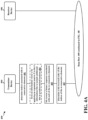
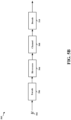
- FIGs. 4A and 4B illustrate a data flow 400 for a first example of performing polar encoding of a signal that is transmitted from a transmitter device 404 to a receiver device 406 in accordance with certain aspects of the disclosure.
- the transmitter device 404 may correspond to, e.g., the base station 102, 180, the eNB 310, the UE 104, 182, 350, the transmitter device 1250, the apparatus 902/902', 1502/1502'.
- the receiver device 406 may correspond to, e.g., the base station 102, 180, the eNB 310, the UE 104, 182, 350, the receiver device 950, 1550, the apparatus 1202/1202'.
- the transmitter device 404 may be a base station, and the receiver device 406 may be a UE. In certain other configurations, the transmitter device 404 may be a UE, and the receiver device 406 may be a base station. In FIGs. 4A and 4B , optional operations are indicated with dashed lines.
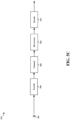
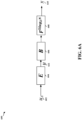
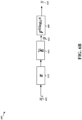
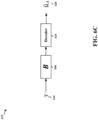
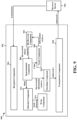
- the transmitter device 404 may include a polar encoder (e.g., see FIGs. 5A-5C ) and the receiver device 406 may include a polar decoder (e.g., see FIGs. 5A-5C ).
- the polar encoder of the transmitter device 404 and/or the polar decoder of the receiver device 406 may perform semi-parallel and/or parallel bit-reversal technique such that the latency associated with the serial bit-reversal of conventional polar encoding and/or polar decoding may be reduced.
- the ( N, k ) polar code of the present disclosure may encode information bits u A (e.g., k number of bits) into a codeword vector x of length N .
- the transmitter device 404 may obtain a codeword vector x by multiplying information bits u A by an expansion matrix E to form an information vector u.
- the information vector u may be multiplied by a generator matrix F ⁇ log2N to obtain the codeword vector x .
- the codeword vector x may be transmitted to a receiver device 406 over a communication channel.
- a decoder at the receiver device 406 may receive a vector y that represents the codeword vector x with noise picked up during transmission on the communication channel.
- the decoder may process the vector y to produce an estimate û A of the original information vector u.
- Bit reversal may be defined as indexing m consecutive elements in a sequence of elements from 0 to m- 1 and then reversing binary sequences of each of the m consecutive elements.
- the most significant log2( m ) bit e.g., leftmost bit
- the least significant log2( m ) bit may become the least significant log2( m ) bit (e.g., rightmost bit)
- the least significant log2( m ) may become the most signification log2( m ) bit.
- transmitter device 404 may apply 413 a non-reversed encoding matrix F ⁇ log2N to information vector u .
- F 1 0 1 1 .
- transmitter device 404 may apply 413 the non-reversed encoding matrix F ⁇ log2N before the bit-reversal permutation matrix B is applied to the information vector u, as discussed infra with respect to FIG. 5A .
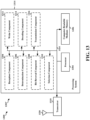
- FIG. 16 is a diagram 1600 illustrating an example of a hardware implementation for an apparatus 1502' employing a processing system 1614.
- the processing system 1614 may be implemented with a bus architecture, represented generally by the bus 1624.
- the bus 1624 may include any number of interconnecting buses and bridges depending on the specific application of the processing system 1614 and the overall design constraints.
- the bus 1624 links together various circuits including one or more processors and/or hardware components, represented by the processor 1604, the components 1504, 1506, 1508, 1510, 1512, 1514, and the computer-readable medium / memory 1606.
- the bus 1624 may also link various other circuits such as timing sources, peripherals, voltage regulators, and power management circuits, which are well known in the art, and therefore, will not be described any further.
- the processing system 1614 may be coupled to a transceiver 1610.
- the transceiver 1610 is coupled to one or more antennas 1620.
- the transceiver 1610 provides a means for communicating with various other apparatus over a transmission medium.
- the transceiver 1610 receives a signal from the one or more antennas 1620, extracts information from the received signal, and provides the extracted information to the processing system 1614, specifically the reception component 1504.
- the transceiver 1610 receives information from the processing system 1614, specifically the transmission component 1514, and based on the received information, generates a signal to be applied to the one or more antennas 1620.
- the processing system 1614 includes a processor 1604 coupled to a computer-readable medium / memory 1606.
- Combinations such as "at least one of A, B, or C,” “one or more of A, B, or C,” “at least one of A, B, and C,” “one or more of A, B, and C,” and "A, B, C, or any combination thereof” include any combination of A, B, and/or C, and may include multiples of A, multiples of B, or multiples of C.
- combinations such as “at least one of A, B, or C,” “one or more of A, B, or C,” “at least one of A, B, and C,” “one or more of A, B, and C,” and “A, B, C, or any combination thereof” may be A only, B only, C only, A and B, A and C, B and C, or A and B and C, where any such combinations may contain one or more member or members of A, B, or C.
Landscapes
- Physics & Mathematics (AREA)
- Engineering & Computer Science (AREA)
- Theoretical Computer Science (AREA)
- Probability & Statistics with Applications (AREA)
- General Physics & Mathematics (AREA)
- Mathematical Physics (AREA)
- Pure & Applied Mathematics (AREA)
- Computational Mathematics (AREA)
- Algebra (AREA)
- Mathematical Analysis (AREA)
- Mathematical Optimization (AREA)
- Data Mining & Analysis (AREA)
- Computing Systems (AREA)
- Databases & Information Systems (AREA)
- Software Systems (AREA)
- General Engineering & Computer Science (AREA)
- Mobile Radio Communication Systems (AREA)
- Compression, Expansion, Code Conversion, And Decoders (AREA)
Claims (13)
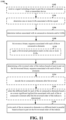
- Un procédé de décodage polaire d'un vecteur de mot de code (408) pour une communication sans fil, le procédé étant réalisé par un dispositif récepteur (406), le procédé comprenant :la réception (1102) d'un signal à partir d'un dispositif émetteur (404), le signal comportant un vecteur de mot de code (408) ;le fractionnement du vecteur de mot de code (408) en m éléments consécutifs ;la détermination (1106) d'indices associés à chacun des m éléments consécutifs, chacun des m éléments consécutifs étant associé à un indice différent ;l'inversion des bits (1108) d'une séquence binaire de chacun des m éléments consécutifs, chacun des m éléments consécutifs comporte une séquence binaire différente ;la détermination (1112) d'un ordre de bits inversés des indices ;l'écriture (1118) de chacun des m éléments consécutifs en parallèle dans un bloc de mémoire différent, sur la base au moins en partie de l'ordre de bits inversés des indices ; etle décodage polaire (1114) des m éléments consécutifs après inversion des bits pour produire une estimation d'un vecteur d'information d'origine.
- Le procédé selon la revendication 1, comprenant en outre :la sélection (1116) du bloc de mémoire différent pour chacun des m éléments consécutifs sur la base de log2(m) bits de poids fort associés à chacun des m éléments consécutifs après que l'ordre de bits inversés des indices a été déterminé,dans lequel chaque séquence binaire associée à chacun des m éléments consécutifs a log2(m) bits de poids faible différents, etdans lequel chacun des m éléments consécutifs a log2(m) bits de poids fort différents après que la séquence binaire a été mise à bits inversés.
- Le procédé selon la revendication 1, comprenant en outre :
la détermination (1104) d'un ou plusieurs rapports de vraisemblance logarithmique, LLR, associés au signal, les m éléments consécutifs comportant les un ou plusieurs LLR. - Le procédé selon la revendication 3, dans lequel la détermination (1104) des un ou plusieurs LLR associés au signal comprend en outre :
la détermination si les bits dans chacun des m éléments consécutifs sont plus susceptibles d'être à zéro ou bien à un, et combien sont plus susceptibles. - Le procédé selon la revendication 3, dans lequel les un ou plusieurs LLR sont utilisés pour le traitement au niveau d'un décodeur polaire comme estimation des m éléments consécutifs.
- Le procédé selon la revendication 3, dans lequel l'inversion des bits (1108) de la séquence binaire associée à chacun des m éléments consécutifs ou à chacun des un ou plusieurs LLR comprend :
l'application (1110) d'une matrice de permutation d'inversion des bits aux un ou plusieurs LLR. - Le procédé selon la revendication 1, dans lequel chaque bloc de mémoire est aussi étroit qu'un rapport de vraisemblance logarithmique, LLR, associés au signal.
- Un dispositif récepteur (406) pour le décodage polaire d'un vecteur de mot de code (408) pour une communication sans fil, le dispositif récepteur (406) comprenant :un moyen de réception d'un signal à partir d'un dispositif émetteur (404), le signal comportant un vecteur de mot de code (408) ;un moyen de fractionnement du vecteur de mot de code (408) en m éléments consécutifs ;un moyen de détermination d'indices associés à chacun des m éléments consécutifs, chacun des m éléments consécutifs étant associé à un indice différent ;un moyen d'inversion des bits d'une séquence binaire de chacun des m éléments consécutifs, chacun des m éléments consécutifs comporte une séquence binaire différente ;un moyen de détermination d'un ordre de bits inversés des indices ;un moyen d'écriture de chacun des m éléments consécutifs en parallèle dans un bloc de mémoire différent, sur la base au moins en partie de l'ordre de bits inversés des indices ; etun moyen de décodage des m éléments consécutifs après inversion des bits pour produire une estimation d'un vecteur d'information d'origine.
- L'appareil selon la revendication 8, comprenant en outre :un moyen de sélection du bloc de mémoire différent pour chacun des m éléments consécutifs sur la base de log2(m) bits de poids fort associés à chacun des m éléments consécutifs après que l'ordre de bits inversés des indices a été déterminé,dans lequel chaque séquence binaire associée à chacun des m éléments consécutifs a log2(m) bits de poids faible différents, etdans lequel chacun des m éléments consécutifs a log2(m) bits de poids fort différents après que la séquence binaire a été mise à bits inversés.
- L'appareil selon la revendication 8, comprenant en outre :
un moyen de détermination d'un ou plusieurs rapports de vraisemblance logarithmique, LLR, associés au signal, les m éléments consécutifs comportant les un ou plusieurs LLR. - L'appareil selon la revendication 10, dans lequel le moyen de détermination des un ou plusieurs LLR associés au signal comprend en outre :
un moyen de détermination si les bits dans chacun des m éléments consécutifs sont plus susceptibles d'être à zéro ou à un, et combien sont plus susceptibles. - L'appareil selon la revendication 10, dans lequel les un ou plusieurs LLR sont utilisés pour le traitement au niveau d'un décodeur polaire comme estimation des m éléments consécutifs.
- L'appareil selon la revendication 10, dans lequel le moyen d'inversion des bits de la séquence binaire associée à chacun des m éléments consécutifs ou à chacun des un ou plusieurs LLR comprend:
un moyen d'application d'une matrice de permutation d'inversion des bits aux un ou plusieurs LLR.
Applications Claiming Priority (4)
| Application Number | Priority Date | Filing Date | Title |
|---|---|---|---|
| US201762444261P | 2017-01-09 | 2017-01-09 | |
| US15/704,204 US10476525B2 (en) | 2017-01-09 | 2017-09-14 | Low latency bit-reversed polar codes |
| PCT/US2017/068664 WO2018128901A1 (fr) | 2017-01-09 | 2017-12-28 | Codage et décodage à faible latence de codes polaires à bits inversés |
| EP17833068.4A EP3566318B1 (fr) | 2017-01-09 | 2017-12-28 | Codage et décodage à faible latence de codes polaires à bits inversés |
Related Parent Applications (2)
| Application Number | Title | Priority Date | Filing Date |
|---|---|---|---|
| EP17833068.4A Division EP3566318B1 (fr) | 2017-01-09 | 2017-12-28 | Codage et décodage à faible latence de codes polaires à bits inversés |
| EP17833068.4A Division-Into EP3566318B1 (fr) | 2017-01-09 | 2017-12-28 | Codage et décodage à faible latence de codes polaires à bits inversés |
Publications (3)
| Publication Number | Publication Date |
|---|---|
| EP4236080A2 EP4236080A2 (fr) | 2023-08-30 |
| EP4236080A3 EP4236080A3 (fr) | 2023-09-06 |
| EP4236080B1 true EP4236080B1 (fr) | 2025-06-25 |
Family
ID=62783675
Family Applications (2)
| Application Number | Title | Priority Date | Filing Date |
|---|---|---|---|
| EP23180088.9A Active EP4236080B1 (fr) | 2017-01-09 | 2017-12-28 | Codage et décodage à faible latence de codes polaires à bits inversés |
| EP17833068.4A Active EP3566318B1 (fr) | 2017-01-09 | 2017-12-28 | Codage et décodage à faible latence de codes polaires à bits inversés |
Family Applications After (1)
| Application Number | Title | Priority Date | Filing Date |
|---|---|---|---|
| EP17833068.4A Active EP3566318B1 (fr) | 2017-01-09 | 2017-12-28 | Codage et décodage à faible latence de codes polaires à bits inversés |
Country Status (5)
| Country | Link |
|---|---|
| US (1) | US10476525B2 (fr) |
| EP (2) | EP4236080B1 (fr) |
| CN (1) | CN110178312B (fr) |
| TW (1) | TW201841120A (fr) |
| WO (1) | WO2018128901A1 (fr) |
Families Citing this family (7)
| Publication number | Priority date | Publication date | Assignee | Title |
|---|---|---|---|---|
| US10517021B2 (en) | 2016-06-30 | 2019-12-24 | Evolve Cellular Inc. | Long term evolution-primary WiFi (LTE-PW) |
| US10348328B2 (en) | 2017-01-06 | 2019-07-09 | At&T Intellectual Property I, L.P. | Reducing control channel overhead using polar codes |
| CN108809500B (zh) * | 2017-05-05 | 2020-12-22 | 华为技术有限公司 | 编码方法、装置和设备 |
| CN108809334B (zh) * | 2017-05-05 | 2021-07-20 | 中兴通讯股份有限公司 | 序列确定方法及装置、设备 |
| US10868569B2 (en) * | 2017-05-08 | 2020-12-15 | Qualcomm Incorporated | PBCH signal design and efficient continuous monitoring and polar decoding |
| US10560910B2 (en) | 2017-06-12 | 2020-02-11 | Qualcomm Incoporated | Synchronization signal for a broadcast channel |
| CN112087237B (zh) * | 2020-09-15 | 2024-10-18 | Oppo广东移动通信有限公司 | 数据处理方法、芯片及终端 |
Family Cites Families (16)
| Publication number | Priority date | Publication date | Assignee | Title |
|---|---|---|---|---|
| US6105158A (en) * | 1998-04-03 | 2000-08-15 | Lucent Technologies, Inc. | Screening for undetected errors in data transmission systems |
| JP2003296021A (ja) * | 2002-03-29 | 2003-10-17 | Mitsumi Electric Co Ltd | ワイヤレス式マウスにおける無線データ送出方法及びワイヤレス式マウス |
| JP4903790B2 (ja) * | 2005-05-12 | 2012-03-28 | クゥアルコム・インコーポレイテッド | 通信システムにおけるチャネル・インタリービングのための装置及び方法 |
| GB2432765B (en) * | 2005-11-26 | 2008-04-30 | Wolfson Microelectronics Plc | Audio device |
| US8009701B2 (en) * | 2007-08-13 | 2011-08-30 | Qualcomm Incorporated | Secondary synchronization codebook for E-utran |
| KR100911307B1 (ko) * | 2008-03-17 | 2009-08-11 | 엘지전자 주식회사 | 기준신호 전송 방법 |
| US8677227B2 (en) * | 2010-08-25 | 2014-03-18 | Royal Institution for the Advancement of Learning / McGill University | Method and system for decoding |
| US9176927B2 (en) | 2011-11-08 | 2015-11-03 | The Royal Institution For The Advancement Of Learning/Mcgill University | Methods and systems for decoding polar codes |
| WO2013097235A1 (fr) * | 2011-12-31 | 2013-07-04 | 中国科学院自动化研究所 | Dispositif et procédé d'inversion d'ordre de bits parallèle |
| US9503126B2 (en) * | 2012-07-11 | 2016-11-22 | The Regents Of The University Of California | ECC polar coding and list decoding methods and codecs |
| US9251377B2 (en) * | 2012-12-28 | 2016-02-02 | Intel Corporation | Instructions processors, methods, and systems to process secure hash algorithms |
| US9007241B2 (en) * | 2013-09-16 | 2015-04-14 | Seagate Technology Llc | Reduced polar codes |
| US9319073B2 (en) * | 2014-02-11 | 2016-04-19 | Seagate Technology Llc | Mitigation of write errors in multi-level cell flash memory through adaptive error correction code decoding |
| KR102157667B1 (ko) * | 2014-05-15 | 2020-09-18 | 삼성전자주식회사 | 천공 장치 및 그의 천공 방법 |
| CN104378120B (zh) * | 2014-11-14 | 2017-07-25 | 中国航天科技集团公司第九研究院第七七一研究所 | 一种用于连续MBU检测的Hsiao编码校验矩阵生成方法 |
| US10425107B2 (en) * | 2016-09-09 | 2019-09-24 | Huawei Technologies Co., Ltd. | Partial sum computation for polar code decoding |
-
2017
- 2017-09-14 US US15/704,204 patent/US10476525B2/en active Active
- 2017-12-28 EP EP23180088.9A patent/EP4236080B1/fr active Active
- 2017-12-28 WO PCT/US2017/068664 patent/WO2018128901A1/fr not_active Ceased
- 2017-12-28 EP EP17833068.4A patent/EP3566318B1/fr active Active
- 2017-12-28 TW TW106146196A patent/TW201841120A/zh unknown
- 2017-12-28 CN CN201780082287.9A patent/CN110178312B/zh active Active
Also Published As
| Publication number | Publication date |
|---|---|
| CN110178312A (zh) | 2019-08-27 |
| EP4236080A3 (fr) | 2023-09-06 |
| EP3566318A1 (fr) | 2019-11-13 |
| CN110178312B (zh) | 2023-05-09 |
| WO2018128901A1 (fr) | 2018-07-12 |
| EP3566318B1 (fr) | 2023-08-16 |
| EP4236080A2 (fr) | 2023-08-30 |
| US10476525B2 (en) | 2019-11-12 |
| TW201841120A (zh) | 2018-11-16 |
| US20180198469A1 (en) | 2018-07-12 |
Similar Documents
| Publication | Publication Date | Title |
|---|---|---|
| US11206626B2 (en) | Synchronization signal for a broadcast channel | |
| CN110168981B (zh) | 用于解码用波束索引联合编码的广播信息的方法和装备 | |
| EP3440783B1 (fr) | Techniques de conception de livre de codes à accès multiple par code épars (scma) | |
| EP3455975B1 (fr) | Techniques de mécanisme de demande de répétition automatique hybride (harq) comportant des codes polaires | |
| EP4236080B1 (fr) | Codage et décodage à faible latence de codes polaires à bits inversés | |
| US10972211B2 (en) | Support for multiple coding schemes | |
| KR20180027509A (ko) | 기본 계층으로서 레거시 사용자 장비를 이용한 비-직교 다중 액세스를 위한 기준 신호 및 시그널링 설계 | |
| US10686472B2 (en) | Methods and apparatus for achieving low coding rates |
Legal Events
| Date | Code | Title | Description |
|---|---|---|---|
| PUAI | Public reference made under article 153(3) epc to a published international application that has entered the european phase |
Free format text: ORIGINAL CODE: 0009012 |
|
| STAA | Information on the status of an ep patent application or granted ep patent |
Free format text: STATUS: REQUEST FOR EXAMINATION WAS MADE |
|
| REG | Reference to a national code |
Ref country code: DE Ref legal event code: R079 Free format text: PREVIOUS MAIN CLASS: H03M0013000000 Ipc: H03M0013130000 Ref country code: DE Ref legal event code: R079 Ref document number: 602017090227 Country of ref document: DE Free format text: PREVIOUS MAIN CLASS: H03M0013000000 Ipc: H03M0013130000 |
|
| PUAL | Search report despatched |
Free format text: ORIGINAL CODE: 0009013 |
|
| 17P | Request for examination filed |
Effective date: 20230619 |
|
| AC | Divisional application: reference to earlier application |
Ref document number: 3566318 Country of ref document: EP Kind code of ref document: P |
|
| AK | Designated contracting states |
Kind code of ref document: A2 Designated state(s): AL AT BE BG CH CY CZ DE DK EE ES FI FR GB GR HR HU IE IS IT LI LT LU LV MC MK MT NL NO PL PT RO RS SE SI SK SM TR |
|
| AK | Designated contracting states |
Kind code of ref document: A3 Designated state(s): AL AT BE BG CH CY CZ DE DK EE ES FI FR GB GR HR HU IE IS IT LI LT LU LV MC MK MT NL NO PL PT RO RS SE SI SK SM TR |
|
| RIC1 | Information provided on ipc code assigned before grant |
Ipc: H03M 13/00 20060101ALI20230731BHEP Ipc: H03M 13/13 20060101AFI20230731BHEP |
|
| GRAP | Despatch of communication of intention to grant a patent |
Free format text: ORIGINAL CODE: EPIDOSNIGR1 |
|
| STAA | Information on the status of an ep patent application or granted ep patent |
Free format text: STATUS: GRANT OF PATENT IS INTENDED |
|
| INTG | Intention to grant announced |
Effective date: 20250212 |
|
| GRAS | Grant fee paid |
Free format text: ORIGINAL CODE: EPIDOSNIGR3 |
|
| GRAA | (expected) grant |
Free format text: ORIGINAL CODE: 0009210 |
|
| STAA | Information on the status of an ep patent application or granted ep patent |
Free format text: STATUS: THE PATENT HAS BEEN GRANTED |
|
| AC | Divisional application: reference to earlier application |
Ref document number: 3566318 Country of ref document: EP Kind code of ref document: P |
|
| AK | Designated contracting states |
Kind code of ref document: B1 Designated state(s): AL AT BE BG CH CY CZ DE DK EE ES FI FR GB GR HR HU IE IS IT LI LT LU LV MC MK MT NL NO PL PT RO RS SE SI SK SM TR |
|
| REG | Reference to a national code |
Ref country code: GB Ref legal event code: FG4D |
|
| REG | Reference to a national code |
Ref country code: CH Ref legal event code: EP |
|
| REG | Reference to a national code |
Ref country code: DE Ref legal event code: R096 Ref document number: 602017090227 Country of ref document: DE |
|
| REG | Reference to a national code |
Ref country code: CH Ref legal event code: EP |
|
| REG | Reference to a national code |
Ref country code: IE Ref legal event code: FG4D |
|
| PG25 | Lapsed in a contracting state [announced via postgrant information from national office to epo] |
Ref country code: FI Free format text: LAPSE BECAUSE OF FAILURE TO SUBMIT A TRANSLATION OF THE DESCRIPTION OR TO PAY THE FEE WITHIN THE PRESCRIBED TIME-LIMIT Effective date: 20250625 |
|
| REG | Reference to a national code |
Ref country code: LT Ref legal event code: MG9D |
|
| PG25 | Lapsed in a contracting state [announced via postgrant information from national office to epo] |
Ref country code: NO Free format text: LAPSE BECAUSE OF FAILURE TO SUBMIT A TRANSLATION OF THE DESCRIPTION OR TO PAY THE FEE WITHIN THE PRESCRIBED TIME-LIMIT Effective date: 20250925 Ref country code: GR Free format text: LAPSE BECAUSE OF FAILURE TO SUBMIT A TRANSLATION OF THE DESCRIPTION OR TO PAY THE FEE WITHIN THE PRESCRIBED TIME-LIMIT Effective date: 20250926 |
|
| PG25 | Lapsed in a contracting state [announced via postgrant information from national office to epo] |
Ref country code: BG Free format text: LAPSE BECAUSE OF FAILURE TO SUBMIT A TRANSLATION OF THE DESCRIPTION OR TO PAY THE FEE WITHIN THE PRESCRIBED TIME-LIMIT Effective date: 20250625 |
|
| PG25 | Lapsed in a contracting state [announced via postgrant information from national office to epo] |
Ref country code: HR Free format text: LAPSE BECAUSE OF FAILURE TO SUBMIT A TRANSLATION OF THE DESCRIPTION OR TO PAY THE FEE WITHIN THE PRESCRIBED TIME-LIMIT Effective date: 20250625 |
|
| PG25 | Lapsed in a contracting state [announced via postgrant information from national office to epo] |
Ref country code: RS Free format text: LAPSE BECAUSE OF FAILURE TO SUBMIT A TRANSLATION OF THE DESCRIPTION OR TO PAY THE FEE WITHIN THE PRESCRIBED TIME-LIMIT Effective date: 20250925 |
|
| PG25 | Lapsed in a contracting state [announced via postgrant information from national office to epo] |
Ref country code: LV Free format text: LAPSE BECAUSE OF FAILURE TO SUBMIT A TRANSLATION OF THE DESCRIPTION OR TO PAY THE FEE WITHIN THE PRESCRIBED TIME-LIMIT Effective date: 20250625 |
|
| REG | Reference to a national code |
Ref country code: NL Ref legal event code: MP Effective date: 20250625 |
|
| PG25 | Lapsed in a contracting state [announced via postgrant information from national office to epo] |
Ref country code: NL Free format text: LAPSE BECAUSE OF FAILURE TO SUBMIT A TRANSLATION OF THE DESCRIPTION OR TO PAY THE FEE WITHIN THE PRESCRIBED TIME-LIMIT Effective date: 20250625 |
|
| PG25 | Lapsed in a contracting state [announced via postgrant information from national office to epo] |
Ref country code: PT Free format text: LAPSE BECAUSE OF FAILURE TO SUBMIT A TRANSLATION OF THE DESCRIPTION OR TO PAY THE FEE WITHIN THE PRESCRIBED TIME-LIMIT Effective date: 20251027 |
|
| REG | Reference to a national code |
Ref country code: AT Ref legal event code: MK05 Ref document number: 1807675 Country of ref document: AT Kind code of ref document: T Effective date: 20250625 |
|
| PG25 | Lapsed in a contracting state [announced via postgrant information from national office to epo] |
Ref country code: IS Free format text: LAPSE BECAUSE OF FAILURE TO SUBMIT A TRANSLATION OF THE DESCRIPTION OR TO PAY THE FEE WITHIN THE PRESCRIBED TIME-LIMIT Effective date: 20251025 |
|
| PGFP | Annual fee paid to national office [announced via postgrant information from national office to epo] |
Ref country code: DE Payment date: 20251118 Year of fee payment: 9 |
|
| PGFP | Annual fee paid to national office [announced via postgrant information from national office to epo] |
Ref country code: GB Payment date: 20251113 Year of fee payment: 9 |
|
| PG25 | Lapsed in a contracting state [announced via postgrant information from national office to epo] |
Ref country code: AT Free format text: LAPSE BECAUSE OF FAILURE TO SUBMIT A TRANSLATION OF THE DESCRIPTION OR TO PAY THE FEE WITHIN THE PRESCRIBED TIME-LIMIT Effective date: 20250625 Ref country code: SM Free format text: LAPSE BECAUSE OF FAILURE TO SUBMIT A TRANSLATION OF THE DESCRIPTION OR TO PAY THE FEE WITHIN THE PRESCRIBED TIME-LIMIT Effective date: 20250625 |
|
| PGFP | Annual fee paid to national office [announced via postgrant information from national office to epo] |
Ref country code: FR Payment date: 20251111 Year of fee payment: 9 |
|
| PG25 | Lapsed in a contracting state [announced via postgrant information from national office to epo] |
Ref country code: CZ Free format text: LAPSE BECAUSE OF FAILURE TO SUBMIT A TRANSLATION OF THE DESCRIPTION OR TO PAY THE FEE WITHIN THE PRESCRIBED TIME-LIMIT Effective date: 20250625 |
|
| PG25 | Lapsed in a contracting state [announced via postgrant information from national office to epo] |
Ref country code: PL Free format text: LAPSE BECAUSE OF FAILURE TO SUBMIT A TRANSLATION OF THE DESCRIPTION OR TO PAY THE FEE WITHIN THE PRESCRIBED TIME-LIMIT Effective date: 20250625 |
|
| PG25 | Lapsed in a contracting state [announced via postgrant information from national office to epo] |
Ref country code: EE Free format text: LAPSE BECAUSE OF FAILURE TO SUBMIT A TRANSLATION OF THE DESCRIPTION OR TO PAY THE FEE WITHIN THE PRESCRIBED TIME-LIMIT Effective date: 20250625 |
|
| PG25 | Lapsed in a contracting state [announced via postgrant information from national office to epo] |
Ref country code: SK Free format text: LAPSE BECAUSE OF FAILURE TO SUBMIT A TRANSLATION OF THE DESCRIPTION OR TO PAY THE FEE WITHIN THE PRESCRIBED TIME-LIMIT Effective date: 20250625 |
|
| PG25 | Lapsed in a contracting state [announced via postgrant information from national office to epo] |
Ref country code: ES Free format text: LAPSE BECAUSE OF FAILURE TO SUBMIT A TRANSLATION OF THE DESCRIPTION OR TO PAY THE FEE WITHIN THE PRESCRIBED TIME-LIMIT Effective date: 20250625 |
|
| PG25 | Lapsed in a contracting state [announced via postgrant information from national office to epo] |
Ref country code: RO Free format text: LAPSE BECAUSE OF FAILURE TO SUBMIT A TRANSLATION OF THE DESCRIPTION OR TO PAY THE FEE WITHIN THE PRESCRIBED TIME-LIMIT Effective date: 20250625 |
|
| PG25 | Lapsed in a contracting state [announced via postgrant information from national office to epo] |
Ref country code: DK Free format text: LAPSE BECAUSE OF FAILURE TO SUBMIT A TRANSLATION OF THE DESCRIPTION OR TO PAY THE FEE WITHIN THE PRESCRIBED TIME-LIMIT Effective date: 20250625 |
|
| PG25 | Lapsed in a contracting state [announced via postgrant information from national office to epo] |
Ref country code: IT Free format text: LAPSE BECAUSE OF FAILURE TO SUBMIT A TRANSLATION OF THE DESCRIPTION OR TO PAY THE FEE WITHIN THE PRESCRIBED TIME-LIMIT Effective date: 20250625 |
|
| PLBE | No opposition filed within time limit |
Free format text: ORIGINAL CODE: 0009261 |
|
| STAA | Information on the status of an ep patent application or granted ep patent |
Free format text: STATUS: NO OPPOSITION FILED WITHIN TIME LIMIT |