EP4236123A2 - Signalisation de ressources ack/nack - Google Patents
Signalisation de ressources ack/nack Download PDFInfo
- Publication number
- EP4236123A2 EP4236123A2 EP23180089.7A EP23180089A EP4236123A2 EP 4236123 A2 EP4236123 A2 EP 4236123A2 EP 23180089 A EP23180089 A EP 23180089A EP 4236123 A2 EP4236123 A2 EP 4236123A2
- Authority
- EP
- European Patent Office
- Prior art keywords
- resource
- implicit
- static
- resources
- signaling
- Prior art date
- Legal status (The legal status is an assumption and is not a legal conclusion. Google has not performed a legal analysis and makes no representation as to the accuracy of the status listed.)
- Pending
Links
Images






Classifications
-
- H—ELECTRICITY
- H04—ELECTRIC COMMUNICATION TECHNIQUE
- H04J—MULTIPLEX COMMUNICATION
- H04J13/00—Code division multiplex systems
-
- H—ELECTRICITY
- H04—ELECTRIC COMMUNICATION TECHNIQUE
- H04L—TRANSMISSION OF DIGITAL INFORMATION, e.g. TELEGRAPHIC COMMUNICATION
- H04L5/00—Arrangements affording multiple use of the transmission path
- H04L5/0001—Arrangements for dividing the transmission path
- H04L5/0003—Two-dimensional division
- H04L5/0005—Time-frequency
- H04L5/0007—Time-frequency the frequencies being orthogonal, e.g. OFDM(A) or DMT
-
- H—ELECTRICITY
- H04—ELECTRIC COMMUNICATION TECHNIQUE
- H04L—TRANSMISSION OF DIGITAL INFORMATION, e.g. TELEGRAPHIC COMMUNICATION
- H04L1/00—Arrangements for detecting or preventing errors in the information received
- H04L1/12—Arrangements for detecting or preventing errors in the information received by using return channel
- H04L1/16—Arrangements for detecting or preventing errors in the information received by using return channel in which the return channel carries supervisory signals, e.g. repetition request signals
- H04L1/18—Automatic repetition systems, e.g. Van Duuren systems
- H04L1/1829—Arrangements specially adapted for the receiver end
- H04L1/1861—Physical mapping arrangements
-
- H—ELECTRICITY
- H04—ELECTRIC COMMUNICATION TECHNIQUE
- H04L—TRANSMISSION OF DIGITAL INFORMATION, e.g. TELEGRAPHIC COMMUNICATION
- H04L27/00—Modulated-carrier systems
- H04L27/26—Systems using multi-frequency codes
- H04L27/2601—Multicarrier modulation systems
- H04L27/2602—Signal structure
- H04L27/261—Details of reference signals
- H04L27/2613—Structure of the reference signals
-
- H—ELECTRICITY
- H04—ELECTRIC COMMUNICATION TECHNIQUE
- H04L—TRANSMISSION OF DIGITAL INFORMATION, e.g. TELEGRAPHIC COMMUNICATION
- H04L5/00—Arrangements affording multiple use of the transmission path
- H04L5/0001—Arrangements for dividing the transmission path
- H04L5/0014—Three-dimensional division
- H04L5/0023—Time-frequency-space
-
- H—ELECTRICITY
- H04—ELECTRIC COMMUNICATION TECHNIQUE
- H04L—TRANSMISSION OF DIGITAL INFORMATION, e.g. TELEGRAPHIC COMMUNICATION
- H04L5/00—Arrangements affording multiple use of the transmission path
- H04L5/003—Arrangements for allocating sub-channels of the transmission path
- H04L5/0044—Allocation of payload; Allocation of data channels, e.g. PDSCH or PUSCH
-
- H—ELECTRICITY
- H04—ELECTRIC COMMUNICATION TECHNIQUE
- H04L—TRANSMISSION OF DIGITAL INFORMATION, e.g. TELEGRAPHIC COMMUNICATION
- H04L5/00—Arrangements affording multiple use of the transmission path
- H04L5/003—Arrangements for allocating sub-channels of the transmission path
- H04L5/0048—Allocation of pilot signals, i.e. of signals known to the receiver
-
- H—ELECTRICITY
- H04—ELECTRIC COMMUNICATION TECHNIQUE
- H04L—TRANSMISSION OF DIGITAL INFORMATION, e.g. TELEGRAPHIC COMMUNICATION
- H04L5/00—Arrangements affording multiple use of the transmission path
- H04L5/003—Arrangements for allocating sub-channels of the transmission path
- H04L5/0053—Allocation of signalling, i.e. of overhead other than pilot signals
-
- H—ELECTRICITY
- H04—ELECTRIC COMMUNICATION TECHNIQUE
- H04L—TRANSMISSION OF DIGITAL INFORMATION, e.g. TELEGRAPHIC COMMUNICATION
- H04L1/00—Arrangements for detecting or preventing errors in the information received
- H04L1/12—Arrangements for detecting or preventing errors in the information received by using return channel
- H04L1/16—Arrangements for detecting or preventing errors in the information received by using return channel in which the return channel carries supervisory signals, e.g. repetition request signals
- H04L1/1607—Details of the supervisory signal
-
- H—ELECTRICITY
- H04—ELECTRIC COMMUNICATION TECHNIQUE
- H04L—TRANSMISSION OF DIGITAL INFORMATION, e.g. TELEGRAPHIC COMMUNICATION
- H04L1/00—Arrangements for detecting or preventing errors in the information received
- H04L1/12—Arrangements for detecting or preventing errors in the information received by using return channel
- H04L1/16—Arrangements for detecting or preventing errors in the information received by using return channel in which the return channel carries supervisory signals, e.g. repetition request signals
- H04L1/1607—Details of the supervisory signal
- H04L1/1671—Details of the supervisory signal the supervisory signal being transmitted together with control information
Definitions
- the exemplary and non-limiting embodiments of this invention relate generally to wireless communication systems, methods, devices and computer program products and, more specifically, relate to techniques for transmitting information between a user device and a wireless network device for making a resource allocation.
- E-UTRAN also referred to as UTRAN-LTE
- UTRAN-LTE evolved UTRAN
- the working assumption is that the DL access technique will be OFDMA, and the UL technique will be SC-FDMA.
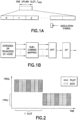
- Figure 1A reproduces Figure 12 of 3GPP TS 36.211 and shows the UL slot format for a generic frame structure.
- the basic uplink transmission scheme is single-carrier transmission (SC-FDMA) with cyclic prefix to achieve uplink inter-user orthogonality and to enable efficient frequency-domain equalization at the receiver side.
- SC-FDMA single-carrier transmission
- DFT S-OFDM DFT-spread OFDM
- Figure 1B shows the generation of pilot samples.
- An extended or truncated Zadoff-Chu symbol sequence is applied to an IFFT block via a sub-carrier mapping block.
- the sub-carrier mapping block determines which part of the spectrum is used for transmission by inserting a suitable number of zeros at the upper and/or lower end.
- a CP is inserted into the output of the IFFT block.
- ZAC zero autocorrelation
- LBs SC-FDMA symbols
- a sub-frame consists of two slots. Part of the LBs are used for reference signals (pilot long blocks) for coherent demodulation. The remaining LBs are used for control and/or data transmission.
- the current working assumption is that for the PUCCH the multiplexing within a PRB is performed using CDM and (localized) FDM is used for different resource blocks.
- CDM multiplexing Two types are used both for data and pilot LBs. Multiplexing based on the usage of cyclic shifts provides nearly complete orthogonality between different cyclic shifts, if the length of cyclic shift is larger than the delay spread of radio channel. For example, with an assumption of a 5 microsecond delay spread in the radio channel, up to 12 orthogonal cyclic shifts within one LB can be achieved. Sequence sets for different cells are obtained by changing the sequence index.
- CDM multiplexing may be applied between LBs based on orthogonal covering sequences, e.g., Walsh or DFT spreading.
- This orthogonal covering may be used separately for those LBs corresponding to the RS and those LBs corresponding to the data signal.
- the CQI is typically transmitted without orthogonal covering.
- the exemplary embodiments of this invention pertain to ACK/NACK signaling.
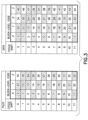
- the ACK/NACK signaling format has been determined and is shown in Figure 2 (originally presented in 3GPP TSG RAN WG1 Meeting #47bis, Sorrento, Italy, January 15-19, 2007, "CDM based Control Signal multiplexing w/ and w/o additional RS", Nokia, R1-070395 ).
- the ACK/NACK is transmitted by means of a modulated CAZAC sequence, and the ACK/NACK signals of different UEs can be orthogonally multiplexed within the pilot/data blocks using different cyclic shifts of the same base CAZAC sequence.
- the length of the CAZAC sequence is equal to 12 symbols.
- coherent transmission with three reference signal (RS) blocks and four data blocks (ACK/NACK) is applied.
- the actual need for implicit ACK/NACK resources depends on the number of scheduled UEs in the DL (e.g., bandwidth and scheduling strategy). In a practical sense the ACK/NACK capacity is limited by the inter-cell interference. In general, about 10-12 ACK/NACK UEs/RU/cell can be supported (at least in the DL SIMO case). Reference in this regard may be made to 3GPP TSG RAN WG1 Meeting #47bis, Sorrento, Italy, January 15-19, 2007, "ACK/NACK coverage in the absence of UL data", Nokia, R1-070393 .
- implicit ACK/NACK resources are configured by means of RRC signaling.
- An implicit ACK/NACK resource here means an ACK/NACK resource that is allocated via implicit signaling, i.e., there is no explicit signaling that tells to the UE which ACK/NACK resource to use for acknowledging a DL transmission. Instead, the ACK/NACK resource is tied to the DL control channel index and is thus signaled implicitly (e.g., by the control channel index).
- static parameters are needed, such as the frequency allocation of the ACK/NACK resource, i.e., the RU for the 1st slot and for the 2nd slot (see Figure 1 ). Also needed is the spreading factor of RS blocks (e.g., 3), with two alternatives in the FDD mode (depending on the CP length). Also needed is the spreading factor of data blocks (e.g., 4), with two alternatives in the FDD mode (depending on the CP length). Also needed is the length of the CAZAC sequence (12 frequency bins), with 18 bins being a possible candidate.
- the static parameters are typically defined in the standard specification.
- semi-static parameters are needed, such as the base sequence of the frequency domain CAZAC code (typically separately for the pilot and the data), the base sequence of the block level code (typically separately for the pilot and the data), the cyclic shift allocation for the frequency domain CAZAC code (typically separately for the pilot and the data), the cyclic shift allocation for block level code (typically separately for the pilot and the data), information concerning cyclic shift hopping (typically separately for the pilot and the data), as well as information concerning possible CAZAC sequence hopping (it is for future study whether this feature is supported).
- the semi-static parameters are typically signaled using higher layer signaling (e.g., RRC signaling) to each UE, or they may be broadcast to the entire cell via a broadcast channel.
- the largest burden is related to the signaling of the cyclic shift resources, which are resource specific. Note that 12 bits are needed to characterize cyclic shifts of one implicit ACK/NACK resource, where six bits are needed to characterize the ACK/NACK RS resource (12*3 available code channels) and an additional six bits are needed to characterize the ACK/NACK data resource (12*4 code channels).
- the exemplary embodiments of this invention provide a channelization method that comprises, in response to receiving implicit/explicit resource index signaling of a radio resource, and in response to a plurality of wireless communication system cell-specific static and semi-static input parameters, determining a plurality of output parameters; and allocating radio resources using the determined output parameters.
- the exemplary embodiments of this invention provide a computer readable medium that is encoded with a computer program, the execution of which by a data processor results in operations that comprise, in response to receiving resource index signaling of a radio resource, and in response to a plurality of wireless communication system cell-specific static and semi-static input parameters, determining a plurality of output parameters; and allocating radio resources using the determined output parameters.
- the exemplary embodiments of this invention provide an apparatus having a receiver configured to receive resource index signaling of a radio resource; and a resource allocation unit configured to respond to the received signaling, and a plurality of wireless communication system cell-specific static and semi-static input parameters, to determine a plurality of output parameters to use in allocating uplink radio resources.
- the exemplary embodiments of this invention provide an apparatus that includes means for receiving resource index signaling of a radio resource; and means for determining a plurality of output parameters to use in allocating uplink radio resources, said determining means using the received signaling and a plurality of wireless communication system cell-specific static and semi-static input parameters.
- the exemplary embodiments of this invention provide a user equipment that includes a receiver configured to receive resource index signaling of a radio resource and a resource allocation unit configured to respond to the received signaling, and a plurality of wireless communication system cell-specific static and semi-static input parameters, to determine a plurality of output parameters to use in allocating uplink radio resources.
- the plurality of output parameters comprise a cyclic shift of a block spreading code (or an orthogonal cover code) and a cyclic shift of a frequency domain code; and the plurality of wireless communication system cell-specific semi-static input parameters are received by implicit signaling.
- the plurality of wireless communication system cell-specific semi-static input parameters comprise res_1 st (delta offset): a resource number of a first implicit resource; and shift_diff (delta shift): a cyclic shift difference between two resources under the same block spreading code.
- a further wireless communication system input parameter comprises impl_res: a resource number.
- the plurality of cell specific static input parameters comprise num t shift (in the current specifications, this parameter is c which is the number of reference signal blocks on PUCCH Format 1/1a/1b, i.e., block spreading factor used in reference signal part): a number of cyclic shifts of a block spreading code; and num_f_shift: a number of cyclic shifts of a frequency domain code (i.e., PUCCH resource block size in the frequency domain).
- the output parameters comprise a cyclic shift of the block spreading code (or an orthogonal cover code), expressed as shift_t (n oc ), for a given value of impl_res, and a cyclic shift of the frequency domain code, expressed as shift_f (n cs ), for the given value of impl_res.
- the exemplary embodiments of this invention provide a wireless network device that comprises a resource unit configured to specify information for a user equipment, the information comprising a plurality of cell-specific static and semi-static input parameters.
- the semi-static input parameters comprise: res_1st: a resource number of a first implicit resource; and shift_diff: a cyclic shift difference between two implicit resources.
- the information further comprises a value for impl_res: a resource number.
- a transmitter to transmit the information to the user equipment for use in allocating resources to be used for sending at least one of ACK/NACK and SR signaling to the wireless network device.
- the exemplary embodiments of this invention provide a method that includes receiving resource index signaling of a radio resource; and determining a plurality of output parameters to use in allocating uplink radio resources in response to the received t signaling and in accordance with a plurality of wireless communication system cell-specific static and semi-static input parameters; where the plurality of output parameters comprise an index for an orthogonal cover code and a cyclic shift of a frequency domain code; the plurality of wireless communication system cell-specific semi-static input parameters are received broadcast system information and comprise Delta_offset: a resource number of a first implicit resource; and Delta_shift: a cyclic shift difference between two implicit resources under the same orthogonal cover code; where a further wireless communication system input parameter comprises impl_res: a resource number; where the plurality of cell specific static input parameters comprise num_t_shift: a number of used orthogonal cover codes; and num_f_shift: a number of cyclic shifts of a frequency domain code; where the output parameters comprise
- the exemplary embodiments of this invention provide in at least one aspect thereof enhancements to the UL portion of LTE, and provide code resource allocation for DL ACK/NACK signals transmitted in the UL PUCCH. These resources are utilized by UEs having only ACK/NACK signals to be transmitted, and not UL data or periodic CQI signaling.
- the exemplary embodiments of this invention provide in at least one further aspect thereof for the allocation and signaling of implicit ACK/NACK resources using an efficient signaling scheme which can be used to map the implicit/explicit control channel indices into the physical code resources of the PUCCH.
- a wireless network 1 is adapted for communication with a UE 10 via at least one Node B (base station) 12 (also referred to herein as an eNode B 12).
- the network 1 may include a network control element (NCE) 14 coupled to the eNode B 12 via a data path 13.
- NCE network control element
- the UE 10 includes a data processor (DP) 10A, a memory (MEM) 10B that stores a program (PROG) 10C, and a suitable radio frequency (RF) transceiver 10D having a transmitter (T) and a receiver (R) for bidirectional wireless communications with the eNode B 12, which also includes a DP 12A, a MEM 12B that stores a PROG 12C, and a suitable RF transceiver 12D having a transmitter (T) and a receiver (R).
- the eNode B 12 is typically coupled via the data path 13 to the network control element 14 that also includes at least one DP 14A and a MEM 14B storing an associated PROG 14C.
- At least one of the PROGs 10C and 12C is assumed to include program instructions that, when executed by the associated DP, enable the electronic device to operate in accordance with the exemplary embodiments of this invention, as will be discussed below in greater detail.
- the UE 10 includes a resource allocation unit (RAU) 30, shown in further detail in Figures 7 and 13 , that operates in accordance with the exemplary embodiments of this invention (as described in detail below).
- RAU resource allocation unit
- the various embodiments of the UE 10 can include, but are not limited to, cellular telephones, personal digital assistants (PDAs) having wireless communication capabilities, portable computers having wireless communication capabilities, image capture devices such as digital cameras having wireless communication capabilities, gaming devices having wireless communication capabilities, music storage and playback appliances having wireless communication capabilities, Internet appliances permitting wireless Internet access and browsing, as well as portable units or terminals that incorporate combinations of such functions.
- PDAs personal digital assistants
- portable computers having wireless communication capabilities
- image capture devices such as digital cameras having wireless communication capabilities
- gaming devices having wireless communication capabilities
- music storage and playback appliances having wireless communication capabilities
- Internet appliances permitting wireless Internet access and browsing, as well as portable units or terminals that incorporate combinations of such functions.
- the exemplary embodiments of this invention may be implemented by computer software executable by the DP 10A of the UE 10 and the DP 12A of the eNode B 12, or by hardware, or by a combination of software (and firmware) and hardware.
- the MEMs 10B, 12B and 14B may be of any type suitable to the local technical environment and may be implemented using any suitable data storage technology, such as semiconductor-based memory devices, flash memory, magnetic memory devices and systems, optical memory devices and systems, fixed memory and removable memory.
- the DPs 10A, 12A and 14A may be of any type suitable to the local technical environment, and may include one or more of general purpose computers, special purpose computers, microprocessors, digital signal processors (DSPs) and processors based on a multicore processor architecture, as non-limiting examples.
- this can be maximized by allocating the code channels according to the propagation conditions (delay/Doppler spread) and according to the number of implicit signaled ACK/NACK resources.
- inter-cell orthogonality this can be achieved by dividing the available code resource between the adjacent cells.
- the orthogonality can also be improved when the same base sequences (both frequency and time domain) are utilized in a coordinated way between adjacent cells.
- the reuse pattern is also a consideration.
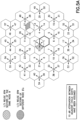
- Reference in this regard can be made to the examples presented in Figures 4 , as well as in Figures 5A , 5B and 5C which illustrate the system level gain achieved by coordinated code allocation.
- the system level performance can be a 1.2 dB gain increase as compared to a non-coordinated case. This is true coverage gain for the ACK/NACK transmitted on PUCCH.
- reuse between cells of different Node Bs is better than the reuse between cells of the same Node B.
- the reuse between cells of different Node Bs requires the use of a synchronized network.
- the basic problem relates to the signaling burden of the implicit ACK/NACK resource.
- the counterpart of the signaling burden is the signaling flexibility.
- An advantage of the previous technique is the fact that it exhibits full flexibility in dividing the available cyclic shift resources between the available resources allocated for ACK/NACKs.
- One issue related to the reduced signaling burden is the fact that sufficient flexibility for resource allocation must be provided.
- the exemplary embodiments of this invention provide an efficient signaling scheme for the implicit ACK/NACK resources.
- the exemplary embodiments of this invention provide a method, apparatus and functionality to allocate and signal the available ACK/NACK resources using a limited number of cell-specific parameters.
- the exemplary embodiments of this invention are realized at least in part by an algorithm and functional block that utilizes these parameters as an input.
- the procedure is standardized such that both the UE 10 and the eNodeB 12 may utilize it.
- the basic functionality of the resource allocation unit 30 is illustrated in Figure 7 , and includes an algorithm 20 (a functional block implemented in software, or hardware, or as a combination of software and hardware) that receives input parameters including signaled (semi-static) parameters 22 and constant (static) parameters 24, and that provides output parameters 26.
- algorithm 20 a functional block implemented in software, or hardware, or as a combination of software and hardware
- receives input parameters including signaled (semi-static) parameters 22 and constant (static) parameters 24, and that provides output parameters 26.
- the (cell-specific) semi-static input parameters 22 comprise the following:
- the above two semi-static parameters may be explicitly signaled to the UE 10 either via higher layer signaling (e.g., RRC signaling) at the beginning of a connection, or they are explicitly broadcast to the entire cell, or they may be implicitly signaled, e.g., derived from other cell specific parameters.
- higher layer signaling e.g., RRC signaling
- the only dynamic parameter is (c) impl_res: resource number of the ACK/NACK resource, which is signaled via implicit signaling, [0, 1, 2, ...] (e.g., the index of the DL control channel). Another choice is to signal it explicitly via dedicated RRC signaling.
- the (cell specific) static input parameters 24 comprise the following:
- the output parameters 26 comprise the following:
- CAZAC codes in this detailed description and in the drawings are intended to encompass all forms of CAZAC codes, including also by example truncated and extended ZC sequences, as well as computer-search based sequences, without limitation. In general, CAZAC codes can be assumed to fall within the set of ZAC codes.
- shift_t mod floor i_temp / num_f_shift
- num_t_shift shift_f mod i_temp + shift_t + mod floor impl_res ⁇ shift_diff/num_res , shift_diff , num_f_shift
- the floor function rounds the elements of the nearest integers towards minus infinity, and mod is the modulus after the division operation.
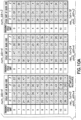
- Figure 9 is an example of resource allocation, where the block A shows a numbering principle and block B shows an example of a shift allocation for the indicated cell-specific parameters.
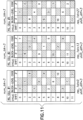
- Figures 10 and 11 present further examples of resource allocation using the resource allocation unit 30 of Figure 7 .
- the foregoing procedure may be used with semi persistent UEs 10 (those which have a DL allocation grant only for a re-transmission) in such a way that: (a) an implicit ACK/NACK resource is based on an applied DL resource (the signaling of these resources can be based on the foregoing exemplary embodiments); and (b) different resource pools are reserved and signaled for dynamically scheduled and semi-persistently allocated UEs 10.
- Another alternative is to apply the foregoing procedure also for the semi-persistent UEs, and to signal the impl_res parameter explicitly with higher layer signaling.
- the exemplary embodiments of this invention pertain as well to signaling of scheduling request indicator (SRI) resources.
- the scheduling request mechanism is intended to indicate that a certain UE 10 has a need for a data transmission in the UL. It has been agreed in the RAN1#47bis meeting in Sorrento that a non-contention based SR mechanism for time synchronized users should be supported.
- the multiplexing of SRIs of multiple UEs 10 may be based on a combination of block spreading and sequence modulation (the multiplexing technique is at present an open item in the standardization process). Signaling of these resources may be based on the procedures described herein with respect to the exemplary embodiments of this invention. In the case of SRI, the signaling of the impl_res parameter may be done explicitly with higher layer signaling.
- A/N for persistently scheduled UEs and scheduling request indicator utilize the channelization in which the impl_res parameter is explicitly configured by dedicated RRC signaling.
- implicit resources only from the limited code space. For example, if the periodic CQI and ACK/NACK from different UEs 10 are transmitted in the same RU (e.g., narrowband bandwidth allocation), then some frequency domain cyclic shifts cannot be used as implicit ACK/NACK resources (e.g., cyclic shift #4 shown in Figure 12 ).
- the presence of the limited code space may be accommodated by signaling two additional semi-static parameters 22:
- Figure 13 illustrates the operation of a method and a computer program product, as well as an apparatus, to calculate the cyclic shifts (shift_f, shift_t) in the case of the limited code space.
- the parameter i corresponds to the calculated resource (impl_res) and K is the actual implicit resource ([0, 1, 2, ... ]).
- i and k are initialized to zero.
- the semi-static and static parameters 22, 24 are then input to the algorithm functional block 20, which operates as described above to output shift_t and shift f (output parameters 26).
- a reduced signaling burden is realized as it becomes possible to signal cyclic shifts of 36 implicit resources by using two parameters with 18 bits (existing ACK/NACK structure): a maximum of 6 bits to signal the res_1st parameter for the RS resource, a maximum of 6 bits to signal the res_1st parameter for data (ACK/NACK) resource, a maximum of 3 bits to signal the shift_diff parameter for the RS resource and a maximum of 3 bits to signal the shift_diff parameter for the data resource.
- the conventional approach discussed above would require 432 signaling bits for expressing the same information.
- a maximum of 30 additional bits would be needed to signal the allowed cyclic shifts to support the limited code space case described above.
- 12 +3 bits are used for the RS resource (allowed_f_shift + allowed_t_shift)
- 12 +4 bits are used for the data resource (allowed_f_shift + allowed_t_shift).
- the allowed_f_shift parameter can be the same for both RS and data blocks. In this case the additional signaling size due to the limited code space is equal to 19 bits.
- the use of the exemplary embodiments of this invention also supports flexible resource allocation, since it provides an optimized code resource allocation against other cell interference (see Figure 11 ) and facilitates reuse planning for the ACK/NACK transmitted on the PUCCH.
- the use of the exemplary embodiments of this invention also supports flexible resource allocation by providing optimized resource allocation against own cell interference (e.g., based on the number of UEs 10 and on the propagation conditions).
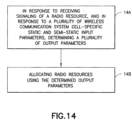
- the exemplary embodiments of this invention provide for, in a non-limiting aspect thereof, a method, apparatus and computer program product, as shown in Figure 14 , to operate (Block 14A) in response to receiving signaling of a radio resource, and in response to a plurality of wireless communication system cell-specific static and semi-static input parameters, determining a plurality of output parameters; and (14B) allocating radio resources using the determined output parameters.
- the UE 10 of Figure 6 is constructed to contain a receiver (R) configured to a receive signaling of a radio resource, as well as a resource allocation unit (RAU 30) configured to respond to the received signaling, and a plurality of wireless communication system cell-specific static and semi-static input parameters, to determine a plurality of output parameters to use in allocating uplink radio resources.
- R receiver
- RAU 30 resource allocation unit
- the eNB 12 (base station) of Figure 6 is constructed to contain a resource unit (RU) 12E configured to specify information for the UE 10, the information comprising a plurality of cell-specific static and semi-static input parameters, where the semi-static input parameters comprise res_1st: a resource number of a first implicit resource and shift_diff: a cyclic shift difference between two implicit resources; and the information further comprising a value for impl_res: a resource number.
- the eNB 12 further includes a transmitter (T) to transmit the information to the UE 10 for use in allocating resources to be used for sending at least one of ACK/NACK and SR signaling to the eNB 12.
- T transmitter
- the various exemplary embodiments may be implemented in hardware or special purpose circuits, software, logic or any combination thereof.
- some aspects may be implemented in hardware, while other aspects may be implemented in firmware or software which may be executed by a controller, microprocessor or other computing device, although the invention is not limited thereto.
- firmware or software which may be executed by a controller, microprocessor or other computing device, although the invention is not limited thereto.
- While various aspects of the exemplary embodiments of this invention may be illustrated and described as block diagrams, flow charts, or using some other pictorial representation, it is well understood that these blocks, apparatus, systems, techniques or methods described herein may be implemented in, as non-limiting examples, hardware, software, firmware, special purpose circuits or logic, general purpose hardware or controller or other computing devices, or some combination thereof.
- the exemplary embodiments of this invention are not limited for use with only this one particular type of wireless communication system, and that they may be used to advantage in other wireless communication systems. Further, the exemplary embodiments of this invention are not constrained for use with any specific frame format, numbers of long blocks within a frame, sub-carrier mapping scheme, and/or type of modulation, as non-limiting examples, that may have been referred to above.
- the various names used for the input and output parameters are not intended to be limiting in any respect, as these parameters may be identified by any suitable names (e.g., as Delta_offset and Delta_shift).
- signaling of the resource index may be made in an implicit way based on a predetermined control channel element index of a predetermined PDCCH, and thus apply as well to a TDD mode of operation in which there are multiple PDCCHs associated into a single PUCCH subframe.
- a plurality of different parameters sets may be predefined using various ones of the parameters discussed above (e.g., res_1st, shift_diff and semi-static parameters). It then becomes possible to allocate to UEs 10 a pre-defined parameter set for a given cell by means of, for example, a broadcast channel. This embodiment clearly results in a reduction in the required amount of signaling bits and signaling overhead.
- a method comprising: in response to receiving resource index signaling of a radio resource, and in response to a plurality of wireless communication system cell-specific static and semi-static input parameters, determining a plurality of output parameters; and allocating radio resources using the determined output parameters.
- Clause 2 comprises the method of clause 1, where the plurality of output parameters comprise an index for orthogonal cover code and a cyclic shift of a frequency domain code.
- Clause 3 comprises the method of clause 1, where the plurality of wireless communication system cell-specific semi-static input parameters are received by broadcast system information.
- Clause 4 comprises the method of clause 3, where the broadcast system information comprises parameters that include a used zero autocorrelation code and a used physical uplink control channel (PUCCH) resource block configuration for at least certain PUCCH formats.
- the broadcast system information comprises parameters that include a used zero autocorrelation code and a used physical uplink control channel (PUCCH) resource block configuration for at least certain PUCCH formats.
- PUCCH physical uplink control channel
- Clause 5 comprises the method of clause 1, where the signaling of the resource index is made in an implicit way based on a predetermined control channel element index of a predetermined PDCCH.
- Clause 6 comprises the method of clause 1, where the signaling of resource index is made in an explicit way based on user-specific higher layer signaling.
- Clause 7 comprises the method of clause 1, where determining the plurality of output parameters is made within a PUCCH resource block.
- Clause 8 comprises the method of clause 1, where the plurality of wireless communication system cell-specific semi-static input parameters comprise:
- Clause 9 comprises the method of clause 1, where a further wireless communication system input parameter comprises: impl_res: a resource number.
- Clause 10 comprises the method of clause 9, where the plurality of cell specific static input parameters comprise:
- Clause 11 comprises the method of clause 10, where the output parameters comprise a cyclic shift of the block spreading code, expressed as shift_t (n oc ), for a given value of impl_res, and a cyclic shift of the frequency domain code, expressed as shift_f (n cs ), for the given value of impl_res.
- the output parameters comprise a cyclic shift of the block spreading code, expressed as shift_t (n oc ), for a given value of impl_res, and a cyclic shift of the frequency domain code, expressed as shift_f (n cs ), for the given value of impl_res.
- Clause 12 comprises the method of clause 11, where shift_t (n oc ) and shift f (n cs ) are determined by mathematical operations that comprise floor operation, mod operation, multiply operation, division operation, and sum operation, where floor is a function that rounds elements of nearest integers towards minus infinity, and mod is the modulus after the division operation.
- Clause 13 comprises the method as in clause 10, where the frequency domain code is comprised of a zero auto-correlation code.
- Clause 14 comprises the method of clause 1, where the plurality of wireless communication system cell-specific semi-static input parameters are signaled from a base station
- Clause 15 comprises the method of clause 1, where the allocated radio resources comprise ACK/NACK resources.
- Clause 16 comprises the method of clause 1, where the allocated radio resources comprise scheduling request indicators.
- Clause 18 comprises a computer readable medium encoded with a computer program the execution of which by a data processor results in operations that comprise:
- Clause 19 comprises the computer readable medium of clause 18, where the plurality of output parameters comprise an index for orthogonal cover code and a cyclic shift of a frequency domain code.
- Clause 20 comprises the computer readable medium of clause 18, where the plurality of wireless communication system cell-specific semi-static input parameters are received by broadcast system information.
- Clause 21 comprises the computer readable medium of clause 20, where the broadcast system information comprises parameters that include a used zero autocorrelation code and a used physical uplink control channel (PUCCH) resource block configuration for at least certain PUCCH formats.
- the broadcast system information comprises parameters that include a used zero autocorrelation code and a used physical uplink control channel (PUCCH) resource block configuration for at least certain PUCCH formats.
- PUCCH physical uplink control channel
- Clause 22 comprises the computer readable medium of clause 18, where the signaling of the resource index is made in an implicit way based on a predetermined control channel element index of a predetermined PDCCH.
- Clause 23 comprises the computer readable medium of clause 18, where the signaling of resource index is made in an explicit way based on user-specific higher layer signaling.
- Clause 24 comprises the computer readable medium of clause 18, where determining the plurality of output parameters is made within a PUCCH resource block.
- Clause 25 comprises the computer readable medium of clause 18, where the plurality of wireless communication system cell-specific semi-static input parameters comprise:
- Clause 26 comprises the computer readable medium of clause 18, where a further wireless communication system input parameter comprises: impl_res: a resource number.
- Clause 27 comprises the computer readable medium of clause 26, where the plurality of cell specific static input parameters comprise:
- Clause 28 comprises the computer readable medium of clause 27, where the output parameters comprise a cyclic shift of the block spreading code, expressed as shift_t (n oc ), for a given value of impl_res, and a cyclic shift of the frequency domain code, expressed as shift_f(n cs ), for the given value of impl_res.
- the output parameters comprise a cyclic shift of the block spreading code, expressed as shift_t (n oc ), for a given value of impl_res, and a cyclic shift of the frequency domain code, expressed as shift_f(n cs ), for the given value of impl_res.
- Clause 29 comprises the computer readable medium of clause 28, where shift_t (n oc )and shift_f(n cs ) are determined by mathematical operations that comprise floor operation, mod operation, multiply operation, division operation, and sum operation, where floor is a function that rounds elements of nearest integers towards minus infinity, and mod is the modulus after the division operation.
- Clause 30 comprises the computer readable medium of clause 27, where the frequency domain code is comprised of a zero auto-correlation code.
- Clause 31 comprises the computer readable medium of clause 18, where the plurality of wireless communication system cell-specific semi-static input parameters are signaled from a base station
- Clause 32 comprises the computer readable medium of clause 18, where the allocated radio resources comprise ACK/NACK resources.
- Clause 33 comprises the computer readable medium of clause 18, where the allocated radio resources comprise scheduling request indicators.
- Clause 34 comprises the computer readable medium of clause 18, where determining the plurality of output parameters is further in response to explicitly configured ACK/NACK and scheduling request indicator resources.
- Clause 35 comprises an apparatus comprising:
- Clause 36 comprises the apparatus of clause 35, where the plurality of output parameters comprise an index for orthogonal cover code and a cyclic shift of a frequency domain code.
- Clause 37 comprises the apparatus of clause 35, where the plurality of wireless communication system cell-specific semi-static input parameters are received by broadcast system information.
- Clause 38 comprises the apparatus of clause 37, where the broadcast system information comprises parameters that include a used zero autocorrelation code and a used physical uplink control channel (PUCCH) resource block configuration for at least certain PUCCH formats.
- the broadcast system information comprises parameters that include a used zero autocorrelation code and a used physical uplink control channel (PUCCH) resource block configuration for at least certain PUCCH formats.
- PUCCH physical uplink control channel
- Clause 39 comprises the apparatus of clause 35, where the signaling of the resource index is made in an implicit way based on a predetermined control channel element index of a predetermined PDCCH.
- Clause 40 comprises the apparatus of clause 35, where the signaling of resource index is made in an explicit way based on user-specific higher layer signaling.
- Clause 41 comprises the apparatus of clause 35, where determining the plurality of output parameters is made within a PUCCH resource block.
- Clause 42 comprises the apparatus of clause 35, where the plurality of wireless communication system cell-specific semi-static input parameters comprise:
- Clause 43 comprises the apparatus of clause 35, where a further wireless communication system input parameter comprises: impl_res: a resource number.
- Clause 44 comprises the apparatus of clause 43, where the plurality of cell specific static input parameters comprise:
- Clause 45 comprises the apparatus of clause 44, where the output parameters comprise a cyclic shift of the block spreading code, expressed as shift_t (n oc ), for a given value of impl_res, and a cyclic shift of the frequency domain code, expressed as shift_f (n cs ), for the given value of impl_res.
- the output parameters comprise a cyclic shift of the block spreading code, expressed as shift_t (n oc ), for a given value of impl_res, and a cyclic shift of the frequency domain code, expressed as shift_f (n cs ), for the given value of impl_res.
- Clause 46 comprises the apparatus of clause 45, where shift t (n oc ) and shift f (n cs ) are determined by mathematical operations that comprise floor operation, mod operation, multiply operation, division operation, and sum operation, where floor is a function that rounds elements of nearest integers towards minus infinity, and mod is the modulus after the division operation.
- Clause 47 comprises the apparatus of clause 44, where the frequency domain code is comprised of a zero auto-correlation code.
- Clause 48 comprises the apparatus of clause 35, where the plurality of wireless communication system cell-specific semi-static input parameters are signaled from a base station
- Clause 49 comprises the apparatus of clause 35, where the allocated radio resources comprise ACK/NACK resources.
- Clause 50 comprises the apparatus of clause 35, where the allocated radio resources comprise scheduling request indicators.
- Clause 51 comprises the apparatus of clause 35, where said resource allocation unit determines the plurality of output parameters further in response to explicitly configured ACK/NACK and scheduling request indicator resources.
- Clause 52 comprises an apparatus comprising:
- Clause 53 comprises a user equipment comprising:
- Clause 54 comprises the user equipment of clause 53, where the frequency domain code is comprised of a zero auto-correlation code.
- Clause 55 comprises the user equipment of clause 53, where the allocated radio resources comprise scheduling request resources.
- Clause 56 comprises a wireless network device, comprising: a resource unit configured to specify information for a user equipment, the information comprising a plurality of cell-specific static and semi-static input parameters, said semi-static input parameters comprising:
- Clause 57 comprises the wireless network device of clause 56, where the wireless network comprises an E-UTRAN network (a LTE network), and where the at least one of ACK/NACK and SR signaling is received on a PUCCH.
- the wireless network comprises an E-UTRAN network (a LTE network)
- the at least one of ACK/NACK and SR signaling is received on a PUCCH.
- Clause 58 comprises a method, comprising:
- Clause 59 comprises the method of clause 58, where the frequency domain code is comprised of a zero auto-correlation code.
- Clause 60 comprises the method of clause 58, where the allocated radio resources comprise scheduling request resources.
Landscapes
- Engineering & Computer Science (AREA)
- Signal Processing (AREA)
- Computer Networks & Wireless Communication (AREA)
- Mobile Radio Communication Systems (AREA)
Applications Claiming Priority (3)
| Application Number | Priority Date | Filing Date | Title |
|---|---|---|---|
| US11/820,091 US8036166B2 (en) | 2007-06-18 | 2007-06-18 | Signaling of implicit ACK/NACK resources |
| EP08776425A EP2168280A2 (fr) | 2007-06-18 | 2008-06-17 | Signalisation de ressources d'acquittement/non acquittement |
| PCT/IB2008/052385 WO2008155721A2 (fr) | 2007-06-18 | 2008-06-17 | Signalisation de ressources d'acquittement/non acquittement |
Related Parent Applications (1)
| Application Number | Title | Priority Date | Filing Date |
|---|---|---|---|
| EP08776425A Division EP2168280A2 (fr) | 2007-06-18 | 2008-06-17 | Signalisation de ressources d'acquittement/non acquittement |
Publications (2)
| Publication Number | Publication Date |
|---|---|
| EP4236123A2 true EP4236123A2 (fr) | 2023-08-30 |
| EP4236123A3 EP4236123A3 (fr) | 2023-10-04 |
Family
ID=40132310
Family Applications (2)
| Application Number | Title | Priority Date | Filing Date |
|---|---|---|---|
| EP08776425A Ceased EP2168280A2 (fr) | 2007-06-18 | 2008-06-17 | Signalisation de ressources d'acquittement/non acquittement |
| EP23180089.7A Pending EP4236123A3 (fr) | 2007-06-18 | 2008-06-17 | Signalisation de ressources ack/nack |
Family Applications Before (1)
| Application Number | Title | Priority Date | Filing Date |
|---|---|---|---|
| EP08776425A Ceased EP2168280A2 (fr) | 2007-06-18 | 2008-06-17 | Signalisation de ressources d'acquittement/non acquittement |
Country Status (5)
| Country | Link |
|---|---|
| US (1) | US8036166B2 (fr) |
| EP (2) | EP2168280A2 (fr) |
| CN (2) | CN101755409B (fr) |
| DE (1) | DE202008017486U1 (fr) |
| WO (1) | WO2008155721A2 (fr) |
Families Citing this family (65)
| Publication number | Priority date | Publication date | Assignee | Title |
|---|---|---|---|---|
| RU2427080C2 (ru) * | 2006-09-26 | 2011-08-20 | Нокиа Корпорейшн | Устройство, способ и компьютерный программный продукт, обеспечивающие модуляцию последовательностью для передачи сигналов управления по восходящей линии связи |
| GB0619530D0 (en) * | 2006-10-03 | 2006-11-15 | Nokia Corp | Signalling |
| JP4531784B2 (ja) * | 2007-03-20 | 2010-08-25 | 株式会社エヌ・ティ・ティ・ドコモ | ユーザ装置および送信方法 |
| JP5042320B2 (ja) | 2007-03-29 | 2012-10-03 | エルジー エレクトロニクス インコーポレイティド | 無線通信システムにおけるサウンディング基準信号伝送方法 |
| WO2008127184A2 (fr) * | 2007-04-11 | 2008-10-23 | Telefonaktiebolaget Lm Ericsson (Publ) | Procédé et appareil dans un système de télécommunications |
| EP2892170B1 (fr) * | 2007-06-15 | 2019-04-24 | Optis Wireless Technology, LLC | Appareil de communication sans fil et procédé d'étalement du signal de réponse |
| US8204010B2 (en) | 2007-06-18 | 2012-06-19 | Research In Motion Limited | Method and system for dynamic ACK/NACK repetition for robust downlink MAC PDU transmission in LTE |
| KR101380558B1 (ko) * | 2007-06-19 | 2014-04-02 | 엘지전자 주식회사 | 사운딩 기준신호의 전송방법 |
| RU2476992C2 (ru) | 2007-06-19 | 2013-02-27 | Панасоник Корпорэйшн | Устройство беспроводной связи и способ расширения ответных сигналов |
| KR20090006708A (ko) * | 2007-07-12 | 2009-01-15 | 엘지전자 주식회사 | 스케줄링 요청 신호 전송 방법 |
| EP3429120B1 (fr) * | 2007-07-16 | 2019-11-06 | Samsung Electronics Co., Ltd. | Appareil et procédé de transmission d'un indicateur de qualité de canal et de signaux d'acquittement dans des systèmes de communication sc-fdma |
| RU2433541C2 (ru) | 2007-07-16 | 2011-11-10 | Самсунг Электроникс Ко., Лтд. | Устройство и способ для передачи сигналов индикатора качества канала и подтверждения приема в системах связи sc-fdma |
| EP2690810B1 (fr) | 2007-08-13 | 2015-10-21 | Optis Wireless Technology, LLC | Dispositif de communication radio et procédé de diffusion du signal de réponse |
| EP3739776B1 (fr) | 2007-08-13 | 2021-07-07 | Godo Kaisha IP Bridge 1 | Dispositif de transmission radio et procédé de transmission radio |
| KR101397039B1 (ko) * | 2007-08-14 | 2014-05-20 | 엘지전자 주식회사 | 전송 다이버시티를 사용하는 다중안테나 시스템에서 채널예측 오류의 영향을 감소시키기 위한 cdm 방식 신호전송 방법 |
| JP4558020B2 (ja) | 2007-08-14 | 2010-10-06 | 株式会社エヌ・ティ・ティ・ドコモ | ユーザ装置、送信方法及び通信システム |
| MX2010001707A (es) | 2007-08-14 | 2010-03-11 | Lg Electronics Inc | Metodo para adquiri informacion de region de recurso para canal indicador de solicitud automatica hibrido fisico (phich) y metodo para recibir canal de control de vinculo descendente fisico (pdcch). |
| US8542697B2 (en) | 2007-08-14 | 2013-09-24 | Lg Electronics Inc. | Method of transmitting data in a wireless communication system |
| KR101507785B1 (ko) | 2007-08-16 | 2015-04-03 | 엘지전자 주식회사 | 다중 입출력 시스템에서, 채널품질정보를 송신하는 방법 |
| KR101405974B1 (ko) * | 2007-08-16 | 2014-06-27 | 엘지전자 주식회사 | 다중입력 다중출력 시스템에서 코드워드를 전송하는 방법 |
| USRE47602E1 (en) * | 2007-09-03 | 2019-09-10 | Lg Electronics Inc. | Method of transmitting data using repetition coding |
| CN102882630B (zh) * | 2007-09-03 | 2015-10-28 | 三星电子株式会社 | Sc-fdma通信系统中的序列跳跃 |
| USRE46039E1 (en) * | 2007-09-03 | 2016-06-21 | Lg Electronics Inc. | Method of transmitting data using repetition coding |
| KR101445388B1 (ko) * | 2007-09-03 | 2014-09-26 | 엘지전자 주식회사 | 반복 코딩을 이용한 데이터 전송 방법 |
| CN101810043B (zh) * | 2007-09-26 | 2016-01-27 | 华为技术有限公司 | 无线通信系统、基站装置以及移动站装置 |
| EP3340502A1 (fr) * | 2007-10-01 | 2018-06-27 | Panasonic Corporation | Dispositif de communication radio et procédé d'étalement du signal de réponse |
| US8265016B2 (en) * | 2008-01-11 | 2012-09-11 | Sharp Laboratories Of America, Inc. | Systems and methods for reducing the power used to transmit channel quality information (CQI) during persistent scheduling |
| US9065646B2 (en) * | 2008-02-04 | 2015-06-23 | Nokia Solutions And Networks Oy | ACK/NACK channelization for resource blocks containing both ACK/NACK and CQI |
| US8149767B2 (en) * | 2008-03-13 | 2012-04-03 | Samsung Electronics Co., Ltd. | Methods of assigning resources for the uplink control channel in LTE |
| US8160018B2 (en) * | 2008-03-14 | 2012-04-17 | Samsung Electronics Co., Ltd. | Methods of uplink channelization in LTE |
| US8837421B2 (en) | 2008-03-26 | 2014-09-16 | Nokia Siemens Neworks Oy | Channelization procedure for implementing persistent ACK/NACK and scheduling request |
| WO2009131345A1 (fr) * | 2008-04-21 | 2009-10-29 | Lg Electronics Inc. | Procede de transmission de signal de commande dans un systeme de communication sans fil |
| CN101296513B (zh) * | 2008-04-22 | 2013-05-08 | 中兴通讯股份有限公司 | 一种物理上行控制信道干扰随机化的方法 |
| US8644397B2 (en) * | 2008-09-23 | 2014-02-04 | Qualcomm Incorporated | Efficient multiplexing of reference signal and data in a wireless communication system |
| KR101581956B1 (ko) | 2008-10-22 | 2016-01-04 | 엘지전자 주식회사 | 무선통신 시스템에서 신호 전송 방법 및 장치 |
| EP2352249B1 (fr) * | 2008-10-31 | 2019-03-27 | LG Electronics Inc. | Procédé et appareil permettant d'effectuer un procédé de demande de répétition automatique hybride (harq) dans un système de communication sans fil |
| KR101559797B1 (ko) * | 2008-12-04 | 2015-10-26 | 엘지전자 주식회사 | 무선 통신 시스템에서 제어 정보 전송 방법 |
| US9154283B2 (en) * | 2009-01-21 | 2015-10-06 | Telefonaktiebolaget L M Ericsson (Publ) | Self-organizing network control for PUCCH resources |
| US8522105B2 (en) * | 2009-02-17 | 2013-08-27 | Samsung Electronics Co., Ltd | Transmission of acknowledgement signals |
| KR101607333B1 (ko) | 2009-03-05 | 2016-03-30 | 엘지전자 주식회사 | 중계국의 제어신호 전송 방법 및 장치 |
| US8305986B2 (en) * | 2009-03-09 | 2012-11-06 | Samsung Electronics Co., Ltd. | Method and apparatus for uplink transmissions and CQI reports with carrier aggregation |
| EP2386179B1 (fr) * | 2009-04-24 | 2014-09-17 | Huawei Technologies Co., Ltd. | Procédé de génération de signaux de référence |
| WO2011025198A2 (fr) * | 2009-08-25 | 2011-03-03 | 한국전자통신연구원 | Procédé et dispositif de génération/transmission de trame pour communications hertziennes, et procédé d'estimation de synchronisation pour ces communications |
| MX2012008312A (es) | 2010-01-18 | 2012-08-08 | Ericsson Telefon Ab L M | Estacion base de radio y equipo de usuario y metodos en el mismo. |
| US20110194630A1 (en) * | 2010-02-10 | 2011-08-11 | Yang Hua-Lung | Systems and methods for reporting radio link failure |
| CN105827355B (zh) | 2010-02-22 | 2019-04-19 | 三星电子株式会社 | 对上行链路参考信号应用序列跳变和正交覆盖码 |
| US8473804B2 (en) * | 2010-04-26 | 2013-06-25 | Via Telecom, Inc. | Enhanced wireless communication with HARQ |
| CN105391522B (zh) * | 2010-11-11 | 2019-06-14 | Lg电子株式会社 | 无线通信系统中的上行链路控制信息发射/接收方法和装置 |
| KR101899820B1 (ko) | 2010-11-11 | 2018-11-08 | 엘지전자 주식회사 | 무선 통신 시스템에서 상향링크 제어정보 송수신 방법 및 장치 |
| US9642119B2 (en) * | 2010-12-08 | 2017-05-02 | Nokia Solutions And Networks Oy | Resource allocation in a wireless communication system |
| CN102739597B (zh) * | 2011-04-02 | 2015-02-11 | 普天信息技术研究院有限公司 | 一种ack/nack信号的生成方法 |
| US8369280B2 (en) | 2011-07-01 | 2013-02-05 | Ofinno Techologies, LLC | Control channels in multicarrier OFDM transmission |
| US8582527B2 (en) | 2011-07-01 | 2013-11-12 | Ofinno Technologies, Llc | Hybrid automatic repeat request in multicarrier systems |
| WO2013006379A1 (fr) | 2011-07-01 | 2013-01-10 | Dinan Esmael Hejazi | Signal de synchronisation et messages de commande en ofdm à porteuse multiple |
| CN102957490B (zh) * | 2011-08-17 | 2015-08-05 | 上海贝尔股份有限公司 | 用于增强型下行物理专用控制信道的干扰消除方法和设备 |
| US8842637B2 (en) | 2011-12-04 | 2014-09-23 | Ofinno Technologies, Llc | Carrier information transmission to wireless devices |
| US9497756B2 (en) | 2012-03-25 | 2016-11-15 | Comcast Cable Communications, Llc | Base station radio resource management |
| US9949265B2 (en) | 2012-05-04 | 2018-04-17 | Comcast Cable Communications, Llc | Control channel in a wireless communication system |
| US9288679B2 (en) | 2013-07-25 | 2016-03-15 | Futurewei Technologies, Inc. | System and method for greedy-based autonomous resource block assignment scheme for cellular networks with self-organizing relaying terminals |
| US10122506B2 (en) * | 2014-12-23 | 2018-11-06 | Qualcomm Incorporated | Single TTI transmission of control data in wireless communications |
| TWI556589B (zh) * | 2015-01-16 | 2016-11-01 | 國立中興大學 | 使用非整數位移的分碼多工傳輸方法與系統 |
| US10652760B2 (en) * | 2015-07-08 | 2020-05-12 | Qualcomm Incorporated | Multi-user multiplexing frame structure for eMTC |
| CN107579765B (zh) * | 2017-08-15 | 2020-12-11 | 东南大学 | 一种适用于大规模分布式天线系统的导频发送方法 |
| EP3751771A1 (fr) * | 2017-09-11 | 2020-12-16 | Guangdong Oppo Mobile Telecommunications Corp., Ltd. | Procédé d'attribution de ressource et terminal |
| CN113079573B (zh) * | 2020-01-06 | 2025-05-16 | 夏普株式会社 | 由用户设备执行的方法以及用户设备 |
Family Cites Families (34)
| Publication number | Priority date | Publication date | Assignee | Title |
|---|---|---|---|---|
| US6724813B1 (en) * | 1998-10-14 | 2004-04-20 | Telefonaktiebolaget Lm Ericsson (Publ) | Implicit resource allocation in a communication system |
| FR2820270B1 (fr) | 2001-01-29 | 2003-04-25 | Mitsubishi Electric Inf Tech | Methode d'allocation implicite de ressources |
| GB0207507D0 (en) * | 2002-03-28 | 2002-05-08 | Marconi Corp Plc | An apparatus for providing communications network resource |
| EP1361770A1 (fr) * | 2002-05-06 | 2003-11-12 | Siemens Aktiengesellschaft | Procédé et système de radiocommunication pour la transmission d'informations utiles comme service à plusieurs stations d'abonnées |
| US7248567B2 (en) | 2003-04-22 | 2007-07-24 | Interdigital Technology Corporation | Method and system for integrating resource allocation between time division duplex and frequency division duplex in wireless communication systems |
| US7212507B2 (en) | 2003-10-06 | 2007-05-01 | Nortel Networks Limited | Procedure to determine radio link condition using radio link control layer observations |
| US7085228B2 (en) | 2003-10-31 | 2006-08-01 | Interdigital Technology Corp. | Adaptive radio resource management for wireless local area networks |
| US7599665B2 (en) | 2003-12-19 | 2009-10-06 | Nokia Corporation | Selection of radio resources in a wireless communication device |
| US7949342B2 (en) | 2004-01-08 | 2011-05-24 | Interdigital Technology Corporation | Radio resource management in wireless local area networks |
| EP1949631A4 (fr) * | 2005-10-21 | 2013-02-20 | Nortel Networks Ltd | Schema de multiplexage en mrof |
| TWI451774B (zh) | 2006-01-31 | 2014-09-01 | Interdigital Tech Corp | 無線通信系統中提供及利用非競爭基礎頻道方法及裝置 |
| HUE048968T2 (hu) * | 2006-02-03 | 2020-09-28 | Guangdong Oppo Mobile Telecommunications Corp Ltd | Uplink erõforrás kiosztás mobil kommunikációs rendszerben |
| US8098745B2 (en) * | 2006-03-27 | 2012-01-17 | Texas Instruments Incorporated | Random access structure for wireless networks |
| US8102802B2 (en) * | 2006-05-08 | 2012-01-24 | Motorola Mobility, Inc. | Method and apparatus for providing downlink acknowledgments and transmit indicators in an orthogonal frequency division multiplexing communication system |
| US8583132B2 (en) | 2006-05-18 | 2013-11-12 | Qualcomm Incorporated | Efficient channel structure for a wireless communication system |
| GB2439367A (en) * | 2006-06-20 | 2007-12-27 | Nec Corp | Separate ACK/NACK channel from a control channel |
| US8295243B2 (en) * | 2006-08-21 | 2012-10-23 | Qualcomm Incorporated | Method and apparatus for random access in an orthogonal multiple-access communication system |
| US8571120B2 (en) | 2006-09-22 | 2013-10-29 | Texas Instruments Incorporated | Transmission of acknowledge/not acknowledge (ACK/NACK) bits and their embedding in the reference signal |
| RU2427080C2 (ru) * | 2006-09-26 | 2011-08-20 | Нокиа Корпорейшн | Устройство, способ и компьютерный программный продукт, обеспечивающие модуляцию последовательностью для передачи сигналов управления по восходящей линии связи |
| AU2007301647B2 (en) * | 2006-09-29 | 2011-09-22 | Nokia Technologies Oy | Uplink allocations for acknowledgement of downlink data |
| WO2008041089A2 (fr) | 2006-10-02 | 2008-04-10 | Nokia Corporation | Schéma adaptatif permettant de diminuer le surdébit de commande de liaison montante |
| US8014359B2 (en) | 2006-10-27 | 2011-09-06 | Interdigital Technology Corporation | Method and apparatus for assigning radio resources and controlling transmission parameters on a random access channel |
| MY146447A (en) * | 2006-11-01 | 2012-08-15 | Qualcomm Inc | Multiplexing of control and data with varying power offsets in a sc-fdma system |
| US7912092B2 (en) * | 2006-12-27 | 2011-03-22 | Sharp Laboratories Of America, Inc. | Systems and methods for transmitting a transmission time interval signal with staggered reference signals |
| US8169956B2 (en) * | 2007-01-26 | 2012-05-01 | Qualcomm Incorporated | Mapping uplink acknowledgement transmission based on downlink virtual resource blocks |
| MX2009005898A (es) * | 2007-02-05 | 2009-06-26 | Nokia Corp | Procedimiento y aparato para proporcionar señalizacion de acuse de recibo. |
| EP3700113B1 (fr) * | 2007-02-09 | 2023-11-15 | Nokia Technologies Oy | Procédé et appareil pour une signalisation d'accusé de réception |
| US8077596B2 (en) * | 2007-03-12 | 2011-12-13 | Qualcomm Incorporated | Signaling transmission and reception in wireless communication systems |
| US8068457B2 (en) * | 2007-03-13 | 2011-11-29 | Samsung Electronics Co., Ltd. | Methods for transmitting multiple acknowledgments in single carrier FDMA systems |
| KR20100017819A (ko) * | 2007-03-14 | 2010-02-16 | 인터디지탈 테크날러지 코포레이션 | 진화된 utra에서의 ack/nack 및 송신 전력 제어 피드백의 송신 |
| US8724556B2 (en) * | 2007-03-19 | 2014-05-13 | Apple Inc. | Uplink control channel allocation in a communication system and communicating the allocation |
| US9084277B2 (en) * | 2007-05-04 | 2015-07-14 | Qualcomm Incorporated | Method and apparatus for UL ACK allocation |
| US7944981B2 (en) * | 2007-05-31 | 2011-05-17 | Motorola Mobility, Inc. | Data transmission in a frequency division multiple access communication system |
| US8059735B2 (en) * | 2007-06-04 | 2011-11-15 | Texas Instruments Incorporated | Allocation of block spreading sequences |
-
2007
- 2007-06-18 US US11/820,091 patent/US8036166B2/en active Active
-
2008
- 2008-06-17 CN CN200880100154.0A patent/CN101755409B/zh active Active
- 2008-06-17 DE DE202008017486U patent/DE202008017486U1/de not_active Expired - Lifetime
- 2008-06-17 EP EP08776425A patent/EP2168280A2/fr not_active Ceased
- 2008-06-17 CN CN201511027303.3A patent/CN105471566B9/zh active Active
- 2008-06-17 WO PCT/IB2008/052385 patent/WO2008155721A2/fr not_active Ceased
- 2008-06-17 EP EP23180089.7A patent/EP4236123A3/fr active Pending
Non-Patent Citations (8)
| Title |
|---|
| "Technical Specification Group Radio Access Network; Physical Channels and Modulation (Release 8", 3GPP TR 36.211, March 2007 (2007-03-01) |
| "Technical Specification Group Radio Access Network; Physical layer aspects for evolved Universal Terrestrial Radio Access (UTRA) (Release 7", 3GPP TR 25.814, September 2006 (2006-09-01) |
| 3GPP TR 25.814 |
| 3GPP TR 36.211, March 2007 (2007-03-01) |
| 3GPP TS 36.211 |
| 3GPP TSG RAN WG1 MEETING #49, 25 June 2007 (2007-06-25) |
| DRAFT REPORT OF 3GPP TSG RAN WG1 MEETING #49, 7 May 2007 (2007-05-07) |
| NOKIA: "ACK/NACK coverage in the absence of UL data", 3GPP TSG RAN WG1 MEETING #47BIS, 15 January 2007 (2007-01-15) |
Also Published As
| Publication number | Publication date |
|---|---|
| DE202008017486U1 (de) | 2009-11-26 |
| EP2168280A2 (fr) | 2010-03-31 |
| CN105471566B (zh) | 2019-03-08 |
| CN101755409B (zh) | 2016-02-03 |
| WO2008155721A4 (fr) | 2009-11-26 |
| EP4236123A3 (fr) | 2023-10-04 |
| WO2008155721A2 (fr) | 2008-12-24 |
| CN105471566B9 (zh) | 2020-03-06 |
| WO2008155721A3 (fr) | 2009-06-25 |
| US8036166B2 (en) | 2011-10-11 |
| CN101755409A (zh) | 2010-06-23 |
| US20080310540A1 (en) | 2008-12-18 |
| CN105471566A (zh) | 2016-04-06 |
Similar Documents
| Publication | Publication Date | Title |
|---|---|---|
| EP4236123A2 (fr) | Signalisation de ressources ack/nack | |
| KR100956494B1 (ko) | 제어신호 전송 방법 | |
| KR100943154B1 (ko) | 무선통신 시스템에서 상향링크 제어신호들을 전송하는 방법 | |
| US9780983B2 (en) | Methods of uplink channelization in LTE | |
| CA2664481C (fr) | Appareil, methode et produit de programme informatique permettant un multiplexage pour un canal de controle de donnees non associees | |
| KR100951033B1 (ko) | 무선통신 시스템에서 제어신호 전송방법 | |
| US8149767B2 (en) | Methods of assigning resources for the uplink control channel in LTE | |
| US20080268860A1 (en) | Coherent and non-coherent control signaling | |
| EP2070218A2 (fr) | Appareil, procédé et progiciel de modulation de séquence pour la signalisation de commande en liaison montante | |
| WO2009022293A2 (fr) | Structure de transmission variable pour des signaux de référence dans des messages de liaison montante | |
| KR101412290B1 (ko) | 무선통신 시스템에서 스케줄링 요청 신호 전송방법 및제어정보 전송방법 | |
| HK40040746A (en) | Apparatus, method and computer program product providing multiplexing for data-non-associated control channel | |
| HK40040746B (en) | Apparatus, method and computer program product providing multiplexing for data-non-associated control channel | |
| HK1131476B (en) | Apparatus, method and computer program product providing multiplexing for data-non-associated control channel | |
| HK1131476A (en) | Apparatus, method and computer program product providing multiplexing for data-non-associated control channel |
Legal Events
| Date | Code | Title | Description |
|---|---|---|---|
| PUAI | Public reference made under article 153(3) epc to a published international application that has entered the european phase |
Free format text: ORIGINAL CODE: 0009012 |
|
| STAA | Information on the status of an ep patent application or granted ep patent |
Free format text: STATUS: REQUEST FOR EXAMINATION WAS MADE |
|
| 17P | Request for examination filed |
Effective date: 20230719 |
|
| AC | Divisional application: reference to earlier application |
Ref document number: 2168280 Country of ref document: EP Kind code of ref document: P |
|
| AK | Designated contracting states |
Kind code of ref document: A2 Designated state(s): AT BE BG CH CY CZ DE DK EE ES FI FR GB GR HR HU IE IS IT LI LT LU LV MC MT NL NO PL PT RO SE SI SK TR |
|
| PUAL | Search report despatched |
Free format text: ORIGINAL CODE: 0009013 |
|
| AK | Designated contracting states |
Kind code of ref document: A3 Designated state(s): AT BE BG CH CY CZ DE DK EE ES FI FR GB GR HR HU IE IS IT LI LT LU LV MC MT NL NO PL PT RO SE SI SK TR |
|
| RIC1 | Information provided on ipc code assigned before grant |
Ipc: H04L 5/00 20060101ALI20230825BHEP Ipc: H04L 1/1829 20230101ALI20230825BHEP Ipc: H04J 13/00 20110101AFI20230825BHEP |
|
| STAA | Information on the status of an ep patent application or granted ep patent |
Free format text: STATUS: EXAMINATION IS IN PROGRESS |
|
| 17Q | First examination report despatched |
Effective date: 20251113 |