EP4236201A1 - Elektronische vorrichtung, die daten unter verwendung eines blockchain-netzwerks geteilt, und betriebsverfahren dafür - Google Patents
Elektronische vorrichtung, die daten unter verwendung eines blockchain-netzwerks geteilt, und betriebsverfahren dafür Download PDFInfo
- Publication number
- EP4236201A1 EP4236201A1 EP21898682.6A EP21898682A EP4236201A1 EP 4236201 A1 EP4236201 A1 EP 4236201A1 EP 21898682 A EP21898682 A EP 21898682A EP 4236201 A1 EP4236201 A1 EP 4236201A1
- Authority
- EP
- European Patent Office
- Prior art keywords
- electronic device
- data
- processor
- external electronic
- user
- Prior art date
- Legal status (The legal status is an assumption and is not a legal conclusion. Google has not performed a legal analysis and makes no representation as to the accuracy of the status listed.)
- Pending
Links
Images








Classifications
-
- H—ELECTRICITY
- H04—ELECTRIC COMMUNICATION TECHNIQUE
- H04L—TRANSMISSION OF DIGITAL INFORMATION, e.g. TELEGRAPHIC COMMUNICATION
- H04L63/00—Network architectures or network communication protocols for network security
- H04L63/10—Network architectures or network communication protocols for network security for controlling access to devices or network resources
-
- G—PHYSICS
- G06—COMPUTING OR CALCULATING; COUNTING
- G06F—ELECTRIC DIGITAL DATA PROCESSING
- G06F21/00—Security arrangements for protecting computers, components thereof, programs or data against unauthorised activity
- G06F21/10—Protecting distributed programs or content, e.g. vending or licensing of copyrighted material ; Digital rights management [DRM]
-
- G—PHYSICS
- G06—COMPUTING OR CALCULATING; COUNTING
- G06F—ELECTRIC DIGITAL DATA PROCESSING
- G06F21/00—Security arrangements for protecting computers, components thereof, programs or data against unauthorised activity
- G06F21/10—Protecting distributed programs or content, e.g. vending or licensing of copyrighted material ; Digital rights management [DRM]
- G06F21/101—Protecting distributed programs or content, e.g. vending or licensing of copyrighted material ; Digital rights management [DRM] by binding digital rights to specific entities
-
- G—PHYSICS
- G06—COMPUTING OR CALCULATING; COUNTING
- G06F—ELECTRIC DIGITAL DATA PROCESSING
- G06F21/00—Security arrangements for protecting computers, components thereof, programs or data against unauthorised activity
- G06F21/60—Protecting data
- G06F21/64—Protecting data integrity, e.g. using checksums, certificates or signatures
-
- H—ELECTRICITY
- H04—ELECTRIC COMMUNICATION TECHNIQUE
- H04L—TRANSMISSION OF DIGITAL INFORMATION, e.g. TELEGRAPHIC COMMUNICATION
- H04L51/00—User-to-user messaging in packet-switching networks, transmitted according to store-and-forward or real-time protocols, e.g. e-mail
- H04L51/07—User-to-user messaging in packet-switching networks, transmitted according to store-and-forward or real-time protocols, e.g. e-mail characterised by the inclusion of specific contents
- H04L51/08—Annexed information, e.g. attachments
-
- H—ELECTRICITY
- H04—ELECTRIC COMMUNICATION TECHNIQUE
- H04L—TRANSMISSION OF DIGITAL INFORMATION, e.g. TELEGRAPHIC COMMUNICATION
- H04L51/00—User-to-user messaging in packet-switching networks, transmitted according to store-and-forward or real-time protocols, e.g. e-mail
- H04L51/07—User-to-user messaging in packet-switching networks, transmitted according to store-and-forward or real-time protocols, e.g. e-mail characterised by the inclusion of specific contents
- H04L51/18—Commands or executable codes
-
- H—ELECTRICITY
- H04—ELECTRIC COMMUNICATION TECHNIQUE
- H04L—TRANSMISSION OF DIGITAL INFORMATION, e.g. TELEGRAPHIC COMMUNICATION
- H04L63/00—Network architectures or network communication protocols for network security
- H04L63/04—Network architectures or network communication protocols for network security for providing a confidential data exchange among entities communicating through data packet networks
- H04L63/0428—Network architectures or network communication protocols for network security for providing a confidential data exchange among entities communicating through data packet networks wherein the data content is protected, e.g. by encrypting or encapsulating the payload
- H04L63/0442—Network architectures or network communication protocols for network security for providing a confidential data exchange among entities communicating through data packet networks wherein the data content is protected, e.g. by encrypting or encapsulating the payload wherein the sending and receiving network entities apply asymmetric encryption, i.e. different keys for encryption and decryption
-
- H—ELECTRICITY
- H04—ELECTRIC COMMUNICATION TECHNIQUE
- H04L—TRANSMISSION OF DIGITAL INFORMATION, e.g. TELEGRAPHIC COMMUNICATION
- H04L63/00—Network architectures or network communication protocols for network security
- H04L63/06—Network architectures or network communication protocols for network security for supporting key management in a packet data network
- H04L63/061—Network architectures or network communication protocols for network security for supporting key management in a packet data network for key exchange, e.g. in peer-to-peer networks
-
- H—ELECTRICITY
- H04—ELECTRIC COMMUNICATION TECHNIQUE
- H04L—TRANSMISSION OF DIGITAL INFORMATION, e.g. TELEGRAPHIC COMMUNICATION
- H04L63/00—Network architectures or network communication protocols for network security
- H04L63/18—Network architectures or network communication protocols for network security using different networks or channels, e.g. using out of band channels
-
- H—ELECTRICITY
- H04—ELECTRIC COMMUNICATION TECHNIQUE
- H04L—TRANSMISSION OF DIGITAL INFORMATION, e.g. TELEGRAPHIC COMMUNICATION
- H04L67/00—Network arrangements or protocols for supporting network services or applications
- H04L67/01—Protocols
- H04L67/06—Protocols specially adapted for file transfer, e.g. file transfer protocol [FTP]
-
- H—ELECTRICITY
- H04—ELECTRIC COMMUNICATION TECHNIQUE
- H04L—TRANSMISSION OF DIGITAL INFORMATION, e.g. TELEGRAPHIC COMMUNICATION
- H04L9/00—Cryptographic mechanisms or cryptographic arrangements for secret or secure communications; Network security protocols
- H04L9/14—Cryptographic mechanisms or cryptographic arrangements for secret or secure communications; Network security protocols using a plurality of keys or algorithms
-
- H—ELECTRICITY
- H04—ELECTRIC COMMUNICATION TECHNIQUE
- H04L—TRANSMISSION OF DIGITAL INFORMATION, e.g. TELEGRAPHIC COMMUNICATION
- H04L9/00—Cryptographic mechanisms or cryptographic arrangements for secret or secure communications; Network security protocols
- H04L9/30—Public key, i.e. encryption algorithm being computationally infeasible to invert or user's encryption keys not requiring secrecy
-
- H—ELECTRICITY
- H04—ELECTRIC COMMUNICATION TECHNIQUE
- H04L—TRANSMISSION OF DIGITAL INFORMATION, e.g. TELEGRAPHIC COMMUNICATION
- H04L9/00—Cryptographic mechanisms or cryptographic arrangements for secret or secure communications; Network security protocols
- H04L9/32—Cryptographic mechanisms or cryptographic arrangements for secret or secure communications; Network security protocols including means for verifying the identity or authority of a user of the system or for message authentication, e.g. authorization, entity authentication, data integrity or data verification, non-repudiation, key authentication or verification of credentials
- H04L9/3236—Cryptographic mechanisms or cryptographic arrangements for secret or secure communications; Network security protocols including means for verifying the identity or authority of a user of the system or for message authentication, e.g. authorization, entity authentication, data integrity or data verification, non-repudiation, key authentication or verification of credentials using cryptographic hash functions
-
- H—ELECTRICITY
- H04—ELECTRIC COMMUNICATION TECHNIQUE
- H04L—TRANSMISSION OF DIGITAL INFORMATION, e.g. TELEGRAPHIC COMMUNICATION
- H04L9/00—Cryptographic mechanisms or cryptographic arrangements for secret or secure communications; Network security protocols
- H04L9/32—Cryptographic mechanisms or cryptographic arrangements for secret or secure communications; Network security protocols including means for verifying the identity or authority of a user of the system or for message authentication, e.g. authorization, entity authentication, data integrity or data verification, non-repudiation, key authentication or verification of credentials
- H04L9/3247—Cryptographic mechanisms or cryptographic arrangements for secret or secure communications; Network security protocols including means for verifying the identity or authority of a user of the system or for message authentication, e.g. authorization, entity authentication, data integrity or data verification, non-repudiation, key authentication or verification of credentials involving digital signatures
-
- H—ELECTRICITY
- H04—ELECTRIC COMMUNICATION TECHNIQUE
- H04L—TRANSMISSION OF DIGITAL INFORMATION, e.g. TELEGRAPHIC COMMUNICATION
- H04L9/00—Cryptographic mechanisms or cryptographic arrangements for secret or secure communications; Network security protocols
- H04L9/50—Cryptographic mechanisms or cryptographic arrangements for secret or secure communications; Network security protocols using hash chains, e.g. blockchains or hash trees
-
- H—ELECTRICITY
- H04—ELECTRIC COMMUNICATION TECHNIQUE
- H04L—TRANSMISSION OF DIGITAL INFORMATION, e.g. TELEGRAPHIC COMMUNICATION
- H04L63/00—Network architectures or network communication protocols for network security
- H04L63/12—Applying verification of the received information
- H04L63/126—Applying verification of the received information the source of the received data
Definitions
- Various embodiments according to the disclosure relate to an electronic device for sharing data by utilizing blockchain technology, and an operating method thereof.
- a blockchain network is a network that is distinguished from a centralized network, in which a decision is made by a central server, and is expressed as a decentralized network.
- the blockchain network refers to a network in which a decision is made according to a consensus algorithm of nodes participating in the blockchain network.
- a distributed ledger existing in the blockchain network may be stored in the respective nodes participating in the blockchain network.
- the distributed ledger existing in the blockchain network may be refined according to the consensus algorithm of the nodes participating in the blockchain network.
- a blockchain refers to technology for maintaining security and integrity in a distributed network environment without a centralized server.
- a method for authenticating a user based on the blockchain there is a method for issuing a key pair including a private key issued in a blockchain network and authenticating a user by using the key pair.
- an electronic device may share data through a normal messenger application to share data with an external electronic device, or may share data by backing up the data through a cloud.
- a data sharer may not prevent the shared data from being re-shared with another user. That is, since a person owning shared data may not designate a data sharer, the data owner may lose ownership on a data file when sharing data. In addition, it may not be identified who shares the shared data. Accordingly, there is a problem that data is shared beyond a data sharing range expected by a person sharing data.
- an electronic device may include: a communication circuit configured to transmit or receive a signal; a memory configured to store instructions; and at least one processor operatively connected with the communication circuit and the memory, and the at least one processor may generate a public key regarding a user of the electronic device and a blockchain address by executing the instructions, may determine an external electronic device to share data, may transmit, to the external electronic device through the communication circuit, an invitation message including information regarding the public key and the blockchain address, based on a response message of the external electronic device accessing through the invitation message, may generate a blockchain network including the external electronic device as a node; and may store information regarding the blockchain network in an external server.
- an operating method of an electronic device may include: generating a public key regarding a user of the electronic device and a blockchain address by executing instructions; determining an external electronic device to share data; transmitting, to the external electronic device, an invitation message including information regarding the public key and the blockchain address; based on a response message of the external electronic device accessing through the invitation message, generating a blockchain network including the external electronic device as a node; and storing information regarding the blockchain network in an external server.
- an electronic device may generate a blockchain network with external electronic devices to share data.
- safety of the external electronic devices to share data may be certified by using an attestation key.
- data is shared with external electronic devices by using a blockchain network, so that a record related to data sharing, including a data sharing record and access authority, can be synchronized with a blockchain ledger in the form of a transaction and a block. Accordingly, the data can be safely shared.
- external electronic devices joining in the blockchain network may have the same data contents, and data shared based on blockchain technology can be prevented from being arbitrarily fabricated by a hacker.
- an electronic device can control authority to access shared data by sharing the data through a blockchain network.
- a user of the electronic device according to the disclosure can prohibit shared data from being re-shared by users of external electronic devices after the data is shared.
- the user of the electronic device may set to allow users of external electronic devices to access data only for a desired period.
- FIG. 1 is a block diagram of an electronic device according to an embodiment.
- the electronic device 110 may include a memory 111, a communication circuit 112, a processor 113, and a display 114, or a combination thereof.
- a memory 121, a communication circuit 122, a processor 123, and a display 124 of an external electronic device 120 may correspond to the memory 111, the communication circuit 112, the processor 113, and the display 114 of the electronic device 110, respectively, and may perform the same functions.
- the electronic device 110 and the external electronic device 120 may include additional components in addition to the components illustrated in FIG. 1 , or may omit at least one of the components illustrated in FIG. 1 .
- the memory 111 may store instructions that, when being executed, cause the processor 113 to process data to perform an operation of the electronic device 110 or to control the components of the electronic device 110.
- the memory 111 may include a security zone or a security memory zone (for example, a trust zone) that is accessible only through a separate security storage medium (for example, a security operating system (OS))
- OS security operating system
- the communication circuit 112 may be coupled with an external device, and may be configured to transmit and receive data.
- the communication circuit 112 may transmit and receive data to and from the external electronic device 120.
- the communication circuit 112 may communicate with various external servers.
- the electronic device 110 may transmit data to an external server by using the communication circuit 112, and may receive a response from the external server.
- the processor 113 may be electrically and/or operatively coupled with the memory 111, the communication circuit 112, and the display 114. According to an embodiment, the processor 113 may execute computation or data processing related to control and/or communication of at least one other component of the electronic device 110 by using instructions stored in the memory 111. According to an embodiment, the processor 113 may include at least one of a central processing unit (CPU), a graphic processing unit (GPU), a micro controller unit (MCU), a sensor hub, a supplementary processor, a communication processor, an application processor, an application specific integrated circuit (ASIC), field programmable gate arrays (FPGA), and may have a plurality of cores.
- CPU central processing unit
- GPU graphic processing unit
- MCU micro controller unit
- FPGA field programmable gate arrays
- the display 114 may display various contents (for example, a text, an image, a video, an icon, and/or a symbol).
- the display 114 may include a liquid crystal display (LCD), a light emitting diode (LED) display, or an organic LED (OLED) display.
- LCD liquid crystal display
- LED light emitting diode
- OLED organic LED
- the processor 113 may generate a key pair in an asymmetric key encryption method (for example, public-key cryptography), by executing instructions included in the memory 111.
- the memory 111 may store a generated private key.
- the memory 111 in which the generated key pair is stored may refer to a security memory which is a memory that provides a security environment.
- the processor 113 may generate a blockchain address by using the private key.
- the processor 113 may generate a public key by an elliptic curve algorithm by using the private key.
- the processor 113 may generate an address that is usable in a blockchain from the generated public key by using a hash function.
- the processor 113 may determine at least one external electronic device 120 to share data therewith. An operation of determining a user of the external electronic device 120 to share data with a user of the electronic device 101 will be described with reference to FIGS. 4 to 6 .
- the processor 113 may transmit data to the external electronic device 120 to share data therewith by using the communication circuit 112.
- a data sharing joining message may be transmitted to share data.
- the data sharing joining message may include a uniform resource location (URL) including the public key and the blockchain address of the electronic device 110.
- the external electronic device 120 which intends to share data with the user of the electronic device 110 may access the URL and join in the blockchain network including the electronic device 110, thereby sharing data with the electronic device 110.
- the electronic device 110 may transmit the URL in other types of communication methods, in addition to the message type.
- the processor 113 may generate a blockchain network to share data with the external electronic device 120. For example, based on a response message of the external electronic device 120 which receives an invitation message from the user of the electronic device 110 and accesses the URL in response to the invitation message, the processor 113 may generate the blockchain network including the external electronic device 120 as a node. In an embodiment, the processor 113 may store information on the generated blockchain network in an external server by using the communication circuit 112. In an embodiment, the external server may be a server that is accessed by a plurality of electronic devices and shares data. According to an embodiment, an operation of the electronic device 110 generating the block chain network will be described in detail with reference to FIG. 3 .
- the electronic device 110 and/or the external electronic device 120 may indicate a portable electronic device.
- the electronic device 110 and/or the external electronic device 120 may be a mobile, a tablet personal computer (PC), and/or a notebook computer.
- PC personal computer
- FIG. 2 is a view to explain a blockchain network according to an embodiment.
- a plurality of electronic devices 110, 120, 130 may constitute a blockchain network 200.
- each of the plurality of electronic devices 110, 120, 130 constituting the blockchain network may indicate a portable electronic device.
- the plurality of electronic devices 110, 120, 130 may be a mobile, a tablet PC and/or a notebook computer.
- the electronic device 110 may form a blockchain network with external electronic devices to share data therewith.
- the electronic device 110 may constitute a blockchain network with the external devices 120, 130 as nodes.
- the electronic device 110 may generate a plurality of blockchain networks to share data. For example, a first blockchain network including the electronic device 110 and other external electronic devices (not shown), and a second blockchain network including the electronic device 110, and the external electronic devices 120, 130 may be generated.
- the processor 113 may generate a plurality of public keys and private keys corresponding to the public keys, based on a root seed.
- the electronic device 110 may generate a plurality of public keys and private keys corresponding to each of the plurality of blockchain networks including the electronic device 110 as a node.
- blockchain networks corresponding to the plurality of public keys, respectively may be constituted based on the plurality of public keys.
- the blockchain network generated to share data may be expressed as a data sharing channel.
- the respective data sharing channels may be classified by users included in corresponding data sharing channels. For example, when electronic devices constituting the blockchain networks are different, the electronic devices may be classified to different data sharing channels.
- the blockchain network 200 may include a blockchain ledger which is based on the corresponding blockchain network. That is, there may be blockchain ledgers corresponding to the blockchain networks, respectively.
- the blockchain ledger may include a block ledger in which transaction data is stored, and world state data in which values changed by executing a transaction are stored in the form of a key-value.
- the world state data may refer to data stored in a world state which is a database used in a hyper ledger fabric. However, this should not be considered as limiting.
- the world state may be a kind of database used in the hyper ledger fabric, and may store final values changed by executing a transaction in the form of a key value. Accordingly, in order to identify final values by execution of a transaction within the blockchain network 200, world state data has only to be identified.
- the world state data stored in the world state may indicate the same value in all of the electronic devices constituting the blockchain network. That is, the world state data may have the same characteristics as global variables within the blockchain network.
- the block may include transaction data containing information for performing a smart contract.
- the blocks of the blockchain ledger may form a chain form and may store block data in the block ledger.
- all blockchain nodes included in the blockchain network 200 may own the same blockchain ledger. Accordingly, when different blockchain ledgers are found, the blockchain nodes may doubt reliability and/or validity on a corresponding block.
- the block ledger may include a block header and transaction data.
- the block header may include at least one of a hash value of a header and a data area, a hash value of a previous block, a height value of a block, a hash value of world state data after a transaction is performed, which is included in the block, a public key of a block generator, a value of signing a hash with a private key of the block generator, and a value of signing a hash value with an attestation key certification chain or an attestation key.
- the block data may include at least one of a hash value of at least part of the transaction data, version information of the smart contract, a smart contract ID, a smart contract function ID, smart contract data which is a factor value necessary for the smart contract function, a nonce value which is a transaction generation number of a transaction generator, a public key of the transaction generator, a value of singing a hash value with a private key of the transaction generator, and a value of signing an attestation key certification chain or a hash value with an attestation key.
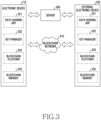
- FIG. 3 is a view to explain a configuration of a system for sharing data by using a blockchain network according to an embodiment.
- an electronic device 110 may include a data sharing application (APP) 321, a key manager 322, a blockchain platform 323, and/or a blockchain memory 325.
- the blockchain platform 323 may correspond to a blockchain application which is stored in the memory 111 and performs an operation related to a blockchain, or a blockchain module which is included in the processor 113 and performs an operation related to the blockchain.
- the electronic device 110 may perform the operation related to the blockchain, based on a blockchain network 310, through the blockchain platform 323.
- the electronic device 110 may perform ledger synchronization, transaction signature and/or transaction recording on the blockchain network 310 through the blockchain platform 323.
- the processor 113 may execute the data sharing APP 321 stored in the memory 111, based on a user input of the electronic device 110.
- the user of the electronic device 110 may execute the data sharing APP 321 to invite a user of an external electronic device 120 to share data therewith.
- the processor 113 may generate a root seed through the key manager 322.
- the root seed refers to a base value for generating a plurality of keys and a blockchain address from one root seed.
- the root seed may refer to a value that is arbitrarily generated under a condition of a usable range in the blockchain network.
- the root seed may be generated based on various dynamic characteristics occurred during an operation of the electronic device 110. For example, the electronic device 110 may generate the root seed from a value outputted from a temperature sensor of the electronic device 110 or a current value at a specific position.
- the electronic device 110 may generate the root seed by using a unique value of a hardware chip included in the electronic device 110.
- the electronic device 110 may restore key values generated through the root seed.
- the processor 113 may acquire a mnemonic hash-based root seed from the key manager 322.
- the mnemonic hash-based root seed may use a mnemonic word.
- the mnemonic word may include words that a person can recognize.
- the root seed may use various types of seeds.
- the root seed may use a seed that is formed of hexadecimal numbers or may use a seed that is formed of a mnemonic formed of 12 words.
- the mnemonic may include a word form that a user can recognize.
- the root seed may use a mnemonic based on BIP-39 standards.
- a mnemonic code and a seed may be generated based on BIP-39 standards.
- a seed of 512 bits may be generated by using words included in the mnemonic and a salt value (for example, a password inputted by a user) as factors, by using a key stretching function.
- the key stretching function (for example, PBKDF2) may output a predetermined (512 bits) value by using two factor values.
- the key stretching function may iteratively perform hashing by using two factor values by a hash algorithm (for example, HMAC-SHA512), and may generate a final output value as a root seed.
- a hash algorithm for example, HMAC-SHA512
- the electronic device 110 may select the external electronic device 120 to share data therewith, based on the data sharing APP 321. According to various embodiments, the electronic device 110 may select the external electronic device 120, based on various identifiers. For example, the electronic device 110 may receive a user input of selecting a target to transmit an invitation message from a user list displaying at least one of a phone number or a nickname of the user of the external electronic device 120. According to another embodiment, the electronic device 110 may select a plurality of external electronic devices to share data. According to an embodiment, the electronic device 110 may form one group with the selected electronic devices, and may generate a data sharing channel.
- the processor 113 may generate a public key through the key manager 322, based on the generated root seed.
- the key manager 322 may generate a hierarchical deterministic path (HDpath)-based public key by using the root seed.
- the processor 113 may generate a master private key and a master chain code from a hash value generated through the HMAC-SHAR 512 algorithm function, based on the root seed.
- the processor 113 may use 256 bits on the left in the hashed value of 512 bits as a private key, and may use 256 bits on the right as a chain code.
- the public key may be acquired by using the private key and an elliptic curve function.
- the processor 113 may generate a blockchain address through the key manager 322, based on the public key.
- the blockchain network may be indicated by using the blockchain address.
- public keys corresponding to the plurality of blockchain networks, respectively may be generated.
- blockchain addresses corresponding to the plurality of blockchain networks, respectively may be generated based on the public keys.
- the processor 113 may generate an invitation message to be transmitted to the external electronic device 120 to share data.
- the invitation message may include a URL.
- the external electronic device 120 may access a server 300 by using the URL included in the invitation message.
- the external electronic device 120 may access the server 300 by using the URL, and the URL may include a link address of the data sharing APP 321.
- the processor 113 may perform an electronic signature with a private key of the user of the electronic device 110 through the key manager 322 in order to attest validity of the invitation URL.
- the electronic device 110 may perform an electronic signature on a base URL with the private key of the user of the electronic device 110, and may acquire signature data as a result of the electronic signature.
- the electronic device 110 may generate a hash value from data including the invitation URL by using a hash function.
- the electronic device 110 may acquire a hash value from the invitation URL by using a hash function such as SHA 256.
- the electronic device 110 may perform an electronic signature based on the acquired hash value and the private key.
- the signature data acquired by completing the electronic signature may include encryption data in which the hash value is encrypted by using the private key.
- the electronic device 110 may add the signature data which is generated based on the private key of the user of the electronic device 10 to the base URL.
- the processor 113 may perform an electronic signature with an attestation key of the user of the electronic device 110 through the key manager 322, in order to attest reliability of the invitation URL.
- the attestation key may indicate an attestation key stored in a key repository of the electronic device 110.
- the electronic device 110 and the external electronic device 120 may identify that the electronic devices and the data sharing APP 321 are not modulated, through the electronic signature based on the attestation key.
- the electronic device 110 may perform an electronic signature on the base URL with the attestation key of the electronic device 110, and may generate signature data.
- the signature data obtained by completing the electronic signature may include encryption data in which a hash value is encrypted by using the attestation key.
- the electronic device 110 may add the signature data generated based on the attestation key of the user of the electronic device 110 to the base URL.
- the invitation URL may include at least one of an address of a host based on the user of the electronic device 110 who invites, the public key of the user of the electronic device 110, data which is signed with the private key of the user of the electronic device 110, or data which is signed with the attestation key of the user of the electronic device 110.
- the invitation URL may be configured by various data.
- the blockchain memory 325 may store a variety of information related to the blockchain.
- the electronic device 110 may store world state data and/or at least one contract (for example, smart contract) information.
- the blockchain platform 323 may perform an operation by using information related to the blockchain that is stored in the blockchain memory 325.
- information stored in the blockchain platform 323 may also be stored in the blockchain memory 325.
- the electronic device 110 may transmit an invitation message including an invitation URL to the external electronic device 120 through the server 300.
- the external electronic device 120 which receives the invitation URL may execute a data sharing APP 331 through the invitation URL included in the invitation message.
- the external electronic device 120 may download the data sharing APP 331 through an external server, and may execute the same.
- the external electronic device 120 may identify an attestation key value which is electronically signed on the invitation URL through a key manager 332 in order to identify reliability of the invitation URL included in the invitation message. According to an embodiment, the external electronic device 120 may identify a public key for the user of the electronic device 110 that is signed on the invitation URL through the key manager 332 in order to identify validity of the invitation URL.
- the external electronic device 120 when the user of the external electronic device 120 wants to share data with the user of the electronic device 110, that is, wants to share data with the electronic device 110 by using the data sharing APP 331, the external electronic device may generate acceptance data to accept the invitation.
- the acceptance data for accepting the invitation may be configured in various forms, and for example, may be configured by a response message to the invitation.
- the processor 123 of the external electronic device 120 may encrypt the acceptance data with the public key for the user of the electronic device 110 for the sake of security of the acceptance data.
- the processor 123 may transmit the encrypted acceptance data to the electronic device 110 via the communication circuit 122.
- the processor 123 may electronically sign invitation data with the private key of the user of the electronic device 110 through the key manager 332 in order to attest validity of the invitation data.
- the electronic device 110 may perform an electronic signature of the acceptance data with the private key of the user, and may generate signature data.
- the signature data obtained by completing the electronic signature may include encryption data.
- the encryption data may include data in which a hash value is encrypted by using the private key.
- the external electronic device 120 may perform an electronic signature on the acceptance data through the private key of the user of the external electronic device 120, and may add the signature data generated through the electronic signature to the acceptance data.
- the processor 123 may perform an electronic signature with the attestation key of the user of the external electronic device 120 through the key manager 332 in order to attest reliability of the acceptance data.
- the attestation key may indicate an attestation key that is stored in the key repository of the external electronic device 120.
- the external electronic device 120 may certify that the external electronic device 120 and the data sharing APP 331 are not modulated, through signature data based on an attestation key of the external electronic device 120.
- the external electronic device 120 may perform an electronic signature of the acceptance data with the attestation key of the external electronic device 120, and may generate signature data.
- the signature data generated by completing the electronic signature may include encryption data in which a hash value is encrypted through the attestation key.
- the external electronic device 120 may add the signature data generated based on the attestation of the user of the external electronic device 120 to the acceptance data.
- the external electronic device 120 may transmit the acceptance data to the electronic device 110 through the server 300. Accordingly, the user of the electronic device 110 may receive the acceptance data transmitted by the user of the external electronic device 120. In an embodiment, the electronic device 110 may receive the acceptance data. In addition, the electronic device 110 may receive a notification indicating that the user of the external electronic device 120 wants to share data with the user of the electronic device 110 through the data sharing APP 321. According to an embodiment, the notification may be generated through the data sharing APP 321.
- the electronic device 110 may identify an attestation key value which is signed on the acceptance data and is based on the external electronic device 120, in order to identify reliability of the acceptance data.
- the electronic device 110 may identify the attestation key value which is signed on the acceptance data and is based on the external electronic device 120 through the key manager 322 in order to identify reliability of the acceptance data received from the external electronic device 120.
- the electronic device 110 may identify a public key value of the user of the external electronic device 120 that is signed on the acceptance data through the key manager 322 in order to identify validity of the acceptance data received from the external electronic device 120.
- the electronic device 110 may decrypt the encrypted acceptance data with the private key of the user of the electronic device 110 through the key manager 322.
- the electronic device 110 may generate a block chain network including the external electronic device 120 and the electronic device 110 as blockchain nodes. According to an embodiment, the electronic device 110 may generate the blockchain network 310 through the blockchain platform 323. In an embodiment, the electronic device 110 may perform an operation related to the blockchain with respect to the blockchain network 310 through the block chain platform 323. For example, the blockchain platform 323 may manage generation of a transaction and a block record in the blockchain network 310.
- the electronic device 110 may request a first transaction from the blockchain network 310 through the blockchain platform 323 so as to include the external electronic device 120 with which the user of the electronic device 110 will share data, as blockchain nodes of the blockchain network 310.
- the first transaction may generate a first contract (for example, a first smart contract) to generate the blockchain network 310 and to add a user who will share data in the blockchain network 310.
- the first contract may include various data.
- the first contract may include an invitation ID, an identifier of an invitation acceptance user, an address of the invitation acceptance user, a public key of the invitation acceptance user, signature data signed with the public key of the invitation acceptance user, and signature data signed with an attestation key of the invitation acceptance user.
- the processor 113 may execute the data sharing APP 321 to register information of the generated blockchain network 310 at the server 300.
- the processor 113 may execute the data sharing APP 321 to generate a proposal block based on the first transaction and the first contract, through the blockchain platform 323, and to examine validity of the proposal block.
- the blockchain platform 323 may synchronize the block, and a block receiver receiving the block may examine whether the block is valid through a blockchain platform 333. This will be described below with reference to FIG. 13 .
- the external electronic device 120 may transmit and receive data to and from the blockchain network 310, and may include the blockchain platform 333 including instructions to manage generation of a transaction and block recording.
- the processor 123 may perform the first contract through the blockchain platform 333.
- the blockchain platform 333 may record world state data regarding the first contract on a world state of a ledger of the blockchain network 310.
- the external electronic device 120 may register information on the blockchain network 310 of the user of the external electronic device 120 at the server 300.
- FIG. 4 is a view illustrating an example of a user interface for generating a channel for sharing data through a data sharing application according to an embodiment.
- the electronic device 110 may generate a blockchain network 310 for sharing data by executing the data sharing APP 321.
- the blockchain network 310 may be expressed by a data sharing channel.
- the processor 113 may select external electronic devices to share data.
- the processor 113 may output a channel generation 410 through the display 114.
- the processor 113 may output users 421-423 of external electronic devices to share data.
- the user of the electronic device 110 may select users to share data from the users 421-423 of the external electronic devices as invitees.
- the blockchain network 310 may be generated.
- the electronic device 110 and the invited external electronic devices may perform an operation of generating the blockchain network 310.
- the processor 113 may output a channel generation completion notification 430 through the display 114.
- the invitees may transmit acceptance data at different times, that is, may join in the blockchain network 310 as nodes at different times. This will be described below with reference to FIG. 8 .
- FIG. 5 is a view illustrating an example of a user interface which is displayed in a process of sharing data by using a list of sharing means for selecting a content sharing method according to an embodiment.
- the electronic device 110 may generate a blockchain network 310 for sharing data in the middle of executing an application providing a content.
- the electronic device may execute a gallery content 511 or a document content 512, and may share the same with respective users of the external electronic devices through the data sharing APP 321.
- the processor 113 may output the gallery content 511 or the document content 512 corresponding to data to share through the display 114.
- the user of the electronic device 110 may select the document content 512 as a file to share.
- the user when the user selects the document content 512 to share, the user may select an application for sharing the document content 512.
- the processor 113 may output a list of sharing means for selecting various applications 521 to 523 for sharing the document content 512 through the display 114.
- the electronic device 110 may receive a user input of selecting the data sharing APP 521 as an application for sharing the document content 512.
- the electronic device 110 when the blockchain network 310 for sharing the document content 512 is not generated, the electronic device 110 may perform the operation of generating the blockchain network 310 as described with reference to FIGS. 3 and 4 , in response to the user input of selecting the data sharing APP 521.
- the electronic device 110 may generate the blockchain network 310 for sharing the document content 512 with external electronic devices.
- the processor 113 may output a notification indicating that the blockchain network 310 is generated, that is, a channel generation completion notification 530, through the display 114.
- the channel generation completion notification 530 may further include a notification indicating that the blockchain network is generated through the data sharing APP.
- FIG. 6 is a view illustrating an example of a user interface which is displayed in a process of sharing data in the middle of executing a social network service (SNS) application according to an embodiment.
- SNS social network service
- the electronic device 110 may execute a SNS APP, and may generate a blockchain network 310 for sharing data.
- the processor 113 may execute the SNS application and may output items 611-614 indicating users of external electronic devices through the display 114.
- the user of the electronic device 110 may select at least one user to share data from users 611-614 of external electronic devices.
- the processor 113 may generate the blockchain network 310 to include external electronic devices of users who will share data selected by the user of the electronic device 110, as blockchain nodes.
- the processor 113 may provide guidance on a method of sharing data through the display 114. For example, the processor 113 may output a data sharing APP 621 or another APP 1 622 to select one therefrom through the display 114.
- the electronic device 110 receives a user input of selecting the data sharing APP 621
- the electronic device 110 and the external electronic devices selected to share data may perform the operation of generating the blockchain network 310.
- the processor 113 may output a channel generation completion notification 630 through the display 114.
- the electronic device 110 may generate the blockchain network 310 through various methods, without being limited to descriptions appearing in the disclosure, in order to share data with the external electronic devices based on blockchain technology.
- FIG. 7 is a flowchart 700 illustrating an operation of generating a blockchain network of an electronic device according to an embodiment.
- the processor 113 may generate a public key and a blockchain address by executing instructions stored in the memory 111. For example, the processor 113 may generate a root seed through the key manager 322, and may generate the public key based on the root seed. In addition, the processor 113 may generate the blockchain address based on the public key through the key manager 322. In an embodiment, a blockchain network may be indicated by the blockchain address.
- the processor 113 may select at least one external electronic device to share data.
- the at least one external electronic device selected by the processor 113 may form one group.
- the group may be included as blockchain nodes included in the blockchain network.
- the processor 113 may transmit an invitation URL including information regarding the public key and the blockchain address to the at least one external electronic device selected in operation 703 through the communication circuit 112.
- the invitation URL may indicate an invitation URL regarding an application for sharing data.
- the selected external electronic devices may receive an application link through the invitation URL, and may download the application for sharing data through the application link.
- the processor 113 may transmit the invitation URL including signature data which is signed with the public key to the at least one selected external electronic device in order to attest validity of the invitation URL.
- the electronic device 110 may generate a blockchain network 310 including at least one external electronic device as a blockchain node through the block chain platform 323, based on a response message of the at least one selected external electronic device.
- the processor 113 may receive a response message to the invitation URL from the at least one selected external electronic device, through the communication circuit 112.
- the blockchain platform 323 may generate the blockchain network 310 including the at least one selected external electronic device and the electronic device 110, based on the response message for accepting sharing of data.
- the electronic device 110 and the at least one selected external electronic device may share data in the blockchain network 310 based on the blockchain technology.
- the electronic device 110 may generate a plurality of blockchain networks corresponding to types of at least one selected external electronic device, respectively.
- the processor 113 may store information regarding the blockchain network in an external server.
- the processor 113 may store, in the external server through the communication circuit 112, blockchain network generation information, and information regarding the electronic device and the at least one external electronic device included in the generated blockchain network 310.
- the information regarding the electronic device and the at least one external electronic device included in the generated blockchain network 310 may include respective account information, phone numbers and/or device IDs of the electronic devices.
- FIG. 8 is a flowchart 800 illustrating an operation of generating a blockchain network with a plurality of external electronic devices.
- the processor 113 may execute the data sharing APP 321 for sharing data by executing instructions stored in the memory 111.
- the processor 113 may execute the data sharing APP 321 based on blockchain technology.
- the user of the electronic device 110 may select a user of at least one external electronic device to share data.
- the user of the electronic device 110 may invite two users of external electronic devices to share data.
- the users may be invited to a blockchain network including external electronic devices to share data and the electronic device 110.
- the user of the electronic device 110 may invite the two users of the external electronic devices by transmitting an invitation URL regarding the data sharing APP through the processor 113.
- the respective users may accept the invitation at different times.
- the time to transmit acceptance data to an invitation URL may vary according to external electronic devices.
- invitee 1 out of the two invitees may accept the invitation. That is, the processor 113 may receive acceptance data from the invitee 1.
- the invitation acceptance of the invitee 1 may include signature data that is signed with a private key of the invitee 1 to attest validity of the invitation acceptance.
- an attestation key value of the invitee 1 may be included as signature data to attest reliability of the invitation acceptance.
- the blockchain platform 323 may generate a blockchain network and may add the invitee 1 as a member, based on the invitee 1 transmitting acceptance data first. That is, the external electronic device of the invitee 1 may be added as a blockchain node included in the blockchain network.
- the operations of generating the blockchain network and adding the invitee 1 as a member may include an operation of requesting generation of a first invitation transaction to generate the blockchain network through the blockchain platform 323 and to include the invitee 1 as a blockchain node of the blockchain network 310.
- the first invitation transaction may include an operation of generating a first invitation smart contract to generate the blockchain network and to add the invitee 1 to the blockchain network 310.
- the blockchain platform 323 may execute the first invitation smart contract, and may record data based on the first invitation smart contract on a world state.
- the invitee 2 may accept the invitation similarly to the invitee 1 accepting the invitation. That is, the electronic device 110 may receive acceptance data from the invitee 2.
- the acceptance data of the invitee 2 may include signature data which is signed with a private key and signature data which is signed with an attestation key to attest validity and reliability.
- the blockchain platform 323 may add the invitee 2 as a blockchain node included in the generated blockchain network.
- the operation of adding the invitee 2 as a member may include an operation of requesting generation of a second invitation transaction to include the invitee 2 as a blockchain node of the blockchain network 310 through the block chain platform 323.
- the second invitation transaction may include an operation of generating a second invitation smart contract to add the invitee 2.
- the blockchain platform 323 may execute the second invitation smart contract, and may record data based on the second invitation smart contract on the world state.
- the external electronic device of the invitee 2 may be added to the blockchain network which is formed of the external electronic device of the invitee 1 and the user of the electronic device. Accordingly, the user of the electronic device 110 may share data with the invitee 1 and the invitee 2.
- the electronic device 110 may generate a transaction regarding the generated blockchain network and the nodes included in the blockchain network (for example, the electronic device, the external electronic device of the invitee 1, the external electronic device of the invitee 2), through the blockchain platform 323, and may generate a synchronized block and may record the transaction.
- Block synchronization will be described below with reference to FIG. 13 .
- FIG. 9 is a view illustrating a configuration of a system for an electronic device to share data according to an embodiment.
- the electronic device 110 may include a data sharing APP 321, a key manager 322, a blockchain platform 323, and an application 324 related to data to share.
- the processor 113 may execute the application 324 stored in the memory 111.
- the application 324 may provide data to share.
- the application 324 may provide a photo, a video, and/or document data.
- the user of the electronic device 110 may select data to share with an external electronic device 120 through the application 324.
- the user of the electronic device 110 may select a blockchain network 310 to share the selected data.
- the processor 113 may execute the data sharing APP 321, and may control to cause the user of the electronic device 110 to select the blockchain network 310.
- the user of the electronic device 110 may select at least one blockchain network among a plurality of blockchain networks in order to share data.
- the blockchain network 310 may be generated by performing the operations described with reference to FIGS. 3 to 6 .
- the processor 113 may encrypt data to share with the external electronic device 120 with a symmetric key which is known to all of the electronic device 110 and the external electronic device 120. For example, the electronic device 110 and the external electronic device 120 may know each other's public keys. Accordingly, the processor 113 may encrypt data to share with a private key of the electronic device 110. According to an embodiment, the processor 113 may copy the encrypted sharing data into an internal repository of the data sharing APP 321 that is accessible through the data sharing APP 321. In an embodiment, the internal repository of the data sharing APP 321 may be included in the memory 111.
- the processor 113 may upload the encrypted sharing data on a server 300 through the communication circuit 112. Accordingly, a user of the external electronic device 120, which is selected by the user of the electronic device 110 and is included in the blockchain network 310, may access the encrypted sharing data through the server 300.
- the electronic device 110 may generate a second transaction containing detailed information regarding data to share in the blockchain network 310 through the blockchain platform 323.
- the user of the electronic device 110 may generate the second transaction to control authority to access the data to share, through the blockchain platform 323.
- the electronic device 110 may generate the second transaction to control data reading, deletion, an access expiration date, and/or modification through the blockchain platform 323.
- the second transaction may generate a second contract (for example, a second smart contract) containing detailed information regarding data sharing.
- the second contract may include various data.
- the second contract may include at least one of a unique ID of data sharing, a data sharing blockchain network ID, a symmetric key used for encryption of data, an address of a person sending data (second transaction generator), an address of a person receiving data, data in which a data download address is encrypted with a symmetric key, a data name, data authority, a data sharing time, a data access expiration date and/or a state of shared data (for example, deletion, corruption, etc.).
- the second contract may include various data in addition to the above-described data.
- the processor 113 may electronically sign with a private key of a person making the second transaction, that is, the user of the electronic device 110, through the key manager 322.
- the processor 113 may sign a second transaction hash with the private key of the user of the electronic device 110 through the key manager 322, and may add the same to second transaction signature data.
- the processor 113 may electronically sign with an attestation key of the user of the electronic device 110 through the key manager 322 in order to attest reliability of the second transaction.
- the attestation key may correspond to the attestation key described with reference to FIG. 3 .
- the processor 113 may sign the second transaction hash with the attestation key of the user of the electronic device 110 through the key manager 322, and may add the same to the second transaction signature data.
- the processor 113 may generate a proposal block based on the second transaction and the second contract through the blockchain platform 323, by executing the data sharing APP 321, and may examine validity of the proposal block.
- the blockchain platform 323 may synchronize the block, and a block receiver receiving the block may examine whether the block is valid, through the blockchain platform 333. Certifying and synchronizing the block will be described in detail with reference to FIG. 13 .
- the blockchain platform 333 of the external electronic device 120 which receives the shared data may perform the second contract based on the second transaction generated in the blockchain network 310.
- the blockchain platform 333 may record world state data regarding the second contract on a world state of a ledger of the blockchain network 310.
- the communication circuit 122 may download encrypted sharing data through the server 300.
- the processor 123 may store the encrypted data in an internal repository.
- the internal repository may indicate an internal repository of the data sharing APP 331 that can be accessed through the data sharing APP 331.
- the internal repository of the data sharing APP 331 may be included in the memory 121.
- the user of the external electronic device 120 may access the encrypted data which is downloaded from the server 300.
- the data sharing APP 331 may decrypt the encrypted data.
- the user of the external electronic device 120 may decrypt the data encrypted with the public key of the user of the electronic device 110.
- the blockchain platform 333 may generate a third transaction regarding reading of the data.
- the third transaction may generate a third contract (for example, a third smart contract) containing information regarding reading of the data.
- the third contract may include various data.
- the third contract may include at least one of an address of a person who reads data, a blockchain network ID that shares data, a unique ID regarding shared data, and/or a time at which data is read.
- the third contract may include various data in addition to the above-described data.
- the processor 123 may electronically sign with a private key of the user of the external electronic device 120 which generates the third transaction, through the key manager 332.
- the processor may sign a third transaction hash with the private key of the user of the external electronic device 120, and may add the same to third transaction signature data.
- the processor 123 may electronically sign with an attestation key of the user of the external electronic device 120 through the key manager 322 in order to attest reliability of the third transaction. According to an embodiment, the processor 123 may sign the third transaction hash with the attestation key of the user of the external electronic device 120 through the key manager 332, and may add the same to the third transaction signature data.
- the processor 123 may generate a proposal block based on the third transaction and the third contract through the blockchain platform 333, by executing the data sharing APP 331, and may examine validity of the proposal block.
- the blockchain platform 333 may synchronize the block, and a block receiver receiving the block may examine whether the block is valid through the blockchain platform 323. Certifying and synchronizing the block will be described below with reference to FIG. 13 .
- the blockchain platform 323 of the electronic device 110 may perform the third contract based on the third transaction generated in the blockchain network 310.
- the blockchain platform 323 may record world state data regarding the third contract on the world state of the ledger of the blockchain network 310.
- the user of the electronic device 110 which shares data may identify that the user of the external electronic device 120 receiving shared data reads the data, based on the data regarding the third contract, by using the data sharing APP 321.
- the external electronic device 120 may share data.
- the second transaction may be generated by the blockchain platform 333 of the external electronic device 120.
- the second transaction may be electronically signed with a private key of the user of the external electronic device 120.
- the third transaction may be generated by the block chain platform 323 of the electronic device 110.
- the third transaction may be electronically signed with the private key of the user of the electronic device 110.
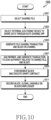
- FIG. 10 is a flowchart 1000 illustrating an operation of sharing data in an electronic device according to an embodiment.
- the user of the electronic device described above with reference to FIG. 1 may select a sharing file to share with the user of the external electronic device described with reference to FIG. 1 .
- the sharing file may be data of various formats.
- the sharing file may include a photo, a video, and/or a document.
- the user of the electronic device may select an external electronic device to share data therewith through the data sharing APP described with reference to FIG. 3 .
- the user of the electronic device may select a plurality of external electronic devices.
- selecting the external electronic device to share data may indicate selecting a blockchain network including the electronic device and the external electronic device to share data as blockchain nodes.
- the user of the electronic device may select the blockchain network in operation 1003.
- the user of the electronic device may generate the blockchain network by performing the operations described with reference to FIG. 3 .
- the blockchain platform described with reference to FIG. 3 may share data with the blockchain network (blockchain channel) including the electronic device and the external electronic device to share data as blockchain nodes, and may generate a file sharing transaction and a block.
- the file sharing transaction may indicate the second transaction described with reference to FIG. 9 .
- the blockchain platform may add the user of the external electronic device to share data to the blockchain network (channel) as a member, and may generate a transaction to give authority to the shared file and may generate a block based on the transaction.
- the blockchain platform may generate a reading expiration time, re-sharing authority, etc. for the shared file as a transaction.
- the blockchain platform may synchronize the generated block and may execute a smart contract based on the generated block.
- the smart contract may be executed based on a consensus algorithm of blockchain nodes included in the blockchain network.
- the blockchain platform may register the block at a blockchain ledger of the block chain network (channel) in which the electronic device shares the file, and may record data on the transaction and the smart contract on a world state.
- FIG. 11 is a flowchart 1100 illustrating an operation of changing authority regarding shared data in an electronic device according to an embodiment.
- the user of the electronic device described with reference to FIG. 3 may select a file to change authority among shared files through the data sharing APP described with reference to FIG. 3 .
- the user of the electronic device may select the file to withdraw or modify authority of the external electronic device related to the shared file.
- the user of the electronic device may modify authority to access the selected file in operation 1103.
- the user of the electronic device may prohibit the external electronic device from accessing the selected file, or may re-set a file accessing expiration date.
- the blockchain platform of the electronic device described with reference to FIG. 3 may generate a transaction regarding changing of file authority.
- the blockchain platform may generate a smart contract based on the transaction.
- smart contract data may include a unique ID regarding the shared file, a file sharing blockchain network (blockchain channel), a data related to file accessing authority.
- the blockchain platform may transmit a symmetric key which is used for encrypting the shared file as a null value in the file authority changing transaction, and may control the shared file not to be decrypted.
- the processor of the electronic device described with reference to FIG. 3 may sign a transaction hash with a private key of the user of the electronic device which generates the file authority changing transaction through the key manager described with reference to FIG. 3 , and may add the transaction hash to transaction signature data.
- the processor of the electronic device may sign the transaction hash with an attestation key of the user of the electronic device, and may add the transaction hash to the transaction signature data, in order to attest reliability of the file authority changing transaction through the key manager.
- the blockchain platform may generate a block based on the file authority changing transaction, and may synchronize the block.
- the blockchain platform may execute the smart contract based on the file authority changing transaction.
- the blockchain platform may execute the smart contract by executing the file authority changing transaction, and may record a result of performing the smart contract.
- the blockchain platform may record the block based on the file authority changing transaction on the blockchain ledger of the blockchain network in which the file the authority of which is changed is shared, and may record the smart contract data on the world state.
- FIG. 12 is a flowchart 1200 illustrating an operation of determining whether to generate a blockchain network in an electronic device according to an embodiment.
- the user of the electronic device described with reference to FIG. 3 may select external electronic devices to share data.
- a method of selecting external electronic devices to share data may include one of various methods described with reference to FIGS. 4 to 6 .
- the processor may determine whether there already exists a blockchain network based on the same external electronic devices as the selected external electronic devices. That is, in order to share data, it may be determined whether there already exists a blockchain network before the blockchain network is generated through the data sharing APP described with reference to FIG. 3 .
- the processor may determine whether there already exists a blockchain network through channel information stored in the blockchain platform, based on a genesis block shared through an operation of inviting the selected external electronic devices.
- the genesis block may indicate a first block that is generated in the blockchain network as a block for generating a blockchain network, that is, a channel.
- the processor may share data to share with the existing blockchain network.
- the processor may transmit an invitation URL including information regarding a public key and a blockchain address to the external electronic device through the server described with reference to FIG. 3 in operation 1205.
- the processor may generate a public key of the user of the electronic device through the key manager of the electronic device described with reference to FIG. 3 , and may generate a blockchain address based on the public key.
- the blockchain network may be indicated by the blockchain address.
- the blockchain platform of the electronic device may generate a blockchain network including the external electronic devices as nodes, based on a response message of the external electronic devices, by performing the operations described with reference to FIG. 3 .
- a response message including acceptance data may be transmitted to the electronic device.
- the response message may indicate acceptance data described with reference to FIG. 3 .
- the processor may store information regarding the blockchain network in an external server through the communication circuit described with reference to FIG. 1 .
- the information regarding the blockchain network may include at least one of information of the respective users of the external electronic devices joining in sharing data through the blockchain network, a blockchain network (blockchain channel) ID, a blockchain address.
- the processor may share the data to share with the existing blockchain network in operation 1211.
- FIG. 13 is a view to explain operations of certifying and synchronizing a block through a blockchain platform according to an embodiment.
- a block sharing system 1300 may include a block generator 110 for generating a block and a block receiver 120 for receiving the generated block on a blockchain network.
- the block generator 110 and the block receiver 120 may correspond to the electronic device 110 or the external electronic device 120 according to a type of the generated block.
- the block generator 110 may include a data sharing APP 321 and a blockchain platform 323.
- the block receiver 120 may include a data sharing APP 331 and a blockchain platform 333.
- the block sharing system 1300 may refer to a system that shares a block which is generated in a process of generating a blockchain network, storing information regarding the blockchain network, and adding blockchain nodes included in the blockchain network, and in a process of sharing data and withdrawing authority on the data.
- the block sharing system 1300 may include a process of generating, by the block generator 110, a proposal block, and receiving certification on whether the block is valid from the block receiver 120, and then synchronizing the block.
- the block receiver 120 may identify whether the block is valid and then may perform a transaction of the block to reflect transaction data on a world state of a ledger included in the blockchain network.
- the block generator 110 and the block receiver 120 of the block sharing system 1300 may know information of each other's public keys in the process of generating the blockchain network.
- the data sharing APP 321 may request the blockchain platform 323 to generate a block (1311).
- the block may indicate a block which is based on various types of transactions. For example, when the user who shares data through the data sharing APP 321 generates a file authority changing transaction to withdraw authority on the shared data, the blockchain platform 323 may be requested to generate the block, based on the file authority changing transaction (1311).
- the blockchain platform 323 may connect a hash value of a previous block to the block (1312).
- the hash value of the previous block may be recorded on a previous hash value of a proposal block.
- the hash value may indicate a hash value which is generated by using a hash function.
- the blockchain platform 323 may calculate a world state data hash by performing a smart contract with a transaction of a proposal block requested to be generated (1313). For example, the blockchain platform 323 may calculate a hash of world state data after performing the smart contract based on the transaction by executing the transaction in the proposal block, and may record the hash on the proposal block.
- the block generator 110 may request the block receiver 120 to certify the proposal block, which is requested to be generated, through the blockchain platform 323 (1314).
- the block receiver 120 may execute the data sharing APP 331, and may perform a certification operation by identifying a certification chain and electronic signature data included in the proposal block requested to be generated. That is, the data sharing APP 331 may identify the reliable device and application by identifying an attestation key signature of the block (1315).
- the block receiver 120 may decrypt the proposal block with the public key of the block generator 110 known thereto, and may certify the block generator 110. That is, the data sharing APP 331 may certify a person who shares the block by certifying the proposal block encrypted with a private key of the person sharing the block, with a public key of the person sharing the block (1316).
- the data sharing APP 331 may request the blockchain platform 333 to identify whether a previous hash value of the proposal block matches the hash value of the last block that the block receiver 120 has on the blockchain network, through the previous hash value of the proposal block.
- the data sharing APP 331 may request the blockchain platform 333 to certify the previous hash value of the block (1317), and the blockchain platform 333 may respond after performing the certifying operation.
- the blockchain platform 333 may execute the transaction of the proposal block and perform the smart contract, and then, may identify whether the hash value of the world state is equal to a world state hash value of the proposal block.
- the block receiver 120 may transmit a response indicating that the proposal block is certified to the block generator 110 (1318).
- the proposal block requested to be generated through the block generator 110 may be synchronized (1319).
- the blockchain platform 333 of the block receiver 120 may execute the transaction of the certified proposal block in advance and may certify the world state hash value (1320).
- the blockchain platform may execute the transaction with the shared proposal block and may perform a smart contract based on the transaction, and may identify whether a hash value of the world state after the smart contract is performed is equal to the world state hash value of the proposal block.
- the block receiver 120 may execute a transaction of the valid block and may perform a smart contract, and may record smart contract resulting data on the world state.
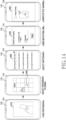
- FIG. 14 is a view illustrating a data sharing user interface of an electronic device according to an embodiment.
- the user of the electronic device 110 who intends to share data may take a photograph.
- the processor 113 may display the taken photograph 1410 through the display 114.
- the user of the electronic device 110 may identify the taken photograph 1410 through the display 114 by executing a gallery application.
- the user of the electronic device 110 may execute the gallery application, and may select photograph data to share with a user of at least one external electronic device. For example, the user of the electronic device 110 may select the taken photograph 1410 as photograph data to share.
- the processor 113 may select a target to share the taken photograph 1410 through the display 114.
- the processor may select a user of an external electronic device to share data in the blockchain network 310 through the data sharing APP 321 described with reference to FIG. 3 .
- the processor 113 may display information regarding a recipient to share data therewith through the display 114 by using various identifiers.
- the identifier may include a name, a phone number, an address and/or a nickname.
- the processor 113 may control information displayed through the display 114 not to be captured. That is, the processor 113 may determine that information regarding recipients to share data is security information, and may control a capturing operation not to leak the information displayed on the display 114.
- the processor 113 may generate an invitation message 1440 including an invitation URL.
- the invitation URL included in the invitation message 1440 may include signature data which is electronically signed with a private key and an attestation key of the user of the electronic device 110.
- the invitation URL may include an invitation ID, a public key and an address of the user of the electronic device 110.
- the processor 113 may output the generated invitation message 1440 through the display 114.
- the blockchain network may be generated.
- the processor 113 may share the taken photograph 1410 through the server 300. Accordingly, the processor 113 may output a sharing completion notification 1450 indicating that the taken photograph 1410 is shared with the recipient 1430, through the display 114.
- FIG. 15 is a view illustrating a user interface of an electronic device which receives shared data according to an embodiment.
- the user of the electronic device 110 may receive shared data from the external electronic device 120.
- the electronic device 110 may receive an invitation message for sharing data through the data sharing APP 321 described with reference to FIG. 3 , from the external electronic device 120.
- the processor 113 may display the invitation message including an invitation URL 1510 through the display 114.
- the invitation URL 1510 may be received based on various forms. For example, the invitation URL 1510 may be received based on a form of a notification through the data sharing APP 321 in addition to the form of the invitation message.
- the processor 113 may execute the data sharing APP 321 through the invitation URL 1510, and identify shared data 1520. According to an embodiment, the processor 113 may display the shared data 1520 through the display 114. In an embodiment, the blockchain platform 323 described with reference to FIG. 3 may generate a transaction regarding reading of the shared data 1520.
- FIG. 16 is a view illustrating a user interface which sets authority on shared data according to an embodiment.
- the user of the electronic device 110 who intends to share data may select a file and photo 1610 to share.
- the processor 113 may execute the data sharing APP 321 described with reference to FIG. 3 , and may output the file and photo 1610 through the display 114.
- the processor 113 may output a plurality of blockchain networks (blockchain channels) for sharing data generated based on the data sharing APP 321.
- the user of the electronic device 110 may select one blockchain network from the plurality of blockchain networks 1622 to 1624.
- the user of the electronic device 110 may select a "Create Channel” 1625 displayed through the display 114.
- the processor 113 may generate a blockchain network through the blockchain platform 323 described with reference to FIG. 3 .
- the user of the electronic device 110 selects the blockchain network to share data, and may select a "Send" 1621 displayed through the display 114.
- the processor 113 may transmit the photo and file 1610 to share to the recipient through the selected blockchain network.
- the processor 113 may output displays 1631 to 1635 through the display 114 to allow the user of the electronic device 110 to set authority on the photo and file 1610 to be shared.
- the user of the electronic device 110 may set authority on the photo and file 1610 to be shared, by selecting one items from authority setting displays 1632 to 1635 of the photo and file 1610 to be shared, setting authority and selecting a completion display 1631.
- the user of the electronic device 110 may control authority on the shared file in the blockchain network 310, by generating an authority setting transaction through the blockchain platform 323 based on the set authority, and performing the authority changing operation described with reference to FIG. 11 .
- the user of the electronic device 110 who shares the file and photo 1610 may change the authority on the shared file at a time as the user wants when sharing the file or even after sharing the file.
- FIG. 17 is a view illustrating a file information user interface of a file shared through a data sharing application according to an embodiment.
- the processor 113 may execute the data sharing APP 321 described with reference to FIG. 3 , and may output a list of sharing files which are shared or received through the data sharing APP 321, through the display 114.
- the display 114 may display the list of sharing files including brief summaries of the sharing files, sharing file names, latest modification information of the sharing files, and/or capacities of the sharing files.
- the user of the electronic device 110 may select a file to view information from the list of sharing files. For example, the user of the electronic device 110 may identify file information of a first sharing file by selecting the first sharing file 1710 through the display 114.
- the processor 113 may output file information of the file that the user of the electronic device 110 wants to identify through the display 114.
- the processor 113 may output file information 1720 of the first sharing file through the display 114.
- the file information 1720 may include a variety of information regarding the sharing file.
- the file information 1720 may include a file name, a file type, a fine thumbnail, an address of a blockchain network which shares the file, a name of a file recipient, a file sharing expiration date, and/or a file authority withdrawal date.
- FIG. 18 is a view illustrating an authority changing user interface of a file shared through a data sharing application according to an embodiment.
- the processor 113 may execute the data sharing APP 321 described with reference to FIG. 3 , and may output a list of sharing files which are shared or received through the data sharing APP 321, through the display 114.
- the display 114 may display the list of sharing files including brief summaries of the sharing files, sharing file names, latest modification information of the sharing files, and/or capacities of the sharing files. According to an embodiment, the display 114 may display information regarding a file authority of which is deleted and which cannot be read in the list of sharing files. According to an embodiment, the processor 113 may output the list of sharing files including a file 1811 authority of which is withdrawn and which cannot be read, and a file 1812 which can be read, through the display 114.
- the user of the electronic device 110 may selecta file to read information from the list of sharing files.
- the user of the electronic device 110 may identify first file information 1821 of the file 1811 that cannot be read, by selecting the file 1811 that cannot be read, through the display 114.
- the first file information 1821 may include a variety of information.
- the first file information 1821 may include a file name, a file type, a file thumbnail, a name of a blockchain network which shares the file, a file sender, a file recipient, file recipient's authority to read, a sharing expiration date, file recipient's authority to delete, authority to change an encrypted file, and/or a file sharing date.
- the user of the electronic device 110 may identify that the authority to read the shared file is deleted, through the first file information 1821 displayed on the display 114.
- the user of the electronic device 110 may select the file 1812 that can be read from the list of sharing files through the display 114. Accordingly, the user of the electronic device 110 may identify second file information 1822 of the file 1812 that can be read, by selecting the file 1812 which can be read, through the display 114. According to an embodiment, the second file information 1822 may include information similar to information included in the first file information 1821.
- the processor 113 may output the second file information 1822 and a "Open File” display 1823 through the display 114.
- the processor 113 may control to open the file 1812 immediately.
- the processor 113 may generate a transaction based on the reading of the file, by referring to the blockchain platform described with reference to FIG. 3 .
- FIG. 19 is a view illustrating a sharing history user interface of a file shared through a data sharing application according to an embodiment.
- the processor 113 may output a file sharing history through the display 114.
- the processor 113 may display the file sharing history based on the data sharing APP 321 described with reference to FIG. 3 through the display 114.
- the processor 113 may control information displayed through the display 114 not to be captured. That is, the processor 113 may identify information regarding the file sharing history as security information, and may control a capturing operation to prevent information displayed on the display 114 from leaking.
- the display 114 may display both a "file shared by others” 1910 and a "file shared by me” 1920.
- the "file shared by others” 1910 may include an authority withdrawal file 1911 and a readable file 1912.
- the user of the electronic device 110 may open the readable file 1912 among the "files shared by others” 1910 that are displayed through the display 114.
- the authority withdrawal file 1911 may indicate a file the authority of which is withdrawn under control of a person who shares the data.
- the authority of the shared file may be withdrawn, based on the electronic device of the person who shares the data generating an authority changing transaction through the blockchain platform.
- the processor 113 may indicate that the authority of the file is withdrawn, through the display 113, by using at least one of various contents (for example, a text, an image, a video, an icon, and/or symbol). For example, the processor 113 may control the display 114 to normally display an image regarding a file having authority, and to hide an image regarding a file the authority of which is withdrawn by displaying a lock-like shape.
- various contents for example, a text, an image, a video, an icon, and/or symbol.
- the processor 113 may control the display 114 to normally display an image regarding a file having authority, and to hide an image regarding a file the authority of which is withdrawn by displaying a lock-like shape.
- the processor 113 may output a file sharing history including a variety of file information through the display 114.
- the processor may output a file sharing history including sharing expiration dates of the "file shared by other" 1910 and the "file shared by me” 1920, file thumbnails and/or file information related to file sharers.
- FIG. 20 is a view illustrating an authority expiration user interface of a file shared through a data sharing application according to an embodiment.
- the processor 113 may output a file shared through the data sharing APP 321 through the display 114.
- the shared file may indicate a "file before authority expiration" and a "file after authority expiration".
- the authority of the shared file may be determined by the operation of changing authority, described with reference to FIG. 11 . For example, when the user of the electronic device which shares data withdraws or modifies the authority of the shared file, authority to access the shared file may be expired. In an embodiment, the authority of the shared file may be withdrawn, based on the electronic device of a person who shares the data generating an authority changing transaction through the blockchain platform.
- the authority of the shared file may be changed as the file access expiration date is elapsed.
- the shared file may be a "file before authority expiration" before the access expiration date of the shared file is elapsed, but may be a "file after authority expiration” when the expiration date is elapsed.
- the processor 113 may display the "file before authority expiration” 2010 and the file sharing history 2011 of the "file before authority expiration", described with reference to FIG. 19 , through the display 114.
- the file sharing history may include a variety of file information.
- the "file before authority expiration" 2010 which is shared by others, and the file sharing history including a sharing effective period, a file thumbnail and/or file information regarding a file sharer may be outputted.
- the "file before authority expiration" 2010 may be displayed through the display 114 as the shared file is. That is, the processor 113 may display the file shared by the data sharing APP 321 through the display 114 if the authority of the shared file is not expired.
- the processor 113 may display a "file icon after authority expiration” 2020 and the file sharing history 2021 of "file after authority expiration", described with reference to FIG. 19 , through the display 114.
- the file sharing history may include a variety of file information. For example, the "file after authority expiration" which is shared by others, and the file sharing history including a sharing effective period, a file authority expiration date, a file authority expiration target, a file thumbnail, and/or file information related to a file sharer may be outputted.
- the processor 113 may display the "file icon after authority expiration" 2020 on the display 114, through at least one of various contents (for example, a text, an image, a video, an icon, and/or a symbol). That is, the "file after authority expiration" may not be displayed as it is, and may be displayed by using a content indicating the "file after authority expiration". For example, when the user of the electronic device 110 wants to read the "file after authority expiration", the processor 113 may output the "file icon after authority expiration" 2020 in the form of a lock icon through the display 114.
- various contents for example, a text, an image, a video, an icon, and/or a symbol
- Fig. 21 is a block diagram illustrating an electronic device 2101 in a network environment 2100 according to various embodiments.
- the electronic device 2101 in the network environment 2100 may communicate with an electronic device 2102 via a first network 2198 (e.g., a short-range wireless communication network), or at least one of an electronic device 2104 or a server 2108 via a second network 2199 (e.g., a long-range wireless communication network).
- a first network 2198 e.g., a short-range wireless communication network
- a second network 2199 e.g., a long-range wireless communication network
- the electronic device 2101 may communicate with the electronic device 2104 via the server 2108.
- the electronic device 2101 may include a processor 2120, memory 2130, an input module 2150, a sound output module 2155, a display module 2160, an audio module 2170, a sensor module 2176, an interface 2177, a connecting terminal 2178, a haptic module 2179, a camera module 2180, a power management module 2188, a battery 2189, a communication module 2190, a subscriber identification module(SIM) 2196, or an antenna module 2197.
- at least one of the components e.g., the connecting terminal 2178
- some of the components e.g., the sensor module 2176, the camera module 2180, or the antenna module 2197
- the components may be implemented as a single component (e.g., the display module 2160).
- the processor 2120 may execute, for example, software (e.g., a program 2140) to control at least one other component (e.g., a hardware or software component) of the electronic device 2101 coupled with the processor 2120, and may perform various data processing or computation. According to one embodiment, as at least part of the data processing or computation, the processor 2120 may store a command or data received from another component (e.g., the sensor module 2176 or the communication module 2190) in volatile memory 2132, process the command or the data stored in the volatile memory 2132, and store resulting data in non-volatile memory 2134.
- software e.g., a program 2140
- the processor 2120 may store a command or data received from another component (e.g., the sensor module 2176 or the communication module 2190) in volatile memory 2132, process the command or the data stored in the volatile memory 2132, and store resulting data in non-volatile memory 2134.
- the processor 2120 may include a main processor 2121 (e.g., a central processing unit (CPU) or an application processor (AP)), or an auxiliary processor 2123 (e.g., a graphics processing unit (GPU), a neural processing unit (NPU), an image signal processor (ISP), a sensor hub processor, or a communication processor (CP)) that is operable independently from, or in conjunction with, the main processor 2121.
- a main processor 2121 e.g., a central processing unit (CPU) or an application processor (AP)
- auxiliary processor 2123 e.g., a graphics processing unit (GPU), a neural processing unit (NPU), an image signal processor (ISP), a sensor hub processor, or a communication processor (CP)
- the auxiliary processor 2123 may be adapted to consume less power than the main processor 2121, or to be specific to a specified function.
- the auxiliary processor 2123 may be implemented as separate from, or as part of the main processor 2121.
- the auxiliary processor 2123 may control at least some of functions or states related to at least one component (e.g., the display module 2160, the sensor module 2176, or the communication module 2190) among the components of the electronic device 2101, instead of the main processor 2121 while the main processor 2121 is in an inactive (e.g., sleep) state, or together with the main processor 2121 while the main processor 2121 is in an active state (e.g., executing an application).
- the auxiliary processor 2123 e.g., an image signal processor or a communication processor
- the auxiliary processor 2123 may include a hardware structure specified for artificial intelligence model processing.
- An artificial intelligence model may be generated by machine learning. Such learning may be performed, e.g., by the electronic device 2101 where the artificial intelligence is performed or via a separate server (e.g., the server 2108). Learning algorithms may include, but are not limited to, e.g., supervised learning, unsupervised learning, semi-supervised learning, or reinforcement learning.
- the artificial intelligence model may include a plurality of artificial neural network layers.
- the artificial neural network may be a deep neural network (DNN), a convolutional neural network (CNN), a recurrent neural network (RNN), a restricted boltzmann machine (RBM), a deep belief network (DBN), a bidirectional recurrent deep neural network (BRDNN), deep Q-network or a combination of two or more thereof but is not limited thereto.
- the artificial intelligence model may, additionally or alternatively, include a software structure other than the hardware structure.
- the memory 2130 may store various data used by at least one component (e.g., the processor 2120 or the sensor module 2176) of the electronic device 2101.
- the various data may include, for example, software (e.g., the program 2140) and input data or output data for a command related thererto.
- the memory 2130 may include the volatile memory 2132 or the non-volatile memory 2134.
- the program 2140 may be stored in the memory 2130 as software, and may include, for example, an operating system (OS) 2142, middleware 2144, or an application 2146.
- OS operating system
- middleware 2144 middleware 2144
- application 2146 application 2146.
- the input module 2150 may receive a command or data to be used by another component (e.g., the processor 2120) of the electronic device 2101, from the outside (e.g., a user) of the electronic device 2101.
- the input module 2150 may include, for example, a microphone, a mouse, a keyboard, a key (e.g., a button), or a digital pen (e.g., a stylus pen).
- the sound output module 2155 may output sound signals to the outside of the electronic device 2101.
- the sound output module 2155 may include, for example, a speaker or a receiver.
- the speaker may be used for general purposes, such as playing multimedia or playing record.
- the receiver may be used for receiving incoming calls. According to an embodiment, the receiver may be implemented as separate from, or as part of the speaker.
- the display module 2160 may visually provide information to the outside (e.g., a user) of the electronic device 2101.
- the display module 2160 may include, for example, a display, a hologram device, or a projector and control circuitry to control a corresponding one of the display, hologram device, and projector.
- the display module 2160 may include a touch sensor adapted to detect a touch, or a pressure sensor adapted to measure the intensity of force incurred by the touch.
- the audio module 2170 may convert a sound into an electrical signal and vice versa. According to an embodiment, the audio module 2170 may obtain the sound via the input module 2150, or output the sound via the sound output module 2155 or a headphone of an external electronic device (e.g., an electronic device 2102) directly (e.g., wiredly) or wirelessly coupled with the electronic device 2101.
- an external electronic device e.g., an electronic device 21022
- directly e.g., wiredly
- wirelessly e.g., wirelessly
- the sensor module 2176 may detect an operational state (e.g., power or temperature) of the electronic device 2101 or an environmental state (e.g., a state of a user) external to the electronic device 2101, and then generate an electrical signal or data value corresponding to the detected state.
- the sensor module 2176 may include, for example, a gesture sensor, a gyro sensor, an atmospheric pressure sensor, a magnetic sensor, an acceleration sensor, a grip sensor, a proximity sensor, a color sensor, an infrared (IR) sensor, a biometric sensor, a temperature sensor, a humidity sensor, or an illuminance sensor.
- the interface 2177 may support one or more specified protocols to be used for the electronic device 2101 to be coupled with the external electronic device (e.g., the electronic device 2102) directly (e.g., wiredly) or wirelessly.
- the interface 2177 may include, for example, a high definition multimedia interface (HDMI), a universal serial bus (USB) interface, a secure digital (SD) card interface, or an audio interface.
- HDMI high definition multimedia interface
- USB universal serial bus
- SD secure digital
- a connecting terminal 2178 may include a connector via which the electronic device 2101 may be physically connected with the external electronic device (e.g., the electronic device 2102).
- the connecting terminal 2178 may include, for example, a HDMI connector, a USB connector, a SD card connector, or an audio connector (e.g., a headphone connector).
- the haptic module 2179 may convert an electrical signal into a mechanical stimulus (e.g., a vibration or a movement) or electrical stimulus which may be recognized by a user via his tactile sensation or kinesthetic sensation.
- the haptic module 2179 may include, for example, a motor, a piezoelectric element, or an electric stimulator.
- the camera module 2180 may capture a still image or moving images.
- the camera module 2180 may include one or more lenses, image sensors, image signal processors, or flashes.
- the power management module 2188 may manage power supplied to the electronic device 2101. According to one embodiment, the power management module 2188 may be implemented as at least part of, for example, a power management integrated circuit (PMIC).
- PMIC power management integrated circuit
- the battery 2189 may supply power to at least one component of the electronic device 2101.
- the battery 2189 may include, for example, a primary cell which is not rechargeable, a secondary cell which is rechargeable, or a fuel cell.
- the communication module 2190 may support establishing a direct (e.g., wired) communication channel or a wireless communication channel between the electronic device 2101 and the external electronic device (e.g., the electronic device 2102, the electronic device 2104, or the server 2108) and performing communication via the established communication channel.
- the communication module 2190 may include one or more communication processors that are operable independently from the processor 2120 (e.g., the application processor (AP)) and supports a direct (e.g., wired) communication or a wireless communication.
- AP application processor
- the communication module 2190 may include a wireless communication module 2192 (e.g., a cellular communication module, a short-range wireless communication module, or a global navigation satellite system (GNSS) communication module) or a wired communication module 2194 (e.g., a local area network (LAN) communication module or a power line communication (PLC) module).
- a wireless communication module 2192 e.g., a cellular communication module, a short-range wireless communication module, or a global navigation satellite system (GNSS) communication module
- GNSS global navigation satellite system
- wired communication module 2194 e.g., a local area network (LAN) communication module or a power line communication (PLC) module.
- LAN local area network
- PLC power line communication
- a corresponding one of these communication modules may communicate with the external electronic device via the first network 2198 (e.g., a short-range communication network, such as BluetoothTM, wirelessfidelity (Wi-Fi) direct, or infrared data association (IrDA)) or the second network 2199 (e.g., a long-range communication network, such as a legacy cellular network, a 5G network, a next-generation communication network, the Internet, or a computer network (e.g., LAN or wide area network (WAN)).
- first network 2198 e.g., a short-range communication network, such as BluetoothTM, wirelessfidelity (Wi-Fi) direct, or infrared data association (IrDA)
- the second network 2199 e.g., a long-range communication network, such as a legacy cellular network, a 5G network, a next-generation communication network, the Internet, or a computer network (e.g., LAN or wide area network (WAN)).
- a short-range communication network
- the wireless communication module 2192 may identify and authenticate the electronic device 2101 in a communication network, such as the first network 2198 or the second network 2199, using subscriber information (e.g., international mobile subscriber identity (IMSI)) stored in the subscriber identification module 2196.
- subscriber information e.g., international mobile subscriber identity (IMSI)
- the wireless communication module 2192 may support a 5G network, after a 4G network, and next-generation communication technology, e.g., new radio (NR) access technology.
- the NR access technology may support enhanced mobile broadband (eMBB), massive machine type communications (mMTC), or ultra-reliable and low-latency communications (URLLC).
- eMBB enhanced mobile broadband
- mMTC massive machine type communications
- URLLC ultra-reliable and low-latency communications
- the wireless communication module 2192 may support a high-frequency band (e.g., the mmWave band) to achieve, e.g., a high data transmission rate.
- the wireless communication module 2192 may support various technologies for securing performance on a high-frequency band, such as, e.g., beamforming, massive multiple-input and multiple-output (massive MIMO), full dimensional MIMO (FD-MIMO), array antenna, analog beam-forming, or large scale antenna.
- the wireless communication module 2192 may support various requirements specified in the electronic device 2101, an external electronic device (e.g., the electronic device 2104), or a network system (e.g., the second network 2199).
- the wireless communication module 2192 may support a peak data rate (e.g., 20Gbps or more) for implementing eMBB, loss coverage (e.g., 164dB or less) for implementing mMTC, or U-plane latency (e.g., 0.5ms or less for each of downlink (DL) and uplink (UL), or a round trip of 1ms or less) for implementing URLLC.
- a peak data rate e.g., 20Gbps or more
- loss coverage e.g., 164dB or less
- U-plane latency e.g., 0.5ms or less for each of downlink (DL) and uplink (UL), or a round trip of 1ms or less
- the antenna module 2197 may transmit or receive a signal or power to or from the outside (e.g., the external electronic device) of the electronic device 2101.
- the antenna module 2197 may include an antenna including a radiating element composed of a conductive material or a conductive pattern formed in or on a substrate (e.g., a printed circuit board (PCB)).
- the antenna module 2197 may include a plurality of antennas (e.g., array antennas). In such a case, at least one antenna appropriate for a communication scheme used in the communication network, such as the first network 2198 or the second network 2199, may be selected, for example, by the communication module 2190 (e.g., the wireless communication module 2192) from the plurality of antennas.
- the signal or the power may then be transmitted or received between the communication module 2190 and the external electronic device via the selected at least one antenna.
- another component e.g., a radio frequency integrated circuit (RFIC)
- RFIC radio frequency integrated circuit
- the antenna module 2197 may form a mmWave antenna module.
- the mmWave antenna module may include a printed circuit board, a RFIC disposed on a first surface (e.g., the bottom surface) of the printed circuit board, or adjacent to the first surface and capable of supporting a designated high-frequency band (e.g., the mmWave band), and a plurality of antennas (e.g., array antennas) disposed on a second surface (e.g., the top or a side surface) of the printed circuit board, or adjacent to the second surface and capable of transmitting or receiving signals of the designated high-frequency band.
- a RFIC disposed on a first surface (e.g., the bottom surface) of the printed circuit board, or adjacent to the first surface and capable of supporting a designated high-frequency band (e.g., the mmWave band)
- a plurality of antennas e.g., array antennas
- At least some of the above-described components may be coupled mutually and communicate signals (e.g., commands or data) therebetween via an inter-peripheral communication scheme (e.g., a bus, general purpose input and output (GPIO), serial peripheral interface (SPI), or mobile industry processor interface (MIPI)).
- an inter-peripheral communication scheme e.g., a bus, general purpose input and output (GPIO), serial peripheral interface (SPI), or mobile industry processor interface (MIPI)
- commands or data may be transmitted or received between the electronic device 2101 and the external electronic device 2104 via the server 2108 coupled with the second network 2199.
- Each of the electronic devices 2102 or 2104 may be a device of a same type as, or a different type, from the electronic device 2101.
- all or some of operations to be executed at the electronic device 2101 may be executed at one or more of the external electronic devices 2102, 2104, or 2108.
- the electronic device 2101 instead of, or in addition to, executing the function or the service, may request the one or more external electronic devices to perform at least part of the function or the service.
- the one or more external electronic devices receiving the request may perform the at least part of the function or the service requested, or an additional function or an additional service related to the request, and transfer an outcome of the performing to the electronic device 2101.
- the electronic device 2101 may provide the outcome, with or without further processing of the outcome, as at least part of a reply to the request.
- a cloud computing, distributed computing, mobile edge computing (MEC), or client-server computing technology may be used, for example.
- the electronic device 2101 may provide ultra low-latency services using, e.g., distributed computing or mobile edge computing.
- the external electronic device 2104 may include an internet-of things (IoT) device.
- the server 2108 may be an intelligent server using machine learning and/or a neural network.
- the external electronic device 2104 or the server 2108 may be included in the second network 2199.
- the electronic device 2101 may be applied to intelligent services (e.g., smart home, smart city, smart car, or healthcare) based on 5G communication technology or IoT-related technology.
- the electronic device may be one of various types of electronic devices.
- the electronic devices may include, for example, a portable communication device (e.g., a smartphone), a computer device, a portable multimedia device, a portable medical device, a camera, a wearable device, or a home appliance. According to an embodiment of the disclosure, the electronic devices are not limited to those described above.
- each of such phrases as “A or B,” “at least one of A and B,” “at least one of A or B,” “A, B, or C,” “at least one of A, B, and C,” and “at least one of A, B, or C,” may include any one of, or all possible combinations of the items enumerated together in a corresponding one of the phrases.
- such terms as “1st” and “2nd,” or “first” and “second” may be used to simply distinguish a corresponding component from another, and does not limit the components in other aspect (e.g., importance or order).
- an element e.g., a first element
- the element may be coupled with the other element directly (e.g., wiredly), wirelessly, or via a third element.
- module may include a unit implemented in hardware, software, or firmware, and may interchangeably be used with other terms, for example, “logic,” “logic block,” “part,” or “circuitry”.
- a module may be a single integral component, or a minimum unit or part thereof, adapted to perform one or more functions.
- the module may be implemented in a form of an application-specific integrated circuit (ASIC).
- ASIC application-specific integrated circuit
- Various embodiments as set forth herein may be implemented as software (e.g., the program 2140) including one or more instructions that are stored in a storage medium (e.g., internal memory 2136 or external memory 2138) that is readable by a machine (e.g., the electronic device 2101).
- a processor e.g., the processor 2120 of the machine (e.g., the electronic device 2101) may invoke at least one of the one or more instructions stored in the storage medium, and execute it, with or without using one or more other components under the control of the processor. This allows the machine to be operated to perform at least one function according to the at least one instruction invoked.
- the one or more instructions may include a code generated by a complier or a code executable by an interpreter.
- the machine-readable storage medium may be provided in the form of a non-transitory storage medium.
- non-transitory simply means that the storage medium is a tangible device, and does not include a signal (e.g., an electromagnetic wave), but this term does not differentiate between where data is semi-permanently stored in the storage medium and where the data is temporarily stored in the storage medium.
- a method may be included and provided in a computer program product.
- the computer program product may be traded as a product between a seller and a buyer.
- the computer program product may be distributed in the form of a machine-readable storage medium (e.g., compact disc read only memory (CD-ROM)), or be distributed (e.g., downloaded or uploaded) online via an application store (e.g., PlayStoreTM), or between two user devices (e.g., smart phones) directly. If distributed online, at least part of the computer program product may be temporarily generated or at least temporarily stored in the machine-readable storage medium, such as memory of the manufacturer's server, a server of the application store, or a relay server.
- CD-ROM compact disc read only memory
- an application store e.g., PlayStoreTM
- two user devices e.g., smart phones
- each component e.g., a module or a program of the above-described components may include a single entity or multiple entities, and some of the multiple entities may be separately disposed in different components. According to various embodiments, one or more of the above-described components may be omitted, or one or more other components may be added. Alternatively or additionally, a plurality of components (e.g., modules or programs) may be integrated into a single component. In such a case, according to various embodiments, the integrated component may still perform one or more functions of each of the plurality of components in the same or similar manner as they are performed by a corresponding one of the plurality of components before the integration.
- an electronic device for example, the electronic device 110 of FIG. 1
- an electronic device may include: a communication circuit (for example, the communication circuit 112 of FIG. 1 ) configured to transmit or receive a signal; a memory (for example, the memory 111 of FIG. 1 ) configured to store instructions; and at least one processor (for example, the processor 113 of FIG.
- the at least one processor may generate a public key regarding a user of the electronic device and a blockchain address by executing the instructions, may determine an external electronic device to share data, may transmit, to the external electronic device through the communication circuit, an invitation message including information regarding the public key and the blockchain address, based on a response message of the external electronic device accessing through the invitation message, may generate a blockchain network including the external electronic device as a node; and may store information regarding the blockchain network in an external server.
- the invitation message may include a uniform resource locator (URL), and the URL may further include signature data which is obtained by performing an electronic signature based on a private key of a user.
- URL uniform resource locator
- the least one processor may generate a first attestation key by executing the instructions, and may perform an electronic signature on the URL based on the first attestation key, and the URL transmitted to the external electronic device may further include signature data which is generated through the electronic signature performed based on the first attestation key.
- the response message may include a second attestation key
- the at least one processor may examine validity of the external electronic device based on the second attestation key
- the at least one processor may generate a synchronized block within the blockchain network, and may record first transaction data including information regarding a user of the external electronic device on the block.
- the first transaction data may include identification information regarding the user of the external electronic device, a blockchain address regarding the user of the external electronic device, a public key of the user of the external electronic device, and signature data which is signed based on the public key.
- the at least one processor may record second transaction data including information regarding data to be shared with the external electronic device on the block by using the communication circuit.
- the information regarding the data to be shared with the external electronic device may include an authority to read the shared data, a shared data reading period, and an authority to transmit the shared data.
- the at least one processor may receive a user input of changing an authority regarding the shared data through the second transaction data, and, in response to the user input, may record third transaction data to change the authority regarding the data on the block.
- a ledger of the block may include world state data that is accessible by the electronic device and the external electronic device, and the at least one processor may modify the world state data based on execution of a smart contract regarding the block.
- the at least one processor may receive the response message which is encrypted with the public key from the external electronic device by using the communication circuit.
- the at least one processor may execute the instructions and may decrypt the response message by using a private key of the user of the electronic device.
- the electronic device may further include a display (for example, the display 114 of FIG. 1 ) operatively connected with the at least one processor, and the at least one processor may control the display to display a file list including a file including data to be shared with the external electronic device, may receive a user input of selecting the file from the file list, may control the display to display a sharing means list including at least one sharing method, in response to a user input of selecting a designated sharing method in the sharing means list, may control the display to display a participant list including user identification information regarding a user of the external electronic device, in response to a use input of selecting the user identification information from the participant list, may control the display to display a screen including the invitation message; and, in response to a user input on the screen including the invitation message, may control the communication circuit to transmit a message including a URL to the external electronic device.
- a display for example, the display 114 of FIG. 1
- the at least one processor may control the display to display a file list including a file including data to be shared with
- the at least one processor may identify whether the blockchain network including the external electronic device as a node is generated; and may share data through the blockchain network.
- an operating method of the electronic device 110 may include: generating a public key regarding a user of the electronic device and a blockchain address by executing instructions; determining an external electronic device to share data; transmitting, to the external electronic device, an invitation message including information regarding the public key and the blockchain address; based on a response message of the external electronic device accessing through the invitation message, generating a blockchain network including the external electronic device as a node; and storing information regarding the blockchain network in an external server.
- the invitation message may include a URL
- the operating method of the electronic device may further include: generating a first attestation key by executing the instructions; and performing an electronic signature on the URL based on the first attestation key
- the URL may include signature data which is obtained by performing an electronic signature based on a private key of a user, and signature data which is generated through the electronic signature performed based on the first attestation key.
- the response message may include a second attestation key
- the method may further include examining validity of the external electronic device based on the second attestation key.
- the operating method of the electronic device 110 may further include: generating a synchronized block within the blockchain network; and recording first transaction data including information regarding a user of the external electronic device on the block.
- the operating method of the electronic device 110 may further include recording second transaction data including information regarding data to be shared with the external electronic device on the block.
- the operating method of the electronic device 110 may further include: receiving a user input of changing an authority regarding the shared data through the second transaction data; and, in response to the user input, recording third transaction data to change the authority regarding the data on the block.
Landscapes
- Engineering & Computer Science (AREA)
- Computer Security & Cryptography (AREA)
- Computer Networks & Wireless Communication (AREA)
- Signal Processing (AREA)
- Computer Hardware Design (AREA)
- General Engineering & Computer Science (AREA)
- Theoretical Computer Science (AREA)
- Computing Systems (AREA)
- Software Systems (AREA)
- General Physics & Mathematics (AREA)
- Physics & Mathematics (AREA)
- Technology Law (AREA)
- Multimedia (AREA)
- Health & Medical Sciences (AREA)
- Bioethics (AREA)
- General Health & Medical Sciences (AREA)
- Information Retrieval, Db Structures And Fs Structures Therefor (AREA)
- Information Transfer Between Computers (AREA)
- Financial Or Insurance-Related Operations Such As Payment And Settlement (AREA)
Applications Claiming Priority (2)
| Application Number | Priority Date | Filing Date | Title |
|---|---|---|---|
| KR1020200161727A KR102855325B1 (ko) | 2020-11-26 | 2020-11-26 | 블록 체인 네트워크를 이용하여 데이터를 공유하는 전자 장치 및 이의 동작 방법 |
| PCT/KR2021/017656 WO2022114857A1 (ko) | 2020-11-26 | 2021-11-26 | 블록 체인 네트워크를 이용하여 데이터를 공유하는 전자 장치 및 이의 동작 방법 |
Publications (2)
| Publication Number | Publication Date |
|---|---|
| EP4236201A1 true EP4236201A1 (de) | 2023-08-30 |
| EP4236201A4 EP4236201A4 (de) | 2024-04-17 |
Family
ID=81754886
Family Applications (1)
| Application Number | Title | Priority Date | Filing Date |
|---|---|---|---|
| EP21898682.6A Pending EP4236201A4 (de) | 2020-11-26 | 2021-11-26 | Elektronische vorrichtung, die daten unter verwendung eines blockchain-netzwerks geteilt, und betriebsverfahren dafür |
Country Status (5)
| Country | Link |
|---|---|
| US (2) | US12438738B2 (de) |
| EP (1) | EP4236201A4 (de) |
| KR (1) | KR102855325B1 (de) |
| CN (1) | CN116547959A (de) |
| WO (1) | WO2022114857A1 (de) |
Families Citing this family (10)
| Publication number | Priority date | Publication date | Assignee | Title |
|---|---|---|---|---|
| US20260006005A1 (en) * | 2022-05-25 | 2026-01-01 | C3N Technologies, Inc. | Techniques for anonymizing user activity |
| KR102495450B1 (ko) * | 2022-06-10 | 2023-02-06 | 요다정보기술(주) | 클라우드 환경에서의 파일공유 시스템 |
| US20230403266A1 (en) * | 2022-06-14 | 2023-12-14 | Citrix Systems, Inc. | Virtual desktop screen sharing with multiple sharers in a collaboration session |
| KR102840037B1 (ko) * | 2022-08-25 | 2025-07-30 | 고려대학교 산학협력단 | 블록체인에 기반한 데이터 접근 시스템 및 방법 |
| KR102818883B1 (ko) * | 2022-10-13 | 2025-06-13 | 뉴핀 주식회사 | 블록체인 네트워크를 이용한 다자간 파일 관리 장치 및 방법 |
| CN116055057B (zh) * | 2023-01-10 | 2025-06-17 | 中国民航信息网络股份有限公司 | 信息共享方法及装置、存储介质及电子设备 |
| KR102594497B1 (ko) * | 2023-02-08 | 2023-10-27 | 주식회사 커먼컴퓨터 | 오프라인 nft 매장에 방문한 사용자에게 nft 경험을 제공하기 위해 얼굴 인식 기반 사용자의 지갑 주소를 생성하는 방법 및 이를 수행하는 nft 시스템 |
| WO2025018641A1 (ko) * | 2023-07-19 | 2025-01-23 | 삼성전자 주식회사 | 파일을 공유하는 전자 장치 및 방법 |
| WO2025058456A1 (ko) * | 2023-09-15 | 2025-03-20 | 삼성전자주식회사 | 지갑 기능을 수행하도록 설정된 스마트 컨트랙트를 생성하는 제1 전자 장치, 이의 동작 방법, 및 상기 스마트 컨트랙트를 이용하여 암호화폐 거래를 수행하는 제2 전자 장치 |
| CN119316835B (zh) * | 2024-10-14 | 2026-04-28 | 中移互联网有限公司 | 一种数据分享方法 |
Family Cites Families (16)
| Publication number | Priority date | Publication date | Assignee | Title |
|---|---|---|---|---|
| CN107145768B (zh) | 2016-03-01 | 2021-02-12 | 华为技术有限公司 | 版权管理方法和系统 |
| KR101948721B1 (ko) | 2016-09-30 | 2019-02-18 | 고려대학교 산학협력단 | 파일 해시 값을 이용한 파일 위변조 검사 방법 및 단말 장치 |
| US11157876B1 (en) | 2017-04-12 | 2021-10-26 | Massachusetts Mutual Life Insurance Company | Intelligent employment-based blockchain |
| US10469460B2 (en) * | 2017-04-17 | 2019-11-05 | Cisco Technology, Inc. | Data sharing in a blockchain-enabled trust domain |
| US10749879B2 (en) * | 2017-08-31 | 2020-08-18 | Topia Technology, Inc. | Secure decentralized file sharing systems and methods |
| WO2019072823A1 (en) | 2017-10-09 | 2019-04-18 | Grant Jedediah S | METHOD AND SYSTEM FOR SHARING ASYNCHRONOUS TRACEABLE DATA IN A COMMUNICATION NETWORK |
| KR101986482B1 (ko) | 2017-12-12 | 2019-06-07 | 주식회사 디지캡 | 콘텐츠 정보 저장 및 관리를 위한 콘텐츠 블록체인 |
| KR102067882B1 (ko) * | 2017-12-29 | 2020-02-11 | 부경대학교 산학협력단 | 블록체인 기반 데이터 접근 제어 시스템 및 방법 |
| KR102084674B1 (ko) | 2018-05-30 | 2020-03-05 | 한국과학기술연구원 | 블록체인 기반 컨텐츠 관리 방법 및 상기 방법을 수행하는 시스템 |
| US11455380B2 (en) | 2018-11-20 | 2022-09-27 | International Business Machines Corporation | Chain-of-custody of digital content in a database system |
| CA3049924C (en) | 2018-12-13 | 2021-04-20 | Alibaba Group Holding Limited | Off-chain smart contract service based on trusted execution environment |
| KR102142259B1 (ko) * | 2018-12-20 | 2020-08-10 | 주식회사 마크애니 | 블록체인 기반의 스마트 계약을 이용한 콘텐츠 파일 유통 시스템 및 그 방법 |
| KR102289138B1 (ko) * | 2019-01-30 | 2021-08-12 | 현대오토에버 주식회사 | 블록체인 기반 공유서비스 제공 시스템 및 그 방법 |
| KR102207560B1 (ko) | 2019-02-07 | 2021-01-26 | 넷마블 주식회사 | 파일 공유 서비스를 제공하는 컴퓨팅 장치 |
| KR102162762B1 (ko) * | 2019-02-27 | 2020-10-07 | 넷마블 주식회사 | 아이템 추적 기법 |
| KR102268985B1 (ko) | 2019-10-17 | 2021-06-24 | 한국전자인증 주식회사 | 블록체인 기반 사용자 주도의 신뢰된 대상 간 문서 유통 방법 및 시스템 |
-
2020
- 2020-11-26 KR KR1020200161727A patent/KR102855325B1/ko active Active
-
2021
- 2021-11-26 EP EP21898682.6A patent/EP4236201A4/de active Pending
- 2021-11-26 CN CN202180079372.6A patent/CN116547959A/zh active Pending
- 2021-11-26 WO PCT/KR2021/017656 patent/WO2022114857A1/ko not_active Ceased
-
2023
- 2023-04-24 US US18/138,529 patent/US12438738B2/en active Active
-
2025
- 2025-10-06 US US19/350,385 patent/US20260032010A1/en active Pending
Also Published As
| Publication number | Publication date |
|---|---|
| EP4236201A4 (de) | 2024-04-17 |
| CN116547959A (zh) | 2023-08-04 |
| US12438738B2 (en) | 2025-10-07 |
| WO2022114857A1 (ko) | 2022-06-02 |
| KR102855325B1 (ko) | 2025-09-05 |
| US20230261886A1 (en) | 2023-08-17 |
| KR20220073552A (ko) | 2022-06-03 |
| US20260032010A1 (en) | 2026-01-29 |
Similar Documents
| Publication | Publication Date | Title |
|---|---|---|
| US12438738B2 (en) | Electronic device and method for sharing data using blockchain network | |
| US11621855B2 (en) | Electronic device and method for managing blockchain address using the same | |
| US11496900B2 (en) | Electronic device and method for storing user identification information | |
| US12254467B2 (en) | Electronic device for providing transaction in blockchain network and operating method thereof | |
| US11570602B2 (en) | Method for communicating with external electronic apparatus and electronic apparatus thereof | |
| US12088694B2 (en) | Method for providing encrypted object and electronic device for supporting the same | |
| US12506594B2 (en) | Electronic device for managing right by using decentralized network, and operation method thereof | |
| EP3939201B1 (de) | Elektronische vorrichtung und verfahren zur empfang einer in einer blockchain gespeicherten push-nachricht | |
| KR102822035B1 (ko) | 외부 전자 장치와 통신하는 방법 및 그 전자 장치 | |
| CN112035897A (zh) | 区块链存证方法和相关装置 | |
| CN116194939A (zh) | 用于生成包括内部数据的交易的电子装置及其操作方法 | |
| US12219066B2 (en) | Electronic device for sharing id and password, method for operating thereof, and server | |
| US12418426B2 (en) | Electronic device having partial ledger in blockchain network and operating method thereof | |
| US12260401B2 (en) | Electronic device for transmitting transaction by using external device and operation method thereof | |
| KR20230052165A (ko) | 블록체인 네트워크에서 부분 원장을 가진 전자 장치 및 그의 동작 방법 | |
| US20230252191A1 (en) | Electronic device for recovering block data in blockchain network and operation method thereof | |
| US12513011B2 (en) | Electronic device including partial ledger and method in blockchain network | |
| US20240112193A1 (en) | Method and device for transmitting data based on blockchain | |
| EP4307645A1 (de) | Elektronische vorrichtung mit teilweisem ledger in einem blockchain-netzwerk und betriebsverfahren dafür | |
| US12621176B2 (en) | Electronic device having partial ledger in blockchain network and operation method thereof | |
| KR102908050B1 (ko) | 내부 데이터가 포함된 트랜잭션을 생성하는 전자 장치 및 이의 동작 방법 | |
| US20240152636A1 (en) | Electronic device and method for verifying data in electronic device | |
| US20250030672A1 (en) | Electronic device for transmitting and receiving end-to-end encrypted data based on attestation of electronic device and thereof operation method in wireless communication system | |
| KR20240045032A (ko) | 블록체인 기반 데이터 전송 방법 및 장치 | |
| KR20230076701A (ko) | 블록체인 네트워크에서 부분 원장을 가진 전자 장치 및 그의 동작 방법 |
Legal Events
| Date | Code | Title | Description |
|---|---|---|---|
| STAA | Information on the status of an ep patent application or granted ep patent |
Free format text: STATUS: THE INTERNATIONAL PUBLICATION HAS BEEN MADE |
|
| PUAI | Public reference made under article 153(3) epc to a published international application that has entered the european phase |
Free format text: ORIGINAL CODE: 0009012 |
|
| STAA | Information on the status of an ep patent application or granted ep patent |
Free format text: STATUS: REQUEST FOR EXAMINATION WAS MADE |
|
| 17P | Request for examination filed |
Effective date: 20230523 |
|
| AK | Designated contracting states |
Kind code of ref document: A1 Designated state(s): AL AT BE BG CH CY CZ DE DK EE ES FI FR GB GR HR HU IE IS IT LI LT LU LV MC MK MT NL NO PL PT RO RS SE SI SK SM TR |
|
| DAV | Request for validation of the european patent (deleted) | ||
| DAX | Request for extension of the european patent (deleted) | ||
| REG | Reference to a national code |
Ref country code: DE Ref legal event code: R079 Free format text: PREVIOUS MAIN CLASS: H04L0009400000 Ipc: H04L0009000000 |
|
| A4 | Supplementary search report drawn up and despatched |
Effective date: 20240319 |
|
| RIC1 | Information provided on ipc code assigned before grant |
Ipc: G06F 21/10 20130101ALI20240313BHEP Ipc: H04L 51/00 20220101ALI20240313BHEP Ipc: H04L 9/14 20060101ALI20240313BHEP Ipc: H04L 65/40 20220101ALI20240313BHEP Ipc: H04L 9/40 20220101ALI20240313BHEP Ipc: H04L 9/32 20060101ALI20240313BHEP Ipc: H04L 9/00 20220101AFI20240313BHEP |