EP4236202A1 - Procédé et appareil de détection d'anomalies d'une infrastructure dans un réseau - Google Patents
Procédé et appareil de détection d'anomalies d'une infrastructure dans un réseau Download PDFInfo
- Publication number
- EP4236202A1 EP4236202A1 EP23157556.4A EP23157556A EP4236202A1 EP 4236202 A1 EP4236202 A1 EP 4236202A1 EP 23157556 A EP23157556 A EP 23157556A EP 4236202 A1 EP4236202 A1 EP 4236202A1
- Authority
- EP
- European Patent Office
- Prior art keywords
- network
- fields
- infrastructure
- identified
- allowed
- Prior art date
- Legal status (The legal status is an assumption and is not a legal conclusion. Google has not performed a legal analysis and makes no representation as to the accuracy of the status listed.)
- Granted
Links
Images

Classifications
-
- H—ELECTRICITY
- H04—ELECTRIC COMMUNICATION TECHNIQUE
- H04L—TRANSMISSION OF DIGITAL INFORMATION, e.g. TELEGRAPHIC COMMUNICATION
- H04L63/00—Network architectures or network communication protocols for network security
- H04L63/14—Network architectures or network communication protocols for network security for detecting or protecting against malicious traffic
- H04L63/1408—Network architectures or network communication protocols for network security for detecting or protecting against malicious traffic by monitoring network traffic
- H04L63/1425—Traffic logging, e.g. anomaly detection
-
- H—ELECTRICITY
- H04—ELECTRIC COMMUNICATION TECHNIQUE
- H04L—TRANSMISSION OF DIGITAL INFORMATION, e.g. TELEGRAPHIC COMMUNICATION
- H04L41/00—Arrangements for maintenance, administration or management of data switching networks, e.g. of packet switching networks
- H04L41/06—Management of faults, events, alarms or notifications
- H04L41/0631—Management of faults, events, alarms or notifications using root cause analysis; using analysis of correlation between notifications, alarms or events based on decision criteria, e.g. hierarchy, tree or time analysis
-
- H—ELECTRICITY
- H04—ELECTRIC COMMUNICATION TECHNIQUE
- H04L—TRANSMISSION OF DIGITAL INFORMATION, e.g. TELEGRAPHIC COMMUNICATION
- H04L43/00—Arrangements for monitoring or testing data switching networks
- H04L43/18—Protocol analysers
-
- H—ELECTRICITY
- H04—ELECTRIC COMMUNICATION TECHNIQUE
- H04L—TRANSMISSION OF DIGITAL INFORMATION, e.g. TELEGRAPHIC COMMUNICATION
- H04L43/00—Arrangements for monitoring or testing data switching networks
- H04L43/50—Testing arrangements
-
- H—ELECTRICITY
- H04—ELECTRIC COMMUNICATION TECHNIQUE
- H04L—TRANSMISSION OF DIGITAL INFORMATION, e.g. TELEGRAPHIC COMMUNICATION
- H04L63/00—Network architectures or network communication protocols for network security
- H04L63/14—Network architectures or network communication protocols for network security for detecting or protecting against malicious traffic
- H04L63/1408—Network architectures or network communication protocols for network security for detecting or protecting against malicious traffic by monitoring network traffic
Definitions
- the present invention relates to the field of security management of infrastructures, such as automation systems and industrial production systems.
- the present invention relates to a method for detecting anomalies of an infrastructure in a network.
- the present invention relates to a system for detecting anomalies of an infrastructure in a network.
- Intrusion Detection System utilize one of detection methods between signature-based, statistical anomaly-based, and stateful protocol analysis.
- Signature-based IDS monitors packets in the Network and compares with pre-configured and pre-determined attack patterns known as signatures.
- An IDS which is anomaly-based will monitor network traffic and compare it against an established baseline. The baseline will identify what is normal for that network.
- the stateful protocol analysis detection identifies deviations of protocol states by comparing observed events with pre-determined profiles of generally accepted definitions of benign activity.
- Detecting anomalous behaviours in a network of computers is a complex but fundamental task for an IDS.
- useful anomalies to be detected are when a device starts a communication with an unexpected protocol, which can be a symptom that the device under monitoring has been contacted by a malicious node inside the network that is performing a network scan or maybe just a configuration error.
- useful anomalies to be detected are when a new function code is used inside a communication with a legit protocol.
- a function code is an operation that an OT device support, wherein common operations are " read variable ", " write variable ", " start device “, “ stop device “ or " update firmware ". Some of these operations can be disruptive for the device itself and as a consequence for the process that the device serves.
- An unexpected function code sent to a device can be a symptom of an attacker trying to disrupt the device, a reconnaissance attempt or a misconfiguration.
- An IDS with the ability to observe network traffic and decode protocols could implement a simple anomaly detection method with a two-phase approach, such as the approach described in the US Patent n.10'955'831 B2 .
- the IDS In a learning phase the IDS will memorize all the protocols used between nodes and for every protocol will memorize all the function codes. Thus, with the learning phase all the memorized items will be marked as " learned " and interpreted as good, i.e., not considered anomalies. In a protecting phase the IDS will match any new items in the network (new communication between nodes or new function code in a communication) against the set of learned items and will raise an alert when a new item is not found which was not " learned ", i.e., considered anomalies.
- a further problem with the two-phase approach relates to possibility to learn malicious behavior during the " learning " phase, which will never raise an anomaly alert in the " protecting " phase. Therefore, if the network to be learned is completely in a secure environment, i.e., under user control with good items exchanged, the method will work in a correct way otherwise malicious item can be learned as safe items.
- the biggest problem with a method using the aforementioned approach is that the method is not able to scale when a network is very dynamic and of a big dimension. In particular, it is very hard to validate the output of the learning phase and to recognize if the learned network does not contain any malicious activity learned by mistake.
- the object of the present invention is to provide a method for detecting anomalies of an infrastructure in a network.
- the method comprises:
- identification fields comprise the vendor and product name to identify the device of the infrastructure in the network.
- in extracting the identified fields comprise the function codes of the identified protocol.
- matching the matching device is recognized by matching the vendor and product name of the identified device.
- in retrieving the allowed fields comprise allowed function codes for each allowed protocol.
- the method comprises storing, in a volatile storage, the identified protocol and the identified fields of the data packet.
- the method comprises storing, in a volatile storage, the identification fields relating to the identity of the device of the infrastructure in the network.
- the method comprises storing, in a volatile storage, the allowed fields and the allowed protocols of the matching device.
- the method is iterated for all the data packet exchanged in the network.
- the aforementioned object is further achieved by an apparatus for detecting anomalies of an infrastructure in a network.
- the apparatus comprises a network analyser to be connected to a network, a computerized data processing means operatively connected to the network analyser and a predefined devices knowledge database operatively connected to the computerized data processing means,
- the apparatus comprises a remote update system operatively connected to the predefined devices knowledge database, and wherein in use the remote update system updates the predefined devices knowledge database.
- the remote update system is a cloud system.
- the apparatus comprises a plurality of network analysers each of which to be connected to a respective network, a plurality of computerized data processing means each of which operatively connected to a respective of the network analysers and a plurality of predefined devices knowledge databases each of which operatively connected to a respective of the computerized data processing means,
- the present invention relates to a method and apparatus for detecting anomalies in an infrastructure, in particular a physical infrastructure.
- the method according to the present invention finds a useful application in any kind of physical infrastructures or automation systems connected in a network, in particular in industrial automation systems, such as industrial processes for manufacturing production, industrial processes for power generation, infrastructures for distribution of fluids (water, oil and gas), infrastructures for the generation and/or transmission of electric power, infrastructures for transport management. Moreover, it finds useful application with all the technology environments, including Information Technology (IT), Operation Technology (OT) and Internet of Things (IoT).
- IT Information Technology
- OT Operation Technology
- IoT Internet of Things
- Figure 1 illustrates an infrastructure 1 defining part of the physical architecture of an industrial system in a network.
- such physical architecture is defined by some elements, i.e. physical components, connected to each other and sufficient to allow the invention to be fully described.
- Such elements comprise three logic controllers 11, 21, 31 (PLC devices) and the computer device 51 connected by means of a telecommunication system (partially exemplified with the solid and dashed lines connecting each component in Figure 1 ) which exploits network connections of the known type by means of network communication protocols also of the known type and which therefore will not be described further.
- further components can be part of the infrastructure.
- each individual data packet comprises a plurality of Protocol Data Units (PDU), one for each architectural layer in which it is generated.
- PDU Protocol Data Unit
- each PDU will be different but, in any case, it comprises at least one header and the data body to be transmitted.
- the header contains all the information necessary for transmission, including the transmitter address and the receiver address.
- Each data packet PD provides identifying mechanisms that uniquely distinguish it from the other packets of the data stream exchanged from a source device to a recipient device.
- the monitoring and detecting of possible anomalies during the operation of the infrastructure 1 are obtained by means of an anomaly detection apparatus 100, according to the present invention.
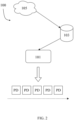
- Such apparatus 100 is schematized with a block representation in Figures 1 and 2 .
- the aforementioned apparatus 100 is preferably of the passive type, i.e. it monitors the entire infrastructure 1 without being actively connected to the same.
- the apparatus 100 is arranged in the telecommunication system between the computer device 51 and logic controllers 11, 21, 31.
- the anomaly detection apparatus according to the present invention can be connected to a suitable mirroring port of a router or a switch connecting the supervision unit to the logic controllers.
- the apparatus 100 comprises multiple components, which are also shown schematically in blocks in Figures 1 and 2 , suitable for interacting with the infrastructure 1 and detecting any possible anomalies thereof.
- the apparatus 100 according to the present invention comprises a network analyser 101 to be connected to a network (not shown), such as a telecommunication system, a computerized data processing means (not shown) operatively connected to the aforementioned network analyser 101, and a predefined devices knowledge database 103 operatively connected to the computerized data processing means, as illustrated in Figures 1 and 2 .
- a network analyser 101 to be connected to a network (not shown), such as a telecommunication system
- a computerized data processing means not shown
- a predefined devices knowledge database 103 operatively connected to the computerized data processing means, as illustrated in Figures 1 and 2 .
- the combination of the network analyser 101 and of the predefined devices knowledge database 103 can be defined by an intrusion detection system (IDS).
- IDS intrusion detection system
- the combination of the network analyser 101 and of the predefined devices knowledge database 103, or any intrusion detection system, has therefore the ability to sniff and decode traffic, to decode a wide range of protocols. Moreover, it is possible to keep an internal representation of the observed network and reacts to events such as a new communication between nodes or a new function code used in an existing communication.
- the predefined devices knowledge database 103 comprises a plurality of items preferably provided with a match key to identify a single device, the allowed protocols for said device and the allowed function _ codes for said device.
- the aforementioned database that contains the items, is therefore periodically queried by the IDS to retrieve the contents needed for anomaly detection.
- the match key is used to associate an item of the predefined devices knowledge database 103 with a device detected on the network.
- the allowed protocols comprise the list of the protocols that the device is allowed to talk.
- an OT device has only a finite list of supported protocols that in general is short.
- the allowed function _ codes comprise a list of allowed function codes that can be used by each allowed protocol.
- An example item of the predefined devices knowledge database 103 for a PLC device is herewith described:
- the apparatus 100 comprises a remote update system 105 operatively connected to the predefined devices knowledge database 103.
- the remote update system 105 is able in use to update the predefined devices knowledge database 103.
- the remote update system 105 is a cloud system, but different technologies can be used. In this way, it is possible to periodically update the predefined devices knowledge database 103 from a Cloud Service or by a different kind of services.
- the Cloud Service is the component that provides the items of the predefined devices knowledge database 103 to the IDS.
- the predefined devices knowledge database 103 contents need to be constantly updated to be able to detect new devices or update existing devices when their potential behavior change, for example, after a firmware update issued by the vendor that adds or alter functionality.
- the apparatus according to the present invention can be devoid of such remote update system.
- the apparatus 100 may also comprise volatile storage (not shown), or storage means of permanent type, operatively connected to the computerized data processing means.
- the network analyser 101 which is part of the apparatus 100, is connected to the infrastructure 1 and passively interacts with the telecommunication system.
- the aforementioned network analyser 101 is able to analyse each of the data packets PD exchanged in the telecommunication system and to identify the network protocol for each of the data packets and at least one field of the protocol.
- the network analyser 101 is able to intercept each data packet PD exchanged between the computer device 51 and the logic controllers 11, 21, 31 connected thereto.
- the individual logic controllers can be mutually connected in the same telecommunication system, the network analyser being therefore able to also intercept each data packet exchanged between the same controllers.
- the operation of the anomaly detection apparatus 100 according to the anomaly detection method according to the present invention, during the normal operation of the infrastructure 1 to which it is connected, is below described. All the components of the infrastructure 1, according to the present invention, are network connected using the Modbus communication protocol. In particular, the communication via the Modbus protocol is performed by exchanging data packets PD over TCP/IP from the various PLCs 11, 21, 31 to the computer device 51 vice versa.
- the anomaly detection method therefore, comprises analysing, by means of the network analyser 101 connected to the network, a data packet PD exchanged in the aforesaid network of the apparatus 1.
- analysing comprises the analysis of all data packets exchanged in the network.
- the network analyser 101 thus enables to carry out the passive interception activity of the entire infrastructure network 1.
- the network analyser 101 in use analyses a data packet PD exchanged in the network and identifies the network protocol and all the fields for the analysed data packet defining an identified protocol and identified fields of the data packet.
- the identification fields comprise the vendor and product name to identify the device of the infrastructure in the network, therefore the IDS 101 is able to extract vendor and product name information from specific protocols and, when a device is recognized, the item in the predefined devices knowledge database 103 is associated with it.
- the identified fields comprise the function codes of the identified protocol.
- the network analyser 101 then analyses each data packet PD exchanged via the telecommunication system, i.e. the network of the apparatus 1.
- the analysis of the data packets PD is carried out in push mode, that is, it is carried out whenever a communication occurs regardless of the time intervals between the same communications.
- the anomaly detection apparatus 100 is further provided with suitable computerized data processing means, operatively connected to the network analyser 101.
- Such data processing means enable processing of the data intercepted in the telecommunication system by the network analyser 101. Therefore, the computerized data processing means in use extracts identification fields from the identified fields to identify a device of the infrastructure 1 in the network.
- a PLC 11 that support standard Modbus is identified on the network by the network analyser 101 after a communication between the computer device 51 and the PLC 11 itself, as depicted with the solid arrow.
- the method further comprises matching, through the computerized data processing means, the identified device with a plurality of predefined standard devices in a predefined devices knowledge database 103 to recognise a matching device.
- the matching device is recognized by matching the vendor and product name of the identified device.
- the specific item is associated to the identified PLC 11, the list of allowed protocols contains Modbus and the list of allowed function codes contains the standard Modbus function codes.
- the IDS 103 will match the allowed protocols list against what is found in traffic to detect items that are not allowed and raise an alert when a violation is found.
- the IDS 103 will match the allowed function codes list against what is found in traffic to detect items that are not allowed and raise an alert when a violation is found.
- the method further comprises retrieving, through the computerized data processing means, one or more allowed fields and one or more allowed protocols of the matching device from the predefined devices knowledge database 103. Moreover, in the retrieving the allowed fields comprise allowed function codes for each allowed protocol.
- the PLC 11 is queried with function code 1 with the Modbus protocol by the computer device 51 in the network and the IDS 101 match the operation against the corresponding item in the predefined devices knowledge database 103.
- the method further comprises comparing, through the computerized data processing means, the allowed fields and the allowed protocols respectively with the identified fields and the identified protocol defining at least one critical state of the infrastructure 1 when the identified fields differ from the allowed fields or when the identified protocol differ from the allowed protocols.
- function code 1 with the Modbus protocol is allowable for PLC 11, that is in the corresponding item of the predefined devices knowledge database 103 is present the Modbus protocol and the function code 1 as well as allowable protocol and field.
- the method further comprises signalling, by means of the computerized data processing means, an anomaly of the infrastructure 1 when at least one of the critical states is identified. Taking into account the above example, no alert or signalling is raised as the protocol and function code are allowed.
- the method is iterated for all the data packet exchanged in the network. Therefore, it is supposed that a new packet data PD is analysed through a network analyser 101, identifying and extracting that PLC 11 is queried again but with function code 90 with the Modbus protocol.
- function code 90 with the Modbus protocol is not allowable for PLC 11 that is in the corresponding item of the predefined devices knowledge database 103 is not present the Modbus protocol and the function code 90 as well as allowable protocol and field together.
- the method further comprises signalling, by means of the computerized data processing means, an anomaly of the infrastructure 1 when at least one of the critical states is identified. Taking into account the above example, an alert or signals is raised as the protocol and function code are not allowed together for the item corresponding to the PLC 11.
- the method comprises storing, in a volatile storage (not shown), the identified protocol and the identified fields of the data packet.
- the method comprises storing, in a volatile storage (not shown), the identification fields relating to the identity of the device of the infrastructure in the network.
- the method comprises storing, in a volatile storage (not shown), the allowed fields and the allowed protocols of the matching device.
- the apparatus comprises a plurality of network analysers each of which to be connected to a respective network, a plurality of computerized data processing means each of which operatively connected to a respective of the network analysers and a plurality of predefined devices knowledge databases each of which operatively connected to a respective of the computerized data processing means.
- the remote update system is operatively connected to the predefined devices knowledge databases and, in use, the remote update system updates the predefined devices knowledge databases.
- the present invention therefore provides a method and an apparatus for detecting anomalies of an infrastructure in a network, recognizing any malicious activity in a dynamic and scalable way.
- no learning phase is needed since the knowledge acquired during a hypothetical learning phase is compensated by a prebuilt base of contents through the predefined devices knowledge database and all items, allowed protocols and allowed fields herewith contained.
- alerts can be raised with a high level of precision and confidence, the prebuilt predefined devices knowledge database enables the IDS to find small discrepancies in behavior that are easy to miss with a learning/protecting approach.
Landscapes
- Engineering & Computer Science (AREA)
- Computer Networks & Wireless Communication (AREA)
- Signal Processing (AREA)
- Computer Security & Cryptography (AREA)
- Computer Hardware Design (AREA)
- Computing Systems (AREA)
- General Engineering & Computer Science (AREA)
- Data Exchanges In Wide-Area Networks (AREA)
- Computer And Data Communications (AREA)
- Mobile Radio Communication Systems (AREA)
Applications Claiming Priority (1)
| Application Number | Priority Date | Filing Date | Title |
|---|---|---|---|
| US17/681,832 US12641098B2 (en) | 2022-02-27 | 2022-02-27 | Method and apparatus for detecting anomalies of an infrastructure in a network |
Publications (3)
| Publication Number | Publication Date |
|---|---|
| EP4236202A1 true EP4236202A1 (fr) | 2023-08-30 |
| EP4236202B1 EP4236202B1 (fr) | 2025-05-07 |
| EP4236202C0 EP4236202C0 (fr) | 2025-05-07 |
Family
ID=85285253
Family Applications (1)
| Application Number | Title | Priority Date | Filing Date |
|---|---|---|---|
| EP23157556.4A Active EP4236202B1 (fr) | 2022-02-27 | 2023-02-20 | Procédé et appareil de détection d'anomalies d'une infrastructure dans un réseau |
Country Status (9)
| Country | Link |
|---|---|
| US (1) | US12641098B2 (fr) |
| EP (1) | EP4236202B1 (fr) |
| JP (1) | JP2023126177A (fr) |
| CN (1) | CN116668259A (fr) |
| AU (1) | AU2023200991A1 (fr) |
| BR (1) | BR102023003280A2 (fr) |
| CA (1) | CA3189475A1 (fr) |
| MX (1) | MX2023002395A (fr) |
| TW (1) | TW202335468A (fr) |
Families Citing this family (1)
| Publication number | Priority date | Publication date | Assignee | Title |
|---|---|---|---|---|
| CN117278423B (zh) * | 2023-11-07 | 2024-06-21 | 国家工业信息安全发展研究中心 | 模型构建方法、测试平台、计算机设备和存储介质 |
Citations (3)
| Publication number | Priority date | Publication date | Assignee | Title |
|---|---|---|---|---|
| EP3674823A1 (fr) * | 2018-12-28 | 2020-07-01 | Nozomi Networks Sagl | Procédé et appareil pour détecter les anomalies d'une infrastructure |
| US20200209837A1 (en) * | 2018-12-26 | 2020-07-02 | Nozomi Networks Sagl | Method and apparatus for detecting the anomalies of an infrastructure |
| US20200287927A1 (en) * | 2017-01-30 | 2020-09-10 | Splunk Inc. | Anomaly detection based on changes in an entity relationship graph |
Family Cites Families (7)
| Publication number | Priority date | Publication date | Assignee | Title |
|---|---|---|---|---|
| US4281315A (en) * | 1979-08-27 | 1981-07-28 | Bell Telephone Laboratories, Incorporated | Collection of messages from data terminals using different protocols and formats |
| US6895453B2 (en) * | 2001-03-15 | 2005-05-17 | International Business Machines Corporation | System and method for improved handling of fiber channel remote devices |
| WO2015061353A1 (fr) * | 2013-10-21 | 2015-04-30 | Nyansa, Inc. | Système et procédé permettant d'observer et de commander un réseau programmable au moyen d'un gestionnaire de réseau à distance |
| EP2897418B1 (fr) * | 2014-01-20 | 2016-06-01 | Alcatel Lucent | Annoncer des capacités de stockage accessibles via un réseau local sans fil |
| US9584533B2 (en) * | 2014-11-07 | 2017-02-28 | Arbor Networks, Inc. | Performance enhancements for finding top traffic patterns |
| US10511620B2 (en) * | 2016-10-31 | 2019-12-17 | Armis Security Ltd. | Detection of vulnerable devices in wireless networks |
| US11853773B2 (en) * | 2019-05-07 | 2023-12-26 | Honeywell International, Inc. | Interactive profile-based self-learning application for smart field devices |
-
2022
- 2022-02-27 US US17/681,832 patent/US12641098B2/en active Active
-
2023
- 2023-02-13 CA CA3189475A patent/CA3189475A1/fr active Pending
- 2023-02-20 EP EP23157556.4A patent/EP4236202B1/fr active Active
- 2023-02-20 AU AU2023200991A patent/AU2023200991A1/en active Pending
- 2023-02-23 BR BR102023003280-0A patent/BR102023003280A2/pt unknown
- 2023-02-24 MX MX2023002395A patent/MX2023002395A/es unknown
- 2023-02-24 TW TW112106843A patent/TW202335468A/zh unknown
- 2023-02-24 JP JP2023027656A patent/JP2023126177A/ja active Pending
- 2023-02-27 CN CN202310194482.8A patent/CN116668259A/zh active Pending
Patent Citations (4)
| Publication number | Priority date | Publication date | Assignee | Title |
|---|---|---|---|---|
| US20200287927A1 (en) * | 2017-01-30 | 2020-09-10 | Splunk Inc. | Anomaly detection based on changes in an entity relationship graph |
| US20200209837A1 (en) * | 2018-12-26 | 2020-07-02 | Nozomi Networks Sagl | Method and apparatus for detecting the anomalies of an infrastructure |
| US10955831B2 (en) | 2018-12-26 | 2021-03-23 | Nozomi Networks Sagl | Method and apparatus for detecting the anomalies of an infrastructure |
| EP3674823A1 (fr) * | 2018-12-28 | 2020-07-01 | Nozomi Networks Sagl | Procédé et appareil pour détecter les anomalies d'une infrastructure |
Also Published As
| Publication number | Publication date |
|---|---|
| TW202335468A (zh) | 2023-09-01 |
| CA3189475A1 (fr) | 2023-08-27 |
| EP4236202B1 (fr) | 2025-05-07 |
| MX2023002395A (es) | 2023-08-28 |
| BR102023003280A2 (pt) | 2023-10-03 |
| JP2023126177A (ja) | 2023-09-07 |
| US12641098B2 (en) | 2026-05-26 |
| CN116668259A (zh) | 2023-08-29 |
| EP4236202C0 (fr) | 2025-05-07 |
| US20230275914A1 (en) | 2023-08-31 |
| AU2023200991A1 (en) | 2023-09-14 |
Similar Documents
| Publication | Publication Date | Title |
|---|---|---|
| JP7815201B2 (ja) | 強化されたスマートプロセス制御スイッチのポートロックダウン | |
| Anton et al. | Two decades of SCADA exploitation: A brief history | |
| Zhou et al. | A fog computing based approach to DDoS mitigation in IIoT systems | |
| Yang et al. | Rule-based intrusion detection system for SCADA networks | |
| EP3297248B1 (fr) | Système et procédé de génération de règles pour un système de rétroaction de détection d'attaques | |
| US10015188B2 (en) | Method for mitigation of cyber attacks on industrial control systems | |
| US20200404010A1 (en) | Attribute-based policies for integrity monitoring and network intrusion detection | |
| EP2953298A1 (fr) | Dispositif d'analyse de journal, procédé de traitement d'informations et programme associé | |
| EP3206356A1 (fr) | Procédé de contrôle de sécurité de transmission de flux de communications industrielles basé sur une architecture sdn | |
| EP2945350B1 (fr) | Séparateur de protocole et procédé de communication correspondant | |
| Rodofile et al. | Process control cyber-attacks and labelled datasets on S7Comm critical infrastructure | |
| Graveto et al. | A network intrusion detection system for building automation and control systems | |
| WO2010069698A1 (fr) | Analyse de réseau | |
| Paul et al. | Towards the protection of industrial control systems–conclusions of a vulnerability analysis of profinet IO | |
| Kim et al. | Unknown payload anomaly detection based on format and field semantics inference in cyber-physical infrastructure systems | |
| EP4236202B1 (fr) | Procédé et appareil de détection d'anomalies d'une infrastructure dans un réseau | |
| Alsabbagh et al. | Silent Sabotage: A Stealthy Control Logic Injection in IIoT Systems | |
| Ovaz Akpinar et al. | Development of the ECAT preprocessor with the trust communication approach | |
| CN111935085A (zh) | 工业控制网络异常网络行为的检测防护方法和系统 | |
| CN113726761A (zh) | 一种基于白名单的网络安全防护方法 | |
| Faisal et al. | Profiling communications in industrial ip networks: Model complexity and anomaly detection | |
| Rinaldi et al. | Softwarization of SCADA: lightweight statistical SDN-agents for anomaly detection | |
| HK40096502A (en) | Method and apparatus for detecting anomalies of an infrastructure in a network | |
| Pricop | Security of industrial control systems-an emerging issue in romania national defense | |
| Faisal et al. | Measuring the growth in complexity of models from industrial control networks |
Legal Events
| Date | Code | Title | Description |
|---|---|---|---|
| PUAI | Public reference made under article 153(3) epc to a published international application that has entered the european phase |
Free format text: ORIGINAL CODE: 0009012 |
|
| STAA | Information on the status of an ep patent application or granted ep patent |
Free format text: STATUS: THE APPLICATION HAS BEEN PUBLISHED |
|
| AK | Designated contracting states |
Kind code of ref document: A1 Designated state(s): AL AT BE BG CH CY CZ DE DK EE ES FI FR GB GR HR HU IE IS IT LI LT LU LV MC ME MK MT NL NO PL PT RO RS SE SI SK SM TR |
|
| STAA | Information on the status of an ep patent application or granted ep patent |
Free format text: STATUS: REQUEST FOR EXAMINATION WAS MADE |
|
| 17P | Request for examination filed |
Effective date: 20240221 |
|
| RBV | Designated contracting states (corrected) |
Designated state(s): AL AT BE BG CH CY CZ DE DK EE ES FI FR GB GR HR HU IE IS IT LI LT LU LV MC ME MK MT NL NO PL PT RO RS SE SI SK SM TR |
|
| GRAP | Despatch of communication of intention to grant a patent |
Free format text: ORIGINAL CODE: EPIDOSNIGR1 |
|
| STAA | Information on the status of an ep patent application or granted ep patent |
Free format text: STATUS: GRANT OF PATENT IS INTENDED |
|
| INTG | Intention to grant announced |
Effective date: 20250204 |
|
| RIC1 | Information provided on ipc code assigned before grant |
Ipc: H04L 9/40 20220101AFI20250127BHEP |
|
| GRAS | Grant fee paid |
Free format text: ORIGINAL CODE: EPIDOSNIGR3 |
|
| GRAA | (expected) grant |
Free format text: ORIGINAL CODE: 0009210 |
|
| STAA | Information on the status of an ep patent application or granted ep patent |
Free format text: STATUS: THE PATENT HAS BEEN GRANTED |
|
| AK | Designated contracting states |
Kind code of ref document: B1 Designated state(s): AL AT BE BG CH CY CZ DE DK EE ES FI FR GB GR HR HU IE IS IT LI LT LU LV MC ME MK MT NL NO PL PT RO RS SE SI SK SM TR |
|
| REG | Reference to a national code |
Ref country code: GB Ref legal event code: FG4D |
|
| REG | Reference to a national code |
Ref country code: CH Ref legal event code: EP |
|
| REG | Reference to a national code |
Ref country code: DE Ref legal event code: R096 Ref document number: 602023003249 Country of ref document: DE |
|
| REG | Reference to a national code |
Ref country code: IE Ref legal event code: FG4D |
|
| U01 | Request for unitary effect filed |
Effective date: 20250515 |
|
| U07 | Unitary effect registered |
Designated state(s): AT BE BG DE DK EE FI FR IT LT LU LV MT NL PT RO SE SI Effective date: 20250521 |
|
| PG25 | Lapsed in a contracting state [announced via postgrant information from national office to epo] |
Ref country code: ES Free format text: LAPSE BECAUSE OF FAILURE TO SUBMIT A TRANSLATION OF THE DESCRIPTION OR TO PAY THE FEE WITHIN THE PRESCRIBED TIME-LIMIT Effective date: 20250507 |
|
| PG25 | Lapsed in a contracting state [announced via postgrant information from national office to epo] |
Ref country code: GR Free format text: LAPSE BECAUSE OF FAILURE TO SUBMIT A TRANSLATION OF THE DESCRIPTION OR TO PAY THE FEE WITHIN THE PRESCRIBED TIME-LIMIT Effective date: 20250808 Ref country code: NO Free format text: LAPSE BECAUSE OF FAILURE TO SUBMIT A TRANSLATION OF THE DESCRIPTION OR TO PAY THE FEE WITHIN THE PRESCRIBED TIME-LIMIT Effective date: 20250807 |
|
| PG25 | Lapsed in a contracting state [announced via postgrant information from national office to epo] |
Ref country code: PL Free format text: LAPSE BECAUSE OF FAILURE TO SUBMIT A TRANSLATION OF THE DESCRIPTION OR TO PAY THE FEE WITHIN THE PRESCRIBED TIME-LIMIT Effective date: 20250507 |
|
| PG25 | Lapsed in a contracting state [announced via postgrant information from national office to epo] |
Ref country code: HR Free format text: LAPSE BECAUSE OF FAILURE TO SUBMIT A TRANSLATION OF THE DESCRIPTION OR TO PAY THE FEE WITHIN THE PRESCRIBED TIME-LIMIT Effective date: 20250507 |
|
| PG25 | Lapsed in a contracting state [announced via postgrant information from national office to epo] |
Ref country code: RS Free format text: LAPSE BECAUSE OF FAILURE TO SUBMIT A TRANSLATION OF THE DESCRIPTION OR TO PAY THE FEE WITHIN THE PRESCRIBED TIME-LIMIT Effective date: 20250807 |
|
| PG25 | Lapsed in a contracting state [announced via postgrant information from national office to epo] |
Ref country code: IS Free format text: LAPSE BECAUSE OF FAILURE TO SUBMIT A TRANSLATION OF THE DESCRIPTION OR TO PAY THE FEE WITHIN THE PRESCRIBED TIME-LIMIT Effective date: 20250907 |
|
| PG25 | Lapsed in a contracting state [announced via postgrant information from national office to epo] |
Ref country code: SM Free format text: LAPSE BECAUSE OF FAILURE TO SUBMIT A TRANSLATION OF THE DESCRIPTION OR TO PAY THE FEE WITHIN THE PRESCRIBED TIME-LIMIT Effective date: 20250507 |
|
| PG25 | Lapsed in a contracting state [announced via postgrant information from national office to epo] |
Ref country code: CZ Free format text: LAPSE BECAUSE OF FAILURE TO SUBMIT A TRANSLATION OF THE DESCRIPTION OR TO PAY THE FEE WITHIN THE PRESCRIBED TIME-LIMIT Effective date: 20250507 |
|
| PG25 | Lapsed in a contracting state [announced via postgrant information from national office to epo] |
Ref country code: SK Free format text: LAPSE BECAUSE OF FAILURE TO SUBMIT A TRANSLATION OF THE DESCRIPTION OR TO PAY THE FEE WITHIN THE PRESCRIBED TIME-LIMIT Effective date: 20250507 |
|
| U20 | Renewal fee for the european patent with unitary effect paid |
Year of fee payment: 4 Effective date: 20260119 |
|
| REG | Reference to a national code |
Ref country code: CH Ref legal event code: U11 Free format text: ST27 STATUS EVENT CODE: U-0-0-U10-U11 (AS PROVIDED BY THE NATIONAL OFFICE) Effective date: 20260301 |
|
| PLBE | No opposition filed within time limit |
Free format text: ORIGINAL CODE: 0009261 |
|
| STAA | Information on the status of an ep patent application or granted ep patent |
Free format text: STATUS: NO OPPOSITION FILED WITHIN TIME LIMIT |
|
| REG | Reference to a national code |
Ref country code: CH Ref legal event code: L10 Free format text: ST27 STATUS EVENT CODE: U-0-0-L10-L00 (AS PROVIDED BY THE NATIONAL OFFICE) Effective date: 20260318 |
|
| 26N | No opposition filed |
Effective date: 20260210 |
|
| PGFP | Annual fee paid to national office [announced via postgrant information from national office to epo] |
Ref country code: CH Payment date: 20260301 Year of fee payment: 4 |