EP4236232A1 - Verfahren zur konfiguration von netzwerkparametern einer internet-der-dinge-vorrichtung, internet-der-dinge-vorrichtung und internet-der-dinge-system - Google Patents
Verfahren zur konfiguration von netzwerkparametern einer internet-der-dinge-vorrichtung, internet-der-dinge-vorrichtung und internet-der-dinge-system Download PDFInfo
- Publication number
- EP4236232A1 EP4236232A1 EP21881849.0A EP21881849A EP4236232A1 EP 4236232 A1 EP4236232 A1 EP 4236232A1 EP 21881849 A EP21881849 A EP 21881849A EP 4236232 A1 EP4236232 A1 EP 4236232A1
- Authority
- EP
- European Patent Office
- Prior art keywords
- internet
- accessed
- things device
- things
- ipc
- Prior art date
- Legal status (The legal status is an assumption and is not a legal conclusion. Google has not performed a legal analysis and makes no representation as to the accuracy of the status listed.)
- Pending
Links
Images




Classifications
-
- H—ELECTRICITY
- H04—ELECTRIC COMMUNICATION TECHNIQUE
- H04L—TRANSMISSION OF DIGITAL INFORMATION, e.g. TELEGRAPHIC COMMUNICATION
- H04L41/00—Arrangements for maintenance, administration or management of data switching networks, e.g. of packet switching networks
- H04L41/08—Configuration management of networks or network elements
- H04L41/0803—Configuration setting
- H04L41/0806—Configuration setting for initial configuration or provisioning, e.g. plug-and-play
-
- H—ELECTRICITY
- H04—ELECTRIC COMMUNICATION TECHNIQUE
- H04L—TRANSMISSION OF DIGITAL INFORMATION, e.g. TELEGRAPHIC COMMUNICATION
- H04L41/00—Arrangements for maintenance, administration or management of data switching networks, e.g. of packet switching networks
- H04L41/02—Standardisation; Integration
- H04L41/0246—Exchanging or transporting network management information using the Internet; Embedding network management web servers in network elements; Web-services-based protocols
-
- H—ELECTRICITY
- H04—ELECTRIC COMMUNICATION TECHNIQUE
- H04L—TRANSMISSION OF DIGITAL INFORMATION, e.g. TELEGRAPHIC COMMUNICATION
- H04L41/00—Arrangements for maintenance, administration or management of data switching networks, e.g. of packet switching networks
- H04L41/08—Configuration management of networks or network elements
- H04L41/0803—Configuration setting
-
- H—ELECTRICITY
- H04—ELECTRIC COMMUNICATION TECHNIQUE
- H04L—TRANSMISSION OF DIGITAL INFORMATION, e.g. TELEGRAPHIC COMMUNICATION
- H04L41/00—Arrangements for maintenance, administration or management of data switching networks, e.g. of packet switching networks
- H04L41/08—Configuration management of networks or network elements
- H04L41/0889—Techniques to speed-up the configuration process
-
- H—ELECTRICITY
- H04—ELECTRIC COMMUNICATION TECHNIQUE
- H04L—TRANSMISSION OF DIGITAL INFORMATION, e.g. TELEGRAPHIC COMMUNICATION
- H04L41/00—Arrangements for maintenance, administration or management of data switching networks, e.g. of packet switching networks
- H04L41/28—Restricting access to network management systems or functions, e.g. using authorisation function to access network configuration
-
- H—ELECTRICITY
- H04—ELECTRIC COMMUNICATION TECHNIQUE
- H04L—TRANSMISSION OF DIGITAL INFORMATION, e.g. TELEGRAPHIC COMMUNICATION
- H04L67/00—Network arrangements or protocols for supporting network services or applications
- H04L67/01—Protocols
- H04L67/10—Protocols in which an application is distributed across nodes in the network
-
- H—ELECTRICITY
- H04—ELECTRIC COMMUNICATION TECHNIQUE
- H04L—TRANSMISSION OF DIGITAL INFORMATION, e.g. TELEGRAPHIC COMMUNICATION
- H04L67/00—Network arrangements or protocols for supporting network services or applications
- H04L67/01—Protocols
- H04L67/12—Protocols specially adapted for proprietary or special-purpose networking environments, e.g. medical networks, sensor networks, networks in vehicles or remote metering networks
-
- H—ELECTRICITY
- H04—ELECTRIC COMMUNICATION TECHNIQUE
- H04L—TRANSMISSION OF DIGITAL INFORMATION, e.g. TELEGRAPHIC COMMUNICATION
- H04L69/00—Network arrangements, protocols or services independent of the application payload and not provided for in the other groups of this subclass
- H04L69/40—Network arrangements, protocols or services independent of the application payload and not provided for in the other groups of this subclass for recovering from a failure of a protocol instance or entity, e.g. service redundancy protocols, protocol state redundancy or protocol service redirection
Definitions
- the present application relates to the technical filed of Internet-of Things, and in particular to a method for configuring network parameters for an Internet-of-Things device, an Internet-of-Things device and an Internet-of Things system.
- Internet-of-Things devices When Internet-of-Things devices are connected to the network, it is necessary to set the network parameters of the Internet-of-Things devices to be connected to the network one by one. For example, in the smart home system, one of the Internet-of-Things application scenarios, there are usually many types of Internet-of-Things devices such as network cameras, smart door locks, various alarm sensors and lighting devices, etc. When these Internet-of-Things devices are connected to the network, users are required to configure the operation of these Internet-of-Things devices individually.
- network cameras also known as IP CAMERA, referred to as IPC
- IPC IP CAMERA
- IP CAMERA IP CAMERA
- IPC can transmit surveillance images to remote devices through the network; remote devices do not need to have professional software, as long as they have a standard web browser, they can get surveillance images.
- network parameters is configured for the IPC, in order to enable the IPC to access the network successfully.
- the network parameters are configured by searching an IPC to be accessed with the wireless signal turned on through an application on the user side such as a cell phone; after an IPC to be accessed is found, the application on the user side interacts with the IPC to be accessed to obtain device information of the IPC to be accessed; after obtaining the device information of the IPC to be accessed, the application on the user side interacts with a network side device to obtain network parameters of the IPC; the application on the user side sends the obtained network parameters to the IPC and connects the IPC to be accessed to the network.
- This method requires user participation, and when a large number of IPCs need to access the network, for example, when a large number of IPCs are installed in an industrial park, using the network parameter configuration method of related technologies to individually configure a large number of IPCs will lead to heavy workload and low efficiency.
- Embodiments of the present application provide a method for configuring network parameters for an Internet-of Things device, an Internet-of Things device, and an Internet-of-Things system, so as to improve the efficiency of Internet-ofThings device accessing the network.
- an embodiment of the present application provides a method for configuring network parameters for an Internet-of-Things device, wherein the method comprises:
- a current online Internet-of Things device serving as a configuration device responding to a first interaction with a user side comprises:
- any current online Internet-of Things device under a user account triggering a third interaction for searching for an Internet-of Things device to be accessed therearound in response to the user side selecting a first configuration mode comprises:
- parsing the first probe response to obtain the device information of the found Internet-of-Things device to be accessed comprises: sorting found Internet-of Things devices to be accessed based on signal strength of first probe responses to obtain orders for current online Internet-of Things devices for configuring the respective Internet-of Things devices to be accessed, to select a current online Internet-of Things device serving as the configuration device by the user side according to the orders.
- the current online Internet-of-Things device serving as the configuration device triggering a fifth interaction between the current online Internet-of Things device serving as the configuration device and the Internet-of-Things device to be accessed for querying an reason for failure of being online in response to a fourth interaction with the user side for querying the reason for failure of being online comprises:
- querying in response to the fourth query request, the reason for failure of being online for the Internet-of-Things device to be accessed, comprises:
- the second command instruction message, first command instruction message, and the fourth query request are sent by the user side to the current online Internet-of Things device via a cloud platform;
- the first probe request, the second probe request, the first probe response and the third probe response are new radio broadcast signals
- valid value fields in the new radio broadcast signals comprise: encryption feature information and the device information of the Internet-of-Things device to be accessed, wherein data contents in the valid value fields are obtained by successfully decrypting the device information of the Internet-of Things device to be accessed.
- an embodiment of the present application provides an Internet-of Things device, which comprises a memory and a processor, wherein the memory having stored therein computer programs which, when executed by the processor, cause the processor to carry out the steps of any one of methods for configuring network parameters for an Internet-of-Things device as described.
- an embodiment of the present application provides a terminal for configuring network parameters for an Internet-of-Things device, wherein the terminal comprises a memory having stored therein computer programs and a processor configured to perform the following steps of:
- an embodiment of the present application provides an Internet-of-Things system, wherein the Internet-of-Things system comprises at least one Internet-of-Things device which is configured to carry out the steps of any one of methods for configuring network parameters for an Internet-of-Things device as described.
- the system further comprises at least one terminal for configuring the network parameters for the Internet-of-Things device;
- the terminal comprises a memory having stored therein computer programs and a processor configured to perform the following steps of:
- system further comprises: a cloud platform for operating and maintaining Internet-of-Things devices in the Internet-of-Things system, configured to transmit interaction information for the first interaction between the terminal and the current online Internet-of-Things device;
- an embodiment of the present application provides a computer readable storage medium, wherein the storage medium having stored therein computer programs which, when executed by a processor, cause the processor to carry out the steps of any one of methods for configuring network parameters for an Internet-of-Things device as described.
- an embodiment of the present application provides a computer program, which, when executed by a processor, causes the processor to carry out the steps of any one of methods for configuring network parameters for an Internet-of-Things device as described.
- network parameters are configured for Internet-of-Things devices to be accessed via a current online Internet-of Things device serving as a configuration device, so that the current online Internet-of-Things device and each of the Internet-of-Things devices to be accessed can be used as the configuration device after being connected to the network.
- the number of the configuration devices is increased significantly, and thus the number of the Internet-of Things devices to be accessed for configuring network parameters is increased significantly, significantly improving the efficiency for configuring network parameters for a large number of Internet-of Things devices to be accessed, solving the problem of low efficiency in configuring network parameters for a large number of Internet-of-Things devices to be accessed, and reducing the workload of manual operations.
- the device information of the Internet-of-Things device to be accessed is used as a key to encrypt valid data, avoiding the risk of third-party probing and parsing, and ensuring the security of the Internet-of-Things device under the premise of ensuring functions.
- the application on the user side indicates that the current online Internet-of-Things device interacts with an Internet-of-Things device to be accessed, so that the current online Internet-of-Things device acts as a configuration device, and the configuration device configures the network parameters for the Internet-of-Things device to be accessed, so that the Internet-of-Things device to be accessed can access the network.
- the device information of the Internet-of-Things device, and related data are stored in the cloud platform, which is maintained and operated by the cloud platform.
- the cloud platform is a network-side device, and the cloud platform may be a local node such as an access point (Access Point, AP) and a router.
- Online Internet-of-Things devices are Internet-of-Things devices that can access the network.
- the number of current online IPCs may be one or more, and the number of IPCs to be accessed to the network may be one or more.
- a current online IPC as a configuration device is hereafter referred to as the configuration device, and an application (APP) on the user side is referred to as a user side, which is not limiting.
- the user is a user indicated by the user account logged in by the user side.
- the current online IPC and the IPC to be accessed of the user refer to the IPCs under the user account, and the IPCs under the user account refer to the IPCs managed by the user.
- a current online IPC refers to an IPC that has been connected to the network, and an IPC to be accessed refers to an IPC that needs to be connected to the network.
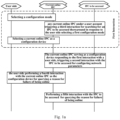
- FIG. 1a shows a schematic flow diagram of a method for configuring network parameters for a network camera provided by an embodiment of the present application.
- the user side select a configuration mode and selects a current online IPC as a configuration device.
- the cloud platform transmits the interaction information between the user side and the current online IPC for selecting configuration mode, and the interaction information for selecting the current online IPC as the configuration device.
- the cloud platform transmits two types of interaction information, such as first interaction information and second interaction information.
- the first interaction information is used for the user side to select a configuration mode; the second interaction information is used for the user side to select a configuration device from the current online IPCs.
- the current online IPC as the configuration device configures network parameters for the IPC to be accessed so that the IPC to be accessed can access the network.
- the configuration device configures the network parameters for the IPC to be accessed so that the IPC to be accessed can access the network.
- the user side interacts with the current online IPC as the configuration device to query the reason for online failure.
- the cloud platform transmits the interaction information for querying reason for failure of being online of the IPC to be accessed between the user side and the current online IPC.
- the cloud platform transmits interaction information, such as third interaction information.
- the third interaction information is used for the user side to query the reason for the failure to make the IPC to be accessed access the network.
- online failure of the IPC to be accessed is the failure to configure the network parameters for the IPC to be accessed.
- the current online IPC as the configuration device interacts with the IPC to be accessed for query the reason for failure of being online.
- the configuration device interacts with the IPC to be accessed for query the reason for failure of being online.
- the first interaction may further include: any current online IPC under a user account triggering a third interaction for searching for an IPC to be accessed therearound, in response to the user side selecting a first configuration mode.
- the current online IPC triggers a third interaction to search for an IPC to be accessed around the current online IPC.
- an IPC to be accessed is within the signal coverage of a current online IPC, i.e., the current online IPC can receive the signal sent by the IPC to be accessed, then the IPC to be accessed is around the current online IPC, which can also be understood as the IPC to be accessed is within the search range of the current online IPC.
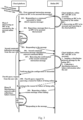
- FIG. 1b is a schematic diagram of an overall flow of a method for configuring network parameters for a network camera by a cloud platform provided by an embodiment of the present application.
- the overall process may include three phases:
- the user side obtains device information of the IPC to be accessed.
- the device information may include device identification information, for example, a device serial number (SN).
- the device information may also include device model, etc.
- the user side may obtain the device information of the IPC to be accessed by scanning a QR code of the IPC to be accessed.
- the number of IPCs to be accessed may be one or more.
- Step 102 the user side performs an a-th interaction with the cloud platform to obtain the current online IPCs belonging to the user, i.e., to obtain all the current online IPCs under the user account.
- the a-th interaction please refer to the related description of FIG. 2 .
- Fig. 1b is described by taking the online IPCs indicating that there are multiple online IPCs under the user account as an example, which is not limiting.
- Step 103 the user side selects a configuration mode of network parameters based on the returned device information of the online IPCs.
- Step 103 may be: the user side determines whether there is a current online IPC under the user account, and determines a configuration mode of the network parameters based on the determination result of whether there is a current online IPC under the user account.
- the first configuration mode for configuring network parameters by the configuration device is selected.
- the second configuration mode for manually configuring network parameters is selected.
- step 104 the user side performs a b-th interaction with the current online IPC through the cloud platform, so as to instruct the current online IPC to search for an IPC to be accessed around it.
- b-th interaction please refer to the related description of FIG. 3 .
- the user side obtains the device information of the IPC to be accessed by scanning the QR code of the IPC to be accessed, i.e., the IPC to be accessed is an IPC corresponding to the QR code.
- the user side determines that there is a current online IPC under the user account, the user side performs the b-th interaction with the current online IPC through the cloud platform to query whether there is an IPC corresponding to the QR code around the current online IPC under the user account.
- Step 105 the current online IPC performs a c-th interaction with the IPC to be accessed by probing the broadcast signal, so as to search for the IPC to be accessed around it.
- the c-th interaction please refer to the related description of FIG. 4 .
- Step 106 the current online IPC performs a d-th interaction with the cloud platform, so as to store the device information of the IPC to be accessed that is found by the current online IPC, and the association relationship between the current online IPC and the found IPC to be accessed in the cloud platform.
- the current online IPC updates the found device information of the IPC to be accessed, and the association relationship between the current online IPC and the found IPC to be accessed, to the database of the cloud platform.
- the d-th interaction please refer to the relevant description of FIG. 3 .
- Step 107 the user side performs an e-th interaction with the cloud platform to select a current online IPC that can be used as the configuration device.
- a current online IPC that can be used as the configuration device.
- step 108 If the current online IPC as the configuration device can be selected, continue to configure network parameters in the first configuration mode, and execute step 108; otherwise, switch to the second configuration mode to configure network parameters.
- Step 108 the user side uses the selected current online IPC as the configuration device, and performs a f-th interaction with the configuration device through the cloud platform to instruct the configuration device to configure network parameters for the IPC to be accessed.
- a f-th interaction please refer to the relevant description of FIG. 3 .
- Step 109 the configuration device performs a g-th interaction with the IPC to be accessed, so as to configure network parameters for the IPC to be accessed, so that the IPC to be accessed accesses the network.
- the g-th interaction please refer to the related description of FIG. 4 .
- the IPC to be accessed accesses the network based on the network parameters.
- the network may be accessed based on the access point (AP) access function provided by the configuration device as a hotspot.
- AP access point
- the configuration device can act as a hotspot and provide the AP access function to the IPC to be accessed.
- the configuration device provides the AP access function, therefore, through the configuration device, the IPC to be accessed can access the network according to the network parameters.
- the IPC After the IPC to be accessed accesses the network, the IPC performs a h-th interaction with the cloud platform, so as to register on the cloud platform and become an online IPC.
- Step 110 the user side performs an i-th interaction with the cloud platform to query whether the IPC to be accessed is successfully online.
- the i-th interaction please refer to the related description of FIG. 2 .
- step 111 is executed; if the online is successful, it ends.
- Step 111 the user side performs a j-th interaction with the configuration device through the cloud platform to obtain the reason for failure of being online via the configuration device.
- Step 112 the user side selects a configuration mode based on the failure online reason, i.e., the user side determines whether to re-configure the network parameters in the first configuration mode.
- the user side determines whether to re-configure the network parameters in the first configuration mode.
- the process returns to step 108; if the second configuration mode is selected, the configuration is performed manually.
- steps 105 and 109 are executed in an asynchronous manner, so that the process of configuring the network parameters for the Internet-of-Things device to be accessed to the network by the configuration device can be performed in parallel with the operation on the user side, which is beneficial to improve the configuration efficiency.
- it makes the user operation by the user side insensitive to the configuration of network parameters of the Internet-of Things device to be accessed executed asynchronously, providing a better user interface and experience and facilitating the operation of the user.
- a configuration device is selected from the current online IPCs, and the configuration device configures network parameters for the IPC to be accessed, so that the IPC to be accessed can access the network.
- the IPC to be accessed becomes a current online IPC
- the IPC to be accessed can also be used as a configuration device to configure network parameters for another IPC to be accessed, and so on, so that each IPC to be accessed can be used as a configuration device after successfully accessing the network, so that the number of configuration devices is increased significantly, thus significantly improving the efficiency for network parameter configuration for the IPCs to be accessed.
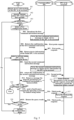
- Fig. 2 is a schematic flow diagram of the interaction between the user side and the cloud platform, including the a-th interaction, the e-th interaction, and the i-th interaction of the steps shown in Fig. 1b .
- the user side can send information such as user name and password to the cloud platform for the cloud platform to authenticate the user side.
- information such as user name and password
- Step 202 In response to the first query request, the cloud platform queries the database and returns to the user side a first response message carrying device information of all current online IPCs.
- the database is used to store the device information of the current online IPCs under different user accounts.
- Step 202 may be: the cloud platform receives a first query request sent by the user side, queries the database for the device information of the current online IPCs under the user account according to the first query request, and returns a first response message to the user side.
- the first response message includes the queried device information of all current online IPCs.
- the user side After the user side selects the first configuration mode based on the returned device information of the current online IPC, the user side sends a first command instruction message to the current online IPC via the cloud platform to search an IPC to be accessed therearound, the first command instruction message carries the device information of the IPC to be accessed obtained in step 101.
- the first command instruction message is the search command.
- the user side may wait for the current online IPC to return the search result in a load effect manner.
- the search result includes the device information of the IPC to be accessed around this current online IPC.
- the cloud platform, the current online IPC, and the IPC to be accessed perform the b-th interaction, the c-th interaction, and the d-th interaction.
- step 203 after receiving the search result reported by the current online IPC, the cloud platform carries the device information of the current online IPCs, and the IPCs to be accessed within its search range in a second response message and sends it to the user side, for the user to select a current online IPC to participate in the network parameter configuration.
- Step 203 can be: for each current online IPC, the cloud platform receives the search result reported by the current online IPC and sends a second response message to the user side, the second response message carries the device information of this current online IPC and the device information of the IPCs to be accessed around this current online IPC.
- the user side can determine the first type of IPC based on the device information of IPCs to be accessed around each current online IPC, so that the first type of IPC can participate in the network parameter configuration.
- step 204 the cloud platform receives a second query request from the user side to query the device information of the current online IPCs that can participate in the network parameter configuration; step 205, in response to this second query request, the device information of all the current online IPCs, and the IPCs to be accessed within its search range is carried in the second response message and sent to the user side.
- Step 204 can be: the user side sends a second query request to the cloud platform, and the second query request is used to query the device information of the current online IPCs that can participate in the network parameter configuration.
- Step 205 can be: the cloud platform parses the second query request and sends a second response message to the user side. The second response message carries a list of current online IPCs.
- the second query request may be understood as an online instruction for querying and discovering a new IPC.
- the second response message may also carry a configuration order between the current online IPC and the IPC devices to be accessed.
- the configuration order is used to indicate: among all IPCs to be accessed found by the current online IPC, the order in which the network parameters of the IPCs to be accessed are configured by the current online IPC; or, the configuration order is used to indicate: among all IPCs to be accessed found by the current online IPC, the order in which the network parameters of the IPCs to be accessed are configured by the current online IPC.
- Step 206 the user side determines whether there is a current online IPC based on the information in the second response message, and if there is a current online IPC, continues to configure the network parameters in the first configuration mode and performs step 207; otherwise, switches to configure the network parameters in the second configuration mode.
- Step 206 may be: the user side determines whether the current online IPC list carried by the second response message is empty. If yes, it switches to configure the network parameters in the second configuration mode; if not, it continues to configure the network parameters in the first configuration mode and performs step 207.
- Step 207 the user side selects a current online IPC participating in the network parameters configuration as the configuration device, and sends a second command instruction message to the configuration device via the cloud platform for configuring the IPC to be accessed, the second command instruction message carries the device information of the IPC to be accessed.
- the second command instruction message can be understood as a distribution network request (REQ).
- the user side selects the current online IPC participating in the network parameter configuration as the configuration device and sends the second command instruction message to the configuration device via the cloud platform.
- the user side selects the current online IPC as the configuration device for the IPC devices to be accessed based on the configuration order between the current online IPC and the IPC devices to be accessed.
- Step 208 the user side waits for the configuration device to complete the configuration of the network parameters of the IPC to be accessed by the configuration device in a loading effect manner.
- the cloud platform, the current online IPC and the IPC to be accessed perform the f-th interaction, the g-th interaction and the h-th interaction.
- Step 209 the user side sends a third query request to the cloud platform to query whether the IPC to be accessed is online or not.
- Step 209 may be: the user side sends a third query request to the cloud platform, and the third query request is used to query whether the IPC to be accessed is online.
- Step 210 the cloud platform returns a query result to the user side in response to the third query request.
- the query result may include a successful online access of the IPC to be accessed and a failed online access of the IPC to be accessed.
- FIG. 3 is a schematic diagram of the interaction between the cloud platform and the current online IPC, including the b-th interaction, the d-th interaction, the f-th interaction, and the j-th interaction of the steps in FIG. 1b , wherein the b-th interaction and the d-th interaction are stage 1, i.e., the current online IPC searches for an IPC to be accessed.
- the f-th interaction and the j-th interaction are the second phase, i.e., the current online IPC as the configuration device configures the network parameters and the failure reason feedback phase.
- Step 301 the cloud platform sends a first command instruction message from the user side to the current online IPC, the first command instruction message carries device information of the device to be accessed IPC.
- Step 302 the current online IPC parses the first command instruction message to obtain the device information of the IPC to be accessed, and returns a third response message to the user side via the cloud platform in response to the first command instruction message to notify the user side that the first command instruction message has been successfully parsed or failed.
- Step 303 the current online IPC sends the device information of the found IPC to be accessed to the cloud platform, reporting the device information of the found IPC to be accessed.
- the current online IPC may also send to the cloud platform the configuration order between the current online IPC and the respective IPC devices to be accessed.
- Step 304 the cloud platform adds the association relationship between the current online IPC under the user account and the device information of the IPCs to be accessed found by the current online IPC based on the reported information of the current online IPC, and adds the device information of the found IPCs to be accessed under the user account to update the database in the user account.
- the reported information may include: the device information of the IPC to be accessed found by the current online IPC, and the configuration order between the current online IPC and the respective IPC devices to be accessed, etc.
- Step 305 the cloud platform feeds back the confirmation of the reported information to the current online IPC.
- Step 306 the cloud platform sends a second command instruction message from the user side to the current online IPC as the configuration device to trigger the configuration device to configure network parameters for the IPC to be accessed, the second command instruction message carries the device information of the IPC to be accessed.
- Step 307 the current online IPC as the configuration device (referred to as the configuration device) parses the second command instruction message to obtain the device information of the IPC to be accessed, and returns an acknowledgement of the second command instruction message to the cloud platform.
- the configuration device parses the second command instruction message to obtain the device information of the IPC to be accessed, and returns an acknowledgement of the second command instruction message to the cloud platform.
- the cloud platform notifies the user side that the network parameters configuration has been completed.
- the configuration device can send a distribution network message to the IPC to be accessed, which carries the network parameters needed by the IPC to be accessed.
- the IPC to be accessed is configured to access the network based on the network parameters carried in the distribution network message.
- the configuration device notifies the user side through the cloud platform that the configuration of network parameters has been completed. If the configuration of network parameters for the IPC to be accessed has not been completed, the configuration of network parameters for the IPC to be accessed fails and the configuration device can collect information about the reasons for the configuration failure.
- step 308 the cloud platform sends a fourth query request from the user side for querying the reason for unsuccessful online to the configuration device (i.e., the current online IPC), the fourth query request carries the device information of the IPC to be accessed.
- Step 308 can be: The cloud platform sends the fourth query request from the user side to the configuration device, which is used to query the reason why the IPC to be accessed is online unsuccessfully.
- An unsuccessful online means that the network parameters configuration fails
- Step 309 The configuration device parses the fourth query request to obtain the device information of the IPC to be accessed, queries the reason for the unsuccessful online, returns the reason for the unsuccessful online to the user side through the cloud platform, and stores the reason for the unsuccessful online in the cloud platform.
- Step 309 may be: the configuration device parses the fourth query request to obtain the device information of the IPC to be accessed; after that, the configuration device queries the reason for the unsuccessful online of the IPC to be accessed based on the device information of the IPC to be accessed, returns the reason for the unsuccessful online of the IPC to be accessed to the user side via the cloud platform, and updates the reason for the unsuccessful online of the IPC to be accessed in the cloud platform's database.
- step 310 when the configuration device fails to configure network parameters for the IPC to be accessed, it notifies the user side through the cloud platform about an IPC to be accessed that fails to configure, and configuration failure reasons, and reports and stores the IPC to be accessed that fails to configure, and configuration failure reasons.
- Step 310 may be: when the configuration device fails to configure network parameters of the IPC to be accessed, the configuration device notifies the user side via the cloud platform that an IPC to be accessed that fails to configure, and configuration failure reasons, and updates the IPC to be accessed that fails to configure, and configuration failure reasons to the database of the cloud platform.
- the cloud platform when the cloud platform completes the update of the database based on the reported information, it returns a confirmation message to the configuration device.
- the reported information may include: the IPC to be accessed, and configuration failure reasons.
- Fig. 4 is a schematic diagram of the interaction between the current online IPC and an IPC to be accessed, including the c-th interaction, the g-th interaction, and the j-th interaction of the steps shown in Fig. 1b .
- Step 401 the current online IPC receives a first command instruction message and, after parsing the first command instruction message, sends a first probe request (Probe req) to search for an IPC to be accessed around the current online IPC, the first probe request may be a new radio broadcast signal, and the valid value fields in that first probe request may include encryption feature information and device information of the IPC to be accessed.
- the valid value fields are private fields.
- Step 402 after the IPC to be accessed receives the first probe request, it parses the first probe request, decrypts the valid value fields in the first probe request with the device identification information in its device information, and checks and verifies the data content (net load) in the valid value fields.
- the device identification information may include SN and model number, etc.
- the verification if the data content in the valid value fields in the first probe request is the device identification information of the IPC to be accessed, the verification is successful; otherwise, the verification fails.
- Step 403 when the IPC to be accessed successfully verifies the data content in the valid data fields, in response to the first probe request, the first probe response (Probe resp) of the first probe request is returned to the current online IPC, so that the current online IPC obtains the device information of the found IPCs to be accessed.
- the IPC to be accessed When the IPC to be accessed fails to verify the data content in the valid value fields, it may not process it, or it may return the first probe response of the first probe request to the current online IPC to notify the current online IPC that the search has failed.
- the first probe response can be a new radio broadcast signal, and the valid value fields in the first probe response can include encryption feature information and device information of the IPC to be accessed; the data content (net load) in the valid value fields is encrypted by the device identification information of the IPC to be accessed, and the checksum of the data content is carried in the valid value fields as check data.
- the matching degree of the configuration device and the IPCs to be accessed are sorted according to the probing signal strength, respectively. For example:
- Step 404 the current online IPC as the configuration device receives the second command instruction message, parses the second command instruction message, and sends a second probe request carrying the network parameters, and the device information of the IPC to be accessed, to configure the network parameters for the IPC to be accessed.
- the second probe request may be an new radio broadcast signal, and the valid value fields in the second probe request may include encryption feature information, device information of the IPC to be accessed, and network parameters.
- the second probe request is an original distribution network message, and the IPC to be accessed may not respond to the configuration device.
- Step 405 after receiving the second probe request, the IPC to be accessed network parses the valid value fields in the second probe request, obtains the network parameters by decryption, and accesses the network according to the network parameters; when the IPC to be accessed successfully accesses the network, it registers with the cloud platform to update the database of the user account and becomes a current online IPC under the user account.
- the IPC to be accessed fails to access the network, i.e., the network parameters configuration fails
- the IPC to be accessed records the reasons for the network parameters configuration failure, e.g., the decryption is unsuccessful, or the network cannot be accessed, etc.
- Step 406 the current online IPC as the configuration device receives a fourth query request from the user side and sends a third probe request carrying device information of the IPC to be accessed.
- the third probe request may be a new radio broadcast signal, and the valid value fields in the third probe request may include encryption feature information, and device information of the IPC to be accessed.
- the third probe request is used to query the reason for the failure of the network parameters configuration.
- Step 407 after the IPC to be accessed receives the third probe request, it parses the third probe request, decrypts the valid value fields in the third probe request with the device identification information in its device information, and checks and verifies the data content (net load) in the valid data fields.
- the verification if the data content in the valid data fields in the third probe request is the device identification information of the IPC to be accessed, the verification is successful; otherwise, the verification fails.
- Step 408 when the IPC to be accessed successfully verifies the data content in the valid data fields, in response to the third probe request, it returns the third probe response of the third probe request to the current online IPC.
- the third probe response can be a new radio broadcast signal carrying the device information of the IPC to be accessed and the failure reason, where the valid value fields in the probe response of the third probe request can include the encryption feature information, the device information of the IPC to be accessed, and the failure reason.
- the data content (net load) in the valid value fields of the third probe response is encrypted by the device identification information of the IPC to be accessed, and the checksum of the data content is carried in the valid value fields as check data.
- IPC to be accessed fails to verify the data content in the valid data, it may not process it, or it may return a third probe response of a third probe request to the current online IPC to notify the current online IPC, i.e. the configuration device corresponding to this IPC to be accessed.
- the probe request and probe response can be new radio broadcast signals
- the probe request and probe response are encrypted, for example, using AES-128-CFB as the encryption algorithm for encryption, and the data content contains private data such as device identification information, which ensures that IPCs that do not match the private data will not correctly decrypt the data content, avoiding the risk of data content leakage.
- FIG. 5 is a schematic flow diagram of a method for configuring network parameters for an IPC to be accessed when the user side and the current online IPC are in the same wireless network.
- the user side and the current online IPC are in the same LAN, and the user side and the current online IPC can interact directly through a local node (e.g., AP or router) in the network, which is not shown in FIG. 5 .
- the network parameters configuration of the IPC to be accessed is processed as follows.
- Step 501 the user side obtains device information of an IPC to be accessed.
- the device information may include a device identification, for example, a device serial number; the device information may also include a device model.
- Step 502 the user side, after the authentication is passed, searches current online IPCs under the user account to obtain device information of all the current online IPCs in the same network.
- Step 503 the user side selects a configuration mode for configuring network parameters based on the device information of the current online IPCs.
- Step 503 may be: determine whether a current online IPC is found in step 502. If a current online IPC is found, it is determined that there is a current online IPC in the same wireless network; otherwise there is no current online IPC in the same wireless network.
- the first configuration mode for configuring the network parameters by the configuration device is selected; if there is no current online IPC, the second configuration mode for manually configuring network parameters is selected.
- Step 504 the user side broadcasts a first command instruction message to the current online IPC to instruct the current online IPC to search for an IPC to be accessed therearound, the first command instruction message carrying device information of the IPC to be accessed.
- Step 505 the current online IPC parses the first command instruction message to obtain the device information of the IPC to be accessed, and returns an acknowledgement (which may also be referred to as a third response message) in response to the first command instruction message to notify the user side that the first command instruction message has been successfully parsed.
- an acknowledgement (which may also be referred to as a third response message) in response to the first command instruction message to notify the user side that the first command instruction message has been successfully parsed.
- Steps 506-507 the current online IPC searches for the IPC to be accessed in response to the first command instruction message, and the specific process is the same as steps 402-403.
- Step 508 the current online IPC returns the device information of IPCs to be accessed to the user side.
- the returned device information of the IPCs to be accessed is arranged according to the probing signal strength, so that the user side can select a current online IPC from all the current online IPCs found to serve as the configuration device.
- Step 509 the user terminal selects a current online IPC as the configuration device, and sends a second command instruction message to the current online IPC as the configuration device to trigger the configuration device to configure the network parameters for the IPC to be accessed, the second command instruction message carrying the device information of the IPC to be accessed.
- Step 510 the current online IPC as the configuration device (referred to as the configuration device) parses the second command instruction message to obtain the device information of the IPC to be accessed, and returns an acknowledgement of the second command instruction message to the user side.
- the configuration device parses the second command instruction message to obtain the device information of the IPC to be accessed, and returns an acknowledgement of the second command instruction message to the user side.
- Steps 511 to 512 the current online IPC as the configuration device configures the network parameters for the IPC to be accessed in response to the second command instruction message, so that the IPC to be accessed can access the network according to the network parameters, and registers with a local node (e.g., an AP or a router) to become a current online IPC.
- a local node e.g., an AP or a router
- the local node can be understood as the cloud platform.
- Step 513 after the current online IPC as the configuration device configuring network parameters, it feeds back to the user side a message of successful or failure network parameters configuration, and the message may carry the reason for the failure configuration.
- Step 514 the user side searches for the current online IPC under the user account to query whether the IPC to be accessed is online successfully.
- step 515 is executed.
- Step 515 the user side sends a fourth query request for querying the unsuccessful online reason to the current online IPC as the configuration device, the fourth query request carries the device information of the IPC to be accessed.
- Steps 516 to 518 the current online IPC as the configuration device, in response to the fourth query request, queries the IPC to be accessed for the reason of configuration failure, and the specific process is the same as that of steps 406 to 408 .
- Step 519 the current online IPC as the configuration device returns a query result to the user side.
- the query result includes the reason for the configuration failure of the IPC to be accessed.
- Step 520 the user side selects a configuration mode based on the reason for the unsuccessful online IPC to be accessed.
- the configuration is performed according to the manual method.
- the current online IPC as a configuration device in the same network configures the network parameters of the IPCs to be accessed, solving the problem of network parameters configuration and network access of multiple IPCs to be accessed, reducing the workload of the user and improving the efficiency of the IPCs to be accessed accessing the network.
- an embodiment of the present application uses the private data (e.g., device identification information) associated with the IPCs to be accessed as the encryption key, increasing the security of the configuration process and effectively preventing leakage of sensitive data.
- FIG. 6 is a schematic diagram of an IPC provided by an embodiment of the present application.
- the IPC comprises:
- the IPC When the IPC is in a state to be accessed, in response to the second interaction triggered by the current online IPC as a configuration device, configuring the network parameters according to the network parameters sent by the current online IPC as the configuration device, and accessing the network.
- the first interaction module may further be used to: trigger, when the IPC is online, a third interaction for searching for an IPC to be accessed therearound in response to the user side selecting a first configuration mode; and trigger a fifth interaction for an reason for failure of being online query with the IPC to be accessed, in response to a fourth interaction with the user side for querying reason for failure of being online.
- the device information thereof is returned to the current online IPC; in response to the fifth interaction triggered by the current online IPC as the configuration device for querying reason for failure of being online, the reason for failure of being online is returned to the current online IPC as the configuration device.
- the IPC receives a first command instruction message from the user side and, in response to the first command instruction message, triggers a third interaction to search for an IPC to be accessed therearound.
- the first command instruction message carries device information of the IPC to be accessed.
- FIG. 7 is a schematic diagram of a user terminal provided by an embodiment of the present application.
- the user terminal is a terminal for configuring network parameters for an Internet-of-Things device.
- the user terminal includes:
- the second interaction module may further be used for:
- An embodiment of the present application further provides an IPC, the IPC comprising a memory and a processor, the memory having stored therein computer programs which, when executed by the processor, cause the processor to carry out the method for configuring network parameters for any of the Internet-of Things devices described in the embodiments when executed.
- An embodiment of the present application further provides a user side, the user side comprising a memory and a processor, the memory having stored therein computer programs and the processor is configured to carry out the following steps of:
- the memory may include a random access memory (RAM), and may also include a non-volatile memory (NVM), such as at least one disk memory.
- RAM random access memory
- NVM non-volatile memory
- the memory may also be at least one storage device located away from the aforementioned processor.
- the aforementioned processor may be a general-purpose processor, including a central processing unit (CPU), a network processor (NP), etc.; it may also be a digital signal processing (DSP), an application specific integrated circuit (ASIC), a field-programmable gate array (FPGA) or other programmable logic device, discrete gate or transistor logic device, discrete hardware component.
- CPU central processing unit
- NP network processor
- DSP digital signal processing
- ASIC application specific integrated circuit
- FPGA field-programmable gate array
- An embodiment of the present application further provides a computer readable storage medium, the storage medium having computer programs stored therein, when executed by a processor, cause the processor to carry out the method for configuring network parameters for any of the Internet-of-Things devices described in the embodiments.
- An embodiment of the present application further provides a computer program, when executed by a processor, cause the processor to carry out the method for configuring network parameters for any of the Internet-of-Things devices described in the Examples.
- An embodiment of the present application further provides an Internet-of-Things system comprising at least one Internet-of-Things device, the Internet-of-Things device being configured to carry out the method for configuring network parameters for any of the Internet-of-Things devices as described above.
- the Internet-of-Things system may further comprise at least one terminal for configuring network parameters for the Internet-of-Things device.
- the terminal comprises a memory and a processor, the memory having stored therein computer programs which, when executed by the processor, cause the processor to carry out the following steps of:
- the Internet-of-Things system may further comprise: a cloud platform for operating and maintaining the Internet-of-Things devices in the Internet-of-Things system, the cloud platform being configured to transmit interaction information for the first interaction between the terminal and the current online Internet-of-Things device; wherein the interaction information comprises: interaction information for selecting a configuration mode, and interaction information for selecting a current online Internet-of-Things device serving as a configuration device.
- the device information of the current online Internet-of-Things device is stored in the cloud platform.
- the description is relatively simple as it is substantially similar to the method embodiment, and it is sufficient to refer to the partial description of the method embodiment where relevant.
- relationship terms such as first and second are used only to distinguish one entity or operation from another, and do not necessarily require or imply any such actual relationship or order between these entities or operations.
- the terms “includes,” “comprises,” or any other variation thereof are intended to cover non-exclusive inclusion, such that a process, method, article, or apparatus that includes a set of elements includes not only those elements, but also other elements not expressly listed, or that also includes a process, method, article, or apparatus that is intended to be used for the purpose of the process, method, article, or apparatus. elements, or elements that are inherent to such a process, method, article, or apparatus.
- the elements defined by the statement “including a ......" do not preclude the existence of additional identical elements in the process, method, article, or apparatus that include the elements.
Landscapes
- Engineering & Computer Science (AREA)
- Computer Networks & Wireless Communication (AREA)
- Signal Processing (AREA)
- Computer Security & Cryptography (AREA)
- Health & Medical Sciences (AREA)
- Computing Systems (AREA)
- General Health & Medical Sciences (AREA)
- Medical Informatics (AREA)
- Data Exchanges In Wide-Area Networks (AREA)
- Computer And Data Communications (AREA)
Applications Claiming Priority (2)
| Application Number | Priority Date | Filing Date | Title |
|---|---|---|---|
| CN202011131315.1A CN112260871B (zh) | 2020-10-21 | 2020-10-21 | 一种物联网设备网络参数的配置方法、物联网设备、系统 |
| PCT/CN2021/121360 WO2022083431A1 (zh) | 2020-10-21 | 2021-09-28 | 一种物联网设备网络参数的配置方法、物联网设备、系统 |
Publications (2)
| Publication Number | Publication Date |
|---|---|
| EP4236232A1 true EP4236232A1 (de) | 2023-08-30 |
| EP4236232A4 EP4236232A4 (de) | 2024-04-03 |
Family
ID=74263396
Family Applications (1)
| Application Number | Title | Priority Date | Filing Date |
|---|---|---|---|
| EP21881849.0A Pending EP4236232A4 (de) | 2020-10-21 | 2021-09-28 | Verfahren zur konfiguration von netzwerkparametern einer internet-der-dinge-vorrichtung, internet-der-dinge-vorrichtung und internet-der-dinge-system |
Country Status (3)
| Country | Link |
|---|---|
| EP (1) | EP4236232A4 (de) |
| CN (1) | CN112260871B (de) |
| WO (1) | WO2022083431A1 (de) |
Families Citing this family (4)
| Publication number | Priority date | Publication date | Assignee | Title |
|---|---|---|---|---|
| CN112260871B (zh) * | 2020-10-21 | 2023-04-07 | 杭州萤石软件有限公司 | 一种物联网设备网络参数的配置方法、物联网设备、系统 |
| CN112994932B (zh) * | 2021-02-06 | 2023-04-28 | 厦门立林科技有限公司 | 局域网内设备网络参数的自动配置方法和装置以及设备 |
| CN113703363B (zh) * | 2021-08-25 | 2023-06-09 | 广东电网有限责任公司 | 智能边缘计算网关在电力调度云的即插即用方法 |
| CN120730435A (zh) * | 2024-03-29 | 2025-09-30 | 深圳海翼智新科技有限公司 | 无线配网方法、无线配网系统和电子设备 |
Family Cites Families (14)
| Publication number | Priority date | Publication date | Assignee | Title |
|---|---|---|---|---|
| CN104540237B (zh) * | 2014-11-28 | 2018-09-25 | 普联技术有限公司 | 智能设备接入网络的方法及系统 |
| CN104796969A (zh) * | 2015-04-29 | 2015-07-22 | 广州物联家信息科技股份有限公司 | 基于物联网识别码实现物联网设备入网的方法及系统 |
| CN105656739A (zh) * | 2016-03-23 | 2016-06-08 | 浙江风向标科技有限公司 | 批量配置物联网设备的方法及装置 |
| US10469332B2 (en) * | 2016-08-26 | 2019-11-05 | Marvell World Trade Ltd. | Method and apparatus of remote configuration and management of wireless nodes |
| US9913143B1 (en) * | 2016-11-28 | 2018-03-06 | Amazon Technologies, Inc. | Auto-provisioning device |
| CN107086934B (zh) * | 2017-06-12 | 2019-09-10 | 中国联合网络通信集团有限公司 | 组网设备的配置方法和网关 |
| CN109429243B (zh) * | 2017-08-22 | 2022-12-27 | 阿里巴巴集团控股有限公司 | 监测配网设备的网络接入状态的方法、装置和系统 |
| CN107750058A (zh) * | 2017-10-30 | 2018-03-02 | 欧普照明股份有限公司 | 基于wifi Beacon帧的设备接入网络的方法、控制终端及系统 |
| CN107787025A (zh) * | 2017-10-30 | 2018-03-09 | 欧普照明股份有限公司 | 设备接入网络的方法、控制终端及系统 |
| CN109040200B (zh) * | 2018-07-13 | 2022-04-12 | 深圳绿米联创科技有限公司 | 物联网设备的接入方法及装置 |
| CN109600252B (zh) * | 2018-11-21 | 2021-11-19 | 广东美的制冷设备有限公司 | 设备配网方法、装置和家电设备 |
| CN111741513B (zh) * | 2020-06-18 | 2023-04-07 | 深圳市晨北科技有限公司 | 一种物联网设备的配网方法及相关设备 |
| CN111757356A (zh) * | 2020-06-23 | 2020-10-09 | 四川虹美智能科技有限公司 | 设备配网系统及其配网方法 |
| CN112260871B (zh) * | 2020-10-21 | 2023-04-07 | 杭州萤石软件有限公司 | 一种物联网设备网络参数的配置方法、物联网设备、系统 |
-
2020
- 2020-10-21 CN CN202011131315.1A patent/CN112260871B/zh active Active
-
2021
- 2021-09-28 WO PCT/CN2021/121360 patent/WO2022083431A1/zh not_active Ceased
- 2021-09-28 EP EP21881849.0A patent/EP4236232A4/de active Pending
Also Published As
| Publication number | Publication date |
|---|---|
| CN112260871A (zh) | 2021-01-22 |
| CN112260871B (zh) | 2023-04-07 |
| EP4236232A4 (de) | 2024-04-03 |
| WO2022083431A1 (zh) | 2022-04-28 |
Similar Documents
| Publication | Publication Date | Title |
|---|---|---|
| EP4236232A1 (de) | Verfahren zur konfiguration von netzwerkparametern einer internet-der-dinge-vorrichtung, internet-der-dinge-vorrichtung und internet-der-dinge-system | |
| US11451950B2 (en) | Indirect registration method and apparatus | |
| US10397782B2 (en) | Wireless access authentication | |
| US10506432B2 (en) | Method and apparatus for authenticating access authority for specific resource in wireless communication system | |
| RU2421931C2 (ru) | Аутентификация в сетях связи | |
| US20150305008A1 (en) | Method and apparatus for updating information regarding specific resource in wireless communication system | |
| US12401986B2 (en) | Remote subscription profile download | |
| JP2016505942A (ja) | 無線通信システムにおいて接近権限認証のための方法及び装置 | |
| US10820265B2 (en) | IoT device connectivity provisioning | |
| CN103929748A (zh) | 一种物联网无线终端及其配置方法和无线网络接入点 | |
| CN110401951B (zh) | 认证无线局域网中终端的方法、装置和系统 | |
| US20250265324A1 (en) | Application login method and system | |
| WO2020035150A1 (en) | Handling of subscription profiles for a set of wireless devices | |
| CN112822756A (zh) | 通信方法、系统以及基站、终端 | |
| CN107612883A (zh) | 一种移动应用程序自动登录方法及系统 | |
| WO2014038820A1 (ko) | 무선 통신 시스템에서 서버의 단말의 리소스에 대한 접근 권한을 관리하기 위한 방법 및 이를 위한 장치 | |
| CN116546616A (zh) | 网络切片注册方法、装置、通信设备和存储介质、产品 | |
| CN116896747B (zh) | 边缘资源池的访问控制方法、装置、系统和通信设备 | |
| WO2025044320A1 (zh) | 密钥认证方法、装置、电子设备及存储介质 | |
| CN115474256B (zh) | 接入本地业务网络的方法、装置和系统 | |
| US11997169B2 (en) | Method for activating edge servers | |
| CN105530644B (zh) | 一种无线认证方法和系统 | |
| EP4498726A1 (de) | Kommunikationsverfahren und -vorrichtung | |
| CN121056866A (zh) | 一种认证方法和相关设备 | |
| WO2024159859A1 (zh) | 区块链数据处理方法、装置、设备、介质及产品 |
Legal Events
| Date | Code | Title | Description |
|---|---|---|---|
| STAA | Information on the status of an ep patent application or granted ep patent |
Free format text: STATUS: THE INTERNATIONAL PUBLICATION HAS BEEN MADE |
|
| PUAI | Public reference made under article 153(3) epc to a published international application that has entered the european phase |
Free format text: ORIGINAL CODE: 0009012 |
|
| STAA | Information on the status of an ep patent application or granted ep patent |
Free format text: STATUS: REQUEST FOR EXAMINATION WAS MADE |
|
| 17P | Request for examination filed |
Effective date: 20230502 |
|
| AK | Designated contracting states |
Kind code of ref document: A1 Designated state(s): AL AT BE BG CH CY CZ DE DK EE ES FI FR GB GR HR HU IE IS IT LI LT LU LV MC MK MT NL NO PL PT RO RS SE SI SK SM TR |
|
| DAV | Request for validation of the european patent (deleted) | ||
| DAX | Request for extension of the european patent (deleted) | ||
| REG | Reference to a national code |
Ref country code: DE Ref legal event code: R079 Free format text: PREVIOUS MAIN CLASS: H04L0041000000 Ipc: H04L0041080600 |
|
| A4 | Supplementary search report drawn up and despatched |
Effective date: 20240229 |
|
| RIC1 | Information provided on ipc code assigned before grant |
Ipc: H04L 41/28 20220101ALN20240223BHEP Ipc: H04L 41/08 20220101ALN20240223BHEP Ipc: H04L 69/40 20220101ALI20240223BHEP Ipc: H04L 67/12 20220101ALI20240223BHEP Ipc: H04L 67/10 20220101ALI20240223BHEP Ipc: H04L 41/0806 20220101AFI20240223BHEP |