EP4236241A1 - Procédé, appareil et produit de programme informatique pour la détermination de performance de réseau - Google Patents
Procédé, appareil et produit de programme informatique pour la détermination de performance de réseau Download PDFInfo
- Publication number
- EP4236241A1 EP4236241A1 EP23154116.0A EP23154116A EP4236241A1 EP 4236241 A1 EP4236241 A1 EP 4236241A1 EP 23154116 A EP23154116 A EP 23154116A EP 4236241 A1 EP4236241 A1 EP 4236241A1
- Authority
- EP
- European Patent Office
- Prior art keywords
- environment
- performance
- network
- digital representation
- features
- Prior art date
- Legal status (The legal status is an assumption and is not a legal conclusion. Google has not performed a legal analysis and makes no representation as to the accuracy of the status listed.)
- Pending
Links
Images



Classifications
-
- H—ELECTRICITY
- H04—ELECTRIC COMMUNICATION TECHNIQUE
- H04W—WIRELESS COMMUNICATION NETWORKS
- H04W16/00—Network planning, e.g. coverage or traffic planning tools; Network deployment, e.g. resource partitioning or cells structures
- H04W16/18—Network planning tools
-
- H—ELECTRICITY
- H04—ELECTRIC COMMUNICATION TECHNIQUE
- H04L—TRANSMISSION OF DIGITAL INFORMATION, e.g. TELEGRAPHIC COMMUNICATION
- H04L41/00—Arrangements for maintenance, administration or management of data switching networks, e.g. of packet switching networks
- H04L41/16—Arrangements for maintenance, administration or management of data switching networks, e.g. of packet switching networks using machine learning or artificial intelligence
-
- H—ELECTRICITY
- H04—ELECTRIC COMMUNICATION TECHNIQUE
- H04W—WIRELESS COMMUNICATION NETWORKS
- H04W16/00—Network planning, e.g. coverage or traffic planning tools; Network deployment, e.g. resource partitioning or cells structures
- H04W16/22—Traffic simulation tools or models
-
- G—PHYSICS
- G06—COMPUTING OR CALCULATING; COUNTING
- G06F—ELECTRIC DIGITAL DATA PROCESSING
- G06F30/00—Computer-aided design [CAD]
- G06F30/10—Geometric CAD
- G06F30/18—Network design, e.g. design based on topological or interconnect aspects of utility systems, piping, heating ventilation air conditioning [HVAC] or cabling
-
- G—PHYSICS
- G06—COMPUTING OR CALCULATING; COUNTING
- G06F—ELECTRIC DIGITAL DATA PROCESSING
- G06F30/00—Computer-aided design [CAD]
- G06F30/20—Design optimisation, verification or simulation
- G06F30/27—Design optimisation, verification or simulation using machine learning, e.g. artificial intelligence, neural networks, support vector machines [SVM] or training a model
-
- G—PHYSICS
- G06—COMPUTING OR CALCULATING; COUNTING
- G06N—COMPUTING ARRANGEMENTS BASED ON SPECIFIC COMPUTATIONAL MODELS
- G06N20/00—Machine learning
-
- G—PHYSICS
- G06—COMPUTING OR CALCULATING; COUNTING
- G06T—IMAGE DATA PROCESSING OR GENERATION, IN GENERAL
- G06T17/00—Three-dimensional [3D] modelling for computer graphics
-
- G—PHYSICS
- G06—COMPUTING OR CALCULATING; COUNTING
- G06V—IMAGE OR VIDEO RECOGNITION OR UNDERSTANDING
- G06V10/00—Arrangements for image or video recognition or understanding
- G06V10/40—Extraction of image or video features
- G06V10/44—Local feature extraction by analysis of parts of the pattern, e.g. by detecting edges, contours, loops, corners, strokes or intersections; Connectivity analysis, e.g. of connected components
-
- H—ELECTRICITY
- H04—ELECTRIC COMMUNICATION TECHNIQUE
- H04L—TRANSMISSION OF DIGITAL INFORMATION, e.g. TELEGRAPHIC COMMUNICATION
- H04L41/00—Arrangements for maintenance, administration or management of data switching networks, e.g. of packet switching networks
- H04L41/14—Network analysis or design
- H04L41/147—Network analysis or design for predicting network behaviour
-
- H—ELECTRICITY
- H04—ELECTRIC COMMUNICATION TECHNIQUE
- H04W—WIRELESS COMMUNICATION NETWORKS
- H04W24/00—Supervisory, monitoring or testing arrangements
- H04W24/04—Arrangements for maintaining operational condition
-
- G—PHYSICS
- G06—COMPUTING OR CALCULATING; COUNTING
- G06V—IMAGE OR VIDEO RECOGNITION OR UNDERSTANDING
- G06V2201/00—Indexing scheme relating to image or video recognition or understanding
- G06V2201/07—Target detection
-
- H—ELECTRICITY
- H04—ELECTRIC COMMUNICATION TECHNIQUE
- H04W—WIRELESS COMMUNICATION NETWORKS
- H04W24/00—Supervisory, monitoring or testing arrangements
- H04W24/02—Arrangements for optimising operational condition
Definitions
- the present solution generally relates to a method and technical equipment for determining performance of a wireless network.
- the fifth generation (5G) technology standard for broadband cellular networks is designed to connect billions of devices, thus enabling Internet of Things (IoT), i.e., a communication from machine to machine.
- IoT Internet of Things
- 5G provides a unique opportunity to distribute processing nodes such that computing is available nearest to the point of use.
- 5G networks can be utilized for various private networks, for example, industrial loT and enterprise networking. Uninterrupted and high-quality data communication is one of the most important prerequisites for implementing private wireless 5G network for industrial automation.
- One of the challenges in 5G-enabled industry is that in industrial facilities, the quality network connections can be hard to come because stability of a wireless network can be undermined by industrial machines, moving parts, changes in the factory floor layout, goods stored on pallets and stockpiled inventory obstructing wireless signals.
- the present embodiments provide a solution to predict a network performance of a wireless network.
- the scope of protection sought for various embodiments of the invention is set out by the independent claims.
- the embodiments and features, if any, described in this specification that do not fall under the scope of the independent claims are to be interpreted as examples useful for understanding various embodiments of the invention.
- an apparatus comprising means for transforming a physical environment into a three-dimensional (3D) digital representation; means for mapping the 3D digital representation to a feature vector representation to generate a set of features; means for determining a performance of a wireless network at the physical environment; means for enabling a machine learning algorithm to learn mapping between the determined performance and the generated set of features; means for generating a virtual layout of the environment; and means for generating performance prediction by means of the machine learning algorithm inferring a performance corresponding to the generated virtual layout.
- 3D three-dimensional
- a method comprising: transforming a physical environment into a three-dimensional (3D) digital representation; mapping the 3D digital representation to a feature vector representation to generate a set of features; determining a performance of a wireless network at the physical environment; enabling a machine learning algorithm to learn mapping between the determined performance and the generated set of features; generating a virtual layout of the environment; and generating performance prediction by means of the machine learning algorithm inferring a performance corresponding to the generated virtual layout.
- 3D three-dimensional
- an apparatus comprising at least one processor, memory including computer program code, the memory and the computer program code configured to, with the at least one processor, cause the apparatus to perform at least the following: transform a physical environment into a three-dimensional (3D) digital representation; map the 3D digital representation to a feature vector representation to generate a set of features; determine a performance of a wireless network at the physical environment; enable a machine learning algorithm to learn mapping between the determined performance and the generated set of features; generate a virtual layout of the environment; and generate performance prediction by means of the machine learning algorithm inferring a performance corresponding to the generated virtual layout.
- 3D three-dimensional
- computer program product comprising computer program code configured to, when executed on at least one processor, cause an apparatus or a system to: transform a physical environment into a three-dimensional (3D) digital representation; map the 3D digital representation to a feature vector representation to generate a set of features; determine a performance of a wireless network at the physical environment; enable a machine learning algorithm to learn mapping between the determined performance and the generated set of features; generate a virtual layout of the environment; and generate performance prediction by means of the machine learning algorithm inferring a performance corresponding to the generated virtual layout.
- 3D three-dimensional
- the 3D digital representation is processed to identify objects at desired level of granularity, wherein the objects are used to generate a set of features.
- the virtual industrial layout is generated by using Generative Adversarial Network.
- physical properties of the physical environment are captured, based on which the transformation into the digital representation is performed.
- object recognition is performed on captured physical properties.
- the physical environment is an industrial environment.
- the computer program product is embodied on a non-transitory computer readable medium.
- the present embodiments relate to 5G (fifth-generation) networks for industrial automation.
- the present embodiments are applicable with other wireless technologies, such as 6G (and other subsequent generations) or WiFi 6 (also known as AX WiFi ja 802.11ax WiFi) (and other future versions).
- 6G and other subsequent generations
- WiFi 6 also known as AX WiFi ja 802.11ax WiFi
- OT Operation Technology
- the objective in 5G-enabled industry is to make every part of the production environment: i) fluid, i.e. capable of operating in any corner of the facility with predetermined, predictable and guaranteed service levels, and ii) enhanced, by moving intelligence, analytics, control and optimization algorithms from local device to the edge cloud.
- the final objective is to enable factory owners (for Al-driven algorithms) to continuously adapt the production lines to address market demands and business goals.
- the first step in designing a network for industrial automation is the site survey.
- This step includes an analysis of the site (e.g., a factory floor) layout, position of obstructions (e.g., metals and concrete structures), and collection of the use case description.
- the output of this phase is the creation of a model for the radio planning of the network what will identify the type, model, power, position, and orientation of the needed antennas. This phase is strictly dependent on
- the current process in validating a private network for industrial automation is inherited from testing and deploying mobile networks for CSPs (Communication Service Providers), where specific features of the network are gradually introduced in the production network and tested with drive-in tests, after an initial lab testing time or First Office Application window in a controlled environment.
- CSPs Communication Service Providers
- the drive-in tests involve several engineers running specific measurement and tests (e.g., throughput analysis) using a laptop while moving between different sites of the area covered by the radio network under test. Tests may have been designed to reproduces call and data performance in mobility use cases (e.g., highway, city centers, tunnels, etc.) mimicking end users connected to the cellular network using smartphones.
- mobility use cases e.g., highway, city centers, tunnels, etc.
- GPS data is used to build network capability maps and to pinpoint problematic areas.
- a team of several performance specialists may be involved in the process.
- 5G networks currently adopt a similar process.
- the network is deployed in the industrial environment.
- one or more engineers perform walking tests of the factory using a cart equipped with a laptop, a 5G CPE/modem (Customer Premises Equipment) and a UPS (Uninterruptible Power Supply) battery pack to power the equipment.
- GPS Global Positioning System
- Several complete walk tests may be needed for each of the use cases.
- the factory may be reconfigured and/or different shift (e.g., nightly, and daily) can involve the usage of different equipment that may impact the network performance.
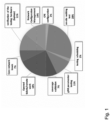
- Figure 1 shows an example of the principal causes of delays of the 5G network testing process.
- Continuous testing and monitoring relay on real-time test execution and data processing to continuously provide a feedback on specific network features throughout all stages of the network life cycle, such as requirements planning, development and directly from the factory floor during acceptance testing and operations. This enables providing higher-value service to the network user (e.g., the factory), such as dynamic network reconfiguration for faster response times and lower total cost of ownership of the network.
- Continuous testing provides immediate and continuous feedback on every network and factory floor configuration. However, automated testing and feedback require a common end-to-end test strategy that is reproducible.
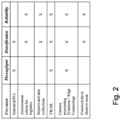
- Example SLAs for each use case may be expressed in terms of latency, bandwidth, and reliability.
- Network acceptance is related to evaluating the KPIs for a period, even though different acceptance criteria can be adopted. For instance, for Autonomous Robot, a compound SLA definition can better represent the network capabilities instead of single KPI threshold: "Latency ⁇ 20ms for 99.99% of the packets, packet drop rate ⁇ 0.001%, bandwidth > 20Mbitls 99.99% of mission time".
- the problem is that when the use case requirements change, changes in the network configuration might be required to accommodate the network SLAs.
- the first task is to use a systematic approach to test and measure the network capabilities for the specific use case before and after the change needed.
- measurements and tests must be executed in a reproducible and systematic way to enable comparison across different use cases
- test results are based on observing factors that are mutually influencing each other (e.g., used network throughput vs. end-to-end latency for the latency test and number of connected devices vs. throughput and latency for densification).
- MNO Mobile Network Operator
- Network resilience is the ability of a network to maintain an acceptable level of service in the face of faults and changes to normal operation. Despite the bulk of the work in the scientific literature on network resilience, the research on how to create continuous testing for industrial private wireless (LTE, 5G and beyond) can be considered still at its early stages.
- the present embodiments provide a platform to provide a digital twin of industrial 5G networks.
- the platform is referred here as Generative Network Performance Prediction (GNPP).
- GNPP Generative Network Performance Prediction
- Neural network is a computation graphs consisting of several layers of computation. Each layer of a neural network consists of one or more units, where each unit performs an elementary computation. A unit is connected to one or more other units, and the connection may have associated with a weight. The weight may be used for scaling the signal passing through the associated connection. Weights are learnable parameters, i.e., values which can be learned from training data. There may be other learnable parameters, such as those of batch-normalization layers.
- Feed-forward neural networks are such that there is no feedback loop: each layer takes input from one or more of the layers before and provides its output as the input for one or more of the subsequent layers. Also, units inside a certain layer take input from units in one or more of preceding layers and provide output to one or more of following layers.
- Initial layers (those close to the input data) extract semantically low-level features and final layers extract more high-level features.
- a certain task such as classification, semantic segmentation, object detection, denoising, style transfer, super-resolution, etc.
- recurrent neural nets there is a feedback loop, so that the network becomes stateful, i.e., it is able to memorize information or a state.
- neural networks are able to learn properties from input data, either in supervised way or in unsupervised way. Such learning is a result of a training algorithm, or of a meta-level neural network providing the training signal.
- the training algorithm consists of changing some properties of the neural network so that its output is as close as possible to a desired output.
- the output of the neural network can be used to derive a class or category index which indicates the class or category that the object in the input image belongs to.
- Training usually happens by minimizing or decreasing the output's error, also referred to as the loss. Examples of losses are mean squared error, cross-entropy, etc.
- training is an iterative process, where at each iteration the algorithm modifies the weights of the neural net to make a gradual improvement of the network's output, i.e., to gradually decrease the loss.
- Training a neural network is an optimization process.
- the goal of the optimization or training process is to make the model learn the properties of the data distribution from a limited training dataset.
- the goal is to learn to use a limited training dataset in order to learn to generalize to previously unseen data, i.e., data which was not used for training the model. This is usually referred to as generalization.
- data may be split into at least two sets, the training set and the validation set.
- the training set is used for training the network, i.e., to modify its learnable parameters in order to minimize the loss.
- the validation set is used for checking the performance of the network on data, which was not used to minimize the loss, as an indication of the final performance of the model.
- the errors on the training set and on the validation set are monitored during the training process to understand the following things:
- the platform is designed to provide an automated control, orchestration, data collection and intelligence in the network to enable continuous learning of how the network performs under the specific factory settings and use case requirements.
- the digital twin refers to a model that is created of the factory and the network based on the collected data to identify how a change in a single parameter (e.g., presence of metals or use case requirements) might change the capability of the network to fulfill a specific use case or a SLA (Service Level Agreement).
- the platform comprises
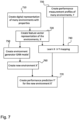
- An example of the process to create a digital twin of the platform comprises a series of steps 1 - 3 that allow prediction of wireless network performance for a given industrial layout. It is appreciated that in this disclosure term "environment" refers to target industrial settings such as autonomous factory layouts. The steps are:
- the first step 1) i.e., the learning of the mapping between the industrial layout and the performance profile, may be achieved by doing:
- Wireless network performance profiles for specific environments are created by the FT (Factory Testing) platform as mentioned in the previous sections. It is to be noticed that this step is out of the scope of the present embodiments.
- the second step 2) i.e., the creation of new, virtual industrial layouts is achieved by using a class of neural network architecture called Generative Adversarial Network (GAN), as illustrated in an example of Figure 6 .
- GAN Generative Adversarial Network
- the last step 3 i.e., the creation of wireless network performance predictions for new industrial layouts of modified industrial layouts is achieved by using a deep neural network model to infer the wireless network performance profiles that would correspond to new industrial layouts.
- the model used in this step is the one created in step c) above and shown in example of Figure 5 .
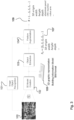
- the workflow is illustrates in Figure 3 as an example.
- the workflow comprises at least:
- the process starts by capturing 100 the physical properties of the environment (such as width, height) using video camera, photographic camera, a laser scanner (LiDAR, Light Detection and ranging), or by other technique providing the same.
- the image object recognition 101 captures categorical properties of the objects in the environment (such as robot arm, aluminum panel) by using visual computing and image recognition techniques.
- the information of each object may include the type of the object (regarding the context of the industrial setting), and referential information to associate the object to the environmental layout - for example, the camera position, the camera angle, and distance to the object.
- the output would then be an M img N img matrix.
- a 3D model 102 of the target environment is generated using the captured details.
- the 3D model generation 102 and the image object recognition 101 are well-known techniques in the industry, and therefore the procedural details of the these steps are not discussed further in this disclosure.
- a 3D graphical model 105 is generated at 3D model creation 102.
- 3D graphical models There are many different formats in the industry for the 3D graphical models.
- One of the formats is the "Building Information Modelling" (BIM).
- BIM Building Information Modelling
- STL Standard Triangle Language
- OBJ Object
- DAE Digital Asset Exchange
- the choice of the file format may depend on the availability of 3D graphical software that would be used to process the content.
- the object extraction 103 processes the 3D graphical representation 105 of the environment to identify objects at desired level of granularity. For example, when the 3D model represents objects at 1cm granularity with screws and rivets, the object extraction function instead may identify grouping of objects at 2-, 3- meter granularity, such as a whole CNC (Computerized Numerical Control) machine or a robot arm.
- CNC Computerized Numerical Control
- Procedural steps of this functional steps is straightforward in terms of applying grouping and clustering techniques, but the specifics of the procedure will depend on the detailed characteristics of the 3D graphical model - for example, the 3D model creation 102 may already generate a very rich representation with hierarchical grouping of objects, which would make the object extraction 103 quite trivial; or it may just list thousands of small objects with no meaningful containment relationships, which would make the task of the object extraction 103 quite complicated.
- the object extraction 103 is configured to create a list 107 of features for each identified object. These features will be items such as x, y coordinates, width, height, and depth of the object. For M obj objects, and for N obj features, the output is an M obj N obj matrix.
- Feature augmentation 104 brings together the outputs from Image object recognition 101 and Object extraction 103.
- the function Feature augmentation builds the X data set 109, which is an MN matrix, where M is the number of objects from the Object extraction 103, and N is the union of N obj features from Object extraction 103 and subset of properties from the Image object recognition 101. Being "a subset" is because once the object associations are built, the properties, such as camera position and angle is not useful for the rest of the workflow. Therefore, the output from the Feature augmentation 104 will be an MN matrix . ( M obj is selected for the number of objects, because even if the number of objects from the Image object recognition 101 is larger, it will be of no interest if there isn't a corresponding object representation in the output of the Object extraction 103 block.)
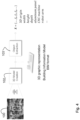
- a procedural workflow for mapping of digital representation to a feature vector representation (b) of step 1) comprises the following steps, as illustrated in Figure 5 as an example:
- KPI measurements 201 represents the exiting work that is referred to as F5GT as explained earlier.
- the output of KPI measurements 201 is Y, which is an M kpi N kpi matrix, where M kpi is the number of performance measurement samples, and N kpi is the set of features that include measurement coordinates within the environment and a set of KPI measurements.
- M kpi is expected to be much larger than M in the output of the Feature Augmentation block (because there will be many performance measurements around each single object).
- the neural network 202 learns the mapping h between the dataset X and the dataset Y. It learns the association between a given instance of X and a corresponding approximation of an instance of Y .
- the learned mapping is captured as the parametric model of the neural network, M(X).
- a procedural workflow for creation of new, virtual industrial layouts comprises the following steps, as illustrated in Figure 6 as an example:
- GAN 301 refers to Generative Adversarial Network where a training phase is implemented between a generator (G) and a discriminator (D). Both the generator and the discriminator may be neural networks.
- the generator G has the goal of generating realistic-looking data.
- the discriminator (D) sometimes gets as an input "fake” data generated from the generator, and sometimes real data from a dataset. The goal of the discriminator is to correctly discriminate when the input is fake or real.
- GAN 301 learns to generate new Xs as X' . For example, it is configured to generate new, unseen factory floor layouts together with associated object properties which are just like existing, real factory floors. If the performance of GAN is very high, a person wouldn't be able to tell if the X' is human designed or not.
- the output of the GAN block is G(z) 302, which is the parametric model of the GAN's neural network.
- G(z) 302 is the application of the learned GAN model for generating new environments.
- the output of the block X' is an MN matrix representing the objects and the features of a new environment with similar characteristics as the real environments, but with a unique layout instantiation.
- the last step 3 i.e., the creation of wireless network performance predictions for new industrial layouts of modified industrial layouts is achieved by using a deep neural network model to infer the wireless network performance profiles that would correspond to new industrial layouts.
- M(X') 303 of Figure 5 represents application of the neural network model 202.
- the output will be Y', which will be the predicted wireless network performance profile.
- FIG. 7 An example of the overall workflow with new environment generation is shown as a flowchart in Figure 7 .
- the workflow comprises the steps being discussed with reference to Figures 3 - 6 . Therefore, the workflow, according to the example of Figure 7 , comprises
- the GNPP Besides generating new, experimental environments to observe network performance changes, the GNPP also allows what-if experimental trial for observing effects of small modifications in the environment on the network performance profile. This type of workflow is shown as an example in Figure 8 .
- the workflow according to the example of Figure 8 comprises:
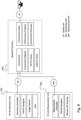
- Figure 9 illustrates an example of an implementation of the present embodiments as system level functional components an interconnecting APIs.
- the implementation described here shows an embodiment of the solution based on the state-of-the-art distributed software implementation techniques.
- the system may have three groups of functional components. Each of the components are described with a configuration that should be considered as an example:
- Each of the functions of the system may be implemented as microservices in the form of containers. All the containers may be instantiated and deployed under one or more clusters; for example, Kubernetes platform may be used for this purpose.
- the On-site Discovery Unit 910 and the On-site Measurement Unit 920 may have "node" affinities within the cluster platform. The functions of these units may then have affinity to the respective nodes. Through this declaration of node affinity, Kubernetes-type platforms can automatically deploy the functions of the intended locality. Instantiation and deployment of the Backend Functions 930 do not need to have node affinity. They can reside on any cloud platform within the Kubernetes type clusters.
- the On-site Discovery Unit 910 may have four functions.
- the discovery controller is the function that coordinates the operation on the On-site Discovery Unit.
- the Vehicle Navigator is the function that controls the mobility of the unit.
- the Image Capture function is responsible for collection of photographic images or video recordings of the target environment.
- the Lidar function is responsible for the other scanning capabilities of the environment.
- the On-site Measurement Unit 920 may have three functions.
- the Measurement Controller function coordinates the operation on the unit.
- the Vehicle Navigator controls the mobility of the unit.
- the Wireless KPI Recorder is responsible for taking performance measurements of the wireless network that is in operation. This unit is not covered as part this disclosure; its functions correspond to capabilities that have been referred in earlier sections as F5GT.
- the Orchestrator is responsible for coordinating the workflow across the whole system. It is connected to the Discovery Controller through the Distribution API (DA). It is connected to the Measurement Controller though the Measurement API (MA). The Orchestrator provides an external interface to the system via the System API (SA).
- SA System API
- the Environment Digitizer function is responsible for converting the physical environment to a digital representation.
- the E2P (Environment 2 Performance) AI Trainer function provides DNN (Deep Neural Network) capabilities to learn the mapping between the environment properties and the wireless network performance.
- the GAN AI Trainer function creates DNN models that are used to create new environments.
- the Performance Predictor function generates new performance predictions for a given environment.
- the Environment Generator function uses the DNN model created by the GAN AI Trainer to create new environments.
- the Environment Editor function allow modifying digital representation of industrial environments, such as moving a machine to the side by 10 meters to see its effect on wireless network performance.
- system implementation may have many other common service functions, such as data repositories, message communication brokers, and many other life-cycle management functions. These functions are not show, since they are not specific to the context of the present embodiments.
- An example workflow of the system operation can be as follows:
- the system of Figure 9 is an example of a system to be used to create digital representation of many industrial environments.
- the Orchestrator passes the collection of all these digital representations to the GAN AI Trainer. Using all these environment samples, the GAN AI trainer may create a DNN model that can be used to create new environments and passes it back to the Orchestrator.
- the system operator may use the system to create new network performance predictions for new environments.
- the system operator may instruct the Orchestrator to create a new environment.
- the Orchestrator may pass the DNN model created by the GAN AI Trainer to the Environment Generator and may instruct it to create a new environment.
- the Environment Generator may pass the new environment data back to the Orchestrator.
- the Orchestrator may pass the DNN model created by the E2P AI Trainer and the new environment data to the Performance Predictor.
- the Performance predictor may generate wireless network performance prediction for the new environment. The prediction can be send to the system operator.
- the system may also be used to see the network performance effect of modifying an environment.
- the system operator may instruct the Orchestrator to start an editing session.
- the system operator may select a previously stored environment.
- the Orchestrator may load the environment representation to the Environment Editor function.
- the system operator may modify the environment representation - for example, it moves one of the machines to another position.
- the model created by the E2P AI Trainer and the new environment data may be passed to the Performance Predictor.
- the Performance Predictor may generate wireless network performance prediction for the new environment. The prediction can be sent to the system operator.
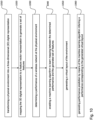
- the method generally comprises transforming 1010 a physical environment into a three-dimensional (3D) digital representation; mapping 1020 the 3D digital representation to a feature vector representation to generate a set of features; determining 1030 a performance of a wireless network at the physical environment; enabling 1040 a machine learning algorithm to learn mapping between the determined performance and the generated set of features; generating 1050 a virtual layout of the environment; and generating 1060 performance prediction by means of the machine learning algorithm inferring a performance corresponding to the generated virtual layout.
- Each of the steps can be implemented by a respective module of a computer system.
- An apparatus comprises means for transforming a physical environment into a three-dimensional (3D) digital representation; means for mapping the 3D digital representation to a feature vector representation to generate a set of features; means for determining a performance of a wireless network at the physical environment; means for enabling a machine learning algorithm to learn mapping between the determined performance and the generated set of features; means for generating a virtual layout of the environment; and means for generating performance prediction by means of the machine learning algorithm inferring a performance corresponding to the generated virtual layout.
- the means comprises at least one processor, and a memory including a computer program code, wherein the processor may further comprise processor circuitry.
- the memory and the computer program code are configured to, with the at least one processor, cause the apparatus to perform the method of Figure 11 according to various embodiments.
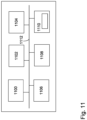
- Figure 11 illustrates an apparatus according to an embodiment.
- the generalized structure of the apparatus will be explained in accordance with the functional blocks of the system.
- Several functionalities can be carried out with a single physical device, e.g. all calculation procedures can be performed in a single processor if desired.
- a data processing system of an apparatus according to an example of Figure 11 comprises a main processing unit 1100, a memory 1102, a storage device 1104, an input device 1106, an output device 1108, and a graphics subsystem 1110, which are all connected to each other via a data bus 1112.
- a client may be understood as a client device or a software client running on an apparatus.
- the main processing unit 1100 is a processing unit arranged to process data within the data processing system.
- the main processing unit 1100 may comprise or be implemented as one or more processors or processor circuitry.
- the memory 1102, the storage device 1104, the input device 1106, and the output device 1108 may include other components as recognized by those skilled in the art.
- the memory 1102 and storage device 1104 store data in the data processing system 1100.
- Computer program code resides in the memory 1102 for implementing, for example, machine learning process.
- the input device 1106 inputs data into the system while the output device 1108 receives data from the data processing system and forwards the data, for example to a display.
- data bus 1112 is shown as a single line it may be any combination of the following: a processor bus, a PCI bus, a graphical bus, an ISA bus. Accordingly, a skilled person readily recognizes that the apparatus may be any data processing device, such as a computer device, a personal computer, a server computer, a mobile phone, a smart phone or an Internet access device, for example Internet tablet computer.
- a device may comprise circuitry and electronics for handling, receiving and transmitting data, computer program code in a memory, and a processor that, when running the computer program code, causes the device to carry out the features of an embodiment.
- a network device like a server may comprise circuitry and electronics for handling, receiving and transmitting data, computer program code in a memory, and a processor that, when running the computer program code, causes the network device to carry out the features of various embodiments.
Landscapes
- Engineering & Computer Science (AREA)
- Physics & Mathematics (AREA)
- Theoretical Computer Science (AREA)
- Computer Networks & Wireless Communication (AREA)
- General Physics & Mathematics (AREA)
- Signal Processing (AREA)
- Software Systems (AREA)
- Evolutionary Computation (AREA)
- Computer Vision & Pattern Recognition (AREA)
- Geometry (AREA)
- General Engineering & Computer Science (AREA)
- Artificial Intelligence (AREA)
- Medical Informatics (AREA)
- Computer Hardware Design (AREA)
- Data Mining & Analysis (AREA)
- Computer Graphics (AREA)
- Multimedia (AREA)
- Computing Systems (AREA)
- Mathematical Physics (AREA)
- Mathematical Analysis (AREA)
- Mathematical Optimization (AREA)
- Computational Mathematics (AREA)
- Pure & Applied Mathematics (AREA)
- Databases & Information Systems (AREA)
- Management, Administration, Business Operations System, And Electronic Commerce (AREA)
Applications Claiming Priority (1)
| Application Number | Priority Date | Filing Date | Title |
|---|---|---|---|
| FI20225164 | 2022-02-23 |
Publications (1)
| Publication Number | Publication Date |
|---|---|
| EP4236241A1 true EP4236241A1 (fr) | 2023-08-30 |
Family
ID=85150420
Family Applications (1)
| Application Number | Title | Priority Date | Filing Date |
|---|---|---|---|
| EP23154116.0A Pending EP4236241A1 (fr) | 2022-02-23 | 2023-01-31 | Procédé, appareil et produit de programme informatique pour la détermination de performance de réseau |
Country Status (3)
| Country | Link |
|---|---|
| US (1) | US20230269598A1 (fr) |
| EP (1) | EP4236241A1 (fr) |
| CN (1) | CN116647851A (fr) |
Families Citing this family (1)
| Publication number | Priority date | Publication date | Assignee | Title |
|---|---|---|---|---|
| WO2025052165A1 (fr) * | 2023-09-07 | 2025-03-13 | Telefonaktiebolaget Lm Ericsson (Publ) | Détermination de groupes de couche d'application verticale (val) à l'aide de réseaux antagonistes génératifs (gan) |
Citations (3)
| Publication number | Priority date | Publication date | Assignee | Title |
|---|---|---|---|---|
| US20200329386A1 (en) * | 2020-06-26 | 2020-10-15 | Intel Corporation | Automated network control systems that adapt network configurations based on the local network environment |
| US20210110557A1 (en) * | 2019-10-10 | 2021-04-15 | Andrew Thomas Busey | Pattern-triggered object modification in augmented reality system |
| US20210374456A1 (en) * | 2020-05-27 | 2021-12-02 | Verizon Patent And Licensing Inc. | Systems and methods for identifying a service qualification of a unit of a community |
Family Cites Families (4)
| Publication number | Priority date | Publication date | Assignee | Title |
|---|---|---|---|---|
| US10091070B2 (en) * | 2016-06-01 | 2018-10-02 | Cisco Technology, Inc. | System and method of using a machine learning algorithm to meet SLA requirements |
| EP3583797B1 (fr) * | 2017-02-16 | 2021-10-20 | Alcatel-Lucent Ireland Ltd | Procédés et systèmes d'auto-optimisation de réseau à l'aide d'un apprentissage approfondi |
| US10693575B2 (en) * | 2018-08-31 | 2020-06-23 | At&T Intellectual Property I, L.P. | System and method for throughput prediction for cellular networks |
| WO2021206761A1 (fr) * | 2020-04-09 | 2021-10-14 | Hrl Laboratories, Llc | Procédé d'apprentissage par renforcement profond pour la production de caractéristiques environnementales pour l'analyse de vulnérabilité et une performance améliorée de systèmes de vision par ordinateur |
-
2023
- 2023-01-31 EP EP23154116.0A patent/EP4236241A1/fr active Pending
- 2023-01-31 US US18/162,010 patent/US20230269598A1/en active Pending
- 2023-02-20 CN CN202310182327.4A patent/CN116647851A/zh active Pending
Patent Citations (3)
| Publication number | Priority date | Publication date | Assignee | Title |
|---|---|---|---|---|
| US20210110557A1 (en) * | 2019-10-10 | 2021-04-15 | Andrew Thomas Busey | Pattern-triggered object modification in augmented reality system |
| US20210374456A1 (en) * | 2020-05-27 | 2021-12-02 | Verizon Patent And Licensing Inc. | Systems and methods for identifying a service qualification of a unit of a community |
| US20200329386A1 (en) * | 2020-06-26 | 2020-10-15 | Intel Corporation | Automated network control systems that adapt network configurations based on the local network environment |
Also Published As
| Publication number | Publication date |
|---|---|
| US20230269598A1 (en) | 2023-08-24 |
| CN116647851A (zh) | 2023-08-25 |
Similar Documents
| Publication | Publication Date | Title |
|---|---|---|
| Hafi et al. | Split federated learning for 6G enabled-networks: Requirements, challenges, and future directions | |
| US20250272632A1 (en) | Artificial intelligence-based business process management visualization, development and monitoring | |
| Sidek et al. | A review of data fusion models and systems | |
| Poorzare et al. | Network digital twin toward networking, telecommunications, and traffic engineering: A survey | |
| US20220156658A1 (en) | System and method for managing resources | |
| Friesen et al. | Machine learning for zero-touch management in heterogeneous industrial networks-a review | |
| US11310125B2 (en) | AI-enabled adaptive TCA thresholding for SLA assurance | |
| CN112433733A (zh) | 经由预测模型控制边缘设备上部署的深度学习模型的性能 | |
| Sabella et al. | Innovation Management in 6G research: the case of Hexa-X project | |
| Khatoon et al. | Analysis of use cases enabling AI/ML to IOT service platforms | |
| EP4236241A1 (fr) | Procédé, appareil et produit de programme informatique pour la détermination de performance de réseau | |
| Dagaev et al. | Method of Analyzing the Availability Factor in a Mesh Network | |
| Moura et al. | Modeling cooperative behavior for resilience in cyber-physical systems using SDN and NFV | |
| Mateen et al. | Software QualityAssurance in Internet of Things | |
| Domaschka et al. | Towards an architecture for reliable capacity provisioning for distributed clouds | |
| Golovkina et al. | Graph Neural Networks for Metrics Prediction in Microservice Architecture | |
| CN119721310A (zh) | 人群聚集预测方法、装置及系统 | |
| Pires et al. | Closed-loop automation in 6G for minimum downtime task continuity in surveillance cobots | |
| Kukliński et al. | A Native Integration of Digital Twins and the AI/ML Framework in the 6G Architecture | |
| Fu et al. | Enhancing service offloading for dense networks based on optimal stopping theory in virtual mobile edge computing | |
| Bouroudi | Multi-agent deep reinforcement learning for resource allocation and scheduling in 6G | |
| Echoukairi et al. | Enhancing Call Detail Record Prediction with Machine Learning for Communication | |
| Conţu et al. | Enabling machine learning-assisted resource monitoring for network slice creation and management in OSM: design, implementation, and validation: C. Conţu et al. | |
| Abo-eleneen et al. | Toward AI-Native 6G: Unveiling Online Optimization and Deep Reinforcement Learning for Autonomous Network Slicing | |
| Hill et al. | Edge intelligence and the industrial internet of things |
Legal Events
| Date | Code | Title | Description |
|---|---|---|---|
| PUAI | Public reference made under article 153(3) epc to a published international application that has entered the european phase |
Free format text: ORIGINAL CODE: 0009012 |
|
| STAA | Information on the status of an ep patent application or granted ep patent |
Free format text: STATUS: THE APPLICATION HAS BEEN PUBLISHED |
|
| AK | Designated contracting states |
Kind code of ref document: A1 Designated state(s): AL AT BE BG CH CY CZ DE DK EE ES FI FR GB GR HR HU IE IS IT LI LT LU LV MC ME MK MT NL NO PL PT RO RS SE SI SK SM TR |
|
| STAA | Information on the status of an ep patent application or granted ep patent |
Free format text: STATUS: REQUEST FOR EXAMINATION WAS MADE |
|
| 17P | Request for examination filed |
Effective date: 20240213 |
|
| RBV | Designated contracting states (corrected) |
Designated state(s): AL AT BE BG CH CY CZ DE DK EE ES FI FR GB GR HR HU IE IS IT LI LT LU LV MC ME MK MT NL NO PL PT RO RS SE SI SK SM TR |