EP4236281A2 - Ereignisausgelöstes freihändiges Multitasking für Medienwiedergabe - Google Patents
Ereignisausgelöstes freihändiges Multitasking für Medienwiedergabe Download PDFInfo
- Publication number
- EP4236281A2 EP4236281A2 EP23169631.1A EP23169631A EP4236281A2 EP 4236281 A2 EP4236281 A2 EP 4236281A2 EP 23169631 A EP23169631 A EP 23169631A EP 4236281 A2 EP4236281 A2 EP 4236281A2
- Authority
- EP
- European Patent Office
- Prior art keywords
- event
- speech
- user
- indication
- media playback
- Prior art date
- Legal status (The legal status is an assumption and is not a legal conclusion. Google has not performed a legal analysis and makes no representation as to the accuracy of the status listed.)
- Withdrawn
Links
- 230000001960 triggered effect Effects 0.000 title 1
- 238000000034 method Methods 0.000 claims abstract description 48
- 230000008569 process Effects 0.000 claims abstract description 17
- 230000003213 activating effect Effects 0.000 claims abstract description 3
- 230000000694 effects Effects 0.000 claims description 3
- 230000004913 activation Effects 0.000 claims 1
- 230000015654 memory Effects 0.000 description 17
- 238000012545 processing Methods 0.000 description 12
- 238000004891 communication Methods 0.000 description 10
- 230000006870 function Effects 0.000 description 9
- 238000013461 design Methods 0.000 description 6
- 230000003993 interaction Effects 0.000 description 6
- 230000009471 action Effects 0.000 description 5
- 230000010354 integration Effects 0.000 description 3
- 230000007246 mechanism Effects 0.000 description 3
- 230000003287 optical effect Effects 0.000 description 3
- 230000000977 initiatory effect Effects 0.000 description 2
- 238000010295 mobile communication Methods 0.000 description 2
- 101100457838 Caenorhabditis elegans mod-1 gene Proteins 0.000 description 1
- 101150110972 ME1 gene Proteins 0.000 description 1
- 238000013459 approach Methods 0.000 description 1
- 230000001413 cellular effect Effects 0.000 description 1
- 230000001934 delay Effects 0.000 description 1
- 238000005516 engineering process Methods 0.000 description 1
- 238000001914 filtration Methods 0.000 description 1
- 230000005055 memory storage Effects 0.000 description 1
- 238000012986 modification Methods 0.000 description 1
- 230000004048 modification Effects 0.000 description 1
- 230000002093 peripheral effect Effects 0.000 description 1
- 238000010079 rubber tapping Methods 0.000 description 1
- 238000012546 transfer Methods 0.000 description 1
Images


Classifications
-
- G—PHYSICS
- G10—MUSICAL INSTRUMENTS; ACOUSTICS
- G10L—SPEECH ANALYSIS TECHNIQUES OR SPEECH SYNTHESIS; SPEECH RECOGNITION; SPEECH OR VOICE PROCESSING TECHNIQUES; SPEECH OR AUDIO CODING OR DECODING
- G10L15/00—Speech recognition
- G10L15/22—Procedures used during a speech recognition process, e.g. man-machine dialogue
-
- H—ELECTRICITY
- H04—ELECTRIC COMMUNICATION TECHNIQUE
- H04M—TELEPHONIC COMMUNICATION
- H04M1/00—Substation equipment, e.g. for use by subscribers
- H04M1/72—Mobile telephones; Cordless telephones, i.e. devices for establishing wireless links to base stations without route selection
- H04M1/724—User interfaces specially adapted for cordless or mobile telephones
- H04M1/72403—User interfaces specially adapted for cordless or mobile telephones with means for local support of applications that increase the functionality
- H04M1/72442—User interfaces specially adapted for cordless or mobile telephones with means for local support of applications that increase the functionality for playing music files
-
- G—PHYSICS
- G10—MUSICAL INSTRUMENTS; ACOUSTICS
- G10L—SPEECH ANALYSIS TECHNIQUES OR SPEECH SYNTHESIS; SPEECH RECOGNITION; SPEECH OR VOICE PROCESSING TECHNIQUES; SPEECH OR AUDIO CODING OR DECODING
- G10L15/00—Speech recognition
- G10L15/22—Procedures used during a speech recognition process, e.g. man-machine dialogue
- G10L2015/223—Execution procedure of a spoken command
-
- H—ELECTRICITY
- H04—ELECTRIC COMMUNICATION TECHNIQUE
- H04M—TELEPHONIC COMMUNICATION
- H04M1/00—Substation equipment, e.g. for use by subscribers
- H04M1/72—Mobile telephones; Cordless telephones, i.e. devices for establishing wireless links to base stations without route selection
- H04M1/724—User interfaces specially adapted for cordless or mobile telephones
- H04M1/72484—User interfaces specially adapted for cordless or mobile telephones wherein functions are triggered by incoming communication events
-
- H—ELECTRICITY
- H04—ELECTRIC COMMUNICATION TECHNIQUE
- H04M—TELEPHONIC COMMUNICATION
- H04M2250/00—Details of telephonic subscriber devices
- H04M2250/74—Details of telephonic subscriber devices with voice recognition means
Definitions
- the present disclosure relates generally to hands free interactions, and more specifically to a system and method for enabling context-sensitive hands free interactions based on occurrence of an event.
- Electronic devices such as tablet computers and smartphones, can play media content such as audio and video content. Often devices stream media content from a remote source, but media content can also be stored locally. However, smartphones and other devices that can play media, also often have active data connections, such as via a cellular network or a local 802.11 Wi-Fi network. Such devices can receive other communications, such as an email, instant message, incoming telephone call, and so forth, while playing back media content. These other communications can interrupt the playback, and can require the user to interact with the device manually to resume playback.
- the user can place the device out of arms' reach or in an otherwise inaccessible spot. If for some reason the streaming playback is interrupted, such as by the user accepting an incoming phone call, there is no convenient way to instruct the device to attempt to resume playback at the same timestamp without the user picking up and interacting with the device. Similarly, if the user receives an instant message during media playback, the user has no way to instruct the device to act upon the events without picking up and interacting with the device.
- a user is driving a vehicle while the device is linked to the vehicle, such as via Bluetooth. In this situation, the driver should not be distracted by picking up the device to manually restart a stream or otherwise interact with the device in order to respond to an event.
- Bluetooth integration can address part of this problem, such as allowing a user to answer phone calls depending on the degree of integration in the vehicle, but many simple actions still require the user to pick up and interact with the device.
- Coupled devices are devices which are in signal communication with one another.
- electronic device is defined as any device that is capable of at least accepting data, transmitting data, and executing commands.
- electronic devices may include, but are not limited to, portable communication devices, mobile communication devices, mobile computers, smartphones, computing pads, tablet computers, personal computers, desktop computers, laptop computers, netbooks, servers, routers, set-top phones, or other electronic devices capable of at least accepting data, transmitting data, and executing commands.
- media content can be defined as any audio, video, audiovisual content, or the like.
- Media content may include, but is not limited to, music, movies, animation, ringtones, portions of music, portions of videos, or the like.
- Media content can be streamed from a network location for playback or played from a local storage device, for example.
- Media content can be embedded within an application or software package.
- the device detects an event, such as an incoming email message or telephone call.
- the device can output a first audible indication of the event, such as playing an audio file or generating synthetic speech describing the event.
- the device can activate a speech recognition engine using a custom speech recognition grammar for recognizing a set of speech commands associated with the event, or can execute a speech recognition application to process speech commands associated with the event.
- the set of speech commands associated with the event can include "answer”, “forward to voicemail", “ignore”, or “ignore and send text message”.
- the custom speech recognition grammar or speech recognition application can be tuned to specifically recognize these phrases, related phrases, or combinations thereof.
- the device can optionally output a second audible indication of readiness to process speech in association with the event, such as an audible ding, beep, audio file, or synthetic speech.
- the audible indications can be an audio overlay on top of media playback.
- the device can monitor, for a predetermined duration of time after the second audible indication and/or after the event, audio input received via the microphone to recognize a command via the speech recognition engine. In this manner, the device implements a timed recognition of audio commands.
- the device Prior to executing the command, the device can optionally pause playback of the media content, and then execute the command. After executing the command, the device can resume playback of the media content automatically or perform some other action indicated by the user. In this way, the user can easily interact with the device via a speech interface tuned specifically to commands based on an expected context of a detected event. While the examples set forth herein primarily discuss event and context based hands-free speech interfaces in terms of events that interrupt media playback, similar principles also apply to hands-free interfaces based on detected events regardless of media playback.
- the approaches set forth herein can give the user an extra option when initiating playback of streaming media for an "enhanced hands free playback mode".
- the playback device can present a special "Play" functionality via a key with a symbol in the top corner, which the user can access by tapping and holding down a traditional play button for 2-3 seconds.
- the device will emit an audible tone indicating that for some time period, such as 10 seconds, the device can recognize and accept relevant voice commands, like "restart”. Then, when the device receives and decodes these commands correctly, the device can present another tone indicating the command was understood and is being executed.
- An alarm tone can indicate that the command was not understood or is incapable of execution.
- a different tone can be overlaid on top of the existing stream (or the stream could be paused, depending on the configuration), prompting the hands-free user to instruct the device to dictate the new event and optionally the contents or perform some other action with respect to the event.
- a tone could prompt the user to enter the next command, at which time the user could say "resume stream". At this point, the stream resumes.
- the user could instruct the device to use speech processing to craft a reply.
- the device does not rely on the user to activate the "enhanced hands free media playback mode" explicitly, but rather the device can utilize sensors, such as touch-screen, proximity, accelerometer, or gyroscope, to sense when the device is in an inactive mode.
- the inactive mode can indicate, for example, that the device is not being interacted with for a certain period of time.
- the device can automatically activate a hands free media playback mode, or other hands-free state, based on the input from such sensors.
- the system can automatically resume streaming media playback after an interrupting event.
- the system can provide notifications of an incoming event as an audible alert laid on top of media playback or that interrupts media playback.
- the system can acknowledge whether hands-free commands are understood, accepted, and/or capable of execution. Further, the system can provide some indication of an outcome or result of executing a received hands-free command.
- events can be classified in to one of two categories: disruptive events and user-initiated events.
- An incoming email is an example of a disruptive event.
- An example of a user-initiated event is user input to switch streaming radio stations.
- An interruptive event can stop the media and enable a contextual voice recognition parser to interpret the dispatching of that interruption, such as read an email, or answer an incoming phone call.
- the user indicates through some mechanism, either a button press or a unique sound such as a hand clap that enables a similar mode for switching stations, adjusting parameters, or shuttle control.
- FIG. 1 shows an example arrangement 100 of a media playback device 102.
- the media playback device 102 may be a portable communication device, a mobile communication device, a mobile computer, a smartphone, a computing pad, a tablet computer, a personal computer, a desktop computer, a laptop computer, a netbook, a set-top phone, a portable digital assistant (PDA), a DVD player, a portable Blu-ray ® player, a network television, an audio-playback device, a portable music player, or other electronic device capable of at least accepting data, transmitting data, and executing commands.
- the media playback device 102 can include a non-transitory or a transitory computer-readable storage medium that can be internal, external, portable, or detachable.
- the computer-readable storage medium may be any available media that may be accessed by a general purpose or special purpose computer, including the functional design of any special purpose processor.
- non-transitory computer-readable media may include RAM, ROM, EEPROM, CD-ROM or other optical disk storage, magnetic disk storage or other magnetic storage devices, flash memory, or any other medium which may be used to carry or store desired program code in the form of computer-executable instructions, data structures, or processor chip design.
- the media playback device 102 may be a smartphone and may include at least one processor configured to execute instructions for playing back media, processing speech or other hands-free input, and executing commands associated with events.
- the media playback device 102 may include a display, an audio output module, an input processing module, and a network interface.
- the audio output module may store a media player application to play media content including audio files, video files, and so forth.
- the audio output module may be an Internet application module that supports a web-based media player, a presentation application module that supports audiovisual files, or any other application module for playing media files.
- the media playback device 102 may include a peer-to-peer connector, such as a peer-to-peer (P2P) device pairing interface, a Bluetooth ® interface, a near-field-communication (NFC) interface, a near-field-communication-peer-to-peer (NFC P2P) interface, a Wi-Fi- interface, a tether interface, or any other device or interface which allows the media playback device 102 to transmit or receive data, such as media content, and receive data from a messaging server 110 or other event source.
- P2P peer-to-peer
- media playback device 102 is described herein in terms of a particular set of components, those of ordinary skill in the art will appreciate that the media playback device 102 may have fewer or more components than discussed herein, without departing from the technical advantages of the present systems and methods of hands-free handling of incoming events.
- the media playback device can play media from a local storage 104 or streaming from a media server 106 over a wired or wireless network 108.
- a media server 106 can communicate with a messaging server 110, such as a short messaging service (SMS) server, a voice over IP (VoIP) server, an email server, or other similar entity.
- SMS short messaging service
- VoIP voice over IP
- email server or other similar entity.
- the media playback device 102 receives an incoming email, for example, during media playback, the media playback device 102 can go through the interactions set forth in FIG. 2 .
- FIG. 2 shows an example set of interactions 200 between a user 202, a media playback device 102, and an event source 206.
- the device 102 plays media content to the user 202.
- the event source 206 sends an event to the device 102.
- the example event source 206 can be external, such as messaging server 110 as shown in FIG. 1
- the event source 206 can alternatively be internal to the device 102, such as a calendar reminder.
- the device 102 can monitor actively for events from the event source 206, or the event source 206 can push event notifications to the device 102.
- the device 102 can provide an indication of the event to the user 202.
- the device 102 processes multiple events from multiple sources, and only certain events trigger indications to the user 202.
- the device 102 listens for speech commands, or monitors for other hands-free commands, associated with the event.
- the device 102 can activate or load a custom speech recognition module or engine to recognize a specific set of speech commands for handling the event or that are associated with the event.
- the device 102 can load a gesture recognition engine, for example, to recognize hands-free gesture commands.
- the device 102 can activate the recognition module for a predetermined time after notification of the event or after the indication of the event. If the user does not provide any recognizable input within the predetermined time, the device 102 continues with normal media playback, essentially reverting back to step 1. If, on the other hand, the user provides a recognizable input that translates to a command, the device 102 at step 5 can pause the media playback, execute the command at step 6, and resume media playback at step 7.
- FIGs. 3-4 illustrate a particular order of steps, one of ordinary skill in the art will appreciate that the steps may be executed in any order to accomplish the technical advantages of the present disclosure and may include fewer or more steps than illustrated or may modify the illustrated steps.
- Each block represents one or more processes, methods, or subroutines.
- the steps may be implemented in a system such as a mobile electronic device, a server, a media streaming device, smartphone, electronic tablet, stereo system, automobile stereo or any other type of electronic device capable of at least accepting data, transmitting data, and executing commands.
- Each block shown in FIGs. 3-4 may be carried out by a processor 520 of the example electronic device 500.
- the processor 520 illustrated in FIG. 5 may include one or more processors or one or more processing systems.
- the flow charts illustrated in FIGs. 3-4 will be described with reference to the device 500 shown in FIG. 5 .
- FIGs. 3 and 4 are discussed in terms of playing media content to a user, such as playing local content or streaming network content. However, the principles discussed, specifically activating speech recognition based on a focused speech recognition grammar related to an event for enabling hands-free operation of a device, are also applicable to other hands-free usage scenarios besides simply streaming media content.
- FIG. 3 shows an example simplified process for processing speech commands based on an event context.
- the process is described in terms of a system, such as a mobile phone, configured to practice the process.
- the system can detect an event in operation 304.
- the event can be an incoming message, an incoming call, a user-initiated event, a calendar event, or a reminder, for example.
- the system can output an indication of the event in operation 306, such as an audible alert, a visible notification on screen, or via a notification LED, for example.
- the indication of the event can also be a vibration of a mobile device 102 or some other tactile indication.
- the indication can be a combination of one or more of these outputs.
- the indication of the event can be output by the device 102 itself or another separate device.
- the system can load a custom speech recognition grammar for a set of expected speech commands associated with the event in operation 308.
- the expected speech commands can be based on the event and a user activity when the event occurred.
- the system can process speech input received within an established time period after the occurrence of event in operation 310.
- the duration of the established time period can be based on an event type.
- the established time period can start after the event ends, after a notification, or at some other time which can be fixed or can be user-configurable.
- the system can identify a recognized speech command uttered during the established time period.
- the recognized speech command is obtained from the expected speech commands received from the speech input and processed using the custom speech recognition grammar. Then the system can pause the playback of the media content, execute the recognized speech command, and resume playback of the media content or optionally perform some other action.
- the system can output a second indication to the user of a state of readiness to accept speech commands.
- the first indication can be a regular 'ding' or sound for an incoming email on a mobile device.
- the second indication can follow closely after the regular sound, and can indicate that the system is listening for the next 5 seconds, for example, for speech commands for handling the email just received.
- the user can utter speech commands such as "read email", "reply", or "delete”.
- the first indication and/or second indication can include details of the incoming message to provide some hands-free indication of the contents of the message.
- the system can receive non-speech hands-free commands, which may include input via hands-free or non-touch gestures or other alternative input devices.
- the first indication and/or second indication can provide information regarding which hands-free commands are available, whether by providing a short list of available commands or by providing one of a set of different indications, each associated with a different set of available commands.
- the system can output the first and second indications at the same time, back to back, or with a delay in between.
- the device can output multimodal indications, where the first indication is of one type, such as an audible notification, and the second indication is of a different type, such as a vibration notification.
- the output mode, style, content, or other characteristics of the indications can vary based on the type, content, or other attributes of the event, such as a sender of an email or a key word in a text message.
- Indications can include a synthetic spoken prompt describing the event or at least one of the set of expected speech commands.
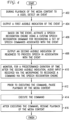
- FIG. 4 shows a more detailed example process for processing speech commands based on an event context.
- the device can detect an event in operation 402.
- the device can output a first audible indication of the event in operation 404.
- the device can activate a speech recognition engine using a custom speech recognition grammar for recognizing a set of speech commands associated with the event in operation 406.
- the device can output a second audible indication of readiness to process speech in association with the event in operation 408.
- the device can monitor, for a predetermined duration of time after the second audible indication, audio input received via the microphone to recognize a command via the speech recognition engine in operation 410.
- the device Prior to executing the command, the device can pause playback of the media content in operation 412, execute the command in operation 414, and, after executing the command, resume playback of the media content in operation 416.
- FIG. 5 The disclosure now turns to a brief description of a basic general purpose system or computing device, as shown in FIG. 5 , which may be employed to practice the concepts disclosed herein.
- the components disclosed herein may be incorporated in whole or in part into handsets, transmitters, servers, and/or any other electronic or other computing device.
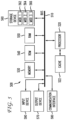
- an example system 500 includes a general-purpose computing device 500 or electronic device; including a processing unit (CPU or processor) 520 and a system bus 510 that couples various system components to the processor 520.
- the system components include a system memory 530 such as read only memory (ROM) 540 and random access memory (RAM) 550.
- the system 500 may include a cache 522 of high speed memory connected directly with, in close proximity to, or integrated as part of the processor 520.
- the system 500 copies data from the memory 530 and/or the storage device 560 to the cache 522 for quick access by the processor 520. In this way, the cache provides a performance boost that avoids processor 520 delays while waiting for data.
- the processor 520 may include any general purpose processor and a hardware module or software module, such as module 1 562, module 2 564, and module 3 566 stored in storage device 560 configured to control the processor 520 as well as a special-purpose processor where software instructions are incorporated into the actual processor design.
- the processor 520 may be a completely self-contained computing system, containing multiple cores or processors, a bus, memory controller, cache, etc.
- a multi-core processor may be symmetric or asymmetric.
- the system bus 510 may be any of several types of bus structures including a memory bus or memory controller, a peripheral bus, and a local bus using any of a variety of bus architectures.
- a basic input/output system (BIOS) stored in ROM 540 or the like, may provide the basic routine that helps to transfer information between elements within the computing device 500, such as during start-up.
- the computing device 500 further includes storage devices 560 such as a hard disk drive, a magnetic disk drive, an optical disk drive, tape drive or the like.
- the storage device 560 may include software modules 562, 564, 566 for controlling the processor 520. Other hardware or software modules are contemplated.
- the storage device 560 is connected to the system bus 510 by a drive interface.
- the drives and the associated computer readable storage media provide nonvolatile storage of computer readable instructions, data structures, program modules, and other data for the computing device 500.
- a hardware module that performs a particular function includes the software component stored in a non-transitory computer-readable medium in connection with the necessary hardware components, such as the processor 520, bus 510, display 570, and so forth, to carry out the function.
- the basic components are known to those of skill in the art and appropriate variations are contemplated depending on the type of device, such as whether the device 500 is a small, handheld computing device, a desktop computer, or a computer server.
- Non-transitory computer-readable storage media expressly exclude media such as energy, carrier signals, electromagnetic waves, and signals per se.
- an input device 590 represents any number of input mechanisms, such as a microphone for speech, a touch-sensitive screen for gesture or graphical input, keyboard, mouse, motion input, speech and so forth.
- An output device 570 may also be one or more of a number of output mechanisms known to those of skill in the art.
- multimodal systems enable a user to provide multiple types of input to communicate with the computing device 500.
- the communications interface 580 generally governs and manages the user input and system output. There is no restriction on operating on any particular hardware arrangement and therefore the basic features here may easily be substituted for improved hardware or firmware arrangements as they are developed.
- the illustrative system example is presented as including individual functional blocks including functional blocks labeled as a "processor" or processor 520.
- the functions these blocks represent may be provided through the use of either shared or dedicated hardware, including, but not limited to, hardware capable of executing software and hardware, such as a processor 520, that is purpose-built to operate as an equivalent to software executing on a general purpose processor.
- the functions of one or more processors presented in FIG. 5 may be provided by a single shared processor or multiple processors.
- Illustrative examples may include microprocessor and/or digital signal processor (DSP) hardware, read-only memory (ROM) 540 for storing software performing the operations discussed below, and random access memory (RAM) 550 for storing results.
- DSP digital signal processor
- ROM read-only memory
- RAM random access memory
- VLSI Very large scale integration
- the logical operations of the various examples are implemented as: (1) a sequence of computer implemented steps, operations, or procedures running on a programmable circuit within a general use computer, (2) a sequence of computer implemented steps, operations, or procedures running on a specific-use programmable circuit; and/or (3) interconnected machine modules or program engines within the programmable circuits.
- the system 500 shown in FIG. 5 may practice all or part of the recited methods, may be a part of the recited systems, and/or may operate according to instructions in the recited non-transitory computer-readable storage media.
- Such logical operations may be implemented as modules configured to control the processor 520 to perform particular functions according to the programming of the module. For example, FIG.
- Mod 1 562, Mod 2 564 and Mod 3 566 which are modules configured to control the processor 520. These modules may be stored on the storage device 560 and loaded into RAM 550 or memory 530 at runtime or may be stored as would be known in the art in other computer-readable memory locations.
- Examples within the scope of the present disclosure may also include tangible and/or non-transitory computer-readable storage media for carrying or having computer-executable instructions or data structures stored thereon.
- Such non-transitory computer-readable storage media may be any available media that may be accessed by a general purpose or special purpose computer, including the functional design of any special purpose processor as discussed above.
- non-transitory computer-readable media may include RAM, ROM, EEPROM, CD-ROM, or other optical disk storage, magnetic disk storage or other magnetic storage devices, or any other medium which may be used to carry or store desired program code means in the form of computer-executable instructions, data structures, or processor chip design.
- Computer-executable instructions include, for example, instructions and data which cause a general purpose computer, special purpose computer, or special purpose processing device to perform a certain function or group of functions.
- Computer-executable instructions also include program modules that are executed by computers in stand-alone or network environments.
- program modules include routines, programs, components, data structures, objects, and the functions inherent in the design of special-purpose processors, etc. that perform particular tasks or implement particular abstract data types.
- Computer-executable instructions, associated data structures, and program modules represent examples of the program code means for executing steps of the methods disclosed herein. The particular sequence of such executable instructions or associated data structures represents examples of corresponding acts for implementing the functions described in such steps.
- Examples of skill in the art will appreciate that other examples of the disclosure may be practiced in network computing environments with many types of computer system configurations, including personal computers, hand-held devices, multi-processor systems, microprocessor-based or programmable consumer electronics, network PCs, minicomputers, mainframe computers, and the like. Examples may also be practiced in distributed computing environments where tasks are performed by local and remote processing devices that are linked (either by hardwired links, wireless links, or by a combination thereof) through a communications network. In a distributed computing environment, program modules may be located in both local and remote memory storage devices.
Landscapes
- Engineering & Computer Science (AREA)
- Multimedia (AREA)
- Human Computer Interaction (AREA)
- Computer Networks & Wireless Communication (AREA)
- Signal Processing (AREA)
- Computational Linguistics (AREA)
- Health & Medical Sciences (AREA)
- Audiology, Speech & Language Pathology (AREA)
- Physics & Mathematics (AREA)
- Acoustics & Sound (AREA)
- Telephone Function (AREA)
- Electrically Operated Instructional Devices (AREA)
Priority Applications (1)
| Application Number | Priority Date | Filing Date | Title |
|---|---|---|---|
| EP23169631.1A EP4236281A3 (de) | 2013-01-23 | 2013-01-23 | Ereignisausgelöstes freihändiges Multitasking für Medienwiedergabe |
Applications Claiming Priority (2)
| Application Number | Priority Date | Filing Date | Title |
|---|---|---|---|
| EP13152427.4A EP2760015A1 (de) | 2013-01-23 | 2013-01-23 | Ereignisausgelöstes freihändiges Multitasking für Medienwiedergabe |
| EP23169631.1A EP4236281A3 (de) | 2013-01-23 | 2013-01-23 | Ereignisausgelöstes freihändiges Multitasking für Medienwiedergabe |
Related Parent Applications (1)
| Application Number | Title | Priority Date | Filing Date |
|---|---|---|---|
| EP13152427.4A Division EP2760015A1 (de) | 2013-01-23 | 2013-01-23 | Ereignisausgelöstes freihändiges Multitasking für Medienwiedergabe |
Publications (2)
| Publication Number | Publication Date |
|---|---|
| EP4236281A2 true EP4236281A2 (de) | 2023-08-30 |
| EP4236281A3 EP4236281A3 (de) | 2023-10-11 |
Family
ID=47603433
Family Applications (2)
| Application Number | Title | Priority Date | Filing Date |
|---|---|---|---|
| EP13152427.4A Ceased EP2760015A1 (de) | 2013-01-23 | 2013-01-23 | Ereignisausgelöstes freihändiges Multitasking für Medienwiedergabe |
| EP23169631.1A Withdrawn EP4236281A3 (de) | 2013-01-23 | 2013-01-23 | Ereignisausgelöstes freihändiges Multitasking für Medienwiedergabe |
Family Applications Before (1)
| Application Number | Title | Priority Date | Filing Date |
|---|---|---|---|
| EP13152427.4A Ceased EP2760015A1 (de) | 2013-01-23 | 2013-01-23 | Ereignisausgelöstes freihändiges Multitasking für Medienwiedergabe |
Country Status (1)
| Country | Link |
|---|---|
| EP (2) | EP2760015A1 (de) |
Families Citing this family (112)
| Publication number | Priority date | Publication date | Assignee | Title |
|---|---|---|---|---|
| US8677377B2 (en) | 2005-09-08 | 2014-03-18 | Apple Inc. | Method and apparatus for building an intelligent automated assistant |
| US9318108B2 (en) | 2010-01-18 | 2016-04-19 | Apple Inc. | Intelligent automated assistant |
| US8977255B2 (en) | 2007-04-03 | 2015-03-10 | Apple Inc. | Method and system for operating a multi-function portable electronic device using voice-activation |
| US8676904B2 (en) | 2008-10-02 | 2014-03-18 | Apple Inc. | Electronic devices with voice command and contextual data processing capabilities |
| US10255566B2 (en) | 2011-06-03 | 2019-04-09 | Apple Inc. | Generating and processing task items that represent tasks to perform |
| US10276170B2 (en) | 2010-01-18 | 2019-04-30 | Apple Inc. | Intelligent automated assistant |
| US8682667B2 (en) | 2010-02-25 | 2014-03-25 | Apple Inc. | User profiling for selecting user specific voice input processing information |
| US10057736B2 (en) | 2011-06-03 | 2018-08-21 | Apple Inc. | Active transport based notifications |
| US10417037B2 (en) | 2012-05-15 | 2019-09-17 | Apple Inc. | Systems and methods for integrating third party services with a digital assistant |
| US9530409B2 (en) | 2013-01-23 | 2016-12-27 | Blackberry Limited | Event-triggered hands-free multitasking for media playback |
| DE112014000709B4 (de) | 2013-02-07 | 2021-12-30 | Apple Inc. | Verfahren und vorrichtung zum betrieb eines sprachtriggers für einen digitalen assistenten |
| US9842584B1 (en) * | 2013-03-14 | 2017-12-12 | Amazon Technologies, Inc. | Providing content on multiple devices |
| US10652394B2 (en) | 2013-03-14 | 2020-05-12 | Apple Inc. | System and method for processing voicemail |
| US10748529B1 (en) | 2013-03-15 | 2020-08-18 | Apple Inc. | Voice activated device for use with a voice-based digital assistant |
| US10176167B2 (en) | 2013-06-09 | 2019-01-08 | Apple Inc. | System and method for inferring user intent from speech inputs |
| KR101959188B1 (ko) | 2013-06-09 | 2019-07-02 | 애플 인크. | 디지털 어시스턴트의 둘 이상의 인스턴스들에 걸친 대화 지속성을 가능하게 하기 위한 디바이스, 방법 및 그래픽 사용자 인터페이스 |
| KR101749009B1 (ko) | 2013-08-06 | 2017-06-19 | 애플 인크. | 원격 디바이스로부터의 활동에 기초한 스마트 응답의 자동 활성화 |
| US10296160B2 (en) | 2013-12-06 | 2019-05-21 | Apple Inc. | Method for extracting salient dialog usage from live data |
| US10170123B2 (en) | 2014-05-30 | 2019-01-01 | Apple Inc. | Intelligent assistant for home automation |
| US9430463B2 (en) | 2014-05-30 | 2016-08-30 | Apple Inc. | Exemplar-based natural language processing |
| US9715875B2 (en) | 2014-05-30 | 2017-07-25 | Apple Inc. | Reducing the need for manual start/end-pointing and trigger phrases |
| WO2015184186A1 (en) | 2014-05-30 | 2015-12-03 | Apple Inc. | Multi-command single utterance input method |
| US9338493B2 (en) | 2014-06-30 | 2016-05-10 | Apple Inc. | Intelligent automated assistant for TV user interactions |
| US9668121B2 (en) | 2014-09-30 | 2017-05-30 | Apple Inc. | Social reminders |
| US10127911B2 (en) | 2014-09-30 | 2018-11-13 | Apple Inc. | Speaker identification and unsupervised speaker adaptation techniques |
| US10152299B2 (en) | 2015-03-06 | 2018-12-11 | Apple Inc. | Reducing response latency of intelligent automated assistants |
| US9886953B2 (en) | 2015-03-08 | 2018-02-06 | Apple Inc. | Virtual assistant activation |
| US9721566B2 (en) | 2015-03-08 | 2017-08-01 | Apple Inc. | Competing devices responding to voice triggers |
| US10460227B2 (en) | 2015-05-15 | 2019-10-29 | Apple Inc. | Virtual assistant in a communication session |
| US10083688B2 (en) | 2015-05-27 | 2018-09-25 | Apple Inc. | Device voice control for selecting a displayed affordance |
| US10200824B2 (en) | 2015-05-27 | 2019-02-05 | Apple Inc. | Systems and methods for proactively identifying and surfacing relevant content on a touch-sensitive device |
| US9578173B2 (en) | 2015-06-05 | 2017-02-21 | Apple Inc. | Virtual assistant aided communication with 3rd party service in a communication session |
| US20160378747A1 (en) | 2015-06-29 | 2016-12-29 | Apple Inc. | Virtual assistant for media playback |
| US10747498B2 (en) | 2015-09-08 | 2020-08-18 | Apple Inc. | Zero latency digital assistant |
| US10671428B2 (en) | 2015-09-08 | 2020-06-02 | Apple Inc. | Distributed personal assistant |
| US10740384B2 (en) | 2015-09-08 | 2020-08-11 | Apple Inc. | Intelligent automated assistant for media search and playback |
| US10331312B2 (en) | 2015-09-08 | 2019-06-25 | Apple Inc. | Intelligent automated assistant in a media environment |
| US11587559B2 (en) | 2015-09-30 | 2023-02-21 | Apple Inc. | Intelligent device identification |
| US10691473B2 (en) | 2015-11-06 | 2020-06-23 | Apple Inc. | Intelligent automated assistant in a messaging environment |
| US10956666B2 (en) | 2015-11-09 | 2021-03-23 | Apple Inc. | Unconventional virtual assistant interactions |
| US10223066B2 (en) | 2015-12-23 | 2019-03-05 | Apple Inc. | Proactive assistance based on dialog communication between devices |
| US11227589B2 (en) | 2016-06-06 | 2022-01-18 | Apple Inc. | Intelligent list reading |
| US12223282B2 (en) | 2016-06-09 | 2025-02-11 | Apple Inc. | Intelligent automated assistant in a home environment |
| US10586535B2 (en) | 2016-06-10 | 2020-03-10 | Apple Inc. | Intelligent digital assistant in a multi-tasking environment |
| US12197817B2 (en) | 2016-06-11 | 2025-01-14 | Apple Inc. | Intelligent device arbitration and control |
| DK179415B1 (en) | 2016-06-11 | 2018-06-14 | Apple Inc | Intelligent device arbitration and control |
| DK201670540A1 (en) | 2016-06-11 | 2018-01-08 | Apple Inc | Application integration with a digital assistant |
| US10474753B2 (en) | 2016-09-07 | 2019-11-12 | Apple Inc. | Language identification using recurrent neural networks |
| US11204787B2 (en) | 2017-01-09 | 2021-12-21 | Apple Inc. | Application integration with a digital assistant |
| DK201770383A1 (en) | 2017-05-09 | 2018-12-14 | Apple Inc. | USER INTERFACE FOR CORRECTING RECOGNITION ERRORS |
| US10395654B2 (en) | 2017-05-11 | 2019-08-27 | Apple Inc. | Text normalization based on a data-driven learning network |
| US10726832B2 (en) | 2017-05-11 | 2020-07-28 | Apple Inc. | Maintaining privacy of personal information |
| DK180048B1 (en) | 2017-05-11 | 2020-02-04 | Apple Inc. | MAINTAINING THE DATA PROTECTION OF PERSONAL INFORMATION |
| DK201770428A1 (en) | 2017-05-12 | 2019-02-18 | Apple Inc. | LOW-LATENCY INTELLIGENT AUTOMATED ASSISTANT |
| DK179496B1 (en) | 2017-05-12 | 2019-01-15 | Apple Inc. | USER-SPECIFIC Acoustic Models |
| DK179745B1 (en) | 2017-05-12 | 2019-05-01 | Apple Inc. | SYNCHRONIZATION AND TASK DELEGATION OF A DIGITAL ASSISTANT |
| US11301477B2 (en) | 2017-05-12 | 2022-04-12 | Apple Inc. | Feedback analysis of a digital assistant |
| DK201770411A1 (en) | 2017-05-15 | 2018-12-20 | Apple Inc. | Multi-modal interfaces |
| US20180336892A1 (en) | 2017-05-16 | 2018-11-22 | Apple Inc. | Detecting a trigger of a digital assistant |
| US10311144B2 (en) | 2017-05-16 | 2019-06-04 | Apple Inc. | Emoji word sense disambiguation |
| DK179560B1 (en) | 2017-05-16 | 2019-02-18 | Apple Inc. | FAR-FIELD EXTENSION FOR DIGITAL ASSISTANT SERVICES |
| KR102089487B1 (ko) * | 2017-05-16 | 2020-03-17 | 애플 인크. | 디지털 어시스턴트 서비스의 원거리 확장 |
| US10303715B2 (en) | 2017-05-16 | 2019-05-28 | Apple Inc. | Intelligent automated assistant for media exploration |
| US11340925B2 (en) | 2017-05-18 | 2022-05-24 | Peloton Interactive Inc. | Action recipes for a crowdsourced digital assistant system |
| US11056105B2 (en) | 2017-05-18 | 2021-07-06 | Aiqudo, Inc | Talk back from actions in applications |
| US10838746B2 (en) | 2017-05-18 | 2020-11-17 | Aiqudo, Inc. | Identifying parameter values and determining features for boosting rankings of relevant distributable digital assistant operations |
| US11043206B2 (en) | 2017-05-18 | 2021-06-22 | Aiqudo, Inc. | Systems and methods for crowdsourced actions and commands |
| EP3635578B1 (de) | 2017-05-18 | 2025-10-15 | Peloton Interactive, Inc. | Systeme und verfahren für crwodsourcing-aktionen und -befehle |
| US10395650B2 (en) * | 2017-06-05 | 2019-08-27 | Google Llc | Recorded media hotword trigger suppression |
| WO2019083603A1 (en) * | 2017-10-25 | 2019-05-02 | Aiqudo, Inc. | ROBUST DIGITAL ASSISTANT OPERATIONS READER |
| US10963499B2 (en) | 2017-12-29 | 2021-03-30 | Aiqudo, Inc. | Generating command-specific language model discourses for digital assistant interpretation |
| WO2019152511A1 (en) | 2018-01-30 | 2019-08-08 | Aiqudo, Inc. | Personalized digital assistant device and related methods |
| US10592604B2 (en) | 2018-03-12 | 2020-03-17 | Apple Inc. | Inverse text normalization for automatic speech recognition |
| US10818288B2 (en) | 2018-03-26 | 2020-10-27 | Apple Inc. | Natural assistant interaction |
| US10928918B2 (en) | 2018-05-07 | 2021-02-23 | Apple Inc. | Raise to speak |
| US11145294B2 (en) | 2018-05-07 | 2021-10-12 | Apple Inc. | Intelligent automated assistant for delivering content from user experiences |
| KR102884843B1 (ko) * | 2018-06-01 | 2025-11-13 | 애플 인크. | 디지털 어시스턴트를 이용한 오디오 정보 제공 |
| DK201870355A1 (en) | 2018-06-01 | 2019-12-16 | Apple Inc. | VIRTUAL ASSISTANT OPERATION IN MULTI-DEVICE ENVIRONMENTS |
| DK180639B1 (en) | 2018-06-01 | 2021-11-04 | Apple Inc | DISABILITY OF ATTENTION-ATTENTIVE VIRTUAL ASSISTANT |
| DK179822B1 (da) | 2018-06-01 | 2019-07-12 | Apple Inc. | Voice interaction at a primary device to access call functionality of a companion device |
| US10892996B2 (en) | 2018-06-01 | 2021-01-12 | Apple Inc. | Variable latency device coordination |
| US11010561B2 (en) | 2018-09-27 | 2021-05-18 | Apple Inc. | Sentiment prediction from textual data |
| US11170166B2 (en) | 2018-09-28 | 2021-11-09 | Apple Inc. | Neural typographical error modeling via generative adversarial networks |
| US10839159B2 (en) | 2018-09-28 | 2020-11-17 | Apple Inc. | Named entity normalization in a spoken dialog system |
| US11462215B2 (en) | 2018-09-28 | 2022-10-04 | Apple Inc. | Multi-modal inputs for voice commands |
| US11475898B2 (en) | 2018-10-26 | 2022-10-18 | Apple Inc. | Low-latency multi-speaker speech recognition |
| US11638059B2 (en) | 2019-01-04 | 2023-04-25 | Apple Inc. | Content playback on multiple devices |
| US11348573B2 (en) | 2019-03-18 | 2022-05-31 | Apple Inc. | Multimodality in digital assistant systems |
| US11423908B2 (en) | 2019-05-06 | 2022-08-23 | Apple Inc. | Interpreting spoken requests |
| US11307752B2 (en) | 2019-05-06 | 2022-04-19 | Apple Inc. | User configurable task triggers |
| US11475884B2 (en) | 2019-05-06 | 2022-10-18 | Apple Inc. | Reducing digital assistant latency when a language is incorrectly determined |
| DK201970509A1 (en) | 2019-05-06 | 2021-01-15 | Apple Inc | Spoken notifications |
| US11140099B2 (en) | 2019-05-21 | 2021-10-05 | Apple Inc. | Providing message response suggestions |
| DK201970510A1 (en) | 2019-05-31 | 2021-02-11 | Apple Inc | Voice identification in digital assistant systems |
| CN112017651B (zh) * | 2019-05-31 | 2024-06-04 | 百度在线网络技术(北京)有限公司 | 电子设备的语音控制方法、装置、计算机设备和存储介质 |
| US11289073B2 (en) | 2019-05-31 | 2022-03-29 | Apple Inc. | Device text to speech |
| DK180129B1 (en) | 2019-05-31 | 2020-06-02 | Apple Inc. | User activity shortcut suggestions |
| US11496600B2 (en) | 2019-05-31 | 2022-11-08 | Apple Inc. | Remote execution of machine-learned models |
| US11360641B2 (en) | 2019-06-01 | 2022-06-14 | Apple Inc. | Increasing the relevance of new available information |
| US11227599B2 (en) | 2019-06-01 | 2022-01-18 | Apple Inc. | Methods and user interfaces for voice-based control of electronic devices |
| US11488406B2 (en) | 2019-09-25 | 2022-11-01 | Apple Inc. | Text detection using global geometry estimators |
| US11061543B1 (en) | 2020-05-11 | 2021-07-13 | Apple Inc. | Providing relevant data items based on context |
| US11183193B1 (en) | 2020-05-11 | 2021-11-23 | Apple Inc. | Digital assistant hardware abstraction |
| US12301635B2 (en) | 2020-05-11 | 2025-05-13 | Apple Inc. | Digital assistant hardware abstraction |
| US11755276B2 (en) | 2020-05-12 | 2023-09-12 | Apple Inc. | Reducing description length based on confidence |
| US11508380B2 (en) | 2020-05-26 | 2022-11-22 | Apple Inc. | Personalized voices for text messaging |
| US11490204B2 (en) | 2020-07-20 | 2022-11-01 | Apple Inc. | Multi-device audio adjustment coordination |
| US11438683B2 (en) | 2020-07-21 | 2022-09-06 | Apple Inc. | User identification using headphones |
| US11740856B2 (en) * | 2021-01-07 | 2023-08-29 | Meta Platforms, Inc. | Systems and methods for resolving overlapping speech in a communication session |
| US12021806B1 (en) | 2021-09-21 | 2024-06-25 | Apple Inc. | Intelligent message delivery |
| JP2023178742A (ja) * | 2022-06-06 | 2023-12-18 | シャープ株式会社 | 音声認識装置、音声認識方法およびプログラム |
| US20240233742A9 (en) * | 2022-10-19 | 2024-07-11 | Apple Inc. | Latency handling for point-to-point communications |
Family Cites Families (6)
| Publication number | Priority date | Publication date | Assignee | Title |
|---|---|---|---|---|
| US20020077830A1 (en) * | 2000-12-19 | 2002-06-20 | Nokia Corporation | Method for activating context sensitive speech recognition in a terminal |
| US8155342B2 (en) * | 2002-12-11 | 2012-04-10 | Ira Marlowe | Multimedia device integration system |
| US8977255B2 (en) * | 2007-04-03 | 2015-03-10 | Apple Inc. | Method and system for operating a multi-function portable electronic device using voice-activation |
| US8326636B2 (en) * | 2008-01-16 | 2012-12-04 | Canyon Ip Holdings Llc | Using a physical phenomenon detector to control operation of a speech recognition engine |
| US8510117B2 (en) * | 2009-07-09 | 2013-08-13 | Nuance Communications, Inc. | Speech enabled media sharing in a multimodal application |
| US20120052907A1 (en) * | 2010-08-30 | 2012-03-01 | Sensory, Incorporated | Hands-Free, Eyes-Free Mobile Device for In-Car Use |
-
2013
- 2013-01-23 EP EP13152427.4A patent/EP2760015A1/de not_active Ceased
- 2013-01-23 EP EP23169631.1A patent/EP4236281A3/de not_active Withdrawn
Also Published As
| Publication number | Publication date |
|---|---|
| EP2760015A1 (de) | 2014-07-30 |
| EP2760015A9 (de) | 2015-10-07 |
| EP4236281A3 (de) | 2023-10-11 |
Similar Documents
| Publication | Publication Date | Title |
|---|---|---|
| CA2837291C (en) | Event-triggered hands-free multitasking for media playback | |
| EP4236281A2 (de) | Ereignisausgelöstes freihändiges Multitasking für Medienwiedergabe | |
| US9911415B2 (en) | Executing a voice command during voice input | |
| KR102091003B1 (ko) | 음성인식 기술을 이용한 상황 인식 서비스 제공 방법 및 장치 | |
| CN110692055B (zh) | 使用音频水印的关键词组检测 | |
| US10902855B2 (en) | Methods and devices for negotiating performance of control operations with acoustic signals | |
| US10452348B2 (en) | Systems and methods for communicating notifications and textual data associated with applications | |
| US8452597B2 (en) | Systems and methods for continual speech recognition and detection in mobile computing devices | |
| US20190013025A1 (en) | Providing an ambient assist mode for computing devices | |
| US10255030B2 (en) | Systems and methods for handling application notifications | |
| US20160365101A1 (en) | Enabling Event Driven Voice Interaction with a Device | |
| JP2019520644A (ja) | 選択的に辿ることが可能な状態機械のパーソナルアシスタントモジュールへの提供 | |
| WO2018145130A1 (en) | Voice assistant tracking and activation | |
| WO2013049201A1 (en) | Directing dictation into input fields | |
| EP2698787A2 (de) | Verfahren zur Bereitstellung eines Sprachanrufs unter Verwendung von Textdaten und elektronische Vorrichtung dafür | |
| US9444927B2 (en) | Methods for voice management, and related devices | |
| US20150163610A1 (en) | Audio keyword based control of media output | |
| CN113573172A (zh) | 双设备音频播放方法、装置、电子设备及存储介质 | |
| US20140257808A1 (en) | Apparatus and method for requesting a terminal to perform an action according to an audio command | |
| CN107992258A (zh) | 一种基于麦克风的控制方法、装置、麦克风及存储介质 | |
| KR20260010901A (ko) | 통화 음성 처리 방법 및 전자 장치 |
Legal Events
| Date | Code | Title | Description |
|---|---|---|---|
| PUAI | Public reference made under article 153(3) epc to a published international application that has entered the european phase |
Free format text: ORIGINAL CODE: 0009012 |
|
| STAA | Information on the status of an ep patent application or granted ep patent |
Free format text: STATUS: THE APPLICATION HAS BEEN PUBLISHED |
|
| AC | Divisional application: reference to earlier application |
Ref document number: 2760015 Country of ref document: EP Kind code of ref document: P |
|
| AK | Designated contracting states |
Kind code of ref document: A2 Designated state(s): AL AT BE BG CH CY CZ DE DK EE ES FI FR GB GR HR HU IE IS IT LI LT LU LV MC MK MT NL NO PL PT RO RS SE SI SK SM TR |
|
| REG | Reference to a national code |
Ref country code: DE Ref legal event code: R079 Free format text: PREVIOUS MAIN CLASS: H04M0001725000 Ipc: G10L0015220000 |
|
| PUAL | Search report despatched |
Free format text: ORIGINAL CODE: 0009013 |
|
| AK | Designated contracting states |
Kind code of ref document: A3 Designated state(s): AL AT BE BG CH CY CZ DE DK EE ES FI FR GB GR HR HU IE IS IT LI LT LU LV MC MK MT NL NO PL PT RO RS SE SI SK SM TR |
|
| RIC1 | Information provided on ipc code assigned before grant |
Ipc: H04M 1/72442 20210101ALI20230904BHEP Ipc: G10L 15/22 20060101AFI20230904BHEP |
|
| STAA | Information on the status of an ep patent application or granted ep patent |
Free format text: STATUS: THE APPLICATION IS DEEMED TO BE WITHDRAWN |
|
| 18D | Application deemed to be withdrawn |
Effective date: 20231025 |