EP4236415A2 - Präzisionsfahrtesten eines zellularen netzwerks - Google Patents
Präzisionsfahrtesten eines zellularen netzwerks Download PDFInfo
- Publication number
- EP4236415A2 EP4236415A2 EP23159012.6A EP23159012A EP4236415A2 EP 4236415 A2 EP4236415 A2 EP 4236415A2 EP 23159012 A EP23159012 A EP 23159012A EP 4236415 A2 EP4236415 A2 EP 4236415A2
- Authority
- EP
- European Patent Office
- Prior art keywords
- test
- drive
- pdt
- network
- use case
- Prior art date
- Legal status (The legal status is an assumption and is not a legal conclusion. Google has not performed a legal analysis and makes no representation as to the accuracy of the status listed.)
- Pending
Links
Images

Classifications
-
- H—ELECTRICITY
- H04—ELECTRIC COMMUNICATION TECHNIQUE
- H04W—WIRELESS COMMUNICATION NETWORKS
- H04W4/00—Services specially adapted for wireless communication networks; Facilities therefor
- H04W4/02—Services making use of location information
- H04W4/021—Services related to particular areas, e.g. point of interest [POI] services, venue services or geofences
-
- H—ELECTRICITY
- H04—ELECTRIC COMMUNICATION TECHNIQUE
- H04W—WIRELESS COMMUNICATION NETWORKS
- H04W24/00—Supervisory, monitoring or testing arrangements
- H04W24/10—Scheduling measurement reports ; Arrangements for measurement reports
-
- G—PHYSICS
- G08—SIGNALLING
- G08G—TRAFFIC CONTROL SYSTEMS
- G08G1/00—Traffic control systems for road vehicles
- G08G1/01—Detecting movement of traffic to be counted or controlled
- G08G1/0104—Measuring and analyzing of parameters relative to traffic conditions
- G08G1/0108—Measuring and analyzing of parameters relative to traffic conditions based on the source of data
- G08G1/0112—Measuring and analyzing of parameters relative to traffic conditions based on the source of data from the vehicle, e.g. floating car data [FCD]
-
- G—PHYSICS
- G08—SIGNALLING
- G08G—TRAFFIC CONTROL SYSTEMS
- G08G1/00—Traffic control systems for road vehicles
- G08G1/01—Detecting movement of traffic to be counted or controlled
- G08G1/0104—Measuring and analyzing of parameters relative to traffic conditions
- G08G1/0125—Traffic data processing
- G08G1/0129—Traffic data processing for creating historical data or processing based on historical data
-
- G—PHYSICS
- G08—SIGNALLING
- G08G—TRAFFIC CONTROL SYSTEMS
- G08G1/00—Traffic control systems for road vehicles
- G08G1/09—Arrangements for giving variable traffic instructions
- G08G1/0962—Arrangements for giving variable traffic instructions having an indicator mounted inside the vehicle, e.g. giving voice messages
- G08G1/0968—Systems involving transmission of navigation instructions to the vehicle
- G08G1/096805—Systems involving transmission of navigation instructions to the vehicle where the transmitted instructions are used to compute a route
- G08G1/096811—Systems involving transmission of navigation instructions to the vehicle where the transmitted instructions are used to compute a route where the route is computed offboard
-
- G—PHYSICS
- G08—SIGNALLING
- G08G—TRAFFIC CONTROL SYSTEMS
- G08G1/00—Traffic control systems for road vehicles
- G08G1/20—Monitoring the location of vehicles belonging to a group, e.g. fleet of vehicles, countable or determined number of vehicles
- G08G1/202—Dispatching vehicles on the basis of a location, e.g. taxi dispatching
-
- H—ELECTRICITY
- H04—ELECTRIC COMMUNICATION TECHNIQUE
- H04W—WIRELESS COMMUNICATION NETWORKS
- H04W24/00—Supervisory, monitoring or testing arrangements
- H04W24/04—Arrangements for maintaining operational condition
-
- H—ELECTRICITY
- H04—ELECTRIC COMMUNICATION TECHNIQUE
- H04W—WIRELESS COMMUNICATION NETWORKS
- H04W4/00—Services specially adapted for wireless communication networks; Facilities therefor
- H04W4/02—Services making use of location information
- H04W4/024—Guidance services
-
- H—ELECTRICITY
- H04—ELECTRIC COMMUNICATION TECHNIQUE
- H04W—WIRELESS COMMUNICATION NETWORKS
- H04W4/00—Services specially adapted for wireless communication networks; Facilities therefor
- H04W4/30—Services specially adapted for particular environments, situations or purposes
- H04W4/40—Services specially adapted for particular environments, situations or purposes for vehicles, e.g. vehicle-to-pedestrians [V2P]
- H04W4/44—Services specially adapted for particular environments, situations or purposes for vehicles, e.g. vehicle-to-pedestrians [V2P] for communication between vehicles and infrastructures, e.g. vehicle-to-cloud [V2C] or vehicle-to-home [V2H]
-
- H—ELECTRICITY
- H04—ELECTRIC COMMUNICATION TECHNIQUE
- H04W—WIRELESS COMMUNICATION NETWORKS
- H04W16/00—Network planning, e.g. coverage or traffic planning tools; Network deployment, e.g. resource partitioning or cells structures
- H04W16/18—Network planning tools
-
- H—ELECTRICITY
- H04—ELECTRIC COMMUNICATION TECHNIQUE
- H04W—WIRELESS COMMUNICATION NETWORKS
- H04W24/00—Supervisory, monitoring or testing arrangements
- H04W24/02—Arrangements for optimising operational condition
Definitions
- Precision Drive Testing is meant a cloudified (cloud-based), fully automated, remote and directed testing of user/device or machine experience of network(s) and service(s) performance by running pre-defined test use cases, specific test scripts on pre-defined (pre-calculated) routes or within pre-defined (pre-calculated) areas of interest for the use case.
- the Precision Drive Testing is automatically and remotely triggered by AI/N ⁇ , based network sensing by drive test agents and/or outcomes (results) of network performance and/or customer analytics or raw network and/or customer data, and/or network planning data, and/or new deployments of networks/technologies/services/devices, and benchmarking data.
- AI/N ⁇ based network sensing by drive test agents and/or outcomes (results) of network performance and/or customer analytics or raw network and/or customer data, and/or network planning data, and/or new deployments of networks/technologies/services/devices, and benchmarking data.
- the automated triggering based on AI/N ⁇ , algorithms comes with optimized test scripts and set of KPIs to be collected, areas and/or routes and definition of done for the completion of the test use case under study, as well as real time feedback on the PDT status from the PDT agents.
- 5G is not really another "G", but rather an ecosystem of technologies, services and verticals required to smoothly coexist with older wireless generations (AKA 2G/3G/4G-LTE) and access technologies, such as Wi-Fi.
- AKA 2G/3G/4G-LTE wireless generations
- Wi-Fi Wi-Fi
- the goal is to provide a seamless user experience, regardless if the humans or the machines are the users.
- 5G networks supports three main use cases: enhanced mobile broadband (eMBB), massive machine communications (mMTC) and ultra-reliable low latency communications (URLLC), each with different peak data rates, latency, mobility and reliability requirements. Each will have different traffic load, connectivity density, device's battery life requirements, devices' performance and costs. To ensure the seamless user or machine/device experience all these dimensions need to be optimized, managed and controlled having knowledge of the user or machine/device behavior and experience which can be accessed by means of drive testing.
- eMBB enhanced mobile broadband
- mMTC massive machine communications
- URLLC ultra-reliable low latency communications
- 5G aims to solve this by enabling extensive intelligence (i.e. ML/Al) at all network's layers, from the physical layer to the application layer as well as in all network nodes, including the end node (AKA the device).
- ML/Al massive machine type
- the MI,/AI based techniques and protocols ensure a network-device self-aware communication, by enabling network mechanisms to evaluate device's operational conditions and user's preference profile and consequently to react accordingly.
- the device will use algorithms to estimate the network's load and optimize its configurations (e.g. antenna/number of beams) accordingly.
- PM Performance management
- CM configuration management
- FM fault management
- DPI Deep packet Inspection
- CRM Customer Requests Management
- CS Crowd Source
- DT Drive Test.
- Network testing tools can use one and/or more data sources; commonly based on data correlations aimed to solve various use cases. Lately, the testing and measurements techniques, as well as data correlations have been enhanced/transformed with cloud platforms, automation of the data management, control, processing and analysis enhanced with AI/N ⁇ , techniques.
- the subject matter of the present patent application describes a methodology and a system for Precision Drive Testing. More particularly, the present application contemplates a number of transformations in the manner that drive testing is conducted.
- the present invention concerns a method for automatically directing drive testing to assess network performance and/or service and/or user experience in a geographical area, comprising:
- the external data source can be performance data sources.
- the performance data sources can comprise network data and/or service data and/or customer experience data regarding quality degradation and/or failures and/or alarms.
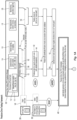
- the Precision Drive Testing methodology is represented in Fig. 1 .
- the methodology is implemented using six (6) entities.
- the six entities are connected through AI/N ⁇ , (artificial intelligence/machine learning) based functional logic aimed to address such questions as: when to drive, where to drive, what to test, and for how long to test.
- AI/N ⁇ artificial intelligence/machine learning
- the PDT Application Manager entity 100 comprises information based on which drive test use cases are triggered 102 or ordered 104 and routes or areas are calculated.
- Performance 111 KPIs/QoS/QoE
- Network Performance/Service 112 may include component applications Network Performance/Service 112 and Customer/Device Performance 114
- Network Planning 116 may include component applications Network Performance/Service 112 and Customer/Device Performance 114
- New Deployments 118 may include component applications Network Planning 116, (3) New Deployments 118, and (4) Benchmarking 120.
- the Performance evaluation refers to Network, Services, and Customers, and each of these require different data sources for analysis.
- the New Deployments refer to the introduction of new technologies (e.g. massive /Multi-User Multiple Input Multiple Output m/MU MIMO, 3D beamforming), features (e.g. Carrier Aggregation CA, Dynamic Spectrum Sharing DSS) or services (e.g., VoLTE, VoNR, mobile cloud gaming, remote drone control). Examples of mapping tasks and applications are shown in Table 1 below.
- the information represents a collection of problems, faults or routine checks (e.g. for Benchmarking and/or New Deployments application) which require drive test-based diagnosis and/or data for network, service and customer performance troubleshooting/optimization and/or planning /traffic models tuning or New Deployments or Benchmarking.
- problems, faults or routine checks e.g. for Benchmarking and/or New Deployments application
- the information is automatically extracted
- the Use Cases library entity 200 comprises sets of use cases which require drive test data to be solved. Each set is specific to an application with the scope of solving any of the 3 tasks mentioned above.
- Each of the applications are managed, controlled, evaluated and troubleshoot using different sets of use cases.
- a use cases is defined by a logical function of:
- the use cases can be:
- the selected use case for analysis extracts the correspondent test scripts from the test script lib.
- Table 1 presents a non-exhaustive list of exemplary use cases. It is understood that additional/other use cases are also contemplated.
- CM parameters set-ups e.g. MIMO config, beam management
- Benchmarking -BM new technologies e.g. MIMO config, SON algorithms, NWDAF-5G solutions
- features e.g. carrier Aggregation, Dynamic Spectrum Sharing
- required performance - New technology features see Benchmarking
- New services e.g. VoLTE/VoNR, OTT video streaming, VR/AR/XR, cloud gaming
- New use cases can be developed (or removed) based on lessons learnt from existing use cases by using AI/N ⁇ , techniques on PDT results. For example, for Network Performance for Energy Saving use case, if analyzing a large number of precision drive tests , it can be predicted based on ML techniques (such as Random Forest and/or Single Vector Regression) that a specific Energy Savings scheme has a very low risk of performance degradation, then that use case can be safely removed from the PDT list and eventually replaced with ML based prediction.
- ML techniques such as Random Forest and/or Single Vector Regression
- the test scripts library 300 comprises tests definitions which need to be used with the use case under study. Each use case comes with a set of test scripts, each such set comprising one or more test scripts.
- test script contains the following information, but is not limited thereto:
- test scrip can be accessed from the lib either automatically or manually
- the PDT Orchestrator 400 is an entity configured to executes one or more of the following:
- the PDT database 500 comprises the PDT test scripts results, as follows:
- the PDT agents pool 600 comprises all the test agents in the field (AKA devices) and each agent runs the following edge analytics:
- the protocol for the methodology includes the following steps, a number of which are presented in Fig 1 .
- the validation process runs a matching algorithm between the cvs logfile and the field geolocation of the sites.
- the PDT area is defined using one or more of: (a) Site(s) geolocation(s) for identified problem(s), and (b) Site(s) geolocation(s) selected for routine checks (e.g., maintenance),
- the problem(s) list(s) is created based on analytics reports or raw data of applications as described above.
- the problem(s) list(s) come with the parameters (sites identification number and geo location) of all the sites detected to contribute to the problem identified and reported by analytics reports or raw data.
- the problem area is defined as follows
- routine checks come with already selected area, which should be defined as follows If Routine Checks are required then verify use case
- PDT routes are calculated or selected either based on sites' GPS location and PDT area definition or based on a set of pre-defined "sweet spots".
- the "sweet spots” represent specific points of interest as described in Section B.4 below.
- the "sweet spots” represent specific points of interest determined by the following criteria, but not limited to:
- criteria for "definition of done” include the following, but not limited to
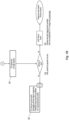
- Fig. 2 shows one embodiment of the PDT system 700.
- the PDT system 700 is designed as a flexible and scalable cloud architecture configured to accommodate the framework methodology with its six entities described above with reference to Fig. 1 , enabling automation and open interfaces (Application Programming Interface, API) towards the test agents distributed in the field and external data sources or data management and analytics (cloud based) platforms).
- API Application Programming Interface
- the PDT system 700 comprises a PDT Cloud 710, an external cloud 740, and a device fleet 770.
- the device fleet 770 comprises one or more drive vehicles which constitute the platforms that do the physical drive testing.
- Each drive vehicle is operated by a field technician 774 and carries a computing and communication platform ("device") which is provisioned with a PDT App 772.
- the field technician 774 can login to the system 700 via the API GW 722 (described below) to present credentials and signal availability for drive testing assignments.
- the PDT App 772 communicates with the message broker 726 (described below).
- the PDT App 772 receives workorders (comprising, for instance, drive testing assignments), and other instructions, and sends status information and measurement data.
- the PDT App 772 is also configured to run the edge analytics described above.
- the PDT cloud 710 is where the PDT Application Manger function is executed. Residing in the PDT cloud are a Backend 720 and an OfficeWeb interface 730 for an (internal) project administrator 752 to communicate with the remainder of the system 700.
- the Backend 720 comprises the following components:
- the external cloud 740 comprises raw data and data management analytics from various sources, network, customer, planning and benchmarking.
- the PDT system 700 can enable one of the following:
- the present system and method can predict the best route to drive, which optimized the time taken to perform sufficient tests required to diagnose the problem and/or determine acceptance in the case of a new deployment.
- Optimized routes can be based on cell position. Thus, the navigation will be optimized to minimize the test time taken to perform the driving.
- Predicting sweet spots for stationary testing can be based either on scout drives or on cell information, calculating where the optimal spot for a particular test will be. The field agent will be directed to that spot.
Landscapes
- Engineering & Computer Science (AREA)
- Computer Networks & Wireless Communication (AREA)
- Signal Processing (AREA)
- Physics & Mathematics (AREA)
- General Physics & Mathematics (AREA)
- Chemical & Material Sciences (AREA)
- Analytical Chemistry (AREA)
- Radar, Positioning & Navigation (AREA)
- Remote Sensing (AREA)
- Data Exchanges In Wide-Area Networks (AREA)
- Mobile Radio Communication Systems (AREA)
Applications Claiming Priority (1)
| Application Number | Priority Date | Filing Date | Title |
|---|---|---|---|
| US202263314918P | 2022-02-28 | 2022-02-28 |
Publications (2)
| Publication Number | Publication Date |
|---|---|
| EP4236415A2 true EP4236415A2 (de) | 2023-08-30 |
| EP4236415A3 EP4236415A3 (de) | 2023-11-22 |
Family
ID=85410383
Family Applications (1)
| Application Number | Title | Priority Date | Filing Date |
|---|---|---|---|
| EP23159012.6A Pending EP4236415A3 (de) | 2022-02-28 | 2023-02-28 | Präzisionsfahrtesten eines zellularen netzwerks |
Country Status (2)
| Country | Link |
|---|---|
| US (1) | US12615489B2 (de) |
| EP (1) | EP4236415A3 (de) |
Families Citing this family (3)
| Publication number | Priority date | Publication date | Assignee | Title |
|---|---|---|---|---|
| US12143836B2 (en) * | 2022-05-10 | 2024-11-12 | T-Mobile Innovations Llc | Optimization of device configuration relating to wireless access technologies |
| EP4478680A1 (de) * | 2023-06-16 | 2024-12-18 | Nokia Technologies Oy | Vorrichtung, verfahren und computerprogramme im zusammenhang mit der erfahrungsqualität |
| CN120782137B (zh) * | 2025-09-10 | 2025-11-18 | 成都擎安医疗科技有限公司 | 一种检验样本信息录入、运转及操作风险监测系统 |
Family Cites Families (2)
| Publication number | Priority date | Publication date | Assignee | Title |
|---|---|---|---|---|
| US11074824B2 (en) * | 2018-12-20 | 2021-07-27 | T-Mobile Usa, Inc. | Smart drive testing for mobile network and radio frequency verification |
| AU2020474337B2 (en) * | 2020-10-31 | 2025-10-16 | Shomenath Roy Chowdhury | Radio network performance optimization system and method |
-
2023
- 2023-02-28 EP EP23159012.6A patent/EP4236415A3/de active Pending
- 2023-02-28 US US18/176,363 patent/US12615489B2/en active Active
Also Published As
| Publication number | Publication date |
|---|---|
| US12615489B2 (en) | 2026-04-28 |
| EP4236415A3 (de) | 2023-11-22 |
| US20230276192A1 (en) | 2023-08-31 |
Similar Documents
| Publication | Publication Date | Title |
|---|---|---|
| EP4236415A2 (de) | Präzisionsfahrtesten eines zellularen netzwerks | |
| US12368661B2 (en) | Cellular network chaos simulation | |
| Kouchaki et al. | Actor-critic network for O-RAN resource allocation: xApp design, deployment, and analysis | |
| US9031561B2 (en) | Method and system for optimizing cellular networks operation | |
| KR101861908B1 (ko) | 상태공간을 이용해서 무선 시스템 발견 및 제어를 구현하기 위한 방법 및 장치 | |
| Mfula et al. | Adaptive root cause analysis for self-healing in 5G networks | |
| FI20175725A1 (en) | Customer-centric cognitive self-organizing networks | |
| Fortes et al. | Context-aware self-healing: User equipment as the main source of information for small-cell indoor networks | |
| US10721707B2 (en) | Characterization of a geographical location in a wireless network | |
| CN117560650A (zh) | 网络移动性管理优化方法、基站、装置、系统及相关设备 | |
| CN119172260B (zh) | 数据传输方法、设备及存储介质 | |
| US20260052406A1 (en) | Efficient collection of distributed data in ran | |
| CN118828575A (zh) | 网络分析方法、装置、网络设备及可读存储介质 | |
| Tunc et al. | Digital twins for beyond 5G | |
| Muñoz et al. | A method for identifying faulty cells using a classification tree-based UE diagnosis in LTE | |
| CN118828581A (zh) | 无线网络优化方案的确定方法、装置、设备及存储介质 | |
| Tarrías et al. | Toward Zero-Touch Cellular Networks via next-Generation Crowdsourcing | |
| TWI752614B (zh) | 以人工智能決策之多電信終端系統及其測試方法 | |
| Khatib et al. | Modelling LTE solved troubleshooting cases | |
| EP3787330B1 (de) | Netzwerkarchitektur zur verbesserung der dienstqualitätsverwaltung | |
| Horita et al. | Optimal Network Selection Method Using Federated Learning to Achieve Large-Scale Learning While Preserving Privacy | |
| Mfula | Adaptive OSS: Principles and Design of an Adaptive OSS for 5G Networks | |
| US20260006467A1 (en) | Network testing using machine learning | |
| US20260006466A1 (en) | Network testing using machine learning | |
| US20260006468A1 (en) | Network testing using machine learning |
Legal Events
| Date | Code | Title | Description |
|---|---|---|---|
| PUAI | Public reference made under article 153(3) epc to a published international application that has entered the european phase |
Free format text: ORIGINAL CODE: 0009012 |
|
| STAA | Information on the status of an ep patent application or granted ep patent |
Free format text: STATUS: THE APPLICATION HAS BEEN PUBLISHED |
|
| AK | Designated contracting states |
Kind code of ref document: A2 Designated state(s): AL AT BE BG CH CY CZ DE DK EE ES FI FR GB GR HR HU IE IS IT LI LT LU LV MC ME MK MT NL NO PL PT RO RS SE SI SK SM TR |
|
| PUAL | Search report despatched |
Free format text: ORIGINAL CODE: 0009013 |
|
| AK | Designated contracting states |
Kind code of ref document: A3 Designated state(s): AL AT BE BG CH CY CZ DE DK EE ES FI FR GB GR HR HU IE IS IT LI LT LU LV MC ME MK MT NL NO PL PT RO RS SE SI SK SM TR |
|
| RIC1 | Information provided on ipc code assigned before grant |
Ipc: G08G 1/00 20060101ALN20231016BHEP Ipc: H04W 24/08 20090101ALI20231016BHEP Ipc: H04W 16/18 20090101AFI20231016BHEP |
|
| STAA | Information on the status of an ep patent application or granted ep patent |
Free format text: STATUS: REQUEST FOR EXAMINATION WAS MADE |
|
| 17P | Request for examination filed |
Effective date: 20240521 |
|
| RBV | Designated contracting states (corrected) |
Designated state(s): AL AT BE BG CH CY CZ DE DK EE ES FI FR GB GR HR HU IE IS IT LI LT LU LV MC ME MK MT NL NO PL PT RO RS SE SI SK SM TR |