EP4236460B1 - Sélection de ressources de canal d'accès aléatoire dans un environnement à faisceaux multiples - Google Patents
Sélection de ressources de canal d'accès aléatoire dans un environnement à faisceaux multiples Download PDFInfo
- Publication number
- EP4236460B1 EP4236460B1 EP23177619.6A EP23177619A EP4236460B1 EP 4236460 B1 EP4236460 B1 EP 4236460B1 EP 23177619 A EP23177619 A EP 23177619A EP 4236460 B1 EP4236460 B1 EP 4236460B1
- Authority
- EP
- European Patent Office
- Prior art keywords
- random access
- base station
- access resource
- dedicated
- target
- Prior art date
- Legal status (The legal status is an assumption and is not a legal conclusion. Google has not performed a legal analysis and makes no representation as to the accuracy of the status listed.)
- Active
Links
Images








Classifications
-
- H—ELECTRICITY
- H04—ELECTRIC COMMUNICATION TECHNIQUE
- H04W—WIRELESS COMMUNICATION NETWORKS
- H04W72/00—Local resource management
- H04W72/50—Allocation or scheduling criteria for wireless resources
- H04W72/54—Allocation or scheduling criteria for wireless resources based on quality criteria
- H04W72/542—Allocation or scheduling criteria for wireless resources based on quality criteria using measured or perceived quality
-
- H—ELECTRICITY
- H04—ELECTRIC COMMUNICATION TECHNIQUE
- H04B—TRANSMISSION
- H04B7/00—Radio transmission systems, i.e. using radiation field
-
- H—ELECTRICITY
- H04—ELECTRIC COMMUNICATION TECHNIQUE
- H04L—TRANSMISSION OF DIGITAL INFORMATION, e.g. TELEGRAPHIC COMMUNICATION
- H04L5/00—Arrangements affording multiple use of the transmission path
- H04L5/003—Arrangements for allocating sub-channels of the transmission path
- H04L5/0048—Allocation of pilot signals, i.e. of signals known to the receiver
-
- H—ELECTRICITY
- H04—ELECTRIC COMMUNICATION TECHNIQUE
- H04W—WIRELESS COMMUNICATION NETWORKS
- H04W36/00—Hand-off or reselection arrangements
- H04W36/0005—Control or signalling for completing the hand-off
- H04W36/0055—Transmission or use of information for re-establishing the radio link
- H04W36/0077—Transmission or use of information for re-establishing the radio link of access information of target access point
-
- H—ELECTRICITY
- H04—ELECTRIC COMMUNICATION TECHNIQUE
- H04W—WIRELESS COMMUNICATION NETWORKS
- H04W72/00—Local resource management
- H04W72/04—Wireless resource allocation
- H04W72/044—Wireless resource allocation based on the type of the allocated resource
- H04W72/046—Wireless resource allocation based on the type of the allocated resource the resource being in the space domain, e.g. beams
-
- H—ELECTRICITY
- H04—ELECTRIC COMMUNICATION TECHNIQUE
- H04W—WIRELESS COMMUNICATION NETWORKS
- H04W72/00—Local resource management
- H04W72/20—Control channels or signalling for resource management
- H04W72/23—Control channels or signalling for resource management in the downlink direction of a wireless link, i.e. towards a terminal
-
- H—ELECTRICITY
- H04—ELECTRIC COMMUNICATION TECHNIQUE
- H04W—WIRELESS COMMUNICATION NETWORKS
- H04W74/00—Wireless channel access
- H04W74/002—Transmission of channel access control information
- H04W74/006—Transmission of channel access control information in the downlink, i.e. towards the terminal
-
- H—ELECTRICITY
- H04—ELECTRIC COMMUNICATION TECHNIQUE
- H04W—WIRELESS COMMUNICATION NETWORKS
- H04W74/00—Wireless channel access
- H04W74/02—Hybrid access
-
- H—ELECTRICITY
- H04—ELECTRIC COMMUNICATION TECHNIQUE
- H04W—WIRELESS COMMUNICATION NETWORKS
- H04W74/00—Wireless channel access
- H04W74/04—Scheduled access
-
- H—ELECTRICITY
- H04—ELECTRIC COMMUNICATION TECHNIQUE
- H04W—WIRELESS COMMUNICATION NETWORKS
- H04W74/00—Wireless channel access
- H04W74/08—Non-scheduled access, e.g. ALOHA
- H04W74/0833—Random access procedures, e.g. with 4-step access
-
- H—ELECTRICITY
- H04—ELECTRIC COMMUNICATION TECHNIQUE
- H04W—WIRELESS COMMUNICATION NETWORKS
- H04W74/00—Wireless channel access
- H04W74/08—Non-scheduled access, e.g. ALOHA
- H04W74/0833—Random access procedures, e.g. with 4-step access
- H04W74/0841—Random access procedures, e.g. with 4-step access with collision treatment
- H04W74/085—Random access procedures, e.g. with 4-step access with collision treatment collision avoidance
-
- H—ELECTRICITY
- H04—ELECTRIC COMMUNICATION TECHNIQUE
- H04L—TRANSMISSION OF DIGITAL INFORMATION, e.g. TELEGRAPHIC COMMUNICATION
- H04L5/00—Arrangements affording multiple use of the transmission path
- H04L5/0001—Arrangements for dividing the transmission path
- H04L5/0014—Three-dimensional division
- H04L5/0023—Time-frequency-space
-
- H—ELECTRICITY
- H04—ELECTRIC COMMUNICATION TECHNIQUE
- H04W—WIRELESS COMMUNICATION NETWORKS
- H04W48/00—Access restriction; Network selection; Access point selection
- H04W48/16—Discovering, processing access restriction or access information
-
- H—ELECTRICITY
- H04—ELECTRIC COMMUNICATION TECHNIQUE
- H04W—WIRELESS COMMUNICATION NETWORKS
- H04W74/00—Wireless channel access
- H04W74/08—Non-scheduled access, e.g. ALOHA
- H04W74/0833—Random access procedures, e.g. with 4-step access
- H04W74/0838—Random access procedures, e.g. with 4-step access using contention-free random access [CFRA]
Definitions
- the present disclosure generally relates to wireless communication, and more particularly, to random access resource selection.
- a handover procedure includes having at least one source base station (e.g., an evolved NodeB (eNB) initiating a handover over an Xn interface through a Handover Request, a target base station performing admission control and providing a radio resource control (RRC) configuration as part of a Handover Acknowledgement, the at least one source base station then providing the RRC configuration to the UE having a Handover Command through RRC signaling, then the UE moving the connection to the target base station.
- eNB evolved NodeB
- RRC radio resource control
- the Handover Command message may include dedicated random access configuration(s) for contention-free random access procedure.
- the UE may select a suitable beam from multiple beams of the target cell, and may perform contention-based random access on the UE selected beam if contention-free random access resources are not provided for the UE's selected beam.
- dedicated random access configuration is present in the Handover Command message, questions still remain as to how A UE may select the random access resource(s) among dedicated random access configuration(s) and common random access configuration(s) in a multi-beam environment.
- HUAWEI ET AL "Beam selection during handover", 3GPP DRAFT; R2-1708875 BEAM SELECTION DURING HANDOVER, 3RD GENERATION PARTNERSHIP PROJECT 30 (3GPP), MOBILE COMPETENCE CENTRE; 650, ROUTE DES LUCIOLES; F-06921 SOPHIA-ANTIPOLIS CEDEX; FRANCE, vol. RAN WG2, no. Berlin, Germany; 20170821 - 20170825; 20 August 2017 (2017-08-20), XP051318676 is concerned with a working group paper on beam selection during handover.
- the UE can perform contention-free random access procedure, otherwise it would perform CBRA with common RACH resources.
- the UE can treat the beams with dedicated RACH resources first and select the beam for preamble transmission based on the following criteria. First, the UE can select the first detected one which is above the threshold to perform CBRA when one or multiple beams with dedicated RACH resources 5 exist, in this way, RACH procedure is fast and contention-free. Secondly, if RSRP of all the beams would dedicate RACH resources included in the handover command are not above the threshold, the UE may evaluate the beams configured with common RACH resources. The UE can select the first detected one which is above the threshold to perform CBRA when one or multiple beams with common RACH resources exist.
- RSRP of all the beams with 10 common RACH resources included in the handover command are not above the threshold either, since the UE has already measured all the beams included in the handover command, it can select the best one (the one with the highest RSRP) among them to perform a RACH regarding the best beam is configured with dedicated RACH resources or common RACH resources. If all the beams included in the handover command are not configured with 15 dedicated RACH resources, the UE evaluates the beams configured with common RACH resources.
- INTERDIGITAL INC "Beam Selection for Handover in NR", 3GPP DRAFT; R2-1710675 (R15 NR WI A1104151 BEAM SELECTION), 3RD GENERATION PARTNERSHIP PROJECT (3GPP), MOBILE COMPETENCE CENTRE; 650, ROUTE DES LUCIOLES; F- 06921 SOPHIA-ANTIPOLIS CEDEX; FRANCE, vol.
- RAN WG2 no. Prague, Czech 25 Republic; 20171009 - 20171013, 29 September 2017 (2017-09-29), XP051355088 , is a pair from INTERDIGITAL INC. related to beam selection for handover in NR.
- the UE determines that it has at least one suitable (i.e. above a threshold) dedicated PRACH resource associated with CSI-RS, then the UE selects the best corresponding beam for the random access. Otherwise, if the UE determines that it has at least one suitable (i.e., above a 30 threshold) dedicated PRACH resource associated with SSB, then the UE selects any of the corresponding beam for the random access.
- the UE minimizes the latency by selecting the PRACH occasion that occurs earliest in time amongst all resources associated with suitable beams.
- the number of attempts to perform the random access procedure should be controlled by the network. Consequently, the following is proposed: First, the UE performs at most one contention-free random access procedure with a beam associated with a dedicated PRACH resource with CSI-RS upon handover. Secondly, the UE performs at most one contention-free random access procedure with a beam associated with a dedicated PRACH resource with SSB upon handover. Thirdly, the UE performs at most one 5 contention-based random access procedure upon handover with a beam associated with the PRACH resource with SSB upon handover.
- HUAWEI ET AL "Baseline handover procedure for inter gNB handover in NR", 3GPP DRAFT; R2-1706705 BASELINE HANDOVER PROCEDURE FOR INTER GNB HANDOVER IN NR, 3RD GENERATION PARTNERSHIP PROJECT (3GPP), MOBILE 10 COMPETENCE CENTRE; 650, ROUTE DES LUCIOLES; F-06921 SOPHIA-ANTIPOLI, vol. RAN WG2, no. Qingdao, China; 20170627 - 20170629, 17 June 2017 (2017-06-17), pages 1-7, XP051307075 is related to a baseline handover procedure for inter gNB handover in NR.
- beam refinement can be performed before accessing the target cell.
- the network can use a narrow beam for CSI-RS 15 transmission and associate the RACH configurations with the CSI-RS configuration.
- the UE can use cell-specific RACH T/F resources and/or preamble indices associated with CSI- RS configurations to access the target cell.
- the handover command can include the association between RACH configurations and CSI-RS configurations.
- the UE selects the beam exceeding the threshold and configured with RACH configurations to 20 access the target cell.
- the target gNB can determine that DL Tx beam for RAR based on the used resources and/or received preamble. Besides TA value included in RAR, available or best UL beam can also be indicated in UL grant.
- the present invention is directed to random access channel (RACH) resource selection in a multi-beam environment. It is defined by the claimed subject-matter. Embodiments not covered by the claimed subject-matter do not form part of the invention.
- any network function(s) or algorithm(s) described in the present disclosure may be implemented by hardware, software or a combination of software and hardware. Described functions may correspond to modules may be software, hardware, firmware, or any combination thereof.
- the software implementation may comprise computer executable instructions stored on computer readable medium such as memory or other type of storage devices.
- one or more microprocessors or general purpose computers with communication processing capability may be programmed with corresponding executable instructions and carry out the described network function(s) or algorithm(s).
- the microprocessors or general purpose computers may be formed of applications specific integrated circuitry (ASIC), programmable logic arrays, and/or using one or more digital signal processor (DSPs).
- ASIC applications specific integrated circuitry
- DSPs digital signal processor
- a radio communication network architecture typically includes at least one base station, at least one user equipment (UE), and one or more optional network elements that provide connection towards a network.
- the UE communicates with the network (e.g., a core network (CN), an evolved packet core (EPC) network, an Evolved Universal Terrestrial Radio Access network (E-UTRAN), a Next-Generation Core (NGC), 5G Core Network (5GC), or an internet), through a radio access network (RAN) established by the base station.
- CN core network
- EPC evolved packet core
- E-UTRAN Evolved Universal Terrestrial Radio Access network
- NGC Next-Generation Core
- 5GC 5G Core Network
- internet radio access network
- a UE may include, but is not limited to, a mobile station, a mobile terminal or device, a user communication radio terminal.
- a UE may be a portable radio equipment, which includes, but is not limited to, a mobile phone, a tablet, a wearable device, a sensor, or a personal digital assistant (PDA) with wireless communication capability.
- PDA personal digital assistant
- the UE is configured to receive and transmit signals over an air interface to one or more cells in a radio access network.
- a base station may include, but is not limited to, a node B (NB) as in the UMTS, an evolved node B (eNB) as in the LTE-A, a radio network controller (RNC) as in the UMTS, a base station controller (BSC) as in the GSM/GERAN, an NG-eNB as in an E-UTRA base station in connection with the 5GC, a next generation node B (gNB) as in the 5G-RAN, and any other apparatus capable of controlling radio communication and managing radio resources within a cell.
- the base station may connect to serve the one or more UEs through a radio interface to the network.
- a base station may be configured to provide communication services according to at least one of the following radio access technologies (RATs): Worldwide Interoperability for Microwave Access (WiMAX), Global System for Mobile communications (GSM, often referred to as 2G), GSM EDGE radio access Network (GERAN), General Packet Radio Service (GRPS), Universal Mobile Telecommunication System (UMTS, often referred to as 3G) based on basic wideband-code division multiple access (W-CDMA), high-speed packet access (HSPA), LTE, LTE-A, eLTE (evolved LTE), New Radio (NR, often referred to as 5G), and/or LTE-A Pro.
- RATs radio access technologies
- WiMAX Worldwide Interoperability for Microwave Access
- GSM Global System for Mobile communications
- GERAN GSM EDGE radio access Network
- GRPS General Packet Radio Service
- UMTS Universal Mobile Telecommunication System
- W-CDMA basic wideband-code division multiple access
- HSPA high-speed packet access
- the base station is operable to provide radio coverage to a specific geographical area using a plurality of cells forming the radio access network.
- the base station supports the operations of the cells.
- Each cell is operable to provide services to at least one UE within radio coverage of the cell. More specifically, each cell (often referred to as a serving cell) provides services to serve one or more UEs within the cell's radio coverage, (e.g., each cell schedules the downlink and optionally uplink resources to at least one UE within the cell's radio coverage for downlink and optionally uplink packet transmissions).
- the base station can communicate with one or more UEs in the radio communication system through the plurality of cells.
- a cell may allocate sidelink (SL) resources for supporting proximity service (ProSe).
- Each cell may have overlapped coverage areas with other cells.
- the frame structure for NR is to support flexible configurations for accommodating various next generation (e.g., 5G) communication requirements, such as eMBB, mMTC, and URLLC, while fulfilling high reliability, high data rate and low latency requirements.
- the orthogonal frequency-division multiplexing (OFDM) technology as agreed in 3GPP may serve as a baseline for NR waveform.
- the scalable OFDM numerology, such as the adaptive sub-carrier spacing, the channel bandwidth, and the Cyclic Prefix (CP) may be also used.
- two coding schemes are considered for NR: (1) low-density parity-check (LDPC) code and (2) Polar Code.
- the coding scheme adaption may be configured based on the channel conditions and/or the service applications.
- a downlink (DL) transmission data, a guard period, and an uplink (UL) transmission data should at least be included, where the respective portions of the DL transmission data, the guard period, the UL transmission data should also be configurable, for example, based on the network dynamics of NR.
- sidelink resource may also be provided in a NR frame to support ProSe services.
- a source base station may initiate a handover procedure in response to a measurement report triggered by the measurement configuration(s) set for the UE.
- measurement reports may include beam information, such as beam index(ices) with or without beam measurement results.
- the target base station may preserve dedicated random access resource(s) by setting the dedicated random access configuration(s) in order for the UE to switch to the target cell.
- the most suitable beam(s) of the target cell for the UE may change due to various factors, such as UE's mobility.
- the preserved dedicated random access resource(s) e.g., beams
- the UE needs to use common random access resource(s) may result in delay in the handover procedure and wasting network resources.
- the triggering event may be related to whether the cell quality is above (or below) a given cell-level threshold in response to the specified formula. That is, when the corresponding beam information is changed, the source base station would not receive the changed beam information.
- the measurement report of a neighboring cell A is sent because its cell quality fulfilling the triggering condition.
- the cell quality of cell A and the related beam information e.g., beam #2, which may be identified by SSB or CSI-RS in response to the measurement configuration
- the beam information it indicates that beam #2 is the best beam at the time of measurement.
- the source base station may initiate a handover procedure with a target base station in response to the measurement report, and the target base station may preserve dedicated random access resource(s) associated with beam #2 for fast access.
- the source base station receives the Handover Command, for example, via a non-ideal Xn interface, and transmits the synchronous reconfiguration (e.g., ReconfigurationWithSync including parameters for synchronous reconfiguration to the target SpCell) contained in the Handover Command to the UE, the UE may have moved to the coverage of another beam (e.g., beam #3).
- the UE would attempt to perform the random access procedure via the dedicated random access resource(s) associated with beam #2 first.
- the UE may try to perform the random access procedure via common random access resources(s) of other (detectable) beam(s) being it is able to switch to the target cell, or else the UE would have to trigger an RRC Connection Re-establishment procedure due to the expiration of a configured timer (similar to timer T304 as in LTE).
- Implementations of the present application substantially eliminate the situation where the source base station and/or the target base station do not know that the beam information is no longer valid.
- Implementations of the present application allow a measurement report to be triggered by beam information change, thereby increasing the success rate of the Handover procedure while allowing beam refinement.
- the network may set the parameter X for SSB(s) or the parameter Yfor CSI-RS(s) to indicate the maximum number of beam index(ices) to be reported, in a descending order in response to the beam measurement result(s), where the qualities of the beams are above the predetermined threshold. For example, if in the previous event-triggered measurement report, the reported beam index is #1. However, when the UE determines that the best beam has changed to beam #2 for the same triggered cell, based on new beam measurements, then a new measurement report with new cell quality and the new reported beam index is sent to the source base station.
- the "ReportOnBeamInfoChanged" IE when the "ReportOnBeamInfoChanged" IE is set to true, it may mean that when the beam information is entirely different from what's in the previous measurement report, a new measurement report with new beam information may be triggered and sent to the source base station. For example, if in the previous event-triggered measurement report, the reported beam indices are #1 and #2. However, the UE determines that for the same triggered cell, the reported beam indices (e.g., a new set of best beam indices) are now #2 and #3, based on new beam measurements, then a new measurement report with the new cell quality and new beam information is reported to the source base station.
- the reported beam indices e.g., a new set of best beam indices
- the "ReportOnBeamInfoChanged" IE when the "ReportOnBeamInfoChanged" IE is set to true, it may mean that when the reported beam set (e.g., a new set of best beams indices) is not the same as the previous reported beam set, a new measurement report with the new beam information may be triggered and sent to the source base station. For example, in the previous event-triggered measurement report, the reported beam indices are #1 and #2.
- the source base station keeps updating the beam information to the target base station (if necessary) before the source base station receives the Handover Acknowledgment. As discussed in detail below, in Case 1-1-1, the source base station keeps updating the beam information without Handover Request ID. In Case 1-1-2, the source base station keeps updating the beam information with Handover Request ID (e.g., accept case). In Case 1-1-3, the source base station keeps updating the beam information with Handover Request ID (e.g., suspend case).
- Handover Request ID e.g., accept case
- Handover Request ID e.g., suspend case
- Case 1-2 when new beam information of the triggered cell is received, the source base station waits for the Handover Acknowledgement in response to the original handover request, and suspends the Handover Command to the UE. Then, the source base station initiates another handover request with new beam information. As discussed in detail below, under Case 1-2, the base station sends a new Handover Request with new beam information only after receiving a Handover acknowledgement (ACK)/non-acknowledgement (NACK).
- ACK Handover acknowledgement
- NACK non-acknowledgement
- target base station 206 When target base station 206 transmits the Handover Acknowledgement message back to source base station 204, target base station 206 includes the unique ID(s) of which the Handover Request is considered in the field of the Handover Acknowledgement message. Based on the ID(s) in the field of the Handover Acknowledgement message, source base station 204 may determine whether the Handover Command message is acceptable or not (e.g., whether target base station 206 refers to the latest beam information for admission control). If source base station 204 determines that the Handover Command message is acceptable, it transmits the Handover Command message to UE 202 as shown in Figure 2 .
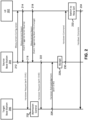
- Figure 3 illustrates a handover procedure for UE 302 to switch from source base station (e.g., source gNB) 304 to target base station (e.g., target gNB) 306, where the handover procedure includes actions 312, 314, 316, 318, 320, 322, 326, 338, 340, and 342.
- source base station 304 may suspend the Handover Command message to UE 302, and may re-transmit a Handover Request message with the latest measurement information.
- source base station 304 may suspend the Handover Command message, and wait for the Handover Acknowledgement with ID#2 without retransmitting the Handover Request with ID#2 again.
- source base station 304 may activate a timer after sending an updated Handover Request 322 to target base station 306. If source base station 304 cannot receive an updated Handover Acknowledgement corresponding to the sent updated Handover Request 322 when the timer expires, source base station 304 may decide whether to transmit the Handover Command contained in the original Handover Acknowledgement, whether to suspend the Handover Command transmission, and/or whether to resent the updated Handover Request again.
- source base station 404 Even when source base station 404 receives new beam information of the triggered cell, it waits for the Handover Acknowledgement in response to the corresponding Handover Request message, and suspends the Handover Command message to UE 402. Then, source base station 404 initiates another Handover Request message with the new beam information. In Case 1-2, no unique ID in the field of Handover Acknowledgement is required as shown in Figure 4 .
- Figure 5 illustrates a handover procedure for UE 502 to switch from source base station (e.g., source gNB) 504 to target base station (e.g., target gNB) 506, where the handover procedure includes actions 512, 514, 516, 518, 520, 522, 524, 526, 528, 530, and 532.
- source base station e.g., source gNB
- target base station e.g., target gNB
- source base station 504 transmits the Handover Request message to target base station 506 with the latest measurement information (e.g., the best beam #2 and beam #3 in action 514).
- target base station 506 may accept the Handover Request message and aggressively set dedicated random access configuration(s) not only associated with beams #2 and #3, but also associated with the neighboring beams #1 and #4 in anticipation of the possible UE mobility.
- source base station 504 may further indicate to UE 502 in the Handover Command message in response to the latest measurement report (e.g., the new measurement report triggered by beam information change).
- the new measurement report triggered by beam information change indicates that the best beams have changed to beams #3 and #4.
- source base station 504 may indicate UE 502 to use only dedicated random access configuration(s) associated with beams #3 and #4 only in action 526.
- source base station 504 may send a dedicated Resource Release message to target base station 506 to release dedicated random access configuration(s) associated with the unused beams (e.g., beams #1 and beam #2) in action 528.
- Figure 6 illustrates a handover procedure for UE 602 to switch from source base station (e.g., source gNB) 604 to target base station (e.g., target gNB) 606, where the handover procedure includes actions 612, 614, 616, 618, 620, 622, 624, 626, 630, and 632.
- the new measurement report triggered by beam information change indicates that the best beams have changed from beams #2 and #4 to beams #3 and #4.
- source base station 604 may indicate UE 602 to use only dedicated random access configuration(s) associated with beams #3 and #4 only, but doesn't send a dedicated Resource Release to target base station 606 to release dedicated random access configuration(s) associated to beams #1 and #2.
- Figure 7 illustrates a handover procedure for UE 702 to switch from source base station (e.g., source gNB) 704 to target base station (e.g., target gNB) 706, where the handover procedure includes actions 712, 714, 716, 718, 720, 722, 724, 726, 730, and 732.
- source base station e.g., source gNB
- target base station e.g., target gNB
- source base station 704 has both available beam measurement information associated to SSB(s) and CSI-RS(s), and sends a Handover Request message to target base station 706 with both of the two kinds of beam measurement information for admission control in action 716.
- target base station 706 may transmit a Handover Acknowledgement message having both dedicated random access configuration(s) of SSB(s) and dedicated random access resources of CSI-RS(s) to source base station 704 in action 722.
- source base station 704 may decide to use one of the two kinds of dedicated random access configurations for UE 702.
- source base station 704 may decide to use the dedicated random access configuration(s) of SSB(s) based on the latest measurement report (e.g., the signal strength of the previous target CSI-RS(s) (or the CSI-RS specific beam(s)) indicating bad signal quality).
- source base station 704 may indicate UE 702 to use only the dedicated random access configuration(s) associated with SSB(s) only.
- Source base station 704 may also send the dedicated Resource Release Message to target base station 706 to release the dedicated random access configuration(s) associated with CSI-RS(s) in action 728.
- Figure 8 illustrates a handover procedure for UE 802 to switch from source base station (e.g., source gNB) 804 to target base station (e.g., target gNB) 806, where the handover procedure includes actions 812, 814, 816, 818, 820, 822, 824, 826, 830, and 832.
- source base station e.g., source gNB
- target base station e.g., target gNB
- source base station 804 has both available beam measurement information associated to SSB(s) and CSI-RS(s), and sends a Handover Request message to target base station 806 with both of the two kinds of beam measurement information for admission control in action 816.
- target base station 806 may transmit a Handover Acknowledgement message having both dedicated random access configuration(s) of SSB(s) and dedicated random access resources of CSI-RS(s) to source base station 804 in action 822.
- source base station 804 may decide to use one of the two kinds of dedicated random access configurations for UE 802.
- source base station 804 may decide to use the dedicated random access configuration(s) of SSB(s) based on the latest measurement report (e.g., the signal strength of the previous target CSI-RS(s) (or the CSI-RS specific beam(s)) indicating bad signal quality).
- source base station 804 may indicate UE 802 to use only the dedicated random access configuration(s) associated with SSB(s) only.
- Source base station 804 does not send the dedicated Resource Release Message to target base station 806 to release the dedicated random access resource associated to CSI-RS(s).
- system information may be the same across a large area.
- system information associated to system access e.g. random access configuration during state transitions
- How to communicate information related to common random access configuration(s) to UEs during a handover procedure may present challenges, since UEs are not required to read the SI during handover procedure.
- a target base station doesn't need to provide common random access configuration(s) to a UE in the synchronous reconfiguration (e.g., ReconfigurationWithSync).
- a source base station is to mandatorily transmit its common random access configuration(s) to the target base station for verification.
- Figure 9 illustrates a handover procedure for UE 902 to switch from source base station (e.g., source gNB) 904 to target base station (e.g., target gNB) 906, where the handover procedure includes actions 912, 914, 916, 918, 920, 922, 924, 926, 928, and 930.
- target base station 906 verifies that common random access configuration(s) is the same, it does not provide common random access configuration(s) in the synchronous reconfiguration (e.g., ReconfigurationWithSync) to UE 902 in action 922.
- UE 902 may directly use the stored common random access configuration(s) for switching to the new cell without checking for additional system information in action 928.
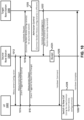
- Figure 10 illustrates a handover procedure for UE 1002 to switch from source base station (e.g., source gNB) 1004 to target base station (e.g., target gNB) 1006, where the handover procedure includes actions 1012, 1014, 1016, 1018, 1020, 1022, 1024, 1026, 1028, and 1030.
- target base station 1006 verifies that the common random access configuration(s) is different in action 1020, it provides common random access configuration(s) in the synchronous reconfiguration (e.g., ReconfigurationWithSync) to UE 1002 in action 1022.
- the synchronous reconfiguration e.g., ReconfigurationWithSync
- UE 1002 may directly use the new common random access configuration(s) for switching to the new cell in action 1028.
- CASE 3 Mechanisms for Selection Between dedicated random access Configuration(s) and common random access Configuration(s)
- dedicated random access configuration(s) (or resource(s)) shall be prioritized to use for access to the target cell, which is contention-free.
- the UE if the UE is unable to (e.g., dedicated random access resources are not configured) or fails to use dedicated random access resources to access the target cell (if dedicated random access resources are configured), it should consider fallback options, such as using common random access configuration(s) (or resource(s)) to access the target cell before triggering the RRC Connection Re-establishment procedure.
- the dedicated random access resource could be associated to a SSB or a CSI-RS.
- the problem is how and when a UE can determine that all dedicated random access resources are unable to be used or fail to complete the random access procedure to the target cell.
- the target base station may provide a threshold for the beam(s) associated with the dedicated random access resource(s). Also, the target base station may provide a maximum number K of access try.
- the target base station may also indicate the UE whether the common random access resources can be used or not.
- the UE may not directly trigger the re-establishment procedure or notify the source base station by a handover failure information such that the source base station may take the alternative action, e.g., handover to another target base station or target cell by triggering a new handover request.
- multiple preambles may be used for contention-free random access procedure.
- a UE may perform multiple continuous preambles with same preamble sequences on different dedicated random access resources of the same beam (with same or different transmission power level), and wait for a single RAR window for response and this would count as 1. It may be UE's implementation on whether it would use multiple random access preambles or not. For example, the UE may decide in response to the received random access resources. Or, the UE may allow to use multiple preambles for contention-free random access procedure by network configurations. For CSI-RS specific beams, UE may need to know the association between dedicated random access resource and the corresponding CSI-RS specific beam.
- the target base station may transmit a Handover Acknowledge with Handover Command in the container.
- the Handover Command may include the information of dedicated random access resources, the corresponding threshold for the beam associated with the dedicated random access resources, the maximum number K of random access attempts to try before allowing using common random access resources, and common random access resources allowance, multiple preamble transmission allowance.
- the corresponding threshold for the beam associated with the dedicated random access resources is used to determine whether a beam associated to dedicated random access resources is qualified to be used (e.g., using RSRP threshold). Specifically, if the quality of the beam associated to dedicated random access resources is below the threshold, the UE is not allowed to use the corresponding dedicated random access resources to access the target cell. If the threshold is not present, the UE may use the threshold configured for cell quality derivation and beam reporting. In another implementation, the threshold may be always the same as the one configured for cell quality derivation and beam reporting. Thus, the threshold therefore does not need to be provided. In an alternative way, if the threshold is not present, it may depend on the UE implementation to determine the acceptable beam(s) to use random access resource(s).
- the maximum number K of access try on dedicated random access resources before allowing using common random access resources may be present when the dedicated random access resources are allocated to the UE for fast access the target cell.
- K is not present or set to infinite and dedicated random access configuration(s) are configured, it means that the UE may use dedicated random access resource(s) to access the target cell without using common random access resource(s) until the timer (e.g., T304, which is used for triggering RRC Connection Re-establishment procedure) expired.
- T304 which is used for triggering RRC Connection Re-establishment procedure
- the UE may use dedicated random access resource(s) to access the target cell if there is at least one suitable beam (which quality is above the threshold) associated with dedicated random access resource(s). If the UE tries to initiate a random access attempt but there is no suitable beam (which quality is above the threshold) associated with dedicated random access resource(s), the first coming common random access resource(s) of the detectable beam associated with common random access resource(s) may be used for random access attempt.
- the definition of a detectable beam may the same as a suitable beam (i.e., a beam which quality is above the threshold given for SSB), in response to pre-defined criteria, or left for specific UE implementation(s).
- the SSB-rsrp threshold is configured in random access common configuration and the CSI-RS-rsrp threshold is configured in dedicated random access configuration.
- the common random access resource(s) of the strongest detectable beam associated with common random access resource(s) is used for random access attempt.
- the UE uses common random access resource(s) for random access attempt, it may still use dedicated random access resource(s) again for the next random access attempt if the previous random access attempt on common random access resource(s) fails and there is at least one suitable beam (which quality is above the threshold) associated with dedicated random access resource(s).
- Common random access resources allowance is a bit for indicating whether common random access resources can be used or not if the access try on dedicated random access resources exceeds the maximum number K (if present). If the maximum number K is present and the UE is not allowed to use common random access resources to access the target cell, the UE may directly trigger the re-establishment procedure or notify the source base station for new command.
- Multiple preamble transmission allowance is used to indicate whether multiple preamble transmission on the dedicated random access resource(s) of the same beam is allowed or not.
- Figure 11 illustrates a handover procedure for UE 1102 to switch from source base station (e.g., source gNB) 1104 to target base station (e.g., target gNB) 1106, where the handover procedure includes actions 1112, 1114, 1116, 1118, 1120, 1122, 1124, 1126, and 1128.
- the Handover Command in the container includes dedicated random access resources, corresponding to threshold for the beam associated with dedicated random access resources, a maximum number K of random access attempts to try before allowing using common random access resources, common random access resources allowance, and multiple preamble transmission allowance, as shown in action 1120 of Figure 11 .
- the UE does not need to really perform random access try but to consider the first coming K dedicated random access resources of all beams associated with dedicated random access resource(s) for fast access. If the corresponding threshold for the beam associated with the dedicated random access resources is present, the UE may initiate the random access attempt on the first coming dedicated random access resource(s) of the suitable beam(s) associated with dedicated random access resource(s). If failed, the UE may initiate the random access attempt on the next coming dedicated random access resource(s) of the suitable beam(s) associated with dedicated random access resource(s) is used for random access attempt. The UE may only use the first coming K dedicated random access resources of all beams associated with dedicated random access resource(s). After passing the first K dedicated random access resources of all beams associated with dedicated random access resource(s), the UE may start to use common random access resources to access the target cell.
- Figure 12 illustrates a handover procedure for UE 1202 to switch from source base station (e.g., source gNB) 1204 to target base station (e.g., target gNB) 1206, where the handover procedure includes actions 1212, 1214, 1216, 1218, 1220, 1222, 1224, 1226, and 1228.
- the Handover procedure in Figure 12 in the Handover acknowledgement, the Handover Command in the container includes dedicated random access resources, corresponding to threshold for the beam associated with dedicated random access resources, a maximum number K of the first coming dedicated random access resources to try before allowing using common random access resources, common random access resources allowance, and multiple preamble transmission allowance, as shown in action 1220 of Figure 12 .
- a timer T-DR for using dedicated random access resources is configured. After receiving the Handover Command message, the UE may use dedicated random access resource(s) to access the target cell if there is at least one suitable beam (which quality is above the threshold) associated with dedicated random access resource(s) while the timer T-DR is running. If the timer T-DR is expired, the UE is allowed to use common random access resource(s) to access the target cell.
- Figure 13 illustrates a handover procedure for UE 1302 to switch from source base station (e.g., source gNB) 1304 to target base station (e.g., target gNB) 1306, where the handover procedure includes actions 1312, 1314, 1316, 1318, 1320, 1322, 1324, 1326, and 1328.
- the Handover procedure in Figure 13 in the Handover acknowledgement, the Handover Command in the container includes dedicated random access resources, corresponding to threshold for the beam associated with dedicated random access resources, a Timer T-DR, common random access resources allowance, and multiple preamble transmission allowance, as shown in action 1320 in Figure 13 .
- the target base station may include one or more of the random access configurations in the synchronous reconfiguration (e.g., ReconfigurationWithSync) to enable the UE to access the target cell.
- the random access configurations may include (i) common random access configuration associated with SSB(s), (ii) common random access configuration(s) associated with SSB(s) and dedicated random access configuration(s) associated with SSB(s), (iii) common random access configuration(s) associated with SSB and dedicated random access configuration(s) associated with CSI-RS.
- Case 3-1 common random access Configuration(s) Associated with SSB(s)
- Case 3-1-1 if there are no dedicated random access resource(s) allocated in the Handover Command, the first come first try principle is followed. As shown in Figure 14 , for all detectable beams, common random access resource(s) of beam #1 comes first when the UE receives the Handover Command message. Therefore, the UE may perform the random access procedure on common random access resource(s) of beam #1. If the random access procedure on common random access resource(s) of beam #1 fails (e.g., no corresponding RAR is received within the RAR window), the UE may try to perform the random access procedure on the next coming common random access resource(s) of a certain detectable beam.
- the definition of a detectable beam may be the same as a suitable beam, in response to pre-defined criteria, or left for specific UE implementation(s).
- the definition of a detectable beam may be the same as a suitable beam, in response to pre-defined criteria, or left for specific UE implementation(s).
- the first come first try principle may then be followed. Specifically, the UE may perform random access procedure on the first coming random access resource(s) of all detectable beam(s). However, if the next beam the UE tries to access is the one which is associated with dedicated random access resource(s), the UE is still allowed to use dedicated random access resource(s) to access the target cell. It should be noted that when falling back to use common random access Resource(s), the UE may use common random access resource(s) with the strongest detectable beam to access the target cell as introduced in Case 3-1-2.
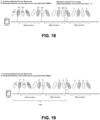
- the UE is not forbidden to still use common random access resource(s) of the detectable beam which is associated dedicated random access resource(s) to access the target cell as shown in Figure 16 . This may be left for specific UE implementation(s) or according to the pre-defined rules (e.g., whether it is allowed to use common random access resource after the UE reaches the maximum number K of access try.)
- the UE is not forbidden to still use common random access resource(s) of this detectable beam which is associated dedicated random access resource(s) to access the target cell as shown in Figure 18 .
- the UE may try to perform the random access procedure on the next coming dedicated random access resources of a suitable beam (which quality is above the threshold), which is beam #B as shown in Figure 21 .
- the beam #2 is a wide beam that covers the narrow beam #A and #B.
- the UE when the UE reaches the maximum number K of access try, then, before the timer (e.g., T304 timer or the like) is expired (which would trigger the RRC Connection Re-establishment Procedure), the UE is then allowed to use the common random access resources of all detectable beams to access the target cell (if the common random access resources allowance is set to true).
- the definition of a detectable beam may be the same as a suitable beam, in response to pre-defined criteria, or left for specific UE implementation(s).
- the first come first try principle may be followed. Specifically, the UE may perform random access procedure on the first coming random access resource(s) of all detectable beam(s).
- the UE when the UE reaches the maximum number K of access try, before the timer (e.g., T304 timer or the like) is expired (which would trigger the RRC Connection Re-establishment Procedure), the UE is allowed to use the common random access resources of all detectable beams to access the target cell (if the common random access resources allowance is set to true).
- the definition of a detectable beam may be the same as a suitable beam, in response to pre-defined criteria, or left for specific UE implementation(s).
- the first come first try principle is followed. Specifically, the UE would perform random access procedure on the first coming random access resource(s) of all detectable beam(s). However, the dedicated random access resources may still be used for avoiding contention-based random access procedure. It may be left to specific UE implementation(s), or by network configurations.
- Case 3-3-2 similar to Case 3-2-1, there are dedicated random access resources associated with CSI-RS(s) (or CSI-RS specific beam(s)) allocated in the Handover Command message, the first coming dedicated random access resource(s) of all suitable beams associated to dedicated random access resource(s) may be tried first.
- a suitable beam is that the quality of the beam associated to dedicated random access resource(s) is above the threshold.
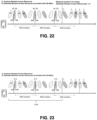
- the maximum number K of the first coming dedicated random access resources to try before allowing using common random access resource is set to 6.
- the UE is then allowed to use common random access resource(s) of all detectable beams to access the target cell (if common random access resources allowance is set to true).
- the definition of a detectable beam may be the same as a suitable beam, in response to pre-defined criteria, or left for specific UE implementation(s) as shown in Figure 22 .
- the UE may still use dedicated random access resources for avoiding contention-based random access procedure. It may be left to specific UE implementation(s), or by network configurations.
- Case 3-3-3 similar to Case 3-2-1, there are dedicated random access resources associated with CSI-RS(s) (or CSI-RS specific beam(s)) allocated in the Handover Command message, the first coming dedicated random access resource(s) of all suitable beams associated to dedicated random access resource(s) may be tried first.
- a suitable beam is that the quality of the beam associated to dedicated random access resource(s) is above the threshold.
- a timer T-DR for using dedicated random access resources is configured. If the timer T-DR is expired, the UE is then allowed to use common random access resource(s) of all detectable beams to access the target cell (if common random access resources allowance is set to true).
- the definition of a detectable beam may be the same as a suitable beam, in response to pre-defined criteria, or left for specific UE implementation(s) as shown in Figure 23 .
- Figure 24 is a flowchart of a method performed by a UE during a handover procedure, according to an example implementation of the present application. As shown in Figure 24 , flowchart 2400 includes actions 2460, 2462, 2464, 2466, 2468, 2470, 2472, 2474, 2476, 2478, and 2480.
- action 2460 the UE, through its processing circuitry, determines whether a contention-free random access resource associated with a first Synchronization Signal Block (SSB) is received. If the outcome of determination of action 2460 is Yes, flowchart 2400 proceeds to action 2462. If the outcome of determination of action 2460 is No, flowchart 2400 proceeds to action 2470.
- SSB Synchronization Signal Block
- action 2462 the UE, through its processing circuitry, determines whether a first Synchronization Signal-Reference Signal Received Power (SS-RSRP) of the first SSB is greater than a first threshold. If the outcome of determination of action 2462 is Yes, flowchart 2400 proceeds to action 2464. If the outcome of determination of action 2462 is No, flowchart 2400 proceeds to action 2466.
- SS-RSRP Synchronization Signal-Reference Signal Received Power
- the UE when the second SS-RSRP of the second SSB associated with the contention-based random access resource is greater than the first threshold, the UE, through its transmitting circuitry, transmits the random access preamble, by using the contention-based random access resource associated with the second SSB.
- action 2470 when the outcome of determination of action 2460 is No, the UE determines whether a contention-free random access resource associated with a channel state information reference signal (CSI-RS) is received. If the outcome of determination of action 2470 is Yes, flowchart 2400 proceeds to action 2472. If the outcome of determination of action 2470 is No, flowchart 2400 proceeds to action 2476.
- CSI-RS channel state information reference signal
- CSI-RSRP Channel State Information-Reference Signal Received Power
- the UE when the CSI-RSRP of the CSI-RS is greater than the second threshold, the UE, through its transmitting circuitry, transmits the random access preamble by using the contention-free random access resource associated with the CSI-RS.
- action 2476 when the contention-free random access resource associated with CSI-RS is received, or when the CSI-RSRP of the CSI-RS is not greater than the second threshold, the UE, through its processing circuitry, determines whether a second SS-RSRP of a second SSB associated with a contention-based random access resource is greater than the first threshold. If the outcome of determination of action 2476 is Yes, flowchart 2400 proceeds to action 2478. If the outcome of determination of action 2476 is No, flowchart 2400 proceeds to action 2480.
- the UE when the second SS-RSRP of the second SSB associated with the contention-based random access resource is greater than the first threshold, the UE, through its transmitting circuitry, transmits the random access preamble, by using the contention-based random access resource associated with the second SSB.
- flowchart 2400 in Figure 24 describes a random access selection mechanism during a random access procedure.
- the random access selection mechanism may be triggered several times, for example, based on the response from the network.
- FIG 25 is a flowchart of a method performed by a UE for iteration of random access resource selections during a handover procedure, according to an example implementation of the present application.
- flowchart 2500 includes actions 2502 and 2054.
- the UE transmits a first random access preamble, by using a contention-based random access resource associated with a SSB, during a random access procedure.
- action 2502 may correspond to action 2468 or 2478 in Figure 24 . That is, during the first random access attempt, the UE first attempts to select dedicated random access resource(s) associated with a SSB (e.g., the first SSB above the first threshold in Figure 24 ) to transmit the first random access preamble, but was not successful in doing so.
- a SSB e.g., the first SSB above the first threshold in Figure 24
- the UE attempts to transmit the first random access preamble, by selecting a contention-based random access resource associated with another SSB (e.g., the second SSB above the second threshold in Figure 24 ), during the first random access attempt.
- a contention-based random access resource associated with another SSB e.g., the second SSB above the second threshold in Figure 24
- the UE is able to transmit the first random access preamble, by using the contention-based random access resource associated with the SSB (e.g., the second SSB above the second threshold in Figure 24 ), during a random access procedure.
- the UE may determine whether another contention-free random access resource is greater than the first threshold or the second threshold for transmitting another random access preamble. That is, even when the UE has used common random access resource(s) for a random access attempt during a random access procedure, the UE may, in a subsequent random access selection iteration during the same random access procedure, use dedicated random access resource(s) for the next random access attempt, even after the previous random access attempt on dedicated random access resource(s) failed, but there is at least one suitable beam(s) (whose quality is above the first threshold) associated with dedicated random access resource(s) available. Effectively, with reference to Figure 24 , after action 2468 or 2478, when another access attempt arises, the UE may start the random access selection mechanism again from action 2460 in flowchart 2400.
- another random access attempt e.g., a second random access attempt
- a node 2600 may include a transceiver 2620, a processor 2626, a memory 2628, one or more presentation components 2634, and at least one antenna 2636.
- the node 2600 may also include an RF spectrum band module, a base station communications module, a network communications module, and a system communications management module, input/output (I/O) ports, I/O components, and power supply (not explicitly shown in Figure 26 ).
- I/O input/output
- I/O components input/output components
- power supply not explicitly shown in Figure 2640.
- the node 2600 may be a UE or a base station that performs various functions described herein, for example, with reference to Figures 1 through 25 .
- the transceiver 2620 having a transmitter 2622 and a receiver 2624 may be configured to transmit and/or receive time and/or frequency resource partitioning information.
- the transceiver 2620 may be configured to transmit in different types of subframes and slots including, but not limited to, usable, non-usable and flexibly usable subframes and slot formats.
- the transceiver 2620 may be configured to receive data and control channels.
- Computer storage media includes RAM, ROM, EEPROM, flash memory or other memory technology, CD-ROM, digital versatile disks (DVD) or other optical disk storage, magnetic cassettes, magnetic tape, magnetic disk storage or other magnetic storage devices.
- Computer storage media does not comprise a propagated data signal.
- Communication media typically embodies computer-readable instructions, data structures, program modules or other data in a modulated data signal such as a carrier wave or other transport mechanism and includes any information delivery media.
- modulated data signal means a signal that has one or more of its characteristics set or changed in such a manner as to encode information in the signal.
- communication media includes wired media such as a wired network or direct-wired connection, and wireless media such as acoustic, RF, infrared and other wireless media. Combinations of any of the above should also be included within the scope of computer-readable media.
- the memory 2628 may include computer-storage media in the form of volatile and/or non-volatile memory.
- the memory 2628 may be removable, non-removable, or a combination thereof.
- Exemplary memory includes solid-state memory, hard drives, optical-disc drives, and etc.
- the memory 2628 may store computer-readable, computer-executable instructions 2632 (e.g., software codes) that are configured to, when executed, cause the processor 2626 to perform various functions described herein, for example, with reference to Figures 1 through 24 .
- the instructions 2632 may not be directly executable by the processor 2626 but be configured to cause the node 2600 (e.g., when compiled and executed) to perform various functions described herein.
- the processor 2626 may include an intelligent hardware device, e.g., a central processing unit (CPU), a microcontroller, an ASIC, and etc.
- the processor 2626 may include memory.
- the processor 2626 may process the data 2630 and the instructions 2632 received from the memory 2628, and information through the transceiver 2620, the base band communications module, and/or the network communications module.
- the processor 2626 may also process information to be sent to the transceiver 2620 for transmission through the antenna 2636, to the network communications module for transmission to a core network.
- One or more presentation components 2634 presents data indications to a person or other device.
- Exemplary presentation components 2634 include a display device, speaker, printing component, vibrating component, and etc.
Landscapes
- Engineering & Computer Science (AREA)
- Signal Processing (AREA)
- Computer Networks & Wireless Communication (AREA)
- Quality & Reliability (AREA)
- Mobile Radio Communication Systems (AREA)
Claims (8)
- Procédé de sélection de ressource d'accès aléatoire, le procédé comprenant :la transmission (2460), par une station de base, BS, cible, d'un premier bloc de signal de synchronisation, SSB, à un équipement utilisateur, UE, le premier SSB étant associé à une première ressource d'accès aléatoire sans contention pour l'UE pour transmettre un préambule d'accès aléatoire ;la transmission (2466), par la BS cible, d'un deuxième SSB à l'UE, le deuxième SSB étant associé à une ressource d'accès aléatoire basée sur la contention ; etdans un cas où une première puissance reçue de signal de référence de signal de synchronisation, SS-RSRP, du premier SSB n'est pas supérieure à un seuil SS-RSRP et une deuxième SS-RSRP du deuxième SSB est supérieure au seuil SS-RSRP, la réception (2468), par la BS cible, du préambule d'accès aléatoire en provenance de l'UE en utilisant la ressource d'accès aléatoire basée sur la contention, dans lequel :quand une signalisation de contrôle de ressources radio, RRC, dédiée, générée par la BS cible, indique la ressource d'accès aléatoire basée sur la contention, la ressource d'accès aléatoire basée sur la contention est déterminée sur la base de la signalisation RRC dédiée, etquand la signalisation RRC dédiée n'indique pas la ressource d'accès aléatoire basée sur la contention, la ressource d'accès aléatoire basée sur la contention est déterminée sur la base d'une configuration d'accès aléatoire commune diffusée par une BS source.
- Procédé selon la revendication 1, dans lequel le seuil SS-RSRP comprend un seuil RSRP pour des SSB.
- Procédé selon la revendication 1, comprenant en outre :
la transmission, par la BS cible, de la signalisation RRC dédiée à la BS source, dans lequel l'UE reçoit, en provenance de la BS source, la signalisation RRC dédiée après que la BS source reçoit la signalisation RRC dédiée en provenance de la BS cible. - Procédé selon la revendication 1, dans lequel la signalisation RRC dédiée indique à l'UE d'effectuer un transfert intercellulaire vers la BS cible.
- Système de sélection de ressource d'accès aléatoire, le système comprenant :une station de base, BS, source configurée pour diffuser une configuration d'accès aléatoire commune ; et une BS cible configurée pour :transmettre (2460) un premier bloc de signal de synchronisation, SSB, à un équipement utilisateur, UE, le premier SSB étant associé à une première ressource d'accès aléatoire sans contention pour l'UE pour transmettre un préambule d'accès aléatoire ;transmettre (2466) un deuxième SSB à l'UE, le deuxième SSB étant associé à une ressource d'accès aléatoire basée sur la contention ; etdans un cas où une première puissance reçue de signal de référence de signal de synchronisation, SS-RSRP, du premier SSB n'est pas supérieure à un seuil SS-RSRP et une deuxième SS-RSRP du deuxième SSB est supérieure au seuil SS-RSRP, recevoir (2468) le préambule d'accès aléatoire en provenance de l'UE en utilisant la ressource d'accès aléatoire basée sur la contention, dans lequel :quand une signalisation de contrôle de ressources radio, RRC, dédiée, générée par la BS cible, indique la ressource d'accès aléatoire basée sur la contention, la ressource d'accès aléatoire basée sur la contention est déterminée sur la base de la signalisation RRC dédiée, etquand la signalisation RRC dédiée n'indique pas la ressource d'accès aléatoire basée sur la contention, la ressource d'accès aléatoire basée sur la contention est déterminée sur la base de la configuration d'accès aléatoire commune diffusée par la BS source.
- Système selon la revendication 5, dans lequel le seuil SS-RSRP comprend un seuil RSRP pour des SSB.
- Système selon la revendication 5, dans lequel la BS cible est en outre configurée pour :
transmettre la signalisation RRC dédiée à la BS source, dans lequel l'UE reçoit, en provenance de la BS source, la signalisation RRC dédiée après que la BS source reçoit la signalisation RRC dédiée en provenance de la BS cible. - Système selon la revendication 5, dans lequel la signalisation RRC dédiée indique à l'UE d'effectuer un transfert intercellulaire vers la BS cible.
Applications Claiming Priority (4)
| Application Number | Priority Date | Filing Date | Title |
|---|---|---|---|
| US201762568900P | 2017-10-06 | 2017-10-06 | |
| EP18864280.5A EP3692744B1 (fr) | 2017-10-06 | 2018-10-05 | Sélection de ressources de canal d'accès aléatoire dans un environnement à faisceaux multiples |
| EP22186358.2A EP4099579A1 (fr) | 2017-10-06 | 2018-10-05 | Sélection de ressources de canal d'accès aléatoire dans un environnement à faisceaux multiples |
| PCT/CN2018/109249 WO2019068256A1 (fr) | 2017-10-06 | 2018-10-05 | Sélection de ressources de canal d'accès aléatoire dans un environnement à faisceaux multiples |
Related Parent Applications (2)
| Application Number | Title | Priority Date | Filing Date |
|---|---|---|---|
| EP18864280.5A Division EP3692744B1 (fr) | 2017-10-06 | 2018-10-05 | Sélection de ressources de canal d'accès aléatoire dans un environnement à faisceaux multiples |
| EP22186358.2A Division EP4099579A1 (fr) | 2017-10-06 | 2018-10-05 | Sélection de ressources de canal d'accès aléatoire dans un environnement à faisceaux multiples |
Publications (3)
| Publication Number | Publication Date |
|---|---|
| EP4236460A2 EP4236460A2 (fr) | 2023-08-30 |
| EP4236460A3 EP4236460A3 (fr) | 2023-10-18 |
| EP4236460B1 true EP4236460B1 (fr) | 2024-12-18 |
Family
ID=65993671
Family Applications (3)
| Application Number | Title | Priority Date | Filing Date |
|---|---|---|---|
| EP18864280.5A Active EP3692744B1 (fr) | 2017-10-06 | 2018-10-05 | Sélection de ressources de canal d'accès aléatoire dans un environnement à faisceaux multiples |
| EP22186358.2A Withdrawn EP4099579A1 (fr) | 2017-10-06 | 2018-10-05 | Sélection de ressources de canal d'accès aléatoire dans un environnement à faisceaux multiples |
| EP23177619.6A Active EP4236460B1 (fr) | 2017-10-06 | 2018-10-05 | Sélection de ressources de canal d'accès aléatoire dans un environnement à faisceaux multiples |
Family Applications Before (2)
| Application Number | Title | Priority Date | Filing Date |
|---|---|---|---|
| EP18864280.5A Active EP3692744B1 (fr) | 2017-10-06 | 2018-10-05 | Sélection de ressources de canal d'accès aléatoire dans un environnement à faisceaux multiples |
| EP22186358.2A Withdrawn EP4099579A1 (fr) | 2017-10-06 | 2018-10-05 | Sélection de ressources de canal d'accès aléatoire dans un environnement à faisceaux multiples |
Country Status (6)
| Country | Link |
|---|---|
| US (3) | US11147078B2 (fr) |
| EP (3) | EP3692744B1 (fr) |
| CN (1) | CN111567094B (fr) |
| MX (1) | MX2020003264A (fr) |
| TW (1) | TWI701966B (fr) |
| WO (1) | WO2019068256A1 (fr) |
Families Citing this family (45)
| Publication number | Priority date | Publication date | Assignee | Title |
|---|---|---|---|---|
| TWI720052B (zh) * | 2015-11-10 | 2021-03-01 | 美商Idac控股公司 | 無線傳輸/接收單元和無線通訊方法 |
| CN109997406A (zh) * | 2016-11-28 | 2019-07-09 | 华为技术有限公司 | 设备和用于每随机接入信道尝试发送两个或两个以上的前导码的方法 |
| GB2561806B (en) * | 2017-01-05 | 2021-10-06 | Tcl Communication Ltd | Methods and devices for accessing a radio access network |
| WO2018201670A1 (fr) * | 2017-05-05 | 2018-11-08 | Qualcomm Incorporated | Sélection d'ue de ressources rach communes et dédiées |
| EP3913985B1 (fr) * | 2017-06-15 | 2023-10-04 | Telefonaktiebolaget LM Ericsson (publ) | Procédé de réduction de retard de transfert, dispositif de communication sans fil et programme informatique |
| MX2020003264A (es) * | 2017-10-06 | 2020-07-20 | Fg innovation co ltd | Seleccion de recursos del canal de acceso aleatorio en un entorno multihaz. |
| US10447370B2 (en) | 2017-11-07 | 2019-10-15 | Intel IP Corporation | Systems, methods and devices for using s-Measure with new radio |
| CN109803398B (zh) * | 2017-11-17 | 2023-06-02 | 华为技术有限公司 | 通信方法及其终端设备、网络设备 |
| US11503634B2 (en) * | 2018-02-14 | 2022-11-15 | Lg Electronics Inc. | Method and apparatus for supporting RACH-less mobility with pre-allocated beams in wireless communication system |
| US10588057B2 (en) * | 2018-03-14 | 2020-03-10 | Cable Television Laboratories, Inc. | Methods and systems for communicating between base stations of two different wireless communication networks |
| US11310015B2 (en) * | 2018-04-17 | 2022-04-19 | Lg Electronics Inc. | Method for transmitting and receiving reference signal and device therefor |
| WO2020000260A1 (fr) * | 2018-06-27 | 2020-01-02 | Mediatek Singapore Pte. Ltd. | Appareil et procédés permettant la prise en charge d'un protocole double destiné à une amélioration de la mobilité |
| CN109076556B (zh) * | 2018-07-25 | 2019-11-15 | 北京小米移动软件有限公司 | 随机接入方法、装置、电子设备和计算机可读存储介质 |
| EP3606272B1 (fr) * | 2018-08-03 | 2023-10-04 | Comcast Cable Communications, LLC | Procédures de synchronisation de liaison montante et de liaison descendante |
| WO2020033885A1 (fr) * | 2018-08-10 | 2020-02-13 | Intel Corporation | Techniques de mesures de précision des performances de gestion de ressources radio (rrm) en nouvelle radio (nr) |
| CN112567790A (zh) * | 2018-08-21 | 2021-03-26 | Oppo广东移动通信有限公司 | 波束测量方法、网络设备和用户设备 |
| WO2020047731A1 (fr) * | 2018-09-04 | 2020-03-12 | Oppo广东移动通信有限公司 | Procédé et dispositif de transmission d'informations, et terminal |
| CN119183209A (zh) * | 2018-09-21 | 2024-12-24 | 三星电子株式会社 | 用于支持用于2步随机接入过程的方法和装置 |
| KR102785895B1 (ko) | 2018-11-16 | 2025-03-25 | 삼성전자주식회사 | 참조 신호 수신 방법 및 이를 위한 전자 장치 |
| US10764851B2 (en) * | 2018-12-13 | 2020-09-01 | Nxp Usa, Inc. | Early detection of SSB index using prioritized candidate SSB index ordering |
| CN113748715B (zh) * | 2019-02-05 | 2024-10-25 | 谷歌有限责任公司 | 分解式基站架构中的小区组配置 |
| CN113632538B (zh) * | 2019-02-13 | 2024-07-16 | 瑞典爱立信有限公司 | 用于无随机接入信道切换/辅小区组变更的对齐配置 |
| WO2020198615A1 (fr) * | 2019-03-28 | 2020-10-01 | Apple Inc. | Transfert intercellulaire sans rach amélioré |
| CN113647136A (zh) * | 2019-04-04 | 2021-11-12 | Oppo广东移动通信有限公司 | 接收信息、发送信息的方法和设备 |
| US11664871B2 (en) * | 2019-06-10 | 2023-05-30 | Qualcomm Incorporated | Methods and apparatus for UE initiated beam reporting |
| EP3972345A4 (fr) | 2019-07-19 | 2022-06-01 | Guangdong Oppo Mobile Telecommunications Corp., Ltd. | Procédé pour rapporter une mesure, dispositif de réseau et dispositif terminal |
| US10945175B2 (en) * | 2019-07-19 | 2021-03-09 | Nokia Technologies Oy | RACH-less fallback to two-step or four-step RACH with UL grant |
| CN112399418B (zh) * | 2019-08-02 | 2022-10-18 | 华为技术有限公司 | 用于通信的方法和装置 |
| CN112398620B (zh) * | 2019-08-16 | 2022-04-12 | 华为技术有限公司 | 一种参考信号的指示方法及装置 |
| WO2021068119A1 (fr) | 2019-10-09 | 2021-04-15 | Qualcomm Incorporated | Signalisation de canal d'accès aléatoire en deux étapes |
| US11653389B2 (en) * | 2019-12-20 | 2023-05-16 | Qualcomm Incorporated | Methods and apparatus for indicating and switching UE capabilities |
| EP4101077A4 (fr) * | 2020-02-06 | 2024-02-07 | Nokia Technologies Oy | Sélection de faisceaux sous de multiples points de transmission |
| CN113225801B (zh) | 2020-02-06 | 2023-07-21 | 维沃移动通信有限公司 | 同步信号传输方法和设备 |
| CN113260079A (zh) * | 2020-02-07 | 2021-08-13 | 中国移动通信有限公司研究院 | 随机接入的处理方法、装置、终端及网络侧设备 |
| CA3109172A1 (fr) * | 2020-02-13 | 2021-08-13 | Comcast Cable Communications, Llc | Selection de cellule pour la communication sans fil |
| US20230094982A1 (en) * | 2020-03-09 | 2023-03-30 | Beijing Xiaomi Mobile Software Co., Ltd. | Method and device for communication processing |
| US11671849B2 (en) * | 2020-04-28 | 2023-06-06 | Qualcomm Incorporated | Autonomous beam switching |
| EP4144128A1 (fr) * | 2020-04-30 | 2023-03-08 | Nokia Solutions and Networks Oy | Transfert conditionnel avec formation de faisceau et informations son |
| US11910372B2 (en) * | 2020-09-18 | 2024-02-20 | Qualcomm Incorporated | Enhanced initial access with multi-beam operations |
| KR20230087440A (ko) * | 2020-10-15 | 2023-06-16 | 엘지전자 주식회사 | 무선 통신 시스템에서 연결 설립을 위한 방법 및 장치 |
| CN112533296B (zh) * | 2020-12-09 | 2024-02-02 | 中国联合网络通信集团有限公司 | 基于波束的通信处理方法、装置、设备和存储介质 |
| BR112023019277A2 (pt) * | 2021-03-31 | 2023-10-24 | Qualcomm Inc | Seleção de tipo de canal de acesso aleatório e mecanismo de recuperação relacionado ao fatiamento |
| US20240251449A1 (en) * | 2021-06-22 | 2024-07-25 | Nokia Technologies Oy | Methods, apparatuses, and computer readable media for random access in case of congestion |
| WO2023043808A1 (fr) * | 2021-09-17 | 2023-03-23 | Ofinno, Llc | Déclenchement de multiples transmissions de préambules dans un ntn |
| WO2026072389A1 (fr) * | 2024-09-27 | 2026-04-02 | Apple Inc. | Systèmes, procédés et dispositifs de transmission rach avec adaptation |
Family Cites Families (18)
| Publication number | Priority date | Publication date | Assignee | Title |
|---|---|---|---|---|
| US9025476B2 (en) * | 2011-08-10 | 2015-05-05 | Blackberry Limited | Method and system for random access interference mitigation in heterogeneous cellular networks |
| KR102215993B1 (ko) * | 2013-06-16 | 2021-02-16 | 엘지전자 주식회사 | 무선 통신 시스템에서 액세스 제어를 수행하기 위한 방법 및 장치 |
| KR101789639B1 (ko) * | 2013-11-12 | 2017-10-25 | 엘지전자 주식회사 | 상향링크 동기를 획득하고 상향링크 연결을 설정하는 방법 |
| US9585134B2 (en) * | 2013-12-13 | 2017-02-28 | Sharp Kabushiki Kaisha | Systems and methods for multi-connectivity operation |
| EP3174350A4 (fr) * | 2014-07-22 | 2018-03-14 | Sharp Kabushiki Kaisha | Dispositif de terminal, dispositif de station de base, système de communication, procédé de communication et circuit intégré |
| US9423455B2 (en) * | 2014-12-15 | 2016-08-23 | Genesys Testware, Inc. | Design-for-test techniques for a digital electronic circuit |
| US10575338B2 (en) * | 2016-02-04 | 2020-02-25 | Samsung Electronics Co., Ltd. | Method and apparatus for UE signal transmission in 5G cellular communications |
| US10110223B2 (en) * | 2016-07-06 | 2018-10-23 | Via Alliance Semiconductor Co., Ltd. | Single ended-to-differential converter |
| KR102417096B1 (ko) * | 2016-10-13 | 2022-07-05 | 후아웨이 테크놀러지 컴퍼니 리미티드 | 측정 보고 방법 및 관련 장치 |
| CN110431790B (zh) * | 2017-03-24 | 2022-08-23 | 瑞典爱立信有限公司 | 用于处理无线通信网络中的通信的无线网络节点、无线设备和在其中执行的方法 |
| CN118215153A (zh) * | 2017-07-27 | 2024-06-18 | 三星电子株式会社 | 执行随机接入过程的方法和装置 |
| JP7319962B2 (ja) * | 2017-08-10 | 2023-08-02 | アイピーエルエー ホールディングス インコーポレイテッド | 新無線におけるコネクテッドモードのモビリティ |
| US11950287B2 (en) * | 2017-08-10 | 2024-04-02 | Comcast Cable Communications, Llc | Resource configuration of beam failure recovery request transmission |
| CN111512688B (zh) * | 2017-08-10 | 2023-07-07 | 苹果公司 | 在无线通信环境中执行切换的随机接入信道过程的装置、基带处理器和介质 |
| AU2018314077B2 (en) * | 2017-08-10 | 2023-02-02 | Samsung Electronics Co., Ltd. | Apparatus and method of system information transmission and reception on a carrier supporting multiple bandwidth parts |
| US11723063B2 (en) * | 2017-08-11 | 2023-08-08 | Qualcomm Incorporated | Different configurations for message content and transmission in a random access procedure |
| MX2020003264A (es) * | 2017-10-06 | 2020-07-20 | Fg innovation co ltd | Seleccion de recursos del canal de acceso aleatorio en un entorno multihaz. |
| CN111418226B (zh) * | 2017-11-28 | 2024-04-26 | 瑞典爱立信有限公司 | 用于无线通信的触发测量报告 |
-
2018
- 2018-10-05 MX MX2020003264A patent/MX2020003264A/es unknown
- 2018-10-05 EP EP18864280.5A patent/EP3692744B1/fr active Active
- 2018-10-05 TW TW107135174A patent/TWI701966B/zh active
- 2018-10-05 CN CN201880064359.1A patent/CN111567094B/zh active Active
- 2018-10-05 EP EP22186358.2A patent/EP4099579A1/fr not_active Withdrawn
- 2018-10-05 WO PCT/CN2018/109249 patent/WO2019068256A1/fr not_active Ceased
- 2018-10-05 EP EP23177619.6A patent/EP4236460B1/fr active Active
- 2018-10-06 US US16/153,705 patent/US11147078B2/en active Active
-
2021
- 2021-09-08 US US17/469,163 patent/US20210410151A1/en not_active Abandoned
-
2023
- 2023-05-23 US US18/200,783 patent/US12082235B2/en active Active
Also Published As
| Publication number | Publication date |
|---|---|
| CN111567094B (zh) | 2022-11-15 |
| TWI701966B (zh) | 2020-08-11 |
| EP4099579A1 (fr) | 2022-12-07 |
| US11147078B2 (en) | 2021-10-12 |
| US20190110300A1 (en) | 2019-04-11 |
| EP4236460A3 (fr) | 2023-10-18 |
| US20230292357A1 (en) | 2023-09-14 |
| MX2020003264A (es) | 2020-07-20 |
| WO2019068256A1 (fr) | 2019-04-11 |
| TW201924456A (zh) | 2019-06-16 |
| CN111567094A (zh) | 2020-08-21 |
| US20210410151A1 (en) | 2021-12-30 |
| US12082235B2 (en) | 2024-09-03 |
| EP3692744B1 (fr) | 2022-08-31 |
| EP4236460A2 (fr) | 2023-08-30 |
| EP3692744A1 (fr) | 2020-08-12 |
| EP3692744A4 (fr) | 2021-07-14 |
Similar Documents
| Publication | Publication Date | Title |
|---|---|---|
| US12082235B2 (en) | System and method for random access resource selection | |
| EP3909331B1 (fr) | Procédé et appareil pour détection de défaillance lbt | |
| US11632793B2 (en) | Method and apparatus for random access procedure | |
| US20220150780A1 (en) | Conditional handover procedures | |
| EP4079093B1 (fr) | Procédé de transmission de petites données et dispositif associé | |
| US11863373B2 (en) | Method and user equipment for beam failure recovery procedure | |
| US11381300B2 (en) | Method and apparatus for performing random access procedure for beam failure recovery | |
| WO2020015719A1 (fr) | Communication de résultats de mesures précoces dans les réseaux sans fil de prochaine génération | |
| WO2021063263A1 (fr) | Procédés et appareils pour opérations de réception discontinue pour procédure de reprise après défaillance de faisceau | |
| KR20220002512A (ko) | 향상된 랜덤 액세스 절차의 시스템 및 방법 |
Legal Events
| Date | Code | Title | Description |
|---|---|---|---|
| PUAI | Public reference made under article 153(3) epc to a published international application that has entered the european phase |
Free format text: ORIGINAL CODE: 0009012 |
|
| STAA | Information on the status of an ep patent application or granted ep patent |
Free format text: STATUS: THE APPLICATION HAS BEEN PUBLISHED |
|
| AC | Divisional application: reference to earlier application |
Ref document number: 3692744 Country of ref document: EP Kind code of ref document: P Ref document number: 4099579 Country of ref document: EP Kind code of ref document: P |
|
| AK | Designated contracting states |
Kind code of ref document: A2 Designated state(s): AL AT BE BG CH CY CZ DE DK EE ES FI FR GB GR HR HU IE IS IT LI LT LU LV MC MK MT NL NO PL PT RO RS SE SI SK SM TR |
|
| REG | Reference to a national code |
Ref country code: DE Ref legal event code: R079 Free format text: PREVIOUS MAIN CLASS: H04W0036000000 Ipc: H04B0007060000 Ref document number: 602018077870 Country of ref document: DE |
|
| PUAL | Search report despatched |
Free format text: ORIGINAL CODE: 0009013 |
|
| AK | Designated contracting states |
Kind code of ref document: A3 Designated state(s): AL AT BE BG CH CY CZ DE DK EE ES FI FR GB GR HR HU IE IS IT LI LT LU LV MC MK MT NL NO PL PT RO RS SE SI SK SM TR |
|
| RIC1 | Information provided on ipc code assigned before grant |
Ipc: H04W 36/00 20090101ALI20230911BHEP Ipc: H04W 74/02 20090101ALI20230911BHEP Ipc: H04W 74/08 20090101ALI20230911BHEP Ipc: H04W 48/02 20090101ALI20230911BHEP Ipc: H04L 5/00 20060101ALI20230911BHEP Ipc: H04B 7/06 20060101AFI20230911BHEP |
|
| STAA | Information on the status of an ep patent application or granted ep patent |
Free format text: STATUS: REQUEST FOR EXAMINATION WAS MADE |
|
| 17P | Request for examination filed |
Effective date: 20240415 |
|
| RBV | Designated contracting states (corrected) |
Designated state(s): AL AT BE BG CH CY CZ DE DK EE ES FI FR GB GR HR HU IE IS IT LI LT LU LV MC MK MT NL NO PL PT RO RS SE SI SK SM TR |
|
| GRAP | Despatch of communication of intention to grant a patent |
Free format text: ORIGINAL CODE: EPIDOSNIGR1 |
|
| STAA | Information on the status of an ep patent application or granted ep patent |
Free format text: STATUS: GRANT OF PATENT IS INTENDED |
|
| RIC1 | Information provided on ipc code assigned before grant |
Ipc: H04W 74/0833 20240101ALI20240619BHEP Ipc: H04W 36/00 20090101ALI20240619BHEP Ipc: H04W 74/02 20090101ALI20240619BHEP Ipc: H04W 74/08 20090101ALI20240619BHEP Ipc: H04W 48/02 20090101ALI20240619BHEP Ipc: H04L 5/00 20060101ALI20240619BHEP Ipc: H04B 7/06 20060101AFI20240619BHEP |
|
| INTG | Intention to grant announced |
Effective date: 20240717 |
|
| GRAS | Grant fee paid |
Free format text: ORIGINAL CODE: EPIDOSNIGR3 |
|
| GRAA | (expected) grant |
Free format text: ORIGINAL CODE: 0009210 |
|
| STAA | Information on the status of an ep patent application or granted ep patent |
Free format text: STATUS: THE PATENT HAS BEEN GRANTED |
|
| RAP1 | Party data changed (applicant data changed or rights of an application transferred) |
Owner name: SHARP KABUSHIKI KAISHA |
|
| AC | Divisional application: reference to earlier application |
Ref document number: 3692744 Country of ref document: EP Kind code of ref document: P Ref document number: 4099579 Country of ref document: EP Kind code of ref document: P |
|
| AK | Designated contracting states |
Kind code of ref document: B1 Designated state(s): AL AT BE BG CH CY CZ DE DK EE ES FI FR GB GR HR HU IE IS IT LI LT LU LV MC MK MT NL NO PL PT RO RS SE SI SK SM TR |
|
| REG | Reference to a national code |
Ref country code: CH Ref legal event code: EP |
|
| REG | Reference to a national code |
Ref country code: DE Ref legal event code: R096 Ref document number: 602018077870 Country of ref document: DE |
|
| REG | Reference to a national code |
Ref country code: IE Ref legal event code: FG4D |
|
| REG | Reference to a national code |
Ref country code: LT Ref legal event code: MG9D |
|
| PG25 | Lapsed in a contracting state [announced via postgrant information from national office to epo] |
Ref country code: HR Free format text: LAPSE BECAUSE OF FAILURE TO SUBMIT A TRANSLATION OF THE DESCRIPTION OR TO PAY THE FEE WITHIN THE PRESCRIBED TIME-LIMIT Effective date: 20241218 |
|
| PG25 | Lapsed in a contracting state [announced via postgrant information from national office to epo] |
Ref country code: FI Free format text: LAPSE BECAUSE OF FAILURE TO SUBMIT A TRANSLATION OF THE DESCRIPTION OR TO PAY THE FEE WITHIN THE PRESCRIBED TIME-LIMIT Effective date: 20241218 |
|
| PG25 | Lapsed in a contracting state [announced via postgrant information from national office to epo] |
Ref country code: BG Free format text: LAPSE BECAUSE OF FAILURE TO SUBMIT A TRANSLATION OF THE DESCRIPTION OR TO PAY THE FEE WITHIN THE PRESCRIBED TIME-LIMIT Effective date: 20241218 |
|
| PG25 | Lapsed in a contracting state [announced via postgrant information from national office to epo] |
Ref country code: NO Free format text: LAPSE BECAUSE OF FAILURE TO SUBMIT A TRANSLATION OF THE DESCRIPTION OR TO PAY THE FEE WITHIN THE PRESCRIBED TIME-LIMIT Effective date: 20250318 |
|
| REG | Reference to a national code |
Ref country code: NL Ref legal event code: MP Effective date: 20241218 |
|
| PG25 | Lapsed in a contracting state [announced via postgrant information from national office to epo] |
Ref country code: GR Free format text: LAPSE BECAUSE OF FAILURE TO SUBMIT A TRANSLATION OF THE DESCRIPTION OR TO PAY THE FEE WITHIN THE PRESCRIBED TIME-LIMIT Effective date: 20250319 Ref country code: LV Free format text: LAPSE BECAUSE OF FAILURE TO SUBMIT A TRANSLATION OF THE DESCRIPTION OR TO PAY THE FEE WITHIN THE PRESCRIBED TIME-LIMIT Effective date: 20241218 |
|
| PG25 | Lapsed in a contracting state [announced via postgrant information from national office to epo] |
Ref country code: RS Free format text: LAPSE BECAUSE OF FAILURE TO SUBMIT A TRANSLATION OF THE DESCRIPTION OR TO PAY THE FEE WITHIN THE PRESCRIBED TIME-LIMIT Effective date: 20250318 |
|
| PG25 | Lapsed in a contracting state [announced via postgrant information from national office to epo] |
Ref country code: NL Free format text: LAPSE BECAUSE OF FAILURE TO SUBMIT A TRANSLATION OF THE DESCRIPTION OR TO PAY THE FEE WITHIN THE PRESCRIBED TIME-LIMIT Effective date: 20241218 |
|
| REG | Reference to a national code |
Ref country code: AT Ref legal event code: MK05 Ref document number: 1753087 Country of ref document: AT Kind code of ref document: T Effective date: 20241218 |
|
| PG25 | Lapsed in a contracting state [announced via postgrant information from national office to epo] |
Ref country code: SM Free format text: LAPSE BECAUSE OF FAILURE TO SUBMIT A TRANSLATION OF THE DESCRIPTION OR TO PAY THE FEE WITHIN THE PRESCRIBED TIME-LIMIT Effective date: 20241218 |
|
| PG25 | Lapsed in a contracting state [announced via postgrant information from national office to epo] |
Ref country code: PL Free format text: LAPSE BECAUSE OF FAILURE TO SUBMIT A TRANSLATION OF THE DESCRIPTION OR TO PAY THE FEE WITHIN THE PRESCRIBED TIME-LIMIT Effective date: 20241218 |
|
| PG25 | Lapsed in a contracting state [announced via postgrant information from national office to epo] |
Ref country code: ES Free format text: LAPSE BECAUSE OF FAILURE TO SUBMIT A TRANSLATION OF THE DESCRIPTION OR TO PAY THE FEE WITHIN THE PRESCRIBED TIME-LIMIT Effective date: 20241218 |
|
| PG25 | Lapsed in a contracting state [announced via postgrant information from national office to epo] |
Ref country code: IS Free format text: LAPSE BECAUSE OF FAILURE TO SUBMIT A TRANSLATION OF THE DESCRIPTION OR TO PAY THE FEE WITHIN THE PRESCRIBED TIME-LIMIT Effective date: 20250418 |
|
| PG25 | Lapsed in a contracting state [announced via postgrant information from national office to epo] |
Ref country code: PT Free format text: LAPSE BECAUSE OF FAILURE TO SUBMIT A TRANSLATION OF THE DESCRIPTION OR TO PAY THE FEE WITHIN THE PRESCRIBED TIME-LIMIT Effective date: 20250421 |
|
| PG25 | Lapsed in a contracting state [announced via postgrant information from national office to epo] |
Ref country code: EE Free format text: LAPSE BECAUSE OF FAILURE TO SUBMIT A TRANSLATION OF THE DESCRIPTION OR TO PAY THE FEE WITHIN THE PRESCRIBED TIME-LIMIT Effective date: 20241218 |
|
| PG25 | Lapsed in a contracting state [announced via postgrant information from national office to epo] |
Ref country code: AT Free format text: LAPSE BECAUSE OF FAILURE TO SUBMIT A TRANSLATION OF THE DESCRIPTION OR TO PAY THE FEE WITHIN THE PRESCRIBED TIME-LIMIT Effective date: 20241218 Ref country code: RO Free format text: LAPSE BECAUSE OF FAILURE TO SUBMIT A TRANSLATION OF THE DESCRIPTION OR TO PAY THE FEE WITHIN THE PRESCRIBED TIME-LIMIT Effective date: 20241218 |
|
| PG25 | Lapsed in a contracting state [announced via postgrant information from national office to epo] |
Ref country code: SK Free format text: LAPSE BECAUSE OF FAILURE TO SUBMIT A TRANSLATION OF THE DESCRIPTION OR TO PAY THE FEE WITHIN THE PRESCRIBED TIME-LIMIT Effective date: 20241218 |
|
| PG25 | Lapsed in a contracting state [announced via postgrant information from national office to epo] |
Ref country code: CZ Free format text: LAPSE BECAUSE OF FAILURE TO SUBMIT A TRANSLATION OF THE DESCRIPTION OR TO PAY THE FEE WITHIN THE PRESCRIBED TIME-LIMIT Effective date: 20241218 |
|
| PG25 | Lapsed in a contracting state [announced via postgrant information from national office to epo] |
Ref country code: IT Free format text: LAPSE BECAUSE OF FAILURE TO SUBMIT A TRANSLATION OF THE DESCRIPTION OR TO PAY THE FEE WITHIN THE PRESCRIBED TIME-LIMIT Effective date: 20241218 |
|
| PG25 | Lapsed in a contracting state [announced via postgrant information from national office to epo] |
Ref country code: SE Free format text: LAPSE BECAUSE OF FAILURE TO SUBMIT A TRANSLATION OF THE DESCRIPTION OR TO PAY THE FEE WITHIN THE PRESCRIBED TIME-LIMIT Effective date: 20241218 |
|
| REG | Reference to a national code |
Ref country code: DE Ref legal event code: R097 Ref document number: 602018077870 Country of ref document: DE |
|
| PG25 | Lapsed in a contracting state [announced via postgrant information from national office to epo] |
Ref country code: DK Free format text: LAPSE BECAUSE OF FAILURE TO SUBMIT A TRANSLATION OF THE DESCRIPTION OR TO PAY THE FEE WITHIN THE PRESCRIBED TIME-LIMIT Effective date: 20241218 |
|
| PLBE | No opposition filed within time limit |
Free format text: ORIGINAL CODE: 0009261 |
|
| STAA | Information on the status of an ep patent application or granted ep patent |
Free format text: STATUS: NO OPPOSITION FILED WITHIN TIME LIMIT |
|
| 26N | No opposition filed |
Effective date: 20250919 |
|
| PGFP | Annual fee paid to national office [announced via postgrant information from national office to epo] |
Ref country code: DE Payment date: 20251021 Year of fee payment: 8 |
|
| PGFP | Annual fee paid to national office [announced via postgrant information from national office to epo] |
Ref country code: GB Payment date: 20251022 Year of fee payment: 8 |
|
| PGFP | Annual fee paid to national office [announced via postgrant information from national office to epo] |
Ref country code: FR Payment date: 20251030 Year of fee payment: 8 |