EP4236603A2 - Optimisations de plan utilisateur pour l'internet des objets cellulaire 5g - Google Patents
Optimisations de plan utilisateur pour l'internet des objets cellulaire 5g Download PDFInfo
- Publication number
- EP4236603A2 EP4236603A2 EP23171133.4A EP23171133A EP4236603A2 EP 4236603 A2 EP4236603 A2 EP 4236603A2 EP 23171133 A EP23171133 A EP 23171133A EP 4236603 A2 EP4236603 A2 EP 4236603A2
- Authority
- EP
- European Patent Office
- Prior art keywords
- rrc connection
- message
- release
- wireless terminal
- ran
- Prior art date
- Legal status (The legal status is an assumption and is not a legal conclusion. Google has not performed a legal analysis and makes no representation as to the accuracy of the status listed.)
- Granted
Links
Images




Classifications
-
- H—ELECTRICITY
- H04—ELECTRIC COMMUNICATION TECHNIQUE
- H04W—WIRELESS COMMUNICATION NETWORKS
- H04W76/00—Connection management
- H04W76/30—Connection release
- H04W76/38—Connection release triggered by timers
-
- H—ELECTRICITY
- H04—ELECTRIC COMMUNICATION TECHNIQUE
- H04W—WIRELESS COMMUNICATION NETWORKS
- H04W76/00—Connection management
- H04W76/30—Connection release
- H04W76/34—Selective release of ongoing connections
-
- H—ELECTRICITY
- H04—ELECTRIC COMMUNICATION TECHNIQUE
- H04W—WIRELESS COMMUNICATION NETWORKS
- H04W4/00—Services specially adapted for wireless communication networks; Facilities therefor
- H04W4/70—Services for machine-to-machine communication [M2M] or machine type communication [MTC]
-
- H—ELECTRICITY
- H04—ELECTRIC COMMUNICATION TECHNIQUE
- H04W—WIRELESS COMMUNICATION NETWORKS
- H04W76/00—Connection management
- H04W76/10—Connection setup
- H04W76/19—Connection re-establishment
-
- H—ELECTRICITY
- H04—ELECTRIC COMMUNICATION TECHNIQUE
- H04W—WIRELESS COMMUNICATION NETWORKS
- H04W76/00—Connection management
- H04W76/20—Manipulation of established connections
- H04W76/27—Transitions between radio resource control [RRC] states
-
- H—ELECTRICITY
- H04—ELECTRIC COMMUNICATION TECHNIQUE
- H04W—WIRELESS COMMUNICATION NETWORKS
- H04W76/00—Connection management
- H04W76/20—Manipulation of established connections
- H04W76/25—Maintenance of established connections
-
- Y—GENERAL TAGGING OF NEW TECHNOLOGICAL DEVELOPMENTS; GENERAL TAGGING OF CROSS-SECTIONAL TECHNOLOGIES SPANNING OVER SEVERAL SECTIONS OF THE IPC; TECHNICAL SUBJECTS COVERED BY FORMER USPC CROSS-REFERENCE ART COLLECTIONS [XRACs] AND DIGESTS
- Y02—TECHNOLOGIES OR APPLICATIONS FOR MITIGATION OR ADAPTATION AGAINST CLIMATE CHANGE
- Y02D—CLIMATE CHANGE MITIGATION TECHNOLOGIES IN INFORMATION AND COMMUNICATION TECHNOLOGIES [ICT], I.E. INFORMATION AND COMMUNICATION TECHNOLOGIES AIMING AT THE REDUCTION OF THEIR OWN ENERGY USE
- Y02D30/00—Reducing energy consumption in communication networks
- Y02D30/70—Reducing energy consumption in communication networks in wireless communication networks
Definitions
- the present disclosure relates generally to communications, and more particularly, to wireless communications and related wireless devices and network nodes.
- the 5th Generation 5G Cellular Internet of Things CloT study in 3GPP SA2 is progressing a few User Plane (UP) changes/improvements/optimizations for 5G CloT.
- UP User Plane
- a few of these may use a wireless device UE context in the NG-RAN, e.g., solution 19 (5G UP Optimization) and solution 7 (Small data frequent communication).
- solution 19 5G UP Optimization
- solution 7 Small data frequent communication
- RRC Connection such solutions may not discard the UE context but may keep the Access Stratum AS context in the RAN and the UE.
- the UE context is only kept in the Access and Mobility Function AMF (and UE).
- CloT devices may be power limited in that they may have limited/no access to an outside power source, and such devices may rely on a battery for power without recharging for long periods of time. Accordingly, maintaining the transmitter and/or receiver on when communication is not occurring may reduce battery life.
- a CloT device or similar UE that have sent a single or a few UL packet (unacknowledged or acknowledged by DL packet(s)) that its radio transmitter can be switched off as quickly as possible. This will increase the battery lifetime for battery operated devices significantly. Thus, one problem is how to determine when the radio transmitter of a CloT device or similar UE can be switched off.
- a method is disclosed herein of operating a radio access network, RAN, node of a wireless communication network, the method comprising: receiving a connection resume request message from a wireless terminal at the RAN node instructing the RAN node to establish a connection with the wireless terminal; providing release information for the wireless terminal at the RAN node; receiving uplink data from the wireless terminal at the RAN node, wherein the uplink data is associated with the connection resume request message; and transmitting a connection release message to the wireless terminal after receiving the uplink data responsive to the release information for the wireless terminal, wherein the connection release message instructs the wireless terminal to release and/or suspend the connection.
- a RAN node is disclosed herein, wherein the RAN node is adapted to: receive a connection resume request message from a wireless terminal at the RAN node instructing the RAN node to establish a connection with the wireless terminal; provide release information for the wireless terminal at the RAN node; receive uplink data from the wireless terminal at the RAN node, wherein the uplink data is associated with the connection resume request message; and transmit a connection release message to the wireless terminal after receiving the uplink data responsive to the release information for the wireless terminal, wherein the connection release message instructs the wireless terminal to release and/or suspend the connection.
- FIG. 7 is a block diagram illustrating elements of a wireless device UE 201 (also referred to as a wireless terminal, a wireless communication device, a wireless communication terminal, user equipment, UE, a user equipment node/terminal/device, etc.) configured to provide wireless communication according to embodiments of inventive concepts.
- wireless device UE may include an antenna 4007, and a transceiver circuit 4001 (also referred to as a transceiver) including a transmitter and a receiver configured to provide uplink and downlink radio communications with a radio access network RAN node (e.g., a base station, eNB, gNB, etc.) of a wireless communication network.
- RAN node e.g., a base station, eNB, gNB, etc.
- Wireless device UE 201 may also include a processor circuit 4003 (also referred to as a processor) coupled to the transceiver circuit, and a memory circuit 4005 (also referred to as memory) coupled to the processor circuit.
- the memory circuit 4005 may include computer readable program code that when executed by the processor circuit 4003 causes the processor circuit to perform operations according to embodiments disclosed herein. According to other embodiments, processor circuit 4003 may be defined to include memory so that a separate memory circuit is not required.
- Wireless device UE may also include an interface (such as a user interface) coupled with processor 4003, and/or wireless device UE may be an loT and/or MTC device.
- operations of wireless device UE 201 may be performed by processor 4003 and/or transceiver 4001.
- processor 4003 may control transceiver 4001 to transmit uplink communications through transceiver 4001 over a radio interface to a RAN node of a wireless communication network and/or to receive downlink communications through transceiver 4001 from a RAN node of the wireless communication network over a radio interface.
- modules may be stored in memory 4005, and these modules may provide instructions so that when instructions of a module are executed by processor 4003, processor 4003 performs respective operations (e.g., operations discussed below with respect to Example Embodiments).
- FIG 8 is a block diagram illustrating elements of a radio access network RAN node 203 (also referred to as a network node, base station, eNB, eNodeB, gNB, gNodeB, etc.) of a wireless communication network configured to provide cellular communication according to embodiments of inventive concepts.
- RAN node 203 may include a transceiver circuit 5001 (also referred to as a transceiver) including a transmitter and a receiver configured to provide uplink and downlink radio communications with wireless devices.
- the RAN node 203 may include a network interface circuit 5007 (also referred to as a network interface) configured to provide communications with other nodes (e.g., with other base stations and/or core network nodes) of the wireless communication network.
- the RAN node 203 may also include a processor circuit 5003 (also referred to as a processor) coupled to the transceiver circuit, and a memory circuit 5005 (also referred to as memory) coupled to the processor circuit.
- the memory circuit 5005 may include computer readable program code that when executed by the processor circuit 5003 causes the processor circuit to perform operations according to embodiments disclosed herein. According to other embodiments, processor circuit 5003 may be defined to include memory so that a separate memory circuit is not required.
- operations of the RAN node 203 may be performed by processor 5003, network interface 5007, and/or transceiver 5001.
- processor 5003 may control transceiver 5001 to transmit downlink communications through transceiver 5001 over a radio interface to one or more UEs and/or to receive uplink communications through transceiver 5001 from one or more UEs over a radio interface.
- processor 5003 may control network interface 5007 to transmit communications through network interface 5007 to one or more other network nodes and/or to receive communications through network interface from one or more other network nodes.
- modules may be stored in memory 5005, and these modules may provide instructions so that when instructions of a module are executed by processor 5003, processor 5003 performs respective operations (e.g., operations discussed below with respect to Example Embodiments).
- a structure similar to that of Figure 8 may be used to implement other network nodes (e.g., AMF, SMF, UPF, AF, and/or NEF nodes), for example, omitting transceiver 5001.
- network nodes discussed herein may be implemented as virtual network nodes.
- CloT devices may be desirable for CloT devices that have sent a single uplink UL packet (unacknowledged or acknowledged with/by one downlink DL packet) that the radio transmitter/receiver can be switched off as quickly as possible. This may significantly increase the battery lifetime for battery operated devices.
- Determining exactly when the radio transmitter can be switched off may be difficult. For example, if the first UL packet triggers additional DL (and UL) packets between the application in the AS and the UE, it may be desirable to leave the transmitter on.
- Figure 1 illustrates an example of Early Data Transmission EDT for which UE power consumption may be reduced.
- EDT in general has been standardized for Evolved Packet Core EPC, but so far not described for 5G CloT more than in TR 23.724 Solution 7 (clause 6.7) which is an example of CM-CONNECTED w/ RRC_INACTIVE.
- an improved/optimized release/suspend of the RRC_CONNECTION for "single packet" or “dual packet” may provide improved performance.
- FIG. 1 is a message diagram illustrating an example with Early Data Transmission EDT. If the Radio Resource Control RRC Connection Establishment can be aborted after the Msg3 RRC Connection Resume Request by sending a RRC Connection Release with suspend-indication, then the UE radio can immediately go back to RRC_IDLE or RRC_INACTIVE, both being much more energy efficient, without having to transition to RRC_CONNECTED state or without having to wait for an Inactivity Timer to expire (typically several seconds) before it can transition go back to RRC_IDLE or RRC_INACTIVE. A same/similar issue may apply to a CM-IDLE mode.
- the RAN In order to decide whether to immediately suspend/release the connection, the RAN (or core network CN in the CM-IDLE case) may need to determine if there will be more DL data (or UL data) or not.
- methods may be provided to immediately suspend or release an RRC Connection after single UL packet transmission or dual (UL+DL) packet transmission based on information available in the network. This may significantly reduce UE power consumption which may be important for battery operated devices.
- the information in the network to support immediate RRC suspend or release can be referred to as Traffic Pattern, Traffic Profile, Release Assistance Information, Release Assistance Indicator, etc.
- the information can be provided by the owner of the application server AS and/or by the wireless device UE (e.g., entities that know the behavior of the application) to reduce battery power consumption at the wireless device.
- the operator can configure the information in the unified data management UDM subscription data, which is provided to the access and mobility function AMF at wireless device UE Registration in the network, and provided to the NG-RAN at the very first communication (i.e., the first time the RRC state is RRC-CONNECTED).
- the AS owner can also use a solution to the Network Parameter Configuration application programming interface API via network exposure function NEF key issue 10 in 5GS (see TR 23.724 clause 5.10) to configure the above parameters into the UDM and AMF UE context.
- Some embodiments may use an optional Traffic Pattern/Traffic Profile/Release Assistance Information/Release Assistance Indicator present/stored in the UE context in the RAN at the reception of the RRC Connection Resume Request.
- some embodiments may use a TP/RAI information in the AMF or SMF to immediately release or suspend a CM-CONNECTED UE from AMF after a single UL packet transmission or dual (UL+DL) packet transmission based on TP/RAI information available in the AMF or SMF.
- CN AMF may then decide to immediately release N2 connection if CM-IDLE mode is desired, or provide info to RAN to suspend the RRC connection if RRC inactive mode is desired.
- Some embodiments may also have a logic to use the UE provided Release Assistance Indication (RAI) by which the UE or the application in the UE may optionally indicate if a particular transmission is a single packet, or dual packet (UL+DL), or multiple packet transmission.
- RAI Release Assistance Indication
- TR 23.724 e.g. solution 1 in 6.1 (CP-data).
- solution 19 (5G UP Optimization) in 6.19.4.2
- RAI is mentioned in step 2, but use of RAI for immediate RRC suspension as disclosed herein is not discussed.
- EDT Early Data Transmission
- 5G user plane UP Optimization e.g., TR 23.724 solution 19 clause 6.19
- EDT is discussed with solution 7 which is CM-CONNECTED w/ RRC_INACTIVE, but EDT has not been described with CM-IDLE w/ suspend/resume (aka solution 19 "5G UP Optimization"). See discussion provided below with respect to Figure 3 .
- the immediate RRC suspend is part of this EDT procedure.
- EDT is an improvement/optimization where a single UL packet (and optionally also a subsequent single DL packet) can be passed as part of the RRC Connection establishment procedure messages instead of using separate messages over the radio.
- data is "piggy backed" on the RRC connection establishment messages instead of using separate/extra messages.
- wireless device UE power consumption in a 5G system may be reduced at UL single packet transmission (a common use case for 5G CloT) when RRC Inactive is used, when CM-IDLE is used, and/or when the 5G UP Optimization (aka CM-IDLE w/ suspend/resume) is used.
- wireless device UE power consumption may be reduced/minimized at dual packet transmission (one UL packet followed by one DL packet). Such reductions in power consumption may be significant for battery operated 5G CloT wireless devices where the target battery lifetime may be 10 years or more.
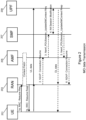
- Figure 2 is a message diagram illustrating mobile originated MO data Transmission using a 5GS user plane UP for infrequent and/or frequent small data transmission. Operations of Figure 2 may be used to support delivery of a small data packet in an uplink UL from a wireless terminal UE to a wireless communication network.
- FIG. 2 Operations of Figure 2 may be provided as part of a random access procedure. While not shown in Figure 2 , wireless device UE 201 may initiate the random access procedure by transmitting a random access preamble message (msg1) of the random access procedure to radio access network RAN node 203, and RAN node 203 may respond by transmitting a random access response message (msg2) of the random access procedure to wireless device UE 201.
- RAN node 203 may also be referred to as NG-RAN or NG-RAN node.
- Wireless device UE 201 preferably after having left Idle mode or Idle state or similar (but not necessarily having entered a fully connected state), transmits an RRC Connection Resume Request message including a Resume ID which identifies the AS context for UE 201 stored in the NG-RAN.
- the NG-RAN uses the valid AS Context for the UE, the NG-RAN performs AS security check, a data radio bearer DRB is established, and NG-RAN enables N3 UL TEID for data delivery.
- the RRC connection resume request message may be transmitted as a msg3 of the random access procedure.
- An Access Stratum (AS) Release Assistance Indication (RAI) may be included by the UE 201 in the RRC Connection Resume Request indicating single packet transmission.
- the NG-RAN performs direct context fetch via Xn.
- RAN3 WG may need to study whether indirect context fetch via AMF or another network function is to be defined.
- RAN node 203 may reject RRC Connection Resume with an appropriate cause, so that the UE performs the related NAS procedure.
- RAN node 203 may transmit an RRC connection resume response message to wireless device 201.
- the RRC Connection will transition to RRC_CONNECTED state.
- the UE can send UL data right after the successful RRC Connection Resume procedure (i.e., responsive to receiving the RRC connection resume response message).
- the NG-RAN 203 forwards the UL data received from the UE 201 to the user plane function UPF node 209 by using N3 UL TEID in the AS context.
- NG-RAN If NG-RAN expect no DL data, e.g. based on UE provided AS RAI indicating single packet or based on the Expected UE Behavior (with Release Assistance Information/Traffic Pattern/Traffic Profile available in the UE context in NG-RAN) indicating single packet (and the AS RAI which may have precedence is not present), this procedure may stop here and NG-RAN 203 immediately suspends the RRC connection by transmitting an RRC connection release message with a suspend indication.
- operations 2-6 may be omitted (as indicated by dashed lines) to more quickly release wireless device 201 so that battery usage at wireless device 201 may be reduced.
- NG-RAN 203 If NG-RAN 203 expects DL data or is unaware if DL data will follow, NG-RAN 203 notifies the AMF that UE 201 connection has been resumed by sending N2AP message which includes N2 SM info and protocol data unit PDU Session identifier ID.
- the NG-RAN 203 includes N3 DL TEID for the PDU session in the N2 SM message.
- AMF node 205 enters CM-Connected state.
- the AMF node 205 identifies the UE context, and forwards N2 SM message to the session management function SMF node 207.
- the SMF node 207 identifies the UE and the PDU session. If there is an N2 SM message in the Nsmf_PDUSession_UpdateSMcontext request message, the SMF node 207 performs N4 Session Modification to update N3 DL TEID to the UPF node 209.
- the UPF node 209 forwards the data to the NG-RAN 203 using N3 DL TEID.
- the SMF sends Nsmf_PDUSession_UpdateSMcontext response. If there is any change for the PDU session e.g., in case of the QoS targets cannot be fulfilled for a QFI, the SMF informs this information in the N2 SM information.
- the AMF node 205 acknowledges the connection resume to the NG-RAN node 203. If there is change of PDU session as received in N2 SM message from the SMF node 207, NG-RAN node 203 can perform RRC reconfiguration. If available, the AMF node 205 shall also provide the indication of single or dual packet information to NG-RAN node 203 (e.g. by including the Expected UE Behavior) in case the NG-RAN node 203 does not already have this information, and AMF node 205 considers NG-RAN node 203 to be responsible for the connection release (either enter RRC inactive, or Suspend, or CM-IDLE state).
- the NG-RAN node 203 can immediately suspend the RRC connection by transmitting an RRC connection release message with a suspend indication to the UE, after having received the N2AP Connection Resume message and when DL data packet transmission has taken place. Normally the NG-RAN waits for an inactivity timer to expire before it suspends the RRC connection.
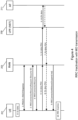
- FIG. 3 is a message diagram illustrating an example of how a single MO small data packet may be delivered from the UE 201 using Early Data Transmission using 5GS user plane UP with EDT.
- FIG. 3 Operations of Figure 3 may be provided as part of a random access procedure. While not shown in Figure 3 , wireless device UE 201 may initiate the random access procedure by transmitting a random access preamble message (msg1) of the random access procedure to radio access network RAN node 203, and RAN node 203 may respond by transmitting a random access response message (msg2) of the random access procedure to wireless device UE 201.
- RAN node 203 may also be referred to as NG-RAN.
- the UE 201 may send (i.e., transmit) an RRC Connection Resume Request message with the uplink UL data included as Early Data Transmission EDT with the RRC Connection Resume Request, for example, as a Msg3 with CCCH [RRCConnectionResumeRequest] + DTCH [ciphered UL data].
- the Resume ID which identifies the AS context stored in the NG-RAN is included. Using the valid AS Context for the UE, the NG-RAN enables N3 UL TEID for data delivery.
- the NG-RAN 203 forwards the UL data received from the UE 201 to the UPF node 209 by using N3 UL TEID in the AS context.
- Operation 3 UE remains suspended.
- Embodiments supporting frequent (and infrequent) communication of small data are illustrated in Figures 4 and/or 5.
- Embodiments of Figures 4 and/or 5 may allow the UE 201 used for frequent small data communication to use the eDRX (extended Discontinuous Reception) power saving method as investigated in KI#4. This may allow UE power efficiency for traffic patterns for frequent small data communication with gaps between transmissions.
- eDRX extended Discontinuous Reception
- Embodiments of Figures 4 and/or 5 may use combinations of RRC Inactive, EDT, power saving methods, and/or HLCOM (High latency communication) to meet architecture goals/requirements on both resource-efficiency and UE power efficiency.
- RRC Inactive EDT
- power saving methods power saving methods
- HLCOM High latency communication
- EPC-5GC interworking may be supported according to some embodiments of Figures 4 and/or 5.
- Mobile Originated MO transmissions for frequent small data communication may use RRC Inactive and Early Data Transmission to reduce the signalling.
- RRC Inactive with MO transmission may save a UE context in the RAN at an initial small data transmission. All subsequent MO small data transmissions can then benefit from MO UL and DL transmission of small data without significant/any 5G CP signalling.
- the RAN node 203 may simply forward any UL data on the existing N3 interface. And any subsequent DL data and additional UL data can be forwarded in the same improved/optimized way.
- an improved/optimized data transmission for small data may be provided using the RRC Inactive state for the UE connected to the 5GS.
- RRC Inactive is supported in 5GS from Rel-15 when NG-RAN is used.
- Such embodiments may use RRC Inactive also when NB-loT and LTE-M are used.
- the RRC_INACTIVE feature may be used to transmit small data without necessarily performing a full state transition to RRC_CONNECTED i.e. Early Data Transmission (see TR 38.804 [15], Annex G). Note that RRC Inactive for NB-loT & LTE-M connected to 5GC is work in progress in RAN and coordination with RAN may be needed.
- FIG. 4 is a message diagram illustrating RRC Inactive with MO transmission.
- the UPF-(NEF) entity 209 also referred to as a UPF-(NEF) node
- the UPF-NEF i.e., Small data delivery function
- the Indirect Model case i.e., when NIDD API is used
- it is a UPF in the Direct Model case.
- Wireless device UE 201 may initiate the random access procedure by transmitting a random access preamble message (msg1 or PRACH) of the random access procedure to radio access network RAN node 203, and RAN node 203 may respond by transmitting a random access response message (msg2 or RACH Response) of the random access procedure to wireless device UE 201, as indicated at Operation 1.
- RAN node 203 may also be referred to as NG-RAN.
- the UE 201 may send (i.e., transmit) an RRC Connection Resume Request message with the Resume ID which identifies the AS context stored in the NG-RAN.
- RAN node 203 may transmit an RRC connection resume message to wireless device 201. Upon completion of Operations 1-3, the RRC connection may be moved from inactive to active.
- Wireless device UE 201 sends/transmits an uplink UL protocol data unit PDU with small data to RAN node 203.
- RAN node 203 may continue to operation 9 (skipping operations 7 and 8) and immediately release the RRC connection to inactive state without waiting for any RAN specific timeout after receiving the UL PDU of operation 4. In this situation, operations 5 and 6 may be performed before or after releasing the RRC connection.
- RAN may continue to operations 5, 6, 7 and 8 before releasing the RRC connection to inactive state.
- RAN node 203 forwards the UL data PDU to UPF-(NEF) node 209.
- UPF-(NEF) node 209 may forward the UL data PDU to Application Function AF node 211.
- the UPF node 209 may forward data to the AF node 211 (i.e. SCS/AS).
- operation 6 may be the NIDD API. See for example the UPF-NEF solution 35.
- the UPF node 209 may receive data from the AF node 211 (i.e. SCS/AS). For the Indirect Model case this operation may be the NIDD API. See for example the UPF-NEF solution 35. UPF node 209 may forward the DL data PDU (e.g., an acknowledgement) to RAN node 203.
- the AF node 211 i.e. SCS/AS
- this operation may be the NIDD API. See for example the UPF-NEF solution 35.
- UPF node 209 may forward the DL data PDU (e.g., an acknowledgement) to RAN node 203.
- RAN node 203 may forward/transmit the DL Data PDU (e.g., the acknowledgement) to wireless device UE 201.
- the DL Data PDU e.g., the acknowledgement
- RAN node 203 may release the RRC connection without waiting for any RAN specific timeout.
- RAN Node 203 may release the RRC connection by transmitting the RRC Connection Release message (with a suspend indication) immediately after receiving the uplink PDU of operation 4 without waiting for any RAN specific timeout.
- RAN node 203 may release the RRC connection by transmitting the RRC Connection Release message (with suspend indication) immediately after transmitting the downlink PDU of operation 8 without waiting for any RAN specific timeout.
- Wireless device UE 201 enters RRC inactive mode responsive to receiving the RRC Connection Release message of operation 9.
- FIG. 5 is a message diagram illustrating mobile originated MO transmission with Early Data Transmission and RRC Inactive.
- An efficient data transmission can be achieved for one of the most frequent small data transmission scenarios, i.e., one UL message (acknowledged or unacknowledged).
- Acknowledgements, if used, are often generated by a protocol layer such as a Small data transmission function.
- the Small data transmission function is assumed to be dimensioned for low latency response of small data communications, allowing the potential acknowledgement to be included as Early Data Transmission in the RRC Command message. This may enable low delay communication and reduced UE power consumption with reduced/minimum signalling.
- the UPF-(NEF) entity 209 (also referred to as a UPF node or UPF-(NEF) node) in Figure 5 may be the UPF-NEF (i.e. Small data delivery function) in the Indirect Model case (i.e., when NIDD API is used) and it is a UPF in the Direct Model case.
- UPF-NEF Small data delivery function
- Indirect Model i.e., when NIDD API is used
- EDT has been agreed in RAN for R15. Work with EDT in R16 will be started.
- Wireless device UE 201 decides to send a small data sensor value to the SCS/AS.
- Wireless device UE 201 is in RRC Inactive and before the UL data PDU can be transmitted, and a resume of the radio connection is invoked.
- Operations of Figure 5 may be provided as part of a random access procedure. While not shown separately in operation 1 of Figure 5 , wireless device UE 201 may initiate the random access procedure by transmitting a random access preamble message (msg1 or PRACH) of the random access procedure to radio access network RAN node 203, and RAN node 203 may respond by transmitting a random access response message (msg2 or RACH Response) of the random access procedure to wireless device UE 201, as indicated at Operation 1.
- RAN node 203 may also be referred to as NG-RAN.
- the UL data PDU is included as Early Data Transmission with the RRC Resume Request message transmitted from wireless device UE 201 to RAN node 203, preferably after having left Idle mode or Idle state or similar (but not necessarily having entered fully connected state).
- RAN node 203 finds the UE context using the Resume ID and forwards the UL data PDU on the N3 interface to the UPF node 209.
- an AS RAI (included by the UE 201 in the RRC Connection Resume Request of operation 2) indicates single packet transmission, or if the Expected UE Behaviour stored in the UE context in RAN indicates single packet and the AS RAI is not present, then RAN, for increased/maximum UE power efficiency, may immediately releases the RRC connection (with a suspend indication and without any EDT DL data) by transmitting the RRC Connection release message of Operation 6 without DL data. In this case, operation 5 will not occur, and the RRC connection release message (with suspend indication) may be transmitted immediately after receiving the RRC resume request message of operation 202 without waiting for any RAN specific timeout.
- RAN may accept the resume request and may send an RRC Connection Resume to the UE to allow multiple UL & DL packets to be conveyed.
- the UPF node 209 forwards data to/from the AF node 211 (i.e. SCS/AS).
- this operation may be the NIDD API. See for example the UPF-NEF solution 35.
- the receiver (AF node 211) may respond with a DL data PDU (e.g., an acknowledgement), and UPF node 209 may forward/transmit the DL data PDU to RAN node 203.
- a DL data PDU e.g., an acknowledgement
- RAN node 203 If RAN node 203 receives the DL data PDU before the RRC response timer expires in the RAN and the AS RAI indicates dual packets or if the Expected UE Behaviour stored in the UE context in RAN indicates dual packets and the AS RAI is not present, then RAN node 203 expects no further data and includes the DL data PDU as Early Data Transmission with a RRC Connection Release message with suspend indication sent to wireless device UE 201.
- RAN node 203 may send a RRC Connection Resume to the UE to allow DL data that may have been delayed.
- RAN node 203 may determine that further packets can be expected and instead move the UE to RRC_CONNECED state by sending an RRC Connection Resume to the UE. Normal inactivity may in that case trigger RRC Connection Release with suspend indication.
- Wireless device UE 201 enters RRC Inactive mode.
- FIG. 6 illustrates mobile originated data transport via NAS-SM and N6.
- Wireless device UE is in CM-IDLE.
- Wireless device UE establishes an RRC connection and sends a NAS PDU as part of this.
- the NAS PDU carries encrypted uplink data as payload of an SM data transfer message and a PDU session ID.
- NG-RAN node forwards the NAS PDU to the AMF node.
- Wireless device UE can also provide RAI indication in the NAS to AMF node.
- AMF node checks the integrity of the incoming NAS PDU and decrypts the data it contains.
- AMF node forwards the data to the (V-)SMF node handling the PDU session identified by the PDU session ID contained in the NAS transport message.
- RAI e.g., at NAS level
- AMF continues directly to operation 9 and instructing RAN node to release the connection with wireless device UE.
- the (V-)SMF node decompresses the header if header compression applies to the PDU session.
- the V-SMF node forwards the data to the UPF node.
- the UPF node may forward the data to a different UPF node in the HPLMN via N9.
- the UPF node forwards the data to the DN.
- tunneling may be applied according to clause 5.6.10.3 in TS 23.501 [5].
- the UPF node forwards available downlink data to the (V-)SMF node.
- the (V-)SMF node compresses the header if header compression applies to the PDU session and encapsulates the downlink data as payload in an SM data transfer message.
- the (V-)SMF node forwards the SM data transfer message and the PDU session ID to the AMF node using the Namf_Communication_N1 N2MessageTransfer service operation.
- the AMF node creates a DL NAS transport message with the received PDU session ID and the SM data transfer message (container type is set to SM data transfer).
- the AMF node ciphers and integrity protects the NAS transport message
- AMF node continues in operation 9 and instructs RAN node to release the connection with wireless device UE.
- the AMF node sends the DL NAS transport message to NG-RAN node.
- the AMF node may also optionally indicate if connection with wireless device UE shall be released immediately
- NG-RAN node delivers the NAS payload over RRC to the wireless device UE.
- NG-RAN node If no further NAS PDU activity is detected by NG-RAN node based on inactivity timer, then NG-RAN node triggers the AN release procedure. If indication from AMF node is received in operation 9, NG-RAN node may release the wireless device UE connection immediately.
- the wireless device UE's logical NG-AP signaling connection and RRC signaling connection are released as per TS 23.502 [7] clause 4.2.6.
- methods may be provided to immediately suspend or release an RRC Connection after a single UL packet transmission or dual (UL+DL) packet transmission based on information available in the network. Such operations may significantly reduce wireless device UE power consumption, which may be especially useful/important for battery operated devices.
- Early Data Transmission may be provided together with the 5G UP Optimization (clause 6.19.4.2b "Single MO data Transmission using 5GS UP Optimization and EDT" above).
- An immediate RRC suspend may also be provided as part of this EDT procedure.
- a single UL packet (and optionally also a single DL packet) can be passed as part of the RRC Connection establishment procedure messages instead of using separate messages over the radio (e.g., instead of using separate messages over a separate Data Radio Bearer (DRB) when UP data is used).
- DRB Data Radio Bearer
- modules may be stored in RAN node memory 5005 of Figure 8 , and these modules may provide instructions so that when the instructions of a module are executed by processor 5003, processor 5003 performs respective operations of the flow chart of Figure 9 .
- processor 5003 may receive a random access preamble message from wireless terminal 201 (through transceiver 5001) for a random access procedure.
- processor 5003 may transmit a random access response message through transceiver 5001 to wireless terminal 201 for the random access procedure responsive to receiving the random access preamble message from the wireless terminal.
- processor 5003 may receive a connection resume request message (e.g., a Radio Resource Control RRC connection resume request message) from the wireless terminal (through transceiver 5001) instructing the RAN node to establish a connection with wireless terminal 201.
- the connection resume request message may be a connection resume request of the random access procedure that is received after transmitting the random access response.
- connection resume request message may be received as discussed above with respect to the RRC Resume Request of operation 1a of Figure 2 .
- processor 5003 may provide release information for wireless terminal 201 at RAN node 203.
- the release information may be provided as discussed above with respect to operation 1a and/or the context fetch of Figure 2 .
- providing the release information may include receiving a single packet indication from wireless terminal 201 with the connection resume request message.
- providing the release information may include obtaining the release information from a core network node of the wireless communication network.
- the release information may include information to release a Radio Resource Control RRC connection based on at least one of a traffic pattern, a traffic profile, release assistance information, and/or a release assistance indicator.
- processor 5003 may transmit a connection resume response message (e.g., a Radio Resource Control RRC resume message) through transceiver 5001 to wireless terminal 201 in response to receiving the connection resume request message.
- the connection resume response message may be transmitted as discussed above with respect to the RRC Resume Response of operation 1b of Figure 2 .
- processor 5003 may receive uplink data from wireless terminal 201 (through transceiver 5001) after providing the release information for wireless terminal 201 at RAN node 203, with the uplink data being associated with the connection resume request message.
- the uplink data may be received as discussed above with respect to operation 1c of Figure 2 .
- the uplink data may be received after transmitting the connection resume response message.
- processor 5003 may transmit a connection release message (e.g., a Radio Resource Control RRC connection release message with a suspend indication) through transceiver 5001 to wireless terminal 201 after receiving the uplink data responsive to the release information for the wireless terminal, wherein the connection release message instructs the wireless terminal to release and/or suspend the connection.
- the connection release message may be transmitted as discussed above with respect to the RRC Connection Release (with suspend indication) of operation 1d of Figure 2 .
- the connection release message may be transmitted responsive to the release information without waiting for expiration of any timer after receiving the uplink data.
- the release information includes a single packet indication
- processor 5003 may transmit the connection release message responsive to the single packet indication.
- modules may be stored in base station memory 5005 of Figure 8 , and these modules may provide instructions so that when the instructions of a module are executed by processor 5003, processor 5003 performs respective operations of the flow chart of Figure 10 .
- processor 5003 may receive a random access preamble message from wireless terminal 201 (through transceiver 5001) for a random access procedure.
- processor 5003 may transmit a random access response message through transceiver 5001 to wireless terminal 201 for the random access procedure responsive to receiving the random access preamble message from the wireless terminal.
- processor 5003 may receive a connection resume request message (e.g., a Radio Resource Control RRC connection resume request message) from the wireless terminal (through transceiver 5001) instructing RAN node 203 to establish a connection with wireless terminal 201, and the connection resume request message may also include uplink data (associated with the connection resume request message) from wireless terminal 201.
- a connection resume request message e.g., a Radio Resource Control RRC connection resume request message
- Such uplink data may be included as a parameter of the resume request message and/or as a parameter in a protocol layer used to convey the resume request message.
- the connection resume request message may be a connection resume request of the random access procedure that is received after transmitting the random access response.
- the connection resume request message may be received as discussed above with respect to operation 1a of Figure 3 .
- processor 5003 may provide release information for wireless terminal 201 at the RAN node.
- the release information may be received with/in the connection resume request message of block 1005. Uplink data in the connection resume request message of block 1005 may thus be received with the release information in the connection resume request message.
- providing the release information may include receiving a single packet indication from wireless terminal 201 in the connection resume request message.
- the connection resume request message may include an early data transmission EDT indication.
- providing the release information may include obtaining the release information from a core network node of the wireless communication network.
- the release information may include information to release a Radio Resource Control RRC connection based on at least one of a traffic pattern, a traffic profile, release assistance information, and/or a release assistance indicator.
- processor 5003 may transmit a connection release message (e.g., a Radio Resource Control RRC connection release message with a suspend indication) through transceiver 5001 to wireless terminal 201 after receiving the uplink data responsive to the release information for the wireless terminal, wherein the connection release instructs the wireless terminal to release and/or suspend the connection.
- a connection release message e.g., a Radio Resource Control RRC connection release message with a suspend indication
- the connection release message may be transmitted responsive to the single packet indication.
- the connection release message may be transmitted as discussed above with respect to operation 1b of Figure 3 .
- the connection release message may include downlink data for wireless terminal 201.
- Such downlink data may be included as a parameter of the connection release message and/or as a parameter in a protocol layer used to convey the connection release message.
- modules may be stored in base station memory 5005 of Figure 8 , and these modules may provide instructions so that when the instructions of a module are executed by processor 5003, processor 5003 performs respective operations of the flow chart of Figure 11 .
- processor 5003 may receive a random access preamble message from wireless terminal 201 (through transceiver 5001) for a random access procedure.
- processor 5003 may transmit a random access response message through transceiver 5001 to wireless terminal 201 for the random access procedure responsive to receiving the random access preamble message from the wireless terminal.
- processor 5003 may receive a connection resume request message (e.g., a Radio Resource Control RRC connection resume request message) from wireless terminal 201 (through transceiver 5001) instructing RAN node 203 to establish a connection with wireless terminal 201.
- the connection resume request message may be a connection resume request of the random access procedure that is received after transmitting the random access response.
- connection resume request message may be received as discussed above with respect to operation 2 of Figure 4 .
- processor 5003 may provide release information for wireless terminal 201 at the RAN node.
- providing the release information may include receiving a dual packet indication from wireless terminal 201, and the dual packet indication may be received with the connection resume request message.
- providing the release information may include obtaining the release information from a core network node of the wireless communication network.
- the release information may include information to release a Radio Resource Control RRC connection based on at least one of a traffic pattern, a traffic profile, release assistance information, and/or a release assistance indicator.
- processor 5003 may transmit a connection resume response message (e.g., a Radio Resource Control RRC connection resume message) through transceiver 5001 to wireless terminal 201 in response to receiving the connection resume request message.
- a connection resume response message e.g., a Radio Resource Control RRC connection resume message
- the connection resume response message may be transmitted as discussed above with respect to operation 3 of Figure 4 .
- processor 5003 may receive uplink data from wireless terminal 201 (through transceiver 5001) after transmitting the connection resume response message and/or after providing the release information for wireless terminal 201 at the RAN node.
- the uplink data may be associated with the connection resume request message.
- the uplink data may be received as discussed above with respect to operation 4 of Figure 4 .
- processor 5003 may transmit downlink data through transceiver 5001 to wireless terminal 201 after receiving the uplink data.
- the downlink data may be transmitted as discussed above with respect to operation 8 of Figure 4 .
- processor 5003 may transmit a connection release message (e.g., a Radio Resource Control RRC connection release message with a suspend indication) to wireless terminal 201 after receiving the uplink data responsive to the release information for the wireless terminal.
- the connection release may instruct the wireless terminal to release and/or suspend the connection, and the connection release message may be transmitted after transmitting the downlink data responsive to the release information for wireless terminal 201.
- the connection release message may be transmitted responsive to the release information without waiting for expiration of any timer after transmitting the downlink data.
- the release information is a dual packet indication
- the connection release message may be transmitted responsive to the dual packet indication.
- the connection release message may be transmitted as discussed above with respect to operation 9 of Figure 4 .
- modules may be stored in base station memory 5005 of Figure 8 , and these modules may provide instructions so that when the instructions of a module are executed by processor 5003, processor 5003 performs respective operations of the flow chart of Figure 12 .
- processor 5003 may receive a random access preamble message from wireless terminal 201 (through transceiver 5001) for a random access procedure.
- processor 5003 may transmit a random access response message through transceiver 5001 to wireless terminal 201 for the random access procedure responsive to receiving the random access preamble message from the wireless terminal.
- processor 5003 may receive a connection resume request message (e.g., a Radio Resource Control RRC connection resume request message) from the wireless terminal 201 (through transceiver 5001) instructing the RAN node to establish a connection with wireless terminal 201.
- the connection resume request message may also include an early data transmission indication and uplink data from wireless terminal 201.
- connection resume request message may be a connection resume request message of the random access procedure that is received after transmitting the random access response.
- the connection resume request message may be received as discussed above with respect to operation 2 of Figure 5 .
- processor 5003 may provide release information for wireless terminal 201 at RAN node 203.
- Providing the release information may include receiving a dual packet indication from wireless terminal 201 with the connection resume request message.
- providing the release information may include obtaining the release information from a core network node of the wireless communication network.
- the release information may include information to release a Radio Resource Control RRC connection based on at least one of a traffic pattern, a traffic profile, release assistance information, and/or a release assistance indicator.
- processor 1213 may transmit a connection release message (e.g., a Radio Resource Control RRC connection release message with a suspend indication) through transceiver 5001 to wireless terminal 201 after receiving the uplink data responsive to the release information for the wireless terminal.
- the connection release message instructs wireless terminal 201 to release and/or suspend the connection, and the connection release message may also include downlink data.
- the downlink data may be included as a parameter of the connection release message and/or as a parameter in a protocol layer used to convey the connection release message.
- the release information includes a dual packet indication
- the connection release message may be transmitted responsive to the dual packet indication.
- the connection release message may be transmitted as discussed above with respect to operation 6 of Figure 5 .
- the terms “comprise”, “comprising”, “comprises”, “include”, “including”, “includes”, “have”, “has”, “having”, or variants thereof are open-ended, and include one or more stated features, integers, elements, steps, components or functions but does not preclude the presence or addition of one or more other features, integers, elements, steps, components, functions or groups thereof.
- the common abbreviation “e.g.”, which derives from the Latin phrase “exempli gratia” may be used to introduce or specify a general example or examples of a previously mentioned item, and is not intended to be limiting of such item.
- the common abbreviation “i.e.”, which derives from the Latin phrase “id est,” may be used to specify a particular item from a more general recitation.
- Example embodiments are described herein with reference to block diagrams and/or flowchart illustrations of computer-implemented methods, apparatus (systems and/or devices) and/or computer program products. It is understood that a block of the block diagrams and/or flowchart illustrations, and combinations of blocks in the block diagrams and/or flowchart illustrations, can be implemented by computer program instructions that are performed by one or more computer circuits.
- These computer program instructions may be provided to a processor circuit of a general purpose computer circuit, special purpose computer circuit, and/or other programmable data processing circuit to produce a machine, such that the instructions, which execute via the processor of the computer and/or other programmable data processing apparatus, transform and control transistors, values stored in memory locations, and other hardware components within such circuitry to implement the functions/acts specified in the block diagrams and/or flowchart block or blocks, and thereby create means (functionality) and/or structure for implementing the functions/acts specified in the block diagrams and/or flowchart block(s).
Landscapes
- Engineering & Computer Science (AREA)
- Computer Networks & Wireless Communication (AREA)
- Signal Processing (AREA)
- Mobile Radio Communication Systems (AREA)
- Meter Arrangements (AREA)
Applications Claiming Priority (3)
| Application Number | Priority Date | Filing Date | Title |
|---|---|---|---|
| US201862714284P | 2018-08-03 | 2018-08-03 | |
| PCT/EP2019/070390 WO2020025556A1 (fr) | 2018-08-03 | 2019-07-29 | Optimisations de plan utilisateur pour l'internet des objets cellulaire 5g |
| EP19748784.6A EP3831162B1 (fr) | 2018-08-03 | 2019-07-29 | Optimisations de plan utilisateur pour l'internet des objets cellulaire 5g |
Related Parent Applications (1)
| Application Number | Title | Priority Date | Filing Date |
|---|---|---|---|
| EP19748784.6A Division EP3831162B1 (fr) | 2018-08-03 | 2019-07-29 | Optimisations de plan utilisateur pour l'internet des objets cellulaire 5g |
Publications (4)
| Publication Number | Publication Date |
|---|---|
| EP4236603A2 true EP4236603A2 (fr) | 2023-08-30 |
| EP4236603A3 EP4236603A3 (fr) | 2023-09-13 |
| EP4236603C0 EP4236603C0 (fr) | 2026-04-29 |
| EP4236603B1 EP4236603B1 (fr) | 2026-04-29 |
Family
ID=67514620
Family Applications (2)
| Application Number | Title | Priority Date | Filing Date |
|---|---|---|---|
| EP23171133.4A Active EP4236603B1 (fr) | 2018-08-03 | 2019-07-29 | Optimisations de plan utilisateur pour l'internet des objets cellulaire 5g |
| EP19748784.6A Active EP3831162B1 (fr) | 2018-08-03 | 2019-07-29 | Optimisations de plan utilisateur pour l'internet des objets cellulaire 5g |
Family Applications After (1)
| Application Number | Title | Priority Date | Filing Date |
|---|---|---|---|
| EP19748784.6A Active EP3831162B1 (fr) | 2018-08-03 | 2019-07-29 | Optimisations de plan utilisateur pour l'internet des objets cellulaire 5g |
Country Status (7)
| Country | Link |
|---|---|
| US (1) | US12245323B2 (fr) |
| EP (2) | EP4236603B1 (fr) |
| CN (1) | CN112514528B (fr) |
| AU (2) | AU2019316156B2 (fr) |
| ES (2) | ES3069642T3 (fr) |
| PL (1) | PL3831162T3 (fr) |
| WO (1) | WO2020025556A1 (fr) |
Families Citing this family (15)
| Publication number | Priority date | Publication date | Assignee | Title |
|---|---|---|---|---|
| US11206710B2 (en) * | 2018-09-25 | 2021-12-21 | Ofinno, Llc | Network initiated release assistance indication |
| US12507310B2 (en) | 2019-03-22 | 2025-12-23 | Telefonaktiebolaget Lm Ericsson (Publ) | UE-triggered connection resume with early data transmission and network-triggered connection resume |
| EP4008157A4 (fr) * | 2019-08-03 | 2022-08-10 | ZTE Corporation | Procédé et dispositif de transmission de données dans un réseau sans fil |
| US12245310B2 (en) * | 2020-01-22 | 2025-03-04 | Lg Electronics Inc. | Method and apparatus for fast small data transmission in a wireless communication system |
| WO2021157895A1 (fr) * | 2020-02-07 | 2021-08-12 | Lg Electronics Inc. | Procédé et appareil de transmission de petites données dans un état inactif rrc dans une mr-dc |
| JP7340212B2 (ja) | 2020-02-13 | 2023-09-07 | オフィノ, エルエルシー | 少量のデータ送信(sdt) |
| ES2970579T3 (es) * | 2020-05-14 | 2024-05-29 | Koninklijke Philips Nv | Transmisión de datos pequeños |
| US11638322B2 (en) | 2020-08-13 | 2023-04-25 | Samsung Electronics Co., Ltd. | Method and apparatus for setting timer value in network |
| GB2598100B (en) * | 2020-08-13 | 2024-11-06 | Samsung Electronics Co Ltd | Setting timer value in network |
| CN116458258A (zh) * | 2020-09-24 | 2023-07-18 | 欧芬诺有限责任公司 | 小数据传输的完成指示 |
| EP4022971B1 (fr) * | 2020-09-24 | 2025-06-18 | Peninsula Technologies, LLC | Message de déconnection dans la procédure de transmission de petites données |
| US12108481B2 (en) * | 2021-03-17 | 2024-10-01 | FG Innovation Company Limited | User equipment and method for small data transmission procedure |
| CN120642563A (zh) * | 2023-03-16 | 2025-09-12 | 中兴通讯股份有限公司 | 用于建立ue网络连接的方法、设备及系统 |
| KR20250023809A (ko) * | 2023-08-10 | 2025-02-18 | 삼성전자주식회사 | 무선 통신 시스템에서 IoT 기기를 위한 데이터 전송 방법 및 장치 |
| CN120935597A (zh) * | 2024-05-10 | 2025-11-11 | 维沃移动通信有限公司 | 设备上下文信息维护方法、装置、通信设备及存储介质 |
Family Cites Families (16)
| Publication number | Priority date | Publication date | Assignee | Title |
|---|---|---|---|---|
| US10681767B2 (en) * | 2016-02-05 | 2020-06-09 | Lg Electronics Inc. | Method and apparatus for performing RRC connection resume in wireless communication system |
| KR102294756B1 (ko) * | 2016-05-12 | 2021-08-27 | 삼성전자 주식회사 | 단말의 전력을 절약하기 위한 방법 및 장치 |
| CN109691222B (zh) * | 2016-09-26 | 2024-02-02 | 苹果公司 | 用于配置轻型连接的装置 |
| KR20180035638A (ko) * | 2016-09-29 | 2018-04-06 | 삼성전자주식회사 | RRC Inactive 및 active 상태에서 data 전송 결정 및 방법 및 장치 |
| US10924912B2 (en) * | 2017-01-06 | 2021-02-16 | Lg Electronics Inc. | Method for transmitting and receiving data through relay in wireless communication system and apparatus therefor |
| WO2018131956A1 (fr) * | 2017-01-16 | 2018-07-19 | Samsung Electronics Co., Ltd. | Procédé et appareil de communication dans un système de communication mobile sans fil |
| CN109863783B (zh) * | 2017-04-28 | 2022-05-31 | Lg 电子株式会社 | 根据edt发送数据的方法 |
| US20180324869A1 (en) * | 2017-05-04 | 2018-11-08 | Qualcomm Incorporated | Uplink early data transmission |
| WO2018201483A1 (fr) * | 2017-05-05 | 2018-11-08 | 华为技术有限公司 | Procédé de transmission de données, dispositif terminal et dispositif de réseau d'accès |
| KR101988459B1 (ko) * | 2017-07-30 | 2019-06-12 | 엘지전자 주식회사 | Cu-du 분할 시나리오에서 rrc 연결을 재개하는 방법 및 장치 |
| TW201911939A (zh) * | 2017-08-11 | 2019-03-16 | 美商高通公司 | 上行鏈路早期資料傳輸 |
| US10779254B2 (en) * | 2017-08-16 | 2020-09-15 | Electronics And Telecommunications Research Institute | Service request method for 5G local service |
| US20190104564A1 (en) * | 2017-09-29 | 2019-04-04 | Mediatek Inc. | Conditional RRC Confirm Messaging In Wireless Communications |
| EP3704883B1 (fr) * | 2017-11-13 | 2023-04-05 | LG Electronics Inc. | Procédé de gestion de contexte d'ue et dispositif prenant en charge ce dernier |
| US10660042B2 (en) * | 2017-11-21 | 2020-05-19 | Qualcomm Incorporated | Techniques and apparatuses for polled-mode power saving |
| CN111713166B (zh) * | 2018-02-14 | 2022-06-10 | 华为技术有限公司 | 随机接入方法及装置 |
-
2019
- 2019-07-29 US US17/265,130 patent/US12245323B2/en active Active
- 2019-07-29 EP EP23171133.4A patent/EP4236603B1/fr active Active
- 2019-07-29 PL PL19748784.6T patent/PL3831162T3/pl unknown
- 2019-07-29 EP EP19748784.6A patent/EP3831162B1/fr active Active
- 2019-07-29 ES ES23171133T patent/ES3069642T3/es active Active
- 2019-07-29 AU AU2019316156A patent/AU2019316156B2/en active Active
- 2019-07-29 WO PCT/EP2019/070390 patent/WO2020025556A1/fr not_active Ceased
- 2019-07-29 CN CN201980050106.3A patent/CN112514528B/zh active Active
- 2019-07-29 ES ES19748784T patent/ES2952371T3/es active Active
-
2022
- 2022-06-10 AU AU2022204048A patent/AU2022204048B2/en active Active
Non-Patent Citations (5)
| Title |
|---|
| 3GPP TR 23.724, July 2018 (2018-07-01) |
| 3GPP TR 38.804, March 2017 (2017-03-01) |
| 3GPP TS 23.501, June 2018 (2018-06-01) |
| 3GPP TS 23.502, June 2018 (2018-06-01) |
| 3GPP TS 23.682, June 2018 (2018-06-01) |
Also Published As
| Publication number | Publication date |
|---|---|
| WO2020025556A1 (fr) | 2020-02-06 |
| AU2019316156A1 (en) | 2021-03-25 |
| ES3069642T3 (en) | 2026-06-09 |
| EP3831162A1 (fr) | 2021-06-09 |
| EP3831162B1 (fr) | 2023-05-31 |
| CN112514528B (zh) | 2024-05-14 |
| ES2952371T3 (es) | 2023-10-31 |
| CN112514528A (zh) | 2021-03-16 |
| EP4236603C0 (fr) | 2026-04-29 |
| US12245323B2 (en) | 2025-03-04 |
| AU2022204048B2 (en) | 2023-05-11 |
| AU2019316156B2 (en) | 2022-05-12 |
| EP4236603B1 (fr) | 2026-04-29 |
| EP4236603A3 (fr) | 2023-09-13 |
| US20210315050A1 (en) | 2021-10-07 |
| AU2022204048A1 (en) | 2022-06-30 |
| PL3831162T3 (pl) | 2023-10-09 |
Similar Documents
| Publication | Publication Date | Title |
|---|---|---|
| EP3831162B1 (fr) | Optimisations de plan utilisateur pour l'internet des objets cellulaire 5g | |
| JP7769115B2 (ja) | 通信方法及び通信装置 | |
| US20240137817A1 (en) | Resume request followed by release and redirect | |
| US12507310B2 (en) | UE-triggered connection resume with early data transmission and network-triggered connection resume | |
| US10034327B2 (en) | Method and apparatus in a telecommunication system | |
| US11937326B2 (en) | User equipment (UE) reachability request parameter for suspended radio access network (RAN) | |
| JP7822326B2 (ja) | 5gマルチキャストブロードキャストサービスハンドオーバ | |
| US12035174B2 (en) | Rate control method, apparatus, and system | |
| JP7753367B2 (ja) | 小規模データ伝送終了およびシグナリングのためのネットワーク方法 | |
| CN110089194A (zh) | 使配置双连接的无线终端能够进入不活动模式的方法和节点 | |
| US12028902B2 (en) | Early-data-transmission and radio access network notification area update | |
| US20250113335A1 (en) | Energy-efficient and rrc state aware radio resource allocation | |
| JP2025531533A (ja) | データ伝送方法および装置 | |
| US20240251474A1 (en) | Method for extended drx | |
| WO2026097473A1 (fr) | Procédé et appareil de relaxation de mesure et de rapport de faisceau initiés par un équipement utilisateur (ue) et de gestion d'une collision avec une autre transmission en liaison montante (ul) | |
| WO2025148934A1 (fr) | Procédé et appareil de stockage et de transfert de communication, terminal et dispositif côté réseau |
Legal Events
| Date | Code | Title | Description |
|---|---|---|---|
| PUAI | Public reference made under article 153(3) epc to a published international application that has entered the european phase |
Free format text: ORIGINAL CODE: 0009012 |
|
| STAA | Information on the status of an ep patent application or granted ep patent |
Free format text: STATUS: THE APPLICATION HAS BEEN PUBLISHED |
|
| REG | Reference to a national code |
Ref country code: DE Ref legal event code: R079 Free format text: PREVIOUS MAIN CLASS: H04W0076340000 Ipc: H04W0076270000 Ref country code: DE Ref legal event code: R079 Ref document number: 602019084415 Country of ref document: DE Free format text: PREVIOUS MAIN CLASS: H04W0076340000 Ipc: H04W0076270000 |
|
| PUAL | Search report despatched |
Free format text: ORIGINAL CODE: 0009013 |
|
| AC | Divisional application: reference to earlier application |
Ref document number: 3831162 Country of ref document: EP Kind code of ref document: P |
|
| AK | Designated contracting states |
Kind code of ref document: A2 Designated state(s): AL AT BE BG CH CY CZ DE DK EE ES FI FR GB GR HR HU IE IS IT LI LT LU LV MC MK MT NL NO PL PT RO RS SE SI SK SM TR |
|
| AK | Designated contracting states |
Kind code of ref document: A3 Designated state(s): AL AT BE BG CH CY CZ DE DK EE ES FI FR GB GR HR HU IE IS IT LI LT LU LV MC MK MT NL NO PL PT RO RS SE SI SK SM TR |
|
| RIC1 | Information provided on ipc code assigned before grant |
Ipc: H04W 76/38 20180101ALN20230804BHEP Ipc: H04W 76/25 20180101ALN20230804BHEP Ipc: H04W 4/70 20180101ALI20230804BHEP Ipc: H04W 76/19 20180101ALI20230804BHEP Ipc: H04W 76/34 20180101ALI20230804BHEP Ipc: H04W 76/27 20180101AFI20230804BHEP |
|
| STAA | Information on the status of an ep patent application or granted ep patent |
Free format text: STATUS: REQUEST FOR EXAMINATION WAS MADE |
|
| 17P | Request for examination filed |
Effective date: 20240312 |
|
| RBV | Designated contracting states (corrected) |
Designated state(s): AL AT BE BG CH CY CZ DE DK EE ES FI FR GB GR HR HU IE IS IT LI LT LU LV MC MK MT NL NO PL PT RO RS SE SI SK SM TR |
|
| GRAP | Despatch of communication of intention to grant a patent |
Free format text: ORIGINAL CODE: EPIDOSNIGR1 |
|
| STAA | Information on the status of an ep patent application or granted ep patent |
Free format text: STATUS: GRANT OF PATENT IS INTENDED |
|
| GRAS | Grant fee paid |
Free format text: ORIGINAL CODE: EPIDOSNIGR3 |
|
| INTG | Intention to grant announced |
Effective date: 20260224 |
|
| GRAA | (expected) grant |
Free format text: ORIGINAL CODE: 0009210 |
|
| STAA | Information on the status of an ep patent application or granted ep patent |
Free format text: STATUS: THE PATENT HAS BEEN GRANTED |
|
| AC | Divisional application: reference to earlier application |
Ref document number: 3831162 Country of ref document: EP Kind code of ref document: P |
|
| AK | Designated contracting states |
Kind code of ref document: B1 Designated state(s): AL AT BE BG CH CY CZ DE DK EE ES FI FR GB GR HR HU IE IS IT LI LT LU LV MC MK MT NL NO PL PT RO RS SE SI SK SM TR |
|
| REG | Reference to a national code |
Ref country code: CH Ref legal event code: F10 Free format text: ST27 STATUS EVENT CODE: U-0-0-F10-F00 (AS PROVIDED BY THE NATIONAL OFFICE) Effective date: 20260429 Ref country code: GB Ref legal event code: FG4D |
|
| REG | Reference to a national code |
Ref country code: IE Ref legal event code: FG4D |
|
| U01 | Request for unitary effect filed |
Effective date: 20260430 |
|
| REG | Reference to a national code |
Ref country code: ES Ref legal event code: FG2A Ref document number: 3069642 Country of ref document: ES Kind code of ref document: T3 Effective date: 20260609 |
|
| U07 | Unitary effect registered |
Designated state(s): AT BE BG DE DK EE FI FR IT LT LU LV MT NL PT RO SE SI Effective date: 20260508 |
|
| PGFP | Annual fee paid to national office [announced via postgrant information from national office to epo] |
Ref country code: TR Payment date: 20260618 Year of fee payment: 8 |