EP4237399B1 - Methoxypropanoltrennung durch kombination von membrantrennung und destillation - Google Patents
Methoxypropanoltrennung durch kombination von membrantrennung und destillation Download PDFInfo
- Publication number
- EP4237399B1 EP4237399B1 EP21794889.2A EP21794889A EP4237399B1 EP 4237399 B1 EP4237399 B1 EP 4237399B1 EP 21794889 A EP21794889 A EP 21794889A EP 4237399 B1 EP4237399 B1 EP 4237399B1
- Authority
- EP
- European Patent Office
- Prior art keywords
- methoxypropan
- stream
- weight
- preferred
- range
- Prior art date
- Legal status (The legal status is an assumption and is not a legal conclusion. Google has not performed a legal analysis and makes no representation as to the accuracy of the status listed.)
- Active
Links
Images


Classifications
-
- C—CHEMISTRY; METALLURGY
- C07—ORGANIC CHEMISTRY
- C07C—ACYCLIC OR CARBOCYCLIC COMPOUNDS
- C07C41/00—Preparation of ethers; Preparation of compounds having groups, groups or groups
- C07C41/01—Preparation of ethers
- C07C41/34—Separation; Purification; Stabilisation; Use of additives
- C07C41/36—Separation; Purification; Stabilisation; Use of additives by solid-liquid treatment; by chemisorption
-
- C—CHEMISTRY; METALLURGY
- C07—ORGANIC CHEMISTRY
- C07C—ACYCLIC OR CARBOCYCLIC COMPOUNDS
- C07C41/00—Preparation of ethers; Preparation of compounds having groups, groups or groups
- C07C41/01—Preparation of ethers
- C07C41/34—Separation; Purification; Stabilisation; Use of additives
- C07C41/40—Separation; Purification; Stabilisation; Use of additives by change of physical state, e.g. by crystallisation
- C07C41/42—Separation; Purification; Stabilisation; Use of additives by change of physical state, e.g. by crystallisation by distillation
-
- C—CHEMISTRY; METALLURGY
- C07—ORGANIC CHEMISTRY
- C07C—ACYCLIC OR CARBOCYCLIC COMPOUNDS
- C07C43/00—Ethers; Compounds having groups, groups or groups
- C07C43/02—Ethers
- C07C43/03—Ethers having all ether-oxygen atoms bound to acyclic carbon atoms
- C07C43/04—Saturated ethers
- C07C43/13—Saturated ethers containing hydroxy or O-metal groups
Definitions
- a first aspect of the invention relates to a process for separating 1-methoxypropan-2-ol from an aqueous stream comprising 1-methoxypropan-2-ol and 2-methoxypropan-1-ol, wherein the process comprises providing a stream S0 comprising 1-methoxypropan-2-ol and 2-methoxypropan-1-ol, water, and having a molar ratio of 1-methoxypropan-2-ol : 2-methoxypropan-1-ol in the range of from 1 : 5 to 5 : 1; wherein the final stream S5 comprises ⁇ 95 weight-% 1-methoxypropan-2-olbased on the total weight of S5.
- Propylene oxide (PO) is one of the most important chemical intermediates in industry. It represents the starting compound for a broad spectrum of products, such as foams, solvents or deicing agents. Traditionally, PO is produced via the chlorohydrin process, which is still in use today, as well as the oxirane method.
- catalysts based on zeolitic materials having a framework structure comprising Si, O, and Ti, such as titanium silicalite-1, together with the improved availability of large quantities of hydrogen peroxide enabled the large-scale implementation of the co-product-free HPPO technology. This new process enables PO to be produced with excellent yields and selectivities.
- the HPPO process produces propylene oxide from propylene and hydrogen peroxide in aqueous organic solvents with zeolitic materials having a framework structure comprising Si, O, and Ti as catalysts, in one constellation, methanol is used as the solvent, typically in combination with a zeolitic material having a framework structure comprising Si, O, and Ti of framework type MFI (titanium silicalite-1, TS-1) as catalyst.
- MFI titanium silicalite-1, TS-1
- MeOH In an HPPO plant, MeOH, after having been used as solvent in the formation of PO, is normally separated from undesired side components and recovered.
- the MeOH containing stream comprises several side products such as the 1-methoxypropan-2-ol, which are of interest for further use.
- side products such as the 1-methoxypropan-2-ol, which are of interest for further use.
- the isolation of pure 1-methoxypropan-2-ol is complicated.
- the separation of both isomers is a difficult task, especially when considering the low concentration of water that is required for the final product.
- it is quite complicated to get rid of other side products for example, propylene glycol dimethyl ether.
- US 5,723,024 A describes a method for recovering 2-methyl-1-propanol from a mixture consisting of 2-methyl-1-propanol and 1-butanol.
- EP 0 425 893 A discloses a separation method for the two MOP isomers.
- DE 10233388 A1 describes MOP separation in general, but not specifically the separation of both MOP isomers.
- US 2004/0000473 A1 refers to the separation of the two MOP isomers from aqueous solution by usage of dewatering agents, without separation of both isomers.
- EP 1 375 462 A1 refers to a process of separating 1-methoxy-2-propanol and 2-methoxy-1-propanol from aqueous compositions, comprising dewatering of the aqueous composition comprising 1-methoxy- 2-propanol and 2-methoxy-1-propanol to a concentration of 1-methoxy-2-propanol and 2-methoxy-1-propanol of at least 90 percent by weight in total and isolation of 1-methoxy-2-propanol, 2-methoxy-1-propanol or mixtures thereof by means of distillation.
- the dewatering can be done by azeotropic distillation using an additive or by extractive distillation.
- the aqueous composition can be concentrated prior to the dewatering step by means of a pre-distillation to contain at least 10 percent by weight in total of 1-methoxy-2-propanol and 2-methoxy-1-propanol.
- the distillate obtained by such a distillation preferably contains the MOP isomers in an amount of 10 to 50 percent by weight.
- any suitable distillation column can be used for the pre-distillation step.
- the distillation column used for the pre-distillation can, according to EP 1 375 462 A1 , be run at any suitable pressure; however, a pressure in the range of 0.5 to 5 bar is indicated as preferred embodiment, whereas atmospheric pressure is indicated as most preferred.
- Membrane technology is mentioned regarding separation methods for example for separation of propylene glycol monomethyl ether and water, but only general concepts are given ( CN 103342631 A , CN 103992214 A ).
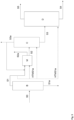
- the invention thus relates to a process for separating 1-methoxypropan-2-ol from an aqueous stream comprising 1-methoxypropan-2-ol and 2-methoxypropan-1-ol, wherein the process comprises:
- stream S0 comprises ⁇ 0.001 weight-% propylene glycol dimethyl ether (1,2-dimethoxypropane) based on the total weight of S0; and stream S5 preferably comprises ⁇ 0.01 weight-% of propylene glycol dimethyl ether based on the total weight of S5.
- (a), (b), (c.1), (c.2) and (d) and optionally also the recycling (e) are operated in batch mode or in continuous mode, more preferred a (a), (b), (c.1), (c.2) and (d) and optionally also the recycling (e) are operated in continuous mode.
- the process is preferably conducted in a continuous mode and is energy efficient.
- the thermal energy of stream S1 is partly transferred to a heat transfer medium stream HTMS1 after (b) and before step (c), preferably in a heat exchanger H, obtaining a heat transfer medium stream HTMS1a having an increased thermal energy content compared to HTMS1;
- HTMS1a is used to provide thermal energy to:
- HTMS1a is used to provide thermal energy to:
- the membrane unit of (c.1) comprises at least one membrane, preferably at least one membrane and a heat exchanger, more preferred at least one membrane, a heat exchanger, a pump and a vacuum system.
- the thermal energy provided by HTMS1a provides at least 90 % of the energy demand of the membrane unit of (c.1), and/or of the distillation unit of (c.2),and/or of the distillation unit of (d), preferably the thermal energy provided by HTMS1a provides at least 95 % of the energy demand of the membrane unit of (c.1), and/or of the distillation unit of (c.2),and/or of the distillation unit of (d); more preferably the thermal energy provided by HTMS1a provides at least 98 %, more preferably at least 99 %, more preferably 100 %, of the energy demand of the membrane unit of (c.1), and/or of the distillation unit of (c.2),and/or of the distillation unit of (d).
- the thermal energy provided by HTMS1a provides at least 90 % of the energy demand of the membrane unit of (c.1), and of the distillation unit of (c.2),and of the distillation unit of (d), preferably the thermal energy provided by HTMS1a provides at least 95 % of the energy demand of the membrane unit of (c.1), and of the distillation unit of (c.2),and of the distillation unit of (d); more preferably the thermal energy provided by HTMS1a provides at least 98 % more preferably at least 99 %, more preferably 100 %, of the energy demand of the membrane unit of (c.1), and of the distillation unit of (c.2), and of the distillation unit of (d).
- thermal energy of stream S1 is transferred to the heat transfer medium stream HTMS1.
- a transfer of thermal energy of, for example, 70 % means that, for example, stream S1 has a temperature of 177 °C before thermal energy transfer and of 120 °C after thermal energy transfer. This corresponds to an energy content of 9.18 MW, wherein 1.34 MW are transferred via HTMS1/HTHMS1a to the membrane unit of (c.1), and 197.14kW to the distillation unit of (c.2), and 1121kW to the distillation unit of (d).
- the heat transfer medium used for HTMS1/HTMS1a and for HTMS2/HTMS2a is preferably steam (H 2 O gaseous ).
- a stream S0 which comprises 1-methoxypropan-2-ol, 2-methoxypropan-1-ol and water, and which has a molar ratio of 1-methoxypropan-2-ol : 2-methoxypropan-1-ol in the range of from 1 : 5 to 5 : 1.
- stream S0 is a stream obtained from a HPPO process, more preferred from an HPPO process, wherein propylene oxide is prepared from propylene and hydrogen peroxide in aqueous methanol as solvent, preferably using a TS-1 catalyst, more preferred using a TS-1 fixed bed catalyst in a reaction zone.
- MOPs are formed as side products in the process by reaction of MeOH and PO and are removed from the reaction zone with an initial MeOH containing product stream. From said initial product stream, MeOH is recovered, optionally using one or more further separation steps. According to one embodiment, an intermediate stream comprising MeOH, water and other components including the two MOP isomers is obtained. MeOH is then separated from water and the other components via distillation, wherein stream S0 is obtained, which comprises the two MOP isomers, water, and several other side components such as propylene glycol dimethyl ether (1 ,2-dimethoxypropane).
- stream S0 provided in a) comprises water in an amount in the range of from 50 to 90 weight-%, preferably in the range of from 55 to 85 weight-% and a mixture of 1-methoxypropan-2-ol and 2-methoxypropan-1-ol in an amount in the range of from 8 to 50 weight-%, preferably in the range of from 13 to 45 weight-%, each based on the total weight of stream S0, the remaining amount up to 100 weight-% being other components (impurities and solvent (MeOH)).
- impurities and solvent MeOH
- stream S0 provided in a) comprises 1-methoxypropan-2-ol and 2-methoxypropan-1-ol in a molar ratio in the range of from 1 : 4 to 4 : 1; more preferred in the range of from 1 : 3 to 3 : 1, more preferred in the range of from 1 : 2 to 2 : 1, more preferred in the range of from 0.75 : 1 to 1 : 0.75.
- stream S0 provided in a) comprises propylene glycol dimethyl ether in an amount of ⁇ 0.001 weight-%, more preferred in the range of from 0.001 to 0.1 weight-%, more preferred in the range of from 0.003 to 0.01 weight-%, more preferred in the range of from 0.004 to 0.01 weight-%, more preferred in the range of from 0.005 to 0.008 weight-%, based on the total weight of S0.
- Propylene glycol dimethyl ether (1,2-dimethoxypropane) is an impurity contained in S0.
- stream S0 comprises besides propylene glycol dimethyl ether in the range of from 0.0001 to 3 weight-%, more preferably in the range of from 0.001 to 2.5 weight-%, more preferred in the range of from 0.01 to 1.5 weight-%, each based on the total weight of S0, of one or more components selected from the group consisting of 1,1-dimethoxypropane, 1,2-propanediol (MPG), 1-butanol, 2,4-dimethyl-1,3-dioxolane, 2,6-dimethyl-4-heptanol, 2-butenal,2-ethyl-4-methyl-1,3-dioxolane, 2-hexanone, 2-methylcyclohexanol, 2-methylpentanal, 2-propen-1-ol, 4-methyl-1,3- dioxolane, acetaldehyde, 2-propanone, dimethoxymethane, dipropylene glycol, ethanol, hydroxyacetone , 2-propylene glyco
- step (b) 1-methoxypropan-2-ol and 2-methoxypropan-1-ol are separated from the stream S0 provided in (a) by distillation comprising subjecting the stream S0 provided in (a) to distillation conditions in a distillation unit comprising a distillation column B.
- the distillation column B comprised in the distillation unit according to b) has between 5 and 100 theoretical stages, preferably between 8 and 60 theoretical stages, more preferred between 10 and 40 theoretical stages, more preferred between 15 and 30 theoretical stages.
- the distillation column B comprised in the distillation unit according to b) is operated at a pressure in the range of from 2 to 30 bar, more preferred in the range of from 2.5 to 20 bar, more preferred in the range of from 3 to 15 bar, more preferred in the range of from 3.5 to 14 bar, more preferred in the range of from 4 to 12 bar, more preferred in the range of from 5 to 11 bar.
- a pressure in the range of from 2 to 30 bar, more preferred in the range of from 2.5 to 20 bar, more preferred in the range of from 3 to 15 bar, more preferred in the range of from 3.5 to 14 bar, more preferred in the range of from 4 to 12 bar, more preferred in the range of from 5 to 11 bar.
- the distillation column B comprised in the distillation unit according to b) is operated at a temperature at the top of the distillation column B in the range of from 140 to 250 °C, more preferred in the range of from 150 to 220 °C, more preferred in the range of from 160 to 200 °C, more preferred in the range of from 170 to 190 °C.
- the distillation column B comprised in the distillation unit according to b) is operated at a temperature at the bottom in the range of from 140 to 250 °C, more preferred in the range of from 150 to 220 °C, more preferred in the range of from 160 to 200 °C, more preferred in the range of from 170 to 190 °C.
- the distillation column B comprised in the distillation unit according to b) is operated with a reflux ratio in the range of from 1 to 10 g/g, more preferred in the range of from 2 to 9 g/g, more preferred in the range of from 3 to 8 g/g, more preferred in the range of from 4 to 6 g/g.
- the distillation column B comprised in the distillation unit according to b) has an energy demand in the range of from 10 to 30 MW; wherein preferably the reboiler of distillation column B has an energy demand in the range of from 5 to 15 MW and the condenser of distillation column B has an energy demand the range of from 5 to 15 MW.
- step (b) a (top) stream S1 comprising 1-methoxypropan-2-ol, 2-methoxypropan-1-ol and water, which is enriched in 1-methoxypropan-2-ol and 2-methoxypropan-1-ol compared to the stream S0 is obtained.
- ⁇ 95 weight-% of stream S1, which leaves distillation column B over the top consist of water, 1-methoxypropan-2-ol and 2-methoxypropan-1-ol; wherein more preferred stream S1 comprises water in an amount in the range of from 40 to 80 weight-%, preferably in the range of from 50 to 70 weight-%, more preferred in the range of from 55 to 65 weight-%; and a mixture of 1-methoxypropan-2-ol and 2-methoxypropan-1-ol in an amount in the range of from 20 to 60 weight-%, preferably in the range of from 30 to 50 weight-%, more preferred in the range of from 35 to 45 weight-%, each based on the total weight of stream S1, wherein preferably stream S1 comprises 1-methoxypropan-2-ol and 2-methoxypropan-1-ol in a molar ratio in the range of from 1 : 4 to 4 : 1; preferably in the range of from 1 : 3 to 3 : 1, more preferred in the range of
- stream S1 which leaves distillation column B over the top, contains less than 0.05 weight-%, more preferred less than 0.005 weight-%, more preferred less than 0.004 weight-%, more preferred less than 0.002 weight-%, of propylene glycol dimethyl ether, based on the total weight of S1.
- the wording "less than” means from 0 to less than the respective value.
- stream S1 after leaving column B and before entering the membrane unit M is flashed [to reduce the heat demand in column C]. If stream S1 after leaving column B and before entering the membrane unit M is flashed, the membrane unit operates in "vapor permeation mode".
- a bottoms stream S1a comprising water and being depleted of 1-methoxypropan-2-ol and 2-methoxypropan-1-ol compared to S0 is obtained.
- stream S1a comprises ⁇ 95 weight-% of water, and preferably less than 1 weight-% of stream S1a consist of 1-methoxypropan-2-ol and 2-methoxypropan-1-ol, each based on the total weight of stream S1a, more preferred S1a comprises ⁇ 98 weight-% of water, and less than 1 weight-% of stream S1a consist of 1-methoxypropan-2-ol and 2-methoxypropan-1-ol; more preferred S1a comprises ⁇ 99 weight-% of water, and less than 1 weight-% of stream S1a consist of 1-methoxypropan-2-ol and 2-methoxypropan-1-ol.
- bottoms stream S1a is afterwards send to a subsequent water treatment or recycled into one or more stages of the process or recycled into one or more stages of an upstream HPPO process, from which stream S0 derives, more preferred S1a is sent to water treatment or recycled into one or more stages of an upstream HPPO process, from which stream S0 derives.
- step (c.1) the stream S1 obtained in (b) is separated with at least one membrane unit M comprising at least one membrane module.
- the membrane unit M according to (c.1) comprises one or more membrane modules, each membrane module comprising at least one membrane, and optionally one or more further component selected from the group consisting of heat exchanger, pump compressor and condenser.
- there are means present at the permeate side of the at least one membrane which are able to provide a vacuum.
- the means is a vacuum system, which comprises from the above identified components at least a condenser and a pump.
- the membrane(s) comprised in the one or more membrane modules, which are comprised in the membrane unit M according to (c.1) comprise(s) a material selected from the group consisting of polymers; inorganic materials, preferably zeolites; carbon materials; hybrid inorganic-organic materials, preferably hybrid silica materials; and composite materials; wherein the material of each membrane may be the same or different.
- the material comprised in the membrane is selected so that water -compared to all other components- is preferably passed.
- the membrane(s) has/ have a permselectivity for water over 1-methoxypropan-2-ol and over 2-methoxypropan-1-ol greater than 1.
- the permeance (F) of a component is defined as the flux normalized to the difference in partial vapor pressure over the membrane.
- F a Flux a / p a , ret ⁇ p a , perm , wherein p a,ret is the vapor pressure of a component a at the retentate side.
- the average flux through the membrane(s) is in the range of 1 to 100 kg/m 2 /h, preferably in the range of 3 to 30 kg/m 2 /h, more preferred in the range of 5-15 kg/m 2 /h.
- the membrane unit M according to (c.1) is operated in pervaporation mode or vapor permeation mode, preferably in pervaporation mode.
- the one or more membrane module(s) of the membrane unit M according to (c.1) are operated under pervaporation conditions and are arranged in loops that preferably comprise, more preferred consist of, at least a crossflow pump, a heat exchanger, and one or more membrane modules; wherein the number of loops is preferably in the range of from 1 to 10 loops, preferably in the range of from 1 to 4 loops, more preferred in the range of from 2 to 3 loops.
- the one or more membrane module(s) of the membrane unit M according to (c.1) are operated under pervaporation conditions and are connected in series with interstage heat exchangers.
- the one or more membrane modules of the membrane unit M according to (c.1) operate at a temperature in the range of from 70 to 160 °C, more preferred in the range of from 90 to 140 °C, more preferred in the range of from 110 to 130 °C.
- the permeate sides of one or more membrane modules of the membrane unit M according to (c.1) are operated at a vacuum pressure in the range of from 10 mbar(a) to atmospheric pressure, more preferred in the range of from 20 to 200 mbar(a), more preferred in the range of from 30 to 80 mbar(a), and/or, preferably and, the retentate sides of one or more membrane modules of the membrane unit M according to (c.1) are operated at a pressure in the range of from 0.5 to 10 bar, preferably in the range of from 1 to 5 bar, more preferred in the range of from 1.5 to 2.5 bar, wherein pressure at the retentate side is higher than the pressure at the permeate side.
- step (c.1) the stream S1 obtained in (b) is separated with at least one membrane unit M comprising at least one membrane module, obtaining a stream S2 which is depleted of water and further enriched in 1-methoxypropan-2-ol and 2-methoxypropan-1-ol compared to the stream S1.
- the stream S2 is obtained from membrane unit M, more preferred from the retentate side of the membrane unit M, and comprises water, 1-methoxypropan-2-ol and 2-methoxypropan-1-ol.
- weight-% of S2 consists of 1-methoxy-2-propanol and 2-methoxy-1-propanol based on the total weight of S2, wherein more preferred stream S2 comprises 1-methoxypropan-2-ol and 2-methoxypropan-1-ol in a molar ratio in the range of from 1 : 4 to 4 : 1; more preferred in the range of from 1 : 3 to 3 : 1, more preferred in the range of from 1 : 2 to 2 : 1, more preferred in the range of from 0.75 : 1 to 1 : 0.75.
- weight-% of S2 consists of 1-methoxy-2-propanol and 2-methoxy-1-propanol based on the total weight of S2, wherein more preferred stream S2 comprises 1-methoxypropan-2-ol and 2-methoxypropan-1-ol in a molar ratio in the range of from 1 : 4 to 4 : 1; more preferred in the range of from 1 : 3 to 3 : 1, more preferred in the range
- the stream S2 comprises water in the range of from 0.1 to 45 weight-%, more preferred in the range of from 0.5 to 10 weight-%, more preferred in the range of from 3 to 5 weight-%, more preferred in the range of from 3.5 to 4.5 weight-%, based on the total weight of S2.
- stream S2 after leaving the membrane unit M and before entering column C is flashed [to reduce the heat demand in column C].
- step (c.1) the stream S1 obtained in (b) is separated with at least one membrane unit M comprising at least one membrane module, obtaining a stream S2a comprising water.
- the stream S2a is obtained from membrane unit M, wherein 90 weight-%, more preferred ⁇ 95 weight-%, more preferred ⁇ 97 weight-%, ⁇ 98 weight-%, more preferred ⁇ 99 weight-% of S2a consisted of water based on the total weight of S2a.
- step (c.2) the stream S2 obtained in (c.1) is subjected to distillation conditions in a distillation unit comprising a distillation column C, obtaining a stream S3, which is depleted of water and further enriched in 1-methoxypropan-2-ol and 2-methoxypropan-1-ol compared to the stream S2, and a stream S3a comprising water.
- the distillation column C comprised in the distillation unit according to (c.2) has between 2 and 50 theoretical stages, more preferred between 5 and 25 theoretical stages, more preferred between 10 and 20 theoretical stages.
- the distillation column C comprised in the distillation unit according to (c.2) is operated at a pressure in the range of from 0.5 to 10 bar, more preferred in the range of from 1 to 5 bar, more preferred in the range of from 1.5 to 2.5 bar.
- the distillation column C comprised in the distillation unit according to (c.2) is operated at a bottoms temperature in the range of from 120 to 180 °C, more preferred in the range of from 130 to 170 °C, more preferred in the range of from 140 to 160 °C.
- the distillation column C comprised in the distillation unit according to (c.2) is operated at a temperature at the top of the column in the range of from 70 to 110 °C, more preferred in the range of from 80 to 100 °C, more preferred in the range of from 85 to 95 °C.
- the distillation column C comprised in the distillation unit according to (c.2) is operated with a reflux ratio in the range of from 10 to 40 g/g, more preferred in the range of from 12 to 30 g/g, more preferred in the range of from 15 to 25 g/g.
- step (c.2) a stream S3 is obtained, which is depleted of water and further enriched in 1-methoxypropan-2-ol and 2-methoxypropan-1-ol compared to the stream S2.
- stream S3 comprises water, 1-methoxypropan-2-ol and 2-methoxypropan-1-ol, wherein S3 more preferred comprises ⁇ 1 weight-%, more preferred ⁇ 0.1 weight-%, water, based on the total weight of S3.
- stream S3 comprises ⁇ 95 weight-%, more preferred ⁇ 96 weight-%, more preferred ⁇ 97 weight-%, more preferred ⁇ 98 weight-%, more preferred ⁇ 99 weight-%, of 1-methoxypropan-2-ol and 2-methoxypropan-1-ol, based on the total weight of S3; and/or, preferably and, wherein S3 has a water content of at most 100 ppm, based on the total weight of S3.
- stream S3 comprises 1-methoxypropan-2-ol and 2-methoxypropan-1-ol in a molar ratio in the range of from 1 : 4 to 4 : 1; more preferred in the range of from 1 : 3 to 3 : 1, more preferred in the range of from 1 : 2 to 2 : 1, more preferred in the range of from 0.75 : 1 to 1 : 0.75
- step (c.2) a stream S3a comprising water is obtained.
- step (e) at least 50 weight-% of S3a, more preferred at least 60 weight-% of S3a, more preferred at least 70 weight-% of S3a, more preferred at least 80 weight-% of S3a, more preferred at least 90 weight-% of S3a, more preferred at least 95 weight-% of S3a, more preferred at least 99 weight-% of S3a, more preferred at least 99.5 weight-% of S3a, more preferred at least 100 weight-% of S3a, are recycled to the membrane unit M of (c.1).
- stream S3a comprises water, 1-methoxypropan-2-ol and 2-methoxypropan-1-ol, wherein more preferred S3a comprises less than 10 weight-% of water, based on the total weight of S3a, and/or more than 80 weight-% of S3a are 1-methoxypropan-2-ol and 2-methoxypropan-1-ol.
- stream S3a comprises ⁇ 70 weight-%, more preferred ⁇ 75 weight-%, more preferred ⁇ 80 weight-%, 2-methoxypropan-1-ol, based on the total weight of S3a; and/or wherein stream S3a comprises ⁇ 20 weight-%, preferably ⁇ 15 weight-%, more preferred ⁇ 10 weight-%, 1-methoxypropan-2-ol, based on the total weight of S3a.
- step (d) 1-methoxypropan-2-ol is separated from the stream S3 obtained in (c.2) by distillation, comprising subjecting the stream S2 obtained in (c.2) to distillation conditions in a distillation unit comprising a distillation column D.
- the distillation column D comprised in the distillation unit according to (d) has between 20 and 100 theoretical stages, more preferred between 30 and 80 theoretical stages, more preferred between 40 and 60 theoretical stages, more preferred between 45 and 52 theoretical stages.
- the distillation column D comprised in the distillation unit according to (d) is operated at a pressure in the range of from 0.5 to 10 bar, more preferred in the range of from 1 to 5 bar, more preferred in the range of from 2 to 4 bar.
- the distillation column D comprised in the distillation unit according to (d) is operated at a bottoms temperature in the range of from 140 to 200 °C, more preferred in the range of from 150 to 190 °C, more preferred in the range of from 160 to 180 °C.
- the distillation column D comprised in the distillation unit according to (d) is operated at a temperature at the top of the column in the range of from 120 to 200 °C, more preferred in the range of from 130 to 180 °C, more preferred in the range of from 140 to 165 °C.
- the distillation column D comprised in the distillation unit according to (d) is operated with a reflux ratio in the range of from 5 to 30 g/g, more preferred in the range of from 8 to 20 g/g, more preferred in the range of from 10 to 15 g/g.
- the distillation column D comprised in the distillation unit according to (d) has an energy demand in the range of from 1 to 5 MW; wherein more preferred the reboiler of distillation column D has an energy demand in the range of from 1 to 1.5 MW and the condenser of distillation column D has an energy demand the range of from 1 to 1.5 MW.
- a stream S4 comprising ⁇ 95 weight-% 2-methoxypropan-1-ol based on the total weight of stream S4 is obtained.
- the stream S4 is removed as bottoms stream from distillation column D, wherein S4 comprises ⁇ 95 weight-% 2-methoxypropan-1-ol and ⁇ 0.5 weight- % 1-methoxypropan-2-ol, preferably ⁇ 96 weight-% 2-methoxypropan-1-ol and ⁇ 0.1 weight- % 1-methoxypropan-2-ol, more preferred ⁇ 98 weight-% 2-methoxypropan-1-ol and ⁇ 0.001 weight- % 1-methoxypropan-2-ol, more preferred ⁇ 99 weight-% 2-methoxypropan-1-ol and ⁇ 0.0001 weight- % 1-methoxypropan-2-ol, each based on the total weight of stream S4.
- 1-Methoxypropan-2-ol is a valuable product. Thus, its loss should be kept minimal. Based on the process of the present invention, the following specifications in stream S4 can be met: 0.05 weight-% of 1-methoxypropan-2-ol in S4 based on the total weight of S4.
- step (d) also a stream S5 comprising ⁇ 95 weight-% 1-methoxypropan-2-ol and ⁇ 0.5 weight-% of 2-methoxypropan-1-ol, based on the total weight of stream S5 is obtained.
- the stream S5, which is removed as top stream from distillation column D comprises ⁇ 98 weight-% 1-methoxypropan-2-ol and ⁇ 0.15 weight- % of 2-methoxypropan-1-ol, more preferred ⁇ 99 weight-% 1-methoxypropan-2-ol and ⁇ 0.1 weight- % of 2-methoxypropan-1-ol, each based on the total weight of stream S5.
- the stream S5 comprises ⁇ 0.01 weight-% (in the range from 0 to 0.01 weight-%), more preferred ⁇ 0.008 weight-% (in the range from 0 to 0.008 weight-%), more preferred ⁇ 0.007 weight-% (in the range from 0 to 0.007 weight-%), more preferred ⁇ 0.006 weight-% (in the range from 0 to 0.006 weight-%), of propylene glycol dimethyl ether based on the total weight of stream S5.
- stream S5 comprises the valuable product 1-methoxypropan-2-ol in a purity ⁇ 95 weight-%, while the detrimental impurities 2-methoxypropan-1-ol and propylene glycol dimethyl ether are only present in amounts of ⁇ 0.5 weight-% and ⁇ 0.01 weight-% respectively. Furthermore, stream S5 comprises less than 100 ppm, more preferred less than 50 ppm of water based on the total weight of stream S5.
- 2-methoxypropanol is a teratogenic component, thus, its concentration in the valuable 1-methoxypropanol stream has to be severely restricted (max 0.3 weight-%, based on the total weight of the respective stream).
- the following specification in stream S5 can be met: 0.03 weight-% 2-methoxypropanol in S5 based on the total weight of S5.
- a further embodiment relates to 1-methoxypropan-2-ol obtained or obtainable from the process of the first aspect. Furthermore, an embodiment relates to a mixture of 1-methoxypropan-2-ol and 2-methoxypropan-1-ol, preferably obtained or obtainable from the process according to the process of the first aspect, which preferably comprises in the range of from 95 to 100 weight-% 1-methoxypropan-2-ol and ⁇ 0.5 weight- % of 2-methoxypropan-1-ol, more preferred in the range of from 98 to 100 weight-% 1-methoxypropan-2-ol and ⁇ 0.15 weight- % of 2-methoxypropan-1-ol, more preferred in the range of from 99 to 100 weight-% 1-methoxypropan-2-ol and ⁇ 0.1 weight- % of 2-methoxypropan-1-ol, each based on the total weight of the mixture.
- the present invention relates to a process for separating 1-methoxypropan-2-ol from an aqueous stream comprising 1-methoxypropan-2-ol and 2-methoxypropan-1-ol, wherein the process comprises:
- a preferred embodiment (2) concretizing embodiment (1) relates to said process for separating 1-methoxypropan-2-ol from an aqueous stream comprising 1-methoxypropan-2-ol and 2-methoxypropan-1-ol, wherein the thermal energy of stream S1 is partly transferred to a heat transfer medium stream HTMS1 after (b) and before step (c), preferably in a heat exchanger H, obtaining a heat transfer medium stream HTMS1a having an increased thermal energy content compared to HTMS1;
- a further preferred embodiment (3) concretizing embodiment (2) relates to said process for separating 1-methoxypropan-2-ol from an aqueous stream comprising 1-methoxypropan-2-ol and 2-methoxypropan-1-ol, wherein HTMS1a is used to provide thermal energy to:
- a further preferred embodiment (4) concretizing embodiment (2) or (3) relates to said process for separating 1-methoxypropan-2-ol from an aqueous stream comprising 1-methoxypropan-2-ol and 2-methoxypropan-1-ol, wherein HTMS1a is used to provide thermal energy to:
- a further preferred embodiment (5) concretizing any one of embodiments (2) to (4) relates to said process for separating 1-methoxypropan-2-ol from an aqueous stream comprising 1-methoxypropan-2-ol and 2-methoxypropan-1-ol, wherein the thermal energy provided by HTMS1a provides at least 90 % of the energy demand of the membrane unit of (c.1), and/or of the distillation unit of (c.2),and/or of the distillation unit of (d), preferably the thermal energy provided by HTMS1a provides at least 95 % of the energy demand of the membrane unit of (c.1), and/or of the distillation unit of (c.2),and/or of the distillation unit of (d); more preferably the thermal energy provided by HTMS1a provides at least 98 % more preferably at least 99 %, more preferably 100 %, of the energy demand of the membrane unit of (c.1), and/or of the distillation unit of (c.2),and/or of the distillation unit
- a further preferred embodiment (6) concretizing any one of embodiments (2) to (5) relates to said process for separating 1-methoxypropan-2-ol from an aqueous stream comprising 1-methoxypropan-2-ol and 2-methoxypropan-1-ol, wherein the thermal energy provided by HTMS1a provides at least 90 % of the energy demand of the membrane unit of (c.1), and of the distillation unit of (c.2),and of the distillation unit of (d), preferably the thermal energy provided by HTMS1a provides at least 95 % of the energy demand of the membrane unit of (c.1), and of the distillation unit of (c.2),and of the distillation unit of (d); more preferably the thermal energy provided by HTMS1a provides at least 98 % more preferably at least 99 %, more preferably 100 %, of the energy demand of the membrane unit of (c.1), and of the distillation unit of (c.2),and of the distillation unit of (d).
- a further preferred embodiment (7) concretizing any one of embodiments (2) to (6) relates to said process for separating 1-methoxypropan-2-ol from an aqueous stream comprising 1-methoxypropan-2-ol and 2-methoxypropan-1-ol, wherein in the range of from 40 to 95% of the thermal energy of stream S1 is transferred to the heat transfer medium stream HTMS1 obtaining a heat transfer medium stream HTMS1a having an increased thermal energy content compared to HTMS1.
- a further preferred embodiment (8) concretizing any one of embodiments (1) to (7) relates to said process for separating 1-methoxypropan-2-ol from an aqueous stream comprising 1-methoxypropan-2-ol and 2-methoxypropan-1-ol, wherein stream S0 provided in a) comprises water in an amount in the range of from 50 to 90 weight-%, preferably in the range of from 55 to 85 weight-% and a mixture of 1-methoxypropan-2-ol and 2-methoxypropan-1-ol in an amount in the range of from 8 to 50 weight-%, preferably in the range of from 13 to 45 weight-%, each based on the total weight of stream S0, the remaining amount up to 100 weight-% being other components (impurities and solvent (MeOH)).
- stream S0 provided in a) comprises water in an amount in the range of from 50 to 90 weight-%, preferably in the range of from 55 to 85 weight-% and a mixture of 1-methoxypropan-2-ol and 2-
- a further preferred embodiment (9) concretizing any one of embodiments (1) to (8) relates to said process for separating 1-methoxypropan-2-ol from an aqueous stream comprising 1-methoxypropan-2-ol and 2-methoxypropan-1-ol, wherein stream S0 provided in a) comprises 1-methoxypropan-2-ol and 2-methoxypropan-1-ol in a molar ratio in the range of from 1 : 4 to 4 : 1; preferably in the range of from 1 : 3 to 3 : 1, more preferred in the range of from 1 : 2 to 2 : 1, more preferred in the range of from 0.75 : 1 to 1 : 0.75.
- a further preferred embodiment (10) concretizing any one of embodiments (1) to (9) relates to said process for separating 1-methoxypropan-2-ol from an aqueous stream comprising 1-methoxypropan-2-ol and 2-methoxypropan-1-ol, wherein stream S0 provided in a) comprises propylene glycol dimethyl ether in an amount in the range of from 0.001 to 0.1 weight-%, preferably in the range of from 0.003 to 0.01 weight-%, more preferred in the range of from 0.004 to 0.01 weight-%, more preferred in the range of from 0.005 to 0.008 weight-%, based on the total weight of S0.
- a further preferred embodiment (11) concretizing any one of embodiments (1) to (10) relates to said process for separating 1-methoxypropan-2-ol from an aqueous stream comprising 1-methoxypropan-2-ol and 2-methoxypropan-1-ol, wherein the distillation column B comprised in the distillation unit according to b) has between 5 and 100 theoretical stages, preferably between 8 and 60 theoretical stages, more preferred between 10 and 40 theoretical stages, more preferred between 15 and 30 theoretical stages.
- a further preferred embodiment (12) concretizing any one of embodiments (1) to (11) relates to said process for separating 1-methoxypropan-2-ol from an aqueous stream comprising 1-methoxypropan-2-ol and 2-methoxypropan-1-ol, wherein the distillation column B comprised in the distillation unit according to b) is operated at a pressure in the range of from 2 to 30 bar, preferably in the range of from 2.5 to 20 bar, more preferred in the range of from 3 to 15 bar, more preferred in the range of from 3.5 to 14 bar, more preferred in the range of from 4 to 12 bar, more preferred in the range of from 5 to 11 bar.
- a further preferred embodiment (13) concretizing any one of embodiments (1) to (12) relates to said process for separating 1-methoxypropan-2-ol from an aqueous stream comprising 1-methoxypropan-2-ol and 2-methoxypropan-1-ol, wherein the distillation column B comprised in the distillation unit according to b) is operated at a temperature at the top of the distillation column B in the range of from 140 to 250 °C, preferably in the range of from 150 to 220 °C, more preferred in the range of from 160 to 200 °C, more preferred in the range of from 170 to 190 °C.
- a further preferred embodiment (14) concretizing any one of embodiments (1) to (13) relates to said process for separating 1-methoxypropan-2-ol from an aqueous stream comprising 1-methoxypropan-2-ol and 2-methoxypropan-1-ol, wherein the distillation column B comprised in the distillation unit according to b) is operated at a temperature at the bottom in the range of from 140 to 250 °C, preferably in the range of from 150 to 220 °C, more preferred in the range of from 160 to 200 °C, more preferred in the range of from 170 to 190 °C.
- a further preferred embodiment (15) concretizing any one of embodiments (1) to (14) relates to said process for separating 1-methoxypropan-2-ol from an aqueous stream comprising 1-methoxypropan-2-ol and 2-methoxypropan-1-ol, wherein the distillation column B comprised in the distillation unit according to b) is operated with a reflux ratio in the range of from 1 to 10 g/g, preferably in the range of from 2 to 9 g/g, more preferred in the range of from 3 to 8 g/g, more preferred in the range of from 4 to 6 g/g.
- a further preferred embodiment (16) concretizing any one of embodiments (1) to (15) relates to said process for separating 1-methoxypropan-2-ol from an aqueous stream comprising 1-methoxypropan-2-ol and 2-methoxypropan-1-ol, wherein the distillation column B comprised in the distillation unit according to b) has an energy demand in the range of from 10 to 30 MW; wherein preferably the reboiler of distillation column B has an energy demand in the range of from 5 to 15 MW and the condenser of distillation column B has an energy demand the range of from 5 to 15 MW.
- a further preferred embodiment (17) concretizing any one of embodiments (1) to (16) relates to said process for separating 1-methoxypropan-2-ol from an aqueous stream comprising 1-methoxypropan-2-ol and 2-methoxypropan-1-ol, wherein ⁇ 95 weight-% of stream S1, which leaves distillation column B over the top, consist of water, 1-methoxypropan-2-ol and 2-methoxypropan-1-ol; wherein preferably stream S1 comprises water in a amount in the range of from 40 to 80 weight-%, preferably in the range of from 50 to 70 weight-%, more preferred in the range of from 55 to 65 weight-%; and a mixture of 1-methoxypropan-2-ol and 2-methoxypropan-1-ol in an amount in the range of from 20 to 60 weight-%, preferably in the range of from 30 to 50 weight-%, more preferred in the range of from 35 to 45 weight-%, each based on the total weight of stream S1, wherein preferably stream S1
- a further preferred embodiment (18) concretizing any one of embodiments (1) to (17) relates to said process for separating 1-methoxypropan-2-ol from an aqueous stream comprising 1-methoxypropan-2-ol and 2-methoxypropan-1-ol, wherein stream S1, which leaves distillation column B over the top, contains less than 0.05 weight-%, preferably less than 0.005 weight-%, more preferred less than 0.004 weight-%, more preferred less than 0.002 weight-%, of propylene glycol dimethyl ether, based on the total weight of S1.
- a further preferred embodiment (19) concretizing any one of embodiments (1) to (18) relates to said process for separating 1-methoxypropan-2-ol from an aqueous stream comprising 1-methoxypropan-2-ol and 2-methoxypropan-1-ol, wherein stream S1 after leaving column B and before entering the membrane unit M is flashed [to reduce the heat demand in column C].
- a further preferred embodiment (20) concretizing any one of embodiments (1) to (19) relates to said process for separating 1-methoxypropan-2-ol from an aqueous stream comprising 1-methoxypropan-2-ol and 2-methoxypropan-1-ol, wherein stream S1a comprises ⁇ 95 weight-% of water, and preferably less than 1 weight-% of stream S1a consist of 1-methoxypropan-2-ol and 2-methoxypropan-1-ol, each based on the total weight of stream S1a, more preferably S1a comprises ⁇ 98 weight-% of water, and less than 1 weight-% of stream S1a consist of 1-methoxypropan-2-ol and 2-methoxypropan-1-ol; more preferred S1a comprises ⁇ 99 weight-% of water, and less than 1 weight-% of stream S1a consist of 1-methoxypropan-2-ol and 2-methoxypropan-1-ol.
- a further preferred embodiment (21) concretizing any one of embodiments (1) to (20) relates to said process for separating 1-methoxypropan-2-ol from an aqueous stream comprising 1-methoxypropan-2-ol and 2-methoxypropan-1-ol, wherein the membrane unit M according to (c.1) comprises one or more membrane modules, each membrane module comprising at least one membrane, and optionally one or more further component selected from the group consisting of heat exchanger, pump compressor and condenser.
- a further preferred embodiment (22) concretizing any one of embodiments (1) to (21) relates to said process for separating 1-methoxypropan-2-ol from an aqueous stream comprising 1-methoxypropan-2-ol and 2-methoxypropan-1-ol, wherein the membrane(s) comprised in the one or more membrane modules, which are comprised in the membrane unit M according to (c.1) comprise(s) a material selected from the group consisting of polymers; inorganic materials, preferably zeolites; carbon materials; hybrid inorganic-organic materials, preferably hybrid silica materials; and composite materials; wherein the material of each membrane may be the same or different.
- a further preferred embodiment (23) concretizing any one of embodiments (1) to (22) relates to said process for separating 1-methoxypropan-2-ol from an aqueous stream comprising 1-methoxypropan-2-ol and 2-methoxypropan-1-ol, wherein the membrane unit M according to (c.1) is operated in pervaporation mode or vapor permeation mode, preferably in pervaporation mode.
- a further preferred embodiment (24) concretizing any one of embodiments (1) to (23) relates to said process for separating 1-methoxypropan-2-ol from an aqueous stream comprising 1-methoxypropan-2-ol and 2-methoxypropan-1-ol, wherein the one or more membrane module(s) of the membrane unit M according to (c.1) are operated under pervaporation conditions and are arranged in loops that preferably comprise, more preferred consist of, at least a crossflow pump, a heat exchanger, and one or more membrane modules; wherein the number of loops is preferably in the range of from 1 to 10 loops, preferably in the range of from 1 to 4 loops, more preferred in the range of from 2 to 3 loops.
- a further preferred embodiment (25) concretizing any one of embodiments (1) to (24) relates to said process for separating 1-methoxypropan-2-ol from an aqueous stream comprising 1-methoxypropan-2-ol and 2-methoxypropan-1-ol, wherein the one or more membrane module(s) of the membrane unit M according to (c.1) are operated under pervaporation conditions and are connected in series with interstage heat exchangers.
- a further preferred embodiment (26) concretizing any one of embodiments (1) to (25) relates to said process for separating 1-methoxypropan-2-ol from an aqueous stream comprising 1-methoxypropan-2-ol and 2-methoxypropan-1-ol, wherein the one or more membrane modules of the membrane unit M according to (c.1) operate at a temperature in the range of from 70 to 160 °C, preferably in the range of from 90 to 140 °C, more preferred in the range of from 110 to 130 °C.
- a further preferred embodiment (27) concretizing any one of embodiments (1) to (26) relates to said process for separating 1-methoxypropan-2-ol from an aqueous stream comprising 1-methoxypropan-2-ol and 2-methoxypropan-1-ol, wherein the permeate sides of one or more membrane modules of the membrane unit M according to (c.1) are operated at a vacuum pressure in the range of from 10 mbar(a) to atmospheric pressure, preferably in the range of from 20 to 200 mbar(a), more preferred in the range of from 30 to 80 mbar(a), and/or, preferably and, the retentate sides of one or more membrane modules of the membrane unit M according to (c.1) are operated at a pressure in the range of from 0.5 to 10 bar, preferably in the range of from 1 to 5 bar, more preferred in the range of from 1.5 to 2.5 bar, wherein pressure at the retentate side is higher than the pressure at the permeate side.
- a further preferred embodiment (29) concretizing any one of embodiments (1) to (28) relates to said process for separating 1-methoxypropan-2-ol from an aqueous stream comprising 1-methoxypropan-2-ol and 2-methoxypropan-1-ol, wherein in the range of from 55 to 98 weight-% of S2 consists of 1-methoxy-2-propanol and 2-methoxy-1-propanol based on the total weight of S2, wherein preferably stream S2 comprises 1-methoxypropan-2-ol and 2-methoxypropan-1-ol in a molar ratio in the range of from 1 : 4 to 4 : 1; preferably in the range of from 1 : 3 to 3 : 1, more preferred in the range of from 1 : 2 to 2 : 1, more preferred in the range of from 0.75 : 1 to 1 : 0.75.
- a further preferred embodiment (30) concretizing any one of embodiments (1) to (29) relates to said process for separating 1-methoxypropan-2-ol from an aqueous stream comprising 1-methoxypropan-2-ol and 2-methoxypropan-1-ol, wherein the stream S2 comprises water in the range of from 0.1 to 45 weight-%, preferably in the range of from 0.5 to 10 weight-%, more preferred in the range of from 3 to 5 weight-%, more preferred in the range of from 3.5 to 4.5 weight-%, based on the total weight of S2.
- a further preferred embodiment (31) concretizing any one of embodiments (1) to (30) relates to said process for separating 1-methoxypropan-2-ol from an aqueous stream comprising 1-methoxypropan-2-ol and 2-methoxypropan-1-ol, wherein stream S2 after leaving the membrane unit M and before entering column C is flashed [to reduce the heat demand in column C].
- a further preferred embodiment (32) concretizing any one of embodiments (1) to (31) relates to said process for separating 1-methoxypropan-2-ol from an aqueous stream comprising 1-methoxypropan-2-ol and 2-methoxypropan-1-ol, wherein the stream S2a is obtained from membrane unit M, wherein 90 weight-%, more preferred ⁇ 95 weight-%, more preferred ⁇ 97 weight-%, ⁇ 98 weight-%, more preferred ⁇ 99 weight-% of S2a consisted of water based on the total weight of S2a.
- a further preferred embodiment (33) concretizing any one of embodiments (1) to (32) relates to said process for separating 1-methoxypropan-2-ol from an aqueous stream comprising 1-methoxypropan-2-ol and 2-methoxypropan-1-ol, wherein the distillation column C comprised in the distillation unit according to (c.2) has between 2 and 50 theoretical stages, preferably between 5 and 25 theoretical stages, more preferred between 10 and 20 theoretical stages.
- a further preferred embodiment (34) concretizing any one of embodiments (1) to (33) relates to said process for separating 1-methoxypropan-2-ol from an aqueous stream comprising 1-methoxypropan-2-ol and 2-methoxypropan-1-ol, wherein the distillation column C comprised in the distillation unit according to (c.2) is operated at a pressure in the range of from 0.5 to 10 bar, preferably in the range of from 1 to 5 bar, more preferred in the range of from 1.5 to 2.5 bar.
- a further preferred embodiment (35) concretizing any one of embodiments (1) to (34) relates to said process for separating 1-methoxypropan-2-ol from an aqueous stream comprising 1-methoxypropan-2-ol and 2-methoxypropan-1-ol, wherein the distillation column C comprised in the distillation unit according to (c.2) is operated at a bottoms temperature in the range of from 120 to 180 °C, preferably in the range of from 130 to 170 °C, more preferred in the range of from 140 to 160 °C.
- a further preferred embodiment (36) concretizing any one of embodiments (1) to (35) relates to said process for separating 1-methoxypropan-2-ol from an aqueous stream comprising 1-methoxypropan-2-ol and 2-methoxypropan-1-ol, wherein the distillation column C comprised in the distillation unit according to (c.2) is operated at a temperature at the top of the column in the range of from 70 to 110 °C, preferably in the range of from 80 to 100 °C, more preferred in the range of from 85 to 95 °C.
- a further preferred embodiment (37) concretizing any one of embodiments (1) to (36) relates to said process for separating 1-methoxypropan-2-ol from an aqueous stream comprising 1-methoxypropan-2-ol and 2-methoxypropan-1-ol, wherein the distillation column C comprised in the distillation unit according to (c.2) is operated with a reflux ratio in the range of from 10 to 40 g/g, preferably in the range of from 12 to 30 g/g, more preferred in the range of from 15 to 25 g/g.
- a further preferred embodiment (38) concretizing any one of embodiments (1) to (37) relates to said process for separating 1-methoxypropan-2-ol from an aqueous stream comprising 1-methoxypropan-2-ol and 2-methoxypropan-1-ol, wherein in step (e) at least 50 weight-% of S3a, preferably at least 60 weight-% of S3a, more preferred at least 70 weight-% of S3a, more preferred at least 80 weight-% of S3a, more preferred at least 90 weight-% of S3a, more preferred at least 95 weight-% of S3a, more preferred at least 99 weight-% of S3a, more preferred at least 99.5 weight-% of S3a, more preferred at least 100 weight-% of S3a, are recycled to the membrane unit M of (c.1).
- a further preferred embodiment (39) concretizing any one of embodiments (1) to (38) relates to said process for separating 1-methoxypropan-2-ol from an aqueous stream comprising 1-methoxypropan-2-ol and 2-methoxypropan-1-ol, wherein stream S3a comprises water, 1-methoxypropan-2-ol and 2-methoxypropan-1-ol, wherein preferably S3a comprises less than 10 weight-% of water, based on the total weight of S3a, and/or more than 80 weight-% of S3a are 1-methoxypropan-2-ol and 2-methoxypropan-1-ol.
- a further preferred embodiment (40) concretizing any one of embodiments (1) to (39) relates to said process for separating 1-methoxypropan-2-ol from an aqueous stream comprising 1-methoxypropan-2-ol and 2-methoxypropan-1-ol, wherein stream S3a comprises ⁇ 70 weight-%, preferably ⁇ 75 weight-%, more preferred ⁇ 80 weight-%, 2-methoxypropan-1-ol, based on the total weight of S3a; and/or wherein stream S3a comprises ⁇ 20 weight-%, preferably ⁇ 15 weight-%, more preferred ⁇ 10 weight-%, 1-methoxypropan-2-ol, based on the total weight of S3a.
- a further preferred embodiment (41) concretizing any one of embodiments (1) to (40) relates to said process for separating 1-methoxypropan-2-ol from an aqueous stream comprising 1-methoxypropan-2-ol and 2-methoxypropan-1-ol, wherein stream S3 comprises water, 1-methoxypropan-2-ol and 2-methoxypropan-1-ol, wherein S3 preferably comprises ⁇ 1 weight-%, more preferred ⁇ 0.1 weight-%, water, based on the total weight of S3.
- a further preferred embodiment (42) concretizing any one of embodiments (1) to (41) relates to said process for separating 1-methoxypropan-2-ol from an aqueous stream comprising 1-methoxypropan-2-ol and 2-methoxypropan-1-ol, wherein stream S3 comprises ⁇ 95 weight-%, preferably ⁇ 96 weight-%, more preferred ⁇ 97 weight-%, more preferred ⁇ 98 weight-%, more preferred ⁇ 99 weight-%, of 1-methoxypropan-2-ol and 2-methoxypropan-1-ol, based on the total weight of S3; and/or, preferably and, wherein S3 has a water content of at most 100 ppm, based on the total weight of S3.
- a further preferred embodiment (43) concretizing any one of embodiments (1) to (42) relates to said process for separating 1-methoxypropan-2-ol from an aqueous stream comprising 1-methoxypropan-2-ol and 2-methoxypropan-1-ol, wherein stream S3 comprises 1-methoxypropan-2-ol and 2-methoxypropan-1-ol in a molar ratio in the range of from 1 : 4 to 4 : 1; preferably in the range of from 1 : 3 to 3 : 1, more preferred in the range of from 1 : 2 to 2 : 1, more preferred in the range of from 0.75 : 1 to 1 : 0.75
- a further preferred embodiment (44) concretizing any one of embodiments (1) to (43) relates to said process for separating 1-methoxypropan-2-ol from an aqueous stream comprising 1-methoxypropan-2-ol and 2-methoxypropan-1-ol, wherein the distillation column D comprised in the distillation unit according to (d) has between 20 and 100 theoretical stages, preferably between 30 and 80 theoretical stages, more preferred between 40 and 60 theoretical stages, more preferred between 45 and 52 theoretical stages.
- a further preferred embodiment (45) concretizing any one of embodiments (1) to (44) relates to said process for separating 1-methoxypropan-2-ol from an aqueous stream comprising 1-methoxypropan-2-ol and 2-methoxypropan-1-ol, wherein the distillation column D comprised in the distillation unit according to (d) is operated at a pressure in the range of from 0.5 to 10 bar, preferably in the range of from 1 to 5 bar, more preferred in the range of from 2 to 4 bar.
- a further preferred embodiment (46) concretizing any one of embodiments (1) to (45) relates to said process for separating 1-methoxypropan-2-ol from an aqueous stream comprising 1-methoxypropan-2-ol and 2-methoxypropan-1-ol, wherein the distillation column D comprised in the distillation unit according to (d) is operated at a bottoms temperature in the range of from 140 to 200 °C, preferably in the range of from 150 to 190 °C, more preferred in the range of from 160 to 180 °C.
- a further preferred embodiment (47) concretizing any one of embodiments (1) to (46) relates to said process for separating 1-methoxypropan-2-ol from an aqueous stream comprising 1-methoxypropan-2-ol and 2-methoxypropan-1-ol, wherein the distillation column D comprised in the distillation unit according to (d) is operated at a temperature at the top of the column in the range of from 120 to 200 °C, preferably in the range of from 130 to 180 °C, more preferred in the range of from 140 to 165 °C.
- a further preferred embodiment (48) concretizing any one of embodiments (1) to (47) relates to said process for separating 1-methoxypropan-2-ol from an aqueous stream comprising 1-methoxypropan-2-ol and 2-methoxypropan-1-ol, wherein the distillation column D comprised in the distillation unit according to (d) is operated with a reflux ratio in the range of from 5 to 30 g/g, preferably in the range of from 8 to 20 g/g, more preferred in the range of from 10 to 15 g/g.
- a further preferred embodiment (49) concretizing any one of embodiments (1) to (48) relates to said process for separating 1-methoxypropan-2-ol from an aqueous stream comprising 1-methoxypropan-2-ol and 2-methoxypropan-1-ol, wherein the distillation column D comprised in the distillation unit according to (d) has an energy demand in the range of from 1 to 5 MW; wherein preferably the reboiler of distillation column D has an energy demand in the range of from 1 to 1.5 MW and the condenser of distillation column D has an energy demand the range of from 1 to 1.5 MW.
- a further preferred embodiment (50) concretizing any one of embodiments (1) to (49) relates to said process for separating 1-methoxypropan-2-ol from an aqueous stream comprising 1-methoxypropan-2-ol and 2-methoxypropan-1-olwherein the stream S4 is removed as bottoms stream from distillation column D, wherein S4 comprises ⁇ 95 weight-% 2-methoxypropan-1-ol and ⁇ 0.5 weight- % 1-methoxypropan-2-ol, preferably ⁇ 96 weight-% 2-methoxypropan-1-ol and ⁇ 0.1 weight- % 1-methoxypropan-2-ol, more preferred ⁇ 98 weight-% 2-methoxypropan-1-ol and ⁇ 0.001 weight- % 1-methoxypropan-2-ol, more preferred ⁇ 99 weight-% 2-methoxypropan-1-ol and ⁇ 0.0001 weight- % 1-methoxypropan-2-ol, each based on the total weight of stream S4.
- a further preferred embodiment (51) concretizing any one of embodiments (1) to (50) relates to said process for separating 1-methoxypropan-2-ol from an aqueous stream comprising 1-methoxypropan-2-ol and 2-methoxypropan-1-olwherein the stream S5 is removed as top stream from distillation column D, which comprises ⁇ 95 weight-% 1-methoxypropan-2-ol and ⁇ 0.5 weight-% of 2-methoxypropan-1-ol, preferably ⁇ 98 weight-% 1-methoxypropan-2-ol and ⁇ 0.15 weight-% of 2-methoxypropan-1-ol, more preferred ⁇ 99 weight-% 1-methoxypropan-2-ol and ⁇ 0.1 weight- % of 2-methoxypropan-1-ol, each based on the total weight of stream S5.
- a further preferred embodiment (52) concretizing any one of embodiments (1) to (51) relates to said process for separating 1-methoxypropan-2-ol from an aqueous stream comprising 1-methoxypropan-2-ol and 2-methoxypropan-1-ol wherein the stream S5 comprises ⁇ 0.01 weight-%, preferably ⁇ 0.008 weight-%, more preferred ⁇ 0.007 weight-%, more preferred ⁇ 0.006 weight-%, of propylene glycol dimethyl ether based on the total weight of stream S5.
- the present invention is further illustrated by the following reference examples, comparative examples, and examples.
- the feed stream S0 to column B was a variable stream and represented a stream from a propylene oxide production process, wherein a reaction mixture comprising propylene, water, methanol, and hydrogen peroxide had been contacted in an epoxidation zone with an epoxidation catalyst comprising a zeolitic material having a framework structure comprising Si, O, and Ti and being of framework type MFI (titanium silicalite-1 (TS-1)), and the reaction mixture had been subjected to epoxidation reaction conditions in the epoxidation zone.
- an epoxidation catalyst comprising a zeolitic material having a framework structure comprising Si, O, and Ti and being of framework type MFI (titanium silicalite-1 (TS-1)
- the obtained mixture comprising propylene oxide, water, and methanol had been removed as an effluent stream from the epoxidation zone.
- the effluent stream comprising propylene oxide, water, and methanol had been subjected to further separation and purification steps, wherein propylene oxide and water as well as parts of the organic solvent had been removed, resulting in a stream S0 comprising 1-methoxypropan-2-ol, 2-methoxypropan-1-ol and water and having a molar ratio of 1-methoxypropan-2-ol : 2-methoxypropan-1-ol in the range of from 1 : 5 to 5 : 1.
- the composition of stream S1 varied as a function of the operating conditions of the propylene oxide production process .
- An exemplary composition of stream S0, exemplary compositions of the further streams S1 to S5 are indicated in Table 1a in view of water, 1-methoxypropan-2-ol and 2-methoxypropan-1-ol and physical parameters of these streams, Table 1b shows the energy demand of the reboilers and condensers as well as the respective temperature ranges.
- Table 2 shows the energy demand of the reboilers and condensers as well as the respective temperature ranges.
- compositions of streams S0, S1 and S1a are listed.
- the expression "E-xx" in Tables 1a and 2 represents 10 -xx , wherein "xx” is here a placeholder for the respective number indicated in the Tables.
- Stream S3a was completely recirculated back to the membranes. Therefore, the feed stream to the membrane unit M is the combination of stream S1 and stream S3a.
- Table 1a Compositions and physical parameters of streams S0 to S5 as well as energy demand of components S0 S1a S1 S2a (after condensation) S2 S2 (S2 after heating up) Feed to column C S3a S3 S5 S4 Temperature [°C] 181 179.9 175 38.9 115 170 109 148 154 172.1 Pressure [bar] 10 10 10 0.07 10 10 2 2 3 3 Mass flow [kg/h] 11415 7371 4044 2481 1779 1779 215.4 1558 754.9 803.1 Concentrations in weight-% (unless indicated otherwise) Water 85.79 99.11 60.1 97.88 4 4 31.884 100 ppm 206 ppm 0 1-Methoxypropan-2-ol 6.95 9.42E-03 19.43 1.12 50.55 50.55 65.56 48.45 99.95 500 ppm 2-Methoxypropan-1-ol 7.26 5.83E-04 20.48 1.01 45.45 45.45 2.55 51.54 300 ppm 99.95 Table 1
- Column B was a pre-distillation column, used to enrich the mixture of 1-methoxy-2-propanol and 2-methoxy-1-propanol contained in stream S0.
- column B the mixture of 1-methoxy-2-propanol and 2-methoxy-1-propanol was separated from side components. in order to ensure that the final product 1-methoxy-2-propanol has a purity of > 95 weight-%, preferably ⁇ 98 weight-%, more preferred ⁇ 99 weight-%, more preferred ⁇ 99.7 weight-%.
- Column B had 20 theoretical stages and was operated at 10 bar. Feed stream S0 entered the column B at theoretical stage 17 (between stage 17 and 18). The temperature at the top was 177 °C and at the bottom 180 °C.
- Negligible amounts of side components were removed from column B as bottoms stream S1a, which was afterwards send to a subsequent water treatment or recycled into one or more stages of the process or recycled into one or more stages of an upstream HPPO process, from which stream S0 derives, preferably S1a is sent to water treatment or recycled into one or more stages of an upstream HPPO process, from which stream S0 derives.
- Stream S1 was, together with stream S3a, transferred to membrane unit M operated at 10 bar, which consisted of two membrane loops in series, each comprising at least one membrane module.
- the membrane surface area was 120 m 2 .
- the membrane surface area was 120 m 2 as well.
- the crossflow over the membranes was adjusted to such a value that the temperature drop over the membrane module was 5 °C.
- Both loops operated at a permeate pressure of 0.07 bar using a combined vacuum system.
- water was separated resulting in a stream S2 having a temperature of 115 °C.
- Stream S2 was flashed before entering Column C in a further flash column, where the pressure was reduced from 10 bar to 2 bar. This decreased the temperature of stream S2.
- 1-methoxy-2-propanol and 2-methoxy-1-propanol each has its own permeability but the respective values differ from each other by less than 5%.
- Stream S2 was heated to a temperature of 170 °C and then transferred to Column C at theoretical stage 8, wherein column C was a distillation column with 16 theoretical stages operated at a pressure of 2 bar.
- Column C had a temperature at the top of 109 °C and at the bottom of 148°C.
- the temperature at the top of column D was 156 °C and at the bottom 172 °C.
- Column D was operated with a reflux ratio of 12.2 g/g and 1121 kW were needed in the reboiler and 1100 kW in the condenser.
- a stream S5 was removed over the top comprising, 99.95 weight-% 1-methoxylpropan-2-ol based on the total weight of stream S5 and having an isolation yield of 95.1 %.
- a stream S4 was removed, wherein S4 comprised 99.95 weight-% 2-methoxylpropan-1-ol based on the weight of S4 and having an isolation yield of 96.85.
- the heat transfer medium of HTMS1/HTMS1a and of HTMS2/HTMS2a was steam (H 2 O gaseous ).
- This example demonstrates that 1-methoxypropanol-2 with a purity of 99.95% can be obtained with an isolation yield of 95.1 %. Additionally, 2-methoxypropanol-1 with a purity of 99.95 % can be obtained with an isolation yield of 96.85 %.
- Example 1 the same set-up with the same columns B, C and D and membrane unit M as in Example 1 was used, the only difference to Example 1 was that in column B a pressure of 1 bar was used and in columns C and D a pressure of also 1 bar was used. As in Example 1, stream S3a was completely recirculated back to the membranes. Therefore, the feed stream to the membrane unit M is the combination of stream S1 and stream S3a.
- Example 1 Having 1 bar in column B influenced the pressure of the rest of the columns in the process.
- column B was designed for 10 bar. Here, operating column B at 1 bar made the separation more difficult and no heat integration possible due to the lower temperatures reached in column B.
- stream S1 more water/MOPs azeotrope went over the top (stream S1) that needed to be separated in the membranes of membrane unit M or in column C.
- the amount of water in S2 was fixed to 4 weight-%, which implies that the membrane area had to be larger to remove more water.
- Table 3a shows the composition of streams S0 and S1 to S5 and physical parameters of these streams
- Table 3b lists the energy demand in condensers and reboilers and operation temperature ranges of these components.
- the total thermal energy needed in the reboiler of column B was 16930 kW, higher than in example 1 when column B was operated at 10 bar. This is because the separation was more difficult when column B was operated at a pressure below 2 bar. No heat integration was possible, i.e. the total energy demand was 21494.51 kW.
- Stream S5 contained 99.95 weight-% 1-methoxypropan-2-ol based on the total weight of S5 and the isolation yield was 93.93%.
- Stream S4 contained 99.95 weight-% 2-methoxypropan-1-oland the isolation yield was 96.05%
- each membrane had to have an area of 178.57 m 2 , the total membrane area was thus 357.14 m 2 .
- the impurity content in the final stream S5 was higher when column B was operated at 1 bar:
- the content of propylene glycol dimethyl was 9.18 x 10 -3 weight-% based on the weight of S1 compared to Example 1, where the content of propylene glycol dimethyl was only 1.56 x 10 -3 weight-% based on the weight of S1.
- the propylene glycol dimethyl ether content in S5, based on the total weight of S5, was 0.0482 weight-% compared to only 5.52 x 10 -3 weight-% as in Example 1. That is, operating column B, and, consequently, also the further column C at 1 bar did not allow to have less than 0.006 weight-% of propylene glycol dimethyl ether in S5 based on the total weight of S5.
Landscapes
- Chemical & Material Sciences (AREA)
- Organic Chemistry (AREA)
- Crystallography & Structural Chemistry (AREA)
- Organic Low-Molecular-Weight Compounds And Preparation Thereof (AREA)
- Separation Using Semi-Permeable Membranes (AREA)
Claims (14)
- Verfahren zum Abtrennen von 1-Methoxypropan-2-ol aus einem wässrigen Strom umfassend 1-Methoxypropan-2-ol und 2-Methoxypropan-1-ol, wobei das Verfahren umfasst:(a) Bereitstellen eines Stroms S0 umfassend 1-Methoxypropan-2-ol, 2-Methoxypropan-1-ol und Wasser und mit einem Molverhältnis von 1-Methoxypropan-2-ol : 2-Methoxypropan-1-ol in dem Bereich von 1 : 5 bis 5 : 1;(b) Abtrennen von 1-Methoxypropan-2-ol und 2-Methoxypropan-1-ol aus dem bei (a) bereitgestellten Strom S0 durch Destillation, umfassend Unterwerfen des bei (a) bereitgestellten Stroms S0 an Destillationsbedingungen in einer Destillationseinheit umfassend eine Destillationskolonne B, um einen (Kopf-) Strom S1 umfassend 1-Methoxypropan-2-ol, 2-Methoxypropan-1-ol und Wasser, der im Vergleich zu dem Strom S0 an 1-Methoxypropan-2-ol und 2-Methoxypropan-1-ol angereichert ist, und einen Sumpfstrom S1a umfassend Wasser, der im Vergleich zu S0 an 1-Methoxypropan-2-ol und 2-Methoxypropan-1-ol abgereichert ist, zu erhalten; wobei die Destillationskolonne B bei einem Druck von ≥ 2 bar betrieben wird;(c.1) Auftrennen des bei (b) erhaltenen Stroms S1 mit wenigstens einer Membraneinheit M, die wenigstens ein Membranmodul umfasst, um einen Strom S2, der im Vergleich zu dem Strom S1 an Wasser abgereichert und an 1-Methoxypropan-2-ol und 2-Methoxypropan-1-ol weiter angereichert ist; und einen Strom S2a, der Wasser umfasst, zu erhalten;(c.2) Unterwerfen des bei (c.1) erhaltenen Stroms S2 an Destillationsbedingungen in einer Destillationseinheit umfassend eine Destillationskolonne C, um einen Strom S3, der im Vergleich zu dem Strom S2 an Wasser abgereichert und an 1-Methoxypropan-2-ol und 2-Methoxypropan-1-ol weiter angereichert ist, und einen Strom S3a, der Wasser umfasst, zu erhalten;(d) Abtrennen von 1-Methoxypropan-2-ol von dem bei (c.2) erhaltenen Strom S3 durch Destillation, umfassend Unterwerfen des bei (c.2) erhaltenen Stroms S2 an Destillationsbedingungen in einer Destillationseinheit umfassend eine Destillationskolonne D, um einen Strom S5 umfassend ≥ 95 Gew.-% 1-Methoxypropan-2-ol und ≤ 0,5 Gew.-% 2-Methoxypropan-1-ol, bezogen auf das Gesamtgewicht von Strom S5, und einen Strom S4 umfassend ≥ 95 Gew.-% 2-Methoxypropan-1-ol, bezogen auf das Gesamtgewicht von Strom S4, zu erhalten;(e) gegebenenfalls Rezirkulieren wenigstens eines Teils des Stroms S3a zu (c.1).
- Verfahren zum Abtrennen von 1-Methoxypropan-2-ol aus einem wässrigen Strom umfassend 1-Methoxypropan-2-ol und 2-Methoxypropan-1-ol gemäß Anspruch 1, wobei die Wärmeenergie von Strom S1 nach (b) und vor Schritt (c) teilweise zu einem Wärmeträgermediumstrom HTMS1 überführt wird, vorzugsweise in einem Wärmetauscher H, um einen Wärmeträgermediumstrom HTMS1a mit einem im Vergleich zu HTMS1 erhöhten Wärmeenergieinhalt zu erhalten;- wobei HTMS1 a verwendet wird, um Wärmeenergie bereitzustellen an:- die Membraneinheit von (c.1), vorzugsweise an einen Wärmetauscher der Membraneinheit von (c.1):
und/oder- die Destillationseinheit von Schritt (c.2), vorzugsweise an eine Wärmetauschereinheit, die mit der Destillationskolonne C der Destillationseinheit von (c.2) verbunden ist,
und/oder- die Destillationseinheit von (d), vorzugsweise an eine Wärmetauschereinheit, die mit der Destillationskolonne der Destillationseinheit von (d) verbunden ist. - Verfahren zum Abtrennen von 1-Methoxypropan-2-ol aus einem wässrigen Strom umfassend 1-Methoxypropan-2-ol und 2-Methoxypropan-1-ol gemäß Anspruch 2, wobei die von HTMS1a bereitgestellte Wärmeenergie wenigstens 90 % des Energiebedarfs der Membraneinheit von (c.1) und/oder der Destillationseinheit von (c.2) und/oder der Destillationseinheit von (d) bereitstellt, vorzugsweise wobei die von HTMS1a bereitgestellte Wärmeenergie wenigstens 95 % des Energiebedarfs der Membraneinheit von (c.1) und/oder der Destillationseinheit von (c.2) und/oder der Destillationseinheit von (d) bereitstellt; bevorzugter wobei die von HTMS1a bereitgestellte Wärmeenergie wenigstens 98 %, bevorzugter wenigstens 99 %, bevorzugter 100 %, des Energiebedarfs der Membraneinheit von (c.1) und/oder der Destillationseinheit von (c.2) und/oder der Destillationseinheit von (d) bereitstellt.
- Verfahren zum Abtrennen von 1-Methoxypropan-2-ol aus einem wässrigen Strom umfassend 1-Methoxypropan-2-ol und 2-Methoxypropan-1-ol gemäß Anspruch 2 oder 3, wobei in dem Bereich von 40 bis 95 % der Wärmeenergie von Strom S1 zu dem Wärmeträgermediumstrom HTMS1 überführt wird, um einen Wärmeträgermediumstrom HTMS1a mit einem im Vergleich zu HTMS1 erhöhten Wärmeenergieinhalt zu erhalten.
- Verfahren zum Abtrennen von 1-Methoxypropan-2-ol aus einem wässrigen Strom umfassend 1-Methoxypropan-2-ol und 2-Methoxypropan-1-ol gemäß einem der Ansprüche 1 bis 4, wobei der bei a) bereitgestellte Strom S0 Wasser in einer Menge in dem Bereich von 50 bis 90 Gew.-%, vorzugsweise in dem Bereich von 55 bis 85 Gew.-%, und ein Gemisch von 1-Methoxypropan-2-ol und 2-Methoxypropan-1-ol in einer Menge in dem Bereich von 8 bis 50 Gew.-%, vorzugsweise in dem Bereich von 13 bis 45 Gew.-%, umfasst, jeweils bezogen auf das Gesamtgewicht von Strom S0, wobei die verbleibende Menge auf 100 Gew.-% andere Komponenten (Verunreinigungen und Lösungsmittel (MeOH)) sind.
- Verfahren zum Abtrennen von 1-Methoxypropan-2-ol aus einem wässrigen Strom umfassend 1-Methoxypropan-2-ol und 2-Methoxypropan-1-ol gemäß einem der Ansprüche 1 bis 5, wobei der bei a) bereitgestellte Strom S0 1-Methoxypropan-2-ol und 2-Methoxypropan-1-ol in einem Molverhältnis in dem Bereich von 1 : 4 bis 4 : 1; vorzugsweise in dem Bereich von 1 : 3 bis 3 : 1, bevorzugter in dem Bereich von 1 : 2 bis 2 : 1, bevorzugter in dem Bereich von 0,75 : 1 bis 1 : 0,75, umfasst.
- Verfahren zum Abtrennen von 1-Methoxypropan-2-ol aus einem wässrigen Strom umfassend 1-Methoxypropan-2-ol und 2-Methoxypropan-1-ol gemäß einem der Ansprüche 1 bis 6, wobei der bei a) bereitgestellte Strom S0 Propylenglycoldimethylether in einer Menge ≥ 0,001 Gew.-%, vorzugsweise in dem Bereich von 0,001 bis 0,1 Gew.-%, bevorzugter in dem Bereich von 0,003 bis 0,01 Gew.-%, bevorzugter in dem Bereich von 0,004 bis 0,01 Gew.-%, bevorzugter in dem Bereich von 0,005 bis 0,008 Gew.-%, bezogen auf das Gesamtgewicht von S0, umfasst.
- Verfahren zum Abtrennen von 1-Methoxypropan-2-ol aus einem wässrigen Strom umfassend 1-Methoxypropan-2-ol und 2-Methoxypropan-1-ol gemäß einem der Ansprüche 1 bis 7, wobei die von der Destillationseinheit gemäß b) umfasste Destillationskolonne B bei einem Druck in dem Bereich von 2 bis 30 bar, vorzugsweise in dem Bereich von 2,5 bis 20 bar, bevorzugter in dem Bereich von 3 bis 15 bar, bevorzugter in dem Bereich von 3,5 bis 14 bar, bevorzugter in dem Bereich von 4 bis 12 bar, bevorzugter in dem Bereich von 5 bis 11 bar, betrieben wird.
- Verfahren zum Abtrennen von 1-Methoxypropan-2-ol aus einem wässrigen Strom umfassend 1-Methoxypropan-2-ol und 2-Methoxypropan-1-ol gemäß einem der Ansprüche 1 bis 8, wobei der Strom S1, der aus der Destillationskolonne B über den Kopf austritt, weniger als 0,05 Gew.-%, vorzugsweise weniger als 0,005 Gew.-%, bevorzugter weniger als 0,004 Gew.-%, bevorzugter weniger als 0,002 Gew.-%, Propylenglycoldimethylether, bezogen auf das Gesamtgewicht von S1, enthält.
- Verfahren zum Abtrennen von 1-Methoxypropan-2-ol aus einem wässrigen Strom umfassend 1-Methoxypropan-2-ol und 2-Methoxypropan-1-ol gemäß einem der Ansprüche 1 bis 9, wobei die Membraneinheit M gemäß (c.1) einen oder mehrere Membranmodule umfasst, wobei jedes Membranmodul wenigstens eine Membran und gegebenenfalls eine oder mehrere weitere Komponenten ausgewählt aus der Gruppe bestehend aus Wärmetauscher, Pumpenkompressor und Kondensator umfasst.
- Verfahren zum Abtrennen von 1-Methoxypropan-2-ol aus einem wässrigen Strom umfassend 1-Methoxypropan-2-ol und 2-Methoxypropan-1-ol gemäß einem der Ansprüche 1 bis 10, wobei bei Schritt (e) wenigstens 50 Gew.-% von S3a, vorzugsweise wenigstens 60 Gew.-% von S3a, bevorzugter wenigstens 70 Gew.-% von S3a, bevorzugter wenigstens 80 Gew.-% von S3a, bevorzugter wenigstens 90 Gew.-% von S3a, bevorzugter wenigstens 95 Gew.-% von S3a, bevorzugter wenigstens 99 Gew.-% von S3a, bevorzugter wenigstens 99,5 Gew.-% von S3a, bevorzugter wenigstens 100 Gew.-% von S3a, zu der Membraneinheit M von (c.1) zurückgeführt werden.
- Verfahren zum Abtrennen von 1-Methoxypropan-2-ol aus einem wässrigen Strom umfassend 1-Methoxypropan-2-ol und 2-Methoxypropan-1-ol gemäß einem der Ansprüche 1 bis 11, wobei der Strom S4 als Sumpfstrom aus der Destillationskolonne D entnommen wird, wobei S4 ≥ 95 Gew.-% 2-Methoxypropan-1-ol und ≤ 0,5 Gew.-% 1-Methoxypropan-2-ol, vorzugsweise ≥ 96 Gew.-% 2-Methoxypropan-1-ol und ≤ 0,1 Gew.-% 1-Methoxypropan-2-ol, bevorzugter ≥ 98 Gew.-% 2-Methoxypropan-1-ol und ≤ 0,001 Gew.-% 1-Methoxypropan-2-ol, bevorzugter ≥ 99 Gew.-% 2-Methoxypropan-1-ol und ≤ 0,0001 Gew.-% 1-Methoxypropan-2-ol, jeweils bezogen auf das Gesamtgewicht von Strom S4, umfasst.
- Verfahren zum Abtrennen von 1-Methoxypropan-2-ol aus einem wässrigen Strom umfassend 1-Methoxypropan-2-ol und 2-Methoxypropan-1-ol gemäß einem der Ansprüche 1 bis 12, wobei der Strom S5 als Kopfstrom aus der Destillationskolonne D entnommen wird, der ≥ 95 Gew.-% 1-Methoxypropan-2-ol und ≤ 0,5 Gew.-% 2-Methoxypropan-1-ol, vorzugsweise ≥ 98 Gew.-% 1-Methoxypropan-2-ol und ≤ 0,15 Gew.-% 2-Methoxypropan-1-ol, bevorzugter ≥ 99 Gew.-% 1-Methoxypropan-2-ol und ≤ 0,1 Gew.-% 2-Methoxypropan-1-ol, jeweils bezogen auf das Gesamtgewicht von Strom S5, umfasst.
- Verfahren zum Abtrennen von 1-Methoxypropan-2-ol aus einem wässrigen Strom umfassend 1-Methoxypropan-2-ol und 2-Methoxypropan-1-ol gemäß einem der Ansprüche 1 bis 13, wobei der Strom S5 ≤ 0,01 Gew.-%, vorzugsweise ≤ 0,008 Gew.-%, bevorzugter ≤ 0,007 Gew.-%, bevorzugter ≤ 0,006 Gew.-%, Propylenglycoldimethylether, bezogen auf das Gesamtgewicht von Strom S5, umfasst.
Applications Claiming Priority (2)
| Application Number | Priority Date | Filing Date | Title |
|---|---|---|---|
| EP20204567 | 2020-10-29 | ||
| PCT/EP2021/079975 WO2022090389A1 (en) | 2020-10-29 | 2021-10-28 | Methoxypropanols separation combining membrane separation and distillation |
Publications (2)
| Publication Number | Publication Date |
|---|---|
| EP4237399A1 EP4237399A1 (de) | 2023-09-06 |
| EP4237399B1 true EP4237399B1 (de) | 2024-08-21 |
Family
ID=73039819
Family Applications (1)
| Application Number | Title | Priority Date | Filing Date |
|---|---|---|---|
| EP21794889.2A Active EP4237399B1 (de) | 2020-10-29 | 2021-10-28 | Methoxypropanoltrennung durch kombination von membrantrennung und destillation |
Country Status (7)
| Country | Link |
|---|---|
| US (1) | US20230406798A1 (de) |
| EP (1) | EP4237399B1 (de) |
| KR (1) | KR20230097119A (de) |
| CN (1) | CN116457327A (de) |
| ES (1) | ES2994757T3 (de) |
| HU (1) | HUE069696T2 (de) |
| WO (1) | WO2022090389A1 (de) |
Family Cites Families (8)
| Publication number | Priority date | Publication date | Assignee | Title |
|---|---|---|---|---|
| DE3936052A1 (de) * | 1989-10-28 | 1991-05-02 | Basf Ag | Verfahren zur trennung eines gemisches aus 1-methoxy-propanol-2 und wasser in seine bestandteile |
| US5723024A (en) | 1996-08-26 | 1998-03-03 | Berg; Lloyd | Separation of 2-methyl-1-propanol from 1-butanol by extractive distillation |
| US20040000473A1 (en) | 2002-06-20 | 2004-01-01 | Willi Hofen | Process of separating 1-methoxy-2-propanol and 2-methoxy-1-propanol from aqueous compositions |
| EP1375462A1 (de) * | 2002-06-20 | 2004-01-02 | Degussa AG | Verfahren zur Abtrennung von 1-Methoxy-2-Propanol und 2-Methoxy-1-Propanol aus wässrigen Zusammensetzungen |
| DE10233388A1 (de) | 2002-07-23 | 2004-02-12 | Basf Ag | Verfahren zur kontinuierlich betriebenen Reindestillation des bei der koppel-produktfreien Propylenoxidsynthese verwendeten Lösungsmittels Methanol unter gleichzeitiger Abtrennung der Methoxypropanole und der Schwersieder |
| WO2012076543A1 (en) * | 2010-12-07 | 2012-06-14 | Basf Se | Process for the production of propylene oxide |
| CN103342631B (zh) | 2013-07-09 | 2015-04-22 | 南京工业大学 | 一种双膜耦合技术分离丙二醇单甲醚水溶液的工艺 |
| CN103992214B (zh) | 2014-05-27 | 2015-12-02 | 天津大学 | 一种从废水中回收有机物的节能减排方法 |
-
2021
- 2021-10-28 EP EP21794889.2A patent/EP4237399B1/de active Active
- 2021-10-28 HU HUE21794889A patent/HUE069696T2/hu unknown
- 2021-10-28 ES ES21794889T patent/ES2994757T3/es active Active
- 2021-10-28 KR KR1020237018014A patent/KR20230097119A/ko not_active Abandoned
- 2021-10-28 US US18/032,668 patent/US20230406798A1/en active Pending
- 2021-10-28 CN CN202180074139.9A patent/CN116457327A/zh active Pending
- 2021-10-28 WO PCT/EP2021/079975 patent/WO2022090389A1/en not_active Ceased
Also Published As
| Publication number | Publication date |
|---|---|
| CN116457327A (zh) | 2023-07-18 |
| WO2022090389A1 (en) | 2022-05-05 |
| EP4237399A1 (de) | 2023-09-06 |
| US20230406798A1 (en) | 2023-12-21 |
| HUE069696T2 (hu) | 2025-04-28 |
| KR20230097119A (ko) | 2023-06-30 |
| ES2994757T3 (en) | 2025-01-30 |
Similar Documents
| Publication | Publication Date | Title |
|---|---|---|
| RU2639872C2 (ru) | Способ очистки пропиленоксида | |
| EP3464226B1 (de) | Verfahren zur trennung von diolen | |
| EP1606273B1 (de) | Aufreinigung von aus der epoxidierung von propylen mit wasserstoffperoxid stammendem propylenoxid | |
| CN114829326A (zh) | 用于分离二醇的方法 | |
| EP1888194B1 (de) | Neue stripperkonfiguration zur herstellung von etyhlenoxid | |
| US20230406798A1 (en) | Methoxypropanols separation combining membrane separation and distillation | |
| US20040000473A1 (en) | Process of separating 1-methoxy-2-propanol and 2-methoxy-1-propanol from aqueous compositions | |
| EP4175936B1 (de) | Abtrennung von methoxypropanolen einschliesslich azeotroper destillation | |
| EP4132672B1 (de) | Verfahren und anlage zur rückgewinnung von methoxypropanolen aus einem wässrigen strom | |
| KR100584677B1 (ko) | 고효율의 아크릴산 제조 방법 | |
| JP4970270B2 (ja) | 環状ホルマールの製造及び脱水法 | |
| US20040242906A1 (en) | Process for the separation of an aqueous mixture of trioxane and formaldehyde and corresponding applications | |
| US20080272052A1 (en) | Method for Producing and Dewatering Cyclic Formals | |
| KR101842095B1 (ko) | 아세트산 정제 공정 및 장치 | |
| WO2004000773A1 (en) | Process of separating 1-methoxy-2-propanol and 2-methoxy-1-propanol from aqueous compositions | |
| CA3019597C (en) | Process for the separation of diols | |
| CA2617479A1 (en) | Integrated method for producing trioxane from formaldehyde | |
| CN121471195A (zh) | 一种跨过三聚甲醛-甲醛-水三元共沸组成的全温程气相变压吸附工艺 | |
| HK1114576B (en) | Method for producing and dehydrating cyclic formals |
Legal Events
| Date | Code | Title | Description |
|---|---|---|---|
| STAA | Information on the status of an ep patent application or granted ep patent |
Free format text: STATUS: UNKNOWN |
|
| STAA | Information on the status of an ep patent application or granted ep patent |
Free format text: STATUS: THE INTERNATIONAL PUBLICATION HAS BEEN MADE |
|
| PUAI | Public reference made under article 153(3) epc to a published international application that has entered the european phase |
Free format text: ORIGINAL CODE: 0009012 |
|
| STAA | Information on the status of an ep patent application or granted ep patent |
Free format text: STATUS: REQUEST FOR EXAMINATION WAS MADE |
|
| 17P | Request for examination filed |
Effective date: 20230530 |
|
| AK | Designated contracting states |
Kind code of ref document: A1 Designated state(s): AL AT BE BG CH CY CZ DE DK EE ES FI FR GB GR HR HU IE IS IT LI LT LU LV MC MK MT NL NO PL PT RO RS SE SI SK SM TR |
|
| DAV | Request for validation of the european patent (deleted) | ||
| DAX | Request for extension of the european patent (deleted) | ||
| GRAP | Despatch of communication of intention to grant a patent |
Free format text: ORIGINAL CODE: EPIDOSNIGR1 |
|
| STAA | Information on the status of an ep patent application or granted ep patent |
Free format text: STATUS: GRANT OF PATENT IS INTENDED |
|
| INTG | Intention to grant announced |
Effective date: 20240404 |
|
| GRAS | Grant fee paid |
Free format text: ORIGINAL CODE: EPIDOSNIGR3 |
|
| GRAA | (expected) grant |
Free format text: ORIGINAL CODE: 0009210 |
|
| STAA | Information on the status of an ep patent application or granted ep patent |
Free format text: STATUS: THE PATENT HAS BEEN GRANTED |
|
| AK | Designated contracting states |
Kind code of ref document: B1 Designated state(s): AL AT BE BG CH CY CZ DE DK EE ES FI FR GB GR HR HU IE IS IT LI LT LU LV MC MK MT NL NO PL PT RO RS SE SI SK SM TR |
|
| REG | Reference to a national code |
Ref country code: GB Ref legal event code: FG4D |
|
| REG | Reference to a national code |
Ref country code: CH Ref legal event code: EP |
|
| REG | Reference to a national code |
Ref country code: IE Ref legal event code: FG4D |
|
| REG | Reference to a national code |
Ref country code: DE Ref legal event code: R096 Ref document number: 602021017644 Country of ref document: DE |
|
| P01 | Opt-out of the competence of the unified patent court (upc) registered |
Free format text: CASE NUMBER: APP_46016/2024 Effective date: 20240808 |
|
| REG | Reference to a national code |
Ref country code: NL Ref legal event code: FP |
|
| REG | Reference to a national code |
Ref country code: LT Ref legal event code: MG9D |
|
| PG25 | Lapsed in a contracting state [announced via postgrant information from national office to epo] |
Ref country code: NO Free format text: LAPSE BECAUSE OF FAILURE TO SUBMIT A TRANSLATION OF THE DESCRIPTION OR TO PAY THE FEE WITHIN THE PRESCRIBED TIME-LIMIT Effective date: 20241121 |
|
| REG | Reference to a national code |
Ref country code: AT Ref legal event code: MK05 Ref document number: 1715389 Country of ref document: AT Kind code of ref document: T Effective date: 20240821 |
|
| PG25 | Lapsed in a contracting state [announced via postgrant information from national office to epo] |
Ref country code: FI Free format text: LAPSE BECAUSE OF FAILURE TO SUBMIT A TRANSLATION OF THE DESCRIPTION OR TO PAY THE FEE WITHIN THE PRESCRIBED TIME-LIMIT Effective date: 20240821 Ref country code: GR Free format text: LAPSE BECAUSE OF FAILURE TO SUBMIT A TRANSLATION OF THE DESCRIPTION OR TO PAY THE FEE WITHIN THE PRESCRIBED TIME-LIMIT Effective date: 20241122 Ref country code: PT Free format text: LAPSE BECAUSE OF FAILURE TO SUBMIT A TRANSLATION OF THE DESCRIPTION OR TO PAY THE FEE WITHIN THE PRESCRIBED TIME-LIMIT Effective date: 20241223 Ref country code: PL Free format text: LAPSE BECAUSE OF FAILURE TO SUBMIT A TRANSLATION OF THE DESCRIPTION OR TO PAY THE FEE WITHIN THE PRESCRIBED TIME-LIMIT Effective date: 20240821 |
|
| PG25 | Lapsed in a contracting state [announced via postgrant information from national office to epo] |
Ref country code: BG Free format text: LAPSE BECAUSE OF FAILURE TO SUBMIT A TRANSLATION OF THE DESCRIPTION OR TO PAY THE FEE WITHIN THE PRESCRIBED TIME-LIMIT Effective date: 20240821 |
|
| PG25 | Lapsed in a contracting state [announced via postgrant information from national office to epo] |
Ref country code: LV Free format text: LAPSE BECAUSE OF FAILURE TO SUBMIT A TRANSLATION OF THE DESCRIPTION OR TO PAY THE FEE WITHIN THE PRESCRIBED TIME-LIMIT Effective date: 20240821 |
|
| PG25 | Lapsed in a contracting state [announced via postgrant information from national office to epo] |
Ref country code: IS Free format text: LAPSE BECAUSE OF FAILURE TO SUBMIT A TRANSLATION OF THE DESCRIPTION OR TO PAY THE FEE WITHIN THE PRESCRIBED TIME-LIMIT Effective date: 20241221 Ref country code: AT Free format text: LAPSE BECAUSE OF FAILURE TO SUBMIT A TRANSLATION OF THE DESCRIPTION OR TO PAY THE FEE WITHIN THE PRESCRIBED TIME-LIMIT Effective date: 20240821 |
|
| PG25 | Lapsed in a contracting state [announced via postgrant information from national office to epo] |
Ref country code: HR Free format text: LAPSE BECAUSE OF FAILURE TO SUBMIT A TRANSLATION OF THE DESCRIPTION OR TO PAY THE FEE WITHIN THE PRESCRIBED TIME-LIMIT Effective date: 20240821 |
|
| PG25 | Lapsed in a contracting state [announced via postgrant information from national office to epo] |
Ref country code: RS Free format text: LAPSE BECAUSE OF FAILURE TO SUBMIT A TRANSLATION OF THE DESCRIPTION OR TO PAY THE FEE WITHIN THE PRESCRIBED TIME-LIMIT Effective date: 20241121 |
|
| REG | Reference to a national code |
Ref country code: ES Ref legal event code: FG2A Ref document number: 2994757 Country of ref document: ES Kind code of ref document: T3 Effective date: 20250130 |
|
| PG25 | Lapsed in a contracting state [announced via postgrant information from national office to epo] |
Ref country code: RS Free format text: LAPSE BECAUSE OF FAILURE TO SUBMIT A TRANSLATION OF THE DESCRIPTION OR TO PAY THE FEE WITHIN THE PRESCRIBED TIME-LIMIT Effective date: 20241121 Ref country code: PT Free format text: LAPSE BECAUSE OF FAILURE TO SUBMIT A TRANSLATION OF THE DESCRIPTION OR TO PAY THE FEE WITHIN THE PRESCRIBED TIME-LIMIT Effective date: 20241223 Ref country code: PL Free format text: LAPSE BECAUSE OF FAILURE TO SUBMIT A TRANSLATION OF THE DESCRIPTION OR TO PAY THE FEE WITHIN THE PRESCRIBED TIME-LIMIT Effective date: 20240821 Ref country code: NO Free format text: LAPSE BECAUSE OF FAILURE TO SUBMIT A TRANSLATION OF THE DESCRIPTION OR TO PAY THE FEE WITHIN THE PRESCRIBED TIME-LIMIT Effective date: 20241121 Ref country code: LV Free format text: LAPSE BECAUSE OF FAILURE TO SUBMIT A TRANSLATION OF THE DESCRIPTION OR TO PAY THE FEE WITHIN THE PRESCRIBED TIME-LIMIT Effective date: 20240821 Ref country code: IS Free format text: LAPSE BECAUSE OF FAILURE TO SUBMIT A TRANSLATION OF THE DESCRIPTION OR TO PAY THE FEE WITHIN THE PRESCRIBED TIME-LIMIT Effective date: 20241221 Ref country code: HR Free format text: LAPSE BECAUSE OF FAILURE TO SUBMIT A TRANSLATION OF THE DESCRIPTION OR TO PAY THE FEE WITHIN THE PRESCRIBED TIME-LIMIT Effective date: 20240821 Ref country code: GR Free format text: LAPSE BECAUSE OF FAILURE TO SUBMIT A TRANSLATION OF THE DESCRIPTION OR TO PAY THE FEE WITHIN THE PRESCRIBED TIME-LIMIT Effective date: 20241122 Ref country code: FI Free format text: LAPSE BECAUSE OF FAILURE TO SUBMIT A TRANSLATION OF THE DESCRIPTION OR TO PAY THE FEE WITHIN THE PRESCRIBED TIME-LIMIT Effective date: 20240821 Ref country code: BG Free format text: LAPSE BECAUSE OF FAILURE TO SUBMIT A TRANSLATION OF THE DESCRIPTION OR TO PAY THE FEE WITHIN THE PRESCRIBED TIME-LIMIT Effective date: 20240821 Ref country code: AT Free format text: LAPSE BECAUSE OF FAILURE TO SUBMIT A TRANSLATION OF THE DESCRIPTION OR TO PAY THE FEE WITHIN THE PRESCRIBED TIME-LIMIT Effective date: 20240821 |
|
| PG25 | Lapsed in a contracting state [announced via postgrant information from national office to epo] |
Ref country code: DK Free format text: LAPSE BECAUSE OF FAILURE TO SUBMIT A TRANSLATION OF THE DESCRIPTION OR TO PAY THE FEE WITHIN THE PRESCRIBED TIME-LIMIT Effective date: 20240821 Ref country code: RO Free format text: LAPSE BECAUSE OF FAILURE TO SUBMIT A TRANSLATION OF THE DESCRIPTION OR TO PAY THE FEE WITHIN THE PRESCRIBED TIME-LIMIT Effective date: 20240821 Ref country code: SM Free format text: LAPSE BECAUSE OF FAILURE TO SUBMIT A TRANSLATION OF THE DESCRIPTION OR TO PAY THE FEE WITHIN THE PRESCRIBED TIME-LIMIT Effective date: 20240821 |
|
| PG25 | Lapsed in a contracting state [announced via postgrant information from national office to epo] |
Ref country code: EE Free format text: LAPSE BECAUSE OF FAILURE TO SUBMIT A TRANSLATION OF THE DESCRIPTION OR TO PAY THE FEE WITHIN THE PRESCRIBED TIME-LIMIT Effective date: 20240821 |
|
| PG25 | Lapsed in a contracting state [announced via postgrant information from national office to epo] |
Ref country code: CZ Free format text: LAPSE BECAUSE OF FAILURE TO SUBMIT A TRANSLATION OF THE DESCRIPTION OR TO PAY THE FEE WITHIN THE PRESCRIBED TIME-LIMIT Effective date: 20240821 |
|
| PG25 | Lapsed in a contracting state [announced via postgrant information from national office to epo] |
Ref country code: SK Free format text: LAPSE BECAUSE OF FAILURE TO SUBMIT A TRANSLATION OF THE DESCRIPTION OR TO PAY THE FEE WITHIN THE PRESCRIBED TIME-LIMIT Effective date: 20240821 Ref country code: IT Free format text: LAPSE BECAUSE OF FAILURE TO SUBMIT A TRANSLATION OF THE DESCRIPTION OR TO PAY THE FEE WITHIN THE PRESCRIBED TIME-LIMIT Effective date: 20240821 |
|
| REG | Reference to a national code |
Ref country code: HU Ref legal event code: AG4A Ref document number: E069696 Country of ref document: HU |
|
| REG | Reference to a national code |
Ref country code: DE Ref legal event code: R097 Ref document number: 602021017644 Country of ref document: DE |
|
| REG | Reference to a national code |
Ref country code: CH Ref legal event code: PL |
|
| PLBE | No opposition filed within time limit |
Free format text: ORIGINAL CODE: 0009261 |
|
| STAA | Information on the status of an ep patent application or granted ep patent |
Free format text: STATUS: NO OPPOSITION FILED WITHIN TIME LIMIT |
|
| PG25 | Lapsed in a contracting state [announced via postgrant information from national office to epo] |
Ref country code: MC Free format text: LAPSE BECAUSE OF FAILURE TO SUBMIT A TRANSLATION OF THE DESCRIPTION OR TO PAY THE FEE WITHIN THE PRESCRIBED TIME-LIMIT Effective date: 20240821 |
|
| PG25 | Lapsed in a contracting state [announced via postgrant information from national office to epo] |
Ref country code: LU Free format text: LAPSE BECAUSE OF NON-PAYMENT OF DUE FEES Effective date: 20241028 |
|
| PG25 | Lapsed in a contracting state [announced via postgrant information from national office to epo] |
Ref country code: CH Free format text: LAPSE BECAUSE OF NON-PAYMENT OF DUE FEES Effective date: 20241031 |
|
| 26N | No opposition filed |
Effective date: 20250522 |
|
| PG25 | Lapsed in a contracting state [announced via postgrant information from national office to epo] |
Ref country code: SE Free format text: LAPSE BECAUSE OF FAILURE TO SUBMIT A TRANSLATION OF THE DESCRIPTION OR TO PAY THE FEE WITHIN THE PRESCRIBED TIME-LIMIT Effective date: 20240821 |
|
| PG25 | Lapsed in a contracting state [announced via postgrant information from national office to epo] |
Ref country code: IE Free format text: LAPSE BECAUSE OF NON-PAYMENT OF DUE FEES Effective date: 20241028 |
|
| PGFP | Annual fee paid to national office [announced via postgrant information from national office to epo] |
Ref country code: HU Payment date: 20251030 Year of fee payment: 5 |
|
| PGFP | Annual fee paid to national office [announced via postgrant information from national office to epo] |
Ref country code: NL Payment date: 20251024 Year of fee payment: 5 |
|
| PGFP | Annual fee paid to national office [announced via postgrant information from national office to epo] |
Ref country code: DE Payment date: 20251028 Year of fee payment: 5 |
|
| PGFP | Annual fee paid to national office [announced via postgrant information from national office to epo] |
Ref country code: FR Payment date: 20251027 Year of fee payment: 5 |
|
| PGFP | Annual fee paid to national office [announced via postgrant information from national office to epo] |
Ref country code: BE Payment date: 20251024 Year of fee payment: 5 |
|
| PGFP | Annual fee paid to national office [announced via postgrant information from national office to epo] |
Ref country code: ES Payment date: 20251118 Year of fee payment: 5 |
|
| PG25 | Lapsed in a contracting state [announced via postgrant information from national office to epo] |
Ref country code: CY Free format text: LAPSE BECAUSE OF FAILURE TO SUBMIT A TRANSLATION OF THE DESCRIPTION OR TO PAY THE FEE WITHIN THE PRESCRIBED TIME-LIMIT; INVALID AB INITIO Effective date: 20211028 |