EP4239923A2 - Procédé de communication, appareil de communication et dispositif de communication - Google Patents
Procédé de communication, appareil de communication et dispositif de communication Download PDFInfo
- Publication number
- EP4239923A2 EP4239923A2 EP23167742.8A EP23167742A EP4239923A2 EP 4239923 A2 EP4239923 A2 EP 4239923A2 EP 23167742 A EP23167742 A EP 23167742A EP 4239923 A2 EP4239923 A2 EP 4239923A2
- Authority
- EP
- European Patent Office
- Prior art keywords
- field
- physical layer
- ppdu
- layer preamble
- preamble
- Prior art date
- Legal status (The legal status is an assumption and is not a legal conclusion. Google has not performed a legal analysis and makes no representation as to the accuracy of the status listed.)
- Pending
Links
Images




Classifications
-
- H—ELECTRICITY
- H04—ELECTRIC COMMUNICATION TECHNIQUE
- H04L—TRANSMISSION OF DIGITAL INFORMATION, e.g. TELEGRAPHIC COMMUNICATION
- H04L1/00—Arrangements for detecting or preventing errors in the information received
- H04L1/0001—Systems modifying transmission characteristics according to link quality, e.g. power backoff
- H04L1/0023—Systems modifying transmission characteristics according to link quality, e.g. power backoff characterised by the signalling
-
- H—ELECTRICITY
- H04—ELECTRIC COMMUNICATION TECHNIQUE
- H04L—TRANSMISSION OF DIGITAL INFORMATION, e.g. TELEGRAPHIC COMMUNICATION
- H04L27/00—Modulated-carrier systems
- H04L27/26—Systems using multi-frequency codes
- H04L27/2601—Multicarrier modulation systems
- H04L27/2602—Signal structure
- H04L27/2603—Signal structure ensuring backward compatibility with legacy system
-
- H—ELECTRICITY
- H04—ELECTRIC COMMUNICATION TECHNIQUE
- H04L—TRANSMISSION OF DIGITAL INFORMATION, e.g. TELEGRAPHIC COMMUNICATION
- H04L5/00—Arrangements affording multiple use of the transmission path
- H04L5/003—Arrangements for allocating sub-channels of the transmission path
- H04L5/0048—Allocation of pilot signals, i.e. of signals known to the receiver
-
- H—ELECTRICITY
- H04—ELECTRIC COMMUNICATION TECHNIQUE
- H04L—TRANSMISSION OF DIGITAL INFORMATION, e.g. TELEGRAPHIC COMMUNICATION
- H04L1/00—Arrangements for detecting or preventing errors in the information received
- H04L1/004—Arrangements for detecting or preventing errors in the information received by using forward error control
- H04L1/0056—Systems characterized by the type of code used
- H04L1/0071—Use of interleaving
-
- H—ELECTRICITY
- H04—ELECTRIC COMMUNICATION TECHNIQUE
- H04L—TRANSMISSION OF DIGITAL INFORMATION, e.g. TELEGRAPHIC COMMUNICATION
- H04L27/00—Modulated-carrier systems
- H04L27/18—Phase-modulated carrier systems, i.e. using phase-shift keying
- H04L27/20—Modulator circuits; Transmitter circuits
-
- H—ELECTRICITY
- H04—ELECTRIC COMMUNICATION TECHNIQUE
- H04L—TRANSMISSION OF DIGITAL INFORMATION, e.g. TELEGRAPHIC COMMUNICATION
- H04L27/00—Modulated-carrier systems
- H04L27/18—Phase-modulated carrier systems, i.e. using phase-shift keying
- H04L27/20—Modulator circuits; Transmitter circuits
- H04L27/2032—Modulator circuits; Transmitter circuits for discrete phase modulation, e.g. in which the phase of the carrier is modulated in a nominally instantaneous manner
- H04L27/2053—Modulator circuits; Transmitter circuits for discrete phase modulation, e.g. in which the phase of the carrier is modulated in a nominally instantaneous manner using more than one carrier, e.g. carriers with different phases
-
- H—ELECTRICITY
- H04—ELECTRIC COMMUNICATION TECHNIQUE
- H04L—TRANSMISSION OF DIGITAL INFORMATION, e.g. TELEGRAPHIC COMMUNICATION
- H04L27/00—Modulated-carrier systems
- H04L27/26—Systems using multi-frequency codes
- H04L27/2601—Multicarrier modulation systems
- H04L27/2602—Signal structure
-
- H—ELECTRICITY
- H04—ELECTRIC COMMUNICATION TECHNIQUE
- H04L—TRANSMISSION OF DIGITAL INFORMATION, e.g. TELEGRAPHIC COMMUNICATION
- H04L27/00—Modulated-carrier systems
- H04L27/26—Systems using multi-frequency codes
- H04L27/2601—Multicarrier modulation systems
- H04L27/2602—Signal structure
- H04L27/261—Details of reference signals
-
- H—ELECTRICITY
- H04—ELECTRIC COMMUNICATION TECHNIQUE
- H04L—TRANSMISSION OF DIGITAL INFORMATION, e.g. TELEGRAPHIC COMMUNICATION
- H04L27/00—Modulated-carrier systems
- H04L27/26—Systems using multi-frequency codes
- H04L27/2601—Multicarrier modulation systems
- H04L27/2602—Signal structure
- H04L27/261—Details of reference signals
- H04L27/2613—Structure of the reference signals
- H04L27/26132—Structure of the reference signals using repetition
-
- H—ELECTRICITY
- H04—ELECTRIC COMMUNICATION TECHNIQUE
- H04L—TRANSMISSION OF DIGITAL INFORMATION, e.g. TELEGRAPHIC COMMUNICATION
- H04L27/00—Modulated-carrier systems
- H04L27/26—Systems using multi-frequency codes
- H04L27/2601—Multicarrier modulation systems
- H04L27/2647—Arrangements specific to the receiver only
- H04L27/2655—Synchronisation arrangements
- H04L27/2666—Acquisition of further OFDM parameters, e.g. bandwidth, subcarrier spacing, or guard interval length
-
- H—ELECTRICITY
- H04—ELECTRIC COMMUNICATION TECHNIQUE
- H04L—TRANSMISSION OF DIGITAL INFORMATION, e.g. TELEGRAPHIC COMMUNICATION
- H04L27/00—Modulated-carrier systems
- H04L27/32—Carrier systems characterised by combinations of two or more of the types covered by groups H04L27/02, H04L27/10, H04L27/18 or H04L27/26
- H04L27/34—Amplitude- and phase-modulated carrier systems, e.g. quadrature-amplitude modulated carrier systems
- H04L27/3405—Modifications of the signal space to increase the efficiency of transmission, e.g. reduction of the bit error rate, bandwidth, or average power
- H04L27/3444—Modifications of the signal space to increase the efficiency of transmission, e.g. reduction of the bit error rate, bandwidth, or average power by applying a certain rotation to regular constellations
-
- H—ELECTRICITY
- H04—ELECTRIC COMMUNICATION TECHNIQUE
- H04L—TRANSMISSION OF DIGITAL INFORMATION, e.g. TELEGRAPHIC COMMUNICATION
- H04L47/00—Traffic control in data switching networks
- H04L47/50—Queue scheduling
- H04L47/62—Queue scheduling characterised by scheduling criteria
- H04L47/624—Altering the ordering of packets in an individual queue
-
- H—ELECTRICITY
- H04—ELECTRIC COMMUNICATION TECHNIQUE
- H04L—TRANSMISSION OF DIGITAL INFORMATION, e.g. TELEGRAPHIC COMMUNICATION
- H04L5/00—Arrangements affording multiple use of the transmission path
- H04L5/003—Arrangements for allocating sub-channels of the transmission path
- H04L5/0053—Allocation of signalling, i.e. of overhead other than pilot signals
-
- H—ELECTRICITY
- H04—ELECTRIC COMMUNICATION TECHNIQUE
- H04L—TRANSMISSION OF DIGITAL INFORMATION, e.g. TELEGRAPHIC COMMUNICATION
- H04L67/00—Network arrangements or protocols for supporting network services or applications
- H04L67/50—Network services
- H04L67/52—Network services specially adapted for the location of the user terminal
-
- H—ELECTRICITY
- H04—ELECTRIC COMMUNICATION TECHNIQUE
- H04L—TRANSMISSION OF DIGITAL INFORMATION, e.g. TELEGRAPHIC COMMUNICATION
- H04L69/00—Network arrangements, protocols or services independent of the application payload and not provided for in the other groups of this subclass
- H04L69/22—Parsing or analysis of headers
-
- H—ELECTRICITY
- H04—ELECTRIC COMMUNICATION TECHNIQUE
- H04L—TRANSMISSION OF DIGITAL INFORMATION, e.g. TELEGRAPHIC COMMUNICATION
- H04L69/00—Network arrangements, protocols or services independent of the application payload and not provided for in the other groups of this subclass
- H04L69/30—Definitions, standards or architectural aspects of layered protocol stacks
- H04L69/32—Architecture of open systems interconnection [OSI] 7-layer type protocol stacks, e.g. the interfaces between the data link level and the physical level
- H04L69/322—Intralayer communication protocols among peer entities or protocol data unit [PDU] definitions
- H04L69/323—Intralayer communication protocols among peer entities or protocol data unit [PDU] definitions in the physical layer [OSI layer 1]
-
- H—ELECTRICITY
- H04—ELECTRIC COMMUNICATION TECHNIQUE
- H04W—WIRELESS COMMUNICATION NETWORKS
- H04W84/00—Network topologies
- H04W84/02—Hierarchically pre-organised networks, e.g. paging networks, cellular networks, WLAN [Wireless Local Area Network] or WLL [Wireless Local Loop]
- H04W84/10—Small scale networks; Flat hierarchical networks
- H04W84/12—WLAN [Wireless Local Area Networks]
Definitions
- This application relates to the field of communication technologies, and in particular, to a communication method, a communication apparatus, and a communication device.
- the 802.11 series standards are defined by the Institute of Electrical and Electronics Engineers (institute of electrical and electronics engineers, IEEE), and widely used for wireless local area networks.
- Mainstream standards in the 802.11 series standards include 802.11a, 802.11n, 802.11ac, 802.11ax, and the like.
- a next-generation 802.11 standard also supports working spectra, such as frequency bands of 2.4 GHz, 5 GHz, and 6 GHz, of the 802.11ax standard, in consideration of backward compatibility.
- Channel division is performed based on the free 6-GHz frequency band that is open recently, and a bandwidth that can be supported may exceed a maximum bandwidth of 160 MHz supported in the 5-GHz frequency band, for example, 240 MHz, 320 MHz, or 400 MHz.
- the next-generation 802.11 standard can also support a combination of a plurality of frequency bands (2.4 GHz, 5 GHz, and 6 GHz) and more spatial streams, for example, increasing a quantity of spatial streams to 16, to increase a peak throughput.
- a frame structure of a physical layer protocol data unit usually starts with a legacy physical layer preamble, and a new physical layer preamble immediately follows the legacy physical layer preamble.
- the new physical layer preamble may include a new function indication for implementing the next-generation 802.11 standard, for example, a bandwidth indication about an ultra-high bandwidth.
- a new physical layer preamble in each generation of the 802.11 standards, other than the 802.11a standard, carries information, so that a receive end can determine, based on the new physical layer preamble, whether a frame structure of a received PPDU is a frame structure of a PPDU that is generated based on the corresponding generation of the standards.
- This is referred to as auto-detection.
- the auto-detection includes the following two meanings: In one aspect, the receive end correctly determines, as a PPDU that is generated based on a current-generation standard, a received PPDU that is generated based on the current-generation standard, but does not determine the received PPDU as a PPDU that is generated based on a non-current-generation standard.
- the receive end does not determine, as a PPDU that is generated based on the current-generation standard, a received PPDU that is generated based on the non-current-generation standard. For example, if an 802.11n receive end receives an 802.11n PPDU, the 802.11n receive end correctly determines the received PPDU as an 802.11n PPDU; and if the receive end receives an 802.11a PPDU, the receive end does not determine the received PPDU as an 802.11n PPDU.
- Embodiments of this application provide a communication method, a communication apparatus, and a communication device, to resolve a current-technology problem of auto-detection that still exists in a design of a physical layer preamble of a PPDU of a next-generation 802.11 standard.
- an embodiment of this application provides a communication method.
- the method includes:
- the preset out-of-order relationship exists between the repeated field and the preset field of the legacy physical layer preamble, and information for automatically detecting that the PPDU is a next-generation PPDU is carried in the PPDU.
- a first frequency-domain processing process of generating an orthogonal frequency division multiplexing OFDM symbol of the preset field of the legacy physical layer preamble includes interleaving processing, and a second frequency-domain processing process of generating an OFDM symbol of the repeated field does not include interleaving processing.
- the first frequency-domain processing process of generating the OFDM symbol of the preset field of the legacy physical layer preamble includes interleaving processing
- the second frequency-domain processing process of generating the OFDM symbol of the repeated field does not include interleaving processing, so that the preset out-of-order relationship exists between the repeated field and the preset field of the legacy physical layer preamble.
- the first frequency-domain processing process does not include scrambling processing
- the second frequency-domain processing process includes scrambling processing
- the first frequency-domain processing process of generating the OFDM symbol of the preset field of the legacy physical layer preamble does not include scrambling processing
- the second frequency-domain processing process of generating the OFDM symbol of the repeated field includes scrambling processing, so that the preset out-of-order relationship exists between the repeated field and the preset field of the legacy physical layer preamble.
- the first frequency-domain processing process does not include out-of-order processing for a data symbol
- the second frequency-domain processing process includes out-of-order processing for a data symbol
- the first frequency-domain processing process of generating the OFDM symbol of the preset field of the legacy physical layer preamble does not include out-of-order processing
- the second frequency-domain processing process of generating the OFDM symbol of the repeated field includes out-of-order processing, so that the preset out-of-order relationship exists between the repeated field and the preset field of the legacy physical layer preamble.
- out-of-order processing includes any one of the following: performing cyclic shift on data symbols carried on data subcarriers, interchanging data symbols carried on odd-numbered and even-numbered data subcarriers, and interchanging data symbols carried in high-frequency and low-frequency data subcarrier subsets.
- a binary phase shift keying BPSK mode is used for constellation point mapping in the second frequency-domain processing process.
- the BPSK mode is used for constellation point mapping in the second frequency-domain processing process.
- An 802.11n receive end determines, on the basis that a 1 st OFDM field following an L-SIG uses the QBPSK mode for constellation point mapping, that a next-generation PPDU is an HT PPDU, and consequently the 802.11n receive end incorrectly decodes a 1 st field of the new physical layer preamble, for example, the 802.11n receive end fails to perform a cyclic redundancy check, and further the 802.11n receive end does not comply with a length field of the L-SIG to enter a silent time period. As a result, this behavior may interfere with the PPDU that is being transmitted.
- the legacy physical layer preamble can be decoded by a plurality of receive ends, and the new physical layer preamble can be decoded by a portion of the plurality of receive ends.
- a bit input to a channel encoder for the repeated field is the same as a bit input to the channel encoder for the preset field of the legacy physical layer preamble in a frequency-domain processing process.
- the preset field of the legacy physical layer preamble is a legacy signal field L-SIG.
- the repeated field is a 1 st field or a 2 nd field of the new physical layer preamble.
- the repeated field is a 1 st field of the new physical layer preamble
- any field of the new physical layer preamble other than the 1 st field uses a rotated BPSK mode for constellation point mapping.
- the repeated field is the 1 st field of the new physical layer preamble, and any field of the new physical layer preamble other than the 1 st field uses the rotated BPSK mode for constellation point mapping.
- the auto-detection information is further carried by using the rotated BPSK mode. This improves accuracy of determining a PPDU by the receive end.
- an embodiment of this application provides a communication method.
- the method includes:
- the new physical layer preamble includes the repeated field, where the repeated field is the field that has the preset out-of-order relationship with the preset field of the legacy physical layer preamble in frequency domain. If the new physical layer preamble includes the repeated field, it is determined that the PPDU is the target PPDU, that is, a next-generation PPDU. In this way, a receive end determines, based on the preset out-of-order relationship between the repeated field and the preset field of the legacy physical layer preamble, that the PPDU is the next-generation PPDU.
- the determining whether the new physical layer preamble includes a repeated field includes:
- the first decoding processing process includes de-interleaving processing
- the second decoding processing process does not include de-interleaving processing
- de-out-of-order processing for a data symbol includes any one of the following: performing cyclic shift on data symbols carried on data subcarriers, interchanging data symbols carried on odd-numbered and even-numbered data subcarriers, and interchanging data symbols carried in high-frequency and low-frequency data subcarrier subsets.
- an embodiment of this application provides a communication method.
- the method includes:
- the 1 st field of the new physical layer preamble is the same as the preset field of the legacy physical layer preamble, and any field of the new physical layer preamble other than the 1 st field uses the rotated binary phase shift keying BPSK mode for constellation point mapping.
- a PPDU carries information for automatically detecting that the PPDU is a next-generation PPDU.
- a 2 nd field of the new physical layer preamble uses the rotated BPSK mode for constellation point mapping.
- an embodiment of this application provides a communication method.
- the method includes:
- the 1 st field of the new physical layer preamble is the same as the preset field of the legacy physical layer preamble, and whether any field of the new physical layer preamble other than the 1 st field uses the rotated binary phase shift keying BPSK mode for constellation point mapping. If the 1 st field of the new physical layer preamble is the same as the preset field of the legacy physical layer preamble, and any field of the new physical layer preamble other than the 1 st field uses the rotated BPSK mode for constellation point mapping, it is determined that the PPDU is the target PPDU, that is, a next-generation PPDU. In this way, a receive end determines, based on the preset out-of-order relationship between a repeated field and the preset field of the legacy physical layer preamble, that the PPDU is the next-generation PPDU.
- the determining whether any field of the new physical layer preamble other than the 1 st field uses a rotated BPSK mode for constellation point mapping includes: determining whether a 2 nd field of the new physical layer preamble uses the rotated BPSK mode for constellation point mapping.
- an embodiment of this application provides a communication method.
- the method includes:
- the new physical layer preamble includes the preset field, the check bit of the preset field is located at the preset location of the data subcarrier, and the preset location is used to indicate the frame structure of the PPDU.
- the PPDU carries information for automatically detecting that the PPDU is a next-generation PPDU.
- the preset location is a start location of the data subcarrier.
- the preset field is a 1 st field or a 2 nd field of the new physical layer preamble.
- an embodiment of this application provides a communication method.
- the method includes:
- a receive end determines, based on a preset out-of-order relationship between a repeated field and a preset field of a legacy physical layer preamble, that the PPDU is the next-generation PPDU.
- the preset location is a start location of the data subcarrier.
- the preset field is a 1 st field or a 2 nd field of the new physical layer preamble.
- an embodiment of this application provides a communication apparatus, used for a transmit end.
- the communication apparatus includes:
- a first frequency-domain processing process of generating an orthogonal frequency division multiplexing OFDM symbol of the preset field of the legacy physical layer preamble includes interleaving processing, and a second frequency-domain processing process of generating an OFDM symbol of the repeated field does not include interleaving processing;
- out-of-order processing includes any one of the following: performing cyclic shift on data symbols carried on data subcarriers, interchanging data symbols carried on odd-numbered and even-numbered data subcarriers, and interchanging data symbols carried in high-frequency and low-frequency data subcarrier subsets.
- a binary phase shift keying BPSK mode is used for constellation point mapping in the second frequency-domain processing process.
- the legacy physical layer preamble can be decoded by a plurality of receive ends, and the new physical layer preamble can be decoded by a portion of the plurality of receive ends.
- a bit input to a channel encoder for the repeated field is the same as a bit input to the channel encoder for the preset field of the legacy physical layer preamble in a frequency-domain processing process.
- the preset field of the legacy physical layer preamble is a legacy signal field L-SIG.
- the repeated field is a 1 st field or a 2 nd field of the new physical layer preamble.
- the repeated field is a 1 st field of the new physical layer preamble
- any field of the new physical layer preamble other than the 1 st field uses a rotated BPSK mode for constellation point mapping.
- an embodiment of this application provides a communication apparatus, used for a receive end.
- the communication apparatus includes:
- determining unit is configured to:
- the first decoding processing process includes de-interleaving processing
- the second decoding processing process does not include de-interleaving processing
- de-out-of-order processing for a data symbol includes any one of the following: performing cyclic shift on data symbols carried on data subcarriers, interchanging data symbols carried on odd-numbered and even-numbered data subcarriers, and interchanging data symbols carried in high-frequency and low-frequency data subcarrier subsets.
- an embodiment of this application provides a communication apparatus, used for a transmit end.
- the communication apparatus includes:
- a 2 nd field of the new physical layer preamble uses the rotated BPSK mode for constellation point mapping.
- an embodiment of this application provides a communication apparatus, used for a receive end.
- the communication apparatus includes:
- the determining unit is configured to: determine whether a 2 nd field of the new physical layer preamble uses the rotated BPSK mode for constellation point mapping.
- an embodiment of this application provides a communication apparatus, used for a transmit end.
- the communication apparatus includes:
- the preset location is a start location of the data subcarrier.
- the preset field is a 1 st field or a 2 nd field of the new physical layer preamble.
- an embodiment of this application provides a communication apparatus, used for a receive end.
- the communication apparatus includes:
- the preset location is a start location of the data subcarrier.
- the preset field is a 1 st field or a 2 nd field of the new physical layer preamble.
- an embodiment of this application provides a communication device, including a processor, a memory, and a communication interface, where
- an embodiment of this application provides a communication device, including a processor, a memory, and a communication interface, where
- an embodiment of this application provides a storage medium.
- the storage medium stores a computer program, and when the computer program is executed by a processor, the method according to any one of the first aspect, the third aspect, or the fifth aspect is implemented.
- an embodiment of this application further provides a program product.
- the program product includes a computer program (namely, an executable instruction), and the computer program is stored in a readable storage medium.
- At least one processor of a transmit end may read the computer program from the readable storage medium, and the at least one processor executes the computer program, so that the transmit end performs the method provided in the first aspect, the third aspect, or the fifth aspect.
- an embodiment of this application provides a storage medium.
- the storage medium stores a computer program, and when the computer program is executed by a processor, the method according to any one of the second aspect, the fourth aspect, or the sixth aspect is implemented.
- an embodiment of this application further provides a program product.
- the program product includes a computer program (namely, an executable instruction), and the computer program is stored in a readable storage medium.
- At least one processor of a receive end may read the computer program from the readable storage medium, and the at least one processor executes the computer program, so that the receive end performs the method provided in the second aspect, the fourth aspect, or the sixth aspect.
- FIG. 1 is a schematic diagram of an application architecture according to an embodiment of this application.
- the application architecture in this embodiment may include an AP, a STA 1, and a STA 2.
- the AP is communicatively connected to the STA 1 and the STA 2
- the STA 1 is communicatively connected to the STA 2
- the AP may be further communicatively connected to another AP.
- a communication method provided in the embodiments of this application may be used for communication between APs, communication between STAs, and communication between an AP and a STA.
- the AP may be used as a receive end or a transmit end.
- the STA may be used as a receive end or a transmit end.
- the AP includes but is not limited to a communication server, a router, a switch, a bridge, or the like.
- the STA includes but is not limited to a computer, a mobile phone, or the like.
- an internal structure of each of the AP and the STA may include, for example, an antenna, a radio (Radio) frequency module, a physical (physical, PHY) layer baseband module, a media access control (media access control, MAC) layer module, a logical link control (logical link control, LLC) module, an internet protocol (internet protocol, IP) processing module, a transmission control protocol/user datagram protocol (transmission control protocol/user datagram protocol, TCP/UDP) processing module, and an application (application) layer module.
- the IP module and the LLC module may communicate with each other through an upper-layer interface.
- There may be one or more antennas, and the STA and the AP may have a same quantity of antennas or different quantities of antennas.
- the AP and the STA may support the 802.11 standard.
- the 802.11 standard mainly relates to a PHY layer and a MAC layer.
- This application mainly relates to a physical layer protocol data unit (physical protocol data unit, PPDU).
- a frame structure of a PPDU (which may be denoted as an 802.11a PPDU) is defined in the 802.11a standard, and includes the following fields: data (Data) and a legacy physical layer preamble.
- the legacy physical layer preamble includes a legacy-short training field (legacy-short training field, L-STF), a legacy-long training field (legacy-long training field, L-LTF), and a legacy signal field (legacy signal field, L-SIG).
- the 802.11a standard is a first-generation mainstream Wi-Fi protocol
- the PPDU frame structure of the 802.11a PPDU includes only the legacy physical layer preamble and the data field and does not include other preamble fields. Therefore, a PPDU complying with the 802.11a standard does not carry information for automatically detecting that the PPDU is an 802.11a PPDU.
- a frame structure of a mixed format (mixed format, MF) PPDU (which may be denoted as a high throughput (high throughput, HT) PPDU or an 802.11n PPDU) is defined in the 802.11n standard, and includes the following fields: data, a legacy physical layer preamble, and a new physical layer preamble.
- the new physical layer preamble includes: a high-throughput signal field (high throughput signal field, HT-SIG), a high throughput short training field (high throughput short training field, HT-STF), and a high throughput long training field (high throughput long training field, HT-LTF).
- the HT-SIG includes two OFDM symbols (Symbol), and each OFDM symbol has duration of 4 ⁇ s ( ⁇ s).
- a PPDU complying with the 802.11n standard needs to carry information for automatically detecting that the PPDU is an HT PPDU.
- both the two OFDM symbols included in the 802.11n HT-SIG need to use a rotated binary phase shift keying (quadrature binary phase shift keying, QBPSK) mode for constellation point mapping.
- QBPSK quadrature binary phase shift keying
- the QBPSK is equivalent to rotating a phase of BPSK by 90 degrees, so that information carried on an I axis is shifted to a Q axis.
- An 802.11n receive end compares Q-axis energy with I-axis energy.
- the 802.11n receive end determines that a received PPDU is an HT PPDU; or when an energy difference is less than or equal to a threshold, the 802.11n receive end determines that the received PPDU is an 802.11a PPDU.
- a frame structure of a PPDU (which may be denoted as a very high throughput (very high throughput, VHT) PPDU or an 802.11ac PPDU) is defined in the 802.11ac standard, and includes the following fields: data, a legacy physical layer preamble, and a new physical layer preamble.
- VHT very high throughput
- the new physical layer preamble includes: a very high throughput signal field A (VHT-SIG A, very high throughput signal field A), a very high throughput short training field (VHT-STF, very high throughput short training field), a very high throughput long training field (VHT-LTF, very high throughput long training field), and a very high throughput signal field B (VHT-SIG B, very high throughput signal field B).
- VHT-SIG-A (which may also be denoted as VHTSIGA) includes two OFDM symbols, and each symbol has duration of 4 ⁇ s.
- a PPDU complying with the 802.11ac standard needs to carry information for automatically detecting that the PPDU is a VHT PPDU.
- a 1 st OFDM of the VHT-SIG-A uses a BPSK mode for constellation point mapping
- a 2 nd OFDM of the VHT-SIG-A uses a QBPSK mode for constellation point mapping.
- a receive end determines an energy difference between Q-axis energy and an I-axis energy of each of the two OFDM symbols of the VHT-SIG-A.
- the receive end determines that a received PPDU is a VHT PPDU.
- a manner of carrying auto-detection information by the new physical layer preamble of the 802.11n HT PPDU and a manner of carrying auto-detection information by the new physical layer preamble of the 802.11ac VHT PPDU may be specifically shown in FIG. 3D .
- a frame structure of a PPDU (which may be denoted as a high efficient (high efficient, HE) PPDU or an 802.11ax PPDU) is defined in the 802.11ax standard, and includes the following fields: data, a legacy physical layer preamble, and a new physical layer preamble.
- the new physical layer preamble includes: a high efficiency signal field A (high efficient signal field A, HE-SIG A), a high efficiency signal field B (high efficient signal field B, HE-SIG-B), a high efficiency short training sequence (high efficient short training field, HE-STF), and a high efficiency long training sequence field (high efficient long training field, HE-LTF).
- a PPDU complying with the 802.11ax standard needs to carry information for automatically detecting that the PPDU is an HE PPDU.
- a repeated legacy signal field RL-SIG is added between the L-SIG and the HE-SIGA.
- Data carried on each frequency-domain subcarrier of the RL-SIG is the same as data carried on each frequency-domain subcarrier of the L-SIG.
- a receive end determines, by comparing whether the L-SIG is the same as the RL-SIG, whether a received PPDU is an HE PPDU.
- the receive end may further determine, by determining whether a value of a length field in the L-SIG field can be exactly divided by 3, whether the received PPDU is an HE PPDU. Specifically, if the value of the length field cannot be exactly divided by 3, the receive end determines that the received PPDU is an HE PPDU; or if the value of the length field can be exactly divided by 3, the receive end determines that the received PPDU is a PPDU defined in a standard earlier than 802.11ax.
- the value of the length field of the L-SIG field in the PPDU defined in the standard earlier than 802.11ax can be exactly divided by 3, but the value of the length field of the L-SIG field in the 802.11ax PPDU cannot be exactly divided by 3.
- next-generation 802.11 a next-generation 802.11 standard is proposed based on the foregoing 802.11 standards.
- a frame structure of a PPDU (which may be denoted as a next-generation PPDU, for example, an extremely high throughput (extremely high throughput, EHT) PPDU) is defined in the next-generation 802.11 standard, and includes the following fields: data, a legacy physical layer preamble, and a new physical layer preamble.
- EHT extremely high throughput
- the new physical layer preamble may include, for example, an extremely high throughput signal field 1 (EHT-SIG1, extremely high throughput signal field 1), an extremely high throughput signal field 2 (EHT-SIG2, extremely high throughput signal field 2), an extremely high throughput short training sequence field (extremely high throughput short training field, EHT-STF), and an extremely high throughput long training sequence field (extremely high throughput long training field, EHT-LTF).
- EHT-SIG1 may be used to carry common signal such as a bandwidth.
- the EHT-SIG2 may be used to carry signal such as a resource allocation indication and station information.
- the EHT-STF may be used by the receive end for automatic gain control (automatic gain control, AGC).
- the EHT-LTF may be used by the receive end for channel estimation.
- the new physical layer preamble may further include an extremely high throughput signal field 3 (EHT-SIG3, extremely high throughput signal field 3).
- EHT-SIG3 follows the EHT-LTF.
- a subcarrier spacing corresponding to an OFDM symbol in a data field of each of the EHT-STF, the EHT-LTF, and the EHT-SIG3 may be less than a subcarrier spacing corresponding to an OFDM symbol of the legacy physical layer preamble.
- next-generation PPDU To differentiate between a next-generation PPDU and existing PPDUs such as an HE PPDU, a VHT PPDU, an HT PPDU, and an 802.11a PPDU, and to avoid using the foregoing two types of information, how a new physical layer preamble of a PPDU carries information for automatically detecting that the PPDU is a next-generation PPDU in the next-generation 802.11 standard is mainly discussed in this application.
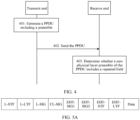
- FIG. 4 is a flowchart of a communication method according to an embodiment of this application. As shown in FIG. 4 , the method in this embodiment may include the following steps.
- Step 401 A transmit end generates a PPDU including a preamble.
- the preamble includes a legacy physical layer preamble and a new physical layer preamble.
- the legacy physical layer preamble includes the L-STF, the L-LTF, and the L-SIG in FIG. 3A to FIG. 3F , and can be decoded by a receive end that supports the 802.11a standard.
- the new physical layer preamble is different from the new physical layer preamble in FIG. 3B to FIG. 3F , and can be decoded by a receive end that supports a next-generation 802.11 standard. In consideration of compatibility, the receive end that supports the next-generation 802.11 standard can also support the 802.11a standard.
- the legacy physical layer preamble can be decoded by a plurality of receive ends, and the new physical layer preamble can be decoded by a portion of the plurality of receive ends.
- the legacy physical layer preamble can be successfully received by an existing Wi-Fi device and a next-generation Wi-Fi device.
- the new physical layer preamble can be successfully received by the next-generation Wi-Fi device, but cannot be received by the existing Wi-Fi device.
- the new physical layer preamble includes a repeated field.
- the repeated field is a field that has a preset out-of-order relationship with a preset field of the legacy physical layer preamble in frequency domain.
- the repeated field may be the same as the preset field of the legacy physical layer preamble.
- the preset field may be the same as the repeated field.
- the preset field of the legacy physical layer preamble includes a plurality of OFDM symbols
- the preset field of the legacy physical layer preamble may be any one of the L-STF, the L-LTF, or the L-SIG.
- the preset field of the legacy physical layer preamble may be the L-SIG.
- the repeated field in the new physical layer preamble is used to carry information for automatically detecting that the PPDU is a next-generation PPDU.
- the new physical layer preamble may further include a field used to carry a new function indication provided in the next-generation 802.11 standard.
- the new physical layer preamble may further include, for example but not limited to, the field shown in FIG. 3H .
- the next-generation PPDU is an EHT PPDU
- the preset field of the legacy physical layer preamble is an L-SIG.
- a frame structure of the EHT PPDU may be shown in FIG. 5A .
- a CL-SIG is a repeated field, and there is a preset out-of-order relationship between the CL-SIG and the L-SIG in frequency domain.
- Interleaving processing, out-of-order processing, scrambling processing, and the like can be used to implement frequency-domain out of order processing. Therefore, one or more of interleaving processing, out-of-order processing, scrambling processing, and the like may be performed to enable the repeated field to be the field that has the preset out-of-order relationship with the preset field of the legacy physical layer preamble in frequency domain.
- the repeated field that has the preset out-of-order relationship with the preset field of the legacy physical layer preamble in frequency domain may be generated in any one of the following three manners.
- Manner 1 The first frequency-domain processing process includes interleaving processing, and the second frequency-domain processing process does not include interleaving processing.
- the next-generation PPDU is the EHT PPDU
- the preset field of the legacy physical layer preamble is the L-SIG
- the frame structure of the EHT PPDU is shown in FIG. 5A .
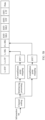
- FIG. 5B after channel coding, interleaving processing, constellation point mapping, and inverse fast Fourier transform (inverse fast fourier transform, IFFT) are sequentially performed on a frequency-domain information bit carried in the L-SIG field, the L-SIG is generated. After channel coding, constellation point mapping processing, and IFFT are sequentially performed on the information bit, the CL-SIG is generated. In other words, the interleaving processing step performed in the process of generating the L-SIG may not be performed.
- an only difference between the first frequency-domain processing process and the second frequency-domain processing process may lie in that, the first frequency-domain processing process includes interleaving processing, but the second frequency-domain processing process does not include interleaving processing. Except that, other processing is the same.
- a constellation point mapping mode in the first processing process is the same as a constellation point mapping mode in the second frequency-domain processing process.
- coding and IFFT performed in the second frequency-domain processing process of generating the CL-SIG are the same as coding and IFFT performed in the first frequency-domain processing process of generating the L-SIG. Cyclic shift delay (cyclic shift delay, CSD) processing, cyclic prefix (cyclic prefix, CP) processing, and the like may be further performed after IFFT.
- the first frequency-domain processing process includes interleaving processing and the second frequency-domain processing process does not include interleaving processing
- a constellation point mapping mode in the first processing process is different from a constellation point mapping mode in the second frequency-domain processing process.
- Manner 2 The first frequency-domain processing process does not include scrambling processing, and the second frequency-domain processing process includes scrambling processing.
- the next-generation PPDU is the EHT PPDU
- the preset field of the legacy physical layer preamble is the L-SIG
- the frame structure of the EHT PPDU is shown in FIG. 5A .
- FIG. 5C after channel coding, interleaving processing, constellation point mapping, and inverse fast Fourier transform (inverse fast fourier transform, IFFT) are sequentially performed on a frequency-domain information bit carried in the L-SIG field, the L-SIG is generated.
- IFFT inverse fast fourier transform
- the CL-SIG is generated.
- scrambling processing may be performed before channel coding, or may be performed after interleaving processing and before constellation point mapping.
- a scrambler relating to scrambling processing may be a scrambler of IEEE 802.11a.
- an only difference between the first frequency-domain processing process and the second frequency-domain processing process may lie in that, the first frequency-domain processing process does not include scrambling processing, but the second frequency-domain processing process includes scrambling processing. Except that, other processing is the same.
- the first frequency-domain processing process does not include scrambling processing and the second frequency-domain processing process includes scrambling processing
- a constellation point mapping mode in the first processing process is different from a constellation point mapping mode in the second frequency-domain processing process.
- scrambling processing is performed before IFFT and after constellation point mapping is used as an example.
- Scrambling processing may be performed before IFFT.
- scrambling processing may be performed before channel coding or after constellation point mapping.
- Manner 3 The first frequency-domain processing process does not include out-of-order processing for a data symbol, and the second frequency-domain processing process includes out-of-order processing for a data symbol.
- the next-generation PPDU is the EHT PPDU
- the preset field of the legacy physical layer preamble is the L-SIG
- the frame structure of the EHT PPDU is shown in FIG. 5A .
- FIG. 5D after channel coding, interleaving processing, constellation point mapping, and inverse fast Fourier transform (inverse fast fourier transform, IFFT) are sequentially performed on a frequency-domain information bit carried in the L-SIG field, the L-SIG is generated.
- IFFT inverse fast fourier transform
- an only difference between the first frequency-domain processing process and the second frequency-domain processing process may lie in that, the first frequency-domain processing process does not include out-of-order processing for a data symbol, but the second frequency-domain processing process includes out-of-order processing for a data symbol. Except that, other processing is the same.
- an only difference between the processing process of generating the CL-SIG and the processing process of generating the L-SIG lies in that, the first frequency-domain processing process does not include out-of-order processing for a data symbol, and the second frequency-domain processing process includes out-of-order processing for a data symbol.
- a data symbol is generated after constellation point mapping is performed on an information bit.
- out-of-order processing includes any one of the following: performing cyclic shift on data symbols carried on data subcarriers, interchanging data symbols carried on odd-numbered and even-numbered data subcarriers, and interchanging data symbols carried in high-frequency and low-frequency data subcarrier subsets.
- the data symbols carried on the data subcarriers may be cyclically shifted by n bits, where n may be an integer greater than 0 and less than a quantity of data subcarriers.
- cyclic shift is performed on the data symbols carried on the data subcarriers
- the data symbols carried on the 48 data subcarriers ranked from the low frequency to the high frequency are respectively D2, D3, ..., D48, and D1. It should be noted that cyclic shift may be performed on the data symbols after constellation point mapping, or cyclic shift may be performed, before constellation point mapping, on coding bits obtained through channel coding.
- a quantity of data subcarriers is m
- numbers (which may also be referred to as sequence numbers) of the m data subcarriers ranked from a low frequency to a high frequency are respectively 1, ..., and m
- an odd-numbered data subcarrier and an even-numbered data subcarrier may be grouped into one group to obtain m/2 groups, and a data symbol carried on the odd-numbered data subcarrier and a data symbol carried on the even-numbered data subcarrier in one group are interchanged.
- data symbols carried on 48 data subcarriers ranked from the low frequency to the high frequency are respectively D1, D2, ..., and D48.
- the data symbols carried on the 48 data subcarriers ranked from the low frequency to the high frequency are respectively D2, D1, D4, D3, ..., D48, and D47.
- each coding bit may correspond to one data subcarrier.
- coding bits that are obtained through channel coding and that correspond to odd-numbered and even-numbered data subcarriers may be interchanged.
- a set including all data subcarriers may be divided, based on frequencies of the data subcarriers, into a high-frequency data subcarrier subset and a low-frequency data subcarrier subset corresponding to the high-frequency subcarrier subset.
- a frequency of a data subcarrier in the high-frequency subcarrier subset is higher than a frequency of a data subcarrier in the low-frequency subcarrier subset corresponding to the high-frequency subcarrier subset.
- a data symbol carried on a data subcarrier in the high-frequency data subcarrier subset and a data symbol carried on a data subcarrier in the low-frequency subcarrier subset corresponding to the high-frequency subcarrier subset are interchanged.
- one or more high-frequency subcarrier subsets there may be one or more high-frequency subcarrier subsets, and one low-frequency subcarrier subset corresponds to one high-frequency subcarrier subset.
- there are 48 data subcarriers there is one high-frequency subcarrier subset, and in the first frequency-domain processing process, data symbols carried on the 48 data subcarriers ranked from a low frequency to a high frequency after constellation point mapping are respectively D1, D2, ..., and D48.
- the data symbols carried on the 48 data subcarriers ranked from the low frequency to the high frequency are respectively D25, D26, ..., D48, D1, D2, ..., and D24.
- each coding bit may correspond to one data subcarrier.
- coding bits that are obtained through channel coding and that correspond to high-frequency and low-frequency data subcarriers may be interchanged.
- every 12 data subcarriers are grouped into one group to obtain four groups: a group 1, a group 2, a group 3, and a group 4.
- Data symbols carried on data subcarriers in the group 1 and data symbols carried on data subcarriers in the group 2 are interchanged.
- Data symbols carried on data subcarriers in the group 3 and data symbols carried on data subcarriers in the group 4 are interchanged.
- data symbols carried on two specific data subcarriers are interchanged.
- each coding bit may correspond to one data subcarrier.
- coding bits that are obtained through channel coding and that correspond to different data subcarriers may be changed correspondingly.
- data symbol carried on m data subcarriers may be point multiplied by an m-bit random sequence, to carry additional information.
- a sequence value of the random sequence may be 1 or -1, but is not limited to the two values.
- the m-bit random sequence is a sequence whose bits are all -1. Alternatively, in the m-bit random sequence, half of bits are 1, and the other half of bits are -1. Further, optionally, a data symbol carried on an odd-numbered data subcarrier may be multiplied by 1, and a data symbol carried on an even-numbered data subcarrier may be multiplied by -1.
- a data symbol carried on a data subcarrier in a high-frequency data subcarrier subset may be multiplied by 1, and a data symbol carried on a data subcarrier in a low-frequency data subcarrier subset may be multiplied by - 1.
- a data symbol carried on an odd-numbered data subcarrier may be multiplied by -1, and a data symbol carried on an even-numbered data subcarrier may be multiplied by 1.
- a data symbol carried on a data subcarrier in a high-frequency data subcarrier subset may be multiplied by -1, and a data symbol carried on a data subcarrier in a low-frequency data subcarrier subset may be multiplied by 1.
- two values of the m-bit random sequence may be used to carry one-bit signal indicating a preamble.
- a sequence whose bits are all 1 may be used to indicate that an EHT PPDU is a preamble puncturing EHT PPDU (preamble puncture EHT PPDU), and a sequence whose bits are all -1 may be used to indicate that an EHT PPDU is not a preamble puncturing EHT PPDU.
- a concept of preamble puncturing is similar to that of preamble puncturing of a PPDU in 802.11ax.
- preamble puncturing may indicate that a preamble and a data field are not transmitted on a 20-MHz bandwidth of a bandwidth.
- the repeated field is a 1 st field of the new physical layer preamble.
- the repeated field may be alternatively a 2 nd field of the new physical layer preamble.
- the BPSK mode may be used for constellation point mapping in the second frequency-domain processing process.
- the repeated field when the repeated field is the 1 st field of the new physical layer preamble, the repeated field uses an unrotated constellation point mapping mode (excluding QBPSK), for example, binary phase shift keying (binary phase shift keying, BPSK).
- QBPSK binary phase shift keying
- BPSK binary phase shift keying
- the repeated field when the repeated field is the 2 nd field of the new physical layer preamble, the repeated field may use a constellation point mapping mode such as BPSK or QBPSK. This is not limited.
- the foregoing plurality of auto-detection manners may be further used in combination with a manner in which a value of a length field in the L-SIG of the legacy preamble is exactly divided by 3.
- the foregoing plurality of auto-detection manners may be further used in combination with a manner in which a value of a length field in the L-SIG field of the legacy preamble is not exactly divided by 3.
- an 802.11n receive end performs auto detection by determining a constellation point mapping mode used for a 1 st OFDM field following the L-SIG, when the 1 st field of the new physical layer preamble uses the QBPSK mode for constellation point mapping, the following problem may be caused.
- the 802.11n receive end determines, on the basis that the 1 st OFDM field following the L-SIG uses the QBPSK mode for constellation point mapping, that the PPDU is an HT PPDU; and if the PPDU is not an HT PPDU actually, the 802.11n receive end may incorrectly decode the 1 st field of the new physical layer preamble, for example, the 802.11n receive end fails to perform a cyclic redundancy check, and the 802.11n receive end does not comply with the length field of the L-SIG to enter a silent time period. As a result, this behavior may interfere with the PPDU that is being transmitted.
- the repeated field when the repeated field is the 1 st field of the new physical layer preamble, the repeated field uses an unrotated constellation point mapping mode (excluding QBPSK). This can prevent the 802.11n receive end from mistakenly determining a next-generation PPDU as an HT PPDU, thereby avoiding a dangerous behavior of not complying with the length field in the L-SIG.
- an unrotated constellation point mapping mode excluding QBPSK
- an 802.11a receive end for example, an 802.11a receive end, an 802.11ac receive end, or an 802.11ax receive end mistakenly determine, through auto-detection, the next-generation PPDU as an 802.11a PPDU, an 802.11ac VHT PPDU, or an 802.11ax HE PPDU respectively, the foregoing dangerous behavior that the 802.11n receive end does not comply with the length field in the L-SIG does not occur.
- any field of the new physical layer preamble other than the 1 st field uses the rotated BPSK mode for constellation point mapping.
- Any field of the new physical layer preamble other than the 1 st field uses the rotated BPSK mode for constellation point mapping, so that the receive end can further determine, in an enhanced manner based on the constellation point mapping mode used for the field other than the 1 st field, whether a received PPDU is a next-generation PPDU. This improves accuracy of a determining result.
- the field, other than the 1 st field, that uses the rotated BPSK mode for constellation point mapping may be the 2 nd field of the new physical layer preamble, for example, a 2 nd OFDM symbol of the new physical layer preamble.
- information bits before channel coding may be the same, and information bits after channel coding may be the same or different.
- a bit input to a channel encoder for the repeated field may be the same as a bit input to the channel encoder for the preset field of the legacy physical layer preamble, and specific channel coding modes may be the same or different.
- IFFT may alternatively be replaced with inverse discrete Fourier transform (inverse discrete fourier transform, IDFT).
- IDFT inverse discrete fourier transform
- Step 402 The transmit end sends the PPDU.
- the transmit end may send the PPDU in a broadcast or unicast manner.
- Step 403 The receive end determines whether the new physical layer preamble of the PPDU includes the repeated field.
- the repeated field is the field that has the preset out-of-order relationship with the preset field of the legacy physical layer preamble of the PPDU in frequency domain.
- the PPDU is a target PPDU, that is, a next-generation PPDU.
- the determining whether the new physical layer preamble includes a repeated field may include: determining a similarity between first information and second information, where the first information is obtained by performing a first decoding processing process on the preset field of the legacy physical layer preamble, and the second information is obtained by performing a second decoding processing process on the repeated field; and if the similarity is greater than or equal to a preset threshold, determining that the new physical layer preamble includes the repeated field; or if the similarity is less than a preset threshold, determining that the new physical layer preamble does not include the repeated field.
- types of the first information and the second information may be types that can reflect the preset out-of-order relationship.
- the types of the first information and the second information are the same, for example, both are information bits or data symbols.
- the first decoding processing process and the second decoding processing process each may include all decoding processes, or may include a portion of decoding processes.
- the similarity is less than the preset threshold, it is determined whether the new physical layer preamble includes information used for auto-detection of another 802.11 standard.
- a relationship between the first decoding processing process and the second decoding processing process may include the following three types.
- Type 1 The first decoding processing process includes de-interleaving processing, and the second decoding processing process does not include de-interleaving processing.
- the preset field of the legacy physical layer preamble is the L-SIG.
- the receive end may decode the L-SIG by performing a decoding processing process of an existing legacy preamble of the 802.11.
- the receive end decodes a CL-SIG
- the receive end does not perform de-interleaving, but performs binary convolutional coding (BCC, binary convolutional code) channel decoding.
- BCC binary convolutional code
- the receive end may compare a similarity between an information bit obtained by decoding the L-SIG and an information bit obtained by decoding the CL-SIG.
- the receive end determines that the PPDU is an EHT PPDU; or the similarity is less than or equal to a preset threshold, the receive end determines that the PPDU is not an EHT PPDU.
- the receive end may compare a similarity between a coding bit obtained by de-interleaving the L-SIG and a coding bit obtained by performing constellation point de-mapping on the CL-SIG. If the similarity is greater than a preset threshold, the receive end determines that the PPDU is an EHT PPDU; or the similarity is less than or equal to a preset threshold, the receive end determines that the PPDU is not an EHT PPDU.
- Type 2 The first decoding processing process does not include de-scrambling processing, and the second decoding processing process includes de-scrambling processing.
- the preset field of the legacy physical layer preamble is the L-SIG.
- the receive end may compare a similarity between second information and first information, where the second information is obtained by performing de-scrambling processing or other processing (for example, channel decoding) after de-scrambling processing on the CL-SIG, and the first information is obtained by performing corresponding processing on the L-SIG. If the similarity is greater than a preset threshold, the receive end may determine that the PPDU is an EHT PPDU; or the similarity is less than or equal to a preset threshold, the receive end may determine that the PPDU is not an EHT PPDU.
- Type 3 The first decoding processing process does not include de-out-of-order processing for a data symbol, and the second decoding processing process includes de-out-of-order processing for a data symbol.
- de-out-of-order processing for a data symbol includes any one of the following: performing cyclic shift on data symbols carried on data subcarriers, interchanging data symbols carried on odd-numbered and even-numbered data subcarriers, and interchanging data symbols carried in high-frequency and low-frequency data subcarrier subsets.
- the preset field of the legacy physical layer preamble is the L-SIG.
- the receive end may compare a similarity between second information and first information, where the second information is obtained by performing de-out-of-order processing for a data symbol or other processing (for example, channel decoding) after de-out-of-order processing for a data symbol on the CL-SIG, and the first information is obtained by performing corresponding processing on the L-SIG. If the similarity is greater than a preset threshold, the receive end determines that the PPDU is an EHT PPDU; or the similarity is less than or equal to a preset threshold, the receive end determines that the PPDU is not an EHT PPDU.
- de-out-of-order processing for a data symbol in step 403 is reverse to out-of-order processing in step 401.
- de-out-of-order processing for a data symbol refers to out-of-order processing. Details are not described herein again.
- the foregoing plurality of auto-detection manners may be further used in combination with a manner in which a value of a length field in the L-SIG field of the legacy preamble is exactly divided by 3.
- the foregoing plurality of auto-detection manners may be further used in combination with a manner in which a value of a length field in the L-SIG field of the legacy preamble is not exactly divided by 3.
- an information bit obtained by decoding the PPDU may be parsed based on a frame structure of the next-generation PPDU.
- the transmit end generates and sends the PPDU including the preamble, where the preamble includes the legacy physical layer preamble and the new physical layer preamble, the new physical layer preamble includes the repeated field, the repeated field is the field that has the preset out-of-order relationship with the preset field of the legacy physical layer preamble in frequency domain.
- the receive end determines whether the new physical layer preamble of the received PPDU includes the repeated field. If the PPDU includes the repeated field, the receive end determines that the PPDU is the target PPDU, that is, the next-generation PPDU. In this way, auto-detection of the physical layer preamble of the PPDU in the next-generation 802.11 standard is implemented. In addition, robustness of the preset field of the legacy physical layer preamble is enhanced by setting the repeated field. This provides a possibility of outdoor transmission.
- FIG. 6 is a flowchart of a communication method according to another embodiment of this application. As shown in FIG. 6 , the method in this embodiment may include the following steps.
- Step 601 A transmit end generates a PPDU including a physical preamble.
- the physical preamble includes a legacy physical layer preamble and a new physical layer preamble.
- the legacy physical layer preamble includes the L-STF, the L-LTF, and the L-SIG in FIG. 3A to FIG. 3F , and can be decoded by a receive end that supports the 802.11a standard.
- the new physical layer preamble is different from the new physical layer preamble in FIG. 3B to FIG. 3F , and can be decoded by a receive end that supports a next-generation 802.11 standard. In consideration of compatibility, the receive end that supports the next-generation 802.11 standard can also support the 802.11a standard. Therefore, the legacy physical layer preamble can be decoded by a plurality of receive ends, and the new physical layer preamble can be decoded by a portion of the plurality of receive ends.
- a 1 st field of the new physical layer preamble is the same as the preset field of the legacy physical layer preamble, and any field of the new physical layer preamble other than the 1 st field uses a rotated BPSK mode for constellation point mapping.
- a 2 nd field of the new physical layer preamble is the same as the preset field of the legacy preamble.
- the preset field of the legacy physical layer preamble may be any one of the L-STF, the L-LTF, or the L-SIG.
- the preset field of the legacy physical layer preamble may be the L-SIG.
- the 1 st field of the new physical layer preamble is the same as the preset field of the legacy physical layer preamble, and any field of the new physical layer preamble other than the 1 st field uses the rotated BPSK mode for constellation point mapping, to carry information for automatically detecting that the PPDU is a next-generation PPDU.
- the new physical layer preamble may further include a field, other than the 1 st field, used to carry a new function indication provided in the next-generation 802.11 standard.
- the new physical layer preamble may further include, for example, the field shown in FIG. 3H .
- the next-generation PPDU is an EHT PPDU
- the preset field of the legacy physical layer preamble is an L-SIG.
- a frame structure of the EHT PPDU may be shown in FIG. 7A .
- An RL-SIG is a field that is the same as the L-SIG in the new physical layer preamble.
- any field of an EHT-SIG1, an EHT-SIG2, an EHT-STF, or an EHT-LTF uses a rotated BPSK mode for constellation point mapping, such as QBPSK.
- any field other than the 1 st field uses the rotated BPSK mode for constellation point mapping
- the plurality of OFDM symbols may use the rotated BPSK mode for constellation point mapping, or a portion of the plurality of OFDM symbols (for example, a 1 st OFDM symbol) may use the rotated BPSK mode for constellation point mapping.
- a 1 st field following the RL-SIG may be QBPSK modulated
- a 1 st OFDM symbol following the RL-SIG may be QBPSK modulated.
- the 2 nd field of the new physical layer preamble uses the rotated BPSK mode for constellation point mapping.
- the 2 nd field of the new physical layer preamble uses the rotated BPSK mode for constellation point mapping, so that the receive end determine, as early as possible, that the PPDU is the next-generation PPDU.
- the 2 nd field (for example, a 2 nd OFDM symbol) of the physical layer preamble is the same as the preset field of the legacy preamble, and may carry information for automatically detecting that the PPDU is the next-generation PPDU.
- the following step 603 may be replaced with the following: The receive end determines whether the 2 nd field of the new physical layer preamble of the received PPDU is the same as the preset field of the legacy physical layer preamble.
- the receive end determines that the PPDU is a target PPDU, that is, the next-generation PPDU. If the 2 nd field of the new physical layer preamble of the PPDU is different from the preset field of the legacy physical layer preamble, the receive end determines that the PPDU is not the target PPDU.
- the 1 st field for example, a 1 st OFDM symbol
- the new physical layer preamble is BPSK modulated. In other words, symbols carried on all data subcarriers on the OFDM symbol are BPSK modulated.
- the next-generation PPDU is an EHT PPDU
- the preset field of the legacy physical layer preamble is an L-SIG.
- a frame structure of the EHT PPDU may be shown in FIG. 7B .
- An RL-SIG is a field that is the same as the L-SIG in the new physical layer preamble.
- the RL-SIG mentioned herein may alternatively be replaced with the CL-SIG in the foregoing embodiment.
- the RL-SIG in FIG. 7A and FIG. 7B is the same as the RL-SIG in FIG. 3E , and both are a repeat field of the L-SIG.
- Step 602 The transmit end sends the PPDU.
- the transmit end may send the PPDU in a broadcast or unicast manner.
- Step 603 The receive end determines whether the 1 st field of the new physical layer preamble of the PPDU is the same as the preset field of the legacy physical layer preamble, and whether any field of the new physical layer preamble other than the 1 st field uses the rotated BPSK mode for constellation point mapping.
- the receive end determines that the PPDU is a target PPDU, that is, the next-generation PPDU.
- the receive end determines that the frame structure of the PPDU is not a frame structure of the next-generation PPDU.
- the legacy physical layer preamble such as the L-SIG or the EHT-SIG 1 uses the QBPSK mode for constellation point mapping.
- the receive end may first decode the RL-SIG, and then compare a similarity between the RL-SIG and the L-SIG. If the similarity is greater than a threshold, the receive end continues to determine whether the EHT-SIG 1 uses the QBPSK mode for constellation point mapping, that is, compares whether a difference obtained by subtracting I-axis energy from Q-axis energy is greater than a threshold. If the similarity is greater than the threshold and the EHT-SIG 1 uses the QBPSK mode for constellation point mapping, the receive end determines that the received PPDU is an EHT PPDU. If the similarity is greater than the threshold but the EHT-SIG 1 does not use the QBPSK mode for constellation point mapping, the receive end determines that the received PPDU is an 802.11ax HE PPDU.
- the foregoing plurality of auto-detection manners may be further used in combination with a manner in which a value of a length field in the L-SIG field of the legacy preamble is exactly divided by 3.
- the foregoing plurality of auto-detection manners may be further used in combination with a manner in which a value of a length field in the L-SIG field of the legacy preamble is not exactly divided by 3.
- an 802.11ax receive end may determine, by comparing the similarity between the RL-SIG and the L-SIG, that the received PPDU is the 802.11ax HE PPDU. However, because the PPDU is not an HE PPDU, even if the 802.11ax receive end incorrectly performs decoding, the PPDU is not affected.
- the 802.11ax receive end may further determine whether the PPDU is another PPDU, for example, whether the PPDU is a VHT PPDU.
- the 802.11ax receive end may parse, based on the frame structure of the next-generation PPDU, an information bit obtained by decoding the PPDU.
- the transmit end generates and sends the PPDU including the preamble, where the preamble includes the legacy physical layer preamble and the new physical layer preamble, the 1 st field of the new physical layer preamble is the same as the preset field of the legacy physical layer preamble, and any field of the new physical layer preamble other than the 1 st field uses the rotated BPSK mode for constellation point mapping.
- the receive end determines whether the 1 st field of the new physical layer preamble of the received PPDU is the same as the preset field of the legacy physical layer preamble, and whether any field of the new physical layer preamble other than the 1 st field uses the rotated BPSK mode for constellation point mapping.
- the receive end determines that the PPDU is the target PPDU, that is, the next-generation PPDU. In this way, auto-detection of the physical layer preamble of the PPDU in the next-generation 802.11 standard is implemented.
- FIG. 8 is a flowchart of a communication method according to still another embodiment of this application. As shown in FIG. 8 , the method in this embodiment may include the following steps.
- Step 801 A transmit end generates a PPDU including a preamble.
- the preamble includes a new physical layer preamble.
- the new physical layer preamble includes a preset field, a check bit of the preset field is located at a preset location of a data subcarrier, and the preset location is used to indicate a frame structure of the PPDU.
- the check bit of the preset field is located at the preset location of the data subcarrier, to carry information for automatically detecting that the PPDU is a next-generation PPDU.
- the preset field may be further used to carry a new function indication provided in a next-generation 802.11 standard.
- the PPDU is an EHT PPDU.
- the preset field may be the EHT-SIG1 in the fields shown in FIG. 3H , or may be the EHT-SIG1 shown in FIG. 5 or FIG. 7 .
- the check bit in the PPDU is located at a specific location of a data subcarrier.
- the check bit is located after a data subcarrier carrying data signal and before a tail bit used for BCC decoding.
- the preset location in this embodiment may be any location other than the specific location, to be different from the location of the check bit in the current technology, so as to carry the information for automatically detecting that the PPDU is the next-generation PPDU.
- the preset location is a start location of the data subcarrier.
- the preset field may be a 1 st field or a 2 nd field of the new physical layer preamble.
- check bits of the plurality of OFDM symbols may be all located at the preset location of the data subcarrier, or check bits of a portion of the plurality of OFDM symbols may be located at the preset location of the data subcarrier. This may not be limited in this application.
- the method in this embodiment may be combined with the method embodiment shown in FIG. 4 .
- that the location of the check bit of the preset field of the new physical layer preamble is the preset location may be further used to indicate the next-generation PPDU.
- a receive end needs to determine whether the new physical layer preamble of the PPDU includes the repeated field, and also needs to determine whether the location of the check bit of the preset field of the new physical layer preamble is the preset location.
- the receive end determines that the frame structure of the PPDU is a frame structure of the next-generation PPDU, that is, the receive end determines that the PPDU is the next-generation PPDU.
- the method in this embodiment may be combined with the method embodiment shown in FIG. 6 .
- the 1 st field of the new physical layer preamble is the same as a preset field of a legacy preamble and that any field of the new physical layer preamble other than the 1 st field uses a rotated BPSK mode for constellation point mapping to indicate the next-generation PPDU in the embodiment shown in FIG. 6
- that the location of the preset field of the new physical layer preamble is the preset location may be further used to indicate the next-generation PPDU.
- the receive end needs to determine whether the 1 st field of the new physical layer preamble in the PPDU is the same as the preset field of the legacy preamble, and whether any field of the new physical layer preamble other than the 1 st field uses the rotated BPSK mode for constellation point mapping, and also needs to determine whether the location of the check bit of the preset field of the new physical layer preamble is the preset location.
- any field of the new physical layer preamble other than the 1 st field uses the rotated BPSK mode for constellation point mapping, and the location of the check bit of the preset field of the new physical layer preamble is the preset location, the receive end determines that the frame structure of the PPDU is a frame structure of the next-generation PPDU.
- the receive end needs to determine whether the 1 st field of the new physical layer preamble of the PPDU is the same as the preset field of the new physical layer preamble, and also needs to determine whether the location of the check bit of the preset field of the new physical layer preamble is the preset location.
- the receive end determines that the frame structure of the PPDU is a frame structure of the next-generation PPDU.
- the PPDU may further include a legacy physical layer preamble.
- the legacy physical layer preamble includes the L-STF, the L-LTF, and the L-SIG in FIG. 3A to FIG. 3F , and can be decoded by a receive end that supports the 802.11a standard.
- the new physical layer preamble is different from the new physical layer preamble in FIG. 3B to FIG. 3F , and can be decoded by a receive end that supports the next-generation 802.11 standard. In consideration of compatibility, the receive end that supports the next-generation 802.11 standard can also support the 802.11a standard. Therefore, the legacy physical layer preamble can be decoded by a plurality of receive ends, and the new physical layer preamble can be decoded by a portion of the plurality of receive ends.
- Step 802 The transmit end sends the PPDU.
- the transmit end may send the PPDU in a broadcast or unicast manner.
- Step 803 The receive end determines whether the check bit of the preset field of the new physical layer preamble of the PPDU is located at the preset location of the data subcarrier.
- the receive end determines that the PPDU is a target PPDU, that is, the next-generation PPDU.
- the receive end determines that the frame structure of the PPDU is not the frame structure of the next-generation PPDU.
- the receive end may extract the check bit from the decoded preset field (EHT-SIG1) based on the preset location, and then perform a check (for example, perform a cyclic redundancy check (cyclic redundancy check, CRC)) on an information bit. If the check succeeds, the receive end determines that the received PPDU is the next-generation PPDU.
- EHT-SIG1 decoded preset field
- CRC cyclic redundancy check
- the receive end may further determine whether the PPDU is another PPDU, for example, whether the PPDU is a VHT PPDU.
- the receive end may parse, based on the frame structure of the next-generation PPDU, an information bit obtained by decoding the PPDU.
- the transmit end generates and sends the PPDU including the preamble, where the preamble includes the new physical layer preamble, the new physical layer preamble includes the preset field, the check bit of the preset field is located at the preset location of the data subcarrier, and the preset location is used to indicate the frame structure of the PPDU.
- the receive end determines whether the check bit of the preset field of the new physical layer preamble of the received PPDU is located at the preset location of the data subcarrier. If the check bit in the preset field of the new physical layer preamble is located at the preset location of the data subcarrier, the receive end determines that the PPDU is the target PPDU, that is, the next-generation PPDU. In this way, auto-detection of the physical layer preamble of the PPDU in the next-generation 802.11 standard is implemented.
- the foregoing plurality of auto-detection manners may be further used in combination with a manner in which a value of a length field in the L-SIG field of the legacy preamble is exactly divided by 3.
- the foregoing plurality of auto-detection manners may be further used in combination with a manner in which a value of a length field in the L-SIG field of the legacy preamble is not exactly divided by 3.
- the repeated field, the 1 st field, the field other than the 1 st field, the preset field of the legacy physical layer preamble, and the preset field of the new physical layer preamble each may be understood as an OFDM symbol.
- the 1 st field may be a 1 st OFDM symbol
- the 2 nd field may be understood as a 2 nd OFDM symbol
- the field other than the 1 st field may be understood as an OFDM symbol other than the 1 st OFDM symbol.
- the field other than the 1 st field may be understood as the 2 nd OFDM symbol.
- the repeated field, the 1 st field, the field other than the 1 st field, the preset field of the legacy physical layer preamble, and the preset field of the new physical layer preamble each may be understood as a field that is constituted by one or more OFDM symbols.
- the L-LTF includes two OFDM symbols
- the L-SIG includes one OFDM symbol.
- the transmit end may further add, to the L-SIG of the PPDU in frequency domain, data symbols carried on four subcarriers, and set the data symbols to special values, to further carry the information for automatically detecting that the PPDU is the next-generation PPDU.
- the four subcarriers may be two subcarriers that are additionally added on two sides of 52 used subcarriers (which may include 48 data subcarriers and four pilot subcarriers). Numbers of the four subcarriers may be [-28 -27 27 28].
- Special values of the data symbols carried on the four subcarriers ranked from a low frequency to a high frequency may be values, other than [-1 -1 -1 -1 1] in the 802.11ax standard, for example, [-1 -1 -1 -1] and [1 -1 -1 -1].
- FIG. 9 is a schematic structural diagram of a communication apparatus according to an embodiment of this application.
- the communication apparatus provided in this embodiment may be used for a transmit end.
- the communication apparatus in this embodiment may include a generation unit 901 and a sending unit 902.
- the generation unit 901 is configured to generate a physical layer protocol data unit PPDU including a preamble, where the preamble includes a legacy physical layer preamble and a new physical layer preamble, the new physical layer preamble includes a repeated field, and the repeated field is a field that has a preset out-of-order relationship with a preset field of the legacy physical layer preamble in frequency domain.
- the sending unit 902 is configured to send the PPDU.
- a first frequency-domain processing process of generating an orthogonal frequency division multiplexing OFDM symbol of the preset field of the legacy physical layer preamble includes interleaving processing, and a second frequency-domain processing process of generating an OFDM symbol of the repeated field does not include interleaving processing;
- out-of-order processing includes any one of the following: performing cyclic shift on data symbols carried on data subcarriers, interchanging data symbols carried on odd-numbered and even-numbered data subcarriers, and interchanging data symbols carried in high-frequency and low-frequency data subcarrier subsets.
- a binary phase shift keying BPSK mode is used for constellation point mapping in the second frequency-domain processing process.
- the legacy physical layer preamble can be decoded by a plurality of receive ends, and the new physical layer preamble can be decoded by a portion of the plurality of receive ends.
- a bit input to a channel encoder for the repeated field is the same as a bit input to the channel encoder for the preset field of the legacy physical layer preamble in a frequency-domain processing process.
- the preset field of the legacy physical layer preamble is a legacy signal field L-SIG.
- the repeated field is a 1 st field or a 2 nd field of the new physical layer preamble.
- the repeated field is a 1 st field of the new physical layer preamble
- any field of the new physical layer preamble other than the 1 st field uses a rotated BPSK mode for constellation point mapping.
- the communication apparatus provided in this embodiment may be configured to execute the technical solutions on the transmit end side in the embodiment shown in FIG. 4 .
- Implementation principles and technical effects thereof are similar, and details are not described herein again.
- FIG. 10 is a schematic structural diagram of a communication apparatus according to another embodiment of this application.
- the communication apparatus provided in this embodiment may be used for a receive end.
- the communication apparatus in this embodiment may include a receiving unit 1001 and a determining unit 1002.
- the receiving unit 1001 is configured to receive a physical layer protocol data unit PPDU including a preamble, where the preamble includes a legacy physical layer preamble and a new physical layer preamble.
- the determining unit 1002 is configured to determine whether the new physical layer preamble includes a repeated field, where the repeated field is a field that has a preset out-of-order relationship with a preset field of the legacy physical layer preamble in frequency domain; and if the new physical layer preamble includes the repeated field, determine that the PPDU is a target PPDU.
- determining unit is configured to determine whether the new physical layer preamble includes a repeated field specifically includes:
- the first decoding processing process includes de-interleaving processing
- the second decoding processing process does not include de-interleaving processing
- de-out-of-order processing for a data symbol includes any one of the following: performing cyclic shift on data symbols carried on data subcarriers, interchanging data symbols carried on odd-numbered and even-numbered data subcarriers, and interchanging data symbols carried in high-frequency and low-frequency data subcarrier subsets.
- the communication apparatus provided in this embodiment may be configured to execute the technical solutions on the receive end side in the embodiment shown in FIG. 4 .
- Implementation principles and technical effects thereof are similar, and details are not described herein again.
- An embodiment of this application further provides a communication apparatus, used for a transmit end.
- a structure of the communication apparatus is similar to the structure shown in FIG. 9 , and the communication apparatus may also include a generation unit and a sending unit.
- the generation unit is configured to generate a physical layer protocol data unit PPDU including a preamble, where the preamble includes a legacy physical layer preamble and a new physical layer preamble, a 1 st field of the new physical layer preamble is the same as a preset field of the legacy physical layer preamble, and any field of the new physical layer preamble other than the 1 st field uses a rotated binary phase shift keying BPSK mode for constellation point mapping.
- the sending unit is configured to send the PPDU.
- a 2 nd field of the new physical layer preamble uses the rotated BPSK mode for constellation point mapping.
- the communication apparatus provided in this embodiment may be configured to execute the technical solutions on the transmit end side in the embodiment shown in FIG. 6 .
- Implementation principles and technical effects thereof are similar, and details are not described herein again.
- An embodiment of this application further provides a communication apparatus, used for a receive end.
- a structure of the communication apparatus is similar to the structure shown in FIG. 10 , and the communication apparatus may also include a receiving unit and a determining unit.
- the receiving unit is configured to receive a physical layer protocol data unit PPDU including a preamble, where the preamble includes a legacy physical layer preamble and a new physical layer preamble.
- the determining unit is configured to determine whether a 1 st field of the new physical layer preamble is the same as a preset field of the legacy physical layer preamble, and whether any field of the new physical layer preamble other than the 1 st field uses a rotated binary phase shift keying BPSK mode for constellation point mapping; and if the 1 st field of the new physical layer preamble is the same as the preset field of the legacy physical layer preamble, and any field of the new physical layer preamble other than the 1 st field uses a rotated BPSK mode for constellation point mapping, determine that the PPDU is a target PPDU.
- the determining whether any field of the new physical layer preamble other than the 1 st field uses a rotated BPSK mode for constellation point mapping includes: determining whether a 2 nd field of the new physical layer preamble uses the rotated BPSK mode for constellation point mapping.
- the communication apparatus provided in this embodiment may be configured to execute the technical solutions on the receive end side in the embodiment shown in FIG. 6 .
- Implementation principles and technical effects thereof are similar, and details are not described herein again.
- An embodiment of this application further provides a communication apparatus, used for a transmit end.
- a structure of the communication apparatus is similar to the structure shown in FIG. 9 , and the communication apparatus may also include a generation unit and a sending unit.
- the generation unit is configured to generate a physical layer protocol data unit PPDU including a new physical layer preamble, where the new physical layer preamble includes a preset field, a check bit of the preset field is located at a preset location of a data subcarrier, and the preset location is used to indicate a frame structure of the PPDU.
- the sending unit is configured to send the PPDU.
- the preset location is a start location of the data subcarrier.
- the preset field is a 1 st field or a 2 nd field of the new physical layer preamble.
- the communication apparatus provided in this embodiment may be configured to execute the technical solutions on the transmit end side in the embodiment shown in FIG. 8 .
- Implementation principles and technical effects thereof are similar, and details are not described herein again.
- An embodiment of this application further provides a communication apparatus, used for a receive end.
- a structure of the communication apparatus is similar to the structure shown in FIG. 10 , and the communication apparatus may also include a receiving unit and a determining unit.
- the receiving unit is configured to receive a physical layer protocol data unit PPDU including a preamble, where the preamble includes a new physical layer preamble.
- the determining unit is configured to determine whether a check bit of a preset field of the new physical layer preamble is located at a preset location of a data subcarrier, where the preset location is used to indicate that the PPDU is a target PPDU; and if the check bit of the preset field of the new physical layer preamble is located at the preset location of the data subcarrier, determine that the PPDU is the target PPDU.
- the preset location is a start location of the data subcarrier.
- the preset field is a 1 st field or a 2 nd field of the new physical layer preamble.
- the communication apparatus provided in this embodiment may be configured to execute the technical solutions on the receive end side in the embodiment shown in FIG. 8 .
- Implementation principles and technical effects thereof are similar, and details are not described herein again.
- division to the foregoing units of the communication apparatus is merely division into logical functions. In actual implementation, all or some of the units may be integrated into one physical entity, or may be physically separated. In addition, all of the units may be implemented in a form of software invoked by a processing element, or implemented in a form of hardware. Alternatively, some of the units may be implemented in a form of software invoked by a processing element, and some of the units may be implemented in a form of hardware. For example, the sending unit may be a processing element disposed separately, or may be implemented in a chip of the communication apparatus.
- the sending unit may be stored in a memory of the communication apparatus in a form of a program, and invoked by a processing element of the communication apparatus to perform a function of the sending unit. Implementation of other units is similar to the implementation of the sending unit. In addition, some or all of the units may be integrated together, or the units may be implemented independently.
- the processing element herein may be an integrated circuit having a signal processing capability. In an implementation process, the steps in the foregoing method or the foregoing units can be implemented by using a hardware integrated logic circuit in the processing element or by using instructions in a form of software.
- the sending unit is a unit for controlling sending, and may receive information through a transmit apparatus of the communication apparatus, such as an antenna and a radio frequency apparatus.
- the foregoing units may be configured as one or more integrated circuits for implementing the foregoing method, for example, one or more application-specific integrated circuits (Application Specific Integrated Circuit, ASIC), one or more microprocessors (such as a digital signal processor, DSP), one or more field programmable gate arrays (Field Programmable Gate Array, FPGA), or the like.
- ASIC Application Specific Integrated Circuit
- DSP digital signal processor
- FPGA Field Programmable Gate Array
- the processing element may be a general-purpose processor, such as a central processing unit (Central Processing Unit, CPU) or another processor that can invoke a program.
- the units may be integrated together and implemented as a system-on-a-chip (system-on-a-chip, SOC).
- FIG. 11 is a schematic diagram of a hardware structure of a communication device 110 according to an embodiment of this application.
- the communication device 110 includes at least one processor 1101, a communication bus 1102, a memory 1103, and at least one communication interface 1104.
- the processor 1101 may be a general-purpose central processing unit (central processing unit, CPU), a microprocessor, an application-specific integrated circuit (application-specific integrated circuit, ASIC), or one or more integrated circuits that are configured to control execution of a program in a solution of this application.
- CPU central processing unit
- ASIC application-specific integrated circuit
- the communication bus 1102 may include a channel on which information is transmitted between the foregoing components.
- the communication interface 1104 is any apparatus of a transceiver type, and is configured to communicate with another device or a communication network, for example, the Ethernet, a radio access network (radio access network, RAN), or a wireless local area network (wireless local area networks, WLAN).
- a radio access network radio access network, RAN
- a wireless local area network wireless local area networks, WLAN
- the memory 1103 may be a read-only memory (read-only memory, ROM) or another type of static storage device capable of storing static information and instructions, or a random access memory (random access memory, RAM) or another type of dynamic storage device capable of storing information and instructions, or may be an electrically erasable programmable read-only memory (electrically erasable programmable read-only memory, EEPROM), a compact disc read-only memory (compact disc read-only memory, CD-ROM) or another compact disc storage, an optical disc storage (including a compressed optical disc, a laser disc, an optical disc, a digital versatile optical disc, a Blu-ray optical disc, or the like), a magnetic disk storage medium or another magnetic storage device, or any other medium capable of carrying or storing expected program code in a form of an instruction or a data structure and capable of being accessed by a computer.
- the memory may exist independently, and is connected to the processor through the bus.
- the memory may alternatively be integrated with the processor.
- the memory 1103 is configured to store application program code used for executing the solution of this application, and the processor 1101 controls the execution.
- the processor 1101 is configured to execute the application program code stored in the memory 1103, to implement the communication methods provided in the foregoing embodiments of this application.
- the processor 1101 may perform processing related functions in the communication methods provided in the foregoing embodiments in this application, and the communication interface 1104 is responsible for communication with another device or a communication network. This is not specifically limited in this embodiment of this application.
- the processor 1101 may include one or more CPUs.
- the communication device 110 may include a plurality of processors.
- Each of the processors may be a single-core (single-CPU) processor, or may be a multi-core (multi-CPU) processor.
- the processor herein may be one or more devices, circuits, and/or processing cores for processing data (for example, a computer program instruction).
- the communication device 110 may further include an output device and an input device.
- the output device communicates with the processor 1101, and may display information in a plurality of manners.
- the output device may be a liquid crystal display (liquid crystal display, LCD), a light emitting diode (light emitting diode, LED) display device, a cathode ray tube (cathode ray tube, CRT) display device, a projector (projector), or the like.
- the input device communicates with the processor 1101, and may receive user input in a plurality of manners.
- the input device may be a mouse, a keyboard, a touchscreen device, or a sensor device.
- the communication device 110 provided in this embodiment of this application may be a chip, a transmit end, a receive end, or a device having a structure similar to that of the device shown in FIG. 11 .
- a type of the communication device 110 is not limited in this embodiment of this application.
- the communication device 110 is presented with the function modules implemented through integration.
- the "module" herein may be an application-specific integrated circuit (Application-Specific Integrated Circuit, ASIC), a circuit, a processor executing one or more software or firmware programs, a memory, an integrated logic circuit, and/or another component that can provide the foregoing function.
- ASIC Application-Specific Integrated Circuit
- the communication device 110 may be in the form shown in FIG. 11 .
- functions/implementation processes of the units in FIG. 9 and FIG. 10 may be implemented by the processor 1101 and the memory 1103 in FIG. 11 .
- the generation unit in FIG. 9 may be executed by the processor 1101 by invoking the application program code stored in the memory 1103. This is not limited in this embodiment of this application.
- the sending unit in FIG. 9 may be implemented by the communication interface 1104 in FIG. 11 . This is not limited in this embodiment of this application.
- the communication device provided in the embodiment shown in FIG. 11 may be specifically the transmit end in the embodiment shown in FIG. 4 , FIG. 6 , or FIG. 8 .
- the processor 1101 may perform the method, on the transmit end side, provided in the embodiment shown in FIG. 4 , FIG. 6 , or FIG. 8 .
- the communication device provided in the embodiment shown in FIG. 11 may be specifically the receive end in the embodiment shown in FIG. 4 , FIG. 6 , or FIG. 8 .
- the processor 1101 may perform the method, on the receive end side, provided in the embodiment shown in FIG. 4 , FIG. 6 , or FIG. 8 .
- an embodiment of this application provides a communication system.
- the communication system may include the communication apparatus or the communication device described in any one of the foregoing embodiments.
- Embodiment 1 A communication method, comprising: generating a physical layer protocol data unit PPDU comprising a preamble, wherein the preamble comprises a legacy physical layer preamble and a new physical layer preamble, the new physical layer preamble comprises a repeated field, and the repeated field is a field that has a preset out-of-order relationship with a preset field of the legacy physical layer preamble in frequency domain; and sending the PPDU.
- Embodiment 2 The method according to embodiment 1, wherein a first frequency-domain processing process of generating an orthogonal frequency division multiplexing OFDM symbol of the preset field of the legacy physical layer preamble comprises interleaving processing, and a second frequency-domain processing process of generating an OFDM symbol of the repeated field does not comprise interleaving processing; or the first frequency-domain processing process does not comprise scrambling processing, and the second frequency-domain processing process comprises scrambling processing; or the first frequency-domain processing process does not comprise out-of-order processing for a data symbol, and the second frequency-domain processing process comprises out-of-order processing for a data symbol.
- Embodiment 3 The method according to embodiment 2, out-of-order processing comprises any one of the following: performing cyclic shift on data symbols carried on data subcarriers, interchanging data symbols carried on odd-numbered and even-numbered data subcarriers, and interchanging data symbols carried in high-frequency and low-frequency data subcarrier subsets.
- Embodiment 4 The method according to embodiment 2 or 3, wherein a binary phase shift keying BPSK mode is used for constellation point mapping in the second frequency-domain processing process.
- Embodiment 5 The method according to any one of embodiments 1 to 4, wherein the legacy physical layer preamble can be decoded by a plurality of receive ends, and the new physical layer preamble can be decoded by a portion of the plurality of receive ends.
- Embodiment 6 The method according to any one of embodiments 1 to 5, wherein a bit input to a channel encoder for the repeated field is the same as a bit input to the channel encoder for the preset field of the legacy physical layer preamble in a frequency-domain processing process.
- Embodiment 7 The method according to any one of embodiments 1 to 6, wherein the preset field of the legacy physical layer preamble is a legacy signal field L-SIG.
- Embodiment 8 The method according to any one of embodiments 1 to 7, wherein the repeated field is a 1st field or a 2nd field of the new physical layer preamble.
- Embodiment 9 The method according to any one of embodiments 1 to 7, wherein the repeated field is a 1st field of the new physical layer preamble, and any field of the new physical layer preamble other than the 1st field uses a rotated BPSK mode for constellation point mapping.
- Embodiment 10 A communication method, comprising: receiving a physical layer protocol data unit PPDU comprising a preamble, wherein the preamble comprises a legacy physical layer preamble and a new physical layer preamble; determining whether the new physical layer preamble comprises a repeated field, wherein the repeated field is a field that has a preset out-of-order relationship with a preset field of the legacy physical layer preamble in frequency domain; and if the new physical layer preamble comprises the repeated field, determining that the PPDU is a target PPDU.
- Embodiment 11 The method according to embodiment 10, wherein the determining whether the new physical layer preamble comprises a repeated field comprises: determining a similarity between first information and second information, wherein the first information is obtained by performing a first decoding processing process on the preset field of the legacy physical layer preamble, and the second information is obtained by performing a second decoding processing process on the repeated field; and if the similarity is greater than or equal to a preset threshold, determining that the new physical layer preamble comprises the repeated field; or if the similarity is less than a preset threshold, determining that the new physical layer preamble does not comprise the repeated field.
- Embodiment 12 The method according to embodiment 11, wherein the first decoding processing process comprises de-interleaving processing, and the second decoding processing process does not comprise de-interleaving processing; or the first decoding processing process does not comprise de-scrambling processing, and the second decoding processing process comprises de-scrambling processing; or the first decoding processing process does not comprise de-out-of-order processing for a data symbol, and the second decoding processing process comprises de-out-of-order processing for a data symbol.
- Embodiment 13 The method according to embodiment 12, de-out-of-order processing for a data symbol comprises any one of the following: performing cyclic shift on data symbols carried on data subcarriers, interchanging data symbols carried on odd-numbered and even-numbered data subcarriers, and interchanging data symbols carried in high-frequency and low-frequency data subcarrier subsets.
- Embodiment 14 A communication method, comprising: generating a physical layer protocol data unit PPDU comprising a preamble, wherein the preamble comprises a legacy physical layer preamble and a new physical layer preamble, a 1st field of the new physical layer preamble is the same as a preset field of the legacy physical layer preamble, and any field of the new physical layer preamble other than the 1st field uses a rotated binary phase shift keying BPSK mode for constellation point mapping; and sending the PPDU.
- the preamble comprises a legacy physical layer preamble and a new physical layer preamble
- a 1st field of the new physical layer preamble is the same as a preset field of the legacy physical layer preamble
- any field of the new physical layer preamble other than the 1st field uses a rotated binary phase shift keying BPSK mode for constellation point mapping
- Embodiment 15 The method according to embodiment 14, wherein a 2nd field of the new physical layer preamble uses the rotated BPSK mode for constellation point mapping.
- Embodiment 16 A communication method, comprising: receiving a physical layer protocol data unit PPDU comprising a preamble, wherein the preamble comprises a legacy physical layer preamble and a new physical layer preamble; determining whether a 1st field of the new physical layer preamble is the same as a preset field of the legacy physical layer preamble, and whether any field of the new physical layer preamble other than the 1st field uses a rotated binary phase shift keying BPSK mode for constellation point mapping; and if the 1st field of the new physical layer preamble is the same as the preset field of the legacy physical layer preamble, and any field of the new physical layer preamble other than the 1st field uses the rotated BPSK mode for constellation point mapping, determining that the PPDU is a target PPDU.
- Embodiment 17 The method according to embodiment 16, wherein the determining whether any field of the new physical layer preamble other than the 1st field uses a rotated BPSK mode for constellation point mapping comprises: determining whether a 2nd field of the new physical layer preamble uses the rotated BPSK mode for constellation point mapping.
- Embodiment 18 A communication method, comprising: generating a physical layer protocol data unit PPDU comprising a new physical layer preamble, wherein the new physical layer preamble comprises a preset field, a check bit of the preset field is located at a preset location of a data subcarrier, and the preset location is used to indicate a frame structure of the PPDU; and sending the PPDU.
- Embodiment 19 The method according to embodiment 18, wherein the preset location is a start location of the data subcarrier.
- Embodiment 20 The method according to embodiment 18 or 19, wherein the preset field is a 1st field or a 2nd field of the new physical layer preamble.
- Embodiment 21 A communication method, comprising: receiving a physical layer protocol data unit PPDU comprising a preamble, wherein the preamble comprises a new physical layer preamble; determining whether a check bit of a preset field of the new physical layer preamble is located at a preset location of a data subcarrier, wherein the preset location is used to indicate that the PPDU is a target PPDU; and if the check bit of the preset field of the new physical layer preamble is located at the preset location of the data subcarrier, determining that the PPDU is the target PPDU.
- Embodiment 22 The method according to embodiment 21, wherein the preset location is a start location of the data subcarrier.
- Embodiment 23 The method according to embodiment 21 or 22, wherein the preset field is a 1st field or a 2nd field of the new physical layer preamble.
- Embodiment 24 A communication apparatus, used for a transmit end, wherein the communication apparatus comprises: a generation unit, configured to generate a physical layer protocol data unit PPDU comprising a preamble, wherein the preamble comprises a legacy physical layer preamble and a new physical layer preamble, the new physical layer preamble comprises a repeated field, and the repeated field is a field that has a preset out-of-order relationship with a preset field of the legacy physical layer preamble in frequency domain; and a sending unit, configured to send the PPDU.
- a generation unit configured to generate a physical layer protocol data unit PPDU comprising a preamble, wherein the preamble comprises a legacy physical layer preamble and a new physical layer preamble, the new physical layer preamble comprises a repeated field, and the repeated field is a field that has a preset out-of-order relationship with a preset field of the legacy physical layer preamble in frequency domain; and a sending unit, configured to send the PP
- Embodiment 25 The apparatus according to embodiment 24, wherein a first frequency-domain processing process of generating an orthogonal frequency division multiplexing OFDM symbol of the preset field of the legacy physical layer preamble comprises interleaving processing, and a second frequency-domain processing process of generating an OFDM symbol of the repeated field does not comprise interleaving processing; or the first frequency-domain processing process does not comprise scrambling processing, and the second frequency-domain processing process comprises scrambling processing; or the first frequency-domain processing process does not comprise out-of-order processing for a data symbol, and the second frequency-domain processing process comprises out-of-order processing for a data symbol.
- Embodiment 26 The apparatus according to embodiment 25, out-of-order processing comprises any one of the following: performing cyclic shift on data symbols carried on data subcarriers, interchanging data symbols carried on odd-numbered and even-numbered data subcarriers, and interchanging data symbols carried in high-frequency and low-frequency data subcarrier subsets.
- Embodiment 27 The apparatus according to embodiment 25 or 26, wherein a binary phase shift keying BPSK mode is used for constellation point mapping in the second frequency-domain processing process.
- Embodiment 28 The apparatus according to any one of embodiments 24 to 27, wherein the legacy physical layer preamble can be decoded by a plurality of receive ends, and the new physical layer preamble can be decoded by a portion of the plurality of receive ends.
- Embodiment 29 The apparatus according to any one of embodiments 24 to 28, wherein a bit input to a channel encoder for the repeated field is the same as a bit input to the channel encoder for the preset field of the legacy physical layer preamble in a frequency-domain processing process.
- Embodiment 30 The apparatus according to any one of embodiments 24 to 29, wherein the preset field of the legacy physical layer preamble is a legacy signal field L-SIG.
- Embodiment 31 The apparatus according to any one of embodiments 24 to 30, wherein the repeated field is a 1st field or a 2nd field of the new physical layer preamble.
- Embodiment 32 The apparatus according to any one of embodiments 24 to 30, wherein the repeated field is a 1st field of the new physical layer preamble, and any field of the new physical layer preamble other than the 1st field uses a rotated BPSK mode for constellation point mapping.
- Embodiment 33 A communication apparatus, used for a receive end, wherein the communication apparatus comprises: a receiving unit, configured to receive a physical layer protocol data unit PPDU comprising a preamble, wherein the preamble comprises a legacy physical layer preamble and a new physical layer preamble; and a determining unit, configured to determine whether the new physical layer preamble comprises a repeated field, wherein the repeated field is a field that has a preset out-of-order relationship with a preset field of the legacy physical layer preamble in frequency domain; and if the new physical layer preamble comprises the repeated field, determine that the PPDU is a target PPDU.
- a receiving unit configured to receive a physical layer protocol data unit PPDU comprising a preamble, wherein the preamble comprises a legacy physical layer preamble and a new physical layer preamble
- a determining unit configured to determine whether the new physical layer preamble comprises a repeated field, wherein the repeated field is a field that has a
- Embodiment 34 The apparatus according to embodiment 33, wherein the determining unit is specifically configured to: determine a similarity between first information and second information, wherein the first information is obtained by performing a first decoding processing process on the preset field of the legacy physical layer preamble, and the second information is obtained by performing a second decoding processing process on the repeated field; and if the similarity is greater than or equal to a preset threshold, determine that the new physical layer preamble comprises the repeated field; or if the similarity is less than a preset threshold, determine that the new physical layer preamble does not comprise the repeated field.
- Embodiment 35 The apparatus according to embodiment 34, wherein the first decoding processing process comprises de-interleaving processing, and the second decoding processing process does not comprise de-interleaving processing; or the first decoding processing process does not comprise de-scrambling processing, and the second decoding processing process comprises de-scrambling processing; or the first decoding processing process does not comprise de-out-of-order processing for a data symbol, and the second decoding processing process comprises de-out-of-order processing for a data symbol.
- de-out-of-order processing for a data symbol comprises any one of the following: performing cyclic shift on data symbols carried on data subcarriers, interchanging data symbols carried on odd-numbered and even-numbered data subcarriers, and interchanging data symbols carried in high-frequency and low-frequency data subcarrier subsets.
- Embodiment 37 A communication apparatus, used for a transmit end, wherein the communication apparatus comprises: a generation unit, configured to generate a physical layer protocol data unit PPDU comprising a preamble, wherein the preamble comprises a legacy physical layer preamble and a new physical layer preamble, a 1st field of the new physical layer preamble is the same as a preset field of the legacy physical layer preamble, and any field of the new physical layer preamble other than the 1st field uses a rotated binary phase shift keying BPSK mode for constellation point mapping; and a sending unit, configured to send the PPDU.
- a generation unit configured to generate a physical layer protocol data unit PPDU comprising a preamble
- the preamble comprises a legacy physical layer preamble and a new physical layer preamble
- a 1st field of the new physical layer preamble is the same as a preset field of the legacy physical layer preamble
- Embodiment 38 The apparatus according to embodiment 37, wherein a 2nd field of the new physical layer preamble uses the rotated BPSK mode for constellation point mapping.
- Embodiment 39 A communication apparatus, used for a receive end, wherein the communication apparatus comprises: a receiving unit, configured to receive a physical layer protocol data unit PPDU comprising a preamble, wherein the preamble comprises a legacy physical layer preamble and a new physical layer preamble; and a determining unit, configured to determine whether a 1st field of the new physical layer preamble is the same as a preset field of the legacy physical layer preamble, and whether any field of the new physical layer preamble other than the 1st field uses a rotated binary phase shift keying BPSK mode for constellation point mapping; and if the 1st field of the new physical layer preamble is the same as the preset field of the legacy physical layer preamble, and any field of the new physical layer preamble other than the 1st field uses the rotated BPSK mode for constellation point mapping, determine that the PPDU is a target PPDU.
- a receiving unit configured to receive a physical layer protocol data unit PPDU comprising
- Embodiment 40 The apparatus according to embodiment 39, wherein the determining unit is specifically configured to: determine whether a 2nd field of the new physical layer preamble uses the rotated BPSK mode for constellation point mapping.
- Embodiment 41 A communication apparatus, used for a transmit end, wherein the communication apparatus comprises: a generation unit, configured to generate a physical layer protocol data unit PPDU comprising a new physical layer preamble, wherein the new physical layer preamble comprises a preset field, a check bit of the preset field is located at a preset location of a data subcarrier, and the preset location is used to indicate a frame structure of the PPDU; and a sending unit, configured to send the PPDU.
- a generation unit configured to generate a physical layer protocol data unit PPDU comprising a new physical layer preamble, wherein the new physical layer preamble comprises a preset field, a check bit of the preset field is located at a preset location of a data subcarrier, and the preset location is used to indicate a frame structure of the PPDU.
- a sending unit configured to send the PPDU.
- Embodiment 42 The apparatus according to embodiment 41, wherein the preset location is a start location of the data subcarrier.
- Embodiment 43 The apparatus according to embodiment 41 or 42, wherein the preset field is a 1st field or a 2nd field of the new physical layer preamble.
- Embodiment 44 A communication apparatus, used for a receive end, wherein the communication apparatus comprises: a receiving unit, configured to receive a physical layer protocol data unit PPDU comprising a preamble, wherein the preamble comprises a new physical layer preamble; and a determining unit, configured to determine whether a check bit of a preset field of the new physical layer preamble is located at a preset location of a data subcarrier, wherein the preset location is used to indicate that the PPDU is a target PPDU; and if the check bit of the preset field of the new physical layer preamble is located at the preset location of the data subcarrier, determine that the PPDU is the target PPDU.
- a receiving unit configured to receive a physical layer protocol data unit PPDU comprising a preamble, wherein the preamble comprises a new physical layer preamble
- a determining unit configured to determine whether a check bit of a preset field of the new physical layer preamble is located at
- Embodiment 45 The apparatus according to embodiment 44, wherein the preset location is a start location of the data subcarrier.
- Embodiment 46 The apparatus according to embodiment 44 or 45, wherein the preset field is a 1st field or a 2nd field of the new physical layer preamble.
- Embodiment 47 A communication device, comprising a processor, a memory, and a communication interface, wherein the processor controls transmit and receive actions of the communication interface; the memory stores a program; and the processor invokes the program stored in the memory, to perform the method according to any one of embodiments 1 to 9, embodiment 14 or 15, or any one of embodiments 18 to 20.
- Embodiment 48 A communication device, comprising a processor, a memory, and a communication interface, wherein the processor controls transmit and receive actions of the communication interface; the memory stores a program; and the processor invokes the program stored in the memory, to perform the method according to any one of embodiments 10 to 13, embodiment 16 or 17, or any one of embodiments 21 to 23.
- Embodiment 49 A storage medium, wherein the storage medium stores a computer program, and when the computer program is executed by a processor, the method according to any one of embodiments 1 to 23 is implemented.
- All or some of the foregoing embodiments may be implemented by using software, hardware, firmware, or any combination thereof in the foregoing embodiments.
- a software program is used to implement the embodiments, all or some of the embodiments may be implemented in a form of a computer program product.
- the computer program product includes one or more computer instructions. When the computer instructions are loaded and executed on a computer, the procedures or functions according to the embodiments of this application are completely or partially generated.
- the computer may be a general-purpose computer, a special-purpose computer, a computer network, or another programmable apparatus.
- the computer instruction may be stored in a computer-readable storage medium or may be transmitted from one computer-readable storage medium to another computer-readable storage medium.
- the computer instruction may be transmitted from one website, computer, server, or data center to another website, computer, server, or data center in a wired (for example, a coaxial cable, an optical fiber, or a digital subscriber line (Digital Subscriber Line, DSL)) or wireless (for example, infrared, radio, or microwave) manner.
- the computer-readable storage medium may be any usable medium accessible by a computer, or a data storage device, such as a server or a data center, integrating one or more usable media.
- the usable medium may be a magnetic medium (for example, a floppy disk, a hard disk, or a magnetic tape), an optical medium (for example, a DVD), a semiconductor medium (for example, a solid-state disk (Solid State Disk, SSD)), or the like.
- a magnetic medium for example, a floppy disk, a hard disk, or a magnetic tape
- an optical medium for example, a DVD
- a semiconductor medium for example, a solid-state disk (Solid State Disk, SSD)
Landscapes
- Engineering & Computer Science (AREA)
- Signal Processing (AREA)
- Computer Networks & Wireless Communication (AREA)
- Computer Security & Cryptography (AREA)
- Quality & Reliability (AREA)
- Mobile Radio Communication Systems (AREA)
- Synchronisation In Digital Transmission Systems (AREA)
- Communication Control (AREA)
Applications Claiming Priority (3)
| Application Number | Priority Date | Filing Date | Title |
|---|---|---|---|
| CN201810739872.8A CN110691114B (zh) | 2018-07-06 | 2018-07-06 | 通信方法、装置及设备 |
| EP19830801.7A EP3806426A4 (fr) | 2018-07-06 | 2019-07-05 | Procédé et appareil de communication, et dispositif |
| PCT/CN2019/094779 WO2020007350A1 (fr) | 2018-07-06 | 2019-07-05 | Procédé et appareil de communication, et dispositif |
Related Parent Applications (1)
| Application Number | Title | Priority Date | Filing Date |
|---|---|---|---|
| EP19830801.7A Division EP3806426A4 (fr) | 2018-07-06 | 2019-07-05 | Procédé et appareil de communication, et dispositif |
Publications (2)
| Publication Number | Publication Date |
|---|---|
| EP4239923A2 true EP4239923A2 (fr) | 2023-09-06 |
| EP4239923A3 EP4239923A3 (fr) | 2023-10-11 |
Family
ID=69060616
Family Applications (2)
| Application Number | Title | Priority Date | Filing Date |
|---|---|---|---|
| EP23167742.8A Pending EP4239923A3 (fr) | 2018-07-06 | 2019-07-05 | Procédé de communication, appareil de communication et dispositif de communication |
| EP19830801.7A Pending EP3806426A4 (fr) | 2018-07-06 | 2019-07-05 | Procédé et appareil de communication, et dispositif |
Family Applications After (1)
| Application Number | Title | Priority Date | Filing Date |
|---|---|---|---|
| EP19830801.7A Pending EP3806426A4 (fr) | 2018-07-06 | 2019-07-05 | Procédé et appareil de communication, et dispositif |
Country Status (6)
| Country | Link |
|---|---|
| US (3) | US11575482B2 (fr) |
| EP (2) | EP4239923A3 (fr) |
| JP (1) | JP7308917B2 (fr) |
| KR (3) | KR20210021394A (fr) |
| CN (3) | CN110691114B (fr) |
| WO (1) | WO2020007350A1 (fr) |
Families Citing this family (17)
| Publication number | Priority date | Publication date | Assignee | Title |
|---|---|---|---|---|
| CN110691114B (zh) * | 2018-07-06 | 2024-08-02 | 华为技术有限公司 | 通信方法、装置及设备 |
| WO2020060172A1 (fr) * | 2018-09-19 | 2020-03-26 | 엘지전자 주식회사 | Procédé et appareil de transmission de ppdu dans un système de wlan |
| SG10201808652UA (en) * | 2018-10-01 | 2020-05-28 | Panasonic Ip Corp America | Communication Apparatus and Communication Method for Channel Estimation |
| JP7308623B2 (ja) * | 2019-02-28 | 2023-07-14 | キヤノン株式会社 | 情報処理装置並びにその制御方法、及び、プログラム |
| EP3982601B1 (fr) * | 2019-07-04 | 2024-09-04 | LG Electronics Inc. | Technique de configuration d'un préambule dans un système de communication sans fil |
| KR20250117464A (ko) * | 2019-08-12 | 2025-08-04 | 엘지전자 주식회사 | 무선 통신 시스템에서 프리앰블을 구성하기 위한 기법 |
| US12250588B2 (en) * | 2019-10-07 | 2025-03-11 | Lg Electronics Inc. | Signaling for data duplication transmission |
| CN112821998A (zh) * | 2019-11-15 | 2021-05-18 | 华为技术有限公司 | 传输物理层协议数据单元的方法和装置 |
| CN113225793A (zh) * | 2020-01-21 | 2021-08-06 | 华为技术有限公司 | 一种无线局域网的通信方法及装置 |
| EP4087205A4 (fr) | 2020-02-20 | 2023-06-14 | LG Electronics Inc. | Procédé et dispositif permettant de régler une séquence 1x eht-stf pour une large bande dans un système lan sans fil |
| US12309792B2 (en) * | 2020-03-04 | 2025-05-20 | Qualcomm Incorporated | Group data transmissions for multi-link wireless communication devices |
| CN116318566A (zh) * | 2020-03-12 | 2023-06-23 | 华为技术有限公司 | 数据传输方法及相关装置 |
| CN114338829B (zh) * | 2020-09-30 | 2024-07-30 | 华为技术有限公司 | 一种名义包填充值的指示方法、确定方法及通信装置 |
| US12107705B2 (en) * | 2020-11-02 | 2024-10-01 | Avago Technologies International Sales Pte. Limited | LTF sequences for 320 MHz WiFi channels |
| US11515982B2 (en) * | 2020-11-12 | 2022-11-29 | Qualcomm Incorporated | Special user information field for trigger frame |
| KR20230005686A (ko) | 2021-07-01 | 2023-01-10 | 삼성전자주식회사 | 채널 사운딩을 위한 장치 및 방법 |
| CN116567595B (zh) * | 2022-01-27 | 2025-10-24 | 华为技术有限公司 | 一种数据处理方法、装置及电子设备 |
Family Cites Families (32)
| Publication number | Priority date | Publication date | Assignee | Title |
|---|---|---|---|---|
| KR20100021957A (ko) * | 2008-08-18 | 2010-02-26 | 삼성전자주식회사 | 무선통신시스템에서 자동 재전송 요청 피드백 메시지 생성 장치 및 방법 |
| JP5649011B2 (ja) * | 2009-04-13 | 2015-01-07 | マーベル ワールド トレード リミテッド | Wlan用の物理層フレーム形式 |
| CN102595494A (zh) * | 2012-02-07 | 2012-07-18 | 北京新岸线无线技术有限公司 | 一种数据传输方法和装置 |
| CN103916353B (zh) * | 2013-01-07 | 2017-11-17 | 华为技术有限公司 | 一种降低峰均比的方法及装置 |
| US9271241B2 (en) * | 2013-11-19 | 2016-02-23 | Intel IP Corporation | Access point and methods for distinguishing HEW physical layer packets with backwards compatibility |
| US9647816B2 (en) * | 2014-07-16 | 2017-05-09 | Newracom, Inc. | Wireless local area network communications with varying subcarrier spacings |
| CN106716944B (zh) * | 2014-08-04 | 2020-09-08 | 英特尔Ip公司 | 用于hew中的字段的无线设备、方法和计算机可读介质 |
| KR20160019383A (ko) * | 2014-08-11 | 2016-02-19 | 뉴라컴 인코포레이티드 | 고효율 무선랜의 물리계층 프로토콜 데이터 유닛 포맷 |
| US10412744B2 (en) * | 2014-08-21 | 2019-09-10 | Lg Electronics Inc. | Data transmission method in wireless communication system, and apparatus therefor |
| US9877174B2 (en) * | 2014-10-15 | 2018-01-23 | Intel IP Corporation | Systems, methods, and devices for extending range of wireless networks |
| US10327226B2 (en) * | 2014-12-12 | 2019-06-18 | Newracom, Inc. | Method and apparatus for resource allocation for multiple user transmission in a High Efficiency wireless LAN |
| US10327246B2 (en) * | 2014-12-30 | 2019-06-18 | Newracom, Inc. | Method and apparatus for wide bandwidth PPDU transmission in a high efficiency wireless LAN |
| US9866290B2 (en) | 2015-02-17 | 2018-01-09 | Newracom, Inc. | Apparatus and methods for multi-user simultaneous transmission |
| EP3907953B1 (fr) * | 2015-03-06 | 2022-08-31 | LG Electronics Inc. | Procédé et appareil de transmission de données dans un système de communication sans fil |
| US10397035B2 (en) * | 2015-03-27 | 2019-08-27 | Lg Electronics Inc. | Transmission/reception apparatus and method for wireless communication system |
| CN107529354B (zh) * | 2015-03-31 | 2020-02-14 | 华为技术有限公司 | 一种数据传输方法和传输装置 |
| RU2701192C2 (ru) * | 2015-06-03 | 2019-09-25 | Панасоник Интеллекчуал Проперти Менеджмент Ко., Лтд. | Устройство передачи и способ передачи агрегированного протокольного блока данных физического уровня |
| KR102517089B1 (ko) * | 2015-06-29 | 2023-04-03 | 주식회사 윌러스표준기술연구소 | 데이터 전송을 위한 채널 접근 방법, 이를 이용한 무선 통신 방법 및 무선 통신 단말 |
| CN112491517B (zh) * | 2015-06-29 | 2023-10-31 | 韦勒斯标准与技术协会公司 | 与传统无线通信终端共存的无线通信方法和无线通信终端 |
| CN106533612A (zh) * | 2015-09-14 | 2017-03-22 | 华为技术有限公司 | 传输高效率信令b字段的方法、站点和接入点 |
| US20170111196A1 (en) | 2015-10-20 | 2017-04-20 | Mediatek Inc. | Method of embedding auxiliary information into legacy physical layer preamble |
| JP6664125B2 (ja) * | 2015-10-30 | 2020-03-13 | パナソニックIpマネジメント株式会社 | パケットフォーマット検出のための送信方法および送信装置 |
| US9832058B2 (en) * | 2015-11-03 | 2017-11-28 | Newracom, Inc. | Apparatus and method for scrambling control field information for wireless communications |
| JP6782467B2 (ja) | 2015-11-04 | 2020-11-11 | パナソニックIpマネジメント株式会社 | 無線通信システムにおける制御信号の送信装置および送信方法 |
| US10567555B2 (en) * | 2015-11-06 | 2020-02-18 | Qualcomm Incorporated | Methods and apparatus for early detection of high efficiency wireless packets in wireless communication |
| CN105553623B (zh) * | 2015-12-25 | 2019-03-29 | 魅族科技(中国)有限公司 | 无线局域网的通信方法及通信装置、接入点和站点 |
| US10397955B2 (en) * | 2016-07-06 | 2019-08-27 | Frontside | Uplink PPDU transmission |
| CN107645747B (zh) * | 2016-07-22 | 2020-02-21 | 电信科学技术研究院 | 一种发送和接收数据的方法及设备 |
| US10129064B1 (en) * | 2016-08-02 | 2018-11-13 | Newracom, Inc. | Wireless device low power wake up |
| CN108011688B (zh) * | 2016-11-01 | 2020-07-07 | 华为技术有限公司 | 一种传输多站点控制帧的方法、接入点及系统 |
| CN110691114B (zh) * | 2018-07-06 | 2024-08-02 | 华为技术有限公司 | 通信方法、装置及设备 |
| US11588673B2 (en) * | 2020-01-30 | 2023-02-21 | Lg Electronics Inc. | Techniques for transmitting information related to a PPDU format in wireless local area network system |
-
2018
- 2018-07-06 CN CN201810739872.8A patent/CN110691114B/zh active Active
- 2018-07-06 CN CN202310361211.7A patent/CN116488773A/zh active Pending
- 2018-07-06 CN CN202310363398.4A patent/CN116405160A/zh active Pending
-
2019
- 2019-07-05 JP JP2021500177A patent/JP7308917B2/ja active Active
- 2019-07-05 KR KR1020217001804A patent/KR20210021394A/ko not_active Ceased
- 2019-07-05 EP EP23167742.8A patent/EP4239923A3/fr active Pending
- 2019-07-05 WO PCT/CN2019/094779 patent/WO2020007350A1/fr not_active Ceased
- 2019-07-05 KR KR1020247012399A patent/KR20240054418A/ko not_active Ceased
- 2019-07-05 EP EP19830801.7A patent/EP3806426A4/fr active Pending
- 2019-07-05 KR KR1020257031377A patent/KR20250141276A/ko active Pending
-
2021
- 2021-01-05 US US17/141,676 patent/US11575482B2/en active Active
-
2023
- 2023-01-19 US US18/156,797 patent/US11882069B2/en active Active
- 2023-05-24 US US18/323,107 patent/US11991110B2/en active Active
Also Published As
| Publication number | Publication date |
|---|---|
| KR20210021394A (ko) | 2021-02-25 |
| JP7308917B2 (ja) | 2023-07-14 |
| CN110691114A (zh) | 2020-01-14 |
| EP4239923A3 (fr) | 2023-10-11 |
| EP3806426A1 (fr) | 2021-04-14 |
| US11991110B2 (en) | 2024-05-21 |
| US20230388073A1 (en) | 2023-11-30 |
| CN116488773A (zh) | 2023-07-25 |
| US20230163909A1 (en) | 2023-05-25 |
| CN110691114B (zh) | 2024-08-02 |
| KR20240054418A (ko) | 2024-04-25 |
| KR20250141276A (ko) | 2025-09-26 |
| US20210126755A1 (en) | 2021-04-29 |
| CN116405160A (zh) | 2023-07-07 |
| JP2021530168A (ja) | 2021-11-04 |
| EP3806426A4 (fr) | 2021-07-28 |
| US11575482B2 (en) | 2023-02-07 |
| WO2020007350A1 (fr) | 2020-01-09 |
| US11882069B2 (en) | 2024-01-23 |
Similar Documents
| Publication | Publication Date | Title |
|---|---|---|
| US11991110B2 (en) | Communication method, communication apparatus, and communication device | |
| US20200204413A1 (en) | Method and apparatus for transmitting plcp frame in wireless local area network system | |
| US8948284B2 (en) | Method and apparatus of transmitting PLCP header for sub 1 GHz communication | |
| US9363122B2 (en) | Method and apparatus for transmitting training field | |
| US9258767B2 (en) | Methods and arrangements to compress identification | |
| US12095604B2 (en) | Information sending and receiving methods and apparatuses | |
| US10454737B2 (en) | Information transmission method and apparatus in wireless local area network | |
| US12149390B2 (en) | Data sending and receiving method and apparatus utilizing signatures symbol to identify PPDU | |
| US10425513B2 (en) | Method and device for indicating transmission frame structure, and system | |
| US11394492B2 (en) | Binary convolutional coding (BCC) interleaver, dual sub-carrier modulation (DCM) constellation mapper, and low-density parity-check (LDPC) tone mapper design | |
| US20170104564A1 (en) | Frame transmission method and apparatus for wireless local area network |
Legal Events
| Date | Code | Title | Description |
|---|---|---|---|
| PUAI | Public reference made under article 153(3) epc to a published international application that has entered the european phase |
Free format text: ORIGINAL CODE: 0009012 |
|
| STAA | Information on the status of an ep patent application or granted ep patent |
Free format text: STATUS: THE APPLICATION HAS BEEN PUBLISHED |
|
| AC | Divisional application: reference to earlier application |
Ref document number: 3806426 Country of ref document: EP Kind code of ref document: P |
|
| AK | Designated contracting states |
Kind code of ref document: A2 Designated state(s): AL AT BE BG CH CY CZ DE DK EE ES FI FR GB GR HR HU IE IS IT LI LT LU LV MC MK MT NL NO PL PT RO RS SE SI SK SM TR |
|
| PUAL | Search report despatched |
Free format text: ORIGINAL CODE: 0009013 |
|
| AK | Designated contracting states |
Kind code of ref document: A3 Designated state(s): AL AT BE BG CH CY CZ DE DK EE ES FI FR GB GR HR HU IE IS IT LI LT LU LV MC MK MT NL NO PL PT RO RS SE SI SK SM TR |
|
| RIC1 | Information provided on ipc code assigned before grant |
Ipc: H04L 69/22 20220101ALI20230906BHEP Ipc: H04L 67/52 20220101ALI20230906BHEP Ipc: H04L 27/20 20060101ALI20230906BHEP Ipc: H04L 5/00 20060101ALI20230906BHEP Ipc: H04L 27/26 20060101ALI20230906BHEP Ipc: H04L 1/00 20060101AFI20230906BHEP |
|
| STAA | Information on the status of an ep patent application or granted ep patent |
Free format text: STATUS: REQUEST FOR EXAMINATION WAS MADE |
|
| 17P | Request for examination filed |
Effective date: 20240411 |
|
| RBV | Designated contracting states (corrected) |
Designated state(s): AL AT BE BG CH CY CZ DE DK EE ES FI FR GB GR HR HU IE IS IT LI LT LU LV MC MK MT NL NO PL PT RO RS SE SI SK SM TR |
|
| STAA | Information on the status of an ep patent application or granted ep patent |
Free format text: STATUS: EXAMINATION IS IN PROGRESS |
|
| 17Q | First examination report despatched |
Effective date: 20240710 |
|
| GRAP | Despatch of communication of intention to grant a patent |
Free format text: ORIGINAL CODE: EPIDOSNIGR1 |
|
| STAA | Information on the status of an ep patent application or granted ep patent |
Free format text: STATUS: GRANT OF PATENT IS INTENDED |
|
| INTG | Intention to grant announced |
Effective date: 20260331 |