EP4240720B1 - Harnstoffprillverfahren - Google Patents
Harnstoffprillverfahren Download PDFInfo
- Publication number
- EP4240720B1 EP4240720B1 EP21773795.6A EP21773795A EP4240720B1 EP 4240720 B1 EP4240720 B1 EP 4240720B1 EP 21773795 A EP21773795 A EP 21773795A EP 4240720 B1 EP4240720 B1 EP 4240720B1
- Authority
- EP
- European Patent Office
- Prior art keywords
- urea
- prilling
- melt
- urea melt
- additive
- Prior art date
- Legal status (The legal status is an assumption and is not a legal conclusion. Google has not performed a legal analysis and makes no representation as to the accuracy of the status listed.)
- Active
Links
Images
Classifications
-
- C—CHEMISTRY; METALLURGY
- C07—ORGANIC CHEMISTRY
- C07C—ACYCLIC OR CARBOCYCLIC COMPOUNDS
- C07C273/00—Preparation of urea or its derivatives, i.e. compounds containing any of the groups, the nitrogen atoms not being part of nitro or nitroso groups
- C07C273/02—Preparation of urea or its derivatives, i.e. compounds containing any of the groups, the nitrogen atoms not being part of nitro or nitroso groups of urea, its salts, complexes or addition compounds
-
- B—PERFORMING OPERATIONS; TRANSPORTING
- B01—PHYSICAL OR CHEMICAL PROCESSES OR APPARATUS IN GENERAL
- B01J—CHEMICAL OR PHYSICAL PROCESSES, e.g. CATALYSIS OR COLLOID CHEMISTRY; THEIR RELEVANT APPARATUS
- B01J2/00—Processes or devices for granulating materials, e.g. fertilisers in general; Rendering particulate materials free flowing in general, e.g. making them hydrophobic
- B01J2/02—Processes or devices for granulating materials, e.g. fertilisers in general; Rendering particulate materials free flowing in general, e.g. making them hydrophobic by dividing the liquid material into drops, e.g. by spraying, and solidifying the drops
-
- C—CHEMISTRY; METALLURGY
- C05—FERTILISERS; MANUFACTURE THEREOF
- C05C—NITROGENOUS FERTILISERS
- C05C9/00—Fertilisers containing urea or urea compounds
- C05C9/005—Post-treatment
-
- C—CHEMISTRY; METALLURGY
- C07—ORGANIC CHEMISTRY
- C07C—ACYCLIC OR CARBOCYCLIC COMPOUNDS
- C07C273/00—Preparation of urea or its derivatives, i.e. compounds containing any of the groups, the nitrogen atoms not being part of nitro or nitroso groups
- C07C273/02—Preparation of urea or its derivatives, i.e. compounds containing any of the groups, the nitrogen atoms not being part of nitro or nitroso groups of urea, its salts, complexes or addition compounds
- C07C273/04—Preparation of urea or its derivatives, i.e. compounds containing any of the groups, the nitrogen atoms not being part of nitro or nitroso groups of urea, its salts, complexes or addition compounds from carbon dioxide and ammonia
-
- C—CHEMISTRY; METALLURGY
- C07—ORGANIC CHEMISTRY
- C07C—ACYCLIC OR CARBOCYCLIC COMPOUNDS
- C07C273/00—Preparation of urea or its derivatives, i.e. compounds containing any of the groups, the nitrogen atoms not being part of nitro or nitroso groups
- C07C273/02—Preparation of urea or its derivatives, i.e. compounds containing any of the groups, the nitrogen atoms not being part of nitro or nitroso groups of urea, its salts, complexes or addition compounds
- C07C273/14—Separation; Purification; Stabilisation; Use of additives
-
- C—CHEMISTRY; METALLURGY
- C07—ORGANIC CHEMISTRY
- C07C—ACYCLIC OR CARBOCYCLIC COMPOUNDS
- C07C273/00—Preparation of urea or its derivatives, i.e. compounds containing any of the groups, the nitrogen atoms not being part of nitro or nitroso groups
- C07C273/02—Preparation of urea or its derivatives, i.e. compounds containing any of the groups, the nitrogen atoms not being part of nitro or nitroso groups of urea, its salts, complexes or addition compounds
- C07C273/14—Separation; Purification; Stabilisation; Use of additives
- C07C273/16—Separation; Purification
-
- Y—GENERAL TAGGING OF NEW TECHNOLOGICAL DEVELOPMENTS; GENERAL TAGGING OF CROSS-SECTIONAL TECHNOLOGIES SPANNING OVER SEVERAL SECTIONS OF THE IPC; TECHNICAL SUBJECTS COVERED BY FORMER USPC CROSS-REFERENCE ART COLLECTIONS [XRACs] AND DIGESTS
- Y02—TECHNOLOGIES OR APPLICATIONS FOR MITIGATION OR ADAPTATION AGAINST CLIMATE CHANGE
- Y02P—CLIMATE CHANGE MITIGATION TECHNOLOGIES IN THE PRODUCTION OR PROCESSING OF GOODS
- Y02P20/00—Technologies relating to chemical industry
- Y02P20/141—Feedstock
Definitions
- the present invention relates to a process for the prilling of urea.
- Urea is produced industrially by reacting ammonia and carbon dioxide at suitable urea-forming conditions, typically at a high pressure and high temperature.
- Urea is synthesized at a synthesis pressure above 100 bar obtaining a reaction effluent containing urea, water and unconverted reagents mostly in the form of ammonium carbamate. Due to the equilibrium reached in the reaction environment, the amount of unconverted matter in the reaction effluent is significant and the reaction effluent is normally processed for its recover.
- the reaction effluent is heated in a high-pressure stripper, possibly in the presence of a stripping agent, to decompose the ammonium carbamate and extract gaseous ammonia and carbon dioxide. These are condensed in a high-pressure condenser and recycled to the synthesis reactor.
- the stripping agent is generally gaseous carbon dioxide or gaseous ammonia.
- Said high-pressure stripper and high-pressure condenser may operate at substantially the same pressure as the synthesis reactor, thus forming a high-pressure synthesis section or loop.
- the urea-containing effluent of the stripper is then processed in one or more recovery sections at a lower pressure to further recover unconverted reagents, obtaining a purified aqueous solution of urea.
- Said purified solution is essentially made of urea and water and may contain for example about 65% to 70% urea by weight, the balance being water and unavoidable impurities.
- the prilling process is one of the two most common techniques for urea shaping, the other being granulation.
- the solid particles obtained by the prilling process are named prills whilst the particles obtained by the granulation process are termed granules.
- EP 3 594 194 A1 discloses a known granulation process.
- the aqueous solution is first converted into a urea melt by removing water, e.g. in a suitable evaporation section; the so obtained urea melt is distributed in the form of droplets in a prilling equipment where the urea droplets solidify as they fall down in the presence of a counter-current flow of cooling air.
- the prilling equipment normally takes the form of a prilling tower.
- the urea melt may contain more than 98% or more than 99% of urea. A purity of 99.5% or even higher may be required. This is in contrast with granulation where a higher content of water, such as 3% or 4%, can be generally accepted in the source urea.
- the droplets may be produced with showerheads or with a suitable prilling bucket installed on top of the prilling tower.
- the prilling bucket is a rotating bucket with a perforated side surface fed with the urea melt, wherein the rapid rotation of the bucket generates the droplets.
- a prilling process in a tower with a rotating bucket is described, for example, in WO 2004/101131 .
- the droplets solidify whilst falling downward through the tower without any further addition of urea.
- the solid particles are collected at the base of the prilling tower.
- the prilling process is generally considered inferior to the granulation process in terms of the crushing strength of the product; however prilling is still widely used and many prilling towers are in operation, so that there is an interest to improve the quality of the prilled product.
- a known and widely used additive is formaldehyde which may be added as such or in the form of a formaldehyde-containing solution.
- formaldehyde introduces relevant concerns of health and environmental sustainability. Any formaldehyde added before the prilling process will inevitably contaminate the urea product. Particularly for certain applications, e.g. the production of feed grade urea, formaldehyde is not desired.
- feed grade urea denotes urea suitable to be used directly as a feed component for cattle, e.g. ruminants. Feed grade urea is often produced with the prilling technique, because the typical size of the prills is suitable for this use.
- DEF diesel exhaust fluid
- urea for use in the selective catalytic removal of NOx from flue gas.
- Urea for this use must meet stringent quality requirements, for example compliance with the DIN 70070 norm.
- the invention aims to solve the above mentioned problem.
- the invention aims to find a safe and economically acceptable additive for a urea prilling process, which can increase the mechanical properties of the urea prills and therefore can replace formaldehyde.
- the invention is based on the finding that calcium lignosulfonate and carboxymethyl starch can be used for the above purpose. These additives are fully safe, they do not pose health concerns, and their cost is similar to that of the common formaldehyde-containing solutions like UF80.
- the applicant has found experimentally that the above additives provide a crushing strength of the urea prills fully comparable to that obtainable with the addition of formaldehyde. This result can be achieved with a total amount of additive not greater than 1.0%, which means the additives of the invention are also effective at low concentration and can be used without significant alteration of the urea product. Said total amount may include only one of the above mentioned additives or both.
- the additives may be used together in a mixture.
- a feed grade urea product can be obtained with the desired properties, including an acceptable content of nitrogen.
- an acceptable content of nitrogen In most cases a minimum content of nitrogen of 46% by weight is required in the feed grade urea and the formaldehyde-free urea produced with the process of the invention is able to satisfy this requirement.
- the additives of the present invention may introduce an additional cost of about 4.5 to 5.5 EUR per metric ton of urea at the current market conditions.
- the conventional addition of UF80 at a concentration of 0.5% introduces a cost of around 4.6 EUR per metric ton. Therefore the additives of the invention are also economically viable.
- the total amount of additive in the urea melt is preferably 0.1% to 1.0% weight on dry basis relative to the urea. More preferably the amount is 0.3% to 0.8% weight on dry basis relative to the urea.
- the additives of the invention may be used singularly or in combination.
- said total amount of additive is the amount of the selected additive, that is carboxymethyl starch or calcium lignosulfonate.
- said total amount of additive is the amount of carboxymethyl starch plus the amount of calcium lignosulfonate.
- the amount by weight of carboxymethyl starch and the amount by weight of calcium lignosulfonate are preferably the same, i.e. the ratio is 1:1.
- a particularly preferred amount of calcium lignosulfonate in the urea melt is 0.7% or about 0.7% weight on dry basis relative to the urea.
- the amount may be 0.65% to 0.75%.
- a particularly preferred amount of carboxymethyl starch in the urea melt is 0.5% or about 0.5% weight on dry basis relative to the urea.
- the amount may be 0.45% to 0.55%.
- urea melt denotes a highly concentrated solution which is typically obtained after evaporation of water from an aqueous solution of urea.
- the urea melt may contain more than 98% weight of urea and preferably more than 99% weight of urea. More preferably the urea melt contains more than 99.5% urea, for example 99.6% or 99.7% urea. This is because water contained in the source urea is detrimental to the prilling process and may affect the strength of the prills obtainable with the process.
- the urea melt may be converted into droplets by means of one or more showerheads or by means of one or more rotating prilling bucket.
- a showerhead or a prilling bucket may be installed on top of a prilling tower.
- the urea prills obtained with the process of the invention may have an average diameter not greater than 2.0 mm, preferably not greater than 1.0 mm.
- feed grade urea prills are produced.
- a particularly preferred average diameter of feed-grade prills is 0.5 mm or about 0.5 mm.
- the urea melt may be produced in a urea synthesis plant wherein urea is synthesized from ammonia and carbon dioxide at a synthesis pressure obtaining a reaction effluent containing urea, water and unconverted ammonium carbamate; said reaction effluent is processed in one or more recovery sections at a lower pressure to recover unconverted reagents, obtaining a purified aqueous solution of urea; said aqueous solution is then processed with an evaporation step in a suitable evaporation section to remove water and obtain the urea melt, wherein said prilling additives of the present invention can be added before or after the evaporation step.
- each additive (calcium lignosulfonate or carboxymethyl starch), or a mixture thereof, can be added to the purified aqueous solution of urea before evaporation or can be added to the urea melt obtained after evaporation.
- the additive or mixture can be added directly to a stream of urea solution or melt, or can be added in a suitable tank.
- the urea synthesis plant can be operated for example according to the known CO2 stripping process introduced by Stamicarbon, or the ammonia stripping or self-stripping process introduced by Snamprogetti.
- a preferred application of the invention is a process for the production of solid urea comprising:
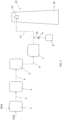
- Fig. 1 illustrates a scheme of an implementation of the invention. The following items and process streams are shown.
- Item 1 is a synthesis section where ammonia (NH3) and carbon dioxide (CO2) are reacted at high temperature and high pressure to form urea.
- Said synthesis section 1 may include at least a reactor, a high-pressure stripper and a high-pressure condenser.
- Stream 2 is an aqueous solution containing urea, water and unconverted ammonium carbamate. This solution can be withdrawn from the stripper of the synthesis section 1.
- Item 3 is a recovery section where the unconverted reagents contained in the solution 2 are recovered and recycled back to the section 1.
- the unconverted reagents are normally recovered by one or more steps of heating the urea-containing solution for decomposition of ammonium carbamate into gaseous ammonia and CO2, and condensation of said reagents into a carbamate-containing solution which can be pumped back to the reactor or to the condenser of the section 1.
- the recovery section 3 may operate at one or more pressure levels.
- Stream 4 is a purified solution obtained from the recovery section 3.
- This purified solution 4 contains urea, water and unavoidable impurities.
- Item 5 is an evaporation section which removes water from the solution 4.
- Stream 6 is a urea melt.
- Item 7 is a urea melt tank.
- Item 8 is an additive tank.
- Item 9 is an additive metering device.
- Stream 10 denotes the additive (calcium lignosulfonate and/or carboxymethyl starch) added to the urea melt from the tank 7.
- Stream 11 is urea melt containing the additive.
- Item 12 is a prilling tower.
- Item 13 is a prilling bucket installed in the prilling tower 12.
- Stream 14 is the solid product (urea prills) collected at the bottom of the prilling tower 12.
- the additive 10 may be added directly in the melt tank 7 or it may be added to the urea solution 4 before evaporation.
- the additive 10 may be a mixture of calcium lignosulfonate and carboxymethyl starch.
- calcium lignosulfonate and carboxymethyl starch may be added separately to the urea solution 4 and/or to the urea melt 6.
- a respective tank and a respective metering device can be provided for each additive.
- the calcium lignosulfonate and carboxymethyl starch may be added at the same or a different location.
- the total amount of the two additives is preferably in the range 0.1% to 1.0% weight on dry basis relative to the urea.
Landscapes
- Chemical & Material Sciences (AREA)
- Organic Chemistry (AREA)
- Chemical Kinetics & Catalysis (AREA)
- Organic Low-Molecular-Weight Compounds And Preparation Thereof (AREA)
- Fertilizers (AREA)
- Medicinal Preparation (AREA)
- Treatments For Attaching Organic Compounds To Fibrous Goods (AREA)
- Preparation Of Compounds By Using Micro-Organisms (AREA)
Claims (14)
- Verfahren zum Prillen einer Harnstoffschmelze, wobeidas Prillverfahren die Verteilung von Harnstoffschmelze in Form von Tröpfchen in einem Prilling-Turm umfasst, und die Harnstofftröpfchen sich verfestigen, während sie im Gegenstrom mit aufsteigender Luft den Turm hinunterfallen;die Harnstoffschmelze enthält mindestens eines der folgenden Produkte:Calciumlignosulfonat und Carboxymethylstärke als Füllungszusatz, und die Harnstoffschmelze enthält kein zugesetztes Formaldehyd;wobei die Harnstoffschmelze in einer Harnstoffsyntheseanlage hergestellt wird, in der Harnstoff aus Ammoniak und Kohlendioxid bei einem Synthesedruck synthetisiert wird, wobei ein Reaktionsabfluss erhalten wird, der Harnstoff, Wasser und nicht umgewandeltes Ammoniumcarbamat enthält; dieser Reaktionsausfluss wird in einem oder mehreren Rückgewinnungsabschnitten bei niedrigerem Druck verarbeitet, um nicht umgesetzte Reagenzien zurückzugewinnen, wobei eine gereinigte wässrige Lösung von Harnstoff erhalten wird; diese wässrige Lösung wird in einer Verdampfungssektion verarbeitet, um Wasser zu entfernen und die Harnstoffschmelze zu erhalten, wobei das Prilling-Additiv der gereinigten wässrigen Lösung vor der Verdampfung zugesetzt wird oder der Harnstoffschmelze zugesetzt wird.
- Verfahren nach Anspruch 1, wobei die Gesamtmenge des Prilling-Additivs in der Harnstoffschmelze 0,1 bis 1,0 Gew.-% auf Trockenbasis, bezogen auf den Harnstoff, beträgt.
- Verfahren nach Anspruch 1, wobei die Gesamtmenge des Prilling-Additivs in der Harnstoffschmelze 0,3 bis 0,7 Gew.-% auf Trockenbasis, bezogen auf den Harnstoff, beträgt.
- Verfahren nach einem der vorhergehenden Ansprüche, wobei die Menge an Calciumlignosulfonat in der Harnstoffschmelze 0,7 Gew.-% auf Trockenbasis, bezogen auf den Harnstoff, beträgt.
- Verfahren nach einem der vorhergehenden Ansprüche, wobei die Menge an Carboxymethylstärke in der Harnstoffschmelze 0,5 Gew.-% auf Trockenbasis, bezogen auf den Harnstoff, beträgt.
- Verfahren nach einem der vorhergehenden Ansprüche, wobei die Harnstoffschmelze als Prilling-Additiv Calciumlignosulfonat und Carboxymethylstärke, vorzugsweise im Gewichtsverhältnis 1:1, enthält.
- Verfahren nach einem der vorhergehenden Ansprüche, wobei die Harnstoffschmelze mehr als 98 Gew.-% Harnstoff, vorzugsweise mehr als 99 Gew.-% an Harnstoff enthält.
- Verfahren nach einem der vorhergehenden Ansprüche, wobei die Harnstoffschmelze mittels eines oder mehrerer Brauseköpfe oder mittels einem oder mehreren rotierenden Prill-Eimern in Tropfen umgewandelt wird.
- Verfahren nach einem der vorhergehenden Ansprüche, wobei die so erhaltenen Harnstoff-Prills einen durchschnittlichen Durchmesser von nicht mehr als 2,0 mm, vorzugsweise nicht mehr als 1,0 mm aufweisen.
- Verfahren nach einem der vorhergehenden Ansprüche, wobei die so erhaltenen Harnstoff-Prills Futtermittelqualität haben.
- Verfahren zur Herstellung von festem Harnstoff, umfassend:
Reaktion von Ammoniak und Kohlendioxid bei einem Synthesedruck, wobei ein Reaktionsabfluss, der Harnstoff, Wasser und nicht umgewandeltes Ammoniumcarbamat enthält; Verarbeitung des Reaktionsausflusses bei einem niedrigeren Druck zur Rückgewinnung nicht umgesetzter Reagenzien, wobei eine gereinigte wässrige Lösung von Harnstoff erhalten wird; Unterziehen der wässrigen Lösung von Harnstoff einem Verdampfungsprozess, um Wasser zu entfernen und die Harnstoffschmelze zu erhalten, wobei das Verfahren ferner umfasst:Zugabe von mindestens einem der folgenden Elemente Calciumlignosulfonat und Carboxymethylstärke als ein Prilling-Additiv zu der gereinigten wässrigen Harnstofflösung oder der Harnstoffschmelze;wobei der gereinigten wässrigen Lösung oder der Harnstoffschmelze kein Formaldehyd zugesetzt wird, so dass die Harnstoffschmelze kein zugesetztes Formaldehyd enthält;Umwandlung der Harnstoffschmelze mit dem Prilling-Additiv in ein festes Produkt durch ein Prilling-Verfahren, wobei das Prillverfahren das Verteilen der Harnstoffschmelze in Form von Tröpfchen in einem Prillturm umfasst, wobei die Tröpfchen den Turm hinunterfallen und sich in Gegenwart einer im Gegenstrom aufwärts strömenden Kühlluft verfestigen. - Verfahren nach Anspruch 11, wobei das Prilling-Additiv der wässrigen Lösung oder der Harnstoffschmelze in einer Menge von 0,1 Gew.-% bis 1,0 Gew.-% auf Trockenbasis, bezogen auf den Harnstoff, vorzugsweise 0,3 Gew.-% bis 0,7 Gew.-% beträgt.
- Verfahren nach Anspruch 11 oder 12, wobei sowohl Calciumlignosulfonat und Carboxymethylstärke als Prilling-Additive verwendet werden und sie getrennt oder als Gemisch der gereinigten wässrigen Lösung vor dem Eindampfen oder der Harnstoffschmelze zugesetzt werden.
- Verfahren nach einem der Ansprüche 11 bis 13, wobei der Harnstoff Futtermittelqualität hat.
Applications Claiming Priority (2)
| Application Number | Priority Date | Filing Date | Title |
|---|---|---|---|
| EP20206201.4A EP3995487A1 (de) | 2020-11-06 | 2020-11-06 | Harnstoffprillverfahren |
| PCT/EP2021/074915 WO2022096182A1 (en) | 2020-11-06 | 2021-09-10 | Urea prilling process |
Publications (2)
| Publication Number | Publication Date |
|---|---|
| EP4240720A1 EP4240720A1 (de) | 2023-09-13 |
| EP4240720B1 true EP4240720B1 (de) | 2024-12-04 |
Family
ID=73172552
Family Applications (2)
| Application Number | Title | Priority Date | Filing Date |
|---|---|---|---|
| EP20206201.4A Withdrawn EP3995487A1 (de) | 2020-11-06 | 2020-11-06 | Harnstoffprillverfahren |
| EP21773795.6A Active EP4240720B1 (de) | 2020-11-06 | 2021-09-10 | Harnstoffprillverfahren |
Family Applications Before (1)
| Application Number | Title | Priority Date | Filing Date |
|---|---|---|---|
| EP20206201.4A Withdrawn EP3995487A1 (de) | 2020-11-06 | 2020-11-06 | Harnstoffprillverfahren |
Country Status (7)
| Country | Link |
|---|---|
| US (1) | US20240002335A1 (de) |
| EP (2) | EP3995487A1 (de) |
| CN (1) | CN116635138B (de) |
| AU (1) | AU2021376528A1 (de) |
| CA (1) | CA3197779A1 (de) |
| MX (1) | MX2023005208A (de) |
| WO (1) | WO2022096182A1 (de) |
Family Cites Families (7)
| Publication number | Priority date | Publication date | Assignee | Title |
|---|---|---|---|---|
| US4587358A (en) * | 1985-08-26 | 1986-05-06 | Tennessee Valley Authority | Production of high-strength, storage-stable particulate urea |
| US5782951A (en) * | 1997-02-20 | 1998-07-21 | Western Industrial Clay Products, Inc. | Particulate urea with finely divided inorganic material incorporated for hardness nonfriability and anti-caking |
| EP1477219A1 (de) | 2003-05-16 | 2004-11-17 | Tuttle Prilling Systems | Vorrichtung zur Granulierung |
| CN101613244A (zh) * | 2009-08-07 | 2009-12-30 | 中国-阿拉伯化肥有限公司 | 一种提高尿基肥成粒性能的方法 |
| EP2489429A1 (de) * | 2011-02-21 | 2012-08-22 | Urea Casale S.A. | Fluidbettgranulation von Harn und zugehörige Vorrichtung |
| CN104812723B (zh) * | 2012-08-15 | 2018-07-06 | 科氏农艺服务有限责任公司 | 基本上球形的粒子的改良组合物 |
| EP3594194A1 (de) * | 2018-07-12 | 2020-01-15 | Casale Sa | Harnstoffgranulationsverfahren |
-
2020
- 2020-11-06 EP EP20206201.4A patent/EP3995487A1/de not_active Withdrawn
-
2021
- 2021-09-10 CN CN202180075151.1A patent/CN116635138B/zh active Active
- 2021-09-10 WO PCT/EP2021/074915 patent/WO2022096182A1/en not_active Ceased
- 2021-09-10 AU AU2021376528A patent/AU2021376528A1/en not_active Abandoned
- 2021-09-10 CA CA3197779A patent/CA3197779A1/en active Pending
- 2021-09-10 MX MX2023005208A patent/MX2023005208A/es unknown
- 2021-09-10 EP EP21773795.6A patent/EP4240720B1/de active Active
- 2021-09-10 US US18/035,451 patent/US20240002335A1/en not_active Abandoned
Non-Patent Citations (1)
| Title |
|---|
| "Ullmann's Encyclopedia of Industrial Chemistry", 1 January 2012, WILEY-VCH VERLAG GMBH & CO. KGAA, Weinheim, ISBN: 9783527303854, article JOZEF H. MEESSEN: "Urea", pages: 657,683, DOI: 10.1002/14356007.a27_333. * |
Also Published As
| Publication number | Publication date |
|---|---|
| AU2021376528A1 (en) | 2023-06-22 |
| CN116635138A (zh) | 2023-08-22 |
| CN116635138B (zh) | 2026-03-03 |
| CA3197779A1 (en) | 2022-05-12 |
| EP3995487A1 (de) | 2022-05-11 |
| MX2023005208A (es) | 2023-05-16 |
| US20240002335A1 (en) | 2024-01-04 |
| EP4240720A1 (de) | 2023-09-13 |
| WO2022096182A1 (en) | 2022-05-12 |
Similar Documents
| Publication | Publication Date | Title |
|---|---|---|
| AU2017362465B2 (en) | A process for integrated production of urea and urea-ammonium nitrate | |
| US12448350B2 (en) | Process for producing low-biuret urea | |
| EP4263497B1 (de) | Verfahren zur herstellung von harnstoff und biuret | |
| EP4320095B1 (de) | Harnstoffherstellungsverfahren und -anlage | |
| EP3743203B1 (de) | Anlage zur synthese von melamin mit abgasrückgewinnung | |
| EP4240720B1 (de) | Harnstoffprillverfahren | |
| EP4240721B1 (de) | Verfahren zur herstellung von harnstoff mit futtermittelqualität | |
| RU2839717C1 (ru) | Способ приллирования мочевины | |
| AU2006244735B2 (en) | Method for concentrating an aqueous ammonium carbamate stream | |
| AU2023200551A1 (en) | Method for producing solid urea by granulation |
Legal Events
| Date | Code | Title | Description |
|---|---|---|---|
| STAA | Information on the status of an ep patent application or granted ep patent |
Free format text: STATUS: UNKNOWN |
|
| STAA | Information on the status of an ep patent application or granted ep patent |
Free format text: STATUS: THE INTERNATIONAL PUBLICATION HAS BEEN MADE |
|
| PUAI | Public reference made under article 153(3) epc to a published international application that has entered the european phase |
Free format text: ORIGINAL CODE: 0009012 |
|
| STAA | Information on the status of an ep patent application or granted ep patent |
Free format text: STATUS: REQUEST FOR EXAMINATION WAS MADE |
|
| 17P | Request for examination filed |
Effective date: 20230503 |
|
| AK | Designated contracting states |
Kind code of ref document: A1 Designated state(s): AL AT BE BG CH CY CZ DE DK EE ES FI FR GB GR HR HU IE IS IT LI LT LU LV MC MK MT NL NO PL PT RO RS SE SI SK SM TR |
|
| DAV | Request for validation of the european patent (deleted) | ||
| DAX | Request for extension of the european patent (deleted) | ||
| GRAP | Despatch of communication of intention to grant a patent |
Free format text: ORIGINAL CODE: EPIDOSNIGR1 |
|
| STAA | Information on the status of an ep patent application or granted ep patent |
Free format text: STATUS: GRANT OF PATENT IS INTENDED |
|
| INTG | Intention to grant announced |
Effective date: 20240704 |
|
| GRAS | Grant fee paid |
Free format text: ORIGINAL CODE: EPIDOSNIGR3 |
|
| GRAJ | Information related to disapproval of communication of intention to grant by the applicant or resumption of examination proceedings by the epo deleted |
Free format text: ORIGINAL CODE: EPIDOSDIGR1 |
|
| GRAL | Information related to payment of fee for publishing/printing deleted |
Free format text: ORIGINAL CODE: EPIDOSDIGR3 |
|
| STAA | Information on the status of an ep patent application or granted ep patent |
Free format text: STATUS: REQUEST FOR EXAMINATION WAS MADE |
|
| GRAP | Despatch of communication of intention to grant a patent |
Free format text: ORIGINAL CODE: EPIDOSNIGR1 |
|
| STAA | Information on the status of an ep patent application or granted ep patent |
Free format text: STATUS: GRANT OF PATENT IS INTENDED |
|
| P01 | Opt-out of the competence of the unified patent court (upc) registered |
Free format text: CASE NUMBER: APP_51871/2024 Effective date: 20240916 |
|
| GRAA | (expected) grant |
Free format text: ORIGINAL CODE: 0009210 |
|
| STAA | Information on the status of an ep patent application or granted ep patent |
Free format text: STATUS: THE PATENT HAS BEEN GRANTED |
|
| INTC | Intention to grant announced (deleted) | ||
| INTG | Intention to grant announced |
Effective date: 20241016 |
|
| AK | Designated contracting states |
Kind code of ref document: B1 Designated state(s): AL AT BE BG CH CY CZ DE DK EE ES FI FR GB GR HR HU IE IS IT LI LT LU LV MC MK MT NL NO PL PT RO RS SE SI SK SM TR |
|
| REG | Reference to a national code |
Ref country code: CH Ref legal event code: EP |
|
| REG | Reference to a national code |
Ref country code: DE Ref legal event code: R096 Ref document number: 602021022931 Country of ref document: DE |
|
| REG | Reference to a national code |
Ref country code: IE Ref legal event code: FG4D |
|
| REG | Reference to a national code |
Ref country code: LT Ref legal event code: MG9D |
|
| REG | Reference to a national code |
Ref country code: NL Ref legal event code: MP Effective date: 20241204 |
|
| PG25 | Lapsed in a contracting state [announced via postgrant information from national office to epo] |
Ref country code: HR Free format text: LAPSE BECAUSE OF FAILURE TO SUBMIT A TRANSLATION OF THE DESCRIPTION OR TO PAY THE FEE WITHIN THE PRESCRIBED TIME-LIMIT Effective date: 20241204 |
|
| PG25 | Lapsed in a contracting state [announced via postgrant information from national office to epo] |
Ref country code: FI Free format text: LAPSE BECAUSE OF FAILURE TO SUBMIT A TRANSLATION OF THE DESCRIPTION OR TO PAY THE FEE WITHIN THE PRESCRIBED TIME-LIMIT Effective date: 20241204 |
|
| PG25 | Lapsed in a contracting state [announced via postgrant information from national office to epo] |
Ref country code: BG Free format text: LAPSE BECAUSE OF FAILURE TO SUBMIT A TRANSLATION OF THE DESCRIPTION OR TO PAY THE FEE WITHIN THE PRESCRIBED TIME-LIMIT Effective date: 20241204 |
|
| PG25 | Lapsed in a contracting state [announced via postgrant information from national office to epo] |
Ref country code: ES Free format text: LAPSE BECAUSE OF FAILURE TO SUBMIT A TRANSLATION OF THE DESCRIPTION OR TO PAY THE FEE WITHIN THE PRESCRIBED TIME-LIMIT Effective date: 20241204 |
|
| PG25 | Lapsed in a contracting state [announced via postgrant information from national office to epo] |
Ref country code: NO Free format text: LAPSE BECAUSE OF FAILURE TO SUBMIT A TRANSLATION OF THE DESCRIPTION OR TO PAY THE FEE WITHIN THE PRESCRIBED TIME-LIMIT Effective date: 20250304 |
|
| PG25 | Lapsed in a contracting state [announced via postgrant information from national office to epo] |
Ref country code: LV Free format text: LAPSE BECAUSE OF FAILURE TO SUBMIT A TRANSLATION OF THE DESCRIPTION OR TO PAY THE FEE WITHIN THE PRESCRIBED TIME-LIMIT Effective date: 20241204 Ref country code: GR Free format text: LAPSE BECAUSE OF FAILURE TO SUBMIT A TRANSLATION OF THE DESCRIPTION OR TO PAY THE FEE WITHIN THE PRESCRIBED TIME-LIMIT Effective date: 20250305 |
|
| PG25 | Lapsed in a contracting state [announced via postgrant information from national office to epo] |
Ref country code: RS Free format text: LAPSE BECAUSE OF FAILURE TO SUBMIT A TRANSLATION OF THE DESCRIPTION OR TO PAY THE FEE WITHIN THE PRESCRIBED TIME-LIMIT Effective date: 20250304 |
|
| PG25 | Lapsed in a contracting state [announced via postgrant information from national office to epo] |
Ref country code: NL Free format text: LAPSE BECAUSE OF FAILURE TO SUBMIT A TRANSLATION OF THE DESCRIPTION OR TO PAY THE FEE WITHIN THE PRESCRIBED TIME-LIMIT Effective date: 20241204 |
|
| REG | Reference to a national code |
Ref country code: AT Ref legal event code: MK05 Ref document number: 1748046 Country of ref document: AT Kind code of ref document: T Effective date: 20241204 |
|
| PG25 | Lapsed in a contracting state [announced via postgrant information from national office to epo] |
Ref country code: SM Free format text: LAPSE BECAUSE OF FAILURE TO SUBMIT A TRANSLATION OF THE DESCRIPTION OR TO PAY THE FEE WITHIN THE PRESCRIBED TIME-LIMIT Effective date: 20241204 |
|
| PG25 | Lapsed in a contracting state [announced via postgrant information from national office to epo] |
Ref country code: PL Free format text: LAPSE BECAUSE OF FAILURE TO SUBMIT A TRANSLATION OF THE DESCRIPTION OR TO PAY THE FEE WITHIN THE PRESCRIBED TIME-LIMIT Effective date: 20241204 |
|
| PG25 | Lapsed in a contracting state [announced via postgrant information from national office to epo] |
Ref country code: IS Free format text: LAPSE BECAUSE OF FAILURE TO SUBMIT A TRANSLATION OF THE DESCRIPTION OR TO PAY THE FEE WITHIN THE PRESCRIBED TIME-LIMIT Effective date: 20250404 |
|
| PG25 | Lapsed in a contracting state [announced via postgrant information from national office to epo] |
Ref country code: PT Free format text: LAPSE BECAUSE OF FAILURE TO SUBMIT A TRANSLATION OF THE DESCRIPTION OR TO PAY THE FEE WITHIN THE PRESCRIBED TIME-LIMIT Effective date: 20250404 |
|
| PG25 | Lapsed in a contracting state [announced via postgrant information from national office to epo] |
Ref country code: EE Free format text: LAPSE BECAUSE OF FAILURE TO SUBMIT A TRANSLATION OF THE DESCRIPTION OR TO PAY THE FEE WITHIN THE PRESCRIBED TIME-LIMIT Effective date: 20241204 |
|
| PG25 | Lapsed in a contracting state [announced via postgrant information from national office to epo] |
Ref country code: AT Free format text: LAPSE BECAUSE OF FAILURE TO SUBMIT A TRANSLATION OF THE DESCRIPTION OR TO PAY THE FEE WITHIN THE PRESCRIBED TIME-LIMIT Effective date: 20241204 Ref country code: RO Free format text: LAPSE BECAUSE OF FAILURE TO SUBMIT A TRANSLATION OF THE DESCRIPTION OR TO PAY THE FEE WITHIN THE PRESCRIBED TIME-LIMIT Effective date: 20241204 |
|
| PG25 | Lapsed in a contracting state [announced via postgrant information from national office to epo] |
Ref country code: SK Free format text: LAPSE BECAUSE OF FAILURE TO SUBMIT A TRANSLATION OF THE DESCRIPTION OR TO PAY THE FEE WITHIN THE PRESCRIBED TIME-LIMIT Effective date: 20241204 |
|
| PG25 | Lapsed in a contracting state [announced via postgrant information from national office to epo] |
Ref country code: CZ Free format text: LAPSE BECAUSE OF FAILURE TO SUBMIT A TRANSLATION OF THE DESCRIPTION OR TO PAY THE FEE WITHIN THE PRESCRIBED TIME-LIMIT Effective date: 20241204 |
|
| PG25 | Lapsed in a contracting state [announced via postgrant information from national office to epo] |
Ref country code: IT Free format text: LAPSE BECAUSE OF FAILURE TO SUBMIT A TRANSLATION OF THE DESCRIPTION OR TO PAY THE FEE WITHIN THE PRESCRIBED TIME-LIMIT Effective date: 20241204 |
|
| REG | Reference to a national code |
Ref country code: DE Ref legal event code: R097 Ref document number: 602021022931 Country of ref document: DE |
|
| PG25 | Lapsed in a contracting state [announced via postgrant information from national office to epo] |
Ref country code: SE Free format text: LAPSE BECAUSE OF FAILURE TO SUBMIT A TRANSLATION OF THE DESCRIPTION OR TO PAY THE FEE WITHIN THE PRESCRIBED TIME-LIMIT Effective date: 20241204 |
|
| PG25 | Lapsed in a contracting state [announced via postgrant information from national office to epo] |
Ref country code: DK Free format text: LAPSE BECAUSE OF FAILURE TO SUBMIT A TRANSLATION OF THE DESCRIPTION OR TO PAY THE FEE WITHIN THE PRESCRIBED TIME-LIMIT Effective date: 20241204 |
|
| PGFP | Annual fee paid to national office [announced via postgrant information from national office to epo] |
Ref country code: DE Payment date: 20250820 Year of fee payment: 5 |
|
| PLBE | No opposition filed within time limit |
Free format text: ORIGINAL CODE: 0009261 |
|
| STAA | Information on the status of an ep patent application or granted ep patent |
Free format text: STATUS: NO OPPOSITION FILED WITHIN TIME LIMIT |
|
| REG | Reference to a national code |
Ref country code: CH Ref legal event code: L10 Free format text: ST27 STATUS EVENT CODE: U-0-0-L10-L00 (AS PROVIDED BY THE NATIONAL OFFICE) Effective date: 20251015 |
|
| PGFP | Annual fee paid to national office [announced via postgrant information from national office to epo] |
Ref country code: GB Payment date: 20250820 Year of fee payment: 5 |
|
| PGFP | Annual fee paid to national office [announced via postgrant information from national office to epo] |
Ref country code: FR Payment date: 20250821 Year of fee payment: 5 |
|
| 26N | No opposition filed |
Effective date: 20250905 |
|
| REG | Reference to a national code |
Ref country code: CH Ref legal event code: H13 Free format text: ST27 STATUS EVENT CODE: U-0-0-H10-H13 (AS PROVIDED BY THE NATIONAL OFFICE) Effective date: 20260425 |