EP4242830A1 - Système et procédé de création et d'exécution d'applications cloud hautement échelonnables - Google Patents
Système et procédé de création et d'exécution d'applications cloud hautement échelonnables Download PDFInfo
- Publication number
- EP4242830A1 EP4242830A1 EP20960940.3A EP20960940A EP4242830A1 EP 4242830 A1 EP4242830 A1 EP 4242830A1 EP 20960940 A EP20960940 A EP 20960940A EP 4242830 A1 EP4242830 A1 EP 4242830A1
- Authority
- EP
- European Patent Office
- Prior art keywords
- service
- metadata
- item
- code
- executor
- Prior art date
- Legal status (The legal status is an assumption and is not a legal conclusion. Google has not performed a legal analysis and makes no representation as to the accuracy of the status listed.)
- Withdrawn
Links
Images



Classifications
-
- G—PHYSICS
- G06—COMPUTING OR CALCULATING; COUNTING
- G06F—ELECTRIC DIGITAL DATA PROCESSING
- G06F8/00—Arrangements for software engineering
- G06F8/30—Creation or generation of source code
- G06F8/35—Creation or generation of source code model driven
Definitions
- This technical solution relates to the development and implementation of web-based software applications. More specifically, the invention relates to methods of creating highly scalable cloud applications developed using software platforms.
- a solution is known from US 10, 324, 690 B2, published on June 18, 2019 , which describes a system and method for automatically generating enterprise software applications with a minimum of manual coding.
- the preferred embodiment provides a graphical design tool that models an application using Unified Model Language (UML), validates UML model, and automatically generates deployable application.
- UML Unified Model Language
- the preferred embodiment also provides a framework of libraries that the target application can be build from.
- the solutions known in the prior art have a number of disadvantages, namely, they use XML format to store model descriptions, which can cause additional challenges for semantic analysis of relationships with other models and elements, since they can be stored in separate XML fragments in a relational database.
- the solutions known in the prior art have poor scalability.
- the solutions known in the prior art for development and implementation of applications assume that the customer has a certain existing IT infrastructure to run the generated application, which is not relevant for use in Software As A Service (SaaS) mode, but rather appropriate for development and use in "on-premises" mode.
- SaaS Software As A Service
- the technical task is to create a system and method for rapid development of highly scalable cloud applications that can be used in a SaaS model.
- a cloud system and a method for developing and implementing web-based software applications were created to address this technical task, as characterized in the following independent claims. Additional embodiments of the present invention are described in the dependent claims.
- the technical result includes improved performance and the implementation of horizontal scaling in the development and implementation of applications, as well as a simplified description of the applications' business logic achieved through the use of metalanguage.
- the technical result involves the implementation of the claimed purpose.
- the claimed result is achieved by building a cloud system for developing and implementing web-based software applications, which comprises microservices that communicate with each other through a software interface, and the said microservices are as follows:
- the metalanguage cross-compiler contains a lexer, a parser and an Erlang code generator.
- the application runtime service contains an executor core, a metadata cache, a web interface and runtime processes that are dynamically created on demand.
- the external data interface service is designed to allow using external databases through connectors tailored to the specifics of the relevant data source.
- the external data interface service is designed to allow a unified API to handle data or web services.
- the claimed result is also achieved by implementing a method for developing and implementing web-based software applications, which includes the steps where:
- the metamodel contains classes, subclasses, attributes, behavior, types, and subtypes.
- the description of object classes includes additional classes and inheritance of existing classes.
- the proposed method and cloud system for developing and implementing web-based software applications rely on the representation of software applications in the form of metamodels stored in the system repository and executed on the computing device.
- a cloud system for developing and implementing web-based software applications consists of microservices that communicate with each other through an API.
- the proposed cloud system provides high performance and horizontal scalability for simultaneous operation by a large number of users.
- Fig.1 presents the generic architecture of the proposed system for developing and implementing web-based software applications.
- the software kernel (platform) 101 consists of two major subsystems, including the application development platform 102 and the application runtime platform 103.
- the application development platform 102 is in charge of providing tools for the developer to describe the application model in a platform format.
- Examples of such development tools include a system metadata navigator, a metaobjects attribute editor, a form editor for the objects interface, and a business logic procedure editor.
- the application runtime platform 103 provides the mechanisms and resources to run applications as described in metadata.
- the execution platform uses application metadata stored in a metadata repository to load and execute applications, including the generation of application interface, communication with the user, and execution of business logic procedures.
- the description of applications consists of three main parts, including the description of the business objects interface 107, the description of the objects business logic 108, and the data description 109.
- the interface of applications business objects is described by a set of attributes and visual forms of objects.
- the business logic of objects is described using a built-in system metalanguage compiled in binary modules for execution.
- the application data description is defined by the data provider and characterized by a set of data sources, which may include different DBMS or web services.
- Fig. 2 presents the detailed architecture of the proposed system.
- the operation of the proposed system is based on the metamodel service 120, which provides storage and access to metadata in the system repository.
- the service consists of a relational database 124 which includes a system repository, and the metamodel 122 that enables all operations with the system repository and provides an external API to the repository that can handle multiple concurrent asynchronous queries.
- the use of API allows to disregard the data structure in the repository (in the relational database) and ensure independence from the method of metadata storage.
- the main functions of the metamodel service in terms of handling the system repository include receiving metainformation on random requests to the repository; entering new metainformation; modifying existing metainformation; and deleting metainformation.
- the metamodel ensures the integrity of metadata in all operations with metainformation.
- the system has a metamodel configuration based on "master-slave” schema, where the main service (“master”) is supplemented by several “slaves” and when the requests are made, the load can be distributed between all of these services.
- Fig.1 shows the "slave” service of the metamodel 121, which also has its own relational database 125 that contains a copy of the system repository.
- the databases of the main service and the "slave” service are synchronized (replicated) automatically, while the operations to change metainformation are available only in the main service, and requests to read metainformation are available in all services.
- the metadata management service 111 is designed to provide the system user with all necessary resources and tools for application development.
- the service is based on the web interface of the Application Designer, which provides the developers with a user-friendly interface to handle metadata.
- the Designer web interface communicates directly with the metamodel service through an external API to retrieve metadata and make changes to metadata.
- the main functions of the service include the management and access control of business accounts and sub-accounts; management of system users, user roles, privilege list; management and access control of metadata schemas; management of metainformation (a set of classes and their descriptions, including attributes and behavior); user-friendly navigation through the applications (modules) and metadata objects in the selected schema; provision of metadata objects editors.
- the Designer web interface also implements a visual editor to build the interface forms of objects; and an editor for procedure source code and business logic events.
- the service implements a mechanism for handling the versions of objects metadata, and metadata business objects can be translated into other languages to localize applications.
- the Designer's web interface also communicates with the cross-compiler service 113 to translate the source code of metalanguage procedures into executable binary code.
- the metadata management service enables a large number of users to use the system concurrently by assigning a separate process to each user session.
- the metadata management service implementation is also implemented in a way that enables horizontal scaling by launching additional services, between which the load balancer 114 will distribute the sessions.
- the cross-compiler service 113 is used to translate the source code of procedures and events of the applications business logic (metalanguage) into executable binary modules that can be loaded and executed by the application executor service, and it is part of the application development system, along with the metadata management service, and can be used only via the Designer's web interface.
- the cross-compiler service provides an external API to call its methods and can process a large number of asynchronous requests simultaneously. When horizontal scaling is needed to handle even more requests, multiple compiler services can be started and the load balancer 114 will automatically distribute requests to these services.
- the cross-compiler service 113 contains a lexer, a parser and an Erlang code generator.
- the compiler service receives the source text of the system's metalanguage procedures, as well as additional information needed for compilation, such as the module, object.
- the compiler ensures complete grammar parsing and syntax analysis of the input language constructs, and outputs compile-time errors.
- the service communicates with the metamodel service 120 to obtain additional metainformation about the metadata objects used in the source code of the procedure, for example to validate the list and types of arguments of the invoked application procedure or object. If the metamodel service is not available to request from the compiler, the compilation process cannot be completed.
- the compiler outputs binary code of the compiled procedure, compatible with the Erlang abstract machine, which is stored by the metadata management service in the system repository.
- the session management service 115 contains a session manager 116 and a local table of sessions 117.
- the main function of the session manager is to provide the authentication of system users and their authorization to use system resources. The authentication and authorization is performed for any user who will use the subsystem for developing and executing applications.
- the session management service must identify the user by his credentials (such as, login and password).
- the session management service makes a request to the metamodel service, where all user accounts are stored. If authentication is successful, the service would authorize the user to start Designer's web interface with the parameters requested by the user, such as business account, schema metadata.
- the service creates a session for the user and passes the session to the Designer's web interface, which then processes all incoming requests.
- the session management service creates the session, allocates the application executor resources and then forwards the session to the executor.
- the process of executor resource allocation includes the following steps: finding an executor service with the required metadata, initiating an additional executor service if necessary, initiating an executor service with the required metadata, and creating an executor process and Designer's web interface. Once a session is created, its information is recorded in the local table of sessions of the session manager. After the user finishes using the application, the information about the session is removed from the service's session table, and the allocated executor's and Designer's web interface processes stop.
- the system has a service configuration based on "master-slave” schema, where the main service (“master”) is supplemented by several “slaves” and when the requests are made, the load can be distributed between all of these services.
- the diagram shows a "slave” session manager 118, which also has its own local table of sessions 119 that includes a copy of the session table of the main session manager.
- the session tables of the "master” session manager and “slave” session manager are synchronized automatically. If “master” session manager fails for some reason, one of the "slave” services takes its place and becomes the main service, and all other managers begin to synchronize with it.
- the load balancer 114 serves to provide automatic load balancing between session management services as well as between metamodel services.
- the executor service 134 provides the backbone of the application execution subsystem and ensures the launch and execution of business applications the descriptions of which are stored in the system repository.
- the main components of the executor service include an executor core 135, metadata cache 136, web interface process 137 and executor process 138.
- the executor core (140 Fig.3 ) consists of the main supervisor 141 ( Fig.3 ), external API module 142, main executor 143 along with the built-in metalanguage functions, executor process supervisor 144, and web interface process supervisor 145.
- the external API 142 provides a set of methods for managing and using the runtime service, including methods for initializing the service, loading metadata, getting information about the service and its state, and executing business logic procedures.
- the main executor module 143 implements the main methods of service operation and contains the implementation of the built-in functions of the system's metalanguage.
- the supervisor of executors 144 is in charge of instantiating and managing the executor processes 147.
- the web interface supervisor 145 is in charge of instantiating and managing web interface processes 148.
- the metadata cache 146 ( Fig.3 ) is a software-controlled structure in the memory of the runtime service process and it is designed to store locally the metainformation required to run and execute the business applications of the runtime service.
- the executor core 140 implements the external API for the service and is also in charge of communicating with the metamodel service and session management service. Also, the executor core controls the internal processes of the server.
- the metadata cache 146 ( Fig.3 ) stores the metainformation related to the metadata schema (for example, the descriptions of providers and data sources), as well complete information on business objects of applications (modules) included in the schema.
- the cache can store metainformation that belongs to only one metadata schema. The use of local cache when running the executor allows to avoid the need to communicate with metamodel service for obtaining the metadata, which significantly improves performance and reduces the intensity of communications in the system.
- the web interface service 137 ( Fig.2 ) and executor process 138 are designed to support a separate session of the user that uses a business application in the system.
- the executor process 147 ( Fig.3 ) is generated by the supervisor of executors 144 in response to the request to the executor service from the session management service.
- the web interface service 148 is created by web interface supervisor 145 when a new user session is created at the time of starting a business application. A separate pair of runtime processes and web interface is always created for each session, which allows to completely isolate the execution of business applications for different sessions.
- the web interface service 148 communicates with its own paired executor service 147, for example, when the application user takes certain steps, the web interface service may initiate the execution of a business logic procedure by using an executor process.
- the executor process 147 communicates closely with the metadata cache, for example, when the information about a metaobject must be extracted during the execution of a business procedure.
- different executor processes may concurrently use the same dataset in the cache of the executor service, if these are the sessions of the same application. Therefore, a single executor service may support a great number of user sessions, if they relate to the same set of metadata schema applications.
- the executor service is fully autonomous and, once initialized, it is virtually independent of the other services in the system, allowing for virtually unlimited horizontal scaling of the application runtime system to support a very large number of concurrent user sessions.
- the scaling is achieved by auto-instantiation of additional executor services required to support new users, depending on the current system load.
- the services of external data providers 126 ( Fig.2 ) and web service providers 130 are designed to support the use of external data by the application.
- the provider service is the corresponding provider (data provider 127 or web provider 131), as well as data source connectors 128 or web service connectors 132.
- Each connector is tailored to the relevant data source 129 or web service 133 and provides a low-level data protocol or service API to transmit data or commands to and from a data source or web service.
- a data or web service provider offers a unified data or service API for business applications, irrespective of the specifics associated with a particular data source or web service.
- the web service data providers are configured using the metadata management service, and the configuration data of providers is stored in metadata in the system repository and can be modified by the application developer at any time.
- the providers communicate with the executor processes of the application executor service by accepting commands from them to receive or modify data, or by transmitting received data.
- the first stage in using the proposed method will be to describe the application's random business objects in metadata stored in a system repository (metamodel) within a relational database.
- the description is provided by metadata management service and the metamodel service using a procedural compiling type metalanguage, which supports the objects to implement complex business logic of applications, wherein the application objects are described based on the metamodel class descriptions.
- the structure of repository data is designed to provide maximum flexibility with virtually no limitation on how to describe business objects, including the set of their properties (attributes), behavior (methods and events), structure and relationships.
- a level of model abstraction was introduced in the form of objects classes (proto-objects), which define all the necessary structures and data to describe real-world business objects.
- Fig. 4 describes the generic structure of metadata repository in the proposed system.
- the main parts of the repository include a metamodel 149, metadata 150 and configuration 151.
- the metamodel 149 is used to describe the composition and structure of proto-objects metadata. This approach provides maximum flexibility with virtually no limitation on how to describe business objects, which allows to expand the basic set of metamodel classes as needed.
- the class description 152 includes a set of attributes 153 and their types 155 (as well as subtypes 156, when needed); behavior 154 as a set of methods and events of the class; a class structure, if the class is complex and contains nested classes.
- the metadata 150 contains the description of the business objects 158 that are part of the applications (modules) 157.
- the description of each object 158 is built on the description of its class 152 in the metamodel 150.
- the set of properties 159 and their object types is explicitly defined by a set of the object class attributes.
- the values of object properties can be either scalar values of simple types or references to other objects or their properties.
- the set of business logic procedures 160 for an object is defined on the basis of behavior (methods and events) described in the class.
- the object data can be versioned, i.e., it is possible to store different variants of object property values created at different points in time.
- the configuration 151 contains the structures needed to organize the entire system and provide the system users with access to it.
- the entire metainformation and, in particular, the configuration is divided by account 162.
- An account is a grouping of information based on access and it combines roles, users and their accounts, and includes schemas with all metadata.
- the schema 163 is yet another level to separate metadata based on its semantic attribute.
- a schema defines which metamodel is used within that schema and, accordingly, how metaobjects are described in that schema.
- Fig.5 presents a structure for description of metamodel class.
- Classes may belong to one of two types: main class 167 or subclass 170.
- the main class can be used to describe business objects in the metadata.
- the subclasses are used to build the structure of complex (compound or nested) classes and can be used to describe business objects only as part of the main classes and not on their own.
- Any class is described by a set of attributes 171, each of which has a specific type 172 and possibly a subtype 173.
- the attribute value type can be a simple scalar type (for example, numeric or text value) or it can be a reference to a value list element 174, another main class 168 or an attribute of a main class.
- a set of attributes explicitly defines which properties of a business object in a given class should be described and stored in metadata.
- a class can have the descriptions of methods 176 and events 175.
- the aggregate of methods and events of a class determines the behavior of such class.
- a class method is a named predefined procedure that defines the operations allowed for an object of that class. Examples of class methods include creating new element, writing data, or deleting element.
- the method implementation is assigned to the class which means that the method procedures must be predefined for each class.
- the method procedures are invoked as a result of user communication with the application or by the software (using other business logic procedures).
- a class event is a named class procedure that is defined for a business object in metadata. Each class has its own set of events, which explicitly determines which events can be defined for the business object of that class, i.e. the event procedure is implemented in the business object rather than in the class.
- the object event procedures are invoked as a result of the user's communication with the application when a certain condition occurs (for example, a double click of the left mouse button).
- a class structure which is a hierarchical set of references to the subclasses that make up a specific class, is used to describe complex (nested) classes.
- the hierarchy means that each subclass used in the structure can also have nested subclasses.
- the structure of a class cannot include the classes of the main type, only the subclasses are allowed.
- the structure of the class determines which components make up a business object and how the object will be represented in metadata.
- the main class "Document” may contain a subclass "Form". This structure allows to represent a business object of the "Document" class as a set of form objects that define a visual representation of that object.
- a metamodel can be extended in two ways: by adding new classes or by inheriting an existing class. For a newly created class, it is necessary to define a set of attributes, events and methods, as well as the structure. Once the new class is described, this allows to create business objects of such class.
- the inheritance is used when a new class largely replicates an existing one with minor modifications.
- the child class gets all attributes, methods and events, as well as the structure of the parent class, and it is possible to add your own attributes, methods, events and to complement the class structure. In a child class, overriding attributes and methods, as well as the structure of the parent class, is not allowed.
- Fig. 6 presents a method to describe a metaobject of the metadata based on the metamodel class definition.
- the class 171 has two defined attributes (179): attribute A1 (184) and attribute A2.
- attribute A1 (184) attribute A2
- attribute A2 attribute A2
- the value type for example, for the object property A1 (187)
- the implementation of procedures for class events (180) it is possible (but not required) to define the implementation of procedures for class events (180).
- the signatures of object procedures must fully match the description of events in the class.
- the implementation of the object event E1 (189) must meet the description of the class event E1 (185).
- Only those events that have been described in the class can be defined in an object.
- the object event procedures are implemented by using an object from the subclass "object event” 182 defined in the class structure.
- the class methods 181 must be implemented directly in the class.
- the class has two described methods 186: method 1 and method 2.
- an unlimited number of business logic procedures can (but are not required to) be defined in the metaobject.
- the procedures are not described in the class in advance.
- the object procedures are implemented by using an object from the subclass "object procedure” 183 defined in the class structure.
- Fig. 7 describes the versioning schema for metaobject data. In this case, all data in the metaobject 191 is divided by non-versioned and versioned parts.
- the non-versioned part of an object contains immutable attributes 192, such as class, reference to the parent object, and it is used to implement references to objects and establish links between objects.
- the object data which may change as a result of developing (modifying) the object, is placed in the versioned part (193, 194).
- the versioned part contains the object property value 195, object procedure implementation 196, and object procedure implementation 197.
- An object version is a set of versioned data of the object stored in the metadata repository with a unique identifier (number) of the version.
- Each version of a metaobject can belong to a specific branch. Within one branch, all object versions are saved sequentially, but different branches may save different object versions in parallel. Only one version within a branch can be current (this is the latest version in the branch). In addition to the current version attribute, the versions can be marked with the "working" version attribute.
- a working version is a stable and tested version of an object that can be used for running in an application. Only one working version of an object can be installed (it does not necessarily has to be the same as the current version).
- the proposed cloud system and method can run in SaaS mode.
- Fig. 8 explains the method for dividing the metainformation in the system.
- the basis for division is an entity called "account" 201.
- the account means a non-personal account of a registered business user of the system.
- subaccounts 209 can be created as subordinates to the main account.
- An account must contain at least one personal user profile 211, and the number of user profiles is not limited.
- Each user profile can be assigned a specific role 210 and a set of privileges 212.
- An important feature of this division method is that, within an account, the users, their roles and privileges are defined in isolation, i.e., they are independent of the users, roles and privileges of another account.
- the next level of dividing the metainformation is an entity designated as "schema" (202, 203).
- a schema combines related information of the metamodel and the metadata, such as class descriptions, data, and metaobjects. With this approach, each schema contains its own metamodel (a description of classes or proto-objects), which ensures independence from other schemas even within the same account and allows to safely expand or change the metamodel without risking an unexpected change in the description of the business objects in the other schema.
- the schema also serves as a "container” for applications developed and executed on the platform, and it is designated by the term "module” 204.
- An application (module) is an aggregate of business objects 205, each of which can belong to only one module.
- a mechanism of links between modules 206 is activated by creating the references to objects.
- the links may be created only between the modules within one schema.
- a schema also contains the description of external data sources 208 required for applications to run. The data sources can be used by any application (module) within the same schema. Therefore, the modules are grouped into schemas based on a functional attribute (linked business objects) and on the principle of using shared data.
- the development of web-based software applications relies on describing random business objects of the application in metadata by using a procedural compiling type metalanguage and supports objects to implement complex business logic of applications.
- the language's grammar is built in a way that allows to directly use the objects from the metadata of applications, as well as to effectively use the data from external sources.
- the entire code of the business logic of the applications is divided into separate procedures or event handlers and linked to the business objects in the metadata. This allows to use the metaobject context in the procedure, such as, a reference to the current form of the object data, and gain direct access to the data in the form. Therefore, the language can be used in the runtime mode to manipulate the data handled by the user of the application, and even to intervene in the data processing or the metaobject's behavior.
- the general structure of the metalanguage grammar is represented by three main blocks: syntax elements of the language, data organization, and data processing.
- syntax elements of the language include syntax constructs, such as, the comments (//, /**/), literals (1, 's', "s"), brackets ([],(), ⁇ ) , as well as the keywords that are used when writing code in the metalanguage.
- the data organization includes information of data types (any, integer, string, etc.), data storage structure and objects.
- the metalanguage is a strictly typed language. This means that the values of different types cannot be used in expressions without specifying the type, and only the values that correspond to the definition of the type function can be passed as arguments to the function.
- the language supports calls to other procedures of metamodels as well as recursive calls.
- the second stage of the proposed method is to convert the described metadata represented as a set of metaobjects containing properties, nested objects, as well as the source code of metalanguage that implements the object events and procedures, into the Erlang code, which is subsequently compiled into executable binary code for the Erlang abstract machine (BEAM) by using a cross-compiler service.
- BEAM Erlang abstract machine
- Fig.9 presents the generic process of compiling the source code of the system's metalanguage procedures into BEAM binary files.
- the compiler receives the metalanguage source code 215.
- the metalanguage compiler 213 analyzes it and converts into text that fully meets the requirements of Erlang syntax and implements the same logic.
- the metalanguage compiler converts syntax constructs and function calls into corresponding Erlang constructs and function calls to produce the resulting Erlang code 216.
- the standard Erlang compiler 214 is used to convert the Erlang source code into a binary module in BEAM format 217.
- the cross-compiler consists of 3 main modules: lexer 219, parser 220 and Erlang code generator 221.
- the lexer 219 receives the text of the metalanguage source code 218, the lexer 219 checks the input against the language grammar and, following the analysis, outputs a list of recognized language lexemes 222.
- the lexer 219 analyzes the input stream of metalanguage source code based on the grammar rules. Each type of lexeme is described as a regular expression pattern. The lexer 219 differentiates between ignored characters (space, line terminator, comment), string and numeric literals, date and time values, identifiers, comparison operators, logical operators, arithmetic operators, brackets, and keywords. The lexemes produced by lexer are represented as tuples. The lexeme format returned by the lexer is as follows: ⁇ token, line number, character(s) ⁇ .
- the lexer If, during the source code analysis, the lexer cannot recognize a lexeme, it returns error 225 indicating the line number of the source code, and the compilation process stops.
- the lexer If all lexemes of the input stream are parsed correctly, the lexer outputs a list of parsed lexemes, and the compilation process continues.
- the list of lexemes is sent to the input of parser 220, which parses the lexemes by checking the lexemes and their order against the language syntax definition.
- the parser (228, Fig.11 ) parses the list of lexemes 229 from the input stream by converting them into a syntax tree 234 based on the definition of grammar rules.
- the syntax of metalanguage constructs is specified using context-free grammar 235 or BNF (Backus-Naur Form) notation, in the form of grammatical inference rules (productions).
- BNF Backus-Naur Form
- the parser performs several other important steps, such as:
- the parser 220 If an incorrect syntax construct is found in the process of parsing, the parser 220 outputs an error message 226 indicating the line number of the source code, and the compilation process stops. If the list of lexemes is parsed successfully, the parser outputs the syntax tree of parsed lexemes 223, which is passed to the input of the Erlang code generator 221.
- the code generator 221 performs a top-down traversal of the syntax tree 223 by conducting semantic analysis and various additional checks, for example, on whether the types are matched in the expressions. For each syntax construct, the code generator performs a conversion to the target language (Erlang).
- Erlang target language
- the code generator 250 receives the syntax tree of tuples 251 as input and generates a source code in Erlang 257 as an output.
- the code generator performs a top-down traversal 252 of the syntax tree by performing semantic validations 258 at each step.
- the generator compiles variable declarations 253 or compiles operators and expressions 254.
- the semantic validations during the compilation of variable declarations and arrays include checking the initialization of expressions.
- the semantic validations during the compilation of operators and expressions include additional checks of syntax, as well as the check of expression types, and the check of whether the types are matched in the expression operands.
- all actual arguments to be passed are also checked against the argument types of the relevant function in accordance with the table of built-in functions 259.
- Erlang code generation 256 is based on predefined Erlang code patterns 260.
- the code generator 221 detects an error (for example, a type mismatch in an expression), it outputs a compilation error 227 indicating the line number of the source code, and the process stops.
- an error for example, a type mismatch in an expression
- the code generator 221 will output Erlang source code 224, which can be used for compilation into binary format.
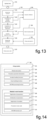
- the module of the generated Erlang code 261 is shown in Fig.14 .
- the entire code of the module consists of two major parts: the preliminary declarations 262 and the module's main function 263.
- the preliminary declarations include the module declaration 264, procedure parameter declaration 265, variable handling functions 266, array handling functions 267, RETURN processing function 268.
- the module declaration contains a metalanguage procedure name, which is translated into an Erlang module.
- the parameter declaration contains a list of identifiers and parameter types of the metalanguage procedure which are translated into an Erlang module.
- the variable handling functions are auxiliary functions that are used to get or set the values of local procedure variables in a module.
- the array handling functions are auxiliary functions that are used to get or set the values of local procedure arrays in a module, including by calling the elements of arrays.
- the RETURN processing function is needed to correctly terminate the main function of the module and to pass the return value of the procedure, as well as to set the values of parameters passed by reference.
- the main function of the module starts by registering the parameters 269 of the procedure in the variable table of the module.
- the next step involves calling the initialization function of parameters 270.
- the initialization function 270 is in charge of setting parameter values based on the actual arguments passed to the procedure (in this case, to the main Erlang function) when it is called.
- the next is the section for registering the local variables 271 of the procedure in the variable table of the module. During the registration, the variables are always initialized with either the value specified in the variable declaration or the default value for a particular type of variable (for example, for a string variable it is an empty string, for a numeric variable it is 0).
- the next is the section of the main code 272, which is generated when compiling the source code of the metalanguage procedure.
- the RETURN processing function 273 is called at the end of the module function. This function is invoked always, regardless of whether it was specified in the source code of the metalanguage procedure, and even if the metalanguage procedure does not return any value.
- the RETURN processing function 268 sets the values of the input parameters passed by reference, deletes the variable table of the module and passes the return value of the procedure (if any) to the calling function.
- the obtained executable binary code is recorded in the system repository.
- the third stage of the proposed method is that, after running the resulting application, a session management service is used to create a session and search for the executor service with the required metadata, initiate the executor service with the required metadata, and create the executor process and the web interface.
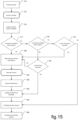
- the session management service 275 When receiving a new session request 274 ( Fig. 15 ), the session management service 275 makes an attempt to allocate an executor for that session based on the schema identifier and module (application) identifier parameters in accordance with the algorithm described below.
- a search is conducted for a running executor service with such schema (276).
- a new executor service is instantiated (280, 282), and then the service initializes the desired schema (283). If a service with the desired schema is found, then a check is conducted on whether the desired module is loaded in the metadata cache of that service (278). If the module is loaded, the next check determines whether the limit on the number of concurrent users is not exceeded in the service (279).
- a new executor service is instantiated and the schema is initiated. If the maximum user count is not reached, then the new executor processes and a web interface for the session are created in that service, as the module is already loaded in the service. But, if at the previous step the module check shows that the module is not loaded, it is necessary to check whether the service exceeded its maximum cache capacity (281). If the limit is reached, it is necessary to instantiate a new executor service. If the limit is not reached, it would be sufficient to load the module to the metadata cache of the service and then create executor processes and web interface for the session. This will complete the process of creating a session.
- the final step of the proposed method is that the binary code is run and executed from the system repository by using the executor service, wherein the binary code is executed directly on the Erlang abstract machine.
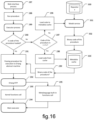
- the web interface process 287 initiates the procedure execution 288, after which it makes the request for the executor process 289.
- the executor process checks whether the binary module (binary code) of the procedure is loaded in the executor process (290). If the binary code is not loaded, the executor process calls the local metadata cache 303, which checks whether the binary code of the procedure is loaded to the cache (297). If the binary code is not loaded to the cache, the executor service requests the model service 301 to load it from the system repository 300, after which the metadata cache can return the desired code to the executor process. Once the procedure's binary code (binary module) is loaded to the executor process, it passes it for execution to the Erlang abstract machine (291).
- the execution of the binary module is entirely and completely controlled by Erlang OTP 292 and the binary module code 299.
- the binary module code may have the kernel functions call 293 or metalanguage built-in functions calls 295, which are processed by the main executor of the service 294.
- Fig.17 presents a summary diagram of the computing device (1700), which ensures the data processing and is required for implementing the claimed solution.
- the device (1700) comprises such components as: one or more processors (1701), at least one memory (1702), data storage means (1703), input/output interfaces (1704), input/output means (1705), networking means (1706).
- the device processor (1701) executes main computing operations required for the device's functioning (1700) or for functionality of one or more of its components.
- the processor (1701) runs the required machine-readable commands contained in the random-access memory (1702).
- the memory (1702) is typically provided in the form of RAM and comprises the necessary program logic, which ensures the required functionality.
- the data storage means (1703) can be made in the form of HDD, SSD, RAID, networked storage, flash memory, optical drives (CD, DVD, MD, Blue-Ray disks), etc.
- the means (1703) enables the long-term retention of different information, such as the above-mentioned files with user data sets, databases containing the records of time intervals measured for each user, user IDs, etc.
- the interfaces (1704) are the standard means for connecting and using the server side, such as USB, RS232, RJ45, LPT, COM, HDMI, PS/2, Lightning, FireWire, etc.
- the selection of interfaces (1704) depends on the specific embodiment of the device (N00), which may be a PC, mainframe, server cluster, thin client, smartphone, laptop, etc.
- the keyboard can have any known hardware design: it can be a built-in keyboard used on a laptop or netbook, or a stand-alone device connected to a desktop, server or other computer device.
- the connection can be wired, where the keyboard's connecting cable is connected to PS/2 or USB port located on the system unit of a desktop computer, or it can be wireless, where the keyboard exchanges data over a wireless channel, such as a radio channel, with the base station which, in turn, is directly connected to the system unit, for example, via a USB port.
- the following can also be used as the input/output means: a joystick, display (touch-screen display), projector, touch pad, mouse, trackball, light pen, loudspeakers, microphone, etc.
- the networking means (1706) is selected from a device that enable receiving and sending data over a network, such as such as an Ethernet card, WLAN/Wi-Fi module, Bluetooth module, BLE module, NFC module, IrDa, RFID module, GSM modem, etc.
- the means (1705) enables data exchange via a wired or wireless data channel, such as WAN, PAN, LAN, Intranet, Internet, WLAN, WMAN or GSM.
- the components of the device (1700) are interfaced via a common data bus (1710).
Landscapes
- Engineering & Computer Science (AREA)
- Software Systems (AREA)
- General Engineering & Computer Science (AREA)
- Theoretical Computer Science (AREA)
- Physics & Mathematics (AREA)
- General Physics & Mathematics (AREA)
- Stored Programmes (AREA)
Applications Claiming Priority (2)
| Application Number | Priority Date | Filing Date | Title |
|---|---|---|---|
| RU2020136739A RU2020136739A (ru) | 2020-11-09 | Система и способ создания и исполнения высоко масштабируемых облачных приложений | |
| PCT/RU2020/000595 WO2022098253A1 (fr) | 2020-11-09 | 2020-11-10 | Système et procédé de création et d'exécution d'applications cloud hautement échelonnables |
Publications (2)
| Publication Number | Publication Date |
|---|---|
| EP4242830A1 true EP4242830A1 (fr) | 2023-09-13 |
| EP4242830A4 EP4242830A4 (fr) | 2024-09-11 |
Family
ID=81458123
Family Applications (1)
| Application Number | Title | Priority Date | Filing Date |
|---|---|---|---|
| EP20960940.3A Withdrawn EP4242830A4 (fr) | 2020-11-09 | 2020-11-10 | Système et procédé de création et d'exécution d'applications cloud hautement échelonnables |
Country Status (3)
| Country | Link |
|---|---|
| EP (1) | EP4242830A4 (fr) |
| CN (1) | CN116391172B (fr) |
| WO (1) | WO2022098253A1 (fr) |
Families Citing this family (3)
| Publication number | Priority date | Publication date | Assignee | Title |
|---|---|---|---|---|
| CN115640045B (zh) * | 2022-12-26 | 2023-04-07 | 卓望数码技术(深圳)有限公司 | 基于领域驱动设计的低代码开发平台及业务系统创建方法 |
| CN118296673B (zh) * | 2024-04-01 | 2025-10-24 | 深圳泊松软件技术有限公司 | 一种几何建模内核并行编辑方法及系统 |
| CN119166124B (zh) * | 2024-11-15 | 2025-02-28 | 北方实验室(沈阳)股份有限公司 | 一种基于bnf范式的数据总线服务代码生成系统 |
Family Cites Families (11)
| Publication number | Priority date | Publication date | Assignee | Title |
|---|---|---|---|---|
| US8255888B2 (en) * | 2003-09-30 | 2012-08-28 | Sap Ag | API derivation and XML schema derivation for developing applications |
| US7735062B2 (en) | 2005-01-21 | 2010-06-08 | Outsystems—Software Em Rede, S.A. | Software development system and method |
| CN101464799A (zh) * | 2009-01-16 | 2009-06-24 | 天津大学 | 基于可视化建模的mpi并行程序设计系统及框架代码自动生成方法 |
| US20110088011A1 (en) | 2009-10-14 | 2011-04-14 | Vermeg Sarl | Automated Enterprise Software Development |
| CN102063324B (zh) * | 2010-12-31 | 2014-04-02 | 杭州依赛通信有限公司 | 一种实现自动化编程的方法及系统 |
| US8959477B2 (en) * | 2011-10-21 | 2015-02-17 | Sap Se | Scripting language for business applications |
| US8997070B2 (en) * | 2011-12-15 | 2015-03-31 | Sap Se | Extension mechanism for scripting language compiler |
| EP3049920A1 (fr) * | 2013-09-27 | 2016-08-03 | Rudolf Markus Petri | Procédé et dispositif de génération et de production automatiques d'au moins une application logicielle |
| US11055451B2 (en) * | 2015-10-28 | 2021-07-06 | Qomplx, Inc. | System and methods for multi-language abstract model creation for digital environment simulations |
| KR102092721B1 (ko) * | 2016-03-23 | 2020-04-23 | 포그혼 시스템스 인코포레이티드 | 실시간 데이터플로우 프로그래밍에서 패턴 구동형 반응의 구성 |
| US20190261433A1 (en) * | 2017-06-22 | 2019-08-22 | William Jason Turner | Software architecture for iot device collector |
-
2020
- 2020-11-10 EP EP20960940.3A patent/EP4242830A4/fr not_active Withdrawn
- 2020-11-10 WO PCT/RU2020/000595 patent/WO2022098253A1/fr not_active Ceased
- 2020-11-10 CN CN202080107056.0A patent/CN116391172B/zh active Active
Also Published As
| Publication number | Publication date |
|---|---|
| CN116391172A (zh) | 2023-07-04 |
| WO2022098253A1 (fr) | 2022-05-12 |
| CN116391172B (zh) | 2024-09-06 |
| EP4242830A4 (fr) | 2024-09-11 |
Similar Documents
| Publication | Publication Date | Title |
|---|---|---|
| US11099823B2 (en) | Systems and methods for transformation of reporting schema | |
| US20230244465A1 (en) | Systems and methods for automated retrofitting of customized code objects | |
| US8296744B2 (en) | Tree-based directed graph programming structures for a declarative programming language | |
| US8352926B2 (en) | Method and apparatus for a cross-platform translator from VB.net to java | |
| Yi | POET: a scripting language for applying parameterized source‐to‐source program transformations | |
| Cheung et al. | New directions in cloud programming | |
| US20100088686A1 (en) | Programming language with extensible syntax | |
| US20100088672A1 (en) | Compact syntax for data scripting language | |
| Rompf et al. | Functional pearl: a SQL to C compiler in 500 lines of code | |
| US20120198416A1 (en) | Support for heterogeneous database artifacts in a single project | |
| EP4242830A1 (fr) | Système et procédé de création et d'exécution d'applications cloud hautement échelonnables | |
| US20080263063A1 (en) | Translating late bound linq expressions into database queries | |
| US9292586B2 (en) | System and method for synchronizing a repository with a declarative defintion | |
| US12182551B2 (en) | Using a semantic tree of a compiler to execute a semantic code query against source code | |
| CN120066518B (zh) | Go语言结构体自动转换方法及系统 | |
| Meng et al. | Moko: Marrying Python with Big Data Systems | |
| EA046340B1 (ru) | Система и способ создания и исполнения высокомасштабируемых облачных приложений | |
| Zhou et al. | Qvt-based sysml v2 model version difference transformation | |
| WO2008130769A2 (fr) | Translation en exécution d'une expression à liaison tardive à une expression à liaison précoce | |
| Bergan | Typmix: a framework for implementing modular, extensible type systems | |
| Mohapatra et al. | Cp2SRust: A Transpiler for C/C++ to Safer Rust | |
| Herceg | Modernizing. NET Web Applications: Everything You Need to Know about Migrating ASP. NET Web Applications to the Latest Version of. NET | |
| CN120266105A (zh) | 在rdbms中全面支持json模式的技术 | |
| Vajk | Constraint validation-based performance optimizations in domain-specific modeling environments | |
| Wen et al. | Translation of Java-Embedded Database Queries with a Prototype Implementation for LINQ |
Legal Events
| Date | Code | Title | Description |
|---|---|---|---|
| STAA | Information on the status of an ep patent application or granted ep patent |
Free format text: STATUS: THE INTERNATIONAL PUBLICATION HAS BEEN MADE |
|
| PUAI | Public reference made under article 153(3) epc to a published international application that has entered the european phase |
Free format text: ORIGINAL CODE: 0009012 |
|
| STAA | Information on the status of an ep patent application or granted ep patent |
Free format text: STATUS: REQUEST FOR EXAMINATION WAS MADE |
|
| 17P | Request for examination filed |
Effective date: 20230607 |
|
| AK | Designated contracting states |
Kind code of ref document: A1 Designated state(s): AL AT BE BG CH CY CZ DE DK EE ES FI FR GB GR HR HU IE IS IT LI LT LU LV MC MK MT NL NO PL PT RO RS SE SI SK SM TR |
|
| REG | Reference to a national code |
Ref country code: DE Ref legal event code: R079 Free format text: PREVIOUS MAIN CLASS: G06F0008200000 Ipc: G06F0008350000 |
|
| A4 | Supplementary search report drawn up and despatched |
Effective date: 20240813 |
|
| RIC1 | Information provided on ipc code assigned before grant |
Ipc: G06F 8/35 20180101AFI20240807BHEP |
|
| STAA | Information on the status of an ep patent application or granted ep patent |
Free format text: STATUS: THE APPLICATION IS DEEMED TO BE WITHDRAWN |
|
| 18D | Application deemed to be withdrawn |
Effective date: 20250513 |