EP4242890B1 - Verfahren zur sicheren identifizierung einer person durch eine verifikationsinstanz - Google Patents
Verfahren zur sicheren identifizierung einer person durch eine verifikationsinstanz Download PDFInfo
- Publication number
- EP4242890B1 EP4242890B1 EP23157981.4A EP23157981A EP4242890B1 EP 4242890 B1 EP4242890 B1 EP 4242890B1 EP 23157981 A EP23157981 A EP 23157981A EP 4242890 B1 EP4242890 B1 EP 4242890B1
- Authority
- EP
- European Patent Office
- Prior art keywords
- identification
- service provider
- card
- identification card
- data
- Prior art date
- Legal status (The legal status is an assumption and is not a legal conclusion. Google has not performed a legal analysis and makes no representation as to the accuracy of the status listed.)
- Active
Links
Images



Classifications
-
- H—ELECTRICITY
- H04—ELECTRIC COMMUNICATION TECHNIQUE
- H04L—TRANSMISSION OF DIGITAL INFORMATION, e.g. TELEGRAPHIC COMMUNICATION
- H04L9/00—Cryptographic mechanisms or cryptographic arrangements for secret or secure communications; Network security protocols
- H04L9/32—Cryptographic mechanisms or cryptographic arrangements for secret or secure communications; Network security protocols including means for verifying the identity or authority of a user of the system or for message authentication, e.g. authorization, entity authentication, data integrity or data verification, non-repudiation, key authentication or verification of credentials
- H04L9/3271—Cryptographic mechanisms or cryptographic arrangements for secret or secure communications; Network security protocols including means for verifying the identity or authority of a user of the system or for message authentication, e.g. authorization, entity authentication, data integrity or data verification, non-repudiation, key authentication or verification of credentials using challenge-response
- H04L9/3273—Cryptographic mechanisms or cryptographic arrangements for secret or secure communications; Network security protocols including means for verifying the identity or authority of a user of the system or for message authentication, e.g. authorization, entity authentication, data integrity or data verification, non-repudiation, key authentication or verification of credentials using challenge-response for mutual authentication
-
- G—PHYSICS
- G06—COMPUTING OR CALCULATING; COUNTING
- G06F—ELECTRIC DIGITAL DATA PROCESSING
- G06F21/00—Security arrangements for protecting computers, components thereof, programs or data against unauthorised activity
- G06F21/30—Authentication, i.e. establishing the identity or authorisation of security principals
- G06F21/31—User authentication
- G06F21/33—User authentication using certificates
-
- G—PHYSICS
- G06—COMPUTING OR CALCULATING; COUNTING
- G06F—ELECTRIC DIGITAL DATA PROCESSING
- G06F21/00—Security arrangements for protecting computers, components thereof, programs or data against unauthorised activity
- G06F21/30—Authentication, i.e. establishing the identity or authorisation of security principals
- G06F21/31—User authentication
- G06F21/34—User authentication involving the use of external additional devices, e.g. dongles or smart cards
-
- G—PHYSICS
- G06—COMPUTING OR CALCULATING; COUNTING
- G06F—ELECTRIC DIGITAL DATA PROCESSING
- G06F21/00—Security arrangements for protecting computers, components thereof, programs or data against unauthorised activity
- G06F21/30—Authentication, i.e. establishing the identity or authorisation of security principals
- G06F21/44—Program or device authentication
- G06F21/445—Program or device authentication by mutual authentication, e.g. between devices or programs
-
- G—PHYSICS
- G06—COMPUTING OR CALCULATING; COUNTING
- G06F—ELECTRIC DIGITAL DATA PROCESSING
- G06F21/00—Security arrangements for protecting computers, components thereof, programs or data against unauthorised activity
- G06F21/60—Protecting data
- G06F21/62—Protecting access to data via a platform, e.g. using keys or access control rules
- G06F21/6218—Protecting access to data via a platform, e.g. using keys or access control rules to a system of files or objects, e.g. local or distributed file system or database
- G06F21/6245—Protecting personal data, e.g. for financial or medical purposes
-
- H—ELECTRICITY
- H04—ELECTRIC COMMUNICATION TECHNIQUE
- H04L—TRANSMISSION OF DIGITAL INFORMATION, e.g. TELEGRAPHIC COMMUNICATION
- H04L9/00—Cryptographic mechanisms or cryptographic arrangements for secret or secure communications; Network security protocols
- H04L9/08—Key distribution or management, e.g. generation, sharing or updating, of cryptographic keys or passwords
- H04L9/0816—Key establishment, i.e. cryptographic processes or cryptographic protocols whereby a shared secret becomes available to two or more parties, for subsequent use
- H04L9/0838—Key agreement, i.e. key establishment technique in which a shared key is derived by parties as a function of information contributed by, or associated with, each of these
-
- H—ELECTRICITY
- H04—ELECTRIC COMMUNICATION TECHNIQUE
- H04L—TRANSMISSION OF DIGITAL INFORMATION, e.g. TELEGRAPHIC COMMUNICATION
- H04L9/00—Cryptographic mechanisms or cryptographic arrangements for secret or secure communications; Network security protocols
- H04L9/32—Cryptographic mechanisms or cryptographic arrangements for secret or secure communications; Network security protocols including means for verifying the identity or authority of a user of the system or for message authentication, e.g. authorization, entity authentication, data integrity or data verification, non-repudiation, key authentication or verification of credentials
- H04L9/3247—Cryptographic mechanisms or cryptographic arrangements for secret or secure communications; Network security protocols including means for verifying the identity or authority of a user of the system or for message authentication, e.g. authorization, entity authentication, data integrity or data verification, non-repudiation, key authentication or verification of credentials involving digital signatures
-
- H—ELECTRICITY
- H04—ELECTRIC COMMUNICATION TECHNIQUE
- H04L—TRANSMISSION OF DIGITAL INFORMATION, e.g. TELEGRAPHIC COMMUNICATION
- H04L9/00—Cryptographic mechanisms or cryptographic arrangements for secret or secure communications; Network security protocols
- H04L9/32—Cryptographic mechanisms or cryptographic arrangements for secret or secure communications; Network security protocols including means for verifying the identity or authority of a user of the system or for message authentication, e.g. authorization, entity authentication, data integrity or data verification, non-repudiation, key authentication or verification of credentials
- H04L9/3263—Cryptographic mechanisms or cryptographic arrangements for secret or secure communications; Network security protocols including means for verifying the identity or authority of a user of the system or for message authentication, e.g. authorization, entity authentication, data integrity or data verification, non-repudiation, key authentication or verification of credentials involving certificates, e.g. public key certificate [PKC] or attribute certificate [AC]; Public key infrastructure [PKI] arrangements
-
- G—PHYSICS
- G06—COMPUTING OR CALCULATING; COUNTING
- G06F—ELECTRIC DIGITAL DATA PROCESSING
- G06F2221/00—Indexing scheme relating to security arrangements for protecting computers, components thereof, programs or data against unauthorised activity
- G06F2221/21—Indexing scheme relating to G06F21/00 and subgroups addressing additional information or applications relating to security arrangements for protecting computers, components thereof, programs or data against unauthorised activity
- G06F2221/2129—Authenticate client device independently of the user
Definitions
- the invention relates to a method for secure, privacy-protecting remote identification of a person using an identification card by an external identification provider, and in this context relates in particular to a method for secure identification of a person using an identification card by a verification authority to a service provider.
- German eID solution which is based on Extended Access Control (EAC)
- EAC Extended Access Control
- EAC Extended Access Control
- the invention is based on the task of enabling a secure delegation of certain activities in the context of identifying a person.
- a method is to be specified that allows a secure involvement of external providers to carry out secure, privacy-protecting remote identification of persons by reusing existing software components and systems.
- the invention provides a method for the secure identification of a person with an identification card by a verification authority to a service provider.
- the method provides that a secure, unilaterally authenticated communication connection is established between the identification card and the service provider, and that a secure, mutually authenticated communication connection is established between the service provider and the verification authority.
- communication between the identification card and the verification instance is carried out exclusively via the service provider as a proxy.
- the service provider intercepts all messages exchanged between the identification card and the verification instance and forwards them with its own identifier, so that a logical communication channel is created between the identification card and the verification instance.
- a first, authenticated key agreement for encrypted communication between the verification instance and the identification card is carried out via the logical communication channel.
- the verification instance uses the first encrypted key material to verify the validity of the identification card via the logical communication channel.
- a second, authenticated key agreement is carried out between the service provider and the identification card for the encryption and authentication of required identification data and/or results of card operations.
- the required identification data is then encrypted by the identification card using the second key material and the data encrypted in this way is then transmitted to the verification instance using the first key material via the logical communication channel.
- the verification authority then transmits the identification data encrypted with the second key material to the service provider and confirms to the service provider that the identification data contained in the transmission originates from an identification card that has been successfully checked for validity by the verification authority.
- the service provider then decrypts the identification data transmitted by the verification authority using the second key material.
- the service provider After carrying out the procedure, the service provider has the person's identification data required to carry out the service, without the verification authority having access to the person's personal data as part of the verification.
- the identification card By setting up the logical communication channel between the identification card and the verification authority, the latter does not see any data from the identification card that could be misused to uniquely identify a person ("fingerprinting").
- the identification data required by the service is only available to the verification authority in a form encrypted with the second key material and cannot be decrypted by the verification authority, since the second key material is based on a key agreement. between the identification card and the service provider.
- the method uses Extended Access Control (EAC) protocols, in particular Chip Authentication, Terminal Authentication and/or PACE (Password Authenticated Connection Establishment).
- EAC Extended Access Control
- the method can thus use formally verified protocols with secure cryptographic primitives.
- An existing EAC infrastructure can be retained as a basic framework; the existing software components only need to be supplemented with the extended functionalities described in this application.
- the use of the EAC protocols mentioned above enables remote identification of the holder of the identification card in a way that protects privacy.
- the verification authority has no access to the personal data of the person to be identified. It only sees the pure data that the identification card has transmitted, but no metadata that was added later and that has no significance for the EAC protocols, such as the IP address of the end device to which the identification card of the person to be identified is connected, or other characteristics that the verification authority could misuse for fingerprinting.
- a terminal authentication is carried out with the verification authority to implement the first key agreement, and if the terminal authentication is successful, a chip authentication is carried out with the verification authority.
- a terminal authentication is carried out with the service provider if the procedure is advantageous, and if the terminal authentication is successful, a chip authentication is carried out with the service provider.
- the service provider and the identification card each temporarily store receipt data for the identification that has taken place, that the identification card transmits its receipt data to the service provider and that the service provider checks that the receipt data transmitted by the identification card matches the receipt data it has in order to authenticate the exchange. If a match is found, the identification process can be assessed as having been successfully completed.
- the above-mentioned document data advantageously contain an authorization certificate of the service provider, a static public key of the identification card, an ephemeral public key of the service provider and/or the contents of the transmitted identification data.
- the document data can contain all of the above-mentioned information.
- the verification instance checks the status of the identification card by means of restricted identification.
- the identification card is advantageously an eID card.
- the identification card can be integrated into a terminal device, such as a laptop or smartphone, for example in a secure element.
- the identification card can also be designed as an independent system, for example in the form of a chip card, which is connected to a terminal device via a reading device. In both cases, local client software on the terminal device guides the person through the identification process and takes over communication with the identification card.
- An appropriate procedure requires that the service provider has an authorization certificate issued by an issuer of the identification card, which specifies the identification data that can be read by the service provider.
- the service provider transmits this authorization certificate to the identification card at the beginning of the procedure in order to obtain the person's consent to identification.
- an advantageous procedure provides that the verification authority has an authorization certificate issued by an issuer of the identification card, which excludes the reading of personal data.
- This authorization certificate is transmitted to the identification card at the beginning of the procedure, in particular by the service provider together with its authorization certificate, in order to obtain the person's consent to identification with the involvement of the verification authority.
- the identification card by design does not leave any unique characteristics that can be traced back to a person or a small group of people. Since the contents of the identification data cannot be decrypted by the verification authority, the process cannot be used to track the users of the identification cards, so that the users remain anonymous to the verification authority.
- the service provider can in particular perform the following tasks: forwarding messages; generating keys for authorization certificates, signing challenges; decrypting messages (no secure messaging); performing a normal key agreement, calculating hash and MAC, and verifying signatures of a single party.
- FIG 1 shows schematically the connections between the parties involved in a method according to the invention, an eID card 10, a service provider 12 and an identification provider 14, which is also referred to as a verification authority in this description.
- the eID card 10 can be accessed by a terminal device (not shown), for example a laptop or a smartphone.
- the eID card 10 can be integrated in the terminal device, for example in a secure element, or can be connected to the device as an independent system, for example in the form of a chip card, via a card reader. In both cases, there is local client software on the terminal device that accesses the card 10 and guides the user through the process described below during identification.
- connection 11 or 13 there is a direct connection 11 or 13 between the card 10 and the service provider 12 or between the service provider 12 and the identification provider 14, in which the connected parties can be addressed directly in a communication protocol.
- a protocol for encrypting data during transport such as TLS, is used for the communication.
- connection 11 only the service provider 12 is authenticated, while in connection 13, both the service provider 12 and the identification provider 14 are authenticated.
- the method provides a logical communication channel 15 between the card 10 and the identification provider 14.
- This is created by the service provider 12 intercepting messages between the card 10 and the identification provider 14 and forwarding each one with its own identifier so that one party can reach the other party via the service provider 12.
- a coherent The exchange of messages defines an identification session. This procedure means that the identification server 14 only sees the pure data that the card 10 has sent, but no metadata that was added later and has no significance for the Extended Access Protocol, such as the IP address of the terminal device to which the card 10 is connected, or other characteristics that the identification provider 14 could misuse to uniquely identify a person.
- Communication between two parties is expressed by arrows, where the direction of an arrow represents the direction of communication flow.
- id stands for unencrypted communication (where encryption can be achieved by another protocol, such as TLS)
- ⁇ K ENC SM K AUTH SM stands for communication that is carried out by K ENC SM encrypted and K AUTH SM is authenticated.
- EAC Extended Access Control
- CA Chip Authentication
- TA Terminal Authentication
- BAC Basic Access Control
- PACE Password Authenticated Connection Establishment
- PA Passive Authentication
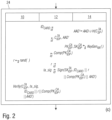
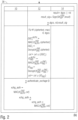
- FIG. 2(a) shows the initial state 20 at the start of the method according to the invention.
- the eID card 10 is personalized and contains the personal data of its owner. As part of the personalization, a key pair for chip authentication was created. SK CARD CA the private key for a chip authentication and PK CARD CA the public key for a chip authentication. The public keys PK CARD CA was signed by an issuer of the eID card 10 and the signature is stored in the elementary file EF CardSecurity .
- the card has two static private keys for generating a blocking feature and a Restricted ID (pseudonym) using Restricted Identification.
- SK CARD RI _ REVOCATION the private key for Restricted Identification in the context of Revocation Checking
- SK CARD RI _ ID the private key for Restricted Identification in the context of Restricted ID.
- the service provider 12 offers a service available over the Internet that requires verification of the identity of the user.
- the service provider has an authorization certificate issued by an issuer of eID cards, which specifies the personal data that can generally be read by the service provider, as well as a private key, the public key of which is linked to the authorization certificate.
- the service provider 12 has a public key for generating pseudonyms using restricted identification (sector public key), which is cryptographically linked to the authorization certificate.
- SK SP TA the private key of the service provider 12 for a terminal authentication
- C SP TA the certificate for a terminal authentication
- PK SP RI the public key for a restricted identification.
- the identification provider 14 offers the reading of eID cards, such as card 10, as a service.
- the identification provider 14 has an authorization certificate issued by the issuer of eID cards, which excludes the reading of personal data, as well as a private key whose public key is linked to the authorization certificate.
- the identification provider 14 also has all the information required to check the validity of an eID card 10, in particular a list of CSCA certificates and a list of blocked certificates.
- the identification provider 14 takes over the management, in particular the renewal of authorization certificates and sector public keys from service providers 12, which is done with the involvement of the service providers.
- SK IDP TA the private key of the identification provider 14 for a terminal authentication
- C IDP TA the certificate for a terminal authentication
- SK IDP ESIG the private key for communication with the service provider 12.
- REQUESTED_DGS stands for the list of data groups that must be read out as part of a specific identification. This is necessarily a subset of the generally readable data groups specified in the service provider's authorization certificate. It is specified by the service provider 12 and communicated to the identification provider 14.
- the data groups in the list mentioned are also sometimes referred to as "required identification data" in this description.
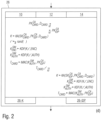
- a secure channel is first established with the PIN input device.
- the procedure essentially follows section 3.2 of the technical guideline BSI TR-03110, part 2, for the establishment of a PACE channel, from which more precise details can be found.
- the holder of the eID card 10 initiates an identification with the service provider 12.
- the service provider 12 first transmits its authorization certificate, which Authorization certificate of the identification provider 14 commissioned by him, as well as a list of the personal data to be read out and other metadata required for identification (Certificate Description and AAD).
- the data from the authorization certificate, in particular the identity of the service provider 12 are shown to the user via the local client software. If the user agrees to the identification, a PACE channel is established between the eID card 10 and the user's terminal device or a card reader. The user enters his PIN.
- a terminal authentication with the identification provider 14 then takes place.
- the user's client software signals the successful establishment of a PACE channel by transmitting the elementary file CardAccess and a PACE identifier for the card 10 to the service provider 12. From now on, the client software forwards messages from or for the card 10 and, if necessary, carries out conversions if incompatible message formats are used.
- the service provider 12 notifies its identification provider 14 of a new identification and forwards the received content from CardAccess . Until further notice, the service provider 12 forwards messages between the identification provider 14 and the local client software of the user of the card 10 in both directions, so that a logical channel is created between the identification provider 14 and the card 10, see reference number 15 in Fig. 1 .
- the identification provider 14 then sends its authorization certificate and a calculated AAD object to the card 10, which, in addition to classic AAD fields, contains a hash of the authorization certificate of the service provider 12. Since this communication is not encrypted, the client software can read this transmitted data. The client software ensures that the transmitted certificate corresponds to the authorization certificate that was previously transmitted for the identification provider 14. In addition, the client software ensures that the hash in the AAD object corresponds to the hash of the authorization certificate that was previously transmitted for the service provider 12 and whose contents were shown to the user.
- the identification provider 14 then carries out the classic terminal authentication protocol.
- the identification provider 14 creates an ephemeral key for chip authentication and transmits a reference to the public key to the card 10, requests a challenge from the card 10, creates a signature using its private key for the challenge, the ephemeral public key and the previously transmitted AAD object and transmits the signature to the card 10.
- the card 10 verifies the certificate using the trust anchors of its issuer and the received signature using the certificate of the identification provider 14. If all checks are successful, the card stores the received reference to the public key of the identification provider 14 and the data from the AAD object.
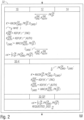
- a chip authentication is then carried out with identification provider 14.
- the identification provider 14 reads the elementary file CardSecurity, carries out passive authentication to verify the authenticity of card 10 and transmits its complete ephemeral public key to card 10.
- the card 10 checks the match with the previously stored reference for the ephemeral public key of the identification provider 14, carries out key agreement, derives keys for secure messaging and calculates an authentication token using a randomly generated nonce, which the card transmits together with the nonce to the identification provider 14. The latter also carries out key agreement, derives keys for secure messaging and calculates an authentication token using the transmitted nonce. If the calculated authentication token matches the transmitted token, chip authentication has been successfully carried out. From now on, the logical channel is encrypted with the derived key material. K ENC SM and K AUTH SM (also referred to as "first key material" in this description) is cryptographically protected using secure messaging. The card 10 and the identification provider 14 start secure messaging with this key material in the sub-steps 26-K and 26-IDP, respectively.
- step 28 the validity of the card 10 is checked via the encrypted and authenticated channel.
- the identification provider 14 sends a request to the card 10.
- the card 10 responds positively if the date previously transmitted to the card in the AAD object is between its issue date notBefore and its expiration date notAfter, and negatively otherwise.
- a terminal authentication with the service provider 12 takes place.
- the identification provider 14 transmits the authorization certificate of the service provider 12 to the card 10.
- the card 10 checks the certificate using the trust anchors of its issuer that it has, calculates a hash of the certificate and ensures that the calculated hash matches the previously stored hash. If all checks are successful, the card 10 creates a challenge and sends it to the identification provider 14.
- the service provider 12 now becomes active.
- the identification provider 14 forwards the challenge of the card 10 and the AAD object previously transmitted to the card 10 via a secure channel.
- the service provider 12 creates an ephemeral key pair and, using its private key, a signature of the challenge, the ephemeral public key and the received AAD object.
- the service provider 12 sends the created signature and the ephemeral public key to the identification provider 14, which forwards the signature and a reference to the ephemeral public key of the service provider 12 via the logical channel with the card 10.
- the card 10 verifies the signature using the authorization certificate of the service provider 12.
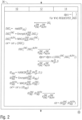
- the identification provider 14 forwards the authentication token, the nonce and the static public key to the service provider 12.
- the latter also carries out key agreement, derives keys for the encryption and authentication of data groups and calculates an authentication token using the transmitted nonce. If the calculated authentication token matches the transmitted token, chip authentication has been successfully carried out.
- the card 10 and the service provider 12 initialize the encryption/decryption and authentication of data groups with the derived keys in the substeps 32-K and 32-SP respectively K ENC DGE and K AUTH DGE (also referred to as "second key material" in this description) and use this from the initialization stage.
- Both the service provider 12 and the card 10 create a context variable cxt and temporarily store their state. Both add the authorization certificate of the service provider 12, the static public key of the card 10 and the ephemeral public key of the service provider 12 to the context.
- the service provider 12 informs the identification provider 14 which personal data should be read from the card 10.
- step 34 the revocation status of card 10 is checked.
- Restricted Identification RI
- identification provider 14 sends the public key for RI (so-called sector public key) of the service provider 12 to the card 10. This calculates a hash of the key and ensures that the certificate of the service provider 12 checked in the previous step contains this hash.
- the card 10 then carries out key agreement using its static private key for RI for revocation and the received public key and hashes the resulting shared secret.
- the hash is sent back to the identification provider 14.
- the identification provider 14 checks whether this blocking feature is on a block list prepared specifically for this service provider 12 and aborts the identification if this is the case.
- step 36 the data group reading takes place.
- the identification provider 14 requests from the card 10 all personal data that is to be read and that is stored in the form of data groups. For each data group, the card 10 prepares its content, encrypts it using the data group encryption key derived in the penultimate step and calculates a MAC over the ciphertext using the data group authentication key derived in the previous step. In addition, the card 10 adds the content of the data group to the context. Finally, the card 10 sends the ciphertext and the calculated MAC to the identification provider 14, as usual via the logical communication channel protected by secure messaging.
- the identification provider 14 can trigger the generation of a restricted ID.
- the identification provider 14 sends the public key for RI (Sector Public Key) of the service provider 12 to the card 10.
- the card 10 calculates a hash of the key and ensures that the certificate of the service provider 12 checked in the penultimate step contains this hash.
- the card 10 then performs key agreement using its static private key for RI for the generation of restricted IDs and the received public key and hashes the resulting shared secret. Analogous to the procedure for data groups, the hash is encrypted, the ciphertext is authenticated, the hash is added to the context and sent to the identification provider 14 via the secure messaging channel.
- step 38 the result is transmitted to the service provider 12 and a counter check is carried out.
- the identification provider 14 has the encrypted and authenticated contents of all relevant data groups, it forwards them to the service provider 12, whereby the identification provider 14 provides this message with a digital signature. With this signature, the identification provider 14 attests to the service provider 12 that the personal data contained in the message originates from a card 10 whose authenticity and validity it has verified.
- the service provider 12 aborts the forwarding of messages between the card 10 and the identification provider 14 and sends the card 10 a command to authenticate the exchange.
- the card Since this command is not sent over the encrypted secure messaging channel, the card terminates the secure messaging channel. Furthermore, the card 10 calculates a MAC over the cached context using the previously derived data group authentication key and sends it back to the service provider 12. The service provider also calculates a MAC over the cached context using the previously derived data group authentication key and compares it with the received MAC. If a match is found, the identification process is successfully completed.
Landscapes
- Engineering & Computer Science (AREA)
- Computer Security & Cryptography (AREA)
- Theoretical Computer Science (AREA)
- Software Systems (AREA)
- General Physics & Mathematics (AREA)
- Computer Hardware Design (AREA)
- Physics & Mathematics (AREA)
- General Engineering & Computer Science (AREA)
- Signal Processing (AREA)
- Computer Networks & Wireless Communication (AREA)
- Health & Medical Sciences (AREA)
- Bioethics (AREA)
- General Health & Medical Sciences (AREA)
- Medical Informatics (AREA)
- Databases & Information Systems (AREA)
- Storage Device Security (AREA)
Description
- Die Erfindung betrifft ein Verfahren für eine sichere, die Privatsphäre schützende Remote-Identifizierung einer Person anhand einer Identifikationskarte durch einen externen Identifizierungsanbieter, und betrifft in diesem Zusammenhang insbesondere ein Verfahren zur sicheren Identifizierung einer Person mit einer Identifikationskarte durch eine Verifikationsinstanz gegenüber einem Diensteanbieter.
- Herkömmliche zentrale Identifizierungslösungen verfolgen ein klassisches Diensteanbieter /Identifizierungsanbieter-Konzept, bei dem eine zentrale Stelle die Identität einer Person bestätigt und einen entsprechenden Nachweis an den Diensteanbieter weiterleitet. Bei solchen zentralen Identifizierungslösungen ist allerdings ein Tracking von Aktivitäten im Internet nicht ausgeschlossen, da eine Historie von Identifizierungen pro Person erstellt werden kann.
- Bei dezentralen, zertifikatsbasierten Identifizierungslösungen gibt es keine solche zentrale Instanz, allerdings müssen dann die Diensteanbieter zusätzlich die Überprüfung der Gültigkeit und des Status des Zertifikats übernehmen. Dabei ist ein anbieterübergreifendes Tracking möglich, da die Seriennummern der Zertifikate eindeutig sein sollen. Außerdem erhalten Diensteanbieter unter Umständen aus dem Zertifikat für sie nicht relevante Personendaten, was Datenminimierungszielen widerspricht.
- Bei der deutschen eID-Lösung, die auf Extended Access Control (EAC) basiert, ist eine dezentrale Identifizierung von Personen möglich, ohne dass nicht angefragte Daten dem Diensteanbieter übermittelt werden und ohne dass ein anbieterübergreifendes Tracking möglich ist. Eine Schwäche dieses Ansatzes besteht allerdings darin, dass alle relevanten Kommunikations- und Sicherheitsprotokolle vom Diensteanbieter implementiert werden müssen. Die Protokolle weisen jedoch eine hohe Komplexität auf und zeichnen sich daher durch eine komplizierte Handhabung aus. Darüber hinaus ist der Identifizierungsprozess fehleranfällig und es besteht die Gefahr, dass wichtige Überprüfungen ausgelassen werden.
- Das Dokument
US 2008/235513 A1 offenbart ein Verfahren, wobei ein Vertrauensanbieter etablierte Beziehungen mit einer Client-Vorrichtung und einem Server eines E-Commerce-Händlers oder Dienstanbieters verwendet, um die Identität von jedem zu dem anderen sicherzustellen. - Aus diesen Gründen werden oft spezialisierte Identifizierungsanbieter eingesetzt, die alle technischen Tätigkeiten im Rahmen der Identifizierung übernehmen. Dies kann allerdings ebenfalls problematisch sein, da im eID-System keine technischen Maßnahmen vorgesehen sind, die die Identifizierungsanbieter daran hindern, Personendaten zu speichern und die Datensätze von mehreren Diensteanbietern zu kombinieren. Da technische Maßnahmen fehlen, müssen Anforderungen an die Organisation des Identifizierungsprozesses definiert werden. Werden diese zu hoch angesetzt, besteht die Gefahr, dass sich nur wenige Anbieter als Identifizierungsanbieter qualifizieren. Dadurch kann das System zu einem fast zentralisierten System mit einigen wenigen Angriffszielen entarten und die ursprünglichen Ziele können nicht mehr garantiert werden. Ein weiterer Nachteil besteht darin, dass, wenn kein externer Identifizierungsanbieter eingesetzt wird, dem Diensteanbieter kein Nachweis über eine stattgefundene Identifizierung verbleibt, so dass diese nachträglich abgestritten werden kann.
- Davon ausgehend liegt der Erfindung die Aufgabe zugrunde, ein sicheres Delegieren bestimmter Tätigkeiten im Rahmen der Identifizierung einer Person zu ermöglichen. Insbesondere soll ein Verfahren angegeben werden, das eine sichere Einbeziehung externer Anbieter zur Durchführung von sicheren, die Privatsphäre schützenden Remote-Identifizierungen von Personen unter Wiederverwendung bestehender Software-Komponente und -systeme erlaubt.
- Diese Aufgabe wird durch die Merkmale der unabhängigen Ansprüche gelöst. Weiterbildungen der Erfindung sind Gegenstand der abhängigen Ansprüche.
- Die Erfindung stellt ein Verfahren zur sicheren Identifizierung einer Person mit einer Identifikationskarte durch eine Verifikationsinstanz gegenüber einem Diensteanbieter bereit. Bei dem Verfahren ist vorgesehen, dass eine sichere, einseitig authentifizierte Kommunikationsverbindung zwischen der Identifikationskarte und dem Diensteanbieter aufgebaut wird, und dass eine sichere, gegenseitig authentifizierte Kommunikationsverbindung zwischen dem Diensteanbieter und der Verifikationsinstanz aufgebaut wird.
- Die Kommunikation zwischen der Identifikationskarte und der Verifikationsinstanz wird bei dem Verfahren ausschließlich über den Diensteanbieter als Proxy durchgeführt. Der Diensteanbieter fängt alle zwischen der Identifikationskarte und der Verifikationsinstanz ausgetauschten Nachrichten ab und leitet sie mit eigener Kennung weiter, so dass ein logischer Kommunikationskanal zwischen der Identifikationskarte und der Verifikationsinstanz entsteht.
- Über den logischen Kommunikationskanal wird eine erste, authentifizierte Schlüsselvereinbarung für eine verschlüsselte Kommunikation zwischen der Verifikationsinstanz und der Identifikationskarte durchgeführt. Von der Verifikationsinstanz wird dann mit dem ersten Schlüsselmaterial verschlüsselt über den logischen Kommunikationskanal die Gültigkeit der Identifikationskarte verifiziert.
- Weiter wird zwischen dem Diensteanbieter und der Identifikationskarte eine zweite, authentifizierte Schlüsselvereinbarung für die Verschlüsselung und Authentisierung von benötigten Identifikationsdaten und/oder von Resultaten von Kartenoperationen durchgeführt. Die benötigten Identifikationsdaten werden dann von der Identifikationskarte mit dem zweiten Schlüsselmaterial verschlüsselt und die so verschlüsselten Daten werden dann mit dem ersten Schlüsselmaterial verschlüsselt über den logischen Kommunikationskanal an die Verifikationsinstanz übermittelt.
- Die Verifikationsinstanz übermittelt dann die mit dem zweiten Schlüsselmaterial verschlüsselten Identifikationsdaten an den Diensteanbieter und bestätigt diesem, dass die in der Übermittlung enthaltenen Identifikationsdaten von einer von der Verifikationsinstanz erfolgreich auf Gültigkeit geprüften Identifikationskarte stammen. Der Diensteanbieter entschlüsselt schließlich die von der Verifikationsinstanz übermittelten Identifikationsdaten mit dem zweiten Schlüsselmaterial.
- Der Diensteanbieter verfügt nach Durchführung des Verfahrens über die für die Durchführung des Dienstes benötigten Identifikationsdaten der Person, ohne dass die Verifikationsinstanz im Rahmen der Verifizierung Zugang zu persönlichen Daten der Person erhalten hätte. Durch die Einrichtung des logischen Kommunikationskanals zwischen Identifizierungskarte und Verifikationsinstanz sieht Letztere keine Daten der Identifizierungskarte, die zur eindeutigen Identifizierung einer Person ("Fingerprinting") missbraucht werden könnten. Die vom Dienst benötigten Identifikationsdaten liegen der Verifikationsinstanz nur in einer mit dem zweiten Schlüsselmaterial verschlüsselten Form vor, und können von der Verifikationsinstanz nicht entschlüsselt werden, da das zweite Schlüsselmaterial auf einer Schlüsselvereinbarung zwischen der Identifizierungskarte und dem Diensteanbieter beruht.
- Da Verschlüsselung im Rahmen der vorliegenden Erfindung fast immer zusammen mit einer Authentisierung durchgeführt wird, schließt der Begriff "verschlüsselt" in der Regel auch eine Authentisierung mit ein.
- In einer bevorzugten Ausgestaltung setzt das Verfahren Protokolle der Erweiterten Zugangskontrolle (Extended Access Control, EAC) ein, insbesondere Chip Authentication, Terminal Authentication und/ oder PACE (Password Authenticated Connection Establishment). Das Verfahren kann damit auf formal überprüfte Protokolle mit sicheren kryptographischen Primitiven zurückgreifen. Eine bereits bestehende EAC-Infrastruktur kann als Grundgerüst beibehalten werden, die bestehenden Software-Komponenten müssen lediglich um die in dieser Anmeldung beschriebenen, erweiterten Funktionalitäten ergänzt werden.
- Die Verwendung der genannten EAC-Protokolle ermöglicht eine die Privatsphäre schützende Remote-Identifizierung des Inhabers der Identifikationskarte. Wie bereits erläutert, hat die Verifikationsinstanz keinen Zugang zu den persönlichen Daten der zu identifizierenden Person. Sie sieht lediglich die reinen Daten, die die Identifikationskarte übermittelt hat, jedoch keine Metadaten, die später hinzugefügt wurden und die für die EAC-Protokolle keine Bedeutung haben, wie etwa die IP-Adresse des Endgeräts, mit dem die Identifikationskarte der zu identifizierenden Person verbunden ist, oder andere Merkmale, die die Verifikationsinstanz für ein Fingerprinting missbrauchen könnte.
- Bei einer vorteilhaften Verfahrensführung wird zur Durchführung der ersten Schlüsselvereinbarung eine Terminal Authentication mit der Verifikationsinstanz vorgenommen, und bei erfolgreicher Terminal Authentication wird eine Chip Authentication mit der Verifikationsinstanz vorgenommen.
- Zur Durchführung der zweiten Schlüsselvereinbarung wird bei einer vorteilhaften Verfahrensführung eine Terminal Authentication mit dem Diensteanbieter vorgenommen, und bei erfolgreicher Terminal Authentication wird eine Chip Authentication mit dem Diensteanbieter vorgenommen.
- Bei einer Weiterbildung des Verfahrens ist vorgesehen, dass der Diensteanbieter und die Identifikationskarte jeweils Belegdaten für die stattgefundene Identifizierung zwischenspeichern, dass die Identifikationskarte ihre Belegdaten an den Diensteanbieter übermittelt und dass der Diensteanbieter zur Authentisierung des Austausches die Übereinstimmung der von der Identifikationskarte übermittelten Belegdaten mit den ihm vorliegenden Belegdaten prüft. Wenn eine Übereinstimmung festgestellt wird, kann der Identifizierungsvorgang als erfolgreich abgeschlossen bewertet werden.
- Die genannten Belegdaten enthalten vorteilhaft ein Berechtigungszertifikat des Diensteanbieters, einen statischen öffentlichen Schlüssel der Identifikationskarte, einen ephemeralen öffentlichen Schlüssel des Diensteanbieters und/oder die Inhalte der übermittelten Identifikationsdaten. Insbesondere können die Belegdaten alle genannten Informationen enthalten.
- Bei einer vorteilhaften Weiterbildung der Erfindung ist vorgesehen, dass die Verifikationsinstanz mittels Restricted Identification den Status der Identifikationskarte prüft.
- Vorteilhaft ist die Identifikationskarte eine eID-Karte. Die Identifikationskarte kann in einem Endgerät, beispielsweise einem Laptop oder Smartphone integriert sein, beispielsweise in einem Secure Element. Die Identifikationskarte kann aber auch als eigenständiges System, beispielsweise in Form einer Chipkarte, ausgebildet sein, das über eine Leseeinrichtung mit einem Endgerät verbunden ist. In beiden Fällen führt vorteilhaft eine lokale Client-Software des Endgerätes die Person durch den Identifizierungsablauf und übernimmt die Kommunikation mit der Identifikationskarte.
- Bei einer zweckmäßigen Verfahrensführung ist vorgesehen, dass der Diensteanbieter über ein von einem Aussteller der Identifikationskarte ausgestelltes Berechtigungszertifikat verfügt, das die vom Diensteanbieter auslesbaren Identifikationsdaten festlegt. Der Diensteanbieter übermittelt dieses Berechtigungszertifikat zu Beginn des Verfahrens an die Identifikationskarte, um die Zustimmung der Person zur Identifizierung einzuholen.
- Weiter ist bei einer vorteilhaften Verfahrensführung vorgesehen, dass die Verifikationsinstanz über ein von einem Aussteller der Identifikationskarte ausgestelltes Berechtigungszertifikat verfügt, das das Auslesen persönlicher Daten ausschließt. Dieses Berechtigungszertifikat wird zu Beginn des Verfahrens an die Identifikationskarte übermittelt, insbesondere durch den Diensteanbieter zusammen mit dessen Berechtigungszertifikat, um die Zustimmung der Person zur Identifizierung unter Einbeziehung der Verifikationsinstanz einzuholen.
- Bei dem beschriebenen Verfahren hinterlässt die Identifikationskarte unter der Annahme, dass mehrere tausend Karten denselben statischen Chip Authentication-Schlüssel besitzen, per Konstruktion bis zum Auslesen der Identifikationsdaten keine eindeutigen Merkmale, die auf eine Person oder eine kleine Gruppe von Personen zurückführen können. Da die Inhalte der Identifikationsdaten von der Verifikationsinstanz nicht entschlüsselt werden können, kann bei dem Verfahren kein Tracking der Nutzer der Identifikationskarten durchgeführt werden, so dass die Nutzer für die Verifikationsinstanz anonym bleiben.
- Der Diensteanbieter kann im Rahmen des Verfahrens insbesondere folgende Aufgaben übernehmen: Weiterleiten von Nachrichten; Generieren von Schlüsseln für Berechtigungszertifikate, Signieren von Challenges; Entschlüsseln von Nachrichten (kein Secure Messaging); Durchführen einer normalen Schlüsselvereinbarung, Berechnen von Hash und MAC, und Prüfung von Signaturen einer einzigen Partei.
- Weitere Ausführungsbeispiele sowie Vorteile der Erfindung werden nachfolgend anhand der Figuren erläutert, bei deren Darstellung auf eine maßstabs- und proportionsgetreue Wiedergabe verzichtet wurde, um die Anschaulichkeit zu erhöhen.
- Es zeigen:
- Fig. 1
- schematisch die physischen und logischen Verbindungen zwischen den an einem erfindungsgemäßen Verfahren beteiligten Parteien, und
- Fig. 2
- in (a) bis (k) schematisch den Ausgangszustand und aufeinanderfolgende Teilschritte eines bevorzugten Verfahren zur sicheren Identifizierung einer Person durch eine Verifikationsinstanz.
-
Figur 1 zeigt schematisch die Verbindungen zwischen den an einem erfindungsgemäßen Verfahren beteiligten Parteien, einer eID-Karte 10, einem Diensteanbieter 12 und einem Identifizierungsanbieter 14, der im Rahmen dieser Beschreibung auch als Verifikationsinstanz bezeichnet wird. Die elD-Karte 10 ist von einem nicht dargestellten Endgerät, beispielsweise einem Laptop oder einem Smartphone, ansprechbar. Die eID-Karte 10 kann in dem Endgerät integriert sein, etwas in einem Secure Element oder kann als eigenständiges System, beispielsweise in Form einer Chipkarte, über einen Kartenleser mit dem Gerät verbunden sein. In beiden Fällen befindet sich auf dem Endgerät eine lokale Client-Software, die die Karte 10 anspricht und den Nutzer bei der Identifizierung durch den nachfolgend beschriebenen Ablauf führt. - Zwischen der Karte 10 und dem Diensteanbieter 12 bzw. dem Diensteanbieter 12 und dem Identifizierungsanbieter 14 besteht bei dem Verfahren jeweils eine direkte Verbindung 11 bzw. 13, bei der die verbundenen Parteien in einem Kommunikationsprotokoll direkt adressierbar sind. Für die Kommunikation wird ein Protokoll zur Verschlüsselung von Daten während des Transports verwendet, beispielsweise TLS. Bei der Verbindung 11 ist lediglich der Diensteanbieter 12 authentifiziert, bei der Verbindung 13 ist sowohl der Diensteanbieter 12 als auch der Identifizierungsanbieter 14 authentifiziert.
- Darüber hinaus wird bei dem Verfahren ein logischer Kommunikationskanal 15 zwischen der Karte 10 und dem Identifizierungsanbieter 14 bereitgestellt. Dieser entsteht dadurch, dass der Diensteanbieter 12 Nachrichten zwischen der Karte 10 und dem Identifizierungsanbieter 14 abfängt und jeweils mit seiner eigenen Kennung weiterleitet, so dass jeweils eine Partei die andere Partei über den Diensteanbieter 12 erreichen kann. Ein zusammenhängender Austausch von Nachrichten definiert dabei eine Identifizierungssitzung. Durch diese Vorgehensweise sieht der Identifizierungsserver 14 lediglich die reinen Daten, die die Karte 10 geschickt hat, jedoch keine Metadaten, die später hinzugefügt wurden und für das Extended Access Protocol keine Bedeutung haben, etwa die IP-Adresse des Endgeräts, mit dem die Karte 10 verbunden ist, oder andere Merkmale, die der Identifizierungsanbieter 14 missbrauchen könnte, um eine Person eindeutig zu identifizieren.
- Der Ablauf einer Identifizierung mit einem erfindungsgemäßen Verfahren wird nunmehr mit Bezug auf
Fig. 2 näher erläutert, wobeiFig. 2(a) den Ausgangszustand undFig. 2(b) bis 2(k) verschiedene Teilschritte in einer bevorzugten Verfahrensführung zeigen. In der Figur bezeichnet: - Sign eine Funktion, die mittels eines privaten Schlüssels eine kryptographische Signatur über bestimmte Daten erstellt,
- Verify eine Funktion, die mittels eines öffentlichen Schlüssels eine kryptographische Signatur über bestimmte Daten überprüft,
- Comp eine Funktion, die einen öffentlichen Schlüssel auf einen kennzeichnenden Wert komprimiert,
- MAC eine Funktion, die mittels eines symmetrischen Schlüssels einen Message Authentication Code über bestimmte Daten erstellt,
- KA eine Funktion, die mittels eines privaten Schlüssels und eines öffentlichen Schlüssels eine kryptographische Schlüsselvereinbarung durchführt und einen Wert zurückgibt,
- KeyGen eine Funktion, die ein asymmetrisches Schlüsselpaar erstellt,
- rand eine Funktion, die einen zufälligen, kryptographisch sicheren Wert erstellt,
- KDF eine Funktion, die aus einem Wert einen anderen Wert ableitet, der von einem gegebenen Kontext abhängt,
- H eine Funktion, die einen Hash über bestimmte Daten erstellt, und
- bezeichnet Konkatenation.
- Die Kommunikation zwischen zwei Parteien wird durch Pfeile ausgedrückt, wobei die Richtung eines Pfeils die Richtung des Kommunikationsflusses darstellt.
id steht für unverschlüsselte Kommunikation (wobei eine Verschlüsselung durch ein anderes Protokoll, beispielsweise TLS, realisiert werden kann), und


- Die Protokolle der Erweiterten Zugangskontrolle (Extended Access Control, EAC) betreffen Sicherheitsmechanismen in elektronischen Ausweisdokumenten. EAC beinhaltet verschiedene Protokolle, die je nachdem, welches elektronische Ausweisdokument gelesen werden soll, in einer bestimmten Reihenfolge durchgeführt werden. Zu den EAC-Protokollen zählen insbesondere "Chip Authentication" (CA) und "Terminal Authentication" (TA), die beiden Protokolle werden zusammen mit "Basic Access Control" (BAC) bzw. "Password Authenticated Connection Establishment" (PACE) und "Passive Authentication" (PA) ausgeführt. Diese Protokolle und ihr Zusammenwirken werden in der Technischen Richtlinie BSI-TR-03110 genauer beschrieben, deren Offenbarung insoweit in die vorliegende Anmeldung aufgenommen wird.
-
Figur 2(a) zeigt zunächst den Ausgangszustand 20 beim Start des erfindungsgemäßen Verfahrens. Die eID-Karte 10 ist personalisiert und beinhaltet die persönlichen Daten ihres Inhabers. Im Rahmen der Personalisierung wurde unter andrem ein Schlüsselpaar für eine Chip Authentication erstellt. Dabei bezeichnet


- Außerdem verfügt die Karte über zwei statische private Schlüssel für die Erzeugung eines Sperrmerkmals und einer Restricted ID (Pseudonym) mittels Restricted Identification. Dabei bezeichnet


- Der Diensteanbieter 12 bietet eine über das Internet verfügbare Dienstleistung an, die eine Überprüfung der Identität der Nutzer erfordert. Der Diensteanbieter verfügt über ein von einem Aussteller von eID-Karten ausgestelltes Berechtigungszertifikat, das die vom Diensteanbieter generell auslesbaren persönlichen Daten festlegt, sowie über einen privaten Schlüssel, dessen öffentlicher Schlüssel mit dem Berechtigungszertifikat verknüpft ist. Außerdem besitzt der Diensteanbieter 12 einen öffentlichen Schlüssel für die Erzeugung von Pseudonymen mittels Restricted Identification (Sector Public Key), der kryptografisch mit dem Berechtigungszertifikat verknüpft ist. In
Fig. 2(a) bezeichnet


- Der Identifizierungsanbieter 14 bietet als Dienstleistung das Auslesen von eID-Karten, wie etwa der Karte 10 an. Der Identifizierungsanbieter 14 verfügt über ein von dem Aussteller von eID-Karten ausgestelltes Berechtigungszertifikat, das das Auslesen von persönlichen Daten ausschließt, sowie über einen privaten Schlüssel, dessen öffentlicher Schlüssel mit dem Berechtigungszertifikat verknüpft ist. Dem Identifizierungsanbieter 14 liegen weiter alle für die Überprüfung der Gültigkeit einer eID-Karte 10 benötigten Informationen vor, insbesondere eine Liste mit CSCA-Zertifikaten und eine Liste mit gesperrten Zertifikaten. Außerdem übernimmt der Identifizierungsanbieter 14 das Management, insbesondere die Erneuerung von Berechtigungszertifikaten und Sector Public Keys von Diensteanbietern 12, was unter Beteiligung der Diensteanbieter erfolgt. In
Fig. 2(a) bezeichnet


- Das Symbol REQUESTED_DGS steht für die Liste von Datengruppen, die im Rahmen einer konkreten Identifizierung ausgelesen werden müssen. Diese ist zwingend eine Teilmenge der im Berechtigungszertifikat des Diensteanbieters festgelegten, generell auslesbaren Datengruppen. Sie wird vom Diensteanbieter 12 festgelegt und dem Identifizierungsanbieter 14 mitgeteilt. Die Datengruppen der genannten Liste werden im Rahmen dieser Beschreibung teilweise auch als "benötigte Identifikationsdaten" bezeichnet.
- Mit Bezug auf
Fig. 2(b) wird im Schritt 22 zunächst ein sicherer Kanal mit dem PIN-Eingabegerät aufgebaut. Die Vorgehensweise folgt dabei im Wesentlichen Abschnitt 3.2 der Technischen Richtlinie BSI TR-03110, Teil 2, für den Aufbau eines PACE-Kanals, dem genauere Einzelheiten entnommen werden können. Kurz zusammengefasst initiiert der Inhaber der eID-Karte 10 im Schritt 22 eine Identifizierung mit dem Diensteanbieter 12. Dabei übermittelt der Diensteanbieter 12 zunächst sein Berechtigungszertifikat, das Berechtigungszertifikat des von ihm beauftragten Identifizierungsanbieters 14, sowie eine Liste mit den zu auszulesenden persönlichen Daten und andere für die Identifizierung benötigte Metadaten (Certificate Description und AAD). Die Daten aus dem Berechtigungszertifikat, insbesondere die Identität des Diensteanbieters 12 werden über die lokale Client-Software dem Nutzer gezeigt. Wenn der Nutzer der Identifizierung zustimmt, wird zwischen der eID-Karte 10 und dem Endgerät des Nutzers bzw. einem Kartenleser ein PACE-Kanal aufgebaut. Dabei gibt der Nutzer seine PIN ein. - Mit Bezug auf
Fig. 2(c) erfolgt dann im Schritt 24 eine Terminal Authentication mit dem Identifizierungsanbieter 14. Die Client-Software des Nutzers signalisiert den erfolgten Aufbau eines PACE-Kanals durch die Übermittlung der Elementary-Datei CardAccess und eines PACE-Identifiers für die Karte 10 an den Diensteanbieter 12. Die Client-Software leitet von nun an Nachrichten von der oder für die Karte 10 weiter und führt gegebenenfalls Konvertierungen durch, falls inkompatible Nachrichtenformate verwendet werden. - Der Diensteanbieter 12 benachrichtigt seinen Identifizierungsanbieter 14 über eine neue Identifizierung und leitet den erhaltenen Inhalt von CardAccess weiter. Bis auf Weiteres leitet der Diensteanbieter 12 Nachrichten zwischen dem Identifizierungsanbieter 14 und der lokalen Client-Software des Nutzers der Karte 10 in beiden Richtungen weiter, sodass ein logischer Kanal zwischen dem Identifizierungsanbieter 14 und der Karte 10 entsteht, siehe das Bezugszeichen 15 in
Fig. 1 . - Der Identifizierungsanbieter 14 schickt an die Karte 10 dann sein Berechtigungszertifikat sowie ein berechnetes AAD-Objekt, das neben klassischen AAD-Feldern ein Hash über das Berechtigungszertifikat des Diensteanbieters 12 enthält. Da diese Kommunikation nicht verschlüsselt ist, kann die Client-Software diese übermittelten Daten mitlesen. Die Client-Software stellt sicher, dass das übermittelte Zertifikat dem Berechtigungszertifikat entspricht, das zuvor für den Identifizierungsanbieter 14 übermittelt wurde. Außerdem stellt die Client-Software sicher, dass das Hash im AAD-Objekt dem Hash über das Berechtigungszertifikat entspricht, das zuvor für den Diensteanbieter 12 übermittelt wurde und dessen Inhalte dem Nutzer gezeigt wurden.
- Im Anschluss führt der Identifizierungsanbieter 14 das klassische Terminal Authentication-Protokoll durch. Dabei erstellt der Identifizierungsanbieter 14 einen ephemeralen Schlüssel für Chip Authentication und übermittelt eine Referenz auf den öffentlichen Schlüssel an die Karte 10, fordert ein Challenge von der Karte 10 an, erstellt mittels seines privaten Schlüssels eine Signatur über das Challenge, den ephemeralen öffentlichen Schlüssel und das zuvor übermittelte AAD-Objekt und übermittelt die Signatur an die Karte 10.
- Die Karte 10 überprüft das Zertifikat mithilfe der ihr vorliegenden Trust Anchors ihres Ausstellers und die erhaltene Signatur mittels des Zertifikates des Identifizierungsanbieters 14. Falls alle Überprüfungen erfolgreich sind, speichert die Karte die erhaltene Referenz auf den öffentlichen Schlüssel des Identifizierungsanbieters 14 und die Daten aus dem AAD-Objekt.
- Mit Bezug auf
Fig. 2(d) wird bei erfolgreicher Terminal Authentication im Schritt 26 dann eine Chip Authentication mit Identifizierungsanbieter 14 durchgeführt. Der Identifizierungsanbieter 14 liest dazu die Elementary-Datei CardSecurity, führt Passive Authentication durch, um die Authentizität der Karte 10 zu überprüfen, und übermittelt an die Karte 10 seinen vollständigen ephemeralen öffentlichen Schlüssel. - Die Karte 10 überprüft die Übereinstimmung mit der zuvor gespeicherten Referenz für den ephemeralen öffentlichen Schlüssel des Identifizierungsanbieters 14, führt Key Agreement durch, leitet Schlüssel für Secure Messaging ab und berechnet einen Authentication Token mittels eines zufällig erzeugten Nonces, den die Karte zusammen mit dem Nonce an den Identifizierungsanbieter 14 übermittelt. Dieser führt ebenfalls Key Agreement durch, leitet Schlüssel für Secure Messaging ab und berechnet einen Authentication Token mittels des übermittelten Nonces. Falls der berechnete Authentication Token mit dem übermittelten Token übereinstimmt, ist Chip Authentication erfolgreich ausgeführt. Der logische Kanal wird von nun an mit dem abgeleiteten Schlüsselmaterial


- Mit Bezug auf
Fig. 2(e) wird in Schritt 28 die Gültigkeit der Karte 10 über den verschlüsselten und authentifizierten Kanal überprüft. Dazu schickt der Identifizierungsanbieter 14 eine Anfrage an die Karte 10. Die Karte 10 antwortet positiv, wenn das Datum, das zuvor im AAD-Objekt an die Karte übermittelt wurde, zwischen ihrem Ausstellungsdatum notBefore und ihrem Ablaufdatum notAfter steht, und negativ sonst. - Mit Bezug auf
Fig. 2(f) erfolgt im Schritt 30 eine Terminal Authentication mit dem Diensteanbieter 12. Der Identifizierungsanbieter 14 übermittelt dazu das Berechtigungszertifikat des Diensteanbieters 12 an die Karte 10. Die Karte 10 überprüft das Zertifikat mithilfe der ihr vorliegenden Trust Anchors ihres Ausstellers, berechnet ein Hash über das Zertifikat und stellt sicher, dass der berechnete Hash mit dem zuvor gespeicherten Hash übereinstimmt. Wenn alle Überprüfungen erfolgreich sind, erstellt die Karte 10 ein Challenge und schickt es an den Identifizierungsanbieter 14. - Nun wird der Diensteanbieter 12 aktiv. Der Identifizierungsanbieter 14 leitet über einen sicheren Kanal das Challenge der Karte 10 sowie das zuvor an die Karte 10 übermittelte AAD-Objekt weiter. Der Diensteanbieter 12 erstellt ein ephemerales Schlüsselpaar sowie mittels seines privaten Schlüssels eine Signatur über das Challenge, den ephemeralen öffentlichen Schlüssel und das erhaltene AAD-Objekt. Der Diensteanbieter 12 schickt die erstellte Signatur und den ephemeralen öffentlichen Schlüssel an den Identifizierungsanbieter 14, der über den logischen Kanal mit der Karte 10 die Signatur und eine Referenz auf den ephemeralen öffentlichen Schlüssel des Diensteanbieters 12 weiterleitet. Die Karte 10 überprüft die Signatur mittels des Berechtigungszertifikates des Diensteanbieters 12.
- Wenn die Signatur erfolgreich überprüft werden konnte, wird mit Bezug auf
Fig. 2(g) in Schritt 32 eine Chip Authentication mit dem Diensteanbieter 12 durchgeführt. Der Identifizierungsanbieter 14 schickt dazu den vollständigen ephemeralen öffentlichen Schlüssel des Diensteanbieters 12 an die Karte 10. Diese führt Key Agreement durch, leitet Schlüssel für die Verschlüsselung und Authentisierung von Datengruppen ab und berechnet einen Authentication Token mittels eines zufällig erzeugten Nonces, den die Karte 10 zusammen mit dem Nonce an den Identifizierungsanbieter 14 übermittelt. - Der Identifizierungsanbieter 14 leitet den Authentication Token, das Nonce und den statischen öffentlichen Schlüssel an den Diensteanbieter 12 weiter. Letzterer führt ebenfalls Key Agreement durch, leitet Schlüssel die Verschlüsselung und Authentisierung von Datengruppen ab und berechnet einen Authentication Token mittels des übermittelten Nonces. Wenn der berechnete Authentication Token mit dem übermittelten Token übereinstimmt, ist Chip Authentication erfolgreich ausgeführt.
- Die Karte 10 und der Diensteanbieter 12 initialisieren in den Teilschritten 32-K bzw. 32-SP die Verschlüsselung/Entschlüsselung und Authentisierung von Datengruppen mit den abgeleiteten Schlüsseln


- Sowohl der Diensteanbieter 12, als auch die Karte 10 erzeugen eine Kontext-Variable cxt und speichern ihren Zustand zwischen. Zum Kontext fügen beide das Berechtigungszertifikat des Diensteanbieters 12, den statischen öffentlichen Schlüssel der Karte 10 und den ephemeralen öffentlichen Schlüssel des Diensteanbieters 12 hinzu.
- Am Ende von Schritt 32 teilt der Diensteanbieter 12 dem Identifizierungsanbieter 14 mit, welche persönlichen Daten aus der Karte 10 ausgelesen werden sollen.
- Mit Bezug auf
Fig. 2(h) erfolgt in Schritt 34 eine Überprüfung des Revocation-Status der Karte 10. Um den Status der Karte 10 mithilfe einer Blockliste überprüfen zu können, wird von Restricted Identification (RI) Gebrauch gemacht. Dazu schickt der Identifizierungsanbieter 14 den öffentlichen Schlüssel für RI (sogenannter Sector Public Key) des Diensteanbieters 12 an die Karte 10. Diese berechnet einen Hash über den Schlüssel und stellt sicher, dass das im vorigen Schritt überprüfte Zertifikat des Diensteanbieters 12 diesen Hash enthält. Dann führt die Karte 10 Key Agreement anhand ihres statischen privaten Schlüssels für RI für Revocation und des erhaltenen öffentlichen Schlüssels durch und hasht das entstandene Shared Secret. Der Hash wird zurück an den Identifizierungsanbieter 14 geschickt. Der Identifizierungsanbieter 14 überprüft, ob dieses Sperrmerkmal auf einer speziell für diesen Diensteanbieter 12 vorbereiteten Blockliste steht, und bricht die Identifizierung ab, sollte dies der Fall sein. - Mit Bezug auf Fig. 2(j) erfolgt in Schritt 36 das Auslesen der Datengruppen. Dazu fragt der Identifizierungsanbieter 14 bei der Karte 10 alle persönlichen Daten an, die ausgelesen werden sollen und die in Form von Datengruppen gespeichert werden. Für jede Datengruppe bereitet die Karte 10 ihren Inhalt vor, verschlüsselt ihn mittels des im vorletzten Schritt abgeleiteten Schlüssels für Verschlüsselung von Datengruppen und berechnet einen MAC über den Geheimtext mittels des im vorigen Schritt abgeleiteten Schlüssels für Authentisierung von Datengruppen. Außerdem fügt die Karte 10 den Inhalt der Datengruppe zum Kontext hinzu. Am Ende schickt die Karte 10 den Geheimtext und den berechneten MAC an den Identifizierungsanbieter 14, wie üblich über den durch Secure Messaging geschützten logischen Kommunikationskanal.
- Optional kann der Identifizierungsanbieter 14 die Erzeugung einer Restricted ID ansteuern. Dazu schickt der Identifizierungsanbieter 14 den öffentlichen Schlüssel für RI (Sector Public Key) des Diensteanbieters 12 an die Karte 10. Die Karte 10 berechnet einen Hash über den Schlüssel und stellt sicher, dass das im vorletzten Schritt überprüfte Zertifikat des Diensteanbieters 12 diesen Hash enthält. Dann führt die Karte 10 Key Agreement anhand ihres statischen privaten Schlüssels für RI für die Erzeugung von Restricted IDs und des erhaltenen öffentlichen Schlüssels durch und hasht das entstandene Shared Secret. Analog zu dem Vorgehen bei Datengruppen, wird der Hash verschlüsselt, der Geheimtext wird authentifiziert, der Hash wird zum Kontext hinzugefügt und über den Secure Messaging-Kanal an den Identifizierungsanbieter 14 geschickt.
- Schließlich wird mit Bezug auf
Fig. 2(k) im Schritt 38 das Ergebnis an den Diensteanbieter 12 übermittelt und eine Gegenprobe durchgeführt. Wenn dem Identifizierungsanbieter 14 die verschlüsselten und authentifizierten Inhalte aller relevanten Datengruppen vorliegen, leitet er sie an den Diensteanbieter 12 weiter, wobei der Identifizierungsanbieter 14 diese Nachricht mit einer digitalen Signatur versieht. Mit dieser Signatur zeugt der Identifizierungsanbieter 14 dem Diensteanbieter 12 gegenüber dafür, dass die persönlichen Daten, die in der Nachricht erhalten sind, von einer Karte 10 stammen, deren Authentizität und Gültigkeit er überprüft hat. - Der Diensteanbieter 12 überprüft zuerst die Signatur über die erhaltene Nachricht. Dann nimmt der Diensteanbieter 12 für jede Datengruppe folgende Teilschritte vor:
- er berechnet einen MAC mittels des zuvor abgeleiteten Schlüssels für Authentisierung von Datengruppen und vergleicht diesen mit dem MAC für die Datengruppe der Nachricht;
- er entschlüsselt den Geheimtext für die Datengruppe der Nachricht mittels des im zuvor Schritt abgeleiteten Schlüssels für Verschlüsselung von Datengruppen; und
- er fügt den entschlüsselten Inhalt der Datengruppe zum Kontext hinzu.
- Analog geht die Karte 10 vor, wenn eine Restricted ID erzeugt wurde.
- Am Ende von Schritt 38 bricht der Diensteanbieter 12 die Weiterleitung von Nachrichten zwischen der Karte 10 und dem Identifizierungsanbieter 14 ab und schickt der Karte 10 einen Befehl zur Authentisierung des Austauschs.
- Da dieser Befehl nicht über den verschlüsselten Secure Messaging-Kanal geschickt wird, terminiert die Karte den Secure Messaging-Kanal. Des Weiteren berechnet die Karte 10 einen MAC über den zwischengespeicherten Kontext mittels des zuvor abgeleiteten Schlüssels für Authentisierung von Datengruppen und schickt diesen an den Diensteanbieter 12 zurück. Der Diensteanbieter berechnet ebenfalls einen MAC über den zwischengespeicherten Kontext mittels des zuvor abgeleiteten Schlüssels für Authentisierung von Datengruppen und vergleicht ihn mit dem erhaltenen MAC. Wenn eine Übereinstimmung festgestellt wird, ist der Identifizierungsvorgang erfolgreich abgeschlossen.
-
- 10
- eID-Karte
- 11
- Verbindung Karte - Diensteanbieter
- 12
- Diensteanbieter
- 13
- Verbindung Diensteanbieter - Identifizierungsanbieter
- 14
- Identifizierungsanbieter
- 15
- logischer Kommunikationskanal
- 20
- Ausgangszustand
- 22, 24, 26
- Verfahrensschritte
- 26-K, 26-IDP
- Teilschritte
- 28,30,32
- Verfahrensschritte
- 32-K, 32-SP
- Teilschritte
- 34, 36, 38
- Verfahrensschritte
Claims (11)
- Verfahren zur sicheren Identifizierung einer Person mit einer Identifikationskarte (10) durch eine Verifikationsinstanz (14) gegenüber einem Diensteanbieter (12), bei dem- eine sichere, einseitig authentifizierte Kommunikationsverbindung zwischen der Identifikationskarte (10) und dem Diensteanbieter (12) aufgebaut wird, und eine sichere, gegenseitig authentifizierte Kommunikationsverbindung zwischen dem Diensteanbieter (12) und der Verifikationsinstanz (14) aufgebaut wird,- die Kommunikation zwischen der Identifikationskarte (10) und der Verifikationsinstanz (14) ausschließlich über den Diensteanbieter (12) als Proxy durchgeführt wird, welcher alle zwischen der Identifikationskarte (10) und der Verifikationsinstanz (14) ausgetauschten Nachrichten abfängt und mit eigener Kennung weiterleitet, so dass ein logischer Kommunikationskanal zwischen der Identifikationskarte (10) und der Verifikationsinstanz (14) entsteht,dadurch gekennzeichnet, dass- über den logischen Kommunikationskanal eine erste, authentifizierte Schlüsselvereinbarung für eine verschlüsselte Kommunikation zwischen der Verifikationsinstanz (14) und der Identifikationskarte (10) durchgeführt wird,- von der Verifikationsinstanz (14) mit dem ersten Schlüsselmaterial verschlüsselt über den logischen Kommunikationskanal die Gültigkeit der Identifikationskarte (10) verifiziert wird,- zwischen dem Diensteanbieter (12) und der Identifikationskarte (10) eine zweite, authentifizierte Schlüsselvereinbarung für die Verschlüsselung und Authentisierung von benötigten Identifikationsdaten und/oder von Resultaten von Kartenoperationen durchgeführt wird,- die benötigten Identifikationsdaten von der Identifikationskarte (10) mit dem zweiten Schlüsselmaterial verschlüsselt werden und mit dem ersten Schlüsselmaterial verschlüsselt über den logischen Kommunikationskanal an die Verifikationsinstanz (14) übermittelt werden,- die Verifikationsinstanz (14) die mit dem zweiten Schlüsselmaterial verschlüsselten Identifikationsdaten an den Diensteanbieter (12) übermittelt und diesem bestätigt, dass die in der Übermittlung enthaltenen Identifikationsdaten von einer von der Verifikationsinstanz (14) erfolgreich auf Gültigkeit geprüften Identifikationskarte (10) stammen, und- der Diensteanbieter (12) die von der Verifikationsinstanz (14) übermittelten Identifikationsdaten mit dem zweiten Schlüsselmaterial entschlüsselt.
- Verfahren nach Anspruch 1, dadurch gekennzeichnet, dass das Verfahren Protokolle der Erweiterte Zugangskontrolle (EAC) einsetzt, insbesondere Chip Authentication, Terminal Authentication und/oder PACE (Password Authenticated Connection Establishment).
- Verfahren nach Anspruch 2, dadurch gekennzeichnet, dass zur Durchführung der ersten Schlüsselvereinbarung eine Terminal Authentication mit der Verifikationsinstanz (14) vorgenommen wird, und bei erfolgreicher Terminal Authentication eine Chip Authentication mit der Verifikationsinstanz (14) vorgenommen wird.
- Verfahren nach Anspruch 2 oder 3, dadurch gekennzeichnet, dass zur Durchführung der zweiten Schlüsselvereinbarung eine Terminal Authentication mit dem Diensteanbieter (12) vorgenommen wird, und bei erfolgreicher Terminal Authentication eine Chip Authentication mit dem Diensteanbieter (12) vorgenommen wird.
- Verfahren nach wenigstens einem der Ansprüche 1 bis 4, dadurch gekennzeichnet, dass der Diensteanbieter (12) und die Identifikationskarte (10) jeweils Belegdaten für die stattgefundene Identifizierung zwischenspeichern, dass die Identifikationskarte (10) ihre Belegdaten an den Diensteanbieter (12) übermittelt und dass der Diensteanbieter (12) zur Authentisierung des Austausches die Übereinstimmung der von der Identifikationskarte (10) übermittelten Belegdaten mit den ihm vorliegenden Belegdaten prüft.
- Verfahren nach Anspruch 5, dadurch gekennzeichnet, dass die Belegdaten ein Berechtigungszertifikat des Diensteanbieters (12), einen statischen öffentlichen Schlüssel der Identifikationskarte (10), einen ephemeralen öffentlichen Schlüssel des Diensteanbieters (12) und/oder die Inhalte der übermittelten Identifikationsdaten enthalten.
- Verfahren nach wenigstens einem der Ansprüche 1 bis 6, dadurch gekennzeichnet, dass die Verifikationsinstanz (14) mittels Restricted Identification den Status der Identifikationskarte (10) prüft.
- Verfahren nach wenigstens einem der Ansprüche 1 bis 7, dadurch gekennzeichnet, dass die Identifikationskarte (10) eine eID-Karte ist.
- Verfahren nach wenigstens einem der Ansprüche 1 bis 8, dadurch gekennzeichnet, dass die Identifikationskarte (10) in ein Endgerät integriert ist, oder dass die Identifikationskarte (10) als eigenständiges System ausgebildet sein, das über eine Leseeinrichtung mit einem Endgerät verbunden ist, und dass in beiden Fällen vorteilhaft eine lokale Client-Software des Endgerätes die Person durch den Identifizierungsablauf führt und die Kommunikation mit der Identifikationskarte (10) übernimmt.
- Verfahren nach wenigstens einem der Ansprüche 1 bis 9, dadurch gekennzeichnet, dass der Diensteanbieter (12) über ein von einem Aussteller der Identifikationskarte (10) ausgestelltes Berechtigungszertifikat verfügt, das die vom Diensteanbieter (12) auslesbaren Identifikationsdaten festlegt, und dass der Diensteanbieter (12) dieses Berechtigungszertifikat zu Beginn des Verfahrens an die Identifikationskarte (10) übermittelt, um die Zustimmung der Person zur Identifizierung einzuholen.
- Verfahren nach wenigstens einem der Ansprüche 1 bis 10, dadurch gekennzeichnet, dass die Verifikationsinstanz (14) über ein von einem Aussteller der Identifikationskarte (10) ausgestelltes Berechtigungszertifikat verfügt, das das Auslesen persönlicher Daten ausschließt, und dass dieses Berechtigungszertifikat zu Beginn des Verfahrens an die Identifikationskarte (10) übermittelt wird, um die Zustimmung der Person zur Identifizierung unter Einbeziehung der Verifikationsinstanz (14) einzuholen.
Applications Claiming Priority (1)
| Application Number | Priority Date | Filing Date | Title |
|---|---|---|---|
| DE102022000857.2A DE102022000857B3 (de) | 2022-03-11 | 2022-03-11 | Verfahren zur sicheren Identifizierung einer Person durch eine Verifikationsinstanz |
Publications (2)
| Publication Number | Publication Date |
|---|---|
| EP4242890A1 EP4242890A1 (de) | 2023-09-13 |
| EP4242890B1 true EP4242890B1 (de) | 2025-01-15 |
Family
ID=85380825
Family Applications (1)
| Application Number | Title | Priority Date | Filing Date |
|---|---|---|---|
| EP23157981.4A Active EP4242890B1 (de) | 2022-03-11 | 2023-02-22 | Verfahren zur sicheren identifizierung einer person durch eine verifikationsinstanz |
Country Status (2)
| Country | Link |
|---|---|
| EP (1) | EP4242890B1 (de) |
| DE (1) | DE102022000857B3 (de) |
Family Cites Families (5)
| Publication number | Priority date | Publication date | Assignee | Title |
|---|---|---|---|---|
| ATE254773T1 (de) | 2002-03-18 | 2003-12-15 | Ubs Ag | Sichere benutzerauthenifizierung über ein kommunikationsnetzwerk |
| US20080235513A1 (en) * | 2007-03-19 | 2008-09-25 | Microsoft Corporation | Three Party Authentication |
| EP2530868A1 (de) * | 2011-05-31 | 2012-12-05 | Gemalto SA | Verfahren zur Erzeugung anonymer routingfähiger unverkettbarer Identifikationstoken |
| DE102013113666A1 (de) | 2013-12-06 | 2015-06-11 | Bundesdruckerei Gmbh | Verfahren zum Authentifizieren einer Person |
| DE102020108828A1 (de) | 2020-03-31 | 2021-09-30 | Bundesdruckerei Gmbh | Personalisierter, serverindividueller Authentifizierungsmechanismus |
-
2022
- 2022-03-11 DE DE102022000857.2A patent/DE102022000857B3/de active Active
-
2023
- 2023-02-22 EP EP23157981.4A patent/EP4242890B1/de active Active
Also Published As
| Publication number | Publication date |
|---|---|
| DE102022000857B3 (de) | 2023-05-25 |
| EP4242890A1 (de) | 2023-09-13 |
Similar Documents
| Publication | Publication Date | Title |
|---|---|---|
| DE102011118367B4 (de) | Verfahren zur Authentisierung eines Telekommunikationsendgeräts umfassend ein Identitätsmodul an einer Servereinrichtung eines Telekommunikationsnetzes, Verwendung eines Identitätsmoduls, Identitätsmodul und Computerprogramm | |
| DE60200081T2 (de) | Sichere Benutzer- und Datenauthenifizierung über ein Kommunikationsnetzwerk | |
| DE60200093T2 (de) | Sichere Benutzerauthenifizierung über ein Kommunikationsnetzwerk | |
| DE112018003825T5 (de) | Blockchain-berechtigungsprüfung mittels hard/soft-token-überprüfung | |
| DE112011100182T5 (de) | Transaktionsprüfung für Datensicherheitsvorrichtungen | |
| DE102018102608A1 (de) | Verfahren zur Benutzerverwaltung eines Feldgeräts | |
| EP4270863B1 (de) | Sichere wiederherstellung privater schlüssel | |
| EP3321832B1 (de) | Verteilen zum lesen von attributen aus einem id-token | |
| DE102020108828A1 (de) | Personalisierter, serverindividueller Authentifizierungsmechanismus | |
| EP3206154B1 (de) | Verfahren und vorrichtungen zum sicheren übermitteln von nutzdaten | |
| WO2008067575A1 (de) | Verfahren zum transferieren von verschlüsselten nachrichten | |
| EP3540623B1 (de) | Verfahren zur erzeugung eines pseudonyms mit hilfe eines id-tokens | |
| EP3641369B1 (de) | Absicherung einer p2p-kommunikation | |
| EP3248324B1 (de) | Verteiltes bearbeiten eines produkts auf grund von zentral verschlüsselt gespeicherten daten | |
| EP3271855B1 (de) | Verfahren zur erzeugung eines zertifikats für einen sicherheitstoken | |
| WO2018085870A1 (de) | Verfahren zum austausch von datenfeldern von zertifizierten dokumenten | |
| EP3050244B1 (de) | Bereitstellung und verwendung pseudonymer schlüssel bei hybrider verschlüsselung | |
| DE102022000857B3 (de) | Verfahren zur sicheren Identifizierung einer Person durch eine Verifikationsinstanz | |
| EP3244331B1 (de) | Verfahren zum lesen von attributen aus einem id-token | |
| EP3289507B1 (de) | Id-token, system und verfahren zur erzeugung einer elektronischen signatur | |
| EP4468652B1 (de) | Fernsignaturdienst unter verwendung eines instant-messaging-dienstes | |
| DE102014212219A1 (de) | Verfahren zur Authentifizierung und Anbindung eines Geräts an ein Netzwerk sowie hierzu eingerichteter Teilnehmer des Netzwerks | |
| EP2723111B1 (de) | Mehrfaktor-Authentifikation für mobile Endgeräte | |
| DE102024207780A1 (de) | Verfahren und Vorrichtungen für ein Kommunikationssystem | |
| DE102015001817A1 (de) | Verfahren, Vorrichtungen und System zur Online-Datensicherung |
Legal Events
| Date | Code | Title | Description |
|---|---|---|---|
| PUAI | Public reference made under article 153(3) epc to a published international application that has entered the european phase |
Free format text: ORIGINAL CODE: 0009012 |
|
| STAA | Information on the status of an ep patent application or granted ep patent |
Free format text: STATUS: THE APPLICATION HAS BEEN PUBLISHED |
|
| AK | Designated contracting states |
Kind code of ref document: A1 Designated state(s): AL AT BE BG CH CY CZ DE DK EE ES FI FR GB GR HR HU IE IS IT LI LT LU LV MC ME MK MT NL NO PL PT RO RS SE SI SK SM TR |
|
| STAA | Information on the status of an ep patent application or granted ep patent |
Free format text: STATUS: REQUEST FOR EXAMINATION WAS MADE |
|
| 17P | Request for examination filed |
Effective date: 20240313 |
|
| RBV | Designated contracting states (corrected) |
Designated state(s): AL AT BE BG CH CY CZ DE DK EE ES FI FR GB GR HR HU IE IS IT LI LT LU LV MC ME MK MT NL NO PL PT RO RS SE SI SK SM TR |
|
| GRAP | Despatch of communication of intention to grant a patent |
Free format text: ORIGINAL CODE: EPIDOSNIGR1 |
|
| STAA | Information on the status of an ep patent application or granted ep patent |
Free format text: STATUS: GRANT OF PATENT IS INTENDED |
|
| RIC1 | Information provided on ipc code assigned before grant |
Ipc: G06F 21/62 20130101ALI20240723BHEP Ipc: G06F 21/44 20130101ALI20240723BHEP Ipc: G06F 21/33 20130101ALI20240723BHEP Ipc: H04L 9/08 20060101ALI20240723BHEP Ipc: H04L 9/32 20060101ALI20240723BHEP Ipc: G06F 21/34 20130101AFI20240723BHEP |
|
| INTG | Intention to grant announced |
Effective date: 20240801 |
|
| GRAS | Grant fee paid |
Free format text: ORIGINAL CODE: EPIDOSNIGR3 |
|
| GRAA | (expected) grant |
Free format text: ORIGINAL CODE: 0009210 |
|
| STAA | Information on the status of an ep patent application or granted ep patent |
Free format text: STATUS: THE PATENT HAS BEEN GRANTED |
|
| AK | Designated contracting states |
Kind code of ref document: B1 Designated state(s): AL AT BE BG CH CY CZ DE DK EE ES FI FR GB GR HR HU IE IS IT LI LT LU LV MC ME MK MT NL NO PL PT RO RS SE SI SK SM TR |
|
| REG | Reference to a national code |
Ref country code: CH Ref legal event code: EP Ref country code: GB Ref legal event code: FG4D Free format text: NOT ENGLISH |
|
| REG | Reference to a national code |
Ref country code: DE Ref legal event code: R096 Ref document number: 502023000455 Country of ref document: DE |
|
| REG | Reference to a national code |
Ref country code: IE Ref legal event code: FG4D Free format text: LANGUAGE OF EP DOCUMENT: GERMAN |
|
| REG | Reference to a national code |
Ref country code: NL Ref legal event code: MP Effective date: 20250115 |
|
| PG25 | Lapsed in a contracting state [announced via postgrant information from national office to epo] |
Ref country code: NL Free format text: LAPSE BECAUSE OF FAILURE TO SUBMIT A TRANSLATION OF THE DESCRIPTION OR TO PAY THE FEE WITHIN THE PRESCRIBED TIME-LIMIT Effective date: 20250115 |
|
| PG25 | Lapsed in a contracting state [announced via postgrant information from national office to epo] |
Ref country code: RS Free format text: LAPSE BECAUSE OF FAILURE TO SUBMIT A TRANSLATION OF THE DESCRIPTION OR TO PAY THE FEE WITHIN THE PRESCRIBED TIME-LIMIT Effective date: 20250415 |
|
| PG25 | Lapsed in a contracting state [announced via postgrant information from national office to epo] |
Ref country code: FI Free format text: LAPSE BECAUSE OF FAILURE TO SUBMIT A TRANSLATION OF THE DESCRIPTION OR TO PAY THE FEE WITHIN THE PRESCRIBED TIME-LIMIT Effective date: 20250115 |
|
| PG25 | Lapsed in a contracting state [announced via postgrant information from national office to epo] |
Ref country code: PL Free format text: LAPSE BECAUSE OF FAILURE TO SUBMIT A TRANSLATION OF THE DESCRIPTION OR TO PAY THE FEE WITHIN THE PRESCRIBED TIME-LIMIT Effective date: 20250115 |
|
| PG25 | Lapsed in a contracting state [announced via postgrant information from national office to epo] |
Ref country code: ES Free format text: LAPSE BECAUSE OF FAILURE TO SUBMIT A TRANSLATION OF THE DESCRIPTION OR TO PAY THE FEE WITHIN THE PRESCRIBED TIME-LIMIT Effective date: 20250115 |
|
| REG | Reference to a national code |
Ref country code: LT Ref legal event code: MG9D |
|
| PG25 | Lapsed in a contracting state [announced via postgrant information from national office to epo] |
Ref country code: IS Free format text: LAPSE BECAUSE OF FAILURE TO SUBMIT A TRANSLATION OF THE DESCRIPTION OR TO PAY THE FEE WITHIN THE PRESCRIBED TIME-LIMIT Effective date: 20250515 Ref country code: NO Free format text: LAPSE BECAUSE OF FAILURE TO SUBMIT A TRANSLATION OF THE DESCRIPTION OR TO PAY THE FEE WITHIN THE PRESCRIBED TIME-LIMIT Effective date: 20250415 |
|
| PG25 | Lapsed in a contracting state [announced via postgrant information from national office to epo] |
Ref country code: HR Free format text: LAPSE BECAUSE OF FAILURE TO SUBMIT A TRANSLATION OF THE DESCRIPTION OR TO PAY THE FEE WITHIN THE PRESCRIBED TIME-LIMIT Effective date: 20250115 |
|
| PG25 | Lapsed in a contracting state [announced via postgrant information from national office to epo] |
Ref country code: LV Free format text: LAPSE BECAUSE OF FAILURE TO SUBMIT A TRANSLATION OF THE DESCRIPTION OR TO PAY THE FEE WITHIN THE PRESCRIBED TIME-LIMIT Effective date: 20250115 Ref country code: PT Free format text: LAPSE BECAUSE OF FAILURE TO SUBMIT A TRANSLATION OF THE DESCRIPTION OR TO PAY THE FEE WITHIN THE PRESCRIBED TIME-LIMIT Effective date: 20250515 |
|
| PG25 | Lapsed in a contracting state [announced via postgrant information from national office to epo] |
Ref country code: BG Free format text: LAPSE BECAUSE OF FAILURE TO SUBMIT A TRANSLATION OF THE DESCRIPTION OR TO PAY THE FEE WITHIN THE PRESCRIBED TIME-LIMIT Effective date: 20250115 Ref country code: GR Free format text: LAPSE BECAUSE OF FAILURE TO SUBMIT A TRANSLATION OF THE DESCRIPTION OR TO PAY THE FEE WITHIN THE PRESCRIBED TIME-LIMIT Effective date: 20250416 |
|
| PG25 | Lapsed in a contracting state [announced via postgrant information from national office to epo] |
Ref country code: SE Free format text: LAPSE BECAUSE OF FAILURE TO SUBMIT A TRANSLATION OF THE DESCRIPTION OR TO PAY THE FEE WITHIN THE PRESCRIBED TIME-LIMIT Effective date: 20250115 |
|
| PG25 | Lapsed in a contracting state [announced via postgrant information from national office to epo] |
Ref country code: SM Free format text: LAPSE BECAUSE OF FAILURE TO SUBMIT A TRANSLATION OF THE DESCRIPTION OR TO PAY THE FEE WITHIN THE PRESCRIBED TIME-LIMIT Effective date: 20250115 |
|
| PG25 | Lapsed in a contracting state [announced via postgrant information from national office to epo] |
Ref country code: DK Free format text: LAPSE BECAUSE OF FAILURE TO SUBMIT A TRANSLATION OF THE DESCRIPTION OR TO PAY THE FEE WITHIN THE PRESCRIBED TIME-LIMIT Effective date: 20250115 |
|
| PG25 | Lapsed in a contracting state [announced via postgrant information from national office to epo] |
Ref country code: MC Free format text: LAPSE BECAUSE OF FAILURE TO SUBMIT A TRANSLATION OF THE DESCRIPTION OR TO PAY THE FEE WITHIN THE PRESCRIBED TIME-LIMIT Effective date: 20250115 |
|
| PG25 | Lapsed in a contracting state [announced via postgrant information from national office to epo] |
Ref country code: LU Free format text: LAPSE BECAUSE OF NON-PAYMENT OF DUE FEES Effective date: 20250222 Ref country code: IT Free format text: LAPSE BECAUSE OF FAILURE TO SUBMIT A TRANSLATION OF THE DESCRIPTION OR TO PAY THE FEE WITHIN THE PRESCRIBED TIME-LIMIT Effective date: 20250115 |
|
| REG | Reference to a national code |
Ref country code: DE Ref legal event code: R097 Ref document number: 502023000455 Country of ref document: DE |
|
| PG25 | Lapsed in a contracting state [announced via postgrant information from national office to epo] |
Ref country code: EE Free format text: LAPSE BECAUSE OF FAILURE TO SUBMIT A TRANSLATION OF THE DESCRIPTION OR TO PAY THE FEE WITHIN THE PRESCRIBED TIME-LIMIT Effective date: 20250115 Ref country code: CZ Free format text: LAPSE BECAUSE OF FAILURE TO SUBMIT A TRANSLATION OF THE DESCRIPTION OR TO PAY THE FEE WITHIN THE PRESCRIBED TIME-LIMIT Effective date: 20250115 |
|
| PG25 | Lapsed in a contracting state [announced via postgrant information from national office to epo] |
Ref country code: RO Free format text: LAPSE BECAUSE OF FAILURE TO SUBMIT A TRANSLATION OF THE DESCRIPTION OR TO PAY THE FEE WITHIN THE PRESCRIBED TIME-LIMIT Effective date: 20250115 |
|
| PG25 | Lapsed in a contracting state [announced via postgrant information from national office to epo] |
Ref country code: SK Free format text: LAPSE BECAUSE OF FAILURE TO SUBMIT A TRANSLATION OF THE DESCRIPTION OR TO PAY THE FEE WITHIN THE PRESCRIBED TIME-LIMIT Effective date: 20250115 |
|
| PLBE | No opposition filed within time limit |
Free format text: ORIGINAL CODE: 0009261 |
|
| STAA | Information on the status of an ep patent application or granted ep patent |
Free format text: STATUS: NO OPPOSITION FILED WITHIN TIME LIMIT |
|
| REG | Reference to a national code |
Ref country code: CH Ref legal event code: L10 Free format text: ST27 STATUS EVENT CODE: U-0-0-L10-L00 (AS PROVIDED BY THE NATIONAL OFFICE) Effective date: 20251126 |
|
| REG | Reference to a national code |
Ref country code: BE Ref legal event code: MM Effective date: 20250228 |
|
| 26N | No opposition filed |
Effective date: 20251016 |
|
| PG25 | Lapsed in a contracting state [announced via postgrant information from national office to epo] |
Ref country code: FR Free format text: LAPSE BECAUSE OF NON-PAYMENT OF DUE FEES Effective date: 20250315 |
|
| PG25 | Lapsed in a contracting state [announced via postgrant information from national office to epo] |
Ref country code: BE Free format text: LAPSE BECAUSE OF NON-PAYMENT OF DUE FEES Effective date: 20250228 |
|
| PG25 | Lapsed in a contracting state [announced via postgrant information from national office to epo] |
Ref country code: IE Free format text: LAPSE BECAUSE OF NON-PAYMENT OF DUE FEES Effective date: 20250222 |
|
| PGFP | Annual fee paid to national office [announced via postgrant information from national office to epo] |
Ref country code: DE Payment date: 20260217 Year of fee payment: 4 |
|
| PGFP | Annual fee paid to national office [announced via postgrant information from national office to epo] |
Ref country code: AT Payment date: 20260301 Year of fee payment: 4 |
|
| REG | Reference to a national code |
Ref country code: CH Ref legal event code: U11 Free format text: ST27 STATUS EVENT CODE: U-0-0-U10-U11 (AS PROVIDED BY THE NATIONAL OFFICE) Effective date: 20260424 |