EP4246850A1 - Procédé, appareil et dispositif de transmission de données - Google Patents
Procédé, appareil et dispositif de transmission de données Download PDFInfo
- Publication number
- EP4246850A1 EP4246850A1 EP21891020.6A EP21891020A EP4246850A1 EP 4246850 A1 EP4246850 A1 EP 4246850A1 EP 21891020 A EP21891020 A EP 21891020A EP 4246850 A1 EP4246850 A1 EP 4246850A1
- Authority
- EP
- European Patent Office
- Prior art keywords
- machine learning
- ack
- sequence
- learning model
- network device
- Prior art date
- Legal status (The legal status is an assumption and is not a legal conclusion. Google has not performed a legal analysis and makes no representation as to the accuracy of the status listed.)
- Granted
Links
Images

Classifications
-
- H—ELECTRICITY
- H04—ELECTRIC COMMUNICATION TECHNIQUE
- H04L—TRANSMISSION OF DIGITAL INFORMATION, e.g. TELEGRAPHIC COMMUNICATION
- H04L5/00—Arrangements affording multiple use of the transmission path
- H04L5/003—Arrangements for allocating sub-channels of the transmission path
- H04L5/0053—Allocation of signalling, i.e. of overhead other than pilot signals
- H04L5/0055—Physical resource allocation for ACK/NACK
-
- G—PHYSICS
- G06—COMPUTING OR CALCULATING; COUNTING
- G06N—COMPUTING ARRANGEMENTS BASED ON SPECIFIC COMPUTATIONAL MODELS
- G06N3/00—Computing arrangements based on biological models
- G06N3/02—Neural networks
- G06N3/04—Architecture, e.g. interconnection topology
- G06N3/045—Combinations of networks
- G06N3/0455—Auto-encoder networks; Encoder-decoder networks
-
- G—PHYSICS
- G06—COMPUTING OR CALCULATING; COUNTING
- G06N—COMPUTING ARRANGEMENTS BASED ON SPECIFIC COMPUTATIONAL MODELS
- G06N20/00—Machine learning
-
- G—PHYSICS
- G06—COMPUTING OR CALCULATING; COUNTING
- G06N—COMPUTING ARRANGEMENTS BASED ON SPECIFIC COMPUTATIONAL MODELS
- G06N3/00—Computing arrangements based on biological models
- G06N3/02—Neural networks
- G06N3/04—Architecture, e.g. interconnection topology
- G06N3/045—Combinations of networks
-
- G—PHYSICS
- G06—COMPUTING OR CALCULATING; COUNTING
- G06N—COMPUTING ARRANGEMENTS BASED ON SPECIFIC COMPUTATIONAL MODELS
- G06N3/00—Computing arrangements based on biological models
- G06N3/02—Neural networks
- G06N3/04—Architecture, e.g. interconnection topology
- G06N3/0464—Convolutional networks [CNN, ConvNet]
-
- G—PHYSICS
- G06—COMPUTING OR CALCULATING; COUNTING
- G06N—COMPUTING ARRANGEMENTS BASED ON SPECIFIC COMPUTATIONAL MODELS
- G06N3/00—Computing arrangements based on biological models
- G06N3/02—Neural networks
- G06N3/04—Architecture, e.g. interconnection topology
- G06N3/0495—Quantised networks; Sparse networks; Compressed networks
-
- G—PHYSICS
- G06—COMPUTING OR CALCULATING; COUNTING
- G06N—COMPUTING ARRANGEMENTS BASED ON SPECIFIC COMPUTATIONAL MODELS
- G06N3/00—Computing arrangements based on biological models
- G06N3/02—Neural networks
- G06N3/08—Learning methods
- G06N3/09—Supervised learning
-
- G—PHYSICS
- G06—COMPUTING OR CALCULATING; COUNTING
- G06N—COMPUTING ARRANGEMENTS BASED ON SPECIFIC COMPUTATIONAL MODELS
- G06N3/00—Computing arrangements based on biological models
- G06N3/02—Neural networks
- G06N3/08—Learning methods
- G06N3/096—Transfer learning
-
- H—ELECTRICITY
- H04—ELECTRIC COMMUNICATION TECHNIQUE
- H04L—TRANSMISSION OF DIGITAL INFORMATION, e.g. TELEGRAPHIC COMMUNICATION
- H04L1/00—Arrangements for detecting or preventing errors in the information received
- H04L1/12—Arrangements for detecting or preventing errors in the information received by using return channel
- H04L1/16—Arrangements for detecting or preventing errors in the information received by using return channel in which the return channel carries supervisory signals, e.g. repetition request signals
- H04L1/18—Automatic repetition systems, e.g. Van Duuren systems
- H04L1/1829—Arrangements specially adapted for the receiver end
- H04L1/1854—Scheduling and prioritising arrangements
-
- H—ELECTRICITY
- H04—ELECTRIC COMMUNICATION TECHNIQUE
- H04L—TRANSMISSION OF DIGITAL INFORMATION, e.g. TELEGRAPHIC COMMUNICATION
- H04L1/00—Arrangements for detecting or preventing errors in the information received
- H04L1/12—Arrangements for detecting or preventing errors in the information received by using return channel
- H04L1/16—Arrangements for detecting or preventing errors in the information received by using return channel in which the return channel carries supervisory signals, e.g. repetition request signals
- H04L1/18—Automatic repetition systems, e.g. Van Duuren systems
- H04L1/1829—Arrangements specially adapted for the receiver end
- H04L1/1861—Physical mapping arrangements
Definitions
- the present disclosure relates to the field of communication technology, in particular to a data transmission method, a data transmission apparatus, and a data transmission device.
- the machine density that the network can support reaches 10 machines per square meter or 100 machines per cubic meter, and the above-mentioned machines usually only transmit some smaller data packets sporadically, adopting the scheduling-based communication method in the related art will lead to a large access signaling overhead, while the contention-based scheduling-free communication may reduce the access signaling overhead.
- the ACK/NACK feedback method for PUSCH in the related art includes:
- the disadvantages of the ACK/NACK feedback method for PUSCH in the related art are as follows. in a case that 6G ultra-large-scale machine communication is applied, the method based on bitmap will cause a large signaling overhead due to the large number of users; the feedback method of ACK/NACK bit + UE ID, in a case that 6G ultra-large-scale machine communication is applied, due to the large number of users, it still has a large signaling overhead; the ACK/NACK feedback method that relies on the uplink resources allocated by the base station is not suitable for 6G contention-based ultra-large-scale machine communication; the method based on NDI flipping is only applicable to scheduling-based data transmission, and is not suitable for 6G contention-based ultra-large-scale machine communication.
- the ACK/NACK feedback method for PDSCH in 5G NR in the related art is:
- NR supports spatial combination, that is, the HARQ-ACK feedback bits of different transport blocks (transport block, TB) of the same PDSCH are combined through the "AND" operation, thereby obtaining less the number of feedback bits.
- Embodiments of the present disclosure provide a data transmission method, a data transmission apparatus, and a data transmission device.
- the overhead of ACK/NACK feedback may be reduced.
- the selecting, by the terminal, the machine learning model applied to the ACK/NACK sequence includes: selecting, by the terminal, the machine learning model applied to the ACK/NACK sequence according to machine learning model indication information of the network device.
- the selecting, by the terminal, the machine learning model applied to the ACK/NACK sequence includes: selecting, by the terminal, the machine learning model applied to the ACK/NACK sequence according to the ACK/NACK sequence.
- the data transmission method further includes: transmitting, by the terminal, indication information of the selected machine learning model applied to the ACK/NACK sequence to the network device.
- the transmitting, by the terminal, the indication sequence to the network device includes: transmitting, by the terminal, the indication sequence to the network device on an uplink control channel or an uplink shared channel.
- the data transmission method further includes: transmitting, by the terminal, the indication sequence and indication information of the machine learning model corresponding to the indication sequence to the network device together on an uplink shared channel or an uplink control channel.
- the data transmission method further includes: transmitting, by the terminal, the indication sequence and indication information of the machine learning model corresponding to the indication sequence to the network device on an uplink shared channel and an uplink control channel respectively, or on the uplink control channel and the uplink shared channel respectively.
- the data transmission method further includes: receiving, by the terminal, machine learning model indication information transmitted by the network device through radio resource control (radio resource control, RRC) signaling or medium access control control element (medium access control control element, MAC CE) signaling or physical layer signaling.
- radio resource control radio resource control, RRC
- medium access control control element medium access control control element, MAC CE
- the machine learning model indication information is transmitted by one or all of the network devices.
- the machine learning model is trained and distributed by the following process:
- the reporting, by the terminal, the trained model to the network device through the following process: reporting, by the terminal, the trained machine learning model to the network device through RRC signaling or MAC CE or physical layer signaling.
- An embodiment of the present disclosure also provides a training and distributing method of machine learning model, which is applied to a network device side, and the method includes:
- training process and distributing process for the machine learning model further include:
- the training and distributing method of the machine learning model further includes:
- An embodiment of the present disclosure also provides a data transmission method, which is applied to a network device, the method includes:
- the data transmission method further includes: transmitting, by the network device, machine learning model indication information to the terminal through radio resource control (RRC) signaling or medium access control control element (MAC CE) signaling or physical layer signaling.
- RRC radio resource control
- MAC CE medium access control control element
- the machine learning model is trained and distributed by the following process:
- the machine learning model training process and distributing process further include: being repeated once every fixed cycle.
- the stored ACK/NACK sequence is grouped according to a sequence length and an ACK ratio.
- the data transmission method further includes:
- An embodiment of the present disclosure also provides a data transmission device, including: a transceiver, a processor, and a memory, where a program executable by the processor is stored in the memory; and the program, when executed by the processor, implements: obtaining ACK/NACK sequence to be fed back; selecting a machine learning model applied to the ACK/NACK sequence; compressing, through the machine learning model, the ACK/NACK sequence to obtain an indication sequence; and transmitting the indication sequence to the network device.
- the processor obtains the ACK/NACK sequence to be fed back; the memory stores the ACK/NACK sequence; the processor groups the stored ACK/NACK sequence, performs machine learning model training, and generates a plurality of groups of machine learning models, and the transceiver reports the plurality of groups of machine learning models to the network device.
- An embodiment of the present disclosure also provides a data transmission apparatus, which includes:
- the processing module is further configured to obtain the ACK/NACK sequence to be trained
- An embodiment of the present disclosure also provides a data transmission device, including: a transceiver, a processor, and a memory, where a program executable by the processor is stored in the memory; the program, when executed by the process, implements: obtaining ACK/NACK sequence to be fed back; selecting a machine learning model applied to the ACK/NACK sequence, and transmitting indication information of the selected machine learning model to the terminal; compressing, through the machine learning model, the ACK/NACK sequence to obtain an indication sequence; and transmitting the indication sequence to the terminal.
- the processor obtains the ACK/NACK sequence to be trained; the memory stores the ACK/NACK sequence; the processor groups the stored ACK/NACK sequence, performs machine learning model training, and generates a plurality of groups of machine learning models; the memory stores the machine learning models; the transceiver distributes the stored training machine learning models to the terminals through RRC signaling or MAC CE or physical layer signaling.
- An embodiment of the present disclosure also provides a data transmission apparatus, which includes:
- the processing module is further configured to obtain the ACK/NACK sequence to be fed back;
- An embodiment of the present disclosure also provides a network device, including: a transceiver, a processor, and a memory, where a program executable by the processor is stored in the memory; the program, when executed by the processor, implements: obtaining ACK/NACK sequence to be trained, and storing the ACK/NACK sequence to be trained; grouping the stored ACK/NACK sequence, performing machine learning model training, and generating a plurality of groups of machine learning models; storing the machine learning models; and distributing the stored machine learning models to the terminals through RRC signaling or MAC CE or physical layer signaling.
- An embodiment of the present disclosure also provides a training and distributing apparatus of machine learning model, which is applied to a network device side, the apparatus includes:
- An embodiment of the present disclosure also provides a data transmission system, which includes the above-mentioned device.
- An embodiment of the present disclosure also provides a processor-readable storage medium, the processor-readable storage medium stores processor-executable instructions, and the processor-executable instructions are used to enable the processor to perform the above-mentioned steps of the method.
- the terminal obtains the ACK/NACK sequence to be fed back, specifically, the terminal receives the downlink data transmitted by at least one network device in the same and/or different time slots; the terminal receives and processes the downlink data, determines whether the downlink data is received correctly, and uses 0/1 bit sequence for representation; the terminal selects, autonomously or based on the machine learning model indication information of the network device, the machine learning model applied to the bit sequence; the terminal compresses the 0/1 bit sequence through the machine learning model to obtain an indication sequence; the terminal transmits the indication sequence to the network device.
- the network device receives uplink data transmitted by at least one terminal; receives and processes the uplink data, determines whether the uplink data is received correctly, and uses 0/1 bit sequence for representation; autonomously selects the trained machine learning model corresponding to the bit sequence, and transmits the indication information of the selected machine learning model to the terminal; compresses the 0/1 bit sequence through the machine learning model to obtain an indication sequence; and transmits the indication sequence to the terminal.
- the feedback overhead of 0/1 bit sequence with the sparsity is reduced (the sparsity here means that there are only a few 0s or a few 1s in the 0/1 sequence).
- the method for compressing, transmitting and decompressing the ACK/NACK sequence with the sparsity in the present disclosure is also applicable to other 0/1 bit sequences with the sparsity generated during communication.
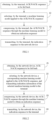
- an embodiment of the present disclosure provides a data transmission method, applied to a terminal, and the method includes:
- respective bits in the ACK/NACK sequence correspond to data blocks transmitted by a base station, which may be data blocks divided in a predetermined manner on different time slots, different channels, and the same channel and combinations thereof;
- the terminal receives the downlink data transmitted by at least one network device in the same and/or different time slots; receives and processes the downlink data, determines whether the downlink data is received correctly, and uses a 0/1 bit sequence for representation;
- the terminal selects, autonomously or based on the machine learning model indication information of the network device, the machine learning model applied to the bit sequence; and compresses the 0/1 bit sequence through the machine learning model to obtain the indication sequence;
- the terminal transmits the indication sequence to the network device, and compresses, transmits, and decompresses the above-mentioned bit sequence with sparsity, based on deep learning technology (such as autoencoder technology), thereby reducing feedback overhead for bit sequence with sparsity.
- deep learning technology such as autoencoder technology
- the selecting, by the terminal, a machine learning model applied to the ACK/NACK sequence includes: selecting, by the terminal, the machine learning model applied to the ACK/NACK sequence according to the machine learning model indication information of the network device.
- the selecting, by the terminal, the machine learning model applied to the ACK/NACK sequence includes: selecting, by the terminal, the machine learning model applied to the ACK/NACK sequence according to the ACK/NACK sequence.
- the above-mentioned data transmission method may also include: transmitting, by the terminal, the indication information of the selected machine learning model applied to the ACK/NACK sequence to the network device.
- the above-mentioned data transmission method may also include: receiving, by the terminal, machine learning model indication information transmitted by the network device through radio resource control (RRC) signaling or medium access control control element (MAC CE) signaling or physical layer signaling.
- RRC radio resource control
- MAC CE medium access control control element
- the machine learning model indication information herein is transmitted by one or all of the network devices. All network devices here correspond to multiple receiving points in a coordinated multiple points (CoMP) transmission scenario.
- CoMP coordinated multiple points
- the machine learning model is trained and distributed by the following process:
- the machine learning model training process and distributing process further include: being performed by one or all of the network devices; and being repeated once every fixed cycle.
- the network device stores the received 0/1 bit sequence to grade the sparsity of the above-mentioned 0/1 bit sequence with sparsity; for example, the ACK/NACK sequence [0,0,0,0,0,0,0,0,0,1,0,0,0,0,0,0,0,1,0,0,0,0,0,0,0], where 1 represents ACK and 0 represents NACK; in addition, 1 may also be used to represent NACK, 0 represents ACK, which is to reflect the sparsity of the ACK/NACK sequence.
- the Nth machine learning model is trained through the Nth level of bit sequence among the multiple of different sparse levels of bit sequences to obtain the Nth machine learning model corresponding to the Nth level of bit sequence;
- the N+1th machine learning model is trained through the Nth machine learning model and the N+1th level of bit sequence to obtain the N+1th machine learning model corresponding to the N+1th level of bit sequence.
- the 0/1 bit sequences with different sparsity levels generated recently according to the demodulation results are stored; the sparsity of the above-mentioned 0/1 bit sequences with sparsity are graded; the training unit selects a sparse level of 0/1 bit sequence to train the autoencoder to be used; based on a certain sparse level of autoencoder model trained above, transfer learning is performed to obtain the parameters of the autoencoder at other sparse levels, that is, in a case that the other sparse levels of autoencoder parameters are trained, the certain sparse level of machine learning model trained above is used as the starting point.
- the Nth machine learning model may also be trained through the Nth level of bit sequence among the multiple of different sparse levels of bit sequences to obtain the Nth machine learning model corresponding to the Nth level of bit sequence; the N+1th machine learning model is trained through the N+1th level of bit sequence among the multiple of different sparse levels of bit sequences to obtain the N+1th machine learning model corresponding to the N+1th level of bit sequence.
- the recently received decompressed 0/1 bit sequence is stored; the sparsity of the above-mentioned stored 0/1 bit sequence is graded; the training unit uses the above-mentioned different sparse levels of 0/1 bit sequences to train the machine learning apparatus to be used, and obtains machine learning models with different parameters corresponding to different sparse levels respectively.
- the machine learning model may also be trained and distributed by the following process:
- the terminal reports the trained models to the network device through the following process: reporting, by the terminal, the trained machine learning models to the network device through RRC signaling or MAC CE or physical layer signaling.
- the stored ACK/NACK sequence may be grouped, and may be grouped according to sequence length and ACK ratio.
- the compressing, through a trained machine learning model corresponding to the sparse level, the ACK/NACK sequence to obtain an indication sequence includes: performing a convolutional neural network, performing a batch normalization, and then performing an activation function and a fully connected layer on the encoder in the autoencoder of the trained machine learning model, and then limiting the coefficient and output of the autoencoder as a binary bit to obtain an indication sequence.
- the above ACK/NACK sequence is compressed based on the encoder in the selected autoencoder, and the coefficient and output of the autoencoder are also limited as binary 0, 1 bits to obtain a compressed Mx1 binary vector [0,1,1,0,0,1,0];
- the specific operation of the encoder in the autoencoder is described as follows of: performing a convolutional neural network, then performing a batch normalization, a leakyReLU activation function, and a full connected layer on the above-mentioned sparse 0/1 bit sequence, and then limiting the output value as 0 or 1, that is, obtaining the above-mentioned compressed binary sequence.
- the transmitting, by the terminal, the indication sequence to the network device includes:
- ACK/NACK sequence compression is performed on 6G PDSCH.
- the method on the network side corresponds to the method on the terminal side, and the above-mentioned method on the terminal side is also applicable to the embodiment on the network side, and may also achieve the same technical effect.
- the embodiment of the present disclosure also provides a training and distributing method of machine learning model, which is applied to a network device side, and the method includes:
- the machine learning model training process and distributing process further include:
- the training and distributing method of the machine learning model further includes:
- the terminal side reports the models trained by itself to the network device, and the network device summarizes the models of all other terminals, and then transmits the summarized result to the terminal.
- the grouping the stored ACK/NACK sequence may be performed according to sequence length and ACK ratio.
- the network device can determine the machine learning model, thereby reducing the feedback overhead of the bit sequence with sparsity.
- an embodiment of the present disclosure also provides a data transmission method, applied to a network device, and the method includes:
- respective bits in the ACK/NACK sequence correspond to different terminals, and the terminals transmit on a predetermined channel, and the base station feeds back collectively; the NACK here is not only used to indicate that the data has not been successfully demodulated, but also used to indicate that the terminals are in an Inactive (inactive) state.
- the network device receives the uplink data transmitted by at least one terminal; the network device receives and processes the uplink data, determines whether the uplink data is received correctly, and uses a 0/1 bit sequence for representation, for example, the 0/1 bit sequence corresponding to ACK/NACK-Inactive; the network device selects the trained machine learning model corresponding to the bit sequence according to the load level (or sparse level) corresponding to the bit sequence; the network device compresses the 0/1 bit sequence through the machine learning model to obtain the indication sequence; the network device transmits the indication sequence to the terminal, and based on deep learning technology (such as autoencoder technology), compresses, transmits, and decompresses the above-mentioned bit sequence with sparsity, thereby reducing feedback overhead for bit sequence with sparsity.
- deep learning technology such as autoencoder technology
- the data transmission method may also include: transmitting, by the network device, machine learning model indication information to the terminal through radio resource control RRC signaling or medium access control control element MAC CE signaling or physical layer signaling.
- the machine learning model is trained and distributed by the following process:
- the machine learning model training process and the distributing process further include: being repeated every fixed cycle.
- the terminal reports the trained models to the network device through the following process: reporting, by the terminal, the trained machine learning models to the network device through RRC signaling or MAC CE or physical layer signaling.
- the grouping stored ACK/NACK sequence is performed according to sequence length and ACK ratio.
- the transmitting the indication sequence to the terminal includes:
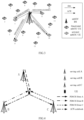
- FIG. 3 it is a transmission schematic view of information bits of ACK/NACK-Inactive based on bit-map for 6G ultra-large-scale machine communication PUSCH.
- the disclosure of the transmission method of ACK/NACK-Inactive feedback based on machine learning for PUSCH specifically includes:
- the above machine learning training process and the process of storing and transferring model parameters are not always bound together with the use process.
- the implementation process includes the following two methods.
- model parameters may be applied repeatedly until the communication environment changes greatly and the model parameters are no longer applicable, instead of training the model before each time of using the same.
- the base station extracts the above-mentioned data in stages, conducts independent training offline, and then compares the trained model with the model currently in use, and selects a more suitable model for online use (when using a newly trained model, the transfer process of the model is also included).
- FIG. 4 it is a schematic view of ACK/NACK codebook feedback for PDSCH.
- the disclosure of the transmission method of ACK/NACK feedback for PDSCH specifically includes:
- training, storing and transferring parameters may also be the following steps, and the usage method is the same as the above-mentioned method, and will not be described again;
- Different UEs store uncompressed ACK/NACK sequences generated in different channel states recently; the above-mentioned different channel states are grouped, and the training unit uses the UE in the same group of channel states to generate ACK/NACK sequences for training the machine learning apparatus to be used until the channel states of all groups are traversed, thereby obtaining machine learning models with different parameters corresponding to different channel states;
- the training unit reports the trained parameters and/or structures of the compressor or encoder of the machine learning apparatus in different groups of channel states to the base station through RRC signaling or MAC CE or physical layer signaling, after being received by the base station, they are transferred to the storage unit of the base station;
- the base station configures the stored models and parameter sets of the compressors or encoders of the trained machine learning apparatus to the UE through RRC signaling or MAC CE or physical layer signaling and transmits them to the UE.
- Step 1-2 of step training, and step 1-2 of storing and transferring the model and parameter are repeated, and the training result are updated at regular intervals.
- the above-mentioned machine learning training process and the process of storing and transferring model parameters are not always bound together with the use process.
- the implementation process includes the following two methods.
- Method 1 once the training is completed and the model parameters are transferred, the above-mentioned model parameters may be applied repeatedly until the communication environment changes greatly and the model parameters are no longer applicable, instead of training the model before each use.
- Method 2 the base station extracts the above-mentioned data in stages, conducts independent training offline, and then compares the trained model with the model currently in use, and selects a more suitable model for online use (when using a newly trained model, the transfer process of the model is also included).
- Embodiment 1 Based on the autoencoder technology in machine learning, the ACK/NACK-Inactive sequence of PUSCH in 6G ultra-large-scale machine communication is compressed, wherein the autoencoder technology first uses the encoder to compress the data at the sending end, then uses the decoder to decompress the data at the receiving end, and the parameters of the encoder and the decoder are obtained based on data training through machine learning method.
- Embodiment 2 the ACK/NACK sequence in the PDSCH is compressed based on the autoencoder technology in machine learning.
- machine learning technology is used to reduce the feedback overhead of 0/1 bit sequence with a sparsity
- the specific embodiment includes but are not limited to: 1) reduce the overhead of ACK/NACK feedback of PUSCH in 6G ultra-large-scale machine communication with low complexity; and 2) reduce the overhead of the ACK/NACK sequence of PDSCH in the 6G ultra-high data rate with low complexity.
- the method on the terminal side corresponds to the method on the network side, and the above-mentioned method on the network side is also applicable to the embodiment on the terminal side, and may also achieve the same technical effect.
- an embodiment of the present disclosure also provides a terminal 50, which includes: a transceiver 51, a processor 52, and a memory 53, where a program executable by the processor 52 is stored in the memory 53; when the processor 52 executes the program, the program may implement: obtaining ACK/NACK sequence to be fed back; selecting a machine learning model applied to the ACK/NACK sequence; compressing, through the machine learning model, the ACK/NACK sequence to obtain an indication sequence; and transmitting the indication sequence to the network device.
- the selecting, by the terminal, the machine learning model applied to the ACK/NACK sequence includes: selecting, by the terminal, the machine learning model applied to the ACK/NACK sequence according to machine learning model indication information of the network device.
- the selecting, by the terminal, the machine learning model applied to the ACK/NACK sequence includes: selecting, by the terminal, the machine learning model applied to the ACK/NACK sequence according to the ACK/NACK sequence.
- the terminal transmits indication information of the selected machine learning model applied to the ACK/NACK sequence to the network device.
- machine learning model indication information transmitted by the network device through radio resource control RRC signaling or medium access control control element MAC CE signaling or physical layer signaling is received.
- the transmitting, by the terminal, the indication sequence to the network device includes: transmitting, by the terminal, the indication sequence to the network device on an uplink control channel or an uplink shared channel.
- the data transmission method further includes: transmitting, by the terminal, the indication sequence and indication information of the machine learning model corresponding to the indication sequence to the network device on an uplink shared channel or an uplink control channel.
- the data transmission method further includes: transmitting, by the terminal, the indication sequence and indication information of the machine learning model corresponding to the indication sequence to the network device on an uplink shared channel and an uplink control channel respectively, or on the uplink control channel and the uplink shared channel respectively.
- the machine learning model indication information is transmitted by one or all of the network devices.
- the training process and distributing process for the machine learning model further include: being performed by one or all of the network devices; and being repeated once every fixed cycle.
- the machine learning model is trained and distributed by the following process:
- the reporting, by the terminal, the trained model to the network device through the following process: reporting, by the terminal, the trained machine learning model to the network device through RRC signaling or MAC CE or physical layer signaling.
- the device in this embodiment is a device corresponding to the method shown in FIG. 1 above, and the implementation methods in the above-mentioned embodiments are all applicable to the embodiment of the device, and can also achieve the same technical effect.
- the transceiver 51 and the memory 53, and the transceiver 51 and the processor 52 may be electrically connected through the bus interface, the function of the processor 52 may also be realized by the transceiver 51, and the function of the transceiver 51 may also be realized by the processor 52.
- the above-mentioned device provided by the embodiments of the present disclosure can realize all the method steps realized by the above-mentioned method embodiments, and can achieve the same technical effect. Parts and beneficial effects in this embodiment that are the same as those in the method embodiment will not be described in detail here.
- an embodiment of the present disclosure also provides a data transmission apparatus 60, which includes:
- the selecting, by the terminal, the machine learning model applied to the ACK/NACK sequence includes: selecting, by the terminal, the machine learning model applied to the ACK/NACK sequence according to machine learning model indication information of the network device.
- the selecting, by the terminal, the machine learning model applied to the ACK/NACK sequence includes: selecting, by the terminal, the machine learning model applied to the ACK/NACK sequence according to the ACK/NACK sequence.
- the terminal transmits indication information of the selected machine learning model applied to the ACK/NACK sequence to the network device.
- machine learning model indication information transmitted by the network device through radio resource control RRC signaling or medium access control control element MAC CE signaling or physical layer signaling is received.
- the transmitting, by the terminal, the indication sequence to the network device includes: transmitting, by the terminal, the indication sequence to the network device on an uplink control channel or an uplink shared channel.
- the data transmission method further includes: transmitting, by the terminal, the indication sequence and indication information of the machine learning model corresponding to the indication sequence to the network device on an uplink shared channel or an uplink control channel.
- the data transmission method further includes: transmitting, by the terminal, the indication sequence and indication information of the machine learning model corresponding to the indication sequence to the network device on an uplink shared channel and an uplink control channel respectively, or on the uplink control channel and the uplink shared channel respectively.
- the machine learning model indication information is transmitted by one or all of the network devices.
- training process and distributing process for the machine learning model further include: being performed by one or all of the network devices; and being repeated once every fixed cycle.
- the machine learning model is trained and distributed by the following process:
- the reporting, by the terminal, the trained model to the network device through the following process: reporting, by the terminal, the trained machine learning model to the network device through RRC signaling or MAC CE or physical layer signaling.
- the apparatus in this embodiment is an apparatus corresponding to the method shown in FIG. 1 above, and the implementations in the above embodiments are all applicable to the embodiments of the apparatus, and can also achieve the same technical effect.
- the above-mentioned apparatus provided by the embodiment of the present disclosure can realize all the method steps realized by the above-mentioned method embodiments, and can achieve the same technical effect. Parts and beneficial effects in this embodiment that are the same as those in the method embodiment will not be described in detail here.
- the embodiment of the present disclosure also provides a network device, which includes: a transceiver, a processor, and a memory, where a program executable by the processor is stored in the memory; the program, when executed by the processor, implements: obtaining ACK/NACK sequence to be trained, and storing the ACK/NACK sequence to be trained; grouping the stored ACK/NACK sequence, performing machine learning model training, and generating a plurality of groups of machine learning models; storing the machine learning model; distributing the stored machine learning model to the terminal through RRC signaling or MAC CE or physical layer signaling.
- training process and distributing process for the machine learning model further include: being performed by one or all of the network devices; and being repeated once every fixed cycle.
- the storage module stores the machine learning model reported by the terminal; the transceiver module is configured to distribute the stored machine learning models of all different terminals to the terminals through RRC signaling or MAC CE or physical layer signaling.
- the stored ACK/NACK sequence is grouped according to a sequence length and an ACK ratio.
- the embodiment of the present disclosure also provides a training and distributing apparatus of machine learning model, which is applied to the network device side, and the apparatus includes:
- training process and distributing process for the machine learning model further include: being performed by one or all of the network devices; and being repeated once every fixed cycle.
- the storage module stores the machine learning model reported by the terminal; the transceiver module is configured to distribute the stored machine learning models of all different terminals to the terminals through RRC signaling or MAC CE or physical layer signaling.
- the stored ACK/NACK sequence is grouped according to a sequence length and an ACK ratio.
- the embodiment of the present disclosure also provides a network device, which includes: a transceiver, a processor, and a memory, where a program executable by the processor is stored in the memory; the program, when executed by the processor, implements: obtaining ACK/NACK sequence to be fed back; selecting a machine learning model applied to the ACK/NACK sequence, and transmitting indication information of the selected machine learning model to the terminal; compressing, through the machine learning model, the ACK/NACK sequence to obtain an indication sequence; and transmitting the indication sequence to the terminal.
- a network device which includes: a transceiver, a processor, and a memory, where a program executable by the processor is stored in the memory; the program, when executed by the processor, implements: obtaining ACK/NACK sequence to be fed back; selecting a machine learning model applied to the ACK/NACK sequence, and transmitting indication information of the selected machine learning model to the terminal; compressing, through the machine learning model, the ACK/NACK sequence to obtain an indication sequence; and
- the network device transmits the machine learning model indication information to the terminal through radio resource control RRC signaling or medium access control control element MAC CE signaling or physical layer signaling.
- one or all network devices transmits the machine learning model indication information to the terminal.
- the machine learning model is trained and distributed by the following process:
- the machine learning model training process and distributing process further include:
- the terminal reports the trained model to the network device through the following process: reporting, by the terminal, the trained machine learning model to the network device through RRC signaling or MAC CE or physical layer signaling.
- the stored ACK/NACK sequence is grouped according to a sequence length and an ACK ratio.
- the transmitting the indication sequence to the terminal includes:
- the device in this embodiment is a device corresponding to the method shown in FIG. 2 above, and the implementations in the above embodiments are all applicable to the embodiments of the device, and can also achieve the same technical effect.
- the transceiver and the memory, as well as the transceiver and the processor may be electrically connected through the bus interface, and the functions of the processor may also be realized by the transceiver, and the functions of the transceiver may also be realized by the processor.
- the embodiment of the present disclosure also provides a data transmission apparatus, which includes:
- the transceiver module transmits the machine learning model indication information to the terminal through radio resource control RRC signaling or medium access control control element MAC CE signaling or physical layer signaling.
- one or all network devices transmit the machine learning model indication information to the terminal.
- the machine learning model is trained and distributed by the following process:
- the machine learning model training process and distributing process further include:
- the terminal reports the trained model to the network device through the following process: reporting, by the terminal, the trained machine learning model to the network device through RRC signaling or MAC CE or physical layer signaling.
- the stored ACK/NACK sequence is grouped according to a sequence length and an ACK ratio.
- the transmitting the indication sequence to the terminal includes:
- the apparatus in this embodiment is an apparatus corresponding to the method shown in FIG. 2 above, and the implementations in the above embodiments are all applicable to the embodiments of the apparatus, and can also achieve the same technical effect.
- the above-mentioned apparatus provided by the embodiment of the present disclosure can realize all the method steps realized by the above-mentioned method embodiments, and can achieve the same technical effect. Parts and beneficial effects in this embodiment that are the same as those in the method embodiment will not be described in detail here.
- the embodiment of the present disclosure further provides a data transmission system, which includes: the device on the network side and the device on the terminal side as described in the above-mentioned embodiments.
- the embodiment of the present disclosure also provides a processor-readable storage medium, where the processor-readable storage medium stores processor-executable instructions, and the processor-executable instructions are used to enable the processor to perform the above-mentioned methods. All the implementation manners in the foregoing method embodiments are applicable to the embodiments, and can also achieve the same technical effect.
- the disclosed devices and methods may be implemented in other ways.
- the apparatus embodiments described above are only illustrative.
- the division of the units is only a logical function division. In actual implementation, there may be other division methods.
- multiple units or components can be combined or may be integrated into another system, or some features may be ignored, or not implemented.
- the mutual coupling or direct coupling or communication connection shown or discussed may be achieved through some interfaces, and the indirect coupling or communication connection of apparatuses or units may be in electrical, mechanical or other forms.
- the units described as separate components may or may not be physically separated, and the components shown as units may or may not be physical units, that is, they may be located in one place, or may be distributed to multiple network units. Part or all of the units can be selected according to actual needs to achieve the purpose of the solution of this embodiment.
- each functional unit in each embodiment of the present disclosure may be integrated into one processing unit, each unit may exist separately physically, or two or more units may be integrated into one unit.
- the computer software product is stored in a storage medium, and includes several instructions to enable a computer device (which may be a personal computer, server, or network device, etc.) to execute all or part of the steps of the methods described in various embodiments of the present disclosure.
- the aforementioned storage medium includes: U disk, mobile hard disk, read-only memory (read-only memory, ROM), random access memory (random access memory, RAM), magnetic disk or optical disk, and various media that can store program codes.
- each component or each step can be decomposed and/or reassembled. These decompositions and/or recombinations should be considered as equivalents of the present disclosure. Also, the steps for executing the above series of processes can naturally be executed in chronological order according to the illustrated order, but they are not necessarily executed in chronological order, and some steps can be executed in parallel or independently with each other.
- modules, units, and subunits can be implemented in one or more application specific integrated circuits (Application Specific Integrated Circuits, ASIC), digital signal processor (Digital Signal Processor, DSP), digital signal processing device (DSP Device, DSPD), Programmable Logic Device (Programmable Logic Device, PLD), Field-Programmable Gate Array (Field-Programmable Gate Array, FPGA), general-purpose processor, controller, microcontroller, microprocessor, and other electronic units or combinations thereof used for performing the functions described in the present disclosure.
- ASIC Application Specific Integrated Circuits
- DSP Digital Signal Processor
- DSP Device digital signal processing device
- PLD Programmable Logic Device
- Field-Programmable Gate Array Field-Programmable Gate Array
- FPGA Field-Programmable Gate Array
- the technologies described in the embodiments of the present disclosure may be implemented through modules (such as procedures, functions, etc.) that execute the functions described in the embodiments of the present disclosure.
- Software codes can be stored in memory and executed by a processor.
- Memory can be implemented within the processor or external to the processor.
- the object of the present disclosure can also be achieved by running a program or a group of programs on any computing apparatus.
- the computing apparatus may be a known general-purpose apparatus. Therefore, the object of the present disclosure can also be achieved only by providing a program product including program codes for realizing the method or apparatus. That is, such a program product also constitutes the present disclosure, and a storage medium storing such a program product also constitutes the present disclosure. Obviously, the storage medium may be any known storage medium or any storage medium developed in the future. It should also be pointed out that, in the apparatus and method of the present disclosure, obviously, each component or each step can be decomposed and/or reassembled. These decompositions and/or recombinations should be considered equivalents of the present disclosure. Also, the steps for performing the above-mentioned series of processes may naturally be performed in chronological order in the order described, but need not necessarily be performed in chronological order. Certain steps may be performed in parallel or independently with each other.
Landscapes
- Engineering & Computer Science (AREA)
- Theoretical Computer Science (AREA)
- Physics & Mathematics (AREA)
- Software Systems (AREA)
- Artificial Intelligence (AREA)
- Data Mining & Analysis (AREA)
- Evolutionary Computation (AREA)
- Computing Systems (AREA)
- General Engineering & Computer Science (AREA)
- General Physics & Mathematics (AREA)
- Mathematical Physics (AREA)
- Signal Processing (AREA)
- Life Sciences & Earth Sciences (AREA)
- Health & Medical Sciences (AREA)
- Biomedical Technology (AREA)
- Biophysics (AREA)
- Computational Linguistics (AREA)
- General Health & Medical Sciences (AREA)
- Molecular Biology (AREA)
- Computer Networks & Wireless Communication (AREA)
- Computer Vision & Pattern Recognition (AREA)
- Medical Informatics (AREA)
- Detection And Prevention Of Errors In Transmission (AREA)
- Mobile Radio Communication Systems (AREA)
Applications Claiming Priority (2)
| Application Number | Priority Date | Filing Date | Title |
|---|---|---|---|
| CN202011261728.1A CN114499796B (zh) | 2020-11-12 | 2020-11-12 | 一种数据传输方法、装置及设备 |
| PCT/CN2021/128386 WO2022100493A1 (fr) | 2020-11-12 | 2021-11-03 | Procédé, appareil et dispositif de transmission de données |
Publications (4)
| Publication Number | Publication Date |
|---|---|
| EP4246850A1 true EP4246850A1 (fr) | 2023-09-20 |
| EP4246850A4 EP4246850A4 (fr) | 2024-05-01 |
| EP4246850C0 EP4246850C0 (fr) | 2025-07-23 |
| EP4246850B1 EP4246850B1 (fr) | 2025-07-23 |
Family
ID=81490029
Family Applications (1)
| Application Number | Title | Priority Date | Filing Date |
|---|---|---|---|
| EP21891020.6A Active EP4246850B1 (fr) | 2020-11-12 | 2021-11-03 | Procédé, appareil et dispositif de transmission de données |
Country Status (4)
| Country | Link |
|---|---|
| US (1) | US12615124B2 (fr) |
| EP (1) | EP4246850B1 (fr) |
| CN (1) | CN114499796B (fr) |
| WO (1) | WO2022100493A1 (fr) |
Families Citing this family (5)
| Publication number | Priority date | Publication date | Assignee | Title |
|---|---|---|---|---|
| JP7842968B2 (ja) * | 2022-04-14 | 2026-04-09 | ソニーグループ株式会社 | 送信装置、受信装置、送信方法および受信方法 |
| US12356388B2 (en) * | 2022-06-03 | 2025-07-08 | Qualcomm Incorporated | Network coding with user equipment cooperation |
| US12470355B2 (en) * | 2022-09-07 | 2025-11-11 | Qualcomm Incorporated | ACK coalescing performance through dynamic stream selection |
| US12513043B2 (en) * | 2023-07-26 | 2025-12-30 | Rakuten Symphony, Inc. | System, method, and computer program for managing machine learning models in a network |
| WO2026000390A1 (fr) * | 2024-06-28 | 2026-01-02 | Oppo广东移动通信有限公司 | Procédé, appareil et dispositif de rétroaction basés sur un modèle, support et produit programme |
Family Cites Families (60)
| Publication number | Priority date | Publication date | Assignee | Title |
|---|---|---|---|---|
| US8335165B2 (en) | 2008-03-04 | 2012-12-18 | Texas Instruments Incorporated | Transmission of multiple ACK/NAK bits with data |
| US8543867B2 (en) * | 2010-04-02 | 2013-09-24 | Sharp Laboratories Of America, Inc. | Transmission of acknowledgement and negative acknowledgement in a wireless communication system |
| CN103095432A (zh) * | 2011-11-07 | 2013-05-08 | 北京三星通信技术研究有限公司 | 一种发送harq-ack反馈信息的方法 |
| CN111818569B (zh) * | 2015-04-10 | 2024-04-16 | 瑞典爱立信有限公司 | 用于对harq反馈进行压缩的方法和用户设备 |
| CN105187157B (zh) * | 2015-08-06 | 2019-01-29 | 北京北方烽火科技有限公司 | 一种反馈ack/nack信息的方法、装置及终端 |
| CN111800232B (zh) * | 2015-08-10 | 2024-12-20 | 华为技术有限公司 | 上行控制信息传输方法和装置 |
| EP3447953B1 (fr) * | 2016-05-10 | 2020-07-22 | Huawei Technologies Co., Ltd. | Procédé de transmission d'informations en retour, dispositif associé et système de communication |
| WO2017201654A1 (fr) * | 2016-05-23 | 2017-11-30 | 华为技术有限公司 | Procédé de transmission de données, dispositif de réseau et dispositif de terminal |
| KR102150246B1 (ko) * | 2016-06-30 | 2020-09-01 | 후아웨이 테크놀러지 컴퍼니 리미티드 | 업링크 정보 전송 방법, 관련 디바이스 및 통신 시스템 |
| US10763893B2 (en) * | 2016-07-20 | 2020-09-01 | Georges Harik | Method for data compression |
| CN107733558B (zh) * | 2016-08-12 | 2020-07-21 | 华为技术有限公司 | 混合自动重传请求确认harq-ack反馈方法和装置 |
| WO2018027997A1 (fr) * | 2016-08-12 | 2018-02-15 | 华为技术有限公司 | Procédé de transmission de données de liaison montante, dispositif terminal et dispositif de réseau |
| CN108063647B (zh) * | 2016-11-05 | 2021-04-20 | 华为技术有限公司 | 数据传输的方法和装置 |
| US11050516B2 (en) * | 2017-01-05 | 2021-06-29 | Guangdong Oppo Mobile Telecommunications Corp., Ltd. | Method, network device and terminal device for transmitting feedback information |
| WO2018201369A1 (fr) * | 2017-05-04 | 2018-11-08 | 华为技术有限公司 | Procédé de commande de transmission d'informations, dispositif terminal et dispositif réseau |
| SG11201910586WA (en) * | 2017-08-10 | 2020-02-27 | Guangdong Oppo Mobile Telecommunications Corp Ltd | Data transmission method, network device and terminal device |
| CN109391352B (zh) * | 2017-08-11 | 2021-12-10 | 华为技术有限公司 | 一种应答信息的传输方法、终端设备和网络设备 |
| CN110048826B (zh) * | 2017-09-30 | 2020-08-21 | 华为技术有限公司 | 数据传输方法、终端设备以及网络设备 |
| CN110035531B (zh) * | 2018-01-12 | 2021-12-03 | 华为技术有限公司 | 上行控制信息传输方法及装置 |
| CN111566961B (zh) * | 2018-01-30 | 2022-05-06 | 华为技术有限公司 | 一种信息传输方法及设备 |
| JP2021517382A (ja) * | 2018-02-13 | 2021-07-15 | オッポ広東移動通信有限公司Guangdong Oppo Mobile Telecommunications Corp., Ltd. | サウンディング参照信号の伝送方法、端末機器およびネットワーク機器 |
| KR20200119813A (ko) * | 2018-02-14 | 2020-10-20 | 광동 오포 모바일 텔레커뮤니케이션즈 코포레이션 리미티드 | 물리 상향 공유 채널의 전송 방법 및 단말기 디바이스 |
| US11665017B2 (en) * | 2018-02-28 | 2023-05-30 | Cisco Technology, Inc. | Telemetry reporting in vehicle super resolution systems |
| CN110324126B (zh) * | 2018-03-30 | 2020-12-04 | 电信科学技术研究院有限公司 | 一种数据传输方法、终端设备及网络设备 |
| CN110324117B (zh) * | 2018-03-30 | 2021-10-26 | 大唐移动通信设备有限公司 | 一种数据传输方法、终端设备及网络设备 |
| CN110351020B (zh) * | 2018-04-03 | 2021-06-15 | 华为技术有限公司 | 一种传输数据的方法、装置和系统 |
| CN111989904B (zh) * | 2018-04-04 | 2022-04-05 | 华为技术有限公司 | 数据传输方法、终端设备及网络设备 |
| CN108683901B (zh) * | 2018-05-10 | 2020-11-03 | Oppo广东移动通信有限公司 | 一种数据处理方法、mec服务器及计算机可读存储介质 |
| CN110505040B (zh) * | 2018-05-18 | 2020-05-26 | 维沃移动通信有限公司 | 信息传输方法、终端及网络设备 |
| CN112737738A (zh) * | 2018-05-21 | 2021-04-30 | 华为技术有限公司 | 上行控制信息的传输方法及设备 |
| CN110557231B (zh) * | 2018-06-04 | 2021-02-12 | 华为技术有限公司 | 传输信息的方法和通信设备 |
| CN110830151B (zh) * | 2018-08-07 | 2021-06-15 | 华为技术有限公司 | 反馈信息的传输方法和装置 |
| CN112534910A (zh) * | 2018-08-17 | 2021-03-19 | Oppo广东移动通信有限公司 | Harq信息的传输方法、网络设备和终端设备 |
| WO2020056559A1 (fr) * | 2018-09-17 | 2020-03-26 | Oppo广东移动通信有限公司 | Procédé de transmission d'informations, dispositif et système de stockage |
| CN110943805B (zh) * | 2018-09-21 | 2021-06-04 | 电信科学技术研究院有限公司 | 一种harq-ack的传输方法、终端设备及网络设备 |
| US10732902B1 (en) * | 2018-09-26 | 2020-08-04 | Amazon Technologies, Inc. | Using feedback for adaptive data compression |
| WO2020068498A1 (fr) * | 2018-09-27 | 2020-04-02 | Google Llc | Compression de données à l'aide de réseaux neuronaux entiers |
| JP7229362B2 (ja) * | 2018-12-29 | 2023-02-27 | 北京小米移動軟件有限公司 | 直接通信のデータ伝送方法、装置及びシステム |
| CN111417191A (zh) * | 2019-01-04 | 2020-07-14 | 电信科学技术研究院有限公司 | 一种信息传输方法、终端及网络设备 |
| CN111565093B (zh) * | 2019-02-14 | 2022-08-26 | 华为技术有限公司 | 信息传输方法、终端设备及网络设备 |
| CN111585727B (zh) * | 2019-02-15 | 2021-11-05 | 大唐移动通信设备有限公司 | 一种harq-ack信息的传输方法、装置、终端及网络设备 |
| CN111586850B (zh) * | 2019-02-15 | 2023-09-19 | 大唐移动通信设备有限公司 | 传输方法、接收方法、终端及网络设备 |
| WO2021007685A1 (fr) * | 2019-07-12 | 2021-01-21 | Oppo广东移动通信有限公司 | Procédé de transmission de données de liaison latérale, équipement terminal et dispositif de réseau |
| CN110311762B (zh) * | 2019-07-16 | 2021-04-16 | 北京紫光展锐通信技术有限公司 | 反馈信息传输方法、装置、终端及存储介质 |
| CN116667989A (zh) * | 2019-07-31 | 2023-08-29 | 中兴通讯股份有限公司 | 信号传输方法、装置、网络设备及存储介质 |
| WO2021026917A1 (fr) * | 2019-08-15 | 2021-02-18 | 富士通株式会社 | Procédé et appareil de transmission de signal, et système |
| CN114785463B (zh) * | 2019-11-06 | 2023-12-05 | Oppo广东移动通信有限公司 | 传输反馈信息的方法、终端设备和网络设备 |
| EP4398507A3 (fr) * | 2019-11-08 | 2024-10-16 | Guangdong Oppo Mobile Telecommunications Corp., Ltd. | Procédé et appareil de transmission de données de liaison montante, terminal et support de stockage |
| KR20220100788A (ko) * | 2019-11-18 | 2022-07-18 | 삼성전자주식회사 | Harq-ack 송신 방법 및 장치 |
| CN111079948B (zh) * | 2019-12-27 | 2023-02-24 | 电子科技大学 | 一种基于sdn的分布式机器学习训练加速方法 |
| US12413347B2 (en) * | 2020-02-11 | 2025-09-09 | Beijing Xiaomi Mobile Software Co., Ltd. | Communication method for determining priority of HARQ-ACK information, and device |
| CN113541876B (zh) * | 2020-04-10 | 2023-07-21 | 中国移动通信有限公司研究院 | 一种上行传输方法、终端及网络设备 |
| WO2022027605A1 (fr) * | 2020-08-07 | 2022-02-10 | 华为技术有限公司 | Procédé de transmission d'informations et appareil de communication |
| CN115918220A (zh) * | 2020-09-29 | 2023-04-04 | Oppo广东移动通信有限公司 | 信道传输的方法、终端设备和网络设备 |
| CN114362895B (zh) * | 2020-10-12 | 2024-06-25 | 维沃移动通信有限公司 | 反馈信息传输方法、终端及网络设备 |
| CN116686361A (zh) * | 2021-01-13 | 2023-09-01 | 华为技术有限公司 | 上行确认信息的传输方法及装置 |
| CN115118403B (zh) * | 2021-03-19 | 2024-12-03 | 北京紫光展锐通信技术有限公司 | 一种信息传输方法及通信装置 |
| WO2022205103A1 (fr) * | 2021-03-31 | 2022-10-06 | 北京小米移动软件有限公司 | Procédé et appareil de transmission d'accusé de réception (ack) de demande harq et support de stockage lisible |
| CN115175317A (zh) * | 2021-04-01 | 2022-10-11 | 华为技术有限公司 | 一种上行控制信息的传输方法及装置 |
| CN117675126A (zh) * | 2022-08-10 | 2024-03-08 | 华为技术有限公司 | 数据传输方法及装置 |
-
2020
- 2020-11-12 CN CN202011261728.1A patent/CN114499796B/zh active Active
-
2021
- 2021-11-03 WO PCT/CN2021/128386 patent/WO2022100493A1/fr not_active Ceased
- 2021-11-03 US US18/036,577 patent/US12615124B2/en active Active
- 2021-11-03 EP EP21891020.6A patent/EP4246850B1/fr active Active
Also Published As
| Publication number | Publication date |
|---|---|
| CN114499796B (zh) | 2024-10-15 |
| US20240014981A1 (en) | 2024-01-11 |
| US12615124B2 (en) | 2026-04-28 |
| WO2022100493A1 (fr) | 2022-05-19 |
| CN114499796A (zh) | 2022-05-13 |
| EP4246850C0 (fr) | 2025-07-23 |
| EP4246850B1 (fr) | 2025-07-23 |
| EP4246850A4 (fr) | 2024-05-01 |
Similar Documents
| Publication | Publication Date | Title |
|---|---|---|
| US12615124B2 (en) | Data transmission method, data transmission apparatus and data transmission device | |
| US10454620B2 (en) | Facilitating notifications to indicate failed code block groups in 5G or other next generation networks | |
| US20190182809A1 (en) | Data transmission method and apparatus, and data processing method and apparatus | |
| US20190335431A1 (en) | Control information transmission method and apparatus | |
| US11057794B2 (en) | Redundancy version indication in fifth generation (5G) or other next generation communication systems | |
| EP3476068B1 (fr) | Signalisation de rétroaction améliorée | |
| US20180176939A1 (en) | Feedback information sending method, user equipment, and base station | |
| EP3627740B1 (fr) | Procédures, système et récepteur d'exécution efficace de procédure harq | |
| CN108347295B (zh) | 一种数据传输方法及装置 | |
| CN110635870A (zh) | 生成混合自动重传请求harq信息的方法和装置 | |
| EP3961948B1 (fr) | Procédé de communication, dispositif de réseau et terminal | |
| WO2018113589A1 (fr) | Groupage d'ack/nack dans des systèmes de communication sans fil | |
| WO2023082154A1 (fr) | Procédé et appareil pour mettre à jour une solution de rétroaction csi, dispositif et support de stockage | |
| US10637610B2 (en) | Information sending method and apparatus, and information receiving method and apparatus | |
| CN109150380B (zh) | 数据传输的方法、网络设备和终端设备 | |
| WO2023226702A1 (fr) | Procédé et appareil de communication | |
| CN109981227A (zh) | 物联网场景中基于组通信的harq传输方法及控制系统 | |
| US20200059329A1 (en) | Data processing method and data processing apparatus | |
| EP4575934A1 (fr) | Communication de données sensibles | |
| US20250167803A1 (en) | Data transmission method and apparatus | |
| EP4207653A1 (fr) | Procédé de réalisation d'une transmission de demande de répétition automatique hybride et équipement utilisateur | |
| EP4346139A1 (fr) | Rétroaction par groupe de blocs de code | |
| CN111490855B (zh) | 混合式自动重传请求harq反馈方法、装置、介质及电子设备 | |
| CN115336210B (zh) | 用于码字传输的方法和系统 | |
| CN121984641A (en) | Data transmission method and related device |
Legal Events
| Date | Code | Title | Description |
|---|---|---|---|
| STAA | Information on the status of an ep patent application or granted ep patent |
Free format text: STATUS: THE INTERNATIONAL PUBLICATION HAS BEEN MADE |
|
| PUAI | Public reference made under article 153(3) epc to a published international application that has entered the european phase |
Free format text: ORIGINAL CODE: 0009012 |
|
| STAA | Information on the status of an ep patent application or granted ep patent |
Free format text: STATUS: REQUEST FOR EXAMINATION WAS MADE |
|
| 17P | Request for examination filed |
Effective date: 20230609 |
|
| AK | Designated contracting states |
Kind code of ref document: A1 Designated state(s): AL AT BE BG CH CY CZ DE DK EE ES FI FR GB GR HR HU IE IS IT LI LT LU LV MC MK MT NL NO PL PT RO RS SE SI SK SM TR |
|
| DAV | Request for validation of the european patent (deleted) | ||
| DAX | Request for extension of the european patent (deleted) | ||
| A4 | Supplementary search report drawn up and despatched |
Effective date: 20240403 |
|
| RIC1 | Information provided on ipc code assigned before grant |
Ipc: G06N 3/096 20230101ALI20240326BHEP Ipc: G06N 3/0455 20230101ALI20240326BHEP Ipc: H04L 1/1829 20230101ALI20240326BHEP Ipc: G06N 3/088 20230101ALI20240326BHEP Ipc: G06N 20/00 20190101ALI20240326BHEP Ipc: G06N 3/04 20060101ALI20240326BHEP Ipc: H04L 5/00 20060101AFI20240326BHEP |
|
| GRAP | Despatch of communication of intention to grant a patent |
Free format text: ORIGINAL CODE: EPIDOSNIGR1 |
|
| STAA | Information on the status of an ep patent application or granted ep patent |
Free format text: STATUS: GRANT OF PATENT IS INTENDED |
|
| RIC1 | Information provided on ipc code assigned before grant |
Ipc: G06N 3/096 20230101ALI20250201BHEP Ipc: G06N 3/0455 20230101ALI20250201BHEP Ipc: H04L 1/1829 20230101ALI20250201BHEP Ipc: G06N 3/088 20230101ALI20250201BHEP Ipc: G06N 20/00 20190101ALI20250201BHEP Ipc: G06N 3/04 20230101ALI20250201BHEP Ipc: H04L 5/00 20060101AFI20250201BHEP |
|
| INTG | Intention to grant announced |
Effective date: 20250220 |
|
| GRAS | Grant fee paid |
Free format text: ORIGINAL CODE: EPIDOSNIGR3 |
|
| GRAA | (expected) grant |
Free format text: ORIGINAL CODE: 0009210 |
|
| STAA | Information on the status of an ep patent application or granted ep patent |
Free format text: STATUS: THE PATENT HAS BEEN GRANTED |
|
| AK | Designated contracting states |
Kind code of ref document: B1 Designated state(s): AL AT BE BG CH CY CZ DE DK EE ES FI FR GB GR HR HU IE IS IT LI LT LU LV MC MK MT NL NO PL PT RO RS SE SI SK SM TR |
|
| REG | Reference to a national code |
Ref country code: GB Ref legal event code: FG4D |
|
| REG | Reference to a national code |
Ref country code: CH Ref legal event code: EP |
|
| REG | Reference to a national code |
Ref country code: DE Ref legal event code: R096 Ref document number: 602021034849 Country of ref document: DE |
|
| REG | Reference to a national code |
Ref country code: IE Ref legal event code: FG4D |
|
| U01 | Request for unitary effect filed |
Effective date: 20250812 |
|
| U07 | Unitary effect registered |
Designated state(s): AT BE BG DE DK EE FI FR IT LT LU LV MT NL PT RO SE SI Effective date: 20250821 |
|
| U20 | Renewal fee for the european patent with unitary effect paid |
Year of fee payment: 5 Effective date: 20251127 |
|
| PG25 | Lapsed in a contracting state [announced via postgrant information from national office to epo] |
Ref country code: IS Free format text: LAPSE BECAUSE OF FAILURE TO SUBMIT A TRANSLATION OF THE DESCRIPTION OR TO PAY THE FEE WITHIN THE PRESCRIBED TIME-LIMIT Effective date: 20251123 |
|
| PGFP | Annual fee paid to national office [announced via postgrant information from national office to epo] |
Ref country code: GB Payment date: 20251121 Year of fee payment: 5 |
|
| PG25 | Lapsed in a contracting state [announced via postgrant information from national office to epo] |
Ref country code: NO Free format text: LAPSE BECAUSE OF FAILURE TO SUBMIT A TRANSLATION OF THE DESCRIPTION OR TO PAY THE FEE WITHIN THE PRESCRIBED TIME-LIMIT Effective date: 20251023 |
|
| PG25 | Lapsed in a contracting state [announced via postgrant information from national office to epo] |
Ref country code: HR Free format text: LAPSE BECAUSE OF FAILURE TO SUBMIT A TRANSLATION OF THE DESCRIPTION OR TO PAY THE FEE WITHIN THE PRESCRIBED TIME-LIMIT Effective date: 20250723 |
|
| PG25 | Lapsed in a contracting state [announced via postgrant information from national office to epo] |
Ref country code: GR Free format text: LAPSE BECAUSE OF FAILURE TO SUBMIT A TRANSLATION OF THE DESCRIPTION OR TO PAY THE FEE WITHIN THE PRESCRIBED TIME-LIMIT Effective date: 20251024 |
|
| PG25 | Lapsed in a contracting state [announced via postgrant information from national office to epo] |
Ref country code: PL Free format text: LAPSE BECAUSE OF FAILURE TO SUBMIT A TRANSLATION OF THE DESCRIPTION OR TO PAY THE FEE WITHIN THE PRESCRIBED TIME-LIMIT Effective date: 20250723 |
|
| PG25 | Lapsed in a contracting state [announced via postgrant information from national office to epo] |
Ref country code: RS Free format text: LAPSE BECAUSE OF FAILURE TO SUBMIT A TRANSLATION OF THE DESCRIPTION OR TO PAY THE FEE WITHIN THE PRESCRIBED TIME-LIMIT Effective date: 20251023 |
|
| PG25 | Lapsed in a contracting state [announced via postgrant information from national office to epo] |
Ref country code: ES Free format text: LAPSE BECAUSE OF FAILURE TO SUBMIT A TRANSLATION OF THE DESCRIPTION OR TO PAY THE FEE WITHIN THE PRESCRIBED TIME-LIMIT Effective date: 20250723 |
|
| PG25 | Lapsed in a contracting state [announced via postgrant information from national office to epo] |
Ref country code: SM Free format text: LAPSE BECAUSE OF FAILURE TO SUBMIT A TRANSLATION OF THE DESCRIPTION OR TO PAY THE FEE WITHIN THE PRESCRIBED TIME-LIMIT Effective date: 20250723 |
|
| PG25 | Lapsed in a contracting state [announced via postgrant information from national office to epo] |
Ref country code: CZ Free format text: LAPSE BECAUSE OF FAILURE TO SUBMIT A TRANSLATION OF THE DESCRIPTION OR TO PAY THE FEE WITHIN THE PRESCRIBED TIME-LIMIT Effective date: 20250723 |
|
| PG25 | Lapsed in a contracting state [announced via postgrant information from national office to epo] |
Ref country code: SK Free format text: LAPSE BECAUSE OF FAILURE TO SUBMIT A TRANSLATION OF THE DESCRIPTION OR TO PAY THE FEE WITHIN THE PRESCRIBED TIME-LIMIT Effective date: 20250723 |