EP4246892A2 - Verfahren und system zur steuerung des austausches von datenschutzsensiblen informationen - Google Patents
Verfahren und system zur steuerung des austausches von datenschutzsensiblen informationen Download PDFInfo
- Publication number
- EP4246892A2 EP4246892A2 EP23177275.7A EP23177275A EP4246892A2 EP 4246892 A2 EP4246892 A2 EP 4246892A2 EP 23177275 A EP23177275 A EP 23177275A EP 4246892 A2 EP4246892 A2 EP 4246892A2
- Authority
- EP
- European Patent Office
- Prior art keywords
- private data
- application
- data
- user
- information manager
- Prior art date
- Legal status (The legal status is an assumption and is not a legal conclusion. Google has not performed a legal analysis and makes no representation as to the accuracy of the status listed.)
- Pending
Links
Images

Classifications
-
- H—ELECTRICITY
- H04—ELECTRIC COMMUNICATION TECHNIQUE
- H04L—TRANSMISSION OF DIGITAL INFORMATION, e.g. TELEGRAPHIC COMMUNICATION
- H04L9/00—Cryptographic mechanisms or cryptographic arrangements for secret or secure communications; Network security protocols
- H04L9/006—Cryptographic mechanisms or cryptographic arrangements for secret or secure communications; Network security protocols involving public key infrastructure [PKI] trust models
-
- H—ELECTRICITY
- H04—ELECTRIC COMMUNICATION TECHNIQUE
- H04L—TRANSMISSION OF DIGITAL INFORMATION, e.g. TELEGRAPHIC COMMUNICATION
- H04L63/00—Network architectures or network communication protocols for network security
- H04L63/04—Network architectures or network communication protocols for network security for providing a confidential data exchange among entities communicating through data packet networks
- H04L63/0428—Network architectures or network communication protocols for network security for providing a confidential data exchange among entities communicating through data packet networks wherein the data content is protected, e.g. by encrypting or encapsulating the payload
-
- H—ELECTRICITY
- H04—ELECTRIC COMMUNICATION TECHNIQUE
- H04L—TRANSMISSION OF DIGITAL INFORMATION, e.g. TELEGRAPHIC COMMUNICATION
- H04L63/00—Network architectures or network communication protocols for network security
- H04L63/08—Network architectures or network communication protocols for network security for authentication of entities
- H04L63/0853—Network architectures or network communication protocols for network security for authentication of entities using an additional device, e.g. smartcard, SIM or a different communication terminal
-
- H—ELECTRICITY
- H04—ELECTRIC COMMUNICATION TECHNIQUE
- H04L—TRANSMISSION OF DIGITAL INFORMATION, e.g. TELEGRAPHIC COMMUNICATION
- H04L63/00—Network architectures or network communication protocols for network security
- H04L63/10—Network architectures or network communication protocols for network security for controlling access to devices or network resources
-
- H—ELECTRICITY
- H04—ELECTRIC COMMUNICATION TECHNIQUE
- H04L—TRANSMISSION OF DIGITAL INFORMATION, e.g. TELEGRAPHIC COMMUNICATION
- H04L9/00—Cryptographic mechanisms or cryptographic arrangements for secret or secure communications; Network security protocols
- H04L9/14—Cryptographic mechanisms or cryptographic arrangements for secret or secure communications; Network security protocols using a plurality of keys or algorithms
-
- H—ELECTRICITY
- H04—ELECTRIC COMMUNICATION TECHNIQUE
- H04L—TRANSMISSION OF DIGITAL INFORMATION, e.g. TELEGRAPHIC COMMUNICATION
- H04L63/00—Network architectures or network communication protocols for network security
- H04L63/08—Network architectures or network communication protocols for network security for authentication of entities
- H04L63/0815—Network architectures or network communication protocols for network security for authentication of entities providing single-sign-on or federations
Definitions
- the invention relates generally to the exchange of privacy sensitive information, and more particularly to such exchanges in distributed computing environments.
- the Information and Communications Technology (ICT) panorama is evolving towards more and more distributed computing paradigms in which it is typical for data, content and applications to be managed, stored and accessed in the cloud.
- ICT Information and Communications Technology
- trusted and trustable mechanisms designed to protect users' privacy and privacy-sensitive information, such as access credentials and passwords, but also the whole set of privacy-sensitive information a user is used to collect and have available in the private context of his or her own device is desirable.
- a method for controlling the exchange of private data, associated with a client device, between an application in execution on or for the device and a serving node in a data network comprising transmitting a request to the serving node from the application for access to a service requiring use of the private data, receiving challenge data at the application from the serving node, requesting authorisation for the use of the private data using a secure user interface of the client device to a trusted information manager on the basis of the challenge data, transmitting an obfuscated version of the private data for use with the service from the trusted information manager to the application on the basis of the authorisation.
- the challenge data can include a cryptographically secure random number or a public key or a sequence number.
- the obfuscated version of the private data can include a cryptographic hash or encrypted version of the private data.
- the obfuscated version of the private data can be generated in combination with the cryptographically secure random number or public key or sequence number.
- the trusted information manager can be operationally isolated from the application.
- the challenge data can be transmitted from the application to the trusted information manager in combination with a identifier for the service and/or intended operation to be performed on the service and/or the application.
- a method for preventing direct access to private data associated with a client device by an application in program execution on or for the device comprising using a trusted information manager of the device to provide an obfuscated version of the private data to the application on the basis of a request from a remote service and for use between the application and the remote service.
- Each interaction between the device and the trusted information manager can require user authorisation.
- a system for controlling the exchange of private data, associated with a client device, between an application in execution on or for the device and a serving node in a data network operable to receive a request from the application for access to a service requiring use of the private data, and to transmit challenge data to the application comprising a secure user interface of the client device to receive a request for authorisation for the use of the private data on the basis of the challenge data, a trusted information manager to transmit an obfuscated version of the private data for use with the service to the application on the basis of the authorisation.
- the trusted information manager can be operationally isolated from the application.
- the trusted information manager can receive challenge data transmitted from the application in combination with a identifier for the service and/or intended operation to be performed on the service and/or the application.
- a trusted information manager to provide an obfuscated version of private data to an application in program execution on or for a device with which the private data is associated on the basis of a request from a remote service sent to the application for use of the private data.
- the manager can be operable to obfuscate the private data by generating a cryptographic hash or encrypted version of the private data.
- the manager can be operationally isolated from the application.
- a computer program product comprising a computer usable medium having computer readable program code embodied therein, said computer readable program code adapted to be executed to implement a method for controlling the exchange of private data, associated with a client device, between an application in execution on or for the device and a serving node in a data network as provided above.
- An application such as a browser or e-mail client for example, that is in program execution on or for a client device, is normally trusted to allow a user to correctly access a remote service. However, at the same time it may either voluntarily/maliciously (e.g., free application embedding spying logic), or non-voluntarily (e.g., system simply infected by malware), disclose privacy-sensitive information to remote parties.
- voluntarily/maliciously e.g., free application embedding spying logic
- non-voluntarily e.g., system simply infected by malware
- a trusted entity offers a secure channel to a client GUI, and is used to provide privacy-sensitive information for a requesting service via an application such that the application is not able to see in clear-text the information itself.
- a trusted information manager manages a users' privacy-sensitive information, including access credentials, credit-card numbers, phone and address book entries, and so on without disclosing such information to a requesting application, be it a regular local or a remote application, such as one that is executed at a remote server in the cloud for example.
- a user can interact with a remote service via a local application (or, it can be a remote application with local GUI components close to the user for example).
- the application is typically trusted by the user for the purposes of interacting with the remote service, but at the same time it may be untrusted from the user's perspective for matters related to ensuring the user's privacy. That is, the untrusted application can disclose to (non-explicitly authorized) remote (unintended and/or untrusted) services private information that it is handling on behalf of the user (e.g., e-mail access credentials, phone numbers, addresses and e-mail addresses, etc...), without the user realizing or detecting, nor having had any possibility to approve or agree to the disclosure.
- a trusted information manager is a trusted component whose responsibility is to manage and, when required, provide privacy-sensitive information in the context of secure PSI exchange protocols run by other, possibly untrusted, components and applications running on a local device, when interacting, on behalf of the user, with a remote (trusted) service.
- Figure 1 is a schematic representation of a method for controlling the exchange of private data, associated with a client device, between an application in execution on or for the device and a serving node in a data network according to an example.
- a user 101 opens a local application (app) 103, which then contacts an intended (trusted) remote/cloud service 105.
- the remote service 105 sends to the app 103 challenge data 107 in the form of unique material to be used for secure transfer of information back and forth among the users' device 100 and the remote service itself.
- this can be a cryptographically secure randomly generated number, to be used for preventing replay attacks by possible malicious attackers, or it can be a public-key (or equivalently a public-key certificate), to be used for confidential exchange of further key(s) or directly of sensitive information.
- the app 103 forwards the received material 107 to the TIM 109, which requests user authorization to use the (specified portion of the) sensitive information/data for the intended use, and with interaction with the intended remote service.
- user 101 interacts with the TIM through a secure Ul or GUI 111, checks the information and approves or stops the whole process.
- TIM 109 gives back the local (possibly untrusted) app 103 a processed version 113 of the required sensitive information that preserves its privacy and confidentiality for use only by the intended final recipient(s); for example, in case of a simple password, the TIM does not disclose the password, but rather it provides its version processed using the additional material (random number/nonces, session IDs, encryption key - in such case a key verification is needed, e.g., through standard PKI provided by the remote service for example).
- the processed version is obfuscated private data for use with the service, and which is transmitted from the trusted information manager to the application on the basis of an authorisation provided by a user of the device in response to a request for authorisation of the use of the user's private data.
- the app 103 forwards to the remote service 105 the information 113 from the TIM, along with additional required information if desired; note that, the app 103, in general, cannot gain knowledge of the privacy-sensitive information/data 113 that is being exchanged between the TIM 109 and the remote service 105.
- the user 101 uses the remote service 105 through a local app 103 user interface for example, possibly recurring to the secure UI 111 whenever it might need to perform special actions on PSI data; for example, changing/renewing the remote service password would require such a direct user interaction with TIM 109; displaying, modifying, updating an address book entry would require such an interaction through the secure Ul 111 and so on.
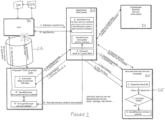
- figure 2 is a further schematic representation of a method for controlling the exchange of private data, associated with a client device, between an application in execution on or for the device and a serving node in a data network according to an example.
- a user 201 interacts with a client device 200 for the purpose of using an application 203 that utilises a remote service 205 executing on or as a serving node as part of a data network (not shown) such as the internet or a cloud-based network for example.
- the application 203 can be executed on the client device 201 using typical components thereof such as a memory and processing unit and so on, or it be executed remotely for the client device such that the user 201 interacts with the application 203 using an interface on the device 200 associated with or geared for use with the application 203.
- application 203 can be executed on a server that is remote from the device 200, and the device can include a user interface to enable the user the user 201 to interact with the application 203.
- a trusted information manager 207 is provided for or as part of the device 200.
- manager 207 can be a hardware or software module within device 200 that is isolated from rest of the system, and particularly from application 203. It can be isolated using a number of technologies such as software-only, standard OS-level protection and isolation, to hardware-assisted isolation such as trusted boot isolation and so on.
- the trusted information manager 207 prevents direct access to private data associated with the client device 200 (and potentially by association with the user 201) by the application 203 in program execution on or for the device 200 by providing an obfuscated version of the private data 209 to the application 203 on the basis of a request from the remote service 205 and for use between the application and the remote service. An unintended remote service 211 that may be linked to the application 203 will thus not be able to use the private data 209.
- a secure user interface 213 between the trusted information manager 207 and the user 201 is used for a request for user 201 for authorization to be able to use the private data 209 with the application 203 for the intended remote serving node 205.
- the secure UI 213 can be incorporated into the user's device 200 design, so that the user 201 cannot mistakenly consider an untrusted interaction for a trusted one.
- User 201 opens application 203 or service 205 at step 1.
- Application 203 requests access to the service 205 in step 2.
- a random number 215 is generated which can include a user ID associated with the device 200 and/or user 201. This is passed to application 203 at 3.
- Application 203 augments this data with a service 205 ID and the combination is passed to TIM 207 at 4.
- authorisation is requested from user 201 to use private data 209 using the UI 213.
- a passcode, password or some other form of suitable authorisation can be provided, including for example a biometric authorisation.
- a hashed or encrypted version of the data 209 is generated, and this is passed to application 203 at 6.
- the hashed or encrypted version of the data 209 is passed (7) from application 203 to service 205, and the data is checked at 7' by the service 205 to determine its authenticity. If the data has been tampered with or is otherwise not as expected the process can end. Otherwise, service 205 transmits service content data at 8 to application 203 for use by the application, and transmitted to and from user 201, device 200 and application 203 at 8'.
- the method provides that there is no direct interaction of the user with a local app that may compromise the security and confidentiality of privacy-sensitive data.
- the TIM is isolated from the other untrusted applications running on the same device. This can be achieved using typical OS-level protection and isolation means in the simplest cases, or using trusted hardware in the most privacy-demanding cases.
- a system as described can be realized as a set of software components and APIs for application developers, to be made available within a mobile platform OS.
- the TIM can be realized as a component within an OS.
- a secure UI interaction with the user, in a mobile platform can be provided by having the TIM as an integral part of a GUI sub-system within the platform, and having a special interaction with the user, such as pressing a special "trusted” button of the device, or turning on a special "trusted” LED on the device notifying that a trusted interaction is happening for example, during which only visualization of trusted GUI elements would be allowed, such as the TIM.
- a secure user interface can be implemented using the Trusted Execution Environment (TEE) standard from Global Platform for example.
- TEE Trusted Execution Environment
- the trusted information manager is isolated from the rest of the system, and particularly from the application requesting the privacy-sensitive information.
- a number of technologies can be leveraged for realizing such an isolation, ranging from software-only standard OS-level protection and isolation, to hardware-assisted isolation such as trusted boot and the TEE specification mentioned above.
- a method and system for controlling the exchange of private data, associated with a client device, between an application in execution on or for the device and a serving node in a data network That is, a method and system for managing users' privacy-sensitive information for (either local or remote) services in a way that confines knowledge of the PSI data (such as passwords, phone book entries, etc%) within the boundaries of a trusted component, namely the TIM.
- the PSI data is never revealed to the outside world, including both possible malicious software applications or components additionally installed onto the local device, and the main application itself, that is used by the user to interact with the legitimate/intended remote service.
- the proposed mechanism can be used to ensure that a ⁇ username, password> pair used to access an on-line e-mail system is only known to the local device, and is never transmitted to untrusted 3rd parties, regardless of whether the application is used or executed locally within the device to access the remote e-mail (i.e., in the example, the e-mail client can never see the password in clear text).
- a first aspect of the present disclosure provides a method for controlling the exchange of private data, associated with a client device, between an application in execution on or for the device and a serving node in a data network, comprising transmitting a request to the serving node from the application for access to a service requiring use of the private data, receiving challenge data at the application from the serving node, requesting authorisation for the use of the private data using a secure user interface of the client device to a trusted information manager on the basis of the challenge data, transmitting an obfuscated version of the private data for use with the service from the trusted information manager to the application on the basis of the authorisation.
- the challenge data can include a cryptographically secure random number or a public key or a sequence number.
- the obfuscated version of the private data can include a cryptographic hash or encrypted version of the private data.
- the obfuscated version of the private data can be generated in combination with the challenge data.
- the trusted information manager can be operationally isolated from the application.
- the challenge data can be transmitted from the application to the trusted information manager in combination with a identifier for the service and/or intended operation to be performed on the service and/or the application.
- a second aspect of the present disclosure provides a method for preventing direct access to private data associated with a client device by an application in program execution on or for the device, comprising using a trusted information manager of the device to provide an obfuscated version of the private data to the application on the basis of a request from a remote service and for use between the application and the remote service.
- each interaction between the device and the trusted information manager can require user authorisation.
- a third aspect of the present disclosure provides a system for controlling the exchange of private data, associated with a client device, between an application in execution on or for the device and a serving node in a data network operable to receive a request from the application for access to a service requiring use of the private data, and to transmit challenge data to the application, comprising a secure user interface of the client device to receive a request for authorisation for the use of the private data on the basis of the challenge data, a trusted information manager to transmit an obfuscated version of the private data for use with the service to the application on the basis of the authorisation.
- the trusted information manager can be operationally isolated from the application.
- the trusted information manager can receive challenge data transmitted from the application in combination with a identifier for the service and/or intended operation to be performed on the service and/or the application.
- a fourth aspect of the present disclosure provides a trusted information manager to provide an obfuscated version of private data to an application in program execution on or for a device with which the private data is associated on the basis of a request from a remote service sent to the application for use of the private data.
- the trusted information manager can obfuscate the private data by generating a cryptographic hash or encrypted version of the private data.
- the trusted information manager can be operationally isolated from the application.
- a fifth aspect of the present disclosure provides a computer program product, comprising a computer usable medium having computer readable program code embodied therein, said computer readable program code adapted to be executed to implement a method for controlling the exchange of private data, associated with a client device, between an application in execution on or for the device and a serving node in a data network as provided according to the first aspect.
Landscapes
- Engineering & Computer Science (AREA)
- Computer Security & Cryptography (AREA)
- Computer Networks & Wireless Communication (AREA)
- Signal Processing (AREA)
- Computer Hardware Design (AREA)
- Computing Systems (AREA)
- General Engineering & Computer Science (AREA)
- Information Transfer Between Computers (AREA)
- Telephonic Communication Services (AREA)
- Storage Device Security (AREA)
- Exchange Systems With Centralized Control (AREA)
Priority Applications (1)
| Application Number | Priority Date | Filing Date | Title |
|---|---|---|---|
| EP23177275.7A EP4246892A3 (de) | 2013-09-13 | 2013-09-13 | Verfahren und system zur steuerung des austausches von datenschutzsensiblen informationen |
Applications Claiming Priority (2)
| Application Number | Priority Date | Filing Date | Title |
|---|---|---|---|
| EP13360029.6A EP2849403B1 (de) | 2013-09-13 | 2013-09-13 | Verfahren und system zur steuerung des austausches von datenschutzsensiblen informationen |
| EP23177275.7A EP4246892A3 (de) | 2013-09-13 | 2013-09-13 | Verfahren und system zur steuerung des austausches von datenschutzsensiblen informationen |
Related Parent Applications (1)
| Application Number | Title | Priority Date | Filing Date |
|---|---|---|---|
| EP13360029.6A Division EP2849403B1 (de) | 2013-09-13 | 2013-09-13 | Verfahren und system zur steuerung des austausches von datenschutzsensiblen informationen |
Publications (2)
| Publication Number | Publication Date |
|---|---|
| EP4246892A2 true EP4246892A2 (de) | 2023-09-20 |
| EP4246892A3 EP4246892A3 (de) | 2023-11-08 |
Family
ID=49356371
Family Applications (2)
| Application Number | Title | Priority Date | Filing Date |
|---|---|---|---|
| EP13360029.6A Active EP2849403B1 (de) | 2013-09-13 | 2013-09-13 | Verfahren und system zur steuerung des austausches von datenschutzsensiblen informationen |
| EP23177275.7A Pending EP4246892A3 (de) | 2013-09-13 | 2013-09-13 | Verfahren und system zur steuerung des austausches von datenschutzsensiblen informationen |
Family Applications Before (1)
| Application Number | Title | Priority Date | Filing Date |
|---|---|---|---|
| EP13360029.6A Active EP2849403B1 (de) | 2013-09-13 | 2013-09-13 | Verfahren und system zur steuerung des austausches von datenschutzsensiblen informationen |
Country Status (5)
| Country | Link |
|---|---|
| US (1) | US10237057B2 (de) |
| EP (2) | EP2849403B1 (de) |
| JP (1) | JP6590807B2 (de) |
| ES (1) | ES2947562T3 (de) |
| WO (1) | WO2015036087A1 (de) |
Families Citing this family (11)
| Publication number | Priority date | Publication date | Assignee | Title |
|---|---|---|---|---|
| US10701039B2 (en) * | 2015-09-25 | 2020-06-30 | Intel Corporation | Mutual approval for privacy-preserving computing |
| US10057255B2 (en) | 2016-07-20 | 2018-08-21 | Bank Of America Corporation | Preventing unauthorized access to secured information systems using multi-device authentication techniques |
| US10057249B2 (en) | 2016-07-20 | 2018-08-21 | Bank Of America Corporation | Preventing unauthorized access to secured information systems using tokenized authentication techniques |
| US10148646B2 (en) | 2016-07-20 | 2018-12-04 | Bank Of America Corporation | Preventing unauthorized access to secured information systems using tokenized authentication techniques |
| JP6904183B2 (ja) | 2017-09-12 | 2021-07-14 | 富士通株式会社 | 情報処理装置、プログラム及び情報処理方法 |
| US10715471B2 (en) * | 2018-08-22 | 2020-07-14 | Synchronoss Technologies, Inc. | System and method for proof-of-work based on hash mining for reducing spam attacks |
| US10826855B2 (en) * | 2018-10-19 | 2020-11-03 | Citrix Systems, Inc. | Computing system with an email privacy filter and related methods |
| CN113014386B (zh) * | 2021-03-30 | 2023-06-02 | 宋煜 | 基于多方协同计算的密码系统 |
| GB2609438B (en) * | 2021-07-30 | 2023-10-18 | Trustonic Ltd | Secure user interface side-channel attack protection |
| EP4145762B1 (de) * | 2021-09-06 | 2023-10-25 | Axis AB | Verfahren und system zur sicheren verarbeitung von daten mittels einer verarbeitungsanwendung |
| CN115438734B (zh) * | 2022-09-09 | 2024-09-06 | 中国电信股份有限公司 | 模型训练方法及系统、计算机可读存储介质和电子设备 |
Family Cites Families (14)
| Publication number | Priority date | Publication date | Assignee | Title |
|---|---|---|---|---|
| US6694431B1 (en) * | 1999-10-12 | 2004-02-17 | International Business Machines Corporation | Piggy-backed key exchange protocol for providing secure, low-overhead browser connections when a server will not use a message encoding scheme proposed by a client |
| AU2001282795A1 (en) * | 2000-08-30 | 2002-03-13 | Telefonaktiebolaget Lm Ericsson (Publ) | End-user authentication independent of network service provider |
| US7444513B2 (en) * | 2001-05-14 | 2008-10-28 | Nokia Corporiation | Authentication in data communication |
| FI20031860A0 (fi) * | 2003-12-18 | 2003-12-18 | Nokia Corp | Päätelaitteen sovellusten valvonta verkkoympäristössä |
| US7607164B2 (en) * | 2004-12-23 | 2009-10-20 | Microsoft Corporation | Systems and processes for managing policy change in a distributed enterprise |
| EP1705941A1 (de) * | 2005-03-24 | 2006-09-27 | BRITISH TELECOMMUNICATIONS public limited company | Gesicherte Kommunikation von Kennwortinformationen in einem Netz |
| US20070028098A1 (en) * | 2005-07-28 | 2007-02-01 | International Business Machines Corporation | Encrypting units of work based on a trust level |
| EP1862948A1 (de) * | 2006-06-01 | 2007-12-05 | Axalto SA | IC-Karte mit OTP-Client |
| TWI435272B (zh) | 2007-12-07 | 2014-04-21 | Ibm | 基於行動智慧卡之鑑認 |
| CN101939746A (zh) * | 2007-12-10 | 2011-01-05 | 菲尔爱迪(私人)有限公司 | 用于管理移动计算设备上的软件应用程序的方法和系统 |
| US20100037050A1 (en) * | 2008-08-06 | 2010-02-11 | Cuneyt Karul | Method and apparatus for an encrypted message exchange |
| US20100122082A1 (en) | 2008-10-08 | 2010-05-13 | Leiwen Deng | User identity validation system and method |
| CN103535090B (zh) * | 2011-02-15 | 2017-07-07 | 黑莓有限公司 | 用于移动设备的身份管理的系统和方法 |
| FI20115945A0 (fi) * | 2011-09-28 | 2011-09-28 | Onsun Oy | Maksujärjestelmä |
-
2013
- 2013-09-13 ES ES13360029T patent/ES2947562T3/es active Active
- 2013-09-13 EP EP13360029.6A patent/EP2849403B1/de active Active
- 2013-09-13 EP EP23177275.7A patent/EP4246892A3/de active Pending
-
2014
- 2014-08-18 JP JP2016541835A patent/JP6590807B2/ja active Active
- 2014-08-18 US US14/903,695 patent/US10237057B2/en active Active
- 2014-08-18 WO PCT/EP2014/002263 patent/WO2015036087A1/en not_active Ceased
Also Published As
| Publication number | Publication date |
|---|---|
| US10237057B2 (en) | 2019-03-19 |
| JP6590807B2 (ja) | 2019-10-16 |
| EP4246892A3 (de) | 2023-11-08 |
| EP2849403C0 (de) | 2023-06-07 |
| EP2849403A1 (de) | 2015-03-18 |
| JP2016531528A (ja) | 2016-10-06 |
| EP2849403B1 (de) | 2023-06-07 |
| WO2015036087A1 (en) | 2015-03-19 |
| US20160182221A1 (en) | 2016-06-23 |
| ES2947562T3 (es) | 2023-08-11 |
Similar Documents
| Publication | Publication Date | Title |
|---|---|---|
| US10237057B2 (en) | Method and system for controlling the exchange of privacy-sensitive information | |
| EP3420677B1 (de) | System und verfahren zur dienstgestützten mobilen paarung von passwortfreier computeranmeldungen | |
| CN104094270B (zh) | 针对计算设备保护用户证书 | |
| JP5619007B2 (ja) | サーバ・オペレーションの認可を行うための装置、システムおよびコンピュータ・プログラム | |
| US9197420B2 (en) | Using information in a digital certificate to authenticate a network of a wireless access point | |
| US8532620B2 (en) | Trusted mobile device based security | |
| US9825917B2 (en) | System and method of dynamic issuance of privacy preserving credentials | |
| US8079069B2 (en) | Cardspace history validator | |
| CN113614720B (zh) | 一种动态配置可信应用程序访问控制的装置和方法 | |
| JP2017521934A (ja) | クライアントとサーバとの間の相互検証の方法 | |
| GB2554082B (en) | User sign-in and authentication without passwords | |
| KR20150094548A (ko) | 원격 액세스, 원격 디지털 서명을 위한 방법 및 시스템 | |
| JP5992535B2 (ja) | 無線idプロビジョニングを実行するための装置及び方法 | |
| CN106992978B (zh) | 网络安全管理方法及服务器 | |
| CN107409043B (zh) | 基于中央加密的存储数据对产品的分布式处理 | |
| KR101619928B1 (ko) | 이동단말기의 원격제어시스템 | |
| CN113032761B (zh) | 保护远程认证 | |
| KR101821645B1 (ko) | 자체확장인증을 이용한 키관리 방법 | |
| Azizul et al. | Authentication and authorization design in honeybee computing | |
| CN119337345A (zh) | 一种数据处理方法及相关设备 | |
| Anderson | Secure sockets layer certificate vulnerabilities: An examination of challenges affecting authentication of secure websites |
Legal Events
| Date | Code | Title | Description |
|---|---|---|---|
| PUAI | Public reference made under article 153(3) epc to a published international application that has entered the european phase |
Free format text: ORIGINAL CODE: 0009012 |
|
| STAA | Information on the status of an ep patent application or granted ep patent |
Free format text: STATUS: THE APPLICATION HAS BEEN PUBLISHED |
|
| AC | Divisional application: reference to earlier application |
Ref document number: 2849403 Country of ref document: EP Kind code of ref document: P |
|
| AK | Designated contracting states |
Kind code of ref document: A2 Designated state(s): AL AT BE BG CH CY CZ DE DK EE ES FI FR GB GR HR HU IE IS IT LI LT LU LV MC MK MT NL NO PL PT RO RS SE SI SK SM TR |
|
| PUAL | Search report despatched |
Free format text: ORIGINAL CODE: 0009013 |
|
| AK | Designated contracting states |
Kind code of ref document: A3 Designated state(s): AL AT BE BG CH CY CZ DE DK EE ES FI FR GB GR HR HU IE IS IT LI LT LU LV MC MK MT NL NO PL PT RO RS SE SI SK SM TR |
|
| RIC1 | Information provided on ipc code assigned before grant |
Ipc: H04L 9/40 20220101AFI20231004BHEP |
|
| STAA | Information on the status of an ep patent application or granted ep patent |
Free format text: STATUS: REQUEST FOR EXAMINATION WAS MADE |
|
| 17P | Request for examination filed |
Effective date: 20240502 |
|
| RBV | Designated contracting states (corrected) |
Designated state(s): AL AT BE BG CH CY CZ DE DK EE ES FI FR GB GR HR HU IE IS IT LI LT LU LV MC MK MT NL NO PL PT RO RS SE SI SK SM TR |
|
| STAA | Information on the status of an ep patent application or granted ep patent |
Free format text: STATUS: EXAMINATION IS IN PROGRESS |
|
| 17Q | First examination report despatched |
Effective date: 20240829 |
|
| GRAP | Despatch of communication of intention to grant a patent |
Free format text: ORIGINAL CODE: EPIDOSNIGR1 |
|
| STAA | Information on the status of an ep patent application or granted ep patent |
Free format text: STATUS: GRANT OF PATENT IS INTENDED |
|
| INTG | Intention to grant announced |
Effective date: 20260218 |