EP4247790B1 - Antagonistes sting et leurs utilisations - Google Patents
Antagonistes sting et leurs utilisations Download PDFInfo
- Publication number
- EP4247790B1 EP4247790B1 EP21819328.2A EP21819328A EP4247790B1 EP 4247790 B1 EP4247790 B1 EP 4247790B1 EP 21819328 A EP21819328 A EP 21819328A EP 4247790 B1 EP4247790 B1 EP 4247790B1
- Authority
- EP
- European Patent Office
- Prior art keywords
- alkyl
- mmol
- halogen
- alkoxy
- compound
- Prior art date
- Legal status (The legal status is an assumption and is not a legal conclusion. Google has not performed a legal analysis and makes no representation as to the accuracy of the status listed.)
- Active
Links
Classifications
-
- C—CHEMISTRY; METALLURGY
- C07—ORGANIC CHEMISTRY
- C07D—HETEROCYCLIC COMPOUNDS
- C07D209/00—Heterocyclic compounds containing five-membered rings, condensed with other rings, with one nitrogen atom as the only ring hetero atom
- C07D209/02—Heterocyclic compounds containing five-membered rings, condensed with other rings, with one nitrogen atom as the only ring hetero atom condensed with one carbocyclic ring
- C07D209/04—Indoles; Hydrogenated indoles
- C07D209/30—Indoles; Hydrogenated indoles with hetero atoms or with carbon atoms having three bonds to hetero atoms with at the most one bond to halogen, directly attached to carbon atoms of the hetero ring
- C07D209/40—Nitrogen atoms, not forming part of a nitro radical, e.g. isatin semicarbazone
-
- A—HUMAN NECESSITIES
- A61—MEDICAL OR VETERINARY SCIENCE; HYGIENE
- A61P—SPECIFIC THERAPEUTIC ACTIVITY OF CHEMICAL COMPOUNDS OR MEDICINAL PREPARATIONS
- A61P29/00—Non-central analgesic, antipyretic or antiinflammatory agents, e.g. antirheumatic agents; Non-steroidal antiinflammatory drugs [NSAID]
-
- A—HUMAN NECESSITIES
- A61—MEDICAL OR VETERINARY SCIENCE; HYGIENE
- A61P—SPECIFIC THERAPEUTIC ACTIVITY OF CHEMICAL COMPOUNDS OR MEDICINAL PREPARATIONS
- A61P35/00—Antineoplastic agents
-
- C—CHEMISTRY; METALLURGY
- C07—ORGANIC CHEMISTRY
- C07D—HETEROCYCLIC COMPOUNDS
- C07D401/00—Heterocyclic compounds containing two or more hetero rings, having nitrogen atoms as the only ring hetero atoms, at least one ring being a six-membered ring with only one nitrogen atom
- C07D401/14—Heterocyclic compounds containing two or more hetero rings, having nitrogen atoms as the only ring hetero atoms, at least one ring being a six-membered ring with only one nitrogen atom containing three or more hetero rings
-
- C—CHEMISTRY; METALLURGY
- C07—ORGANIC CHEMISTRY
- C07D—HETEROCYCLIC COMPOUNDS
- C07D403/00—Heterocyclic compounds containing two or more hetero rings, having nitrogen atoms as the only ring hetero atoms, not provided for by group C07D401/00
- C07D403/02—Heterocyclic compounds containing two or more hetero rings, having nitrogen atoms as the only ring hetero atoms, not provided for by group C07D401/00 containing two hetero rings
- C07D403/12—Heterocyclic compounds containing two or more hetero rings, having nitrogen atoms as the only ring hetero atoms, not provided for by group C07D401/00 containing two hetero rings linked by a chain containing hetero atoms as chain links
-
- C—CHEMISTRY; METALLURGY
- C07—ORGANIC CHEMISTRY
- C07D—HETEROCYCLIC COMPOUNDS
- C07D403/00—Heterocyclic compounds containing two or more hetero rings, having nitrogen atoms as the only ring hetero atoms, not provided for by group C07D401/00
- C07D403/14—Heterocyclic compounds containing two or more hetero rings, having nitrogen atoms as the only ring hetero atoms, not provided for by group C07D401/00 containing three or more hetero rings
-
- C—CHEMISTRY; METALLURGY
- C07—ORGANIC CHEMISTRY
- C07D—HETEROCYCLIC COMPOUNDS
- C07D405/00—Heterocyclic compounds containing both one or more hetero rings having oxygen atoms as the only ring hetero atoms, and one or more rings having nitrogen as the only ring hetero atom
- C07D405/14—Heterocyclic compounds containing both one or more hetero rings having oxygen atoms as the only ring hetero atoms, and one or more rings having nitrogen as the only ring hetero atom containing three or more hetero rings
-
- C—CHEMISTRY; METALLURGY
- C07—ORGANIC CHEMISTRY
- C07D—HETEROCYCLIC COMPOUNDS
- C07D413/00—Heterocyclic compounds containing two or more hetero rings, at least one ring having nitrogen and oxygen atoms as the only ring hetero atoms
- C07D413/14—Heterocyclic compounds containing two or more hetero rings, at least one ring having nitrogen and oxygen atoms as the only ring hetero atoms containing three or more hetero rings
-
- C—CHEMISTRY; METALLURGY
- C07—ORGANIC CHEMISTRY
- C07D—HETEROCYCLIC COMPOUNDS
- C07D471/00—Heterocyclic compounds containing nitrogen atoms as the only ring hetero atoms in the condensed system, at least one ring being a six-membered ring with one nitrogen atom, not provided for by groups C07D451/00 - C07D463/00
- C07D471/02—Heterocyclic compounds containing nitrogen atoms as the only ring hetero atoms in the condensed system, at least one ring being a six-membered ring with one nitrogen atom, not provided for by groups C07D451/00 - C07D463/00 in which the condensed system contains two hetero rings
- C07D471/04—Ortho-condensed systems
-
- C—CHEMISTRY; METALLURGY
- C07—ORGANIC CHEMISTRY
- C07D—HETEROCYCLIC COMPOUNDS
- C07D513/00—Heterocyclic compounds containing in the condensed system at least one hetero ring having nitrogen and sulfur atoms as the only ring hetero atoms, not provided for in groups C07D463/00, C07D477/00 or C07D499/00 - C07D507/00
- C07D513/02—Heterocyclic compounds containing in the condensed system at least one hetero ring having nitrogen and sulfur atoms as the only ring hetero atoms, not provided for in groups C07D463/00, C07D477/00 or C07D499/00 - C07D507/00 in which the condensed system contains two hetero rings
- C07D513/04—Ortho-condensed systems
Definitions
- STING also known as transmembrane protein 173 (TMEM173) and MPYS/MITAI ERIS, is a protein that in humans is encoded by the TMEM173 gene. STING has been shown to play a role in innate immunity. STING induces type I interferon production when cells are infected with intracellular pathogens, such as viruses, mycobacteria and intracellular parasites. Type I interferon, mediated by STING, protects infected cells and nearby cells from local infection in an autocrine and paracrine manner.
- TMEM173 transmembrane protein 173
- MPYS/MITAI ERIS MPYS/MITAI ERIS
- STING a transmembrane protein localized to the endoplasmic reticulum (ER) acts as a second messenger receptor for 2', 3' cyclic GMP-AMP (hereafter cGAMP), which is produced by cGAS after dsDNA binding.
- cGAMP 2', 3' cyclic GMP-AMP
- STING can also function as a primary pattern recognition receptor for bacterial cyclic dinucleotides (CDNs) and small molecule agonists.
- CDNs bacterial cyclic dinucleotides
- Ligand-induced activation of STING triggers its re-localization to the Golgi, a process essential to promote the interaction of STING with TBK1.
- This protein complex signals through the transcription factors IRF-3 to induce type I interferons (IFNs) and other co-regulated antiviral factors.
- IFNs type I interferons
- STING was shown to trigger NF- ⁇ B and MAP kinase activation. Following the initiation of signal transduction, STING is rapidly degraded, a step considered important in terminating the inflammatory response.
- STING-associated vasculopathy with onset in infancy SAVI
- TMEM173 the gene name of STING
- STING is implicated in the pathogenesis of Aicardi-Goutieres Syndrome (AGS) and genetic forms of lupus.
- AGS Aicardi-Goutieres Syndrome
- WO2020150417 discloses indole derivatives for the treatment of disorders associated with STING activation.
- the present disclosure provides antagonists of STING, for example, inhibitors of structural formula (I), (I-A), (I-B-1), (I-B-2), (I-C-1), or (I-C-2)), pharmaceutically acceptable salts, stereoisomers, tautomers and compositions thereof. It was unexpected to find that the compounds disclosed herein which require the specific bicyclic core structures and a specific combination of substituents at specific positions would effectively inhibit the STING activity.
- the present disclosure further provides methods of using the compounds disclosed herein (e.g., compounds of structural formula (I), (I-A), (I-B-1), (I-B-2), (I-C-1), or (I-C-2)), and pharmaceutically acceptable salts and compositions thereof, to inhibit the activity of STING.
- the present disclosure further provides methods for using the compounds disclosed herein ( e .
- An "antagonist" of STING includes compounds that, at the protein level, directly bind or modify STING such that an activity of STING is decreased, e.g., by inhibition, blocking or dampening agonist-mediated responses, altered distribution, or otherwise.
- STING antagonists include chemical entities, which interfere or inhibit STING signaling.
- the present disclosure provides a compound of any one of the formulae described herein ( e . g ., structural formula (I), (I-A), (I-B-1), (I-B-2), (I-C-1), or (I-C-2)), a pharmaceutically acceptable salt, a stereoisomer, or a tautomer thereof.
- the present disclosure provides a pharmaceutical composition
- a pharmaceutical composition comprising a compound of any one of the formulae described herein ( e . g ., structural formula (I), (I-A), (I-B-1), (I-B-2), (I-C-1), or (I-C-2)), a pharmaceutically acceptable salt, a stereoisomer, or a tautomer thereof, as defined in any one of the embodiments described herein, in a mixture with at least one pharmaceutically acceptable carrier.
- the present disclosure provides a compound of any one of the formulae described herein (e . g ., structural formula (I), (I-A), (I-B-1), (I-B-2), (I-C-1), or (I-C-2)), a pharmaceutically acceptable salt, a stereoisomer, or a tautomer thereof, as defined in any one of the embodiments described herein, for use as a medicament.
- a compound of any one of the formulae described herein e . g ., structural formula (I), (I-A), (I-B-1), (I-B-2), (I-C-1), or (I-C-2)
- a pharmaceutically acceptable salt, a stereoisomer, or a tautomer thereof as defined in any one of the embodiments described herein, for use as a medicament.
- the present disclosure provides a compound of any one of the formulae described herein (e . g ., structural formula (I), (I-A), (I-B-1), (I-B-2), (I-C-1), or (I-C-2)), a pharmaceutically acceptable salt, a stereoisomer, or a tautomer thereof, as defined in any one of the embodiments described herein, for use in the treatment of a condition, disease or disorder ameliorated by antagonizing STING are featured, e.g., treating a condition, disease or disorder in which increased ( e.g., excessive) STING activation ( e.g., STING signaling) contributes to the pathology and/or symptoms and/or progression of the condition, disease or disorder (e.g., an autoimmune disease or a cancer) in a subject ( e.g., a human).
- a condition, disease or disorder in which increased ( e.g., excessive) STING activation e.g., STING signaling
- the present disclosure provides a method of treating a condition, disease or disorder ameliorated by antagonizing STING are featured, e.g., treating a condition, disease or disorder in which increased (e.g., excessive) STING activation (e.g., STING signaling) contributes to the pathology and/or symptoms and/or progression of the condition, disease or disorder (e.g., an autoimmune disease or a cancer) in a subject (e.g., a human), in a subject in need of such prevention and/or treatment, comprising administering to the subject a therapeutically effective amount of a compound of any one of the formulae described herein (e.g.
- the present disclosure provides a use of a compound of any one of the formulae described herein (e.g ., structural formula (I), (I-A), (I-B-1), (I-B-2), (I-C-1), or (I-C-2)), a pharmaceutically acceptable salt, a stereoisomer, or a tautomer thereof, as defined in any one of the embodiments described herein, for the manufacture of a medicament for treating a condition, disease or disorder ameliorated by antagonizing STING are featured, e.g., treating a condition, disease or disorder in which increased ( e.g ., excessive) STING activation ( e.g., STING signaling) contributes to the pathology and/or symptoms and/or progression of the condition, disease or disorder (e.g., an autoimmune disease or a cancer) in a subject ( e.g., a human).
- STING activation e.g., STING signaling
- the present disclosure provides a compound of any one of the formulae described herein (e.g ., structural formula (I), (I-A), (I-B-1), (I-B-2), (I-C-1), or (I-C-2)), a pharmaceutically acceptable salt, a stereoisomer, a tautomer, or a pharmaceutical composition thereof, as defined in any one of the embodiments described herein, for use in the treatment of a condition, disease or disorder for which an antagonist of STING is indicated.
- structural formula (I), (I-A), (I-B-1), (I-B-2), (I-C-1), or (I-C-2) e.g ., structural formula (I), (I-A), (I-B-1), (I-B-2), (I-C-1), or (I-C-2)
- a pharmaceutically acceptable salt e.g ., a stereoisomer, a tautomer, or a pharmaceutical composition thereof, as defined in any one of the embodiments described herein, for use
- the present disclosure provides a method for inhibiting STING activity in a cell or in a patient.
- said method comprises the step of contacting the cell or administering to the patient a compound of structural formula (I) (e.g., (I-A), (I-B-1), (I-B-2), (I-C-1), or (I-C-2)) a pharmaceutically acceptable salt, a stereoisomer, a tautomer or a composition thereof.
- a compound of structural formula (I) e.g., (I-A), (I-B-1), (I-B-2), (I-C-1), or (I-C-2)
- the present disclosure provides a compound represented by structural formula (I): a pharmaceutically acceptable salt, a stereoisomer, or a tautomer thereof, wherein
- the present disclosure provides a compound according to the first embodiment, wherein the compound is represented by structural formula (I-A): a pharmaceutically acceptable salt, a stereoisomer, or a tautomer thereof, and the definitions of the variables are provided in structural formula (I).
- the present disclosure provides a compound according to the first embodiment, wherein the compound is represented by structural formula (I-B-1) or (I-B-2): a pharmaceutically acceptable salt, a stereoisomer, or a tautomer thereof, and the definitions of the variables are provided in structural formula (I).
- the present disclosure provides a compound according to the first embodiment, wherein the compound is represented by structural formula (I-C-1) or (I-C-2): a pharmaceutically acceptable salt, a stereoisomer, or a tautomer thereof, and the definitions of the variables are provided in structural formula (I).
- the present disclosure provides a compound according to the first, second, or third embodiment, a pharmaceutically acceptable salt, a stereoisomer, or a tautomer thereof, wherein each instance of R 1 is H, C 1-4 alkyl, -(CH 2 ) (0 or 1) -C 3-4 cycloalkyl, or 3-6 membered heterocyclyl, wherein the cycloalkyl or heterocyclyl represented by R 1 is optionally substituted with one or more substituents independently selected from the group consisting of halogen, -OH, and C 1-4 alkyl.
- the present disclosure provides a compound according to the first, second, third, fourth, or fifth embodiment, a pharmaceutically acceptable salt, a stereoisomer, or a tautomer thereof, wherein each instance of R 7 and R 8 is independently H or halogen.
- the present disclosure provides a compound according to the first, second, third, fourth, fifth, or sixth embodiment, a pharmaceutically acceptable salt, a stereoisomer, or a tautomer thereof, wherein each instance of R 3 and R 5 is independently H, halogen, C 1-6 alkyl, or C 1-6 haloalkyl.
- the present disclosure provides a compound according to the first, second, third, fourth, fifth, sixth, or seventh embodiment, a pharmaceutically acceptable salt, a stereoisomer, or a tautomer thereof, wherein each instance of R 4 is independently H, halogen, CN, OH, C 1-6 alkyl, C 1-6 alkoxy, C 2-6 alkenyl, C 2-6 alkynyl, -C(O)R 11 , -C(O)OR 11 , -C(O)NR 11 R 12 , -NR 11 C(O)C 1-6 alkyl, NR 11 R 12 , -S(O) 2 R 11 , -S(O) 2 NR 11 R 12 , C 3-7 cycloalkyl, -(CH 2 ) (0 or 1) -3-7 membered heterocyclyl, -O (0 or 1) -3-7 membered heterocyclyl, phenyl, -O (0 or 1) -5-6 membered heteroaryl, wherein each instance of
- the present disclosure provides a compound according to the first, second, third, fifth, sixth, seventh, eighth, or ninth embodiment, a pharmaceutically acceptable salt, a stereoisomer, or a tautomer thereof, wherein each instance of R 1 is H, C 1-4 alkyl, -(CH 2 ) (0 or 1) -C 3-4 cycloalkyl, or 4-6 membered oxygen-containing heterocyclyl.
- R 1 is H or C 1-4 alkyl ( e.g ., methyl).
- the present disclosure provides a compound according to the first, second, third, fifth, sixth, seventh, eighth, ninth, or tenth embodiment, a pharmaceutically acceptable salt, a stereoisomer, or a tautomer thereof, wherein each instance of A 1 is CH.
- the present disclosure provides a compound according to the first, second, third, fourth, fifth, sixth, seventh, eighth, ninth, tenth, or eleventh embodiment, a pharmaceutically acceptable salt, a stereoisomer, or a tautomer thereof, wherein each instance of R 7 and R 8 is independently H or F.
- the present disclosure provides a compound according to the first, second, third, fourth, fifth, sixth, seventh, eighth, ninth, tenth, eleventh, or twelfth embodiment, a pharmaceutically acceptable salt, a stereoisomer, or a tautomer thereof, wherein each instance of R 3 and R 5 is independently H, F, Cl, or CF 3 .
- the present disclosure provides a compound according to the first, second, third, fourth, fifth, sixth, seventh, eighth, ninth, tenth, eleventh, twelfth, or thirteenth embodiment, a pharmaceutically acceptable salt, a stereoisomer, or a tautomer thereof, wherein each instance of R 4 is independently H, halogen, CN, C 1-4 alkyl (optionally substituted with OH or -NR 11 R 12 ), C 1-4 haloalkyl, C 1-4 alkoxy optionally substituted with C 1-4 alkoxy, C 1-4 haloalkoxy, C 2-4 alkynyl, -C(O)OR 11 , -C(O)NR 11 R 12 , -S(O) 2 R 11 , -(CH 2 ) (0 or 1) -5-6 membered heterocyclyl, -O (0 or 1) -5-6 membered heterocyclyl, -O-5-6 membered heteroaryl, wherein the heteroaryl in the
- the present disclosure provides a compound according to the first, second, third, fourth, fifth, sixth, seventh, eighth, ninth, tenth, eleventh, twelfth, thirteenth, fourteenth, or fifteenth embodiment, a pharmaceutically acceptable salt, a stereoisomer, or a tautomer thereof, wherein each instance of R 4 is independently H, halogen, CN, C 1-4 alkyl (optionally substituted with -NR 11 R 12 ), C 1-4 haloalkyl, C 1-4 alkoxy, C 1-4 haloalkoxy, C 2-4 alkynyl, -C(O)NR 11 R 12 , or 5-6 membered oxygen containing heterocyclyl.
- R 4 is C 1-4 alkyl optionally substituted with -NR 11 R 12 , wherein R 11 is H or C 1-2 alkyl and R 12 is H, C 1-4 alkyl, or C 1-4 haloalkyl.
- the present disclosure provides a compound according to the first, second, third, fourth, fifth, sixth, seventh, eighth, ninth, tenth, eleventh, twelfth, thirteenth, fourteenth, fifteenth, or sixteenth embodiment, a pharmaceutically acceptable salt, a stereoisomer, or a tautomer thereof, wherein each instance of R 6 is independently H, halogen, C 1-4 alkyl, C 1-4 haloalkyl, or -C(O)OC 1-4 alkyl. In one specific embodiment, R 6 is H, F, or CN.
- the compound, a pharmaceutically acceptable salt, a stereoisomer, or a tautomer thereof is selected from the compounds disclosed in examples and Table 1.
- halogen refers to fluoride, chloride, bromide, or iodide.
- alkyl used alone or as part of a larger moiety, such as “alkoxy” or “haloalkyl” and the like, means saturated aliphatic straight-chain or branched monovalent hydrocarbon radical of formula -C n H (2n+1) .
- an alkyl group typically has 1-4 carbon atoms, i.e. (C 1 -C 4 )alkyl.
- a "(C 1 -C 4 )alkyl” group means a radical having from 1 to 4 carbon atoms in a linear or branched arrangement. Examples include methyl, ethyl, n -propyl, iso -propyl, and the like.
- alkylene as used herein, means a straight or branched chain divalent hydrocarbon group of formula -C n H 2n -. Non-limiting examples include ethylene, and propylene.
- alkenyl means an alkyl group in which one or more carbon/carbon single bond is replaced by a double bond.
- alkynyl means an alkyl group in which one or more carbon/carbon single bond is replaced by a triple bond.
- alkoxy means an alkyl radical attached through an oxygen linking atom, represented by -O-alkyl.
- alkoxy means an alkyl radical attached through an oxygen linking atom, represented by -O-alkyl.
- (C 1 -C 4 )alkoxy includes methoxy, ethoxy, propoxy, and butoxy.
- haloalkyl and “haloalkoxy” means alkyl or alkoxy, as the case may be, substituted with one or more halogen atoms.
- hydroxyalkyl and "hydroxyalkoxy” means alkyl or alkoxy, as the case may be, substituted with one or more hydroxy groups.
- cycloalkyl refers to a cyclic, bicyclic, tricyclic, or polycyclic non-aromatic hydrocarbon groups having 3 to 12 ring carbons, preferably, 3 to 7 ring cabons. Any substitutable ring atom can be substituted (e.g., by one or more substituents).
- cycloalkyl groups include, without limitation, cyclopropyl, cyclobutyl, cyclopentyl, cyclohexyl, cycloheptyl, and cyclooctyl.
- Cycloalkyl may include multiple fused and/or bridged rings.
- Non-limiting examples of fused/bridged cycloalkyl includes: bicyclo[1.1.0]butane, bicyclo[2.1.0]pentane, bicyclo[1.1.0]pentane, bicyclo[3.1.0]hexane, bicyclo[2.1.1]hexane, bicyclo[3.2.0]heptane, bicyclo[4.1.0]heptane, bicyclo[2.2.1]heptane, bicyclo[3.1.1]heptane, bicyclo[4.2.0]octane, bicyclo[3.2.1]octane, bicyclo[2.2.2]octane, and the like.
- Cycloalkyl also includes spirocyclic rings (e.g., spirocyclic bicycle wherein two rings are connected through just one atom).
- spirocyclic cycloalkyls include spiro[2.2]pentane, spiro[2.5]octane, spiro[3.5]nonane, spiro[3.5]nonane, spiro[3.5]nonane, spiro[4.4]nonane, spiro[2.6]nonane, spiro[4.5]decane, spiro[3.6]decane, spiro[5.5]undecane, and the like.
- cycloalkenyl refers to partially unsaturated cyclic hydrocarbon groups having 3 to 12 ring carbons, preferably 4 to 7 ring carbons, wherein the cycloalkenyl group may be optionally substituted.
- examples of cycloalkenyl groups include, without limitation, cyclopentenyl, cyclohexenyl, cycloheptenyl, and cyclooctenyl.
- Cycloalkenyl groups may have any degree of saturation provided that none of the rings in the ring system are aromatic; and the cycloalkenyl group is not fully saturated overall. Cycloalkenyl may include multiple fused and/or bridged and/or spirocyclic rings.
- heterocyclyl refers to a radical of a 3- to 12-membered non-aromatic ring system having ring carbon atoms and 1 to 4 ring heteroatoms, wherein each heteroatom is independently selected from nitrogen, quaternary nitrogen, oxidized nitrogen (e.g., NO), oxygen, and sulfur, including sulfoxide and sulfone ("3-12 membered heterocyclyl").
- a heterocyclyl group is a 3-7 membered non-aromatic ring system having ring carbon atoms and 1-4 ring heteroatoms, wherein each heteroatom is independently selected from nitrogen, oxygen, and sulfur ("3-7 membered heterocyclyl").
- heterocyclyl groups that contain one or more nitrogen atoms, the point of attachment can be a carbon or nitrogen atom, as valency permits.
- a heterocyclyl group can either be monocyclic ("monocyclic heterocyclyl") or polycyclic (e.g., a bicyclic system ("bicyclic heterocyclyl") or tricyclic system ("tricyclic heterocyclyl”); polycyclic ring systems include fused, bridged, or spiro ring systems).
- Exemplary monocyclic heterocyclyl groups include azetidinyl, oxetanyl, thietanyl, tetrahydrofuranyl, pyrrolidinyl, piperidinyl, tetrahydropyranyl, piperazinyl, morpholinyl, azepanyl, oxepanyl, thiepanyl, tetrahydropyridinyl, and the like.
- Heterocyclyl polycyclic ring systems can include heteroatoms in one or more rings in the polycyclic ring system. Substituents may be present on one or more rings in the polycyclic ring system.
- the cycloalkyl or the heterocyclyl may be unsubstituted, or be substituted with one or more substituents as valency allows, wherein the substituents can be independently selected from a number of groups such as oxo, -CN, halogen, alkyl and alkoxyl, opotionally, the alkyl substitution may be further substituted.
- aryl refers to a 6 to 10 membered all-carbon monocyclic ring or a polycyclic fused ring (a "fused" ring system means that each ring in the system shares an adjacent pair of carbon atoms with other ring in the system) group, and has a completely conjugated ⁇ -electron system.
- fused ring system means that each ring in the system shares an adjacent pair of carbon atoms with other ring in the system
- ⁇ -electron system Representive examples of aryl are phenyl and naphthyl.
- heteroaryl refers to a monocyclic or multicyclic aromatic hydrocarbon in which at least one of the ring carbon atoms has been replaced with a heteroatom independently selected from oxygen, nitrogen and sulfur.
- the heteroaryl is based on a C 5-10 aryl with one or more of its ring carbon atoms replaced by the heteroatom.
- a heteroaryl group may be attached through a ring carbon atom or, where valency permits, through a ring nitrogen atom.
- the heteroaryl may be unsubstituted, or be substituted with one or more substituents as valency allows with the substituents being independently selected from halogen, OH, alkyl, alkoxyl, and amino (e.g., NH 2 , NHalkyl, N(alkyl) 2 ), optionally, the alkyl may be further substituted.
- pharmaceutically-acceptable salt refers to a pharmaceutical salt that is, within the scope of sound medical judgment, suitable for use in contact with the tissues of humans and lower animals without undue toxicity, irritation, and allergic response, and is commensurate with a reasonable benefit/risk ratio.
- Pharmaceutically-acceptable salts are well known in the art. For example, S. M. Berge et al. describes pharmacologically acceptable salts in J. Pharm. Sci., 1977, 66, 1-19 .
- compositions of any one of the formulae described above include acid addition and base salts.
- Suitable pharmaceutically acceptable salts of the compounds disclosed herein include pharmaceutically acceptable salts with pharmaceutically acceptable acid(s).
- Suitable pharmaceutically acceptable acid addition salts of the compounds described herein include salts of inorganic acids (such as hydrochloric, hydrobromic, phosphoric, metaphosphoric, nitric, and sulfuric acids) and of organic acids (such as acetic, benzenesulfonic, benzoic, ethanesulfonic, methanesulfonic, and succinic acids).
- Compounds of the present teachings with acidic groups such as carboxylic acids can form pharmaceutically acceptable salts with pharmaceutically acceptable base(s).
- Suitable pharmaceutically acceptable basic salts include ammonium salts, alkali metal salts (such as sodium and potassium salts) and alkaline earth metal salts (such as magnesium and calcium salts).
- the resulting salt may precipitate out and be collected by filtration or may be recovered by evaporation of the solvent.
- the degree of ionisation in the resulting salt may vary from completely ionised to almost non-ionised.
- solvate is used herein to describe a molecular complex comprising the compound of any one of the formulae described above, or a pharmaceutically acceptable salt thereof, and one or more pharmaceutically acceptable solvent molecules, for example, ethanol.
- Isolated site hydrates are ones in which the water molecules are isolated from direct contact with each other by intervening organic molecules.
- channel hydrates the water molecules lie in lattice channels where they are next to other water molecules.
- metal-ion coordinated hydrates the water molecules are bonded to the metal ion.
- the complex When the solvent or water is tightly bound, the complex may have a well-defined stoichiometry independent of humidity. When, however, the solvent or water is weakly bound, as in channel solvates and hygroscopic compounds, the water/solvent content may be dependent on humidity and drying conditions. In such cases, non-stoichiometry will be the norm.
- the compounds of any one of the formulae described above may exhibit one or more kinds of isomerism (e.g. optical, geometric or tautomeric isomerism). Such variation is implicit to the compounds of any one of the formulae described above defined as they are by reference to their structural features and therefore within the scope of the present disclosure.
- isomerism e.g. optical, geometric or tautomeric isomerism
- Stereoisomers are compounds that differ only in their spatial arrangement. Stereoisomers include all diastereomeric and enantiomeric forms of a compound. Enantiomers are stereoisomers that are mirror images of each other. Diastereomers are stereoisomers having two or more chiral centers that are not identifcal and are not mirror images of each other.
- a compound When a compound is designated by its chemical name (e.g., where the configuration is indicated in the chemical name by "R” or “S”) or its structure (e.g., the configuration is indicated by “wedge” bonds) that indicates a single enantiomer, unless indicated otherwise, the compound is at least 60%, 70%, 80%, 90%, 99% or 99.9% optically pure (also referred to as "enantiomerically pure”).
- Optical purity is the weight in the mixture of the named or depicted enantiomer divided by the total weight in the mixture of both enantiomers.
- stereochemistry of a disclosed compound is named or depicted by structure, and the named or depicted structure encompasses more than one stereoisomer (e.g., as in a diastereomeric pair), it is to be understood that one of the encompassed stereoisomers or any mixture of the encompassed stereoisomers is included. It is to be further understood that the stereoisomeric purity of the named or depicted stereoisomers at least 60%, 70%, 80%, 90%, 99% or 99.9% by weight. The stereoisomeric purity in this case is determined by dividing the total weight in the mixture of the stereoisomers encompassed by the name or structure by the total weight in the mixture of all of the stereoisomers.
- a disclosed compound having a chiral center is depicted by a structure without showing a configuration at that chiral center, the structure is meant to encompass the compound with the S configuration at that chiral center, the compound with the R configuration at that chiral center, or the compound with a mixture of the R and S configuration at that chiral center.
- a disclosed compound having a chiral center is depicted by its chemical name without indicating a configuration at that chiral center with "S" or "R”
- the name is meant to encompass the compound with the S configuration at that chiral center, the compound with the R configuration at that chiral center or the compound with a mixture of the R and S configuration at that chiral center.
- Racemic mixture means 50% of one enantiomer and 50% of is corresponding enantiomer.
- a compound with one chiral center is named or depicted without indicating the stereochemistry of the chiral center, it is understood that the name or structure encompasses both possible enantiomeric forms (e.g., both enantiomerically-pure, enantiomerically-enriched or racemic) of the compound.
- geometric isomer refers to compounds having at least one double bond, wherein the double bond(s) may exist in cis (also referred to as syn or
- E cis
- Z anti or sixteen
- tautomeric isomerism can occur. This can take the form of proton tautomerism in compounds of any one of the formulae described above containing, for example, an imino, keto, or oxime group, or so-called valence tautomerism in compounds which contain an aromatic moiety. It follows that a single compound may exhibit more than one type of isomerism.
- geometric isomer When a geometric isomer is depicted by name or structure, it is to be understood that the named or depicted isomer exists to a greater degree than another isomer, that is that the geometric isomeric purity of the named or depicted geometric isomer is greater than 50%, such as at least 60%, 70%, 80%, 90%, 99%, or 99.9% pure by weight. Geometric isomeric purity is determined by dividing the weight of the named or depicted geometric isomer in the mixture by the total weight of all of the geomeric isomers in the mixture.
- Cis / trans isomers may be separated by conventional techniques well known to those skilled in the art, for example, chromatography and fractional crystallisation.
- the resulting diastereomeric mixture may be separated by chromatography and/or fractional crystallization and one or both of the diastereoisomers converted to the corresponding pure enantiomer(s) by means well known to a skilled person.
- Chiral compounds of any one of the formulae described above (and chiral precursors thereof) may be obtained in enantiomerically-enriched form using chromatography, typically HPLC, on an asymmetric resin with a mobile phase consisting of a hydrocarbon, typically heptane or hexane, containing from 0 to 50% by volume of isopropanol, typically from 2% to 20%, and from 0 to 5% by volume of an alkylamine, typically 0.1% diethylamine.
- a compound of the present disclosure is administered in an amount effective to treat a condition as described herein.
- the compounds of the present disclosure can be administered as compound per se, or alternatively, as a pharmaceutically acceptable salt.
- the compound per se or pharmaceutically acceptable salt thereof will simply be referred to as the compounds of the present disclosure.
- the compounds of the present disclosure are administered by any suitable route in the form of a pharmaceutical composition adapted to such a route, and in a dose effective for the treatment intended.
- the compounds of the present disclosure may be administered orally, rectally, vaginally, parenterally, or topically.
- the compounds of the present disclosure may be administered orally.
- Oral administration may involve swallowing, so that the compound enters the gastrointestinal tract, or buccal or sublingual administration may be employed by which the compound enters the bloodstream directly from the mouth.
- the compounds of the present disclosure may also be administered directly into the bloodstream, into muscle, or into an internal organ.
- Suitable means for parenteral administration include intravenous, intraarterial, intraperitoneal, intrathecal, intraventricular, intraurethral, intrasternal, intracranial, intramuscular and subcutaneous.
- Suitable devices for parenteral administration include needle (including microneedle) injectors, needle-free injectors and infusion techniques.
- the compounds of the present disclosure may also be administered topically to the skin or mucosa, that is, dermally or transdermally.
- the compounds of the present disclosure can also be administered intranasally or by inhalation.
- the compounds of the present disclosure may be administered rectally or vaginally.
- the compounds of the present disclosure may also be administered directly to the eye or ear.
- the dosage regimen for the compounds of the present disclosure and/or compositions containing said compounds is based on a variety of factors, including the type, age, weight, sex and medical condition of the patient; the severity of the condition; the route of administration; and the activity of the particular compound employed. Thus the dosage regimen may vary widely.
- the total daily dose of a compound of the present disclosure is typically from about 0.001 to about 100 mg/kg ( i.e ., mg compound of the present disclosure per kg body weight) for the treatment of the indicated conditions discussed herein.
- total daily dose of the compound of the present disclosure is from about 0.01 to about 30 mg/kg, and in another embodiment, from about 0.03 to about 10 mg/kg, and in yet another embodiment, from about 0.1 to about 3. It is not uncommon that the administration of the compounds of the present disclosure will be repeated a plurality of times in a day (typically no greater than 4 times). Multiple doses per day typically may be used to increase the total daily dose, if desired.
- compositions may be provided in the form of tablets containing 0.1, 0.5, 1.0, 2.5, 5.0, 10.0, 15.0, 25.0, 30.0 50.0, 75.0, 100, 125, 150, 175, 200, 250 and 500 milligrams of the active ingredient for the symptomatic adjustment of the dosage to the patient.
- a medicament typically contains from about 0.01 mg to about 500 mg of the active ingredient, or in another embodiment, from about 1 mg to about 100 mg of active ingredient.
- doses may range from about 0.01 to about 10 mg/kg/minute during a constant rate infusion.
- Suitable subjects according to the present disclosure include mammalian subjects, including non-human mammal such as primates, rodents (mice, rats, hamsters, rabbits etc ) . In one embodiment, humans are suitable subjects. Human subjects may be of either gender and at any stage of development.
- the present disclosure comprises pharmaceutical compositions.
- Such pharmaceutical compositions comprise a compound of the present disclosure presented with a pharmaceutically acceptable carrier.
- Other pharmacologically active substances can also be present.
- pharmaceutically acceptable carrier includes any and all solvents, dispersion media, coatings, antibacterial and antifungal agents, isotonic and absorption delaying agents, and the like that are physiologically compatible.
- pharmaceutically acceptable carriers include one or more of water, saline, phosphate buffered saline, dextrose, glycerol, ethanol and the like, as well as combinations thereof, and may include isotonic agents, for example, sugars, sodium chloride, or polyalcohols such as mannitol, or sorbitol in the composition.
- Pharmaceutically acceptable substances such as wetting agents or minor amounts of auxiliary substances such as wetting or emulsifying agents, preservatives or buffers, which enhance the shelf life or effectiveness of the antibody or antibody portion.
- compositions of present disclosure may be in a variety of forms. These include, for example, liquid, semi-solid and solid dosage forms, such as liquid solutions (e.g., injectable and infusible solutions), dispersions or suspensions, tablets, pills, powders, liposomes and suppositories.
- liquid solutions e.g., injectable and infusible solutions
- dispersions or suspensions tablets, pills, powders, liposomes and suppositories.
- the form depends on the intended mode of administration and therapeutic application.
- compositions are in the form of injectable or infusible solutions, such as compositions similar to those used for passive immunization of humans with antibodies in general.
- One mode of administration is parenteral (e.g. intravenous, subcutaneous, intraperitoneal, intramuscular).
- the antibody is administered by intravenous infusion or injection.
- the antibody is administered by intramuscular or subcutaneous injection.
- Oral administration of a solid dose form may be, for example, presented in discrete units, such as hard or soft capsules, pills, cachets, lozenges, or tablets, each containing a predetermined amount of at least one compound of the present disclosure.
- the oral administration may be in a powder or granule form.
- the oral dose form is sub-lingual, such as, for example, a lozenge.
- the compounds of any one of the formulae described above are ordinarily combined with one or more adjuvants.
- Such capsules or tablets may contain a controlled release formulation.
- the dosage forms also may comprise buffering agents or may be prepared with enteric coatings.
- oral administration may be in a liquid dose form.
- Liquid dosage forms for oral administration include, for example, pharmaceutically acceptable emulsions, solutions, suspensions, syrups, and elixirs containing inert diluents commonly used in the art (e.g., water).
- Such compositions also may comprise adjuvants, such as wetting, emulsifying, suspending, flavoring (e.g., sweetening), and/or perfuming agents.
- the present disclosure comprises a parenteral dose form.
- Parenter administration includes, for example, subcutaneous injections, intravenous injections, intraperitoneally, intramuscular injections, intrasternal injections, and infusion.
- injectable preparations i.e ., sterile injectable aqueous or oleaginous suspensions
- suitable dispersing, wetting agents, and/or suspending agents may be formulated according to the known art using suitable dispersing, wetting agents, and/or suspending agents.
- the present disclosure comprises a topical dose form.
- Topical administration includes, for example, transdermal administration, such as via transdermal patches or iontophoresis devices, intraocular administration, or intranasal or inhalation administration.
- Compositions for topical administration also include, for example, topical gels, sprays, ointments, and creams.
- a topical formulation may include a compound which enhances absorption or penetration of the active ingredient through the skin or other affected areas.
- Formulations suitable for topical administration to the eye include, for example, eye drops wherein the compound of present disclosure is dissolved or suspended in a suitable carrier.
- a typical formulation suitable for ocular or aural administration may be in the form of drops of a micronized suspension or solution in isotonic, pH-adjusted, sterile saline.
- Other formulations suitable for ocular and aural administration include ointments, biodegradable (i.e ., absorbable gel sponges, collagen) and non-biodegradable (i.e ., silicone) implants, wafers, lenses and particulate or vesicular systems, such as niosomes or liposomes.
- a polymer such as crossed linked polyacrylic acid, polyvinyl alcohol, hyaluronic acid, a cellulosic polymer, for example, hydroxypropylmethylcellulose, hydroxyethylcellulose, or methylcellulose, or a heteropolysaccharide polymer, for example, gelan gum, may be incorporated together with a preservative, such as benzalkonium chloride.
- a preservative such as benzalkonium chloride.
- Such formulations may also be delivered by iontophoresis.
- Formulations suitable for intranasal administration are typically administered in the form of a dry powder (either alone, as a mixture, for example, in a dry blend with lactose, or as a mixed component particle, for example, mixed with phospholipids, such as phosphatidylcholine) from a dry powder inhaler or as an aerosol spray from a pressurized container, pump, spray, atomizer (preferably an atomizer using electrohydrodynamics to produce a fine mist), or nebulizer, with or without the use of a suitable propellant, such as 1,1,1,2-tetrafluoroethane or 1,1,1,2,3,3,3-heptafluoropropane.
- the powder may comprise a bioadhesive agent, for example, chitosan or cyclodextrin.
- the present disclosure comprises a rectal dose form.
- rectal dose form may be in the form of, for example, a suppository. Cocoa butter is a traditional suppository base, but various alternatives may be used as appropriate.
- compositions of the present disclosure may be prepared by any of the well-known techniques of pharmacy, such as effective formulation and administration procedures.
- cytosolic pathogen-associated molecular patterns PAMPs
- DAMPs damage-associated molecular patterns
- PRRs intracellular pattern recognition receptors
- cGAS cyclic GMP-AMP synthase
- Recognition of dsDNA by cGAS activates the enzyme, leading to the generation of cyclic GMP-AMP (cGAMP).
- cGAMP is then recognized by STING, generating type 1 IFNs and NF- ⁇ B-mediated generation of proinflammatory cytokines and molecules.
- the cGAS-STING mediated recognition of cytosolic dsDNA plays a crucial role in innate immunity against cytosolic pathogens, PAMPs, and DAMPs.
- the cGAS-STING signaling pathway evolved to recognize cytosolic DNA, which can either be the intracellular DNA viruses infecting the host, or host DNA (including mtDNA or nuclear DNA leaked nto the cytosol) and bacterial CDNs acting as DAMPs.
- cGAS-STING signaling promotes acute pancreatitis while its blockage by knocking out cGAS or STING decreases the incidence of pancreatitis ( Zhao et al., STING signaling promotes inflammation in experimental acute pancreatitis. Gastroenterology 154:1822-1835, e2, 2018 ).
- the overactivation of the cGAS-STING signaling also plays a very crucial role in the pathogenesis of autoimmune diseases including SLE.
- the chronic activation of the pathway causes autoinflammation or autoimmunity ( Yang et al., Proc Natl Acad Sci USA.
- cGAS-STING pathway also activates NLRP3 inflammasome and pro-inflammatory cytokine (IL-1 ⁇ and IL-18) release by inducing the lysosomal cell death and K + efflux.
- IL-1 ⁇ and IL-18 pro-inflammatory cytokine
- cGAS-STING signaling plays a crucial role in the pathogenesis of inflammation and autoimmune diseases, and thus one aspect of the invention provides a method for treating a disease or condition associated with abnormal STING activity / activation / expression, comprising administering a therapeutically effective amount of a compound of the invention or a pharmaceutical composition thereof to a subject in need of treatment.
- methods for treating a subject having condition, disease or disorder in which increased (e.g., excessive) STING activity contributes to the pathology and/or symptoms and/or progression of the condition, disease or disorder (e.g., inflammatory or autoimmune disorders) are provided.
- the condition, disease or disorder is associated with or characterized by activation of the Type I interferon pathway, or type I interferonopathy.
- Type I interferons which are predominantly involved in immune responses against viral infections, include interferon alpha (IFN- ⁇ ), interferon beta (IFN- ⁇ ), IFN-kappa, IFN-epsilon and IFN-omega.
- the condition, disease or disorder is STING-associated conditions, e.g., type I interferonopathies (e.g., STING-associated vasculopathywith onset in infancy (SAVI)), Aicardi-Goutieres Syndrome (AGS), Chilblain lupus erythematosus (CHLE), genetic forms of lupus, and inflammation-associated disorders such as systemic lupus erythematosus, and rheumatoid arthritis.
- STING-associated conditions e.g., type I interferonopathies (e.g., STING-associated vasculopathywith onset in infancy (SAVI)), Aicardi-Goutieres Syndrome (AGS), Chilblain lupus erythematosus (CHLE), genetic forms of lupus, and inflammation-associated disorders such as systemic lupus erythematosus, and rheumatoid arthritis.
- the condition, disease or disorder is an autoimmune
- Non-limiting examples of autoimmune disease include rheumatoid arthritis, systemic lupus erythematosus, multiple sclerosis, inflammatory bowel diseases (IBDs) comprising Crohn's disease (CD) and ulcerative colitis (UC), juvenile idiopathic arthritis (JIA), psoriasis, psoriatic arthritis, which are chronic inflammatory conditions with polygenic susceptibility.
- IBD inflammatory bowel disease
- CD Crohn's disease
- UC ulcerative colitis
- JIA juvenile idiopathic arthritis
- psoriasis psoriatic arthritis
- the condition is an inflammatory bowel disease (IBD).
- the condition is Crohn's disease, autoimmune colitis, iatrogenic autoimmune colitis, ulcerative colitis, colitis induced by one or more chemotherapeutic agents, colitis induced by treatment with adoptive cell therapy, colitis associated by one or more alloimmune diseases (such as graft-vs-host disease, e.g., acute graft vs. host disease and chronic graft vs. host disease), radiation enteritis, collagenous colitis, lymphocytic colitis, microscopic colitis, and radiation enteritis.
- the condition is alloimmune disease (such as graft-vs-host disease, e.g., acute graft vs.
- graft vs. host disease e.g., celiac disease, irritable bowel syndrome, rheumatoid arthritis, lupus, scleroderma, psoriasis, cutaneous T-cell lymphoma, uveitis, and mucositis (e.g., oral mucositis, esophageal mucositis or intestinal mucositis).
- celiac disease irritable bowel syndrome
- rheumatoid arthritis lupus
- scleroderma psoriasis
- cutaneous T-cell lymphoma e.g., uveitis
- mucositis e.g., oral mucositis, esophageal mucositis or intestinal mucositis.
- TREX1 is a 314 aa protein encoded by a single exon on human chromosome 3p21. It is an exonuclease that digests the cytosolic DNA to prevent the generation of a pathogenic immune response.
- the loss of TREX1 causes AGS, SLE, familial chilblain lupus (a cutaneous subtype of SLE), and retinal vasculopathy with cerebral leukodystrophy (RVCL) in humans.
- TREX1 mutations represent the single most common cause of monogenic SLE identified to date.
- the antimalarial drug hydrochloroquine or the more potent compound X6 given to Trex1 -/- mice prevents the development of experimental autoimmune myocarditis by inhibiting the production of cGAMP and the activation of ISGs in spleen and heart tissues, as well as in vitro in peripheral blood monocytes isolated from SLE patients.
- This data demonstrates that inhibiting the cGAMP-STING pathway can treat autoinflammatory or autoimmune diseases such as SLE (see An et al., Inhibition of cyclic GMP-AMP synthase using a novel antimalarial drug derivative in Trex1-deficient mice. Arthritis Rheumatol. 2018;70:1807-1819 ), as well as a number of monogenic type I interferonopathies including AGS, STING- associated vasculopathy of infancy (SAVI) and deficiency of DNase II activity.
- Baricitinib is a reversible Janus kinase (JAK) 1 inhibitor.
- the JAK/STAT pathway is the principal signaling pathway for cytokine and growth factor receptors including the IFN ⁇ / ⁇ receptor (IFNAR) and the IFN ⁇ receptor (IFNGR).
- JAKs such as baricitinib reduce Type-I and Type-II IFN-induced STAT-1 phosphorylation (pSTAT1) in CANDLE and SAVI patients in vitro, suggesting their utility in reducing the IFN signaling and disease manifestations in CANDLE and SAVI patients. Also see ClinicalTrials.gov Identifier NCT01724580 (Eli Lilly) - compassionate use protocol for the treatment of autoinflammatory syndromes with baricitinib.
- STING inhibitors such as the compounds described herein, similarly reduced Type 1 IFN signaling, and can be used to treat diseases such as CANDLE, SAVI, and AGS.
- STING inhibitor to treat autoinflammatory or autoimmune disease
- a natural plant cyclopeptide called astin C from Aster tataricus
- Astin C inhibits the cGAS-STING signaling and the associated pro-inflammatory immune response both in vitro in Trex1 -/- bone marrow-derived M ⁇ s, and in vivo in Trex1 -/- mice with autoimmune disease.
- CDNs CDNs
- modulation of the immune system by STING provides for the treatment of diseases, including diseases caused by foreign agents.
- exemplary infections by foreign agents which may be treated and/or prevented by the method of the present disclosure include an infection by a bacterium (e.g., a Gram-positive or Gram-negative bacterium), an infection by a fungus, an infection by a parasite, and an infection by a virus.
- the infection is a bacterial infection (e.g., infection by E.
- the infection is a fungal infection (e.g. infection by a mould, a yeast, or a higher fungus).
- the infection is a parasitic infection (e.g., infection by a single-celled or multicellular parasite, including Giardia duodenalis, Cryptosporidium parvum, Cyclospora cayetanensis, and Toxoplasma gondiz ) .
- the infection is a viral infection (e.g., infection by a virus associated with AIDS, avian flu, chickenpox, cold sores, common cold, gastroenteritis, glandular fever, influenza, measles, mumps, pharyngitis, pneumonia, rubella, SARS (including SARS-CoV-2, the pathogen that causes COVID-19), and lower or upper respiratory tract infection (e.g., respiratory syncytial virus)).
- a viral infection e.g., infection by a virus associated with AIDS, avian flu, chickenpox, cold sores, common cold, gastroenteritis, glandular fever, influenza, measles, mumps, pharyngitis, pneumonia, rubella, SARS (including SARS-CoV-2, the pathogen that causes COVID-19), and lower or upper respiratory tract infection (e.g., respiratory syncytial virus)).
- a viral infection e.g., infection by a virus associated with AIDS,
- Chilblains are sometimes associated with Raynaud's phenomenon or acrocyanosis. Dermatological features may present pathophysiological similarities with the inflammatory and respiratory vascular disturbances, which makes all the gravity of this disease, or even with other organs.
- I ndeed genetic conditions such as familial lupus chilblains, linked to a mutation of TREX1 gene, and SAVI (Sting associated vasculopathy with onset on infancy) have similar clinical presentations.
- SAVI associates both acral skin and lung damage, and auto-antibodies. They have recently been identified as type I interferonopathies.
- hyperactivation of the type I interferon pathway leads to modulation of the adaptive immune response. Production of autoantibodies, in particular antiphospholipid antibodies, have thrombogenic properties.
- the compounds of the invention can treat various viral infections, particularly those that trigger IFN response, e.g ., COVID-19.
- condition, disease or disorder is hepatits B (see, e.g., WO 2015/061294 ).
- the condition, disease or disorder is selected from cardiovascular diseases (including e.g. , myocardial infarction).
- the condition, disease or disorder is age-related macular degeneration.
- condition, disease or disorder is mucositis, also known as stomatitits, which can occur as a result of chemotherapy or radiation therapy, either alone or in combination as well as damage caused by exposure to radiation outside of the context of radiation therapy.
- the condition, disease or disorder is uveitis, which is inflammation of the uvea (e.g., anterior uveitis, e.g., iridocyclitis or LTDis; intermediate uveitis (also known as pars planitis); posterior uveitis; or chorioretinitis, e.g. , pan-uveitis).
- uveitis inflammation of the uvea
- anterior uveitis e.g., iridocyclitis or ulceris
- intermediate uveitis also known as pars planitis
- posterior uveitis chorioretinitis, e.g. , pan-uveitis
- the condition, disease or disorder is selected from the group consisting of a cancer, a neurological disorder, an autoimmune disease, hepatitis B, uvetitis, a cardiovascular disease, age-related macular degeneration, and mucositis.
- the condition, disease or disorder is cancer.
- cancer include melanoma, carcinoma, lymphoma, blastoma, sarcoma, and leukemia or lymphoid malignancies. More particular examples of such cancers include breast cancer, colon cancer, rectal cancer, colorectal cancer, kidney or renal cancer, clear cell cancer lung cancer including small-cell lung cancer, non- small cell lung cancer, adenocarcinoma of the lung and squamous carcinoma of the lung, squamous cell cancer (e.g.
- epithelial squamous cell cancer cervical cancer, ovarian cancer, prostate cancer, prostatic neoplasms, liver cancer, bladder cancer, cancer of the peritoneum, hepatocellular cancer, gastric or stomach cancer including gastrointestinal cancer, gastrointestinal stromal tumor, pancreatic cancer, head and neck cancer, glioblastoma, retinoblastoma, astrocytoma, thecomas, arrhenoblastomas, hepatoma, hematologic malignancies including non-Hodgkins lymphoma (NHL), multiple myeloma, myelodysplasia disorders, myeloproliferative disorders, chronic myelogenous leukemia, and acute hematologic malignancies, endometrial or uterine carcinoma, endometriosis, endometrial stromal sarcoma, fibrosarcomas, choriocarcinoma, salivary gland carcinoma, vulval cancer, thyroid cancer, es
- the condition, disease or disorder is a neurological disorder, which includes disorders that involve the central nervous system (brain, brainstem and cerebellum), the peripheral nervous system (including cranial nerves), and the autonomic nervous system (parts of which are located in both central and peripheral nervous system).
- a neurological disorder which includes disorders that involve the central nervous system (brain, brainstem and cerebellum), the peripheral nervous system (including cranial nerves), and the autonomic nervous system (parts of which are located in both central and peripheral nervous system).
- Non-limiting examples of cancer include acquired epileptiform aphasia; acute disseminated encephalomyelitis; adrenoleukodystrophy; age-related macular degeneration; agenesis of the corpus callosum; agnosia; Aicardi syndrome; Alexander disease; Alpers' disease; alternating hemiplegia; Alzheimer's disease; Vascular dementia; amyotrophic lateral sclerosis; anencephaly; Angelman syndrome; angiomatosis; anoxia; aphasia; apraxia; arachnoid cysts; arachnoiditis; Anronl-Chiari malformation; arteriovenous malformation; Asperger syndrome; ataxia tel egi ectasia; attention deficit hyperactivity disorder; autism; autonomic dysfunction; back pain; Batten disease; Behcet's disease; Bell's palsy; benign essential blepharospasm; benign focal; amyotrophy; benign intracranial hyper
- kits comprising the compound of any one of the formulae described above or pharmaceutical compositions comprising the compound of any one of the formulae described above of the present disclosure.
- a kit may include, in addition to the compound of any one of the formulae described above, of the present disclosure or pharmaceutical composition thereof, diagnostic or therapeutic agents.
- a kit may also include instructions for use in a diagnostic or therapeutic method.
- the kit includes the compound of any one of the formulae described above, or a pharmaceutical composition thereof and a diagnostic agent.
- the kit includes the compound of any one of the formulae described above, or a pharmaceutical composition thereof.
- the present disclosure comprises kits that are suitable for use in performing the methods of treatment described herein.
- the kit contains a first dosage form comprising one or more of the compounds of the present disclosure in quantities sufficient to carry out the methods of the present disclosure.
- the kit comprises one or more compounds of the present disclosure in quantities sufficient to carry out the methods of the present disclosure and a container for the dosage and a container for the dosage.
- the compounds of any one of the formulae described above may be prepared by the general and specific methods described below, using the common general knowledge of one skilled in the art of synthetic organic chemistry. Such common general knowledge can be found in standard reference books such as Comprehensive Organic Chemistry, Ed. Barton and Ollis, Elsevier ; Comprehensive Organic Transformations: A Guide to Functional Group Preparations, Larock, John Wiley and Sons ; and Compendium of Organic Synthetic Methods, Vol. I-XII (published by Wiley-Interscience ).
- the starting materials used herein are commercially available or may be prepared by routine methods known in the art.
- certain compounds contain primary amines or carboxylic acid functionalities which may interfere with reactions at other sites of the molecule if left unprotected. Accordingly, such functionalities may be protected by an appropriate protecting group which may be removed in a subsequent step.
- Suitable protecting groups for amine and carboxylic acid protection include those protecting groups commonly used in peptide synthesis (such as N-t-butoxycarbonyl (Boc), benzyloxycarbonyl (Cbz), and 9-fluorenylmethylenoxycarbonyl (Fmoc) for amines, and lower alkyl or benzyl esters for carboxylic acids) which are generally not chemically reactive under the reaction conditions described and can typically be removed without chemically altering other functionality in the any one of the formulae described above compounds.
- the filtrate was diluted with Methanol (2.0 mL) before NaBH 4 (5.0 mg, 0.13 mmol) was added at 25 °C. The resulting mixture was stirred at that temperature for 5 min before it was quenched with saturated aq. NaHCO 3 (5.0 mL). The mixture was extracted with EtOAc (10 mL ⁇ 3). The combined organic phases were washed with brine, dried over anhydrous Na 2 SO 4 , and filtered. The filtrate was concentrated under reduced pressure.
- the resulting mixture was warmed to 100 °C and stirred at that temperature for 50 min.
- the mixture was cooled to 25 °C, diluted with water (25 mL) and extracted with EtOAc (50 mL ⁇ 2).
- the combined organic phases were washed with brine, dried over anhydrous Na 2 SO 4 , and filtered. The filtrate was concentrated under reduced pressure.
- THP1 cells STING pathway deactivation by the compounds described herein was measured using THP1 cells.
- the THP1 Cells obtained from ATCC, Cat# TIB-202 were maintained in RPMI-1640 (Gibco, Cat#22400105), 10% FBS, 1%Pen-Strep, 0.05 mM 2-mercaptoethanol.
- 2'3'-cGAMP (MW 718.38, obtained from Invivogen) was used and prepared in serum-free RPMI-1640 media.
- Growth media RPMI-1640 (HEPES, glutamine), 10% FBS, 1%Pen-Strep, 0.05 mM 2-mercaptoethanol.
- Assay media RPMI-1640 (HEPES, glutamine), 0.5% FBS.
- 2'3'-cGAMP Dissolve 2'3'-cGAMP to 10 mM stock in H 2 O.
- IFN ⁇ reporter assay The cells were prepared and seeded at 100K, 90 ⁇ L/well with assay media in cell culture plate (Greiner 655180). The compounds were added in 96-well tissue culture plates by Tecan D300e for a final concentration of 0.00137 - 3 ⁇ M.
- Lipo2000/3000 and 2'3'-cGAMP stock solutions were diluted respectively in serum-free RPMI-1640 media.
- 10 ⁇ L 2,3-cGAMP/Lipofectamine (10 ⁇ ) was transferred to the 96-well assay plate with a final 2'3'-cGAMP concentration of 5 ⁇ M.
- the cell plates were centrifuged at 1000 rpm for 5 min after incubating at 37 °C, 5% CO 2 overnight.
- the HTRF signal was read in Envision (PerkinElmer). IFN ⁇ reporter activity was then measured. The calculated ratio is the signal at 665 nm/signal at 615nm. IC 50 values are calculated by using standard methods known in the art.
Landscapes
- Chemical & Material Sciences (AREA)
- Organic Chemistry (AREA)
- Health & Medical Sciences (AREA)
- General Health & Medical Sciences (AREA)
- Life Sciences & Earth Sciences (AREA)
- Chemical Kinetics & Catalysis (AREA)
- General Chemical & Material Sciences (AREA)
- Medicinal Chemistry (AREA)
- Nuclear Medicine, Radiotherapy & Molecular Imaging (AREA)
- Pharmacology & Pharmacy (AREA)
- Veterinary Medicine (AREA)
- Animal Behavior & Ethology (AREA)
- Public Health (AREA)
- Pain & Pain Management (AREA)
- Rheumatology (AREA)
- Pharmaceuticals Containing Other Organic And Inorganic Compounds (AREA)
- Plural Heterocyclic Compounds (AREA)
- Nitrogen Condensed Heterocyclic Rings (AREA)
Claims (15)
- Composé représenté par la formule structurale (I) :
 (i) lorsque A2 est C, alors A1 est CH ou N, B2 est NR1,B1 est N ou CH,
 B1 est C,
 (ii) lorsque A2 est N, alors A1 est CH, B2 est N,B1 est CH,
 B1 est C et il est relié à
 R1 est H, un C1-6 alkyle, un C1-6 haloalkyle, un -(CH2)(0 ou 1)-C3-7 cycloalkyle, un -(CH2)(0 ou 1)-C4-7 cycloalcényle ou un -(CH2)(0 ou 1)-hétérocyclyle à 3-7 chaînons, dans lequel le cycloalkyle, le cycloalcényle ou l'hétérocyclyle représenté par R1 est optionnellement substitué par un ou plusieurs substituants indépendamment choisis dans le groupe constitué de : halogène, -OH, oxo, CN, C1-6 alkyle, C1-6 haloalkyle, C1-6 alcoxy, C1-6 haloalcoxy et NR11R12 ;R3 est H, un halogène, CN, OH, un C1-6 alkyle, C2-6 alcényle, C2-6 alcynyle, -C(O)R11, -C(O)OR11, -C(O)NR11R12, NR11C(O)C1-6 alkyle, NR11R12, -P(=O)R11R12, -S(O)2R11, -S(O)2NR11R12, un -O(0 ou 1)-C3-7 cycloalkyle, un -O(0 ou 1)-C4-7 cycloalcényle, un -O(0 ou 1)-hétérocyclyle à 3-7 chaînons, un -O(0 ou 1)-aryle à 6-10 chaînons, un -O(0 ou 1)-hétéroaryle à 5-8 chaînons, un -(CH2)(0 ou 1)-C3-7 cycloalkyle, un -(CH2)(0 ou 1)-C4-7 cycloalcényle, un -(CH2)(0 ou 1)-hétérocyclyle à 3-7 chaînons ou un -(CH2)(0 ou 1)-aryle, dans lequel l'alkyle, l'alcényle, l'alcynyle, l'aryle ou l'hétéroaryle représenté par R3 ou dans le groupe représenté par R3 est optionnellement substitué par un ou plusieurs substituants indépendamment choisis dans le groupe constitué de : halogène, -OH, CN, C1-6 alkyle, C1-6 haloalkyle, C1-6 alcoxy, C1-6 haloalcoxy, -NR11R12 et -N(R11)C(O)OR12, dans lequel le cycloalkyle, le cycloalcényle ou l'hétérocyclyle représenté par R3 ou dans le groupe représenté par R3 est optionnellement substitué par un ou plusieurs substituants indépendamment choisis dans le groupe constitué de : halogène, -OH, oxo, CN, C1-6 alkyle, C1-6 haloalkyle, C1-6 alcoxy, C1-6 haloalcoxy, -C(O)OC1-6 alkyle et NR11R12 ;R4, R5 et R6 sont indépendamment H, un halogène, CN, OH, un C1-6 alkyle, un C1-6 alcoxy, un C2-6 alcényle, un C2-6 alcynyle, -C(O)R11, -C(O)OR11, -C(O)NR11R12, un -NR11C(O)C1-6 alkyle, NR11R12, -P(=O)R11R12, -S(O)2R11, -S(O)2NR11R12, un -O(0 ou 1)-C3-7 cycloalkyle, un -O(0 ou 1)-C4-7 cycloalcényle, un -O(0 ou 1)-hétérocyclyle à 3-7 chaînons, un -O(0 ou 1)-aryle à 6-10 chaînons, un -O(0 ou 1)-hétéroaryle à 5-8 chaînons, un -(CH2)(0 ou 1)-C3-7 cycloalkyle, un -(CH2)(0 ou 1)-C4-7 cycloalcényle, un -(CH2)(0 ou 1)-hétérocyclyle à 3-7 chaînons ou un -(CH2)(0 ou 1)-aryle, dans lequel l'alkyle, l'alcényle, l'alcynyle, l'alcoxy, l'aryle ou l'hétéroaryle représenté par R4, R5 ou R6 ou dans le groupe représenté par R4, R5 ou R6 est optionnellement substitué par un ou plusieurs substituants indépendamment choisis dans le groupe constitué de : halogène, -OH, CN, C1-6 alkyle, C1-6 haloalkyle, C1-6 alcoxy, C1-6 haloalcoxy, -NR11R12 et -N(R11)C(O)OR12, dans lequel le cycloalkyle, le cycloalcényle ou l'hétérocyclyle représenté par R4, R5 ou R6 ou dans le groupe représenté par R4, R5 ou R6 est optionnellement substitué par un ou plusieurs substituants indépendamment choisis dans le groupe constitué de : halogène, -OH, oxo, CN, C1-6 alkyle, C1-6 haloalkyle, C1-6 alcoxy, C1-6 haloalcoxy, -C(O)OC1-6 alkyle et NR11R12 ;dans lequel au moins un de R3, R4, R5 et R6 n'est pas un hydrogène ;R7 et R5 sont indépendamment H, un halogène, un C1-6 alkyle, un C1-6 haloalkyle, un C1-6 alcoxy ou un C1-6 haloalcoxy ; etchaque occurrence de R11 et R12 est indépendamment H, un C1-6 alkyle, un C1-6 haloalkyle ou un -C(O)OC1-6 alkyle.
- Composé selon la revendication 1, où le composé est représenté par la formule structurale (I-A), (I-B-1) ou (I-B-2) :
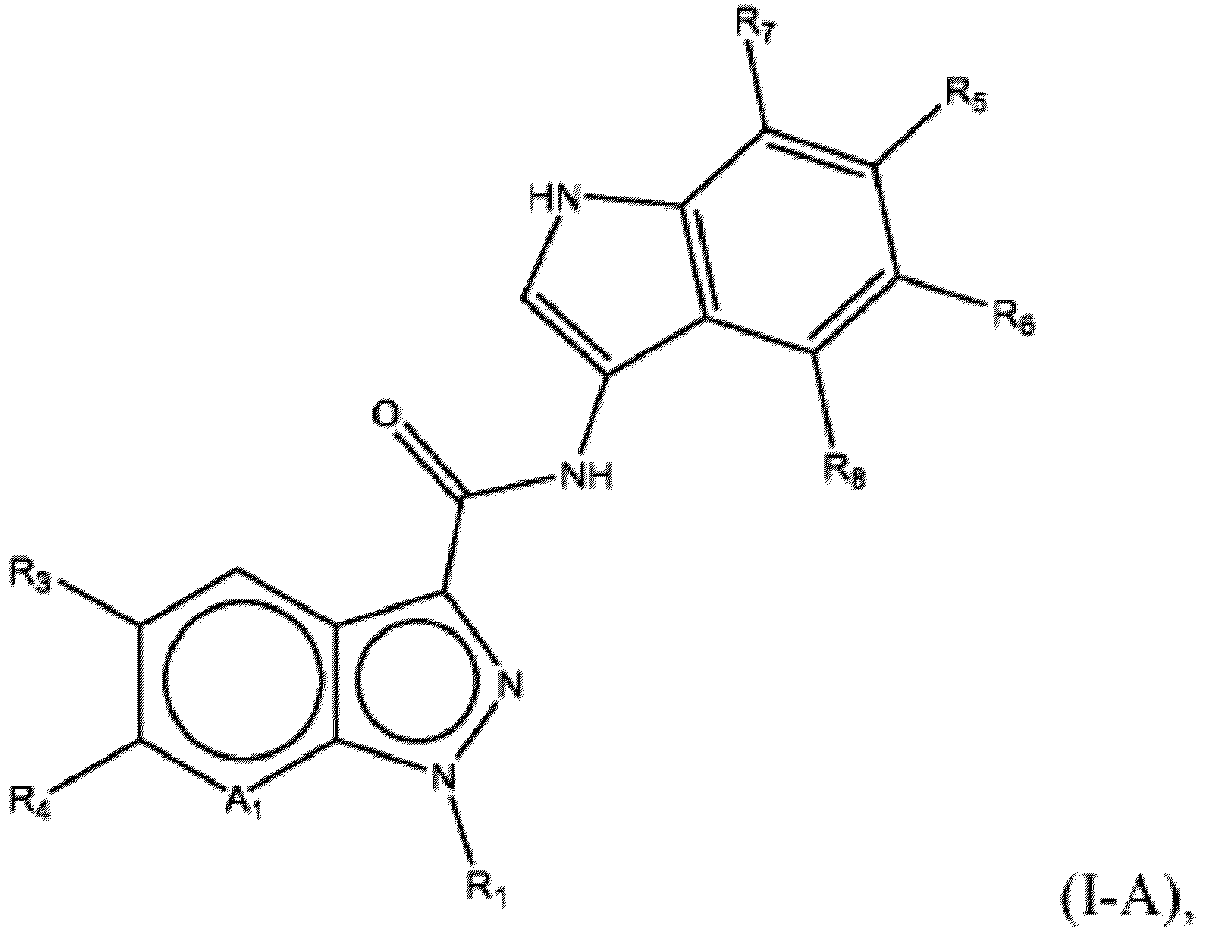


- Composé selon la revendication 1, où le composé est représenté par la formule structurale (I-C-1) ou (I-C-2) :


- Composé selon la revendication 1 ou 2, un sel pharmaceutiquement acceptable, un stéréoisomère ou un tautomère de celui-ci, dans lequel :chaque occurrence de R1 est H, un C1-4 alkyle, un -(CH2)(0 ou 1)-C3-4 cycloalkyle ou un hétérocyclyle à 3-6 chaînons, dans lequel le cycloalkyle ou l'hétérocyclyle représenté par R1 est optionnellement substitué par un ou plusieurs substituants indépendamment choisis dans le groupe constitué de : halogène, -OH et C1-4 alkyle ; et/ouchaque occurrence de R7 et R8 est indépendamment H ou un halogène ; et/ouchaque occurrence de R3 et R5 est indépendamment H, un halogène, un C1-6 alkyle ou un C1-6 haloalkyle ; et/ouchaque occurrence de R4 est indépendamment H, un halogène, CN, OH, un C1-6 alkyle, un C1-6 alcoxy, un C2-6 alcényle, un C2-6 alcynyle, -C(O)R11, -C(O)OR11, -C(O)NR11R12, un -NR11C(O)C1-6 alkyle, NR11R12, -S(O)2R11, -S(O)2NR11R12, un C3-7 cycloalkyle, un -(CH2)(0 ou 1)-hétérocyclyle à 3-7 chaînons, un -O(0 ou 1)-hétérocyclyle à 3-7 chaînons, un phényle, un -O(0 ou 1)-hétéroaryle à 5-6 chaînons, dans lequel l'alkyle, l'alcoxy, le phényle ou l'hétéroaryle représenté par R4 ou dans le groupe représenté par R4 est optionnellement substitué par un ou plusieurs substituants indépendamment choisis dans le groupe constitué de : halogène, -OH, CN, C1-6 alkyle, C1-6 haloalkyle, C1-6 alcoxy, C1-6 haloalcoxy, -NR11R12 et -N(R11)C(O)OR12, dans lequel le cycloalkyle ou l'hétérocyclyle représenté par R4 est optionnellement substitué par un ou plusieurs substituants indépendamment choisis dans le groupe constitué de : halogène, -OH, oxo, CN, C1-6 alkyle, C1-6 haloalkyle, C1-6 alcoxy, C1-6 haloalcoxy, -C(O)OC1-6 alkyle et NR11R12 ; et/ouchaque occurrence de R6 est indépendamment H, un halogène, CN, OH, un C1-6 alkyle, un C1-6 alcoxy, -C(O)R11, -C(O)OR11, -C(O)NR11R12, un -NR11C(O)C1-6 alkyle, NR11R12, -P(=O)R11R12, -S(O)2R11, -S(O)2NR11R12, un C3-7 cycloalkyle, un hétérocyclyle à 3-7 chaînons, un phényle, un -O(0 ou 1)-hétéroaryle à 5-6 chaînons, dans lequel l'alkyle l'alcoxy, le phényle ou l'hétéroaryle représenté par R6 ou dans le groupe représenté par R6 est optionnellement substitué par un ou plusieurs substituants indépendamment choisis dans le groupe constitué de : halogène, -OH, CN, C1-6 alkyle, C1-6 haloalkyle, C1-6 alcoxy, C1-6 haloalcoxy, -NR11R12 et -N(R11)C(O)OR12, dans lequel le cycloalkyle ou l'hétérocyclyle représenté par R6 est optionnellement substitué par un ou plusieurs substituants indépendamment choisis dans le groupe constitué de : halogène, -OH, oxo, CN, C1-6 alkyle, C1-6 haloalkyle, C1-6 alcoxy, C1-6 haloalcoxy, -C(O)OC1-6 alkyle et NR11R12.
- Composé selon l'une quelconque des revendications 1, 2 et 4, un sel pharmaceutiquement acceptable, un stéréoisomère ou un tautomère de celui-ci, dans lequel :chaque occurrence de R1 est H, un C1-4 alkyle, un -(CH2)(0 ou 1)-C3-4 cycloalkyle ou un hétérocyclyle contenant de l'oxygène à 4-6 chaînons ; et/ouchaque occurrence de A1 est CH.
- Composé selon l'une quelconque des revendications 1-5, un sel pharmaceutiquement acceptable, un stéréoisomère ou un tautomère de celui-ci, dans lequel :chaque occurrence de R7 et R8 est indépendamment H ou F ; et/ouchaque occurrence de R3 et R5 est indépendamment H, F, Cl ou CF3.
- Composé selon l'une quelconque des revendications 1-6, un sel pharmaceutiquement acceptable, un stéréoisomère ou un tautomère de celui-ci, dans lequel chaque occurrence de R4 est indépendamment H, un halogène, CN, un C1-4 alkyle (optionnellement substitué par OH ou -NR11R12), un C1-4 haloalkyle, un C1-4 alcoxy optionnellement substitué par un C1-4 alcoxy, un C1-4 haloalcoxy, un C2-4 alcynyle, -C(O)OR11, -C(O)NR11R12, -S(O)2R11, un -(CH2)(0 ou 1)-hétérocyclyle à 5-6 chaînons, un - O(0 ou 1)-hétérocyclyle à 5-6 chaînons, un -O-hétéroaryle à 5-6 chaînons, dans lequel l'hétéroaryle dans le groupe représenté par R4 est optionnellement substitué par un ou plusieurs substituants indépendamment choisis dans le groupe constitué de : halogène, -OH, CN, C1-4 alkyle, C1-4 haloalkyle, C1-4 alcoxy et C1-4 haloalcoxy, dans lequel l'hétérocyclyle représenté par R4 est optionnellement substitué par un ou plusieurs substituants indépendamment choisis dans le groupe constitué de : halogène, -OH, oxo, CN, C1-4 alkyle, C1-4 haloalkyle, C1-4 alcoxy, C1-4 haloalcoxy, -C(O)OC1-4 alkyle et NR11R12.
- Composé selon l'une quelconque des revendications 1-7, un sel pharmaceutiquement acceptable, un stéréoisomère ou un tautomère de celui-ci, dans lequel chaque occurrence de R6 est indépendamment H, un halogène, CN, un C1-4 alkyle (optionnellement substitué par -NR11R12), un C1-4 haloalkyle, un C1-4 alcoxy, un C1-4 haloalcoxy, -C(O)OR11, -C(O)NR11R12, -P(=O)R11R12, -S(O)2R11, un hétérocyclyle à 5-6 chaînons, dans lequel l'hétérocyclyle représenté par R6 est optionnellement substitué par un ou plusieurs substituants indépendamment choisis dans le groupe constitué de : halogène, -OH, oxo, CN, C1-4 alkyle, C1-4 haloalkyle, C1-4 alcoxy, C1-4 haloalcoxy, -C(O)OC1-4 alkyle et NR11R12 ; optionnellement, R6 est indépendamment H, un halogène, un C1-4 alkyle, un C1-4 haloalkyle ou un -C(O)OC1-4 alkyle.
- Composé selon l'une quelconque des revendications 1-8, un sel pharmaceutiquement acceptable, un stéréoisomère ou un tautomère de celui-ci, dans lequel chaque occurrence de R4 est indépendamment H, un halogène, CN, un C1-4 alkyle (optionnellement substitué par -NR11R12), un C1-4 haloalkyle, un C1-4 alcoxy, un C1-4 haloalcoxy, un C2-4 alcynyle, -C(O)NR11R12 ou un hétérocyclyle contenant de l'oxygène à 5-6 chaînons.
- Composé selon la revendication 1, où le composé est représenté par les formules structurales suivantes :
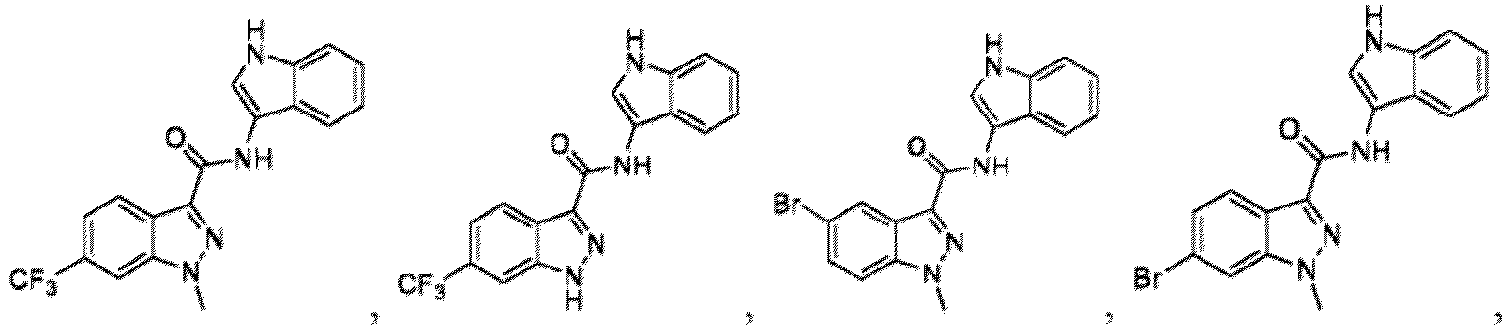





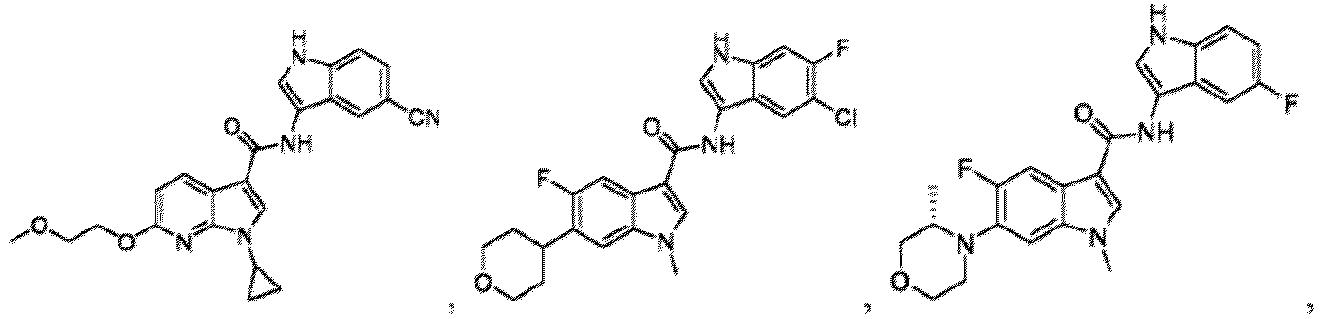

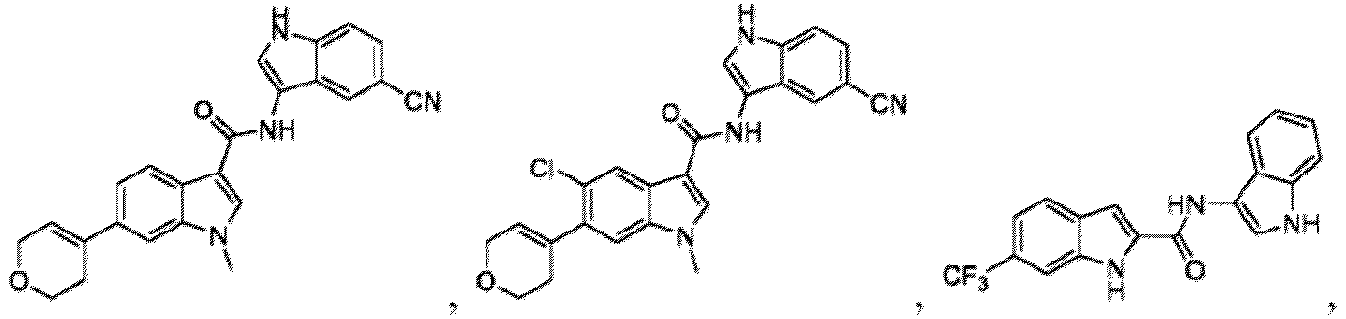


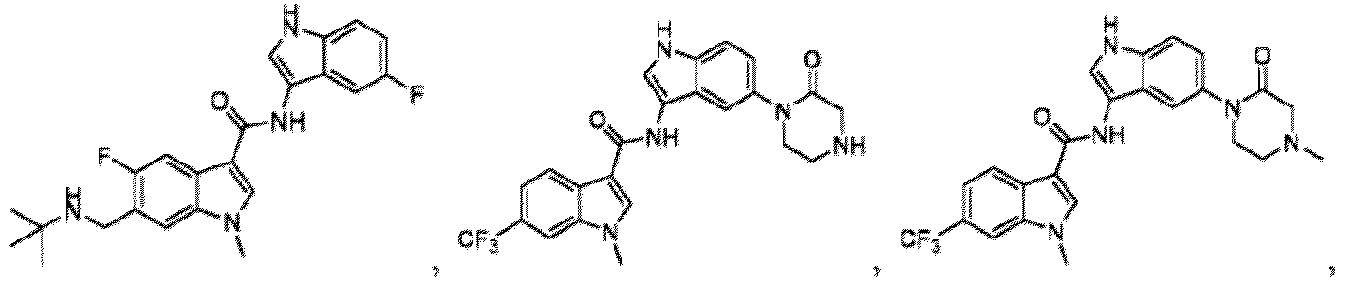
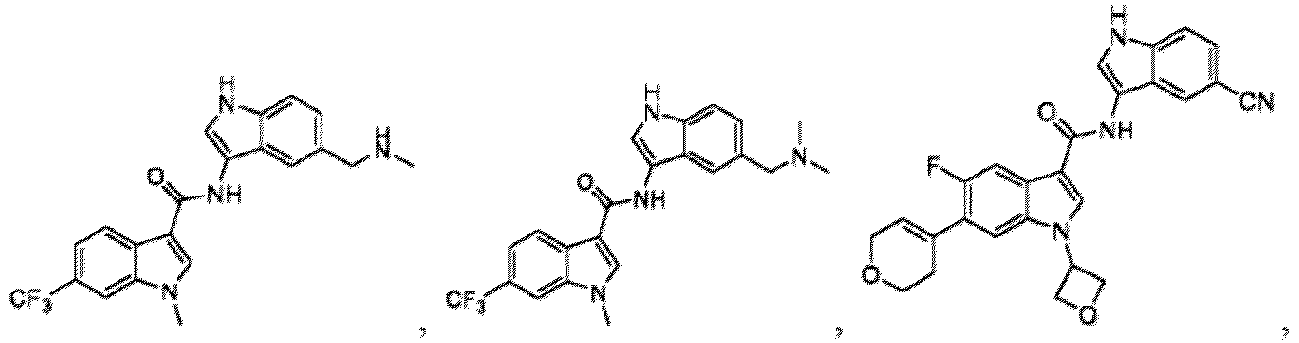

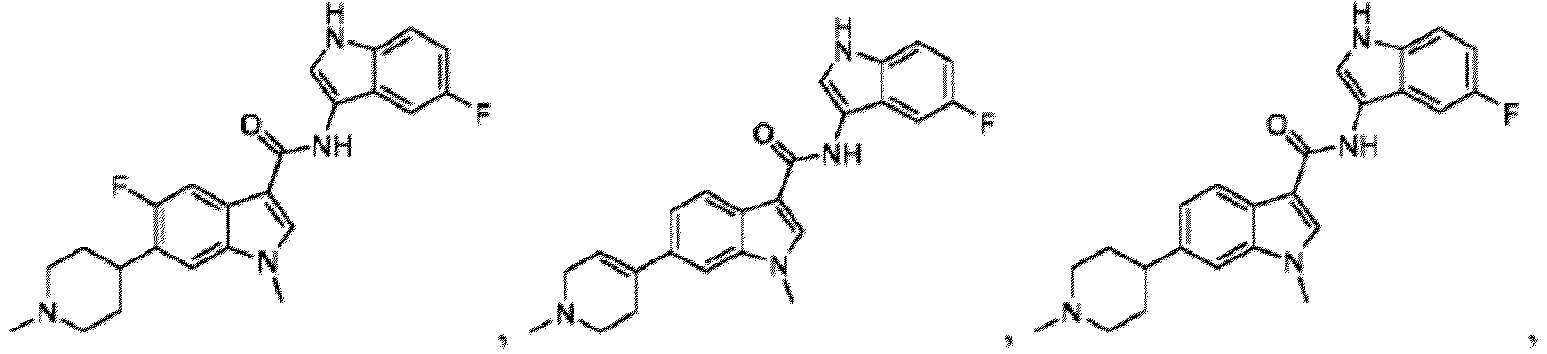

- Composé selon la revendication 1, où le composé est :
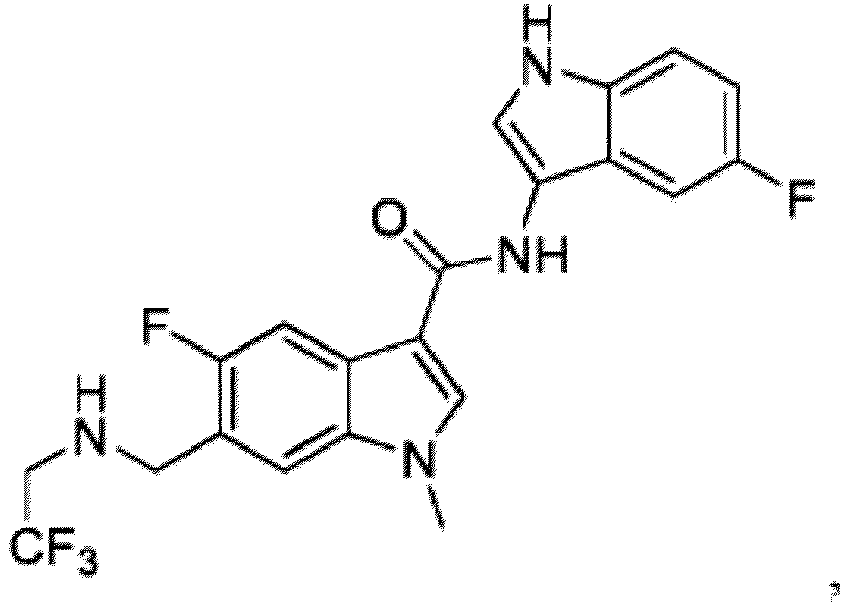
- Composition pharmaceutique comprenant une quantité efficace du composé selon l'une quelconque des revendications 1-11, d'un sel pharmaceutiquement acceptable, d'un stéréoisomère ou d'un tautomère de celui-ci et un véhicule pharmaceutiquement acceptable.
- Composé selon l'une quelconque des revendications 1-11, ou un sel pharmaceutiquement acceptable, un stéréoisomère ou un tautomère de celui-ci, pour utilisation en tant que médicament.
- Composé selon l'une quelconque des revendications 1-11, ou un sel pharmaceutiquement acceptable, un stéréoisomère, un tautomère ou une composition pharmaceutique de celui-ci, pour utilisation dans une méthode de traitement d'un sujet avec une maladie auto-immune, des troubles associés à une inflammation et une maladie infectieuse, optionnellement, où la maladie auto-immune est une polyarthrite rhumatoïde, un lupus érythémateux systémique, une sclérose en plaques, une maladie de Crohn (CD) ou une colite ulcéreuse (UC).
- Composé selon l'une quelconque des revendications 1-11, ou un sel pharmaceutiquement acceptable, un stéréoisomère, un tautomère ou une composition pharmaceutique de celui-ci, pour utilisation dans une méthode de traitement d'un sujet avec un cancer, optionnellement, où le cancer est un mélanome, un cancer du col de l'utérus, un cancer du sein, un cancer ovarien, un cancer de la prostate, un cancer testiculaire, un carcinome urothélial, un cancer de la vessie, un cancer pulmonaire non à petites cellules, un cancer pulmonaire à petites cellules, un sarcome, un adénocarcinome colorectal, des tumeurs stromales gastro-intestinales, un carcinome gastro-oesophagien, un cancer colorectal, un cancer pancréatique, un cancer rénal, un cancer hépatocellulaire, un mésothéliome malin, une leucémie, un lymphome, un syndrome myélodysplasique, un myélome multiple, un carcinome à cellules transitionnelles, un neuroblastome, des néoplasmes à plasmocytes, une tumeur de Wilms ou un carcinome hépatocellulaire.
Applications Claiming Priority (2)
| Application Number | Priority Date | Filing Date | Title |
|---|---|---|---|
| CN2020130793 | 2020-11-23 | ||
| PCT/CN2021/132442 WO2022105930A1 (fr) | 2020-11-23 | 2021-11-23 | Antagonistes sting et leurs utilisations |
Publications (2)
| Publication Number | Publication Date |
|---|---|
| EP4247790A1 EP4247790A1 (fr) | 2023-09-27 |
| EP4247790B1 true EP4247790B1 (fr) | 2024-10-09 |
Family
ID=78821136
Family Applications (1)
| Application Number | Title | Priority Date | Filing Date |
|---|---|---|---|
| EP21819328.2A Active EP4247790B1 (fr) | 2020-11-23 | 2021-11-23 | Antagonistes sting et leurs utilisations |
Country Status (10)
| Country | Link |
|---|---|
| US (1) | US12698272B2 (fr) |
| EP (1) | EP4247790B1 (fr) |
| JP (1) | JP7807448B2 (fr) |
| CN (1) | CN116867768A (fr) |
| AR (1) | AR124127A1 (fr) |
| AU (1) | AU2021381469A1 (fr) |
| CA (1) | CA3199730A1 (fr) |
| ES (1) | ES2992222T3 (fr) |
| TW (1) | TWI916447B (fr) |
| WO (1) | WO2022105930A1 (fr) |
Family Cites Families (29)
| Publication number | Priority date | Publication date | Assignee | Title |
|---|---|---|---|---|
| TW381092B (en) | 1995-07-07 | 2000-02-01 | Otsuka Pharma Co Ltd | Novel benzimidazole derivatives for use in treating arteriosclerotic diseases |
| JP2858002B2 (ja) | 1997-01-06 | 1999-02-17 | 大塚製薬株式会社 | 医薬組成物 |
| US20030008832A1 (en) | 1998-11-25 | 2003-01-09 | Rifat Pamukcu | Method of inhibiting neoplastic cells with benzimidazole derivatives |
| BR0214301A (pt) | 2001-11-19 | 2004-10-13 | Neurogen Corp | Composto ou um sal farmaceuticamente aceitável do mesmo, composição farmacêutica, métodos para tratar doenças ou condições, para potencializar um efeito terapêutico de um agente do snc, para melhorar a memória recente de um paciente, para determinar a presença ou ausência de um receptor de gabaa em uma amostra, e para alterar a atividade de transdução de sinal de receptor de gabaa, preparação farmacêutica acondicionada, e, uso de um composto ou sal |
| FR2845382A1 (fr) | 2002-10-02 | 2004-04-09 | Sanofi Synthelabo | Derives d'indazolecarboxamides, leur preparation et leur utilisation en therapeutique |
| FR2911604B1 (fr) | 2007-01-19 | 2009-04-17 | Sanofi Aventis Sa | Derives de n-(heteroaryl-1h-indole-2-carboxamides, leur preparation et leur application en therapeutique |
| RU2576662C2 (ru) | 2010-03-18 | 2016-03-10 | Энститю Пастер Корея | Противоинфекционные соединения |
| JP5985473B2 (ja) | 2010-07-13 | 2016-09-06 | エフ.ホフマン−ラ ロシュ アーゲーF. Hoffmann−La Roche Aktiengesellschaft | IRAK4モジュレーターとしてのピラゾロ[1,5a]ピリミジン及びチエノ[3,2b]ピリミジン誘導体 |
| WO2012143796A2 (fr) | 2011-04-21 | 2012-10-26 | Institut Pasteur Korea | Composés anti-inflammatoires |
| AU2014340269B2 (en) | 2013-10-21 | 2018-06-21 | Drexel University | Use of STING agonists to treat chronic hepatitis B virus infection |
| WO2015082411A1 (fr) | 2013-12-05 | 2015-06-11 | Bayer Pharma Aktiengesellschaft | Imidazo[1,2-a]pyridine-3-carboxamides aryl et hétéroaryl substitués et leur utilisation |
| WO2015127125A1 (fr) | 2014-02-20 | 2015-08-27 | Cornell University | Composés et procédés d'inhibition de la fascine |
| WO2019122202A1 (fr) | 2017-12-20 | 2019-06-27 | Ecole Polytechnique Federale De Lausanne (Epfl) | Inhibiteurs sting |
| EP3556362A1 (fr) | 2018-04-16 | 2019-10-23 | Ecole Polytechnique Federale De Lausanne (Epfl) | Inhibiteurs de piqûre |
| SG11202010679SA (en) | 2018-05-17 | 2020-11-27 | Bayer Ag | Substituted dihydropyrazolo pyrazine carboxamide derivatives |
| CN112823151B (zh) | 2018-07-03 | 2024-11-15 | 艾福姆德尤股份有限公司 | 用于治疗与sting活性有关的疾病的化合物和组合物 |
| TWI873098B (zh) * | 2018-07-03 | 2025-02-21 | 瑞士商諾華製藥公司 | 用於治療與sting活性相關之病症的化合物及組合物 |
| CN110963997A (zh) | 2018-09-28 | 2020-04-07 | 四川科伦博泰生物医药股份有限公司 | 杂环酰胺类化合物、包含其的药物组合物及其制备方法和用途 |
| WO2020106741A1 (fr) | 2018-11-19 | 2020-05-28 | Ifm Due, Inc. | Composés et compositions pour traiter des états pathologiques associés à une activité de sting |
| EP3883651A1 (fr) | 2018-11-19 | 2021-09-29 | IFM Due, Inc. | Composés et compositions pour traiter des états pathologiques associés à une activité de sting |
| WO2020132582A1 (fr) | 2018-12-21 | 2020-06-25 | Nimbus Titan, Inc. | Agonistes de sting et leurs utilisations |
| WO2020132549A1 (fr) | 2018-12-21 | 2020-06-25 | Nimbus Titan, Inc. | Agonistes hétérocycliques de sting et utilisations de ceux-ci |
| JP2022517797A (ja) | 2019-01-17 | 2022-03-10 | アイエフエム デュー インコーポレイテッド | Sting活性に関連する状態を治療するための化合物および組成物 |
| TW202043198A (zh) * | 2019-01-17 | 2020-12-01 | 美商Ifm Due有限公司 | 用於治療與sting活性相關之病況的化合物及組合物 |
| PY2157405A (es) | 2020-07-15 | 2022-04-22 | Ifm Due Inc | Compuestos y composiciones para el tratamiento de afecciones asociadas a la actividad del sting |
| WO2022015938A1 (fr) | 2020-07-15 | 2022-01-20 | Ifm Due, Inc. | Composés et compositions pour traiter des états pathologiques associés à une activité de sting |
| WO2022015977A1 (fr) | 2020-07-15 | 2022-01-20 | Ifm Due, Inc. | Composés et compositions pour traiter des états pathologiques associés à une activité de sting |
| WO2022015975A1 (fr) | 2020-07-15 | 2022-01-20 | Ifm Due, Inc. | Composés et compositions pour traiter des états associés à une activité de sting |
| JP2023540674A (ja) | 2020-07-15 | 2023-09-26 | アイエフエム デュー インコーポレイテッド | Sting活性に関連する状態を治療するための化合物および組成物 |
-
2021
- 2021-11-23 EP EP21819328.2A patent/EP4247790B1/fr active Active
- 2021-11-23 WO PCT/CN2021/132442 patent/WO2022105930A1/fr not_active Ceased
- 2021-11-23 ES ES21819328T patent/ES2992222T3/es active Active
- 2021-11-23 CN CN202180091491.3A patent/CN116867768A/zh active Pending
- 2021-11-23 US US18/037,965 patent/US12698272B2/en active Active
- 2021-11-23 AR ARP210103230A patent/AR124127A1/es unknown
- 2021-11-23 JP JP2023530999A patent/JP7807448B2/ja active Active
- 2021-11-23 TW TW110143545A patent/TWI916447B/zh active
- 2021-11-23 CA CA3199730A patent/CA3199730A1/fr active Pending
- 2021-11-23 AU AU2021381469A patent/AU2021381469A1/en active Pending
Also Published As
| Publication number | Publication date |
|---|---|
| AR124127A1 (es) | 2023-02-15 |
| TW202237583A (zh) | 2022-10-01 |
| CN116867768A (zh) | 2023-10-10 |
| CA3199730A1 (fr) | 2022-05-27 |
| US20240002368A1 (en) | 2024-01-04 |
| AU2021381469A1 (en) | 2023-06-15 |
| US12698272B2 (en) | 2026-08-04 |
| TWI916447B (zh) | 2026-03-01 |
| JP2023550182A (ja) | 2023-11-30 |
| WO2022105930A1 (fr) | 2022-05-27 |
| AU2021381469A9 (en) | 2024-02-08 |
| ES2992222T3 (es) | 2024-12-10 |
| JP7807448B2 (ja) | 2026-01-27 |
| EP4247790A1 (fr) | 2023-09-27 |
Similar Documents
| Publication | Publication Date | Title |
|---|---|---|
| US10954240B2 (en) | Compounds inhibiting leucine-rich repeat kinase enzyme activity | |
| US10556885B2 (en) | Isoquinolin-3-YL carboxamides and preparation and use thereof | |
| US9718818B2 (en) | Compounds inhibiting leucine-rich repeat kinase enzyme activity | |
| US11981680B2 (en) | Substituted thienopyrroles as PAD4 inhibitors | |
| US9416126B2 (en) | Compounds inhibiting leucine-rich repeat kinase enzyme activity | |
| US9187473B2 (en) | Substituted 5-(pyrazin-2-yl)-1H-pyrazolo [3, 4-b] pyridine and pyrazolo [3, 4-b] pyridine derivatives as protein kinase inhibitors | |
| US9440952B2 (en) | Compounds inhibiting leucine-rich repeat kinase enzyme activity | |
| US9688654B2 (en) | Compounds inhibiting leucine-rich repeat kinase enzyme activity | |
| US11161854B2 (en) | Indazolyl-spiro[2.2]pentane-carbonitrile derivatives as LRRK2 inhibitors, pharmaceutical compositions, and uses thereof | |
| WO2019201939A1 (fr) | Inhibiteurs de sting | |
| US20160289207A1 (en) | Compounds inhibiting leucine-rich repeat kinase enzyme activity | |
| TW201829407A (zh) | 作為酪胺酸蛋白激酶抑制劑之新穎的胺基-咪唑并吡啶衍生物及其醫藥用途 | |
| US20160024114A1 (en) | Macrocyclic rip2 kinase inhibitors | |
| US20240409542A1 (en) | Novel compounds | |
| US20260132109A1 (en) | Compounds and compositions for treating conditions associated with sting activity | |
| US20190127390A1 (en) | Macrocyclic rip2 kinase inhibitors | |
| HK40098741A (en) | Sting antagonists and uses thereof | |
| ES2992222T3 (es) | Antagonistas de STING y usos de los mismos | |
| EP4676931A1 (fr) | Pyrrolo[2,1-f][1,2,4]triazines, ainsi que leur préparation et leurs utilisations |
Legal Events
| Date | Code | Title | Description |
|---|---|---|---|
| STAA | Information on the status of an ep patent application or granted ep patent |
Free format text: STATUS: UNKNOWN |
|
| STAA | Information on the status of an ep patent application or granted ep patent |
Free format text: STATUS: THE INTERNATIONAL PUBLICATION HAS BEEN MADE |
|
| PUAI | Public reference made under article 153(3) epc to a published international application that has entered the european phase |
Free format text: ORIGINAL CODE: 0009012 |
|
| STAA | Information on the status of an ep patent application or granted ep patent |
Free format text: STATUS: REQUEST FOR EXAMINATION WAS MADE |
|
| 17P | Request for examination filed |
Effective date: 20230606 |
|
| AK | Designated contracting states |
Kind code of ref document: A1 Designated state(s): AL AT BE BG CH CY CZ DE DK EE ES FI FR GB GR HR HU IE IS IT LI LT LU LV MC MK MT NL NO PL PT RO RS SE SI SK SM TR |
|
| RAP1 | Party data changed (applicant data changed or rights of an application transferred) |
Owner name: REGOR PHARMACEUTICALS, INC. |
|
| REG | Reference to a national code |
Ref country code: HK Ref legal event code: DE Ref document number: 40098741 Country of ref document: HK |
|
| GRAP | Despatch of communication of intention to grant a patent |
Free format text: ORIGINAL CODE: EPIDOSNIGR1 |
|
| STAA | Information on the status of an ep patent application or granted ep patent |
Free format text: STATUS: GRANT OF PATENT IS INTENDED |
|
| INTG | Intention to grant announced |
Effective date: 20240506 |
|
| GRAS | Grant fee paid |
Free format text: ORIGINAL CODE: EPIDOSNIGR3 |
|
| GRAA | (expected) grant |
Free format text: ORIGINAL CODE: 0009210 |
|
| STAA | Information on the status of an ep patent application or granted ep patent |
Free format text: STATUS: THE PATENT HAS BEEN GRANTED |
|
| AK | Designated contracting states |
Kind code of ref document: B1 Designated state(s): AL AT BE BG CH CY CZ DE DK EE ES FI FR GB GR HR HU IE IS IT LI LT LU LV MC MK MT NL NO PL PT RO RS SE SI SK SM TR |
|
| REG | Reference to a national code |
Ref country code: CH Ref legal event code: EP |
|
| P01 | Opt-out of the competence of the unified patent court (upc) registered |
Free format text: CASE NUMBER: APP_50827/2024 Effective date: 20240909 |
|
| REG | Reference to a national code |
Ref country code: DE Ref legal event code: R096 Ref document number: 602021020105 Country of ref document: DE |
|
| REG | Reference to a national code |
Ref country code: IE Ref legal event code: FG4D |
|
| PGFP | Annual fee paid to national office [announced via postgrant information from national office to epo] |
Ref country code: NL Payment date: 20241024 Year of fee payment: 4 |
|
| PGFP | Annual fee paid to national office [announced via postgrant information from national office to epo] |
Ref country code: LU Payment date: 20241024 Year of fee payment: 4 |
|
| REG | Reference to a national code |
Ref country code: ES Ref legal event code: FG2A Ref document number: 2992222 Country of ref document: ES Kind code of ref document: T3 Effective date: 20241210 |
|
| REG | Reference to a national code |
Ref country code: NL Ref legal event code: FP |
|
| PGFP | Annual fee paid to national office [announced via postgrant information from national office to epo] |
Ref country code: BE Payment date: 20241024 Year of fee payment: 4 |
|
| PGFP | Annual fee paid to national office [announced via postgrant information from national office to epo] |
Ref country code: IE Payment date: 20241031 Year of fee payment: 4 |
|
| REG | Reference to a national code |
Ref country code: LT Ref legal event code: MG9D |
|
| REG | Reference to a national code |
Ref country code: AT Ref legal event code: MK05 Ref document number: 1730488 Country of ref document: AT Kind code of ref document: T Effective date: 20241009 |
|
| PG25 | Lapsed in a contracting state [announced via postgrant information from national office to epo] |
Ref country code: IS Free format text: LAPSE BECAUSE OF FAILURE TO SUBMIT A TRANSLATION OF THE DESCRIPTION OR TO PAY THE FEE WITHIN THE PRESCRIBED TIME-LIMIT Effective date: 20250209 Ref country code: HR Free format text: LAPSE BECAUSE OF FAILURE TO SUBMIT A TRANSLATION OF THE DESCRIPTION OR TO PAY THE FEE WITHIN THE PRESCRIBED TIME-LIMIT Effective date: 20241009 Ref country code: PT Free format text: LAPSE BECAUSE OF FAILURE TO SUBMIT A TRANSLATION OF THE DESCRIPTION OR TO PAY THE FEE WITHIN THE PRESCRIBED TIME-LIMIT Effective date: 20250210 |
|
| PG25 | Lapsed in a contracting state [announced via postgrant information from national office to epo] |
Ref country code: FI Free format text: LAPSE BECAUSE OF FAILURE TO SUBMIT A TRANSLATION OF THE DESCRIPTION OR TO PAY THE FEE WITHIN THE PRESCRIBED TIME-LIMIT Effective date: 20241009 |
|
| PG25 | Lapsed in a contracting state [announced via postgrant information from national office to epo] |
Ref country code: BG Free format text: LAPSE BECAUSE OF FAILURE TO SUBMIT A TRANSLATION OF THE DESCRIPTION OR TO PAY THE FEE WITHIN THE PRESCRIBED TIME-LIMIT Effective date: 20241009 |
|
| PG25 | Lapsed in a contracting state [announced via postgrant information from national office to epo] |
Ref country code: NO Free format text: LAPSE BECAUSE OF FAILURE TO SUBMIT A TRANSLATION OF THE DESCRIPTION OR TO PAY THE FEE WITHIN THE PRESCRIBED TIME-LIMIT Effective date: 20250109 |
|
| PG25 | Lapsed in a contracting state [announced via postgrant information from national office to epo] |
Ref country code: AT Free format text: LAPSE BECAUSE OF FAILURE TO SUBMIT A TRANSLATION OF THE DESCRIPTION OR TO PAY THE FEE WITHIN THE PRESCRIBED TIME-LIMIT Effective date: 20241009 Ref country code: LV Free format text: LAPSE BECAUSE OF FAILURE TO SUBMIT A TRANSLATION OF THE DESCRIPTION OR TO PAY THE FEE WITHIN THE PRESCRIBED TIME-LIMIT Effective date: 20241009 Ref country code: GR Free format text: LAPSE BECAUSE OF FAILURE TO SUBMIT A TRANSLATION OF THE DESCRIPTION OR TO PAY THE FEE WITHIN THE PRESCRIBED TIME-LIMIT Effective date: 20250110 |
|
| PG25 | Lapsed in a contracting state [announced via postgrant information from national office to epo] |
Ref country code: PL Free format text: LAPSE BECAUSE OF FAILURE TO SUBMIT A TRANSLATION OF THE DESCRIPTION OR TO PAY THE FEE WITHIN THE PRESCRIBED TIME-LIMIT Effective date: 20241009 |
|
| PG25 | Lapsed in a contracting state [announced via postgrant information from national office to epo] |
Ref country code: IT Free format text: LAPSE BECAUSE OF NON-PAYMENT OF DUE FEES Effective date: 20241123 |
|
| PG25 | Lapsed in a contracting state [announced via postgrant information from national office to epo] |
Ref country code: RS Free format text: LAPSE BECAUSE OF FAILURE TO SUBMIT A TRANSLATION OF THE DESCRIPTION OR TO PAY THE FEE WITHIN THE PRESCRIBED TIME-LIMIT Effective date: 20250109 |
|
| PG25 | Lapsed in a contracting state [announced via postgrant information from national office to epo] |
Ref country code: SM Free format text: LAPSE BECAUSE OF FAILURE TO SUBMIT A TRANSLATION OF THE DESCRIPTION OR TO PAY THE FEE WITHIN THE PRESCRIBED TIME-LIMIT Effective date: 20241009 |
|
| PG25 | Lapsed in a contracting state [announced via postgrant information from national office to epo] |
Ref country code: MC Free format text: LAPSE BECAUSE OF FAILURE TO SUBMIT A TRANSLATION OF THE DESCRIPTION OR TO PAY THE FEE WITHIN THE PRESCRIBED TIME-LIMIT Effective date: 20241009 |
|
| PG25 | Lapsed in a contracting state [announced via postgrant information from national office to epo] |
Ref country code: DK Free format text: LAPSE BECAUSE OF FAILURE TO SUBMIT A TRANSLATION OF THE DESCRIPTION OR TO PAY THE FEE WITHIN THE PRESCRIBED TIME-LIMIT Effective date: 20241009 |
|
| REG | Reference to a national code |
Ref country code: DE Ref legal event code: R097 Ref document number: 602021020105 Country of ref document: DE |
|
| VS25 | Lapsed in a validation state [announced via postgrant information from nat. office to epo] |
Ref country code: MD Free format text: LAPSE BECAUSE OF FAILURE TO SUBMIT A TRANSLATION OF THE DESCRIPTION OR TO PAY THE FEE WITHIN THE PRESCRIBED TIME-LIMIT Effective date: 20241009 |
|
| PG25 | Lapsed in a contracting state [announced via postgrant information from national office to epo] |
Ref country code: EE Free format text: LAPSE BECAUSE OF FAILURE TO SUBMIT A TRANSLATION OF THE DESCRIPTION OR TO PAY THE FEE WITHIN THE PRESCRIBED TIME-LIMIT Effective date: 20241009 |
|
| PG25 | Lapsed in a contracting state [announced via postgrant information from national office to epo] |
Ref country code: RO Free format text: LAPSE BECAUSE OF FAILURE TO SUBMIT A TRANSLATION OF THE DESCRIPTION OR TO PAY THE FEE WITHIN THE PRESCRIBED TIME-LIMIT Effective date: 20241009 |
|
| PG25 | Lapsed in a contracting state [announced via postgrant information from national office to epo] |
Ref country code: SK Free format text: LAPSE BECAUSE OF FAILURE TO SUBMIT A TRANSLATION OF THE DESCRIPTION OR TO PAY THE FEE WITHIN THE PRESCRIBED TIME-LIMIT Effective date: 20241009 |
|
| PG25 | Lapsed in a contracting state [announced via postgrant information from national office to epo] |
Ref country code: CZ Free format text: LAPSE BECAUSE OF FAILURE TO SUBMIT A TRANSLATION OF THE DESCRIPTION OR TO PAY THE FEE WITHIN THE PRESCRIBED TIME-LIMIT Effective date: 20241009 |
|
| PLBE | No opposition filed within time limit |
Free format text: ORIGINAL CODE: 0009261 |
|
| STAA | Information on the status of an ep patent application or granted ep patent |
Free format text: STATUS: NO OPPOSITION FILED WITHIN TIME LIMIT |
|
| PG25 | Lapsed in a contracting state [announced via postgrant information from national office to epo] |
Ref country code: SE Free format text: LAPSE BECAUSE OF FAILURE TO SUBMIT A TRANSLATION OF THE DESCRIPTION OR TO PAY THE FEE WITHIN THE PRESCRIBED TIME-LIMIT Effective date: 20241009 |
|
| 26N | No opposition filed |
Effective date: 20250710 |
|
| REG | Reference to a national code |
Ref country code: CH Ref legal event code: U11 Free format text: ST27 STATUS EVENT CODE: U-0-0-U10-U11 (AS PROVIDED BY THE NATIONAL OFFICE) Effective date: 20251201 |
|
| PGFP | Annual fee paid to national office [announced via postgrant information from national office to epo] |
Ref country code: DE Payment date: 20251128 Year of fee payment: 5 |
|
| PGFP | Annual fee paid to national office [announced via postgrant information from national office to epo] |
Ref country code: GB Payment date: 20251127 Year of fee payment: 5 |
|
| PG25 | Lapsed in a contracting state [announced via postgrant information from national office to epo] |
Ref country code: IT Free format text: LAPSE BECAUSE OF NON-PAYMENT OF DUE FEES Effective date: 20241123 |
|
| PGFP | Annual fee paid to national office [announced via postgrant information from national office to epo] |
Ref country code: IT Payment date: 20251119 Year of fee payment: 5 |
|
| PGRI | Patent reinstated in contracting state [announced from national office to epo] |
Ref country code: IT Effective date: 20241130 |
|
| PGFP | Annual fee paid to national office [announced via postgrant information from national office to epo] |
Ref country code: FR Payment date: 20251125 Year of fee payment: 5 |
|
| PGFP | Annual fee paid to national office [announced via postgrant information from national office to epo] |
Ref country code: CH Payment date: 20251201 Year of fee payment: 5 |
|
| PGFP | Annual fee paid to national office [announced via postgrant information from national office to epo] |
Ref country code: ES Payment date: 20251201 Year of fee payment: 5 |
|
| VS25 | Lapsed in a validation state [announced via postgrant information from nat. office to epo] |
Ref country code: MA Free format text: FAILURE TO ELECT DOMICILE IN THE NATIONAL COUNTRY Effective date: 20250110 |
|
| PG25 | Lapsed in a contracting state [announced via postgrant information from national office to epo] |
Ref country code: HU Free format text: LAPSE BECAUSE OF FAILURE TO SUBMIT A TRANSLATION OF THE DESCRIPTION OR TO PAY THE FEE WITHIN THE PRESCRIBED TIME-LIMIT; INVALID AB INITIO Effective date: 20211123 |
|
| PG25 | Lapsed in a contracting state [announced via postgrant information from national office to epo] |
Ref country code: CY Free format text: LAPSE BECAUSE OF FAILURE TO SUBMIT A TRANSLATION OF THE DESCRIPTION OR TO PAY THE FEE WITHIN THE PRESCRIBED TIME-LIMIT; INVALID AB INITIO Effective date: 20211123 |
|
| VS25 | Lapsed in a validation state [announced via postgrant information from nat. office to epo] |
Ref country code: MA Free format text: LAPSE BECAUSE OF FAILURE TO SUBMIT A TRANSLATION OF THE DESCRIPTION OR TO PAY THE FEE WITHIN THE PRESCRIBED TIME-LIMIT Effective date: 20241009 |
|
| PG25 | Lapsed in a contracting state [announced via postgrant information from national office to epo] |
Ref country code: TR Free format text: LAPSE BECAUSE OF FAILURE TO SUBMIT A TRANSLATION OF THE DESCRIPTION OR TO PAY THE FEE WITHIN THE PRESCRIBED TIME-LIMIT Effective date: 20241009 |
|
| PG25 | Lapsed in a contracting state [announced via postgrant information from national office to epo] |
Ref country code: SI Free format text: LAPSE BECAUSE OF FAILURE TO SUBMIT A TRANSLATION OF THE DESCRIPTION OR TO PAY THE FEE WITHIN THE PRESCRIBED TIME-LIMIT Effective date: 20241009 |
|
| PG25 | Lapsed in a contracting state [announced via postgrant information from national office to epo] |
Ref country code: LT Free format text: LAPSE BECAUSE OF FAILURE TO SUBMIT A TRANSLATION OF THE DESCRIPTION OR TO PAY THE FEE WITHIN THE PRESCRIBED TIME-LIMIT Effective date: 20241009 |
|
| REG | Reference to a national code |
Ref country code: NL Ref legal event code: MM Effective date: 20251201 |
|
| PG25 | Lapsed in a contracting state [announced via postgrant information from national office to epo] |
Ref country code: LU Free format text: LAPSE BECAUSE OF NON-PAYMENT OF DUE FEES Effective date: 20251123 |