EP4248995A1 - Utilisation d'anticorps anti-ox40 pour le traitement de tumeurs ou de cancers - Google Patents
Utilisation d'anticorps anti-ox40 pour le traitement de tumeurs ou de cancers Download PDFInfo
- Publication number
- EP4248995A1 EP4248995A1 EP21893986.6A EP21893986A EP4248995A1 EP 4248995 A1 EP4248995 A1 EP 4248995A1 EP 21893986 A EP21893986 A EP 21893986A EP 4248995 A1 EP4248995 A1 EP 4248995A1
- Authority
- EP
- European Patent Office
- Prior art keywords
- antibody
- seq
- set forth
- sequence
- cancer
- Prior art date
- Legal status (The legal status is an assumption and is not a legal conclusion. Google has not performed a legal analysis and makes no representation as to the accuracy of the status listed.)
- Pending
Links
Images
Classifications
-
- C—CHEMISTRY; METALLURGY
- C07—ORGANIC CHEMISTRY
- C07K—PEPTIDES
- C07K16/00—Immunoglobulins [IG], e.g. monoclonal or polyclonal antibodies
- C07K16/18—Immunoglobulins [IG], e.g. monoclonal or polyclonal antibodies against material from animals or humans
- C07K16/28—Immunoglobulins [IG], e.g. monoclonal or polyclonal antibodies against material from animals or humans against receptors, cell surface antigens or cell surface determinants
- C07K16/2878—Immunoglobulins [IG], e.g. monoclonal or polyclonal antibodies against material from animals or humans against receptors, cell surface antigens or cell surface determinants against the NGF-receptor/TNF-receptor superfamily, e.g. CD27, CD30, CD40, CD95
-
- A—HUMAN NECESSITIES
- A61—MEDICAL OR VETERINARY SCIENCE; HYGIENE
- A61P—SPECIFIC THERAPEUTIC ACTIVITY OF CHEMICAL COMPOUNDS OR MEDICINAL PREPARATIONS
- A61P35/00—Antineoplastic agents
-
- A—HUMAN NECESSITIES
- A61—MEDICAL OR VETERINARY SCIENCE; HYGIENE
- A61P—SPECIFIC THERAPEUTIC ACTIVITY OF CHEMICAL COMPOUNDS OR MEDICINAL PREPARATIONS
- A61P35/00—Antineoplastic agents
- A61P35/02—Antineoplastic agents specific for leukemia
-
- A—HUMAN NECESSITIES
- A61—MEDICAL OR VETERINARY SCIENCE; HYGIENE
- A61K—PREPARATIONS FOR MEDICAL, DENTAL OR TOILETRY PURPOSES
- A61K39/00—Medicinal preparations containing antigens or antibodies
- A61K2039/505—Medicinal preparations containing antigens or antibodies comprising antibodies
-
- C—CHEMISTRY; METALLURGY
- C07—ORGANIC CHEMISTRY
- C07K—PEPTIDES
- C07K2317/00—Immunoglobulins specific features
- C07K2317/30—Immunoglobulins specific features characterized by aspects of specificity or valency
- C07K2317/33—Crossreactivity, e.g. for species or epitope, or lack of said crossreactivity
-
- C—CHEMISTRY; METALLURGY
- C07—ORGANIC CHEMISTRY
- C07K—PEPTIDES
- C07K2317/00—Immunoglobulins specific features
- C07K2317/40—Immunoglobulins specific features characterized by post-translational modification
- C07K2317/41—Glycosylation, sialylation, or fucosylation
-
- C—CHEMISTRY; METALLURGY
- C07—ORGANIC CHEMISTRY
- C07K—PEPTIDES
- C07K2317/00—Immunoglobulins specific features
- C07K2317/50—Immunoglobulins specific features characterized by immunoglobulin fragments
- C07K2317/51—Complete heavy chain or Fd fragment, i.e. VH + CH1
-
- C—CHEMISTRY; METALLURGY
- C07—ORGANIC CHEMISTRY
- C07K—PEPTIDES
- C07K2317/00—Immunoglobulins specific features
- C07K2317/50—Immunoglobulins specific features characterized by immunoglobulin fragments
- C07K2317/515—Complete light chain, i.e. VL + CL
-
- C—CHEMISTRY; METALLURGY
- C07—ORGANIC CHEMISTRY
- C07K—PEPTIDES
- C07K2317/00—Immunoglobulins specific features
- C07K2317/50—Immunoglobulins specific features characterized by immunoglobulin fragments
- C07K2317/56—Immunoglobulins specific features characterized by immunoglobulin fragments variable (Fv) region, i.e. VH and/or VL
- C07K2317/565—Complementarity determining region [CDR]
-
- C—CHEMISTRY; METALLURGY
- C07—ORGANIC CHEMISTRY
- C07K—PEPTIDES
- C07K2317/00—Immunoglobulins specific features
- C07K2317/90—Immunoglobulins specific features characterized by (pharmaco)kinetic aspects or by stability of the immunoglobulin
- C07K2317/94—Stability, e.g. half-life, pH, temperature or enzyme-resistance
Definitions
- the present invention relates to the field of bio-pharmaceuticals, and particularly to use of an anti-OX40 antibody in the treatment of a tumor or cancer.
- the complete activation of T cells in the immune system requires two levels of signals.
- the first signal is generated by the recognition of an antigen through a T cell antigen receptor, and the activation signal is transduced into a cell via a CD3 molecule.
- the second signal known as a co-stimulatory signal, is generated by the interaction between co-stimulatory molecules on the surface of an antigen-presenting cell or a target cell and co-stimulatory molecule receptors on the surface of an activated T cell.
- the co-stimulatory signals promote proliferation of antigen-specific T cells and differentiation thereof into effector T cells ( Lindsay K et al., Immunity 2016, 44(5): 1005-1019 ).
- the anti-OX40 antibody activates the immune system and inhibits tumors mainly through the following three cell physiological mechanisms.
- the first one is directly activating Teff cells of CD4 + and CD8 + to promote their proliferation and survival and the secretion of related inflammatory factors; as well as secretion of associated inflammatory factors; the second one is inhibiting the signals and activities of Treg cells to weaken their inhibitory effect on the immune system; the third one is depleting Treg cells by ADCC, ADCP or the like to reduce their suppression on Teff cells ( J. Willoughby et al., Molecular Immunology, 83, 2017, 13-22 ).
- OX40 is a very promising activating target in tumor immunotherapy and it can provide a new means for tumor immunotherapy.
- the anti-OX40 antibody or the antigen-binding fragment comprises at least one or more of HCDR1 set forth in SEQ ID NO: 1, HCDR2 set forth in SEQ ID NO: 2, HCDR3 set forth in SEQ ID NO: 3, LCDR1 set forth in SEQ ID NO: 4, LCDR2 set forth in SEQ ID NO: 5, and LCDR3 set forth in SEQ ID NO: 6.
- the anti-OX40 antibody or the antigen-binding fragment comprises HCDR1 set forth in SEQ ID NO: 1, HCDR2 set forth in SEQ ID NO: 2, HCDR3 set forth in SEQ ID NO: 3, LCDR1 set forth in SEQ ID NO: 4, LCDR2 set forth in SEQ ID NO: 5, and LCDR3 set forth in SEQ ID NO: 6.
- the heavy chain variable region of the anti-OX40 antibody or the antigen-binding fragment comprises a sequence set forth in SEQ ID NO: 7, or a sequence having at least 80% identity to the sequence set forth in SEQ ID NO: 7, or an amino acid sequence having one or more conservative amino acid substitutions compared to the sequence set forth in SEQ ID NO: 7; and/or a light chain variable region of the anti-OX40 antibody or the antigen-binding fragment comprises a sequence set forth in SEQ ID NO: 8, a sequence having at least 80% identity to the sequence set forth in SEQ ID NO: 8, or an amino acid sequence having one or more conservative amino acid substitutions as compared to the sequence set forth in SEQ ID NO: 8.
- the heavy chain variable region of the anti-OX40 antibody or the antigen-binding fragment comprises a sequence set forth in SEQ ID NO: 7
- the light chain variable region of the anti-OX40 antibody or the antigen-binding fragment comprises a sequence set forth in SEQ ID NO: 8.
- a heavy chain of the anti-OX40 antibody comprises a sequence set forth in SEQ ID NO: 9, a sequence having at least 80% identity to the sequence set forth in SEQ ID NO: 9, or a sequence having one or more conservative amino acid substitutions as compared to the sequence set forth in SEQ ID NO: 9; and/or a light chain of the anti-OX40 antibody comprises a sequence set forth in SEQ ID NO: 10, a sequence having at least 80% identity to the sequence set forth in SEQ ID NO: 10, or an amino acid sequence having one or more conservative amino acid substitutions compared to the sequence set forth in SEQ ID NO: 10.
- the anti-OX40 antibody is antibody M or antibody M-KF
- the heavy chain of antibody M or antibody M-KF comprises a sequence set forth in SEQ ID NO: 9
- the light chain of antibody M or antibody M-KF comprises a sequence set forth in SEQ ID NO: 10
- antibody M or antibody M-KF comprises two heavy chains having the same sequence and two light chains having the same sequence.
- the anti-OX40 antibody (e.g., antibody M-KF) or the antigen-binding fragment has a fucosylation level of 0%-10%. In some embodiments, the anti-OX40 antibody (e.g., antibody M-KF) or the antigen-binding fragment has a fucosylation level of 0%-5%.
- the anti-OX40 antibody or the antigen-binding fragment can be expressed in a CHO cell or a HEK293 cell by genetic engineering and obtained by purification; the purification can be performed by conventional methods, such as performing centrifugation on the cell suspension and collecting the supernatant, and then performing centrifugation again to further remove impurities.
- Protein A affinity column, ion exchange column and other methods can be used for purifying antibody protein.
- the anti-OX40 antibody or the antigen-binding fragment is expressed by a cell line in which an ⁇ -(1,6)-fucosyltransferase gene is knocked out, such as the CHO-BAT-KF cell line disclosed in PCT/CN2018/100008 .
- antibody M-KF is expressed by a CHO-BAT-KF cell line.
- the method or use comprises: administering to a patient in need thereof an effective amount of an anti-OX40 antibody or an antigen-binding fragment.
- the anti-OX40 antibody is antibody M-KF.
- antibody M-KF is expressed by a cell line in which an ⁇ -(1,6)-fucosyltransferase gene is knocked out.
- the effective dose of the anti-OX40 antibody administered is about 0.6 mg to 900 mg per dose.
- the patient has a tumor or cancer.
- the tumor and cancer include, but are not limited to, hematological cancer and solid tumor.
- the hematologic cancer includes, but is not limited to, leukemia, lymphoma and myeloma.
- the leukemia includes acute lymphocytic leukemia (ALL), acute myelogenous leukemia (AML), chronic lymphocytic leukemia (CLL), chronic myelogenous leukemia (CML), and myeloproliferative disorders (MPDs)/tumors.
- ALL acute lymphocytic leukemia
- AML acute myelogenous leukemia
- CLL chronic lymphocytic leukemia
- CML chronic myelogenous leukemia
- MPDs myeloproliferative disorders
- the lymphoma includes Hodgkin's lymphoma, indolent and aggressive non-Hodgkin's lymphoma, Burkitt's lymphoma and follicular lymphoma (both small and large cell lymphomas).
- the myeloma includes multiple myeloma (MM), giant cell myeloma, heavy chain myeloma, and light chain or Bence-Jones myeloma.
- the solid tumor includes breast cancer, ovarian cancer, lung cancer, pancreatic cancer, prostate cancer, melanoma, colorectal cancer, lung cancer, head and neck cancer, bladder cancer, esophageal cancer, liver cancer and renal cancer.
- the tumor and cancer are pathologically confirmed locally advanced or metastatic malignant solid tumors that have no effective treatment.
- the present invention discloses a method for treating a tumor or cancer in a patient in need thereof comprising administering an effective amount of an anti-OX40 antibody or an antigen-binding fragment, wherein the effective amount of the anti-OX40 antibody or the antigen-binding fragment administered in each treatment cycle is about 0.6 mg to 900 mg.
- one treatment cycle is 1 week, 2 weeks, 3 weeks, 4 weeks, 1 month, 5 weeks, 6 weeks, 7 weeks, or a range between any two of these values (inclusive) or any value therein.
- the anti-OX40 antibody is antibody M-KF.
- antibody M-KF is expressed by a cell line in which an ⁇ -(1,6)-fucosyltransferase gene is knocked out.
- the anti-OX40 antibody can be formulated into a pharmaceutical composition and administered to a patient in a variety of forms suitable for the chosen route of administration, such as parenteral, intravenous (iv), intramuscular, topical, or subcutaneous.
- the anti-OX40 antibody can be intravenously infused.
- the dose of anti-OX40 antibody will depend on the properties of the drug, the extent to which the internalization, transport and release of the drug is triggered at the cell surface, and the disease being treated and the conditions of the patient (e.g., age, sex and body weight).
- the dose of the anti-OX40 antibody (e.g., antibody M or antibody M-KF) for each administration is about 0.01 mg/kg to 25 mg/kg, or a formulation containing the dose of the anti-OX40 antibody is administered.
- the dose of the anti-OX40 antibody for each administration is about 0.01 mg/kg, about 0.02 mg/kg, about 0.03 mg/kg, about 0.06 mg/kg, about 0.08 mg/kg, about 0.1 mg/kg, about 0.2 mg/kg, about 0.3 mg/kg, about 0.5 mg/kg, about 0.9 mg/kg, about 1 mg/kg, about 2 mg/kg, about 2.5 mg/kg, about 3 mg/kg, about 4 mg/kg, about 5 mg/kg, about 6 mg/kg, about 7 mg/kg, about 8 mg/kg, about 9 mg/kg, about 10 mg/kg, about 11 mg/kg, about 12 mg/kg, about 13 mg/kg, about 14 mg/kg, about 15 mg/kg, about 16 mg/kg, about 17 mg/kg, about 18 mg/kg, about 19 mg/kg, about 20 mg/kg, about 21 mg/kg, about 22 mg/kg, about 23 mg/kg, about 24 mg/kg, about 25 mg/kg, or a range between any two of these values
- the present invention discloses a method for treating a tumor or cancer, which comprises: administrating, every 3 weeks, to a patient in need thereof about 0.01 mg/kg, about 0.02 mg/kg, about 0.03 mg/kg, about 0.06 mg/kg, about 0.08 mg/kg, about 0.1 mg/kg, about 0.2 mg/kg, about 0.3 mg/kg, about 0.5 mg/kg, about 0.9 mg/kg, about 1 mg/kg, about 2 mg/kg, about 2.5 mg/kg, about 3 mg/kg, about 4 mg/kg, about 5 mg/kg, about 6 mg/kg, about 7 mg/kg, about 8 mg/kg, about 9 mg/kg, about 10 mg/kg, about 11 mg/kg, about 12 mg/kg, about 13 mg/kg, about 14 mg/kg, about 15 mg/kg, about 16 mg/kg, about 17 mg/kg, about 18 mg/kg, about 19 mg/kg, about 20 mg/kg, about 21 mg/kg, about 22 mg/kg, about 23 mg/kg, about 24 mg
- the present invention discloses a method for treating a tumor or cancer, which comprises: administrating, every 3 weeks, to a patient in need thereof about 0.01 mg/kg, about 0.02 mg/kg, about 0.03 mg/kg, about 0.06 mg/kg, about 0.08 mg/kg, about 0.1 mg/kg, about 0.2 mg/kg, about 0.3 mg/kg, about 0.5 mg/kg, about 0.9 mg/kg, about 1 mg/kg, about 2 mg/kg, about 2.5 mg/kg, about 3 mg/kg, about 4 mg/kg, about 5 mg/kg, about 6 mg/kg, about 7 mg/kg, about 8 mg/kg, about 9 mg/kg, about 10 mg/kg, about 11 mg/kg, about 12 mg/kg, about 13 mg/kg, about 14 mg/kg, about 15 mg/kg, about 16 mg/kg, about 17 mg/kg, about 18 mg/kg, about 19 mg/kg, about 20 mg/kg, about 21 mg/kg, about 22 mg/kg, about 23 mg/kg, about 24 mg
- the present invention discloses a method for treating a tumor or cancer, which comprises: administrating, every 3 weeks, to a patient in need thereof about 0.01 mg/kg, about 0.02 mg/kg, about 0.03 mg/kg, about 0.06 mg/kg, about 0.08 mg/kg, about 0.1 mg/kg, about 0.2 mg/kg, about 0.3 mg/kg, about 0.5 mg/kg, about 0.9 mg/kg, about 1 mg/kg, about 2 mg/kg, about 2.5 mg/kg, about 3 mg/kg, about 4 mg/kg, about 5 mg/kg, about 6 mg/kg, about 7 mg/kg, about 8 mg/kg, about 9 mg/kg, about 10 mg/kg, about 11 mg/kg, about 12 mg/kg, about 13 mg/kg, about 14 mg/kg, about 15 mg/kg, about 16 mg/kg, about 17 mg/kg, about 18 mg/kg, about 19 mg/kg, about 20 mg/kg, about 21 mg/kg, about 22 mg/kg, about 23 mg/kg, about 24 mg
- the patient is administered the anti-OX40 antibody with an effective amount of about 0.6 mg and 900 mg (or a formulation containing the dose of the anti-OX40 antibody) per treatment cycle.
- the patient is administered the anti-OX40 antibody (e.g., antibody M or antibody M-KF) with an effective amount of about 0.6 mg, about 1 mg, about 1.8 mg, about 6 mg, about 10 mg, about 18 mg, about 30 mg, about 60 mg, about 100 mg, about 120 mg, about 180 mg, about 200 mg, about 250 mg, about 290 mg, about 300 mg, about 330 mg, about 380 mg, about 400 mg, about 434 mg, about 480 mg, about 500 mg, about 567 mg, about 580 mg, about 600 mg, about 700 mg, about 800 mg, about 900 mg, or a range between any two of these values (inclusive) or any value therein, or a formulation containing the dose of the anti-OX40 antibody per treatment cycle.
- an effective amount of about 0.6 mg, about 1 mg, about 1.8 mg, about 6 mg, about 10 mg, about 18 mg, about 30 mg, about 60 mg, about 100 mg, about 120 mg, about 180 mg, about 200 mg, about 250 mg, about 290 mg,
- the patient is administered the anti-OX40 antibody with an effective amount of about 0.6 mg to about 6 mg or a formulation containing the dose of the anti-OX40 antibody per treatment cycle; wherein one treatment cycle is about 1 week, about 2 weeks, about 3 weeks, or about 4 weeks.
- the patient is administered the anti-OX40 antibody with an effective amount of about 0.6 mg, about 1 mg, about 1.5 mg, about 1.8 mg, about 2 mg, about 2.9 mg, about 3.6 mg, about 4 mg, about 4.3 mg, about 5 mg, about 5.5 mg, about 6 mg, or a range between any two of these values (inclusive) or any value therein or a formulation containing the dose of the anti-OX40 antibody per treatment cycle; wherein one treatment cycle is about 1 week, about 2 weeks, about 3 weeks, or about 4 weeks.
- the patient is administered the anti-OX40 antibody with an effective amount of about 60 mg to 600 mg or a formulation containing the dose of the anti-OX40 antibody per treatment cycle; wherein one treatment cycle is about 1 week, about 2 weeks, about 3 weeks, or about 4 weeks.
- the patient is administered the anti-OX40 antibody with an effective amount of about 60 mg, about 80 mg, about 90 mg, about 100 mg, about 120 mg, about 160 mg, about 180 mg, about 200 mg, about 243 mg, about 290 mg, about 355 mg, about 400 mg, about 425 mg, about 480 mg, about 500 mg, about 565 mg, about 600 mg, or a range between any two of these values (inclusive) or any value therein, or a formulation containing the dose of the anti-OX40 antibody per treatment cycle; wherein one treatment cycle is about 1 week, about 2 weeks, about 3 weeks, or about 4 weeks.
- the patient is administered the anti-OX40 antibody with an effective amount of about 600 mg to 900 mg, or a formulation containing the dose of the anti-OX40 antibody per treatment cycle; wherein one treatment cycle is about 1 week, about 2 weeks, about 3 weeks, or about 4 weeks.
- the patient is administered the anti-OX40 antibody with an effective amount of about 600 mg, about 680 mg, about 700 mg, about 750 mg, about 780 mg, about 800 mg, about 820 mg, about 900 mg, or a range between any two of these values (inclusive) or any value therein, or a formulation containing the dose of the anti-OX40 antibody per treatment cycle; wherein one treatment cycle is about 1 week, about 2 weeks, about 3 weeks, or about 4 weeks.
- the patient is administered the anti-OX40 antibody (e.g., antibody M or M-KF) with an effective amount of about 0.5 mg to 1 mg, or a formulation containing the dose of the anti-OX40 antibody per treatment cycle, such as administered about 0.6 mg once.
- the patient is administered the anti-OX40 antibody with an effective amount of about 0.6 mg or a formulation containing the dose of the anti-OX40 antibody per treatment cycle; wherein one treatment cycle is about 1 week, about 2 weeks, about 3 weeks, or about 4 weeks.
- the patient is administered the anti-OX40 antibody (e.g., antibody M or M-KF) with an effective amount of about 1.5 mg to 2.2 mg, or a formulation containing the dose of the anti-OX40 antibody per treatment cycle, such as administered about 1.8 mg once.
- the patient is administered the anti-OX40 antibody with an effective amount of about 1.8 mg or a formulation containing the dose of the anti-OX40 antibody per treatment cycle; wherein one treatment cycle is about 1 week, about 2 weeks, about 3 weeks, or about 4 weeks.
- the patient is administered the anti-OX40 antibody (e.g., antibody M or M-KF) with an effective amount of about 4 mg to 8 mg, or a formulation containing the dose of the anti-OX40 antibody per treatment cycle, such as administered about 6 mg once.
- the patient is administered the anti-OX40 antibody with an effective amount of about 6 mg or a formulation containing the dose of the anti-OX40 antibody per treatment cycle; wherein one treatment cycle is about 1 week, about 2 weeks, about 3 weeks, or about 4 weeks.
- the patient is administered the anti-OX40 antibody (e.g., antibody M or M-KF) with an effective amount of about 50 mg to 76 mg, or a formulation containing the dose of the anti-OX40 antibody per treatment cycle, such as administered about 60 mg once.
- the patient is administered the anti-OX40 antibody with an effective amount of about 60 mg or a formulation containing the dose of the anti-OX40 antibody per treatment cycle; wherein one treatment cycle is about 1 week, about 2 weeks, about 3 weeks, or about 4 weeks.
- the patient is administered the anti-OX40 antibody (e.g., antibody M or M-KF) with an effective amount of about 167 mg to 189 mg, or a formulation containing the dose of the anti-OX40 antibody per treatment cycle, such as administered about 180 mg once.
- the patient is administered the anti-OX40 antibody with an effective amount of about 180 mg or a formulation containing the dose of the anti-OX40 antibody per treatment cycle; wherein one treatment cycle is about 1 week, about 2 weeks, about 3 weeks, or about 4 weeks.
- the patient is administered the anti-OX40 antibody (e.g., antibody M or M-KF) with an effective amount of about 390 mg to 410 mg, or a formulation containing the dose of the anti-OX40 antibody per treatment cycle, such as administered about 400 mg once.
- the patient is administered the anti-OX40 antibody with an effective amount of about 400 mg or a formulation containing the dose of the anti-OX40 antibody per treatment cycle; wherein one treatment cycle is about 1 week, about 2 weeks, about 3 weeks, or about 4 weeks.
- the patient is administered the anti-OX40 antibody (e.g., antibody M or M-KF) with an effective amount of about 493 mg to 512 mg, or a formulation containing the dose of the anti-OX40 antibody per treatment cycle, such as administered about 500 mg once.
- the patient is administered the anti-OX40 antibody with an effective amount of about 500 mg or a formulation containing the dose of the anti-OX40 antibody per treatment cycle; wherein one treatment cycle is about 1 week, about 2 weeks, about 3 weeks, or about 4 weeks.
- the anti-OX40 antibody is administered at an effective amount of about 0.6 mg to 600 mg once every 3 weeks. In some embodiments, the anti-OX40 antibody is administered at an effective amount of about 0.6 mg, about 1.8 mg, about 6 mg, about 18 mg, about 60 mg, about 100 mg, about 180 mg, about 200 mg, about 300 mg, about 400 mg, about 500 mg, or about 600 mg once every 3 weeks. In some embodiments, the anti-OX40 antibody is administered at an effective amount of about 18 mg, about 60 mg or about 180 mg once every 3 weeks. In some embodiments, the anti-OX40 antibody is administered at an effective amount of about 600 mg to 900 mg once every 3 weeks. In some embodiments, the anti-OX40 antibody is administered at an effective amount of about 700 mg, about 800 mg or about 900 mg once every 3 weeks.
- the anti-OX40 antibody (or formulation) is administered to the patient once per treatment cycle. In some embodiments, the anti-OX40 antibody (or formulation) is administered multiple times, e.g., 2, 3, 4 or 5 times, per treatment cycle. In some embodiments, the patient is administered only 1 or 4 times per treatment cycle.
- the patient receives one treatment cycle of treatment. In some embodiments, the patient receives a plurality of (e.g., 2, 3, or 4) treatment cycles of treatment. In some embodiments, the patient receives treatment until the condition is alleviated and no treatment is required.
- the present invention discloses a method for treating a tumor or cancer, which comprises: administrating, every 3 weeks, to a patient in need thereof about 0.6 mg to 6 mg, about 6 mg to 60 mg, about 60 mg to 180 mg, about 180 mg to 600 mg, about 600 mg to 900 mg, e.g., about 0.6 mg, about 1.8 mg, about 6 mg, about 18 mg, about 60 mg, 100 mg, about 180 mg, about 200 mg, about 300 mg, about 400 mg, about 500 mg, about 600 mg or about 900 mg of the anti-OX40 antibody, or a formulation containing the dose of the anti-OX40 antibody.
- the anti-OX40 antibody is antibody M.
- the anti-OX40 antibody is antibody M-KF.
- about 0.6 mg of the anti-OX40 antibody is administered once every 3 weeks. In some embodiments, about 1.8 mg of the anti-OX40 antibody is administered once every 3 weeks. In some embodiments, about 6 mg of the anti-OX40 antibody is administered once every 3 weeks. In some embodiments, about 18 mg of the anti-OX40 antibody is administered once every 3 weeks. In some embodiments, about 60 mg of the anti-OX40 antibody is administered once every 3 weeks. In some embodiments, about 180 mg of the anti-OX40 antibody is administered once every 3 weeks. In some embodiments, about 600 mg of the anti-OX40 antibody is administered once every 3 weeks. In some embodiments, about 900 mg of the anti-OX40 antibody is administered once every 3 weeks.
- the patient is relieved of symptoms after a single dose is administered. In some embodiments, after a single dose is administered, the patient's symptoms have not been relieved as expected, and then about 0.6 mg to 900 mg of the anti-OX40 antibody is administered to the patient until the patient's symptoms have been relieved.
- the anti-OX40 antibody (or formulation) is administered by subcutaneous (s.c.) injection, intraperitoneal (i.p.) injection, parenteral injection, intra-arterial injection, intravenous (i.v.) injection, or the like.
- the anti-OX40 antibody (or formulation) is administered by infusion.
- the anti-OX40 antibody (or formulation) is administered by bolus injection.
- the anti-OX40 antibody (or formulation) is administered by intravenous infusion (i.e., i.v. infusion).
- the intravenous infusion duration is about 50 minutes, about 55 minutes, about 60 minutes, about 65 minutes, about 70 minutes, about 75 minutes, about 81 minutes, about 87 minutes, about 90 minutes, about 95 minutes, or a range between any two of these values (inclusive) or any value therein.
- the intravenous infusion duration is greater than or equal to 60 minutes.
- the anti-OX40 antibody (or formulation) is used in combination with other treatment methods for the treatment of a tumor or cancer, e.g., chemotherapy, radiotherapy, immunotherapy, hormonal therapy, targeted therapy, biological therapy and surgical therapy.
- the anti-OX40 antibody (or formulation) is used in combination with other tumor or cancer therapeutic agents for the treatment of a tumor or cancer, e.g., a hormone and an antibody treating a tumor or cancer.
- the present invention discloses use of an anti-OX40 antibody in the preparation of a medicament for treating a tumor or cancer.
- the medicament for treating a tumor or cancer comprises an anti-OX40 antibody.
- the anti-OX40 antibody is antibody M.
- the anti-OX40 antibody is antibody M-KF.
- antibody M-KF is expressed by a cell line in which an ⁇ -(1,6)-fucosyltransferase gene is knocked out.
- the present invention also discloses a kit comprising an anti-OX40 antibody (or formulation) and an instruction for directing administration of the anti-OX40 antibody (or formulation) to a patient in need thereof.
- the anti-OX40 antibody is antibody M.
- the anti-OX40 antibody is antibody M-KF.
- antibody M-KF is expressed by a cell line in which an ⁇ -(1,6)-fucosyltransferase gene is knocked out.
- the present invention also discloses a pharmaceutical composition which comprises an anti-OX40 antibody and is suitable for injection, e.g., a bolus injection or infusion (drip) pharmaceutical composition.
- the pharmaceutical composition suitable for injection includes a sterile aqueous solution (herein water-soluble solution) or dispersion and sterile powders for the instant preparation of a sterile injectable solution or dispersion.
- a suitable carrier includes normal saline, bacteriostatic water or phosphate-buffered saline (PBS), ethanol, a solvent or dispersion medium for polyol (e.g., glycerol, propylene glycol and liquid polyethylene glycol), and a suitable mixture thereof.
- the pharmaceutical composition further comprises a pharmaceutically acceptable carrier.
- the pharmaceutically acceptable carrier may include an antibacterial and/or antifungal agent, e.g., p -hydroxylbenzoate, chlorobutanol, phenol, ascorbic acid and thimerosal.
- the pharmaceutically acceptable carrier may include an isotonic agent, such as a sugar, a polyol (such as mannitol and sorbitol), and sodium chloride.
- the pharmaceutical composition comprises at least 0.1% anti-OX40 antibody. The percentage of antibody may vary and is between about 2% and 90% by weight of a given dosage form.
- the amount of anti-OX40 antibody in such a therapeutically useful pharmaceutical composition may be an effective amount for administration.
- the anti-OX40 antibody is antibody M.
- the anti-OX40 antibody is antibody M-KF.
- antibody M-KF is expressed by a cell line in which an ⁇ -(1,6)-fucosyltransferase gene is knocked out.
- the present invention also discloses a method for preparing the pharmaceutical composition described above: mixing the anti-OX40 antibody described herein with a pharmaceutically acceptable carrier suitable for injection (e.g., water for injection and normal saline).
- a pharmaceutically acceptable carrier suitable for injection e.g., water for injection and normal saline.
- the method for mixing the anti-OX40 antibody described above with the pharmaceutically acceptable carrier is generally known in the art.
- the anti-OX40 antibody (or formulation) of the present invention can be used for treating a tumor or cancer.
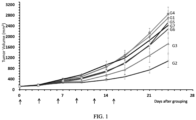
- FIG. 1 shows that anti-OX40 antibody M-KF inhibits the proliferation of tumor cells; the ordinate represents tumor volume.
- polypeptide is intended to encompass both the singular form “polypeptide” and the plural form “polypeptides”, and refers to a molecule consisting of amino acid monomer linearly linked by amide bonds (or peptide bonds).
- polypeptide refers to any single chain or multiple chains of two or more amino acids and does not refer to a particular length of the product.
- peptides, dipeptides, tripeptides, oligopeptides, "proteins", “amino acid chains”, or any other term used to refer to chains of two or more amino acids and the term “polypeptide” may be used in place of, or interchangeably with, any of the above terms.
- polypeptide is also intended to refer to a product of post-expression polypeptide modification, including but not limited to glycosylation, acetylation, phosphorylation, amidation, derivatization by known protecting/blocking groups, proteolytic cleavage or non-naturally occurring amino acid modification.
- the polypeptide may be derived from a natural biological source or produced by recombinant techniques, but it is not necessarily translated from a specified nucleic acid sequence, and it may be produced in any manner, including chemical synthesis.
- amino acid refers to an organic compound containing both an amino group and a carboxyl group, such as an ⁇ -amino acid that can be encoded by a nucleic acid, either directly or in the form of a precursor.
- a single amino acid is encoded by a nucleic acid consisting of three nucleotides (so-called codon or base triplet). Each amino acid is encoded by at least one codon. The same amino acid is encoded by different codons, which is known as "codon degeneracy”.
- Amino acids include natural amino acids and non-natural amino acids.
- Natural amino acids include alanine (three-letter code: Ala, one-letter code: A), arginine (Arg, R), asparagine (Asn, N), aspartic acid (Asp, D), cysteine (Cys, C), glutamine (Gln, Q), glutamic acid (Glu, E), glycine (Gly, G), histidine (His, H), isoleucine (Ile, I), leucine (Leu, L), lysine (Lys, K), methionine (Met, M), phenylalanine (Phe, F), proline (Pro, P), serine (Ser, S), threonine (Thr, T), tryptophan (Trp, W), tyrosine (Tyr, Y), and valine (Val, V).
- Constant amino acid substitution refers to the substitution of one amino acid residue with another amino acid residue having a side chain (R group) of similar chemical nature (e.g., charge or hydrophobicity). Generally, conservative amino acid substitutions do not substantially alter the functional properties of the protein.
- amino acid classes with a side chain of similar chemical nature include: 1) an aliphatic side chain: glycine, alanine, valine, leucine and isoleucine; 2) an aliphatic hydroxyl side chain: serine and threonine; 3) an amide-containing side chain: asparagine and glutamine; 4) an aromatic side chain: phenylalanine, tyrosine and tryptophan; 5) a basic side chain: lysine, arginine and histidine; and 6) an acidic side chain: aspartic acid and glutamic acid.
- a number of amino acids of "conservative amino acid substitutions of VL or VH” may be about 1, about 2, about 3, about 4, about 5, about 6, about 8, about 9, about 10, about 11, about 13, about 14, about 15 conservative amino acid substitutions, or a range between any two of these values (inclusive) or any value therein.
- a number of amino acids of "conservative amino acid substitutions of a heavy chain or a light chain” may be about 1, about 2, about 3, about 4, about 5, about 6, about 8, about 9, about 10, about 11, about 13, about 14, about 15, about 18, about 19, about 22, about 24, about 25, about 29, about 31, about 35, about 38, about 41, about 45 conservative amino acid substitutions, or a range between any two of these values (inclusive) or any value therein.
- encoding refers to a polynucleotide known to "encode” a polypeptide.
- the polypeptide and a fragment thereof can be produced by transcript and/or translation.
- polypeptide or polynucleotide is intended to refer to a polypeptide or polynucleotide that does not occur in nature, and non-limiting examples can be combined to produce a polynucleotide or polypeptide that does not normally occur.
- At least 80% identity refers to about 80% identity, about 81% identity, about 82% identity, about 83% identity, about 85% identity, about 86% identity, about 87% identity, about 88% identity, about 90% identity, about 91% identity, about 92% identity, about 94% identity, about 95% identity, about 98% identity, about 99% identity, or a range between any two of these values (inclusive) or any value therein.
- a polynucleotide or a polynucleotide sequence (or a polypeptide or an antibody sequence) having a certain percentage (e.g., 90%, 95%, 98% or 99%) of "identity or sequence identity" to another sequence refers to that when the sequences are aligned, the percentage of bases (or amino acids) in the sequence are the same.
- This alignment identity percentage or sequence identity can be determined using visual inspection or software programs known in the art, such as the software programs described in Ausubel et al. eds., (2007), Current Protocols in Molecular Biology. Preferably, the alignment is performed using default parameters.
- Biologically equivalent polynucleotides are polynucleotides having the above-specified percentage identity and encoding polypeptides having identical or similar biological activity.
- Antibody or "antigen-binding fragment” refers to a polypeptide or polypeptide complex that specifically recognizes and binds to an antigen.
- the antibody may be an intact antibody and any antigen-binding fragment or single chain thereof.
- the term “antibody” thus includes any protein or peptide comprising at least a portion of an immunoglobulin molecule that has biological activity for binding to an antigen.
- antibody includes a wide variety of polypeptides that can be biochemically distinguished. Those skilled in the art will appreciate that the classes of heavy chains include gamma, mu, alpha, delta, or epsilon ( ⁇ , ⁇ , ⁇ , ⁇ , or ⁇ ), and some subclasses (e.g., ⁇ 1- ⁇ 4). The nature of this chain determines the "type" of the antibody as IgG, IgM, IgA, IgD or IgE. Immunoglobulin subclasses (isotypes), such as IgG1, IgG2, IgG3, IgG4, IgG5, etc., have been well characterized and the functional specificity imparted is also known.
- the immunoglobulin molecule is an IgG species. These four chains are connected in a "Y" configuration through disulfide bonds, wherein the light chain starts at the opening of "Y” configuration and extends through the variable region to surround the heavy chain.
- Antibodies, antigen-binding fragments or derivatives disclosed herein include, but are not limited to, polyclonal, monoclonal, multispecific, fully human, humanized, primatized or chimeric antibodies, single-chain antibodies, epitope-binding fragments (e.g., Fab, Fab' and F(ab') 2 ), and scFv.
- Light chains can be classified into kappa ( ⁇ ) or lambda ( ⁇ ). Each heavy chain may bind to a ⁇ or ⁇ light chain.
- ⁇ kappa
- ⁇ lambda
- the light and heavy chains are bound by covalent bonds, and the "tail" portions of the two heavy chains are bound by covalent disulfide bonds or noncovalent bonds.
- the amino acid sequence extends from the N terminus at the forked end of the Y configuration to the C terminus at the bottom of each chain.
- the immunoglobulin ⁇ light chain variable region is V ⁇ ; the immunoglobulin ⁇ light chain variable region is V ⁇ .
- the light chain variable region (VL) and heavy chain variable region (VH) determine the antigen recognition and specificity.
- the light chain constant region (CL) and the heavy chain constant region (CH) impart important biological properties such as secretion, transplacental movement, Fc receptor binding, complement fixation, etc.
- CL light chain constant region
- CH heavy chain constant region
- the N-terminal portion is the variable region
- the C-terminal portion is the constant region; the CH3 and CL domains actually comprise the carboxyl termini of the heavy chain and light chain, respectively.
- CDRs complementarity determining regions
- CDRs defined according to Kabat and Chothia schemes include overlaps or subsets of amino acid residues when compared to each other. Nevertheless, it is within the scope of the present invention to apply any definition to refer to the CDRs of an antibody or a variant thereof.
- the exact number of residues comprising a specific CDR will vary according to the sequence and size of the CDR. Those skilled in the art can generally determine which specific residues a CDR comprises based on the variable region amino acid sequence of an antibody.
- Kabat et al. also define a numbering system applicable to the variable region sequence of any antibody.
- One of ordinary skills in the art can apply the "Kabat numbering" system to any variable region sequence without depending on other experimental data beyond the sequence itself.
- “Kabat numbering” refers to the numbering system proposed by Kabat et al., U.S. Dept. of Health and Human Services in Sequence of Proteins of Immunological Interest (1983 ). EU or Chothia numbering system can be also applicable to the antibody.
- Treatment refers to both therapeutic treatment and prophylactic or preventative measures, the purpose of which is to prevent, slow down, ameliorate, and halt undesirable physiological changes or disorders, such as the progression of a disease, including, but not limited to, alleviation of symptoms, diminishment of extent of disease, stabilized (i.e., not worsening) state of disease, delay or slowing of disease progression, amelioration or palliation of the disease state, alleviation or elimination (whether partial or total), prolonged survival compared to expected survival without treatment, and the like, as either detectable or undetectable.
- Patients in need of treatment include patients already with a condition or disorder, patients susceptible to a condition or disorder, or patients in need of prevention of the condition or disorder, or patients who may or are expected to benefit from administration of the antibody or the composition disclosed herein for detection, diagnostic procedures, and/or treatment.
- Patient refers to any mammal in need of diagnosis, prognosis or treatment, including humans, dogs, cats, guinea pigs, rabbits, rats, mice, horses, cattle and the like.
- Effective amount refers to the amount of an active compound or medicament that results in a biological or medical response in a tissue, system, animal, individual, or human; the effective amount is sought by researchers, vets, doctors or other clinical doctors.
- the term "in need” means that the patient has been identified as in need of a particular method or treatment. In some embodiments, identification may be made by any diagnostic mode. The patient may be in need of any methods and treatments described herein.
- the DNA encoding the antibody can be designed and synthesized according to the antibody amino acid sequence described herein by conventional methods, inserted into an expression vector, and transfected into a host cell. The transfected host cell is then cultured in a medium to produce the monoclonal antibody.
- the vector expressing the antibody comprises at least one promoter element, an antibody coding sequence, a transcription termination signal and a polyA tail. Other elements include enhancers, Kozak sequences, and donor and recipient sites flanking the inserted sequence for RNA splicing.
- Efficient transcription can be obtained by early and late promoters of SV40, long terminal repeats from retroviruses such as RSV, HTLV1 and HIVI, and early promoters of cytomegalovirus, and promoters from other cells such as actin promoter can also be used.
- Suitable expression vectors may include pIRES1neo, pRetro-Off, pRetro-On, PLXSN, or Plncx, pcDNA3.1 (+/-), pcDNA/Zeo (+/-), pcDNA3.1/Hygro(+/-), PSVL, PMSG, pRSVcat, pSV2dhfr, pBC12MI, pCS2, etc.
- Commonly used mammalian cells include 293 cells, Cos1 cells, Cos7 cells, CV1 cells, murine L cells, CHO cells and the like.
- the DNA sequences of the light and heavy chains were constructed according to the amino acid sequences of the heavy and light chains of the antibody.
- the 5' and 3' terminuses of the DNA sequences were modified with PCR primers designed to add an appropriate leader sequence to each strand, and then the resulting sequences were cloned to the existing recombinant antibody expression vector. It was determined, by sequencing assay, that the recombinant plasmid was correctly constructed.
- the recombinant plasmid was transferred into expression cells for expression, and the supernatant was collected and purified to obtain an antibody protein sample which was used for the following various examples.
- the expression vector used was pCDNA3.1TM(+) (Invitrogen company, the product number is V79020), the expression cells were CHO-BAT-KF cells, and the fucosylation level was 0 through testing; 2) the sequences of the heavy and light chains of the positive control antibody 11D4 were from Patent US8236930B2 , the expression vector used was pCHO1.0 plasmid (purchased from Invitrogen), and the expression cells were CHO-S cells (purchased from Invitrogen).
- amino acid sequences of antibody M-KF are shown in Table 1, the nucleic acid sequences of antibody M-KF are shown in Table 2, and the sequence of the leader peptide (i.e., leader sequence) is shown in the frame in Table 2.
- Table 1 Amino acid sequences of antibody M and antibody M-KF (as divided by Kabat) Name SEQ ID NO Amino acid sequence HCDR1 1 SYGMH HCDR2 2 VIWEDGSNQYYADSVKG HCDR3 3 DNQDTSPDVGIDY LCDR1 4 RASQNISPFLN LCDR2 5 AAVGLQS LCDR3 6 QQYTDYPLT VH 7 VL 8 heavy chain 9 light chain 10 Table 2.
- Nucleic acid sequences of antibody M and antibody M-KF Name SEQ ID NO Nucleic acid sequence heavy chain 11 light chain 12
- the anti-tumor efficacy of antibody M-KF of the present invention was studied in OX40 humanized mouse models (purchased from Biocytogen). MC38 tumor cells were seeded subcutaneously on the right side of OX40 humanized female mice at a concentration of 5 ⁇ 10 5 cells/0.1 mL.
- mice were randomly grouped (6 mice per group) by tumor volume when tumors grew to 119 mm 3 .
- the day of grouping was defined as D0, and the administration was started on D0; the grouping and dosing regimen is shown in Table 3, with the dosing dates of day 0, day 3, day 6, day 9, day 12, and day 15.
- the antibody was administered intraperitoneally at a frequency of Q3D (once every 3 days) at three dose groups of 1 mg/kg, 0.2 mg/kg and 0.04 mg/kg for a total of 6 administration.
- the dosing regimen is shown in Table 3.
- the tumor volume and body weight were measured twice a week throughout the study, and the mice were euthanized when the tumors reached an endpoint or when the mice had more than 20% of body weight loss.
- the tumor volume (mm 3 ) was 0.5 ⁇ (long diameter of tumor ⁇ short diameter of tumor 2 ).
- mice The tumor volume, mouse body weight, tumor weight, etc. of each group of mice were expressed as mean ⁇ standard error (mean ⁇ SEM). Data were analyzed using SPSS. P ⁇ 0.05 means that there was a significant difference.
- Dosing regimen Group N Dose group Dose (mg/kg) Route Frequency Number of actual administration G1 6 hIgG (Sino Biological Inc., product number: HG1K) 1 i.p. Q3D 6 times G2 6 Antibody M-KF 1 i.p. Q3D 6 times G3 6 Antibody M-KF 0.2 i.p. Q3D 6 times G4 6 Antibody M-KF 0.04 i.p. Q3D 6 times G5 6 Antibody 11D4 1 i.p. Q3D 6 times G6 6 Antibody 11D4 0.2 i.p. Q3D 6 times G7 6 Antibody 11D4 0.04 i.p. Q3D 6 times Note: N is the number of animals.
- the whole blood was collected before administration (0 h) and 2 min, 2 h, 6 h, 12 h, 24 h, 48 h, 72 h, 96 h, 120 h, 168 h, 240 h, 336 h, 408 h, 504 h and 672 h after administration, and the sera were separated; the concentration of drug in each sample was analyzed using a validated ELISA method with a lower limit of quantification of 30 ng/mL.
- the cynomolgus monkeys were administered antibody M-KF (0.5 mg/kg, 2.5 mg/kg or 10 mg/kg) by a single intravenous infusion, which was well tolerated without obvious toxic reaction in each dose group, and hence the maximum tolerated dose (MTD) was more than 10 mg/kg.
- OX40 receptor occupancy on T lymphocytes (CD3 + and CD3 + CD4 + ) for each dose group was near saturation on day 2 (RO rate > 80%), and remained in saturation on day 8; on day 29, the (2.5 mg/kg and 10 mg/kg) dose groups maintained receptor occupancy saturation, while the (0.5 mg/kg) dose group decreased to about 20%, which was essentially the same as before administration (day -1).
- the following indicators were evaluated: clinical observation, ophthalmologic examination, body weight, food consumption, body temperature, hematology, blood coagulation, blood plasma biochemistry, immunoglobulin, lymphocyte immunophenotype, urine, macroscopic morphological observation, organ weight, and histopathological examination.
- the cynomolgus monkeys were administered antibody M-KF (1 mg/kg, 5 mg/kg or 30 mg/kg) by intravenous infusion once every week with a total of 5 times continuously, and males and females were well tolerated at each dose, and a decrease in NEUT (the percentage of neutrophile granulocytes), a transient increase of IL-6, and slight histological changes in spleen/liver were seen mainly in each dose group; therefore, the highest non-severely toxic dose (HNSTD) for this experiment was considered to be 30 mg/kg.
- HNSTD non-severely toxic dose
- the serum samples were collected using a validated ECLA assay (electrochemiluminescence immunoassay for immunogenicity): after repeated intravenous infusions of antibody M-KF (1 mg/kg, 5 mg/kg or 30 mg/kg), the individual positive rates were 90.0% (9/10), 80.0% (8/10) and 20.0% (2/10), respectively, and the overall positive rate of the animals after administration was 63.3% (19/30).
- ECLA assay electrochemical assay for immunogenicity
- the study is a phase I clinical trial of multi-center, open and dose escalation.
- the study evaluates the safety, tolerability, pharmacokinetic (PK) characteristics and preliminary clinical efficacy of antibody M-KF injection in patients with advanced malignant solid tumors, explores maximum tolerated dose (MTD) or maximum administered dose (MAD) and provides recommended doses and reasonable dosing schedules for phase II or follow-up clinical.
- MTD maximum tolerated dose
- MAD maximum administered dose
- the dose escalation study explores safe dose ranges based on a "3+3" dose escalation rule.
- Stage 1 the 0.01 mg/kg group, the 0.03 mg/kg group and the 0.1 mg/kg group use accelerated titration method to increase the dose;
- Stage 2 the 0.3 mg/kg group, the 1 mg/kg group, and the 3 mg/kg group are studied in dose escalation according to the standard "3+3" rule.
- the patient was administered the drug by intravenous infusion for one cycle (treatment course) once every 3 weeks, the infusion duration can be ⁇ 60 min. If the patient has infusion-related reactions and is able to continue treatment, a prophylactic administration of diphenhydramine or acetaminophen could be used based on clinical practice. Treatment was continued until appearance of: disease progression, or withdrawal from intolerable toxicity, or receiving new anti-tumor therapy for non-therapeutic benefit, or withdrawal of informed consent for other reasons, or up to 34 cycles (about 2 years), whichever came first. DLT evaluation period: 1 st treatment cycle (from the first administration to 21 days after the administration).
- the tolerance evaluation indicators relate to: dose-limiting toxicity (DLT) events and their incidence; the safety evaluation indicators relate to: vital signs, physical examination, laboratory examination (routine blood test, blood biochemistry, and thyroid function, coagulation, urinalysis, stool routine, and pregnancy test), electrocardiogram, adverse events (including immune-related adverse events), and the like.
- DLT dose-limiting toxicity
- Subjects in all dose groups were required for blood sample collection at specific time points during treatment (first 4 treatment cycles), 2 mL of blood samples were scheduled to be collected at each time point, and the concentration level of the drug in the serum was detected, and the pharmacokinetic (PK) characteristics were studied.
- PK pharmacokinetic
- PK-related parameters were as follows: parameters include C max , T max , T 1/2 , CL, Vd, Ke, MRT, AUC (0- ⁇ ) and AUC (0- ⁇ ) at a single administration; the parameters include C max,ss , C avg,ss , C min,ss , AUC (0- ⁇ ),ss , AUC (0- ⁇ ),ss , T max,ss , T 1/2,ss , CL, Vss, Ke, MRT, accumulation index (Rac), and fluctuation index (DF) at multiple administration.
- ORR objective response rate
- DOR Duration of response
- PFS progression-free survival
- Dose-limiting toxicity is an adverse event (AE) that occurs during the DLT observation period and is considered to be at least likely related to study drug, specifically as follows:
Landscapes
- Health & Medical Sciences (AREA)
- Chemical & Material Sciences (AREA)
- Organic Chemistry (AREA)
- General Health & Medical Sciences (AREA)
- Life Sciences & Earth Sciences (AREA)
- Medicinal Chemistry (AREA)
- Immunology (AREA)
- Veterinary Medicine (AREA)
- Nuclear Medicine, Radiotherapy & Molecular Imaging (AREA)
- Public Health (AREA)
- Animal Behavior & Ethology (AREA)
- Pharmacology & Pharmacy (AREA)
- Chemical Kinetics & Catalysis (AREA)
- General Chemical & Material Sciences (AREA)
- Biophysics (AREA)
- Proteomics, Peptides & Aminoacids (AREA)
- Molecular Biology (AREA)
- Genetics & Genomics (AREA)
- Biochemistry (AREA)
- Hematology (AREA)
- Oncology (AREA)
- Medicines Containing Antibodies Or Antigens For Use As Internal Diagnostic Agents (AREA)
Applications Claiming Priority (2)
| Application Number | Priority Date | Filing Date | Title |
|---|---|---|---|
| CN202011301761.2A CN114515335A (zh) | 2020-11-19 | 2020-11-19 | 抗ox40抗体在治疗肿瘤或癌症中的应用 |
| PCT/CN2021/131542 WO2022105839A1 (fr) | 2020-11-19 | 2021-11-18 | Utilisation d'anticorps anti-ox40 pour le traitement de tumeurs ou de cancers |
Publications (2)
| Publication Number | Publication Date |
|---|---|
| EP4248995A1 true EP4248995A1 (fr) | 2023-09-27 |
| EP4248995A4 EP4248995A4 (fr) | 2024-12-11 |
Family
ID=81594769
Family Applications (1)
| Application Number | Title | Priority Date | Filing Date |
|---|---|---|---|
| EP21893986.6A Pending EP4248995A4 (fr) | 2020-11-19 | 2021-11-18 | Utilisation d'anticorps anti-ox40 pour le traitement de tumeurs ou de cancers |
Country Status (4)
| Country | Link |
|---|---|
| US (1) | US20230416386A1 (fr) |
| EP (1) | EP4248995A4 (fr) |
| CN (2) | CN114515335A (fr) |
| WO (1) | WO2022105839A1 (fr) |
Families Citing this family (2)
| Publication number | Priority date | Publication date | Assignee | Title |
|---|---|---|---|---|
| CN113429483A (zh) * | 2020-03-23 | 2021-09-24 | 百奥泰生物制药股份有限公司 | 一种免疫细胞激活剂的开发及应用 |
| WO2024193516A1 (fr) * | 2023-03-17 | 2024-09-26 | 百奥泰生物制药股份有限公司 | Utilisation d'anticorps anti-ox40 dans le traitement d'inflammations ou de maladies immunitaires |
Family Cites Families (8)
| Publication number | Priority date | Publication date | Assignee | Title |
|---|---|---|---|---|
| TWI461436B (zh) * | 2005-11-25 | 2014-11-21 | Kyowa Hakko Kirin Co Ltd | 人類cd134(ox40)之人類單株抗體及其製造及使用方法 |
| PT2594590E (pt) | 2007-12-14 | 2015-01-14 | Bristol Myers Squibb Co | Moléculas de ligação ao recetor humano ox40 |
| SG11201607969XA (en) * | 2014-03-31 | 2016-10-28 | Genentech Inc | Anti-ox40 antibodies and methods of use |
| ES2774381T3 (es) * | 2014-04-03 | 2020-07-20 | Univ Res Inst Inc Augusta | Métodos para mejorar la eficacia de la respuesta inmune dirigida a tumores |
| CA2955184A1 (fr) * | 2016-01-25 | 2017-07-25 | Pfizer Inc. | Combinaison d'un agoniste ox40 et d'un agoniste 4-1bb destinee au traitement du cancer |
| BR112019012328A2 (pt) * | 2016-12-15 | 2019-11-19 | Abbvie Biotherapeutics Inc | anticorpos anti-ox40 e seus usos |
| TW202035455A (zh) * | 2018-09-26 | 2020-10-01 | 大陸商江蘇恆瑞醫藥股份有限公司 | 抗ox40抗體、其抗原結合片段及其醫藥用途 |
| CN113429483A (zh) * | 2020-03-23 | 2021-09-24 | 百奥泰生物制药股份有限公司 | 一种免疫细胞激活剂的开发及应用 |
-
2020
- 2020-11-19 CN CN202011301761.2A patent/CN114515335A/zh active Pending
-
2021
- 2021-11-18 US US18/037,401 patent/US20230416386A1/en active Pending
- 2021-11-18 EP EP21893986.6A patent/EP4248995A4/fr active Pending
- 2021-11-18 WO PCT/CN2021/131542 patent/WO2022105839A1/fr not_active Ceased
- 2021-11-18 CN CN202180073819.9A patent/CN116507365A/zh active Pending
Also Published As
| Publication number | Publication date |
|---|---|
| WO2022105839A1 (fr) | 2022-05-27 |
| CN114515335A (zh) | 2022-05-20 |
| EP4248995A4 (fr) | 2024-12-11 |
| US20230416386A1 (en) | 2023-12-28 |
| CN116507365A (zh) | 2023-07-28 |
Similar Documents
| Publication | Publication Date | Title |
|---|---|---|
| US11274160B2 (en) | Antibodies having specificity to Nectin-4 and uses thereof | |
| KR102089072B1 (ko) | 항-인간 4-1bb 항체 및 그의 용도 | |
| CN110662552A (zh) | 包含tigit结合剂的癌症治疗方法 | |
| EP4209512A1 (fr) | Développement d'un agent thérapeutique contenant un adaptateur et son utilisation | |
| WO2022184067A1 (fr) | Application d'anticorps anti-tigit dans une combinaison de médicaments | |
| EP2760470A1 (fr) | Anticorps anti-icam-1 destinés au traitement de troubles liés à un myélome multiple | |
| EP4082572A1 (fr) | Anticorps monoclonal anti-ctla-4, son procédé de préparation et son application | |
| EP4382540A1 (fr) | Utilisation d'un anticorps bispécifique anti-pd-l1/cd47 dans le traitement de maladies | |
| EP4159764A1 (fr) | Anticorps bispécifique anti-pdl1 × egfr | |
| EP4248995A1 (fr) | Utilisation d'anticorps anti-ox40 pour le traitement de tumeurs ou de cancers | |
| TWI883241B (zh) | 抗pd-l1抗體及其應用 | |
| US12577324B2 (en) | Antibodies having specificity to HER4 and uses thereof | |
| CN116059377A (zh) | 抗ox40抗体在联合用药中的应用 | |
| CN118812720A (zh) | 靶向pdl1和cd3的双特异性抗体及其应用 | |
| WO2022242757A1 (fr) | Application d'anticorps anti-pd-1 | |
| CN118320076A (zh) | 使用抗ox40抗体与抗tim3抗体的组合治疗癌症的方法 | |
| EP4226942A1 (fr) | Utilisation d'anticorps anti-pd-1 dans une médication combinée | |
| EP4299591A1 (fr) | Préparation de protéine de liaison de siglec-15 et son utilisation | |
| WO2022184068A1 (fr) | Application d'anticorps anti-tigit dans le traitement de tumeurs ou de cancers | |
| CN117618555A (zh) | 抗tigit抗体和抗ctla-4抗体联合用于治疗肿瘤中的应用 | |
| WO2023193794A1 (fr) | Application d'anticorps anti-vista dans un médicament combiné | |
| HK40096744A (en) | Development of drug therapeutic agent containing adaptor and use thereof |
Legal Events
| Date | Code | Title | Description |
|---|---|---|---|
| STAA | Information on the status of an ep patent application or granted ep patent |
Free format text: STATUS: THE INTERNATIONAL PUBLICATION HAS BEEN MADE |
|
| PUAI | Public reference made under article 153(3) epc to a published international application that has entered the european phase |
Free format text: ORIGINAL CODE: 0009012 |
|
| STAA | Information on the status of an ep patent application or granted ep patent |
Free format text: STATUS: REQUEST FOR EXAMINATION WAS MADE |
|
| 17P | Request for examination filed |
Effective date: 20230517 |
|
| AK | Designated contracting states |
Kind code of ref document: A1 Designated state(s): AL AT BE BG CH CY CZ DE DK EE ES FI FR GB GR HR HU IE IS IT LI LT LU LV MC MK MT NL NO PL PT RO RS SE SI SK SM TR |
|
| DAV | Request for validation of the european patent (deleted) | ||
| DAX | Request for extension of the european patent (deleted) | ||
| A4 | Supplementary search report drawn up and despatched |
Effective date: 20241108 |
|
| RIC1 | Information provided on ipc code assigned before grant |
Ipc: A61P 35/00 20060101ALI20241104BHEP Ipc: A61K 39/395 20060101AFI20241104BHEP |