EP4250108A1 - Systeme und verfahren zur wärmeverwaltung von computersystemen - Google Patents
Systeme und verfahren zur wärmeverwaltung von computersystemen Download PDFInfo
- Publication number
- EP4250108A1 EP4250108A1 EP23150440.8A EP23150440A EP4250108A1 EP 4250108 A1 EP4250108 A1 EP 4250108A1 EP 23150440 A EP23150440 A EP 23150440A EP 4250108 A1 EP4250108 A1 EP 4250108A1
- Authority
- EP
- European Patent Office
- Prior art keywords
- computing system
- memory
- computing
- workloads
- operational parameters
- Prior art date
- Legal status (The legal status is an assumption and is not a legal conclusion. Google has not performed a legal analysis and makes no representation as to the accuracy of the status listed.)
- Pending
Links
Images


Classifications
-
- G—PHYSICS
- G06—COMPUTING OR CALCULATING; COUNTING
- G06F—ELECTRIC DIGITAL DATA PROCESSING
- G06F9/00—Arrangements for program control, e.g. control units
- G06F9/06—Arrangements for program control, e.g. control units using stored programs, i.e. using an internal store of processing equipment to receive or retain programs
- G06F9/46—Multiprogramming arrangements
- G06F9/50—Allocation of resources, e.g. of the central processing unit [CPU]
- G06F9/5094—Allocation of resources, e.g. of the central processing unit [CPU] where the allocation takes into account power or heat criteria
-
- G—PHYSICS
- G06—COMPUTING OR CALCULATING; COUNTING
- G06F—ELECTRIC DIGITAL DATA PROCESSING
- G06F9/00—Arrangements for program control, e.g. control units
- G06F9/06—Arrangements for program control, e.g. control units using stored programs, i.e. using an internal store of processing equipment to receive or retain programs
- G06F9/46—Multiprogramming arrangements
- G06F9/48—Program initiating; Program switching, e.g. by interrupt
- G06F9/4806—Task transfer initiation or dispatching
- G06F9/4843—Task transfer initiation or dispatching by program, e.g. task dispatcher, supervisor, operating system
- G06F9/4881—Scheduling strategies for dispatcher, e.g. round robin, multi-level priority queues
- G06F9/4893—Scheduling strategies for dispatcher, e.g. round robin, multi-level priority queues taking into account power or heat criteria
-
- G—PHYSICS
- G06—COMPUTING OR CALCULATING; COUNTING
- G06F—ELECTRIC DIGITAL DATA PROCESSING
- G06F9/00—Arrangements for program control, e.g. control units
- G06F9/06—Arrangements for program control, e.g. control units using stored programs, i.e. using an internal store of processing equipment to receive or retain programs
- G06F9/46—Multiprogramming arrangements
- G06F9/50—Allocation of resources, e.g. of the central processing unit [CPU]
- G06F9/5005—Allocation of resources, e.g. of the central processing unit [CPU] to service a request
- G06F9/5011—Allocation of resources, e.g. of the central processing unit [CPU] to service a request the resources being hardware resources other than CPUs, Servers and Terminals
- G06F9/5016—Allocation of resources, e.g. of the central processing unit [CPU] to service a request the resources being hardware resources other than CPUs, Servers and Terminals the resource being the memory
-
- G—PHYSICS
- G06—COMPUTING OR CALCULATING; COUNTING
- G06F—ELECTRIC DIGITAL DATA PROCESSING
- G06F1/00—Details not covered by groups G06F3/00 - G06F13/00 and G06F21/00
- G06F1/16—Constructional details or arrangements
- G06F1/20—Cooling means
- G06F1/206—Cooling means comprising thermal management
Definitions
- the project leading to this application has received funding from the Clean Sky 2 Joint Undertaking (JU) under grant agreement No 945535.
- the JU receives support from the European Union's Horizon 2020 research and innovation programme and the Clean Sky 2 JU members other than the Union.
- the project leading to this application has received funding from the SESAR Joint Undertaking (JU) under grant agreement No 101017643.
- the JU receives support from the European Union's Horizon 2020 research and innovation programme and the SESAR JU members other than the Union.
- New safety-critical computing systems for aerospace are expected to host artificial intelligence (AI) or machine learning (ML) applications.
- AI artificial intelligence
- ML machine learning
- One of the most computationally intensive parts of an AI or ML application is the deep neural network (DNN) that is typically accelerated on a specialized inference engine (for example, a graphics processing unit (GPU).
- DNN inference operations involve a high number of matrix operations where the computing units of a GPU are heavily utilized for computation and involve high memory throughput to load/store the input data (for example, images or video) and the DNN weights.
- modern graphics applications on aircraft perform decoding, encoding, mixing, and rendering of high-resolution video streams, which also requires a lot of computing and memory throughput.
- the thermal envelope is a product of multiple parameters among which are the ambient temperature, the airflow parameters (for example, air volume per second), and the energy consumption (power consumption over time) of the electronics (for example, processor(s), memory, interfaces, etc.).
- the types of applications discussed above are most likely to consume large amounts of power and lead to stretching the thermal envelope and profile of the safety-critical computing systems.
- One approach used to reduce the thermal profile of computing systems includes permanently setting the CPU/GPU operational voltage and frequency to a fraction of the maximum such that the CPU/GPU is not capable of exceeding its thermal profile. While this approach is straightforward, it substantially impacts the compute and render performance capabilities of the CPU/GPU due to the settings being very conservative to account for a worst-case scenario.
- Another approach used to reduce the thermal profile of computing systems includes dynamically scaling the voltage and frequency of the CPU/GPU depending on the requirements of the system. For most of the time, the CPU/GPU runs at lower voltage and frequency to reduce power consumption, but the operational clock and voltage are increased for processing when needed and then scaled down again upon completion to preserve the thermal envelope. While this approach is less detrimental to the compute and render performance capabilities of the CPU/GPU, there are several disadvantages to this approach. For example, many components will not have this capability or have very limited amounts of supported operational frequencies and voltages. This approach is also not preferred for safety-critical applications because the transition period (downtime) required for switching the voltage and frequency is too high (for example, 100s of clock cycles) and it can be difficult to prove consistent operation of the components when these transitions are included.
- a computing system comprises computing resources and memory, wherein the computing resources are configured to perform computation and/or graphical processing.
- the computing system is configured to guarantee a thermal envelope of the computing system based on one or more operational parameters by: implementing a thermal-aware scheduling policy that utilizes an amount of computing resources and timing windows of the computing system based on the one or more operational parameters; adjusting an amount of available memory bandwidth to the computing resources of the computing system based on the one or more operational parameters; adjusting an amount of memory utilization of one or more applications executed by the computing resources of the computing system based on the one or more operational parameters; and/or allocating cache to workloads based on memory demands of the workloads, wherein more cache is allocated to workloads with high memory demands compared to workloads with low memory demands.
- the computing system is configured to schedule workloads for the computing resources based on the thermal-aware scheduling policy, the available memory bandwidth, the amount of memory utilization, and/or the cache allocation.
- the example systems and methods described herein guarantee a thermal envelope of a computing system while preserving the compute and render performance capabilities of the computing system.
- the example systems and methods include implementing a thermal-aware scheduling policy, adjusting an amount of available memory bandwidth to computing resources and/or adjusting an amount of memory utilization by one or more applications executed by the computing resources (memory throttling), and/or allocating cache to workloads based on memory demands (cache allocation).
- memory throttling adjusting an amount of available memory bandwidth to computing resources and/or adjusting an amount of memory utilization by one or more applications executed by the computing resources
- cache allocation allocating cache to workloads based on memory demands
- FIG. 1 illustrates a block diagram of an example system 100 that includes a computing system 101.
- the computing system 101 includes one or more computing resources 102, at least one memory 104, and one or more drivers 106.
- the computing system 101 is configured to perform computation and/or graphical processing.
- the system 100 that includes the computing system 101 is a vehicle (for example, an aircraft, sea craft, spacecraft, automobile, or other types of vehicles). It should be understood that the computing system 101 could be implemented in other types of systems as well.
- the computing system 101 is a safety-critical computing system.
- a safety-critical computing system has two types of workloads for the coprocessor 112-high-priority workloads and low-priority workloads.
- the computing system 101 shall deliver a timing guarantee for performance of the workload, whereas low-priority workloads are best-effort and executed whenever the computing resources 102 and memory 104 in the computing system 101 are available.
- the thermal envelope requirements for the computing system cannot be violated.
- a high-priority workload is associated with a high Design Assurance Level (DAL) (for example, DAL A-C) and a low-priority workload is associated with low DAL (for example, DAL D-E).
- DAL Design Assurance Level
- DAL D-E DAL D-E
- the computing resources 102 of the computing system 101 include one or more processors 110.
- the one or more processors 110 include one or more central processing units (CPUs).
- the one or more CPUs could be single-core CPUs or multi-core CPUs depending on design and processing requirements.
- the computing resources 102 of the computing system 101 also include one or more coprocessors 112.
- the one or more coprocessors 112 can be used, for example, for graphical processing or as hardware accelerators to provide additional computational resources to the one or more processors 110.
- the one or more coprocessors 112 include one or more graphics processing units (GPUs).
- at least one of the processors 110 is communicatively coupled to at least one of the coprocessors 112.
- the coprocessors 112 can perform decoding, encoding, mixing, and/or rendering of high-resolution video streams or other data.
- the coprocessors 112 can be configured to perform matrix operations or the like.
- the computing resources 102 can be implemented using different combinations of components than those discussed above.
- the computing resources 102 can include one or more single/multi-core digital signal processors, one or more specialized custom processing units (vision processing unit, application-specific integrated circuit, specialized co-processors), and/or one or more field-programmable gate arrays.
- the different components can be included in addition to, or instead of, the processors 110 and/or coprocessors 112 discussed above.
- the computing resources 102 of the computing system 101 can be implemented as discrete or integrated components.
- each of the processors 110 and coprocessors 112 are implemented as discrete components.
- each of the processors 110 and coprocessors 112 can be implemented using separate cards (for example, the processor can be implemented using a CPU card and the coprocessor can be implemented using a GPU card) or separate boxes.
- at least some of the processors 110 and/or coprocessors 112 are integrated onto a single chip, a single card, or in a single box. It should be understood that the computing resources 102 can be implemented in other ways as well.
- the computing resources 102 of the computing system 101 share memory resources (for example, cache 114 and main memory 116).
- the computing resources 102 are configured to directly write/read data to/from the memory 104.
- each of the computing resources 102 is communicatively coupled to the memory 104 and configured to read/write data to/from the memory 104.
- at least some of the computing resources 102 are communicatively coupled to at least one cache 114 (for example, level 1 (L1) cache).
- the cache 114 contains memory and computing logic, and the cache 114 is coupled to main memory 116.
- the main memory 116 can also be coupled to secondary storage (not shown).
- the cache 114 in the computing system is generally a smaller, faster memory than main memory 116.
- the main memory 116 includes data and/or instructions for executing one or more applications 118 on the computing resources 102.
- the amount of cache 114 and main memory 116 is fixed for the computing system 101.
- the configuration shown in FIG. 1 and other arrangements and processes described herein are set forth for purposes of example only, and other arrangements and elements (e.g., machines, interfaces, functions, orders of elements, etc.) can be added or used instead.
- the computing system 101 may consist of multiple independent busses so that each computing resource 102 can access the memory 104 and other components without contending for a bus with the other computing resources 102.
- the computing system 101 may include more than one memory 104, which may be either within a chip or part of another chip in the computing system 101.
- a system may contain multiple independent main memories and secondary storages, not shown in FIG. 1 .
- Each unit of memory 104 in the computing system 101 may comprise semiconductor memory, magnetic memory, optical memory, acoustic memory, biological memory, or any combination of these memory technologies, or any other memory technology used in conjunction with computational devices.
- the computing system 101 further includes one or more drivers 106 that are communicatively coupled to the computing resources 102 and the memory 104.
- the one or more drivers 106 are separate components from the computing resources 102 and the memory 104.
- each driver 106 can be integrated into a respective computing resource 102 and manage operation of that particular computing resource 102.
- each processor and coprocessor in the computing resources 102 can include a respective driver 106 configured to control operation of the respective processor 110 or coprocessor 112.
- the one or more drivers of the computing system 101 are configured to control operation of the computing resources 102 in order to guarantee the thermal envelope of the computing system 101.
- the one or more drivers (for example, one or more software modules on the one or more drivers) are configured to execute thermal management instructions 108 to control operation of the computing resources 102 in order to guarantee the thermal envelope of the computing system 101.
- one or more additional or alternative components of the computing system 101 are configured to control operation of the computing resources 102 in order to guarantee the thermal envelope of the computing system 101.
- at least some of the thermal management instructions 108 could be implemented using a kernel or workload for one or more of the computing resources 102.
- the thermal management instructions 108 implement a thermal-aware scheduling policy, adjust an amount of available memory bandwidth to computing resources 102 and/or adjust an amount of memory utilization by one or more applications 118 executed by the computing resources 102 (memory throttling), and/or allocate cache 114 to workloads based on memory demands (cache allocation).
- the thermal-aware scheduling policy underutilizes the computing resources 102 for computation and/or rendering to comply with the thermal envelope requirements.
- the thermal-aware scheduling policy restricts the number of computing resources 102 available for workloads over periods of time. For example, the thermal-aware scheduling policy may reduce the number of computing resources 102 available for workloads such that the thermal profile of the computing system 101 stays within the thermal envelope.
- the thermal-aware scheduling policy limits what applications can run during particular periods of time (for example, timing windows). For example, the thermal-aware scheduling policy may restrict the computing system 101 to execute only safety-critical applications (and possibly some best-effort applications) such that the thermal profile of the computing system 101 stays within the thermal envelope.
- the thermal-aware scheduling policy intentionally keeps computing resources 102 idle during particular time periods to reduce the thermal profile of the computing system 101.
- the thermal-aware scheduling policy utilizes applications depending on the relevance of the applications to the situation. For example, during takeoff and cruising of an aircraft, applications related to landing would not be executed since those applications are not needed during those phases of flight.
- any of the techniques for the thermal-aware scheduling policy described herein can be combined with one or more of the other techniques for the thermal-aware scheduling policy.
- the techniques used for the thermal-aware scheduling policy reduce the thermal profile by limiting the memory transactions, which results in less bandwidth on the memory busses and less power consumption.
- the memory throttling techniques limit the number of memory transactions for the computing resources 102 and/or adjust an amount of memory utilization by one or more applications 118 executed by the computing resources 102 to comply with the thermal envelope requirements.
- the memory throttling techniques are implemented using a hardware mechanism (for example, a hardware part that is able to limit or shape the memory traffic on particular memory busses).
- the memory throttling includes setting an upper limit for available memory bandwidth for a particular computing resource 102 such that the number of memory transactions for that computing resource 102 is limited individually.
- the memory throttling includes setting an upper limit for available memory bandwidth for all computing resources 102 such that the total number of memory transactions for all of the computing resource 102 is limited in the aggregate.
- the available memory bandwidth can be utilized on a prioritized basis (for example, more memory bandwidth allocated to safety-critical applications compared to best-effort applications).
- the memory throttling techniques are implemented using a software mechanism where one or more applications 118 include a workload that implements a policy to guarantee that the workload (or the application that includes the workload) does not cause the computing resources 102 and computing system 101 generally to violate the thermal envelope.
- Each of these "smart workloads" is aware of the one or more operational parameters and modifies itself based on the one or more operational parameters.
- a smart workload adjusts a number of memory transactions for the workload based on the one or more operational parameters. For example, if the smart workload includes an if statement, the smart workload can be configured to periodically insert empty cycles for the if statement based on the one or more operational parameters in order to reduce the amount of memory transactions over a given period of time to reduce the thermal profile.
- the smart workloads can be aware of hardware limitations of a memory bus, the upper limit information for memory throttling as discussed above, and/or a particular policy for memory traffic shaping on the memory bus.
- the smart workloads can be configured to modify their operation to ensure that the memory utilization for the workload stays below the upper limits of the hardware and/or complies with the memory traffic shaping policy.
- the memory throttling that involves including upper limits for hardware may not be necessary if all of the applications include the smart workload functionality.
- any of the techniques for the memory throttling described herein can be combined with one or more of the other techniques for the memory throttling.
- the techniques used for memory throttling reduce the thermal profile by limiting the memory transactions, which results in less bandwidth on the memory busses and less power consumption.
- the cache allocation techniques allocate cache 114 to workloads based on the memory demands of the workloads. As discussed above, the amount of cache 114 is fixed. Portions of the cache are allocated to the applications (workloads) for use during operation. In some examples, the workloads with higher memory demands are allocated more cache 114 than workloads with lower memory demands. In some examples, the workloads associated with safety-critical applications, which will likely operate for longer periods of time, are allocated more cache 114 than workloads with lower memory demands. The more cache 114 is allocated to a particular workload, the faster the workload will run since this will limit the number of main memory transactions necessary to execute the workload. In some examples, the techniques used for the cache allocation reduce the thermal profile by limiting the memory transactions, which results in less bandwidth on the memory busses and less power consumption.
- the thermal profile can also be reduced for graphical processing by lower the resolution of particular areas on a display, lower the complexity of non-essential components of the rendered scene, lowering the refresh frequency on selected windows on the display, and/or terminating the rendering of non-essential windows on the display.
- thermal-aware scheduling policy any of the thermal-aware scheduling policy, memory throttling, and cache allocation individually, or combinations thereof, can be utilized to guarantee the thermal envelope of the computing system 101.
- the thermal management instructions 108 are configured based on the one or more operational parameters. In some examples, the thermal management instructions 108 are selected prior to operation based on known conditions associated with one or more operational parameters and applied statically (as described with respect to FIG. 2 ). In other examples, at least a portion of the thermal management instructions 108 depend on the one or more operational parameters such that the operation of the computing system 101 changes based on the one or more operational parameters. In some such examples, the thermal management instructions 108 include different profiles for the computing system 101 that are selected depending on the one or more operational parameters (as described with respect to FIG. 3 ). In other such examples, the thermal management instructions 108 (for example, workload(s) running on one or more computing resources 102) include a feedback loop that can determine and configure computing resources 102 based on the one or more operational parameters (as described with respect to FIG. 4 ).
- the operational parameters can be related to the operation of the computing system 101 itself, the environment surrounding the computing system 101, and/or the operation of one or more other systems that contain the computing system 101.
- Some examples of operational parameters related to the operation of the computing system 101 itself include on-board (for example, processor or memory) temperature of the computing system 101, energy consumption of the computing system 101, on-board battery status or battery health of the computing system 101, and/or power consumption of the computing system 101.
- Some examples of operational parameters related to the environment surrounding the computing system 101 include ambient air temperature around the computing system 101 and/or air flow around the computing system 101.
- operational parameters related to the operation of one or more other systems that contain the computing system 101 include a stage of flight of an aircraft that includes the computing system 101, altitude of the vehicle that includes the computing system 101, Weight on Wheels logic, velocity, pilot health status, and/or emergency state of a vehicle that includes the computing system 101. It should be understood that the above list of operational parameters is not intended to be exhaustive and that other operational parameters in addition to, or instead of, those described above could be used depending on the particular details of the computing system 101.
- the computing system 101 includes one or more interface devices 120 that are configured to receive one or more operational parameters from at least one external device 122 that is separate from the computing system 101.
- the external device(s) 122 could be a sensor or other component of the system 100 configured to process sensor data to provide the one or more operational parameters to the computing system 101.
- the computing system 101 can include one or more sensors or process data to generate the one or more operational parameters.
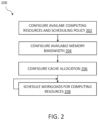
- FIG. 2 illustrates a flow diagram of an example method 200 for statically guaranteeing a thermal envelope of a computing system based on one or more operational parameters.
- the common features discussed above with respect to computing system 101 with respect to FIG. 1 can include similar characteristics to those discussed with respect to method 200 and vice versa.
- the method 200 is performed using one or more components of the computing system 101.
- the method 200 includes configuring the available computing resources and the scheduling policy for the computing resources (block 202).
- configuring the available computing resources and the scheduling policy includes selecting a particular number or percentage of computing resources to be utilized in order to guarantee that the thermal envelope of the computing system.
- configuring the available computing resources and the scheduling policy includes selecting timing windows and particular applications that can operate during the timing windows. In general, any of the techniques described above for the thermal-aware scheduling policy can be used at block 202.
- the method 200 further includes configuring the available memory bandwidth (block 204).
- configuring the available memory bandwidth includes setting an upper limit for available memory bandwidth for a particular computing resource such that the number of memory transactions for that computing resource is limited individually.
- configuring the available memory bandwidth includes setting an upper limit for available memory bandwidth for all computing resources such that the total number of memory transactions for all of the computing resource is limited in the aggregate. In general, any of the techniques described above for memory throttling can be used at block 204.
- the method 200 further includes configuring the cache allocation for the computing resources (block 206).
- the amount of cache for the computing system is fixed, and portions of the cache are allocated to the applications (workloads) for use during operation.
- configuring the cache allocation for computing resources includes allocating cache to workloads based on the memory demands of the workloads. In some examples, the workloads with higher memory demands are allocated more cache than workloads with lower memory demands. In general, any of the techniques described above for cache allocation can be used at block 206.
- the method 200 further includes scheduling workloads for the computing resources based on the configuration(s) (block 208).
- the workloads are scheduled for the computing resources based on the thermal-aware scheduling policy (using only the available computing resources and timing windows), the available memory bandwidth for the computing resources (using the limited amount), and/or the cache allocated to the computing resources.
- the method 200 repeats block 208 while the computing system is in operation.
- example method 200 shown in FIG. 2 includes using all of the techniques in blocks 202, 204, 206, it should be understood that one of these blocks, or different combinations of two or more of these blocks, can be used for thermal management of the computing system. Further, while the example method 200 shown in FIG. 2 shows a particular order of operations, it should be understood that the blocks 202, 204, 206 can be executed in a different order or in parallel.
- FIG. 3 illustrates a flow diagram of an example method 300 for dynamically guaranteeing a thermal envelope of a computing system based on one or more operational parameters.
- the common features discussed above with respect to computing system 101 with respect to FIG. 1 can include similar characteristics to those discussed with respect to method 300 and vice versa.
- the method 300 is performed using one or more components of the computing system 101.
- the method 300 includes configuring the cache allocation for the computing resources (block 302).
- the amount of cache for the computing system is fixed, and portions of the cache are allocated to the applications (workloads) for use during operation.
- configuring the cache allocation for computing resources includes allocating cache to workloads based on the memory demands of the workloads. In some examples, the workloads with higher memory demands are allocated more cache than workloads with lower memory demands. In general, any of the techniques described above for cache allocation can be used at block 302.
- the method 300 further includes determining one or more operational parameters (block 304).
- determining one or more operational parameters includes receiving data from one or more external devices (for example, sensors) that are separate from the computing system.
- determining one or more operational parameters includes processing data from the one or more external devices to determine the one or more operational parameters.
- the computing system can determine velocity of the system that includes the computing system by processing images or location data from different times. In general, any of the operational parameters described above can be determined at block 304.
- the method 300 further includes determining and configuring the available computing resources and the scheduling policy for the computing resources (block 306).
- determining and configuring the available computing resources and the scheduling policy includes determining a particular number or percentage of computing resources to be utilized in order to guarantee that the thermal envelope of the computing system based on the one or more operational parameters.
- determining and configuring the available computing resources and the scheduling policy includes reducing the number or percentage of computing resources to be utilized and/or reducing the timing windows available for workloads when the one or more operational parameters indicate that the thermal profile of the computing system is above a threshold.
- determining and configuring the available computing resources and the scheduling policy includes increasing the number or percentage of computing resources to be utilized and/or increasing the timing windows available for workloads when the one or more operational parameters indicate that the thermal profile of the computing system is below a threshold.
- any of the techniques described above for the thermal-aware scheduling policy can be used at block 306.
- the method 300 further includes determining and configuring the available memory bandwidth (block 308).
- determining and configuring the available memory bandwidth includes determining an upper limit for available memory bandwidth for computing resources that can guarantee the thermal envelope of the computing system.
- determining and configuring the available memory bandwidth includes reducing the available memory bandwidth for computing resources when the one or more operational parameters indicate that the thermal profile of the computing system is above a threshold.
- determining and configuring the available memory bandwidth includes increasing the available memory bandwidth for computing resources when the one or more operational parameters indicate that the thermal profile of the computing system is below a threshold.
- any of the techniques described above for memory throttling can be used at block 308.
- the method 300 further includes scheduling workloads for the computing resources based on the configuration(s) (block 310).
- the workloads are scheduled for the computing resources based on the thermal-aware scheduling policy (using only the available computing resources and timing windows), the available memory bandwidth for the computing resources (using the limited amount), and/or the cache allocated to the computing resources.
- the method 300 reverts back to block 304 in order to accommodate changes in the operational parameters that can affect the thermal profile of the computing system.
- the method 300 reverts back to block 304 after a specified period of time (for example, five minutes).
- the blocks 304-310 are repeated while the computing system is in operation.
- example method 300 shown in FIG. 3 includes using all of the techniques in blocks 302, 306, 308, it should be understood that one of these blocks, or different combinations of two or more of these blocks, can be used for thermal management of the computing system. Further, while the example method 300 shown in FIG. 3 illustrates a particular order of operations, it should be understood that the blocks 306 and 308 can be executed in a different order or in parallel. Furthermore, while the example method 300 shown in FIG. 3 illustrates a static cache allocation, it should be understood that the cache allocation could also be varied based on the one or more operational parameters in a manner similar to the other techniques.
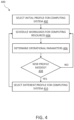
- FIG. 4 illustrates a flow diagram of an example method 400 for hybrid approach of guaranteeing a thermal envelope of a computing system based on one or more operational parameters.
- the common features discussed above with respect to computing system 101 with respect to FIG. 1 can include similar characteristics to those discussed with respect to method 400 and vice versa.
- the method 400 is performed using one or more components of the computing system 101.
- the method 400 includes selecting an initial profile for the computing system (block 402).
- a number of profiles are determined prior to operation based on real-world data or simulation data.
- Each of the profiles includes a particular thermal-aware scheduling policy, memory throttling, and/or cache allocation that are applicable to the conditions experienced for particular operational parameters.
- each of the profiles includes a different level of power reduction for the computing system compared to the other profiles.
- one profile applicable during a first stage of flight (for example, takeoff) can include greater reduction of the thermal profile of the computing system compared to the profile applicable during a second stage of flight (for example, cruise) where the operational parameters are more likely to allow greater power consumption and performance by the computing system.
- the method 400 further includes scheduling workloads for the computing resources based on the configuration(s) (block 404).
- the workloads are scheduled for the computing resources based on the thermal-aware scheduling policy (using only the available computing resources and timing windows), the available memory bandwidth for the computing resources (using the limited amount), and/or the cache allocated to the computing resources.
- the method 400 further includes determining operational parameters (block 406).
- determining one or more operational parameters includes receiving data from one or more external devices (for example, sensors) that are separate from the computing system.
- determining one or more operational parameters includes processing data from the one or more external devices to determine the one or more operational parameters.
- the computing system can determine velocity of the system that includes the computing system by processing images or location data from different times. In general, any of the operational parameters described above can be determined at block 406.
- the method 400 further includes determining whether a new profile is needed for the computing system (block 408). In some examples, determining whether a new profile is needed for the computing system includes determining whether the one or more operational parameters fall within thresholds associated with a different profile than the profile current used. In some such examples, determining whether a new profile is needed for the computing system includes determining whether the particular phase of flight has changed or whether the thermal profile of the computing system is above or below a threshold.
- the method 400 proceeds back to block 404 to continue scheduling workloads for the computing resources using the current profile for the computing system.
- the method 400 proceeds with selecting a different profile for the computing system (block 410). After the new profile is selected, the method 400 proceeds back to block 404 to schedule workloads for the computing resources using the new profile for the computing system and repeats blocks 404-410 during operation of the computing system.
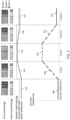
- FIG. 5 is a diagram illustrating different example techniques for guaranteeing a thermal envelope of a computing system based on one or more operational parameters during different stages of flight.
- the thermal management techniques used are similar to those described above with respect to FIG. 3 .
- the primary operational parameters used for adjusting the thermal management techniques in the example shown in FIG. 5 are the stage of flight (ground operations, climb, cruise, descent, and landing) and the ambient temperature (indicated by lines 508-512).
- the solid line 508 indicates high temperatures
- the longer dashed lines 509, 511 indicate medium-high temperatures
- the shorter dashed line 510 indicates low temperatures.
- the cache allocation 504 which is static in the example shown in FIG. 5 , includes approximately 60% of the cache allocated for application 1, approximately 30% of the cache allocated for application 2, and approximately 10% of the cache allocated for application 3. This cache allocation 504 would be utilized, for example, where the workloads associated with application 1 are the most memory intensive and/or prioritized and the workloads associated with application 3 are the least memory intensive and/or prioritized. In other examples, the cache allocation 504 could be modified based on the operational parameter(s).
- the altitude is the lowest and the ambient temperature surrounding the computing system is highest (indicated by the solid line).
- the computing resources allocation only half of the computing resources are available for workloads (the solid boxes indicate unavailable computing resources) and all of those computing resources are allocated for application 1 (for example, takeoff applications or safety-critical applications).
- the upper limits on available memory bandwidth for computing resources has the lowest limit, which will result in the fewest allowed memory transactions for any stage of flight.
- the memory utilization of the smart workloads executed by the computing resources of the computing system (memory throttling 506) is at its lowest level as indicated at 513.
- the ambient temperature decreases as indicated by the dashed line 509.
- additional computing resources are available for workloads (the solid boxes indicate unavailable computing resources) and half of those computing resources are allocated for application 1 (for example, safety-critical applications) while the other half of the available computing resources are divided evenly between application 2 and application 3 (for example, best-effort applications).
- the upper limits on available memory bandwidth for computing resources (memory throttling 506) increases, which will result in more allowed memory transactions during climbing compared to ground operations.
- the memory utilization of the smart workloads executed by the computing resources of the computing system also increases as indicated at 514.
- the ambient temperature decreases to its lowest amount as indicated by the dashed line 510.
- the computing resources allocation 502 all of the computing resources are available for workloads (the solid boxes indicate unavailable computing resources). Half of those computing resources are allocated for application 1 (for example, safety-critical applications), one-third of the available computing resources are allocated to application 2, and one-sixth of the available computing resources are allocated to application 3. Also, during cruise, the upper limits on available memory bandwidth for computing resources (memory throttling 506) remain high, which will result in more allowed memory transactions during cruise compared to ground operations.
- the memory utilization of the smart workloads executed by the computing resources of the computing system (memory throttling 506) is at its maximum as indicated at 515.
- the ambient temperature increases as indicated by the dashed line 511.
- the computing resources allocation 502 all of the computing resources are available for workloads (the solid boxes indicate unavailable computing resources).
- Half of the available computing resources are allocated for application 1 (for example, safety-critical applications) while the other half of the available computing resources are divided evenly between application 2 and application 3 (for example, best-effort applications).
- the upper limits on available memory bandwidth for computing resources (memory throttling 506) remain high, which will result in more allowed memory transactions during descent compared to ground operations.
- the memory utilization of the smart workloads executed by the computing resources of the computing system decreases as indicated at 516.
- the ambient temperature increases to a higher value as indicated by the solid line 512.
- the computing resources allocation 502 the amount of the computing resources available for workloads remains the same as for descent (the solid boxes indicate unavailable computing resources). However, three-fourths of the available computing resources are allocated for application 1 (for example, landing or safety-critical applications), and one-fourth of the available computing resources are allocated to application 3. No computing resources are allocated to application 2. Also, during landing, the upper limits on available memory bandwidth for computing resources (memory throttling 506) are kept at a lower level, which will result in fewer allowed memory transactions during landing compared to climbing, cruise, and descent. The memory utilization of the smart workloads executed by the computing resources of the computing system (memory throttling 506) is also kept at a lower level as indicated at 517.
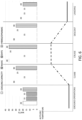
- FIG. 6 is a diagram illustrating a theoretical comparison of the hybrid and dynamic methods described herein compared to previous techniques during different stages of flight.
- the naive approach which includes permanently setting the operational frequency and voltage for computing resources, provides the worst performance for climbing, cruise, and descent since the operation of the components does not change during flight.
- the DVFS technique which includes dynamically varying the operational frequency and voltage of the computing resources, provides better performance compared to the naive approach.
- the DVFS technique still does not provide optimal performance due to the limitations described above.
- the hybrid and dynamic methods described herein enable the maximum available cooling capacity to be utilized by the computing system during all stages of flight by using the thermal-aware scheduling policy, memory throttling, and/or cache allocation techniques described above.
- the systems and methods described herein use various thermal management techniques to enable a computing system configured to perform computation and/or graphical processing to operate closer to its maximum performance given the environmental conditions while also providing consistent operation sufficient for safety-critical applications.
- the thermal envelope of a computing system is guaranteed by the thermal management techniques, which preserve the computation and graphical processing performance capabilities of the computing system.
- system elements, method steps, or examples described throughout this disclosure may be implemented on one or more computer systems including a central processing unit (CPU), graphics processing unit (GPU), field programmable gate array (FPGA), application specific integrated circuit (ASIC) and/or similar devices comprising hardware executing code to realize those elements, processes, or examples, said code stored on a non-transient data storage device.
- CPU central processing unit
- GPU graphics processing unit
- FPGA field programmable gate array
- ASIC application specific integrated circuit
- devices include or function with software programs, firmware, or other computer readable instructions for carrying out various methods, process tasks, calculations, and control functions, used in a distributed antenna system.
- the computer readable medium can be implemented as any available media that can be accessed by a general purpose or special purpose computer or processor, or any programmable logic device.
- Suitable processor-readable media may include storage or memory media such as magnetic or optical media.
- storage or memory media may include conventional hard disks, Compact Disk - Read Only Memory (CD-ROM), volatile or non-volatile media such as Random Access Memory (RAM) (including, but not limited to, Synchronous Dynamic Random Access Memory (SDRAM), Double Data Rate (DDR) RAM, RAMBUS Dynamic RAM (RDRAM), Static RAM (SRAM), etc.), Read Only Memory (ROM), Electrically Erasable Programmable ROM (EEPROM), and flash memory, etc.
- RAM Random Access Memory
- SDRAM Synchronous Dynamic Random Access Memory
- DDR Double Data Rate
- RDRAM RAMBUS Dynamic RAM
- SRAM Static RAM
- ROM Read Only Memory
- EEPROM Electrically Erasable Programmable ROM
- flash memory etc.
- Suitable processor-readable media may also include transmission media such as electrical, electromagnetic, or digital signals, conveyed via a communication medium such as a network and/or a wireless link.
- the methods and techniques described here may be implemented in digital electronic circuitry, or with a programmable processor (for example, a special-purpose processor or a general-purpose processor such as a computer) firmware, software, or in combinations of them.
- Apparatus embodying these techniques may include appropriate input and output devices, a programmable processor, and a storage medium tangibly embodying program instructions for execution by the programmable processor.
- a process embodying these techniques may be performed by a programmable processor executing a program of instructions to perform desired functions by operating on input data and generating appropriate output.
- the techniques may advantageously be implemented in one or more programs that are executable on a programmable system including at least one programmable processor coupled to receive data and instructions from, and to transmit data and instructions to, a data storage system, at least one input device, and at least one output device.
- a processor will receive instructions and data from a read-only memory and/or a random access memory.
- Storage devices suitable for tangibly embodying computer program instructions and data include all forms of non-volatile memory, including by way of example semiconductor memory devices, such as EPROM, EEPROM, and flash memory devices; magnetic disks such as internal hard disks and removable disks; magneto-optical disks; and DVD disks. Any of the foregoing may be supplemented by, or incorporated in, specially-designed application-specific integrated circuits (ASICs).
- ASICs application-specific integrated circuits
- Example 1 includes a computing system comprising: computing resources and memory, wherein the computing resources are configured to perform computation and/or graphical processing; wherein the computing system is configured to guarantee a thermal envelope of the computing system based on one or more operational parameters by: implementing a thermal-aware scheduling policy that utilizes an amount of computing resources and timing windows of the computing system based on the one or more operational parameters; adjusting an amount of available memory bandwidth to the computing resources of the computing system based on the one or more operational parameters; adjusting an amount of memory utilization of one or more applications executed by the computing resources of the computing system based on the one or more operational parameters; and/or allocating cache to workloads based on memory demands of the workloads, wherein more cache is allocated to workloads with high memory demands compared to workloads with low memory demands; wherein the computing system is configured to schedule workloads for the computing resources based on the thermal-aware scheduling policy, the available memory bandwidth, the amount of memory utilization, and/or the cache allocation.
- Example 2 includes the computing system of Example 1, wherein the one or more operational parameters include: a stage of flight of an aircraft that includes the computing system; ambient air temperature around the computing system; on-board temperature of the computing system; air flow around the computing system; altitude; Weight on Wheels; velocity; energy consumption of the computing system; on-board battery status or battery health of the computing system; pilot health status; emergency state of a vehicle that includes the computing system; and/or power consumption of the computing system.
- the one or more operational parameters include: a stage of flight of an aircraft that includes the computing system; ambient air temperature around the computing system; on-board temperature of the computing system; air flow around the computing system; altitude; Weight on Wheels; velocity; energy consumption of the computing system; on-board battery status or battery health of the computing system; pilot health status; emergency state of a vehicle that includes the computing system; and/or power consumption of the computing system.
- Example 3 includes the computing system of any of Examples 1-2, wherein the computing system includes: one or more graphics processing units; one or more single/multi-core central processing units; one or more single/multi-core digital signal processors; one or more specialized custom processing units (vision processing unit, application-specific integrated circuit, specialized co-processors); and/or one or more field-programmable gate arrays.
- the computing system includes: one or more graphics processing units; one or more single/multi-core central processing units; one or more single/multi-core digital signal processors; one or more specialized custom processing units (vision processing unit, application-specific integrated circuit, specialized co-processors); and/or one or more field-programmable gate arrays.
- Example 4 includes the computing system of any of Examples 1-3, wherein adjusting an amount of memory bandwidth available to the computing resources of the computing system includes modifying computing periods or shaping memory traffic to introduce upper limits of its thermal envelope.
- Example 5 includes the computing system of any of Examples 1-4, wherein the thermal-aware scheduling policy adjusts the amount of computing resources and/or timing windows of the computing system being utilized when the one or more operational parameters indicate that the computing system is operating below a threshold ratio of its thermal envelope.
- Example 6 includes the computing system of any of Examples 1-5, wherein the computing system further comprises one or more sensors configured to measure the one or more operational parameters, wherein the computing system is further configured to: dynamically determine a modified thermal-aware scheduling policy and a modified amount of available memory bandwidth based on the measured one or more operational parameters; and schedule workloads for the computing system based on the dynamically determined modified thermal-aware scheduling policy and the dynamically determined modified amount of available memory bandwidth.
- Example 7 includes the computing system of any of Examples 1-6, wherein a first application of the one or more applications includes a workload configured to adjust the amount of memory utilization of the first application based on the one or more operational parameters.
- Example 8 includes the computing system of any of Examples 1-7, wherein the computing system is configured to execute a first set of applications during a first stage of flight of an aircraft including the computing system, wherein the computing system is configured to execute a second set of applications during a second stage of flight of the aircraft including the computing system, wherein the first set of applications differ from the second set of applications.
- Example 9 includes the computing system of Example 8, wherein the first set of applications is associated with safety-critical workloads, wherein the second set of applications is associated with safety-critical workloads and best-effort workloads.
- Example 10 includes the computing system of any of Examples 1-9, wherein the computing system is configured to execute a first set of safety-critical applications associated during a first stage of flight of an aircraft including the computing system, wherein the computing system is configured to execute a second set of safety-critical applications during a second stage of flight of the aircraft including the computing system, wherein the first set of safety-critical applications differ from the second set of safety-critical applications.
- Example 11 includes the computing system of any of Examples 1-10, wherein the computing system is configured to guarantee a thermal envelope of the computing system based on one or more operational parameters by: implementing a thermal-aware scheduling policy that utilizes an amount of computing resources and timing windows of the computing system based on the one or more operational parameters; adjusting an amount of available memory bandwidth to the computing resources of the computing system based on the one or more operational parameters; adjusting an amount of memory utilization of one or more applications executed by the computing resources of the computing system based on the one or more operational parameters; and allocating cache to workloads based on the memory demands of the workloads, wherein more cache is allocated to workloads with high memory demands compared to workloads with low memory demands; wherein the computing system is configured to schedule workloads for the computing resources based on the thermal-aware scheduling policy, the available memory bandwidth, the amount of memory utilization, and the cache allocation.
- a thermal-aware scheduling policy that utilizes an amount of computing resources and timing windows of the computing system based on the one or more operational parameters
- Example 12 includes a method, comprising: guaranteeing a thermal envelope of a computing system, including computing resources configured to perform computation and/or graphical processing and memory, based on one or more operational parameters by: implementing a thermal-aware scheduling policy that utilizes an amount of computing resources and timing windows of the computing system based on the one or more operational parameters; adjusting an amount of available memory bandwidth to the computing resources of the computing system based on the one or more operational parameters; adjusting an amount of memory utilization of one or more applications executed by the computing resources of the computing system based on the one or more operational parameters; and/or allocating cache to workloads based on memory demands of the workloads, wherein more cache is allocated to workloads with high memory demands compared to workloads with low memory demands; and scheduling workloads for the computing resources based on the thermal-aware scheduling policy, the available memory bandwidth, the amount of memory utilization, and/or the cache allocation.
- Example 13 includes the method of Example 12, wherein the one or more operational parameters include: a stage of flight of an aircraft that includes the computing system; ambient air temperature around the computing system; on-board temperature of the computing system; air flow around the computing system; altitude; Weight on Wheels; velocity; energy consumption of the computing system; on-board battery status or battery health of the computing system; pilot health status; emergency state of a vehicle that includes the computing system; and/or power consumption of the computing system.
- the one or more operational parameters include: a stage of flight of an aircraft that includes the computing system; ambient air temperature around the computing system; on-board temperature of the computing system; air flow around the computing system; altitude; Weight on Wheels; velocity; energy consumption of the computing system; on-board battery status or battery health of the computing system; pilot health status; emergency state of a vehicle that includes the computing system; and/or power consumption of the computing system.
- Example 14 includes the method of any of Examples 12-13, wherein the computing system includes: one or more graphics processing units; one or more single/multi-core central processing units; one or more single/multi-core digital signal processors; one or more specialized custom processing units (vision processing unit, application-specific integrated circuit, specialized co-processors); and/or one or more field-programmable gate arrays.
- the computing system includes: one or more graphics processing units; one or more single/multi-core central processing units; one or more single/multi-core digital signal processors; one or more specialized custom processing units (vision processing unit, application-specific integrated circuit, specialized co-processors); and/or one or more field-programmable gate arrays.
- Example 15 includes the method of any of Examples 12-14, wherein adjusting an amount of memory bandwidth available to the computing resources of the computing system includes modifying computing periods or shaping memory traffic to introduce upper limits of its thermal envelope.
- Example 16 includes the method of any of Examples 12-15, wherein the thermal-aware scheduling policy adjusts the amount of computing resources and/or timing windows of the computing system being utilized when the one or more operational parameters indicate that the computing system is operating below a threshold ratio of its thermal envelope.
- Example 17 includes the method of any of Examples 12-16, further comprising: receiving or determining the one or more operational parameters; dynamically determining a modified thermal-aware scheduling policy and a modified amount of available memory bandwidth based on the received or determined one or more operational parameters; and scheduling workloads for the computing system based on the dynamically determined modified thermal-aware scheduling policy and the dynamically determined modified amount of available memory bandwidth.
- Example 18 includes the method of any of Examples 12-17, further comprising: executing a first set of applications during a first stage of flight of an aircraft including the computing system; executing a second set of applications during a second stage of flight of the aircraft including the computing system, wherein the first set of applications differ from the second set of applications, wherein the first set of applications is associated with safety-critical workloads, wherein the second set of applications is associated with safety-critical workloads and best-effort workloads.
- Example 19 includes the method of any of Examples 12-18, further comprising: executing a first set of safety-critical applications associated during a first stage of flight of an aircraft including the computing system; executing a second set of safety-critical applications during a second stage of flight of the aircraft including the computing system, wherein the first set of safety-critical applications differ from the second set of safety-critical applications.
- Example 20 includes the method of any of Examples 12-19, the method comprising guaranteeing a thermal envelope of the computing system based on one or more operational parameters by: implementing a thermal-aware scheduling policy that utilizes an amount of computing resources and timing windows of the computing system based on the one or more operational parameters; adjusting an amount of available memory bandwidth to the computing resources of the computing system based on the one or more operational parameters; adjusting an amount of memory utilization of one or more applications executed by the computing resources of the computing system based on the one or more operational parameters; and allocating cache to workloads based on the memory demands of the workloads, wherein more cache is allocated to workloads with high memory demands compared to workloads with low memory demands; and scheduling workloads for the computing resources based on the thermal-aware scheduling policy, the available memory bandwidth, the amount of memory utilization, and the cache allocation.
Landscapes
- Engineering & Computer Science (AREA)
- Software Systems (AREA)
- Theoretical Computer Science (AREA)
- Physics & Mathematics (AREA)
- General Engineering & Computer Science (AREA)
- General Physics & Mathematics (AREA)
- Memory System Of A Hierarchy Structure (AREA)
- Power Sources (AREA)
Applications Claiming Priority (1)
| Application Number | Priority Date | Filing Date | Title |
|---|---|---|---|
| US17/703,721 US12204952B2 (en) | 2022-03-24 | 2022-03-24 | Systems and method for thermal management of computing systems |
Publications (1)
| Publication Number | Publication Date |
|---|---|
| EP4250108A1 true EP4250108A1 (de) | 2023-09-27 |
Family
ID=84830100
Family Applications (1)
| Application Number | Title | Priority Date | Filing Date |
|---|---|---|---|
| EP23150440.8A Pending EP4250108A1 (de) | 2022-03-24 | 2023-01-05 | Systeme und verfahren zur wärmeverwaltung von computersystemen |
Country Status (2)
| Country | Link |
|---|---|
| US (1) | US12204952B2 (de) |
| EP (1) | EP4250108A1 (de) |
Cited By (1)
| Publication number | Priority date | Publication date | Assignee | Title |
|---|---|---|---|---|
| EP4589134A1 (de) * | 2024-01-22 | 2025-07-23 | RTX Corporation | Modulare thermische verwaltung mit fadec |
Families Citing this family (2)
| Publication number | Priority date | Publication date | Assignee | Title |
|---|---|---|---|---|
| US12204789B2 (en) * | 2022-08-29 | 2025-01-21 | Micron Technology, Inc. | Memory phase monitoring and scheduling system using memory usage statistics |
| US12093541B1 (en) * | 2022-09-06 | 2024-09-17 | Apple Inc. | Temperature-based bandwidth compensation for memory traffic |
Citations (3)
| Publication number | Priority date | Publication date | Assignee | Title |
|---|---|---|---|---|
| US20040019738A1 (en) * | 2000-09-22 | 2004-01-29 | Opher Kahn | Adaptive throttling of memory accesses, such as throttling RDRAM accesses in a real-time system |
| US7064994B1 (en) * | 2004-01-30 | 2006-06-20 | Sun Microsystems, Inc. | Dynamic memory throttling for power and thermal limitations |
| US20080163226A1 (en) * | 2006-12-29 | 2008-07-03 | Intel Corporation | Power management using adaptive thermal throttling |
Family Cites Families (16)
| Publication number | Priority date | Publication date | Assignee | Title |
|---|---|---|---|---|
| BRPI0822590A2 (pt) * | 2008-04-21 | 2015-06-23 | Adaptive Computing Entpr Inc | Sistema de computador para gerenciamento do consumo de energia em um ambiente de computador |
| US8316368B2 (en) | 2009-02-05 | 2012-11-20 | Honeywell International Inc. | Safe partition scheduling on multi-core processors |
| US8904394B2 (en) * | 2009-06-04 | 2014-12-02 | International Business Machines Corporation | System and method for controlling heat dissipation through service level agreement analysis by modifying scheduled processing jobs |
| US8776069B2 (en) * | 2010-12-07 | 2014-07-08 | International Business Machines Corporation | Energy and performance optimizing job scheduling |
| WO2012082349A2 (en) * | 2010-12-16 | 2012-06-21 | Intel Corporation | Workload scheduling based on a platform energy policy |
| US8756599B2 (en) | 2011-01-17 | 2014-06-17 | International Business Machines Corporation | Task prioritization management in a virtualized environment |
| US8762990B2 (en) | 2011-07-25 | 2014-06-24 | The Boeing Company | Virtual machines for aircraft network data processing systems |
| US8621473B2 (en) | 2011-08-01 | 2013-12-31 | Honeywell International Inc. | Constrained rate monotonic analysis and scheduling |
| US8806579B1 (en) | 2011-10-12 | 2014-08-12 | The Boeing Company | Secure partitioning of devices connected to aircraft network data processing systems |
| US10371415B2 (en) * | 2014-02-19 | 2019-08-06 | The Boeing Company | Electronics operation for temperature controlled systems |
| US10908955B2 (en) | 2018-03-22 | 2021-02-02 | Honeywell International Inc. | Systems and methods for variable rate limiting of shared resource access |
| US11711268B2 (en) | 2019-04-30 | 2023-07-25 | Intel Corporation | Methods and apparatus to execute a workload in an edge environment |
| US11036406B2 (en) * | 2019-05-21 | 2021-06-15 | International Business Machines Corporation | Thermally aware memory management |
| US11175952B2 (en) * | 2020-02-21 | 2021-11-16 | International Business Machines Corporation | Leveraging thermal profiles of processing tasks to dynamically schedule execution of the processing tasks |
| US11847074B2 (en) | 2020-11-02 | 2023-12-19 | Honeywell International Inc. | Input/output device operational modes for a system with memory pools |
| DE102020214951A1 (de) * | 2020-11-27 | 2022-06-02 | Robert Bosch Gesellschaft mit beschränkter Haftung | Verfahren zum dynamischen Zuweisen von Speicherbandbreite |
-
2022
- 2022-03-24 US US17/703,721 patent/US12204952B2/en active Active
-
2023
- 2023-01-05 EP EP23150440.8A patent/EP4250108A1/de active Pending
Patent Citations (3)
| Publication number | Priority date | Publication date | Assignee | Title |
|---|---|---|---|---|
| US20040019738A1 (en) * | 2000-09-22 | 2004-01-29 | Opher Kahn | Adaptive throttling of memory accesses, such as throttling RDRAM accesses in a real-time system |
| US7064994B1 (en) * | 2004-01-30 | 2006-06-20 | Sun Microsystems, Inc. | Dynamic memory throttling for power and thermal limitations |
| US20080163226A1 (en) * | 2006-12-29 | 2008-07-03 | Intel Corporation | Power management using adaptive thermal throttling |
Cited By (1)
| Publication number | Priority date | Publication date | Assignee | Title |
|---|---|---|---|---|
| EP4589134A1 (de) * | 2024-01-22 | 2025-07-23 | RTX Corporation | Modulare thermische verwaltung mit fadec |
Also Published As
| Publication number | Publication date |
|---|---|
| US20230305906A1 (en) | 2023-09-28 |
| US12204952B2 (en) | 2025-01-21 |
Similar Documents
| Publication | Publication Date | Title |
|---|---|---|
| EP4250108A1 (de) | Systeme und verfahren zur wärmeverwaltung von computersystemen | |
| KR102887834B1 (ko) | 저장 매체 액세스의 인공 지능 가능 관리 | |
| US8307370B2 (en) | Apparatus and method for balancing load in multi-core processor system | |
| KR102226014B1 (ko) | 데이터 프로세싱 엔진 및 그것의 리소스 관리 방법 | |
| CN114787830A (zh) | 异构集群中的机器学习工作负载编排 | |
| WO2023159568A1 (zh) | 一种任务调度方法、npu、芯片、电子设备和可读介质 | |
| US20210124407A1 (en) | Multicore processor and method for dynamically adjusting a supply voltage and a clock speed | |
| KR20230099357A (ko) | 이기종 컴퓨팅 시스템에서 동작하는 딥러닝 모델에 대한 모델 분할 방법 및 추론 방법 | |
| US20200082263A1 (en) | Neural processing system | |
| JP2017062779A (ja) | 環境的に調整されたスラックを割り当てるためのシステム及び方法 | |
| US9829967B2 (en) | Techniques for limiting power via secondary control of a voltage regulator | |
| JP7419605B2 (ja) | 電力推定機構のアプリケーションオーバーライド | |
| WO2023197316A1 (en) | Scheduling ml services and models with heterogeneous resources | |
| EP4557052A1 (de) | Aufgabenplanungsvorrichtung, berechnungssystem und aufgabenplanungsverfahren und programm | |
| Majumder et al. | Energy-aware real-time tasks processing for FPGA-based heterogeneous cloud | |
| US20230071632A1 (en) | System-on-chip and an operating method thereof | |
| EP4167087B1 (de) | Systeme und verfahren zum regulieren der speichernutzung für coprozessoren | |
| KR102933199B1 (ko) | 모바일 비전 어플리케이션을 위한 dnn 모델 분할 추론 방법 및 시스템 | |
| KR102559658B1 (ko) | 스케줄링 방법 및 장치 | |
| JP7405142B2 (ja) | 車載装置、車両管理システム、リソース管理方法およびリソース管理プログラム | |
| JP7792860B2 (ja) | 計算システム、計算システムの制御方法及びプログラム | |
| US20240249150A1 (en) | System for allocating deep neural network to processing unit based on reinforcement learning and operation method of the system | |
| CN119256300A (zh) | 调度方法及相关装置 | |
| US20220284264A1 (en) | Computer-readable recording medium storing program, computer, and learning method | |
| EP4666169A1 (de) | Speicherzugriffsplanung für parallele berechnungen unter verwendung einer speicherinternen verarbeitungsarchitektur |
Legal Events
| Date | Code | Title | Description |
|---|---|---|---|
| PUAI | Public reference made under article 153(3) epc to a published international application that has entered the european phase |
Free format text: ORIGINAL CODE: 0009012 |
|
| STAA | Information on the status of an ep patent application or granted ep patent |
Free format text: STATUS: THE APPLICATION HAS BEEN PUBLISHED |
|
| AK | Designated contracting states |
Kind code of ref document: A1 Designated state(s): AL AT BE BG CH CY CZ DE DK EE ES FI FR GB GR HR HU IE IS IT LI LT LU LV MC ME MK MT NL NO PL PT RO RS SE SI SK SM TR |
|
| STAA | Information on the status of an ep patent application or granted ep patent |
Free format text: STATUS: REQUEST FOR EXAMINATION WAS MADE |
|
| 17P | Request for examination filed |
Effective date: 20240227 |
|
| RBV | Designated contracting states (corrected) |
Designated state(s): AL AT BE BG CH CY CZ DE DK EE ES FI FR GB GR HR HU IE IS IT LI LT LU LV MC ME MK MT NL NO PL PT RO RS SE SI SK SM TR |
|
| STAA | Information on the status of an ep patent application or granted ep patent |
Free format text: STATUS: EXAMINATION IS IN PROGRESS |
|
| 17Q | First examination report despatched |
Effective date: 20240826 |