EP4250776A1 - Procédé, dispositif et système de transmission d'informations d'indication - Google Patents
Procédé, dispositif et système de transmission d'informations d'indication Download PDFInfo
- Publication number
- EP4250776A1 EP4250776A1 EP20967782.2A EP20967782A EP4250776A1 EP 4250776 A1 EP4250776 A1 EP 4250776A1 EP 20967782 A EP20967782 A EP 20967782A EP 4250776 A1 EP4250776 A1 EP 4250776A1
- Authority
- EP
- European Patent Office
- Prior art keywords
- terminal apparatus
- information
- indication information
- auxiliary resource
- auxiliary
- Prior art date
- Legal status (The legal status is an assumption and is not a legal conclusion. Google has not performed a legal analysis and makes no representation as to the accuracy of the status listed.)
- Pending
Links
Images



Classifications
-
- H—ELECTRICITY
- H04—ELECTRIC COMMUNICATION TECHNIQUE
- H04L—TRANSMISSION OF DIGITAL INFORMATION, e.g. TELEGRAPHIC COMMUNICATION
- H04L5/00—Arrangements affording multiple use of the transmission path
- H04L5/0091—Signalling for the administration of the divided path, e.g. signalling of configuration information
- H04L5/0092—Indication of how the channel is divided
-
- H—ELECTRICITY
- H04—ELECTRIC COMMUNICATION TECHNIQUE
- H04W—WIRELESS COMMUNICATION NETWORKS
- H04W72/00—Local resource management
- H04W72/50—Allocation or scheduling criteria for wireless resources
- H04W72/51—Allocation or scheduling criteria for wireless resources based on terminal or device properties
-
- H—ELECTRICITY
- H04—ELECTRIC COMMUNICATION TECHNIQUE
- H04W—WIRELESS COMMUNICATION NETWORKS
- H04W4/00—Services specially adapted for wireless communication networks; Facilities therefor
- H04W4/02—Services making use of location information
- H04W4/023—Services making use of location information using mutual or relative location information between multiple location based services [LBS] targets or of distance thresholds
-
- H—ELECTRICITY
- H04—ELECTRIC COMMUNICATION TECHNIQUE
- H04W—WIRELESS COMMUNICATION NETWORKS
- H04W4/00—Services specially adapted for wireless communication networks; Facilities therefor
- H04W4/02—Services making use of location information
- H04W4/025—Services making use of location information using location based information parameters
- H04W4/026—Services making use of location information using location based information parameters using orientation information, e.g. compass
-
- H—ELECTRICITY
- H04—ELECTRIC COMMUNICATION TECHNIQUE
- H04W—WIRELESS COMMUNICATION NETWORKS
- H04W40/00—Communication routing or communication path finding
- H04W40/02—Communication route or path selection, e.g. power-based or shortest path routing
- H04W40/20—Communication route or path selection, e.g. power-based or shortest path routing based on geographic position or location
-
- H—ELECTRICITY
- H04—ELECTRIC COMMUNICATION TECHNIQUE
- H04W—WIRELESS COMMUNICATION NETWORKS
- H04W40/00—Communication routing or communication path finding
- H04W40/02—Communication route or path selection, e.g. power-based or shortest path routing
- H04W40/22—Communication route or path selection, e.g. power-based or shortest path routing using selective relaying for reaching a BTS [Base Transceiver Station] or an access point
-
- H—ELECTRICITY
- H04—ELECTRIC COMMUNICATION TECHNIQUE
- H04W—WIRELESS COMMUNICATION NETWORKS
- H04W64/00—Locating users or terminals or network equipment for network management purposes, e.g. mobility management
-
- H—ELECTRICITY
- H04—ELECTRIC COMMUNICATION TECHNIQUE
- H04W—WIRELESS COMMUNICATION NETWORKS
- H04W72/00—Local resource management
- H04W72/20—Control channels or signalling for resource management
- H04W72/25—Control channels or signalling for resource management between terminals via a wireless link, e.g. sidelink
Definitions
- This application relates to the field of wireless communication technologies, and in particular, to an indication information transmission method, an apparatus, and a system.
- Vehicle-to-vehicle (Vehicle-to-Vehicle, V2V) communication, vehicle-to-pedestrian V2P (Vehicle-to-Pedestrian, V2P) communication, or vehicle-to-infrastructure/network V2I/N (Vehicle-to-Infrastructure/Network, V2I/N) communication is a technology for directly performing communication between terminal devices (terminal devices), that is, direct communication.
- the V2V, the V2P, and the V2I/N are collectively referred to as V2X, namely, vehicle-to-everything communication.
- a system supports two resource scheduling manners: a resource scheduling mode 1 (Resource Allocation Mode-1, RA mode-1) based on base station scheduling, and a resource scheduling mode 2 (Resource Allocation Mode-2, RA mode-2) based on perception and selection of a terminal apparatus on a preconfigured resource.
- a resource scheduling mode 1 Resource Allocation Mode-1, RA mode-1
- a resource scheduling mode 2 Resource Allocation Mode-2, RA mode-2
- the terminal apparatus senses, on a predefined resource, a resource available to a sidelink, and selects a resource in the resource available to the sidelink to send the resource.
- a terminal apparatus other than the sending terminal apparatus may provide assistance for the sending terminal apparatus, to help the sending terminal apparatus determine a related resource.
- a receiving terminal apparatus cannot provide assistance for the sending terminal apparatus or there are a large quantity of receiving terminal apparatuses, a terminal apparatus that provides assistance cannot be properly determined; consequently, resource selection reliability is reduced.
- An objective of this application is to provide an indication information transmission method, an apparatus, and a system, so as to improve resource selection reliability.
- this application provides an indication information sending method, including: A second terminal apparatus receives first information, where the first information includes range indication information or direction indication information. The second terminal apparatus determines, based on the first information, whether the second terminal apparatus is capable of providing auxiliary resource information for a first terminal apparatus, where the auxiliary resource information is for determining a sending resource of the first terminal apparatus. When the second terminal apparatus is capable of providing the auxiliary resource information for the first terminal apparatus, the second terminal apparatus sends first indication information to the first terminal apparatus, where the first indication information includes the auxiliary resource information.
- the second terminal apparatus when the second terminal apparatus is incapable of providing the auxiliary resource information for the first terminal apparatus, the second terminal apparatus sends second indication information to the first terminal apparatus, where the second indication information indicates that the second terminal apparatus is incapable of providing the auxiliary resource information for the first terminal apparatus.
- the second terminal apparatus receives the first information from the first terminal apparatus, determines, based on the range indication information or the direction indication information carried in the first information, whether the second terminal apparatus is capable of providing the auxiliary resource information for the first terminal apparatus.
- the second terminal apparatus sends the auxiliary resource information to the first terminal apparatus.
- the second terminal apparatus feeds back, to the first terminal apparatus, that the second terminal apparatus cannot provide assistance. In this way, a terminal apparatus that can provide resource assistance is properly determined by using a geographical information indication such as the range indication information or the direction indication information, so that resource selection reliability is improved.
- the method may be performed by a communication device or a communication apparatus that can support a communication device in implementing a function required by the method, for example, a chip.
- the second terminal apparatus performing the foregoing method may be an apparatus, a chip that is disposed in a terminal apparatus and that is configured to implement a function of the terminal apparatus, or another component that is configured to implement the function of the terminal apparatus.
- the range indication information indicates a geographical range in which a terminal apparatus that needs to feed back the auxiliary resource information is located; or the direction indication information indicates a geographical orientation, relative to the first terminal apparatus, of a terminal apparatus that needs to feed back the auxiliary resource information.
- a geographical location of the terminal apparatus that needs to be fed back may be determined by using the range indication information or the direction indication information carried in the first information.
- the direction indication information may be bit information, and the corresponding geographical orientation is determined by using the bit information.
- the geographical range is relative to the first terminal apparatus. For example, an index zone ID of a zone in which the first terminal apparatus is located is Zone 5. When a value of the bit information is "000", it indicates that a terminal apparatus on an east side of Zone 5 needs to feed back the auxiliary resource information.
- the second terminal apparatus may determine, based on the range indication information and a communication distance of the first terminal apparatus, the geographical range in which the terminal apparatus that needs to feed back the auxiliary resource information is located.
- the communication distance of the first terminal apparatus indicates a communication range of the first terminal apparatus, for example, a communication coverage radius R of the first terminal apparatus.
- a geographical zone may be determined by using the range indication information and the communication distance, and a terminal apparatus in the zone needs to feed back the auxiliary resource information to the first terminal apparatus.
- whether the terminal device in the feedback zone actually feeds back the auxiliary resource information to the first terminal apparatus may alternatively depend on another factor, for example, whether the terminal device has a capability of providing the auxiliary resource information.
- the range indication information is related to a priority of to-be-sent data of the first terminal apparatus and/or a current channel congestion degree.
- a priority of sent data is a priority carried in SCI, and the priority indicates a priority of currently sent data.
- a higher priority of the to-be-sent data indicates a larger value of the range indication information.
- a high priority indicates that the data is important, and a large value of the range indication information indicates that a finally determined feedback zone is large.
- more terminal apparatuses may be scheduled to feed back the auxiliary resource information, to ensure that a resource determining process of the important data has a high priority.
- the current channel congestion degree is high, for example, a value that is measured by the first terminal apparatus and that is of a sidelink busy ratio (Sidelink Channel Busy Ratio, SL CBR) or a sidelink channel occupancy ratio (Sidelink Channel Occupancy Ratio, SL CR) is greater than a threshold, a value of a parameter is small, so that fewer UEs are triggered to feed back auxiliary information, to reduce aggravation of channel congestion.
- SL CBR Sidelink Channel Busy Ratio
- SL CR sidelink channel occupancy ratio
- that the second terminal apparatus determines, based on the first information, whether the second terminal apparatus is capable of providing auxiliary resource information for a first terminal apparatus includes: The second terminal apparatus determines, based on the range indication information or the direction indication information, that the second terminal apparatus is in a feedback range of the auxiliary resource information of the first terminal apparatus, and the second terminal apparatus determines that the second terminal apparatus is capable of providing the auxiliary resource information for the first terminal apparatus.
- the second terminal apparatus determines, based on the range indication information or the direction indication information, that the second terminal apparatus is not in a feedback range of the auxiliary resource information of the first terminal apparatus, and the second terminal apparatus determines that the second terminal apparatus is incapable of providing the auxiliary resource information for the first terminal apparatus.
- a quantity of terminal apparatuses and an amount of the auxiliary resource information are reduced by using a geographical location indication, so that system overheads are reduced, and resource utilization is improved.
- the second terminal apparatus belongs to a second terminal apparatus group, and the second terminal apparatus group is determined by a higher layer or the first terminal apparatus.
- the second terminal apparatus receives the first information from the first terminal apparatus, where the first information is for requesting the auxiliary resource information.
- the second terminal apparatus receives the first information from a network apparatus.
- the auxiliary resource information includes at least one of the following: a sending resource that the first terminal apparatus tends to use, a sending resource that the first terminal apparatus does not tend to use, a sending resource that conflicts with a sending resource of another terminal apparatus, or an indication indicating that there is a sending resource conflict.
- the determining, based on the first information, that the second terminal apparatus is incapable of providing the auxiliary resource information for the first terminal device includes: determining, based on the first information, that the second terminal apparatus is not in a feedback range of the auxiliary resource information of the first terminal device, and determining that the second terminal apparatus is incapable of providing the auxiliary resource information for the first terminal device; or determining, based on that a channel status is busy, that valid auxiliary resource information cannot be obtained, or that the second terminal apparatus does not have a capability of providing the auxiliary resource information, that the second terminal apparatus is incapable of providing the auxiliary resource information for the first terminal device.
- the second indication information is carried on a physical sidelink feedback channel PSFCH, a physical sidelink control channel PSCCH, or a physical sidelink data channel PSSCH.
- this application provides an indication information receiving method, including: A first terminal apparatus sends first information to at least one second terminal apparatus, where the first information includes range indication information or direction indication information, and the first information is used by the at least one second terminal apparatus to determine whether the at least one second terminal apparatus is capable of providing auxiliary resource information for the first terminal apparatus.
- the first terminal apparatus receives first indication information or second indication information from the second terminal apparatus.
- the first indication information includes the auxiliary resource information, and the auxiliary resource information is used by the first terminal apparatus to determine a sending resource.
- the second indication information indicates that the second terminal apparatus is incapable of providing the auxiliary resource information for the first terminal apparatus.
- the method may be performed by a communication device or a communication apparatus that can support a communication device in implementing a function required by the method, for example, a chip.
- the first terminal apparatus performing the foregoing method may be a terminal device, a chip that is disposed in a terminal device and that is configured to implement a function of the terminal device, or another component that is configured to implement the function of the terminal device.
- the range indication information indicates a geographical range in which a terminal apparatus that needs to feed back the auxiliary resource information is located; or the direction indication information indicates a geographical orientation, relative to the first terminal apparatus, of a terminal apparatus that needs to feed back the auxiliary resource information.
- a geographical location of the terminal apparatus that needs to be fed back may be determined by using the range indication information or the direction indication information carried in the first information.
- the direction indication information may be bit information, and the corresponding geographical orientation is determined by using the bit information.
- the geographical range is relative to the first terminal apparatus. For example, an index zone ID of a zone in which the first terminal apparatus is located is Zone 5. When a value of the bit information is "000", it indicates that a terminal apparatus on an east side of Zone 5 needs to feed back the auxiliary resource information.
- the second terminal apparatus may determine, based on the range indication information and a communication distance of the first terminal apparatus, the geographical range in which the terminal apparatus that needs to feed back the auxiliary resource information is located.
- the communication distance of the first terminal apparatus indicates a communication range of the first terminal apparatus, for example, a communication coverage radius R of the first terminal apparatus.
- a geographical zone may be determined by using the range indication information and the communication distance, and a terminal apparatus in the zone needs to feed back the auxiliary resource information to the first terminal apparatus.
- whether the terminal device in the feedback zone actually feeds back the auxiliary resource information to the first terminal apparatus may alternatively depend on another factor, for example, whether the terminal device has a capability of providing the auxiliary resource information.
- the range indication information is related to a priority of to-be-sent data of the first terminal apparatus and/or a current channel congestion degree.
- a priority of sent data is a priority carried in SCI, and the priority indicates a priority of currently sent data.
- a higher priority of the to-be-sent data indicates a larger value of the range indication information.
- a high priority indicates that the data is important, and a large value of the range indication information indicates that a finally determined feedback zone is large.
- more terminal apparatuses may be scheduled to feed back the auxiliary resource information, to ensure that a resource determining process of the important data has a high priority.
- the current channel congestion degree is high, for example, a value that is measured by the first terminal apparatus and that is of a sidelink busy ratio SL CBR or a sidelink channel occupancy ratio SL CR is greater than a threshold, a value of a parameter is small, so that fewer UEs are triggered to feed back auxiliary information, to reduce aggravation of channel congestion.
- the first information is used by the at least one second terminal apparatus to determine whether the at least one second terminal apparatus is in a feedback range of the auxiliary resource information of the first terminal apparatus.
- the at least one second terminal apparatus belongs to a second terminal apparatus group, and the second terminal apparatus group is determined by a higher layer or the first terminal apparatus.
- the auxiliary resource information includes at least one of the following: a sending resource that the first terminal apparatus tends to use, a sending resource that the first terminal apparatus does not tend to use, a sending resource that conflicts with a sending resource of another terminal apparatus, or an indication indicating that there is a sending resource conflict.
- the second indication information is carried on a physical sidelink feedback channel PSFCH, a physical sidelink control channel PSCCH, or a physical sidelink data channel PSSCH.
- the apparatus may be the terminal apparatus, may be a chip or a module in the terminal apparatus, or may be a chip or a system-on-a-chip.
- the apparatus includes a transceiver unit, configured to receive first information, where the first information includes range indication information or direction indication information; and a processing unit, configured to determine, based on the first information, whether a second terminal apparatus is capable of providing auxiliary resource information for a first terminal apparatus.
- the auxiliary resource information is for determining a sending resource of the first terminal apparatus.
- the transceiver unit is further configured to send first indication information to the first terminal apparatus, where the first indication information includes the auxiliary resource information.
- the transceiver unit is further configured to send second indication information to the first terminal apparatus, where the second indication information indicates that the second terminal apparatus is incapable of providing the auxiliary resource information for the first terminal apparatus.
- the range indication information indicates a geographical range in which a terminal apparatus that needs to feed back the auxiliary resource information is located; or the direction indication information indicates a geographical orientation, relative to the first terminal apparatus, of a terminal apparatus that needs to feed back the auxiliary resource information.
- the range indication information is related to a priority of to-be-sent data of the first terminal apparatus and/or a current channel congestion degree.
- the processing unit is further configured to determine, based on the range indication information or the direction indication information, that the second terminal apparatus is in a feedback range of the auxiliary resource information of the first terminal apparatus, and determine that the second terminal apparatus is capable of providing the auxiliary resource information for the first terminal apparatus.
- the processing unit is further configured to determine, based on the range indication information or the direction indication information, that the second terminal apparatus is not in a feedback range of the auxiliary resource information of the first terminal apparatus, and determine that the second terminal apparatus is incapable of providing the auxiliary resource information for the first terminal apparatus.
- the transceiver unit is further configured to receive the first information from the first terminal apparatus, where the first information is for requesting the auxiliary resource information.
- the transceiver unit is further configured to receive the first information from a network apparatus.
- the auxiliary resource information includes at least one of the following: a sending resource that the first terminal apparatus tends to use, a sending resource that the first terminal apparatus does not tend to use, a sending resource that conflicts with a sending resource of another terminal apparatus, or an indication indicating that there is a sending resource conflict.
- the apparatus may be the terminal device, may be a chip or a module in the terminal device, or may be a chip or a system-on-a-chip.
- the apparatus includes a transceiver unit, configured to send first information to at least one second terminal apparatus.
- the first information includes range indication information or direction indication information, and the first information is used by the at least one second terminal apparatus to determine whether the at least one second terminal apparatus is capable of providing auxiliary resource information for the first terminal apparatus.
- the transceiver unit is configured to receive first indication information or second indication information from the second terminal apparatus.
- the first indication information includes the auxiliary resource information, and the auxiliary resource information is for determining a sending resource.
- the second indication information indicates that the second terminal apparatus is incapable of providing the auxiliary resource information for the first terminal apparatus.
- the range indication information indicates a geographical range in which a terminal apparatus that needs to feed back the auxiliary resource information is located; or the direction indication information indicates a geographical orientation, relative to the first terminal apparatus, of a terminal apparatus that needs to feed back the auxiliary resource information.
- the range indication information is related to a priority of to-be-sent data of the first terminal apparatus and/or a current channel congestion degree.
- the first information is used by the at least one second terminal apparatus to determine whether the at least one second terminal apparatus is in a feedback range of the auxiliary resource information of the first terminal apparatus.
- the at least one second terminal apparatus belongs to a second terminal apparatus group, and the second terminal apparatus group is determined by a higher layer or a processing unit.
- the auxiliary resource information includes at least one of the following: a sending resource that the first terminal apparatus tends to use, a sending resource that the first terminal apparatus does not tend to use, a sending resource that conflicts with a sending resource of another terminal apparatus, or an indication indicating that there is a sending resource conflict.
- this application provides an auxiliary information receiving method, including: A first terminal apparatus sends second information to a second terminal apparatus group, where the second information indicates a terminal device in the second terminal apparatus group that needs to feed back auxiliary resource information.
- the first terminal apparatus receives the auxiliary resource information from the terminal device that needs to feed back the auxiliary resource information.
- the first terminal apparatus determines a sending resource based on the auxiliary resource information.
- the first terminal apparatus may select specific UE to feed back auxiliary information, so that the first terminal controls an amount of the auxiliary resource information, to reduce overheads of an entire system.
- the second information includes trigger information, and the trigger information indicates that a terminal device that has fed back a NACK in the second terminal group is the terminal device that feeds back the auxiliary resource information.
- the second information includes a bitmap, and the bitmap indicates the terminal device that needs to feed back the auxiliary resource information in the second terminal apparatus group. Each bit of the bitmap corresponds to one second terminal in the second terminal apparatus group. Second terminals in the second terminal apparatus group are sorted in a specific order, for example, in ascending order of group member identifiers.
- a most significant bit (Most significant bit, MSB) of the bitmap corresponds to a second terminal apparatus with a smallest group member identifier in the second terminal apparatus group, where the group member identifier is determined by a higher layer or the second terminal apparatus.
- MSB most significant bit
- the trigger information indicates a terminal device that feeds back a NACK or a terminal device that feeds back a NACK for more than N1 times during initial transmission and retransmission in a same data block TB.
- N1 is a positive integer.
- this application provides an auxiliary information feedback method, including: A second terminal apparatus receives second information from a first terminal device, where the second information indicates a terminal device in a second terminal apparatus group that needs to feed back auxiliary resource information. The second terminal apparatus determines, based on the second information, the terminal device that needs to feed back the auxiliary resource information, and sends the auxiliary resource information to the first terminal device, where the auxiliary resource information is for determining a sending resource of the first terminal device. Alternatively, the second terminal apparatus determines, based on the second information, the second terminal apparatus is not the terminal device that needs to feed back the auxiliary resource information.
- the determining, based on the second information, the terminal device that needs to feed back the auxiliary resource information includes: when the second information includes trigger information, and the trigger information indicates that a terminal device that has fed back a NACK in the second terminal group is the terminal device that needs to feed back the auxiliary resource information, determining, based on the trigger information, the terminal device that needs to feed back the auxiliary resource information; or when the second information includes a bitmap, and the bitmap indicates the terminal device that needs to feed back the auxiliary resource information in the second terminal apparatus group, determining, based on the bitmap, the terminal device that needs to feed back the auxiliary resource information.
- the trigger information indicates a terminal device that feeds back a NACK or a terminal device that feeds back a NACK for more than N1 times during initial transmission and retransmission in a same data block TB.
- N1 is a positive integer.
- an embodiment of this application provides a computer-readable storage medium or a non-volatile storage medium.
- the computer-readable storage medium or the non-volatile storage medium stores instructions or a program.
- the computer is enabled to perform the methods in the foregoing aspects, or when the instructions or the program is run on one or more processors, a communication apparatus including the one or more processors is enabled to perform the methods in the foregoing aspects.
- an embodiment of this application provides a computer program product.
- the computer program product is configured to store a computer program, and when the computer program is run on a computer, the computer is enabled to perform the method in any one of the foregoing aspects.
- an embodiment of this application provides a chip or an indication information transmission apparatus, including at least one processor.
- the at least one processor is coupled to a memory, the memory includes instructions, and the at least one processor runs the instructions to enable the apparatus for transmitting a public signal to perform the method in the first aspect, the second aspect, the fifth aspect, or the sixth aspect.
- a communication apparatus includes one or more processors, and one or more memories or non-volatile storage media.
- the one or more memories or non-volatile storage media store instructions or a program.
- the communication apparatus or the one or more processors are enabled to perform the methods in the foregoing aspects and embodiments of this application.
- a terminal apparatus or a communication apparatus is provided, and is configured to perform the method in the second aspect or the sixth aspect.
- a network apparatus or a communication apparatus is provided, and is configured to perform the method in the first aspect or the fifth aspect.
- an embodiment of this application provides a system.
- the system includes the apparatus in the third aspect and the apparatus in the fourth aspect.
- FIG. 1 is a schematic diagram of a possible application scenario according to an embodiment of this application.
- a terminal apparatus A performs side communication with terminal apparatuses B 1 to B5, and a terminal apparatus C may also perform side communication with B1 and B2.
- the terminal apparatuses B1 to B5 may form a terminal apparatus group.
- the terminal apparatus in the terminal apparatus group may perform unicast communication with the terminal apparatus A or the terminal apparatus B.
- the terminal apparatuses in FIG. 1 may communicate with each other in a broadcast manner, for example, may receive a broadcast message from the terminal apparatus A.
- the terminal apparatuses B1 to B5 and A may alternatively be in a terminal apparatus group. In this case, multicast communication may be performed among the terminal apparatuses B 1 to B5 and A.
- the first terminal apparatus or the second terminal apparatus in embodiments of this application may further include a device that provides a voice and/or data connectivity for a user.
- the first terminal apparatus or the second terminal apparatus includes a device that provides the voice for the user, includes a device that provides the data connectivity for the user, or includes a device that provides the voice and the data connectivity for the user.
- the first terminal apparatus or the second terminal apparatus may include a handheld device having a wireless connection function, or a processing device connected to a wireless modem.
- the terminal device may communicate with a core network via a radio access network (radio access network, RAN), and exchange voice or data with the RAN, or exchange voice and data with the RAN.
- radio access network radio access network
- the terminal apparatus may include user equipment (user equipment, UE), a wireless terminal device, a mobile terminal device, a device-to-device (device-to-device, D2D) communication terminal device, a vehicle-to-everything (vehicle-to-everything, V2X) terminal device, a machine-to-machine/machine-type communications (machine-to-machine/machine-type communications, M2M/MTC) terminal device, an internet of things (internet of things, IoT) terminal device, a subscriber unit (subscriber unit), a subscriber station (subscriber station), a mobile station (mobile station), a remote station (remote station), an access point (access point, AP), a remote terminal (remote terminal), an access terminal (access terminal), a user terminal (user terminal), a user agent (user agent), a user device (user device), or the like.
- IoT internet of things
- IoT internet of things
- IoT internet of things
- the terminal apparatus may include a mobile phone (which is also referred to as a "cellular" phone), a computer with a mobile terminal device, or a portable, pocket-sized, handheld, or computer built-in mobile apparatus, for example, a device such as a personal communication service (personal communication service, PCS) phone, a cordless telephone set, a session initiation protocol (session initiation protocol, SIP) phone, a wireless local loop (wireless local loop, WLL) station, or a personal digital assistant (personal digital assistant, PDA).
- the terminal apparatus may alternatively include a limited device, for example, a device with low power consumption, a device with a limited storage capability, or a device with a limited computing capability.
- the terminal apparatus includes an information sensing device such as a barcode, radio frequency identification (radio frequency identification, RFID), a sensor, a global positioning system (global positioning system, GPS), or a laser scanner.
- the first terminal apparatus or the second terminal apparatus in embodiments of this application may alternatively be a wearable device.
- the wearable device may also be referred to as a wearable intelligent device, an intelligent wearable device, or the like, and is a general term of wearable devices that are intelligently designed and developed for daily wear by using a wearable technology, for example, glasses, gloves, watches, clothes, and shoes.
- the wearable device is a portable device that can be directly worn on the body or integrated into clothes or an accessory of a user.
- the wearable device is not only a hardware device, but also implements a powerful function through software support, data exchange, and cloud interaction.
- wearable intelligent devices include full-featured and large-sized devices that can implement all or a part of functions without depending on smartphones, for example, smart watches or smart glasses, and include devices that dedicated to only one type of application function and need to collaboratively work with other devices such as smartphones, for example, various smart bands, smart helmets, or smart jewelry for monitoring physical signs.
- the terminal apparatus may be a terminal device, or may be a module configured to implement a function of the terminal device.
- the module may be disposed in the terminal device, or may be disposed independently of the terminal device.
- the module is a chip, a chip system, or a system-on-a-chip.
- the V2X specifically further includes several application requirements such as vehicle-to-vehicle (vehicle-to-vehicle, V2V), vehicle-to-infrastructure (vehicle-to-infrastructure, V2I), and vehicle-to-pedestrian (vehicle-to-pedestrian, V2P) direct communication, and vehicle-to-network (vehicle-to-network, V2N) communication interaction. Details are shown in FIG. 1 .
- V2V refers to communication between vehicles
- V2P refers to communication between a vehicle and a person (including a pedestrian, a bicycle rider, a driver, or a passenger)
- V2I refers to communication between a vehicle and a network device such as an RSU.
- V2N may be included in V2I.
- V2N refers to communication between a vehicle and a base station/a network.
- V2P may be for safety warning for a pedestrian or a non-motor vehicle on a road.
- a vehicle may communicate, through V2I, with a road or even another infrastructure such as a traffic light or a road barrier, to obtain road management information such as a traffic light signal time sequence.
- V2V may be used for information exchange and reminding between vehicles, and a most typical application is an anti-collision safety system between vehicles.
- V2N is a most widely used form of an internet of vehicles currently, and a main function of V2N is to enable a vehicle to connect to a cloud server through a mobile network, to use an application function, for example, navigation, entertainment, or anti-theft, provided by the cloud server.
- V2X communication is mainly performed between terminal devices.
- a current standard protocol supports a broadcast manner, a multicast manner, and a unicast manner.
- the broadcast manner means that a terminal device serving as a transmit end sends data in a broadcast mode, and a plurality of terminal devices can all receive sidelink control information (sidelink control information, SCI) or a sidelink shared channel (sidelink shared channel, SSCH) from the transmit end.
- sidelink control information sidelink control information, SCI
- SSCH sidelink shared channel
- a manner of ensuring that all terminal devices parse the control information from the transmit end is that the transmit end does not scramble the control information or that the transmit end scrambles the control information by using a scrambling code known to all the terminal devices.
- the multicast manner is similar to the broadcast manner.
- the terminal device serving as the transmit end sends data in the broadcast mode.
- a group of terminal devices can all parse the SCI or the SSCH.
- Unicast manner In the unicast manner, one terminal device sends data to the other terminal device, and another terminal device does not need to or cannot parse the data.
- ordinal numbers such as “first” and “second” in embodiments of this application are for distinguishing between a plurality of objects, but are not intended to limit an order, a time sequence, priorities, or importance of the plurality of objects.
- a first power control factor and a second power control factor are merely used to distinguish between different power control factors, and do not necessarily indicate different content, priorities, importance degrees, or the like of the two power control factors.
- An indication information transmission method, an apparatus, and a system in embodiments of this application may be applied to a direct communication field such as V2X, an internet of vehicle, an internet connected vehicle, an intelligent connected vehicle, intelligent driving, assisted driving, or device-to-device communication.
- a direct communication field such as V2X, an internet of vehicle, an internet connected vehicle, an intelligent connected vehicle, intelligent driving, assisted driving, or device-to-device communication.
- a communication manner is not limited in embodiments or the method provided in this application, and may be a unicast manner, a multicast manner, or a broadcast manner.
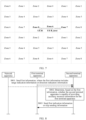
- FIG. 2 is a schematic flowchart of a communication method according to an embodiment of this application. Refer to FIG. 2 . The method includes the following steps.
- Step 201 A second terminal apparatus receives first information.
- the first information includes range indication information and/or direction indication information.
- the first information may come from a first terminal apparatus.
- the first information is for requesting auxiliary resource information.
- the first terminal apparatus may send the first information to at least one second terminal apparatus.
- the at least one second terminal apparatus may belong to a second terminal apparatus group, and the second terminal apparatus belongs to the second apparatus group.
- the group may be determined by a higher layer.
- the first terminal apparatus knows terminal apparatuses included in the group. For example, in a multicast feedback feedback manner 2, a size of the group and a group member are determined by the higher layer. For the multicast feedback manner 2, a receiving terminal apparatus needs to feed back information about a hybrid automatic retransmission HARQ positive answer ACK and a negative answer NACK.
- the group may be a group that is determined by the first terminal apparatus and that is for triggering the second terminal apparatus to feed back the auxiliary resource information.
- the group determined by the first terminal apparatus may be a subset of a set of selected by a higher layer group.
- both the first terminal apparatus and the second terminal apparatus belong to the second apparatus group.
- the first information may come from a network apparatus.
- the first information sent by the network apparatus to the second terminal apparatus may be understood as configuration information.
- the terminal apparatus may determine, based on content in the configuration information, whether the terminal apparatus is capable of providing the auxiliary resource information for the first terminal apparatus. If a related condition is satisfied, the auxiliary resource information may be further provided for the first terminal apparatus.
- the configuration information may carry a related geographical location parameter that is used by the second terminal apparatus to determine whether to provide resource assistance for the first terminal apparatus.
- the network apparatus sends the first information to the second terminal apparatus, or the range indication information or the direction indication information is preconfigured, so that signaling overheads of the first terminal apparatus can be reduced.
- Step 202 The second terminal apparatus determines, based on the first information, whether the second terminal apparatus is capable of providing the auxiliary resource information for the first terminal apparatus, where the auxiliary resource information is for determining a sending resource of the first terminal apparatus.
- Step 203 When the second terminal apparatus is capable of providing the auxiliary resource information for the first terminal apparatus, the second terminal apparatus sends first indication information to the first terminal apparatus, and the first terminal apparatus receives the first indication information from the second terminal apparatus, where the first indication information includes the auxiliary resource information; or when the second terminal apparatus is incapable of providing the auxiliary resource information for the first terminal apparatus, the second terminal apparatus sends second indication information to the first terminal apparatus, and the first terminal apparatus receives the second indication information from the second terminal apparatus, where the second indication information indicates that the second terminal apparatus is incapable of providing the auxiliary resource information for the first terminal apparatus.
- the auxiliary resource information may be sent on a physical sidelink feedback channel PSFCH by using a physical sidelink shared channel (Physical Sidelink Shared Channel, PSSCH), or on a physical sidelink control channel PSCCH.
- PSSCH Physical Sidelink Shared Channel
- PSCCH Physical Sidelink Control Channel
- the first indication information is the auxiliary resource information.
- the auxiliary resource information is for helping the first terminal apparatus, namely, a data sending terminal, determine an appropriate sending resource.
- the auxiliary resource information includes at least one of the following: a sending resource that the first terminal apparatus tends to use, a sending resource that the first terminal apparatus does not tend to use, a sending resource that conflicts with a sending resource of another terminal apparatus, or an indication indicating that there is a sending resource conflict.
- the auxiliary resource information is used by the first terminal apparatus, namely, a terminal apparatus that is to send data, to determine the sending resource, for example, determine a sidelink sending resource of multicast information, broadcast information, or unicast information.
- a sending terminal apparatus may directly select a receiving terminal as an auxiliary terminal apparatus, namely, auxiliary UE.
- the receiving terminal directly feeds back a related resource, so that the sending terminal selects a resource.
- the auxiliary UE may be one or more of receiving terminal apparatuses that need to receive multicast data.
- the auxiliary terminal apparatus may not be a receiving apparatus. This is not limited in the present invention.
- the resource that conflicts with the sending resource of the another terminal apparatus may be a resource that conflicts with the sending resource of the another terminal apparatus and that is in past sending resources, or a resource that is sensed by the second terminal and that conflicts with the sending resource of the another terminal apparatus in the future.
- the auxiliary resource information may alternatively be a conflict indication, indicating that the sending resource of the first terminal apparatus conflicts with the sending resource of the another terminal apparatus in the past or in the future.
- step 202 that the second terminal apparatus determines, based on the first information, whether the second terminal apparatus is capable of providing the auxiliary resource information for the first terminal apparatus includes: The second terminal apparatus determines, based on the first information, whether the second terminal apparatus is in a feedback range of the auxiliary resource information of the first terminal apparatus. When the second terminal apparatus determines that the second terminal apparatus is in the feedback range, the second terminal apparatus is capable of providing the auxiliary resource information for the first terminal apparatus. Alternatively, it is determined, based on that the second terminal apparatus is in the feedback range, that a precondition of sending the auxiliary resource information to the first terminal apparatus is satisfied.
- whether the auxiliary resource information is sent to the first terminal apparatus may further depend on another factor, for example, whether the second terminal apparatus obtains valid auxiliary resource information.
- the second terminal apparatus determines that the second terminal apparatus is not in the feedback range, the second terminal apparatus is incapable of providing the auxiliary resource information for the first terminal apparatus.
- the first information indicates related geographical information of the first terminal apparatus. A corresponding geographical zone may be determined based on the first information, and a terminal apparatus in the zone is suitable for providing resource assistance to the first terminal apparatus.
- another condition may also need to be concerned for whether the second terminal apparatus actually provides the auxiliary resource information for the first terminal apparatus, for example, a current channel status, whether the second terminal apparatus can obtain a valid sensing result, and/or whether the second terminal apparatus has a capability of providing the auxiliary resource information.
- That the second terminal apparatus determines, based on the first information, that the second terminal apparatus is incapable of providing the auxiliary resource information for the first terminal apparatus includes: determining, based on the first information, that the second terminal apparatus is not in the feedback range of the auxiliary resource information of the first terminal apparatus, and determining that the second terminal apparatus is incapable of providing the auxiliary resource information for the first terminal device; or determining, based on that a channel status is busy, that valid auxiliary resource information cannot be obtained, or that the second terminal apparatus does not have a capability of providing the auxiliary resource information, that the second terminal apparatus is incapable of providing the auxiliary resource information for the first terminal device. That the channel status is busy, that the valid auxiliary resource information cannot be obtained, and/or that the second terminal apparatus does not have the capability of providing the auxiliary resource information are separately described below.
- the channel status is busy.
- a measured value of a channel busy ratio (Channel Busy Ratio, CBR) of the second terminal apparatus is greater than a threshold, the second terminal apparatus does not feed back the auxiliary resource information.
- CBR Channel Busy Ratio
- a value of the CBR threshold and a CBR threshold for determining whether the first terminal apparatus triggers an auxiliary resource information request may be a same threshold.
- the second terminal apparatus may not send the auxiliary resource information to the first terminal apparatus, even if the second terminal apparatus receives resource assistance request information and is in the feedback range.
- Sensing is a process of determining an RSRP threshold based on a priority of received data and a priority of to-be-sent data that are carried in received sidelink control information (Sidelink Control information, SCI), and determining whether an RSRP of the received SCI or data is greater than the threshold and whether a resource of the received SCI in a current time period and a future slot that is determined based on a received periodicity overlaps a resource of the to-be-sent data in the current slot or the future slot, to determine whether a candidate resource in the slot is applicable to a data sending process. That the valid sensing result cannot be obtained means that a resource for sending cannot be determined in a resource selection window by using a resource sensing result in the resource sensing window.
- the second terminal apparatus does not have the capability of providing the auxiliary information.
- the second terminal apparatus When the second terminal apparatus is in consideration of energy saving, the second terminal apparatus does not support resource assistance. In this case, the second terminal apparatus may ignore the resource assistance request information, even if the second terminal apparatus receives a resource assistance request from the first terminal device or the first information from the network apparatus, and the second terminal apparatus is in the feedback range.
- the second terminal apparatus may determine, based on an actual capability condition of the second terminal apparatus, whether to feed back the auxiliary resource information to the first terminal apparatus.
- the second terminal apparatus provides the auxiliary resource information for the first terminal apparatus only when the second terminal apparatus has the valid sensing result and satisfies a channel condition.
- a range of feedback terminals may be narrowed by using further conditional filtering, so that effectiveness and reliability of resource feedback can be improved.
- the first information includes the range indication information or the direction indication information.
- the first information is an auxiliary resource request message.
- the range indication information indicates a geographical range in which a terminal apparatus that needs to feed back the auxiliary resource information is located.
- the direction indication information indicates a geographical orientation, relative to the first terminal apparatus, of a terminal apparatus that needs to feed back the auxiliary resource information.
- the second terminal apparatus may determine, based on the range indication information and a communication distance of the first terminal apparatus, the geographical range in which the terminal apparatus that needs to feed back the auxiliary resource information is located.
- the communication distance of the first terminal apparatus indicates a communication range (Communication Range, CR) of the first terminal apparatus, where the range indication information may be R M .
- a geographical zone may be determined by using the range indication information and the communication distance, and a terminal apparatus in the zone needs to feed back the auxiliary resource information to the first terminal apparatus.
- FIG. 3 is used as an example for description below.
- the first terminal apparatus is represented by UE B
- the second terminal apparatus may be represented by UE A
- UE C may be understood as another terminal apparatus, and has a communication relationship with a part of the UE A.
- FIG. 3 shows a plurality of UEs A. It may be considered that the UE B and UE A1 to UE A4 are in one terminal apparatus group, for example, a second terminal apparatus group.
- the first terminal apparatus or the network apparatus sends the first information to at least one second terminal apparatus, for example, may send the first information to the UE A1 to the UE A4.
- the first information carries the range indication information R M , where R M may be represented as a width of a ring zone determined in FIG. 3 .
- the UE A1 to the UE A4 that receive the first information determine, based on R M carried in the first information, whether the UE A1 to the UE A4 are in a feedback range of the UE B.
- the feedback range may be represented by [CR- R M , CR].
- CR is the communication range of the first terminal apparatus.
- CR may alternatively be carried in the first information, and further, may be carried in the range indication information together with R M .
- the UE A1 to the UE A4 determine, based on R M and CR, whether the UE A1 to the UE A4 are in the feedback range.
- the feedback range is a ring in a geographical zone.
- the UE A1 and the UE A2 are in the feedback range, and the UE A3 and the UE A4 are outside the feedback range. Therefore, the UE A3 and the UE A4 do not need to feed back the auxiliary resource information to the UE B.
- Whether the UE A1 and the UE A2 feed back the auxiliary resource information to the UE B may further depend on the foregoing factor such as whether the channel is busy or whether the valid sensing result can be obtained. Certainly, subsequent determining may alternatively not be performed.
- the UE A1 and the UE A2 may send the auxiliary resource information to the UE B.
- the UE-B and the UE-A1 to the UE-A4 may be in one group, and the group is determined by a higher layer, for example, determined by an application layer application layer.
- the UE-B knows UEs included in the group. For example, in a multicast feedback manner 2, a size of the group and group members are determined by the higher layer.
- the group may be a group that is determined by the UE-B and that is for triggering the UE-A to feed back the auxiliary resource information, and the group may be a subset selected by the higher layer group.
- Determining of the parameter R M may be related to a priority of sent data and/or a channel congestion degree.
- the priority of the sent data is a priority carried in SCI, and the priority indicates a priority of currently sent data.
- R M When a priority of to-be-sent data of the UE-B is high, greater R M may be configured, so that more auxiliary UEs help the UE-B perform resource selection. In this way, resource sensing of the UE-B is improved.
- a higher priority of the to-be-sent data indicates a larger value of the range indication information.
- a high priority indicates that the data is important, and a large value of the range indication information indicates that a finally determined feedback zone is large.
- more terminal apparatuses may be scheduled to feed back the auxiliary resource information, to ensure that a resource determining process of the important data has a high priority, and improve transmission reliability.
- the current channel congestion degree is high, for example, a value that is measured by the UE-B and that is of an SL CBR or an SL CR is greater than a threshold, a value of the parameter R M is small, so that fewer UEs are triggered to feed back auxiliary information, to reduce aggravation of channel congestion.
- the first information carries the direction indication information, for a specific manner, refer to FIG. 4 .
- the first terminal apparatus in FIG. 4 may be represented by UE B, and it may be considered that the UE B and UE A1 to UE A4 are in one terminal apparatus group, for example, a second terminal apparatus group.
- geographical locations are divided based on zones zones. For example, the zones may be numbered from a zone 1 to a zone 8, and numbers may be repeated.
- the first information carries the direction indication information
- the direction indication information may include a number zone ID of a corresponding zone that satisfies the feedback range.
- the UE B namely, the first terminal apparatus
- the direction indication may carry information indicating the zone 3 and the zone 4 or directly carry numbers of the zone 3 and the zone 4.
- the direction indication information may further carry information indicating a direction.
- a specific zone ID is determined by using a direction indication.
- the UE-B is located in the zone 5, and sends the resource assistance request information to the UE-A1 to the UE-A4, where the resource request assistance information includes zone ID indication information, indicating the zone 3 and the zone 4.
- the UE-B may alternatively use three bits to indicate eight directions of a location of the UE-B, where specifically, "000" may indicate a direction of due east (which is horizontal to right).
- the direction of due east is indicated is merely an example, and a correspondence between a value of the bits and a direction may be flexible and variable.
- "000" is carried in the auxiliary resource information, it indicates that only UEs-A in the direction of due east of the zone 5 and whose zone IDs are the zone 3 and the zone 4, namely, UE-A2 and UE-A4 in the figure need to provide resource assistance for the UE-B.
- the UE-A1 to the UE-A4 namely, the second terminal device group, may determine, based on the direction indication information carried in the first information, whether the UE-A1 to the UE-A4 belong to the feedback range of the first terminal apparatus.
- the UE A1 located in a zone 0 determines, based on information that indicates the zone 3 and the zone 4 and that is carried in the first information, or based on the numbers of the zone 3 and the zone 4 that are carried in the first information, that the UE A1 does not belong to the feedback range.
- second indication information may be sent to the first terminal apparatus, to indicate that the auxiliary resource information cannot be provided.
- a related direction for example, a direction of due north or a southwest direction, may alternatively be directly indicated in the first information. Feedback range indication efficiency is improved by using the direction indication information.
- the second indication information is carried on a physical sidelink feedback channel PSFCH, a physical sidelink control channel PSCCH, or a physical sidelink data channel PSSCH.
- the second indication information indicates that the second terminal apparatus is incapable of providing the auxiliary resource information for the first terminal apparatus.
- the second indication information may be fed back in a plurality of manners.
- the second indication information includes a negative acknowledgement (negative acknowledgement, NACK).
- NACK negative acknowledgement
- the second terminal apparatus After the second terminal apparatus receives the first information, if the second terminal apparatus determines that the second terminal apparatus is capable of providing the auxiliary resource information for the first terminal apparatus, the second terminal apparatus directly sends the auxiliary resource information to the first terminal apparatus, and does not feed back an acknowledgement message (acknowledgement, ACK). If the auxiliary resource information cannot be provided, the second terminal apparatus needs to feed back the NACK to the first terminal apparatus, to indicate that the auxiliary resource information cannot be provided. When the first terminal apparatus does not receive the NACK, it is considered that the auxiliary UE may provide the auxiliary resource information.
- an indication field may be carried in the request information, namely, SCI corresponding to the first information.
- the indication field indicates whether normal HARQ information or acknowledgement information of providing of the auxiliary resource information is fed back on the feedback channel. For example, one bit is used for indication in the SCI. When the indication field is "0", it indicates that the normal HARQ information is fed back. When the indication field is "1", it indicates that a NACK for data in a normal case is not fed back, but acknowledgement information indicating whether the auxiliary resource information can be provided is fed back.
- the indication field may be carried in a reserved bit in a SCI format 1-A, or may be carried in a new SCI format 2 other than a SCI format 2-A or 2-B.
- the second terminal apparatus feeds back only NACK information of one type.
- HARQ information Indicated meaning "0"-NACK No auxiliary resource information is provided.
- NACK information of two types is fed back.
- a NACK is normal feedback information for data, and a NACK_RAI is acknowledgement information for the auxiliary resource information. Details are as follows: HARQ information Indicated meaning "0"-NACK A PSSCH is not decoded. "1"-NACK_RAI No auxiliary resource information is provided.
- the second manner is re-interpretation of the ACK.
- 0 when 0 is fed back, it indicates that the PSSCH is not decoded.
- 1 when 1 is fed back, it indicates that the auxiliary resource information cannot be provided.
- the second terminal apparatus receives the first information from the first terminal apparatus, determines, based on the range indication information or the direction indication information carried in the first information, whether the second terminal apparatus is capable of providing the auxiliary resource information for the first terminal apparatus.
- the second terminal apparatus sends the auxiliary resource information to the first terminal apparatus.
- the second terminal apparatus feeds back, to the first terminal apparatus, that the second terminal apparatus cannot provide assistance. It is determined, by using the geographical location, that the UE in the corresponding range feeds back the auxiliary resource information, so that system overheads are reduced.
- a UE range for information feedback is further narrowed by using a condition limitation. In this way, a terminal apparatus that needs to provide resource assistance is properly determined by using a geographical information indication, so that resource selection reliability is improved.
- FIG. 5 shows another communication method according to this application.
- Step 501 A first terminal device sends second information to a second terminal device group, where the second information indicates a terminal device in the second terminal apparatus group that needs to feed back auxiliary resource information, and the second terminal device group includes at least one second terminal device.
- Step 502 The second terminal device determines, based on the second information, the terminal device that needs to feed back the auxiliary resource information.
- Step 503 The second terminal apparatus sends the auxiliary resource information to the first terminal apparatus.
- the second terminal apparatus may feed back negative information to the first terminal apparatus.
- the negative information may alternatively not be fed back.
- the second information includes trigger information, and the trigger information indicates the terminal device that needs to feed back the auxiliary resource information in the second terminal group.
- the second information includes a bitmap, and the bitmap indicates the terminal device that needs to feed back the auxiliary resource information in the second terminal apparatus group.
- the second information may be SCI or included in SCI.
- Indication information for example, 1-bit trigger information, may be carried in the second information.
- the information indicates all UEs that has fed back a NACK in initial transmission and retransmission of a same TB to provide the auxiliary resource information, or indicates a terminal that has fed back a NACK for more than N1 times, or a terminal that has fed back a NACK continuously for more than N2 times until the NACK is also fed back in current transmission.
- a reason for which the UE that feeds back the NACK is selected as auxiliary UE that provides the auxiliary resource information is that the UE that has fed back the NACK may consider that data reception is interfered by another terminal, and data cannot be correctly decoded due to a reason such as a poor channel condition, but SCI may be decoded. Because the UE suffers great interference in a communication process, a proper sending resource fed back by the UE is generally also applicable to other UE. Therefore, the UE that feeds back the auxiliary information may be indicated by using SCI signaling. This improves effectiveness of the auxiliary information, and avoids a case in which the auxiliary UE cannot be determined when the SCI cannot be interpreted.
- SCI for scheduling initial transmission of a TB carries information that triggers resource assistance, all UEs in the group feed back the auxiliary resource information.
- Indication information for example, a group of bitmaps (bitmaps), is carried in the second information, to indicate UE that needs to feed back the auxiliary resource information.
- bitmaps bitmaps
- a group of bitmaps with a length of 6 bits may indicate UE-A1 to UE-A6, and the UEs are sorted in ascending order of sizes of member IDs.
- MSB indicates UE with a smallest UE member ID.
- "110000" indicates that the UE-A1 and the UE-A2 feed back the auxiliary resource information.
- the UE that receives the second information may determine, based on a value in the bitmap, whether the UE needs to feed back the auxiliary resource information.
- the first terminal apparatus may select specific UE to feed back auxiliary information, so that the first terminal controls an amount of the auxiliary resource information, to reduce overheads of an entire system.
- the first terminal apparatus When the first terminal apparatus uses a broadcast sending manner, the first terminal apparatus is not clear about receiving UE and a location of the receiving UE. Therefore, the first terminal apparatus may select, based on movement information of the first terminal apparatus, UE on a potential moving path to feed back the auxiliary information.
- An objective is to predict a resource occupation status in a future movement direction, and reduce inaccurate resource estimation caused by movement.
- the first terminal apparatus namely, UE B
- UE B sends a zone ID of a zone to be entered and a probability of keeping a same movement direction.
- UE in the next zone in the same direction needs to feed back the auxiliary resource information.
- the UE-B moves from a zone 8 to a zone 6, and a probability of moving to a zone 7 exceeds 80%.
- UE in the zone 7 may feed back the auxiliary resource information to the UE-B.
- UE that can feed back the auxiliary information is determined based on a movement direction of the UE. This can help the UE sense a resource occupation status of a future location in advance, and improve accuracy of a sensing result.
- FIG. 8 is a schematic flowchart of a communication method according to an embodiment of this application. Refer to FIG. 8 . The method includes the following steps.
- Step 801 A second terminal apparatus receives first information.
- the first information includes range indication information or direction indication information.
- Step 802 The second terminal apparatus determines, based on the first information, whether the second terminal apparatus is capable of providing auxiliary resource information for a first terminal apparatus, where the auxiliary resource information is for determining a sending resource of the first terminal apparatus.
- Step 803 When the second terminal apparatus is capable of providing the auxiliary resource information for the first terminal apparatus, the second terminal apparatus sends first indication information to the first terminal apparatus, and the first terminal apparatus receives the first indication information from the second terminal apparatus, where the first indication information includes the auxiliary resource information.
- step 801 and step 802 refer to descriptions of step 201 and step 202 and a related part.
- the second terminal apparatus determines, based on the first information, whether the second terminal apparatus is capable of providing the auxiliary resource information for the first terminal apparatus in 802 refer to descriptions of content corresponding to step 202. Details are not described herein again.
- step 802 when the second terminal apparatus determines that the second terminal apparatus is capable of providing the auxiliary resource information for the first terminal apparatus, the second terminal apparatus performs step 803 to send the first indication information to the first terminal apparatus.
- the first indication information refer to a related part of the embodiment shown in FIG. 2 .
- the second terminal apparatus determines that the second terminal apparatus is incapable of providing the auxiliary resource information for the first terminal apparatus, the second terminal apparatus does not send information to the first terminal apparatus. In this case, only a terminal apparatus that is capable of providing the auxiliary resource information sends information to the first terminal apparatus, and a terminal apparatus that is incapable of providing the auxiliary resource information does not send information to the first terminal apparatus.
- the first terminal apparatus sends the first information.
- the first information is sent in a broadcast manner.
- the first information may alternatively be sent in another manner, for example, sent to a terminal apparatus in a second terminal apparatus group in a multicast manner.
- the first terminal apparatus also belongs to the second terminal apparatus group.
- a quantity of second terminal apparatuses that receive the first information may be large.
- the terminal apparatus that is incapable of providing the auxiliary resource information may not provide feedback information for the first terminal apparatus to indicate that the auxiliary resource information cannot be provided, so as to avoid further resource congestion or low communication efficiency caused when the first terminal apparatus receives a large amount of useless information.
- Embodiments described in this specification may be independent solutions, or may be combined based on internal logic. All these solutions fall within the protection scope of this application.
- the methods and the operations implemented by the terminal apparatus may alternatively be implemented by a component (for example, a chip or a circuit) used in the terminal apparatus
- the methods and the operations implemented by the network apparatus may alternatively be implemented by a component (for example, a chip or a circuit) used in the network apparatus.
- the terminal apparatus and the network apparatus may include a hardware structure and/or a software module, and implement the foregoing functions in a form of the hardware structure, the software module, or a combination of the hardware structure and the software module. Whether a function in the foregoing functions is performed by using the hardware structure, the software module, or the combination of the hardware structure and the software module depends on particular applications and design constraints of the technical solutions.
- module division is an example, and is merely a logical function division. In actual implementation, another division manner may be used.
- functional modules in embodiments of this application may be integrated into one processor, or may exist alone physically, or two or more modules may be integrated into one module.
- the integrated module may be implemented in a form of hardware, or may be implemented in a form of a software functional module.
- an embodiment of this application further provides an apparatus 900, configured to implement a function of the terminal apparatus or the network apparatus in the foregoing methods.
- the apparatus may be a software module or a chip system.
- the chip system may include a chip, or may include a chip and another discrete component.
- the apparatus 900 may include a processing unit 901 and a transceiver unit 902.
- the transceiver unit may also be referred to as a transceiver module or a communication module, and may include a sending module and/or a receiving module, which are respectively configured to perform sending and receiving steps of the terminal apparatus or the network apparatus in the foregoing method embodiments.
- the apparatus 900 may implement corresponding steps or procedures performed by the terminal apparatus or the network apparatus in the foregoing method embodiments. Descriptions are separately provided below.
- the apparatus 900 implements a function of the second terminal apparatus in the procedure shown in FIG. 2 :
- the transceiver unit is configured to receive first information, where the first information includes range indication information or direction indication information.
- the processing unit is configured to determine, based on the first information, whether a second terminal apparatus is capable of providing auxiliary resource information for a first terminal apparatus.
- the auxiliary resource information is for determining a sending resource of the first terminal apparatus.
- the transceiver unit is further configured to send first indication information to the first terminal apparatus, where the first indication information includes the auxiliary resource information.
- the transceiver unit is further configured to send second indication information to the first terminal apparatus, where the second indication information indicates that the second terminal apparatus is incapable of providing the auxiliary resource information for the first terminal apparatus.
- the range indication information indicates a geographical range in which a terminal apparatus that needs to feed back the auxiliary resource information is located; or the direction indication information indicates a geographical orientation, relative to the first terminal apparatus, of a terminal apparatus that needs to feed back the auxiliary resource information.
- the range indication information is related to a priority of to-be-sent data of the first terminal apparatus and/or a current channel congestion degree.
- the processing unit is further configured to determine, based on the range indication information or the direction indication information, that the second terminal apparatus is in a feedback range of the auxiliary resource information of the first terminal apparatus, and determine that the second terminal apparatus is capable of providing the auxiliary resource information for the first terminal apparatus.
- the processing unit is further configured to determine, based on the range indication information or the direction indication information, that the second terminal apparatus is not in a feedback range of the auxiliary resource information of the first terminal apparatus, and determine that the second terminal apparatus is incapable of providing the auxiliary resource information for the first terminal apparatus.
- the transceiver unit is further configured to receive the first information from the first terminal apparatus, where the first information is for requesting the auxiliary resource information.
- the transceiver unit is further configured to receive the first information from a network apparatus.
- the auxiliary resource information includes at least one of the following: a sending resource that the first terminal apparatus tends to use, a sending resource that the first terminal apparatus does not tend to use, a sending resource that conflicts with a sending resource of another terminal apparatus, or an indication indicating that there is a sending resource conflict.
- FIG. 10 shows an apparatus 1000 according to an embodiment of this application.
- the apparatus shown in FIG. 10 may be an implementation of a hardware circuit of the apparatus shown in FIG. 9 .
- the communication apparatus is applicable to the flowchart shown in FIG. 2 , and performs a function of the terminal apparatus or the network apparatus in the foregoing method embodiments.
- FIG. 10 shows only main components of the communication apparatus.
- the apparatus 1000 shown in FIG. 10 includes at least one processor 1020, a communication interface 1010, and a memory 1030.
- the processor 1020 is configured to execute instructions or a program stored in the memory 1030.
- the processor 1020 is configured to perform an operation performed by the processing unit 901 in the foregoing embodiment
- the communication interface 1010 is configured to perform an operation performed by the transceiver unit 902 in the foregoing embodiment.
- the memory 1030 is configured to store program instructions and/or data.
- the memory 1030 is coupled to a processor 1020.
- the coupling in this embodiment of this application may be an indirect coupling or a communication connection between apparatuses, units, or modules in an electrical form, a mechanical form, or another form, and is used for information exchange between the apparatuses, the units, or the modules.
- the processor 1020 may cooperate with the memory 1030.
- the processor 1020 may execute the program instructions stored in the memory 1030. At least one of the at least one memory may be included in the processor.
- this application may be provided as a method, a system, or a computer program product. Therefore, this application may use a form of hardware only embodiments, software only embodiments, or embodiments with a combination of software and hardware. Moreover, this application may use a form of a computer program product that is implemented on one or more computer-usable storage media (including but not limited to a disk memory, an optical memory, and the like) that include computer-usable program code.
- a computer-usable storage media including but not limited to a disk memory, an optical memory, and the like
- These computer program instructions may be provided for a general-purpose computer, a dedicated computer, an embedded processor, or a processor of any other programmable data processing device to generate a machine, so that the instructions executed by a computer or a processor of any other programmable data processing device generate an apparatus for implementing a specific function in one or more processes in the flowcharts and/or in one or more blocks in the block diagrams.
- These computer program instructions may be stored in a computer-readable memory that can instruct the computer or any other programmable data processing device to work in a specific manner, so that the instructions stored in the computer-readable memory generate an artifact that includes an instruction apparatus.
- the instruction apparatus implements a specific function in one or more processes in the flowcharts and/or in one or more blocks in the block diagrams.
Landscapes
- Engineering & Computer Science (AREA)
- Signal Processing (AREA)
- Computer Networks & Wireless Communication (AREA)
- Mobile Radio Communication Systems (AREA)
Applications Claiming Priority (1)
| Application Number | Priority Date | Filing Date | Title |
|---|---|---|---|
| PCT/CN2020/142261 WO2022141443A1 (fr) | 2020-12-31 | 2020-12-31 | Procédé, dispositif et système de transmission d'informations d'indication |
Publications (2)
| Publication Number | Publication Date |
|---|---|
| EP4250776A1 true EP4250776A1 (fr) | 2023-09-27 |
| EP4250776A4 EP4250776A4 (fr) | 2024-01-10 |
Family
ID=82258905
Family Applications (1)
| Application Number | Title | Priority Date | Filing Date |
|---|---|---|---|
| EP20967782.2A Pending EP4250776A4 (fr) | 2020-12-31 | 2020-12-31 | Procédé, dispositif et système de transmission d'informations d'indication |
Country Status (4)
| Country | Link |
|---|---|
| US (1) | US12598045B2 (fr) |
| EP (1) | EP4250776A4 (fr) |
| CN (1) | CN116602021B (fr) |
| WO (1) | WO2022141443A1 (fr) |
Families Citing this family (2)
| Publication number | Priority date | Publication date | Assignee | Title |
|---|---|---|---|---|
| EP4247086A4 (fr) * | 2021-01-04 | 2023-11-15 | Guangdong Oppo Mobile Telecommunications Corp., Ltd. | Procédé de détermination de ressources, premier dispositif terminal et second dispositif terminal |
| US12279144B2 (en) * | 2021-01-19 | 2025-04-15 | Mediatek Singapore Pte. Ltd. | Resource allocation enhancements for sidelink communications |
Family Cites Families (8)
| Publication number | Priority date | Publication date | Assignee | Title |
|---|---|---|---|---|
| US20180091265A1 (en) * | 2016-09-28 | 2018-03-29 | Futurewei Technologies, Inc. | System and Method for D2D Communication |
| CN110831174B (zh) * | 2018-08-09 | 2024-11-12 | 中兴通讯股份有限公司 | 信息传输方法及装置 |
| CN110958586B (zh) * | 2018-09-27 | 2022-04-01 | 大唐移动通信设备有限公司 | 一种资源分配及接收资源分配的方法、设备、装置 |
| JP6734353B2 (ja) * | 2018-11-28 | 2020-08-05 | ノキア ソリューションズ アンド ネットワークス オサケユキチュア | 無線システムにおける通信 |
| EP3922066A4 (fr) * | 2019-03-26 | 2022-03-30 | Samsung Electronics Co., Ltd. | Appareil et procédé d'assistance à la configuration et à l'affectation de ressources sidelink pour une communication directe dans un système de communication sans fil |
| CN120835411A (zh) * | 2019-04-30 | 2025-10-24 | 中兴通讯股份有限公司 | 无线通信资源配置方法、无线通信装置及存储介质 |
| CN112152760B (zh) * | 2019-06-27 | 2022-03-29 | 华为技术有限公司 | 一种psfch的发送方法及装置 |
| CN114071407B (zh) * | 2020-08-07 | 2025-01-10 | 华为技术有限公司 | 通信方法及装置 |
-
2020
- 2020-12-31 EP EP20967782.2A patent/EP4250776A4/fr active Pending
- 2020-12-31 CN CN202080106297.3A patent/CN116602021B/zh active Active
- 2020-12-31 WO PCT/CN2020/142261 patent/WO2022141443A1/fr not_active Ceased
-
2023
- 2023-06-29 US US18/344,028 patent/US12598045B2/en active Active
Also Published As
| Publication number | Publication date |
|---|---|
| CN116602021A (zh) | 2023-08-15 |
| US20230344610A1 (en) | 2023-10-26 |
| EP4250776A4 (fr) | 2024-01-10 |
| CN116602021B (zh) | 2026-03-10 |
| WO2022141443A1 (fr) | 2022-07-07 |
| US12598045B2 (en) | 2026-04-07 |
Similar Documents
| Publication | Publication Date | Title |
|---|---|---|
| CN111435909B (zh) | 发送和接收反馈信道的方法以及装置 | |
| EP4181595B1 (fr) | Procédé de communication et dispositif de liaison latérale | |
| WO2021031043A1 (fr) | Procédé et dispositif de communication | |
| EP4132027B1 (fr) | Procédé et dispositif de communication | |
| CN112020148A (zh) | 一种通信方法及装置 | |
| US12598045B2 (en) | Indication information transmission method, apparatus, and system | |
| US20230362895A1 (en) | Communication method and system, and terminal apparatus | |
| US20230189294A1 (en) | Communication method and communication apparatus | |
| US20230044818A1 (en) | Communication method, apparatus, and system | |
| CN115604825A (zh) | 一种侧行通信方法及装置 | |
| CN116530189A (zh) | 资源重选辅助的方法与装置和资源重选的方法与装置 | |
| EP4033834B1 (fr) | Dispositif et procédé de sélection de ressource | |
| JP7286776B2 (ja) | 通信方法及び装置 | |
| CN116349340A (zh) | 一种通信方法及通信装置 | |
| CN114600525B (zh) | 一种通信方法及装置 | |
| CN112689269A (zh) | 一种侧行信息的传输方法、装置及系统 | |
| CN114747270A (zh) | 一种侧行数据传输的方法、装置和系统 | |
| CN119729784A (zh) | 一种通信方法及装置 | |
| CN120018287A (zh) | 一种通信方法及相关设备 | |
| CN121984651A (en) | Communication method and communication device | |
| WO2021087974A1 (fr) | Procédé et dispositif d'envoi d'informations de commande et système |
Legal Events
| Date | Code | Title | Description |
|---|---|---|---|
| STAA | Information on the status of an ep patent application or granted ep patent |
Free format text: STATUS: THE INTERNATIONAL PUBLICATION HAS BEEN MADE |
|
| PUAI | Public reference made under article 153(3) epc to a published international application that has entered the european phase |
Free format text: ORIGINAL CODE: 0009012 |
|
| STAA | Information on the status of an ep patent application or granted ep patent |
Free format text: STATUS: REQUEST FOR EXAMINATION WAS MADE |
|
| 17P | Request for examination filed |
Effective date: 20230624 |
|
| AK | Designated contracting states |
Kind code of ref document: A1 Designated state(s): AL AT BE BG CH CY CZ DE DK EE ES FI FR GB GR HR HU IE IS IT LI LT LU LV MC MK MT NL NO PL PT RO RS SE SI SK SM TR |
|
| REG | Reference to a national code |
Ref country code: DE Ref legal event code: R079 Free format text: PREVIOUS MAIN CLASS: H04W0004400000 Ipc: H04W0072510000 |
|
| A4 | Supplementary search report drawn up and despatched |
Effective date: 20231212 |
|
| RIC1 | Information provided on ipc code assigned before grant |
Ipc: H04W 72/04 20230101ALI20231206BHEP Ipc: H04W 4/40 20180101ALI20231206BHEP Ipc: H04W 72/25 20230101ALI20231206BHEP Ipc: H04W 72/51 20230101AFI20231206BHEP |
|
| DAV | Request for validation of the european patent (deleted) | ||
| DAX | Request for extension of the european patent (deleted) | ||
| STAA | Information on the status of an ep patent application or granted ep patent |
Free format text: STATUS: EXAMINATION IS IN PROGRESS |
|
| 17Q | First examination report despatched |
Effective date: 20250715 |