EP4252778A2 - Formulations topiques de cannabinoïdes et produits d'instillation, kits et méthodes de traitement de plaies tégumentaires, et utilisations associées - Google Patents
Formulations topiques de cannabinoïdes et produits d'instillation, kits et méthodes de traitement de plaies tégumentaires, et utilisations associées Download PDFInfo
- Publication number
- EP4252778A2 EP4252778A2 EP23193127.0A EP23193127A EP4252778A2 EP 4252778 A2 EP4252778 A2 EP 4252778A2 EP 23193127 A EP23193127 A EP 23193127A EP 4252778 A2 EP4252778 A2 EP 4252778A2
- Authority
- EP
- European Patent Office
- Prior art keywords
- wound
- topical
- topical formulation
- integumentary
- instillate
- Prior art date
- Legal status (The legal status is an assumption and is not a legal conclusion. Google has not performed a legal analysis and makes no representation as to the accuracy of the status listed.)
- Pending
Links
Images




Classifications
-
- A—HUMAN NECESSITIES
- A61—MEDICAL OR VETERINARY SCIENCE; HYGIENE
- A61K—PREPARATIONS FOR MEDICAL, DENTAL OR TOILETRY PURPOSES
- A61K31/00—Medicinal preparations containing organic active ingredients
- A61K31/70—Carbohydrates; Sugars; Derivatives thereof
- A61K31/7042—Compounds having saccharide radicals and heterocyclic rings
- A61K31/7048—Compounds having saccharide radicals and heterocyclic rings having oxygen as a ring hetero atom, e.g. leucoglucosan, hesperidin, erythromycin, nystatin, digitoxin or digoxin
-
- A—HUMAN NECESSITIES
- A61—MEDICAL OR VETERINARY SCIENCE; HYGIENE
- A61K—PREPARATIONS FOR MEDICAL, DENTAL OR TOILETRY PURPOSES
- A61K31/00—Medicinal preparations containing organic active ingredients
- A61K31/01—Hydrocarbons
- A61K31/015—Hydrocarbons carbocyclic
-
- A—HUMAN NECESSITIES
- A61—MEDICAL OR VETERINARY SCIENCE; HYGIENE
- A61K—PREPARATIONS FOR MEDICAL, DENTAL OR TOILETRY PURPOSES
- A61K9/00—Medicinal preparations characterised by special physical form
- A61K9/0012—Galenical forms characterised by the site of application
- A61K9/0014—Skin, i.e. galenical aspects of topical compositions
-
- A—HUMAN NECESSITIES
- A61—MEDICAL OR VETERINARY SCIENCE; HYGIENE
- A61K—PREPARATIONS FOR MEDICAL, DENTAL OR TOILETRY PURPOSES
- A61K31/00—Medicinal preparations containing organic active ingredients
- A61K31/33—Heterocyclic compounds
- A61K31/335—Heterocyclic compounds having oxygen as the only ring hetero atom, e.g. fungichromin
- A61K31/35—Heterocyclic compounds having oxygen as the only ring hetero atom, e.g. fungichromin having six-membered rings with one oxygen as the only ring hetero atom
- A61K31/352—Heterocyclic compounds having oxygen as the only ring hetero atom, e.g. fungichromin having six-membered rings with one oxygen as the only ring hetero atom condensed with carbocyclic rings, e.g. methantheline
- A61K31/353—3,4-Dihydrobenzopyrans, e.g. chroman, catechin
-
- A—HUMAN NECESSITIES
- A61—MEDICAL OR VETERINARY SCIENCE; HYGIENE
- A61K—PREPARATIONS FOR MEDICAL, DENTAL OR TOILETRY PURPOSES
- A61K31/00—Medicinal preparations containing organic active ingredients
- A61K31/658—Medicinal preparations containing organic active ingredients o-phenolic cannabinoids, e.g. cannabidiol, cannabigerolic acid, cannabichromene or tetrahydrocannabinol
-
- A—HUMAN NECESSITIES
- A61—MEDICAL OR VETERINARY SCIENCE; HYGIENE
- A61K—PREPARATIONS FOR MEDICAL, DENTAL OR TOILETRY PURPOSES
- A61K36/00—Medicinal preparations of undetermined constitution containing material from algae, lichens, fungi or plants, or derivatives thereof, e.g. traditional herbal medicines
- A61K36/18—Magnoliophyta (angiosperms)
- A61K36/185—Magnoliopsida (dicotyledons)
- A61K36/348—Cannabaceae
- A61K36/3482—Cannabis
-
- A—HUMAN NECESSITIES
- A61—MEDICAL OR VETERINARY SCIENCE; HYGIENE
- A61K—PREPARATIONS FOR MEDICAL, DENTAL OR TOILETRY PURPOSES
- A61K45/00—Medicinal preparations containing active ingredients not provided for in groups A61K31/00 - A61K41/00
- A61K45/06—Mixtures of active ingredients without chemical characterisation, e.g. antiphlogistics and cardiaca
-
- A—HUMAN NECESSITIES
- A61—MEDICAL OR VETERINARY SCIENCE; HYGIENE
- A61K—PREPARATIONS FOR MEDICAL, DENTAL OR TOILETRY PURPOSES
- A61K47/00—Medicinal preparations characterised by the non-active ingredients used, e.g. carriers or inert additives; Targeting or modifying agents chemically bound to the active ingredient
- A61K47/30—Macromolecular organic or inorganic compounds, e.g. inorganic polyphosphates
- A61K47/32—Macromolecular compounds obtained by reactions only involving carbon-to-carbon unsaturated bonds, e.g. carbomers, poly(meth)acrylates, or polyvinyl pyrrolidone
-
- A—HUMAN NECESSITIES
- A61—MEDICAL OR VETERINARY SCIENCE; HYGIENE
- A61K—PREPARATIONS FOR MEDICAL, DENTAL OR TOILETRY PURPOSES
- A61K47/00—Medicinal preparations characterised by the non-active ingredients used, e.g. carriers or inert additives; Targeting or modifying agents chemically bound to the active ingredient
- A61K47/30—Macromolecular organic or inorganic compounds, e.g. inorganic polyphosphates
- A61K47/34—Macromolecular compounds obtained otherwise than by reactions only involving carbon-to-carbon unsaturated bonds, e.g. polyesters, polyamino acids, polysiloxanes, polyphosphazines, copolymers of polyalkylene glycol or poloxamers
-
- A—HUMAN NECESSITIES
- A61—MEDICAL OR VETERINARY SCIENCE; HYGIENE
- A61K—PREPARATIONS FOR MEDICAL, DENTAL OR TOILETRY PURPOSES
- A61K47/00—Medicinal preparations characterised by the non-active ingredients used, e.g. carriers or inert additives; Targeting or modifying agents chemically bound to the active ingredient
- A61K47/30—Macromolecular organic or inorganic compounds, e.g. inorganic polyphosphates
- A61K47/36—Polysaccharides; Derivatives thereof, e.g. gums, starch, alginate, dextrin, hyaluronic acid, chitosan, inulin, agar or pectin
-
- A—HUMAN NECESSITIES
- A61—MEDICAL OR VETERINARY SCIENCE; HYGIENE
- A61K—PREPARATIONS FOR MEDICAL, DENTAL OR TOILETRY PURPOSES
- A61K47/00—Medicinal preparations characterised by the non-active ingredients used, e.g. carriers or inert additives; Targeting or modifying agents chemically bound to the active ingredient
- A61K47/44—Oils, fats or waxes according to two or more groups of A61K47/02-A61K47/42; Natural or modified natural oils, fats or waxes, e.g. castor oil, polyethoxylated castor oil, montan wax, lignite, shellac, rosin, beeswax or lanolin
-
- A—HUMAN NECESSITIES
- A61—MEDICAL OR VETERINARY SCIENCE; HYGIENE
- A61L—METHODS OR APPARATUS FOR STERILISING MATERIALS OR OBJECTS IN GENERAL; DISINFECTION, STERILISATION OR DEODORISATION OF AIR; CHEMICAL ASPECTS OF BANDAGES, DRESSINGS, ABSORBENT PADS OR SURGICAL ARTICLES; MATERIALS FOR BANDAGES, DRESSINGS, ABSORBENT PADS OR SURGICAL ARTICLES
- A61L15/00—Chemical aspects of, or use of materials for, bandages, dressings or absorbent pads
- A61L15/16—Bandages, dressings or absorbent pads for physiological fluids such as urine or blood, e.g. sanitary towels, tampons
- A61L15/42—Use of materials characterised by their function or physical properties
- A61L15/44—Medicaments
-
- A—HUMAN NECESSITIES
- A61—MEDICAL OR VETERINARY SCIENCE; HYGIENE
- A61L—METHODS OR APPARATUS FOR STERILISING MATERIALS OR OBJECTS IN GENERAL; DISINFECTION, STERILISATION OR DEODORISATION OF AIR; CHEMICAL ASPECTS OF BANDAGES, DRESSINGS, ABSORBENT PADS OR SURGICAL ARTICLES; MATERIALS FOR BANDAGES, DRESSINGS, ABSORBENT PADS OR SURGICAL ARTICLES
- A61L26/00—Chemical aspects of, or use of materials for, wound dressings or bandages in liquid, gel or powder form
- A61L26/0061—Use of materials characterised by their function or physical properties
- A61L26/0066—Medicaments; Biocides
-
- A—HUMAN NECESSITIES
- A61—MEDICAL OR VETERINARY SCIENCE; HYGIENE
- A61P—SPECIFIC THERAPEUTIC ACTIVITY OF CHEMICAL COMPOUNDS OR MEDICINAL PREPARATIONS
- A61P17/00—Drugs for dermatological disorders
- A61P17/02—Drugs for dermatological disorders for treating wounds, ulcers, burns, scars, keloids, or the like
-
- C—CHEMISTRY; METALLURGY
- C07—ORGANIC CHEMISTRY
- C07H—SUGARS; DERIVATIVES THEREOF; NUCLEOSIDES; NUCLEOTIDES; NUCLEIC ACIDS
- C07H17/00—Compounds containing heterocyclic radicals directly attached to hetero atoms of saccharide radicals
- C07H17/04—Heterocyclic radicals containing only oxygen as ring hetero atoms
- C07H17/06—Benzopyran radicals
- C07H17/065—Benzo[b]pyrans
- C07H17/07—Benzo[b]pyran-4-ones
-
- A—HUMAN NECESSITIES
- A61—MEDICAL OR VETERINARY SCIENCE; HYGIENE
- A61L—METHODS OR APPARATUS FOR STERILISING MATERIALS OR OBJECTS IN GENERAL; DISINFECTION, STERILISATION OR DEODORISATION OF AIR; CHEMICAL ASPECTS OF BANDAGES, DRESSINGS, ABSORBENT PADS OR SURGICAL ARTICLES; MATERIALS FOR BANDAGES, DRESSINGS, ABSORBENT PADS OR SURGICAL ARTICLES
- A61L2300/00—Biologically active materials used in bandages, wound dressings, absorbent pads or medical devices
- A61L2300/20—Biologically active materials used in bandages, wound dressings, absorbent pads or medical devices containing or releasing organic materials
- A61L2300/216—Biologically active materials used in bandages, wound dressings, absorbent pads or medical devices containing or releasing organic materials with other specific functional groups, e.g. aldehydes, ketones, phenols, quaternary phosphonium groups
-
- A—HUMAN NECESSITIES
- A61—MEDICAL OR VETERINARY SCIENCE; HYGIENE
- A61L—METHODS OR APPARATUS FOR STERILISING MATERIALS OR OBJECTS IN GENERAL; DISINFECTION, STERILISATION OR DEODORISATION OF AIR; CHEMICAL ASPECTS OF BANDAGES, DRESSINGS, ABSORBENT PADS OR SURGICAL ARTICLES; MATERIALS FOR BANDAGES, DRESSINGS, ABSORBENT PADS OR SURGICAL ARTICLES
- A61L2300/00—Biologically active materials used in bandages, wound dressings, absorbent pads or medical devices
- A61L2300/40—Biologically active materials used in bandages, wound dressings, absorbent pads or medical devices characterised by a specific therapeutic activity or mode of action
- A61L2300/402—Anaestetics, analgesics, e.g. lidocaine
Definitions
- the present application relates generally to treatment of integumentary wounds (including chronic and acute wounds involving both cutaneous and mucous membranes), and in particular to topical formulations and instillates, kits, and methods for treating integumentary wounds, and uses thereof.
- Wound healing normally progresses through highly organized and regulated sequence of events that are mediated by multiple cell lines and associated growth factors. Tissue damage, caused by either disease process or trauma, is followed by hemostasis. Thereafter, wound healing may be generally described to occur as three overlapping phases: the inflammatory, proliferative, and remodeling phases ( Bielefeld et al. Cell. Mol. Life Sci. (2013) 70:2059-2081 ; and de Oliveira Gonzalez et al. An Bras Dermatol. 2016;91(5):614-20 ).
- the inflammatory phase prepares the wound site for healing by immobilizing the wound and causing it to swell and become painful.
- the inflammatory phase also results in vasodilation and phagocytosis, which lead to release of histamines and serotonins.
- the proliferative phase is characterized by the proliferation of epidermal cells at the wound edge, and by repair of the underlying dermal or mesenchymal layer. This is accompanied by neovascularization. This process usually occurs 2 days to 3 weeks following injury and results in granulation tissue at the wound site.
- Granulation tissue formation occurs during the proliferative phase and involves the following mechanisms: an increase in fibroblastic proliferation; collagenous and elastic biosynthesis, which creates a three-dimensional extracellular network of connective tissue; and the production of chemotactic factors and IFN-beta by fibroblasts, (de Oliveira Gonzalez et al.) Healthy granulation tissue is granular and uneven in texture; it does not bleed easily and is pink / red in colour.
- remodeling of dermal tissue to produce greater tensile strength whereby new collagen is formed is the main aim of this phase.
- the principle cell type involved is the fibroblast. Collagen molecules begin to form whereby they undergo further modification and molecules begin to form in a characteristic triple helical structure. Together, these changes result in the contraction of the wound and the formation of acellular scar tissue.
- FIG. 1 illustrates an exemplary normal wound healing sequence: upon tissue injury, hemostatsis 101 occurs which may involve epinephrine, platelets, and transforming growth factor beta (TGF- ⁇ ); inflammation 102 may follow hemostatsis 101 and involve neutrophils, macrophages, reactive oxygen species, matrix metalloproteinases (MMPs), interleukins (IL), tumor necrosis factors (TNF), vascular endothelial growth factor (VEGF), TGF- ⁇ , and platelet-derived growth factor (PDGF); inflammation 102 may become prolonged inflammation 103 that may lead to a chronic wound; granulation and angiogenesis 104 may follow inflammation 102 and involve fibroblasts, macrophages, endothelial cells, MMPs, IL, TNF, VEGF, TGF- ⁇ , PDGF, and keratinocyte growth factor (KGF); re-epithelialization 105 may follow granulation and angiogenesis 104 and involve keratinocytes, endothelial cells,
- the pathophysiology of the "stalled” or “arrested” healing process may be characterized by a state of heightened and prolonged inflammation.
- cytokines such as TNF ⁇ and IL-1 ⁇ are released; release of these cytokines lead to increased expression of MMPs and decreased expression of tissue inhibitor of metalloproteinase, which contribute to degradation of extracellular matrix (resulting in impaired cell migration and connective tissue deposition) and growth factors, thereby reinforcing prolonged inflammation.
- Effects of this exemplary chronic wound cycle may include delayed healing, repeated trauma, local tissue ischemia, necrotic tissue, heavy bacterial burden and tissue breakdown.
- a topical instillate comprising:
- the one or more cannabinoids comprise at least one of cannabidiol and tetrahydrocannabinol.
- the one or more terpenes comprise beta-caryophyllene, and the concentration of beta-caryophyllene is 50 mg/ml to 500 mg/ml.
- the one or more flavonoids comprise at least one of diosmin and quercetin.
- a topical formulation for direct application to an integumentary wound comprising:
- the one or more cannabinoids comprise at least one of cannabidiol and tetrahydrocannabinol.
- the one or more terpenes comprise beta-caryophyllene, and the concentration of beta-caryophyllene is 50 mg/ml to 500 mg/ml.
- the one or more flavonoids comprise at least one of diosmin, quercetin, and hesperidin.
- the topical formulation further comprises a liquid carrier selected for instillation of the topical formulation onto an integumentary wound.
- a wound dressing comprising a contact layer, and the topical instillate as described herein or the topical formulation as described herein integrated with the contact layer.
- a method comprising instilling a topical formulation onto an integumentary wound of a subject, wherein the topical formulation comprises one or more cannabinoids; one or more terpenes; and one or more flavonoids.
- the instilling comprises dropping, spraying, diffusing, dispersing, squirting, or spreading the topical formulation.
- the integumentary wound is acute, or is chronic, stalled, recalcitrant, or a combination thereof.
- the method further comprises instilling the topical formulation onto a periwound area around the integumentary wound.
- topical formulation for the treatment of an integumentary wound of a subject, wherein the topical formulation comprises one or more cannabinoids; one or more terpenes; and one or more flavonoids.
- the topical formulation is used for instillation onto the integumentary wound.
- the integumentary wound is acute, or is chronic, stalled, recalcitrant, or a combination thereof.
- the topical formulation is further used for instillation onto a periwound area around the integumentary wound.
- kits comprising (i) a container containing the topical instillate as described herein or the topical formulation as described herein, and instructions for instilling the topical instillate or topical formulation onto an integumentary wound; or (ii) a plurality of containers containing materials for forming the topical instillate or topical formulation, and instructions for preparing the topical instillate or topical formulation from the materials in the containers and for instilling the topical instillate or topical formulation onto the integumentary wound.
- treating an integumentary wound with a selected combination of a cannabinoid, a terpene and a flavonoid applied directly onto the wound bed can provide healing effects, such as stimulating or facilitating granulation tissue growth and promoting epithelialization of the integumentary wound.
- integument refers to the outer protective layer(s), both cutaneous membrane and mucous membrane, of a living being and the term “integumentary wound” refers to a breakdown and loss of at least a portion of the integument including the outermost sublayer(s) of the integument, namely the epidermis, and optionally destruction of deeper tissues such as the dermis, fat, fascial connective tissues, and often muscle and bone.
- An integumentary wound may include a wound commonly referred to as an open wound, where an injured body area exposes the dermal layer of skin or tissue(s) and structure(s) beneath the dermal layer (such as fat, muscle, fascia, and bone) of skin to air.
- the integument has two main layers: (i) the outer layer, referred to as the epidermis, which functions as a barrier to the external environment, and (ii) the inner layer, referred to as the dermis, which is composed of connective tissue and provides the skin with some of its mechanical properties.
- treatment of an integumentary wound includes topically delivering the selected cannabinoid(s), terpene(s) and flavonoid(s) to the integumentary wound as instillates.
- An embodiment of the present disclosure thus provides a topical formulation comprising a selected composition of cannabinoids, terpenes and flavonoids, at concentrations within specific respective ranges, formulated for direct application onto an integumentary wound.
- the formulation may include a topical instillate, which includes: (a) 5 mg/ml to 30 mg/ml of cannabidiol and 2 mg/ml to 10 mg/ml of tetrahydrocannabinol; (b) 30 mg/ml to 60 mg/ml of beta-caryophyllene and 10 mg/ml to 30 mg/ml of linalool; (c) 10 mg/ml to 30 mg/ml of diosmin and 10 mg/ml to 30 mg/ml of quercetin; and (d) aloe vera gel and optionally hyaluronic acid gel.
- a topical instillate which includes: (a) 5 mg/ml to 30 mg/ml of cannabidiol and 2 mg/ml to 10 mg/ml of tetrahydrocannabinol; (b) 30 mg/ml to 60 mg/ml of beta-caryophyllene and 10 mg/ml to 30 mg/m
- the formulation may include a topical instillate, which includes: (a) 0.1 mg/ml to 20 mg/ml of cannabidiol and 0 mg/ml to 5 mg/ml of tetrahydrocannabinol; (b) 50 mg/ml to 500 mg/ml of beta-caryophyllene and 10 mg/ml to 150 mg/ml of linalool; (c) 0 mg/ml to 50 mg/ml of diosmin and 10 mg/ml to 50 mg/ml of quercetin; and (d) aloe vera gel and optionally hyaluronic acid gel.
- a topical instillate which includes: (a) 0.1 mg/ml to 20 mg/ml of cannabidiol and 0 mg/ml to 5 mg/ml of tetrahydrocannabinol; (b) 50 mg/ml to 500 mg/ml of beta-caryophyllene and 10 mg/ml
- the formulation may include a topical instillate, which includes: (a) 2.3 mg/ml of cannabidiol and 1.0 mg/ml of tetrahydrocannabinol; (b) 81.5 mg/ml of beta-caryophyllene and 28.4 mg/ml of linalool; (c) 16.7 mg/ml of micronized diosmin and 16.7 mg/ml of micronized quercetin; and (d) aloe vera gel and hyaluronic acid gel.
- a topical instillate which includes: (a) 2.3 mg/ml of cannabidiol and 1.0 mg/ml of tetrahydrocannabinol; (b) 81.5 mg/ml of beta-caryophyllene and 28.4 mg/ml of linalool; (c) 16.7 mg/ml of micronized diosmin and 16.7 mg/ml of micronized quercetin; and (d
- the formulation may include a topical instillate, which includes: (a) 2.6 mg/ml of cannabidiol; (b) 118 mg/ml of beta-caryophyllene; (c) 19.6 mg/ml of micronized diosmin, 21.7 mg/ml of micronized quercetin, and 2.2 mg/ml of hersperidin; and (d) aloe vera gel and hyaluronic acid gel.
- a topical instillate which includes: (a) 2.6 mg/ml of cannabidiol; (b) 118 mg/ml of beta-caryophyllene; (c) 19.6 mg/ml of micronized diosmin, 21.7 mg/ml of micronized quercetin, and 2.2 mg/ml of hersperidin; and (d) aloe vera gel and hyaluronic acid gel.
- the stated concentrations in the present disclosure are based on the total volume of the formulation and the dry weights of respective active agents.
- the formulation may include a solution or a colloid, and is formulated for direct application to the wound bed of an integumentary wound via instillation, such as by dropping, spraying, diffusing, dispersing, squirting, or spreading the formulation onto the integumentary wound bed, to promote wound healing.
- the method includes directly applying a topical formulation comprising a cannabinoid, a terpene, and a flavonoid onto an integumentary wound.
- Still further embodiments of the present disclosure relate to uses of selected topical formulations disclosed herein for the treatment of an integumentary wound.
- Selected topical formulations disclosed herein may also have one or more other beneficial effects such as management of pain (e.g., baseline pain and breakthrough pain), analgesic effects, anti-inflammatory effects, anti-pruritic effects, opioid-sparing effects, anti-microbial activity or the like.
- pain e.g., baseline pain and breakthrough pain
- analgesic effects e.g., anti-inflammatory effects, anti-pruritic effects, opioid-sparing effects, anti-microbial activity or the like.
- topical formulation is generally understood to mean a mixture of substances that is suitable for application to a particular place on or in the body.
- a topical formulation may be a solution in which one or more solutes are uniformly distributed within a solvent, or a colloid in which one substance is not dissolved in, but suspended throughout, another substance.
- a topical formulation may exist in any phase or a combination of phases.
- suitable forms of a topical formulation for application to a cutaneous wound may include solution, lotion, cream, ointment, gel, emulsion, liposome, foam, powder, impregnated gauze sheet, tulle, vapor and paste, and suitable forms of a topical formulation for application to a mucous wound may include aerosolized spray for nasal and oral applications and suppository for rectal and vaginal applications.
- a topical formulation may include one or more cannabinoids, one or more terpenes, one or more flavonoids, and a liquid carrier selected for instillation of the topical formulation onto an integumentary wound.
- cannabinoid is generally understood to include any chemical compound that acts upon a cannabinoid receptor.
- cannabinoids include cannabidiol (CBD), cannabinol (CBN), cannabigerol (CBG), cannabichromene (CBC), tetrahydrocannabivarin (THCV), cannabichromanon (CBCN), cannabielsoin (CBE), cannbifuran (CBF), tetrahydrocannabinol (THC), cannabinodiol (CBDL), cannabicyclol (CBL), cannabitriol (CBT), cannabivarin (CBV), cannabidivarin (CBDV), cannabichromevarin (CBCV), cannabigerovarin (CBGV), cannabigerol monomethyl ether (CBGM), cannabinerolic acid, cannabidiolic acid (CBDA), cannabinod
- a cannabinoid may be in an acid form or a non-acid form, the latter also being referred to as the decarboxylated form since the non-acid form can be generated by decarboxylating the acid form.
- the cannabinoid can be in its acid or non-acid form, or be a mixture of both acid and non-acid forms.
- a topical formulation provided herein may include cannabidiol (CBD).
- CBD is not psychoactive, and is expected to relieve convulsion, inflammation, anxiety, and nausea.
- cannabidiol “CBD,” or “cannabidiols” are generally understood to refer to one or more of the following compounds, and, unless a particular other stereoisomer or stereoisomers are specified, includes the compound “ ⁇ 2 -cannabidiol.” These compounds are: (1) ⁇ 5 -cannabidiol (2-(6-isopropenyl-3-methyl-5-cyclohexen-1-yl)-5-pentyl-1,3-benzenediol); (2) ⁇ 4 -cannabidiol (2-(6-isopropenyl-3-methyl-4-cyclohexen-1-yl)-5-pentyl-1,3-benzenediol); (3) ⁇ 3 -cannabidiol (2-(6-isopropenyl-3-methyl-3-cyclohexen-1-yl)-5-pentyl-1,3-benzenediol); (4) ⁇ 3,7 - cannabidiol (2-(6-isopropyl
- These compounds have one or more chiral centers and two or more stereoisomers as stated below: (1) ⁇ 5 -cannabidiol has 2 chiral centers and 4 stereoisomers; (2) ⁇ 4 -cannabidiol has 3 chiral centers and 8 stereoisomers; (3) ⁇ 3 -cannabidiol has 2 chiral centers and 4 stereoisomers; (4) ⁇ 3,7 - cannabidiol has 2 chiral centers and 4 isomers; (5) ⁇ 2 -cannabidiol has 2 chiral centers and 4 stereoisomers; (6) ⁇ 1 - cannabidiol has 2 chiral centers and 4 stereoisomers; and (7) ⁇ 6 -cannabidiol has 1 chiral center and 2 stereoisomers.
- a topical formulation provided herein may include ⁇ 2 -cannabidiol.
- a reference to “cannabidiol,” “CBD,” or “cannabidiols” or to any of specific cannabidiol compounds (1)-(7) as referred to above includes all possible stereoisomers of all compounds included by the reference.
- ⁇ 2 -cannabidiol may be a mixture of the ⁇ 2 -cannabidiol stereoisomers that are present in a plant, or an extract thereof, such as Cannabis sativa, Cannabis indica, or another plant of the Cannabis genus;
- ⁇ 2 -cannabidiol may be a mixture of the ⁇ 2 -cannabidiol stereoisomers that are present in a plant, or an extract thereof, such as Cannabis sativa, Cannabis indica, or another plant of the Cannabis genus, wherein said mixture of stereoisomers is at, or at about, the naturally occurring ratio of isomers; and
- ⁇ 2 -cannabidiol may be a single stereoisomer.
- a topical formulation provided herein may comprise one or more cannabinoids, such as cannabinol, cannabigerol, cannabichromene, and tetrahydrocannabivarin, in addition to CBD.
- cannabinoids such as cannabinol, cannabigerol, cannabichromene, and tetrahydrocannabivarin
- CBD cannabinoids
- CBN tetrahydrocannabivarin
- a topical formulation provided herein may also include THC. In other embodiments, a topical formulation provided herein may not contain THC.
- THC is only psychoactive in its decarboxylated state.
- the carboxylic acid form (THCa) is non-psychoactive.
- Delta-9-tetrahydrocannabinol ( ⁇ 9-THC) and delta-8-tetrahydrocannabinol ( ⁇ 8-THC) produce the effects associated with cannabis by binding to the CB1 cannabinoid receptors in the brain.
- THC is expected to ease moderate pain (analgesic) and to be neuroprotective, while also offering the potential to reduce neuroinflammation and to stimulate neurogenesis.
- THC may be substituted entirely by THCV.
- a topical formulation provided herein may include 0.1 mg/ml to 40 mg/ml of cannabinoid(s).
- a topical formulation provided herein may comprise 0.1 mg/ml to 30 mg/ml, 0.5 mg/ml to 30 mg/ml, 1 mg/ml to 30 mg/ml, 0.1 mg/ml to 25 mg/ml, 0.5 mg/ml to 25 mg/ml, 1 mg/ml to 25 mg/ml, 0.1 mg/ml to 20 mg/ml, 0.5 mg/ml to 20 mg/ml, 1 mg/ml to 20 mg/ml, 0.1 mg/ml to 15 mg/ml, 0.5 mg/ml to 15 mg/ml, 1 mg/ml to 15 mg/ml, 0.1 mg/ml to 10 mg/ml, 0.5 mg/ml to 10 mg/ml, 1 mg/ml to 10 mg/ml, 0.1 mg/ml to 5 mg/ml, 0.5 mg/ml to 30
- a topical formulation provided herein may comprise at least 0.1 mg/ml, 0.5 mg/ml, 1 mg/ml, 2 mg/ml, 3 mg/ml, 4 mg/ml, 5 mg/ml, 6 mg/ml, 7 mg/ml, 8 mg/ml, 9 mg/ml, 10 mg/ml, 11 mg/ml, 12 mg/ml, 13 mg/ml, 14 mg/ml, 15 mg/ml, 16 mg/ml, 17 mg/ml, 18 mg/ml, 19 mg/ml, 20 mg/ml, 21 mg/ml, 22 mg/ml, 23 mg/ml, 24 mg/ml, 25 mg/ml, 26 mg/ml, 27 mg/ml, 28 mg/ml, 29 mg/ml, 30 mg/ml, 31 mg/ml, 32 mg/ml, 33 mg/ml, 34 mg/ml, 35 mg/ml, 36 mg/ml, 37 mg/ml, 38 mg
- a topical formulation provided herein may comprise 0.1 mg/ml, 0.5 mg/ml, 1 mg/ml, 2 mg/ml, 3 mg/ml, 4 mg/ml, 5 mg/ml, 6 mg/ml, 7 mg/ml, 8 mg/ml, 9 mg/ml, 10 mg/ml, 11 mg/ml, 12 mg/ml, 13 mg/ml, 14 mg/ml, 15 mg/ml, 16 mg/ml, 17 mg/ml, 18 mg/ml, 19 mg/ml, 20 mg/ml, 21 mg/ml, 22 mg/ml, 23 mg/ml, 24 mg/ml, 25 mg/ml, 26 mg/ml, 27 mg/ml, 28 mg/ml, 29 mg/ml, 30 mg/ml, 31 mg/ml, 32 mg/ml, 33 mg/ml, 34 mg/ml, 35 mg/ml, 36 mg/ml, 37 mg/ml, 38 mg/ml,
- the concentrations of cannabinoids in a topical formulation provided herein may be adjusted depending on the phase of wound healing. For example, during the inflammatory phase, a higher level of a mixture of THC and CBD (e.g., 5 mg/ml to 20 mg/ml of cannabidiol and 2 mg/ml to 10 mg/ml of tetrahydrocannabinol) can be beneficial since wound pain is most intense during this phase and higher levels of THC and CBD can help to manage the pain.
- a higher level of a mixture of THC and CBD e.g., 5 mg/ml to 20 mg/ml of cannabidiol and 2 mg/ml to 10 mg/ml of tetrahydrocannabinol
- THC a reduced concentration of THC (e.g., 0 mg/ml to 5 mg/ml) may be desirable since preclinical studies suggest that THC may inhibit keratinocyte differentiation, while the CBD concentration may remain relatively high (e.g., 0.1 mg/ml to 20 mg/ml).
- terpene is generally understood to include any organic compound derived biosynthetically from units of isoprene, and the term “terpenoid” generally refers to a chemically modified terpene (e.g., by oxidation).
- terpenes include terpenoids.
- Terpenes may be classified in various ways, such as by their sizes.
- suitable terpenes may include monoterpenes, sesquiterpenes,or triterpenes. At least some terpenes are expected to interact with, and potentiate the activity of, cannabinoids.
- terpenes known to be extractable from cannabis include aromadendrene, bergamottin, bergamotol, bisabolene, borneol, 4-3-carene, beta-caryophyllene, cineole/eucalyptol, p-cymene, dihydroj asmone, elemene, farnesene, fenchol, geranylacetate, guaiol, humulene, isopulegol, limonene, linalool, menthone, menthol, menthofuran, myrcene, nerylacetate, neomenthylacetate, ocimene, perillylalcohol, phellandrene, pinene, pulegone, sabinene, terpinene, terpineol, terpineol-4-ol, terpinolene, and derivatives thereof.
- terpenes include nerolidol, phytol, geraniol, alpha-bisabolol, thymol, genipin, astragaloside, asiaticoside, camphene, beta-amyrin, thujone, citronellol, 1,8-cineole, cycloartenol, and derivatives thereof. Further examples of terpenes are discussed in US Patent Application Pub. No. US2016/0250270 .
- a topical formulation provided herein may include at least one of beta-caryophyllene, linalool, thymol, alpha-bisabolol, myrcene, limonene, and pinene.
- a topical formulation provided herein may comprise beta-caryophyllene and a monoterpene such as linalool, thymol, alpha-bisabolol, alpha-terpineol and genipin or a triterpene such as astragaloside and asiaticoside.
- a topical formulation provided herein may comprise beta-caryophyllene, linalool, or both.
- a topical formulation provided herein may have a total concentration of terpene(s) that is higher than the total concentration of terpenes found in commercially available cannabinoid oils.
- a topical formulation provided herein may include 25 mg/ml to 1000 mg/ml of terpene(s). More particularly, the total terpene concentration in a topical formulation provided herein may be 25 mg/ml to 1000 mg/ml, 25 mg/ml to 500 mg/ml, 25 mg/ml to 400 mg/ml, 25 mg/ml to 300 mg/ml, 25 mg/ml to 250 mg/ml, 25 mg/ml to 200 mg/ml, 25 mg/ml to 180 mg/ml, 25 mg/ml to 160 mg/ml, 25 mg/ml to 140 mg/ml, 25 mg/ml to 120 mg/ml, 25 mg/ml to 100 mg/ml, 25 mg/ml to 80 mg/ml, 25 mg/ml to 60 mg/ml, 25 mg/ml to 40 mg/ml, 40 mg/ml to 1000 mg/ml, 40 mg/ml to 500 mg/ml, 40 mg/ml
- the total terpene concentration in a topical formulation provided herein may be at least 25 mg/ml, 30 mg/ml, 35 mg/ml, 40 mg/ml, 45 mg/ml, 50 mg/ml, 55 mg/ml, 60 mg/ml, 65 mg/ml, 70 mg/ml, 75 mg/ml, 80 mg/ml, 90 mg/ml, 100 mg/ml, 110 mg/ml, 120 mg/ml, 130 mg/ml, 140 mg/ml, 150 mg/ml, 160 mg/ml, 170 mg/ml, 180 mg/ml, 190 mg/ml, 200 mg/ml, 210 mg/ml, 220 mg/ml, 230 mg/ml, 240 mg/ml, 250 mg/ml, 300 mg/ml, 400 mg/ml, 500 mg/ml, 600 mg/ml, 700 mg/ml, 800 mg/ml, or 900 mg/ml.
- the total terpene concentration in a topical formulation provided herein may be 25 mg/ml, 30 mg/ml, 35 mg/ml, 40 mg/ml, 45 mg/ml, 50 mg/ml, 55 mg/ml, 60 mg/ml, 65 mg/ml, 70 mg/ml, 75 mg/ml, 80 mg/ml, 90 mg/ml, 100 mg/ml, 110 mg/ml, 120 mg/ml, 130 mg/ml, 140 mg/ml, 150 mg/ml, 160 mg/ml, 170 mg/ml, 180 mg/ml, 190 mg/ml, 200 mg/ml, 210 mg/ml, 220 mg/ml, 230 mg/ml, 240 mg/ml, 250 mg/ml, 300 mg/ml, 400 mg/ml, 500 mg/ml, 600 mg/ml, 700 mg/ml, 800 mg/ml, or 900 mg/ml.
- the concentrations of terpenes in a topical formulation provided herein may be adjusted depending on the phase of wound healing. For example, it has been discovered that a high level of beta-caryophyllene (e.g., 50 mg/ml to 500 mg/ml) may be desirable during the re-epithelialization and remodeling phases as beta-caryophyllene is a strong agonist for CB2 receptors of the endocannabinoid system.
- beta-caryophyllene e.g., 50 mg/ml to 500 mg/ml
- flavonoids are generally classified into subclasses by the state of oxidation and the substitution pattern at the C2-C3 unit, including flavanones, flavonols, flavones, anthocyanidins, chalcones, dihydrochalcones, aurones, flavanols, dihydroflavanols, proanthocyanidins (flavan-3,4-diols), isoflavones and neoflavones.
- flavonoids include kaempferol (3,4',5,7-tetrahydroxyflavone), apigenin (4',5,7-trihydroxyflavone), chrysin, diosmin, hesperidin, luteolin, rutin, and quercetin.
- a topical formulation provided herein may include quercetin.
- a topical formulation provided herein may include diosmin, quercetin, hesperidin, or a combination thereof.
- a topical formulation provided herein may include quercetin, kaempferol, apigenin, or a combination thereof.
- diosmin and quercetin may be micronized, and optionally in the form of dry powders.
- a topical formulation provided herein may have a total flavonoid concentration that is higher than the total concentration of flavonoids found in commercially available cannabinoid oils.
- the total flavonoid concentration in a topical formulation provided herein may be 10 mg/ml to 500 mg/ml.
- the total flavonoid concentration may be 10 mg/ml to 400 mg/ml, 10 mg/ml to 300 mg/ml, 10 mg/ml to 200 mg/ml, 10 mg/ml to 150 mg/ml, 10 mg/ml to 100 mg/ml, 10 mg/ml to 90 mg/ml, 10 mg/ml to 80 mg/ml, 10 mg/ml to 70 mg/ml, 10 mg/ml to 60 mg/ml, 10 mg/ml to 50 mg/ml, 10 mg/ml to 40 mg/ml, 10 mg/ml to 30 mg/ml, 10 mg/ml to 25 mg/ml, 10 mg/ml to 20 mg/ml, 10 mg/ml to 15 mg/ml, 15 mg/ml to 500 mg/ml, 15 mg/ml to 400 mg/ml, 15 mg/m
- the total flavonoid concentration in a topical formulation provided herein may be at least 10 mg/ml, 11 mg/ml, 12 mg/ml, 13 mg/ml, 14 mg/ml, 15 mg/ml, 16 mg/ml, 17 mg/ml, 18 mg/ml, 19 mg/ml, 20 mg/ml, 30 mg/ml, 40 mg/ml, 50 mg/ml, 60 mg/ml, 70 mg/ml, 80 mg/ml, 90 mg/ml, 100 mg/ml, 110 mg/ml, 120 mg/ml, 130 mg/ml, 140 mg/ml, 150 mg/ml, 160 mg/ml, 170 mg/ml, 180 mg/ml, 190 mg/ml, 200 mg/ml, 250 mg/ml, 300 mg/ml, 350 mg/ml, 400 mg/ml, or 450 mg/ml.
- the total flavonoid concentration in a topical formulation provided herein may be 10 mg/ml, 11 mg/ml, 12 mg/ml, 13 mg/ml, 14 mg/ml, 15 mg/ml, 16 mg/ml, 17 mg/ml, 18 mg/ml, 19 mg/ml, 20 mg/ml, 30 mg/ml, 40 mg/ml, 50 mg/ml, 60 mg/ml, 70 mg/ml, 80 mg/ml, 90 mg/ml, 100 mg/ml, 110 mg/ml, 120 mg/ml, 130 mg/ml, 140 mg/ml, 150 mg/ml, 160 mg/ml, 170 mg/ml, 180 mg/ml, 190 mg/ml, 200 mg/ml, 250 mg/ml, 300 mg/ml, 350 mg/ml, 400 mg/ml, 450 mg/ml, or 500 mg/ml.
- the concentrations of flavonoids in a topical formulation provided herein may be adjusted depending on the phase of wound healing. For example, it has been discovered that a high level of quercetin (e.g., 10 mg/ml to 50 mg/ml) may be desirable during the granulation phase due to its effects on VEGF and TGF-beta. In comparison, the levels of diosmin may remain high (e.g., 10 mg/ml to 50 mg/ml) throughout all phases of the healing cascade.
- quercetin e.g. 10 mg/ml to 50 mg/ml
- the cannabinoid(s), terpene(s), and flavonoid(s) used in a topical formulation provided herein may be extracted from natural plants or genetically modified host cells (e.g., yeast cells), or may be synthesized. Terpenes or flavonoids may be extracted from non-cannabis plants such as fruits and vegetables. When the cannabinoid(s), terpene(s), or flavonoid(s) is extracted from a source, the amount of solvent(s) in the extract or the concentration of the cannabinoid, terpene or flavonoid in the extract may vary.
- an extract may comprise one or more solvents (e.g., an oil or a medium-chain triglyceride), or may be substantially free of any solvent (i.e, containing no detectable level of a solvent).
- an extract may be substantially pure (e.g., the concentration of the cannabinoid, terpene or flavonoid in the extract is more than 99% wt).
- a topical formulation provided herein may include a liquid carrier selected for instillation of the topical formulation onto an integumentary wound.
- liquid carrier is generally understood to include any carrier that is liquid at ambient temperatures and in which one or more active agents are carried in, dispersed in, or dissolved in.
- a liquid carrier may be in a form of a viscous liquid, paste, an emulsion or a gel.
- the liquid carrier should be safe for direct application to the integumentary wound, and should avoid or limit irritation or inflammation, or increasing pain level.
- an alcohol-based carrier would not be suitable for instilling a topical formulation provided herein to the wound bed as it would cause necrosis, pain and irritation at the wound site.
- stillation refers to gradual application or administration of a topical formulation onto a wound bed of a subject. Instillation of a topical formulation provided herein may be carried out by modes of application that include, but are not limited to, dropping, spraying, diffusing, dispersing, squirting, and spreading.
- a suitable liquid carrier may include an aloe vera gel, ointment, or cream; a hyaluronic acid gel, ointment, or cream; a vegetable oil (such as olive oil or sunflower oil); a medium-chain triglyceride; pluronic lecithin organogel; a transdermal base comprising liposomal components; normal saline; or a mixture or combination thereof.
- the liquid carrier may be an aloe vera gel.
- the liquid carrier may include a mixture or combination of an aloe vera gel and a hyaluronic acid gel.
- the liquid carrier may be sunflower oil.
- the liquid carrier may be a transdermal base comprising a liposomal component.
- transdermal bases comprising liposomal components are LIPODERM TM , a family of transdermal bases that are available exclusively from Professional Compounding Centers of America (PCCA).
- LIPODERM TM is an elegant alternative to traditional pluronic lecithin organogel (PLO) and contains a proprietary liposomal component to increase the permeation of a variety of active pharmaceutical ingredients (APIs).
- Medium-chain triglycerides are triglycerides which include a glycerol backbone and a number of fatty acids, where two or three of the fatty acids have an aliphatic tail of 6 to 12 carbon atoms.
- a topical formulation provided herein may include one or more additional active agents in some embodiments.
- active agent is generally understood to mean an active pharmaceutical ingredient.
- active agents include active herbal extracts, analgesics, local anesthetics, antiepileptics, antiallergic agents, antibacterials, antibiotics, antiburn agents, anticancer agents, antidermatitis agents, antiedemics, antihistamines, antihelminths, antihyperkeratolyte agents, antiinflammatory agents, antiirritants, antimicrobials, antimycotics, antiproliferative agents, antioxidants, antipruritics, antipsoriatic agents, antirosacea agents, antiseborrheic agents, antiseptic, antiswelling agents, antiviral agents, antiyeast agents, astringents, topical cardiovascular agents, chemotherapeutic agents, corticosteroids, dicarboxylic acids, disinfectants, fungicides, hormones, hydroxy acids, immunosuppressants, immunoregulating agents, insecticides, insect repellents, keratolytic agents, lactams, metals, metal oxides, mitocides, neuropeptide
- topical formulations provided herein may further comprise one or more of an anti-inflammatory agent, a wound healing agent, an anti-oxidizing agent, and an anti-microbial agent.
- Topical formulations provided herein may further comprise at least one excipient that does not interfere with the effectiveness or the biological activities of active agents and is not toxic to the subject to which topical formulations provided herein are applied.
- Suitable excipients may include preservatives; thickening agents; buffers; isotonic agents; wetting, solubilizing, and emulsifying agents; acidifying agents; alkalinizing agents; carrying agents; chelating agents; complexing agents; solvents; suspending or viscosity-increasing agents; oils; penetration enhancers; polymers; stiffening agents; proteins; carbohydrates; and bulking agents.
- An exemplary method of preparing topical formulations comprises decanting a liquid carrier described herein into a vessel such as a container; adding one or more flavonoids, one or more cannabinoids, and one or more terpenes sequentially to the liquid carrier; and mixing the one or more flavonoids, one or more cannabinoids, and one or more terpenes in the liquid carrier, for example, by shaking the vessel.
- the method may be carried out in a sterile environment using sterile technique and equipment.
- the method may also be carried out in a dark environment (e.g., the vessel being covered with dark tape) in order to protect topical formulations from light.
- a topical formulation provided herein may also be prepared from a kit provided herein by mixing the materials of the kit following the instructions contained within the kit.
- one or more flavonoids may be pre-mixed with a liquid carrier and contained in one container in a kit, and one or more cannabinoids and one or more terpenes may be added separately to constitute the topical formulation following the instructions.
- a wound dressing for use in the treatment of wounds or other openings at a physiological target site on a human or animal body which is exuding blood or other bodily fluids.
- a wound dressing may be selected from wound dressings described in Dhivya S. et al. Biomedicine (Taipei) 2015 Dec; 5(4):24-28 .
- a wound dressing or a selected sequence of wound dressings may be used for or after application of a topical formulation to the integumentary wound.
- a suitable wound dressing may include a wound contact layer.
- the wound dressing may take the form of a gauze, a bandage, a pad, a foam dressing, a film dressing, a patch, or the like.
- the wound contact layer may include a material or layer sold under the trademark JELONET TM or PROFORE WCL TM JELONET TM is a sterile paraffin tulle gras dressing made from open weave gauze and has interlocking threads which minimise fraying when the dressing is cut to shape.
- PROFORE WCL TM is a 14cm ⁇ 20cm (5 1/2" ⁇ 8") dressing made of knitted viscose rayon.
- a wound dressing described above may be used separately from a formulation described herein.
- the formulation and the wound dressing may be applied to an integumentary wound sequentially.
- a wound dressing described above may be used concurrently with a formulation described herein.
- the formulation may be integrated with the contact layer in the wound dressing before use such that the formulation is releasable from the contact layer at a suitable rate after the wound dressing is applied onto an integumentary wound.
- Topical formulations and wound dressings provided herein may be useful for the treatment of an integumentary wound of a subject. Without being limited by any particular theory, it is expected that a topical formulation as described herein may promote wound healing by synergistically stimulating granulation tissue growth and promoting epithelialization, through one or more epigenetic mechanisms including interaction with the endocannabinoid system.
- the endocannabinoid system is ubiquitous throughout the human body and has recently been found to have a significant representation throughout the integumentary system, both cutaneous membranes and mucous membranes.
- the ECS is principally composed of cannabinoid receptors (CB1 and CB2), endogenous ligands (AEA and 2-AG), biosynthetic pathways (NAPE and DAGL), and degradation pathways (FAAH and MAGL).
- CBD1 and CB2 cannabinoid receptors
- AEA and 2-AG endogenous ligands
- NAPE and DAGL biosynthetic pathways
- FAAH and MAGL degradation pathways
- results of a treatment may generally include reversing, alleviating, or inhibiting the progress of an indicated disorder or condition, or one or more symptoms of the disorder or condition.
- the term "individual” or “subject” means an animal; for example, a mammal such as a human. Mammals also include farm animals, sport animals, companion animals, primates, horses, dogs, cats, mice and rats.
- a method of treating an integumentary wound may include instilling a topical formulation provided herein, for example, a solution or colloid, onto an integumentary wound of a subject. Instillation may be carried out by dropping, spraying, diffusing, dispersing, squirting, or spreading the topical formulation.
- An applicator may be used for instillation. Examples of applicators include a dropper, a nebulizer, an impregnated gauze sheet, a syringe, and a cotton swap.
- the topical formulation may cover one or more areas within the integumentary wound, or may cover the entire integumentary wound (including the wound edge), or may cover the entire integumentary wound as well as an area adjacent to an edge the integumentary wound (e.g., the periwound area).
- a method of treating an integumentary wound may include instilling a topical formulation provided herein, for example, a solution or colloid, onto both an integumentary wound of a subject and a periwound area around the integumentary wound.
- the periwound area is typically limited to the integument surrounding an open wound within about 4 cm of the wound edge, but may extend beyond the 4 cm limit depending on the extent of the damages present.
- the periwound area may be proportionate to the size of the open wound, and may cover any skin area that is at risk of further breakdown.
- Topical formulations suitable for applications to both an integumentary wound of a subject and a periwound area around the integumentary wound may comprise both THC and CBD, which are compounded in either PLO or liposomes.
- Treatment according to the method of instilling a topical formulation provided herein onto both an integumentary wound of a subject and a periwound area around the integumentary wound may promote vasodilation and/or oxygenation.
- treatment of the periwound area is expected to promote wound closure and healing, as well as prevent tissues within the periwound area from deteriorating and enlarging.
- a wound dressing or a selected sequence of wound dressings may be applied onto the integumentary wound after instilling a topical formulation provided herein.
- the wound dressing may comprise a wound contact layer that includes a material or layer sold under the trademark JELONET TM or PROFORE WCL TM
- the wound dressing may be a foam dressing or a film dressing.
- a topical formulation disclosed herein may be first applied to a wound dressing and the wound dressing is then applied onto an integumentary wound of a subject.
- topical formulations provided herein are used for the treatment of an integumentary wound of a subject.
- Topical formulations provided herein may be instilled onto the integumentary wound. Instillation may be carried out by dropping, spraying, diffusing, dispersing, squirting, or spreading the formulation.
- a wound dressing or a selected sequence of wound dressings is used for application onto the integumentary wound after a topical formulation provided herein has been first applied to the integumentary wound.
- the wound dressing may comprise a wound contact layer that includes a material or layer sold under the trademark JELONET TM or PROFORE WCL TM .
- the wound dressing may be a foam dressing or a film dressing.
- topical formulations provided herein are used in combination with existing therapies for wound healing.
- topical formulations provided herein may be instilled onto an integumentary wound of a subject during Negative Pressure Wound Therapy (NPWT).
- NPWT Negative Pressure Wound Therapy
- a topical formulation provided herein comprising normal saline as the liquid carrier is delivered to an integumentary wound through NPWT foam dressing. The formulation may be removed together with exudate from the integumentary wound. Using a NPWT canister, fresh formulation may be instilled onto the integumentary wound and subsequently removed together with exudate in a cyclic manner.
- a combination therapy comprising applying a topical formulation provided herein to an integumentary wound, and then applying an electric pulse generated by an electrical stimulation generator to the integumentary wound (for example, via electrodes attached to skin surrounding the wound).
- the integumentary wound to be treated may be acute.
- the integumentary wound to be treated may be chronic, stalled, recalcitrant, or a combination thereof.
- the integumentary wound may be caused by a skin ulcer, a burn (a radiation therapy burn, a chemical burn, a thermal burn, or a sun burn), or a traumatic abrasion or skin tear.
- Possible skin ulcers include diabetic ulcers (e.g., neuroischemic diabetic foot ulcer or diabetic dermopathies such as Necrobiosis Lipoidica Diabeticorum), pressure injury ulcer, arterial leg ulcer, venous leg ulcer, or arterial ulcer (e.g., arterial ulcer with critical ischemia).
- the integumentary wound may be iatrogenic (drug induced) or caused by a skin disease or systemic condition.
- the skin disease or condition may be Skin Cancer (Primary Neoplasms & Metastatic Neoplasms), Integumentary Ulcers and Erosions caused by microbes (e.g., a bacterium, fungus, virus, and mycobacterium), Pyoderma Gangrenosum, Leukocytoclastic Vasculitis, Cryoglobulinemia, Cryofibrinogenemia, Antiphospholipid Syndrome, Sickle Cell Disease, Lichen Simplex Chronicus, Bowen's Disease, Martorell's Ulcer, Calciphylaxis, Allergic Dermatitis, Psoriasis, Epidermolysis Bullosa, Pemphigus, Bullous Pemphigoid, Behcet's Disease, Rheumatoid arthritis, Systemic Lupus Erythematosis, Scleroderma,Wegeners Granulomatosis
- the subject under treatment may be a human, or an animal.
- treatment of an integumentary wound may provide concurrent or separate analgesia, opioid-sparing effect, antimicrobial activity, and scar tissue mitigation.
- treatment of an integumentary wound may stimulate granulation tissue growth.
- at least 33% of an integumentary wound may be granulated within 7 days after instillation of a topical formulation provided herein, or at least 66% of an integumentary wound may be granulated within 14 days after instillation of a topical formulation as disclosed herein.
- treatment of an integumentary wound may prevent scar (e.g., keloid) formation and/or completely close the wound.
- an integumentary wound may be treated as follows, with reference to FIG.2 .
- FIG.2a illustrates an intact skin, comprising epidermis 201, dermis 202, subcutaneous tissue 203 and superficial fascia 204.
- the integumentary wound 205 is assessed for treatment.
- An initial formulation is prepared or obtained based on the assessment.
- the initial formulation may be a formulation as described herein with one or more adjustments based on the assessment. For example, if the wound to be treated is in the inflammatory phase, the concentrations of cannabinoids, using a combination of THC and CBD as an example, may be adjusted as follows: 2 mg/ml to 10 mg/ml of THC, and 5 mg/ml to 20 mg/ml of CBD.
- the wound bed and optionally its periwound area of the integumentary wound 205 are also prepared for treatment.
- the wound bed may be prepared in any suitable manner or using any suitable technique.
- Example wound preparation techniques are provided in Sibbald RG. et al. Journal of Cutaneous Medicine and Surgery, 2013, volume 17, issue 4, suppl. pages S12-S22 .
- the initial formulation 206 is instilled directly onto the wound bed and optionally its periwound area of the integumentary wound 205. As depicted in FIG. 2c , a layer of the formulation 206 is applied on the top surface of subcutaneous tissue of the open wound, which forms the wound bed, as well as the periwound area.
- the application of the formulation may be carried out depending on the form of the formulation. For example, if the initial formulation is oil-based, the formulation may be dropped or sprayed over the wound bed. If the initial formulation is a gel, the formulation may be spread onto the wound bed such as with sterile cotton tipped applicator.
- a wound dressing including a wound contact layer 207 is applied on top of the formulation layer 206.
- a selected sequence of wound dressings may be applied over the wound bed covering the applied formulation.
- the wound contact layer may be JELONET or PROFORE WCL.
- the contact layer 207 may optionally include a selected formulation as described herein, which is integrated with the contact layer in a manner such that the formulation is releasable onto the wound bed of the integumentary wound 205 when the contact layer 207 is in contact with the wound bed.
- a wound cavity filler 208 such as calcium alginate or hydrofibers, may be used to fill the space above the wound dressing if needed.
- an absorptive layer 209 which may include MESORB TM or foam, or the like, may be applied on top of the wound dressing and optionally the cavity filler.
- a compression therapy 210 may be optionally conducted.
- the compression therapy may be elastic or inelastic compression therapy.
- the formulation may be applied one to four times daily over a period of several days to a number of weeks.
- the wound is re-assessed from time to time over the period of treatment, and depending on the development of the wound healing process, the formulation to be subsequently applied to the wound may be adjusted.
- a subsequent formulation may be prepared or obtained, which may have a reduced concentration of cannabinoids, and an increased concentration of terpenes, especially terpenes that are agonists for CB2 receptors.
- a topical formulation provided herein comprises beta-caryophyllene, and the concentration of beta-caryophyllene may be 30 mg/ml to 60 mg/ml when the formulation is used during the inflammatory phase, and may be subsequently increased to 50 mg/ml to 500 mg/ml when the inflammatory phase of wound healing is completed.
- the subsequent formulation may be applied directly to the wound bed one to four times daily over a period, such as few days to a number of weeks. This formulation may be used through the proliferative and remodeling phases until the wound is completely healed.
- treatment with a topical formulation described herein may be applied in one or two phases of the wound healing process.
- a treatment may start in the proliferative phase, instead of the inflammatory phase.
- the adjustment to the contents of the topical formulation, or the selected wound dressing may be selected depending on the nature of the integumentary wound, or as the integumentary wound progresses through different phases of wound healing.
- a higher concentration of a psychoactive cannabinoid such as THC in the initial formulation may be beneficial for pain management in the inflammatory phase and/or may be desirable for wounds having a low oxygen level.
- the concentration of the psychoactive cannabinoid may be reduced to avoid inhibition of keratinocyte differentiation.
- a terpene that is an agonist for CB2 receptors may be beneficially included in the formulation(s) applied to the wound after the inflammatory phase has completed, or the concentration of such a terpene in the formulation(s) may be increased during the proliferative and remodeling phases, as such a terpene may promote re-epithelialization and remodeling.
- the formulations may also be adjusted depending on the natures of the wound and one or more conditions of the treated subject.
- a base topical formulation may include:
- the formulations to be used at different phases of treatment and would healing for different subjects under treatment may be adjusted from this base formulation as follows.
- the concentration of diosmin is increased to 10 mg/ml to 50 mg/ml.
- the concentration of THC is increased to 2 mg/ml to 10 mg/ml, and the concentration of CBD is increased to 5 mg/ml to 20 mg/ml, since wound pain is expected to be most intense during this phase and increased CBD and THC may help reducing pain.
- the concentration of THC is maintained within the range of 0 mg/ml to 5 mg/ml
- the concentration of CBD is maintained within the range of 0.1 mg/ml to 20 mg/ml
- the concentration of beta-caryophyllene is maintained within the range of 50 mg/ml to 500 mg/ml, which is expected to avoid inhibition of keratinocyte differentiation and to promote re-epithelialization and remodeling.
- the concentration of quercetin is increased to 10 mg/ml to 50 mg/ml, which is expected to have effects on both VEGF and TGF-beta.
- the base formulation may be further adjusted in some embodiments.
- linalool may be substituted with another monoterpene such as alpha-bisabolol, thymol, alpha-terpineol, and genipin, or a triterpene such as astragaloside and asiaticoside.
- THC may be substituted entirely by THCV.
- the THC, CBD, and THCV may be decarboxylated, or may be substituted by their respective noncarboxylated natural acid formats.
- a kit may be provided, which include a container containing a topical formulation as disclosed herein, or a number of containers containing materials for preparing the topical formulation.
- the kit may also include instructions for treating an integumentary wound using the topical formation including dosage and how the formulation may be applied or instilled onto the wound bed.
- the kit may also include instructions for preparing a topical formulation, or formulations with different concentrations of active ingredients, from the materials included in the kit and optionally other materials such as a liquid carrier or other additives.
- the kit may also include a liquid carrier as described elsewhere herein.
- the kit may further include an applicator for applying the topical formulation to the wound bed, and may include specific instructions on how to use the applicator.
- a topical formulation may be prepared or obtained from a kit comprising (a) one or more cannabinoids; (b) one or more terpenes; (c) one or more flavonoids; (d) a liquid carrier selected for instillation of the topical formulation onto an integumentary wound; and (e) instructions, wherein at least one of (a), (b) and (c) is not mixed with (d) in the kit, and wherein the instructions comprise information allowing all of (a), (b) and (c) be mixed with (d) at selected concentrations disclosed herein.
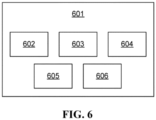
- the kit may include separate containers (see, e.g., the kit 601 depicted in FIG.
- first container 602 comprising (a), a second container 603 comprising (b), a third container 604 comprising (c), a fourth container 605 comprising (d), and a fifth container 606 comprising (e)) or instructions for providing or preparing more than one formulation with different concentrations for one or more of (a), (b) and (c).
- a kit may include a container containing an instillate or a formulation provided herein.
- the formulation may be in form of oil, gel, paste or the like as described above.
- the container may be, for example, a liquid bottle or a paste tube depending on the physical form of the formulation.
- a kit may include a plurality of containers containing materials for forming an instillate or a formulation provided herein.
- the kit may further comprise at least one of instructions for applying the instillate or formulation directly to a wound bed and optionally a periwound area around the integumentary wound; instructions for using the instillate or formulation to treat an integumentary wound according to the methods or uses provided herein; and instructions for using the materials in the plurality of containers to prepare the instillate or formulation according to the methods of preparation provided herein.
- Optional components of a kit may include one or more applicators (such as droppers, sprayers, gauze sheets, and cotton tipped applicators) for applying the instillate or formulation onto an open wound bed and a periwound area around the integumentary wound, and one or more wound dressings as described herein.
- the one or more applicators may be sterilized and contained in a sealed sterile packaging.
- the formulation was prepared in 30ml aliquots using sterile technique. 10 ml of aloe vera gel (purchased under the commercial name "Aloe Gel” from Realaloe Canada, British Columbia, Canada) and 10 ml of hyaluronic acid gel (containing 8 mg/ml of hyaluronic acid; purchased under the commercial name "PRO HA + C” from Naka Professional, Toronto, Canada M9W 5S2) were decanted into a sterile container.
- aloe vera gel purchased under the commercial name "Aloe Gel” from Realaloe Canada, British Columbia, Canada
- hyaluronic acid gel containing 8 mg/ml of hyaluronic acid
- the dried powder forms of diosmin (purchased under the commercial name "Diovasc” from Xymogen Inc, 32819 USA), and quercetin (purchased under the commercial name “Quercetin Capsules” from Alpha Science Laboratories, Toronto, Canada), equivalent to 500 mg of each, were then added to the gel mixture.
- 1.5 ml of THC oil (containing 20 mg/ml of THC; purchased under the commercial name “Red Cannabis Oil” from Tweed Inc, Smiths Falls, Ontario, Canada) and 3.5 ml of CBD oil (containing 20 mg/ml of CBD; purchased under the commercial name "Yellow Cannabis Oil” from Tweed Inc, Smiths Falls, Ontario, Canada) were added.
- beta-caryophyllene containing 814.5 mg/ml of beta-caryophyllene; purchased from True Terpenes Inc, 2416 N Hayden Island Drive, Portland, Oregon, USA, 97217)
- linalool containing 852.9 mg/ml of linalool; purchased from True Terpenes Inc, 2416 N Hayden Island Drive, Portland, Oregon, USA, 97217) were added.
- the mixing container was then closed and shaken for 30 seconds.
- the mixing container was covered with dark tape in order to protect from the light.
- the prepared formulation contained a) 2.3 mg/ml of cannabidiol and 1.0 mg/ml of tetrahydrocannabinol; (b) 81.5 mg/ml of beta-caryophyllene and 28.4 mg/ml of linalool; and (c) 16.7 mg/ml of micronized diosmin and 16.7 mg/ml of micronized quercetin.
- Example 2 A Case Report of Topical Formulation of Cannabinoids, Terpenes and Flavonoids in Wound Healing
- Example 2 demonstrated the efficacy of the topical formulation prepared in Example 1, which was topically instilled upon wound beds of chronic and recalcitrant wounds. The treatment was found to promote healing in chronically recalcitrant wounds.
- a compounded mixture of cannabinoids, terpenoids and flavonoids was topically instilled onto the wound bed of an 85-year-old woman with a large chronic wound on her right leg since 2013. This patient also suffered from CHF, Atrial Fibrillation, and Osteoarthritis. The wound had clinical signs of idiopathic Pyoderma Gangrenosum, identified with histopathologic and immunofluorescent features. The patient refused traditional medicines such as Prednisone, Imuran, Cyclosporine, and Inflixamab.
- the treatment started from November 1, 2017.
- the highly heterogeneous wound has seen rapid granulation and later epithelium growth inside the original necrotic area, and significant shrinking of the wound area over the course of 90 days.
- the patient also reported that the patient experienced reduced wound-related pain and exudation.
- color photos of the wound were routinely taken at the patient's residence.
- the longest length and widest width of the wound were manually recorded.
- Wound boundaries were manually contoured on each image.
- the wound area was extracted from the contour using a polygon area mask defined by the contour points. This area is defined as the region of interest (ROI).
- ROI region of interest
- a color space transformation from the Red-Green-Blue (RGB) space to the Hue-Saturation-Value (HSV) space was performed on the image.
- the HSV space (or other similar approaches) is commonly used to perform segmentation of different objects, including skin, due to its much higher contrast between semantically different objects.
- the hue space value is commonly represented by a non-dimensional value from 0 to 360 and wraps around. 0 and 360 represent red color while green is at 120 and blue is at 240. Since the color of interest is around the red wavelength, a different period in the hue space from -180 to 180 was taken.
- % granulation number of " granulation " pixels / total number of pixels in wound
- epithelial number of " epithelial " pixels / total number of pixels in wound
- the entire pipeline of the analysis was implemented in the Python programming language using the OpenCV computer vision library.
- an upper-bound estimate of the wound area is provided by the measured widest length and longest length: wound area ⁇ longest length ⁇ widest width.
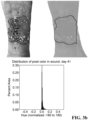
- FIGS. 3a-c Representative images on days 15, 41, and 87 and their analysis are shown in FIGS. 3a-c .
- the upper left image of each figure was taken with the classified area contoured (dark grey: granulation, white: epithelial tissue).
- the upper right image of each figure shows the hue channel (the area enclosed within the solid line) calculated from each image.
- the bottom graph of each figure shows the hue value histogram inside the wound area. Note the peak becomes significantly higher and narrower from day 15 to 41 due to the increased percentage of granulation tissue, and the peak becomes slightly wider on day 87 due to the growing amount of epithelial tissue.
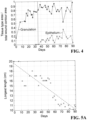
- the wound healing can be distinguished into two distinct phases: the first phase before day 30 when tissue started a rapid granulation before day 30, and the second phase after day 30 when granulation process has saturated at close to 100% and epithelium growth starts. This division can be seen clearly observed in the summarized statistics shown in FIG. 4 .
- the initial phase of granulation is characterized by the narrowing of the histogram peak and the increase in magnitude of the peak.
- the histogram gradually grows into the yellow region with a decreased magnitude of peak, representing granulation tissue turning into epithelial tissue.
- FIGS. 5a-c and FIG. 4 The trend of the wound size and proportion of granulation and epithelium tissue is shown in FIGS. 5a-c and FIG. 4 respectively.
- a linear regression line of all the data points represented by "X" is shown as a dotted line in each figure.
- FIGS. 5a-c the composition inside the wound is considered in FIG. 4 .
- FIG. 4 shows rapid initial granulation and epithelium growth and saturation of the growth after a few days. This suggests that these two metrics are best to be observed in conjunction to fully understand the healing process of a wound.
- the topical formulations were applied directly applied to wound beds, and in some cases, to wound beds and the periwound areas. All cases were previously afforded with all available Evidence Based Medicine treatments that conformed with local best practices and wound-bed preparation principles. All patients provided informed consent to be subjected to the experimental therapy.
- the patient recruitment information is summarized below:
- the topical formulations used for treatment are identified in the table below.
- Table 1 Clinical Data Date Tumor Size (cm 2 ) Average Daily Pain Score (0-10) Analgesics MC Therapy PPSv2 (%) November 12, 2015 8.75 9 Hydromorphone 30 mg/day Vaporized 90 Pregabalin 150 mg/day Decadron 4 mg/day December 10, 2015 12.33 3 Hydromorphone 8 mg/day Vaporized 90 January 21, 2016 26.44 3 Hydromorphone A mg/day Vaporized 80 March 17, 2016 44.16 4 Hydromorphone 10 mg/day Topical Oil 70 April 21, 2016 41.90 4 Hydromorphone 20 mg/day Topical Oil 60
- MC medical cannabis
- PPSv2 Palliative Performance Scale, version 2.
- Example 5 3 Case Reports of Topical Medical Cannabis in the Treatment of Patients with Pyoderma Gangrenosum
- PG Pyoderma gangrenosum
- TMC topical medical cannabis
- a paired t-test was used to compare the mean pre-TMC morphine sulfate equivalents (MSE) used to the mean post-TMC values for cases 1 and 2 only.
- MSE mean pre-TMC morphine sulfate equivalents
- Case 3 the mean MSEs used was nil both before and after initiating treatment with TMC, precluding comparison with a paired t-test.
- a P-value ⁇ 0.05 was considered significant and a decrease in average pain score greater or equal to 30% was accepted to be clinically significant. All statistical analyses were carried out using GraphPad QuickCalcs Software (GraphPad Software Inc., La Jolla, CA).
- MC oil Bedrolite TM THC 7 mg/mL + CBD 9 mg/mL
- Bedrolite TM THC 7 mg/mL + CBD 9 mg/mL from Bedrocan Inc. She applied 0.5-1.0 mL of MC oil to the wound bed two times per day plus one to three times daily for breakthrough pain. The wound was
- the compounds described herein may contain one or more chiral centers and/or double bonds and therefore, may exist as stereoisomers, such as double-bond isomers (i.e., geometric isomers such as E and Z), enantiomers or diastereomers.
- stereoisomers such as double-bond isomers (i.e., geometric isomers such as E and Z), enantiomers or diastereomers.
- the present disclosure includes each of the isolated stereoisomeric forms (such as the enantiomerically pure isomers, the E and Z isomers, and other alternatives for stereoisomers) as well as mixtures of stereoisomers in varying degrees of chiral purity or percentage of E and Z, including racemic mixtures, mixtures of diastereomers, and mixtures of E and Z isomers.
- the compounds described herein encompass all possible enantiomers and stereoisomers thereof including the stereoisomerically pure form (e.g., geometrically pure, enantiomerically pure or diastereomerically pure) and enantiomeric and stereoisomeric mixtures.
- Enantiomeric and stereoisomeric mixtures can be resolved into their component enantiomers or stereoisomers using separation techniques or chiral synthesis techniques well known to the skilled artisan.
- the present disclosure includes each of the isolated stereoisomeric forms as well as mixtures of stereoisomers in varying degrees of chiral purity, including racemic mixtures. It also encompasses the various diastereomers.
- the chemical name does not specify the isomeric form of the compound, it denotes any one of the possible isomeric forms or mixtures of those isomeric forms of the compound.
- the compounds may also exist in several tautomeric forms. Accordingly, the compounds depicted herein encompass all possible tautomeric forms thereof.
- tautomer is generally understood to refer to isomers that change into one another with great ease so that they can exist together in equilibrium; the equilibrium may strongly favor one of the tautomers, depending on stability considerations.
- ketone and enol are two tautomeric forms of one compound.
- a reference to "A and/or B", when used in conjunction with open-ended language such as “comprising” can refer, in one embodiment, to A only (optionally including elements other than B); in another embodiment, to B only (optionally including elements other than A); in yet another embodiment, to both A and B (optionally including other elements); etc.
- transitional terms “comprising”, “including”, “having”, “containing”, “involving”, and the like are to be understood as being inclusive or open-ended (i.e., to mean including but not limited to), and they do not exclude unrecited elements, materials or method steps. Only the transitional phrases “consisting of” and “consisting essentially of”, respectively, are closed or semi-closed transitional phrases with respect to claims and exemplary embodiment paragraphs herein. The transitional phrase “consisting of” excludes any element, step, or ingredient which is not specifically recited. The transitional phrase “consisting essentially of” limits the scope to the specified elements, materials or steps and to those that do not materially affect the basic characteristic(s) of the invention disclosed and/or claimed herein.
Landscapes
- Health & Medical Sciences (AREA)
- Chemical & Material Sciences (AREA)
- Life Sciences & Earth Sciences (AREA)
- General Health & Medical Sciences (AREA)
- Public Health (AREA)
- Animal Behavior & Ethology (AREA)
- Veterinary Medicine (AREA)
- Pharmacology & Pharmacy (AREA)
- Medicinal Chemistry (AREA)
- Epidemiology (AREA)
- Engineering & Computer Science (AREA)
- Natural Medicines & Medicinal Plants (AREA)
- Organic Chemistry (AREA)
- Dermatology (AREA)
- Biotechnology (AREA)
- Molecular Biology (AREA)
- Inorganic Chemistry (AREA)
- Nuclear Medicine, Radiotherapy & Molecular Imaging (AREA)
- Bioinformatics & Cheminformatics (AREA)
- General Chemical & Material Sciences (AREA)
- Chemical Kinetics & Catalysis (AREA)
- Alternative & Traditional Medicine (AREA)
- Microbiology (AREA)
- Mycology (AREA)
- Medical Informatics (AREA)
- Botany (AREA)
- Materials Engineering (AREA)
- Biochemistry (AREA)
- Hematology (AREA)
- Genetics & Genomics (AREA)
- Oil, Petroleum & Natural Gas (AREA)
- Proteomics, Peptides & Aminoacids (AREA)
- Pharmaceuticals Containing Other Organic And Inorganic Compounds (AREA)
- Medicinal Preparation (AREA)
- Acyclic And Carbocyclic Compounds In Medicinal Compositions (AREA)
Applications Claiming Priority (3)
| Application Number | Priority Date | Filing Date | Title |
|---|---|---|---|
| US201862652650P | 2018-04-04 | 2018-04-04 | |
| PCT/CA2018/051679 WO2019191830A1 (fr) | 2018-04-04 | 2018-12-28 | Formulations topiques de cannabinoïdes et produits d'instillation, kits et méthodes de traitement de plaies tégumentaires, et utilisations associées |
| EP18913490.1A EP3771313B1 (fr) | 2018-04-04 | 2018-12-28 | Formulations topiques de cannabinoïdes et produits d'instillation, kits et méthodes de traitement de plaies tégumentaires, et utilisations associées |
Related Parent Applications (2)
| Application Number | Title | Priority Date | Filing Date |
|---|---|---|---|
| EP18913490.1A Division EP3771313B1 (fr) | 2018-04-04 | 2018-12-28 | Formulations topiques de cannabinoïdes et produits d'instillation, kits et méthodes de traitement de plaies tégumentaires, et utilisations associées |
| EP18913490.1A Division-Into EP3771313B1 (fr) | 2018-04-04 | 2018-12-28 | Formulations topiques de cannabinoïdes et produits d'instillation, kits et méthodes de traitement de plaies tégumentaires, et utilisations associées |
Publications (2)
| Publication Number | Publication Date |
|---|---|
| EP4252778A2 true EP4252778A2 (fr) | 2023-10-04 |
| EP4252778A3 EP4252778A3 (fr) | 2023-10-18 |
Family
ID=68095933
Family Applications (2)
| Application Number | Title | Priority Date | Filing Date |
|---|---|---|---|
| EP18913490.1A Active EP3771313B1 (fr) | 2018-04-04 | 2018-12-28 | Formulations topiques de cannabinoïdes et produits d'instillation, kits et méthodes de traitement de plaies tégumentaires, et utilisations associées |
| EP23193127.0A Pending EP4252778A3 (fr) | 2018-04-04 | 2018-12-28 | Formulations topiques de cannabinoïdes et produits d'instillation, kits et méthodes de traitement de plaies tégumentaires, et utilisations associées |
Family Applications Before (1)
| Application Number | Title | Priority Date | Filing Date |
|---|---|---|---|
| EP18913490.1A Active EP3771313B1 (fr) | 2018-04-04 | 2018-12-28 | Formulations topiques de cannabinoïdes et produits d'instillation, kits et méthodes de traitement de plaies tégumentaires, et utilisations associées |
Country Status (7)
| Country | Link |
|---|---|
| US (1) | US20210030777A1 (fr) |
| EP (2) | EP3771313B1 (fr) |
| AU (1) | AU2018417229B2 (fr) |
| CA (1) | CA3028706A1 (fr) |
| ES (1) | ES2966110T3 (fr) |
| IL (1) | IL277692A (fr) |
| WO (1) | WO2019191830A1 (fr) |
Families Citing this family (17)
| Publication number | Priority date | Publication date | Assignee | Title |
|---|---|---|---|---|
| CA3286605A1 (en) | 2018-11-04 | 2025-11-29 | Fibrobiologics, Inc. | Treatment of cachexia using fibroblast cells and products thereof |
| US12409131B2 (en) | 2019-10-03 | 2025-09-09 | Pike Therapeutics Usa, Inc. | Transdermal delivery of dronabinol |
| EP4037663A1 (fr) | 2019-10-03 | 2022-08-10 | Starton Therapeutics, Inc. | Administration transdermique de dronabinol |
| CA3057647A1 (fr) * | 2019-10-03 | 2021-04-03 | Vinsan Therapeutics Inc. | Formulations topiques, instillations, trousses et methodes de traitement de blessures tegumentaires, et utilisations connexes |
| US12186280B2 (en) | 2019-10-11 | 2025-01-07 | Pike Therapeutics Inc. | Pharmaceutical composition and method for treating seizure disorders |
| US12016829B2 (en) | 2019-10-11 | 2024-06-25 | Pike Therapeutics Inc. | Pharmaceutical composition and method for treating seizure disorders |
| US12121617B2 (en) | 2019-10-14 | 2024-10-22 | Pike Therapeutics Inc. | Transdermal delivery of cannabidiol |
| US12268699B2 (en) | 2019-10-14 | 2025-04-08 | Pike Therapeutics Inc. | Transdermal delivery of tetrahydrocannabinol |
| CN114555068A (zh) | 2019-10-14 | 2022-05-27 | 长矛治疗股份有限公司1219014 B.C.有限公司 | 大麻二酚的透皮给药 |
| US20250194928A1 (en) * | 2020-01-23 | 2025-06-19 | Precision Healing LLC | Wound care image analysis using a smartphone |
| WO2022008955A1 (fr) | 2020-07-08 | 2022-01-13 | Herba Invest, Pte. Ltd. | Préparations contenant un extrait de mitragynine ou ses alcaloïdes isolés et un extrait de cannabis ou ses cannabinoïdes isolés, et utilisation cosmétique et/ou pharmaceutique de celles-ci |
| WO2022011393A1 (fr) * | 2020-07-08 | 2022-01-13 | Shaman Naturals, Llc | Compositions pour la prévention et le traitement du diabète |
| US20220054446A1 (en) * | 2020-08-18 | 2022-02-24 | Yvette Rose Webb | Targeted treatment with a topical cream of cannabinoids, terpenes, and essential oils |
| WO2022047486A2 (fr) * | 2020-08-27 | 2022-03-03 | Figene, Llc | Application dentaire et parodontale de fibroblastes |
| CN111991604A (zh) * | 2020-08-30 | 2020-11-27 | 云南古润生物科技有限责任公司 | 一种基于大麻二酚的创可贴及其制作方法 |
| WO2022115921A1 (fr) * | 2020-12-04 | 2022-06-09 | Cymra Life Sciences Limited | Compositions anti-inflammatoires comprenant du cannabidiol, du delta-9-tétrahydrocannabinol et du linalool |
| CN112891604A (zh) * | 2021-01-19 | 2021-06-04 | 哈尔滨宝邦生物科技发展有限公司 | 一种添加cbd涂层的卫生护垫制作工艺 |
Citations (3)
| Publication number | Priority date | Publication date | Assignee | Title |
|---|---|---|---|---|
| US20140271940A1 (en) | 2013-03-14 | 2014-09-18 | Sc Laboratories, Inc. | Bioactive concentrates and uses thereof |
| US20160250270A1 (en) | 2015-02-27 | 2016-09-01 | Ebbu, LLC | Compositions comprising combinations of purified cannabinoids, with at least one flavonoid, terpene, or mineral |
| WO2017190249A1 (fr) | 2016-05-04 | 2017-11-09 | Inmed Pharmaceuticals Inc. | Utilisation de formulations topiques de cannabinoïdes pour le traitement de l'épidermolyse bulleuse et de troubles du tissu conjonctif connexes |
Family Cites Families (10)
| Publication number | Priority date | Publication date | Assignee | Title |
|---|---|---|---|---|
| US6949582B1 (en) * | 1999-05-27 | 2005-09-27 | Wallace Walter H | Method of relieving analgesia and reducing inflamation using a cannabinoid delivery topical liniment |
| PT1542657E (pt) * | 2002-08-14 | 2012-02-29 | Gw Pharma Ltd | Formulações líquidas canabinóides para administração pela mucosa |
| US20130184354A1 (en) * | 2012-01-13 | 2013-07-18 | Donna K. Jackson | Silicone and Hylauronic Acid (HLA) Delivery Systems for Products by Sustainable Processes for Medical Uses Including Wound Management |
| MX354614B (es) * | 2013-08-09 | 2018-03-08 | Centro De Investig Y De Estudios Avanzados Del I P N | Composición farmacéutica de diosmina y hesperidina y su uso en dolor neuropático. |
| WO2016103254A1 (fr) * | 2014-12-21 | 2016-06-30 | One World Cannabis Ltd | Utilisation de cannabis pour traiter le psoriasis |
| LT6485B (lt) | 2016-04-04 | 2018-01-10 | UAB "SatiMed" | Topinė kompozicija su aktyviaisiais junginiais iš c. sativa ir c. officinalis skirta odos pažeidimų mažinimui |
| CN110636834A (zh) * | 2017-02-15 | 2019-12-31 | 分子浸剂有限公司 | 制剂 |
| MX2019011510A (es) * | 2017-03-30 | 2020-01-09 | Ojai Energetics Pbc | Metodos y composiciones para mejorar la salud. |
| US10206888B2 (en) * | 2017-06-06 | 2019-02-19 | Cmg Partners, Inc. | Cannabis-based therapeutic product for treatment of chronic pain |
| EP3684353A4 (fr) * | 2017-09-22 | 2021-06-23 | Inmed Pharmaceuticals Inc. | Formulations topiques de cannabinoïdes et leur utilisation dans le traitement de la douleur |
-
2018
- 2018-12-28 WO PCT/CA2018/051679 patent/WO2019191830A1/fr not_active Ceased
- 2018-12-28 ES ES18913490T patent/ES2966110T3/es active Active
- 2018-12-28 US US17/043,068 patent/US20210030777A1/en active Pending
- 2018-12-28 CA CA3028706A patent/CA3028706A1/fr active Pending
- 2018-12-28 EP EP18913490.1A patent/EP3771313B1/fr active Active
- 2018-12-28 EP EP23193127.0A patent/EP4252778A3/fr active Pending
- 2018-12-28 AU AU2018417229A patent/AU2018417229B2/en active Active
-
2020
- 2020-09-30 IL IL277692A patent/IL277692A/en unknown
Patent Citations (3)
| Publication number | Priority date | Publication date | Assignee | Title |
|---|---|---|---|---|
| US20140271940A1 (en) | 2013-03-14 | 2014-09-18 | Sc Laboratories, Inc. | Bioactive concentrates and uses thereof |
| US20160250270A1 (en) | 2015-02-27 | 2016-09-01 | Ebbu, LLC | Compositions comprising combinations of purified cannabinoids, with at least one flavonoid, terpene, or mineral |
| WO2017190249A1 (fr) | 2016-05-04 | 2017-11-09 | Inmed Pharmaceuticals Inc. | Utilisation de formulations topiques de cannabinoïdes pour le traitement de l'épidermolyse bulleuse et de troubles du tissu conjonctif connexes |
Non-Patent Citations (4)
| Title |
|---|
| BIELEFELD ET AL., CELL. MOL. LIFE SCI., vol. 70, 2013, pages 2059 - 2081 |
| DHIVYA S. ET AL., BIOMEDICINE (TAIPEI), vol. 5, no. 4, December 2015 (2015-12-01), pages 24 - 28 |
| OLIVEIRA GONZALEZ ET AL., AN BRAS DERMATOL., vol. 91, no. 5, 2016, pages 614 - 20 |
| SIBBALD RG. ET AL., JOURNAL OF CUTANEOUS MEDICINE AND SURGERY, vol. 17, 2013, pages S12 - S22 |
Also Published As
| Publication number | Publication date |
|---|---|
| ES2966110T3 (es) | 2024-04-18 |
| EP4252778A3 (fr) | 2023-10-18 |
| IL277692A (en) | 2020-11-30 |
| EP3771313B1 (fr) | 2023-10-04 |
| WO2019191830A1 (fr) | 2019-10-10 |
| CA3028706A1 (fr) | 2019-10-04 |
| US20210030777A1 (en) | 2021-02-04 |
| AU2018417229B2 (en) | 2024-12-19 |
| EP3771313A1 (fr) | 2021-02-03 |
| EP3771313A4 (fr) | 2021-11-17 |
| AU2018417229A1 (en) | 2020-10-15 |
Similar Documents
| Publication | Publication Date | Title |
|---|---|---|
| EP3771313B1 (fr) | Formulations topiques de cannabinoïdes et produits d'instillation, kits et méthodes de traitement de plaies tégumentaires, et utilisations associées | |
| AU2020358148B2 (en) | Topical formulations and instillates, kits, and methods for treating integumentary wounds, and uses thereof | |
| US10398640B2 (en) | Methods for treating scars and aging skin | |
| JP7469400B2 (ja) | 創傷治癒を促進するための局所製剤 | |
| US12343315B2 (en) | Topical cannabinoid compositions for clear skin | |
| US20210023045A1 (en) | Terpene-enriched cannabinoid composition for treating conditions and/ or symptoms associated with a stressful event | |
| EP2885004A1 (fr) | Compositions cosmétiques allant de pair | |
| US20260137708A1 (en) | Topical formuations and instillates, kits, and methods for treating integumentary wounds, and uses thereof | |
| HK40101987A (en) | Topical cannabinoid formulations and instillates, kits, and methods for treating integumentary wounds, and uses thereof | |
| HK40049446B (en) | Topical cannabinoid formulations and instillates, kits, and methods for treating integumentary wounds, and uses thereof | |
| HK40049446A (en) | Topical cannabinoid formulations and instillates, kits, and methods for treating integumentary wounds, and uses thereof | |
| Dhiwar et al. | Exploring the potential of herbal bioactives to treat acne: A perspective review | |
| WO2013163324A1 (fr) | Méthode de traitement du prurit avec de l'extrait de cartilage | |
| Jaruthiti | The Efficacy and Safety of Topical Hemp Seed Extract in Treatment of Acne Vulgaris: A Split-Face, Double-Blinded, Randomized, Controlled Trial | |
| FI129488B (en) | LUBRICATE COMPOSITION, METHOD OF PREPARATION AND USE OF THE COMPOSITION | |
| US20230039887A1 (en) | Compositions for topical treatment of radiation dermatitis | |
| EP4382102A1 (fr) | Compositions destinées à être utilisées dans le traitement postopératoire de la douleur et de l'inflammation | |
| AU2023203452B1 (en) | Topical formulations | |
| CA3115518A1 (fr) | Methodes de traitement du carcinome basocellulaire et du glioblastome |
Legal Events
| Date | Code | Title | Description |
|---|---|---|---|
| PUAI | Public reference made under article 153(3) epc to a published international application that has entered the european phase |
Free format text: ORIGINAL CODE: 0009012 |
|
| STAA | Information on the status of an ep patent application or granted ep patent |
Free format text: STATUS: THE APPLICATION HAS BEEN PUBLISHED |
|
| REG | Reference to a national code |
Ref country code: DE Ref legal event code: R079 Free format text: PREVIOUS MAIN CLASS: A61K0047360000 Ipc: A61L0026000000 |
|
| PUAL | Search report despatched |
Free format text: ORIGINAL CODE: 0009013 |
|
| AC | Divisional application: reference to earlier application |
Ref document number: 3771313 Country of ref document: EP Kind code of ref document: P |
|
| AK | Designated contracting states |
Kind code of ref document: A2 Designated state(s): AL AT BE BG CH CY CZ DE DK EE ES FI FR GB GR HR HU IE IS IT LI LT LU LV MC MK MT NL NO PL PT RO RS SE SI SK SM TR |
|
| AK | Designated contracting states |
Kind code of ref document: A3 Designated state(s): AL AT BE BG CH CY CZ DE DK EE ES FI FR GB GR HR HU IE IS IT LI LT LU LV MC MK MT NL NO PL PT RO RS SE SI SK SM TR |
|
| RIC1 | Information provided on ipc code assigned before grant |
Ipc: A61K 47/36 20060101ALI20230912BHEP Ipc: A61K 36/185 20060101ALI20230912BHEP Ipc: A61K 31/05 20060101ALI20230912BHEP Ipc: A61K 31/015 20060101ALI20230912BHEP Ipc: A61P 17/02 20060101ALI20230912BHEP Ipc: A61K 31/7048 20060101ALI20230912BHEP Ipc: A61K 31/352 20060101ALI20230912BHEP Ipc: A61L 15/44 20060101ALI20230912BHEP Ipc: A61L 26/00 20060101AFI20230912BHEP |
|
| STAA | Information on the status of an ep patent application or granted ep patent |
Free format text: STATUS: REQUEST FOR EXAMINATION WAS MADE |
|
| 17P | Request for examination filed |
Effective date: 20240417 |
|
| RBV | Designated contracting states (corrected) |
Designated state(s): AL AT BE BG CH CY CZ DE DK EE ES FI FR GB GR HR HU IE IS IT LI LT LU LV MC MK MT NL NO PL PT RO RS SE SI SK SM TR |
|
| STAA | Information on the status of an ep patent application or granted ep patent |
Free format text: STATUS: EXAMINATION IS IN PROGRESS |
|
| REG | Reference to a national code |
Ref country code: HK Ref legal event code: DE Ref document number: 40101987 Country of ref document: HK |
|
| 17Q | First examination report despatched |
Effective date: 20240524 |
|
| GRAP | Despatch of communication of intention to grant a patent |
Free format text: ORIGINAL CODE: EPIDOSNIGR1 |
|
| STAA | Information on the status of an ep patent application or granted ep patent |
Free format text: STATUS: GRANT OF PATENT IS INTENDED |
|
| INTG | Intention to grant announced |
Effective date: 20250107 |
|
| GRAJ | Information related to disapproval of communication of intention to grant by the applicant or resumption of examination proceedings by the epo deleted |
Free format text: ORIGINAL CODE: EPIDOSDIGR1 |
|
| STAA | Information on the status of an ep patent application or granted ep patent |
Free format text: STATUS: EXAMINATION IS IN PROGRESS |
|
| INTC | Intention to grant announced (deleted) | ||
| GRAP | Despatch of communication of intention to grant a patent |
Free format text: ORIGINAL CODE: EPIDOSNIGR1 |
|
| STAA | Information on the status of an ep patent application or granted ep patent |
Free format text: STATUS: GRANT OF PATENT IS INTENDED |