EP4253032B1 - Panneau sandwich a alveoles contenant de la poudre de nitrure de bore et procede de fabrication dudit panneau - Google Patents
Panneau sandwich a alveoles contenant de la poudre de nitrure de bore et procede de fabrication dudit panneau Download PDFInfo
- Publication number
- EP4253032B1 EP4253032B1 EP23164529.2A EP23164529A EP4253032B1 EP 4253032 B1 EP4253032 B1 EP 4253032B1 EP 23164529 A EP23164529 A EP 23164529A EP 4253032 B1 EP4253032 B1 EP 4253032B1
- Authority
- EP
- European Patent Office
- Prior art keywords
- boron nitride
- nitride powder
- sandwich panel
- skin
- cells
- Prior art date
- Legal status (The legal status is an assumption and is not a legal conclusion. Google has not performed a legal analysis and makes no representation as to the accuracy of the status listed.)
- Active
Links
Images


Classifications
-
- B—PERFORMING OPERATIONS; TRANSPORTING
- B64—AIRCRAFT; AVIATION; COSMONAUTICS
- B64C—AEROPLANES; HELICOPTERS
- B64C1/00—Fuselages; Constructional features common to fuselages, wings, stabilising surfaces or the like
- B64C1/06—Frames; Stringers; Longerons ; Fuselage sections
- B64C1/12—Construction or attachment of skin panels
-
- B—PERFORMING OPERATIONS; TRANSPORTING
- B32—LAYERED PRODUCTS
- B32B—LAYERED PRODUCTS, i.e. PRODUCTS BUILT-UP OF STRATA OF FLAT OR NON-FLAT, e.g. CELLULAR OR HONEYCOMB, FORM
- B32B3/00—Layered products comprising a layer with external or internal discontinuities or unevennesses, or a layer of non-planar shape; Layered products comprising a layer having particular features of form
- B32B3/10—Layered products comprising a layer with external or internal discontinuities or unevennesses, or a layer of non-planar shape; Layered products comprising a layer having particular features of form characterised by a discontinuous layer, i.e. formed of separate pieces of material
- B32B3/12—Layered products comprising a layer with external or internal discontinuities or unevennesses, or a layer of non-planar shape; Layered products comprising a layer having particular features of form characterised by a discontinuous layer, i.e. formed of separate pieces of material characterised by a layer of regularly- arranged cells, e.g. a honeycomb structure
-
- B—PERFORMING OPERATIONS; TRANSPORTING
- B05—SPRAYING OR ATOMISING IN GENERAL; APPLYING FLUENT MATERIALS TO SURFACES, IN GENERAL
- B05D—PROCESSES FOR APPLYING FLUENT MATERIALS TO SURFACES, IN GENERAL
- B05D5/00—Processes for applying liquids or other fluent materials to surfaces to obtain special surface effects, finishes or structures
- B05D5/10—Processes for applying liquids or other fluent materials to surfaces to obtain special surface effects, finishes or structures to obtain an adhesive surface
-
- B—PERFORMING OPERATIONS; TRANSPORTING
- B05—SPRAYING OR ATOMISING IN GENERAL; APPLYING FLUENT MATERIALS TO SURFACES, IN GENERAL
- B05D—PROCESSES FOR APPLYING FLUENT MATERIALS TO SURFACES, IN GENERAL
- B05D7/00—Processes, other than flocking, specially adapted for applying liquids or other fluent materials to particular surfaces or for applying particular liquids or other fluent materials
- B05D7/24—Processes, other than flocking, specially adapted for applying liquids or other fluent materials to particular surfaces or for applying particular liquids or other fluent materials for applying particular liquids or other fluent materials
-
- B—PERFORMING OPERATIONS; TRANSPORTING
- B32—LAYERED PRODUCTS
- B32B—LAYERED PRODUCTS, i.e. PRODUCTS BUILT-UP OF STRATA OF FLAT OR NON-FLAT, e.g. CELLULAR OR HONEYCOMB, FORM
- B32B27/00—Layered products comprising a layer of synthetic resin
- B32B27/06—Layered products comprising a layer of synthetic resin as the main or only constituent of a layer, which is next to another layer of the same or of a different material
- B32B27/08—Layered products comprising a layer of synthetic resin as the main or only constituent of a layer, which is next to another layer of the same or of a different material of synthetic resin
-
- B—PERFORMING OPERATIONS; TRANSPORTING
- B32—LAYERED PRODUCTS
- B32B—LAYERED PRODUCTS, i.e. PRODUCTS BUILT-UP OF STRATA OF FLAT OR NON-FLAT, e.g. CELLULAR OR HONEYCOMB, FORM
- B32B27/00—Layered products comprising a layer of synthetic resin
- B32B27/12—Layered products comprising a layer of synthetic resin next to a fibrous or filamentary layer
-
- B—PERFORMING OPERATIONS; TRANSPORTING
- B32—LAYERED PRODUCTS
- B32B—LAYERED PRODUCTS, i.e. PRODUCTS BUILT-UP OF STRATA OF FLAT OR NON-FLAT, e.g. CELLULAR OR HONEYCOMB, FORM
- B32B27/00—Layered products comprising a layer of synthetic resin
- B32B27/18—Layered products comprising a layer of synthetic resin characterised by the use of special additives
-
- B—PERFORMING OPERATIONS; TRANSPORTING
- B32—LAYERED PRODUCTS
- B32B—LAYERED PRODUCTS, i.e. PRODUCTS BUILT-UP OF STRATA OF FLAT OR NON-FLAT, e.g. CELLULAR OR HONEYCOMB, FORM
- B32B27/00—Layered products comprising a layer of synthetic resin
- B32B27/28—Layered products comprising a layer of synthetic resin comprising synthetic resins not wholly covered by any one of the sub-groups B32B27/30 - B32B27/42
- B32B27/281—Layered products comprising a layer of synthetic resin comprising synthetic resins not wholly covered by any one of the sub-groups B32B27/30 - B32B27/42 comprising polyimides
-
- B—PERFORMING OPERATIONS; TRANSPORTING
- B32—LAYERED PRODUCTS
- B32B—LAYERED PRODUCTS, i.e. PRODUCTS BUILT-UP OF STRATA OF FLAT OR NON-FLAT, e.g. CELLULAR OR HONEYCOMB, FORM
- B32B27/00—Layered products comprising a layer of synthetic resin
- B32B27/28—Layered products comprising a layer of synthetic resin comprising synthetic resins not wholly covered by any one of the sub-groups B32B27/30 - B32B27/42
- B32B27/285—Layered products comprising a layer of synthetic resin comprising synthetic resins not wholly covered by any one of the sub-groups B32B27/30 - B32B27/42 comprising polyethers
-
- B—PERFORMING OPERATIONS; TRANSPORTING
- B32—LAYERED PRODUCTS
- B32B—LAYERED PRODUCTS, i.e. PRODUCTS BUILT-UP OF STRATA OF FLAT OR NON-FLAT, e.g. CELLULAR OR HONEYCOMB, FORM
- B32B27/00—Layered products comprising a layer of synthetic resin
- B32B27/28—Layered products comprising a layer of synthetic resin comprising synthetic resins not wholly covered by any one of the sub-groups B32B27/30 - B32B27/42
- B32B27/288—Layered products comprising a layer of synthetic resin comprising synthetic resins not wholly covered by any one of the sub-groups B32B27/30 - B32B27/42 comprising polyketones
-
- B—PERFORMING OPERATIONS; TRANSPORTING
- B32—LAYERED PRODUCTS
- B32B—LAYERED PRODUCTS, i.e. PRODUCTS BUILT-UP OF STRATA OF FLAT OR NON-FLAT, e.g. CELLULAR OR HONEYCOMB, FORM
- B32B27/00—Layered products comprising a layer of synthetic resin
- B32B27/32—Layered products comprising a layer of synthetic resin comprising polyolefins
-
- B—PERFORMING OPERATIONS; TRANSPORTING
- B32—LAYERED PRODUCTS
- B32B—LAYERED PRODUCTS, i.e. PRODUCTS BUILT-UP OF STRATA OF FLAT OR NON-FLAT, e.g. CELLULAR OR HONEYCOMB, FORM
- B32B27/00—Layered products comprising a layer of synthetic resin
- B32B27/34—Layered products comprising a layer of synthetic resin comprising polyamides
-
- B—PERFORMING OPERATIONS; TRANSPORTING
- B32—LAYERED PRODUCTS
- B32B—LAYERED PRODUCTS, i.e. PRODUCTS BUILT-UP OF STRATA OF FLAT OR NON-FLAT, e.g. CELLULAR OR HONEYCOMB, FORM
- B32B27/00—Layered products comprising a layer of synthetic resin
- B32B27/38—Layered products comprising a layer of synthetic resin comprising epoxy resins
-
- B—PERFORMING OPERATIONS; TRANSPORTING
- B32—LAYERED PRODUCTS
- B32B—LAYERED PRODUCTS, i.e. PRODUCTS BUILT-UP OF STRATA OF FLAT OR NON-FLAT, e.g. CELLULAR OR HONEYCOMB, FORM
- B32B27/00—Layered products comprising a layer of synthetic resin
- B32B27/42—Layered products comprising a layer of synthetic resin comprising condensation resins of aldehydes, e.g. with phenols, ureas or melamines
-
- B—PERFORMING OPERATIONS; TRANSPORTING
- B32—LAYERED PRODUCTS
- B32B—LAYERED PRODUCTS, i.e. PRODUCTS BUILT-UP OF STRATA OF FLAT OR NON-FLAT, e.g. CELLULAR OR HONEYCOMB, FORM
- B32B3/00—Layered products comprising a layer with external or internal discontinuities or unevennesses, or a layer of non-planar shape; Layered products comprising a layer having particular features of form
- B32B3/02—Layered products comprising a layer with external or internal discontinuities or unevennesses, or a layer of non-planar shape; Layered products comprising a layer having particular features of form characterised by features of form at particular places, e.g. in edge regions
- B32B3/08—Layered products comprising a layer with external or internal discontinuities or unevennesses, or a layer of non-planar shape; Layered products comprising a layer having particular features of form characterised by features of form at particular places, e.g. in edge regions characterised by added members at particular parts
-
- B—PERFORMING OPERATIONS; TRANSPORTING
- B32—LAYERED PRODUCTS
- B32B—LAYERED PRODUCTS, i.e. PRODUCTS BUILT-UP OF STRATA OF FLAT OR NON-FLAT, e.g. CELLULAR OR HONEYCOMB, FORM
- B32B3/00—Layered products comprising a layer with external or internal discontinuities or unevennesses, or a layer of non-planar shape; Layered products comprising a layer having particular features of form
- B32B3/10—Layered products comprising a layer with external or internal discontinuities or unevennesses, or a layer of non-planar shape; Layered products comprising a layer having particular features of form characterised by a discontinuous layer, i.e. formed of separate pieces of material
- B32B3/14—Layered products comprising a layer with external or internal discontinuities or unevennesses, or a layer of non-planar shape; Layered products comprising a layer having particular features of form characterised by a discontinuous layer, i.e. formed of separate pieces of material characterised by a face layer formed of separate pieces of material which are juxtaposed side-by-side
- B32B3/16—Layered products comprising a layer with external or internal discontinuities or unevennesses, or a layer of non-planar shape; Layered products comprising a layer having particular features of form characterised by a discontinuous layer, i.e. formed of separate pieces of material characterised by a face layer formed of separate pieces of material which are juxtaposed side-by-side secured to a flexible backing
-
- B—PERFORMING OPERATIONS; TRANSPORTING
- B32—LAYERED PRODUCTS
- B32B—LAYERED PRODUCTS, i.e. PRODUCTS BUILT-UP OF STRATA OF FLAT OR NON-FLAT, e.g. CELLULAR OR HONEYCOMB, FORM
- B32B3/00—Layered products comprising a layer with external or internal discontinuities or unevennesses, or a layer of non-planar shape; Layered products comprising a layer having particular features of form
- B32B3/26—Layered products comprising a layer with external or internal discontinuities or unevennesses, or a layer of non-planar shape; Layered products comprising a layer having particular features of form characterised by a particular shape of the outline of the cross-section of a continuous layer; characterised by a layer with cavities or internal voids ; characterised by an apertured layer
- B32B3/266—Layered products comprising a layer with external or internal discontinuities or unevennesses, or a layer of non-planar shape; Layered products comprising a layer having particular features of form characterised by a particular shape of the outline of the cross-section of a continuous layer; characterised by a layer with cavities or internal voids ; characterised by an apertured layer characterised by an apertured layer, the apertures going through the whole thickness of the layer, e.g. expanded metal, perforated layer, slit layer regular cells B32B3/12
-
- B—PERFORMING OPERATIONS; TRANSPORTING
- B32—LAYERED PRODUCTS
- B32B—LAYERED PRODUCTS, i.e. PRODUCTS BUILT-UP OF STRATA OF FLAT OR NON-FLAT, e.g. CELLULAR OR HONEYCOMB, FORM
- B32B33/00—Layered products characterised by particular properties or particular surface features, e.g. particular surface coatings; Layered products designed for particular purposes not covered by another single class
-
- B—PERFORMING OPERATIONS; TRANSPORTING
- B32—LAYERED PRODUCTS
- B32B—LAYERED PRODUCTS, i.e. PRODUCTS BUILT-UP OF STRATA OF FLAT OR NON-FLAT, e.g. CELLULAR OR HONEYCOMB, FORM
- B32B37/00—Methods or apparatus for laminating, e.g. by curing or by ultrasonic bonding
- B32B37/12—Methods or apparatus for laminating, e.g. by curing or by ultrasonic bonding characterised by using adhesives
- B32B37/1284—Application of adhesive
-
- B—PERFORMING OPERATIONS; TRANSPORTING
- B32—LAYERED PRODUCTS
- B32B—LAYERED PRODUCTS, i.e. PRODUCTS BUILT-UP OF STRATA OF FLAT OR NON-FLAT, e.g. CELLULAR OR HONEYCOMB, FORM
- B32B38/00—Ancillary operations in connection with laminating processes
-
- B—PERFORMING OPERATIONS; TRANSPORTING
- B32—LAYERED PRODUCTS
- B32B—LAYERED PRODUCTS, i.e. PRODUCTS BUILT-UP OF STRATA OF FLAT OR NON-FLAT, e.g. CELLULAR OR HONEYCOMB, FORM
- B32B38/00—Ancillary operations in connection with laminating processes
- B32B38/0004—Cutting, tearing or severing, e.g. bursting; Cutter details
-
- B—PERFORMING OPERATIONS; TRANSPORTING
- B32—LAYERED PRODUCTS
- B32B—LAYERED PRODUCTS, i.e. PRODUCTS BUILT-UP OF STRATA OF FLAT OR NON-FLAT, e.g. CELLULAR OR HONEYCOMB, FORM
- B32B5/00—Layered products characterised by the non- homogeneity or physical structure, i.e. comprising a fibrous, filamentary, particulate or foam layer; Layered products characterised by having a layer differing constitutionally or physically in different parts
- B32B5/02—Layered products characterised by the non- homogeneity or physical structure, i.e. comprising a fibrous, filamentary, particulate or foam layer; Layered products characterised by having a layer differing constitutionally or physically in different parts characterised by structural features of a fibrous or filamentary layer
-
- B—PERFORMING OPERATIONS; TRANSPORTING
- B32—LAYERED PRODUCTS
- B32B—LAYERED PRODUCTS, i.e. PRODUCTS BUILT-UP OF STRATA OF FLAT OR NON-FLAT, e.g. CELLULAR OR HONEYCOMB, FORM
- B32B5/00—Layered products characterised by the non- homogeneity or physical structure, i.e. comprising a fibrous, filamentary, particulate or foam layer; Layered products characterised by having a layer differing constitutionally or physically in different parts
- B32B5/02—Layered products characterised by the non- homogeneity or physical structure, i.e. comprising a fibrous, filamentary, particulate or foam layer; Layered products characterised by having a layer differing constitutionally or physically in different parts characterised by structural features of a fibrous or filamentary layer
- B32B5/06—Layered products characterised by the non- homogeneity or physical structure, i.e. comprising a fibrous, filamentary, particulate or foam layer; Layered products characterised by having a layer differing constitutionally or physically in different parts characterised by structural features of a fibrous or filamentary layer characterised by a fibrous or filamentary layer mechanically connected, e.g. by needling to another layer, e.g. of fibres, of paper
-
- B—PERFORMING OPERATIONS; TRANSPORTING
- B32—LAYERED PRODUCTS
- B32B—LAYERED PRODUCTS, i.e. PRODUCTS BUILT-UP OF STRATA OF FLAT OR NON-FLAT, e.g. CELLULAR OR HONEYCOMB, FORM
- B32B5/00—Layered products characterised by the non- homogeneity or physical structure, i.e. comprising a fibrous, filamentary, particulate or foam layer; Layered products characterised by having a layer differing constitutionally or physically in different parts
- B32B5/16—Layered products characterised by the non- homogeneity or physical structure, i.e. comprising a fibrous, filamentary, particulate or foam layer; Layered products characterised by having a layer differing constitutionally or physically in different parts characterised by features of a layer formed of particles, e.g. chips, powder or granules
-
- B—PERFORMING OPERATIONS; TRANSPORTING
- B32—LAYERED PRODUCTS
- B32B—LAYERED PRODUCTS, i.e. PRODUCTS BUILT-UP OF STRATA OF FLAT OR NON-FLAT, e.g. CELLULAR OR HONEYCOMB, FORM
- B32B5/00—Layered products characterised by the non- homogeneity or physical structure, i.e. comprising a fibrous, filamentary, particulate or foam layer; Layered products characterised by having a layer differing constitutionally or physically in different parts
- B32B5/22—Layered products characterised by the non- homogeneity or physical structure, i.e. comprising a fibrous, filamentary, particulate or foam layer; Layered products characterised by having a layer differing constitutionally or physically in different parts characterised by the presence of two or more layers which are next to each other and are fibrous, filamentary, formed of particles or foamed
- B32B5/24—Layered products characterised by the non- homogeneity or physical structure, i.e. comprising a fibrous, filamentary, particulate or foam layer; Layered products characterised by having a layer differing constitutionally or physically in different parts characterised by the presence of two or more layers which are next to each other and are fibrous, filamentary, formed of particles or foamed one layer being a fibrous or filamentary layer
- B32B5/26—Layered products characterised by the non- homogeneity or physical structure, i.e. comprising a fibrous, filamentary, particulate or foam layer; Layered products characterised by having a layer differing constitutionally or physically in different parts characterised by the presence of two or more layers which are next to each other and are fibrous, filamentary, formed of particles or foamed one layer being a fibrous or filamentary layer another layer next to it also being fibrous or filamentary
-
- B—PERFORMING OPERATIONS; TRANSPORTING
- B32—LAYERED PRODUCTS
- B32B—LAYERED PRODUCTS, i.e. PRODUCTS BUILT-UP OF STRATA OF FLAT OR NON-FLAT, e.g. CELLULAR OR HONEYCOMB, FORM
- B32B7/00—Layered products characterised by the relation between layers; Layered products characterised by the relative orientation of features between layers, or by the relative values of a measurable parameter between layers, i.e. products comprising layers having different physical, chemical or physicochemical properties; Layered products characterised by the interconnection of layers
- B32B7/04—Interconnection of layers
- B32B7/12—Interconnection of layers using interposed adhesives or interposed materials with bonding properties
-
- B—PERFORMING OPERATIONS; TRANSPORTING
- B64—AIRCRAFT; AVIATION; COSMONAUTICS
- B64D—EQUIPMENT FOR FITTING IN OR TO AIRCRAFT; FLIGHT SUITS; PARACHUTES; ARRANGEMENT OR MOUNTING OF POWER PLANTS OR PROPULSION TRANSMISSIONS IN AIRCRAFT
- B64D33/00—Arrangement in aircraft of power plant parts or auxiliaries not otherwise provided for
- B64D33/08—Arrangement in aircraft of power plant parts or auxiliaries not otherwise provided for of power plant cooling systems
-
- B—PERFORMING OPERATIONS; TRANSPORTING
- B64—AIRCRAFT; AVIATION; COSMONAUTICS
- B64F—GROUND OR AIRCRAFT-CARRIER-DECK INSTALLATIONS SPECIALLY ADAPTED FOR USE IN CONNECTION WITH AIRCRAFT; DESIGNING, MANUFACTURING, ASSEMBLING, CLEANING, MAINTAINING OR REPAIRING AIRCRAFT, NOT OTHERWISE PROVIDED FOR; HANDLING, TRANSPORTING, TESTING OR INSPECTING AIRCRAFT COMPONENTS, NOT OTHERWISE PROVIDED FOR
- B64F5/00—Designing, manufacturing, assembling, cleaning, maintaining or repairing aircraft, not otherwise provided for; Handling, transporting, testing or inspecting aircraft components, not otherwise provided for
- B64F5/10—Manufacturing or assembling aircraft, e.g. jigs therefor
-
- B—PERFORMING OPERATIONS; TRANSPORTING
- B05—SPRAYING OR ATOMISING IN GENERAL; APPLYING FLUENT MATERIALS TO SURFACES, IN GENERAL
- B05D—PROCESSES FOR APPLYING FLUENT MATERIALS TO SURFACES, IN GENERAL
- B05D2601/00—Inorganic fillers
- B05D2601/20—Inorganic fillers used for non-pigmentation effect
-
- B—PERFORMING OPERATIONS; TRANSPORTING
- B32—LAYERED PRODUCTS
- B32B—LAYERED PRODUCTS, i.e. PRODUCTS BUILT-UP OF STRATA OF FLAT OR NON-FLAT, e.g. CELLULAR OR HONEYCOMB, FORM
- B32B2250/00—Layers arrangement
- B32B2250/03—3 layers
-
- B—PERFORMING OPERATIONS; TRANSPORTING
- B32—LAYERED PRODUCTS
- B32B—LAYERED PRODUCTS, i.e. PRODUCTS BUILT-UP OF STRATA OF FLAT OR NON-FLAT, e.g. CELLULAR OR HONEYCOMB, FORM
- B32B2250/00—Layers arrangement
- B32B2250/40—Symmetrical or sandwich layers, e.g. ABA, ABCBA, ABCCBA
-
- B—PERFORMING OPERATIONS; TRANSPORTING
- B32—LAYERED PRODUCTS
- B32B—LAYERED PRODUCTS, i.e. PRODUCTS BUILT-UP OF STRATA OF FLAT OR NON-FLAT, e.g. CELLULAR OR HONEYCOMB, FORM
- B32B2260/00—Layered product comprising an impregnated, embedded, or bonded layer wherein the layer comprises an impregnation, embedding, or binder material
- B32B2260/02—Composition of the impregnated, bonded or embedded layer
- B32B2260/021—Fibrous or filamentary layer
-
- B—PERFORMING OPERATIONS; TRANSPORTING
- B32—LAYERED PRODUCTS
- B32B—LAYERED PRODUCTS, i.e. PRODUCTS BUILT-UP OF STRATA OF FLAT OR NON-FLAT, e.g. CELLULAR OR HONEYCOMB, FORM
- B32B2260/00—Layered product comprising an impregnated, embedded, or bonded layer wherein the layer comprises an impregnation, embedding, or binder material
- B32B2260/02—Composition of the impregnated, bonded or embedded layer
- B32B2260/021—Fibrous or filamentary layer
- B32B2260/023—Two or more layers
-
- B—PERFORMING OPERATIONS; TRANSPORTING
- B32—LAYERED PRODUCTS
- B32B—LAYERED PRODUCTS, i.e. PRODUCTS BUILT-UP OF STRATA OF FLAT OR NON-FLAT, e.g. CELLULAR OR HONEYCOMB, FORM
- B32B2260/00—Layered product comprising an impregnated, embedded, or bonded layer wherein the layer comprises an impregnation, embedding, or binder material
- B32B2260/04—Impregnation, embedding, or binder material
- B32B2260/046—Synthetic resin
-
- B—PERFORMING OPERATIONS; TRANSPORTING
- B32—LAYERED PRODUCTS
- B32B—LAYERED PRODUCTS, i.e. PRODUCTS BUILT-UP OF STRATA OF FLAT OR NON-FLAT, e.g. CELLULAR OR HONEYCOMB, FORM
- B32B2262/00—Composition or structural features of fibres which form a fibrous or filamentary layer or are present as additives
- B32B2262/02—Synthetic macromolecular fibres
- B32B2262/0261—Polyamide fibres
- B32B2262/0269—Aromatic polyamide fibres
-
- B—PERFORMING OPERATIONS; TRANSPORTING
- B32—LAYERED PRODUCTS
- B32B—LAYERED PRODUCTS, i.e. PRODUCTS BUILT-UP OF STRATA OF FLAT OR NON-FLAT, e.g. CELLULAR OR HONEYCOMB, FORM
- B32B2262/00—Composition or structural features of fibres which form a fibrous or filamentary layer or are present as additives
- B32B2262/10—Inorganic fibres
- B32B2262/101—Glass fibres
-
- B—PERFORMING OPERATIONS; TRANSPORTING
- B32—LAYERED PRODUCTS
- B32B—LAYERED PRODUCTS, i.e. PRODUCTS BUILT-UP OF STRATA OF FLAT OR NON-FLAT, e.g. CELLULAR OR HONEYCOMB, FORM
- B32B2262/00—Composition or structural features of fibres which form a fibrous or filamentary layer or are present as additives
- B32B2262/10—Inorganic fibres
- B32B2262/106—Carbon fibres, e.g. graphite fibres
-
- B—PERFORMING OPERATIONS; TRANSPORTING
- B32—LAYERED PRODUCTS
- B32B—LAYERED PRODUCTS, i.e. PRODUCTS BUILT-UP OF STRATA OF FLAT OR NON-FLAT, e.g. CELLULAR OR HONEYCOMB, FORM
- B32B2264/00—Composition or properties of particles which form a particulate layer or are present as additives
- B32B2264/10—Inorganic particles
-
- B—PERFORMING OPERATIONS; TRANSPORTING
- B32—LAYERED PRODUCTS
- B32B—LAYERED PRODUCTS, i.e. PRODUCTS BUILT-UP OF STRATA OF FLAT OR NON-FLAT, e.g. CELLULAR OR HONEYCOMB, FORM
- B32B2264/00—Composition or properties of particles which form a particulate layer or are present as additives
- B32B2264/10—Inorganic particles
- B32B2264/107—Ceramic
-
- B—PERFORMING OPERATIONS; TRANSPORTING
- B32—LAYERED PRODUCTS
- B32B—LAYERED PRODUCTS, i.e. PRODUCTS BUILT-UP OF STRATA OF FLAT OR NON-FLAT, e.g. CELLULAR OR HONEYCOMB, FORM
- B32B2307/00—Properties of the layers or laminate
- B32B2307/10—Properties of the layers or laminate having particular acoustical properties
- B32B2307/102—Insulating
-
- B—PERFORMING OPERATIONS; TRANSPORTING
- B32—LAYERED PRODUCTS
- B32B—LAYERED PRODUCTS, i.e. PRODUCTS BUILT-UP OF STRATA OF FLAT OR NON-FLAT, e.g. CELLULAR OR HONEYCOMB, FORM
- B32B2307/00—Properties of the layers or laminate
- B32B2307/30—Properties of the layers or laminate having particular thermal properties
- B32B2307/302—Conductive
-
- B—PERFORMING OPERATIONS; TRANSPORTING
- B32—LAYERED PRODUCTS
- B32B—LAYERED PRODUCTS, i.e. PRODUCTS BUILT-UP OF STRATA OF FLAT OR NON-FLAT, e.g. CELLULAR OR HONEYCOMB, FORM
- B32B2307/00—Properties of the layers or laminate
- B32B2307/70—Other properties
- B32B2307/714—Inert, i.e. inert to chemical degradation, corrosion
-
- B—PERFORMING OPERATIONS; TRANSPORTING
- B32—LAYERED PRODUCTS
- B32B—LAYERED PRODUCTS, i.e. PRODUCTS BUILT-UP OF STRATA OF FLAT OR NON-FLAT, e.g. CELLULAR OR HONEYCOMB, FORM
- B32B2307/00—Properties of the layers or laminate
- B32B2307/70—Other properties
- B32B2307/718—Weight, e.g. weight per square meter
-
- B—PERFORMING OPERATIONS; TRANSPORTING
- B32—LAYERED PRODUCTS
- B32B—LAYERED PRODUCTS, i.e. PRODUCTS BUILT-UP OF STRATA OF FLAT OR NON-FLAT, e.g. CELLULAR OR HONEYCOMB, FORM
- B32B2603/00—Vanes, blades, propellers, rotors with blades
-
- B—PERFORMING OPERATIONS; TRANSPORTING
- B32—LAYERED PRODUCTS
- B32B—LAYERED PRODUCTS, i.e. PRODUCTS BUILT-UP OF STRATA OF FLAT OR NON-FLAT, e.g. CELLULAR OR HONEYCOMB, FORM
- B32B2605/00—Vehicles
- B32B2605/18—Aircraft
-
- B—PERFORMING OPERATIONS; TRANSPORTING
- B64—AIRCRAFT; AVIATION; COSMONAUTICS
- B64C—AEROPLANES; HELICOPTERS
- B64C1/00—Fuselages; Constructional features common to fuselages, wings, stabilising surfaces or the like
- B64C2001/0054—Fuselage structures substantially made from particular materials
Definitions
- the present invention relates to the sandwich panels of an aircraft and in particular those arranged in the propulsion assemblies.
- An example of such a panel can be found in the patent application WO2016/181073 A1 .
- An aircraft turbojet nacelle comprises from the front to the rear, a first section upstream in the direction of the aerodynamic flow crossing the nacelle of the aircraft in flight, called air inlet, a second section which covers the engine fan casing, called fan cowl, and a third section at which there is generally a thrust reversal zone which surrounds the body of the engine turbine downstream in the direction of the aerodynamic flow.
- the thrust reversal zone called TRU for “Thrust Reverser Unit” in English generally has an external structure, called OFS for “Outer Fixed Structure” in English, hereinafter called external fixed structure, which defines with a concentric internal structure called IFS for “Inner Fixed Structure” in English, hereinafter called internal fixed structure, an annular vein used to channel the flow of cold air.
- OFS External Fixed Structure
- IFS Inner Fixed Structure
- the internal fixed structure includes a sandwich panel to withstand structural forces.
- the sandwich panel facilitates thermal transfer from the interior to the exterior and can also have an acoustic function.
- a panel comprises a structure interposing a heat transfer vehicle in the form of a cellular core made of aluminum or titanium between two skins.
- this panel includes the superposition of a first aerodynamic outer skin made of composite material and a second inner support skin also of composite material between which there is a core of honeycomb material made of metal (aluminum or titanium).
- Aluminum or titanium reduces resistance thermal compared to other materials with glass, carbon or aramid reinforcements and to allow better transfer of thermal energy.
- it also has disadvantages such as being subject to corrosion problems or being heavier than other materials such as aramid, for example.
- the weight of the sandwich panel is greatly increased.
- the present invention aims to propose a sandwich panel for aircraft and in the example illustrated for fixed internal structure of aircraft nacelle making it possible to overcome the corrosion problems linked to the presence of aluminum honeycomb materials and to lighten its structure with respect to metal honeycomb materials.
- the present invention relates to an aircraft sandwich panel comprising a first skin and a second skin between which there is a cellular core comprising cells opening on either side respectively onto the first skin and onto the second skin, the cells being separated from each other by side walls characterized in that the side walls of the core comprise a reinforcement based on aramid, carbon or glass fibers, a polymer reinforcing resin and boron nitride powder.
- the invention thus offers an alternative to the aircraft sandwich panel having an aluminum core to avoid corrosion and mass problems and thus offer a lighter structure guaranteeing good thermal transfer from one side of the panel to the other.
- the invention provides at least one of the following optional characteristics, taken individually or in combination.
- the reinforcing resin includes boron nitride powder.
- a bonding resin used in the manufacture of the cellular core to bond reinforcing webs to each other comprises boron nitride powder.
- Adhesive films between the skins and the core contain boron nitride powder.
- the cells for at least a part thereof are filled at least partially with a filling material containing boron nitride powder.
- Boron nitride powder is a hexagonal boron nitride powder.
- the reinforcement is made from meta-aramid fibers.
- a skin is perforated.
- the invention also relates to a propulsion assembly comprising a nacelle having an internal fixed structure characterized in that the internal fixed structure comprises a sandwich panel having one or more of the preceding characteristics.
- the invention also relates to an aircraft characterized in that it comprises a part provided with a sandwich panel having one or more of the preceding characteristics.
- the invention also relates to the method of manufacturing such a sandwich panel.
- the process for manufacturing the sandwich panel is characterized in that it comprises the following steps: - stacking of reinforcing webs based on aramid, carbon or glass fibers so as to be associated with each other to form a block having cells ; - introduction of a boron nitride powder into at least part of the side walls of said cells comprising a reinforcing resin - cutting of core to the desired dimension.
- the steps can be carried out in this order or a different order, the boron nitride powder can be integrated into the reinforcement before or after the stacking of sails.
- the invention provides at least one of the following optional characteristics, taken individually or in combination.
- the boron nitride powder is mixed with the polymer reinforcement resin before being deposited on the reinforcement by dipping the block in a bath of reinforcing resin.
- the boron nitride powder is mixed with a bonding resin applied in parallel lines to said reinforcing webs to fix them to each other to form the block by expansion.
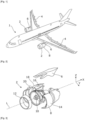
- FIG 1 represents an aircraft 1 comprising a propulsion assembly 2.
- the propulsion assembly 2 is attached to the wing 4 by a mast 6.
- the propulsion assembly 2 is a device making it possible to generate a thrust which constitutes the force engine of aircraft 1.
- the propulsion assembly comprises a nacelle 8 surrounding an engine 10 such as a turbojet having the same three sections described above.
- the air inlet 12 On the figure 2 , are shown the air inlet 12, the fan cover 14, the internal fixed structure 16, the external fixed structure 18 and the annular vein 20 used to channel the cold air.
- the nacelle 8 extends around a longitudinal axis called axis L oriented in a longitudinal direction
- the aircraft is placed on the ground.
- the three directions X, Y and Z are orthogonal to each other.
- the terms “front” and “rear”, “upstream” and “downstream” are understood according to the direction of the air flow in the propulsion assembly in operation, i.e. in the direction and direction of the X axis on the figure 2 .
- the air enters through the front of the propulsion assembly, that is to say through the air inlet 12 of the nacelle and exits through the rear of it.
- the present invention relates to a sandwich panel 22 with a cellular core 24 used in the internal fixed structures 16 of aircraft propulsion assemblies to allow heat transfer by conduction in a radial direction, represented by an arrow F on the Figure 3 , from the engine 10 around which temperatures can be around between 300 and 500 degrees Celsius towards the annular vein 20 conveying cold air.
- a thermal protection layer 25 guarantees the thermal integrity of the sandwich panel 22.
- the sandwich panel 22 comprises two skins 26, 28 between which the cellular core 24 is interposed.
- the panel 22 comprises a first skin 26 facing in the radial direction to the external fixed structure 18, a second support skin 28 having essentially for the function of ensuring the structural strength of the panel 22 facing in the radial direction to the body of the motor 10 and the cellular core 24 on either side of which the first and second skins 26, 28 are fixed.
- the second skin 28 exposed to noise, namely in the illustrated case that facing the engine is perforated so that the sandwich panel can provide an acoustic function.
- the cellular core 24 comprises conduits 30 opening on either side respectively onto the first skin 26 and onto the second skin 28.
- the first skin 26 and the second skin 28 close the conduits 30 to form the cells 32 of the soul 24.
- the conduits 30 are separated from each other by side walls 34.
- a side wall 34 separates a cell 32A from the adjacent cell 32B.
- the cellular core 24 is in the form of a honeycomb, namely with cells 32 formed of conduits 30 of hexagonal section. Any other form of conduit is possible.
- the geometry of the cells is not limited to that illustrated.
- the core material may include cells of any shape.
- the skins 26, 28 are made of composite material such as a carbon fiber reinforced polymer or PRFC (CFRP in English for Carbon Fiber Reinforced Polymer).
- the fibers used may be glass or aramid fibers.
- a first adhesive film 33A is interposed between the core 24 and the first skin 26 and a second film 33B between the core 24 and the second skin 28.
- the films 33A and 33B are made from polymer resin like thermoplastic resins , thermosetting (e.g. epoxy, phenolic) or other.
- the cellular core 24 comprises reinforcements 36 based on fibers in the form of paper, woven, unidirectional, multidirectional, continuous, discontinuous or other fibers.
- the reinforcement 36 in the example illustrated is a paper 37 made from aramid fibers, called aramid paper, and for example meta-aramid fibers such as NOMEX (registered trademark).
- the reinforcement is combined with a resin 38, called reinforcing resin 38 in the following.
- the paper 37 is covered with a heat-resistant polymer resin 38. In the case of fibers, these are incorporated and mixed with the resin 38.
- the resin is a thermoplastic or thermosetting resin such as a phenolic resin, an epoxy resin or for example a PEI (photopolymerizable), PAI (polyamide) resin. -imide), PA (aliphatic polyamide), PP (polypropylene), PEEK (polyetheretherketone), PEKK (polyetherketoneketone), BMI (polybismaleimides).
- boron nitride powder 40 represented by points on the figures 6 And 7 .
- the boron nitride powder 40 is in the example illustrated a hexagonal boron nitride powder (Boron Nitride hexagonal powder in English).
- the materials used to constitute the core 24 make it possible to avoid any corrosion problem; hexagonal boron nitride powder 40 reduces thermal resistance by improving conductivity and therefore heat transfer. Finally, the cellular core 24 is lighter than a core made of metallic material. The heat represented by small arrows on the figures 6 And 7 is transferred through the side walls. More precisely, the hexagonal boron nitride powder 40 is introduced into the reinforcing resin 38.
- a glue 42 in the form for example of resin 43 (such as phenolic, epoxy or other resin) is used to set and maintain the reinforcement 36 which happens to be in the form illustrated in the form of a sheet of paper 37 aramid.
- a resin for aramid paper sheets is for example phenolic resin.
- the sheets of paper are glued together to form the cellular core as will be seen later.
- Resin 43 will be called bonding resin to differentiate it from reinforcing resin 38.
- the hexagonal boron nitride powder 40 can be introduced into the bonding resin 43 as illustrated in the figures 6 And 7 .
- the hexagonal boron nitride powder can therefore be introduced into the bonding resin 43 and/or the reinforcing resin 38.
- the reinforcing resin 38 and/or the bonding resin 43 impregnated with hexagonal boron nitride powder are the main vehicles of the heat transfer flow through the sandwich panel 22.
- the hexagonal boron nitride powder 40 by these properties improves the thermal conductivity of the reinforcing resin 38 and/or the bonding resin 43 to allow the core 24 based on aramid fibers to be as interesting in terms of heat transfer as a completely aluminum core. by offering a lighter honeycomb core structure.
- the quantity of hexagonal boron nitride powder in the resin reaches between 0.01% and 20% of the mass or volume of resin.
- the cells 32 is at least partially filled using a filling material 62.
- the material may be putty, resin or other. At least partial filling provides local structural reinforcement.
- the material is a so-called filling resin 64 to distinguish it from the other resins described above.
- the boron nitride powder 40 is introduced into the filling material 62 and for example into the filling resin 64.
- the manufacturing process of the sandwich panel 22 will be described in the following with reference to the figures 8 to 10 .
- the manufacturing process of the panel 22 initially comprises the manufacturing of the cellular core 24. Several embodiments of the core are possible and here are some examples.
- the method consists of manufacturing the structure by expansion of layers 44 of the same shape and size stacked on top of each other and fixed to each other.
- a roll 46 of reinforcement without resin here a paper
- a machine 48 which deposits bonding resin 43 in lines 50 parallel to each other.
- the roll 46 on which these lines 50 are deposited is cut into reinforcing webs 45 (here in sheets of paper) of the same shape and size.
- the sails 45 are stacked on top of each other and are glued together by the lines 50 of bonding resin 43.
- step C the formed assembly is stretched to obtain a block 51 with the desired structure of the cellular core.
- step D represents the continuation of the treatments applied to the block 51.
- step D consists of immersing the block 51 in a bath 58 of reinforcing resin 38.
- the polymer reinforcement resin 38 chosen is the phenolic resin.
- the reinforcing resin 38 contains hexagonal boron nitride powder 40.
- Step E The next step consists of polymerizing the resin 38 of the coated block 51 by any type of known means. A possible means can for example be an autoclave having an enclosure allowing the cooking in question.
- a last step F the block 51 is cut to the desired dimension for the height of the conduits 30 of the core 24.
- hexagonal boron nitride powder 40 is introduced into the bonding resin 43.
- the side walls 34 of the cellular core 24 of the block 51 contain a greater quantity of hexagonal boron nitride powder 40, this being already contained in the reinforcing resin 38.
- the hexagonal boron nitride powder 40 is not introduced into the resin 43.
- a second embodiment illustrated on the Figure 10 consists in a first step A of unrolling a roll 47 of specific reinforcement 52 called complex because at the level of which a reinforcing resin 38 is already integrated.
- the complex reinforcement incorporates a reinforcing resin 38.
- the method comprises a step consisting of deforming the complex reinforcement 52 by pressing so that it presents a succession of bumps 66 and hollows 68 whose shape is chosen according to the shape of the desired cell.
- the complex reinforcement 52 has a corrugated spring.
- the process consists of unwinding the roll 47 of complex reinforcement 52 to pass it between two crenellated presses 54 and 55 in order to print a semi-cell shape of semi-hexagonal section on the reinforcement.
- the reinforcement 52 is cut into webs 56, marked with the imprint of the press, of the same shape and dimension.
- the sails 56 are stacked on top of each other, the highest reliefs of a sail against the highest reliefs of an adjacent sail to obtain a block 53 with the desired structure of the cellular core.
- the sails are assembled together by thermal welding, gluing or any other process of known type.
- the boron nitride powder is introduced into the filling material 62 and for example into the filling resin 64.
- hexagonal boron nitride powder 40 is introduced into the films 33A and 33B allowing the attachment of the skins 26, 28 to the cellular core 24.
- the hexagonal boron nitride powder 40 is found in the reinforcing resin 38 and/or in the bonding resin 43.
- the boron nitride powder 40 is mixed with the reinforcing resin 38 and/or with the bonding resin 43 before being applied to the reinforcement.
- the boron nitride powder can also be introduced into the adhesive films 33A, 33B interposed between the skins 26, 28 and the cellular core 24 and/or into the material 62 for filling the cells 32 of the core.
Landscapes
- Engineering & Computer Science (AREA)
- Aviation & Aerospace Engineering (AREA)
- Life Sciences & Earth Sciences (AREA)
- Wood Science & Technology (AREA)
- Mechanical Engineering (AREA)
- Manufacturing & Machinery (AREA)
- Chemical & Material Sciences (AREA)
- Combustion & Propulsion (AREA)
- Transportation (AREA)
- Laminated Bodies (AREA)
Description
- La présente invention concerne les panneaux sandwichs d'un aéronef et notamment ceux disposés dans les ensembles propulsifs. Un exemple de tel panneau peut être trouvé dans la demande de brevet
WO2016/181073 A1 . - De manière classique, des panneaux sandwichs sont installés dans diverses zones d'un aéronef notamment pour réduire le rayonnement acoustique et par exemple dans les panneaux d'habillage de la cabine ou encore les ensembles propulsifs pris à titre illustratif dans la présente description. Une nacelle de turboréacteur d'aéronef comprend de l'avant vers l'arrière, un premier tronçon en amont dans la direction du flux aérodynamique traversant la nacelle de l'aéronef en vol, appelé entrée d'air, un deuxième tronçon qui recouvre le carter de la soufflante moteur, appelé capot de soufflante, et un troisième tronçon au niveau duquel se trouve généralement une zone d'inversion de poussée qui entoure le corps de la turbine du moteur à l'aval dans la direction du flux aérodynamique. La zone d'inversion de poussée, dite TRU pour « Thrust Reverser Unit » en anglais présente généralement une structure externe, dite OFS pour « Outer Fixed Structure » en anglais, appelé ci-après structure fixe externe, qui définit avec une structure interne concentrique dite IFS pour « Inner Fixed Structure » en anglais, appelé ci-après structure fixe interne, une veine annulaire servant à canaliser le flux d'air froid.
- La structure fixe interne comprend un panneau sandwich permettant de tenir les efforts structuraux. Le panneau sandwich facilite le transfert thermique de l'intérieur vers l'extérieur et peut également présenter une fonction acoustique. Pour ce faire, un tel panneau comporte une structure intercalant un véhicule de transfert thermique sous forme d'une âme alvéolaire constituée d'aluminium ou de titane entre deux peaux. Très souvent, ce panneau comprend la superposition d'une première peau extérieure aérodynamique faite de matériau composite et d'une deuxième peau intérieure de support également en matériau composite entre lesquelles se trouve une âme en matériau en nid d'abeille fait de métal (aluminium ou titane). L'aluminium ou le titane permettent de réduire la résistance thermique par rapport à d'autres matériaux présentant des renforts en verre, carbone ou aramide et de permettre un meilleur transfert d'énergie thermique. Cependant il présente aussi des désavantages comme d'être sujet à des problèmes de corrosion ou d'être plus lourd que d'autres matériaux de type par exemple aramide. Le poids du panneau sandwich s'en trouve largement accru.
- La présente invention vise à proposer un panneau sandwich pour aéronef et dans l'exemple illustré pour structure interne fixe de nacelle d'aéronef permettant de pallier aux problèmes de corrosion liés à la présence de matériaux en nid d'abeille en aluminium et d'alléger sa structure vis-à-vis des matériaux en nid d'abeille métallique.
- A cet effet, la présente invention concerne un panneau sandwich d'aéronef comprenant une première peau et une deuxième peau entre lesquelles se trouve une âme alvéolaire comportant des alvéoles débouchant de part et d'autre respectivement sur la première peau et sur la deuxième peau, les alvéoles étant séparées les unes des autres par des parois latérales caractérisé en ce que les parois latérales de l'âme comprennent un renfort à base de fibres aramide, carbone ou verre, une résine de renfort polymère et de la poudre de nitrure de bore.
- L'invention propose ainsi une alternative au panneau sandwich d'aéronef présentant une âme en aluminium pour éviter les problèmes de corrosion et de masse et offrir ainsi une structure plus légère garantissant un bon transfert thermique d'une face à l'autre du panneau.
- L'invention prévoit au moins l'une des caractéristiques optionnelles suivantes, prises isolément ou en combinaison.
- La résine de renfort comprend de la poudre de nitrure de bore.
- Une résine de collage utilisée dans la fabrication de l'âme alvéolaire pour coller des voiles de renfort les uns sur les autres comprend de la poudre de nitrure de bore.
- Des films adhésifs entre les peaux et l'âme contiennent de la poudre de nitrure de bore.
- Les alvéoles pour au moins une partie de celles-ci sont remplies au moins partiellement d'un matériau de remplissage contenant de la poudre de nitrure de bore.
- La poudre de nitrure de bore est une poudre de nitrure de bore hexagonale.
- Le renfort est réalisé à partir de fibres méta-aramide.
- Une peau est perforée.
- L'invention se rapporte également à un ensemble propulsif comprenant une nacelle présentant une structure fixe interne caractérisé en ce que la structure fixe interne comprend un panneau sandwich présentant l'une ou plusieurs des caractéristiques précédentes.
- L'invention se rapporte également à un aéronef caractérisé en ce qu'il comprend une partie munie d'un panneau sandwich présentant l'une ou plusieurs des caractéristiques précédentes.
- L'invention se rapporte également au procédé de fabrication d'un tel panneau sandwich. Le procédé de fabrication du panneau sandwich est caractérisé en ce qu'il comprend les étapes suivantes : - empilement de voiles de renfort à base de fibres aramide, carbone ou verre de manière à être associées les unes aux autres pour former un bloc présentant des alvéoles ; - introduction d'une poudre de nitrure de bore dans au moins une partie des parois latérales desdites alvéoles comprenant une résine de renfort - découpe d'âme à la dimension souhaitée.
- Les étapes peuvent être réalisées dans cet ordre ou un ordre différent, la poudre de nitrure de bore pouvant être intégrée au renfort avant ou après l'empilement de voiles.
- L'invention prévoit au moins l'une des caractéristiques optionnelles suivantes, prises isolément ou en combinaison.
- La poudre de nitrure de bore est mélangée à la résine de renfort polymère avant d'être déposé sur le renfort en plongeant le bloc dans un bain de résine de renfort.
- La poudre de nitrure de bore est mélangée à une résine de collage appliquée en lignes parallèles sur lesdits voiles de renfort pour les fixer les uns aux autres pour former le bloc par expansion.
- D'autres buts, caractéristiques et avantages ressortiront de la description de l'invention qui va suivre, description donnée à titre d'exemple uniquement non limitatif, en référence aux dessins ci-annexés dans lesquels :
- [
Fig. 1 ] est une vue en perspective d'un aéronef pourvu d'un ensemble propulsif muni d'une nacelle comprenant un panneau sandwich selon la présente l'invention ; - [
Fig. 2 ] est une vue en perspective éclatée d'une nacelle et d'un mat susceptible de comprendre un panneau sandwich selon la présente invention ; - [
Fig. 3 ] est une vue schématique illustrant le transfert thermique dans l'ensemble propulsif au niveau du panneau sandwich installé autour du moteur ; - [
Fig. 4 ] est une vue partielle en perspective d'un panneau sandwich selon la présente invention ; - [
Fig. 5 ] est une vue partielle en perspective d'une âme alvéolaire d'un panneau sandwich selon lafigure 4 ; - [
Fig. 6 ] est une vue en coupe schématique partielle d'un panneau sandwich selon la présente invention selon un plan P représenté sur lafigure 4 parallèle à la direction longitudinale des conduits de l'âme alvéolaire et passant par deux parois latérale séparant trois alvéoles de l'âme ; - [
Fig. 7 ] est une vue en coupe schématique partielle d'un panneau sandwich selon la présente invention selon un plan P représenté sur lafigure 4 parallèle à la direction longitudinale des conduits de l'âme alvéolaire et passant par deux parois latérale séparant trois alvéoles de l'âme dans laquelle une partie des alvéoles sont remplis d'un matériau de remplissage ; - [
Fig. 8 ] est une vue schématique d'étapes d'un premier mode de fabrication d'une âme alvéolaire d'un panneau sandwich selon la présente invention ; - [
Fig. 9 ] est une vue schématique des étapes suivantes du premier mode de fabrication d'une âme alvéolaire d'un panneau sandwich illustré sur lafigure 8 ; - [
Fig. 10 ] est une vue schématique d'étapes d'un deuxième mode de fabrication du procédé de fabrication d'une âme alvéolaire d'un panneau sandwich selon la présente invention. - La
figure 1 représente un aéronef 1 comprenant un ensemble propulsif 2. Dans la forme de réalisation illustrée, l'ensemble propulsif 2 est rattaché à la voilure 4 par un mat 6. L'ensemble propulsif 2 est un dispositif permettant de générer une poussée qui constitue la force motrice de l'aéronef 1. Comme l'illustre lafigure 2 , l'ensemble propulsif comporte une nacelle 8 entourant un moteur 10 tel qu'un turboréacteur présentant les mêmes trois tronçons décrits plus haut. Sur lafigure 2 , sont représentés l'entrée d'air 12, le capot de soufflante 14, la structure fixe interne 16, la structure fixe externe 18 et la veine annulaire 20 servant à canaliser l'air froid. La nacelle 8 s'étend autour d'un axe longitudinal appelé axe L orienté dans une direction longitudinale X. La direction Y correspond à la direction orientée transversalement par rapport à la nacelle 8. La direction Z correspond à la direction verticale ou hauteur lorsque l'aéronef est posé au sol. Les trois directions X, Y et Z sont orthogonales entre elles. Dans la suite de la description, les termes « avant » et « arrière », « amont » et « aval » se comprennent selon la direction du flux d'air dans l'ensemble propulsif en fonctionnement, soit dans la direction et le sens de l'axe X sur lafigure 2 . L'air rentre par l'avant de l'ensemble propulsif, c'est-à-dire par l'entrée d'air 12 de la nacelle et ressort par l'arrière de celui-ci. - Comme représenté sur la
figure 3 , la présente invention concerne un panneau 22 sandwich à âme 24 alvéolaire utilisé dans les structures 16 fixes internes des ensembles propulsifs d'aéronef pour permettre un transfert thermique par conduction dans une direction radiale, représenté par une flèche F sur lafigure 3 , depuis le moteur 10 autour duquel les températures peuvent avoisiner entre 300 et 500 degrés Celsius vers la veine annulaire 20 convoyant de l'air froid. Au vu des températures élevées autour du moteur, une couche 25 de protection thermique garantit l'intégrité thermique du panneau 22 sandwich. - Comme illustré sur la
figure 4 , le panneau 22 sandwich comporte deux peaux 26, 28 entre lesquelles est intercalée l'âme alvéolaire 24. Le panneau 22 comprend une première peau 26 faisant face dans la direction radiale à la structure fixe externe 18, une deuxième peau 28 de support ayant essentiellement pour fonction d'assurer la tenue structurale du panneau 22 faisant face dans la direction radiale au corps du moteur 10 et l'âme 24 alvéolaire de part et d'autre de laquelle sont fixées la première et la deuxième peau 26, 28. Selon une forme possible de l'invention, la deuxième peau 28 exposée au bruit à savoir dans le cas illustré celle face au moteur est perforée de manière que le panneau sandwich puisse offrir une fonction acoustique. Selon la forme illustrée sur lesfigures 4 et 5 , l'âme 24 alvéolaire comprend des conduits 30 débouchant de part et d'autre respectivement sur la première peau 26 et sur la deuxième peau 28. La première peau 26 et la deuxième peau 28 obturent les conduits 30 pour former les alvéoles 32 de l'âme 24. Les conduits 30 sont séparés les uns des autres par des parois 34 latérales. Une paroi 34 latérale sépare une alvéole 32A de l'alvéole adjacente 32B. Selon une forme particulière telle que celle représentée sur lesfigures 4 et 5 , l'âme 24 alvéolaire se présente sous forme de nid d'abeille à savoir avec des alvéoles 32 formées de conduits 30 de section hexagonale. Toute autre forme de conduit est possible. La géométrie des alvéoles n'est pas limitée à celle illustrée. Le matériau d'âme peut comporter des alvéoles de forme quelconque. Dans l'exemple illustré, les peaux 26, 28 sont faites de matériau composite tel qu'un polymère renforcé de fibres de carbone ou PRFC (CFRP en anglais pour Carbon Fiber Reinforced Polymer). Selon des variantes, les fibres utilisées peuvent être des fibres de verre ou d'aramide. - Comme représentés sur les
figures 6 et7 , un premier film 33A adhésif est interposé entre l'âme 24 et la première peau 26 et un deuxième film 33B entre l'âme 24 et la deuxième peau 28. Les films 33A et 33B sont réalisés à base de résine polymère comme les résines thermoplastiques, thermodurcissables (par exemple époxy, phénolique) ou autre. - Selon la présente invention, l'âme 24 alvéolaire comprend des renforts 36 à base de fibres sous forme de papiers, fibres tissées, unidirectionnelles, pluridirectionnelles, continues, discontinues ou autres. Le renfort 36 dans l'exemple illustré est un papier 37 réalisé à partir de fibres aramides, dit papier aramide, et par exemple de fibres méta-aramides telles que du NOMEX (marque déposée). Le renfort est combiné à une résine 38, appelée dans ce qui suit résine 38 de renfort. Dans l'exemple du papier, le papier 37 est recouvert d'une résine 38 polymère résistante à la chaleur. Dans le cas de fibres, celles-ci sont incorporées et mélangées à la résine 38. La résine est une résine thermoplastique ou thermodurcissable telle qu'une résine phénolique, une résine epoxy ou encore par exemple une résine PEI (photopolymérisable), PAI (polyamide-imide), PA (polyamide aliphatique), PP (polypropylène), PEEK (polyétheréthercétone), PEKK (polyethercetonecetone), BMI (polybismaléimides). Au moins une partie et dans la forme illustrée l'ensemble des parois 34 latérales des alvéoles 32 de l'âme 24 comprennent de la poudre 40 de nitrure de bore représentée par des points sur les
figures 6 et7 . La poudre de nitrure de bore 40 est dans l'exemple illustrée une poudre de nitrure de bore hexagonale (Boron Nitride hexagonal powder en langue anglosaxonne). Les matériaux utilisés pour constituer l'âme 24 permettent d'éviter tout problème de corrosion ; la poudre de nitrure de bore hexagonale 40 permet de réduire la résistance thermique en améliorant la conductivité et donc le transfert de chaleur. Enfin l'âme 24 alvéolaire est plus légère qu'une âme en matériau métallique. La chaleur représentée par de petites flèches sur lesfigures 6 et7 est transférée par les parois latérales. Plus précisément la poudre de nitrure de bore hexagonale 40 est introduite dans la résine 38 de renfort. - Dans certaines formes de réalisation, une colle 42 sous forme par exemple de résine 43 (comme de la résine phénolique, époxy ou autre) est utilisée pour figer et maintenir le renfort 36 qui se trouve être dans la forme illustrée sous forme de feuille de papier 37 aramide. Une résine pour les feuilles de papier aramide est par exemple la résine phénolique. Les feuilles de papier sont collées entre elles afin de former l'âme alvéolaire comme il sera vu plus loin. La résine 43 sera appelée résine de collage pour la différencier de la résine 38 de renfort. Dans ces formes de réalisation utilisant de la résine 43 de collage, la poudre de nitrure de bore hexagonale 40 peut être introduite dans la résine 43 de collage comme illustré sur les
figures 6 et7 . La poudre de nitrure de bore hexagonale peut dont être introduite dans la résine 43 de collage et/ou la résine 38 de renfort. La résine 38 de renfort et/ou la résine 43 de collage imprégnée(s) de poudre de nitrure de bore hexagonale sont les véhicules principaux du flux de transfert thermique au travers du panneau sandwich 22. La poudre de nitrure de bore hexagonale 40 par ces propriétés améliore la conductivité thermique de la résine 38 de renfort et/ou de la résine 43 de collage pour permettre à l'âme 24 à base de fibres aramides d'être aussi intéressante en terme de transfert de chaleur qu'une âme en aluminium toute en offrant une structure d'âme alvéolaire plus légère. Selon une forme de réalisation, la quantité de poudre de nitrure de bore hexagonale dans la résine atteint entre 0,01% et 20% de la masse ou du volume de résine. - Comme montré sur la
figure 7 , au moins une partie des alvéoles 32 est au moins partiellement remplie à l'aide d'un matériau 62 de remplissage. Le matériau peut être un mastic, une résine ou autre. Le remplissage au moins partiel apporte un renforcement structurel local. Dans la forme illustrée, le matériau est une résine 64 dite de remplissage pour la distinguer des autres résines décrites plus haut. Selon une forme de réalisation de l'innovation, la poudre de nitrure de bore 40 est introduite dans le matériau 62 de remplissage et par exemple dans la résine 64 de remplissage. - Le procédé de fabrication du panneau 22 sandwich va être décrit dans ce qui suit en référence aux
figures 8 à 10 . Le procédé de fabrication du panneau 22 comprend dans un premier temps la fabrication de l'âme alvéolaire 24. Plusieurs modes de réalisation de l'âme sont envisageables et en voici quelques exemples. - Selon un premier mode de fabrication illustré sur les
figures 8 et9 , le procédé consiste à fabriquer la structure par expansion de couches 44 de même forme et dimension empilées les unes sur les autres et fixées les unes aux autres. Dans une première étape désignée par la référence A sur lafigure 8 , un rouleau 46 de renfort sans résine (ici un papier) est déroulé sous une machine 48 qui dépose de la résine 43 de collage en lignes 50 parallèles entre elles. Dans une étape B, le rouleau 46 sur lequel sont déposées ces lignes 50 est découpé en voiles 45 de renfort (ici en feuilles de papier) de même forme et dimension. Les voiles 45 sont empilées les uns sur les autres et se trouvent collés ensemble par les lignes 50 de résine 43 de collage. Dans une étape C, l'ensemble formé est étiré pour obtenir un bloc 51 avec la structure souhaitée de l'âme alvéolaire. Lafigure 9 représente la suite des traitements appliqués au bloc 51. L'étape D suivante consiste à plonger le bloc 51 dans un bain 58 de résine 38 de renfort. Dans la forme de réalisation illustrée en exemple, la résine 38 de renfort polymère choisie est la résine phénolique. La résine 38 de renfort contient de la poudre de nitrure de bore hexagonale 40. Lorsque le bloc 51 ressort du bain 58, les parois latérales 34 sont imprégnées de résine 38 de renfort et de poudre de nitrure de bore hexagonale 40. L'étape E suivante consiste à polymériser la résine 38 du bloc 51 enduit par tout type de moyen connu. Un moyen possible peut par exemple être un autoclave présentant une enceinte permettant la cuisson en question. Dans une dernière étape F, le bloc 51 est découpé à la dimension souhaitée pour la hauteur des conduits 30 de l'âme 24. - Selon une première variante, de la poudre de nitrure de bore hexagonale 40 est introduite dans la résine 43 de collage. Ainsi les parois latérales 34 de l'âme alvéolaire 24 du bloc 51 contiennent une quantité plus importante de poudre de nitrure de bore hexagonale 40, celle-ci étant déjà contenue dans la résine 38 de renfort. Selon la deuxième variante, la poudre de nitrure de bore hexagonale 40 n'est pas introduite dans la résine 43.
- Un deuxième mode de réalisation illustré sur la
figure 10 consiste dans une première étape A à dérouler un rouleau 47 de renfort 52 spécifique dit complexe car au niveau duquel une résine 38 de renfort est déjà intégrée. Dans cet exemple, le renfort complexe intègre une résine 38 de renfort. Le procédé comporte une étape consistant à déformer le renfort 52 complexe par pressage pour qu'il présente une succession de bosses 66 et de creux 68 dont la forme est choisie en fonction de la forme de l'alvéole souhaitée. Pour des alvéoles cylindriques de section circulaire, le renfort 52 complexe ressort ondulé. Selon la forme illustrée, le procédé consiste à dérouler le rouleau 47 de renfort 52 complexe pour le faire passer entre deux presses 54 et 55 crénelés afin d'imprimer une forme de semi-alvéole de section semi-hexagonale au renfort. Selon une étape C, le renfort 52 est découpé en voiles 56, marqués de l'empreinte de la presse, de même forme et dimension. Selon une étape D, les voiles 56 sont empilés les uns sur les autres les reliefs les plus hauts d'un voile contre les reliefs les plus hauts d'un voile adjacent pour obtenir un bloc 53 avec la structure souhaitée de l'âme alvéolaire. Les voiles sont assemblés entre eux par soudage thermique, collage ou tout autre procédé de type connu. - D'autres modes de fabrication du bloc 51, 53 sont possibles.
- Comme indiqué en référence à la
figure 7 , au moins une partie des alvéoles 32 est au moins partiellement rempli à l'aide d'un matériau 62 de remplissage. Selon une forme de réalisation de l'innovation, la poudre de nitrure de bore est introduite dans le matériau 62 de remplissage et par exemple dans la résine 64 de remplissage. - Comme illustré sur les
figures 6 et7 , de la poudre de nitrure de bore hexagonale 40 est introduite dans les films 33A et 33B permettant la fixation des peaux 26, 28 sur l'âme alvéolaire 24. - Suivant les différentes combinaisons possibles des variantes exposées ci-dessus, la poudre de nitrure de bore hexagonale 40 se trouve dans la résine 38 de renfort et/ou dans la résine 43 de collage. Selon une forme de réalisation, la poudre de nitrure de bore 40 est mélangée à la résine 38 de renfort et/ou à la résine 43 de collage avant d'être appliquée sur le renfort. La poudre de nitrure de bore peut également être introduite dans les films 33A, 33B adhésifs intercalés entre les peaux 26, 28 et l'âme 24 alvéolaire et/ou dans le matériau 62 de remplissage des alvéoles 32 de l'âme.
Claims (16)
- Panneau sandwich (22) d'aéronef comprenant une première peau (26) et une deuxième peau (28) entre lesquelles se trouve une âme alvéolaire (24) comportant des alvéoles (32) débouchant de part et d'autre respectivement sur la première peau (26) et sur la deuxième peau (28), les alvéoles étant séparées les unes des autres par des parois latérales (34) caractérisé en ce que les parois latérales (34) de l'âme (24) comprennent un renfort (37) à base de fibres aramide, carbone ou verre, une résine de renfort polymère (38) et de la poudre de nitrure de bore (40).
- Panneau sandwich selon la revendication 1, caractérisé en ce que la résine (38) de renfort comprend de la poudre de nitrure de bore (40).
- Panneau sandwich selon l'une des revendications 1 ou 2, caractérisé en ce que une résine de collage (43) utilisée dans la fabrication de l'âme alvéolaire pour coller des voiles (45, 56) de renfort (37) les uns sur les autres comprend de la poudre de nitrure de bore (40).
- Panneau sandwich selon l'une des revendications 1 à 3, caractérisé en ce que des films (33A) et (33B) adhésifs entre les peaux (26, 28) et l'âme (24) contiennent de la poudre (40) de nitrure de bore.
- Panneau sandwich selon l'une des revendications 1 à 4, caractérisé en ce que les alvéoles (32) pour au moins une partie de celles-ci sont remplies au moins partiellement d'un matériau (62) de remplissage contenant de la poudre (40) de nitrure de bore.
- Panneau sandwich selon l'une des revendications 1 à 5, caractérisé en ce que la poudre de nitrure de bore (40) est une poudre de nitrure de bore hexagonale.
- Panneau sandwich selon l'une des revendications 1 à 6, caractérisé en ce que le renfort (37) est un papier réalisé à partir de fibres méta-aramide.
- Panneau sandwich selon l'une des revendications 1 à 7, caractérisé en ce qu'une peau (26, 28) est perforée.
- Ensemble propulsif comprenant une nacelle (8) présentant une structure fixe interne (16) caractérisé en ce que la structure fixe (16) interne comprend un panneau sandwich (22) selon l'une des revendications 1 à 8.
- Aéronef caractérisé en ce qu'il comprend une partie munie d'un panneau sandwich (22) selon l'une des revendications 1 à 8.
- Procédé de fabrication d'un panneau sandwich (22) d'aéronef comprenant une première peau (26) et une deuxième peau (28) entre lesquelles se trouve une âme alvéolaire (24) comportant des alvéoles (32) débouchant de part et d'autre respectivement sur la première peau (26) et sur la deuxième peau (28), les alvéoles étant séparées les unes des autres par des parois latérales (34), caractérisé en ce qu'il comprend les étapes suivantes : - empilement de voiles (45, 56) de renfort à base de fibres aramide, carbone ou verre de manière à être associées les unes aux autres pour former un bloc (51) présentant des alvéoles ; - introduction d'une poudre de nitrure de bore (40) dans au moins une partie des parois latérales (34) desdites alvéoles comprenant une résine de renfort (38) - découpe d'âme (24) à la dimension souhaitée.
- Procédé de fabrication selon la revendication 11, caractérisé en ce que la poudre de nitrure de bore (40) est mélangée à la résine (38) de renfort polymère avant d'être déposé sur le renfort (37) en plongeant le bloc (51) dans un bain de résine de renfort.
- Procédé de fabrication selon l'une des revendications 11 ou 12, caractérisé en ce que la poudre (40) de nitrure de bore est mélangée à une résine (43) de collage appliquée en lignes parallèles sur les voiles de renfort pour les fixer les unes aux autres pour former le bloc (51) par expansion.
- Procédé de fabrication selon la revendication 11, caractérisé en ce que la poudre de nitrure de bore (40) est intégrée à un renfort (36) complexe au niveau duquel une résine de renfort (38) est intégrée.
- Procédé de fabrication selon l'une des revendications 11 à 14, caractérisé en ce que la poudre de nitrure de bore (40) est mélangée à des films adhésifs (33A) et (33B) intercalés entre l'âme (24) découpée et deux peaux (26, 28).
- Procédé de fabrication selon l'une des revendications 11 à 14, caractérisé en ce que au moins une partie des alvéoles (32) est au moins partiellement remplie d'un matériau de remplissage (62) contenant de la poudre de nitrure de bore (40).
Applications Claiming Priority (1)
| Application Number | Priority Date | Filing Date | Title |
|---|---|---|---|
| FR2202848A FR3134033A1 (fr) | 2022-03-30 | 2022-03-30 | Panneau sandwich a alveoles contenant de la poudre de nitrure de bore et procede de fabrication dudit panneau |
Publications (2)
| Publication Number | Publication Date |
|---|---|
| EP4253032A1 EP4253032A1 (fr) | 2023-10-04 |
| EP4253032B1 true EP4253032B1 (fr) | 2024-05-15 |
Family
ID=81851054
Family Applications (1)
| Application Number | Title | Priority Date | Filing Date |
|---|---|---|---|
| EP23164529.2A Active EP4253032B1 (fr) | 2022-03-30 | 2023-03-28 | Panneau sandwich a alveoles contenant de la poudre de nitrure de bore et procede de fabrication dudit panneau |
Country Status (4)
| Country | Link |
|---|---|
| US (1) | US12515437B2 (fr) |
| EP (1) | EP4253032B1 (fr) |
| CN (1) | CN116890985A (fr) |
| FR (1) | FR3134033A1 (fr) |
Families Citing this family (1)
| Publication number | Priority date | Publication date | Assignee | Title |
|---|---|---|---|---|
| CN117304535B (zh) * | 2023-11-01 | 2024-12-10 | 陕西科技大学 | 一种羟乙基纤维素球磨的氮化硼纳米片/芳纶纳米纤维复合薄膜及制备方法 |
Family Cites Families (5)
| Publication number | Priority date | Publication date | Assignee | Title |
|---|---|---|---|---|
| US4598007A (en) * | 1985-02-28 | 1986-07-01 | The United States Of America As Represented By The Administrator Of The National Aeronautics And Space Administration | Light weight fire resistant graphite composites |
| US20080166563A1 (en) * | 2007-01-04 | 2008-07-10 | Goodrich Corporation | Electrothermal heater made from thermally conducting electrically insulating polymer material |
| ITTO20111124A1 (it) * | 2011-12-09 | 2013-06-10 | Alenia Aermacchi Spa | Elemento per l'assorbimento acustico, in particolare destinato ad essere montato su componenti di aeromobili, quali gondole motori. |
| FR3036061B1 (fr) | 2015-05-12 | 2019-08-16 | Safran Nacelles | Panneau composite et nacelle de turboreacteur d’aeronef comprenant un tel panneau |
| US12459870B2 (en) | 2019-07-31 | 2025-11-04 | Northeastern University | Thermally conductive boron nitride films and multilayered composites containing them |
-
2022
- 2022-03-30 FR FR2202848A patent/FR3134033A1/fr not_active Ceased
-
2023
- 2023-03-27 US US18/190,716 patent/US12515437B2/en active Active
- 2023-03-28 EP EP23164529.2A patent/EP4253032B1/fr active Active
- 2023-03-29 CN CN202310322926.1A patent/CN116890985A/zh active Pending
Also Published As
| Publication number | Publication date |
|---|---|
| FR3134033A1 (fr) | 2023-10-06 |
| US20240109270A1 (en) | 2024-04-04 |
| CN116890985A (zh) | 2023-10-17 |
| EP4253032A1 (fr) | 2023-10-04 |
| US12515437B2 (en) | 2026-01-06 |
Similar Documents
| Publication | Publication Date | Title |
|---|---|---|
| EP2132730B1 (fr) | Procede de realisation d'une structure acoustiquement resistive, structure acoustiquement resistive ainsi obtenue et revetement utilisant une telle structure | |
| EP1380027B1 (fr) | Panneau d'attenuation acoustique comportant une couche resistive a composante structurale renforcee | |
| EP0686554B1 (fr) | Aube de redresseur en composite, redresseur la comportant, pour dispositif anti-couple à rotor et stator redresseur carénés, et leur procédé de fabrication | |
| EP2268474B1 (fr) | Pièce structurale courbe en matériau composite et procédé de fabrication d'une telle pièce | |
| CA2832824C (fr) | Panneau composite auto-raidi notamment pour plancher d'aeronef et procede de fabrication d'un tel panneau | |
| EP2257470B1 (fr) | Structure primaire d'un mât d'accrochage | |
| EP2763892B1 (fr) | Procédé de fabrication d'un panneau d'absorption acoustique | |
| EP3325271B1 (fr) | Panneau d'atténuation acoustique en matériau composite céramique oxyde avec âme en matériau métallique converti électrochimiquement | |
| FR2612282A1 (fr) | Element de construction amovible ou pivotant pour l'habillage d'ouvertures dans le fuselage d'un avion | |
| FR2996525A1 (fr) | Element constitutif d’une nacelle a protection contre le givre amelioree | |
| EP4253032B1 (fr) | Panneau sandwich a alveoles contenant de la poudre de nitrure de bore et procede de fabrication dudit panneau | |
| FR2951400A1 (fr) | Piece structurale en materiau composite renforcee localement et procede de realisation d'une telle piece | |
| WO2017055727A1 (fr) | Aube comprenant un bouclier de bord d'attaque et procede de fabrication de l'aube | |
| US20160265383A1 (en) | High temperature composite inner fixed structure | |
| EP3665380B1 (fr) | Grille d'inverseur de poussée pour nacelle d'aéronef | |
| CA2875489A1 (fr) | Procede de fabrication de panneaux cellulaires, destines notamment au domaine de l'aeronautique | |
| CA2735953C (fr) | Panneau sandwich composite renforce | |
| FR3095369A1 (fr) | Procédé de fabrication d’une structure d’absorption acoustique utilisant au moins une plaque de conformation, structure d’absorption acoustique obtenue à partir dudit procédé et aéronef comprenant ladite structure d’absorption acoustique | |
| FR2953973A1 (fr) | Procede de fabrication de panneau acoustique pour nacelle d'aeronef | |
| EP4577453B1 (fr) | Aubage fixe de turbomachine comprenant des aubes à calage variable | |
| EP4395978B1 (fr) | Procédé de fabrication d'un panneau acoustique a cavités obliques | |
| FR3113170A1 (fr) | Matériau acoustique en bande à bride intégrée, et paroi interne d’une entrée d’air d’aéronef réalisée avec ce matériau | |
| EP4002352B1 (fr) | Coque de peau résistive intégrant des bandes métalliques perforées, et paroi interne acoustique d'une entrée d'air d'aéronef formée à partir de telles coques de peau résistive | |
| FR3076486A1 (fr) | Panneau integre a structure en nid d'abeilles et procede de fabrication de celui-ci, et structure de plancher arriere de vehicule comportant un panneau integre a structure en nid d'abeilles | |
| WO2015001258A1 (fr) | Procédé de réparation d'un panneau par application d'un doubleur |
Legal Events
| Date | Code | Title | Description |
|---|---|---|---|
| PUAI | Public reference made under article 153(3) epc to a published international application that has entered the european phase |
Free format text: ORIGINAL CODE: 0009012 |
|
| STAA | Information on the status of an ep patent application or granted ep patent |
Free format text: STATUS: REQUEST FOR EXAMINATION WAS MADE |
|
| 17P | Request for examination filed |
Effective date: 20230328 |
|
| AK | Designated contracting states |
Kind code of ref document: A1 Designated state(s): AL AT BE BG CH CY CZ DE DK EE ES FI FR GB GR HR HU IE IS IT LI LT LU LV MC ME MK MT NL NO PL PT RO RS SE SI SK SM TR |
|
| GRAP | Despatch of communication of intention to grant a patent |
Free format text: ORIGINAL CODE: EPIDOSNIGR1 |
|
| STAA | Information on the status of an ep patent application or granted ep patent |
Free format text: STATUS: GRANT OF PATENT IS INTENDED |
|
| INTG | Intention to grant announced |
Effective date: 20240115 |
|
| GRAS | Grant fee paid |
Free format text: ORIGINAL CODE: EPIDOSNIGR3 |
|
| GRAA | (expected) grant |
Free format text: ORIGINAL CODE: 0009210 |
|
| STAA | Information on the status of an ep patent application or granted ep patent |
Free format text: STATUS: THE PATENT HAS BEEN GRANTED |
|
| AK | Designated contracting states |
Kind code of ref document: B1 Designated state(s): AL AT BE BG CH CY CZ DE DK EE ES FI FR GB GR HR HU IE IS IT LI LT LU LV MC ME MK MT NL NO PL PT RO RS SE SI SK SM TR |
|
| RBV | Designated contracting states (corrected) |
Designated state(s): AL AT BE BG CH CY CZ DE DK EE ES FI FR GB GR HR HU IE IS IT LI LT LU LV MC ME MK MT NL NO PL PT RO RS SE SI SK SM TR |
|
| REG | Reference to a national code |
Ref country code: CH Ref legal event code: EP |
|
| REG | Reference to a national code |
Ref country code: DE Ref legal event code: R096 Ref document number: 602023000092 Country of ref document: DE |
|
| REG | Reference to a national code |
Ref country code: IE Ref legal event code: FG4D Free format text: LANGUAGE OF EP DOCUMENT: FRENCH |
|
| REG | Reference to a national code |
Ref country code: LT Ref legal event code: MG9D |
|
| REG | Reference to a national code |
Ref country code: NL Ref legal event code: MP Effective date: 20240515 |
|
| PG25 | Lapsed in a contracting state [announced via postgrant information from national office to epo] |
Ref country code: IS Free format text: LAPSE BECAUSE OF FAILURE TO SUBMIT A TRANSLATION OF THE DESCRIPTION OR TO PAY THE FEE WITHIN THE PRESCRIBED TIME-LIMIT Effective date: 20240915 |
|
| PG25 | Lapsed in a contracting state [announced via postgrant information from national office to epo] |
Ref country code: BG Free format text: LAPSE BECAUSE OF FAILURE TO SUBMIT A TRANSLATION OF THE DESCRIPTION OR TO PAY THE FEE WITHIN THE PRESCRIBED TIME-LIMIT Effective date: 20240515 |
|
| PG25 | Lapsed in a contracting state [announced via postgrant information from national office to epo] |
Ref country code: HR Free format text: LAPSE BECAUSE OF FAILURE TO SUBMIT A TRANSLATION OF THE DESCRIPTION OR TO PAY THE FEE WITHIN THE PRESCRIBED TIME-LIMIT Effective date: 20240515 Ref country code: FI Free format text: LAPSE BECAUSE OF FAILURE TO SUBMIT A TRANSLATION OF THE DESCRIPTION OR TO PAY THE FEE WITHIN THE PRESCRIBED TIME-LIMIT Effective date: 20240515 |
|
| PG25 | Lapsed in a contracting state [announced via postgrant information from national office to epo] |
Ref country code: GR Free format text: LAPSE BECAUSE OF FAILURE TO SUBMIT A TRANSLATION OF THE DESCRIPTION OR TO PAY THE FEE WITHIN THE PRESCRIBED TIME-LIMIT Effective date: 20240816 |
|
| PG25 | Lapsed in a contracting state [announced via postgrant information from national office to epo] |
Ref country code: PT Free format text: LAPSE BECAUSE OF FAILURE TO SUBMIT A TRANSLATION OF THE DESCRIPTION OR TO PAY THE FEE WITHIN THE PRESCRIBED TIME-LIMIT Effective date: 20240916 |
|
| REG | Reference to a national code |
Ref country code: AT Ref legal event code: MK05 Ref document number: 1686629 Country of ref document: AT Kind code of ref document: T Effective date: 20240515 |
|
| PG25 | Lapsed in a contracting state [announced via postgrant information from national office to epo] |
Ref country code: NL Free format text: LAPSE BECAUSE OF FAILURE TO SUBMIT A TRANSLATION OF THE DESCRIPTION OR TO PAY THE FEE WITHIN THE PRESCRIBED TIME-LIMIT Effective date: 20240515 |
|
| PG25 | Lapsed in a contracting state [announced via postgrant information from national office to epo] |
Ref country code: ES Free format text: LAPSE BECAUSE OF FAILURE TO SUBMIT A TRANSLATION OF THE DESCRIPTION OR TO PAY THE FEE WITHIN THE PRESCRIBED TIME-LIMIT Effective date: 20240515 |
|
| PG25 | Lapsed in a contracting state [announced via postgrant information from national office to epo] |
Ref country code: AT Free format text: LAPSE BECAUSE OF FAILURE TO SUBMIT A TRANSLATION OF THE DESCRIPTION OR TO PAY THE FEE WITHIN THE PRESCRIBED TIME-LIMIT Effective date: 20240515 |
|
| PG25 | Lapsed in a contracting state [announced via postgrant information from national office to epo] |
Ref country code: PL Free format text: LAPSE BECAUSE OF FAILURE TO SUBMIT A TRANSLATION OF THE DESCRIPTION OR TO PAY THE FEE WITHIN THE PRESCRIBED TIME-LIMIT Effective date: 20240515 |
|
| PG25 | Lapsed in a contracting state [announced via postgrant information from national office to epo] |
Ref country code: LV Free format text: LAPSE BECAUSE OF FAILURE TO SUBMIT A TRANSLATION OF THE DESCRIPTION OR TO PAY THE FEE WITHIN THE PRESCRIBED TIME-LIMIT Effective date: 20240515 |
|
| PG25 | Lapsed in a contracting state [announced via postgrant information from national office to epo] |
Ref country code: PT Free format text: LAPSE BECAUSE OF FAILURE TO SUBMIT A TRANSLATION OF THE DESCRIPTION OR TO PAY THE FEE WITHIN THE PRESCRIBED TIME-LIMIT Effective date: 20240916 Ref country code: PL Free format text: LAPSE BECAUSE OF FAILURE TO SUBMIT A TRANSLATION OF THE DESCRIPTION OR TO PAY THE FEE WITHIN THE PRESCRIBED TIME-LIMIT Effective date: 20240515 Ref country code: NO Free format text: LAPSE BECAUSE OF FAILURE TO SUBMIT A TRANSLATION OF THE DESCRIPTION OR TO PAY THE FEE WITHIN THE PRESCRIBED TIME-LIMIT Effective date: 20240815 Ref country code: NL Free format text: LAPSE BECAUSE OF FAILURE TO SUBMIT A TRANSLATION OF THE DESCRIPTION OR TO PAY THE FEE WITHIN THE PRESCRIBED TIME-LIMIT Effective date: 20240515 Ref country code: LV Free format text: LAPSE BECAUSE OF FAILURE TO SUBMIT A TRANSLATION OF THE DESCRIPTION OR TO PAY THE FEE WITHIN THE PRESCRIBED TIME-LIMIT Effective date: 20240515 Ref country code: IS Free format text: LAPSE BECAUSE OF FAILURE TO SUBMIT A TRANSLATION OF THE DESCRIPTION OR TO PAY THE FEE WITHIN THE PRESCRIBED TIME-LIMIT Effective date: 20240915 Ref country code: HR Free format text: LAPSE BECAUSE OF FAILURE TO SUBMIT A TRANSLATION OF THE DESCRIPTION OR TO PAY THE FEE WITHIN THE PRESCRIBED TIME-LIMIT Effective date: 20240515 Ref country code: GR Free format text: LAPSE BECAUSE OF FAILURE TO SUBMIT A TRANSLATION OF THE DESCRIPTION OR TO PAY THE FEE WITHIN THE PRESCRIBED TIME-LIMIT Effective date: 20240816 Ref country code: FI Free format text: LAPSE BECAUSE OF FAILURE TO SUBMIT A TRANSLATION OF THE DESCRIPTION OR TO PAY THE FEE WITHIN THE PRESCRIBED TIME-LIMIT Effective date: 20240515 Ref country code: ES Free format text: LAPSE BECAUSE OF FAILURE TO SUBMIT A TRANSLATION OF THE DESCRIPTION OR TO PAY THE FEE WITHIN THE PRESCRIBED TIME-LIMIT Effective date: 20240515 Ref country code: BG Free format text: LAPSE BECAUSE OF FAILURE TO SUBMIT A TRANSLATION OF THE DESCRIPTION OR TO PAY THE FEE WITHIN THE PRESCRIBED TIME-LIMIT Effective date: 20240515 Ref country code: AT Free format text: LAPSE BECAUSE OF FAILURE TO SUBMIT A TRANSLATION OF THE DESCRIPTION OR TO PAY THE FEE WITHIN THE PRESCRIBED TIME-LIMIT Effective date: 20240515 Ref country code: RS Free format text: LAPSE BECAUSE OF FAILURE TO SUBMIT A TRANSLATION OF THE DESCRIPTION OR TO PAY THE FEE WITHIN THE PRESCRIBED TIME-LIMIT Effective date: 20240815 |
|
| PG25 | Lapsed in a contracting state [announced via postgrant information from national office to epo] |
Ref country code: DK Free format text: LAPSE BECAUSE OF FAILURE TO SUBMIT A TRANSLATION OF THE DESCRIPTION OR TO PAY THE FEE WITHIN THE PRESCRIBED TIME-LIMIT Effective date: 20240515 |
|
| PG25 | Lapsed in a contracting state [announced via postgrant information from national office to epo] |
Ref country code: EE Free format text: LAPSE BECAUSE OF FAILURE TO SUBMIT A TRANSLATION OF THE DESCRIPTION OR TO PAY THE FEE WITHIN THE PRESCRIBED TIME-LIMIT Effective date: 20240515 |
|
| PG25 | Lapsed in a contracting state [announced via postgrant information from national office to epo] |
Ref country code: CZ Free format text: LAPSE BECAUSE OF FAILURE TO SUBMIT A TRANSLATION OF THE DESCRIPTION OR TO PAY THE FEE WITHIN THE PRESCRIBED TIME-LIMIT Effective date: 20240515 |
|
| PG25 | Lapsed in a contracting state [announced via postgrant information from national office to epo] |
Ref country code: SK Free format text: LAPSE BECAUSE OF FAILURE TO SUBMIT A TRANSLATION OF THE DESCRIPTION OR TO PAY THE FEE WITHIN THE PRESCRIBED TIME-LIMIT Effective date: 20240515 Ref country code: RO Free format text: LAPSE BECAUSE OF FAILURE TO SUBMIT A TRANSLATION OF THE DESCRIPTION OR TO PAY THE FEE WITHIN THE PRESCRIBED TIME-LIMIT Effective date: 20240515 |
|
| PG25 | Lapsed in a contracting state [announced via postgrant information from national office to epo] |
Ref country code: SM Free format text: LAPSE BECAUSE OF FAILURE TO SUBMIT A TRANSLATION OF THE DESCRIPTION OR TO PAY THE FEE WITHIN THE PRESCRIBED TIME-LIMIT Effective date: 20240515 |
|
| PG25 | Lapsed in a contracting state [announced via postgrant information from national office to epo] |
Ref country code: SM Free format text: LAPSE BECAUSE OF FAILURE TO SUBMIT A TRANSLATION OF THE DESCRIPTION OR TO PAY THE FEE WITHIN THE PRESCRIBED TIME-LIMIT Effective date: 20240515 Ref country code: SK Free format text: LAPSE BECAUSE OF FAILURE TO SUBMIT A TRANSLATION OF THE DESCRIPTION OR TO PAY THE FEE WITHIN THE PRESCRIBED TIME-LIMIT Effective date: 20240515 Ref country code: RO Free format text: LAPSE BECAUSE OF FAILURE TO SUBMIT A TRANSLATION OF THE DESCRIPTION OR TO PAY THE FEE WITHIN THE PRESCRIBED TIME-LIMIT Effective date: 20240515 Ref country code: EE Free format text: LAPSE BECAUSE OF FAILURE TO SUBMIT A TRANSLATION OF THE DESCRIPTION OR TO PAY THE FEE WITHIN THE PRESCRIBED TIME-LIMIT Effective date: 20240515 Ref country code: DK Free format text: LAPSE BECAUSE OF FAILURE TO SUBMIT A TRANSLATION OF THE DESCRIPTION OR TO PAY THE FEE WITHIN THE PRESCRIBED TIME-LIMIT Effective date: 20240515 Ref country code: CZ Free format text: LAPSE BECAUSE OF FAILURE TO SUBMIT A TRANSLATION OF THE DESCRIPTION OR TO PAY THE FEE WITHIN THE PRESCRIBED TIME-LIMIT Effective date: 20240515 |
|
| PG25 | Lapsed in a contracting state [announced via postgrant information from national office to epo] |
Ref country code: IT Free format text: LAPSE BECAUSE OF FAILURE TO SUBMIT A TRANSLATION OF THE DESCRIPTION OR TO PAY THE FEE WITHIN THE PRESCRIBED TIME-LIMIT Effective date: 20240515 |
|
| REG | Reference to a national code |
Ref country code: DE Ref legal event code: R097 Ref document number: 602023000092 Country of ref document: DE |
|
| PLBE | No opposition filed within time limit |
Free format text: ORIGINAL CODE: 0009261 |
|
| STAA | Information on the status of an ep patent application or granted ep patent |
Free format text: STATUS: NO OPPOSITION FILED WITHIN TIME LIMIT |
|
| 26N | No opposition filed |
Effective date: 20250218 |
|
| PG25 | Lapsed in a contracting state [announced via postgrant information from national office to epo] |
Ref country code: SI Free format text: LAPSE BECAUSE OF FAILURE TO SUBMIT A TRANSLATION OF THE DESCRIPTION OR TO PAY THE FEE WITHIN THE PRESCRIBED TIME-LIMIT Effective date: 20240515 |
|
| PG25 | Lapsed in a contracting state [announced via postgrant information from national office to epo] |
Ref country code: SE Free format text: LAPSE BECAUSE OF FAILURE TO SUBMIT A TRANSLATION OF THE DESCRIPTION OR TO PAY THE FEE WITHIN THE PRESCRIBED TIME-LIMIT Effective date: 20240515 |
|
| PG25 | Lapsed in a contracting state [announced via postgrant information from national office to epo] |
Ref country code: MC Free format text: LAPSE BECAUSE OF FAILURE TO SUBMIT A TRANSLATION OF THE DESCRIPTION OR TO PAY THE FEE WITHIN THE PRESCRIBED TIME-LIMIT Effective date: 20240515 |
|
| PG25 | Lapsed in a contracting state [announced via postgrant information from national office to epo] |
Ref country code: LU Free format text: LAPSE BECAUSE OF NON-PAYMENT OF DUE FEES Effective date: 20250328 |
|
| REG | Reference to a national code |
Ref country code: BE Ref legal event code: MM Effective date: 20250331 |
|
| PG25 | Lapsed in a contracting state [announced via postgrant information from national office to epo] |
Ref country code: BE Free format text: LAPSE BECAUSE OF NON-PAYMENT OF DUE FEES Effective date: 20250331 |
|
| PG25 | Lapsed in a contracting state [announced via postgrant information from national office to epo] |
Ref country code: IE Free format text: LAPSE BECAUSE OF NON-PAYMENT OF DUE FEES Effective date: 20250328 |
|
| PGFP | Annual fee paid to national office [announced via postgrant information from national office to epo] |
Ref country code: DE Payment date: 20260319 Year of fee payment: 4 |
|
| PGFP | Annual fee paid to national office [announced via postgrant information from national office to epo] |
Ref country code: FR Payment date: 20260323 Year of fee payment: 4 |