EP4253106A1 - Suspension hydraulique reticulee - Google Patents
Suspension hydraulique reticulee Download PDFInfo
- Publication number
- EP4253106A1 EP4253106A1 EP23158363.4A EP23158363A EP4253106A1 EP 4253106 A1 EP4253106 A1 EP 4253106A1 EP 23158363 A EP23158363 A EP 23158363A EP 4253106 A1 EP4253106 A1 EP 4253106A1
- Authority
- EP
- European Patent Office
- Prior art keywords
- chamber
- valve
- vehicle
- electronically controlled
- cross
- Prior art date
- Legal status (The legal status is an assumption and is not a legal conclusion. Google has not performed a legal analysis and makes no representation as to the accuracy of the status listed.)
- Pending
Links
- 239000000725 suspension Substances 0.000 title description 119
- 239000012530 fluid Substances 0.000 claims abstract description 165
- 230000035939 shock Effects 0.000 claims abstract description 127
- 230000006835 compression Effects 0.000 claims abstract description 104
- 238000007906 compression Methods 0.000 claims abstract description 104
- 238000013016 damping Methods 0.000 claims description 135
- 230000000712 assembly Effects 0.000 description 24
- 238000000429 assembly Methods 0.000 description 24
- 238000010586 diagram Methods 0.000 description 21
- 230000008878 coupling Effects 0.000 description 19
- 238000010168 coupling process Methods 0.000 description 19
- 238000005859 coupling reaction Methods 0.000 description 19
- 230000033001 locomotion Effects 0.000 description 15
- 230000008859 change Effects 0.000 description 13
- 230000036316 preload Effects 0.000 description 8
- 238000007667 floating Methods 0.000 description 7
- 239000011435 rock Substances 0.000 description 7
- 230000000694 effects Effects 0.000 description 6
- 230000008901 benefit Effects 0.000 description 5
- 230000009193 crawling Effects 0.000 description 4
- 238000004132 cross linking Methods 0.000 description 4
- 230000001105 regulatory effect Effects 0.000 description 4
- 241000270281 Coluber constrictor Species 0.000 description 3
- 230000002939 deleterious effect Effects 0.000 description 3
- 238000006073 displacement reaction Methods 0.000 description 3
- OQZCSNDVOWYALR-UHFFFAOYSA-N flurochloridone Chemical compound FC(F)(F)C1=CC=CC(N2C(C(Cl)C(CCl)C2)=O)=C1 OQZCSNDVOWYALR-UHFFFAOYSA-N 0.000 description 3
- 230000003044 adaptive effect Effects 0.000 description 2
- 230000009286 beneficial effect Effects 0.000 description 2
- 230000001276 controlling effect Effects 0.000 description 2
- 238000005516 engineering process Methods 0.000 description 2
- 238000005259 measurement Methods 0.000 description 2
- 238000000034 method Methods 0.000 description 2
- 239000003921 oil Substances 0.000 description 2
- 238000004806 packaging method and process Methods 0.000 description 2
- 230000008447 perception Effects 0.000 description 2
- 230000004044 response Effects 0.000 description 2
- 238000005096 rolling process Methods 0.000 description 2
- 238000012546 transfer Methods 0.000 description 2
- XLYOFNOQVPJJNP-UHFFFAOYSA-N water Substances O XLYOFNOQVPJJNP-UHFFFAOYSA-N 0.000 description 2
- 229910000831 Steel Inorganic materials 0.000 description 1
- 239000006096 absorbing agent Substances 0.000 description 1
- 230000009471 action Effects 0.000 description 1
- 238000004458 analytical method Methods 0.000 description 1
- 238000001816 cooling Methods 0.000 description 1
- 230000003247 decreasing effect Effects 0.000 description 1
- 230000001419 dependent effect Effects 0.000 description 1
- 238000013461 design Methods 0.000 description 1
- 230000001627 detrimental effect Effects 0.000 description 1
- 230000006870 function Effects 0.000 description 1
- 239000010720 hydraulic oil Substances 0.000 description 1
- 239000011499 joint compound Substances 0.000 description 1
- 238000005461 lubrication Methods 0.000 description 1
- 238000004519 manufacturing process Methods 0.000 description 1
- 230000004048 modification Effects 0.000 description 1
- 238000012986 modification Methods 0.000 description 1
- 201000003152 motion sickness Diseases 0.000 description 1
- 238000002360 preparation method Methods 0.000 description 1
- 239000004576 sand Substances 0.000 description 1
- 230000009192 sprinting Effects 0.000 description 1
- 239000003381 stabilizer Substances 0.000 description 1
- 230000003068 static effect Effects 0.000 description 1
- 239000010959 steel Substances 0.000 description 1
- 230000007704 transition Effects 0.000 description 1
- 238000011144 upstream manufacturing Methods 0.000 description 1
- 230000000007 visual effect Effects 0.000 description 1
Images








Classifications
-
- B—PERFORMING OPERATIONS; TRANSPORTING
- B60—VEHICLES IN GENERAL
- B60G—VEHICLE SUSPENSION ARRANGEMENTS
- B60G21/00—Interconnection systems for two or more resiliently-suspended wheels, e.g. for stabilising a vehicle body with respect to acceleration, deceleration or centrifugal forces
- B60G21/02—Interconnection systems for two or more resiliently-suspended wheels, e.g. for stabilising a vehicle body with respect to acceleration, deceleration or centrifugal forces permanently interconnected
- B60G21/06—Interconnection systems for two or more resiliently-suspended wheels, e.g. for stabilising a vehicle body with respect to acceleration, deceleration or centrifugal forces permanently interconnected fluid
-
- B—PERFORMING OPERATIONS; TRANSPORTING
- B60—VEHICLES IN GENERAL
- B60G—VEHICLE SUSPENSION ARRANGEMENTS
- B60G21/00—Interconnection systems for two or more resiliently-suspended wheels, e.g. for stabilising a vehicle body with respect to acceleration, deceleration or centrifugal forces
- B60G21/02—Interconnection systems for two or more resiliently-suspended wheels, e.g. for stabilising a vehicle body with respect to acceleration, deceleration or centrifugal forces permanently interconnected
- B60G21/04—Interconnection systems for two or more resiliently-suspended wheels, e.g. for stabilising a vehicle body with respect to acceleration, deceleration or centrifugal forces permanently interconnected mechanically
- B60G21/05—Interconnection systems for two or more resiliently-suspended wheels, e.g. for stabilising a vehicle body with respect to acceleration, deceleration or centrifugal forces permanently interconnected mechanically between wheels on the same axle but on different sides of the vehicle, i.e. the left and right wheel suspensions being interconnected
- B60G21/055—Stabiliser bars
-
- B—PERFORMING OPERATIONS; TRANSPORTING
- B60—VEHICLES IN GENERAL
- B60G—VEHICLE SUSPENSION ARRANGEMENTS
- B60G21/00—Interconnection systems for two or more resiliently-suspended wheels, e.g. for stabilising a vehicle body with respect to acceleration, deceleration or centrifugal forces
- B60G21/02—Interconnection systems for two or more resiliently-suspended wheels, e.g. for stabilising a vehicle body with respect to acceleration, deceleration or centrifugal forces permanently interconnected
- B60G21/06—Interconnection systems for two or more resiliently-suspended wheels, e.g. for stabilising a vehicle body with respect to acceleration, deceleration or centrifugal forces permanently interconnected fluid
- B60G21/067—Interconnection systems for two or more resiliently-suspended wheels, e.g. for stabilising a vehicle body with respect to acceleration, deceleration or centrifugal forces permanently interconnected fluid between wheels on different axles on the same side of the vehicle, i.e. the left or the right side
-
- B—PERFORMING OPERATIONS; TRANSPORTING
- B60—VEHICLES IN GENERAL
- B60G—VEHICLE SUSPENSION ARRANGEMENTS
- B60G21/00—Interconnection systems for two or more resiliently-suspended wheels, e.g. for stabilising a vehicle body with respect to acceleration, deceleration or centrifugal forces
- B60G21/02—Interconnection systems for two or more resiliently-suspended wheels, e.g. for stabilising a vehicle body with respect to acceleration, deceleration or centrifugal forces permanently interconnected
- B60G21/06—Interconnection systems for two or more resiliently-suspended wheels, e.g. for stabilising a vehicle body with respect to acceleration, deceleration or centrifugal forces permanently interconnected fluid
- B60G21/073—Interconnection systems for two or more resiliently-suspended wheels, e.g. for stabilising a vehicle body with respect to acceleration, deceleration or centrifugal forces permanently interconnected fluid between wheels on the same axle but on different sides of the vehicle, i.e. the left and right wheel suspensions being interconnected
-
- B—PERFORMING OPERATIONS; TRANSPORTING
- B60—VEHICLES IN GENERAL
- B60G—VEHICLE SUSPENSION ARRANGEMENTS
- B60G2202/00—Indexing codes relating to the type of spring, damper or actuator
- B60G2202/10—Type of spring
- B60G2202/15—Fluid spring
- B60G2202/154—Fluid spring with an accumulator
-
- B—PERFORMING OPERATIONS; TRANSPORTING
- B60—VEHICLES IN GENERAL
- B60G—VEHICLE SUSPENSION ARRANGEMENTS
- B60G2204/00—Indexing codes related to suspensions per se or to auxiliary parts
- B60G2204/80—Interactive suspensions; arrangement affecting more than one suspension unit
- B60G2204/81—Interactive suspensions; arrangement affecting more than one suspension unit front and rear unit
-
- B—PERFORMING OPERATIONS; TRANSPORTING
- B60—VEHICLES IN GENERAL
- B60G—VEHICLE SUSPENSION ARRANGEMENTS
- B60G2204/00—Indexing codes related to suspensions per se or to auxiliary parts
- B60G2204/80—Interactive suspensions; arrangement affecting more than one suspension unit
- B60G2204/81—Interactive suspensions; arrangement affecting more than one suspension unit front and rear unit
- B60G2204/8102—Interactive suspensions; arrangement affecting more than one suspension unit front and rear unit diagonally arranged
-
- B—PERFORMING OPERATIONS; TRANSPORTING
- B60—VEHICLES IN GENERAL
- B60G—VEHICLE SUSPENSION ARRANGEMENTS
- B60G2204/00—Indexing codes related to suspensions per se or to auxiliary parts
- B60G2204/80—Interactive suspensions; arrangement affecting more than one suspension unit
- B60G2204/83—Type of interconnection
-
- B—PERFORMING OPERATIONS; TRANSPORTING
- B60—VEHICLES IN GENERAL
- B60G—VEHICLE SUSPENSION ARRANGEMENTS
- B60G2204/00—Indexing codes related to suspensions per se or to auxiliary parts
- B60G2204/80—Interactive suspensions; arrangement affecting more than one suspension unit
- B60G2204/83—Type of interconnection
- B60G2204/8304—Type of interconnection using a fluid
Definitions
- Embodiments of the invention generally relate to suspension assemblies. Some embodiments relate to a cross-linked system. Some embodiments relate to a manifold. Some embodiments relate to an accumulator.
- a sway bar (anti-sway bar, roll bar, anti-roll bar, stabilizer bar) is a part of an automobile suspension that reduces the body roll of a vehicle.
- the sway bar is basically a torsion spring that resists body roll motions. Often, it is formed from a cylindrical steel bar patterned in a "U" shape.
- a conventional sway bar assembly includes a sway bar and also includes two end links. Typically, the first of the two end links is flexibly coupled to one end of the sway bar, and the second of the two end links is flexibly coupled to the other end of the sway bar.
- Each of the two end links are then connected to a location on the vehicle near a wheel or axle (such as coupled to a control arm or other suspension feature) at respective left and right sides of the suspension for the vehicle.
- a wheel or axle such as coupled to a control arm or other suspension feature
- the sway bar rotates about its mounting points.
- the sway bar is subjected to torsion and forced to twist.
- the twisting of the sway bar transfers the forces between a heavily-loaded suspension side (the side of the vehicle subjected to more roll movement force than the other side of the vehicle) to the opposite, lesser-loaded, suspension side (the side of the vehicle subjected to lesser roll movement force than the other side of the vehicle).
- Vehicle suspension systems typically include one or more shock assemblies.
- a shock assembly includes a spring component or components and a damping component or components that work in conjunction to provide for a comfortable ride, enhance performance of a vehicle, and the like.
- some or all of the shock assemblies will include a number of different settings, configurations, and the like.
- a suspension setup (or tune) is always a collection of compromises to achieve performance objectives over a range of different possible encounters.
- an advancement in one area almost always incurs a new problem or set of problems that require further advancement, analysis, and invention.
- a cross-linked system may be suitable for use in a vehicle, for example as part of the suspension system of the vehicle.
- the cross-linked system may comprise a first shock assembly.
- the cross-linked system may comprise a second shock assembly.
- the cross-linked system may comprise a first line fluidly coupled with a first rebound chamber of the first shock assembly and a second compression chamber of the second shock assembly, to allow fluid to flow between the first rebound chamber and the second compression chamber.
- the cross-linked system may comprise a second line fluidly coupled with a first compression chamber of the first shock assembly and a second rebound chamber of the second shock assembly, to allow fluid to flow between the first compression chamber and the second rebound chamber.
- the cross-linked system may comprise a reservoir. The reservoir may be fluidly coupled to the first line and the second line.
- the cross-linked system may comprise a first compression valve fluidly coupled with the first compression chamber and the first line, to restrict fluid flow in at least one direction.
- the cross-linked system may comprise a second rebound valve fluidly coupled with the second rebound chamber and the first line, to restrict fluid flow in at least one direction.
- the cross-linked system may comprise a second compression valve fluidly coupled with the second compression chamber and the second line, to restrict fluid flow in at least one direction.
- the cross-linked system may comprise a first rebound valve fluidly coupled with the second rebound chamber and the second line, to restrict fluid flow in at least one direction.
- the first compression valve may restrict fluid flow leaving the first compression chamber
- the second compression valve may restrict fluid flow leaving the second compression chamber
- the first rebound valve may restrict fluid flow leaving the first rebound chamber
- the second rebound valve may restrict fluid flow leaving the second rebound chamber
- the cross-linked system may comprise a first roll damping valve fluidly coupled with the reservoir and the first line, to restrict fluid flow heading towards the reservoir.
- the cross-linked system may comprise a second roll damping valve fluidly coupled with the reservoir and the second line, to restrict fluid flow heading towards the reservoir.
- the roll damping valve may be a passive valve.
- the roll damping valve may a semi active valve.
- the roll damping valve may be an active valve.
- the cross-linked system may comprise a first accumulator fluidly coupled to the first line.
- the cross-linked system may comprise a second accumulator fluidly coupled to the second line.
- the cross-linked system may comprise a heave damping valve, fluidly coupled to the reservoir, the first roll damping valve, and the second roll damping valve, to restrict fluid flow in at least one direction.
- a cross-linked system may be suitable for use in a vehicle, for example as part of the suspension system of the vehicle.
- the cross-linked system may comprise a first shock assembly.
- the cross-linked system may comprise a second shock assembly.
- the cross-linked system may comprise a first line fluidly coupled with a first rebound chamber of the first shock assembly and a second compression chamber of the second shock assembly, to allow fluid to flow between the first rebound chamber and the second compression chamber.
- the cross-linked system may comprise a second line fluidly coupled with a first compression chamber of the first shock assembly and a second rebound chamber of the second shock assembly, to allow fluid to flow between the first compression chamber and the second rebound chamber.
- the cross-linked system may comprise a first compression valve fluidly coupled with the first compression chamber and the first line, to restrict fluid flow in at least one direction.
- the cross-linked system may comprise a second rebound valve fluidly coupled with the second rebound chamber and the first line, to restrict fluid flow in at least one direction;
- the cross-linked system may comprise a second compression valve fluidly coupled with the second compression chamber and the second line, to restrict fluid flow in at least one direction.
- the cross-linked system may comprise a first rebound valve fluidly coupled with the second rebound chamber and the second line, to restrict fluid flow in at least one direction.
- the cross-linked system may comprise a reservoir. The reservoir may be fluidly coupled to the first line and the second line.
- the first compression valve may restrict fluid flow leaving the first compression chamber
- the second compression valve may restrict fluid flow leaving the second compression chamber
- the first rebound valve may restrict fluid flow leaving the first rebound chamber
- the second rebound valve may restrict fluid flow leaving the second rebound chamber
- the cross-linked system may comprise a first roll damping valve fluidly coupled with the reservoir and the first line, to restrict fluid flow heading towards the reservoir.
- the cross-linked system may comprise a second roll damping valve fluidly coupled with the reservoir and the second line, to restrict fluid flow heading towards the reservoir.
- the roll damping valve is a passive valve.
- the roll damping valve is a semi active valve.
- the roll damping valve is an active valve.
- the cross-linked system may further comprise a first accumulator fluidly coupled to the first line.
- the cross-linked system may comprise a second accumulator fluidly coupled to the second line.
- the cross-linked system may further comprise a heave damping valve, fluidly coupled to the reservoir, the first roll damping valve, and the second roll damping valve, to restrict fluid flow in at least one direction.
- a cross-linked system may be suitable for use in a vehicle, for example as part of the suspension system of the vehicle.
- the cross-linked system may comprise a first shock assembly.
- the cross-linked system may comprise a second shock assembly.
- the cross-linked system may comprise a first line fluidly coupled with a first rebound chamber of the first shock assembly and a second compression chamber of the second shock assembly, to allow fluid to flow between the first rebound chamber and the second compression chamber.
- the cross-linked system may comprise a second line fluidly coupled with a first compression chamber of the first shock assembly and a second rebound chamber of the second shock assembly, to allow fluid to flow between the first compression chamber and the second rebound chamber.
- the cross-linked system may comprise a first compression valve fluidly coupled with the first compression chamber and the first line, to restrict fluid flow in at least one direction.
- the cross-linked system may comprise a second rebound valve fluidly coupled with the second rebound chamber and the first line, to restrict fluid flow in at least one direction.
- the cross-linked system may comprise a second compression valve fluidly coupled with the second compression chamber and the second line, to restrict fluid flow in at least one direction.
- the cross-linked system may comprise a first rebound valve fluidly coupled with the second rebound chamber and the second line, to restrict fluid flow in at least one direction.
- the cross-linked system may comprise a reservoir. The reservoir may be fluidly coupled to the first line and the second line.
- the cross-linked system may comprise a first roll damping valve fluidly coupled with the reservoir and the first line, to restrict fluid flow heading towards the reservoir.
- the cross-linked system may comprise a second roll damping valve fluidly coupled with the reservoir and the second line, to restrict fluid flow heading towards the reservoir.
- the roll damping valve may be a passive valve.
- the roll damping valve may be a semi active valve.
- the roll damping valve may be an active valve.
- the cross-linked system may comprise a first accumulator fluidly coupled to the first line.
- the cross-linked system may comprise a second accumulator fluidly coupled to the second line.
- the cross-linked system may comprise a heave damping valve, fluidly coupled to the reservoir, the first roll damping valve and the second roll damping valve, to restrict fluid flow in at least one direction.
- a vehicle comprising a cross-linked system as set out above, or as described or claimed anywhere herein.
- a manifold may be suitable for use with a vehicle, for example as part of the suspension system of the vehicle.
- the manifold may comprise a first check valve to meter fluid flow between a first chamber, a second chamber, and a third chamber.
- the first check valve may meter fluid flow between one or more of the first chamber and the third chamber and the second chamber and the first chamber.
- the manifold may comprise a second check valve to meter fluid flow between the second chamber, the third chamber, and a fourth chamber.
- the second check valve meters fluid flow between one or more of the fourth chamber and the third chamber and the second chamber and the fourth chamber.
- the second chamber may be fluidly coupled to a reservoir.
- the third chamber may be fluidly coupled to an accumulator.
- fluid flow from the third chamber to the first chamber may be prevented by the first check valve. Fluid flow from the third chamber to the fourth chamber may be prevented by the second check valve.
- the manifold may comprise a unidirectional valve fluidly disposed between the third chamber and the second chamber.
- the unidirectional valve may meter fluid flow from said third chamber to said second chamber.
- a manifold may be suitable for use in a vehicle, for example as part of the suspension system of the vehicle.
- the manifold may comprise a first check valve to meter fluid flow between a first chamber, a second chamber, and a third chamber.
- the first check valve may meter fluid flow between one or more of the first chamber and the third chamber and the second chamber and the first chamber.
- the manifold may comprise a second check valve to meter fluid flow between the second chamber, the third chamber, and a fourth chamber.
- the second check valve may meter fluid flow between one or more of the fourth chamber and the third chamber and the second chamber and the fourth chamber
- the manifold may comprise a unidirectional valve fluidly disposed between the third chamber and the second chamber, to meter fluid flow from said third chamber to said second chamber.
- the second chamber may be fluidly coupled to a reservoir.
- the third chamber may be fluidly coupled to an accumulator.
- fluid flow from the third chamber to the first chamber may be prevented by the first check valve. Fluid flow from the third chamber to the fourth chamber may be prevented by the second check valve.
- a vehicle comprising a manifold as set out above, or as described or as claimed anywhere herein.
- a cross-linked system may be suitable for use in a vehicle, for example as part of the suspension system of the vehicle.
- the cross-linked system may comprise a first shock assembly.
- the cross-linked system may comprise a second shock assembly.
- the cross-linked system may comprise a first line fluidly coupled with a first rebound chamber of the first shock assembly and a second compression chamber of the second shock assembly, to allow fluid to flow between the first rebound chamber and the second compression chamber.
- the cross-linked system may comprise a second line fluidly coupled with a first compression chamber of the first shock assembly and a second rebound chamber of the second shock assembly, to allow fluid to flow between the first compression chamber and the second rebound chamber.
- the cross-linked system may comprise a reservoir.
- the reservoir may be fluidly coupled to the first line and the second line.
- the cross-linked system may comprise a manifold.
- the manifold may be fluidly coupled to said first line and said second line, to meter fluid flow between said first line and said second line.
- the manifold may comprise a first check valve to meter fluid flow between a first chamber, a second chamber, and a third chamber, wherein the first check valve meters fluid flow between one or more of the first chamber and the third chamber and the second chamber and the first chamber.
- the manifold may comprise a second check valve to meter fluid flow between the second chamber, the third chamber, and a fourth chamber, wherein the second check valve meters fluid flow between one or more of the fourth chamber and the third chamber and the second chamber and the fourth chamber.
- the second chamber may be fluidly coupled to a reservoir.
- the third chamber may be fluidly coupled to an accumulator.
- fluid flow from the third chamber to the first chamber may be prevented by the first check valve, and fluid flow from the third chamber to the fourth chamber may be prevented by the second check valve.
- the manifold may comprise a unidirectional valve fluidly disposed between the third chamber and the second chamber.
- the unidirectional valve may meter fluid flow from said third chamber to said second chamber.
- an accumulator may be suitable for use in a vehicle, for example as part of the suspension system of the vehicle.
- the accumulator may comprise a cylinder.
- the accumulator may comprise an internal floating piston, to divide the cylinder into a spring chamber and a gas chamber, the spring chamber to allow fluid to flow.
- the accumulator may comprise a negative spring disposed in the spring chamber.
- the accumulator may comprise a piston with at least one shim stack to meter fluid flow in and out of the spring chamber.
- the accumulator may further comprise at least one adjustment plate to alter the stiffness of the accumulator.
- the accumulator may comprise a retainer fit to maintain the placement of the negative spring.
- the gas pressure in the gas chamber may be higher than the gas pressure in a reservoir gas chamber.
- the negative spring may be sized so that the force on the internal floating piston from the gas in the gas chamber is balanced by the combined force of the negative spring and the pressure from the reservoir gas chamber.
- an accumulator may be suitable for use in a vehicle, for example as part of the suspension system of the vehicle.
- the accumulator may comprise a cylinder.
- the accumulator may comprise an internal floating piston, to divide the cylinder into a spring chamber and a gas chamber, the spring chamber to allow fluid to flow.
- the accumulator may comprise a negative spring disposed in the spring chamber.
- the accumulator may comprise a piston with at least one shim stack to meter fluid flow in and out of the spring chamber.
- the accumulator may comprise at least one adjustment plate to alter the stiffness of the accumulator.
- the accumulator may comprise a retainer fit to maintain the placement of the negative spring.
- the gas pressure in the gas chamber may be higher than the gas pressure in a reservoir gas chamber.
- the negative spring may be sized so that the force on the internal floating piston from the gas in the gas chamber is balanced by the combined force of the negative spring and the pressure from the reservoir gas chamber.
- a vehicle comprising an accumulator as set out above, or as described or as claimed anywhere herein.
- a cross-linked system may be suitable for use in a vehicle, for example as part of the suspension system of the vehicle.
- the cross-linked system may comprise a first shock assembly.
- the cross-linked system may comprise a second shock assembly.
- the cross-linked system may comprise a first line fluidly coupled with a first rebound chamber of the first shock assembly and a second compression chamber of the second shock assembly, to allow fluid to flow between the first rebound chamber and the second compression chamber.
- the cross-linked system may comprise a second line fluidly coupled with a first compression chamber of the first shock assembly and a second rebound chamber of the second shock assembly, to allow fluid to flow between the first compression chamber and the second rebound chamber.
- the cross-linked system may comprise a reservoir.
- the reservoir may be fluidly coupled to the first line and the second line.
- the cross-linked system may comprise an accumulator fluidly coupled to said first line and said second line.
- the accumulator may comprise a cylinder.
- the accumulator may comprise an internal floating piston, to divide the cylinder into a spring chamber and a gas chamber, the spring chamber to allow fluid to flow.
- the accumulator may comprise a negative spring disposed in the spring chamber.
- the accumulator may comprise a piston with at least one shim stack to meter fluid flow in and out of the spring chamber.
- the accumulator may comprise at least one adjustment plate to alter the stiffness of the accumulator.
- the accumulator may comprise a retainer fit to maintain the placement of the negative spring.
- the accumulator may comprise the gas pressure in the gas chamber may be higher than the gas pressure in a reservoir gas chamber.
- the negative spring may be sized so that the force on the internal floating piston from the gas in the gas chamber is balanced by the combined force of the negative spring and the pressure from the reservoir gas chamber.
- embodiments of the sway bar system (also referred to herein as an "E-Sway Bar” system) are described in detail.
- embodiments of the sway bar system advantageously enable remote input (e.g., manual remote input or automatic remote input) to manipulate the stiffness of the sway bar system.
- the stiffness of the sway bar system can be thought of as, for example, a driver's (or passenger's) perception of the "roll stability" of the vehicle. In other words, the perception of the driver (or passenger) of the vehicle for the vehicle to resist or allow "roll motion".
- a vehicle e.g., a sports car
- a vehicle which appears to provide significant resistance to a rolling motion of the vehicle
- the vehicle has a "stiff" sway bar system.
- a vehicle e.g., a motorhome or bus
- the vehicle has a "soft" sway bar system.
- a "soft" sway bar system is desired in various conditions.
- a soft sway bar system provides better vehicle suspension performance during rock crawling and some slow driving activities.
- a "soft" sway bar system could make a driver or passengers feel motion sickness, provide a lack of steering control, and ultimately lead to a vehicle rollover or other loss of control accident.
- the physical disconnection of the sway bar from the suspension will provide additional performance enhancements and capabilities during slow maneuvering such as rock crawling, 4-wheeling, and other slower driving/obstacle clearing activities where maximum suspension articulation is desired, needed, and/or warranted.
- slow maneuvering such as rock crawling, 4-wheeling, and other slower driving/obstacle clearing activities where maximum suspension articulation is desired, needed, and/or warranted.
- "stiff" sway bar system is desired in various conditions such as normal speed driving, faster speed driving, or driving in a location or conditions that are not rock crawling and other slower driving/obstacle clearing activities, e.g., in locations where maximum articulation is not more important than ensuring the vehicle does not tip over due to body roll, or the like.
- a "soft" or range of softer settings of a connected sway bar system provides increased handling and body roll control during normal speed cornering and various driving activities.
- a stiff sway bar system provides increased handling and control during high-speed cornering and various racing activities.
- a "hard” or range of settings from medium to all the way locked out settings of a connected sway bar system will provide increased handling and body roll control during high-speed cornering and various racing activities.
- a remotely controllable active valve means adjustable, manipulatable, etc., during typical operation of the valve.
- a remotely controllable active valve can have its operation changed to thereby alter a corresponding damping characteristic from a "soft" damping setting to a “firm” damping setting by, for example, adjusting a switch in a passenger compartment of a vehicle.
- a remotely controllable active valve may also be configured to automatically adjust its operation, and corresponding damping characteristics, based upon, for example, operational information pertaining to the vehicle and/or the suspension with which the valve is used.
- a remotely controllable active valve may be configured to automatically adjust its operation, and corresponding damping characteristics, to provide damping based upon received user input settings (e.g., a user-selected "comfort” setting, a user-selected “sport” setting, and the like).
- an "active” valve is adjusted or manipulated electronically (e.g., using a powered solenoid, or the like) to alter the operation or characteristics of a valve and/or other component.
- the term "manual" as used when referring to a valve or damping component means manually adjustable, physically manipulatable, etc., without requiring disassembly of the valve, damping component, or suspension damper which includes the valve or damping component.
- the manual adjustment or physical manipulation of the valve, damping component, or suspension damper, which includes the valve or damping component occurs when the valve is in use.
- a manual valve may be adjusted to change its operation to alter a corresponding damping characteristic from a "soft" damping setting to a "firm” damping setting by, for example, manually rotating a knob, pushing or pulling a lever, physically manipulating an air pressure control feature, manually operating a cable assembly, physically engaging a hydraulic unit, and the like.
- such instances of manual adjustment/physical manipulation of the valve or component can occur before, during, and/or after "typical operation of the vehicle”.
- a vehicle suspension may also be referred to using one or more of the terms “passive”, “active”, “semi-active” or “adaptive”.
- active suspension refers to a vehicle suspension which controls the vertical movement of the wheels relative to vehicle.
- active suspensions are conventionally defined as either a “pure active suspension” or a “semi-active suspension” (a “semi-active suspension” is also sometimes referred to as an “adaptive suspension”).
- a motive source such as, for example, an actuator, is used to move (e.g., raise or lower) a wheel with respect to the vehicle.
- a "semi-active suspension” no motive force/actuator is employed to adjust move (e.g., raise or lower) a wheel with respect to the vehicle. Rather, in a “semi-active suspension”, the characteristics of the suspension (e.g., the firmness of the suspension) are altered during typical use to accommodate conditions of the terrain and/or the vehicle. Additionally, the term “passive suspension”, refers to a vehicle suspension in which the characteristics of the suspension are not changeable during typical use, and no motive force/actuator is employed to adjust move (e.g., raise or lower) a wheel with respect to the vehicle. As such, it will be understood that an "remotely controllable active valve", as defined above, is well suited for use in a “pure active suspension” or a “semi-active suspension”.
- the damping characteristic of at least one damper is obtained by controlling a remotely adjustable remotely controllable active valve (may also be referred to as a remotely adjustable electronic valve or, more concisely, as just an remotely controllable active valve) of the damper, wherein the remotely adjustable remotely controllable active valve utilizes a relatively small solenoid (using relatively low amounts of power) to generate relatively large damping forces.
- a remotely controllable active and semi-active valves and their features are described and shown in U.S. Pat. Nos. 8,627,932 ; 8,857,580 ; 9,033,122 ; 9,120,362 ; and 9,239,090 to which refence is specifically made.
- FIG. 1A a perspective view of a sway bar system 100 including a sway bar 12 and two electronically controlled damper links, 14L and 14R, is shown in accordance with one embodiment.
- electronically controlled damper link 14L and electronically controlled damper link 14R are shown slightly separated from sway bar 12 in order to more clearly depict the location of connection 13L, where electronically controlled damper link 14L couples to sway bar 12, and to more clearly depict the location, 13R, where electronically controlled damper link 14R couples to sway bar 12.
- an upper portion of electronically controlled damper link 14L includes a bushing, or similar coupling feature, to readily enable coupling of electronically controlled damper link 14L to, for example, at connection 13L of sway bar 12.
- an upper portion of electronically controlled damper link 14R includes a bushing, or similar coupling feature, to readily enable coupling of electronically controlled damper link 14R to, for example, 13R of sway bar 12. It should be noted that sway bar system 100 is not limited solely to the use of a bushing for coupling one or both of electronically controlled damper link 14L and electronically controlled damper link 14R to sway bar 12.
- a lower portion of electronically controlled damper link 14L includes an eyelet, or similar coupling feature, to readily enable coupling of electronically controlled damper link 14L to a location on a vehicle.
- a lower portion of electronically controlled damper link 14R includes an eyelet, or similar coupling feature, to readily enable coupling of electronically controlled damper link 14R to a location on a vehicle. It should be noted that sway bar system 100 is not limited solely to the use of an eyelet for coupling one or both of electronically controlled damper link 14L and electronically controlled damper link 14R to a vehicle.
- sway bar system 100 includes only a single electronically controlled damper link (e.g., only 14L or only 14R).
- an electronically controlled damper link e.g., 14L or 14R
- one end e.g., a first end
- a conventional end link is coupled to the other end (e.g., a second end) of sway bar 12.
- sway bar system 100 is well suited to embodiments in which one end of sway bar 12 has an electronically controlled damper link (e.g., 14L or 14R) coupled thereto, and also to embodiments in which both ends of sway bar 12 have an electronically controlled damper link (e.g., 14L and 14R, respectively) coupled thereto. Additionally, for purposes of conciseness and clarity, portions of the following description may refer to an electronically controlled damper link as "electronically controlled damper link 14", instead repeating the same description for each of electronically controlled damper link 14L and electronically controlled damper link 14R.
- FIG. 1A Also included in Figure 1A are body 202, through shaft 204, connector 206, and connection 213, further discussion of which is provided in the discussion of Figures 2-5 herein.
- a perspective view 150 is provided of sway bar system 100, of Figure 1A , installed in a vehicle, in accordance with one embodiment.
- sway bar 12 and at least one electronically controlled damper link 14L is shown installed in a vehicle 152.
- sway bar system 100 is coupled to a vehicle with at least one end of sway bar 12 coupled to the vehicle by an electronically controlled damper link (e.g., 14L or 14R). That is, unlike conventional sway bar assemblies, in one embodiment, sway bar system 100 has one end of sway bar 12 coupled to a vehicle by an electronically controlled damper link (e.g., 14L or 14R).
- sway bar system 100 has both ends of sway bar 12 coupled to a vehicle by an electronically controlled damper link (e.g., 14L and 14R, respectively).
- an electronically controlled damper link e.g., 14L and 14R, respectively.
- the "stiffness" provided by sway bar system 100 can be remotely controlled by controlling the stiffness or compliance of one or both of electronically controlled damper links 14L and 14R coupling sway bar 12 to a vehicle.
- Figure 1B further shows cable 111. Cable 111 is used to provide input to electronically controlled damper link 14. Such input is used to control the damping characteristics of electronically controlled damper link 14.
- such input may consist of electrical input (based upon, e.g., user input, sensors-derived data, or any of various other sources) used to control an electronic valve within electronically controlled damper link 14 and, correspondingly, control the damping characteristics of electronically controlled damper link 14.
- electrical input based upon, e.g., user input, sensors-derived data, or any of various other sources
- Embodiments of the sway bar system 100 are also well suited to using a wireless signal (in addition to, or in lieu of, cable 111) to control a valve or other component of electronically controlled damper link 14 such that, ultimately, the damping characteristic of electronically controlled damper link 14 is controllable.
- sway bar system 100 having electronically controlled damper link 14L coupled to a first end of sway bar 12 at location 13L.
- sway bar system 100 further includes electronically controlled damper link 14R coupled to a second end of sway bar 12 at location 13R.
- electronically controlled damper link 14L is coupled to vehicle 152
- electronically controlled damper link 14R is coupled to vehicle 152.
- electronically controlled damper link 14L and electronically controlled damper link 14R are coupled to vehicle 152 at a location, for example, near a wheel or axle (such as coupled to a control arm or other suspension feature) of vehicle 152 at respective left and right sides of vehicle 152. It will be understood that when the left and right sides of the suspension of vehicle 152 move relative to one another, sway bar 12 of sway bar system 100 is subjected to torsion and forced to twist. The twisting of sway bar 12 will transfer forces between a heavily-loaded suspension side of vehicle 152 to the opposite, lesser-loaded, suspension side of vehicle 152.
- two electronically controlled physical disconnects are shown in Figure 1D , it is appreciated that in another embodiment, sway bar 12 would have only a single electronically controlled physical disconnect, or a plurality of electronically controlled physical disconnect.
- two electronically controlled damper links are shown in Figure 1D , it is appreciated that in another embodiment, sway bar 12 would have no electronically controlled damper links, one electronically controlled damper link, or a plurality of electronically controlled damper links.
- electronically controlled damper link 14L and electronically controlled damper link 14R are shown slightly separated from sway bar 12 in order to more clearly depict the location of electronically controlled physical disconnect 93L, where electronically controlled damper link 14L would, in one embodiment, be physically coupled with, or physically disconnected from, sway bar 12 at connection 13L; and to more clearly depict the location of electronically controlled physical disconnect 93R, where electronically controlled damper link 14R would, in one embodiment, be physically coupled with, or physically disconnected from, sway bar 12 at connection 13R.
- electronically controlled physical disconnect 93L includes a linear actuator, rotary actuator, or other electronically controllable coupling feature (similar in functionality to the solenoid valve operation disclosed in remotely controllable active valve), to allow electronically controlled damper link 14L to be physically coupled with and physically disconnected from, sway bar 12 at connection 13L.
- electronically controlled physical disconnect 93R includes a linear actuator, rotary actuator, or other electronically controllable coupling feature (similar in functionality to the solenoid valve operation disclosed in remotely controllable active valve), to allow electronically controlled damper link 14R to be physically coupled with and physically disconnected from, sway bar 12 at connection 13R. It should be noted that in one embodiment, sway bar system 180 is not limited solely to the use of a bushing for electronically controlled physical disconnect 93L or electronically controlled physical disconnect 93R.
- a portion of electronically controlled damper link 14L includes an eyelet 73L, or similar coupling feature, to readily enable coupling of electronically controlled damper link 14L to a location on a vehicle.
- a portion of electronically controlled damper link 14R includes an eyelet 73R, or similar coupling feature, to readily enable coupling of electronically controlled damper link 14R to a location on a vehicle. It should be noted that one embodiment of sway bar system 180 uses a connection other than an eyelet for coupling one or both of electronically controlled damper link 14L and electronically controlled damper link 14R to a vehicle.
- the electronically controlled physical disconnect 93L (or electronically controlled physical disconnect 93R) is a portion of electronically controlled damper link 14L (or electronically controlled damper link 14R, respectively).
- electronically controlled physical disconnect 93L (or electronically controlled physical disconnect 93R) is a portion of electronically controlled damper link 14L (or electronically controlled damper link 14R, respectively) located at an opposite end of the eyelet 73L (or eyelet 73R, respectively) portion of electronically controlled damper link 14L (or electronically controlled damper link 14R, respectively).
- sway bar system 180 is disclosed as having two electronically controlled damper links and two electronically controlled physical disconnects, it should be appreciated that other embodiments of sway bar system 180 would include a different number of electronically controlled damper links and/or electronically controlled physical disconnects, such as a single electronically controlled physical disconnect, or a plurality of electronically controlled physical disconnect, no electronically controlled damper links, one electronically controlled damper link, or a plurality of electronically controlled damper links, and the combinations therefrom as discussed in some of the examples below. Further, it should be understood that the following embodiments are provided for clarity, and are not meant to be exhaustive. Instead, one or more embodiments could include other configurations, additional electronically controlled damper links and/or electronically controlled physical disconnects which may be located at different locations along sway bar 12, and the like.
- sway bar system 180 includes only a single electronically controlled damper link (e.g., electronically controlled damper link 14L or electronically controlled damper link 14R), and both of electronically controlled physical disconnect 93R and electronically controlled physical disconnect 93L.
- electronically controlled damper link 14L is used at one end of sway bar 12 such as to couple with connection 13L, and a conventional end link (or the like) is coupled to the other connection 13R.
- sway bar system 180 is well suited to embodiments in which one end of sway bar 12 has an electronically controlled damper link (e.g., electronically controlled damper link 14L or electronically controlled damper link 14R) coupled thereto, and also to embodiments in which both ends of sway bar 12 have an electronically controlled damper link (e.g., electronically controlled damper link 14L and electronically controlled damper link 14R) coupled thereto.
- electronically controlled damper link e.g., electronically controlled damper link 14L or electronically controlled damper link 14R
- sway bar system 180 includes only a single electronically controlled damper link (e.g., electronically controlled damper link 14L or electronically controlled damper link 14R), and only a single electronically controlled physical disconnect (e.g., electronically controlled physical disconnect 93R or electronically controlled physical disconnect 93L).
- electronically controlled damper link 14L is used at one end of sway bar 12 such as to couple with connection 13L via electronically controlled physical disconnect 93L, and a conventional end link (or the like) is coupled to the other connection 13R without an electronically controlled physical disconnect 93R.
- electronically controlled damper link 14L is used at one end of sway bar 12 such as to couple with connection 13L without an electronically controlled physical disconnect 93L, and a conventional end link (or the like) is coupled to the other connection 13R having electronically controlled physical disconnect 93R.
- sway bar system 180 includes both electronically controlled damper link 14L and electronically controlled damper link 14R, and only a single electronically controlled physical disconnect (e.g., electronically controlled physical disconnect 93R or electronically controlled physical disconnect 93L).
- electronically controlled damper link 14L is used at one end of sway bar 12 such as to couple with connection 13L via electronically controlled physical disconnect 93L, and electronically controlled damper link 14R is coupled to the other connection 13R without an electronically controlled physical disconnect 93R.
- electronically controlled damper link 14L is used at one end of sway bar 12 such as to couple with connection 13L via without an electronically controlled physical disconnect 93L, and electronically controlled damper link 14R is coupled to the other connection 13R via electronically controlled physical disconnect 93R.
- sway bar system 180 is well suited to embodiments in which one or both ends of sway bar 12 have an electronically controlled damper links coupled thereto, and also to embodiments in which one or both ends of sway bar 12 are coupled to one or more electronically controlled damper links (and/or a conventional end link) via one or both of electronically controlled physical disconnects.
- portions of the following description may refer to the electronically controlled physical disconnect as "electronically controlled physical disconnect 93", instead repeating the same description for each of electronically controlled physical disconnect 93L and electronically controlled physical disconnect 93R. It should be noted that such portions of the description are applicable to either electronically controlled physical disconnect 93L or electronically controlled physical disconnect 93R, as shown in sway bar system 180 of Figure 1D . Further, the description will pertain to embodiments in which one or both ends of sway bar 12 have electronically controlled physical disconnects coupled therewith, and also to embodiments in which one or both ends of sway bar 12 are coupled to one or more electronically controlled damper links (and/or a conventional end link) via one or both of electronically controlled physical disconnects.
- sway bars can become expensive due to needing sensors to aid in the centering of the sway bar. For instance, when going from a disconnected state to a connected state a lot of sway bar systems need sensors to aid in balancing the forces to where the sway bar is level. There is also the possibility of the sway bar not being level when reconnecting if the wheels are not level.
- a suspension system for a vehicle provides a motion modifiable connection between a portion of the vehicle that is in contact with a surface (e.g., an unsprung portion) and some or all of the rest of the vehicle that is not in contact with the surface (e.g., a suspended portion).
- a surface e.g., an unsprung portion
- the unsprung portion of the vehicle that is in contact with the surface can include one or more wheel(s), skis, tracks, hulls, etc.
- some or all of the rest of the vehicle that is not in contact with the surface include suspended portions such as a frame, a seat, handlebars, engines, cranks, etc.
- the suspension system will include one or numerous components which are used to couple the unsprung portion of the vehicle (e.g., wheels, skids, wings, belt, etc.) with the suspended portion of the vehicle (e.g., seat, cockpit, passenger area, cargo area, etc.). Often, the suspension system will include one or more shock assemblies which are used to reduce feedback from the unsprung portion of the vehicle before that feedback is transferred to the suspended portion of the vehicle, as the vehicle traverses an environment.
- the language used by those of ordinary skill in the art to identify a shock assembly used by the suspension system can differ while referring to the same (or similar) types of components. For example, some of those of ordinary skill in the art will refer to the shock assembly as a shock absorber, while others of ordinary skill in the art will refer to the shock assembly as a damper (or damper assembly).
- the suspension In its basic form, the suspension is used to increase ride comfort, performance, endurance, component longevity and the like.
- the force of jarring events, rattles, vibrations, jostles, and the like which are encountered by the portion of the vehicle that is in contact with the surface are reduced or even removed as it transitions through the suspension before reaching suspended portions of the vehicle to include components such as seats, steering wheels/handlebars, pedals/foot pegs, fasteners, drive trains, engines, and the like.
- a portion of the wheel (or tire) will be in contact with the surface being traversed (e.g., pavement, dirt, gravel, sand, mud, rocks, etc.) while a shock assembly and/or other suspension system components will be coupled between a wheel retaining assembly and the suspended portion of the vehicle (often a portion of the vehicle frame and associated systems, the seat, handlebars, pedals, controls, steering wheel, interior, etc.).
- the surface being traversed e.g., pavement, dirt, gravel, sand, mud, rocks, etc.
- a shock assembly and/or other suspension system components will be coupled between a wheel retaining assembly and the suspended portion of the vehicle (often a portion of the vehicle frame and associated systems, the seat, handlebars, pedals, controls, steering wheel, interior, etc.).
- a portion of the track and/or the skis that will be in contact with the surface being traversed (e.g., snow, ice, etc.) while a shock assembly and/or other suspension components will be coupled between a track retaining assembly (and similarly the skis retaining assembly) and the suspended portion of the vehicle (usually including the engine and associated systems, the seat, handlebars, etc.).
- a portion of the hull will be in contact with the surface of the water while a shock assembly and/or other suspension components will be coupled between the hull and the suspended portion(s) of the vehicle (such as the seat, the handlebars, a portion of the vehicle frame, and/or the like).
- the airframe In an airplane in flight, it is the airframe that is in contact with the surface being traversed (e.g., the air) while a shock assembly and/or other suspension components will be coupled between the airframe and the suspended portion(s) of the vehicle (such as the seats and the like).
- the surface being traversed e.g., the air
- a shock assembly and/or other suspension components will be coupled between the airframe and the suspended portion(s) of the vehicle (such as the seats and the like).
- one or more shock assemblies of the suspension system can be adjusted for different characteristics based on the use type of the vehicle, terrain, purpose (e.g., rock crawl, normal use, race set-up, etc.), and the like.
- a downhill mountain bike rider motocross rider, off-road truck driver, side-by-side rider, snow machine racer, etc.
- a street bike racer (track racing vehicle, boat/PWC racer, etc.) would want a firmer suspension configuration with a very small range of motion to provide feel for the grip of the tire, maintain friction and/or aerodynamic geometries, and the like, in order to obtain the maximum performance from the vehicle.
- suspension configuration In a normal use scenario, such as a trip to the local store, a ride around town or on a path, a drive to grandma's house, a boat ride out on a lake, etc., one choice for the suspension configuration would be based on providing the most comfort.
- a suspension component there may be times where changes to a suspension component are desired during a given ride/drive. For example, a bike rider in a sprinting scenario would often want to firm up or possibly even lockout the suspension component to remove the opportunity for rider induced pedal bob. Similarly, a ride/drive from a paved road to an off-road environment (or vice-versa) would also be a time when a change to one or more suspension component settings is valuable.
- lockout refers to the most restricted flow state attainable or desirable.
- lockout refers to a stoppage of all fluid flow through a given fluid path.
- lockout does not stop all the fluid flow through a given fluid path.
- a manufactured component may not be able to stop all fluid flow due to tolerances, or a manufacturer (designer, etc.) may not want to stop all fluid flow for reasons such as lubrication, cooling, etc.
- a lockout state could be a "perceived lockout”; that is, the flow area through a flow path of the shock assembly has been reduced to a minimum size for a given shock assembly, machine, environment, speed, performance requirement, etc. For example, in one "perceived lockout” most, but not all, of the fluid flow is minimized while in another “perceived lockout” the fluid flow is reduced by only half (or a third, quarter, three-quarters, or the like).
- ride height refers to a distance between a portion of a vehicle and the surface across which the vehicle is traversing. Often, ride height is based on one or more of a number of different measurements such as, but not limited to, a distance between a part of the vehicle and the ground, a measurement between the top of an unsprung portion of a vehicle and a suspended portion of the vehicle there above, etc. For example, a portion of the wheel(s) (or ski, track, hull, etc.) will be in contact with the surface, while one or more shock assemblies and/or suspension components maintain the suspended portion of the vehicle a certain height there above.
- a portion of the wheel will be in contact with the surface while a shock assembly and/or other suspension components will be coupled between a wheel retaining assembly and the suspended portion of the vehicle (often a portion of the vehicle frame).
- the ride height is established by the geometries of the shock assembly and/or other suspension components, the wheel retaining assembly, the wheel and tire profile, and the like.
- a portion of the track (and similarly the skis) will be in contact with the surface while a shock assembly and/or other suspension components will be coupled between a track retaining assembly (and similarly the skis retaining assembly) and the suspended portion of the vehicle (often a portion of the vehicle frame).
- the ride height is established by the geometries of the shock assembly and/or other suspension components, the track and ski retaining assemblies, the track and/or ski profile, and the like.
- a portion of the hull will be in contact with the surface of the water while a shock assembly and/or other suspension components will be coupled between the hull and the suspended portion(s) of the vehicle (such as the seat, the handlebars, a portion of the vehicle frame, and/or the like).
- the ride height is established by the geometries of the shock assembly and/or other suspension components, with respect to the hull and the suspended portion(s) of the vehicle.
- initial SAG settings refers to a pre-defined vehicle ride height and suspension geometry based on the initial compression of one or more shock assemblies of the suspension system for a given vehicle when it is within its normal load envelope configuration (e.g., with a rider/driver and any initial load weight). Once the SAG is established for a vehicle, it will be the designated ride height of the vehicle, until and unless the SAG is changed.
- the initial SAG for a vehicle is usually established by the manufacturer.
- the vehicle SAG can then be modified and/or adjusted by an owner, a mechanic, or the like.
- an owner can modify the SAG to designate a new normal ride height based on a vehicle use purpose, load requirements that are different than the factory load configuration, an adjustment modification and/or replacement of one or more of the suspension components, a change in tire size, a performance adjustment, aesthetics, and the like.
- the initial manufacturer will use SAG settings resulting in a preestablished vehicle ride height based on vehicle use, size, passenger capacity, load capacity, and the like.
- a truck side-by-side, car, or the like
- an expected load e.g., a number of passengers, an expected cargo requirement, etc.
- the ride height of the expectedly loaded vehicle should be at or about the established SAG.
- the ride height will change as the vehicle travels over the surface, and while the suspension system is used to reduce the transference of any input forces received from the surface to the rest of the vehicle it is also used to maintain the vehicle's SAG.
- the suspension and one or more shock assemblies will be compressed, and the vehicle ride height will be less than the SAG.
- the additional weight will reduce the available operating length of one or more suspension components which can be detrimental to steering and performance characteristics, could cause an unwanted impact between wheel (or wheel suspension) and frame, increase the roughness of the ride, increase suspension stiffness, result in suspension bottom out, loss of control, tire blow out, and the like.
- the weight when the weight is added to the vehicle, if it is not centered, it will not only cause a change in the front or rear SAG (depending upon the load location fore or aft), but will also cause SAG changes that will differ between the left and right side of the vehicle.
- the load-modified ride-height of the vehicle will be lopsided. That is, not only will the rear of the vehicle be lower than the front, but the left-side suspension will also be compressed more than the right-side suspension causing the rear left of the vehicle to have a lower ride-height than the other three corners.
- the suspension and one or more shock assemblies will be less compressed, and the vehicle ride height will be higher than the SAG.
- This lighter loaded situation can also result in a number of deleterious issues including, but not limited to: improper seat height (e.g., a rider will be higher off the ground than expected), change in vehicle height clearance, suspension top-out, suspension issues caused by the vehicle operating outside of the operating envelope for the suspension, and the like.
- a shock assembly often includes a damper body surrounded by or used in conjunction with a mechanical spring or constructed in conjunction with an air spring or both.
- the shock assembly often consists of a damping piston and piston rod telescopically mounted in a fluid filled cylinder (or damper housing).
- the damping or working fluid may be, for example, hydraulic oil.
- a mechanical spring may be a helically wound spring that surrounds or is mounted in parallel with the damper body.
- sway bars can often have issues when it comes to packaging and complexity. By creating a system that does not require a sway bar, there is the chance for vehicles to run on simpler systems that are also cheaper and easier to manufacture.
- the roll, pitch, heave, etc. can be dampened and adjusted by cross linking the wheel suspension systems of a vehicle, as well as the performance improved.
- By hydraulically cross linking the suspension system there is also the opportunity for an easy to engage or disengage sway system, as sway bars with such ability can be expensive and complex due to the mechanical linkages.
- Cross linking also allows for full articulation of the vehicle wheels, for example when rock crawling there can be instances where, say, the left front tire is compressing the suspension as much as possible while the right front tire is extending the suspension as much as possible.
- the cross linked suspension system does not require a sway bar to be present on the vehicle. In one embodiment, the cross linked suspension system works along with a sway bar on the vehicle.
- the cross linked suspension system is added to a vehicle with a sway bar already installed. In which case, rather than cross linking the shock assemblies that are coupled to the wheels of the vehicle, a new set of shock assemblies are installed to work alongside the sway bar.
- the damping rods of the installed shock assemblies are through rods.
- a lighter sway bar can be utilized.
- Figure 2 is a diagram of a hydraulically cross linked suspension system 200, in accordance with one embodiment. Also included are the left shock assembly 220L, right shock assembly 220R, left compression valve 222L, right compression valve 222R, left rebound valve 224 L, right rebound valve 224R, and reservoir 226. In one embodiment, the system shown in at least Figure 2 behaves similarly to two independent shocks and a disengaged sway bar.
- left and right will be used to distinguish the shock assemblies and components in various embodiments, but it should be understood that this may include the front left and right shock assemblies, the rear left and right shock assemblies, or a combination such as the left rear and right front suspension systems and vise versa.
- shock assemblies 200 utilize position sensitive damping such as three port valves. Additional information regarding three port valves can be found in U.S. Patent Application US 2022/0242186 to which refence is specifically made. In one embodiment, shock assemblies 200 utilize bypass port pistons. Additional information regarding bypass port pistons can be found in U.S. Patent Application 17/944,106 to which refence is specifically made.
- shock assemblies 220 are hydraulically cross linked.
- fluid is shared between the compression chamber of shock assembly 220L and the rebound chamber of shock assembly 220R, and fluid is also shared between the compression chamber of shock assembly 220R and the rebound chamber of shock assembly 220L.
- both shock assemblies 220 are compressed, the fluid would easily be able to flow between the described connections.
- the lines that fluidly couple the compression and rebound chambers are also fluidly coupled to each other via shared reservoir 226 to compensate for shaft-displaced volume. If both shocks 220L and 220R are compressed, oil is displaced by the volume of the shafts entering the shock cylinder. This shaft-displaced oil enters chamber 226. During events where one shock assembly is compressed and the other extended, fluid can instead flow from the shock being compressed to the one being extended. For example, if the left shock assembly 220L is in a compression stroke and the right shock assembly 220R is in a rebound stroke, fluid from the compression chamber of the left shock assembly 220L can flow to the rebound chamber of the left shock assembly 220L.
- compression valve 222L/R is able to meter fluid flow in and out of the compression chamber of shock assembly 220L/R.
- rebound valve 224L/R is able to meter fluid flow in and out of the compression chamber of shock assembly 220L/R.
- compression valve 222L/R and rebound valve 224L/R use check shims to meter fluid flow.
- compression valve 222L/R and rebound valve 224L/R may be a ball valve, needle valve, passive valve, semi active valve, active valve, or the like.
- compression valve 222L/R and rebound valve 224L/R utilize a bypass port valve as previously described.
- the check shims in compression valve 222L/R and rebound valve 224L/R only meter fluid flow in a single direction, with free flow in the other direction. In one embodiment, the check shims in compression valve 222L/R and rebound valve 224L/R meter fluid flow in both directions.
- compression line 228L/R is pressurized by the compression chamber of shock assembly 220L/R.
- rebound line 230L/R is pressurized by the rebound chamber of shock assembly 220L/R.
- shared line 232 is pressurized by gas pressure from gas chamber 234 of reservoir 226.
- Internal floating piston (IFP) 236 separates the gas chamber 234 from the fluid side.
- Shared line 232 can also be a port or channel.
- One benefit of the embodiment shown in at least Figure 2 is that there is a single shared reservoir 226.
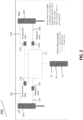
- FIG. 3 is a diagram of a hydraulically cross-linked suspension system 300 with roll damping valves 338, in accordance with one embodiment.
- Suspension system 300 is similar to suspension system 200, but suspension system 300 has additional valving and added benefits.
- the system shown in at least Figure 3 acts like two independent shocks, but with additional roll damping.
- roll damping valves 338L/R are present between the shared line 232 and the compression valve 222L/R and rebound valve 224L/R.
- a first line 340 fluidly connects roll damping valve 338L with rebound valve 224L and compression valve 222R
- a second line 342 fluidly connects roll damping valve 338R with rebound valve 224R and compression valve 222L.
- 338L/R restricts the flow into reservoir 226 passing through line, port, or channel 232, but allows free flow in the opposite direction out of reservoir 226 into line/port/channels 340 and 342.
- roll damping valve 338L/R assists in adding roll damping functions to the suspension system.
- roll damping valve 338L/R can be a passive valve, a semi active valve, or an active valve.
- roll damping valve 338L/R utilizes a bypass port piston, as previously described.
- the active valve can vary a flow rate through an inlet or outlet passage within the active valve, itself.
- the active valve can be used to meter the working fluid flow (e.g., control the rate of working fluid flow) with/or without adjusting the flow rate through orifice.
- active and semi-active valves including those used for compression and/or rebound stiffness adjustments, preload adjustments, bottom-out control, preload adjustment, ride height adjustment, and the like see, as an example, U.S. Patent 9,353,818 and U.S. Patent 9,623,716 to which refence is specifically made.
- FIG. 4 is a diagram of a hydraulically cross-linked suspension system 300 with roll damping valves 338 during a compression event, in accordance with one embodiment.
- Shock displacement arrows 344L/R show the direction in which shock assembly 220L/R are respectively being influenced (i.e., in compression or rebound). In at least Figure 4 , shock assemblies 220L/R are both in compression.
- the relative size of arrows indicating the direction of fluid flow also indicate the relative pressure levels.
- high pressure arrows 346 show where there is a higher pressure level
- low pressure arrows 350 show the areas with less pressure.
- medium pressure arrows 348 show an in-between pressure level.
- FIG. 5 is a diagram of a hydraulically cross-linked suspension system 300 with roll damping valves 338 during a roll event, in accordance with one embodiment.
- a roll event is turning the vehicle.
- roll damping valves 338L/R offer corner damping.
- the left shock assembly 220R is being compressed while the right shock assembly 220R is extending (or in a rebound stroke).
- Second line 342 has a relatively medium pressure level, while first line 340 has a low pressure level. The pressure differentials cause fluid to flow towards the rebound chamber for shock assembly 220L and the compression chamber of shock assembly 220R.
- the upstream pressure is increased. In one embodiment, if the shock displacement speeds are the same then the shaft flow is going from one shock to the other (in the case of at least Figure 5 , the shaft flow is going from shock assembly 220L to shock assembly 220R).
- the level of restriction that roll damping valve 338L/R place on the fluid flow can be adjusted.
- a tuner or user can change the amount of roll damping independently of other damping directions, such as heave.
- the damping settings are tuned to the vehicle, or are a factory default.
- a user can control the damping settings via a knob, switch, remote controls, or the like.
- roll damping valve 338L is restrictive when fluid is flowing from the first line 340 to the second line 342 or reservoir 226, and free flowing in the reverse direction.
- roll damping valve 338R is restrictive when fluid is flowing from the second line 342 to the first line 340 or reservoir 226, and free flowing in the reverse direction.
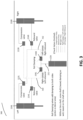
- Figure 6 is a diagram of a hydraulically cross-linked suspension system 300 with roll damping valves 338 and accumulators 452L/R, in accordance with one embodiment.
- accumulators 452L/R are used to account for higher frequency control, for example wheel shake. In one embodiment, accumulators 452L/R are tuned to reduce the harshness for a rider by decreasing the frequency response at high frequencies. In one embodiment, there is not much damping during low flow rates since the accumulator response is velocity based. In one embodiment, the compression valves 222L/R and rebound valves 224L/R also assist in reducing wheel shake.
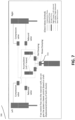
- Figure 7 is a diagram of a hydraulically cross-linked suspension system 300 with roll damping valves 338, accumulators 452L/R, and heave damping valve 554, in accordance with one embodiment.
- a tuner or user can change the amount of heave damping offered by heave damping valve 554 independently of other damping directions, such as roll.
- the damping settings are tuned to the vehicle, or are a factory default.
- a user can control the damping settings via a knob, switch, remote controls, or the like.
- an additional valve placed on the shared line 232 can assist in damping during heave events.
- have damping valve 554 restricts fluid flow entering reservoir 226, while allowing free fluid flow in the opposite direction.
- have damping valve 554 restricts fluid flow in both directions.
- have damping valve 554 allows free fluid flow in both directions.
- heave damping valve 554 can be a passive valve, semi-active valve, or an active valve. In one embodiment, heave damping valve 554 utilizes a bypass port piston, as previously described.
- heave damping valve 554 there is no fluid flow through the heave damping valve 554 during events where there is no heave (e.g., during roll based events).
- Figure 8 is a diagram of a hydraulically cross-linked suspension system 300 with a manifold 656, in accordance with one embodiment.
- first line 340 fluidly connects manifold 656 with rebound valve 224L and compression valve 222R
- second line 342 fluidly connects manifold 656 with rebound valve 224R and compression valve 222L.
- compression valves 222L/R and rebound valves 224L/R are omitted.
- first line 340 and second line 342 that allows fluid to bypass the manifold 656, roll damping valves 338L/R, or the heave damping valve 554.
- This pump would be able to extend the shock assemblies 220L/R and raise the vehicle as needed.
- the pump can direct flow in either direction, and raise a specific side of the vehicle as directed by a user.
- manifold 656 is structured to be able to control roll and heave damping independently.
- a tuner or user can change the amount of heave and roll damping offered by manifold 656 independently of each other.
- the damping settings are tuned to the vehicle, or are a factory default.
- a user can control the damping settings via a knob, switch, remote controls, or the like.
- roll damping valve 338 may be referred to as a unidirectional pressure relief valve, unidirectional valve, pressure relief valve, etc.
- Manifold 656 can also be used for instances such as electronic compression and rebound control. Additional information regarding electronic compression and rebound control can be found in U.S. Patent Application 2022/0176769 to which refence is specifically made. Additional information regarding electronic compression and rebound control can be found in U.S. Patent 10,737,546 to which refence is specifically made.
- heave damping valve 554 may be referred to as second valve, or similar terms based on the application. For the sake of clarity and brevity, the designations roll damping valve 338 and heave damping valve 554 will continue to be used.
- Figure 9 is a diagram of manifold 656, accumulator 452, and reservoir 226, in accordance with one embodiment.
- manifold 656 incorporates roll damping valve 338, heave damping valve 554, and check valves 658A/B into a single component.
- roll damping valve 338 is a unidirectional pressure relief valve.
- FIG. 9 shows an embodiment with two check valves 658A/B.
- FIG. 12 shows check valves 658A/B in more detail.
- fluid can flow through a single roll damping valve 338 as well as share a single accumulator 452.
- This design has the benefit of fewer parts.
- the performance is similar even with a single accumulator 452, as the embodiment shown in at least Figure 7 would only utilize one accumulator 452L/R at a time.
- the shared accumulator shown in at least Figure 9 is stiffer than either of the accumulators 452L/R shown in at least Figure 7 .
- the increase in stiffness can be beneficial as fluid volume displaced by the shaft is used to fill the accumulator 452 during heave events, whereas piston flow is usually used during roll events.
- a single accumulator is also beneficial in situations with tight packaging restraints, where there may not be enough room for two separate accu mu lators.
- manifold 656 has a first check valve to meter fluid flow between a first chamber, a second chamber, and a third chamber, wherein the first check valve meters fluid flow between one or more of the first chamber and the third chamber and the second chamber and the first chamber.
- Manifold 6565 also has a second check valve to meter fluid flow between the second chamber, the third chamber, and a fourth chamber, wherein the second check valve meters fluid flow between one or more of the fourth chamber and the third chamber and the second chamber and the fourth chamber.
- Figure 10 is a cross section view of manifold 656 from a top down perspective, in accordance with one embodiment. Also included are high pressure line 662, low pressure line 664, flow path 666, chamber 668, shim 670, spring 672, adjuster 674, and ports 676.
- manifold 656 includes at least two check valves 658A/B and a roll damping valve 338.
- fluid is flowing from the high pressure line 662 to the low pressure line 664.
- the positions of the high pressure line 662 and the low pressure line 664 are reversed.
- fluid can enter and exit manifold 656 from at least two sources, so the direction of fluid flow is dependent on the pressure differential between the two lines.
- the high pressure line 662 and the low pressure line 664 may also be referred to as first line 340 and second line 342 depending on the scenario.
- the flow path to reservoir 226 can be seen in at least Figure 13 .
- roll damping valve 338 is shown to be a passive valve, in another embodiment it is an electronic valve. In one embodiment, roll damping valve 338 is based on a stiff load bearing spring 672 that has a preload against shim 670. In one embodiment, roll damping valve 338 has a preload that must be overcome before fluid will flow through shim 670. In one embodiment, adjuster 674 can be moved, either manually or electronically, to change the amount of fluid flow through ports 676 and change the preload on spring 672. In one embodiment, the preload can be tuned to the needs of the vehicle and its cornering conditions. In which case, if a bump is hit while cornering then any additional pressure would be able to blow off and not upset the vehicle during the action.
- One benefit of this structure is that there will not be a loss in the damping on the side of the vehicle that encounters the event (e.g., hitting a bump while cornering), so the damping characteristics can be maintained even while sway is occurring.
- the manifold structure is able to accomplish this with fewer components compared to other solutions.
- Figure 11 is a cross section view of manifold 656 from a top down perspective, in accordance with one embodiment.
- flow path 666 is a mirrored flow path as the one shown in at least Figure 10 when the position of the high pressure line 662 and low pressure line 664 is reversed.
- fluid enters manifold 656 through high pressure line 662 and passes through check valve 658B. Once past check valve 658B, fluid can flow through chamber 668 and into accumulator 452, as well as through the piston on roll damping valve 338 and into reservoir 226. After passing through roll damping valve 338, fluid can then flow through check valve 658A and out the low pressure line 664.
- Figure 12 is a cut away view of check valve 658A, in accordance with one embodiment.
- check valves 658A/B are of similar structure and mirrored with a central shaft 660 coupling the two.
- first chamber 678 and fourth chamber 683 are mirror images of one another.
- fluid flow from second chamber 680 to fourth chamber 683 is allowed through outer port 688, while the reverse is blocked by first shim 684.
- Fluid flow from fourth chamber 683 to third chamber 682 is allowed through inner port 690, while the reverse is blocked by second shim 686.
- check valve 658B works similarly to check valve 658A but mirrored, and where fourth chamber 683 is used for check valve 658A first chamber 678 applies to check valve 658B.
- first spring 692 is used to bias first shim 684 towards a closed position. First spring 692 sets a preload against first shim 684 that must be overcome before fluid can flow through the outer port 688. In one embodiment, first shim 684 has at least one hole to allow fluid to flow freely into inner port 690.
- second spring 694 is used to bias second shim 686 towards a closed position. Second spring 694 sets a preload against second shim 686 that must be overcome before fluid can flow through the inner port 690.
- second spring 694 is used for both check valve 658A and check valve 658B (as seen in at least Figure 11 ).
- a different second spring 694 is used for check valve 658A and check valve 658B.
- the two second springs 694 can have different spring constants.
- first spring 692 has the same spring constant between check valve 658A and check valve 658B. In one embodiment, first spring 692 has a different spring constant between check valve 658A and check valve 658B.
- first shim 684 and second shim 686 are both a single shim. In one embodiment, first shim 684 and second shim 686 are both shim stacks.
- Figure 18 is a side view of check valves 658A/B where the second shim 686 is a shim stack. In one embodiment, first shim 684 and second shim 686 are a combination of a shingle shim and a shim stack.
- Figure 19 is a side view of check valves 658A/B where second shim 686A is a shim stack and second shim 686B is a single shim.
- spring 694 is only acing upon one instance of second shim 686.
- Figure 20 is a side view of check valves 658A/B with a frequency check valve 604.
- check valve 658A and check valve 658B utilize a frequency check valve 604.
- the frequency check valve 604 allows flow to momentarily bypass the electronic valve to add frequency dependency.
- manifold 656 can be used with cross-linked system 200, 300, as shown in at least Figure 8 .
- manifold 656 is used to compression and rebound in a shock assembly 220.
- Figure 16 is a diagram of manifold 656 regulating fluid flow of a shock assembly 220 during a compression stroke. Movement arrow 602 shows the direction of movement.
- fluid will flow out of the compression chamber of shock assembly 220 and through check valve 658A. Fluid will then flow through the unidirectional valve 338, through check valve 658B, and into the rebound chamber of shock assembly 220. After passing through unidirectional valve 338, fluid can also flow into reservoir 226.
- Figure 17 is a diagram of manifold 656 regulating fluid flow of a shock assembly 220 during a rebound stroke. Movement arrow 602 shows the direction of movement. In one embodiment, during a rebound stroke fluid will flow out of the rebound chamber of shock assembly 220 and through check valve 658B. Fluid will then flow through the unidirectional valve 338, through check valve 658A, and into the compression chamber of shock assembly 220. After passing through unidirectional valve 338, fluid can also flow into reservoir 226.
- high pressure line 662 connects to a rebound chamber of a shock assembly, while low pressure line 664 connects to a compression chamber of the same shock assembly. In one embodiment, high pressure line 662 connects to a compression chamber of a shock assembly, while low pressure line 664 connects to a rebound chamber of the same shock assembly.
- Figure 13 is a cross section view of accumulator 452, manifold 656, and reservoir 226, in accordance with one embodiment.
- heave damping valve 554 is optional and may be removed and replaced with a plug to prevent fluid leakage or pressure loss. In one embodiment, there is no space for heave damping valve 554 as it is not utilized. In one embodiment, heave damping valve 554 is replaced with a different valve.
- accumulator 452 has a spring chamber 695, negative spring 696, second IFP 698, accumulator gas chamber 700 (or gas chamber 700), and optionally, shim stacks 702.
- fluid flows into spring chamber 695 which houses negative spring 696, with the fluid pressure acting against the negative spring 696 to push the second IFP 698 and expand the chamber, in turn compressing the accumulator gas chamber 700.
- gas pressure in accumulator gas chamber 700 will be higher than gas pressure in gas chamber 234.
- negative spring 696 is sized so that the force on the second IFP 698 from the gas in accumulator gas chamber 700 is balanced by the combined force of the negative spring 696 and the pressure from gas chamber 234. The balanced forced prevents the need for a large initial pressure to overcome the gas pressure in accumulator gas chamber 700 of the accumulator which is desired in some applications to improve performance.
- negative spring 696 to an accumulator will linearize the buildup of pressure, allowing for lower pressures.
- One benefit of a negative spring accumulator is that it can be compact but does not have a limited pressure range.
- negative spring 696 has a light spring constant.
- at least one adjustment plate 710 can be added to alter the stiffness of accumulator 452.
- piston 701 and shim stacks 702 act to meter fluid flow in and out of spring crizator 452.
- fluid will have to be of a pressure sufficient to open and pass shim stacks 702.
- shim stacks 702 are identical.
- shim stacks 702 are different, and have different opening pressures.
- shims stacks 702 are made of at least one shim.
- Figure 14 is a cross section view of an accumulator 452 with a fill 708.
- fill 708 is used to adjust the pressure in accumulator gas chamber 700.
- fill 708 is manually operated.
- fill 708 is electronically controlled.
- fill 708 uses a passive valve, a semi active valve, or an active valve to adjust the pressure in accumulator gas chamber 700.
- retainer 704 is used to maintain the placement of negative spring 696. In one embodiment, retainer 704 is used in the absence of piston 701. In one embodiment, retainer 704 is used in conjunction with piston 701.
- Figure 15 is a cross section view of an accumulator 452 with adjustment plates 710.
- adjustment plates 710 are used to adjust the pressure acting against accumulator gas chamber 700.
- adjustment plates are placed between retainer 704 and the entrance to chamber 668.
- adjustment plates 710 are used without retainer 704.
- accumulator 452 can be used with cross-linked system 200, 300, as shown by at least Figure 7 . In one embodiment, accumulator 452 can be used with cross-linked system 200, 300 and manifold 656 as shown by at least Figure 9 . In one embodiment, accumulator 452 can be used with manifold 656, as shown by at least Figure 13 .
Landscapes
- Engineering & Computer Science (AREA)
- Mechanical Engineering (AREA)
- Vehicle Body Suspensions (AREA)
Applications Claiming Priority (4)
| Application Number | Priority Date | Filing Date | Title |
|---|---|---|---|
| US202263313023P | 2022-02-23 | 2022-02-23 | |
| US18/113,016 US12502923B2 (en) | 2022-02-23 | 2023-02-22 | Hydraulic cross-linked suspension |
| US18/113,019 US12311720B2 (en) | 2022-02-23 | 2023-02-22 | Hydraulic cross-linked suspension |
| US18/113,021 US20230302867A1 (en) | 2022-02-23 | 2023-02-22 | Hydraulic cross-linked suspension |
Publications (1)
| Publication Number | Publication Date |
|---|---|
| EP4253106A1 true EP4253106A1 (fr) | 2023-10-04 |
Family
ID=85382581
Family Applications (1)
| Application Number | Title | Priority Date | Filing Date |
|---|---|---|---|
| EP23158363.4A Pending EP4253106A1 (fr) | 2022-02-23 | 2023-02-23 | Suspension hydraulique reticulee |
Country Status (1)
| Country | Link |
|---|---|
| EP (1) | EP4253106A1 (fr) |
Cited By (5)
| Publication number | Priority date | Publication date | Assignee | Title |
|---|---|---|---|---|
| US20240198753A1 (en) * | 2022-04-26 | 2024-06-20 | Fox Factory, Inc. | E-sway algorithm |
| US12502923B2 (en) | 2022-02-23 | 2025-12-23 | Fox Factory, Inc. | Hydraulic cross-linked suspension |
| US12522042B1 (en) | 2024-10-24 | 2026-01-13 | Fox Factory, Inc. | Linked gas chambers for e-sway disconnect |
| US12545072B2 (en) | 2019-10-22 | 2026-02-10 | Fox Factory, Inc. | Hydraulic anti-roll bar link |
| US12629980B2 (en) * | 2023-04-26 | 2026-05-19 | Fox Factory, Inc. | E-sway algorithm |
Citations (12)
| Publication number | Priority date | Publication date | Assignee | Title |
|---|---|---|---|---|
| JPH0419210A (ja) * | 1990-05-14 | 1992-01-23 | Nissan Motor Co Ltd | 車両の揺動減衰装置 |
| US20080129000A1 (en) * | 2004-07-30 | 2008-06-05 | Kinetic Pty Ltd | Hydraulic System for a Vehicle Suspension |
| US20090140501A1 (en) * | 2005-03-01 | 2009-06-04 | Kinetic Pty Ltd. | Hydraulic System for a Vehicle Suspension |
| US8627932B2 (en) | 2009-01-07 | 2014-01-14 | Fox Factory, Inc. | Bypass for a suspension damper |
| US8838335B2 (en) | 2011-09-12 | 2014-09-16 | Fox Factory, Inc. | Methods and apparatus for suspension set up |
| US8857580B2 (en) | 2009-01-07 | 2014-10-14 | Fox Factory, Inc. | Remotely operated bypass for a suspension damper |
| US9033122B2 (en) | 2009-01-07 | 2015-05-19 | Fox Factory, Inc. | Method and apparatus for an adjustable damper |
| US9239090B2 (en) | 2009-01-07 | 2016-01-19 | Fox Factory, Inc. | Suspension damper with remotely-operable valve |
| US9623716B2 (en) | 2012-02-03 | 2017-04-18 | Fox Factory, Inc. | Suspension with hydraulic preload adjust |
| US10737546B2 (en) | 2016-04-08 | 2020-08-11 | Fox Factory, Inc. | Electronic compression and rebound control |
| US20220176769A1 (en) | 2020-11-19 | 2022-06-09 | Fox Factory, Inc. | Shock absorber with a bearing housing bypass assembly |
| US20220242186A1 (en) | 2021-02-01 | 2022-08-04 | Fox Factory, Inc. | Three-port adjuster |
-
2023
- 2023-02-23 EP EP23158363.4A patent/EP4253106A1/fr active Pending
Patent Citations (14)
| Publication number | Priority date | Publication date | Assignee | Title |
|---|---|---|---|---|
| JPH0419210A (ja) * | 1990-05-14 | 1992-01-23 | Nissan Motor Co Ltd | 車両の揺動減衰装置 |
| US20080129000A1 (en) * | 2004-07-30 | 2008-06-05 | Kinetic Pty Ltd | Hydraulic System for a Vehicle Suspension |
| US20090140501A1 (en) * | 2005-03-01 | 2009-06-04 | Kinetic Pty Ltd. | Hydraulic System for a Vehicle Suspension |
| US9033122B2 (en) | 2009-01-07 | 2015-05-19 | Fox Factory, Inc. | Method and apparatus for an adjustable damper |
| US8857580B2 (en) | 2009-01-07 | 2014-10-14 | Fox Factory, Inc. | Remotely operated bypass for a suspension damper |
| US8627932B2 (en) | 2009-01-07 | 2014-01-14 | Fox Factory, Inc. | Bypass for a suspension damper |
| US9120362B2 (en) | 2009-01-07 | 2015-09-01 | Fox Factory, Inc. | Bypass for a suspension damper |
| US9239090B2 (en) | 2009-01-07 | 2016-01-19 | Fox Factory, Inc. | Suspension damper with remotely-operable valve |
| US9353818B2 (en) | 2009-01-07 | 2016-05-31 | Fox Factory, Inc. | Remotely operated bypass for a suspension damper |
| US8838335B2 (en) | 2011-09-12 | 2014-09-16 | Fox Factory, Inc. | Methods and apparatus for suspension set up |
| US9623716B2 (en) | 2012-02-03 | 2017-04-18 | Fox Factory, Inc. | Suspension with hydraulic preload adjust |
| US10737546B2 (en) | 2016-04-08 | 2020-08-11 | Fox Factory, Inc. | Electronic compression and rebound control |
| US20220176769A1 (en) | 2020-11-19 | 2022-06-09 | Fox Factory, Inc. | Shock absorber with a bearing housing bypass assembly |
| US20220242186A1 (en) | 2021-02-01 | 2022-08-04 | Fox Factory, Inc. | Three-port adjuster |
Cited By (5)
| Publication number | Priority date | Publication date | Assignee | Title |
|---|---|---|---|---|
| US12545072B2 (en) | 2019-10-22 | 2026-02-10 | Fox Factory, Inc. | Hydraulic anti-roll bar link |
| US12502923B2 (en) | 2022-02-23 | 2025-12-23 | Fox Factory, Inc. | Hydraulic cross-linked suspension |
| US20240198753A1 (en) * | 2022-04-26 | 2024-06-20 | Fox Factory, Inc. | E-sway algorithm |
| US12629980B2 (en) * | 2023-04-26 | 2026-05-19 | Fox Factory, Inc. | E-sway algorithm |
| US12522042B1 (en) | 2024-10-24 | 2026-01-13 | Fox Factory, Inc. | Linked gas chambers for e-sway disconnect |
Similar Documents
| Publication | Publication Date | Title |
|---|---|---|
| US12502923B2 (en) | Hydraulic cross-linked suspension | |
| US12311720B2 (en) | Hydraulic cross-linked suspension | |
| US20230302867A1 (en) | Hydraulic cross-linked suspension | |
| US12496867B2 (en) | Hydraulically-adjustable preload and/or cross-over | |
| US20250050701A1 (en) | Shock absorber with a bearing housing bypass assembly | |
| EP1879760B1 (fr) | Système hydraulique pour suspension de véhicule | |
| EP4015264B1 (fr) | Système de barre anti-roulis | |
| US12325276B2 (en) | IFP shock with automatically adjustable ride height | |
| US20250229587A1 (en) | Three-port adjuster | |
| EP1853442B1 (fr) | Système hydraulique pour suspension de véhicule | |
| EP4197830B1 (fr) | Liaison d'amortisseur de barre antiroulis à commande électronique | |
| JP4674882B2 (ja) | 車両懸架システム用の受動的ライド制御 | |
| WO2007098559A1 (fr) | Système hydraulique pour une suspension de véhicule | |
| US20230356558A1 (en) | Shock assembly with by-pass and hydraulic adjust | |
| US12409697B2 (en) | Self-pumping spring preload system | |
| EP4407208A1 (fr) | Ensemble soupape active | |
| US20250129833A1 (en) | Dual piston shock assembly | |
| US20230400080A1 (en) | Integrated bearing hardware for shock assembly | |
| EP4040011A1 (fr) | Amortisseur doté d'un système d'écoulement de soupape à base annulaire |
Legal Events
| Date | Code | Title | Description |
|---|---|---|---|
| PUAI | Public reference made under article 153(3) epc to a published international application that has entered the european phase |
Free format text: ORIGINAL CODE: 0009012 |
|
| STAA | Information on the status of an ep patent application or granted ep patent |
Free format text: STATUS: THE APPLICATION HAS BEEN PUBLISHED |
|
| AK | Designated contracting states |
Kind code of ref document: A1 Designated state(s): AL AT BE BG CH CY CZ DE DK EE ES FI FR GB GR HR HU IE IS IT LI LT LU LV MC ME MK MT NL NO PL PT RO RS SE SI SK SM TR |
|
| STAA | Information on the status of an ep patent application or granted ep patent |
Free format text: STATUS: REQUEST FOR EXAMINATION WAS MADE |
|
| 17P | Request for examination filed |
Effective date: 20240319 |
|
| RBV | Designated contracting states (corrected) |
Designated state(s): AL AT BE BG CH CY CZ DE DK EE ES FI FR GB GR HR HU IE IS IT LI LT LU LV MC ME MK MT NL NO PL PT RO RS SE SI SK SM TR |