EP4253255A1 - Systèmes et procédés d'identification de dommages et de vol dans une soute à fret d'aéronef - Google Patents
Systèmes et procédés d'identification de dommages et de vol dans une soute à fret d'aéronef Download PDFInfo
- Publication number
- EP4253255A1 EP4253255A1 EP23164399.0A EP23164399A EP4253255A1 EP 4253255 A1 EP4253255 A1 EP 4253255A1 EP 23164399 A EP23164399 A EP 23164399A EP 4253255 A1 EP4253255 A1 EP 4253255A1
- Authority
- EP
- European Patent Office
- Prior art keywords
- interface device
- aircraft
- aircraft interface
- cargo bay
- image data
- Prior art date
- Legal status (The legal status is an assumption and is not a legal conclusion. Google has not performed a legal analysis and makes no representation as to the accuracy of the status listed.)
- Pending
Links
Images


Classifications
-
- B—PERFORMING OPERATIONS; TRANSPORTING
- B64—AIRCRAFT; AVIATION; COSMONAUTICS
- B64D—EQUIPMENT FOR FITTING IN OR TO AIRCRAFT; FLIGHT SUITS; PARACHUTES; ARRANGEMENT OR MOUNTING OF POWER PLANTS OR PROPULSION TRANSMISSIONS IN AIRCRAFT
- B64D45/00—Aircraft indicators or protectors not otherwise provided for
- B64D45/0015—Devices specially adapted for the protection against criminal attack, e.g. anti-hijacking systems
- B64D45/0018—Devices specially adapted for the protection against criminal attack, e.g. anti-hijacking systems means on aircraft for restricting unauthorized access to the aircraft
-
- B—PERFORMING OPERATIONS; TRANSPORTING
- B64—AIRCRAFT; AVIATION; COSMONAUTICS
- B64D—EQUIPMENT FOR FITTING IN OR TO AIRCRAFT; FLIGHT SUITS; PARACHUTES; ARRANGEMENT OR MOUNTING OF POWER PLANTS OR PROPULSION TRANSMISSIONS IN AIRCRAFT
- B64D45/00—Aircraft indicators or protectors not otherwise provided for
- B64D45/0015—Devices specially adapted for the protection against criminal attack, e.g. anti-hijacking systems
- B64D45/0051—Devices specially adapted for the protection against criminal attack, e.g. anti-hijacking systems by monitoring passengers or crew on aircraft
- B64D45/0053—Devices specially adapted for the protection against criminal attack, e.g. anti-hijacking systems by monitoring passengers or crew on aircraft using visual equipment, e.g. cameras
-
- B—PERFORMING OPERATIONS; TRANSPORTING
- B64—AIRCRAFT; AVIATION; COSMONAUTICS
- B64D—EQUIPMENT FOR FITTING IN OR TO AIRCRAFT; FLIGHT SUITS; PARACHUTES; ARRANGEMENT OR MOUNTING OF POWER PLANTS OR PROPULSION TRANSMISSIONS IN AIRCRAFT
- B64D47/00—Equipment not otherwise provided for
- B64D47/08—Arrangements of cameras
-
- B—PERFORMING OPERATIONS; TRANSPORTING
- B64—AIRCRAFT; AVIATION; COSMONAUTICS
- B64D—EQUIPMENT FOR FITTING IN OR TO AIRCRAFT; FLIGHT SUITS; PARACHUTES; ARRANGEMENT OR MOUNTING OF POWER PLANTS OR PROPULSION TRANSMISSIONS IN AIRCRAFT
- B64D9/00—Equipment for handling freight; Equipment for facilitating passenger embarkation or the like
Definitions
- the present disclosure relates generally to aircraft cargo management, more specifically, identification of cargo theft and damage.
- Aircraft cargo compartments are used to carry luggage and other cargo during a flight.
- Many cargo and passenger aircraft are equipped with semi-automatic Cargo Loading System (CLS) in the compartment.
- CLS is an electrically powered system that allows Unit Load Devices (ULDs) to be carried into the aircraft cargo compartment.
- ULDs Unit Load Devices
- the primary benefit of the CLS is to reduce the manpower and loading/unloading time during shipment.
- ULDs and cargo pallets typically come in standardized shapes and sizes configured for bulk loading a large quantity of cargo. They also allow cargo to be efficiently loaded and fastened inside the aircraft, reducing loading time and the risk of cargo and/or aircraft damage.
- cargo theft One of the many risks to shipping cargo via aircraft is cargo theft. For example, cargo theft crimes are believed to have increased, increasing costs for shippers and consumers alike.
- Identifying cargo theft incidents may provide cost-benefits to shippers and consumers. Moreover, identifying cargo damage may reduce safety risks for aircraft operations and handling personnel, reduce compensation costs for lost luggage, and tend to minimize loss of reputation for airlines.
- a method for monitoring an aircraft cargo bay may comprise receiving by an aircraft interface device, image data from a camera in a cargo bay of an aircraft.
- the method may comprise detecting, by the aircraft interface device, movement in the cargo bay.
- the method may comprise directing, by the aircraft interface device, the camera to activate.
- the camera may be configured to capture image data of the cargo bay.
- the method may further comprise processing, by the aircraft interface device, the captured image data for event detection and event classification.
- the method may comprise generating, by the aircraft interface device, an alarm based on a theft event classification.
- the detecting may further comprise comprises the aircraft interface device electrically communicating with a motion sensor.
- the motion sensor may be configured to detect movement in the cargo bay.
- the method may further comprise commanding, by the aircraft interface device, the camera to adjust a view of the cargo bay.
- the method may further comprise interfacing, by the aircraft interface device, the aircraft interface device with on ground infrastructure.
- the interfacing may further comprise sending, by the aircraft interface device, the captured image data to the on ground infrastructure.
- the on ground infrastructure may be configured to analyze the captured image data and may be further configured to process the captured image data.
- the interfacing may further comprise receiving, by the aircraft interface device, processed image data from the on ground infrastructure, and synchronizing, by the aircraft interface device, the aircraft interface device with the on ground infrastructure.
- the processing may further comprise performing, by the aircraft interface device, image segmentation and representation. In various embodiments, the processing may further comprise performing, by the aircraft interface device, image extraction. In various embodiments, the processing may further comprise processing, by the aircraft interface device, the extracted image through a trained deep neural network for object classification.
- a method for monitoring an aircraft cargo bay is also disclosed herein.
- the method may comprise receiving, by an aircraft interface device, image data from a camera in a cargo bay of an aircraft.
- the method may comprise detecting, by the aircraft interface device, movement in the cargo bay.
- the method may comprise directing, by the aircraft interface device, the camera to activate.
- the camera may be configured to capture the image data of the cargo bay.
- the method may further comprise processing, by the aircraft interface device, the captured image data for event detection and event classification.
- the method may further comprise monitoring, by the aircraft interface device, loading of cargo based on a cargo-loading event classification.
- the monitoring may further comprise monitoring, by the aircraft interface device, movement within the aircraft cargo bay.
- the method may further comprise generating, by the aircraft interface device, a three-dimensional scan of the cargo bay.
- the generating may further comprise generating, by the aircraft interface device, a three-dimensional scan of cargo containers.
- the method may further comprise calculating, by the aircraft interface device, an area between a fuselage wall of the cargo bay and a container based on the three-dimensional scans.
- the method may further comprise comparing, by the aircraft interface device, the calculated area to a minimum separation standard.
- the method may further comprise generating, by the aircraft interface device, an alarm based on a calculated area that is less than the minimum separation standard.
- a method for monitoring an aircraft cargo bay is also disclosed herein.
- the method may comprise receiving by an aircraft interface device, image data from a camera in a cargo bay of an aircraft.
- the method may comprise detecting, by the aircraft interface device, movement in the cargo bay.
- the method may further comprise interfacing, by the aircraft interface device, the aircraft interface device with an aircraft avionics system.
- the method may comprise directing, by the aircraft interface device, the camera to activate.
- the camera may be configured to record the cargo bay.
- the camera may be configured to capture image data of the cargo bay.
- the method may further comprise processing, by the aircraft interface device, the captured image data.
- the aircraft interface device may be configured to process the image data for event detection.
- the aircraft interface device may be configured to process the image data for enhancement.
- the aircraft interface device may be configured to deploy pre-trained neural network based algorithms.
- the algorithms of the aircraft interface device may be further configured for event classification.
- the method may comprise generating, by the aircraft interface device, an alarm based on a theft event classification. In various embodiments, the generating may comprise transmitting the alarm to an aircraft.
- the interfacing may further comprise interfacing, by the aircraft interface device, the aircraft interface device with the aircraft avionics system to detect phases of a flight.
- the directing may further comprise directing, by the aircraft interface device, the camera to activate based on a phase of the flight.
- the interfacing may further comprise interfacing, by the aircraft interface device, the aircraft interface device with the aircraft avionics system to detect a cargo bay door status.
- the directing may further comprise directing, by the aircraft interface device, the camera to activate based on the cargo bay door status.
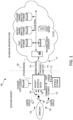
- An aircraft cargo bay may contain multiple image sensors, cameras, and motion sensors placed at different locations within the cargo bay. These systems may be used to inspect the cargo bay and cargo therein. These systems may be commanded by an onboard device, such as, for example, an aircraft interface device (AID), to scan the cargo bay, capture image data, and relay the data to the AID.
- Image data may be, for example, images and video feeds.
- the AID may process the data using Machine Learning and/or Deep Learning pre-trained neural networks to identify threats and/or classify events occurring within the cargo bay.
- Machine Learning may be, for example, a method of data analysis that automates analytical model building. Deep Learning may be a subset of Machine Learning, comprising multiple layers of analysis.
- the pre-trained neural networks may be trained to identify these threats. These neural networks may be trained to detect movements in the cargo bay depending on a phase of a flight, or a status of a cargo bay door.
- the AID may activate a camera, commanding it to begin recording the cargo bay and capturing images of the cargo bay.
- the AID may interface with and relay data (including images and videos) to on board video storage systems, on ground infrastructure, and avionics systems aboard the aircraft.
- On board infrastructure may be, for example, a cloud.
- a method of monitoring the cargo bay by the AID may be used to detect tampering, detect authorized and unauthorized access to the cargo area, count people entering and exiting the cargo bay, detect the presence of humans and unexpected items in the cargo bay through thermal imaging, continuously monitor cargo for theft identification, and generate alarms in the event of unauthorized personnel entering the cargo bay or damage to the cargo bay. Accordingly, the method may reduce the need for manual inspection of the cargo bay and/or eliminate the need for constant human monitoring of long-duration video feeds of the cargo bay.
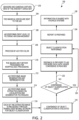
- the method may comprise receiving (step 102), by an aircraft interface device (AID), image data from a camera of a cargo bay of an aircraft.
- the method may comprise the AID electrically communicating (step 104) with one or more motion sensors.
- Motion sensors may be disposed anywhere in the cargo bay. For example, motion sensors may be disposed proximate cargo in the cargo bay.
- the method may further comprise detecting (step 106), by the aircraft interface device, movement in the cargo bay.
- the AID may be configured to command the motion sensors to detect particular movements within the cargo bay.
- the motion sensors may detect loading and unloading of cargo, human movement, and the like.
- the method may comprise directing (step 108), by the AID, the camera to activate.
- the method may comprise commanding (step 110), by the AID, the camera to adjust a view of the cargo bay.
- the cameras may be coupled to the motion sensors throughout the cargo bay.
- the cameras may be installed at or near aircraft cargo doors.
- the cameras may provide a clear view of the entire aircraft cargo bay, covering various angles of the cargo bay.
- the sensors and cameras may be configured to capture (step 102) views of the aircraft cargo bay in the form of videos and images.
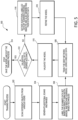
- the method may further comprise processing (step 200), by the AID, the captured image data.
- the processing step may comprise the AID in electrical communication with the cameras and sensors, wherein the camera, sensors, and AID are in a continuous command and feedback loop to capture view(s) of the aircraft cargo bay (step 202).
- the image data may be sent (step 204) to the AID from the cameras.
- the AID may be configured to process the image data for event detection.
- the AID may be configured to process the image data for enhancement and may command the cameras to do the same.
- the AID may perform the first level of filtering and enhancement (step 206).
- the processing step may further comprise the AID scanning the image data for image color (step 208).
- the image data may be further processed for morphologic processing (step 210), relating the image data to specific objects.
- the processing step may further comprise AID performing image segmentation and representation (step 212).
- AID may perform image extraction based on localization and segmentation techniques (step 214).
- the AID may be configured to deploy pre-trained neural network based algorithms.
- the AID's algorithms may be further configured for event classification and movement detection.
- Each extracted image may be further processed through the trained deep neural network for object and/or movement classification (step 216).
- This trained deep neural network may evaluate a confidence of object classification (step 218). If the confidence is high, then the AID may perform the object classification (step 220). If the confidence is not high, then feedback may be provided within AID to acquire more images, videos, and/or scans of the objects and movements at issue until a higher confidence is reached (step 222).
- AID may prepare a report (step 224) and share the report with an avionics system (step 226).
- the AID may be configured to relay the images and recordings to an on board video storage system.
- the method of may further comprise generating (step 112), by the AID, an alarm based on a theft event classification.
- the generating (step 112) may comprise transmitting the alarm to an aircraft.
- the feedback loop between the AID, cameras, and sensors may enable the AID to detect both normal and unusual events.
- the camera itself may be configured to detect unusual events.
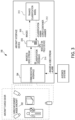
- unusual events may be, for example, suspicious movements 302 of personnel near cargo containers, the presence of specialized tools configured to break locks or boxes, movement of cargo boxes when the boxes should be stationary and locked, lights turned on or off, smoke, fire, or flames in the cargo bay, bag tampering gestures, and the like.
- the AID may command the camera to further enhance the image data using edge computing capabilities.
- the camera edge computing capabilities may reduce the amount of image data in the feedback loop between the AID and camera.
- a communication interface 304 of the AID may relay the image data to a graphics processing unit (GPU) module 306.
- the GPU 306 may then send the image data 308 to a trained classification model 310 of the AID.
- the trained classification model 310 may feed back one or more classifications 312 to the GPU 306, which may, in turn, feed the classifications 314 to the communication interface.
- These classifications 314 may be associated with unusual events, such as theft, or normal events.
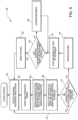
- the AID may receive (step 402) a video stream and begin processing the stream. For instance, the AID may divide (step 404) the video stream into frames. The AID may remove background (step 406) from captured images and extract a scissor cut of an image through semantic segmentation. The AID may detect (step 408) distortion in the image line and surface using feature extraction techniques. In various embodiments, the AID may then detect (step 410) whether the integrity of aircraft cargo is compromised (i.e. tampering). If not, the AID may revert (step 412) to receiving video streams.
- the AID may trigger (step 414) an alarm.
- the AID may also command the cameras to start recording (step 416) and continuously record the ongoing tampering incident.
- the AID may determine (step 418) whether sufficient time recording has occurred based on a pre-configured time interval. If not, the AID may command (step 420) the camera to continue recording and monitoring the tampering incident. If sufficient recording data has been obtained, the AID may mark (step 422) the recording as an event. This marked recording may be further relayed to and analyzed by personnel and the appropriate authorities.
- a model for the AID to classify unusual events, movements, and objects may be trained (step 500) and refined.
- the neural networks may be trained in advance under laboratory conditions using forward and backward propagation techniques to establish a relationship between images of objects and the live scanned images coming from the AID.
- These objects may be, for example, humans, tools, cargo, Unit Load Devices (ULDs), cargo pallets, aircraft doors, cargo rollers, aircraft fuselages, and the like.
- the objects may be scanned (step 502) from a variety of angles and views.
- the scanned images of the objects may also be supplemented by synthetically generating (step 504) images using computers, which may be fed into the model.
- the scanned data may be labeled (step 506) into data sets based on the object using both manual and machine learning based techniques.
- the model may embody principles of fitting in special and temporal dependencies to perform object classification (human, cargo, aircraft door, tools, etc.) Accordingly, the model may be trained (step 508) using labelled data.
- the model may be validated (step 510) and considered (step 512) for a desired accuracy. In the desired accuracy is reached, the training process may cease and the model saved (step 514). If the desired accuracy is not reached, additional labelled data may be gathered (step 516) by scanning the original objects and generating additional synthetic data. The model may then be refined (step 518), retrained, and validated to the desired accuracy. The model may then be deployed in across the AID, camera, and other on board and on ground infrastructures.
- the method may comprise interfacing (step 114), by the AID, the AID with on ground infrastructure.
- the on ground infrastructure may be, for example, a cloud. This step may occur prior to, in conjunction with, or after the processing step (step 200).
- the interfacing (step 114) may further comprise sending (step 116), by the AID, captured image data to the on ground infrastructure.
- the on ground infrastructure may be configured to analyze the captured image data based on prefilled data using machine learning algorithms.
- the on ground infrastructure may be further configured to process the captured image data.
- the on ground infrastructure may take on the AID's aforementioned processing capabilities, or it may reinforce those capabilities. Accordingly, the on ground infrastructure may enable offloading the computing and storage requirements of on board monitoring systems.
- the AID and on ground infrastructure may communicate via an AID-On Ground interface, wherein the AID may send captured data to the on ground infrastructure and may receive processed image data from the on ground infrastructure. Accordingly, the on ground infrastructure may convert unstructured data into structured date for storage, deeper analysis, insights delivery, and metadata extraction.
- the interfacing may comprise receiving (step 118), by the AID, a processed analytics output from the on ground infrastructure.
- the method may further comprise synchronizing (step 120), by the AID, the AID with the on ground infrastructure.
- the on ground infrastructure may provide network adaptations and assist the AID in the event of resource losses, such as malfunctioning or obstructed cameras.
- the on ground infrastructure may contain software logic to stitch together the videos captured by different cameras. The on ground infrastructure may reconcile the various views of the cargo bay and generate a complete context of the cargo bay scene under observation.
- the on ground infrastructure may comprise high performance computing capabilities and parallel computing enabled to host and run video processing algorithms, video quality enhancers, deep learning and machine learning neural network modules, storage, and a host of event classification datasets.
- the method may comprise synchronizing, by the AID, the AID with the on ground infrastructure for at least one of updated neural network modules and algorithm upgrades.
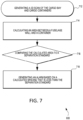
- a method for monitoring an aircraft cargo bay is shown. Specifically, a method 600 for monitoring, by an AID, loading of cargo based on a cargo-loading event classification is shown.
- the method 600 may comprise receiving (step 602), by the AID, image data from a camera in a cargo bay of an aircraft.
- the method may comprise detecting (step 604), by the AID, movement in the cargo bay.
- the method may comprise directing (step 606), by the AID, the camera to activate.
- the camera may be configured to record the cargo bay.
- the camera may be configured to capture image data.
- the method 600 may further comprise processing (step 608), by the AID, the captured image data.
- the AID may be configured to process the image data for event detection.
- the AID may be configured to process the image data for enhancement.
- the AID may be configured to deploy pre-trained neural network based algorithms.
- the algorithms of the AID may be further configured for event classification.
- the method may further comprise monitoring (step 610), by the AID, loading of cargo based on a cargo-loading event classification.
- the method 600 for monitoring may further comprise generating (step 712), by the AID, a three-dimensional scan of the cargo bay.
- the generating (step 721) may occur as the AID receives (step 602) image data from the camera, before the AID receives the image data, or after the AID receives the image data.
- the generating (step 712) may further comprise generating, by the AID, a three-dimensional scan of cargo containers.
- the method 600 may further comprise calculating (step 714), by the AID, an area between a fuselage wall of the cargo bay and a container based on the three-dimensional scans.
- the method 600 may further comprise comparing (step 716), by the AID, the calculated area to a minimum separation standard.
- the calculating (step 714) and comparing (step 716) may occur as the AID processes (step 608) the captured image data and scans.
- the minimum separation standard may be a predetermined standard configured to prevent damage to fuselage walls from cargo.
- a minimum separation standard may be configured to prevent damage to cargo.
- the minimum separation standard may be specific to each aircraft line or model.
- the AID may contain these configurable parameters in software memory.
- the method 600 may further comprise generating (step 718), by the AID, an alarm based on a calculated spacing that is less than the minimum separation standard.
- the generating (step 718) may comprise transmitting the alarm to an aircraft. The generating (step 718) may occur during or after processing (step 608).
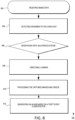
- the method 800 may comprise receiving (step 802), by the AID, image data from a camera in a cargo bay of an aircraft.
- the method 800 may comprise detecting (step 804), by the AID, movement in the cargo bay.
- the method 800 may comprise interfacing (step 806), by the AID, the AID with an aircraft avionics system.
- the method 800 may comprise directing (step 808), by the AID, the camera to activate.
- the camera may be configured to record the cargo bay.
- the camera may be configured to capture image data.
- the method 800 may further comprise processing (step 810), by the AID, the captured image data.
- the AID may be configured to process the image data for event detection.
- the AID may be configured to process the image data for enhancement.
- the AID may be configured to deploy pre-trained neural network based algorithms.
- the algorithms of the AID may be further configured for event classification.
- the method 800 may further comprise generating (step 812), by the AID, an alarm based on a theft event classification.
- the generating (step 812) may comprise transmitting the alarm to an aircraft.
- the method 800 may further comprise interfacing (step 902), by the AID, the AID with the aircraft avionics system to detect phases of a flight.
- the AID may interface (step 902) with the aircraft avionics system throughout monitoring 800.
- the AID may interface (step 902) with the aircraft avionics system as the captured image data is being processed (step 810).
- the directing step (step 808) may further comprise directing (step 904), by the AID, the camera to activate based on a phase of the flight.
- the method 800 may further comprise interfacing (step 10) by the AID, the AID with the aircraft avionics system to detect a cargo bay door status.
- the AID may interface (step 10) with the aircraft avionics system throughout monitoring 800.
- the AID may interface (step 10) with the aircraft avionics system as the captured image data is being processed (step 810).
- the directing (step 808) may further comprise directing (step 12), by the AID, the camera to activate based on the cargo bay door status.
- the camera may be configured to deactivate based on a cargo bay door status indicating that the cargo bay doors are closed.
- the camera may be configured to enter an idle setting (i.e., sleep mode) based on a cargo bay door status indicating that the cargo bay doors are closed.
- references to "various embodiments”, “one embodiment”, “an embodiment”, “an example embodiment”, etc. indicate that the embodiment described may include a particular feature, structure, or characteristic, but every embodiment may not necessarily include the particular feature, structure, or characteristic. Moreover, such phrases are not necessarily referring to the same embodiment. Further, when a particular feature, structure, or characteristic is described in connection with an embodiment, it is submitted that it is within the knowledge of one skilled in the art to affect such feature, structure, or characteristic in connection with other embodiments whether or not explicitly described. After reading the description, it will be apparent to one skilled in the relevant art(s) how to implement the disclosure in alternative embodiments.
Landscapes
- Engineering & Computer Science (AREA)
- Aviation & Aerospace Engineering (AREA)
- Alarm Systems (AREA)
Applications Claiming Priority (2)
| Application Number | Priority Date | Filing Date | Title |
|---|---|---|---|
| IN202241017963 | 2022-03-28 | ||
| US17/850,762 US12304654B2 (en) | 2022-03-28 | 2022-06-27 | Systems and methods for identifying damage and theft in an aircraft cargo bay |
Publications (1)
| Publication Number | Publication Date |
|---|---|
| EP4253255A1 true EP4253255A1 (fr) | 2023-10-04 |
Family
ID=85781871
Family Applications (1)
| Application Number | Title | Priority Date | Filing Date |
|---|---|---|---|
| EP23164399.0A Pending EP4253255A1 (fr) | 2022-03-28 | 2023-03-27 | Systèmes et procédés d'identification de dommages et de vol dans une soute à fret d'aéronef |
Country Status (1)
| Country | Link |
|---|---|
| EP (1) | EP4253255A1 (fr) |
Cited By (2)
| Publication number | Priority date | Publication date | Assignee | Title |
|---|---|---|---|---|
| EP4576007A1 (fr) * | 2023-12-22 | 2025-06-25 | The Boeing Company | Systèmes et procédés de surveillance de cargaison |
| US12459643B2 (en) | 2022-08-09 | 2025-11-04 | The Boeing Company | System and method for monitoring cargo during transportation |
Citations (4)
| Publication number | Priority date | Publication date | Assignee | Title |
|---|---|---|---|---|
| WO2003105480A1 (fr) * | 2002-05-20 | 2003-12-18 | Simmonds Precision Products, Inc. | Systeme de verification de detection video |
| US20070241897A1 (en) * | 2003-12-10 | 2007-10-18 | Herthgmbh & Co. Kg | System and Method for Monitoring the Cargo Space of a Transporation Device |
| US20100213313A1 (en) * | 2006-11-06 | 2010-08-26 | Goodrich Corporation | Integrated aircraft cargo loading and cargo video monitoring system |
| US20220063901A1 (en) * | 2020-09-02 | 2022-03-03 | Federal Express Corporation | Intelligent equipment security system |
-
2023
- 2023-03-27 EP EP23164399.0A patent/EP4253255A1/fr active Pending
Patent Citations (4)
| Publication number | Priority date | Publication date | Assignee | Title |
|---|---|---|---|---|
| WO2003105480A1 (fr) * | 2002-05-20 | 2003-12-18 | Simmonds Precision Products, Inc. | Systeme de verification de detection video |
| US20070241897A1 (en) * | 2003-12-10 | 2007-10-18 | Herthgmbh & Co. Kg | System and Method for Monitoring the Cargo Space of a Transporation Device |
| US20100213313A1 (en) * | 2006-11-06 | 2010-08-26 | Goodrich Corporation | Integrated aircraft cargo loading and cargo video monitoring system |
| US20220063901A1 (en) * | 2020-09-02 | 2022-03-03 | Federal Express Corporation | Intelligent equipment security system |
Cited By (2)
| Publication number | Priority date | Publication date | Assignee | Title |
|---|---|---|---|---|
| US12459643B2 (en) | 2022-08-09 | 2025-11-04 | The Boeing Company | System and method for monitoring cargo during transportation |
| EP4576007A1 (fr) * | 2023-12-22 | 2025-06-25 | The Boeing Company | Systèmes et procédés de surveillance de cargaison |
Similar Documents
| Publication | Publication Date | Title |
|---|---|---|
| EP4253255A1 (fr) | Systèmes et procédés d'identification de dommages et de vol dans une soute à fret d'aéronef | |
| EP3097550B1 (fr) | Surveillance d'intérieur d'aéronef | |
| EP4105101A1 (fr) | Système de surveillance, procédé de surveillance et dispositif de surveillance pour train ferroviaire | |
| US7256818B2 (en) | Detecting fire using cameras | |
| EP3335991B1 (fr) | Systeme d'indicateur d'état de capacité d'un compartiment à bagages superieur | |
| US10723481B2 (en) | Method and system for monitoring and securing an enclosure of a vehicle, in particular of an aircraft | |
| KR102131893B1 (ko) | 화물차 덮개 불량 자동 인지 장치 및 방법 | |
| EP2924663B1 (fr) | Détermination automatique de l'effectif embarqué sur un avion | |
| US10733858B2 (en) | Method and system for monitoring and securing an enclosure of a vehicle, in particular of an aircraft | |
| US12304654B2 (en) | Systems and methods for identifying damage and theft in an aircraft cargo bay | |
| US20210319397A1 (en) | Real-time tracking of cargo loads | |
| US20140146998A1 (en) | Systems and methods to classify moving airplanes in airports | |
| KR101804358B1 (ko) | 영상 분석을 이용한 설비 감시 시스템 | |
| CN111382762A (zh) | 空箱识别方法及系统 | |
| Marques et al. | An algorithm for the detection of vessels in aerial images | |
| Vijayanandh et al. | Numerical study on structural health monitoring for unmanned aerial vehicle | |
| KR102011225B1 (ko) | 드론을 이용한 보안 관리 시스템 및 그 방법 | |
| US20180137361A1 (en) | Systems and methods for analyzing turns at an airport | |
| US12344393B2 (en) | Intelligent cabin management system for automated check of basic safety norms and in-flight safety procedures | |
| CN117082331A (zh) | 可动态调整的监视系统和用于动态调整监视系统的操作模式的方法 | |
| US20230410272A1 (en) | Systems and methods for air cargo container damage monitoring | |
| CN113989853A (zh) | 文物保护区异常状态识别方法、装置、终端设备及介质 | |
| KR102932088B1 (ko) | Swir 이미지에서의 소형 침투 드론 식별시스템 | |
| Aguilera et al. | Visual surveillance for airport monitoring applications | |
| CN115346168A (zh) | 基于人工智能的货舱行李搬运监测方法、装置、电子设备及介质 |
Legal Events
| Date | Code | Title | Description |
|---|---|---|---|
| PUAI | Public reference made under article 153(3) epc to a published international application that has entered the european phase |
Free format text: ORIGINAL CODE: 0009012 |
|
| STAA | Information on the status of an ep patent application or granted ep patent |
Free format text: STATUS: THE APPLICATION HAS BEEN PUBLISHED |
|
| AK | Designated contracting states |
Kind code of ref document: A1 Designated state(s): AL AT BE BG CH CY CZ DE DK EE ES FI FR GB GR HR HU IE IS IT LI LT LU LV MC ME MK MT NL NO PL PT RO RS SE SI SK SM TR |
|
| STAA | Information on the status of an ep patent application or granted ep patent |
Free format text: STATUS: REQUEST FOR EXAMINATION WAS MADE |
|
| 17P | Request for examination filed |
Effective date: 20240404 |
|
| RBV | Designated contracting states (corrected) |
Designated state(s): AL AT BE BG CH CY CZ DE DK EE ES FI FR GB GR HR HU IE IS IT LI LT LU LV MC ME MK MT NL NO PL PT RO RS SE SI SK SM TR |
|
| STAA | Information on the status of an ep patent application or granted ep patent |
Free format text: STATUS: EXAMINATION IS IN PROGRESS |
|
| 17Q | First examination report despatched |
Effective date: 20250219 |
|
| GRAP | Despatch of communication of intention to grant a patent |
Free format text: ORIGINAL CODE: EPIDOSNIGR1 |
|
| STAA | Information on the status of an ep patent application or granted ep patent |
Free format text: STATUS: GRANT OF PATENT IS INTENDED |
|
| INTG | Intention to grant announced |
Effective date: 20260323 |