EP4254323A1 - Dispositif d'apprentissage automatique, procédé d'apprentissage automatique et modèle entraîné - Google Patents
Dispositif d'apprentissage automatique, procédé d'apprentissage automatique et modèle entraîné Download PDFInfo
- Publication number
- EP4254323A1 EP4254323A1 EP21897512.6A EP21897512A EP4254323A1 EP 4254323 A1 EP4254323 A1 EP 4254323A1 EP 21897512 A EP21897512 A EP 21897512A EP 4254323 A1 EP4254323 A1 EP 4254323A1
- Authority
- EP
- European Patent Office
- Prior art keywords
- domain
- model
- training
- targeted
- adaptability
- Prior art date
- Legal status (The legal status is an assumption and is not a legal conclusion. Google has not performed a legal analysis and makes no representation as to the accuracy of the status listed.)
- Granted
Links
Images


Classifications
-
- G—PHYSICS
- G06—COMPUTING OR CALCULATING; COUNTING
- G06N—COMPUTING ARRANGEMENTS BASED ON SPECIFIC COMPUTATIONAL MODELS
- G06N3/00—Computing arrangements based on biological models
- G06N3/02—Neural networks
- G06N3/08—Learning methods
- G06N3/096—Transfer learning
-
- G—PHYSICS
- G06—COMPUTING OR CALCULATING; COUNTING
- G06N—COMPUTING ARRANGEMENTS BASED ON SPECIFIC COMPUTATIONAL MODELS
- G06N3/00—Computing arrangements based on biological models
- G06N3/02—Neural networks
- G06N3/04—Architecture, e.g. interconnection topology
- G06N3/0464—Convolutional networks [CNN, ConvNet]
-
- G—PHYSICS
- G06—COMPUTING OR CALCULATING; COUNTING
- G06N—COMPUTING ARRANGEMENTS BASED ON SPECIFIC COMPUTATIONAL MODELS
- G06N3/00—Computing arrangements based on biological models
- G06N3/02—Neural networks
- G06N3/08—Learning methods
- G06N3/09—Supervised learning
-
- G—PHYSICS
- G06—COMPUTING OR CALCULATING; COUNTING
- G06V—IMAGE OR VIDEO RECOGNITION OR UNDERSTANDING
- G06V10/00—Arrangements for image or video recognition or understanding
- G06V10/70—Arrangements for image or video recognition or understanding using pattern recognition or machine learning
- G06V10/764—Arrangements for image or video recognition or understanding using pattern recognition or machine learning using classification, e.g. of video objects
-
- G—PHYSICS
- G06—COMPUTING OR CALCULATING; COUNTING
- G06V—IMAGE OR VIDEO RECOGNITION OR UNDERSTANDING
- G06V10/00—Arrangements for image or video recognition or understanding
- G06V10/70—Arrangements for image or video recognition or understanding using pattern recognition or machine learning
- G06V10/77—Processing image or video features in feature spaces; using data integration or data reduction, e.g. principal component analysis [PCA] or independent component analysis [ICA] or self-organising maps [SOM]; Blind source separation
- G06V10/776—Validation; Performance evaluation
-
- G—PHYSICS
- G06—COMPUTING OR CALCULATING; COUNTING
- G06V—IMAGE OR VIDEO RECOGNITION OR UNDERSTANDING
- G06V10/00—Arrangements for image or video recognition or understanding
- G06V10/70—Arrangements for image or video recognition or understanding using pattern recognition or machine learning
- G06V10/82—Arrangements for image or video recognition or understanding using pattern recognition or machine learning using neural networks
Definitions
- the present invention relates to machine learning technologies.
- Transfer learning is known as a technology of adapting a model trained in a domain to another domain.
- the domain that is a source is referred to as a source domain
- a domain that is a destination is referred to as a target domain. It is required to adapt a model trained in a source model to a target domain efficiently.
- Patent document 1 discloses domain transformation neural networks configured to receive an input image from a source domain and process a network input comprising the input image from the source domain to generate a transformed image that is a transformation of the input image from the source domain to a target domain that is different from the source domain.
- the present invention addresses the issue described above, and a purpose thereof is to provide a machine learning technology capable of performing transfer learning in accordance with the property of a domain.
- a machine learning device includes: a domain adaptability determination unit that determines a domain adaptability based on a precision of inference from images of a second domain using a first model trained by using images of a first domain as training data, the first model being a neural network; a learning layer determining unit that determines a layer in the second model, which is a duplicate of the first model, targeted for training; and a transfer learning unit that applies transfer learning to the layer in the second model targeted for training, by using images of the second domain as training data.
- the method includes: determining a domain adaptability based on a precision of inference from images of a second domain using a first model trained by using images of a first domain as training data, the first model being a neural network; determining a layer in the second model, which is a duplicate of the first model, targeted for training, based on the domain adaptability; and applying transfer learning to the layer in the second model targeted for training, by using images of the second domain as training data.
- the trained model is a trained model that causes a computer to infer from input images, the trained model being trained by transfer learning that comprises: determining a domain adaptability based on a precision of inference from images of a second domain using a first model trained by using images of a first domain as training data, the first model being a neural network; determining a layer in the second model, which is a duplicate of the first model, targeted for training, based on the domain adaptability; and applying transfer learning to the layer in the second model targeted for training, by using images of the second domain as training data.
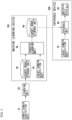
- Fig. 1 shows a configuration of a machine learning device 100 and an inference device 200 according to the embodiment.
- the machine learning device 100 includes a source model storage unit 30, a target domain acquisition unit 40, a transfer learning unit 50, and a target model storage unit 60.
- the inference device 200 includes a target domain acquisition unit 70, an inference unit 80, and an inference result output unit 90.
- Transfer learning is one of machine learning methods and is a method of adapting a model trained for a first task having sufficient data to learning of a second task related to the first task but not having sufficient data. Transfer learning can transfer the knowledge learned on the basis of sufficient data to a further task and so makes it possible to obtain highly precise results for the second task not having much data.
- domain adaptation a case in which the input domain of the first task and the input domain of the second task are of the same type and differ only in probability distribution is referred to as "domain adaptation".
- the input domain of the first task that is a source of transfer is referred to as “source domain”
- the input domain of the second task that is a destination of transfer is referred to as "target domain”.
- the model trained for the first task is referred to as “source model”
- the model trained for the second task is referred to as “target model”.
- CG computer graphics
- web images which are data that can be easily collected, are used as the source domain, and real images captured by a camera, etc. are used as the target domain.
- the machine learning device 100 is a device to generate a target model by transfer learning, based on a trained source model and a target domain.
- the source domain acquisition unit 10 acquires, as the source domain, CG images of persons, cars, bicycles, dogs, and motorcycles in a quantity sufficiently large to train the source model to categorize persons, cars, bicycles, dogs, and motorcycles with high precision.
- the learning unit 20 uses the source domain to train a neural network model by machine learning to generate a source model and stores the generated source model in the source model storage unit 30.
- the source model can categorize the source domain with high precision.
- the source model stored in the source model storage unit 30 is a trained source model used as a model at the source of transfer in transfer learning.
- the source model is a neural network model.
- the target domain acquisition unit 40 acquires, as the target domain, images of persons, cars, bicycles, dogs, and motorcycles captured by a camera.
- the target domain generally has a smaller quantity of data than the source domain.
- the transfer learning unit 50 uses the target domain acquired by the target domain acquisition unit 40 to generate a target model by applying transfer learning to the source model stored in the source model storage unit 30.
- the transfer learning unit 50 stores the generated target model in the target model storage unit 60.
- the target model stored in the target model storage unit 60 is a trained model generated by transfer learning.
- the target model is a neural network model.
- the target model is derived from re-training a part of the source model at the source of transfer that is duplicated, by using the target domain.
- the inference device 200 is a device that infers from and categorizes images by using the target model generated by the machine learning device 100.
- the inference device 200 is provided with, for example, an imaging unit and infers from images acquired from the imaging unit and outputs a result of inference.
- the target domain acquisition unit 70 acquires the target domain targeted for inference and supplies the target domain to the inference unit 80.
- the inference unit 80 infers from the target domain based on the target model stored in the target model storage unit 60 and outputs a result of inference to the inference result output unit 90.
- the inference result output unit 90 outputs categorization resulting from the inference.
- Fig. 2 shows a detailed configuration of the transfer learning unit 50 of the machine learning device 100.
- the transfer learning unit 50 includes a domain adaptability determination unit 52, a learning layer determination unit 54, and a transfer learning execution unit 56.
- the domain adaptability determination unit 52 determines the domain adaptability based on the precision of inferring from images in the target domain by using the source model, which is a neural network, trained by using images in the source domain as training data.
- the domain adaptability determination unit 52 determines the domain adaptability based on the inference (categorization) precision of the source model stored in the source model storage unit 30, defined with respect to the target domain acquired by the target domain acquisition unit 40.
- the domain adaptability represents a mean average precision (mAP) of the source model with respect to the target domain.
- mAP is an average of average precision scores of all classes.
- mAP is a real number from 0 to 1.
- precision is used as an index of domain adaptability.
- F value, sensitivity, fitness, etc. may be used.
- precision of domain adaptability is defined as precision of a source model, but the requirement is that the task (in this embodiment, categorization) of the target domain can be executed, and the embodiment is not limited to approach described above.
- precision of a trained model located on a cloud, etc. and capable of categorization into a larger number of categories than in the embodiment may be used so long as it can categorize persons, cars, bicycles, dogs, and motorcycles targeted for categorization in the embodiment.
- the learning layer determination unit 54 determines a layer in the target model (a neural network model) targeted for training, based on the domain adaptability.
- the learning layer determination unit 54 may ensure that the lower the domain adaptability, the larger the number of layers in the target model targeted for training, and, the higher the domain adaptability, the smaller the number of layers in the target model targeted for training.
- the learning layer determination unit 54 may include a larger number of layers from higher layers (layers near the input) to lower layers (layers near the output) as targets of training when the domain adaptability is lower, and, may define a smaller number of layers toward lower layers (layers near the output) to be targets of training when the domain adaptability is higher. In other words, the learning layer determination unit 54 includes more of the layers near the input layer as layers targeted for training, as the domain adaptability becomes lower.
- the learning layer determination unit 54 may determine only full-connected layers in the target model to be layers targeted for training when the domain adaptability is equal to or higher than a predetermined value.
- the domain adaptability when the domain adaptability is high, i.e., when the target domain and the source domain have a similar probability distribution, it is possible, by training only lower layers in the target model, to adapt the source model to the target model such that the generalization capability of detailed feature extraction of higher layers in the source model is maintained and to maintain the precision of the target model trained by transfer learning at a high level.
- the domain adaptability when the domain adaptability is low, i.e., when the target domain and the source domain have a dissimilar probability distribution, it is possible, by training a large number of layers in the target model, to increase the precision of the target model trained by transfer learning.
- the transfer learning execution unit 56 uses images of the target domain as training data to apply transfer learning to the layer(s) of the target model determined by the learning layer determination unit 54 to be targeted for training. Those layers other than the layers determined to be targeted for training are layers that are not trained. The layers of the duplicated source model are used as they are without being newly trained.
- Fig. 3 shows a structure of a neural network model used as a source model and a target model in the machine learning device 100.
- the source model and the target model are assumed to be a neural network model VGG16.
- VGG16 is comprised of 13 convolutional layers (CONV), 3 fully-connected layers (Dense), and 5 pooling layers.
- the layers that are targeted for training include convolutional layers and full-connected layers.
- the pooling layer is a layer that sub-samples the feature map output from the convolutional layer.
- Fig. 4 shows layers in the target model that are targeted for training in accordance with the domain adaptability.
- the domain adaptability When the domain adaptability is 0.00, all layers are targeted for training. When the domain adaptability is higher than 0.00 and equal to lower than 0.10, the layers other than CONV-1 are targeted for training. A duplicate of the layer CONV1-1 of the source model is used as it is. When the domain adaptability is higher than 0.10 and equal to or lower than 0.20, the layers other than CONV1-1 and CONV1-2 are targeted for training. Duplicates of the layers CONV1-1 and CONV1-2 of the source model are used as they are. The rest remains the same, and, when the domain adaptability is higher than 0.95 and equal to or lower than 1.00, none of the layers are targeted for training. In this case, duplicates of all layers in the source model are used as they are.
- the higher the domain adaptability the larger the number of convolutional layers, including those near the input layer, are targeted for training, and, the higher the domain adaptability, the smaller the number of convolutional layers, and, those near the output layer, are targeted for training.
- the relationship between the domain adaptability and the layers targeted for training is not limited to the one described above. What is required is that the lower the domain adaptability, the larger the number of layers from higher layers (layers near the input) to lower layers (layers near the output) are targeted for training, and the higher the domain adaptability, the smaller the number of layers, and, lower layers (layers near the output), are targeted for training.
- Dense denotes the 3 full-connected layers. In this case, 3 full-connected layers are bundled for the purpose of control, but they may be controlled one by one as in the case of convolutional layers.
- Fig. 5 shows layers that are targeted for training in accordance with the domain adaptability according to another example.
- the figure shows an example in which a plurality of convolutional layers are bundled in units of pooling layers for the purpose of control.
- the two convolutional layers CONV1-1 and CONV1-2 are bundled into one and are targeted for training when the domain adaptability is not lower than 0.00 and not higher than 0.20
- the two convolutional layers CONV2-1 and CONV2-2 are bundled into one and are targeted for training when the domain adaptability is not lower than 0.00 and not higher than 0.40.
- the rest remains the same, and two adjacent convolutional layers are bundled into one and are targeted for training.
- Fig. 6 shows layers that are targeted for training in accordance with the domain adaptability according to still another example.
- the figure shows an example in which layers near the input layer are not targeted for training invariably.
- the four convolutional layers CONV1-1, CONV1-2, CONV2-2, and CONV2-2 near the input layer are not targeted for training.
- the higher the domain compatibility the smaller the number of convolutional layers, and, those near the output layer, are targeted for training.
- Fig. 7 is a flowchart showing a sequence of machine learning steps executed by the machine learning device 100 of Fig. 1 .
- the domain adaptability determination unit 52 of the transfer learning unit 50 of the machine learning device 100 determines the domain compatibility based on the precision of inference from images of the target domain using the source model trained by using images of the source domain as training data (S10).
- the learning layer determination layer 54 determines the layer in the target model, which is a duplicate of the source model, targeted for training, based on the domain compatibility (S20).
- the transfer learning execution unit 56 applies transfer learning to the layer in the target model targeted for training, by using images of the target domain as training data (S30).
- the above-described various processes in the machine learning device 100 and the inference device 200 can of course be implemented by hardware-based devices such as a CPU and a memory and can also be implemented by firmware stored in a read-only memory (ROM), a flash memory, etc., or by software on a computer, etc.
- the firmware program or the software program may be made available on, for example, a computer readable recording medium.
- the program may be transmitted and received to and from a server via a wired or wireless network.
- the program may be transmitted and received in the form of data broadcast over terrestrial or satellite digital broadcast systems.
- the machine learning device 100 of the embodiment it is possible, according to the machine learning device 100 of the embodiment, to generate a target model adapted to the property of the domain, having high a processing efficiency, and having a high inference precision and generalization capability, by changing the layer in a neural network of the target model trained by transfer learning in accordance the domain adaptability based on the precision of inference by the source model with respect to the target domain.
- the present invention can be applied to machine learning technologies.
Landscapes
- Engineering & Computer Science (AREA)
- Theoretical Computer Science (AREA)
- Physics & Mathematics (AREA)
- Evolutionary Computation (AREA)
- General Health & Medical Sciences (AREA)
- Health & Medical Sciences (AREA)
- Artificial Intelligence (AREA)
- Software Systems (AREA)
- General Physics & Mathematics (AREA)
- Computing Systems (AREA)
- Biomedical Technology (AREA)
- Molecular Biology (AREA)
- Data Mining & Analysis (AREA)
- General Engineering & Computer Science (AREA)
- Computational Linguistics (AREA)
- Mathematical Physics (AREA)
- Biophysics (AREA)
- Life Sciences & Earth Sciences (AREA)
- Computer Vision & Pattern Recognition (AREA)
- Databases & Information Systems (AREA)
- Medical Informatics (AREA)
- Multimedia (AREA)
- Image Analysis (AREA)
Applications Claiming Priority (2)
| Application Number | Priority Date | Filing Date | Title |
|---|---|---|---|
| JP2020196990A JP7639311B2 (ja) | 2020-11-27 | 2020-11-27 | 機械学習装置、機械学習方法、および機械学習プログラム |
| PCT/JP2021/037155 WO2022113534A1 (fr) | 2020-11-27 | 2021-10-07 | Dispositif d'apprentissage automatique, procédé d'apprentissage automatique et modèle entraîné |
Publications (3)
| Publication Number | Publication Date |
|---|---|
| EP4254323A1 true EP4254323A1 (fr) | 2023-10-04 |
| EP4254323A4 EP4254323A4 (fr) | 2024-04-10 |
| EP4254323B1 EP4254323B1 (fr) | 2025-08-20 |
Family
ID=81755755
Family Applications (1)
| Application Number | Title | Priority Date | Filing Date |
|---|---|---|---|
| EP21897512.6A Active EP4254323B1 (fr) | 2020-11-27 | 2021-10-07 | Dispositif d'apprentissage automatique, procédé d'apprentissage automatique et modèle entraîné |
Country Status (5)
| Country | Link |
|---|---|
| US (1) | US20230289614A1 (fr) |
| EP (1) | EP4254323B1 (fr) |
| JP (1) | JP7639311B2 (fr) |
| CN (1) | CN116348888A (fr) |
| WO (1) | WO2022113534A1 (fr) |
Families Citing this family (5)
| Publication number | Priority date | Publication date | Assignee | Title |
|---|---|---|---|---|
| KR102658990B1 (ko) * | 2021-03-29 | 2024-04-18 | 미쓰비시덴키 가부시키가이샤 | 학습 장치 |
| JP7317246B1 (ja) * | 2022-08-02 | 2023-07-28 | 三菱電機株式会社 | 推論装置、推論方法及び推論プログラム |
| WO2024150487A1 (fr) * | 2023-01-13 | 2024-07-18 | コニカミノルタ株式会社 | Dispositif d'apprentissage, programme et procédé d'apprentissage |
| US20240378858A1 (en) * | 2023-05-01 | 2024-11-14 | Accenture Global Solutions Limited | Training generative models for generating stylized content |
| CN118038181B (zh) * | 2024-03-22 | 2024-08-13 | 中国矿业大学 | 一种基于元迁移梯度更新策略的高光谱图像分类方法 |
Family Cites Families (8)
| Publication number | Priority date | Publication date | Assignee | Title |
|---|---|---|---|---|
| CN110226172B (zh) | 2016-12-15 | 2024-02-02 | 谷歌有限责任公司 | 将源域图像变换为目标域图像 |
| WO2018142766A1 (fr) * | 2017-02-03 | 2018-08-09 | パナソニックIpマネジメント株式会社 | Procédé de fourniture de modèle appris et dispositif de fourniture de modèle appris |
| CN111542816A (zh) * | 2018-02-06 | 2020-08-14 | 赫尔实验室有限公司 | 域适应学习系统 |
| KR102439606B1 (ko) * | 2018-10-30 | 2022-09-01 | 삼성에스디에스 주식회사 | 전이 학습을 위한 기반 모델 결정 방법 및 그 방법을 지원하는 장치 |
| US20220012611A1 (en) * | 2018-11-21 | 2022-01-13 | Telefonaktiebolaget Lm Ericsson (Publ) | Method and machine learning manager for handling prediction of service characteristics |
| CN110135510B (zh) * | 2019-05-22 | 2023-08-01 | 电子科技大学中山学院 | 一种动态领域自适应方法、设备及计算机可读存储介质 |
| CN111898095B (zh) * | 2020-07-10 | 2024-04-19 | 佛山科学技术学院 | 深度迁移学习智能故障诊断方法、装置、存储介质和设备 |
| CN111721536B (zh) * | 2020-07-20 | 2022-05-27 | 哈尔滨理工大学 | 一种改进模型迁移策略的滚动轴承故障诊断方法 |
-
2020
- 2020-11-27 JP JP2020196990A patent/JP7639311B2/ja active Active
-
2021
- 2021-10-07 EP EP21897512.6A patent/EP4254323B1/fr active Active
- 2021-10-07 CN CN202180070930.2A patent/CN116348888A/zh active Pending
- 2021-10-07 WO PCT/JP2021/037155 patent/WO2022113534A1/fr not_active Ceased
-
2023
- 2023-05-19 US US18/320,276 patent/US20230289614A1/en active Pending
Also Published As
| Publication number | Publication date |
|---|---|
| JP2022085356A (ja) | 2022-06-08 |
| JP7639311B2 (ja) | 2025-03-05 |
| WO2022113534A1 (fr) | 2022-06-02 |
| EP4254323B1 (fr) | 2025-08-20 |
| EP4254323A4 (fr) | 2024-04-10 |
| CN116348888A (zh) | 2023-06-27 |
| US20230289614A1 (en) | 2023-09-14 |
Similar Documents
| Publication | Publication Date | Title |
|---|---|---|
| EP4254323A1 (fr) | Dispositif d'apprentissage automatique, procédé d'apprentissage automatique et modèle entraîné | |
| US20230385705A1 (en) | Machine learning device, machine learning method, and non-transitory computer-readable recording medium having embodied thereon a machine learning program | |
| WO2020061489A4 (fr) | Entraînement de réseaux neuronaux pour ré-identification de véhicules | |
| KR20180068292A (ko) | 뉴럴 네트워크 트레이닝을 위한 방법, 컴퓨터 제품 및 디바이스 | |
| CN114612402B (zh) | 对象数量的确定方法、装置、设备、介质及程序产品 | |
| CN114821530B (zh) | 基于深度学习的车道线检测方法及系统 | |
| CN115115829A (zh) | 医疗图像的分割方法、装置、设备、存储介质及程序产品 | |
| CN112884168B (zh) | 用于跨站点学习的系统和方法 | |
| JP2021189625A (ja) | 路上障害物検知装置、路上障害物検知方法、及び路上障害物検知プログラム | |
| CN111931799A (zh) | 图像识别方法及装置 | |
| US20230101250A1 (en) | Method for generating a graph structure for training a graph neural network | |
| CN118036706A (zh) | 基于图子树差异实现图联邦迁移学习的多任务处理系统 | |
| CN118212461B (zh) | 基于双层视觉的模型领域自适应方法、装置、终端及介质 | |
| CN112016451B (zh) | 一种用于迁移学习的训练样本标注成本削减方法 | |
| CN114549369A (zh) | 数据修复方法、装置、计算机及可读存储介质 | |
| CN114463608B (zh) | 任务处理方法及相关设备 | |
| CN111710153A (zh) | 交通流量的预测方法、装置、设备及计算机存储介质 | |
| CN115984646A (zh) | 面向遥感跨卫星观测的分布式目标检测方法、装置和卫星 | |
| CN115240133A (zh) | 一种公交车拥挤度分析方法、装置和设备 | |
| CN110728217B (zh) | Sar图像识别方法、装置、设备和存储介质 | |
| CN111126493A (zh) | 深度学习模型的训练方法、装置、电子设备及存储介质 | |
| US20240394505A1 (en) | Method for determining an architecture of a multitasking model | |
| US20220335289A1 (en) | Classification method using distributed classification model | |
| CN117115225B (zh) | 一种自然资源智慧综合信息化管理平台 | |
| CN119992066B (zh) | 极端场景下的域自适应目标检测方法及装置 |
Legal Events
| Date | Code | Title | Description |
|---|---|---|---|
| STAA | Information on the status of an ep patent application or granted ep patent |
Free format text: STATUS: THE INTERNATIONAL PUBLICATION HAS BEEN MADE |
|
| PUAI | Public reference made under article 153(3) epc to a published international application that has entered the european phase |
Free format text: ORIGINAL CODE: 0009012 |
|
| STAA | Information on the status of an ep patent application or granted ep patent |
Free format text: STATUS: REQUEST FOR EXAMINATION WAS MADE |
|
| 17P | Request for examination filed |
Effective date: 20230623 |
|
| AK | Designated contracting states |
Kind code of ref document: A1 Designated state(s): AL AT BE BG CH CY CZ DE DK EE ES FI FR GB GR HR HU IE IS IT LI LT LU LV MC MK MT NL NO PL PT RO RS SE SI SK SM TR |
|
| DAV | Request for validation of the european patent (deleted) | ||
| DAX | Request for extension of the european patent (deleted) | ||
| A4 | Supplementary search report drawn up and despatched |
Effective date: 20240312 |
|
| RIC1 | Information provided on ipc code assigned before grant |
Ipc: G06N 3/096 20230101ALI20240305BHEP Ipc: G06V 10/776 20220101ALI20240305BHEP Ipc: G06V 10/764 20220101ALI20240305BHEP Ipc: G06V 10/82 20220101ALI20240305BHEP Ipc: G06N 20/00 20190101ALI20240305BHEP Ipc: G06N 3/08 20060101ALI20240305BHEP Ipc: G06T 7/00 20170101AFI20240305BHEP |
|
| STAA | Information on the status of an ep patent application or granted ep patent |
Free format text: STATUS: EXAMINATION IS IN PROGRESS |
|
| 17Q | First examination report despatched |
Effective date: 20241108 |
|
| GRAP | Despatch of communication of intention to grant a patent |
Free format text: ORIGINAL CODE: EPIDOSNIGR1 |
|
| STAA | Information on the status of an ep patent application or granted ep patent |
Free format text: STATUS: GRANT OF PATENT IS INTENDED |
|
| INTG | Intention to grant announced |
Effective date: 20250402 |
|
| GRAS | Grant fee paid |
Free format text: ORIGINAL CODE: EPIDOSNIGR3 |
|
| GRAA | (expected) grant |
Free format text: ORIGINAL CODE: 0009210 |
|
| STAA | Information on the status of an ep patent application or granted ep patent |
Free format text: STATUS: THE PATENT HAS BEEN GRANTED |
|
| AK | Designated contracting states |
Kind code of ref document: B1 Designated state(s): AL AT BE BG CH CY CZ DE DK EE ES FI FR GB GR HR HU IE IS IT LI LT LU LV MC MK MT NL NO PL PT RO RS SE SI SK SM TR |
|
| RAP3 | Party data changed (applicant data changed or rights of an application transferred) |
Owner name: JVCKENWOOD CORPORATION |
|
| REG | Reference to a national code |
Ref country code: GB Ref legal event code: FG4D |
|
| REG | Reference to a national code |
Ref country code: CH Ref legal event code: EP |
|
| REG | Reference to a national code |
Ref country code: IE Ref legal event code: FG4D |
|
| REG | Reference to a national code |
Ref country code: DE Ref legal event code: R096 Ref document number: 602021036893 Country of ref document: DE |
|
| PGFP | Annual fee paid to national office [announced via postgrant information from national office to epo] |
Ref country code: GB Payment date: 20250925 Year of fee payment: 5 |
|
| REG | Reference to a national code |
Ref country code: NL Ref legal event code: MP Effective date: 20250820 |
|
| PG25 | Lapsed in a contracting state [announced via postgrant information from national office to epo] |
Ref country code: IS Free format text: LAPSE BECAUSE OF FAILURE TO SUBMIT A TRANSLATION OF THE DESCRIPTION OR TO PAY THE FEE WITHIN THE PRESCRIBED TIME-LIMIT Effective date: 20251220 |
|
| PGFP | Annual fee paid to national office [announced via postgrant information from national office to epo] |
Ref country code: DE Payment date: 20250923 Year of fee payment: 5 |
|
| PG25 | Lapsed in a contracting state [announced via postgrant information from national office to epo] |
Ref country code: NO Free format text: LAPSE BECAUSE OF FAILURE TO SUBMIT A TRANSLATION OF THE DESCRIPTION OR TO PAY THE FEE WITHIN THE PRESCRIBED TIME-LIMIT Effective date: 20251120 |
|
| REG | Reference to a national code |
Ref country code: LT Ref legal event code: MG9D |
|
| PG25 | Lapsed in a contracting state [announced via postgrant information from national office to epo] |
Ref country code: PT Free format text: LAPSE BECAUSE OF FAILURE TO SUBMIT A TRANSLATION OF THE DESCRIPTION OR TO PAY THE FEE WITHIN THE PRESCRIBED TIME-LIMIT Effective date: 20251222 |
|
| PG25 | Lapsed in a contracting state [announced via postgrant information from national office to epo] |
Ref country code: FI Free format text: LAPSE BECAUSE OF FAILURE TO SUBMIT A TRANSLATION OF THE DESCRIPTION OR TO PAY THE FEE WITHIN THE PRESCRIBED TIME-LIMIT Effective date: 20250820 |
|
| PG25 | Lapsed in a contracting state [announced via postgrant information from national office to epo] |
Ref country code: NL Free format text: LAPSE BECAUSE OF FAILURE TO SUBMIT A TRANSLATION OF THE DESCRIPTION OR TO PAY THE FEE WITHIN THE PRESCRIBED TIME-LIMIT Effective date: 20250820 Ref country code: HR Free format text: LAPSE BECAUSE OF FAILURE TO SUBMIT A TRANSLATION OF THE DESCRIPTION OR TO PAY THE FEE WITHIN THE PRESCRIBED TIME-LIMIT Effective date: 20250820 |
|
| PG25 | Lapsed in a contracting state [announced via postgrant information from national office to epo] |
Ref country code: GR Free format text: LAPSE BECAUSE OF FAILURE TO SUBMIT A TRANSLATION OF THE DESCRIPTION OR TO PAY THE FEE WITHIN THE PRESCRIBED TIME-LIMIT Effective date: 20251121 |
|
| PG25 | Lapsed in a contracting state [announced via postgrant information from national office to epo] |
Ref country code: SE Free format text: LAPSE BECAUSE OF FAILURE TO SUBMIT A TRANSLATION OF THE DESCRIPTION OR TO PAY THE FEE WITHIN THE PRESCRIBED TIME-LIMIT Effective date: 20250820 |
|
| PG25 | Lapsed in a contracting state [announced via postgrant information from national office to epo] |
Ref country code: LV Free format text: LAPSE BECAUSE OF FAILURE TO SUBMIT A TRANSLATION OF THE DESCRIPTION OR TO PAY THE FEE WITHIN THE PRESCRIBED TIME-LIMIT Effective date: 20250820 |
|
| PG25 | Lapsed in a contracting state [announced via postgrant information from national office to epo] |
Ref country code: BG Free format text: LAPSE BECAUSE OF FAILURE TO SUBMIT A TRANSLATION OF THE DESCRIPTION OR TO PAY THE FEE WITHIN THE PRESCRIBED TIME-LIMIT Effective date: 20250820 Ref country code: PL Free format text: LAPSE BECAUSE OF FAILURE TO SUBMIT A TRANSLATION OF THE DESCRIPTION OR TO PAY THE FEE WITHIN THE PRESCRIBED TIME-LIMIT Effective date: 20250820 |
|
| PG25 | Lapsed in a contracting state [announced via postgrant information from national office to epo] |
Ref country code: RS Free format text: LAPSE BECAUSE OF FAILURE TO SUBMIT A TRANSLATION OF THE DESCRIPTION OR TO PAY THE FEE WITHIN THE PRESCRIBED TIME-LIMIT Effective date: 20251120 |
|
| PG25 | Lapsed in a contracting state [announced via postgrant information from national office to epo] |
Ref country code: ES Free format text: LAPSE BECAUSE OF FAILURE TO SUBMIT A TRANSLATION OF THE DESCRIPTION OR TO PAY THE FEE WITHIN THE PRESCRIBED TIME-LIMIT Effective date: 20250820 |
|
| REG | Reference to a national code |
Ref country code: AT Ref legal event code: MK05 Ref document number: 1828141 Country of ref document: AT Kind code of ref document: T Effective date: 20250820 |
|
| PG25 | Lapsed in a contracting state [announced via postgrant information from national office to epo] |
Ref country code: RO Free format text: LAPSE BECAUSE OF FAILURE TO SUBMIT A TRANSLATION OF THE DESCRIPTION OR TO PAY THE FEE WITHIN THE PRESCRIBED TIME-LIMIT Effective date: 20250820 |
|
| PG25 | Lapsed in a contracting state [announced via postgrant information from national office to epo] |
Ref country code: SM Free format text: LAPSE BECAUSE OF FAILURE TO SUBMIT A TRANSLATION OF THE DESCRIPTION OR TO PAY THE FEE WITHIN THE PRESCRIBED TIME-LIMIT Effective date: 20250820 |
|
| PG25 | Lapsed in a contracting state [announced via postgrant information from national office to epo] |
Ref country code: DK Free format text: LAPSE BECAUSE OF FAILURE TO SUBMIT A TRANSLATION OF THE DESCRIPTION OR TO PAY THE FEE WITHIN THE PRESCRIBED TIME-LIMIT Effective date: 20250820 |
|
| PG25 | Lapsed in a contracting state [announced via postgrant information from national office to epo] |
Ref country code: AT Free format text: LAPSE BECAUSE OF FAILURE TO SUBMIT A TRANSLATION OF THE DESCRIPTION OR TO PAY THE FEE WITHIN THE PRESCRIBED TIME-LIMIT Effective date: 20250820 |
|
| PG25 | Lapsed in a contracting state [announced via postgrant information from national office to epo] |
Ref country code: IT Free format text: LAPSE BECAUSE OF FAILURE TO SUBMIT A TRANSLATION OF THE DESCRIPTION OR TO PAY THE FEE WITHIN THE PRESCRIBED TIME-LIMIT Effective date: 20250820 |
|
| PG25 | Lapsed in a contracting state [announced via postgrant information from national office to epo] |
Ref country code: CZ Free format text: LAPSE BECAUSE OF FAILURE TO SUBMIT A TRANSLATION OF THE DESCRIPTION OR TO PAY THE FEE WITHIN THE PRESCRIBED TIME-LIMIT Effective date: 20250820 |
|
| PG25 | Lapsed in a contracting state [announced via postgrant information from national office to epo] |
Ref country code: SK Free format text: LAPSE BECAUSE OF FAILURE TO SUBMIT A TRANSLATION OF THE DESCRIPTION OR TO PAY THE FEE WITHIN THE PRESCRIBED TIME-LIMIT Effective date: 20250820 Ref country code: EE Free format text: LAPSE BECAUSE OF FAILURE TO SUBMIT A TRANSLATION OF THE DESCRIPTION OR TO PAY THE FEE WITHIN THE PRESCRIBED TIME-LIMIT Effective date: 20250820 |