EP4254402A2 - Détermination automatique d'une langue pour la reconnaissance de la parole d'un énoncé vocal reçu par l'intermédiaire d'une interface d'assistant automatisé - Google Patents
Détermination automatique d'une langue pour la reconnaissance de la parole d'un énoncé vocal reçu par l'intermédiaire d'une interface d'assistant automatisé Download PDFInfo
- Publication number
- EP4254402A2 EP4254402A2 EP23191963.0A EP23191963A EP4254402A2 EP 4254402 A2 EP4254402 A2 EP 4254402A2 EP 23191963 A EP23191963 A EP 23191963A EP 4254402 A2 EP4254402 A2 EP 4254402A2
- Authority
- EP
- European Patent Office
- Prior art keywords
- language
- user
- automated assistant
- speech recognition
- user profile
- Prior art date
- Legal status (The legal status is an assumption and is not a legal conclusion. Google has not performed a legal analysis and makes no representation as to the accuracy of the status listed.)
- Granted
Links
Images



Classifications
-
- G—PHYSICS
- G10—MUSICAL INSTRUMENTS; ACOUSTICS
- G10L—SPEECH ANALYSIS TECHNIQUES OR SPEECH SYNTHESIS; SPEECH RECOGNITION; SPEECH OR VOICE PROCESSING TECHNIQUES; SPEECH OR AUDIO CODING OR DECODING
- G10L15/00—Speech recognition
- G10L15/22—Procedures used during a speech recognition process, e.g. man-machine dialogue
-
- G—PHYSICS
- G10—MUSICAL INSTRUMENTS; ACOUSTICS
- G10L—SPEECH ANALYSIS TECHNIQUES OR SPEECH SYNTHESIS; SPEECH RECOGNITION; SPEECH OR VOICE PROCESSING TECHNIQUES; SPEECH OR AUDIO CODING OR DECODING
- G10L15/00—Speech recognition
- G10L15/08—Speech classification or search
- G10L15/18—Speech classification or search using natural language modelling
- G10L15/183—Speech classification or search using natural language modelling using context dependencies, e.g. language models
- G10L15/19—Grammatical context, e.g. disambiguation of the recognition hypotheses based on word sequence rules
- G10L15/197—Probabilistic grammars, e.g. word n-grams
-
- G—PHYSICS
- G10—MUSICAL INSTRUMENTS; ACOUSTICS
- G10L—SPEECH ANALYSIS TECHNIQUES OR SPEECH SYNTHESIS; SPEECH RECOGNITION; SPEECH OR VOICE PROCESSING TECHNIQUES; SPEECH OR AUDIO CODING OR DECODING
- G10L13/00—Speech synthesis; Text to speech systems
-
- G—PHYSICS
- G10—MUSICAL INSTRUMENTS; ACOUSTICS
- G10L—SPEECH ANALYSIS TECHNIQUES OR SPEECH SYNTHESIS; SPEECH RECOGNITION; SPEECH OR VOICE PROCESSING TECHNIQUES; SPEECH OR AUDIO CODING OR DECODING
- G10L15/00—Speech recognition
- G10L15/08—Speech classification or search
-
- G—PHYSICS
- G10—MUSICAL INSTRUMENTS; ACOUSTICS
- G10L—SPEECH ANALYSIS TECHNIQUES OR SPEECH SYNTHESIS; SPEECH RECOGNITION; SPEECH OR VOICE PROCESSING TECHNIQUES; SPEECH OR AUDIO CODING OR DECODING
- G10L15/00—Speech recognition
- G10L15/08—Speech classification or search
- G10L15/14—Speech classification or search using statistical models, e.g. Hidden Markov Models [HMMs]
-
- G—PHYSICS
- G10—MUSICAL INSTRUMENTS; ACOUSTICS
- G10L—SPEECH ANALYSIS TECHNIQUES OR SPEECH SYNTHESIS; SPEECH RECOGNITION; SPEECH OR VOICE PROCESSING TECHNIQUES; SPEECH OR AUDIO CODING OR DECODING
- G10L15/00—Speech recognition
- G10L15/08—Speech classification or search
- G10L15/18—Speech classification or search using natural language modelling
- G10L15/1822—Parsing for meaning understanding
-
- G—PHYSICS
- G10—MUSICAL INSTRUMENTS; ACOUSTICS
- G10L—SPEECH ANALYSIS TECHNIQUES OR SPEECH SYNTHESIS; SPEECH RECOGNITION; SPEECH OR VOICE PROCESSING TECHNIQUES; SPEECH OR AUDIO CODING OR DECODING
- G10L15/00—Speech recognition
- G10L15/28—Constructional details of speech recognition systems
- G10L15/30—Distributed recognition, e.g. in client-server systems, for mobile phones or network applications
-
- G—PHYSICS
- G10—MUSICAL INSTRUMENTS; ACOUSTICS
- G10L—SPEECH ANALYSIS TECHNIQUES OR SPEECH SYNTHESIS; SPEECH RECOGNITION; SPEECH OR VOICE PROCESSING TECHNIQUES; SPEECH OR AUDIO CODING OR DECODING
- G10L15/00—Speech recognition
- G10L15/28—Constructional details of speech recognition systems
- G10L15/32—Multiple recognisers used in sequence or in parallel; Score combination systems therefor, e.g. voting systems
-
- G—PHYSICS
- G10—MUSICAL INSTRUMENTS; ACOUSTICS
- G10L—SPEECH ANALYSIS TECHNIQUES OR SPEECH SYNTHESIS; SPEECH RECOGNITION; SPEECH OR VOICE PROCESSING TECHNIQUES; SPEECH OR AUDIO CODING OR DECODING
- G10L15/00—Speech recognition
- G10L15/005—Language recognition
-
- G—PHYSICS
- G10—MUSICAL INSTRUMENTS; ACOUSTICS
- G10L—SPEECH ANALYSIS TECHNIQUES OR SPEECH SYNTHESIS; SPEECH RECOGNITION; SPEECH OR VOICE PROCESSING TECHNIQUES; SPEECH OR AUDIO CODING OR DECODING
- G10L15/00—Speech recognition
- G10L15/26—Speech to text systems
-
- G—PHYSICS
- G10—MUSICAL INSTRUMENTS; ACOUSTICS
- G10L—SPEECH ANALYSIS TECHNIQUES OR SPEECH SYNTHESIS; SPEECH RECOGNITION; SPEECH OR VOICE PROCESSING TECHNIQUES; SPEECH OR AUDIO CODING OR DECODING
- G10L15/00—Speech recognition
- G10L15/08—Speech classification or search
- G10L2015/088—Word spotting
-
- G—PHYSICS
- G10—MUSICAL INSTRUMENTS; ACOUSTICS
- G10L—SPEECH ANALYSIS TECHNIQUES OR SPEECH SYNTHESIS; SPEECH RECOGNITION; SPEECH OR VOICE PROCESSING TECHNIQUES; SPEECH OR AUDIO CODING OR DECODING
- G10L15/00—Speech recognition
- G10L15/22—Procedures used during a speech recognition process, e.g. man-machine dialogue
- G10L2015/223—Execution procedure of a spoken command
-
- G—PHYSICS
- G10—MUSICAL INSTRUMENTS; ACOUSTICS
- G10L—SPEECH ANALYSIS TECHNIQUES OR SPEECH SYNTHESIS; SPEECH RECOGNITION; SPEECH OR VOICE PROCESSING TECHNIQUES; SPEECH OR AUDIO CODING OR DECODING
- G10L15/00—Speech recognition
- G10L15/22—Procedures used during a speech recognition process, e.g. man-machine dialogue
- G10L2015/226—Procedures used during a speech recognition process, e.g. man-machine dialogue using non-speech characteristics
- G10L2015/228—Procedures used during a speech recognition process, e.g. man-machine dialogue using non-speech characteristics of application context
Definitions
- Humans may engage in human-to-computer dialogs with interactive software applications referred to herein as "automated assistants” (also referred to as “digital agents,” “chatbots,” “interactive personal assistants,” “intelligent personal assistants,” “assistant applications,” “conversational agents,” etc.).
- automated assistants also referred to as “digital agents,” “chatbots,” “interactive personal assistants,” “intelligent personal assistants,” “assistant applications,” “conversational agents,” etc.
- humans (which when they interact with automated assistants may be referred to as “users”) may provide commands and/or requests to an automated assistant using spoken natural language input (i.e. utterances), which may in some cases be converted into text and then processed, and/or by providing textual (e.g., typed) natural language input.
- An automated assistant responds to a request by providing responsive user interface output, which can include audible and/or visual user interface output.
- an automated assistant can convert audio data, corresponding to a spoken utterance of a user, into corresponding text (or other semantic representation).
- audio data can be generated based on detection of a spoken utterance of a user via one or more microphones of a client device that includes an assistant interface for enabling the user to interact with an automated assistant.
- the automated assistant can include a speech recognition engine that attempts to recognize various characteristics of the spoken utterance captured in the audio data, such as the sounds produced (e.g ., phonemes) by the spoken utterance, the order of the produced sounds, rhythm of speech, intonation, etc. Further, the speech recognition engine can identify text words or phrases represented by such characteristics.
- speech recognition engines are configured to recognize speech in only a single language.
- speech recognition engines can be unsatisfactory, and can cause an automated assistant to fail and/or provide erroneous output when a spoken utterance is received in an additional language that is not the single language supported by the speech recognition engines. This can render the automated assistant unusable and/or lead to excess usage of computational and/or network resources. Excess usage of computational and/or network resources can be a result of a user needing to provide a further spoken utterance, that is in the single language supported, when the automated assistant fails or provides erroneous output. Such further spoken utterance must additionally be processed by a corresponding client device and/or remote automated assistant component(s), thereby causing additional usage of various resources.
- Other speech recognition engines may be configured to recognize speech in multiple languages, but require a user to explicitly designate which of the multiple languages should be utilized in speech recognition at a given time.
- some of the other speech recognition engines may require a user to manually designate a default language to be utilized in speech recognition of all spoken utterances received at a particular client device.
- the user can be required to interact with a graphical and/or audible interface to explicitly alter the default language.
- Such interaction can lead to excess usage of computational and/or network resources in the rendering of the interface, the processing of inputs of the user provided via the interface, etc.
- Speech recognition of a spoken utterance using a given language can include processing audio data, which captures the spoken utterance, using one or more speech recognition models for the given language in order to generate text that corresponds to the spoken utterance, and that is in the given language.
- multiple speech recognition models can be accessible for speech recognition, and each of the speech recognition models can be configured for a corresponding language of multiple languages.
- a first speech recognition model can be configured for generating English text based on processing audio data including English spoken utterances
- a second speech recognition model can be configured for generating French text based on processing audio data including French spoken utterances
- a third speech recognition model can be configured for generating Spanish text based on processing audio data including Spanish spoken utterances, etc.
- Some implementations described herein can utilize various techniques to select only a subset of languages to utilize in speech recognition of a given spoken utterance of a given user.
- the given user can have a user profile with multiple candidate languages assigned to the user profile.
- the multiple candidate languages can be manually assigned to the user profile by the user and/or automatically assigned based on past usage of the candidate language(s) by the user across one or more platforms.
- selecting only the subset of languages can be based on, for example, probability metrics assigned to the multiple candidate languages for the user profile, which can be based on past usage of the multiple candidate languages for the user profile, and which can each correspond to one or more contextual parameters (e.g ., each based on past usage of a corresponding language for the user profile, given the contextual parameter(s)).
- a single particular language of multiple languages assigned to the user profile, can have an assigned probability metric, for one or more current contextual parameters (e.g ., a client device via which the given spoken utterance is detected, a time of day, and/or a day of the week), where the probability metric indicates a very high likelihood of the single particular language being spoken by the given user.
- the single particular language can be selected, and speech recognition performed using only speech recognition model(s) for the single language. Performing the speech recognition can result in corresponding text, in the single language, that can then be further processed by additional component(s) of an automated assistant in generating content that is responsive to the given spoken utterance.
- the content that is responsive can then be provided for rendering at the client device for presentation to the user.
- the content that is responsive can optionally be in the same single language, or provided to cause rendering in the same single language.
- two particular languages of three or more candidate languages assigned to the user profile, can have corresponding assigned probability metrics, for one or more current contextual parameters, where the probability metrics each indicate at least a threshold likelihood of a corresponding one of the two particular languages being spoken by the given user.
- the two particular languages can be selected, and speech recognition of the given spoken utterance performed using only speech recognition models for the two particular languages.
- the other candidate language(s) may not be selected for speech recognition based on their corresponding assigned probability metrics, for the one or more current contextual parameters, failing to satisfy a threshold.
- Performing the speech recognition using the speech recognition model for a first of the two particular languages can result in corresponding first text, in the first language, and optionally a first measure that indicates a likelihood that the first text is representative of the given spoken utterance.
- Performing the speech recognition using the speech recognition model for a second of the two particular languages can result in corresponding second text, in the second language, and optionally a second measure that indicates a likelihood that the second text is representative of the given spoken utterance.
- One of the first text or the second text can then be selected as appropriate text for generating and providing content that is responsive to the given spoken utterance.
- one of the first text or the second text is selected based on the first and second measures that indicate corresponding likelihoods that they are representative of the given spoken utterance. For example, if the first measure indicates an 80% likelihood the first text is representative of the given spoken utterance, and the second measure indicates a 70% likelihood the second text is representative of the given spoken utterance, the first text can be selected in lieu of the second text in view of the first measure indicating a greater likelihood than the second measure. In some of those implementations, the probability metrics for the two particular languages can further be considered.
- the first measure indicates an 80% likelihood and the second measure indicates a 70% likelihood
- the probability metric for the first language is 30% and the probability metric for the second language (for the one or more contextual parameters) is 65%.
- the second text can be selected in lieu of the first based on consideration of both the measures that indicate the likelihoods that the first and second texts are representative of the given spoken utterance, and the probability metrics for the first and second languages.
- a score for the first text can be based on 70% and 65% (e.g., a score of 0.455 based on 0.7 ⁇ 0.65) and a score for the second text can be based on 80% and 30% (e.g., a score of 0.24 based on 0.8 ⁇ 0.3), and the first text selected based on having the higher score.
- these and other implementations that select only a subset of candidate languages of a user to utilize in speech recognition of a spoken utterance of the user can conserve various resources of device(s) (e.g ., client device(s) and/or remote automated assistant component(s)) that perform the speech recognition), as only speech recognition model(s) that correspond to the subset of languages are utilized in performing the speech recognition.
- device(s) e.g ., client device(s) and/or remote automated assistant component(s) that perform the speech recognition
- these and other implementations that utilize probability metrics for languages and/or measures for generated text can increase the likelihood that an automated assistant generates responsive content based on the appropriate text. This can lead to an improved automated assistant, and can also conserve various resources as it mitigates risk of the automated assistant providing errant responsive content based on recognition of text using a language that is not the language being spoken in a spoken utterance. Such mitigation of risk of errant responsive content prevents further resource intensive detection of further user interface input (and processing of that input) in attempting
- Some implementations described herein can additionally or alternatively utilize various techniques to perform speech recognition, of a given spoken utterance of a given user, in each of multiple languages assigned to a user profile of the given user.
- probability metrics (optionally dependent on current contextual parameter(s)) for the multiple languages and/or measures for each of the speech recognitions can still be utilized to select only one of the speech recognitions as appropriate for generating and providing content that is responsive to the given spoken utterance.
- the given user has only a first language and a second language assigned in a user profile of the given user. Further assume the first language has a probability metric of 60% and the second language has a probability metric of 40%.
- Speech recognition of the given spoken utterance can be performed using a first speech recognition model for the first language to generate first text in the first language, and a measure that indicates a 70% likelihood the first text is representative of the given spoken utterance.
- Speech recognition of the given spoken utterance can also be performed using a second speech recognition model for the second language to generate second text in the second language, and a measure that indicates a 70% likelihood the second text is representative of the given spoken utterance.
- One of the first text or the second text can then be selected as appropriate text for generating and providing content that is responsive to the given spoken utterance.
- the first text can be selected in lieu of the second text based on the first language probability metric (60%) being higher than the second language probability metric (40%), and based on the first and second text measures being the same (70%).
- a user profile of a user providing a spoken utterance can be determined, and the user profile utilized to identify language(s) assigned to the user profile and/or probability metric(s) for the language(s), for use in various implementations described herein.
- the user profile is determined based on determining that at least a portion of audio data, that captures the spoken utterance, has one or more features (e.g ., intonation, pitch, tone, accents, intonation, and/or any other feature) that correspond to feature(s) assigned to the user profile.
- the audio data can be processed, using one or more acoustic models, to determine features of the audio data, and those feature(s) compared to feature(s) of candidate user profile(s) (e.g ., candidate user profile(s) associated with a client device via which the audio data is received), and one of the candidate user profile(s) determined as the user profile for the audio data based on the comparison indicating a sufficient match.
- candidate user profile(s) e.g ., candidate user profile(s) associated with a client device via which the audio data is received
- candidate user profile(s) e.g ., candidate user profile(s) associated with a client device via which the audio data is received
- the portion of the audio data that is determined to have feature(s) corresponding to feature(s) mapped to the user profile is a portion that corresponds to an invocation phrase configured to invoke an automated assistant.
- An invocation phrase for an automated assistant contains one or more hot words / trigger words and can be, for example, "Hey Assistant", “OK Assistant", and/or "Assistant".
- a client device that includes an assistant interface includes one or more locally stored acoustic models that the client device utilizes to monitor for an occurrence of a spoken invocation phrase.
- Such a client device can locally process received audio data utilizing the locally stored model, and discards any audio data that does not include the spoken invocation phrase.
- the client device will then cause that audio data and/or following audio data to be further processed by the automated assistant.
- further processing can occur to determine a user profile and/or further processing can occur to perform speech recognition according to implementations described herein.
- output from the locally stored acoustic model can indicate feature(s) of the portion of audio data, and those feature(s) can be compared to feature(s) of candidate user profiles to determine a user profile that corresponds to the spoken invocation phrase (and resultantly, to the portion of the audio data that follows the spoken invocation phrase).
- an additional acoustic model can optionally be utilized to process at least the portion of audio data, determine features of the at least the portion of the audio data, and determine a user profile that corresponds to those feature(s).
- additional or alternative techniques can be utilized to determine a user profile of a user providing a spoken utterance, such as techniques that use output from a camera of a client device to determine a user profile of a user providing a spoken utterance detected at the client device.
- a user profile can be created for a particular user of a device or application in order to, inter alia, characterize language preferences of the user. Users can be provided control over their user profiles, and a user can control whether any user profile is created for the user.
- a user profile for a user can identify multiple different languages that the user can use when engaging with the device or application.
- the user profile can be manually created or modified by the user in order that the user can manually designate preferred languages with which the user can engage with the automated assistant. For example, the user can provide an explicit natural language input such as, "My name is Chris and I speak English," in order to cause the automated assistant to set the English language in the user profile as a most probable language for the user to speak in when communicating with the automated assistant.
- the user can provide an explicit natural language input such as, "I speak English and Spanish" in order to cause the automated assistant to set both the English language and the Spanish language as candidate languages for the user in his/her user profile.
- one or more candidate languages assigned to a user profile for a user can be based on information that is associated with the user and accessible to the automated assistant such as, for example, emails, contact names, images that include text, location data, etc.
- the user profile of a user can include candidate languages based on past interactions of the user with the automated assistant (and/or other platforms) using those candidate languages.
- the user profile of a user can optionally have one or more corresponding probabilities assigned to each of the candidate languages.
- the one or more probabilities for a language, for the user profile of the user can be based on past usage of that language by the user for past interactions with an automated assistant and/or past interactions with other platforms (e.g., email platforms, messaging platforms, and/or search platforms).
- platforms e.g., email platforms, messaging platforms, and/or search platforms.
- each language identified by a user profile can be associated with a probability that can depend on a context in which a user is interacting with the automated assistant.
- the user profile can identify a probability that a particular language will be employed by a user when a user is providing an invocation phrase for initializing the automated assistant to perform a particular action.
- the probability associated with a particular language can be dynamic, and change during a dialogue sessions between a user and an automated assistant.
- Each of the languages can correspond to one or more speech recognition models, for converting an audio input that embodies a particular language, to text and/or other semantic representations that characterize the input.
- the automated assistant can select speech recognition model(s) that are appropriate for a particular interaction.
- the process for determining the language model(s) to use for a particular interaction can include operations such as: processing a stream of audio data using one or more language models to monitor for an occurrence of an invocation phrase for invoking an automated assistant.
- the operations can further include detecting, based on the processing, an occurrence of the invocation phrase in a portion of the audio data.
- a determination can be made as to whether the audio data includes an invocation phrase that corresponds to a stored user profile.
- a language assigned to the user profile can be identified.
- a language model can be selected. Using the selected language model, additional portions of the audio data can be processed and responsive content can be provided back to the user based on the processing of the additional portions of the audio data.
- the probability for each language can be dynamic.
- a user profile can initially indicate that a first language has a probability of A (e.g., 70%) and a second language has a probability of B (e.g., 30%) before starting a dialogue session between the user and an automated assistant.
- the automated assistant can detect that a first query is in the second language.
- the automated assistant can cause one or more probabilities stored in association with the user profile to be modified. For instance, during at least the remainder of the dialog, the user profile can indicate that the probability for the first language is reduced (e.g., 5%) and the probability for the second language can be increased (e.g ., 95%).
- Multiple user profiles can be managed by an automated assistant that is accessible through a computing device that is interacted with by multiple different users.
- a language model selected by the automated assistant can be based on a user profile that is selected according to the user that is interacting with the automated assistant.
- the automated assistant can identify the user profile and one or more language(s) that are indicated in the user profile as having at least a threshold likelihood of use by the user, at least in the instant context.
- a user can be associated with multiple user profiles that are associated with different devices, or a single user profile that identifies languages that are preferred for particular devices.
- the user profile can identify multiple devices and language(s) and corresponding probabilities for each device of the identified multiple devices.
- a language selected for a particular user can be based on application data available to the automated assistant.
- application data can correspond to applications that are loaded onto devices through which the user interacts with the automated assistant.
- a computing device that includes an automated assistant interface can also host an email application that includes emails written in a particular language.
- the automated assistant can acknowledge the particular language (e.g ., French) and confirm that the user would prefer to interact with the automated assistant using that particular language when operating the computing device, the application, and/or any other device or module that can be associated with the automated assistant.
- the automated assistant can specifically prompt the user with a question such as, "I noticed used you understand French, would you like to interact using French?" Depending on the response, the automated assistant can modify the user profile to indicate the preference of the user to interact using a particular language for a device or application.
- a speech recognition model (or other language model) can be preemptively loaded at a client device prior to a user invoking the automated assistant.
- a language model can be preemptively loaded at a client device based on location data, message data (e.g., an email that includes travel plans), contact data, calendar data, and/or any other data that can be used to infer that the user would prefer a particular language during an upcoming event or context.
- message data e.g., an email that includes travel plans
- contact data e.g., contact data
- calendar data e.g., calendar data
- any other data e.g., a language model
- a language model can be selected based on background noise captured in audio data, which can be used to infer a language with which the user may prefer to speak in a particular context.
- the user can explicitly request that the automated assistant translate a particular portion of content (e.g., text that the user will be reading out loud, audio that the user is listening to, etc.).
- the audio data corresponding to the request can include background noise, therefore the automated assistant can process the audio data to determine that the user is requesting a translation, and also determine the language in which the user would like the final translation to be in.
- a number of languages identified by a user profile can change according to an interest of the user in other languages. For instance, a user profile can identify a default language for the user, but as the user further interacts with the automated assistant, the automated assistant can identify additional languages with which to engage with the user. As a result, the automated assistant can push additional language packages to a device of the user, in order that a language model operating on the device can properly convert voice-to-text when the user is communicating with the automated assistant. In some implementations, a language package can be pushed to a device in anticipation of the user interacting with the automated assistant at a particular time in the future.
- a user can create a calendar event corresponding to a time in the future, and a title for the calendar event be written in a different language than a default language of the user profile.
- the automated assistant can cause a language package corresponding to the different language to be pushed to the device at which the user created the calendar event.
- the calendar event identifies a location, and the automated assistant is aware of a particular computing device that the user typically uses at that location, the automated assistant can cause the language package to be pushed to that particular computing device.
- network bandwidth can be optimized by pushing language packages at a time when the user is on a faster or more accessible network, rather than when the user is traveling or otherwise not within a predictably reliable network.
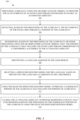
- a method implemented by one or more processors is set forth as including operations such as processing audio data using one or more acoustic models to monitor for an occurrence of an invocation phrase configured to invoke an automated assistant.
- the audio data can be based on detection of spoken input of a user at a client device that includes an automated assistant interface for interacting with the automated assistant.
- the method can further include detecting, based on processing the audio data using the one or more acoustic models, the occurrence of the invocation phrase in a portion of the audio data, and determining, based on processing of the audio data using the one or more acoustic models or other processing of the audio data using one or more other acoustic models, that the portion of the audio data that includes the invocation phrase corresponds to a user profile that is accessible to the automated assistant.
- the method can further include identifying a language assigned to the user profile, and selecting a speech recognition model for the language.
- the speech recognition model for the language can be based on determining the portion of the audio data corresponds to the user profile, and is based on identifying the language as assigned to the user profile.
- the method can also include using the selected speech recognition model to process a subsequent portion of the audio data that follows the portion of the audio data, and causing the automated assistant to provide responsive content that is determined based on the processing of the subsequent portion using the selected speech recognition model.
- the method can further include identifying an additional language assigned to the user profile.
- selecting the speech recognition model can include selecting the speech recognition model in lieu of an additional speech recognition model for the additional language.
- selecting the speech recognition model in lieu of the additional speech recognition model for the additional language can include identifying one or more contextual parameters associated with the audio data, and selecting the speech recognition model based on the one or more contextual parameters being more strongly associated, in the user profile, with the language than with the additional language.
- the one or more contextual parameters can include an identifier of the client device.
- the one or more contextual parameters can include one or multiple of: a time of day, a day of the week, and a location of the client device.
- selecting the speech recognition model for the language can include selecting the speech recognition model based on at least one probability assigned to the language in the user profile, wherein the at least one probability is based on previous interactions, with the automated assistant, that are associated with the user profile.
- the at least one probability is associated with one or more contextual parameters
- the method can further include identifying that the one or more contextual parameters are associated with the audio data, and using the at least one probability in the selecting based on the at least one probability being associated with the one or more contextual parameters identified as associated with the audio data.
- using the selected speech recognition model to process the subsequent portion of the audio data that follows the portion of audio data can include using the selected speech recognition model in generating text, in the language, that corresponds to the subsequent portion. Furthermore, causing the automated assistant to provideresponsive content that is determined based on the processing of the subsequent portion using the selected speech recognition model can include: generating the responsive content based on the text, and causing the automated assistant interface to render output that is based on the responsive content.
- the automated assistant can be configured to access multiple different user profiles that are: available at the client device, and associated with multiple different users of the client device.
- the multiple different user profiles can each identify one or more corresponding languages and a corresponding language probability for each of the corresponding languages.
- the corresponding language probabilities can each be based on previous interactions between a corresponding one of the multiple different users and the automated assistant.
- using the selected speech recognition model to process the subsequent portion of the audio data can include using the selected speech recognition model to generate first text in the language.
- the method can include identifying an additional language assigned to the user profile, and selecting an additional speech recognition model for the additional language. Selecting the additional speech recognition model for the additional language can be based on determining the portion of the audio data corresponds to the user profile, and can be based on identifying the additional language as assigned to the user profile.
- the method can include using the selected additional speech recognition model to process the subsequent portion of the audio data that follows the portion of the audio data.
- a method implemented by one or more processors is set forth as including operations such as processing audio data.
- the audio data can be based on detection of spoken input of a user at a client device, and the client device can include an automated assistant interface for interacting with the automated assistant.
- the method can further include determining, based on processing of the audio data, that at least a portion of the audio data matches a user profile accessible to the automated assistant, and identifying at least one probabilistic metric assigned to the user profile and corresponding to a particular speech recognition model, for a particular language.
- the method can also include, based on the at least one probabilistic metric satisfying a threshold: selecting the particular speech recognition model, for the particular language, for processing the audio data, and processing the audio data, using the particular speech recognition model for to the particular language, to generate text, in the particular language, that corresponds to the spoken input.
- the method can further include causing the automated assistant to provide responsive content that is determined based on the generated text.
- the user profile further includes an additional probabilistic metric corresponding to at least one different speech recognition model, for a different language.
- the method can include, based on the additional probabilistic metric failing to satisfy the threshold, refraining from processing the audio data using the different speech recognition model.
- the method can include identifying current contextual data associated with the audio data. Identifying the at least one probabilistic metric can be based on a correspondence between the current contextual data and the at least one probabilistic metric.
- the current contextual data can identify a location of the client device or an application that is being accessed via the client device when the spoken input is received.
- the current contextual data identifies the client device.
- the probabilistic metric can be based on past interactions between the user and the automated assistant.
- a method implemented by one or more processors is set forth as including operations that include receiving audio data.
- the audio data can be based on detection of spoken input of a user at a client device, the client device including an automated assistant interface for interacting with an automated assistant.
- the method can also determining that the audio data corresponds to a user profile accessible to the automated assistant, and identifying a first language assigned to the user profile, and a first probability metric assigned to the first language in the user profile.
- the method can further include selecting a first speech recognition model for the first language. Selecting the first speech recognition model for the first language can be based on identifying the first language as assigned to the user profile.
- the method can also include using the selected first speech recognition model to generate first text in the first language, and a first measure that indicates a likelihood the first text is an appropriate representation of the spoken input.
- the method can further include identifying a second language assigned to the user profile, and a second probability metric assigned to the second language in the user profile. Additionally, the method can include selecting a second speech recognition model for the second language. Selecting the second speech recognition model for the second language can be based on identifying the second language as assigned to the user profile.
- the method can also include using the selected second speech recognition model to generate second text in the second language, and a second measure that indicates a likelihood the second text is an appropriate representation of the spoken input. The method can further include selecting the first text in the first language in lieu of the second text in the second language.
- Selecting the first text in the first language in lieu of the second text in the second language can be based on: the first probability metric, the first measure, the second probability metric, and the second measure. Furthermore, the method can include, in response to selecting the first text, causing the automated assistant to provide responsive content that is determined based on the selected first text.
- the method can include identifying a current context associated with the audio data. Identifying the first probability metric can be based on the first probability metric corresponding to the current context. Identifying the second probability metric can be based on the second probability metric corresponding to the current context. In some implementations, determining that the audio data corresponds to the user profile can be based on comparing features of the audio data to features of the user profile.
- aspects of the present disclosure may advantageously reduce incidents during which a spoken language utterance is not interpreted by an appropriate speech recognition model. Consequently, an improved response to user input may be received, reducing occasions on which an automatic assistant is unresponsive or does not operate as intended. As well as improving functionality for a user, this may reduce load on computer and/or network resources used to implement such an assistant by reducing repeat commands in order to reach a desired result.
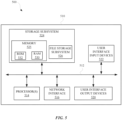
- implementations may include a non-transitory computer readable storage medium storing instructions executable by one or more processors (e.g., central processing unit(s) (CPU(s)), graphics processing unit(s) (GPU(s)), and/or tensor processing unit(s) (TPU(s)) to perform a method such as one or more of the methods described above and/or elsewhere herein.
- processors e.g., central processing unit(s) (CPU(s)), graphics processing unit(s) (GPU(s)), and/or tensor processing unit(s) (TPU(s)
- CPU central processing unit
- GPU graphics processing unit
- TPU tensor processing unit
- implementations may include a system of one or more computers that include one or more processors operable to execute stored instructions to perform a method such as one or more of the methods described above and/or elsewhere herein.
- FIG. 1 illustrates a system 100 for selecting a language for an automated assistant 104 to interact with a user 130.
- the automated assistant 104 can operate, in part via an automated assistant 126 that is provided at one or more client devices, such as client computing device 118 (e.g., a portable computing device 132), and in part via one or more remote computing device(s) 112, such as a server device 102.
- client computing device 118 e.g., a portable computing device 132
- remote computing device(s) 112 such as a server device 102.
- the user 130 can interact with the automated assistant 104 via an assistant interface 128 of the client computing device 118.
- the assistant interface 128 includes user interface input device(s) and user interface output device(s) for use by the automated assistant 126 in interfacing with a user.
- the assistant interface 128 accepts user interface inputs of the user 130 that are directed to the automated assistant 104, and renders content from the automated assistant 104 for presentation to the user 130.
- the assistant interface 128 can include, a microphone, a camera, a touch screen display, and/or any other user interface input device(s) of the client computing device 118.
- the assistant interface 128 can also include a display, projector, a speaker, and/or any other user interface output device(s) of the client computing device 118 that can be used to render content from the automated assistant 104.
- a user can initialize the automated assistant 104 by providing a verbal, textual, or a graphical input to the assistant interface 128 to cause the automated assistant 104 to perform a function (e.g ., provide data, control a peripheral device, access an agent, etc.).
- the client computing device 118 can include a display device, which can be a display panel that includes a touch interface for receiving touch inputs and/or gestures for allowing a user to control applications of the client computing device 118 via the touch interface.
- client computing device 118 can lack a display device, thereby providing an audible user interface output, without providing a graphical user interface output.
- the client computing device 118 can provide a user interface input device, such as a microphone, for receiving spoken natural language inputs from the user 130 (and from additional unillustrated users).
- the client computing device 118 can be in communication with the remote computing device 112 over a network 114, such as the internet.
- the client computing device 118 can offload computational tasks to the remote computing device 112 in order to, for example, conserve computational resources at the client device 118 and/or leverage more robust resources available at the remote computing device 112.
- the remote computing device 112 can host the automated assistant 104, and the client computing device 118 can transmit inputs received at one or more assistant interfaces to the remote computing device 112.
- the automated assistant 104 can be hosted by the automated assistant 126 at the client computing device 118.
- all or less than all aspects of the automated assistant 104 can be implemented by the automated assistant 126 at the client computing device 118.
- aspects of the automated assistant 104 are implemented via the local automated assistant 126 of the client computing device 118 and interface with the remote computing device 112 that implements other aspects of the automated assistant 104.
- the remote computing device 112 can optionally serve a plurality of users and their associated assistant applications via multiple threads.
- the local automated assistant 126 can be an application that is separate from an operating system of the client device 118 (e.g., installed "on top" of the operating system)- or can alternatively be implemented directly by the operating system of the client device 118 (e.g., considered an application of, but integral with, the operating system).
- the remote computing device 112 can include a speech recognition engine 134 that can process audio data received at an assistant interface to determine text and/or other semantic representation(s) of a spoken utterance embodied in the audio data.
- the speech recognition engine 134 can utilize one or more speech recognition models 136 in determining text and/or other semantic representations of a spoken utterance embodied in audio data.
- multiple speech recognition models 136 can be provided, and each can be for a corresponding language. For example, a first speech recognition model can be for English, a second speech recognition model can be for French, etc.
- a given user profile can be determined to correspond to audio data being processed based on matching voice features of the audio data to voice features associated with the user profile.
- a given user profile can additionally or alternatively be determined to correspond to audio data being processed based on matching other sensor data (e.g., data from a camera and/or data from a fingerprint sensor), from sensor(s) of the client computing device 118, to corresponding data of the user profile.
- the English speech recognition model can be utilized to process the audio data.
- the English speech recognition model can optionally be utilized in lieu of utilizing the French speech recognition model (or any other speech recognition model for a non-English language).
- multiple speech recognition models 136 for multiple different languages can be utilized in processing of audio data to generate multiple candidate semantic representations (e.g., each corresponding to a different language).
- probability metrics (optionally dependent on current contextual parameter(s)) for the multiple different languages and/or measures for each of the multiple candidate semantic representations can be utilized to select only one of the candidate semantic representations as appropriate for generating and providing content that is responsive to the given spoken utterance.
- the speech recognition models 136 each include one or machine learning models (e.g., neural network models) and/or statistical models for determining text (or other semantic representation) that corresponds to a spoken utterance embodied in audio data.
- the speech recognition engine 134 can utilize one of the speech recognition models 136 to determine phonemes, for a corresponding language, that are included in the audio data, and then generate text, for the corresponding language, based on the determined phonemes.
- speech recognition engine 134 receives an audio recording of voice input, e.g., in the form of digital audio data, and uses one or more models to convert the digital audio data into one or more text tokens.
- the automated assistant 104 can operate according to one or more language models simultaneously in order to be responsive to natural language inputs from the user 130 and/or provide responsive content to the user 130.
- the automated assistant 104 can operate using an invocation phrase model simultaneously with using a speech recognition model that is associated with a particular language. In this way, the automated assistant can process audio data that embodies an invocation phrase and one or more commands provided in the particular language, and be responsive to both the invocation phrase and the one or more commands.
- the text, and/or semantic representations of text, converted from the audio data can parsed by a text parser engine 110 and made available to the automated assistant 104 as textual data or semantic data that can be used to generate and/or identify command phrases from the user 130 and/or a third party application.
- a language model can include or refer to an acoustic model, a speech recognition model, an invocation phrase model, a voice-to-text model, a voice-to-semantic representation model, a text-to-semantic representation model, and/or any other model that can be used to translate a natural language input into data that can be processed by an application or a device.
- a language that the automated assistant 104 uses to communicate with the user 130 can be selected from one or more languages identified in a user profile. The automated assistant can access a user profile from one or more server user profiles 120 and/or one or more client user profiles 122.
- the user 130 when the user 130 is communicating with an automated assistant 126 at the client computing device 118, the user 130 can provide a spoken natural language input to an assistant interface 128 of the client computing device 118.
- the spoken natural language input can be converted into audio data, which can be processed by a client language model 124, such as an invocation phrase model for identifying whether the audio data embodies an invocation phrase for invoking the automated assistant 126.
- the client language model 124 can also provide a voice signature of the user 130.
- the automated assistant 126 Based on the voice signature of the user 130, the automated assistant 126 can select a client user profile 122 that corresponds to the user 130.
- the client user profile 122 can identify one or more languages that the identified user 130 prefers to communicate in, depending on a context of an interaction, or characteristics of the interaction between the user 130 and the automated assistant 126.
- the language model can be selected based on contents of the table 220 and/or a user profile associated with the respective user.
- Each language model can be associated with a score or probability, which quantifies a likelihood that the user is or will be communicating with the automated assistant according to a particular language.
- the entries in the table 220 can correspond to same contexts but different scores for each model.
- APPLICATION_! and APPLICATION_2 can be the same applications
- LOCATION_! and LOCATION_2 can be the same locations
- CONTACT_! and CONTACT_2 can be the same contacts.
- each application, location, and/or contact can correspond to different scores, depending on the model being referenced. For example, if the user 213 is using the application at the location, the English model can be selected over the French model, since the total score for the English model would be 0.13 and the score for the French model would be 0.12. As another example, if the user 213 is at the location and communicating with the contacts, the English model would be selected over the French model, since the total score for the English model would be 0.14 and the score for the French model would be 0.9.
Landscapes
- Engineering & Computer Science (AREA)
- Physics & Mathematics (AREA)
- Computational Linguistics (AREA)
- Health & Medical Sciences (AREA)
- Audiology, Speech & Language Pathology (AREA)
- Human Computer Interaction (AREA)
- Acoustics & Sound (AREA)
- Multimedia (AREA)
- Probability & Statistics with Applications (AREA)
- Artificial Intelligence (AREA)
- Machine Translation (AREA)
- User Interface Of Digital Computer (AREA)
Priority Applications (1)
| Application Number | Priority Date | Filing Date | Title |
|---|---|---|---|
| EP23191963.0A EP4254402B1 (fr) | 2018-04-16 | 2018-04-16 | Détermination automatique d'une langue pour la reconnaissance de la parole d'un énoncé vocal reçu par l'intermédiaire d'une interface d'assistant automatisé |
Applications Claiming Priority (4)
| Application Number | Priority Date | Filing Date | Title |
|---|---|---|---|
| EP23191963.0A EP4254402B1 (fr) | 2018-04-16 | 2018-04-16 | Détermination automatique d'une langue pour la reconnaissance de la parole d'un énoncé vocal reçu par l'intermédiaire d'une interface d'assistant automatisé |
| EP20195508.5A EP3767622B1 (fr) | 2018-04-16 | 2018-04-16 | Détermination automatique d'une langue pour la reconnaissance de la parole d'un énoncé vocal reçu par l'intermédiaire d'une interface d'assistant automatisé |
| PCT/US2018/027808 WO2019203794A1 (fr) | 2018-04-16 | 2018-04-16 | Détermination automatique d'une langue pour la reconnaissance vocale de paroles prononcées reçues par le biais d'une interface d'assistant automatisée |
| EP18722334.2A EP3622507B1 (fr) | 2018-04-16 | 2018-04-16 | Détermination automatique d'une langue pour la reconnaissance vocale de paroles prononcées reçues par le biais d'une interface d'assistant automatisée |
Related Parent Applications (2)
| Application Number | Title | Priority Date | Filing Date |
|---|---|---|---|
| EP20195508.5A Division EP3767622B1 (fr) | 2018-04-16 | 2018-04-16 | Détermination automatique d'une langue pour la reconnaissance de la parole d'un énoncé vocal reçu par l'intermédiaire d'une interface d'assistant automatisé |
| EP18722334.2A Division EP3622507B1 (fr) | 2018-04-16 | 2018-04-16 | Détermination automatique d'une langue pour la reconnaissance vocale de paroles prononcées reçues par le biais d'une interface d'assistant automatisée |
Publications (3)
| Publication Number | Publication Date |
|---|---|
| EP4254402A2 true EP4254402A2 (fr) | 2023-10-04 |
| EP4254402A3 EP4254402A3 (fr) | 2023-12-20 |
| EP4254402B1 EP4254402B1 (fr) | 2025-01-01 |
Family
ID=62111241
Family Applications (3)
| Application Number | Title | Priority Date | Filing Date |
|---|---|---|---|
| EP20195508.5A Active EP3767622B1 (fr) | 2018-04-16 | 2018-04-16 | Détermination automatique d'une langue pour la reconnaissance de la parole d'un énoncé vocal reçu par l'intermédiaire d'une interface d'assistant automatisé |
| EP18722334.2A Active EP3622507B1 (fr) | 2018-04-16 | 2018-04-16 | Détermination automatique d'une langue pour la reconnaissance vocale de paroles prononcées reçues par le biais d'une interface d'assistant automatisée |
| EP23191963.0A Active EP4254402B1 (fr) | 2018-04-16 | 2018-04-16 | Détermination automatique d'une langue pour la reconnaissance de la parole d'un énoncé vocal reçu par l'intermédiaire d'une interface d'assistant automatisé |
Family Applications Before (2)
| Application Number | Title | Priority Date | Filing Date |
|---|---|---|---|
| EP20195508.5A Active EP3767622B1 (fr) | 2018-04-16 | 2018-04-16 | Détermination automatique d'une langue pour la reconnaissance de la parole d'un énoncé vocal reçu par l'intermédiaire d'une interface d'assistant automatisé |
| EP18722334.2A Active EP3622507B1 (fr) | 2018-04-16 | 2018-04-16 | Détermination automatique d'une langue pour la reconnaissance vocale de paroles prononcées reçues par le biais d'une interface d'assistant automatisée |
Country Status (5)
| Country | Link |
|---|---|
| US (6) | US10839793B2 (fr) |
| EP (3) | EP3767622B1 (fr) |
| CN (2) | CN110998717B (fr) |
| SG (1) | SG11201912061WA (fr) |
| WO (1) | WO2019203794A1 (fr) |
Families Citing this family (78)
| Publication number | Priority date | Publication date | Assignee | Title |
|---|---|---|---|---|
| US9318108B2 (en) | 2010-01-18 | 2016-04-19 | Apple Inc. | Intelligent automated assistant |
| US8977255B2 (en) | 2007-04-03 | 2015-03-10 | Apple Inc. | Method and system for operating a multi-function portable electronic device using voice-activation |
| US8676904B2 (en) | 2008-10-02 | 2014-03-18 | Apple Inc. | Electronic devices with voice command and contextual data processing capabilities |
| US10057736B2 (en) | 2011-06-03 | 2018-08-21 | Apple Inc. | Active transport based notifications |
| US10417037B2 (en) | 2012-05-15 | 2019-09-17 | Apple Inc. | Systems and methods for integrating third party services with a digital assistant |
| DE112014000709B4 (de) | 2013-02-07 | 2021-12-30 | Apple Inc. | Verfahren und vorrichtung zum betrieb eines sprachtriggers für einen digitalen assistenten |
| US9715875B2 (en) | 2014-05-30 | 2017-07-25 | Apple Inc. | Reducing the need for manual start/end-pointing and trigger phrases |
| US10170123B2 (en) | 2014-05-30 | 2019-01-01 | Apple Inc. | Intelligent assistant for home automation |
| US9338493B2 (en) | 2014-06-30 | 2016-05-10 | Apple Inc. | Intelligent automated assistant for TV user interactions |
| US9886953B2 (en) | 2015-03-08 | 2018-02-06 | Apple Inc. | Virtual assistant activation |
| US10460227B2 (en) | 2015-05-15 | 2019-10-29 | Apple Inc. | Virtual assistant in a communication session |
| US10331312B2 (en) | 2015-09-08 | 2019-06-25 | Apple Inc. | Intelligent automated assistant in a media environment |
| US10747498B2 (en) | 2015-09-08 | 2020-08-18 | Apple Inc. | Zero latency digital assistant |
| US10671428B2 (en) | 2015-09-08 | 2020-06-02 | Apple Inc. | Distributed personal assistant |
| US11587559B2 (en) | 2015-09-30 | 2023-02-21 | Apple Inc. | Intelligent device identification |
| US10691473B2 (en) | 2015-11-06 | 2020-06-23 | Apple Inc. | Intelligent automated assistant in a messaging environment |
| US10586535B2 (en) | 2016-06-10 | 2020-03-10 | Apple Inc. | Intelligent digital assistant in a multi-tasking environment |
| DK201670540A1 (en) | 2016-06-11 | 2018-01-08 | Apple Inc | Application integration with a digital assistant |
| US12197817B2 (en) | 2016-06-11 | 2025-01-14 | Apple Inc. | Intelligent device arbitration and control |
| US11204787B2 (en) | 2017-01-09 | 2021-12-21 | Apple Inc. | Application integration with a digital assistant |
| DK180048B1 (en) | 2017-05-11 | 2020-02-04 | Apple Inc. | MAINTAINING THE DATA PROTECTION OF PERSONAL INFORMATION |
| DK179496B1 (en) | 2017-05-12 | 2019-01-15 | Apple Inc. | USER-SPECIFIC Acoustic Models |
| DK201770428A1 (en) | 2017-05-12 | 2019-02-18 | Apple Inc. | LOW-LATENCY INTELLIGENT AUTOMATED ASSISTANT |
| DK201770411A1 (en) | 2017-05-15 | 2018-12-20 | Apple Inc. | Multi-modal interfaces |
| US10303715B2 (en) | 2017-05-16 | 2019-05-28 | Apple Inc. | Intelligent automated assistant for media exploration |
| DK179560B1 (en) | 2017-05-16 | 2019-02-18 | Apple Inc. | FAR-FIELD EXTENSION FOR DIGITAL ASSISTANT SERVICES |
| US11568863B1 (en) * | 2018-03-23 | 2023-01-31 | Amazon Technologies, Inc. | Skill shortlister for natural language processing |
| US10818288B2 (en) | 2018-03-26 | 2020-10-27 | Apple Inc. | Natural assistant interaction |
| WO2019203794A1 (fr) | 2018-04-16 | 2019-10-24 | Google Llc | Détermination automatique d'une langue pour la reconnaissance vocale de paroles prononcées reçues par le biais d'une interface d'assistant automatisée |
| WO2019203795A1 (fr) | 2018-04-16 | 2019-10-24 | Google Llc | Détermination automatique d'une langue pour la reconnaissance de la parole d'un énoncé vocal reçu par l'intermédiaire d'une interface d'assistant automatisé |
| US10963273B2 (en) | 2018-04-20 | 2021-03-30 | Facebook, Inc. | Generating personalized content summaries for users |
| US11676220B2 (en) | 2018-04-20 | 2023-06-13 | Meta Platforms, Inc. | Processing multimodal user input for assistant systems |
| US11886473B2 (en) | 2018-04-20 | 2024-01-30 | Meta Platforms, Inc. | Intent identification for agent matching by assistant systems |
| US11715042B1 (en) | 2018-04-20 | 2023-08-01 | Meta Platforms Technologies, Llc | Interpretability of deep reinforcement learning models in assistant systems |
| US11307880B2 (en) | 2018-04-20 | 2022-04-19 | Meta Platforms, Inc. | Assisting users with personalized and contextual communication content |
| US10928918B2 (en) | 2018-05-07 | 2021-02-23 | Apple Inc. | Raise to speak |
| DK201870355A1 (en) | 2018-06-01 | 2019-12-16 | Apple Inc. | VIRTUAL ASSISTANT OPERATION IN MULTI-DEVICE ENVIRONMENTS |
| DK180639B1 (en) | 2018-06-01 | 2021-11-04 | Apple Inc | DISABILITY OF ATTENTION-ATTENTIVE VIRTUAL ASSISTANT |
| KR102225984B1 (ko) * | 2018-09-03 | 2021-03-10 | 엘지전자 주식회사 | 음성 인식 서비스를 제공하는 서버 |
| US11462215B2 (en) | 2018-09-28 | 2022-10-04 | Apple Inc. | Multi-modal inputs for voice commands |
| US11403463B2 (en) * | 2018-10-31 | 2022-08-02 | Microsoft Technology Licensing, Llc | Language proficiency inference system |
| US12014740B2 (en) | 2019-01-08 | 2024-06-18 | Fidelity Information Services, Llc | Systems and methods for contactless authentication using voice recognition |
| US12021864B2 (en) * | 2019-01-08 | 2024-06-25 | Fidelity Information Services, Llc. | Systems and methods for contactless authentication using voice recognition |
| US11348573B2 (en) | 2019-03-18 | 2022-05-31 | Apple Inc. | Multimodality in digital assistant systems |
| CN113544770B (zh) * | 2019-05-06 | 2025-01-28 | 谷歌有限责任公司 | 在访问非助理应用时通过自动助理初始化非助理后台动作 |
| US11475884B2 (en) * | 2019-05-06 | 2022-10-18 | Apple Inc. | Reducing digital assistant latency when a language is incorrectly determined |
| US11307752B2 (en) | 2019-05-06 | 2022-04-19 | Apple Inc. | User configurable task triggers |
| DK201970509A1 (en) | 2019-05-06 | 2021-01-15 | Apple Inc | Spoken notifications |
| US11227599B2 (en) | 2019-06-01 | 2022-01-18 | Apple Inc. | Methods and user interfaces for voice-based control of electronic devices |
| US11238221B2 (en) * | 2019-06-19 | 2022-02-01 | Microsoft Technology Licensing, Llc | Language profiling service |
| KR20190114938A (ko) * | 2019-09-20 | 2019-10-10 | 엘지전자 주식회사 | 다국어 커뮤니케이션을 수행하기 위한 장치 및 방법 |
| US10880351B1 (en) | 2019-10-16 | 2020-12-29 | Dish Network L.L.C. | Systems and methods for adapting content items to endpoint media devices |
| US11638049B2 (en) | 2019-10-16 | 2023-04-25 | Dish Network L.L.C. | Systems and methods for content item recognition and adaptive packet transmission |
| CN111128126B (zh) * | 2019-12-30 | 2023-04-07 | 海智讯通(上海)智能科技有限公司 | 多语种智能语音对话的方法及系统 |
| US11245946B2 (en) | 2020-01-21 | 2022-02-08 | Dish Network L.L.C. | Systems and methods for adapting content items to secured endpoint media device data |
| US11908480B1 (en) * | 2020-03-23 | 2024-02-20 | Amazon Technologies, Inc. | Natural language processing using context |
| US11386887B1 (en) | 2020-03-23 | 2022-07-12 | Amazon Technologies, Inc. | Natural language processing using context |
| US11012737B1 (en) * | 2020-04-27 | 2021-05-18 | Dish Network L.L.C. | Systems and methods for audio adaptation of content items to endpoint media devices |
| US11061543B1 (en) | 2020-05-11 | 2021-07-13 | Apple Inc. | Providing relevant data items based on context |
| US12301635B2 (en) | 2020-05-11 | 2025-05-13 | Apple Inc. | Digital assistant hardware abstraction |
| US11490204B2 (en) | 2020-07-20 | 2022-11-01 | Apple Inc. | Multi-device audio adjustment coordination |
| US11438683B2 (en) | 2020-07-21 | 2022-09-06 | Apple Inc. | User identification using headphones |
| US12198689B1 (en) * | 2020-08-10 | 2025-01-14 | Summer Institute of Linguistics, Inc. | Systems and methods for multilingual dialogue interactions using dynamic automatic speech recognition and processing |
| WO2022055506A1 (fr) * | 2020-09-14 | 2022-03-17 | Google Llc | Détection automatisée de langues d'utilisateurs pour sélectionner des contenus |
| US20220108079A1 (en) * | 2020-10-06 | 2022-04-07 | Sap Se | Application-Specific Generated Chatbot |
| US11557300B2 (en) | 2020-10-16 | 2023-01-17 | Google Llc | Detecting and handling failures in other assistants |
| US11514109B2 (en) | 2020-10-29 | 2022-11-29 | Google Llc | Inferring semantic label(s) for assistant device(s) based on device-specific signal(s) |
| US11823684B2 (en) * | 2020-11-19 | 2023-11-21 | Google Llc | Generating and/or utilizing voice authentication biasing parameters for assistant devices |
| US11626104B2 (en) * | 2020-12-08 | 2023-04-11 | Qualcomm Incorporated | User speech profile management |
| KR20220082577A (ko) * | 2020-12-10 | 2022-06-17 | 삼성전자주식회사 | 전자장치 및 그의 제어방법 |
| US11790906B2 (en) * | 2021-01-25 | 2023-10-17 | Google Llc | Resolving unique personal identifiers during corresponding conversations between a voice bot and a human |
| US12175968B1 (en) * | 2021-03-26 | 2024-12-24 | Amazon Technologies, Inc. | Skill selection for responding to natural language inputs |
| US11721324B2 (en) | 2021-06-09 | 2023-08-08 | International Business Machines Corporation | Providing high quality speech recognition |
| WO2023158076A1 (fr) * | 2022-02-16 | 2023-08-24 | 삼성전자주식회사 | Dispositif électronique et son procédé de traitement d'énoncé |
| US12462805B2 (en) * | 2023-06-30 | 2025-11-04 | Amazon Technologies, Inc. | Natural language generation |
| US20250191585A1 (en) * | 2023-12-07 | 2025-06-12 | International Business Machines Corporation | Multilingual command line interface bots enabled with a real-time language analysis service |
| US12380315B1 (en) * | 2024-09-12 | 2025-08-05 | Dropbox, Inc. | Providing contextualized large language model recommendations |
| US12499350B1 (en) * | 2025-02-03 | 2025-12-16 | edYou Technologies Inc. | Apparatus and method for personalization of educational machine learning models |
Family Cites Families (56)
| Publication number | Priority date | Publication date | Assignee | Title |
|---|---|---|---|---|
| US5515475A (en) | 1993-06-24 | 1996-05-07 | Northern Telecom Limited | Speech recognition method using a two-pass search |
| US6594629B1 (en) | 1999-08-06 | 2003-07-15 | International Business Machines Corporation | Methods and apparatus for audio-visual speech detection and recognition |
| US7620547B2 (en) | 2002-07-25 | 2009-11-17 | Sony Deutschland Gmbh | Spoken man-machine interface with speaker identification |
| US7756708B2 (en) | 2006-04-03 | 2010-07-13 | Google Inc. | Automatic language model update |
| US7873517B2 (en) | 2006-11-09 | 2011-01-18 | Volkswagen Of America, Inc. | Motor vehicle with a speech interface |
| US7818176B2 (en) * | 2007-02-06 | 2010-10-19 | Voicebox Technologies, Inc. | System and method for selecting and presenting advertisements based on natural language processing of voice-based input |
| US8949266B2 (en) | 2007-03-07 | 2015-02-03 | Vlingo Corporation | Multiple web-based content category searching in mobile search application |
| US8909528B2 (en) * | 2007-05-09 | 2014-12-09 | Nuance Communications, Inc. | Method and system for prompt construction for selection from a list of acoustically confusable items in spoken dialog systems |
| US8935147B2 (en) * | 2007-12-31 | 2015-01-13 | Sap Se | Runtime data language selection in object instance |
| CN201332158Y (zh) | 2008-12-29 | 2009-10-21 | 凡甲电子(苏州)有限公司 | 电力连接器 |
| US8498857B2 (en) | 2009-05-19 | 2013-07-30 | Tata Consultancy Services Limited | System and method for rapid prototyping of existing speech recognition solutions in different languages |
| US8468012B2 (en) * | 2010-05-26 | 2013-06-18 | Google Inc. | Acoustic model adaptation using geographic information |
| US9489375B2 (en) | 2011-06-19 | 2016-11-08 | Mmodal Ip Llc | Speech recognition using an operating system hooking component for context-aware recognition models |
| US8972263B2 (en) * | 2011-11-18 | 2015-03-03 | Soundhound, Inc. | System and method for performing dual mode speech recognition |
| US9129591B2 (en) * | 2012-03-08 | 2015-09-08 | Google Inc. | Recognizing speech in multiple languages |
| US9767793B2 (en) * | 2012-06-08 | 2017-09-19 | Nvoq Incorporated | Apparatus and methods using a pattern matching speech recognition engine to train a natural language speech recognition engine |
| US9489940B2 (en) * | 2012-06-11 | 2016-11-08 | Nvoq Incorporated | Apparatus and methods to update a language model in a speech recognition system |
| US9606767B2 (en) | 2012-06-13 | 2017-03-28 | Nvoq Incorporated | Apparatus and methods for managing resources for a system using voice recognition |
| US9043205B2 (en) * | 2012-06-21 | 2015-05-26 | Google Inc. | Dynamic language model |
| JP6131537B2 (ja) * | 2012-07-04 | 2017-05-24 | セイコーエプソン株式会社 | 音声認識システム、音声認識プログラム、記録媒体及び音声認識方法 |
| US9786281B1 (en) * | 2012-08-02 | 2017-10-10 | Amazon Technologies, Inc. | Household agent learning |
| US9569421B2 (en) * | 2012-10-31 | 2017-02-14 | Excalibur Ip, Llc | Method and system for improved language identification using language tags |
| US9031829B2 (en) | 2013-02-08 | 2015-05-12 | Machine Zone, Inc. | Systems and methods for multi-user multi-lingual communications |
| US9223837B2 (en) * | 2013-03-14 | 2015-12-29 | Toyota Motor Engineering & Manufacturing North America, Inc. | Computer-based method and system for providing active and automatic personal assistance using an automobile or a portable electronic device |
| CN105190607B (zh) | 2013-03-15 | 2018-11-30 | 苹果公司 | 通过智能数字助理的用户培训 |
| US20150006147A1 (en) | 2013-07-01 | 2015-01-01 | Toyota Motor Engineering & Manufacturing North America, Inc. | Speech Recognition Systems Having Diverse Language Support |
| US9666188B2 (en) * | 2013-10-29 | 2017-05-30 | Nuance Communications, Inc. | System and method of performing automatic speech recognition using local private data |
| US9189742B2 (en) | 2013-11-20 | 2015-11-17 | Justin London | Adaptive virtual intelligent agent |
| US9953634B1 (en) | 2013-12-17 | 2018-04-24 | Knowles Electronics, Llc | Passive training for automatic speech recognition |
| US10186256B2 (en) | 2014-01-23 | 2019-01-22 | Nuance Communications, Inc. | Method and apparatus for exploiting language skill information in automatic speech recognition |
| CN104978015B (zh) | 2014-04-14 | 2018-09-18 | 博世汽车部件(苏州)有限公司 | 具有语种自适用功能的导航系统及其控制方法 |
| US10770075B2 (en) | 2014-04-21 | 2020-09-08 | Qualcomm Incorporated | Method and apparatus for activating application by speech input |
| US9418567B1 (en) * | 2014-04-23 | 2016-08-16 | Google Inc. | Selecting questions for a challenge-response test |
| US20150364129A1 (en) | 2014-06-17 | 2015-12-17 | Google Inc. | Language Identification |
| WO2015196063A1 (fr) * | 2014-06-19 | 2015-12-23 | Robert Bosch Gmbh | Système et procédé pour un fonctionnement personnalisé et activé par parole de dispositifs et de services dans de multiples environnements de fonctionnement |
| US9620106B2 (en) * | 2014-07-30 | 2017-04-11 | At&T Intellectual Property I, L.P. | System and method for personalization in speech recogniton |
| CN104282307A (zh) * | 2014-09-05 | 2015-01-14 | 中兴通讯股份有限公司 | 唤醒语音控制系统的方法、装置及终端 |
| US9318107B1 (en) | 2014-10-09 | 2016-04-19 | Google Inc. | Hotword detection on multiple devices |
| US20160162469A1 (en) * | 2014-10-23 | 2016-06-09 | Audience, Inc. | Dynamic Local ASR Vocabulary |
| CN104505091B (zh) | 2014-12-26 | 2018-08-21 | 湖南华凯文化创意股份有限公司 | 人机语音交互方法及系统 |
| US10114817B2 (en) | 2015-06-01 | 2018-10-30 | Microsoft Technology Licensing, Llc | Data mining multilingual and contextual cognates from user profiles |
| TWI595478B (zh) | 2016-04-21 | 2017-08-11 | 國立臺北大學 | 可學習不同語言及模仿不同語者說話方式之韻律參數語速正規化器、語速相依韻律模型建立器、可控語速之韻律訊息產生裝置及韻律訊息產生方法 |
| CN105957516B (zh) | 2016-06-16 | 2019-03-08 | 百度在线网络技术(北京)有限公司 | 多语音识别模型切换方法及装置 |
| US10418026B2 (en) * | 2016-07-15 | 2019-09-17 | Comcast Cable Communications, Llc | Dynamic language and command recognition |
| US10403268B2 (en) | 2016-09-08 | 2019-09-03 | Intel IP Corporation | Method and system of automatic speech recognition using posterior confidence scores |
| US9786271B1 (en) * | 2016-09-28 | 2017-10-10 | International Business Machines Corporation | Voice pattern coding sequence and cataloging voice matching system |
| CN106710586B (zh) | 2016-12-27 | 2020-06-30 | 北京儒博科技有限公司 | 一种语音识别引擎自动切换方法和装置 |
| US10741174B2 (en) | 2017-01-24 | 2020-08-11 | Lenovo (Singapore) Pte. Ltd. | Automatic language identification for speech |
| CN106997762A (zh) | 2017-03-08 | 2017-08-01 | 广东美的制冷设备有限公司 | 家用电器的语音控制方法以及装置 |
| CN107623614B (zh) * | 2017-09-19 | 2020-12-08 | 百度在线网络技术(北京)有限公司 | 用于推送信息的方法和装置 |
| US10747817B2 (en) * | 2017-09-29 | 2020-08-18 | Rovi Guides, Inc. | Recommending language models for search queries based on user profile |
| CN107895578B (zh) * | 2017-11-15 | 2021-07-20 | 百度在线网络技术(北京)有限公司 | 语音交互方法和装置 |
| WO2019203795A1 (fr) | 2018-04-16 | 2019-10-24 | Google Llc | Détermination automatique d'une langue pour la reconnaissance de la parole d'un énoncé vocal reçu par l'intermédiaire d'une interface d'assistant automatisé |
| WO2019203794A1 (fr) | 2018-04-16 | 2019-10-24 | Google Llc | Détermination automatique d'une langue pour la reconnaissance vocale de paroles prononcées reçues par le biais d'une interface d'assistant automatisée |
| US10679615B2 (en) * | 2018-04-16 | 2020-06-09 | Google Llc | Adaptive interface in a voice-based networked system |
| US11119725B2 (en) | 2018-09-27 | 2021-09-14 | Abl Ip Holding Llc | Customizable embedded vocal command sets for a lighting and/or other environmental controller |
-
2018
- 2018-04-16 WO PCT/US2018/027808 patent/WO2019203794A1/fr not_active Ceased
- 2018-04-16 CN CN201880039581.6A patent/CN110998717B/zh active Active
- 2018-04-16 EP EP20195508.5A patent/EP3767622B1/fr active Active
- 2018-04-16 EP EP18722334.2A patent/EP3622507B1/fr active Active
- 2018-04-16 EP EP23191963.0A patent/EP4254402B1/fr active Active
- 2018-04-16 US US15/769,013 patent/US10839793B2/en active Active
- 2018-04-16 SG SG11201912061WA patent/SG11201912061WA/en unknown
- 2018-04-16 CN CN202311315470.2A patent/CN117392977A/zh active Pending
- 2018-10-17 US US16/163,327 patent/US11017766B2/en active Active
-
2020
- 2020-11-16 US US17/099,367 patent/US11798541B2/en active Active
-
2021
- 2021-05-24 US US17/328,400 patent/US11735173B2/en active Active
-
2023
- 2023-07-28 US US18/361,408 patent/US12046233B2/en active Active
- 2023-10-23 US US18/382,886 patent/US20240054997A1/en active Pending
Also Published As
| Publication number | Publication date |
|---|---|
| CN110998717B (zh) | 2023-10-31 |
| US20230368784A1 (en) | 2023-11-16 |
| EP3767622B1 (fr) | 2023-08-30 |
| EP4254402B1 (fr) | 2025-01-01 |
| EP4254402A3 (fr) | 2023-12-20 |
| SG11201912061WA (en) | 2020-01-30 |
| US10839793B2 (en) | 2020-11-17 |
| US11798541B2 (en) | 2023-10-24 |
| US20210280177A1 (en) | 2021-09-09 |
| US12046233B2 (en) | 2024-07-23 |
| US20240054997A1 (en) | 2024-02-15 |
| EP3767622A3 (fr) | 2021-04-07 |
| EP3622507B1 (fr) | 2020-10-21 |
| CN117392977A (zh) | 2024-01-12 |
| WO2019203794A1 (fr) | 2019-10-24 |
| US11735173B2 (en) | 2023-08-22 |
| US11017766B2 (en) | 2021-05-25 |
| EP3767622A2 (fr) | 2021-01-20 |
| US20200135184A1 (en) | 2020-04-30 |
| US20190318735A1 (en) | 2019-10-17 |
| US20210074280A1 (en) | 2021-03-11 |
| EP3622507A1 (fr) | 2020-03-18 |
| CN110998717A (zh) | 2020-04-10 |
Similar Documents
| Publication | Publication Date | Title |
|---|---|---|
| US20240054997A1 (en) | Automatically determining language for speech recognition of spoken utterance received via an automated assistant interface | |
| US12249319B2 (en) | Automatically determining language for speech recognition of spoken utterance received via an automated assistant interface | |
| US10679615B2 (en) | Adaptive interface in a voice-based networked system | |
| CN118538199B (zh) | 确定经由自动助理界面接收的口头话语的语音识别的语言 | |
| US12204569B2 (en) | Natural language understanding clarifications | |
| US20230252995A1 (en) | Altering a candidate text representation, of spoken input, based on further spoken input | |
| WO2025038844A1 (fr) | Utilisation d'instructions de parole silencieuse non audibles pour assistants automatisés | |
| US12322376B2 (en) | Personalized speech query endpointing based on prior interaction(s) involving a specific phrase preceding an endpoint |
Legal Events
| Date | Code | Title | Description |
|---|---|---|---|
| PUAI | Public reference made under article 153(3) epc to a published international application that has entered the european phase |
Free format text: ORIGINAL CODE: 0009012 |
|
| STAA | Information on the status of an ep patent application or granted ep patent |
Free format text: STATUS: THE APPLICATION HAS BEEN PUBLISHED |
|
| AC | Divisional application: reference to earlier application |
Ref document number: 3622507 Country of ref document: EP Kind code of ref document: P Ref document number: 3767622 Country of ref document: EP Kind code of ref document: P |
|
| AK | Designated contracting states |
Kind code of ref document: A2 Designated state(s): AL AT BE BG CH CY CZ DE DK EE ES FI FR GB GR HR HU IE IS IT LI LT LU LV MC MK MT NL NO PL PT RO RS SE SI SK SM TR |
|
| REG | Reference to a national code |
Ref country code: DE Ref legal event code: R079 Free format text: PREVIOUS MAIN CLASS: G10L0015260000 Ipc: G10L0015220000 Ref country code: DE Ref legal event code: R079 Ref document number: 602018078298 Country of ref document: DE Free format text: PREVIOUS MAIN CLASS: G10L0015260000 Ipc: G10L0015220000 |
|
| PUAL | Search report despatched |
Free format text: ORIGINAL CODE: 0009013 |
|
| AK | Designated contracting states |
Kind code of ref document: A3 Designated state(s): AL AT BE BG CH CY CZ DE DK EE ES FI FR GB GR HR HU IE IS IT LI LT LU LV MC MK MT NL NO PL PT RO RS SE SI SK SM TR |
|
| RIC1 | Information provided on ipc code assigned before grant |
Ipc: G10L 15/00 20130101ALN20231115BHEP Ipc: G10L 15/26 20060101ALN20231115BHEP Ipc: G06F 40/00 20200101ALI20231115BHEP Ipc: G10L 15/32 20130101ALI20231115BHEP Ipc: G10L 15/22 20060101AFI20231115BHEP |
|
| STAA | Information on the status of an ep patent application or granted ep patent |
Free format text: STATUS: REQUEST FOR EXAMINATION WAS MADE |
|
| 17P | Request for examination filed |
Effective date: 20240604 |
|
| RBV | Designated contracting states (corrected) |
Designated state(s): AL AT BE BG CH CY CZ DE DK EE ES FI FR GB GR HR HU IE IS IT LI LT LU LV MC MK MT NL NO PL PT RO RS SE SI SK SM TR |
|
| GRAP | Despatch of communication of intention to grant a patent |
Free format text: ORIGINAL CODE: EPIDOSNIGR1 |
|
| STAA | Information on the status of an ep patent application or granted ep patent |
Free format text: STATUS: GRANT OF PATENT IS INTENDED |
|
| RIC1 | Information provided on ipc code assigned before grant |
Ipc: G10L 15/00 20130101ALN20240702BHEP Ipc: G10L 15/26 20060101ALN20240702BHEP Ipc: G06F 40/00 20200101ALI20240702BHEP Ipc: G10L 15/32 20130101ALI20240702BHEP Ipc: G10L 15/22 20060101AFI20240702BHEP |
|
| INTG | Intention to grant announced |
Effective date: 20240722 |
|
| GRAS | Grant fee paid |
Free format text: ORIGINAL CODE: EPIDOSNIGR3 |
|
| GRAA | (expected) grant |
Free format text: ORIGINAL CODE: 0009210 |
|
| STAA | Information on the status of an ep patent application or granted ep patent |
Free format text: STATUS: THE PATENT HAS BEEN GRANTED |
|
| AC | Divisional application: reference to earlier application |
Ref document number: 3622507 Country of ref document: EP Kind code of ref document: P Ref document number: 3767622 Country of ref document: EP Kind code of ref document: P |
|
| AK | Designated contracting states |
Kind code of ref document: B1 Designated state(s): AL AT BE BG CH CY CZ DE DK EE ES FI FR GB GR HR HU IE IS IT LI LT LU LV MC MK MT NL NO PL PT RO RS SE SI SK SM TR |
|
| REG | Reference to a national code |
Ref country code: GB Ref legal event code: FG4D |
|
| P01 | Opt-out of the competence of the unified patent court (upc) registered |
Free format text: CASE NUMBER: APP_63416/2024 Effective date: 20241128 |
|
| REG | Reference to a national code |
Ref country code: DE Ref legal event code: R096 Ref document number: 602018078298 Country of ref document: DE |
|
| REG | Reference to a national code |
Ref country code: CH Ref legal event code: EP |
|
| REG | Reference to a national code |
Ref country code: IE Ref legal event code: FG4D |
|
| REG | Reference to a national code |
Ref country code: LT Ref legal event code: MG9D |
|
| REG | Reference to a national code |
Ref country code: NL Ref legal event code: MP Effective date: 20250101 |
|
| PGFP | Annual fee paid to national office [announced via postgrant information from national office to epo] |
Ref country code: LU Payment date: 20250428 Year of fee payment: 8 |
|
| REG | Reference to a national code |
Ref country code: AT Ref legal event code: MK05 Ref document number: 1757135 Country of ref document: AT Kind code of ref document: T Effective date: 20250101 |
|
| PG25 | Lapsed in a contracting state [announced via postgrant information from national office to epo] |
Ref country code: NL Free format text: LAPSE BECAUSE OF FAILURE TO SUBMIT A TRANSLATION OF THE DESCRIPTION OR TO PAY THE FEE WITHIN THE PRESCRIBED TIME-LIMIT Effective date: 20250101 |
|
| PG25 | Lapsed in a contracting state [announced via postgrant information from national office to epo] |
Ref country code: FI Free format text: LAPSE BECAUSE OF FAILURE TO SUBMIT A TRANSLATION OF THE DESCRIPTION OR TO PAY THE FEE WITHIN THE PRESCRIBED TIME-LIMIT Effective date: 20250101 |
|
| PG25 | Lapsed in a contracting state [announced via postgrant information from national office to epo] |
Ref country code: PL Free format text: LAPSE BECAUSE OF FAILURE TO SUBMIT A TRANSLATION OF THE DESCRIPTION OR TO PAY THE FEE WITHIN THE PRESCRIBED TIME-LIMIT Effective date: 20250101 |
|
| PGFP | Annual fee paid to national office [announced via postgrant information from national office to epo] |
Ref country code: DE Payment date: 20250429 Year of fee payment: 8 |
|
| PG25 | Lapsed in a contracting state [announced via postgrant information from national office to epo] |
Ref country code: ES Free format text: LAPSE BECAUSE OF FAILURE TO SUBMIT A TRANSLATION OF THE DESCRIPTION OR TO PAY THE FEE WITHIN THE PRESCRIBED TIME-LIMIT Effective date: 20250101 |
|
| PGFP | Annual fee paid to national office [announced via postgrant information from national office to epo] |
Ref country code: GB Payment date: 20250428 Year of fee payment: 8 |
|
| PG25 | Lapsed in a contracting state [announced via postgrant information from national office to epo] |
Ref country code: IS Free format text: LAPSE BECAUSE OF FAILURE TO SUBMIT A TRANSLATION OF THE DESCRIPTION OR TO PAY THE FEE WITHIN THE PRESCRIBED TIME-LIMIT Effective date: 20250501 Ref country code: NO Free format text: LAPSE BECAUSE OF FAILURE TO SUBMIT A TRANSLATION OF THE DESCRIPTION OR TO PAY THE FEE WITHIN THE PRESCRIBED TIME-LIMIT Effective date: 20250401 |
|
| PG25 | Lapsed in a contracting state [announced via postgrant information from national office to epo] |
Ref country code: HR Free format text: LAPSE BECAUSE OF FAILURE TO SUBMIT A TRANSLATION OF THE DESCRIPTION OR TO PAY THE FEE WITHIN THE PRESCRIBED TIME-LIMIT Effective date: 20250101 |
|
| PG25 | Lapsed in a contracting state [announced via postgrant information from national office to epo] |
Ref country code: LV Free format text: LAPSE BECAUSE OF FAILURE TO SUBMIT A TRANSLATION OF THE DESCRIPTION OR TO PAY THE FEE WITHIN THE PRESCRIBED TIME-LIMIT Effective date: 20250101 Ref country code: PT Free format text: LAPSE BECAUSE OF FAILURE TO SUBMIT A TRANSLATION OF THE DESCRIPTION OR TO PAY THE FEE WITHIN THE PRESCRIBED TIME-LIMIT Effective date: 20250502 |
|
| PGFP | Annual fee paid to national office [announced via postgrant information from national office to epo] |
Ref country code: FR Payment date: 20250425 Year of fee payment: 8 |
|
| PG25 | Lapsed in a contracting state [announced via postgrant information from national office to epo] |
Ref country code: GR Free format text: LAPSE BECAUSE OF FAILURE TO SUBMIT A TRANSLATION OF THE DESCRIPTION OR TO PAY THE FEE WITHIN THE PRESCRIBED TIME-LIMIT Effective date: 20250402 Ref country code: BG Free format text: LAPSE BECAUSE OF FAILURE TO SUBMIT A TRANSLATION OF THE DESCRIPTION OR TO PAY THE FEE WITHIN THE PRESCRIBED TIME-LIMIT Effective date: 20250101 |
|
| PG25 | Lapsed in a contracting state [announced via postgrant information from national office to epo] |
Ref country code: AT Free format text: LAPSE BECAUSE OF FAILURE TO SUBMIT A TRANSLATION OF THE DESCRIPTION OR TO PAY THE FEE WITHIN THE PRESCRIBED TIME-LIMIT Effective date: 20250101 |
|
| PG25 | Lapsed in a contracting state [announced via postgrant information from national office to epo] |
Ref country code: CZ Free format text: LAPSE BECAUSE OF FAILURE TO SUBMIT A TRANSLATION OF THE DESCRIPTION OR TO PAY THE FEE WITHIN THE PRESCRIBED TIME-LIMIT Effective date: 20250101 |
|
| PG25 | Lapsed in a contracting state [announced via postgrant information from national office to epo] |
Ref country code: SE Free format text: LAPSE BECAUSE OF FAILURE TO SUBMIT A TRANSLATION OF THE DESCRIPTION OR TO PAY THE FEE WITHIN THE PRESCRIBED TIME-LIMIT Effective date: 20250101 |
|
| REG | Reference to a national code |
Ref country code: DE Ref legal event code: R097 Ref document number: 602018078298 Country of ref document: DE |
|
| PG25 | Lapsed in a contracting state [announced via postgrant information from national office to epo] |
Ref country code: SM Free format text: LAPSE BECAUSE OF FAILURE TO SUBMIT A TRANSLATION OF THE DESCRIPTION OR TO PAY THE FEE WITHIN THE PRESCRIBED TIME-LIMIT Effective date: 20250101 |
|
| PG25 | Lapsed in a contracting state [announced via postgrant information from national office to epo] |
Ref country code: DK Free format text: LAPSE BECAUSE OF FAILURE TO SUBMIT A TRANSLATION OF THE DESCRIPTION OR TO PAY THE FEE WITHIN THE PRESCRIBED TIME-LIMIT Effective date: 20250101 |
|
| PG25 | Lapsed in a contracting state [announced via postgrant information from national office to epo] |
Ref country code: IT Free format text: LAPSE BECAUSE OF FAILURE TO SUBMIT A TRANSLATION OF THE DESCRIPTION OR TO PAY THE FEE WITHIN THE PRESCRIBED TIME-LIMIT Effective date: 20250101 |
|
| PG25 | Lapsed in a contracting state [announced via postgrant information from national office to epo] |
Ref country code: EE Free format text: LAPSE BECAUSE OF FAILURE TO SUBMIT A TRANSLATION OF THE DESCRIPTION OR TO PAY THE FEE WITHIN THE PRESCRIBED TIME-LIMIT Effective date: 20250101 |
|
| PG25 | Lapsed in a contracting state [announced via postgrant information from national office to epo] |
Ref country code: RO Free format text: LAPSE BECAUSE OF FAILURE TO SUBMIT A TRANSLATION OF THE DESCRIPTION OR TO PAY THE FEE WITHIN THE PRESCRIBED TIME-LIMIT Effective date: 20250101 |
|
| PG25 | Lapsed in a contracting state [announced via postgrant information from national office to epo] |
Ref country code: SK Free format text: LAPSE BECAUSE OF FAILURE TO SUBMIT A TRANSLATION OF THE DESCRIPTION OR TO PAY THE FEE WITHIN THE PRESCRIBED TIME-LIMIT Effective date: 20250101 |
|
| PLBE | No opposition filed within time limit |
Free format text: ORIGINAL CODE: 0009261 |
|
| STAA | Information on the status of an ep patent application or granted ep patent |
Free format text: STATUS: NO OPPOSITION FILED WITHIN TIME LIMIT |
|
| REG | Reference to a national code |
Ref country code: CH Ref legal event code: L10 Free format text: ST27 STATUS EVENT CODE: U-0-0-L10-L00 (AS PROVIDED BY THE NATIONAL OFFICE) Effective date: 20251112 |
|
| REG | Reference to a national code |
Ref country code: CH Ref legal event code: H13 Free format text: ST27 STATUS EVENT CODE: U-0-0-H10-H13 (AS PROVIDED BY THE NATIONAL OFFICE) Effective date: 20251125 |
|
| 26N | No opposition filed |
Effective date: 20251002 |
|
| PG25 | Lapsed in a contracting state [announced via postgrant information from national office to epo] |
Ref country code: MC Free format text: LAPSE BECAUSE OF FAILURE TO SUBMIT A TRANSLATION OF THE DESCRIPTION OR TO PAY THE FEE WITHIN THE PRESCRIBED TIME-LIMIT Effective date: 20250101 |
|
| REG | Reference to a national code |
Ref country code: BE Ref legal event code: MM Effective date: 20250430 |
|
| PG25 | Lapsed in a contracting state [announced via postgrant information from national office to epo] |
Ref country code: BE Free format text: LAPSE BECAUSE OF NON-PAYMENT OF DUE FEES Effective date: 20250430 |
|
| PG25 | Lapsed in a contracting state [announced via postgrant information from national office to epo] |
Ref country code: CH Free format text: LAPSE BECAUSE OF NON-PAYMENT OF DUE FEES Effective date: 20250430 |
|
| PG25 | Lapsed in a contracting state [announced via postgrant information from national office to epo] |
Ref country code: IE Free format text: LAPSE BECAUSE OF NON-PAYMENT OF DUE FEES Effective date: 20250416 |