EP4254842A2 - Procédé de configuration de ressources, dispositif de réseau et dispositif terminal - Google Patents
Procédé de configuration de ressources, dispositif de réseau et dispositif terminal Download PDFInfo
- Publication number
- EP4254842A2 EP4254842A2 EP23193054.6A EP23193054A EP4254842A2 EP 4254842 A2 EP4254842 A2 EP 4254842A2 EP 23193054 A EP23193054 A EP 23193054A EP 4254842 A2 EP4254842 A2 EP 4254842A2
- Authority
- EP
- European Patent Office
- Prior art keywords
- service
- resource
- type
- transmission
- information
- Prior art date
- Legal status (The legal status is an assumption and is not a legal conclusion. Google has not performed a legal analysis and makes no representation as to the accuracy of the status listed.)
- Pending
Links
Images

Classifications
-
- H—ELECTRICITY
- H04—ELECTRIC COMMUNICATION TECHNIQUE
- H04W—WIRELESS COMMUNICATION NETWORKS
- H04W72/00—Local resource management
- H04W72/50—Allocation or scheduling criteria for wireless resources
- H04W72/53—Allocation or scheduling criteria for wireless resources based on regulatory allocation policies
-
- H—ELECTRICITY
- H04—ELECTRIC COMMUNICATION TECHNIQUE
- H04L—TRANSMISSION OF DIGITAL INFORMATION, e.g. TELEGRAPHIC COMMUNICATION
- H04L1/00—Arrangements for detecting or preventing errors in the information received
- H04L1/12—Arrangements for detecting or preventing errors in the information received by using return channel
- H04L1/16—Arrangements for detecting or preventing errors in the information received by using return channel in which the return channel carries supervisory signals, e.g. repetition request signals
- H04L1/18—Automatic repetition systems, e.g. Van Duuren systems
- H04L1/1867—Arrangements specially adapted for the transmitter end
- H04L1/1893—Physical mapping arrangements
-
- H—ELECTRICITY
- H04—ELECTRIC COMMUNICATION TECHNIQUE
- H04W—WIRELESS COMMUNICATION NETWORKS
- H04W72/00—Local resource management
- H04W72/20—Control channels or signalling for resource management
- H04W72/21—Control channels or signalling for resource management in the uplink direction of a wireless link, i.e. towards the network
-
- H—ELECTRICITY
- H04—ELECTRIC COMMUNICATION TECHNIQUE
- H04L—TRANSMISSION OF DIGITAL INFORMATION, e.g. TELEGRAPHIC COMMUNICATION
- H04L1/00—Arrangements for detecting or preventing errors in the information received
- H04L1/08—Arrangements for detecting or preventing errors in the information received by repeating transmission, e.g. Verdan system
-
- H—ELECTRICITY
- H04—ELECTRIC COMMUNICATION TECHNIQUE
- H04L—TRANSMISSION OF DIGITAL INFORMATION, e.g. TELEGRAPHIC COMMUNICATION
- H04L1/00—Arrangements for detecting or preventing errors in the information received
- H04L1/12—Arrangements for detecting or preventing errors in the information received by using return channel
- H04L1/16—Arrangements for detecting or preventing errors in the information received by using return channel in which the return channel carries supervisory signals, e.g. repetition request signals
- H04L1/18—Automatic repetition systems, e.g. Van Duuren systems
- H04L1/1812—Hybrid protocols; Hybrid automatic repeat request [HARQ]
- H04L1/1819—Hybrid protocols; Hybrid automatic repeat request [HARQ] with retransmission of additional or different redundancy
-
- H—ELECTRICITY
- H04—ELECTRIC COMMUNICATION TECHNIQUE
- H04L—TRANSMISSION OF DIGITAL INFORMATION, e.g. TELEGRAPHIC COMMUNICATION
- H04L1/00—Arrangements for detecting or preventing errors in the information received
- H04L1/12—Arrangements for detecting or preventing errors in the information received by using return channel
- H04L1/16—Arrangements for detecting or preventing errors in the information received by using return channel in which the return channel carries supervisory signals, e.g. repetition request signals
- H04L1/18—Automatic repetition systems, e.g. Van Duuren systems
- H04L1/1822—Automatic repetition systems, e.g. Van Duuren systems involving configuration of automatic repeat request [ARQ] with parallel processes
-
- H—ELECTRICITY
- H04—ELECTRIC COMMUNICATION TECHNIQUE
- H04L—TRANSMISSION OF DIGITAL INFORMATION, e.g. TELEGRAPHIC COMMUNICATION
- H04L1/00—Arrangements for detecting or preventing errors in the information received
- H04L1/12—Arrangements for detecting or preventing errors in the information received by using return channel
- H04L1/16—Arrangements for detecting or preventing errors in the information received by using return channel in which the return channel carries supervisory signals, e.g. repetition request signals
- H04L1/18—Automatic repetition systems, e.g. Van Duuren systems
- H04L1/1829—Arrangements specially adapted for the receiver end
- H04L1/1864—ARQ related signaling
-
- H—ELECTRICITY
- H04—ELECTRIC COMMUNICATION TECHNIQUE
- H04L—TRANSMISSION OF DIGITAL INFORMATION, e.g. TELEGRAPHIC COMMUNICATION
- H04L1/00—Arrangements for detecting or preventing errors in the information received
- H04L1/12—Arrangements for detecting or preventing errors in the information received by using return channel
- H04L1/16—Arrangements for detecting or preventing errors in the information received by using return channel in which the return channel carries supervisory signals, e.g. repetition request signals
- H04L1/18—Automatic repetition systems, e.g. Van Duuren systems
- H04L1/1867—Arrangements specially adapted for the transmitter end
- H04L1/1887—Scheduling and prioritising arrangements
-
- H—ELECTRICITY
- H04—ELECTRIC COMMUNICATION TECHNIQUE
- H04L—TRANSMISSION OF DIGITAL INFORMATION, e.g. TELEGRAPHIC COMMUNICATION
- H04L1/00—Arrangements for detecting or preventing errors in the information received
- H04L1/12—Arrangements for detecting or preventing errors in the information received by using return channel
- H04L1/16—Arrangements for detecting or preventing errors in the information received by using return channel in which the return channel carries supervisory signals, e.g. repetition request signals
- H04L1/18—Automatic repetition systems, e.g. Van Duuren systems
- H04L1/1867—Arrangements specially adapted for the transmitter end
- H04L1/1896—ARQ related signaling
-
- H—ELECTRICITY
- H04—ELECTRIC COMMUNICATION TECHNIQUE
- H04W—WIRELESS COMMUNICATION NETWORKS
- H04W72/00—Local resource management
- H04W72/04—Wireless resource allocation
- H04W72/044—Wireless resource allocation based on the type of the allocated resource
- H04W72/0446—Resources in time domain, e.g. slots or frames
-
- H—ELECTRICITY
- H04—ELECTRIC COMMUNICATION TECHNIQUE
- H04W—WIRELESS COMMUNICATION NETWORKS
- H04W72/00—Local resource management
- H04W72/20—Control channels or signalling for resource management
- H04W72/23—Control channels or signalling for resource management in the downlink direction of a wireless link, i.e. towards a terminal
Definitions
- Embodiments of the present disclosure relate to information processing technologies, and more particularly, to a resource configuration method, a terminal device, a network device, a chip, a computer-readable storage medium, a computer program product and a computer program.
- NR New Radio
- eMBB enhanced Mobile Broadband
- mMTC massive Machine Communication
- uRLLC ultra-Reliable Low-Latency Communication
- eMBB enhanced Mobile Broadband
- mMTC massive Machine Communication
- uRLLC ultra-Reliable Low-Latency Communication
- configured resources can be used to transmit services such as VoIP.
- This type of service is specifically a service with a fixed packet size and a packet arrival time which can be roughly estimated. If the existing transmission mode in which configured resources are used is adopted, there may be a problem of mismatch between the service arrival time and the configured resource time-frequency position, or a problem of mismatch between the transmission time required by service and the configured resource time-frequency position. If dynamic scheduling is used, although the scheduled time-frequency resources can be adjusted according to the service arrival time, the latency requirement may not be met, especially for the uplink transmission.
- embodiments of the present disclosure provide a resource configuration method, a terminal device, a network device, a chip, a computer-readable storage medium, a computer program product and a computer program.
- an embodiment of the present disclosure provides a resource configuration method, applied to a network device, the method including:
- an embodiment of the present disclosure provides a resource configuration method, applied to a terminal device, the method including:
- an embodiment of the present disclosure provides a network device, including:
- an embodiment of the present disclosure provides a terminal device, including:
- an embodiment of the present disclosure provides a network device, including a processor and a memory configured to store a computer program.
- the processor is used to call and run the computer program stored in the memory to cause the processor to perform the method according to the first aspect or any implementation of the first aspect.
- a terminal device including a processor and a memory configured to store a computer program.
- the processor is used to call and run the computer program stored in the memory to cause the processor to perform the method according to the second aspect or any implementation of the second aspect.
- a chip configured to perform the method according to any one of the first to second aspects or any implementation of the first to second aspects.
- the chip includes a processor which is used to call and run the computer program stored in the memory to cause a device in which the chip is installed to perform the method according to any one of the first to second aspects or any implementation of the first to second aspects.
- a computer-readable storage medium configured to store a computer program, wherein the computer program is configured to cause a computer to perform the method according to any one of the first to second aspects or any implementation of the first to second aspects.
- a computer program product including computer program instructions that cause a computer to perform the method according to any one of the first to second aspects or any implementation of the first to second aspects.
- a computer program When the computer program is run on a computer, the computer is caused to perform the method according to any one of the first to second aspects or any implementation of the first to second aspects.
- the information related to resource configuration is used to transmit resource duration and/or service duration, so as to configure the resource for the first type of service transmission.
- the related information is dynamically sent to the opposite end through the information to determine the transmission resource for the first type of service, and also ensure the matching between the configured resources and the service.
- GSM Global System of Mobile communication
- CDMA Code Division Multiple Access
- WCDMA Wideband Code Division Multiple Access
- GPRS General Packet Radio Service
- LTE Long Term Evolution
- FDD Frequency Division Duplex
- TDD Time Division Duplex
- UMTS Universal Mobile Telecommunication System
- WiMAX Worldwide Interoperability for Microwave Access
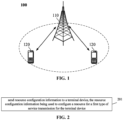
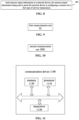
- the communication system 100 applied in embodiments of the present disclosure may be as shown in FIG. 1 .
- the communication system 100 includes a network device 110, and the network device 110 may be a device that communicates with a terminal device 120 (or called a communication terminal or a terminal).
- the network device 110 can provide communication coverage for a specific geographic area, and can communicate with terminal devices in the coverage area.
- the network device 110 may be a network device (Base Transceiver Station, BTS) in a GSM system or a CDMA system, a network device (NodeB, NB) in a WCDMA system, an evolved network device ( Evolutional Node B, eNB or eNodeB) in an LTE system, or a wireless controller in a Cloud Radio Access Network (CRAN), or the network device may be a mobile switching center, a relay station, an access point, an on-vehicle device, a wearable device, a hub, a switch, a network bridge, a router, a network side device in a 5G network, or a network device in a future evolved Public Land Mobile Network (PLMN), etc.
- BTS Base Transceiver Station
- NodeB, NB in a WCDMA system
- Evolutional Node B, eNB or eNodeB Evolutional Node B
- eNB Evolutional Node B
- eNodeB Evolutional Node B
- the communication system 100 also includes at least one terminal device 120 within the coverage area of the network device 110.
- the "terminal device” as used herein may be connected in the following manners (including but not limited to): the terminal device may be connected via wired lines, such as via Public Switched Telephone Networks (PSTN), Digital Subscriber Line (DSL), digital cables, and direct cable connections; and/or the terminal may be connected via another data connection/network; and/or the terminal device may be connected via a wireless interface, such as cellular networks, wireless local area network (WLAN), digital TV networks such as DVB-H networks, satellite networks, AM-FM broadcast transmitter; and/or the terminal device is connected via a device of another terminal device which is configured to receive/send communication signals; and/or the terminal device is connected via an Internet of Things (IoT) device.
- PSTN Public Switched Telephone Networks
- DSL Digital Subscriber Line
- the terminal may be connected via another data connection/network
- a wireless interface such as cellular networks, wireless local area network (W
- a terminal device set as communicating through a wireless interface may be referred to as a "wireless communication terminal", a “wireless terminal” or a “mobile terminal”.
- the mobile terminal include but are not limited to: satellite or cellular phone; Personal Communications System (PCS) terminal that can integrate a cellular radio phone with data processing, fax, and data communication capabilities; a PDA which can include a radio phone, a pager, an Internet/intranet access, a Web browser, a memo pad, a calendar, and/or Global Positioning System (GPS) receiver; and conventional laptop and/or palmtop receivers or other electronic device including a radio telephone transceiver.
- PCS Personal Communications System
- GPS Global Positioning System
- the terminal device can refer to access terminal, User Equipment (UE), user unit, user station, mobile station, mobile device, remote station, remote terminal, mobile equipment, user terminal, terminal, wireless communication equipment, user agent or user device.
- the access terminal can be a cellular phone, a cordless phone, a Session Initiation Protocol (SIP) phone, a Wireless Local Loop (WLL) station, a Personal Digital Assistant (PDA), a handheld device with wireless communication functions, a computing device or other processing device connected to a wireless modem, an in-vehicle device, a wearable device, a terminal device in 5G networks, or a terminal device in the future evolved PLMN, etc.
- SIP Session Initiation Protocol
- WLL Wireless Local Loop
- PDA Personal Digital Assistant
- D2D communication may be performed between the terminal devices 120.
- the 5G system or 5G network may also be referred to as a New Radio (NR) system or NR network.
- NR New Radio
- FIG. 1 exemplarily shows one network device and two terminal devices.
- the communication system 100 may include multiple network devices and the coverage of each network device may include other numbers of terminal devices, and embodiments of the present disclosure do not impose specific limitations on this.
- the communication system 100 may also include other network entities such as a network controller and a mobility management entity, and embodiments of the present disclosure do not impose specific limitations on this.
- the devices with communication functions in the network/system in embodiments of the present disclosure may be referred to as communication devices.
- the communication devices may include the network device 110 and the terminal devices 120 with communication functions, and the network device 110 and the terminal devices 120 may be the devices described above, which will not be repeated here.
- the communication devices may also include other devices in the communication system 100, such as other network entities such as a network controller or a mobility management entity, and embodiments of the present disclosure do not impose specific limitations on this.
- This embodiment provides a resource configuration method which is applied to a network device. As shown in FIG. 2 , the method includes the following step:
- resource configuration information is sent to a terminal device.
- the resource configuration information is used to configure a resource for a first type of service transmission for the terminal device.
- the resource configuration information includes: resource duration and/or service duration.
- the first type of service may be a ultra-reliable low-latency service.
- the network side performs resource configuration for the terminal device.
- Sending resource configuration information to the terminal device includes:
- Radio Resource Control RRC
- Media Access Control MAC
- Control Element CE
- DCI Downlink Control Information
- the resource configuration information further includes at least one of the following: a service period, a timing offset, information of a group to which a first type of service belongs, identification of the first type of service, information size, initial arrival time of the first type of service, indication information of whether to use a repeated transmission, the number of repetitions, whether to configure at least two service transmission resources in a same service period, whether to configure at least two service transmission resources within same resource duration, configuration of at least two service transmission resources, a positional relationship between a repeated transmission and an original data packet transmission, the number of HARQ processes, or RV number.
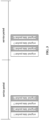
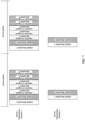
- the indication information about whether to use the repeated transmission mode may be indicated by an identifier, for example, "1" may indicate repetition, and "0" may indicate no repetition. Or, the indication information about whether to use the repeated transmission mode can be indicated by whether a specific identifier appears. If the repeated transmission mode is not used, the resource transmission can be as shown in FIG. 3 . When the data packets are not repeated, the original data packets 1, 2, 3, and 4 can be sent for each service period.
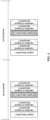
- the positional relationship between the repeated transmission and the original data packet transmission includes at least one of the following: each original data packet is transmitted first and then a repeated data packet is transmitted; or after all original data packets are transmitted, a repeated data packet is transmitted.
- Each original data packet being transmitted first and then a repeated data packet being transmitted can be understood as: a repeated data packet is transmitted immediately after each transmission of an original data packet, and after the transmission of all repeated data packets is completed, another original data packet is transmitted.
- the original data packet can be a Media Access Control (MAC) Protocol Data Unit (PDU).
- the original data packet may be a data packet corresponding to the same service traffic pattern.
- the original data packet may be a data packet corresponding to different service traffic patterns.
- there can be two original data packets i.e., original data packet 1 and original data packet 2
- each original data packet is transmitted first and then the repeated data packets are transmitted. Assuming that the number of repetitions is 2, after the data packet 1 is transmitted, two repeated data packets of the original data packet 1 are transmitted, and the original data packet 2 is transmitted in the same way.
- Transmitting a repeated data packet after all original data packets are transmitted means that after all the original data packets are transmitted, the repeated data packets corresponding to each original data packet can be sequentially transmitted within the same service cycle. For example, referring to FIG. 5 , in a service cycle, the original data packets are transmitted first, i.e., the original data packets 1 and 2 are sequentially transmitted, and then the two repeated data packets of the data packet 1 and the two repeated data packets of the original data packet 2 are sequentially transmitted.
- At least one of the following information included in different service transmissions varies: the timing offset, whether to use the repeated transmission, the number of repetitions, or the positional relationship between the repeated transmission and the original data packet transmission.
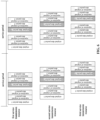
- the resource configuration information can configure at least two service transmission resources in the same service cycle, for example, service transmission resource 1 and service transmission resource 2, these two service transmission resources can adopt different timing offsets, and do not adopt repeated transmission; or, the two service transmission resources can adopt different timing offsets and adopt the same number of repetitions; or, the two service transmission resources can adopt different numbers of repetitions and adopt the same timing offset; or, the service transmission resource 1 may adopt repeated transmission, and the service transmission resource 2 may not adopt repeated transmission.
- Other implementations are also possible, and embodiments of the present disclosure do not list all implementations.
- the transmission positions and transmission modes of the transmission resources may be determined by taking the positional relationship between the repeated transmission and the original data packet transmission into account.
- the timing offset of the service transmission resources can be configured to be different.
- the first service transmission resource is configured with the first timing offset
- the second timing offset for the second service transmission resource is later than the first timing offset
- the third timing offset for the third service transmission resource is later than the second timing offset.
- the timing offsets for the service transmission resources are configured to be different, so as to ensure that there are available time-frequency resources at each point of the resource duration.
- the timing offsets of the service transmission resources are configured to be different, so as to ensure that there are available time-frequency resources at each time point of the service duration.
- a corresponding transmission resource configuration can be set for each service transmission resource, and the configured content can include at least one of the following: resource duration, service duration, information of a group to which the first type of service belongs, identification of the first type of service, information size, initial arrival time of the first type of service, indication information of whether to use repeated transmission, the number of repetitions, the positional relationship between the repeated transmission and the original data packet transmission, the number of HARQ processes, or RV number.
- the repeated transmission is configured and the number of repeated transmissions corresponding to each service resource is 2.
- the original data packet 1 can be transmitted and then two repeated data packets of the original data packet 1 can be directly transmitted, and then the original data packet 2 and two repeated data packets of the original data packet 2 are transmitted, and so on.
- the original data packet 2 and two repeated data packets of the original data packet 2 are transmitted, and so on.
- two service transmission resources are configured, namely service transmission resource 1 and service transmission resource 2.
- the service transmission resource 1 is configured with the repeated transmission, and the service transmission resource 2 does not perform the repeated transmission.
- the number of repeated transmissions in service transmission resource 1 is three, and the positional relationship between the repeated transmission and original data packet transmission is that the repeated data packets are transmitted after all original data packets are transmitted.
- At least two service transmission resources are configured in the same service cycle (or period), it is determined to transmit data packets for the same service on each of the service transmission resources, or to transmit data packets for at least two services.
- Services transmitted by different service transmission resources are the same or different. That is to say, regardless of whether one service transmission resource is configured or multiple service transmission resources are configured, data packets from the same traffic can be transmitted on each service transmission resource, or data packets from multiple traffics can be transmitted, and traffics transmitted on different service transmission resources can be the same or different.
- the configured resource for the first type of service transmission can be dedicated to one user or shared by multiple users.
- FIGs. 3 to 7 are only examples. In actual processing, different service transmission resources or various information in the same service transmission resource can be set differently by the resource configuration information, and embodiments of the present disclosure do not impose specific limitations on this.
- the resource configuration information includes information about the group to which the first type of service belongs
- the configured resources can be determined based on the priority, or the latency level, or the reliability level corresponding to the group to which the first type of service belongs.
- resources can be configured preferentially; for the first type of service which belongs to other service group with a low priority, resource configuration is performed later than the service with a high priority; or, resources with longer resource duration can be allocated to the first type of service with a higher priority; or, on the same service transmission resource, services with a high priority can be preferentially transmitted, and then services with a low priority can be transmitted; or, services with a high priority can be preferentially transmitted on the first configured service transmission resource, and then services with low priorities can be transmitted on other configured service transmission resource in the priority order.
- there can also be other configuration methods and details are not provided here.
- resource configuration can be preferentially performed for services with low latency tolerance; or services with low delay tolerance can be preferentially transmitted on the configured service transmission resources and then services with high latency tolerance can be transmitted; or, the services with low latency tolerance can be preferentially transmitted on the first configured service transmission resource, and then the services with high latency tolerance may be transmitted on other configured service resources.
- the latency tolerance being low can be understood as high-reliability and low-latency services.
- resource configuration based on reliability level is similar to the aforementioned resource configuration based on priority, and will not be repeated.
- the number of HARQ processes included in the resource configuration information can be the number of HARQs that can be configured in a service cycle or duration. Different RV numbers can be used for repeated packets of different data packets, and the correspondence can be preset correspondence.
- the method according to embodiments may further includes: receiving second information, wherein the second information is used to assist the network device in determining of configuration of the resource for the first type of service transmission.
- the second information includes: information of a group to which the first type of service belongs, and/or, identification of the first type of service.
- the second information further includes at least one of the following: a service priority, a latency level, or a reliability level.
- how to configure the transmission resource for the first type of service for the terminal device can be determined based on identification of the first type of service.
- Different services can correspond to different duration. For example, some services correspond to three TTIs, and some services corresponds to one TTI.
- the information of a group which the first type of service belongs to can be used for performing resource configuration.
- the configured resources can be determined based on the priority, or the latency level, or the reliability level corresponding to the group to which the first type of service belongs. For example, for the first type of service which belongs to a service group with a high priority, resources can be configured preferentially; for the first type of service which belongs to other service group with a low priority, resource configuration is performed later than the service with a high priority; or, resources with longer resource duration can be allocated to the first type of service with a higher priority; or, on the same service transmission resource, services with a high priority can be preferentially transmitted, and then services with a low priority can be transmitted; or, services with a high priority can be preferentially transmitted on the first configured service transmission resource, and then services with low priorities can be transmitted on other configured service transmission resource in the priority order.
- resource configuration can be preferentially performed for services with low latency tolerance; or services with low delay tolerance can be preferentially transmitted on the configured service transmission resources and then services with high latency tolerance can be transmitted; or, the services with low latency tolerance can be preferentially transmitted on the first configured service transmission resource, and then the services with high latency tolerance may be transmitted on other configured service resources.
- the latency tolerance being low can be understood as high-reliability and low-latency services.
- resource configuration based on reliability level is similar to the aforementioned resource configuration based on priority, and will not be repeated.
- the number of repetitions of the services with a high priority may be higher than the number of repetitions of services with a low priority; or, resources are preferentially configured for services with a high priority; or, resources are preferentially configured for services with a high latency level; or, services whose arrival time is closer to the service transmission delay boundary are preferentially transmitted, and so on.
- the resource duration is a continuous time span configured for the first type of service transmission; the service duration is a time span of continuous arrival of the first type of service, or the service duration is a time span of delayed arrival of the first type of service.
- the resource duration is greater than or equal to the service duration; or the resource duration is smaller than the service duration.
- the granularity of the time span is at least one of the following: a symbol, millisecond, TTI, a slot, a subframe, or a radio frame.
- the resource duration can be defined as four slots and the service duration can be defined as three slots.
- the service period is not smaller than the resource duration.
- the time position of the service transmission resource is included in the resource duration, one service transmission resource time matches the resource duration, or all service transmission resource times match the resource duration.
- the resource duration is generally set to be greater than or equal to the service duration.
- the terminal device can determine that when the duration of the service to be transmitted exceeds the resource duration, the remaining services will not be transmitted if the duration of the service transmission reaches the resource duration.
- the resource configuration information further includes: resource configuration information used for uplink first type of service transmission, and/or resource configuration information used for downlink first type of service transmission; the resource configuration information used for the uplink first type of service transmission is the same as or different from the resource configuration information used for the downlink first type of service transmission.
- the terminal device when the sent resource configuration information is the resource configuration information used for uplink first type of service transmission, the terminal device can perform the uplink transmission of the first type of service based on the resource configuration information; and/or when the sent resource configuration information is the resource configuration information used for downlink first type of service transmission, the terminal device can perform the downlink transmission of the first type of service based on the resource configuration information, determine the received time-frequency resource positions, and receive the downlink information of the first type of service from the network side.
- the first type of service scenario includes but is not limited to at least one of the following: a periodic deterministic service, an aperiodic deterministic service, a mixed service, a non-deterministic service, a VoIP service, a control scenario of automated trains, motion control, a control-to-control application scenario, a mobile control panel, a mobile robot, audio streaming for live performance, and robotic arm operation.
- the information related to resource configuration is used to transmit resource duration and/or service duration, so as to configure the resource for the first type of service transmission.
- the related information is dynamically sent to the opposite end through the information to determine the transmission resource for the first type of service, and also ensure the matching between the configured resources and the service.
- This embodiment provides a resource configuration method which is applied to a terminal device. As shown in FIG. 8 , the method includes the following step:
- resource report information is sent to a network device.
- the resource report information is used to assist the network device in configuring a resource for a first type of service transmission.
- the resource report information includes: resource duration or service duration.
- the first type of service may be a ultra-reliable low-latency service.
- the network side performs resource configuration for the terminal device.
- the resource report information is sent by at least one of the following information: Radio Resource Control (RRC), Media Access Control (MAC) Control Element (CE), or Downlink Control Information (DCI).
- RRC Radio Resource Control
- MAC Media Access Control
- CE Control Element
- DCI Downlink Control Information
- the resource report information further includes at least one of the following: a service period, a timing offset, information of a group to which a first type of service belongs, identification of the first type of service, information size, initial arrival time of the first type of service, indication information of whether to use a repeated transmission, the number of repetitions, whether to configure at least two service transmission resources in a same service period, whether to configure at least two service transmission resources within same resource duration, configuration of at least two service transmission resources, a positional relationship between a repeated transmission and an original data packet transmission, the number of HARQ processes, or RV number.
- the indication information about whether to use the repeated transmission mode may be indicated by an identifier, for example, "1" may indicate repetition, and "0" may indicate no repetition. Or, the indication information about whether to use the repeated transmission mode can be indicated by whether a specific identifier appears. If the repeated transmission mode is not used, the resource transmission can be as shown in FIG. 3 . When the data packets are not repeated, the original data packets 1, 2, 3, and 4 can be sent for each service period.
- the positional relationship between the repeated transmission and the original data packet transmission includes at least one of the following: each original data packet is transmitted first and then a repeated data packet is transmitted; or after all original data packets are transmitted, a repeated data packet is transmitted.
- Each original data packet being transmitted first and then a repeated data packet being transmitted can be understood as: a repeated data packet is transmitted immediately after each transmission of an original data packet, and after the transmission of all repeated data packets is completed, another original data packet is transmitted.
- the original data packet can be a Media Access Control (MAC) Protocol Data Unit (PDU).
- the original data packet may be a data packet corresponding to the same service traffic pattern.
- the original data packet may be a data packet corresponding to different service traffic patterns.
- there can be two original data packets i.e., original data packet 1 and original data packet 2
- each original data packet is transmitted first and then the repeated data packets are transmitted. Assuming that the number of repetitions is 2, after the data packet 1 is transmitted, two repeated data packets of the original data packet 1 are transmitted, and the original data packet 2 is transmitted in the same way.
- Transmitting a repeated data packet after all original data packets are transmitted means that after all the original data packets are transmitted, the repeated data packets corresponding to each original data packet can be sequentially transmitted within the same service cycle. For example, referring to FIG. 5 , in a service cycle, the original data packets are transmitted first, i.e., the original data packets 1 and 2 are sequentially transmitted, and then the two repeated data packets of the data packet 1 and the two repeated data packets of the original data packet 2 are sequentially transmitted.
- At least one of the following information included in different service transmissions varies: the timing offset, whether to use the repeated transmission, the number of repetitions, or the positional relationship between the repeated transmission and the original data packet transmission.
- the resource configuration information can configure at least two service transmission resources in the same service cycle, for example, service transmission resource 1 and service transmission resource 2, these two service transmission resources can adopt different timing offsets, and do not adopt repeated transmission; or, the two service transmission resources can adopt different timing offsets and adopt the same number of repetitions; or, the two service transmission resources can adopt different numbers of repetitions and adopt the same timing offset; or, the service transmission resource 1 may adopt repeated transmission, and the service transmission resource 2 may not adopt repeated transmission.
- Other implementations are also possible, and embodiments of the present disclosure do not list all implementations.
- the transmission positions and transmission modes of the transmission resources may be determined by taking the positional relationship between the repeated transmission and the original data packet transmission into account.
- the timing offset of the service transmission resources can be configured to be different.
- the first service transmission resource is configured with the first timing offset
- the second timing offset for the second service transmission resource is later than the first timing offset
- the third timing offset for the third service transmission resource is later than the second timing offset.
- the timing offsets for the service transmission resources are configured to be different, so as to ensure that there are available time-frequency resources at each point of the resource duration.
- the timing offsets of the service transmission resources are configured to be different, so as to ensure that there are available time-frequency resources at each time point of the service duration.
- a corresponding transmission resource configuration can be set for each service transmission resource, and the configured content can include at least one of the following: resource duration, service duration, information of a group to which the first type of service belongs, identification of the first type of service, information size, initial arrival time of the first type of service, indication information of whether to use repeated transmission, the number of repetitions, the positional relationship between the repeated transmission and the original data packet transmission, the number of HARQ processes, or RV (redundancy version) number.
- the repeated transmission is configured and the number of repeated transmissions corresponding to each service resource is 2.
- the original data packet 1 can be transmitted and then two repeated data packets of the original data packet 1 can be directly transmitted, and then the original data packet 2 and two repeated data packets of the original data packet 2 are transmitted, and so on.
- the original data packet 2 and two repeated data packets of the original data packet 2 are transmitted, and so on.
- two service transmission resources are configured, namely service transmission resource 1 and service transmission resource 2.
- the service transmission resource 1 is configured with the repeated transmission, and the service transmission resource 2 does not perform the repeated transmission.
- the number of repeated transmissions in service transmission resource 1 is three, and the positional relationship between the repeated transmission and original data packet transmission is that the repeated data packets are transmitted after all original data packets are transmitted.
- At least two service transmission resources are configured in the same service cycle (or period), it is determined to transmit data packets for the same service on each of the service transmission resources, or to transmit data packets for at least two services.
- Services transmitted by different service transmission resources are the same or different. That is to say, regardless of whether one service transmission resource is configured or multiple service transmission resources are configured, data packets from the same traffic can be transmitted on each service transmission resource, or data packets from multiple traffics can be transmitted, and traffics transmitted on different service transmission resources can be the same or different.
- the configured resource for the first type of service transmission can be dedicated to one user or shared by multiple users.
- FIGs. 3 to 7 are only examples. In actual processing, different service transmission resources or various information in the same service transmission resource can be set differently by the resource configuration information, and embodiments of the present disclosure do not impose specific limitations on this.
- the resource configuration information includes information about the group to which the first type of service belongs
- the configured resources can be determined based on the priority, or the latency level, or the reliability level corresponding to the group to which the first type of service belongs.
- resources can be configured preferentially; for the first type of service which belongs to other service group with a low priority, resource configuration is performed later than the service with a high priority; or, resources with longer resource duration can be allocated to the first type of service with a higher priority; or, on the same service transmission resource, services with a high priority can be preferentially transmitted, and then services with a low priority can be transmitted; or, services with a high priority can be preferentially transmitted on the first configured service transmission resource, and then services with low priorities can be transmitted on other configured service transmission resource in the priority order.
- there can also be other configuration methods and details are not provided here.
- resource configuration can be preferentially performed for services with low latency tolerance; or services with low delay tolerance can be preferentially transmitted on the configured service transmission resources and then services with high latency tolerance can be transmitted; or, the services with low latency tolerance can be preferentially transmitted on the first configured service transmission resource, and then the services with high latency tolerance may be transmitted on other configured service resources; resource configuration can be preferentially performed for services with low latency tolerance.
- the latency tolerance being low can be understood as high-reliability and low-latency services.
- resource configuration based on reliability level is similar to the aforementioned resource configuration based on priority, and will not be repeated.
- the number of HARQ processes included in the resource configuration information can be the number of HARQs that can be configured in a service cycle or duration.
- Different RV numbers can be used for repeated packets of different data packets, and their correspondence can be preset correspondence.
- the method according to embodiments may further includes: sending second information to the network device, wherein the second information is used to assist the network device in determining of configuration of the resource for the first type of service transmission.
- the second information includes: information of a group to which the first type of service belongs, and/or, identification of the first type of service.
- the second information further includes at least one of the following: a service priority, a latency level, or a reliability level.
- the network device side can determine how to configure the transmission resource for the first type of service for the terminal device by the second information; or, it is possible to determine how to configure the transmission resource for the first type of service for the terminal device by receiving the second information sent from a core network device.
- how to configure the transmission resource for the first type of service can be determined based on identification of the first type of service.
- Different services can correspond to different duration. For example, some services correspond to three TTIs, and some services correspond to one TTI.
- the information of a group which the first type of service belongs to can be used for performing resource configuration.
- the configured resources can be determined based on the priority, or the latency level, or the reliability level corresponding to the group to which the first type of service belongs. For example, for the first type of service which belongs to a service group with a high priority, resources can be configured preferentially; for the first type of service which belongs to other service group with a low priority, resource configuration is performed later than the service with a high priority; or, resources with longer resource duration can be allocated to the first type of service with a higher priority; or, on the same service transmission resource, services with a high priority can be preferentially transmitted, and then services with a low priority can be transmitted; or, services with a high priority can be preferentially transmitted on the first configured service transmission resource, and then services with low priorities can be transmitted on other configured service transmission resource in the priority order.
- resource configuration can be preferentially performed for services with low latency tolerance; or services with low delay tolerance can be preferentially transmitted on the configured service transmission resources and then services with high latency tolerance can be transmitted; or, the services with low latency tolerance can be preferentially transmitted on the first configured service transmission resource, and then the services with high latency tolerance may be transmitted on other configured service resources.
- the latency tolerance being low can be understood as high-reliability and low-latency services.
- resource configuration based on reliability level is similar to the aforementioned resource configuration based on priority, and will not be repeated.
- the number of repetitions of the services with a high priority may be higher than the number of repetitions of services with a low priority; or, resources are preferentially configured for services with a high priority; or, resources are preferentially configured for services with a high latency level; or, services whose arrival time is closer to the service transmission delay boundary are preferentially transmitted, and so on.
- the resource duration is a continuous time span configured for the first type of service transmission; the service duration is a time span of continuous arrival of the first type of service, or the service duration is a time span of delayed arrival of the first type of service.
- the resource duration is greater than or equal to the service duration; or the resource duration is smaller than the service duration.
- the granularity of the time span is at least one of the following: a symbol, millisecond, TTI, a slot, a subframe, or a radio frame.
- the resource duration can be defined as four slots and the service duration can be defined as three slots.
- the service period is not smaller than the resource duration.
- the time position of the service transmission resource is included in the resource duration, one service transmission resource time matches the resource duration, or all service transmission resource times match the resource duration.
- the resource duration is generally set to be greater than or equal to the service duration.
- the service exceeding the resource duration is not transmitted.
- the terminal device can determine that when the duration of the service to be transmitted exceeds the resource duration, the remaining services will not be transmitted if the duration of the service transmission reaches the resource duration.
- the resource configuration information further includes: resource configuration information used for uplink first type of service transmission, and/or resource configuration information used for downlink first type of service transmission; the resource configuration information used for the uplink first type of service transmission is the same as or different from the resource configuration information used for the downlink first type of service transmission.
- the terminal device when the sent resource configuration information is the resource configuration information used for uplink first type of service transmission, the terminal device can perform the uplink transmission of the first type of service based on the resource configuration information; and/or when the sent resource configuration information is the resource configuration information used for downlink first type of service transmission, the terminal device can perform the downlink transmission of the first type of service based on the resource configuration information, determine the received time-frequency resource positions, and receive the downlink information of the first type of service from the network side.
- the sending the resource report information to the network device includes: when a first condition is met, sending the resource report information to the network device.
- the first condition includes one of at least one of the following conditions.
- a bearer for the terminal device corresponding to the first type of service is established.
- the terminal device receives a trigger indication from the network device. For example, the terminal receives trigger indication information sent from the network side, and if it is determined that the trigger indication information is received, the terminal device starts to send the resource report information to the network side.
- the terminal device receives an indication that the network device has a capability of receiving the resource report information.
- the network side may send indication information to the terminal device after the terminal device accesses the network, and the indication information may be used to inform the terminal device whether the network side has the capability to receive resource report information by a corresponding indication field. For example, when the indication information is 1, it indicates that the network side has the capability, and when the indication information is 0, or when the indication information does not appear, it means that the network side does not have the capability.
- the reverse is true in actual processing, and the setting is performed according to actual situations, and the details are not repeated.
- a bearer for the terminal device is changed. That is, when the bearer for the terminal device is changed, the terminal device starts to send the resource report information.
- a service feature of the first type of service for the terminal device is changed.
- the service feature can be determined by parameters such as QoS, and once such parameters are changed, the terminal device can be triggered to send the resource report information to the network device.
- the terminal device meets a reporting period.
- the reporting period can be set according to actual situations, for example, resource report information can be reported once every 24 hours. According to some other embodiments, the reporting period can be set to a period of seconds, milliseconds, or minutes. Specific setting can be determined based on actual situations, and embodiments of the present disclosure do not list all the situations.
- the first type of service scenario includes but is not limited to at least one of the following: a periodic deterministic service, an aperiodic deterministic service, a mixed service, a non-deterministic service, a VoIP service, a control scenario of automated trains, motion control, a control-to-control application scenario, a mobile control panel, a mobile robot, audio streaming for live performance, and robotic arm operation.
- the information related to resource configuration is used to transmit resource duration and/or service duration, so as to configure the resource for the first type of service transmission.
- the related information is dynamically sent to the opposite end through the information to determine the transmission resource for the first type of service, and also ensure the matching between the configured resources and the service.
- the network device includes a first communication unit 91.
- the first communication unit 91 is configured to send resource configuration information to a terminal device.
- the resource configuration information is used to configure a resource for a first type of service transmission for the terminal device.
- the resource configuration information includes: resource duration and/or service duration.
- the first type of service may be a ultra-reliable low-latency service.
- the network side performs resource configuration for the terminal device.
- Sending resource configuration information to the terminal device includes:
- Radio Resource Control RRC
- Media Access Control MAC
- Control Element CE
- DCI Downlink Control Information
- the resource configuration information further includes at least one of the following: a service period, a timing offset, information of a group to which a first type of service belongs, identification of the first type of service, information size, initial arrival time of the first type of service, indication information of whether to use a repeated transmission, the number of repetitions, whether to configure at least two service transmission resources in a same service period, whether to configure at least two service transmission resources within same resource duration, configuration of at least two service transmission resources, a positional relationship between a repeated transmission and an original data packet transmission, the number of HARQ processes, or RV number.
- the indication information about whether to use the repeated transmission mode may be indicated by an identifier, for example, "1" may indicate repetition, and "0" may indicate no repetition. Or, the indication information about whether to use the repeated transmission mode can be indicated by whether a specific identifier appears. If the repeated transmission mode is not used, the resource transmission can be as shown in FIG. 3 . When the data packets are not repeated, the original data packets 1, 2, 3, and 4 can be sent for each service period.
- the positional relationship between the repeated transmission and the original data packet transmission includes at least one of the following: each original data packet is transmitted first and then a repeated data packet is transmitted; or after all original data packets are transmitted, a repeated data packet is transmitted.
- Each original data packet being transmitted first and then a repeated data packet being transmitted can be understood as: a repeated data packet is transmitted immediately after each transmission of an original data packet, and after the transmission of all repeated data packets is completed, another original data packet is transmitted.
- the original data packet can be a Media Access Control (MAC) Protocol Data Unit (PDU).
- the original data packet may be a data packet corresponding to the same service traffic pattern.
- the original data packet may be a data packet corresponding to different service traffic patterns.
- there can be two original data packets i.e., original data packet 1 and original data packet 2
- each original data packet is transmitted first and then the repeated data packets are transmitted. Assuming that the number of repetitions is 2, after the data packet 1 is transmitted, two repeated data packets of the original data packet 1 are transmitted, and the original data packet 2 is transmitted in the same way.
- Transmitting a repeated data packet after all original data packets are transmitted means that after all the original data packets are transmitted, the repeated data packets corresponding to each original data packet can be sequentially transmitted within the same service cycle. For example, referring to FIG. 5 , in a service cycle, the original data packets are transmitted first, i.e., the original data packets 1 and 2 are sequentially transmitted, and then the two repeated data packets of the data packet 1 and the two repeated data packets of the original data packet 2 are sequentially transmitted.
- At least one of the following information included in different service transmissions varies: the timing offset, whether to use the repeated transmission, the number of repetitions, or the positional relationship between the repeated transmission and the original data packet transmission.
- the resource configuration information can configure at least two service transmission resources in the same service cycle, for example, service transmission resource 1 and service transmission resource 2, these two service transmission resources can adopt different timing offsets, and do not adopt repeated transmission; or, the two service transmission resources can adopt different timing offsets and adopt the same number of repetitions; or, the two service transmission resources can adopt different numbers of repetitions and adopt the same timing offset; or, the service transmission resource 1 may adopt repeated transmission, and the service transmission resource 2 may not adopt repeated transmission.
- Other implementations are also possible, and embodiments of the present disclosure do not list all implementations.
- the transmission positions and transmission modes of the transmission resources may be determined by taking the positional relationship between the repeated transmission and the original data packet transmission into account.
- the timing offset of the service transmission resources can be configured to be different.
- the first service transmission resource is configured with the first timing offset
- the second timing offset for the second service transmission resource is later than the first timing offset
- the third timing offset for the third service transmission resource is later than the second timing offset.
- the timing offsets for the service transmission resources are configured to be different, so as to ensure that there are available time-frequency resources at each point of the resource duration.
- the timing offsets of the service transmission resources are configured to be different, so as to ensure that there are available time-frequency resources at each time point of the service duration.
- a corresponding transmission resource configuration can be set for each service transmission resource, and the configured content can include at least one of the following: resource duration, service duration, information of a group to which the first type of service belongs, identification of the first type of service, information size, initial arrival time of the first type of service, indication information of whether to use repeated transmission, the number of repetitions, the positional relationship between the repeated transmission and the original data packet transmission, the number of HARQ processes, or RV number.
- the repeated transmission is configured and the number of repeated transmissions corresponding to each service resource is 2.
- the original data packet 1 can be transmitted and then two repeated data packets of the original data packet 1 can be directly transmitted, and then the original data packet 2 and two repeated data packets of the original data packet 2 are transmitted, and so on.
- the original data packet 2 and two repeated data packets of the original data packet 2 are transmitted, and so on.
- two service transmission resources are configured, namely service transmission resource 1 and service transmission resource 2.
- the service transmission resource 1 is configured with the repeated transmission, and the service transmission resource 2 does not perform the repeated transmission.
- the number of repeated transmissions in service transmission resource 1 is three, and the positional relationship between the repeated transmission and original data packet transmission is that the repeated data packets are transmitted after all original data packets are transmitted.
- the first communication unit 91 is configured to, when at least two service transmission resources are configured in the same service cycle (or period), determine to transmit data packets for the same service on each of the service transmission resources, or to transmit data packets for at least two services. Services transmitted by different service transmission resources are the same or different. That is to say, regardless of whether one service transmission resource is configured or multiple service transmission resources are configured, data packets from the same traffic can be transmitted on each service transmission resource, or data packets from multiple traffics can be transmitted, and traffics transmitted on different service transmission resources can be the same or different.
- the configured resource for the first type of service transmission can be dedicated to one user or shared by multiple users.
- FIGs. 3 to 7 are only examples. In actual processing, different service transmission resources or various information in the same service transmission resource can be set differently by the resource configuration information, and embodiments of the present disclosure do not impose specific limitations on this.
- the resource configuration information includes information about the group to which the first type of service belongs
- the configured resources can be determined based on the priority, or the latency level, or the reliability level corresponding to the group to which the first type of service belongs.
- resources can be configured preferentially; for the first type of service which belongs to other service group with a low priority, resource configuration is performed later than the service with a high priority; or, resources with longer resource duration can be allocated to the first type of service with a higher priority; or, on the same service transmission resource, services with a high priority can be preferentially transmitted, and then services with a low priority can be transmitted; or, services with a high priority can be preferentially transmitted on the first configured service transmission resource, and then services with low priorities can be transmitted on other configured service transmission resource in the priority order.
- there can also be other configuration methods and details are not provided here.
- resource configuration can be preferentially performed for services with low latency tolerance; or services with low delay tolerance can be preferentially transmitted on the configured service transmission resources and then services with high latency tolerance can be transmitted; or, the services with low latency tolerance can be preferentially transmitted on the first configured service transmission resource, and then the services with high latency tolerance may be transmitted on other configured service resources.
- the latency tolerance being low can be understood as high-reliability and low-latency services.
- resource configuration based on reliability level is similar to the aforementioned resource configuration based on priority, and will not be repeated.
- the number of HARQ processes included in the resource configuration information can be the number of HARQs that can be configured in a service cycle or duration. Different RV numbers can be used for repeated packets of different data packets, and the correspondence can be preset correspondence.
- the first communication unit 91 is configured to: receive second information, wherein the second information is used to assist the network device in determining of configuration of the resource for the first type of service transmission.
- the second information includes: information of a group to which the first type of service belongs, and/or, identification of the first type of service.
- the second information further includes at least one of the following: a service priority, a latency level, or a reliability level.
- how to configure the transmission resource for the first type of service for the terminal device can be determined based on identification of the first type of service.
- Different services can correspond to different duration. For example, some services correspond to three TTIs, and some services correspond to one TTI.
- the information of a group which the first type of service belongs to can be used for performing resource configuration.
- the configured resources can be determined based on the priority, or the latency level, or the reliability level corresponding to the group to which the first type of service belongs. For example, for the first type of service which belongs to a service group with a high priority, resources can be configured preferentially; for the first type of service which belongs to other service group with a low priority, resource configuration is performed later than the service with a high priority; or, resources with longer resource duration can be allocated to the first type of service with a higher priority; or, on the same service transmission resource, services with a high priority can be preferentially transmitted, and then services with a low priority can be transmitted; or, services with a high priority can be preferentially transmitted on the first configured service transmission resource, and then services with low priorities can be transmitted on other configured service transmission resource in the priority order.
- resource configuration can be preferentially performed for services with low latency tolerance; or services with low delay tolerance can be preferentially transmitted on the configured service transmission resources and then services with high latency tolerance can be transmitted; or, the services with low latency tolerance can be preferentially transmitted on the first configured service transmission resource, and then the services with high latency tolerance may be transmitted on other configured service resources.
- the latency tolerance being low can be understood as high-reliability and low-latency services.
- resource configuration based on reliability level is similar to the aforementioned resource configuration based on priority, and will not be repeated.
- the number of repetitions of the services with a high priority may be higher than the number of repetitions of services with a low priority; or, resources are preferentially configured for services with a high priority; or, resources are preferentially configured for services with a high latency level; or, services whose arrival time is closer to the service transmission delay boundary are preferentially transmitted, and so on.
- the resource duration is a continuous time span configured for the first type of service transmission; the service duration is a time span of continuous arrival of the first type of service, or the service duration is a time span of delayed arrival of the first type of service.
- the resource duration is greater than or equal to the service duration; or the resource duration is smaller than the service duration.
- the granularity of the time span is at least one of the following: a symbol, millisecond, TTI, a slot, a subframe, or a radio frame.
- the resource duration can be defined as four slots and the service duration can be defined as three slots.
- the service period is not smaller than the resource duration.
- the time position of the service transmission resource is included in the resource duration, one service transmission resource time matches the resource duration, or all service transmission resource times match the resource duration.
- the resource duration is generally set to be greater than or equal to the service duration.
- the terminal device can determine that when the duration of the service to be transmitted exceeds the resource duration, the remaining services will not be transmitted if the duration of the service transmission reaches the resource duration.
- the resource configuration information further includes: resource configuration information used for uplink first type of service transmission, and/or resource configuration information used for downlink first type of service transmission; the resource configuration information used for the uplink first type of service transmission is the same as or different from the resource configuration information used for the downlink first type of service transmission.
- the terminal device when the sent resource configuration information is the resource configuration information used for uplink first type of service transmission, the terminal device can perform the uplink transmission of the first type of service based on the resource configuration information; and/or when the sent resource configuration information is the resource configuration information used for downlink first type of service transmission, the terminal device can perform the downlink transmission of the first type of service based on the resource configuration information, determine the received time-frequency resource positions, and receive the downlink information of the first type of service from the network side.
- the first type of service scenario includes but is not limited to at least one of the following: a periodic deterministic service, an aperiodic deterministic service, a mixed service, a non-deterministic service, a VoIP service, a control scenario of automated trains, motion control, a control-to-control application scenario, a mobile control panel, a mobile robot, audio streaming for live performance, and robotic arm operation.
- the information related to resource configuration is used to transmit resource duration and/or service duration, so as to configure the resource for the first type of service transmission.
- the related information is dynamically sent to the opposite end through the information to determine the transmission resource for the first type of service, and also ensure the matching between the configured resources and the service.
- the terminal device includes a second communication unit 1001.
- the second communication unit 1001 is configured to send resource report information to a network device.
- the resource report information is used to assist the network device in configuring a resource for a first type of service transmission.
- the resource report information includes: resource duration or service duration.
- the first type of service may be a ultra-reliable low-latency service.
- the network side performs resource configuration for the terminal device.
- the resource report information is sent by at least one of the following information: Radio Resource Control (RRC), Media Access Control (MAC) Control Element (CE), or Downlink Control Information (DCI).
- RRC Radio Resource Control
- MAC Media Access Control
- CE Control Element
- DCI Downlink Control Information
- the resource report information further includes at least one of the following: a service period, a timing offset, information of a group to which a first type of service belongs, identification of the first type of service, information size, initial arrival time of the first type of service, indication information of whether to use a repeated transmission, the number of repetitions, whether to configure at least two service transmission resources in a same service period, whether to configure at least two service transmission resources within same resource duration, configuration of at least two service transmission resources, a positional relationship between a repeated transmission and an original data packet transmission, the number of HARQ processes, or RV number.
- the indication information about whether to use the repeated transmission mode may be indicated by an identifier, for example, "1" may indicate repetition, and "0" may indicate no repetition. Or, the indication information about whether to use the repeated transmission mode can be indicated by whether a specific identifier appears. If the repeated transmission mode is not used, the resource transmission can be as shown in FIG. 3 . When the data packets are not repeated, the original data packets 1, 2, 3, and 4 can be sent for each service period.
- the positional relationship between the repeated transmission and the original data packet transmission includes at least one of the following: each original data packet is transmitted first and then a repeated data packet is transmitted; or after all original data packets are transmitted, a repeated data packet is transmitted.
- Each original data packet being transmitted first and then a repeated data packet being transmitted can be understood as: a repeated data packet is transmitted immediately after each transmission of an original data packet, and after the transmission of all repeated data packets is completed, another original data packet is transmitted.
- the original data packet can be a Media Access Control (MAC) Protocol Data Unit (PDU).
- the original data packet may be a data packet corresponding to the same service traffic pattern.
- the original data packet may be a data packet corresponding to different service traffic patterns.
- there can be two original data packets i.e., original data packet 1 and original data packet 2
- each original data packet is transmitted first and then the repeated data packets are transmitted. Assuming that the number of repetitions is 2, after the data packet 1 is transmitted, two repeated data packets of the original data packet 1 are transmitted, and the original data packet 2 is transmitted in the same way.
- Transmitting a repeated data packet after all original data packets are transmitted means that after all the original data packets are transmitted, the repeated data packets corresponding to each original data packet can be sequentially transmitted within the same service cycle. For example, referring to FIG. 5 , in a service cycle, the original data packets are transmitted first, i.e., the original data packets 1 and 2 are sequentially transmitted, and then the two repeated data packets of the data packet 1 and the two repeated data packets of the original data packet 2 are sequentially transmitted.
- At least one of the following information included in different service transmissions varies: the timing offset, whether to use the repeated transmission, the number of repetitions, or the positional relationship between the repeated transmission and the original data packet transmission.
- the resource configuration information can configure at least two service transmission resources in the same service cycle, for example, service transmission resource 1 and service transmission resource 2, these two service transmission resources can adopt different timing offsets, and do not adopt repeated transmission; or, the two service transmission resources can adopt different timing offsets and adopt the same number of repetitions; or, the two service transmission resources can adopt different numbers of repetitions and adopt the same timing offset; or, the service transmission resource 1 may adopt repeated transmission, and the service transmission resource 2 may not adopt repeated transmission.
- Other implementations are also possible, and embodiments of the present disclosure do not list all implementations.
- the transmission positions and transmission modes of the transmission resources may be determined by taking the positional relationship between the repeated transmission and the original data packet transmission into account.
- the timing offset of the service transmission resources can be configured to be different.
- the first service transmission resource is configured with the first timing offset
- the second timing offset for the second service transmission resource is later than the first timing offset
- the third timing offset for the third service transmission resource is later than the second timing offset.
- the timing offsets for the service transmission resources are configured to be different, so as to ensure that there are available time-frequency resources at each point of the resource duration.
- the timing offsets of the service transmission resources are configured to be different, so as to ensure that there are available time-frequency resources at each time point of the service duration.
- a corresponding transmission resource configuration can be set for each service transmission resource, and the configured content can include at least one of the following: resource duration, service duration, information of a group to which the first type of service belongs, identification of the first type of service, information size, initial arrival time of the first type of service, indication information of whether to use repeated transmission, the number of repetitions, the positional relationship between the repeated transmission and the original data packet transmission, the number of HARQ processes, or RV (redundancy version) number.
- the repeated transmission is configured and the number of repeated transmissions corresponding to each service resource is 2.
- the original data packet 1 can be transmitted and then two repeated data packets of the original data packet 1 can be directly transmitted, and then the original data packet 2 and two repeated data packets of the original data packet 2 are transmitted, and so on.
- the original data packet 2 and two repeated data packets of the original data packet 2 are transmitted, and so on.
- two service transmission resources are configured, namely service transmission resource 1 and service transmission resource 2.
- the service transmission resource 1 is configured with the repeated transmission, and the service transmission resource 2 does not perform the repeated transmission.
- the number of repeated transmissions in service transmission resource 1 is three, and the positional relationship between the repeated transmission and original data packet transmission is that the repeated data packets are transmitted after all original data packets are transmitted.
- the second communication unit 1001 is configured to, when at least two service transmission resources are configured in the same service cycle (or period), determine to transmit data packets for the same service on each of the service transmission resources, or to transmit data packets for at least two services. Services transmitted by different service transmission resources are the same or different. That is to say, regardless of whether one service transmission resource is configured or multiple service transmission resources are configured, data packets from the same traffic can be transmitted on each service transmission resource, or data packets from multiple traffics can be transmitted, and traffics transmitted on different service transmission resources can be the same or different.
- the configured resource for the first type of service transmission can be dedicated to one user or shared by multiple users.
- FIGs. 3 to 7 are only examples. In actual processing, different service transmission resources or various information in the same service transmission resource can be set differently by the resource configuration information, and embodiments of the present disclosure do not impose specific limitations on this.
- the resource configuration information includes information about the group to which the first type of service belongs
- the configured resources can be determined based on the priority, or the latency level, or the reliability level corresponding to the group to which the first type of service belongs.
- resources can be configured preferentially; for the first type of service which belongs to other service group with a low priority, resource configuration is performed later than the service with a high priority; or, resources with longer resource duration can be allocated to the first type of service with a higher priority; or, on the same service transmission resource, services with a high priority can be preferentially transmitted, and then services with a low priority can be transmitted; or, services with a high priority can be preferentially transmitted on the first configured service transmission resource, and then services with low priorities can be transmitted on other configured service transmission resource in the priority order.
- there can also be other configuration methods and details are not provided here.
- resource configuration can be preferentially performed for services with low latency tolerance; or services with low delay tolerance can be preferentially transmitted on the configured service transmission resources and then services with high latency tolerance can be transmitted; or, the services with low latency tolerance can be preferentially transmitted on the first configured service transmission resource, and then the services with high latency tolerance may be transmitted on other configured service resources.
- the latency tolerance being low can be understood as high-reliability and low-latency services.
- resource configuration based on reliability level is similar to the aforementioned resource configuration based on priority, and will not be repeated.
- the number of HARQ processes included in the resource configuration information can be the number of HARQs that can be configured in a service cycle or duration.
- Different RV numbers can be used for repeated packets of different data packets, and their correspondence can be preset correspondence.
- the second communication unit 1001 is configured to send second information to the network device, wherein the second information is used to assist the network device in determining of configuration of the resource for the first type of service transmission.
- the second information includes: information of a group to which the first type of service belongs, and/or, identification of the first type of service.
- the second information further includes at least one of the following: a service priority, a latency level, or a reliability level.
- the network device side can determine how to configure the transmission resource for the first type of service for the terminal device by the second information; or, it is possible to determine how to configure the transmission resource for the first type of service for the terminal device by receiving the second information sent from a core network device.
- how to configure the transmission resource for the first type of service can be determined based on identification of the first type of service.
- Different services can correspond to different duration. For example, some services correspond to three TTIs, and some services corresponds to one TTI.
- the information of a group which the first type of service belongs to can be used for performing resource configuration.
- the configured resources can be determined based on the priority, or the latency level, or the reliability level corresponding to the group to which the first type of service belongs. For example, for the first type of service which belongs to a service group with a high priority, resources can be configured preferentially; for the first type of service which belongs to other service group with a low priority, resource configuration is performed later than the service with a high priority; or, resources with longer resource duration can be allocated to the first type of service with a higher priority; or, on the same service transmission resource, services with a high priority can be preferentially transmitted, and then services with a low priority can be transmitted; or, services with a high priority can be preferentially transmitted on the first configured service transmission resource, and then services with low priorities can be transmitted on other configured service transmission resource in the priority order.
- resource configuration can be preferentially performed for services with low latency tolerance; or services with low delay tolerance can be preferentially transmitted on the configured service transmission resources and then services with high latency tolerance can be transmitted; or, the services with low latency tolerance can be preferentially transmitted on the first configured service transmission resource, and then the services with high latency tolerance may be transmitted on other configured service resources.
- the latency tolerance being low can be understood as high-reliability and low-latency services.
- resource configuration based on reliability level is similar to the aforementioned resource configuration based on priority, and will not be repeated.
- the number of repetitions of the services with a high priority may be higher than the number of repetitions of services with a low priority; or, resources are preferentially configured for services with a high priority; or, resources are preferentially configured for services with a high latency level; or, services whose arrival time is closer to the service transmission delay boundary are preferentially transmitted, and so on.
- the resource duration is a continuous time span configured for the first type of service transmission; the service duration is a time span of continuous arrival of the first type of service.
- the resource duration is greater than or equal to the service duration; or the resource duration is smaller than the service duration.
- the granularity of the time span is at least one of the following: a symbol, millisecond, TTI, a slot, a subframe, or a radio frame.
- the resource duration can be defined as four slots and the service duration can be defined as three slots.
- the service period is not smaller than the resource duration.
- the time position of the service transmission resource is included in the resource duration, one service transmission resource time matches the resource duration, or all service transmission resource times match the resource duration.
- the resource duration is generally set to be greater than or equal to the service duration.
- the second communication unit 1001 is configured to, when the resource duration is smaller than the service duration, not transmit the service exceeding the resource duration.
- the terminal device can determine that when the duration of the service to be transmitted exceeds the resource duration, the remaining services will not be transmitted if the duration of the service transmission reaches the resource duration.
- the resource configuration information further includes: resource configuration information used for uplink first type of service transmission, and/or resource configuration information used for downlink first type of service transmission; the resource configuration information used for the uplink first type of service transmission is the same as or different from the resource configuration information used for the downlink first type of service transmission.
- the terminal device when the sent resource configuration information is the resource configuration information used for uplink first type of service transmission, the terminal device can perform the uplink transmission of the first type of service based on the resource configuration information; and/or when the sent resource configuration information is the resource configuration information used for downlink first type of service transmission, the terminal device can perform the downlink transmission of the first type of service based on the resource configuration information, determine the received time-frequency resource positions, and receive the downlink information of the first type of service from the network side.
- the second communication unit 1001 is configured to, when a first condition is met, send the resource report information to the network device.
- the first condition includes one of at least one of the following conditions.
- a bearer for the terminal device corresponding to the first type of service is established.
- the terminal device receives a trigger indication from the network device. For example, the terminal receives trigger indication information sent from the network side, and if it is determined that the trigger indication information is received, the terminal device starts to send the resource report information to the network side.
- the terminal device receives an indication that the network device has a capability of receiving the resource report information.
- the network side may send indication information to the terminal device after the terminal device accesses the network, and the indication information may be used to inform the terminal device whether the network side has the capability to receive resource report information by a corresponding indication field. For example, when the indication information is 1, it indicates that the network side has the capability, and when the indication information is 0, or when the indication information does not appear, it means that the network side does not have the capability.
- the reverse is true in actual processing, and the setting is performed according to actual situations, and the details are not repeated.
- a bearer for the terminal device is changed. That is, when the bearer for the terminal device is changed, the terminal device starts to send the resource report information.
- a service feature of the first type of service for the terminal device is changed.
- the service feature can be determined by parameters such as QoS, and once such parameters are changed, the terminal device can be triggered to send the resource report information to the network device.
- the terminal device meets a reporting period.
- the reporting period can be set according to actual situations, for example, resource report information can be reported once every 24 hours. According to some other embodiments, the reporting period can be set to a period of seconds, milliseconds, or minutes. Specific setting can be determined based on actual situations, and embodiments of the present disclosure do not list all the situations.
- the first type of service scenario includes but is not limited to at least one of the following: a periodic deterministic service, an aperiodic deterministic service, a mixed service, a non-deterministic service, a VoIP service, a control scenario of automated trains, motion control, a control-to-control application scenario, a mobile control panel, a mobile robot, audio streaming for live performance, and robotic arm operation.
- the information related to resource configuration is used to transmit resource duration and/or service duration, so as to configure the resource for the first type of service transmission.
- the related information is dynamically sent to the opposite end through the information to determine the transmission resource for the first type of service, and also ensure the matching between the configured resources and the service.
- FIG. 11 is a schematic structural diagram of a communication device 1100 according to an embodiment of the present disclosure.
- the communication device may be the terminal device or the network device in the previous embodiments of the present disclosure.
- the communication device 1100 shown in FIG. 11 includes a processor 1110, and the processor 1110 may call and run a computer program from a memory to perform the method in embodiments of the present disclosure.
- the communication device 1100 may further include a memory 1120.
- the processor 1110 may call and run a computer program from the memory 1120 to perform the method in embodiments of the present disclosure.
- the memory 1120 may be a separate device independent of the processor 1110, or may be integrated in the processor 1110.
- the communication device 1100 may further include a transceiver 1130, and the processor 1110 may control the transceiver 1130 to communicate with other devices.
- the transceiver may send information or data to other devices, or receive information or data sent by other devices.
- the transceiver 1130 may include a transmitter and a receiver.
- the transceiver 1130 may further include one or more antennas.
- the communication device 1100 may specifically be the network device according to an embodiment of the present disclosure, and the communication device 1100 may implement the corresponding processes implemented by the network device in the method embodiments of the present disclosure. For brevity, details are not repeated here.
- the communication device 600 may specifically be the terminal device or network device in embodiments of the present disclosure, and the communication device 1100 may implement the corresponding processes implemented by the mobile terminal/terminal device in the method embodiments of the present disclosure. For brevity, details are not repeated here.
- FIG. 12 is a schematic structural diagram of a chip according to an embodiment of the present disclosure.
- the chip 1200 shown in FIG. 12 includes a processor 1210, and the processor 1210 can call and run a computer program from a memory to implement the method according to embodiments of the present disclosure.
- the chip 1200 may further include a memory 1220.
- the processor 1210 may call and run a computer program from the memory 1220 to implement the method according to embodiments of the present disclosure.
- the memory 1220 may be a separate device independent of the processor 1210, or may be integrated in the processor 1210.
- the chip 1200 may further include an input interface 1230.
- the processor 1210 may control the input interface 1230 to communicate with other devices or chips, and specifically, the processor 1210 can control the input interface to obtain information or data sent by other devices or chips.
- the chip 1200 may further include an output interface 1240.
- the processor 1210 can control the output interface 1240 to communicate with other devices or chips, and specifically, the processor 1210 can control the output interface 1240 to output information or data to other devices or chips.
- the chip can be applied to the network device in embodiments of the present disclosure, and the chip can implement the corresponding processes implemented by the network device in various methods according to embodiments of the present disclosure. For brevity, details are not repeated herein again.
- the chip can be applied to the terminal device in embodiments of the present disclosure, and the chip can implement the corresponding processes implemented by the terminal device in various methods according to embodiments of the present disclosure. For brevity, details are not repeated herein again.
- the chip in the embodiments of the present disclosure may also be referred to as a system-level chip, a system chip, a chip system, or a system-on-chip, etc.
- FIG. 13 is a schematic block diagram of a communication system 1300 according to an embodiment of the present disclosure. As shown in FIG. 13 , the communication system 1300 includes a terminal device 1310 and a network device 1320.
- the terminal device 1310 may be used to implement the corresponding functions implemented by the terminal device in the foregoing methods
- the network device 1320 may be used to implement the corresponding functions implemented by the network device in the foregoing methods.
- details are not repeated herein again.
- the processor in embodiments of the present disclosure may be an integrated circuit chip with signal processing capability.
- the steps of the foregoing method embodiments can be completed by hardware integrated logic circuits in the processor or instructions in the form of software.
- the above-mentioned processor may be a general-purpose processor, a Digital Signal Processor (DSP), an Application Specific Integrated Circuit (ASIC), a Field Programmable Gate Array (FPGA) or other programmable logic device, discrete gate or transistor logic device, discrete hardware component.
- DSP Digital Signal Processor
- ASIC Application Specific Integrated Circuit
- FPGA Field Programmable Gate Array
- the methods, steps, and logical block diagrams disclosed in the embodiments of the present disclosure can be implemented or executed.
- the general-purpose processor may be a microprocessor or the processor may also be any conventional processor or the like.
- the steps of the methods disclosed in the embodiments of the present disclosure may be directly embodied as being executed and completed by a hardware decoding processor, or executed by a combination of hardware and software modules in the decoding processor.
- the software module can be located in a storage medium in the field, such as random access memory, flash memory, read-only memory, programmable read-only memory, or electrically erasable programmable memory, register.
- the storage medium is located in the memory, and the processor reads the information in the memory to perform the steps of the above methods in combination with hardware.
- the memory in the embodiments of the present disclosure may be volatile memory or non-volatile memory, or may include both volatile and non-volatile memory.
- the non-volatile memory can be Read-Only Memory (ROM), Programmable ROM (PROM), Erasable PROM (EPROM), Electrically EPROM (EEPROM) or flash memory.
- the volatile memory may be a Random Access Memory (RAM), which is used as an external cache.
- RAM Random Access Memory
- many forms of RAM are available, such as Static RAM (SRAM), Dynamic RAM (DRAM), Synchronous DRAM (SDRAM), Double Data Rate SDRAM (DDR SDRAM), Enhanced SDRAM (ESDRAM), Synchlink DRAM (SLDRAM) ), or Direct Rambus RAM (DR RAM).
- SRAM Static RAM
- DRAM Dynamic RAM
- SDRAM Synchronous DRAM
- DDR SDRAM Double Data Rate SDRAM
- ESDRAM Enhanced SDRAM
- SLDRAM Synchlink DRAM
- DR RAM Direct Rambus RAM
- the memory in embodiments of the present disclosure may also be Static RAM (SRAM), Dynamic RAM (DRAM), Synchronous DRAM (SDRAM), Double Data Rate SDRAM (DDR SDRAM), Enhanced SDRAM (ESDRAM), Synchlink DRAM (SLDRAM), or Direct Rambus RAM (DR RAM), and so on. That is to say, the memory in embodiments of the present disclosure is intended to include but not limited to these and any other suitable types of memory.
- SRAM Static RAM
- DRAM Dynamic RAM
- SDRAM Synchronous DRAM
- DDR SDRAM Double Data Rate SDRAM
- ESDRAM Enhanced SDRAM
- SLDRAM Synchlink DRAM
- DR RAM Direct Rambus RAM
- An embodiment of the present disclosure also provides a computer-readable storage medium for storing computer programs.
- the computer-readable storage medium may be applied to the network device in embodiments of the present disclosure, and the computer programs cause a computer to perform the corresponding processes implemented by the network device in each method embodiment of the present disclosure.
- the computer programs cause a computer to perform the corresponding processes implemented by the network device in each method embodiment of the present disclosure.
- repeated descriptions are omitted here.
- the computer-readable storage medium may be applied to the terminal device in embodiments of the present disclosure, and the computer programs cause a computer to perform the corresponding processes implemented by the mobile terminal/terminal device in each method embodiment of the present disclosure.
- the computer programs cause a computer to perform the corresponding processes implemented by the mobile terminal/terminal device in each method embodiment of the present disclosure.
- repeated descriptions are omitted here.
- An embodiment of the present disclosure provides a computer program product, including computer program instructions.
- the computer program product may be applied to the network device in embodiments of the present disclosure, and the computer program instructions cause a computer to perform the corresponding processes implemented by the network device in each method embodiment of the present disclosure.
- the computer program instructions cause a computer to perform the corresponding processes implemented by the network device in each method embodiment of the present disclosure.
- repeated descriptions are omitted here.
- the computer program product may be applied to the mobile terminal/terminal device in embodiments of the present disclosure, and the computer program instructions cause a computer to perform the corresponding processes implemented by the mobile terminal/terminal device in each method embodiment of the present disclosure.
- the computer program instructions cause a computer to perform the corresponding processes implemented by the mobile terminal/terminal device in each method embodiment of the present disclosure.
- An embodiment of the present disclosure also provides a computer program.
- the computer program may be applied to the network device in embodiments of the present disclosure, and when the computer program runs on a computer, the computer is caused to perform the corresponding processes implemented by the network device in each method embodiment of the present disclosure.
- the computer program runs on a computer, the computer is caused to perform the corresponding processes implemented by the network device in each method embodiment of the present disclosure.
- the computer program may be applied to the mobile terminal/terminal device in embodiments of the present disclosure, and when the computer program runs on a computer, the computer is caused to perform the corresponding processes implemented by the mobile terminal/terminal device in each method embodiment of the present disclosure.
- the computer program runs on a computer, the computer is caused to perform the corresponding processes implemented by the mobile terminal/terminal device in each method embodiment of the present disclosure.
- a resource configuration method applied to a network device, the method comprising:
- the resource configuration information further comprises at least one of the following: a service period, a timing offset, information of a group to which a first type of service belongs, identification of the first type of service, information size, initial arrival time of the first type of service, indication information of whether to use a repeated transmission, the number of repetitions, whether to configure at least two service transmission resources in a same service period, whether to configure at least two service transmission resources within same resource duration, configuration of at least two service transmission resources, a positional relationship between a repeated transmission and an original data packet transmission, the number of HARQ processes, or RV number.
- the method according to second example wherein in the at least two service transmission resources, at least one of the following information comprised in different service transmissions varies: the timing offset, whether to use the repeated transmission, the number of repetitions, or the positional relationship between the repeated transmission and the original data packet transmission.
- the method according to any one of second to fourth examples wherein the positional relationship between the repeated transmission and the original data packet transmission comprises at least one of the following:
- the method according to any one of first to fifth examples further comprising: receiving second information, wherein the second information is used to assist the network device in determining of configuration of the resource for the first type of service transmission.
- the method according to sixth example wherein the second information comprises: information of a group to which the first type of service belongs, and/or, identification of the first type of service.
- the method according to sixth or seventh examples wherein the second information further comprises at least one of the following: a service priority, a latency level, or a reliability level.
- the resource duration is a continuous time span configured for the first type of service transmission
- a granularity of the time span is at least one of the following: a symbol, millisecond, TTI, a slot, a subframe, or a radio frame.
- the method according to any one of first to tenth examples further comprising: when the resource duration is smaller than the service duration, indicating that a service exceeding the resource duration is not transmitted.
- the resource configuration information further comprises: resource configuration information used for uplink first type of service transmission, and/or resource configuration information used for downlink first type of service transmission; wherein the resource configuration information used for the uplink first type of service transmission is the same as or different from the resource configuration information used for the downlink first type of service transmission.
- sending the resource configuration information to the terminal device comprises: sending the resource configuration information to the terminal device by at least one of the following information: RRC, MAC CE, or DCI.
- a resource configuration method applied to a terminal device, the method comprising:
- the resource report information further comprises at least one of the following: a service period, a timing offset, information of a group to which a first type of service belongs, identification of the first type of service, information size, initial arrival time of the first type of service, indication information of whether to use a repeated transmission, the number of repetitions, whether to configure at least two service transmission resources in a same service period, whether to configure at least two service transmission resources within same resource duration, configuration of at least two service transmission resources, a positional relationship between a repeated transmission and an original data packet transmission, the number of HARQ processes, or RV number.
- the method according to sixteenth example further comprising:
- the method according to seventeenth example wherein in the at least two service transmission resources, at least one of the following information comprised in different service transmissions varies: the timing offset, whether to use the repeated transmission, the number of repetitions, or the positional relationship between the repeated transmission and the original data packet transmission.
- the method according to any one of fifteenth to eighteenth examples wherein the positional relationship between the repeated transmission and the original data packet transmission comprises at least one of the following:
- the method according to any one of fifteenth to nineteenth examples further comprising: sending second information to the network device, wherein the second information is used to assist the network device in determining of configuration of the resource for the first type of service transmission.
- the method according to twentieth example wherein the second information comprises: information of a group to which the first type of service belongs, and/or, identification information of the first type of service.
- the method according to twenty-first example wherein the second information further comprises at least one of the following: a service priority, a latency level, or a reliability level.
- the method according to any one of fifteenth to twenty-second examples, wherein the resource duration is a continuous time span configured for the first type of service transmission;
- a granularity of the time span is at least one of the following: a symbol, millisecond, TTI, a slot, a subframe, or a radio frame.
- the method according to any one of fifteenth to twenty-fifth examples further comprising: when the resource duration is smaller than the service duration, not transmitting a service exceeding the resource duration.
- the method according to any one of fifteenth to twenty-sixth examples, wherein the resource report information is used for uplink first type of service transmission, and/or used for downlink first type of service transmission; wherein the resource report information used for the uplink first type of service transmission is the same as or different from the resource report information used for the downlink first type of service transmission.
- sending the resource report information to the network device comprises:
- a network device comprising:
- the network device further comprises at least one of the following: a service period, a timing offset, information of a group to which a first type of service belongs, identification of the first type of service, information size, initial arrival time of the first type of service, indication information of whether to use a repeated transmission, the number of repetitions, whether to configure at least two service transmission resources in a same service period, whether to configure at least two service transmission resources within same resource duration, configuration of at least two service transmission resources, a positional relationship between a repeated transmission and an original data packet transmission, the number of HARQ processes, or RV number.
- the resource configuration information further comprises at least one of the following: a service period, a timing offset, information of a group to which a first type of service belongs, identification of the first type of service, information size, initial arrival time of the first type of service, indication information of whether to use a repeated transmission, the number of repetitions, whether to configure at least two service transmission resources in a same service period, whether to configure at least two service transmission resources within same resource duration, configuration of at
- the network device In a thirty-first example, the network device according to thirtieth example, wherein the first communication unit is configured to:
- the network device in a thirty-second example, wherein in the at least two service transmission resources, at least one of the following information comprised in different service transmissions varies: the timing offset, whether to use the repeated transmission, the number of repetitions, or the positional relationship between the repeated transmission and the original data packet transmission.
- the network device according to any one of twenty-ninth to thirty-second examples, wherein the positional relationship between the repeated transmission and the original data packet transmission comprises at least one of the following:
- the network device according to any one of twenty-ninth to thirty-third examples wherein the first communication unit is configured to: receive second information, wherein the second information is used to assist the network device in determining of configuration of the resource for the first type of service transmission.
- the network device In a thirty-fifth example, the network device according to thirty-fourth example, wherein the second information comprises: information of a group to which the first type of service belongs, and/or, identification of the first type of service.
- the network device in a thirty-sixth example, the network device according to thirty-fourth example or thirty-fifth example, wherein the second information further comprises at least one of the following: a service priority, a latency level, or a reliability level.
- the network device according to any one of twenty-ninth to thirty-fourth examples, wherein the resource duration is a continuous time span configured for the first type of service transmission;
- a granularity of the time span is at least one of the following: a symbol, millisecond, TTI, a slot, a subframe, or a radio frame.
- the network device In a thirty-ninth example, the network device according to thirty-seventh example, wherein the service period is not smaller than the resource duration.
- the network device according to any one of twenty-ninth to thirty-ninth examples, wherein the first communication unit is configured to: when the resource duration is smaller than the service duration, indicate that a service exceeding the resource duration is not transmitted.
- the network device according to any one of twenty-ninth to fortieth examples, wherein the resource configuration information further comprises: resource configuration information used for uplink first type of service transmission, and/or resource configuration information used for downlink first type of service transmission; wherein the resource configuration information used for the uplink first type of service transmission is the same as or different from the resource configuration information used for the downlink first type of service transmission.
- the network device according to any one of twenty-ninth to forty-first examples, wherein the first communication unit is configured to: send the resource configuration information to the terminal device by at least one of the following information: RRC, MAC CE, or DCI.
- a terminal device comprising:
- the terminal device further comprises at least one of the following: a service period, a timing offset, information of a group to which a first type of service belongs, identification of the first type of service, information size, initial arrival time of the first type of service, indication information of whether to use a repeated transmission, the number of repetitions, whether to configure at least two service transmission resources in a same service period, whether to configure at least two service transmission resources within same resource duration, configuration of at least two service transmission resources, a positional relationship between a repeated transmission and an original data packet transmission, the number of HARQ processes, or RV number.
- the resource report information further comprises at least one of the following: a service period, a timing offset, information of a group to which a first type of service belongs, identification of the first type of service, information size, initial arrival time of the first type of service, indication information of whether to use a repeated transmission, the number of repetitions, whether to configure at least two service transmission resources in a same service period, whether to configure at least two service transmission resources within same resource duration, configuration of at
- the terminal device In a forty-fifth example, the terminal device according to forty-fourth example, wherein the second communication unit is configured to:
- the terminal device in a forty-sixth example, wherein in the at least two service transmission resources, at least one of the following information comprised in different service transmissions varies: the timing offset, whether to use the repeated transmission, the number of repetitions, or the positional relationship between the repeated transmission and the original data packet transmission.
- the terminal device according to any one of forty-third to forty-sixth examples, wherein the positional relationship between the repeated transmission and the original data packet transmission comprises at least one of the following:
- the terminal device according to any one of forty-third to forty-seventh examples, wherein the second communication unit is configured to: send second information to the network device, wherein the second information is used to assist the network device in determining of configuration of the resource for the first type of service transmission.
- the terminal device in a forty-ninth example, the terminal device according to forty-eighth example, wherein the second information comprises: information of a group to which the first type of service belongs, and/or, identification information of the first type of service.
- the terminal device in a fiftieth example, the terminal device according to forty-ninth example, wherein the second information further comprises at least one of the following: a service priority, a latency level, or a reliability level.
- the terminal device according to any one of forty-third to forty-seventh examples, wherein the resource duration is a continuous time span configured for the first type of service transmission;
- a granularity of the time span is at least one of the following: a symbol, millisecond, TTI, a slot, a subframe, or a radio frame.
- the terminal device In a fifty-third example, the terminal device according to fifty-first example, wherein the service period is not smaller than the resource duration.
- the terminal device in a fifty-fourth example, the terminal device according to any one of forty-third to fifty-third examples, wherein the second communication unit is configured to: when the resource duration is smaller than the service duration, not transmit a service exceeding the resource duration.
- the terminal device in any one of forty-third to fifty-third examples, wherein the resource report information is used for uplink first type of service transmission, and/or used for downlink first type of service transmission; wherein the resource report information used for the uplink first type of service transmission is the same as or different from the resource report information used for the downlink first type of service transmission.
- the terminal device according to any one of forty-third to fifty-fifth examples, wherein the second communication unit is configured to, when a first condition is met, send the resource report information to the network device; wherein the first condition comprises one of at least one of the following conditions that:
- a network device comprising a processor and a memory configured to store a computer program which is runnable on the processor; wherein the memory is configured to store the computer program, and the processor is used to call and run the computer program stored in the memory to cause the processor to perform steps of the method according to any one of first to fourteenth examples.
- a terminal device comprising a processor and a memory configured to store a computer program which is runnable on the processor; wherein the memory is configured to store the computer program, and the processor is used to call and run the computer program stored in the memory to cause the processor to perform steps of the method according to any one of fifteenth to twenty-eighth examples.
- a chip comprising: a processor configured to call and run a computer program stored in a memory to cause a device in which the chip is installed to perform the method according to any one of first to fourteenth examples.
- a chip comprising: a processor configured to call and run a computer program stored in a memory to cause a device in which the chip is installed to perform the method according to any one of fifteenth to twenty-eighth examples.
- a computer-readable storage medium configured to store a computer program, wherein the computer program is configured to cause a computer to perform steps of the method according to any one of first to twenty-eighth examples.
- a computer program product comprising computer program instructions that cause a computer to perform the method according to any one of first to twenty-eighth examples.
- a computer program configured to cause a computer to perform the method according to any one of first to twenty-eighth examples.
- the disclosed systems, devices and methods may be implemented in other ways.
- the device embodiments described above are merely illustrative.
- the division of the units is only a kind of logical function division. In practice, other division manner may be used.
- multiple units or components may be combined or integrated into another system, or some features may be ignored or not performed.
- the illustrated or discussed mutual coupling or direct coupling or communication connection may be indirect coupling or communication connection through some interfaces, devices or units, and may be in electrical, mechanical or other forms.
- the units described as separated parts may or may not be physically separated, and the parts displayed as units may or may not be physical units, that is, the units may be located in one place, or may be distributed over multiple network units. Some or all of the units may be selected according to actual needs to achieve the objectives of the solutions in the embodiments.
- the functional units in the embodiments of the present disclosure may be integrated in one processing unit, or the units may exist alone physically, or two or more units may be integrated in one unit.
- the functions may also be stored in a computer-readable storage medium if being implemented in the form of a software functional unit and sold or used as an independent product. Based on such understanding, the essence of the technical solutions of the present disclosure, or the part contributing to the prior art or part of the technical solutions, may be embodied in the form of a software product.
- the computer software product is stored in a storage medium including a number of instructions such that a computer device (which may be a personal computer, a server, or a network device, etc.) performs all or part of steps of the method described in each of the embodiments of the present disclosure.
- the foregoing storage medium includes: any medium that is capable of storing program codes such as a USB disk, a mobile hard disk, a Read-Only Memory (ROM), a Random Access Memory (RAM), a magnetic disk or an optical disk, and the like.
Landscapes
- Engineering & Computer Science (AREA)
- Computer Networks & Wireless Communication (AREA)
- Signal Processing (AREA)
- Mobile Radio Communication Systems (AREA)
- Measurement And Recording Of Electrical Phenomena And Electrical Characteristics Of The Living Body (AREA)
- Two-Way Televisions, Distribution Of Moving Picture Or The Like (AREA)
- Data Exchanges In Wide-Area Networks (AREA)
Priority Applications (1)
| Application Number | Priority Date | Filing Date | Title |
|---|---|---|---|
| EP23193054.6A EP4254842A3 (fr) | 2018-10-30 | 2018-10-30 | Procédé de configuration de ressources, dispositif de réseau et dispositif terminal |
Applications Claiming Priority (3)
| Application Number | Priority Date | Filing Date | Title |
|---|---|---|---|
| PCT/CN2018/112757 WO2020087289A1 (fr) | 2018-10-30 | 2018-10-30 | Procédé de configuration de ressource, dispositif de réseau et dispositif terminal |
| EP18938236.9A EP3873151B1 (fr) | 2018-10-30 | 2018-10-30 | Procédé de configuration de ressource, dispositif de réseau et dispositif terminal |
| EP23193054.6A EP4254842A3 (fr) | 2018-10-30 | 2018-10-30 | Procédé de configuration de ressources, dispositif de réseau et dispositif terminal |
Related Parent Applications (2)
| Application Number | Title | Priority Date | Filing Date |
|---|---|---|---|
| EP18938236.9A Division EP3873151B1 (fr) | 2018-10-30 | 2018-10-30 | Procédé de configuration de ressource, dispositif de réseau et dispositif terminal |
| EP18938236.9A Division-Into EP3873151B1 (fr) | 2018-10-30 | 2018-10-30 | Procédé de configuration de ressource, dispositif de réseau et dispositif terminal |
Publications (2)
| Publication Number | Publication Date |
|---|---|
| EP4254842A2 true EP4254842A2 (fr) | 2023-10-04 |
| EP4254842A3 EP4254842A3 (fr) | 2024-03-20 |
Family
ID=70463403
Family Applications (2)
| Application Number | Title | Priority Date | Filing Date |
|---|---|---|---|
| EP18938236.9A Active EP3873151B1 (fr) | 2018-10-30 | 2018-10-30 | Procédé de configuration de ressource, dispositif de réseau et dispositif terminal |
| EP23193054.6A Pending EP4254842A3 (fr) | 2018-10-30 | 2018-10-30 | Procédé de configuration de ressources, dispositif de réseau et dispositif terminal |
Family Applications Before (1)
| Application Number | Title | Priority Date | Filing Date |
|---|---|---|---|
| EP18938236.9A Active EP3873151B1 (fr) | 2018-10-30 | 2018-10-30 | Procédé de configuration de ressource, dispositif de réseau et dispositif terminal |
Country Status (6)
| Country | Link |
|---|---|
| US (1) | US12047983B2 (fr) |
| EP (2) | EP3873151B1 (fr) |
| JP (1) | JP7284258B2 (fr) |
| CN (2) | CN112690030A (fr) |
| ES (1) | ES2966921T3 (fr) |
| WO (1) | WO2020087289A1 (fr) |
Families Citing this family (5)
| Publication number | Priority date | Publication date | Assignee | Title |
|---|---|---|---|---|
| CN112636883A (zh) * | 2019-09-24 | 2021-04-09 | 华为技术有限公司 | 业务处理方法、装置及存储介质 |
| US12513647B2 (en) * | 2020-08-11 | 2025-12-30 | Beijing Xiaomi Mobile Software Co., Ltd. | Method for resource processing, and communication device |
| CN119096628A (zh) * | 2022-08-01 | 2024-12-06 | 中兴通讯股份有限公司 | 用于用户设备传送用户设备信息的方法与设备 |
| EP4622337A4 (fr) * | 2022-12-28 | 2026-01-07 | Huawei Tech Co Ltd | Procédé et dispositif de communication |
| CN119966919A (zh) * | 2025-01-24 | 2025-05-09 | Oppo广东移动通信有限公司 | 一种网络资源配置方法及装置、设备、存储介质 |
Family Cites Families (17)
| Publication number | Priority date | Publication date | Assignee | Title |
|---|---|---|---|---|
| US7796545B2 (en) * | 2006-01-10 | 2010-09-14 | Qualcomm Incorporated | Method and apparatus for scheduling in a wireless communication network |
| KR101612641B1 (ko) * | 2011-11-23 | 2016-04-26 | 엘지전자 주식회사 | 무선랜 시스템에서 서비스 구간 스케쥴링 기반 데이터 송수신 방법 및 이를 지원하는 장치 |
| WO2013134952A1 (fr) * | 2012-03-16 | 2013-09-19 | 华为技术有限公司 | Procédé, dispositif et système pour affecter des ressources de demande d'ordonnancement |
| CN103327625A (zh) * | 2013-05-24 | 2013-09-25 | 中国联合网络通信集团有限公司 | 业务无线资源占用确定方法和装置 |
| CN110266433B (zh) * | 2014-01-10 | 2022-06-24 | 夏普株式会社 | 物理信道配置方法以及基站和用户设备 |
| US9894651B2 (en) * | 2014-08-08 | 2018-02-13 | Samsung Electronics Co., Ltd. | Methods and apparatus for resource allocation for D2D communications |
| JP2017534193A (ja) * | 2014-10-30 | 2017-11-16 | エルジー エレクトロニクス インコーポレイティド | Mtc機器のpucch転送方法 |
| WO2016165123A1 (fr) * | 2015-04-17 | 2016-10-20 | Mediatek Singapore Pte. Ltd. | Amélioration pour harq avec répétitions de canal |
| CN107734678B (zh) * | 2016-08-12 | 2023-05-23 | 中兴通讯股份有限公司 | 一种信息传输方法、装置和系统 |
| US10849058B2 (en) * | 2016-11-03 | 2020-11-24 | Lg Electronics Inc. | Method and apparatus for transmitting and receiving data in a wireless communication system |
| US10869333B2 (en) * | 2016-12-16 | 2020-12-15 | Huawei Technologies Co., Ltd. | Systems and methods for mixed grant-free and grant-based uplink transmissions |
| CN108282890B (zh) * | 2017-01-05 | 2020-07-28 | 维沃移动通信有限公司 | 一种资源调度处理方法、网络侧设备及移动终端 |
| US10070393B2 (en) * | 2017-01-30 | 2018-09-04 | Blackberry Limited | Control of uplink data transmission |
| CN108633004B (zh) * | 2017-03-17 | 2019-08-23 | 工业和信息化部电信研究院 | URLLC业务占用eMBB业务资源指示信道指示方法 |
| CN113347719A (zh) * | 2017-03-22 | 2021-09-03 | 华为技术有限公司 | 信息传输方法、装置及系统 |
| CN108633041B (zh) * | 2017-03-24 | 2021-02-23 | 华为技术有限公司 | 接收信息的方法及其装置和发送信息的方法及其装置 |
| CN108668367B (zh) * | 2017-04-01 | 2020-06-02 | 华为技术有限公司 | 一种数据传输方法、网络设备和终端 |
-
2018
- 2018-10-30 JP JP2021523641A patent/JP7284258B2/ja active Active
- 2018-10-30 ES ES18938236T patent/ES2966921T3/es active Active
- 2018-10-30 EP EP18938236.9A patent/EP3873151B1/fr active Active
- 2018-10-30 WO PCT/CN2018/112757 patent/WO2020087289A1/fr not_active Ceased
- 2018-10-30 CN CN201880097267.3A patent/CN112690030A/zh active Pending
- 2018-10-30 CN CN202210422230.1A patent/CN114786261B/zh active Active
- 2018-10-30 EP EP23193054.6A patent/EP4254842A3/fr active Pending
-
2021
- 2021-04-27 US US17/241,497 patent/US12047983B2/en active Active
Also Published As
| Publication number | Publication date |
|---|---|
| ES2966921T3 (es) | 2024-04-25 |
| JP7284258B2 (ja) | 2023-05-30 |
| EP3873151A1 (fr) | 2021-09-01 |
| EP4254842A3 (fr) | 2024-03-20 |
| JP2022510108A (ja) | 2022-01-26 |
| EP3873151B1 (fr) | 2023-11-29 |
| WO2020087289A1 (fr) | 2020-05-07 |
| US12047983B2 (en) | 2024-07-23 |
| CN114786261A (zh) | 2022-07-22 |
| CN114786261B (zh) | 2023-11-03 |
| CN112690030A (zh) | 2021-04-20 |
| US20210250950A1 (en) | 2021-08-12 |
| EP3873151A4 (fr) | 2022-03-09 |
Similar Documents
| Publication | Publication Date | Title |
|---|---|---|
| US12047983B2 (en) | Resource configuration method, network device and terminal device | |
| US12108270B2 (en) | Wireless communication method, terminal device and network device | |
| CN109586872B (zh) | 信道质量信息的上报方法、终端设备和网络设备 | |
| CN115968040B (zh) | 无线通信方法、通信设备、芯片和系统 | |
| TW202032950A (zh) | 一種資訊傳輸方法及裝置、通訊設備 | |
| US12015559B2 (en) | Service processing method, device, chip, and computer program | |
| CN113517972B (zh) | 一种资源配置方法、终端设备及网络设备 | |
| EP3902351B1 (fr) | Procédé d'indication de ressources, dispositif terminal et dispositif de réseau | |
| JP2020523893A (ja) | 通信方法、端末デバイス、及びネットワークデバイス | |
| EP3908053A1 (fr) | Procédé de communication, dispositif de terminal et dispositif de réseau | |
| EP3855798A1 (fr) | Procédé permettant de renvoyer et de recevoir des informations, et dispositif | |
| TW202041072A (zh) | 通訊方法和終端設備 | |
| EP4668959A2 (fr) | Procédé de transmission de canal, dispositif électronique et support d'informations | |
| US11902835B2 (en) | Method and device for configuring data flow | |
| US20220201658A1 (en) | Configuration information determination method and apparatus, and terminal | |
| CN113543213A (zh) | 基于复制数据的传输方法和设备 | |
| CA3105134C (fr) | Procede et dispositif de transmission d'informations, et support de stockage informatique | |
| JP7296458B2 (ja) | データ処理方法、装置及び記憶媒体 | |
| WO2024026847A1 (fr) | Transmission de liaison montante optimisée avec informations assistées par ue | |
| WO2020073173A1 (fr) | Procédé de communication, et dispositif de communication | |
| WO2021142636A1 (fr) | Procédé de transmission de liaison montante et dispositif terminal |
Legal Events
| Date | Code | Title | Description |
|---|---|---|---|
| PUAI | Public reference made under article 153(3) epc to a published international application that has entered the european phase |
Free format text: ORIGINAL CODE: 0009012 |
|
| STAA | Information on the status of an ep patent application or granted ep patent |
Free format text: STATUS: THE APPLICATION HAS BEEN PUBLISHED |
|
| AC | Divisional application: reference to earlier application |
Ref document number: 3873151 Country of ref document: EP Kind code of ref document: P |
|
| AK | Designated contracting states |
Kind code of ref document: A2 Designated state(s): AL AT BE BG CH CY CZ DE DK EE ES FI FR GB GR HR HU IE IS IT LI LT LU LV MC MK MT NL NO PL PT RO RS SE SI SK SM TR |
|
| REG | Reference to a national code |
Ref country code: DE Ref legal event code: R079 Free format text: PREVIOUS MAIN CLASS: H04L0001186700 Ipc: H04W0072230000 |
|
| RIC1 | Information provided on ipc code assigned before grant |
Ipc: H04W 72/0446 20230101ALN20231106BHEP Ipc: H04L 1/1867 20230101ALI20231106BHEP Ipc: H04L 1/1829 20230101ALI20231106BHEP Ipc: H04L 1/1822 20230101ALI20231106BHEP Ipc: H04L 1/1812 20230101ALI20231106BHEP Ipc: H04L 1/08 20060101ALI20231106BHEP Ipc: H04W 72/23 20230101AFI20231106BHEP |
|
| PUAL | Search report despatched |
Free format text: ORIGINAL CODE: 0009013 |
|
| AK | Designated contracting states |
Kind code of ref document: A3 Designated state(s): AL AT BE BG CH CY CZ DE DK EE ES FI FR GB GR HR HU IE IS IT LI LT LU LV MC MK MT NL NO PL PT RO RS SE SI SK SM TR |
|
| RIC1 | Information provided on ipc code assigned before grant |
Ipc: H04W 72/0446 20230101ALN20240214BHEP Ipc: H04L 1/1867 20230101ALI20240214BHEP Ipc: H04L 1/1829 20230101ALI20240214BHEP Ipc: H04L 1/1822 20230101ALI20240214BHEP Ipc: H04L 1/1812 20230101ALI20240214BHEP Ipc: H04L 1/08 20060101ALI20240214BHEP Ipc: H04W 72/23 20230101AFI20240214BHEP |
|
| STAA | Information on the status of an ep patent application or granted ep patent |
Free format text: STATUS: REQUEST FOR EXAMINATION WAS MADE |
|
| 17P | Request for examination filed |
Effective date: 20240321 |
|
| RBV | Designated contracting states (corrected) |
Designated state(s): AL AT BE BG CH CY CZ DE DK EE ES FI FR GB GR HR HU IE IS IT LI LT LU LV MC MK MT NL NO PL PT RO RS SE SI SK SM TR |