EP4256268B1 - Systeme optronique omnidirectionnel a deux axes de rotation - Google Patents
Systeme optronique omnidirectionnel a deux axes de rotation Download PDFInfo
- Publication number
- EP4256268B1 EP4256268B1 EP21823265.0A EP21823265A EP4256268B1 EP 4256268 B1 EP4256268 B1 EP 4256268B1 EP 21823265 A EP21823265 A EP 21823265A EP 4256268 B1 EP4256268 B1 EP 4256268B1
- Authority
- EP
- European Patent Office
- Prior art keywords
- reflective surface
- axis
- laser
- afocal
- carrier axis
- Prior art date
- Legal status (The legal status is an assumption and is not a legal conclusion. Google has not performed a legal analysis and makes no representation as to the accuracy of the status listed.)
- Active
Links
Images

Classifications
-
- F—MECHANICAL ENGINEERING; LIGHTING; HEATING; WEAPONS; BLASTING
- F41—WEAPONS
- F41G—WEAPON SIGHTS; AIMING
- F41G7/00—Direction control systems for self-propelled missiles
- F41G7/20—Direction control systems for self-propelled missiles based on continuous observation of target position
- F41G7/22—Homing guidance systems
-
- F—MECHANICAL ENGINEERING; LIGHTING; HEATING; WEAPONS; BLASTING
- F41—WEAPONS
- F41G—WEAPON SIGHTS; AIMING
- F41G7/00—Direction control systems for self-propelled missiles
- F41G7/20—Direction control systems for self-propelled missiles based on continuous observation of target position
- F41G7/22—Homing guidance systems
- F41G7/2213—Homing guidance systems maintaining the axis of an orientable seeking head pointed at the target, e.g. target seeking gyro
-
- F—MECHANICAL ENGINEERING; LIGHTING; HEATING; WEAPONS; BLASTING
- F41—WEAPONS
- F41G—WEAPON SIGHTS; AIMING
- F41G7/00—Direction control systems for self-propelled missiles
- F41G7/20—Direction control systems for self-propelled missiles based on continuous observation of target position
- F41G7/22—Homing guidance systems
- F41G7/224—Deceiving or protecting means
-
- F—MECHANICAL ENGINEERING; LIGHTING; HEATING; WEAPONS; BLASTING
- F41—WEAPONS
- F41G—WEAPON SIGHTS; AIMING
- F41G7/00—Direction control systems for self-propelled missiles
- F41G7/20—Direction control systems for self-propelled missiles based on continuous observation of target position
- F41G7/22—Homing guidance systems
- F41G7/2246—Active homing systems, i.e. comprising both a transmitter and a receiver
-
- F—MECHANICAL ENGINEERING; LIGHTING; HEATING; WEAPONS; BLASTING
- F41—WEAPONS
- F41G—WEAPON SIGHTS; AIMING
- F41G7/00—Direction control systems for self-propelled missiles
- F41G7/20—Direction control systems for self-propelled missiles based on continuous observation of target position
- F41G7/22—Homing guidance systems
- F41G7/2273—Homing guidance systems characterised by the type of waves
- F41G7/2293—Homing guidance systems characterised by the type of waves using electromagnetic waves other than radio waves
-
- F—MECHANICAL ENGINEERING; LIGHTING; HEATING; WEAPONS; BLASTING
- F41—WEAPONS
- F41H—ARMOUR; ARMOURED TURRETS; ARMOURED OR ARMED VEHICLES; MEANS OF ATTACK OR DEFENCE, e.g. CAMOUFLAGE, IN GENERAL
- F41H13/00—Means of attack or defence not otherwise provided for
- F41H13/0043—Directed energy weapons, i.e. devices that direct a beam of high energy content toward a target for incapacitating or destroying the target
- F41H13/005—Directed energy weapons, i.e. devices that direct a beam of high energy content toward a target for incapacitating or destroying the target the high-energy beam being a laser beam
- F41H13/0056—Directed energy weapons, i.e. devices that direct a beam of high energy content toward a target for incapacitating or destroying the target the high-energy beam being a laser beam for blinding or dazzling, i.e. by overstimulating the opponent's eyes or the enemy's sensor equipment
-
- G—PHYSICS
- G01—MEASURING; TESTING
- G01S—RADIO DIRECTION-FINDING; RADIO NAVIGATION; DETERMINING DISTANCE OR VELOCITY BY USE OF RADIO WAVES; LOCATING OR PRESENCE-DETECTING BY USE OF THE REFLECTION OR RERADIATION OF RADIO WAVES; ANALOGOUS ARRANGEMENTS USING OTHER WAVES
- G01S7/00—Details of systems according to groups G01S13/00, G01S15/00, G01S17/00
- G01S7/48—Details of systems according to groups G01S13/00, G01S15/00, G01S17/00 of systems according to group G01S17/00
- G01S7/481—Constructional features, e.g. arrangements of optical elements
- G01S7/4818—Constructional features, e.g. arrangements of optical elements using optical fibres
-
- G—PHYSICS
- G01—MEASURING; TESTING
- G01S—RADIO DIRECTION-FINDING; RADIO NAVIGATION; DETERMINING DISTANCE OR VELOCITY BY USE OF RADIO WAVES; LOCATING OR PRESENCE-DETECTING BY USE OF THE REFLECTION OR RERADIATION OF RADIO WAVES; ANALOGOUS ARRANGEMENTS USING OTHER WAVES
- G01S7/00—Details of systems according to groups G01S13/00, G01S15/00, G01S17/00
- G01S7/48—Details of systems according to groups G01S13/00, G01S15/00, G01S17/00 of systems according to group G01S17/00
- G01S7/495—Counter-measures or counter-counter-measures using electronic or electro-optical means
Definitions
- the invention relates to an omnidirectional optronic system, or line-of-sight orientation head, with two axes of rotation comprising an imaging path and a laser path.
- the optronic system is a device for detecting, for a combat platform, guided missiles fired in its direction equipped with an optical seeker head, and capable of generating a laser beam directed towards the seeker head of these missiles in order to neutralize them and divert them from their target.
- State-of-the-art systems include a direction with a singular point to avoid, or, in other words, to avoid that when the targeted object arrives on the carrier axis, there is an ambiguity and that this forces an instantaneous 180° rotation of the carrier axis.
- Such a system makes it possible to completely isolate the two optical paths (imaging and laser) while effectively limiting the photometric disturbance of the imaging path by the laser path (optimization of backscattering and retro-reflections from the laser towards the imaging path).
- the system comprises a first stage movable in rotation along the carrier axis, allowing rotation of the line of sight along the carrier axis.
- the system includes a second stage movable in rotation along the carried axis, allowing rotation of the line of sight along the carried axis.
- the line of sight can be oriented in an angular space greater than 2 ⁇ sr.
- the Kepler afocal device has a magnification in the range of values [-2; -0.5].
- This afocal allows the pupil to be transported through the rotation axes to the vicinity of the laser/imaging splitter located on the carrier axis.
- the propagation of the imaging beams can be carried out without vignetting using components with minimized dimensions, and the volume of the line-of-sight orientation device is optimized.
- placing the splitter in the vicinity of a pupillary plane minimizes the disturbance of the imaging path thus generated by the splitter.
- the Kepler afocal device has a magnification of -1.
- This type of device makes it possible to reduce divergence without an intermediate focusing point and therefore without the risk of breakdown.
- the deflector includes a diasporameter, or dual-axis mirror, for orienting the laser line of sight within the instantaneous imaging field.
- the deflector also allows to harmonize the directions of the laser and imaging optical axes. Finally, placing this device as close as possible to the output allows to minimize the dimension of the output laser optical components and therefore of the line of sight orientation device.
- the imaging paths 3 and laser 4 are concentric on the carrier axis 1 when injected onto the latter.
- the angular coverage of the optronic system is carried out in full (>2 ⁇ sr) by solving the singular point problem by means of the deflector 8b acting on the laser channel 4.
- the afocal device of Kepler 12, 13 has a magnification in the range of values [-2; -0.5], for example approximately -1.
- the deflector may include a diasporameter, or a two-axis mirror for moving the laser sight line in the instantaneous imaging field.
- the compensator may include one or more decentered spherical or aspherical dioptric components.
- a system according to the invention is mounted on a platform which may be a combat aircraft, a transport aircraft, a military aircraft, a drone, a building, a land vehicle or a ship.
Landscapes
- Engineering & Computer Science (AREA)
- General Engineering & Computer Science (AREA)
- Combustion & Propulsion (AREA)
- Chemical & Material Sciences (AREA)
- Physics & Mathematics (AREA)
- Radar, Positioning & Navigation (AREA)
- Remote Sensing (AREA)
- Computer Networks & Wireless Communication (AREA)
- General Physics & Mathematics (AREA)
- Electromagnetism (AREA)
- Optics & Photonics (AREA)
- Lenses (AREA)
- Optical Radar Systems And Details Thereof (AREA)
- Variable-Direction Aerials And Aerial Arrays (AREA)
Description
- L'invention porte sur un système optronique omnidirectionnel, ou tête d'orientation de la ligne de visée, à deux axes de rotation comprenant une voie d'imagerie et une voie laser.
- Le système optronique est un appareil permettant de détecter pour une plate-forme de combat, des missiles guidés tirés en sa direction munis d'une tête chercheuse optique, et capable de générer un faisceau laser dirigé vers la tête chercheuse de ces missiles afin de les neutraliser et les détourner de leur cible.
-
- divulguent différents modes de réalisation d'un système optronique omnidirectionnel à deux axes de rotation pour nacelle de désignation d'aéronef de combat. Comme illustré sur la
figure 1 , qui est une figure du la ligne de visée à deux axes comprend une pupille d'émission laser 1 excentrée par rapport à l'axe porteur 2 et une pupille de réception 3 centrée sur l'axe porteur 2. Ces deux pupilles 1, 3 sont séparées spatialement. L'inconvénient de cette solution est que le laser est transporté jusqu'à l'axe porté 2 au moyen d'une fibre optique et par conséquent ce transport introduit trop de perte de puissance sur les longueurs d'onde émises dans l'infrarouge. Les documentsUS 20070075182 A1 etUS 8334490 B2 complètent le documentEP 1946350 B1 en introduisant un miroir hors axe porteur pour corriger les aberrations introduites par un hublot externe en forme de dôme sphérique sur la voie laser qui est excentrée. - Il est également connu le document
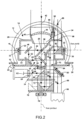
US 6779753 B2 qui divulgue un système optronique omnidirectionnel à deux axes de rotation pour nacelle de désignation d'aéronef de combat, comme illustré sur lafigure 2 , correspondant à lafigure 1 du documentUS 6779753 B2 . La ligne de visée optique à deux axes comporte une pupille d'émission laser 66 excentrée par rapport à l'axe porteur 16 et une pupille de réception 58 centrée sur l'axe porteur 16. L'ensemble laser et imagerie de réception est présenté comme étant fixe. Cela impose une complexité opto-mécanique importante notamment pour le prisme de renvoi 86 qui doit rester fixe entre la partie tournante selon l'axe porteur (axe vertical passant par le centre du hublot 12 en forme de dôme) et le mécanisme de renvoi du laser constitués d'un ensemble de prisme et miroirs 86, 72 et 74 (synchrone de la rotation de l'axe porteur). Ce prisme rend impossible une rotation complète de 360° sur plusieurs tours et implique des retournements complets en limite de domaine de rotation (risque de perte de maintien de la ligne de visée sur un objet lors du retournement). De plus, ce système impose une double motorisation complexe sur l'axe porteur qui augmenterait sensiblement l'encombrement. - Les systèmes de l'état de l'art comprennent une direction avec un point singulier à éviter, ou, en d'autres termes, éviter, que lorsque l'objet visé arrive sur l'axe porteur, il y ait une ambiguïté et que cela oblige une rotation de 180° instantané de l'axe porteur.
- Un but de l'invention est de pallier les problèmes précédemment cités, et notamment de pouvoir améliorer la compacité, et de limiter l'occultation de la voie d'imagerie par la voie laser.
- Il est proposé, selon un aspect de l'invention, un système optronique omnidirectionnel, à deux axes de rotation, un axe porteur et un axe porté perpendiculaires entre eux, comprenant une voie d'imagerie et une voie laser, dans lequel, la voie laser à l'injection en entrée du système et la voie d'imagerie sont concentriques selon l'axe porteur, comprenant :
- pour la voie laser:
- une première surface réfléchissante, disposé en entrée du système à l'injection, configuré pour séparer la voie laser de la voie optique en réfléchissant le faisceau laser injecté de sorte à l'écarter de l'axe porteur du système;
- une deuxième surface réfléchissante pour dévier le faisceau laser réfléchi par la première surface réfléchissante vers la fenêtre de sortie en forme de dôme sphérique, décalé de la voie optique;
- un expanseur configuré pour augmenter le diamètre du faisceau laser réfléchi par la deuxième surface réfléchissante et réduire sa divergence;
- un déviateur configuré pour modifier la direction angulaire du faisceau laser à l'intérieur d'un cône d'angle au sommet compris entre 3° et 6°;
- une troisième surface réfléchissante et une quatrième surface réfléchissante configurées pour diriger le faisceau laser expansé vers la fenêtre de sortie en forme de dôme sphérique parallèlement à l'axe porteur; et
- un dispositif de compensation configuré pour compenser des aberrations de la fenêtre de sortie en forme de dôme sphérique;
- pour la voie d'imagerie:
- un premier groupe de lentilles et un deuxième groupe de lentilles disposés en dispositif afocal de Kepler;
- une cinquième surface réfléchissante, une sixième surface réfléchissante, une septième surface réfléchissante, et une huitième surface réfléchissante, disposées entre les deux groupes de lentilles;
- la première surface réfléchissante, la deuxième surface réfléchissante, l'expanseur, le déviateur, la troisième surface réfléchissante, la cinquième surface réfléchissante, la sixième surface réfléchissante, la septième surface réfléchissante formant un premier ensemble lié en rotation selon l'axe porteur; et
- la quatrième surface réfléchissante, la huitième surface réfléchissante, le deuxième groupe de lentilles, et le compensateur formant un deuxième ensemble lié en rotation selon l'axe porté.
- Un tel système permet d'isoler complètement les deux voies optiques (imagerie et laser) tout en limitant efficacement la perturbation photométrique de la voie d'imagerie par la voie laser (optimisation de la rétrodiffusion et les rétro-réflexions du laser vers la voie d'imagerie).
- En outre, avoir un axe d'injection commun pour la voie laser et la voie d'imagerie de poursuite sur l'axe porteur d'une tête d'orientation de ligne de visée à deux axes permet d'avoir un débattement de 360° sans limitation du nombre de tour dans un encombrement réduit), et ainsi d'éviter la présence de point singulier.
- Selon un mode de réalisation, le système comprend un premier étage mobile en rotation selon l'axe porteur, permettant la rotation de la ligne de visée selon l'axe porteur.
- Dans un mode de réalisation, le système comprend un deuxième étage mobile en rotation selon l'axe porté, permettant la rotation de la ligne de visée selon l'axe porté.
- Ainsi, la ligne de visée peut être orientée dans un espace angulaire supérieur à 2πsr.
- Selon un mode de réalisation, le dispositif afocal de Kepler a un grossissement compris dans l'intervalle de valeurs [-2; -0,5].
- Cet afocal permet le transport de la pupille au travers des axes de rotation jusqu'au voisinage du séparateur laser/imagerie situé sur l'axe porteur. Ainsi, la propagation des faisceaux d'imagerie peut s'effectuer sans vignettage à l'aide de composants de dimensions minimisées, et le volume du dispositif d'orientation de ligne de visée est optimisé. En outre, placer le séparateur au voisinage d'un plan pupillaire permet de minimiser la perturbation de la voie d'imagerie ainsi générée par le séparateur.
- Dans un mode de réalisation, le dispositif afocal de Kepler a un grossissement de -1.
- Selon un mode de réalisation, l'expanseur comprend un dispositif afocal divergent/convergent.
- Par exemple, le dispositif afocal divergent/convergent comprend des lentilles (afocal galiléen classique), ou des miroirs (afocal de type Cassegrain hors d'axe).
- Ce type de dispositif permet de diminuer la divergence sans point de focalisation intermédiaire donc sans risque de claquage.
- Dans un mode de réalisation, le déviateur comprend un diasporamètre, ou un miroir à deux axes, permettant d'orienter la ligne de visée laser dans le champ instantané d'imagerie.
- Ainsi, le déviateur permet d'améliorer la compensation des défauts de mouvement résiduels du dispositif d'orientation de la ligne de visée motorisée pour assurer la qualité du pointage du faisceau dans une boucle de poursuite utilisant le retour laser vu par la voie d'imagerie.
- Le déviateur permet également d'harmoniser les directions des axes optiques laser et imagerie. Enfin, placer ce dispositif au plus proche de la sortie permet de minimiser la dimension des composants optiques laser de sortie et donc du dispositif d'orientation de la ligne de visée.
- Selon un mode de réalisation, le compensateur comprend au moins un composant dioptrique sphérique ou asphérique décentré.
- Le compensateur est un composant optique permettant de corriger les aberrations introduites par l'excentrement de la pupille laser par rapport au dôme, ce qui permet de garantir la qualité du faisceau laser.
- Il est également proposé, selon un autre aspect de l'invention, une plate-forme munie d'un système tel que décrit précédemment.
- Par exemple, la plate-forme peut être un aéronef de combat, un aéronef de transport, un aéronef militaire, un drone, un bâtiment, un véhicule terrestre ou un navire.
- L'invention sera mieux comprise à l'étude de quelques modes de réalisation décrits à titre d'exemples nullement limitatifs et illustrés par le dessin annexé sur lequel:
- [
Fig.1 ] illustre schématiquement un système optronique omnidirectionnel, selon l'état de la technique; - [
Fig.2 ] illustre schématiquement un autre système optronique omnidirectionnel, selon l'état de la technique; et - [
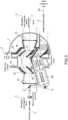
Fig.3 ] illustre schématiquement un système optronique omnidirectionnel, selon un aspect de l'invention. - Sur la
figure 3 est illustré un système optronique omnidirectionnel, à deux axes de rotation, un axe porteur 1 et un axe porté 2 perpendiculaires entre eux. Le système comprend une voie d'imagerie 3 et une voie laser 4, dans lequel, la voie laser 4 à l'injection ou émission en entrée du système et la voie d'imagerie 3 sont concentriques selon l'axe porteur 1. - La voie laser 4 comprend :
- une première surface réfléchissante 5, disposée en entrée du système à l'injection, configuré pour séparer la voie laser 4 de la voie d'imagerie 3 en réfléchissant le faisceau laser injecté de sorte à l'écarter de l'axe porteur 1 du système;
- une deuxième surface réfléchissante 6 pour dévier le faisceau laser réfléchi par la première surface réfléchissante 5 vers la fenêtre de sortie 7 en forme de dôme sphérique, décalé de la voie d'imagerie 3;
- un expanseur 8a configuré pour augmenter le diamètre du faisceau laser réfléchi par la deuxième surface réfléchissante 6 et réduire sa divergence;
- un déviateur 8b configuré pour modifier la direction angulaire du faisceau laser à l'intérieur d'un cône d'angle au sommet compris entre 3° et 6°;
- une troisième surface réfléchissante 9 et une quatrième surface réfléchissante 10 configurées pour diriger le faisceau laser expansé vers la fenêtre de sortie 7 en forme de dôme sphérique parallèlement à l'axe porteur 1; et
- un compensateur 11 configuré pour compenser des aberrations de la fenêtre de sortie 7 en forme de dôme sphérique;
- La voie d'imagerie 3 comprend:
- un premier groupe de lentilles 12 et un deuxième groupe de lentilles 13 disposés en dispositif afocal de Kepler; et
- une cinquième surface réfléchissante 14, une sixième surface réfléchissante 15, une septième surface réfléchissante 16, et une huitième surface réfléchissante 17, disposées entre les deux groupes de lentilles 12, 13.
- Les voies d'imagerie 3 et laser 4 sont concentriques sur l'axe porteur 1 à l'injection sur ce dernier.
- Elles sont séparées juste après l'injection du faisceau laser 4 afin d'avoir en sortie du système deux axes colinéaires, l'axe porteur 1 et l'axe d'émission laser 20 mais physiquement séparés pour éviter, d'une part, le couplage parasite dans l'atmosphère entre ces voies, et d'autre part, que le laser passe par le plan focal intermédiaire du dispositif afocal de Kepler de la voie d'imagerie 3 et d'introduire des densités de puissance trop importantes dans cette image intermédiaire pouvant perturber à la fois la voie imagerie 3 et la qualité de faisceau de la voie laser 3.
- La couverture angulaire du système optronique est effectuée en totalité (>2π sr) en résolvant la problématique du point singulier au moyen du déviateur 8b agissant sur la voie laser 4.
- La première surface réfléchissante 5, la deuxième surface réfléchissante 6, l'expanseur 8a, le déviateur 8b, la troisième surface réfléchissante 9, la cinquième surface réfléchissante 14, la sixième surface réfléchissante 15, la septième surface réfléchissante 16 formant un premier ensemble lié en rotation selon l'axe porteur 1.
- La quatrième surface réfléchissante 10, la huitième surface réfléchissante 17, le deuxième groupe de lentilles 13, et le compensateur 11 forment un deuxième ensemble lié en rotation selon l'axe porté 2.
- Le système comprend également un premier support 18 de l'ensemble lié en rotation selon l'axe porteur 1, muni de paliers porteurs permettant la rotation selon l'axe porteur 1.
- Le système comprend un deuxième support 19 de l'ensemble lié en rotation selon l'axe porté 2, muni de paliers porteurs permettant la rotation selon l'axe porté 2.
- Le dispositif afocal de Kepler 12, 13 a un grossissement compris dans l'intervalle de valeurs [-2; -0,5], par exemple sensiblement -1.
- L'expanseur est un dispositif afocal divergent/convergent selon la propagation du laser. Un tel afocal peut être réalisé par exemple à l'aide de lentilles (afocal galiléen classique) ou de miroirs (afocal de type Cassegrain hors d'axe).
- Le déviateur peut comprendre un diasporamètre, ou un miroir à deux axes permettant de déplacer la ligne de visée laser dans le champ instantané imagerie.
- Le compensateur peut comprendre un ou plusieurs composants dioptriques sphériques ou asphériques décentrés.
- Un système selon l'invention est monté sur une plate-forme pouvant être un aéronef de combat, un aéronef de transport, un aéronef militaire, un drone, un bâtiment, un véhicule terrestre ou un navire.
Claims (11)
- Système optronique omnidirectionnel, à deux axes de rotation, un axe porteur (1) et un axe porté (2) perpendiculaires entre eux, comprenant une voie d'imagerie (3) et une voie laser (4), dans lequel, la voie laser (4) à l'injection en entrée du système et la voie d'imagerie (3) sont concentriques selon l'axe porteur (1), caractérisé en ce que la voie laser (4) comprend:- une première surface réfléchissante (5), disposée en entrée du système à l'injection, configuré pour séparer la voie laser (4) de la voie d'imagerie (3) en réfléchissant le faisceau laser injecté de sorte à l'écarter de l'axe porteur (1) du système;- une deuxième surface réfléchissante (6) pour dévier le faisceau laser réfléchi par la première surface réfléchissante (5) vers la fenêtre de sortie (7) en forme de dôme sphérique, décalé de la voie d'imagerie (3);- un expanseur (8a) configuré pour augmenter le diamètre du faisceau laser réfléchi par la deuxième surface réfléchissante (6) et réduire sa divergence;- un déviateur (8b) configuré pour modifier la direction angulaire du faisceau laser à l'intérieur d'un cône d'angle au sommet compris entre 3° et 6°;- une troisième surface réfléchissante (9) et une quatrième surface réfléchissante (10) configurées pour diriger le faisceau laser expansé vers la fenêtre de sortie (7) en forme de dôme sphérique parallèlement à l'axe porteur (1); et- un compensateur (11) configuré pour compenser des aberrations de la fenêtre de sortie (7) en forme de dôme sphérique;- pour la voie d'imagerie (3):- un premier groupe de lentilles (12) et un deuxième groupe de lentilles (13) disposés en dispositif afocal de Kepler; et- une cinquième surface réfléchissante (14), une sixième surface réfléchissante (15), une septième surface réfléchissante (16), et une huitième surface réfléchissante (17), disposées entre les deux groupes de lentilles (12, 13);la première surface réfléchissante (5), la deuxième surface réfléchissante (6), l'expanseur (8a), le déviateur (8b), la troisième surface réfléchissante (9), la cinquième surface réfléchissante (14), la sixième surface réfléchissante (15), la septième surface réfléchissante (16) formant un premier ensemble lié en rotation selon l'axe porteur (1); etla quatrième surface réfléchissante (10), la huitième surface réfléchissante (17), le deuxième ensemble de lentilles (13), et le compensateur (11) formant un deuxième groupe lié en rotation selon l'axe porté (2);
- Système selon la revendication 1, comprenant un premier étage mobile (18) en rotation selon l'axe porteur (1), permettant la rotation de la ligne de visée selon l'axe porteur (1).
- Système selon la revendication 1 ou 2, comprenant un deuxième étage mobile (19) en rotation selon l'axe porté (2), permettant la rotation de la ligne de visée selon l'axe porté (2).
- Système selon l'une des revendications précédentes, dans lequel le dispositif afocal de Kepler a un grossissement compris dans l'intervalle de valeurs [-2; -0,5].
- Système selon la revendication 4, dans lequel le dispositif afocal de Kepler a un grossissement de -1.
- Système selon l'une des revendications précédentes, dans lequel l'expanseur (8a) comprend un dispositif afocal divergent/convergent.
- Système selon la revendication 6, dans lequel le dispositif afocal divergent/convergent comprend des lentilles, ou des miroirs.
- Système selon l'une des revendications précédentes, dans lequel le déviateur (8b) comprend un diasporamètre, ou un miroir à deux axes, permettant d'orienter la ligne de visée laser dans le champ instantané imagerie.
- Système selon l'une des revendications précédentes, dans lequel le compensateur (11) comprend au moins un composant dioptrique sphérique ou asphérique décentré.
- Plate-forme munie d'un système selon l'une des revendications précédentes.
- Plate-forme selon la revendication 10, étant un aéronef de combat, un aéronef de transport, un aéronef militaire, ou un drone, un bâtiment, un véhicule terrestre ou un navire.
Applications Claiming Priority (2)
| Application Number | Priority Date | Filing Date | Title |
|---|---|---|---|
| FR2012572A FR3117203B1 (fr) | 2020-12-03 | 2020-12-03 | Système optronique omnidirectionnel |
| PCT/EP2021/083478 WO2022117532A1 (fr) | 2020-12-03 | 2021-11-30 | Systeme optronique omnidirectionnel a deux axes de rotation |
Publications (2)
| Publication Number | Publication Date |
|---|---|
| EP4256268A1 EP4256268A1 (fr) | 2023-10-11 |
| EP4256268B1 true EP4256268B1 (fr) | 2025-03-05 |
Family
ID=76034655
Family Applications (1)
| Application Number | Title | Priority Date | Filing Date |
|---|---|---|---|
| EP21823265.0A Active EP4256268B1 (fr) | 2020-12-03 | 2021-11-30 | Systeme optronique omnidirectionnel a deux axes de rotation |
Country Status (6)
| Country | Link |
|---|---|
| US (1) | US12241724B2 (fr) |
| EP (1) | EP4256268B1 (fr) |
| ES (1) | ES3017137T3 (fr) |
| FR (1) | FR3117203B1 (fr) |
| IL (1) | IL303405B1 (fr) |
| WO (1) | WO2022117532A1 (fr) |
Family Cites Families (9)
| Publication number | Priority date | Publication date | Assignee | Title |
|---|---|---|---|---|
| US4087061A (en) * | 1972-05-08 | 1978-05-02 | The United States Of America As Represented By The Secretary Of The Navy | Wide angle seeker |
| DE10153094A1 (de) * | 2001-10-30 | 2003-05-15 | Bodenseewerk Geraetetech | Optischer Sensor mit einem Sensorstrahlengang und einem parallel zu der optischen Achse des Sensorstrahlenganges emittierenden Laserstrahler |
| WO2004066614A1 (fr) * | 2003-01-21 | 2004-08-05 | BODENSEEWERK GERäTETECHNIK GMBH | Dispositif de detection d'une scene objet |
| US7378626B2 (en) | 2005-10-04 | 2008-05-27 | Raytheon Company | Directed infrared countermeasures (DIRCM) system and method |
| US7304296B2 (en) | 2005-10-05 | 2007-12-04 | Raytheon Company | Optical fiber assembly wrapped across gimbal axes |
| DE102009029895B4 (de) * | 2009-06-23 | 2018-01-25 | Diehl Defence Gmbh & Co. Kg | Optisches System für einen Flugkörper und Verfahren zum Abbilden eines Gegenstands |
| US8334490B2 (en) * | 2009-10-14 | 2012-12-18 | Raytheon Company | Off-axis reflective transmit telescope for a directed infrared countermeasures (DIRCM) system |
| DE102010055489A1 (de) * | 2010-12-15 | 2012-06-21 | Diehl Bgt Defence Gmbh & Co. Kg | Cassegrainoptik |
| DE102012009172A1 (de) * | 2012-05-08 | 2013-11-14 | Diehl Bgt Defence Gmbh & Co. Kg | Suchkopf für einen Flugkörper |
-
2020
- 2020-12-03 FR FR2012572A patent/FR3117203B1/fr active Active
-
2021
- 2021-11-30 ES ES21823265T patent/ES3017137T3/es active Active
- 2021-11-30 IL IL303405A patent/IL303405B1/en unknown
- 2021-11-30 US US18/039,923 patent/US12241724B2/en active Active
- 2021-11-30 EP EP21823265.0A patent/EP4256268B1/fr active Active
- 2021-11-30 WO PCT/EP2021/083478 patent/WO2022117532A1/fr not_active Ceased
Also Published As
| Publication number | Publication date |
|---|---|
| FR3117203A1 (fr) | 2022-06-10 |
| IL303405A (en) | 2023-08-01 |
| EP4256268A1 (fr) | 2023-10-11 |
| ES3017137T3 (en) | 2025-05-12 |
| WO2022117532A1 (fr) | 2022-06-09 |
| US12241724B2 (en) | 2025-03-04 |
| IL303405B1 (en) | 2026-01-01 |
| FR3117203B1 (fr) | 2022-12-09 |
| US20240060748A1 (en) | 2024-02-22 |
Similar Documents
| Publication | Publication Date | Title |
|---|---|---|
| EP2488888B1 (fr) | Télescope de transmission réflecteur hors-axe pour système de contre-mesures infrarouges dirigées (dircm) | |
| EP0050539B1 (fr) | Dispositif à imagerie vidéo pour un autodirecteur | |
| EP2564147B1 (fr) | Test incorporé (bit) d'émetteur/récepteur optique | |
| US9071742B2 (en) | Optical imaging with foveation | |
| US20230130871A1 (en) | Laser beam device with coupling of an illuminating laser beam into an effective laser beam | |
| FR2712993A1 (fr) | Système de vision. | |
| EP4256268B1 (fr) | Systeme optronique omnidirectionnel a deux axes de rotation | |
| EP0353138B1 (fr) | Dispositif optique multispectral à miroirs | |
| FR2944594A1 (fr) | Tete autodirectrice a deux voies de detection, et missile comportant une telle tete | |
| EP0580407B1 (fr) | Système de balayage à petits-angles | |
| EP3752874B1 (fr) | Injection d'un faisceau de rayonnement dans une fibre optique | |
| JPH08178749A (ja) | 機内での使用に好適な光の後方散乱測定装置 | |
| US11644542B2 (en) | Optical sensor with MEMS MMA steered transmitter and staring detector | |
| US12061334B2 (en) | Optical scanning system using micro-electro-mechanical system (mems) micro-mirror arrays (MMAs) | |
| EP2217959B1 (fr) | Telescope d'imagerie stereoscopique compact | |
| FR2944593A1 (fr) | Tete autodirectrice comportant au moins deux voies de detection distinctes, et missile comportant une telle tete | |
| Takahashi et al. | Development of optical antennas utilizing free form surface optics for the high speed laser communication systems | |
| US12436378B2 (en) | On-gimbal telescope pointing assembly | |
| FR3090136A1 (fr) | Téléscope à champ de vue amélioré | |
| EP2579087B1 (fr) | Dispositif bispectral à deux miroirs, système correspondant | |
| EP0425365A1 (fr) | Dispositif optique de correction des défauts introduits par un hublot sphérique utilisÀ© hors d'axe | |
| FR2690532A1 (fr) | Dispositif de pointage pour appareil optique. | |
| FR2530831A1 (fr) | Dispositif de deviateur optique variable, application a une optique d'autodirecteur | |
| FR3157567A1 (fr) | Dispositif d’aiguillage de faisceaux pour télescope de satellite spatial géostationnaire | |
| FR2919933A1 (fr) | Dispositif optique multi-pupilles aminci |
Legal Events
| Date | Code | Title | Description |
|---|---|---|---|
| STAA | Information on the status of an ep patent application or granted ep patent |
Free format text: STATUS: UNKNOWN |
|
| STAA | Information on the status of an ep patent application or granted ep patent |
Free format text: STATUS: THE INTERNATIONAL PUBLICATION HAS BEEN MADE |
|
| PUAI | Public reference made under article 153(3) epc to a published international application that has entered the european phase |
Free format text: ORIGINAL CODE: 0009012 |
|
| STAA | Information on the status of an ep patent application or granted ep patent |
Free format text: STATUS: REQUEST FOR EXAMINATION WAS MADE |
|
| 17P | Request for examination filed |
Effective date: 20230601 |
|
| AK | Designated contracting states |
Kind code of ref document: A1 Designated state(s): AL AT BE BG CH CY CZ DE DK EE ES FI FR GB GR HR HU IE IS IT LI LT LU LV MC MK MT NL NO PL PT RO RS SE SI SK SM TR |
|
| DAV | Request for validation of the european patent (deleted) | ||
| DAX | Request for extension of the european patent (deleted) | ||
| GRAP | Despatch of communication of intention to grant a patent |
Free format text: ORIGINAL CODE: EPIDOSNIGR1 |
|
| STAA | Information on the status of an ep patent application or granted ep patent |
Free format text: STATUS: GRANT OF PATENT IS INTENDED |
|
| INTG | Intention to grant announced |
Effective date: 20240712 |
|
| GRAJ | Information related to disapproval of communication of intention to grant by the applicant or resumption of examination proceedings by the epo deleted |
Free format text: ORIGINAL CODE: EPIDOSDIGR1 |
|
| STAA | Information on the status of an ep patent application or granted ep patent |
Free format text: STATUS: REQUEST FOR EXAMINATION WAS MADE |
|
| GRAP | Despatch of communication of intention to grant a patent |
Free format text: ORIGINAL CODE: EPIDOSNIGR1 |
|
| STAA | Information on the status of an ep patent application or granted ep patent |
Free format text: STATUS: GRANT OF PATENT IS INTENDED |
|
| P01 | Opt-out of the competence of the unified patent court (upc) registered |
Free format text: CASE NUMBER: APP_52284/2024 Effective date: 20240918 |
|
| INTC | Intention to grant announced (deleted) | ||
| INTG | Intention to grant announced |
Effective date: 20241016 |
|
| GRAS | Grant fee paid |
Free format text: ORIGINAL CODE: EPIDOSNIGR3 |
|
| GRAA | (expected) grant |
Free format text: ORIGINAL CODE: 0009210 |
|
| STAA | Information on the status of an ep patent application or granted ep patent |
Free format text: STATUS: THE PATENT HAS BEEN GRANTED |
|
| AK | Designated contracting states |
Kind code of ref document: B1 Designated state(s): AL AT BE BG CH CY CZ DE DK EE ES FI FR GB GR HR HU IE IS IT LI LT LU LV MC MK MT NL NO PL PT RO RS SE SI SK SM TR |
|
| RAP3 | Party data changed (applicant data changed or rights of an application transferred) |
Owner name: THALES |
|
| REG | Reference to a national code |
Ref country code: GB Ref legal event code: FG4D Free format text: NOT ENGLISH |
|
| REG | Reference to a national code |
Ref country code: CH Ref legal event code: EP |
|
| REG | Reference to a national code |
Ref country code: DE Ref legal event code: R096 Ref document number: 602021027275 Country of ref document: DE |
|
| REG | Reference to a national code |
Ref country code: IE Ref legal event code: FG4D Free format text: LANGUAGE OF EP DOCUMENT: FRENCH |
|
| REG | Reference to a national code |
Ref country code: ES Ref legal event code: FG2A Ref document number: 3017137 Country of ref document: ES Kind code of ref document: T3 Effective date: 20250512 |
|
| REG | Reference to a national code |
Ref country code: SE Ref legal event code: TRGR |
|
| PG25 | Lapsed in a contracting state [announced via postgrant information from national office to epo] |
Ref country code: RS Free format text: LAPSE BECAUSE OF FAILURE TO SUBMIT A TRANSLATION OF THE DESCRIPTION OR TO PAY THE FEE WITHIN THE PRESCRIBED TIME-LIMIT Effective date: 20250605 |
|
| PG25 | Lapsed in a contracting state [announced via postgrant information from national office to epo] |
Ref country code: FI Free format text: LAPSE BECAUSE OF FAILURE TO SUBMIT A TRANSLATION OF THE DESCRIPTION OR TO PAY THE FEE WITHIN THE PRESCRIBED TIME-LIMIT Effective date: 20250305 |
|
| REG | Reference to a national code |
Ref country code: NL Ref legal event code: MP Effective date: 20250305 |
|
| REG | Reference to a national code |
Ref country code: LT Ref legal event code: MG9D |
|
| PG25 | Lapsed in a contracting state [announced via postgrant information from national office to epo] |
Ref country code: NO Free format text: LAPSE BECAUSE OF FAILURE TO SUBMIT A TRANSLATION OF THE DESCRIPTION OR TO PAY THE FEE WITHIN THE PRESCRIBED TIME-LIMIT Effective date: 20250605 |
|
| PG25 | Lapsed in a contracting state [announced via postgrant information from national office to epo] |
Ref country code: HR Free format text: LAPSE BECAUSE OF FAILURE TO SUBMIT A TRANSLATION OF THE DESCRIPTION OR TO PAY THE FEE WITHIN THE PRESCRIBED TIME-LIMIT Effective date: 20250305 |
|
| PG25 | Lapsed in a contracting state [announced via postgrant information from national office to epo] |
Ref country code: LV Free format text: LAPSE BECAUSE OF FAILURE TO SUBMIT A TRANSLATION OF THE DESCRIPTION OR TO PAY THE FEE WITHIN THE PRESCRIBED TIME-LIMIT Effective date: 20250305 |
|
| PG25 | Lapsed in a contracting state [announced via postgrant information from national office to epo] |
Ref country code: BG Free format text: LAPSE BECAUSE OF FAILURE TO SUBMIT A TRANSLATION OF THE DESCRIPTION OR TO PAY THE FEE WITHIN THE PRESCRIBED TIME-LIMIT Effective date: 20250305 Ref country code: GR Free format text: LAPSE BECAUSE OF FAILURE TO SUBMIT A TRANSLATION OF THE DESCRIPTION OR TO PAY THE FEE WITHIN THE PRESCRIBED TIME-LIMIT Effective date: 20250606 |
|
| REG | Reference to a national code |
Ref country code: AT Ref legal event code: MK05 Ref document number: 1773254 Country of ref document: AT Kind code of ref document: T Effective date: 20250305 |
|
| PG25 | Lapsed in a contracting state [announced via postgrant information from national office to epo] |
Ref country code: NL Free format text: LAPSE BECAUSE OF FAILURE TO SUBMIT A TRANSLATION OF THE DESCRIPTION OR TO PAY THE FEE WITHIN THE PRESCRIBED TIME-LIMIT Effective date: 20250305 |
|
| PG25 | Lapsed in a contracting state [announced via postgrant information from national office to epo] |
Ref country code: SM Free format text: LAPSE BECAUSE OF FAILURE TO SUBMIT A TRANSLATION OF THE DESCRIPTION OR TO PAY THE FEE WITHIN THE PRESCRIBED TIME-LIMIT Effective date: 20250305 |
|
| PG25 | Lapsed in a contracting state [announced via postgrant information from national office to epo] |
Ref country code: PT Free format text: LAPSE BECAUSE OF FAILURE TO SUBMIT A TRANSLATION OF THE DESCRIPTION OR TO PAY THE FEE WITHIN THE PRESCRIBED TIME-LIMIT Effective date: 20250707 |
|
| PG25 | Lapsed in a contracting state [announced via postgrant information from national office to epo] |
Ref country code: PL Free format text: LAPSE BECAUSE OF FAILURE TO SUBMIT A TRANSLATION OF THE DESCRIPTION OR TO PAY THE FEE WITHIN THE PRESCRIBED TIME-LIMIT Effective date: 20250305 |
|
| PG25 | Lapsed in a contracting state [announced via postgrant information from national office to epo] |
Ref country code: AT Free format text: LAPSE BECAUSE OF FAILURE TO SUBMIT A TRANSLATION OF THE DESCRIPTION OR TO PAY THE FEE WITHIN THE PRESCRIBED TIME-LIMIT Effective date: 20250305 |
|
| PG25 | Lapsed in a contracting state [announced via postgrant information from national office to epo] |
Ref country code: EE Free format text: LAPSE BECAUSE OF FAILURE TO SUBMIT A TRANSLATION OF THE DESCRIPTION OR TO PAY THE FEE WITHIN THE PRESCRIBED TIME-LIMIT Effective date: 20250305 Ref country code: CZ Free format text: LAPSE BECAUSE OF FAILURE TO SUBMIT A TRANSLATION OF THE DESCRIPTION OR TO PAY THE FEE WITHIN THE PRESCRIBED TIME-LIMIT Effective date: 20250305 |
|
| PG25 | Lapsed in a contracting state [announced via postgrant information from national office to epo] |
Ref country code: RO Free format text: LAPSE BECAUSE OF FAILURE TO SUBMIT A TRANSLATION OF THE DESCRIPTION OR TO PAY THE FEE WITHIN THE PRESCRIBED TIME-LIMIT Effective date: 20250305 |
|
| PG25 | Lapsed in a contracting state [announced via postgrant information from national office to epo] |
Ref country code: SK Free format text: LAPSE BECAUSE OF FAILURE TO SUBMIT A TRANSLATION OF THE DESCRIPTION OR TO PAY THE FEE WITHIN THE PRESCRIBED TIME-LIMIT Effective date: 20250305 |
|
| PG25 | Lapsed in a contracting state [announced via postgrant information from national office to epo] |
Ref country code: IS Free format text: LAPSE BECAUSE OF FAILURE TO SUBMIT A TRANSLATION OF THE DESCRIPTION OR TO PAY THE FEE WITHIN THE PRESCRIBED TIME-LIMIT Effective date: 20250705 |
|
| REG | Reference to a national code |
Ref country code: DE Ref legal event code: R097 Ref document number: 602021027275 Country of ref document: DE |
|
| PGFP | Annual fee paid to national office [announced via postgrant information from national office to epo] |
Ref country code: DE Payment date: 20251014 Year of fee payment: 5 |
|
| PGFP | Annual fee paid to national office [announced via postgrant information from national office to epo] |
Ref country code: GB Payment date: 20251016 Year of fee payment: 5 |
|
| PLBE | No opposition filed within time limit |
Free format text: ORIGINAL CODE: 0009261 |
|
| STAA | Information on the status of an ep patent application or granted ep patent |
Free format text: STATUS: NO OPPOSITION FILED WITHIN TIME LIMIT |
|
| PG25 | Lapsed in a contracting state [announced via postgrant information from national office to epo] |
Ref country code: DK Free format text: LAPSE BECAUSE OF FAILURE TO SUBMIT A TRANSLATION OF THE DESCRIPTION OR TO PAY THE FEE WITHIN THE PRESCRIBED TIME-LIMIT Effective date: 20250305 |
|
| PGFP | Annual fee paid to national office [announced via postgrant information from national office to epo] |
Ref country code: IT Payment date: 20251030 Year of fee payment: 5 |
|
| REG | Reference to a national code |
Ref country code: CH Ref legal event code: L10 Free format text: ST27 STATUS EVENT CODE: U-0-0-L10-L00 (AS PROVIDED BY THE NATIONAL OFFICE) Effective date: 20260114 |
|
| PGFP | Annual fee paid to national office [announced via postgrant information from national office to epo] |
Ref country code: FR Payment date: 20251023 Year of fee payment: 5 |
|
| PGFP | Annual fee paid to national office [announced via postgrant information from national office to epo] |
Ref country code: SE Payment date: 20251028 Year of fee payment: 5 |
|
| PGFP | Annual fee paid to national office [announced via postgrant information from national office to epo] |
Ref country code: ES Payment date: 20251211 Year of fee payment: 5 |
|
| 26N | No opposition filed |
Effective date: 20251208 |