EP4257151A1 - Inhibiteur de point de contrôle immunitaire conjugué à un sensibilisateur à ultrasons et utilisation correspondante - Google Patents
Inhibiteur de point de contrôle immunitaire conjugué à un sensibilisateur à ultrasons et utilisation correspondante Download PDFInfo
- Publication number
- EP4257151A1 EP4257151A1 EP21903710.8A EP21903710A EP4257151A1 EP 4257151 A1 EP4257151 A1 EP 4257151A1 EP 21903710 A EP21903710 A EP 21903710A EP 4257151 A1 EP4257151 A1 EP 4257151A1
- Authority
- EP
- European Patent Office
- Prior art keywords
- conjugate
- cancer
- present
- immune checkpoint
- sonosensitizer
- Prior art date
- Legal status (The legal status is an assumption and is not a legal conclusion. Google has not performed a legal analysis and makes no representation as to the accuracy of the status listed.)
- Pending
Links
Images




Classifications
-
- A—HUMAN NECESSITIES
- A61—MEDICAL OR VETERINARY SCIENCE; HYGIENE
- A61K—PREPARATIONS FOR MEDICAL, DENTAL OR TOILETRY PURPOSES
- A61K47/00—Medicinal preparations characterised by the non-active ingredients used, e.g. carriers or inert additives; Targeting or modifying agents chemically bound to the active ingredient
- A61K47/50—Medicinal preparations characterised by the non-active ingredients used, e.g. carriers or inert additives; Targeting or modifying agents chemically bound to the active ingredient the non-active ingredient being chemically bound to the active ingredient, e.g. polymer-drug conjugates
- A61K47/51—Medicinal preparations characterised by the non-active ingredients used, e.g. carriers or inert additives; Targeting or modifying agents chemically bound to the active ingredient the non-active ingredient being chemically bound to the active ingredient, e.g. polymer-drug conjugates the non-active ingredient being a modifying agent
- A61K47/54—Medicinal preparations characterised by the non-active ingredients used, e.g. carriers or inert additives; Targeting or modifying agents chemically bound to the active ingredient the non-active ingredient being chemically bound to the active ingredient, e.g. polymer-drug conjugates the non-active ingredient being a modifying agent the modifying agent being an organic compound
- A61K47/545—Heterocyclic compounds
- A61K47/546—Porphyrines; Porphyrine with an expanded ring system, e.g. texaphyrine
-
- A—HUMAN NECESSITIES
- A61—MEDICAL OR VETERINARY SCIENCE; HYGIENE
- A61K—PREPARATIONS FOR MEDICAL, DENTAL OR TOILETRY PURPOSES
- A61K39/00—Medicinal preparations containing antigens or antibodies
-
- A—HUMAN NECESSITIES
- A61—MEDICAL OR VETERINARY SCIENCE; HYGIENE
- A61K—PREPARATIONS FOR MEDICAL, DENTAL OR TOILETRY PURPOSES
- A61K41/00—Medicinal preparations obtained by treating materials with wave energy or particle radiation ; Therapies using these preparations
- A61K41/0028—Disruption, e.g. by heat or ultrasounds, sonophysical or sonochemical activation, e.g. thermosensitive or heat-sensitive liposomes, disruption of calculi with a medicinal preparation and ultrasounds
- A61K41/0033—Sonodynamic cancer therapy with sonochemically active agents or sonosensitizers, having their cytotoxic effects enhanced through application of ultrasounds
-
- A—HUMAN NECESSITIES
- A61—MEDICAL OR VETERINARY SCIENCE; HYGIENE
- A61K—PREPARATIONS FOR MEDICAL, DENTAL OR TOILETRY PURPOSES
- A61K47/00—Medicinal preparations characterised by the non-active ingredients used, e.g. carriers or inert additives; Targeting or modifying agents chemically bound to the active ingredient
- A61K47/50—Medicinal preparations characterised by the non-active ingredients used, e.g. carriers or inert additives; Targeting or modifying agents chemically bound to the active ingredient the non-active ingredient being chemically bound to the active ingredient, e.g. polymer-drug conjugates
- A61K47/51—Medicinal preparations characterised by the non-active ingredients used, e.g. carriers or inert additives; Targeting or modifying agents chemically bound to the active ingredient the non-active ingredient being chemically bound to the active ingredient, e.g. polymer-drug conjugates the non-active ingredient being a modifying agent
- A61K47/68—Medicinal preparations characterised by the non-active ingredients used, e.g. carriers or inert additives; Targeting or modifying agents chemically bound to the active ingredient the non-active ingredient being chemically bound to the active ingredient, e.g. polymer-drug conjugates the non-active ingredient being a modifying agent the modifying agent being an antibody, an immunoglobulin or a fragment thereof, e.g. an Fc-fragment
- A61K47/6801—Drug-antibody or immunoglobulin conjugates defined by the pharmacologically or therapeutically active agent
- A61K47/6803—Drugs conjugated to an antibody or immunoglobulin, e.g. cisplatin-antibody conjugates
-
- A—HUMAN NECESSITIES
- A61—MEDICAL OR VETERINARY SCIENCE; HYGIENE
- A61K—PREPARATIONS FOR MEDICAL, DENTAL OR TOILETRY PURPOSES
- A61K47/00—Medicinal preparations characterised by the non-active ingredients used, e.g. carriers or inert additives; Targeting or modifying agents chemically bound to the active ingredient
- A61K47/50—Medicinal preparations characterised by the non-active ingredients used, e.g. carriers or inert additives; Targeting or modifying agents chemically bound to the active ingredient the non-active ingredient being chemically bound to the active ingredient, e.g. polymer-drug conjugates
- A61K47/51—Medicinal preparations characterised by the non-active ingredients used, e.g. carriers or inert additives; Targeting or modifying agents chemically bound to the active ingredient the non-active ingredient being chemically bound to the active ingredient, e.g. polymer-drug conjugates the non-active ingredient being a modifying agent
- A61K47/68—Medicinal preparations characterised by the non-active ingredients used, e.g. carriers or inert additives; Targeting or modifying agents chemically bound to the active ingredient the non-active ingredient being chemically bound to the active ingredient, e.g. polymer-drug conjugates the non-active ingredient being a modifying agent the modifying agent being an antibody, an immunoglobulin or a fragment thereof, e.g. an Fc-fragment
- A61K47/6835—Medicinal preparations characterised by the non-active ingredients used, e.g. carriers or inert additives; Targeting or modifying agents chemically bound to the active ingredient the non-active ingredient being chemically bound to the active ingredient, e.g. polymer-drug conjugates the non-active ingredient being a modifying agent the modifying agent being an antibody, an immunoglobulin or a fragment thereof, e.g. an Fc-fragment the modifying agent being an antibody or an immunoglobulin bearing at least one antigen-binding site
- A61K47/6851—Medicinal preparations characterised by the non-active ingredients used, e.g. carriers or inert additives; Targeting or modifying agents chemically bound to the active ingredient the non-active ingredient being chemically bound to the active ingredient, e.g. polymer-drug conjugates the non-active ingredient being a modifying agent the modifying agent being an antibody, an immunoglobulin or a fragment thereof, e.g. an Fc-fragment the modifying agent being an antibody or an immunoglobulin bearing at least one antigen-binding site the antibody targeting a determinant of a tumour cell
-
- A—HUMAN NECESSITIES
- A61—MEDICAL OR VETERINARY SCIENCE; HYGIENE
- A61K—PREPARATIONS FOR MEDICAL, DENTAL OR TOILETRY PURPOSES
- A61K49/00—Preparations for testing in vivo
- A61K49/22—Echographic preparations; Ultrasonic imaging preparations
- A61K49/221—Echographic preparations; Ultrasonic imaging preparations characterised by the targeting agent or modifying agent linked to the acoustically-active agent
-
- A—HUMAN NECESSITIES
- A61—MEDICAL OR VETERINARY SCIENCE; HYGIENE
- A61K—PREPARATIONS FOR MEDICAL, DENTAL OR TOILETRY PURPOSES
- A61K49/00—Preparations for testing in vivo
- A61K49/22—Echographic preparations; Ultrasonic imaging preparations
- A61K49/222—Echographic preparations; Ultrasonic imaging preparations characterised by a special physical form, e.g. emulsions, liposomes
-
- A—HUMAN NECESSITIES
- A61—MEDICAL OR VETERINARY SCIENCE; HYGIENE
- A61P—SPECIFIC THERAPEUTIC ACTIVITY OF CHEMICAL COMPOUNDS OR MEDICINAL PREPARATIONS
- A61P35/00—Antineoplastic agents
-
- A—HUMAN NECESSITIES
- A61—MEDICAL OR VETERINARY SCIENCE; HYGIENE
- A61K—PREPARATIONS FOR MEDICAL, DENTAL OR TOILETRY PURPOSES
- A61K39/00—Medicinal preparations containing antigens or antibodies
- A61K2039/505—Medicinal preparations containing antigens or antibodies comprising antibodies
-
- A—HUMAN NECESSITIES
- A61—MEDICAL OR VETERINARY SCIENCE; HYGIENE
- A61K—PREPARATIONS FOR MEDICAL, DENTAL OR TOILETRY PURPOSES
- A61K2121/00—Preparations for use in therapy
-
- A—HUMAN NECESSITIES
- A61—MEDICAL OR VETERINARY SCIENCE; HYGIENE
- A61K—PREPARATIONS FOR MEDICAL, DENTAL OR TOILETRY PURPOSES
- A61K2123/00—Preparations for testing in vivo
-
- C—CHEMISTRY; METALLURGY
- C07—ORGANIC CHEMISTRY
- C07K—PEPTIDES
- C07K16/00—Immunoglobulins [IG], e.g. monoclonal or polyclonal antibodies
- C07K16/18—Immunoglobulins [IG], e.g. monoclonal or polyclonal antibodies against material from animals or humans
- C07K16/28—Immunoglobulins [IG], e.g. monoclonal or polyclonal antibodies against material from animals or humans against receptors, cell surface antigens or cell surface determinants
- C07K16/2803—Immunoglobulins [IG], e.g. monoclonal or polyclonal antibodies against material from animals or humans against receptors, cell surface antigens or cell surface determinants against the immunoglobulin superfamily
- C07K16/2827—Immunoglobulins [IG], e.g. monoclonal or polyclonal antibodies against material from animals or humans against receptors, cell surface antigens or cell surface determinants against the immunoglobulin superfamily against B7 molecules, e.g. CD80, CD86
-
- C—CHEMISTRY; METALLURGY
- C07—ORGANIC CHEMISTRY
- C07K—PEPTIDES
- C07K2317/00—Immunoglobulins specific features
- C07K2317/70—Immunoglobulins specific features characterized by effect upon binding to a cell or to an antigen
- C07K2317/76—Antagonist effect on antigen, e.g. neutralization or inhibition of binding
Definitions
- the present invention relates to an immune checkpoint inhibitor conjugated with a sonosensitizer and its uses.
- Cancer is a major disease accounting for the highest mortality rate in modern society, and representative cancer treatments include surgical intervention, biological therapy, radiation therapy, and chemotherapy using administration of anticancer agents.
- immunotherapy which utilizes the immune system to treat cancer differently from conventional cancer treatments, has gained prominence.
- immuno-oncology is a method of stimulating the immune system by injecting artificial immune proteins into the body to induce immune cells to selectively attack only cancer cells, and can be broadly divided into passive and active immunotherapy.
- Passive immunotherapy includes immune checkpoint inhibitors, immune cell therapy, and therapeutic antibodies.
- immune checkpoint inhibitors are drugs that activate T cells to attack cancer cells by blocking the activation of immune checkpoint proteins involved in T cell inhibition, such as CTLA-4, PD-1, and PD-L1 inhibitors.
- a PD-L1 antibody drug (atezolizumab) was approved by the FDA for cancer treatment, but immune checkpoint inhibitors have limited therapeutic effects as monotherapy.
- active immunotherapy includes cancer vaccines and immune-modulating agents, among which cancer vaccines are drugs that are manufactured from cancer cells or cancer cell-derived substances and injected into the body to trigger the body's natural defense system.
- cancer vaccines are drugs that are manufactured from cancer cells or cancer cell-derived substances and injected into the body to trigger the body's natural defense system.
- cancer therapeutic vaccines are complicated to produce and difficult to apply to various types of cancer, and because they are personalized therapies, they impose a financial burden on patients.
- ultrasound imaging is a useful technique for imaging blood vessels or the anatomical structures of tissues and organs, and has the advantages of easy patient accessibility, harmlessness, and low cost.
- the present inventors have made a conscientious effort to develop a material capable of diagnosing and simultaneously treating cancer by combining an immune checkpoint inhibitor with an sonosensitizer, and have developed a method for combining an immune checkpoint inhibitor with an sonosensitizer, porphyrin, and have confirmed that the conjugate prepared using the above method can be used for diagnosis and treatment of cancer, thereby completing the present invention.
- the inventors of the present invention have made efforts to provide a conjugate and its manufacturing method that overcomes the problems of conventional immune checkpoint inhibitors.
- the aim is to provide a conjugate with excellent stability and solubility, no precipitation, and excellent cancer cell inhibitory effects, as well as its manufacturing method.
- an object of the present invention is to provide a conjugate having tumor selectivity for targeted therapy, wherein the conjugate combines an immune checkpoint inhibitor that inhibits ligands expressed on the surface of cancer cells; and a sonosensitizer.
- Another object of the present invention is to provide a sonodynamic composition comprising the conjugate as an active ingredient.
- Yet another object of the present invention is to provide a manufacturing method for the conjugate, which comprises the step of combining an immune checkpoint inhibitor with a sonosensitizer using a linker.
- the present invention provides a conjugate having tumor selectivity for targeted therapy, wherein the conjugate is a combination of an immune checkpoint inhibitor that inhibits ligands expressed on the surface of cancer cells; and sonosensitizer.
- the immune checkpoint inhibitor may be a PD-L1 inhibitor, but is not limited thereto.
- the PD-L1 inhibitor may be one or more selected from the group consisting of atezolizumab, avelumab, durvalumab, envafolimab, cosibelimab, AUNP12, BMS-936559, CS-1001, SHR-1316 (HTI-1088), CBT-502 (TQB-1450), and BGB-A333, but is not limited thereto.
- the PD-L1 inhibitor may include an amine group, but is not limited thereto.
- the sonosensitizer may include a double bond, but is not limited thereto.
- the sonosensitizer may be one or more selected from the group consisting of porphyrins, porphyrin isomers, and expanded porphyrins, but is not limited thereto.
- the sonosensitizer may include one or more selected from the group consisting of amine groups (-NH 2 ), hydroxyl groups (-OH), carboxyl groups (-COOH), and sulfate groups (-SO 4 ), but is not limited thereto.
- the conjugate may include the structure of Chemical Formula 1, but is not limited thereto.
- the conjugate may have the immune checkpoint inhibitor and the sonosensitizer combined at a ratio of 1:1 to 1:10, but is not limited thereto.
- the present invention provides a sonodynamic composition comprising the conjugate as an active ingredient.
- the composition may be for cancer diagnosis and treatment, but is not limited thereto.
- the present invention provides a method for producing the conjugate, which includes the step of combining the immune checkpoint inhibitor with the sonosensitizer using a linker.
- the combining step may include, but is not limited to:
- the linker may include one or more selected from the group consisting of PEG (polyethylene glycol), poloxamer, polyvinylpyrrolidone, and polyoxazoline, but is not limited thereto.
- the linker may be methylenetetrazine-PEG4-NHS, but is not limited thereto.
- the present invention also provides methods for diagnosis and treatment of cancer, comprising the step of administering to a subject a composition comprising as an active ingredient a tumor-selective conjugate or a pharmaceutically acceptable salt thereof for targeted therapy, which combines an immune checkpoint inhibitor that inhibits a ligand expressed on the surface of a cancer cell; and a sonosensitizer.
- the present invention provides diagnostic and therapeutic uses of a composition comprising as an active ingredient a tumor-selective conjugate or pharmaceutically acceptable salt thereof for targeted therapy in combination with an immune checkpoint inhibitor that inhibits a ligand expressed on the surface of a cancer cell; and a sonosensitizer.
- compositions for diagnosis and treatment of cancer comprising as an active ingredient a tumor-selective conjugate or pharmaceutically acceptable salt thereof for targeted therapy in combination with an immune checkpoint inhibitor that inhibits a ligand expressed on the surface of a cancer cell; and a sonosensitizer.
- the conjugate of the present invention has tumor selectivity for targeted therapy and specifically responds to ultrasound, making it suitable for use in the manufacture of pharmaceuticals for cancer treatment.
- the conjugate of the present invention demonstrates excellent solubility and stability in aqueous solutions while providing superior anticancer effects compared to simple immune checkpoint inhibitors, and is expected to be usefully employed as a novel drug for cancer treatment.
- the present invention provides a conjugate having tumor selectivity for targeted therapy, wherein the conjugate combines an immune checkpoint inhibitor that inhibits ligands expressed on the surface of cancer cells; and an ultrasound sensitizing agent.
- the immune checkpoint inhibitor may be a PD-L1 inhibitor, but is not limited thereto.
- the PD-L1 inhibitor may be an anti-PD-L1 antibody, but is not limited thereto.
- the PD-L1 inhibitor may be one or more selected from the group consisting of atezolizumab, avelumab, durvalumab, envafolimab, cosibelimab, AUNP12, BMS-936559, CS-1001, SHR-1316 (HTI-1088), CBT-502 (TQB-1450), and BGB-A333, but is not limited thereto.
- the sonosensitizer may be one or more selected from the group consisting of porphyrins, porphyrin isomers, and expanded porphyrins, but is not limited thereto.
- the porphyrins, porphyrin isomers, and expanded porphyrins may be one or more selected from the group consisting of chlorin e6, photodithazine, Radachlorin, 2-(1-hexylethyl)-2-devinylpyropheophorbide- ⁇ (HPPH), zinc phthalocyanine (ZnPc), pheophorbide a compounds, and phorphyrin compounds, but is not limited thereto.
- an ethylenediamine (EDA) having an amine group was reacted with the terminal of the porphyrin, which is a sonosensitizer, to synthesize a water-soluble porphyrin (refer to Example 2 of the present invention).
- the terminal of sonosensitizer may include one or more selected from the group consisting of amine groups (-NH 2 ), hydroxyl groups (-OH), carboxyl groups (-COOH), and sulfate groups (-SO 4 ), but is not limited thereto.
- the conjugate may comprise a linker or a fragment of the linker, but is not limited thereto.
- the linker may include one or more selected from the group consisting of PEG (polyethylene glycol), poloxamer, polyvinylpyrolidone, and polyoxazoline, but is not limited thereto.
- PEG refers to polyethylene glycol residues, and the average molecular weight may be 200 to 100,000, 500 to 50,000, about 200, 500, 1000, 1500, 2000, 2500, 3000, 3500, 4000, 4500, 5000, 5500, 6000, 6500, 7000, 7500, 8000, 8500, 9000, 9500, 10,000, 10,500, 11,000, 11,500, 12,000, 12,500, 13,000, 13,500, 14,000, 14,500, 15,000, 15,500, 16,000, 16,500, 17,000, 17,500, 18,000, 18,500, 19,000, 19,500, 20,000, 25,000, 30,000, 35,000, 40,000, 45,000, 50,000, 55,000, 60,000, 65,000, 70,000, 75,000, 80,000, 85,000, 90,000, 95,000, or 100,000 kDa.
- PEG may be PEG4, but is not limited thereto.
- the poloxamer is a nonionic triblock copolymer with hydrophilic ethylene oxide groups at both ends and a hydrophobic propylene oxide group in the center.
- the poloxamer exhibits temperature sensitivity, enabling sol-gel transition depending on the concentration and temperature, and its properties vary depending on the ratio of polyoxypropylene and polyoxyethylene.
- the poloxamer may be selected from a group consisting of poloxamer 101, poloxamer 105, poloxamer 105 benzoate, poloxamer 108, poloxamer 122, poloxamer 123, poloxamer 124, poloxamer 181, poloxamer 182, poloxamer 182 dibenzoate, poloxamer 183, poloxamer 184, poloxamer 185, poloxamer 188, poloxamer 212, poloxamer 215, poloxamer 217, poloxamer 231, poloxamer 234, poloxamer 235, poloxamer 237, poloxamer 238, poloxamer 282, poloxamer 284, poloxamer 288, poloxamer 331, poloxamer 333, poloxamer 334, poloxamer 335, poloxamer 338, poloxamer 401, poloxamer 402, poloxamer 403, and poloxamer 407, but is not limited thereto
- polyoxazoline is a polymer prepared from 2-substituted-2-oxazoline monomers.
- the polymer is water-soluble and has been reported to be non-toxic in mammalian model systems.
- the linker may be methylenetetrazine-PEG4-NHS, but is not limited thereto.
- the methylenetetrazine of the linker reacts with the double bond of porphyrin-EDA, and the NHS group reacts with the amine group of the antibody, thereby forming the conjugate (refer to the examples of the present invention).
- the conjugate may include the structure of Chemical Formula 1 below, but is not limited thereto.
- the conjugate may be combined at a ratio of 1:1 to 10, 1:1 to 9, 1:1 to 8, 1:1 to 7, 1:1 to 6, 1:2 to 10, 1:2 to 9, 1:2 to 8, 1:2 to 7, 1:2 to 6, 1:3 to 10, 1:3 to 9, 1:3 to 8, 1:3 to 7, 1:3 to 6, 1:4 to 10, 1:4 to 9, 1:4 to 8, 1:4 to 7, 1:4 to 6, 1:4.5 to 6, or 1:5 to 6 of an immune checkpoint inhibitor and a sonosensitizer, but is not limited thereto.
- the present invention provides a sonodynamic composition comprising the conjugate as an active ingredient.
- sonodynamics refers to a phenomenon where the cytotoxic activity exhibited by a sonosensitizer is enhanced by ultrasound. That is, it involves focusing ultrasound energy on a deeply embedded malignant site and locally activating the sonosensitizer injected in advance.
- the mechanism of sonodynamic therapy includes the generation of radicals induced by the sonosensitizer causing sequential peroxidation of membrane lipids by peroxides or alkoxy radicals, conferring physical instability to the cell membrane by the sonosensitizer making the cell more sensitive to shear forces, or increased drug mobility through the cell membrane by ultrasound (sonoporation).
- the term "ultrasound” is generally used to refer to sound waves with frequencies exceeding the audible frequency range of 16 Hz to 20 kHz, and high-intensity focused ultrasound introduces focused ultrasound that provides continuous, high-intensity ultrasound energy to the focal point, which can generate instantaneous thermal effects (65-100°C), cavitation effects, mechanical effects, and sonochemical effects depending on the energy and frequency.
- Ultrasound is harmless when passing through human tissue, but high-intensity focused ultrasound generates sufficient energy to cause coagulative necrosis and thermal ablation effects, regardless of the type of tissue.
- the ultrasound refers to sound waves with frequencies greater than the audible frequency range of 16 Hz to 20 kHz.
- Photodynamic Therapy has received considerable attention due to its invasiveness and site-specific activation. PDT directly induces cancer cell death by using light to activate a photosensitizer that generates reactive oxygen species (ROS).
- ROS reactive oxygen species
- NIR near-infrared
- US ultrasound
- the composition may be for diagnosis and treatment of cancer, but is not limited thereto.
- a tumor refers to an abnormal mass resulting from the autonomous excessive growth of body tissue, and tumors can be classified into benign tumors and malignant tumors. Malignant tumors grow much faster than benign tumors, invading surrounding tissues and causing metastasis, thereby posing a threat to life. Such malignant tumors are commonly referred to as 'cancer.'
- the type of cancer is not particularly limited.
- the cancer include cervical cancer, lung cancer, pancreatic cancer, non-small cell lung cancer, liver cancer, colon cancer, bone cancer, skin cancer, head cancer, neck cancer, melanoma, intraocular melanoma, uterine cancer, ovarian cancer, rectal cancer, brain tumor, bladder cancer, blood cancer, stomach cancer, perianal cancer, breast cancer, fallopian tube cancer, endometrial cancer, vaginal cancer, vulvar cancer, Hodgkin's disease, esophageal cancer, small intestine cancer, endocrine gland cancer, thyroid cancer, parathyroid cancer, adrenal cancer, connective tissue sarcoma, urethral cancer, penile cancer, prostate cancer, kidney cancer, ureter cancer, renal cell carcinoma, renal pelvis carcinoma, central nervous system (CNS) tumors, primary CNS lymphoma, spinal cord tumors, brainstem glioma, or pituitary adenoma.
- CNS central nervous system
- the present invention may also comprise a pharmaceutically acceptable salt of the conjugate as an active ingredient.
- pharmaceutically acceptable salt includes a salt derived from a pharmaceutically acceptable inorganic acid, organic acid, or base.
- food-acceptable salt includes a salt derived from a food-acceptable organic acid, inorganic acid, or base.
- vehicleinally acceptable salt includes a salt derived from a veterinally acceptable inorganic acid, organic acid, or base.
- Suitable acid examples include hydrochloric acid, bromic acid, sulfuric acid, nitric acid, perchloric acid, fumaric acid, maleic acid, phosphoric acid, glycolic acid, lactic acid, salicylic acid, succinic acid, toluene-p-sulfonic acid, tartaric acid, acetic acid, citric acid, methanesulfonic acid, formic acid, benzoic acid, malonic acid, gluconic acid, naphthalene-2-sulfonic acid, benzenesulfonic acid, and the like.
- Acid addition salts can be prepared by conventional methods, for example, by dissolving the compound in an excess of an acid aqueous solution and precipitating the salt using a water-miscible organic solvent such as methanol, ethanol, acetone, or acetonitrile.
- acid addition salts can be prepared by heating an equimolar amount of the compound and an acid or alcohol in water and subsequently evaporating the mixture to a dried state, or by suction filtration of the precipitated salt.
- Salts derived from suitable bases can include alkali metals such as sodium and potassium, alkaline earth metals such as magnesium, and ammonium, but are not limited thereto.
- Alkali metal or alkaline earth metal salts can be obtained, for example, by dissolving the compound in an excess of alkali metal hydroxide or alkaline earth metal hydroxide solution, filtering the insoluble compound salt, and evaporating and drying the filtrate.
- it is pharmaceutically appropriate to prepare sodium, potassium, or calcium salts as metal salts, and corresponding silver salts can be obtained by reacting alkali metal or alkaline earth metal salts with a suitable silver salt (e.g., silver nitrate).
- a suitable silver salt e.g., silver nitrate
- the content of the conjugate in the composition of the present invention can be appropriately adjusted depending on the symptoms of the disease, the progression of the symptoms, the condition of the patient.
- the content may be 0.0001 to 99.9 weight% or 0.001 to 50 weight% based on the total composition weight, but is not limited thereto.
- the aforementioned content ratio is based on the dried weight after removing the solvent.
- the pharmaceutical composition of the present invention may further include a suitable carrier, excipient, and diluent which are commonly used in the preparation of pharmaceutical compositions.
- the excipient may be, for example, one or more selected from the group consisting of a diluent, a binder, a disintegrant, a lubricant, an adsorbent, a humectant, a film-coating material, and a controlled release additive.
- lactose As the carrier, the excipient, and the diluent that may be included in the pharmaceutical composition according to the present invention, lactose, dextrose, sucrose, oligosaccharides, sorbitol, mannitol, xylitol, erythritol, maltitol, starch, acacia rubber, alginate, gelatin, calcium phosphate, calcium silicate, cellulose, methyl cellulose, microcrystalline cellulose, polyvinylpyrrolidone, water, methyl hydroxybenzoate, propyl hydroxybenzoate, talc, magnesium stearate, and mineral oil may be used.
- diluents or excipients such as fillers, thickeners, binders, wetting agents, disintegrants, and surfactants are used.
- water dilute hydrochloric acid, dilute sulfuric acid, sodium citrate, monostearic acid sucrose, polyoxyethylene sorbitol fatty acid esters (twin esters), polyoxyethylene monoalkyl ethers, lanolin ethers, lanolin esters, acetic acid, hydrochloric acid, ammonia water, ammonium carbonate, potassium hydroxide, sodium hydroxide, prolamine, polyvinylpyrrolidone, ethylcellulose, and sodium carboxymethylcellulose may be used.
- a white sugar solution other sugars or sweeteners, and the like may be used, and as necessary, a fragrance, a colorant, a preservative, a stabilizer, a suspending agent, an emulsifier, a viscous agent, or the like may be used.
- purified water may be used, and as necessary, an emulsifier, a preservative, a stabilizer, a fragrance, or the like may be used.
- suspending agents such as acacia, tragacanth, methylcellulose, carboxymethylcellulose, sodium carboxymethylcellulose, microcrystalline cellulose, sodium alginate, hydroxypropyl methylcellulose (HPMC), HPMC 1828, HPMC 2906, HPMC 2910, and the like may be used, and as necessary, a surfactant, a preservative, a stabilizer, a colorant, and a fragrance may be used.
- Injections according to the present invention may include: solvents such as distilled water for injection, a 0.9% sodium chloride solution, Ringer's solution, a dextrose solution, a dextrose+sodium chloride solution, PEG, lactated Ringer's solution, ethanol, propylene glycol, non-volatile oil-sesame oil, cottonseed oil, peanut oil, soybean oil, corn oil, ethyl oleate, isopropyl myristate, and benzene benzoate; cosolvents such as sodium benzoate, sodium salicylate, sodium acetate, urea, urethane, monoethylacetamide, butazolidine, propylene glycol, the Tween series, amide nicotinate, hexamine, and dimethylacetamide; buffers such as weak acids and salts thereof (acetic acid and sodium acetate), weak bases and salts thereof (ammonia and ammonium acetate), organic compounds, proteins, albumin
- the pharmaceutical composition according to the present invention is administered in a pharmaceutically effective amount.
- the pharmaceutically effective amount refers to an amount sufficient to treat diseases at a reasonable benefit/risk ratio applicable to medical treatment, and an effective dosage level may be determined according to factors including types of diseases of patients, the severity of disease, the activity of drugs, sensitivity to drugs, administration time, administration route, excretion rate, treatment period, and simultaneously used drugs, and factors well known in other medical fields.
- composition according to the present invention may be administered as an individual therapeutic agent or in combination with other therapeutic agents, may be administered sequentially or simultaneously with therapeutic agents in the related art, and may be administered in a single dose or multiple doses. It is important to administer the composition in a minimum amount that can obtain the maximum effect without any side effects, in consideration of all the aforementioned factors, and this may be easily determined by those of ordinary skill in the art.
- the pharmaceutical composition of the present invention is determined depending on the type of a drug, which is an active ingredient, along with various related factors such as a disease to be treated, administration route, the age, gender, and body weight of a patient, and the severity of diseases.
- the "subject” refers to a subject in need of treatment of a disease, and more specifically, refers to a mammal such as a human or a non-human primate, a mouse, a rat, a dog, a cat, a horse, and a cow, but the present invention is not limited thereto.
- the "administration" refers to providing a subject with a predetermined composition of the present invention by using an arbitrary appropriate method.
- prevention means all actions that inhibit or delay the onset of a target disease.
- treatment means all actions that alleviate or beneficially change a target disease and abnormal metabolic symptoms caused thereby via administration of the pharmaceutical composition according to the present invention.
- improvement means all actions that reduce the degree of parameters related to a target disease, e.g., symptoms via administration of the composition according to the present invention.
- diagnosis refers to the identification of the presence, extent (symptomatology), and/or characteristics of a pathological condition.
- diagnosis of cancer is the identification of a pathological condition of cancer, such as whether or not cancer has developed, the extent of the cancerous area, the location of the cancer (cancer cells), and the extent of the cancer, and it is important to accurately and rapidly distinguish cancer cells or cancer cells and/or tissue from normal cells or normal tissue for a more accurate diagnosis.
- composition for diagnosing cancer according to the present invention may further comprise elements conventionally used for detecting proteins with antibodies, such as secondary antibodies, substrates for chromogenic reactions of the secondary antibodies, cofactors, and the like.
- the present invention provides a method for manufacturing the conjugate, which includes a step of coupling an immune checkpoint inhibitor with a sonosensitizer using a linker.
- the manufacturing method may include, but is not limited to, the following steps:
- the immune checkpoint inhibitor and the linker may react in a mass ratio of 1: 0.1 to 20, 1: 1 to 20, 1: 1 to 15, 1: 1 to 10, 1: 3 to 10, 1: 3 to 8, 1: 3 to 6, 1: 4 to 6, or approximately 1: 5, but is not limited thereto.
- the reaction can be performed in an aqueous solution, but is not limited thereto.
- the primary conjugate and the sonosensitizer may react at a molar ratio of 1 to 100:1, 1 to 90:1, 1 to 80:1, 1 to 70:1, 1 to 60:1, 1 to 50:1, 1 to 40:1, 1 to 30:1, 1 to 25:1, 5 to 50:1, 5 to 40:1, 5 to 30:1, 10 to 30:1, 15 to 25:1, or 20:1, but is not limited thereto.
- the reaction may be performed under conditions of pH 5 to 10, 6 to 10, 7 to 10, 8 to 10, or 8 to 9, but is not limited thereto.
- the linker may include one or more selected from a group consisting of PEG (polyethylene glycol), poloxamer, polyvinylpyrolidone, and polyoxazoline, but is not limited thereto.
- the linker may include N-hydroxysuccinimide (NHS) at one terminal end, but is not limited thereto.
- NHS N-hydroxysuccinimide
- the linker may include methylenetetrazine at the other terminal end, but is not limited thereto.
- the linker may be methylenetetrazine-PEG4-NHS, but is not limited thereto.
- the methylenetetrazine of the linker reacts with the double bond of porphyrin-EDA, and the NHS moiety reacts with the amine group of the antibody, thereby forming the conjugate (refer to the examples of the present invention).
- the term "combination thereof' included in the Markush-type expression refers to one or more mixtures or combinations selected from a group consisting of the components listed in the Markush-type expression, meaning that it includes one or more selected from the group consisting of the components.
- first first
- second second
- first first
- second second component
- mice PD-L1 antibody combined with methylenetetrazine-PEG4 a reaction between a mouse PD-L1 antibody (BE0101, BioXcell) and methylenetetrazine-PEG4-NHS (Futurechem) was carried out in a 10% sucrose solution at pH 8.8. In 1 mL of the solution, 5 mg of mouse PD-L1 antibody and 25 mg of methylenetetrazine-PEG4-NHS were added to proceed with the reaction.
- the material was placed in an ultra-centrifugal filter (Amicon Ultra-15 30K), and the primary conjugate was concentrated for 15 minutes at 3,200 g, removing residual methylenetetrazine-PEG4-NHS.
- the concentrated primary conjugate was added to a 10% sucrose solution at pH 8.8 to obtain a concentration of 5 mg/mL and stored.
- the amount of methylenetetrazine-PEG4 bound to the PD-L1 antibody was measured by analyzing the molecular weight through MALDI-TOF. The results are shown in Table 1.
- the reaction was terminated by diluting the solvent with distilled water at a 1/8 ratio.
- the precipitate was obtained by centrifuging at 18,000 rpm for 15 minutes using a centrifuge.
- the precipitate was dissolved in 50 mM HCl, and the floating matters were removed through a 0.2 ⁇ m syringe filter.
- the porphyrin-EDA contained in the HCl solution was purified using preparative liquid chromatography (LC), and the synthesis was confirmed by verifying the molecular weight of the material through LC/MS.
- Porphyrin-EDA was freeze-dried under liquid nitrogen at 15Pa and below -20°C, and the yield of the resulting powder was determined to be approximately 91.5% by measuring its mass.
- porphyrin-EDA As shown in FIG. 1 , the structure of porphyrin-EDA was confirmed, and its purity was determined to be greater than 93%.
- the primary conjugate and porphyrin-EDA were synthesized, and the synthesized final material was verified by measuring its molecular weight using MALDI-TOF.
- the primary conjugate was dissolved in a 10% sucrose solution at pH 8.8, and porphyrin-EDA was added at a 20-fold molar ratio to react for 24 hours.
- unreacted materials were removed using an ultra-centrifugal filter, and the ICI-SDT agent was concentrated.
- the floating matters mixed with the ICI-SDT agent were removed using a 0.2 ⁇ m syringe filter.
- the molecular weight of the prepared ICI-SDT was measured using MALDI-TOF, and the amount of bound porphyrin-EDA was quantified through the increased molecular weight.
- Synthesis No. 1 involved attaching methylenetetrazine (Tz) to the antibody and TCO (Trans-cyclooctene) to porphyrin, followed by conjugating Tz-TCO using click chemistry.
- Synthesis No. 2 involved attaching Tz to the antibody and synthesizing it through the double bond conjugation between Tz and porphyrin-EDA.
- Synthesis No. 3 involved attaching azide to the antibody and alkene to porphyrin, followed by conjugating the antibody and porphyrin using azide-alkene conjugation.
- Synthesis Nos. 1 and 3 showed precipitate formation, and after filtering, the color of the material became lighter due to the dilution effect caused by the removal of the precipitate.
- the synthesized material was stably formed and had excellent solubility, and no precipitate was formed, maintaining the same appearance even after 0.2 ⁇ m filtering.
- ICI-SDT agent and porphyrin-EDA were exposed to ultrasound and ROS production was measured using DCFH-DA (2',7'-dichlorofluorescin diacetate, Sigma-Aldrich). 20 ⁇ g of porphyrin-EDA was dissolved in 5mL of distilled water, and 25 ⁇ M DCFH-DA and 25 ⁇ M Esterase were added for the experiment.
- the Sonidel-100 equipment was set to 3W, 100Hz, and 50%, and ultrasound was applied for 3 minutes. After ultrasound exposure, fluorescence was measured using an ELISA instrument under ex485/em535 conditions.
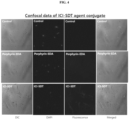
- the experimental groups were divided into ultrasound treatment only (US only), antibody and ultrasound treatment (PD-L1+US), porphyrin and ultrasound treatment (PPR+US), antibody, porphyrin and ultrasound treatment (PD-L1+PPR+US), and the conjugate of the invention and ultrasound treatment (ICI-SDT+US), with porphyrin-EDA used at a concentration of 20 ⁇ g/mL.
- the ultrasound parameters were set to 1.5W/cm 2 , a duty cycle of 50%, and 1 minute using the Soniel-100 equipment.
- 1 ⁇ 10 5 4T1 breast cancer cells were cultured in a 6-well plate, and after adding the substances to each group, the medium was replaced an hour later to wash off the substances that were not uptaken by the cells. Subsequently, ultrasound was applied, and the cells were cultured overnight before measuring cell viability through an MTT assay.
- the conjugate of the present invention has selectivity for tumors related to targeted therapy and specifically responds to ultrasound, making it suitable for use in the manufacture of pharmaceuticals for cancer treatment.
- the conjugate of the present invention demonstrates excellent solubility and stability in aqueous solutions while providing superior anti-cancer effects compared to simple immune checkpoint inhibitors. Therefore, it can be usefully employed as a new pharmaceutical for cancer treatment, indicating its industrial applicability.
Landscapes
- Health & Medical Sciences (AREA)
- Life Sciences & Earth Sciences (AREA)
- General Health & Medical Sciences (AREA)
- Chemical & Material Sciences (AREA)
- Veterinary Medicine (AREA)
- Public Health (AREA)
- Animal Behavior & Ethology (AREA)
- Medicinal Chemistry (AREA)
- Pharmacology & Pharmacy (AREA)
- Epidemiology (AREA)
- Immunology (AREA)
- Nuclear Medicine, Radiotherapy & Molecular Imaging (AREA)
- Bioinformatics & Cheminformatics (AREA)
- Engineering & Computer Science (AREA)
- Organic Chemistry (AREA)
- Physics & Mathematics (AREA)
- Acoustics & Sound (AREA)
- Radiology & Medical Imaging (AREA)
- General Chemical & Material Sciences (AREA)
- Chemical Kinetics & Catalysis (AREA)
- Mycology (AREA)
- Microbiology (AREA)
- Proteomics, Peptides & Aminoacids (AREA)
- Molecular Biology (AREA)
- Genetics & Genomics (AREA)
- Biophysics (AREA)
- Biochemistry (AREA)
- Oncology (AREA)
- Cell Biology (AREA)
- Pharmaceuticals Containing Other Organic And Inorganic Compounds (AREA)
- Medicinal Preparation (AREA)
- Medicines That Contain Protein Lipid Enzymes And Other Medicines (AREA)
Applications Claiming Priority (2)
| Application Number | Priority Date | Filing Date | Title |
|---|---|---|---|
| KR1020200169867A KR102578025B1 (ko) | 2020-12-07 | 2020-12-07 | 초음파 감작제가 결합된 면역관문억제제 및 이의 용도 |
| PCT/KR2021/017744 WO2022124664A1 (fr) | 2020-12-07 | 2021-11-29 | Inhibiteur de point de contrôle immunitaire conjugué à un sensibilisateur à ultrasons et utilisation correspondante |
Publications (2)
| Publication Number | Publication Date |
|---|---|
| EP4257151A1 true EP4257151A1 (fr) | 2023-10-11 |
| EP4257151A4 EP4257151A4 (fr) | 2025-07-23 |
Family
ID=81973789
Family Applications (1)
| Application Number | Title | Priority Date | Filing Date |
|---|---|---|---|
| EP21903710.8A Pending EP4257151A4 (fr) | 2020-12-07 | 2021-11-29 | Inhibiteur de point de contrôle immunitaire conjugué à un sensibilisateur à ultrasons et utilisation correspondante |
Country Status (5)
| Country | Link |
|---|---|
| US (1) | US20240042043A1 (fr) |
| EP (1) | EP4257151A4 (fr) |
| KR (1) | KR102578025B1 (fr) |
| CN (1) | CN116547010A (fr) |
| WO (1) | WO2022124664A1 (fr) |
Cited By (2)
| Publication number | Priority date | Publication date | Assignee | Title |
|---|---|---|---|---|
| US12527976B2 (en) | 2020-06-18 | 2026-01-20 | Histosonics, Inc. | Histotripsy acoustic and patient coupling systems and methods |
| US12582848B2 (en) | 2021-06-07 | 2026-03-24 | The Regents Of The University Of Michigan | Minimally invasive histotripsy systems and methods |
Families Citing this family (2)
| Publication number | Priority date | Publication date | Assignee | Title |
|---|---|---|---|---|
| CA3185803A1 (fr) | 2020-08-07 | 2022-02-10 | Vijay Agarwal | Reseaux ultrasonores pour une therapie sonodynamique amelioree pour le traitement du cancer |
| KR20250153354A (ko) * | 2024-04-17 | 2025-10-27 | 협성대학교산학협력단 | 상자성 이온이 결합된 프탈로시아닌 화합물을 포함하는 초음파 감작제 조성물 및 이의 용도 |
Family Cites Families (7)
| Publication number | Priority date | Publication date | Assignee | Title |
|---|---|---|---|---|
| GB9710049D0 (en) * | 1997-05-19 | 1997-07-09 | Nycomed Imaging As | Method |
| KR101847536B1 (ko) | 2015-06-02 | 2018-04-11 | 한국생명공학연구원 | 효모 세포벽 만노단백질 유래의 당사슬을 이용한 만노스-6-인산 당사슬이 부가된 당단백질의 제조방법 |
| KR102035384B1 (ko) * | 2017-06-26 | 2019-10-22 | 서강대학교산학협력단 | 광감작제를 포함한 마이크로버블-나노입자 복합체 및 이를 포함하는 항암 치료제 |
| CN109381428B (zh) * | 2017-08-10 | 2022-11-08 | 复旦大学 | 用于肿瘤光动力治疗联合免疫治疗的纳米制剂 |
| WO2019036249A1 (fr) * | 2017-08-18 | 2019-02-21 | Li-Cor, Inc. | Thérapie sonodynamique |
| KR102245552B1 (ko) * | 2018-02-28 | 2021-04-29 | 부산대학교 산학협력단 | 나노약물 복합체, 이의 제조방법 및 이의 용도 |
| GB201819853D0 (en) * | 2018-12-05 | 2019-01-23 | Innovation Ulster Ltd | Therapy |
-
2020
- 2020-12-07 KR KR1020200169867A patent/KR102578025B1/ko active Active
-
2021
- 2021-11-29 CN CN202180081965.6A patent/CN116547010A/zh active Pending
- 2021-11-29 EP EP21903710.8A patent/EP4257151A4/fr active Pending
- 2021-11-29 US US18/256,143 patent/US20240042043A1/en active Pending
- 2021-11-29 WO PCT/KR2021/017744 patent/WO2022124664A1/fr not_active Ceased
Cited By (2)
| Publication number | Priority date | Publication date | Assignee | Title |
|---|---|---|---|---|
| US12527976B2 (en) | 2020-06-18 | 2026-01-20 | Histosonics, Inc. | Histotripsy acoustic and patient coupling systems and methods |
| US12582848B2 (en) | 2021-06-07 | 2026-03-24 | The Regents Of The University Of Michigan | Minimally invasive histotripsy systems and methods |
Also Published As
| Publication number | Publication date |
|---|---|
| KR102578025B1 (ko) | 2023-09-15 |
| CN116547010A (zh) | 2023-08-04 |
| KR20220080813A (ko) | 2022-06-15 |
| WO2022124664A1 (fr) | 2022-06-16 |
| EP4257151A4 (fr) | 2025-07-23 |
| US20240042043A1 (en) | 2024-02-08 |
Similar Documents
| Publication | Publication Date | Title |
|---|---|---|
| EP4257151A1 (fr) | Inhibiteur de point de contrôle immunitaire conjugué à un sensibilisateur à ultrasons et utilisation correspondante | |
| AU2020356793B2 (en) | PH/glutathione-responsive β-carbolines/cycloketene derivatives and their preparation and application | |
| US20180117168A1 (en) | Cyclodextrin-based polymers for therapeutic delivery | |
| JP2011518890A (ja) | 新規のクロリンe6−葉酸結合化合物、その製造方法、およびそれを含有する癌治療用薬学的組成物 | |
| CN106794362A (zh) | 用于治疗应用的一氧化碳‑释放分子及其制备和使用方法 | |
| JP2022552416A (ja) | ブラシプロドラッグおよびその使用 | |
| CN116462681B (zh) | 一种光热-免疫联合治疗肿瘤的化合物及其应用 | |
| KR101165760B1 (ko) | 고분자형 암치료용 의약 및 그 제조 방법 | |
| JP7800874B2 (ja) | 分解可能な近赤外光増感剤、並びにその調製方法および使用 | |
| CN111943954B (zh) | 二氢卟吩衍生物及其相应的制备方法和用途 | |
| JP2011518891A (ja) | クロリンe6−葉酸結合化合物およびキトサンを含有する癌治療用薬学的組成物 | |
| KR20150011521A (ko) | 광역학 치료를 위한 덴드리머 형태의 폴리아미노산 기반 수용성 광응답제 및 이의 제조방법 | |
| AU2021326906B2 (en) | Chlorin derivative or pharmaceutically acceptable salt thereof, preparation method therefor, use thereof, and combination thereof with ultrasound medical system | |
| US20080279776A1 (en) | Photosensitizers and MRI Enhancers | |
| KR100918811B1 (ko) | 클로린 e6-엽산 결합 화합물 및 키토산을 함유하는 암 치료용 약학적 조성물 | |
| KR100911250B1 (ko) | 신규한 클로린 e6-엽산 결합 화합물의 제조방법 | |
| JP7620569B2 (ja) | がん治療のための新規治療用ベクター及びプロドラッグ | |
| KR102266865B1 (ko) | 지방산을 유효성분으로 포함하는 수용성 광감작제 결합체 및 이의 제조방법 | |
| KR20240111723A (ko) | 헤파린이 결합된 표적 항암 치료용 화합물 및 이의 나노입자 | |
| JP6281901B2 (ja) | 水溶性ポルフィリン誘導体とそれらの製造方法 | |
| WO2025261479A1 (fr) | Conjugué utilisant du succinyle en tant que lieur, son procédé de préparation et son utilisation | |
| KR20260028651A (ko) | 엽산-약물 접합체, 이의 제조 방법 및 이를 포함하는 약학적 조성물 | |
| CN121064466A (zh) | 用于肿瘤光免疫疗法的智能纳米调节剂的制备方法及应用 | |
| CN121652224A (zh) | 多肽偶联化合物、所得多肽偶联药物及其用途 | |
| KR100918810B1 (ko) | 클로린 e6-엽산 결합 화합물을 함유하는 암 치료용 약학적 조성물 |
Legal Events
| Date | Code | Title | Description |
|---|---|---|---|
| STAA | Information on the status of an ep patent application or granted ep patent |
Free format text: STATUS: THE INTERNATIONAL PUBLICATION HAS BEEN MADE |
|
| PUAI | Public reference made under article 153(3) epc to a published international application that has entered the european phase |
Free format text: ORIGINAL CODE: 0009012 |
|
| STAA | Information on the status of an ep patent application or granted ep patent |
Free format text: STATUS: REQUEST FOR EXAMINATION WAS MADE |
|
| 17P | Request for examination filed |
Effective date: 20230613 |
|
| AK | Designated contracting states |
Kind code of ref document: A1 Designated state(s): AL AT BE BG CH CY CZ DE DK EE ES FI FR GB GR HR HU IE IS IT LI LT LU LV MC MK MT NL NO PL PT RO RS SE SI SK SM TR |
|
| DAV | Request for validation of the european patent (deleted) | ||
| DAX | Request for extension of the european patent (deleted) | ||
| REG | Reference to a national code |
Ref country code: DE Ref legal event code: R079 Free format text: PREVIOUS MAIN CLASS: A61K0047540000 Ipc: A61K0039000000 |
|
| A4 | Supplementary search report drawn up and despatched |
Effective date: 20250624 |
|
| RIC1 | Information provided on ipc code assigned before grant |
Ipc: A61K 39/00 20060101AFI20250617BHEP Ipc: A61K 41/00 20200101ALI20250617BHEP Ipc: A61K 47/68 20170101ALI20250617BHEP Ipc: A61K 47/54 20170101ALI20250617BHEP Ipc: A61K 49/22 20060101ALI20250617BHEP Ipc: A61P 35/00 20060101ALI20250617BHEP Ipc: C07K 16/28 20060101ALI20250617BHEP |
|
| STAA | Information on the status of an ep patent application or granted ep patent |
Free format text: STATUS: THE APPLICATION IS DEEMED TO BE WITHDRAWN |