EP4258165B1 - Verfahren und vorrichtung zur anzeige zweidimensionaler codes, vorrichtung und medium - Google Patents
Verfahren und vorrichtung zur anzeige zweidimensionaler codes, vorrichtung und medium Download PDFInfo
- Publication number
- EP4258165B1 EP4258165B1 EP21917282.2A EP21917282A EP4258165B1 EP 4258165 B1 EP4258165 B1 EP 4258165B1 EP 21917282 A EP21917282 A EP 21917282A EP 4258165 B1 EP4258165 B1 EP 4258165B1
- Authority
- EP
- European Patent Office
- Prior art keywords
- color
- dimensional code
- image
- primary positioning
- positioning point
- Prior art date
- Legal status (The legal status is an assumption and is not a legal conclusion. Google has not performed a legal analysis and makes no representation as to the accuracy of the status listed.)
- Active
Links
Images



Classifications
-
- G—PHYSICS
- G06—COMPUTING OR CALCULATING; COUNTING
- G06K—GRAPHICAL DATA READING; PRESENTATION OF DATA; RECORD CARRIERS; HANDLING RECORD CARRIERS
- G06K7/00—Methods or arrangements for sensing record carriers, e.g. for reading patterns
- G06K7/10—Methods or arrangements for sensing record carriers, e.g. for reading patterns by electromagnetic radiation, e.g. optical sensing; by corpuscular radiation
- G06K7/14—Methods or arrangements for sensing record carriers, e.g. for reading patterns by electromagnetic radiation, e.g. optical sensing; by corpuscular radiation using light without selection of wavelength, e.g. sensing reflected white light
- G06K7/1404—Methods for optical code recognition
- G06K7/1408—Methods for optical code recognition the method being specifically adapted for the type of code
- G06K7/1417—2D bar codes
-
- G—PHYSICS
- G06—COMPUTING OR CALCULATING; COUNTING
- G06K—GRAPHICAL DATA READING; PRESENTATION OF DATA; RECORD CARRIERS; HANDLING RECORD CARRIERS
- G06K19/00—Record carriers for use with machines and with at least a part designed to carry digital markings
- G06K19/06—Record carriers for use with machines and with at least a part designed to carry digital markings characterised by the kind of the digital marking, e.g. shape, nature, code
- G06K19/06009—Record carriers for use with machines and with at least a part designed to carry digital markings characterised by the kind of the digital marking, e.g. shape, nature, code with optically detectable marking
- G06K19/06037—Record carriers for use with machines and with at least a part designed to carry digital markings characterised by the kind of the digital marking, e.g. shape, nature, code with optically detectable marking multi-dimensional coding
-
- G—PHYSICS
- G06—COMPUTING OR CALCULATING; COUNTING
- G06K—GRAPHICAL DATA READING; PRESENTATION OF DATA; RECORD CARRIERS; HANDLING RECORD CARRIERS
- G06K7/00—Methods or arrangements for sensing record carriers, e.g. for reading patterns
- G06K7/10—Methods or arrangements for sensing record carriers, e.g. for reading patterns by electromagnetic radiation, e.g. optical sensing; by corpuscular radiation
- G06K7/14—Methods or arrangements for sensing record carriers, e.g. for reading patterns by electromagnetic radiation, e.g. optical sensing; by corpuscular radiation using light without selection of wavelength, e.g. sensing reflected white light
- G06K7/1404—Methods for optical code recognition
- G06K7/1439—Methods for optical code recognition including a method step for retrieval of the optical code
- G06K7/1443—Methods for optical code recognition including a method step for retrieval of the optical code locating of the code in an image
-
- G—PHYSICS
- G06—COMPUTING OR CALCULATING; COUNTING
- G06T—IMAGE DATA PROCESSING OR GENERATION, IN GENERAL
- G06T11/00—Two-dimensional [2D] image generation
-
- G—PHYSICS
- G06—COMPUTING OR CALCULATING; COUNTING
- G06V—IMAGE OR VIDEO RECOGNITION OR UNDERSTANDING
- G06V10/00—Arrangements for image or video recognition or understanding
- G06V10/10—Image acquisition
- G06V10/19—Image acquisition by sensing codes defining pattern positions
-
- G—PHYSICS
- G06—COMPUTING OR CALCULATING; COUNTING
- G06V—IMAGE OR VIDEO RECOGNITION OR UNDERSTANDING
- G06V10/00—Arrangements for image or video recognition or understanding
- G06V10/40—Extraction of image or video features
- G06V10/56—Extraction of image or video features relating to colour
-
- G—PHYSICS
- G06—COMPUTING OR CALCULATING; COUNTING
- G06V—IMAGE OR VIDEO RECOGNITION OR UNDERSTANDING
- G06V30/00—Character recognition; Recognising digital ink; Document-oriented image-based pattern recognition
- G06V30/10—Character recognition
- G06V30/22—Character recognition characterised by the type of writing
- G06V30/224—Character recognition characterised by the type of writing of printed characters having additional code marks or containing code marks
Definitions
- the present disclosure relates to the technical field of two-dimensional codes, and in particular to a method and apparatus for displaying a two-dimensional code, a device and a medium.
- two-dimensional codes are more and more widely used in people's lives.
- people can use two-dimensional codes to share social business cards, short videos, information on social platforms, or the like.
- the conventional two-dimensional codes have a monotonous style, and the unique style of the application cannot be reflected through the two-dimensional code thereof, and thus the two-dimensional code is less recognizable.
- a two-dimensional code including variable information comprises a two-dimensional code body, a position detection graphic area and a function graphic area.
- the position detection graphic area and the function graphic area are attached to the two-dimensional code body.
- the position detection graphic area is arranged at three corners of the two-dimensional code body, and comprises a positioning block, a partition block and an information box.
- the positioning block is arranged at the middle part of the partitioning block.
- the partitioning block and the positioning block are different in color.
- the partitioning block is arranged in the information box.
- the edges of the information box are parallel to the edges of the partitioning block.
- a two-dimensional code generating and displaying method includes: receiving a two-dimensional code display instruction and obtaining a characteristic character code based on the two-dimensional code display instruction; according to a preset two-dimensional code display area and a display gray scale, obtaining a display parameter of the characteristic character code; obtaining data information of an original two-dimensional code and generating a target two-dimensional code based on the data information of the original two-dimensional code, the characteristic character code, and the display parameter; and displaying the generated target two-dimensional code.
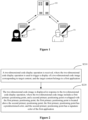
- the electronic device 101 may search for the two-dimensional code image corresponding to the target content from the stored images after a reception of the two-dimensional code display operation inputted by the user in the specified application, which is not repeated herein.
- the two-dimensional code image that is not stored locally on the electronic device 101 may be displayed for the user on the electronic device 101.
- the target content may be to-be-shared information in the specified application or a fetch address of a page used to display the to-be-shared information in the specified application.
- the two-dimensional code image may be a shared two-dimensional code image generated based on the to-be-shared information or the fetch address.
- the shared two-dimensional code image can reflect the unique style of the specified application through the signature color. In this way, the aesthetics of the two-dimensional code is increased.
- the sharing recipient can quickly understand the application to which the two-dimensional code belongs based on the signature color, thereby improving the recognition of the two-dimensional code.
- the electronic device 101 may directly display the locally stored two-dimensional code image.
- the electronic device 101 may receive a two-dimensional code image from the server 102 in advance, and store the received two-dimensional code image locally.
- the locally stored two-dimensional code image may be displayed by the user on the electronic device 101.
- the method for displaying the two-dimensional code may be performed by an electronic device.
- the electronic device may be the electronic device 101 in the client shown in Figure 1 .
- the electronic device may include a device with a communication function, such as, a mobile phone, a tablet computer, a desktop computer, a laptop computer, a vehicle-mounted terminal, a wearable electronic device, an all-in-one computer, and a smart home device, or a device that is simulated by a virtual machine or an emulator.
- Figure 2 illustrates a schematic flowchart of a method for displaying a two-dimensional code according to an embodiment of the present disclosure.
- the method for displaying the two-dimensional code may include the following steps S210 to S220.
- step S210 a two-dimensional code display operation is received, where the two-dimensional code display operation is used to trigger a display of a two-dimensional code image corresponding to target content, and the target content belongs to a first application.
- the user when a user wants to display on the electronic device a two-dimensional code image corresponding to the target content belonging to the first application, the user may input a two-dimensional code display operation for triggering the display of the two-dimensional code image to the electronic device.
- the electronic device receives the two-dimensional code display operation.
- the first application may be any application, and the target content may be any content belonging to the first application, which will not be limited herein.
- the first application may include an application having an information sharing function.
- the target content may include any to-be-shared information in the first application or a fetch address of a page for displaying the to-be-shared information.
- the two-dimensional code image may include the to-be-shared information or a shared two-dimensional code image corresponding to the fetch address.
- the to-be-shared information may include at least one of user personal social page information, a user social business card, social platform information, an image, a collection of images, a video, a collection of videos, special effects, music, an image editing template, a video editing template, and the like.
- to-be-shared information may also be information to be displayed or shared by other users via a two-dimensional code, which is not limited herein.
- step S220 the two-dimensional code image is displayed in response to the two-dimensional code display operation, where the two-dimensional code image includes a first primary positioning point, and a second primary positioning point overlapped with the first primary positioning point; the first primary positioning point is located above the second primary positioning point; the first primary positioning point has a predetermined color, and the second primary positioning point has a signature color of the first application.
- the electronic device may display the two-dimensional code image corresponding to the target content belonging to the first application in response to the two-dimensional code display operation.
- the two-dimensional code image may be a rectangular image.
- the two-dimensional code image may include two or three sets of the first primary positioning point and the second primary positioning point overlapped with each other. In each set, the first primary positioning point and the second primary positioning point overlapped with each other may be arranged at one predetermined vertex of the two-dimensional code image.
- the two-dimensional code image may include two sets of the first primary positioning point and the second primary positioning point overlapped with each other.
- the two sets of the first primary positioning point and the second primary positioning point overlapped with each other may be located at two adjacent predetermined vertices of the two-dimensional code image, respectively.
- the two-dimensional code image may include three sets of the first primary positioning point and the second primary positioning point overlapped with each other.
- the three sets of the first primary positioning point and the second primary positioning point overlapped with each other are located at three predetermined vertices of the two-dimensional code image, such that centers of the three sets of the first primary positioning point and the second primary positioning point overlapped with each other may form an isosceles right triangle.
- each set includes multiple first primary positioning points
- multiple first primary positioning points may also be overlapped with each other.
- the number of the second primary positioning point in each set may be one or more, which is not limited herein.
- each set includes one first primary positioning point and two second primary positioning points
- the two second primary positioning points overlap with the first primary positioning point so that the centers of the two second primary positioning points are in line with the center of the first primary positioning point and the centers of the two second primary positioning points are located on two sides of the center of the first primary positioning point.
- the number of the first type of colors may be one or more, which is not limited herein.
- the number of the second type of colors may be one or more, which is not limited herein.
- the first primary positioning point may be located above the second primary positioning point, such that the overlapped portion of the first primary positioning point and the second primary positioning point may have a predetermined color, i.e., the overlapped portion may be displayed in the predetermined color.
- the first primary positioning point and the second primary positioning point are described in detail below with a specific example.
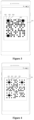
- Figure 3 illustrates a schematic diagram of a two-dimensional code image according to an embodiment of the present disclosure.
- the electronic device may display a two-dimensional code image 301
- the two-dimensional code image 301 may include three sets of a first primary positioning point and a second primary positioning point overlapped with each other.
- the three sets of the first primary positioning point and the second primary positioning point overlapped with each other may be located at an upper left vertex, a lower left vertex, and an upper right vertex of the two-dimensional code image 301.
- the first primary positioning point may include a first color primary positioning point 302 (such as a large black dot in Figure 3 ), and the second primary positioning point may include a second color primary positioning point 303 (such as a grid-filled large dot in Figure 3 ) and a third color primary positioning point 304 (such as a dot-filled large dot in Figure 3 ).
- the first color primary positioning point 302 is overlapped with the second color primary positioning point 303 and the third color primary positioning point 304, and the first color primary positioning point 302 is located above the second color primary positioning point 303 and the third color primary positioning point 304.
- the center of the first color primary positioning point 302 is in line with the centers of the second color primary positioning point 303 and the third color primary positioning point 304.
- the center of the second color primary positioning point 303 is located to the left of the first color primary positioning point 302, and the center of the third color primary positioning point 304 is located to the right of the first color primary positioning point 302.
- the server may generate the two-dimensional code image corresponding to the target content based on the first primary positioning point and the second primary positioning point overlapped with each other as described above, in response to the two-dimensional code acquisition request; and send the generated two-dimensional code image to the electronic device.
- the two-dimensional code acquisition request may be used to cause the server to search for and provide the two-dimensional code image corresponding to the target content.
- the server may search for the two-dimensional code image corresponding to the target content from stored images, in response to the two-dimensional code acquisition request; and send the found two-dimensional code image to the electronic device.
- the two-dimensional code image may be generated by the server in advance based on the first primary positioning point and the second primary positioning point overlapped with each other as described above.
- the method for displaying the two-dimensional code may further include: generating a two-dimensional code image corresponding to the target content.
- the method for generating the two-dimensional code image by the electronic device is similar to that by the server, which will not be repeated herein.
- the two-dimensional code image may further include auxiliary positioning points, which may be uniformly arranged around the first primary positioning point and the second primary positioning point overlapped with each other.
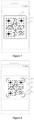
- Figure 4 illustrates a schematic diagram of a two-dimensional code image according to another embodiment of the present disclosure.
- the first primary positioning point 402 and the second primary positioning point 403 are similar to the first primary positioning point and the second primary positioning point in the embodiment shown in Figure 3 , which will not be described herein.
- auxiliary positioning points 404 in each set may be 8.
- One set of auxiliary positioning points 404 may be uniformly arranged around one set of a first primary positioning point 402 and a second primary positioning point 403.
- the auxiliary positioning points 404 may be black.
- the auxiliary positioning points may include a first auxiliary positioning point and a second auxiliary positioning point.
- the first auxiliary positioning point may have the predetermined color
- the second auxiliary positioning point may have the first type of color
- a percentage of the second auxiliary positioning point in the auxiliary positioning points may be a first predetermined proportion.
- the first predetermined proportion may be any value in the range (0, 1), which is not limited herein. For example, taking the number of auxiliary positioning points in each set being 8 as an example, the first predetermined proportion may be 1/8 or 1/4.
- the server or the electronic device may generate auxiliary positioning points corresponding to each set of the first primary positioning point and the second primary positioning point.
- the respective auxiliary positioning points have a predetermined color such as black.
- a first predetermined proportion of auxiliary positioning points may be randomly selected in each set, and the selected auxiliary positioning points are converted from the predetermined color to the first type of colors such as red.
- each set of auxiliary positioning points include the first auxiliary positioning point and the second auxiliary positioning point.
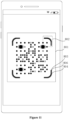
- Figure 5 illustrates a schematic diagram of a two-dimensional image according to yet another embodiment of the present disclosure.
- the electronic device may display a two-dimensional code image 501.
- the two-dimensional code image 501 may include three sets of a first primary positioning point 502 and a second primary positioning point 503 overlapped with each other, and three sets of auxiliary positioning points.
- the first primary positioning point 502 and the second primary positioning point 503 are similar to the first primary positioning point and the second primary positioning point in the embodiment shown in Figure 3 , which will not be described herein.
- auxiliary positioning points in each set may be uniformly arranged around one set of the first primary positioning point 502 and the second primary positioning point 503, and a first pre-determined proportion is 1/8 is illustrated as an example.
- Each set of auxiliary positioning points may include seven first auxiliary positioning points 504 and one second auxiliary positioning point 505.
- the first auxiliary positioning point 504 may be black and the second auxiliary positioning point 505 may be red.
- the recognition of the two-dimensional code can be improved by the color of the second auxiliary positioning point in the auxiliary positioning points, without affecting the positioning effect of the two-dimensional code.
- the two-dimensional code image may further include a data point array.
- the data point array may be generated based on the target content, and the data point array may be used to enable a second application to acquire the target content.
- the second application may include at least one of the first application and other applications other than the first application, which is not limited herein.
- the two-dimensional code image may be a universal two-dimensional code image.
- the data point array may be used to enable the first application to obtain the target content directly by scanning or recognizing the two-dimensional code image, and to display the to-be-shared information corresponding to the target content.
- the data point array may be used to enable the second application to obtain the target content of the first application in the second application by scanning or recognizing the two-dimensional code image, and display the to-be-shared information corresponding to the target content.
- the second application may convert the data point array into the target content, and display the to-be-shared information corresponding to the target content via a built-in browser page, an applet page, or a fifth generation hypertext markup language (HTML5, H5) page of the second application.
- HTML5 hypertext markup language
- the data point array may further be used to enable the second application, after scanning or recognizing the two-dimensional code image, to jump to the first application to obtain the target content and display the to-be-shared information corresponding to the target content.
- the second application may convert the data point array into the target content, determine the first application to which the target content belongs, and then jump to the first application to cause the first application to display the to-be-shared information corresponding to the target content.
- the two-dimensional code image 301 may include a data point array, and the data point array may include data points 305.
- the data points 305 may be black.
- the two-dimensional code image 401 may include a data point array, and the data point array may include data points 405.
- the data points 405 may be black.
- the two-dimensional code image 501 may include a data point array, and the data point array may include data points 506.
- the data points 506 may be black.
- the data point array may include a first data point and a second data point, the first data point may have the predetermined color described above, and the second data point may have the signature color described above.
- the signature color includes the first type of color.
- the color obtained by binarizing the first type of color is the same as the predetermined color.
- the second data point may include a first type of second data points.
- the first type of second data points may have the first type of color.
- the first data point and the first type of second data points may be generated based on the target content.
- the color obtained by binarizing the first type of color is the same as the predetermined color, the color obtained by binarizing the first type of color remains black. Thus, even if the first type of second data point has the first type of color, the data recognition function will not be affected.
- the signature color includes a second type of color.
- the color obtained by binarizing the second type of color is different from the predetermined color.
- the second data point may further include a second type of second data point.
- the second type of second data point may have a second type of color. Since a color obtained by binarizing the second type of color is different from the predetermined color, i.e., the color obtained by binarizing the second type of color is white, the content recognized based on the data point array will not be affected even if the second type of second data point has the second type of color.
- the proportion of the second type of second data points among the first data point and blank data point bits other than the first type of second data point in the two-dimensional code image may be a third predetermined proportion.
- the third predetermined proportion may be any value in the range (0, 1), which is not limited herein.
- the third predetermined proportion may be 1%, 3%, 5% or 10%, which is not limited herein.
- the server may first generate an initial data point array based on the target content.
- each data point is a predetermined color such as black.
- the server may randomly select a second predetermined proportion of data point in the initial data point array, and convert the selected data point from the predetermined color to a first type of color such as red, such that the data point array may include a first data point and the first type of second data point.
- the server may randomly select the third predetermined proportion of blank data point among the blank data points in the data point array, and generate the second type of second data point having a second type of color such as blue at the selected blank data point. In this way, a final data point array including the first data point, the first type of second data point, and the second type of second data point is obtained.
- Figure 6 illustrates a schematic diagram of a two-dimensional code image according to still yet another embodiment of the present disclosure.
- the electronic device may display a two-dimensional code image 601.
- the two-dimensional code image 601 may include three sets of a first primary positioning point 602 and a second primary positioning point 603 overlapped with each other, three sets of auxiliary positioning points 604, and a data point array.
- the data point array may include a first data point 605 (such as a black dot in Figure 6 ), a first type of second data point 606 (such as a grid-filled dot in Figure 6 ) and a second type of second data point 607 (such as a dot-filled dot in Figure 6 ).
- the predetermined color includes black and the signature color includes red and blue
- a color obtained by binarizing red is black and a color obtained by binarizing blue is white.
- the first data point 605 may be black
- the first type of second data points 606 may be red
- the second type of second data points 607 may be blue.
- the recognition of the two-dimensional code may be improved by the color of the second data point in the data point array, without affecting the reliability of reading the information of the two-dimensional code.
- the two-dimensional code image may further include an image border, which may be generated based on the signature color.
- the image border may be a closed border.
- the closed border includes a sub-border having the signature color.
- the closed border may enclose a closed shape.
- the image border may be a closed border which includes a first sub-border having a first type of color and a second sub-border having a second type of color.
- Figure 7 illustrates a schematic diagram of a two-dimensional code image border according to an embodiment of the present disclosure.
- the electronic device may display a two-dimensional code image 701.
- An image border is provided at an image edge of the two-dimensional code image 701.
- the image border may include an L-shaped first sub-border 702 and an L-shaped second sub-border 703.
- the first sub-border 702 and the second sub-border 703 may enclose a rectangle.
- the signature color includes red and blue
- the color obtained by binarizing red is black and the color obtained by binarizing blue is white.
- the first sub-border 702 may be red and the second sub-border 703 may be blue.
- binary image 701 is similar to the two-dimensional code image shown in Figure 6 , which will not be repeated herein.
- the image border may be an open border which includes sub-borders having the signature color. Every two adjacent sub-borders are not connected. If every two adjacent sub-borders are connected, a closed shape may be formed.
- each sub-border of the image border may include a first sub-border portion having a first type of color and a second sub-border portion having a second type of color, respectively.
- Figure 8 illustrates a schematic diagram of a two-dimensional image border according to another embodiment of the present disclosure.
- a two-dimensional code image 801 may be displayed on the electronic device.
- An image border is provided for the two-dimensional code image 801.
- the image border includes four L-shaped sub-borders 802, which may be located at the four vertices of the two-dimensional code image 801.
- Each sub-border 802 may include one first sub-border portion 803 and one second sub-border portion 804.
- each L-shaped sub-border 802 may be provided with a rounded corner, i.e., a certain curvature at the corner of the L-shaped sub-border 802.
- the signature color includes red and blue
- a color obtained by binarizing red is black and a color obtained by binarizing blue is white.
- the first sub-border portion 803 may be red and the second sub-border portion 804 may be blue.
- two-dimensional code image 601 is similar to the two-dimensional code image shown in Figure 6 , which will not be repeated herein.
- Figure 9 illustrates a schematic diagram of a two-dimensional code image border according to yet another embodiment of the present disclosure.
- the electronic device may display a two-dimensional code image 701.
- An image border is provided at the image edge of the two-dimensional code image 701.
- the image border may include an L-shaped first sub-border 702 and an L-shaped second sub-border 703.
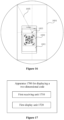
- the two-dimensional code image 701 may further include a type icon 704 of the target content.
- the type icon 704 may be used to display a type of the target content.
- the type icon 704 may be located within a rectangle enclosed by the first sub-border 702 and the second sub-border 703.
- the content information may be located outside the image border.
- the two-dimensional code storage control 1203 may be used to store the two-dimensional code image locally.
- the two-dimensional code storage control 1203 may be a "Store Locally" button.
- the electronic device may store the two-dimensional code image to a target storage space of the electronic device locally, by clicking on the two-dimensional code storage control 1203 by the user.
- the user may select at least one of the sharing objects in the other applications. If the sharing object in the other application selected by the user is a user, the electronic device may send the two-dimensional code image to the selected user through a chat window between the user in the other application selected by the user and the selected user. If the sharing object in the other application selected by the user is a social platform, the electronic device may upload the two-dimensional code image to the social platform in another application selected by the user.
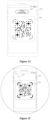
- the electronic device may further display the two-dimensional code image on the interface displayed when the two-dimensional code display operation, in an overlapping manner.
- the electronic device may, after receiving the two-dimensional code display operation, set a floating layer on a preview interface in response to the two-dimensional code display operation, and display the two-dimensional code image at any position in the floating layer.
- the target content may be a target video
- the display interface may be a video display interface.
- the electronic device may directly display the two-dimensional code image at the middle of the video display interface in the overlapping manner, after the user inputs the two-dimensional code display operation in the video display interface.
- the electronic device may directly display the two-dimensional code image on the interface displayed when the two-dimensional code display operation is received, in the overlapping manner, reducing the number of page jumps and improving the user experience.
- the first background image may be a predetermined image.
- the predetermined image may be any preset image, which will not be limited herein.
- the first color may be a predetermined background color.
- the predetermined background color may be any predetermined color, which is not limited herein.
- the method for displaying the two-dimensional code may further include: receiving an image change operation, where the image change operation is used to replace the first background image with a second background image; and replacing the first background image with the second background image for display, in response to the image change operation.
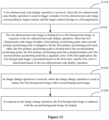
- Figure 13 illustrates a schematic flowchart of a method for displaying a two-dimensional code according to another embodiment of the present disclosure.
- the method for displaying the two-dimensional code may include the following steps S1310 to S 1340.
- Step S1310 is similar to step S210 in the embodiment shown in Figure 2 , which will not be repeated herein.
- a two-dimensional code image is displayed on a first background image, in response to the two-dimensional code display operation, where the two-dimensional code image includes a first primary positioning point, and a second primary positioning point overlapped with the first primary positioning point; the first primary positioning point is located above the second primary positioning point; the first primary positioning point has a predetermined color; the second primary positioning point has a signature color of the first application; the first background image is generated based on the first color; and the first color is determined based on the two-dimensional code display operation.
- the first color may be determined based on the two-dimensional code display operation.
- the first color may be a predetermined background color.
- the predetermined background color may be any preset color, which is not limited herein.
- the first background image may be generated based on the first color.
- step S1330 an image change operation is received, where the image change operation is used to replace the first background image with a second background image.
- the image change operation may be a selection operation for the second background image.
- the second color may be determined based on the image change operation.
- the image change operation may include an operation, such as, a click and a long press, on a fourth control for triggering display of multiple colors or on any display position; and an operation for selecting the second color from the multiple colors.
- multiple colors may be stored in advance in the electronic device and the image change operation may be used to trigger the electronic device to select the second color.
- step S1340 in response to the image change operation, the first background image is replaced with the second background image for display.
- the electronic device may replace the first background image with the second background image for display in response to the image change operation.
- step S1340 may specifically include: expanding the second background image in a predetermined radius increment, with an operation position of the image change operation as a center, until the first background image is replaced with the second background image.
- the operation position may be a touch center point of the image change operation on the display screen of the electronic device.
- the electronic device may gradually expand the circular display area on the first background image from small to large based on a predetermined radius increment, with the operation position of the image change operation as the center; and display the image content at a corresponding position of the second background image within the circular display area, until the circular display area completely covers the first background image.
- the first background image may be replaced with the second background image for display.
- the electronic device may first fill the second color in a canvas to generate a second color background image, in response to the image change operation; perform a color gradient processing on the second color background image based on the third color, to obtain the second background image; and then replace the first background image with the second background image for display.
- the electronic device may perform a color gradient processing to the second color background image based on a fixed color gradient center and a fixed gradient radius, according to the third color, to obtain the second background image.
- the fixed color gradient center may be any display position, which is not limited herein.
- the fixed color gradient center may be the center of the display screen of the electronic device.
- the electronic device may fill the second color in the canvas having the same size as the display screen of the electronic device to generate the second color background image.
- the color gradient processing is performed on the second color background image in the fixed gradient radius based on the third color, with the center of the canvas being the color gradient center, to obtain the second background image having the fixed gradient radius with the center of the display screen as the color gradient center.
- the first background image is replaced with the second background image for display.
- the color gradient image corresponding to the second background image may be generated by a color gradient processing on the second color based on operation parameters of the image change operation.
- the operation parameters include the operation duration
- the operation duration is used to determine the color gradient radius
- the electronic device may determine the color gradient radius corresponding to the operation duration based on a correspondence between the operation duration and the color gradient radius. Then, the color gradient processing is performed on the second color background image based on the determined color gradient radius according to the third color, to obtain the second background image, which is not repeated herein.
- the second color background image is obtained by filling an initial tone of the second color.
- the electronic device may further determine the chromatism of the second color corresponding to the operation strength based on a correspondence between the operation strength and the chromatism. Then, based on the chromatism of the second color, the image color of the second color background image is adjusted from the initial tone of the second color to the actual tone of the second color.
- the color gradient processing is performed on the second color background image after adjusting the image color based on the third color, to obtain the second background image, which is not repeated herein.
- the personalized demands of the user can be further met, thereby improving the user experience.
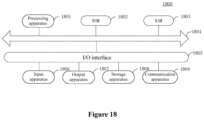
- Figure 17 illustrates a schematic structural diagram of an apparatus for displaying a two-dimensional code according to an embodiment of the present disclosure.
- the first receiving unit 1710 may be configured to receive a two-dimensional code display operation, where the two-dimensional code display operation is used to trigger a display of a two-dimensional code image corresponding to target content, and the target content belongs to a first application.
- the two-dimensional code image may further include auxiliary positioning points, and the auxiliary positioning points may be uniformly arranged around the first primary positioning point and the second primary positioning point overlapped with each other.
- the signature color may include a first type of color, and a color obtained by binarizing the first type of color may be the same as the predetermined color.
- the data point array may be generated based on the target content.
- the data point array may be used to enable a second application to acquire the target content.
- the second application may include at least one of the first application and other applications other than the first application.
- the second data point may include a first type of second data point and a second type of second data point.
- the first type of second data point may have the first type of color.
- the second type of second data point may have the second type of color.
- the first data point and the first type of second data points may be generated based on the target content.
- the first display unit 1720 may be further configured to display the two-dimensional code image on a first background image, where the first background image is generated based on a first color.
- the apparatus 1700 for displaying the two-dimensional code may further include a second receiving unit and a second display unit.
- the second receiving unit may be configured to receive an image change operation, where the image change operation may be used to replace the first background image with a second background image.
- the second display unit may be configured to replace the first background image with the second background image for display, in response to the image change operation.
- the second background image may include a color gradient image corresponding to the second color.
- the color gradient image may be generated by a color gradient from the second color to a third color, where the third color may include at least one of the first color and a target color.
- the color gradient image may be generated by performing a color gradient on the second color based on operation parameters of the image change operation, where the operation parameters may include at least one of an operation position, an operation duration and an operation strength.
- the apparatus 1700 for displaying the two-dimensional code may further include: a third display unit configured to display a target control, in response to the two-dimensional code display operation.
- the target control may include at least one of a two-dimensional code storage control, a two-dimensional code scanning control and a two-dimensional code sharing control.
- the client and the server may perform communication by using any currently known network protocol such as Hyper Text Transfer Protocol (HTTP) or any network protocol to be developed in the further, and may connect with digital data communication (for example, a communication network) in any form or carried in any medium.
- HTTP Hyper Text Transfer Protocol
- Examples of the communication network include a local area network (LAN), a wide area network (WAN), Internet, and an end-to-end network (such as, ad hoc end-to-end network), and any currently known or future developed network.
Landscapes
- Engineering & Computer Science (AREA)
- Physics & Mathematics (AREA)
- General Physics & Mathematics (AREA)
- Theoretical Computer Science (AREA)
- Multimedia (AREA)
- Computer Vision & Pattern Recognition (AREA)
- Health & Medical Sciences (AREA)
- Electromagnetism (AREA)
- General Health & Medical Sciences (AREA)
- Toxicology (AREA)
- Artificial Intelligence (AREA)
- User Interface Of Digital Computer (AREA)
Claims (25)
- Verfahren zum Anzeigen eines zweidimensionalen Codes, umfassend:Empfangen (S210) einer zweidimensionalen Codeanzeigeoperation, wobei die zweidimensionale Codeanzeigeoperation verwendet wird, um eine Anzeige eines zweidimensionalen Codebilds auszulösen, das Zielinhalt entspricht, und der Zielinhalt zu einer ersten Anwendung gehört; undAnzeigen (S220) des zweidimensionalen Codebilds als Reaktion auf die zweidimensionale Codeanzeigeoperation, wobei das zweidimensionale Codebild einen ersten primären Positionierungspunkt und einen zweiten primären Positionierungspunkt umfasst, der von dem ersten primären Positionierungspunkt überlagert wird; der erste primäre Positionierungspunkt sich über dem zweiten primären Positionierungspunkt befindet; der erste primäre Positionierungspunkt eine vorgegebene Farbe aufweist; und der zweite primäre Positionierungspunkt eine Signaturfarbe der ersten Anwendung aufweist,wobei die Signaturfarbe einen ersten Farbtyp umfasst und eine durch Binärisieren des ersten Farbtyps erhaltene Farbe dieselbe wie die vorgegebene Farbe ist.
- Verfahren nach Anspruch 1, wobei das zweidimensionale Codebild weiter Hilfspositionierungspunkte umfasst und die Hilfspositionierungspunkte gleichmäßig um den ersten primären Positionierungspunkt und den zweiten primären Positionierungspunkt herum angeordnet sind, die einander überlagern.
- Verfahren nach Anspruch 2, wobei die Hilfspositionierungspunkte einen ersten Hilfspositionierungspunkt und einen zweiten Hilfspositionierungspunkt umfassen, wobei der erste Hilfspositionierungspunkt die vorgegebene Farbe aufweist und der zweite Hilfspositionierungspunkt den ersten Farbtyp aufweist.
- Verfahren nach Anspruch 1, wobei das zweidimensionale Codebild weiter ein Datenpunktarray umfasst, wobei das Datenpunktarray einen ersten Datenpunkt und einen zweiten Datenpunkt umfasst, wobei der erste Datenpunkt die vorgegebene Farbe aufweist und der zweite Datenpunkt die Signaturfarbe aufweist, und
wobei das Datenpunktarray basierend auf dem Zielinhalt erzeugt wird und das Datenpunktarray verwendet wird, um einer zweiten Anwendung zu ermöglichen, den Zielinhalts abzurufen, wobei die zweite Anwendung mindestens eine der ersten Anwendung und anderer Anwendungen als die erste Anwendung umfasst. - Verfahren nach Anspruch 4, wobei die Signaturfarbe einen ersten Farbtyp und einen zweiten Farbtyp umfasst, eine durch Binärisieren des ersten Farbtyps erhaltene Farbe dieselbe wie die vorgegebene Farbe ist und eine durch Binärisieren des zweiten Farbtyps erhaltene Farbe sich von der vorgegebenen Farbe unterscheidet, und
wobei die zweiten Datenpunkte einen ersten Typ zweiter Datenpunkte und einen zweiten Typ zweiter Datenpunkte umfassen, der erste Typ zweiter Datenpunkte den ersten Farbtyp aufweist, der zweite Typ zweiter Datenpunkte den zweiten Farbtyp aufweist und der erste Datenpunkt und der erste Typ zweiter Datenpunkte basierend auf dem Zielinhalt erzeugt werden. - Verfahren nach einem der Ansprüche 1 bis 5, wobei die Signaturfarbe der ersten Anwendung eine Farbe umfasst, die in einem Signatursymbol der ersten Anwendung enthalten ist, und
wobei das Signatursymbol ein Firmenzeichen der ersten Anwendung umfasst. - Verfahren nach Anspruch 1, wobei das zweidimensionale Codebild weiter einen Bildrand umfasst und der Bildrand basierend auf der Signaturfarbe erzeugt wird.
- Verfahren nach Anspruch 7, wobei der Bildrand ein geschlossener Rand ist, der Unterränder mit der Signaturfarbe umfasst, oder wobei der Bildrand ein offener Rand ist, der Unterränder mit der Signaturfarbe umfasst.
- Verfahren nach Anspruch 8, wobei in dem Fall, dass die Signaturfarbe einen ersten Farbtyp und einen zweiten Farbtyp umfasst, der Bildrand der geschlossene Rand ist, der einen ersten Unterrand mit dem ersten Farbtyp und einen zweiten Unterrand mit dem zweiten Farbtyp umfasst.
- Verfahren nach Anspruch 7, wobei der Bildrand ein geschlossener Rand ist, der Unterränder mit der Signaturfarbe und der vorgegebenen Farbe umfasst, oder wobei der Bildrand ein offener Rand ist, der Unterränder mit der Signaturfarbe und der vorgegebenen Farbe umfasst.
- Verfahren nach Anspruch 1, wobei das Anzeigen des zweidimensionalen Codebilds umfasst:
Anzeigen des zweidimensionalen Codebilds auf einem ersten Hintergrundbild, wobei das erste Hintergrundbild basierend auf einer ersten Farbe erzeugt wird. - Verfahren nach Anspruch 11, wobei das erste Hintergrundbild ein Farbverlaufsbild umfasst, das der ersten Farbe entspricht.
- Verfahren nach Anspruch 11 oder 12, wobei das Verfahren nach Anzeigen des zweidimensionalen Codebilds weiter Folgendes umfasst:Empfangen (S1330) einer Bildänderungsoperation, wobei die Bildänderungsoperation verwendet wird, um das erste Hintergrundbild durch ein zweites Hintergrundbild zu ersetzen, und das zweite Hintergrundbild basierend auf einer zweiten Farbe erzeugt wird; undErsetzen (S1340) des ersten Hintergrundbilds durch das zweite Hintergrundbild zur Anzeige, als Reaktion auf die Bildänderungsoperation.
- Verfahren nach Anspruch 13, wobei das Ersetzen des ersten Hintergrundbilds durch das zweite Hintergrundbild zur Anzeige Folgendes umfasst:
Erweitern des zweiten Hintergrundbilds in einem vorgegebenen Radiusinkrement mit einer Operationsposition der Bildänderungsoperation als einen Mittelpunkt, bis das erste Hintergrundbild durch das zweite Hintergrundbild ersetzt ist. - Verfahren nach Anspruch 13, wobei das zweite Hintergrundbild ein Farbverlaufsbild umfasst, das der zweiten Farbe entspricht.
- Verfahren nach Anspruch 15, wobei das Farbverlaufsbild durch Folgendes erzeugt wird:Durchführen eines Farbverlaufs an der zweiten Farbe basierend auf einer dritten Farbe, wobei die dritte Farbe mindestens eine der ersten Farbe und einer Zielfarbe umfasst; und/oderDurchführen eines Farbverlaufs an der zweiten Farbe basierend auf einem Operationsparameter der Bildänderungsoperation, wobei der Operationsparameter mindestens eines einer Operationsposition, einer Operationsdauer und einer Operationsstärke umfasst.
- Verfahren nach Anspruch 1, wobei das Verfahren nach Empfangen einer zweidimensionalen Codeanzeigeoperation weiter Folgendes umfasst:Anzeigen einer Zielsteuerung als Reaktion auf die zweidimensionale Codeanzeigeoperation,wobei die Zielsteuerung mindestens eine einer zweidimensionalen Codespeichersteuerung, einer zweidimensionalen Codeabtaststeuerung und einer zweidimensionalen Codeteilungssteuerung umfasst.
- Verfahren nach Anspruch 1, wobei der Zielinhalt zu teilende Informationen in der ersten Anwendung sind oder der Zielinhalt eine Abrufadresse einer Seite zum Anzeigen zu teilender Informationen in der ersten Anwendung ist.
- Verfahren nach Anspruch 1, wobei das zweidimensionale Codebild eine Vielzahl von Sätzen des ersten primären Positionierungspunkts und des zweiten primären Positionierungspunkts umfasst, die einander überlagern, und jeder der Vielzahl von Sätzen des ersten primären Positionierungspunkts und des zweiten primären Positionierungspunkts, die einander überlagern, an einem vorgegebenen Punkt des zweidimensionalen Codebilds angeordnet ist, und
wobei jeder der Vielzahl von Sätzen eine Vielzahl von überlagerten ersten primären Positionierungspunkten umfasst; und/oder jeder der Vielzahl von Sätzen eine Vielzahl von überlagerten zweiten primären Positionierungspunkten umfasst. - Verfahren nach Anspruch 19, wobei in einem Fall, in dem jeder der Vielzahl von Sätzen die Vielzahl von überlagerten ersten primären Positionierungspunkten umfasst, der zweite primäre Positionierungspunkt, der von dem ersten primären Positionierungspunkt in dem Satz überlagert wird, von einem beliebigen Teil von mindestens einem der Vielzahl von ersten primären Positionierungspunkten überlagert wird; oder
in einem Fall, in dem jeder der Vielzahl von Sätzen die Vielzahl von überlagerten zweiten primären Positionierungspunkten umfasst, die Vielzahl von überlagerten zweiten primären Positionierungspunkten in dem Satz von unterschiedlichen Teilen von mindestens einem der Vielzahl von ersten primären Positionierungspunkten in dem Satz jeweils überlagert werden. - Verfahren nach Anspruch 19, wobei in jedem der Vielzahl von Sätzen Mittelpunkte der Vielzahl von überlagerten ersten primären Positionierungspunkten auf einer Linie mit Mittelpunkten der Vielzahl von zweiten primären Positionierungspunkten liegen und die Mittelpunkte der Vielzahl von zweiten primären Positionierungspunkten auf zwei Seiten der Mittelpunkte der Vielzahl von ersten primären Positionierungspunkten liegen.
- Verfahren nach Anspruch 1, weiter umfassend:Senden einer zweidimensionalen Codebeschaffungsanforderung mit dem Zielinhalt an einen Server der ersten Anwendung, als Reaktion auf zweidimensionale Codeanzeigeoperation, um die Anzeige des zweidimensionalen Codebilds, das nicht lokal auf einer elektronischen Vorrichtung gespeichert ist, auszulösen, wobei die zweidimensionale Codebeschaffungsanforderung verwendet wird, um den Server anzuweisen, ein dem Zielinhalt entsprechendes zweidimensionales Codebild bereitzustellen; und Empfangen des zweidimensionalen Codebilds von dem Server, oderErzeugen eines zweidimensionalen Codebilds, das dem Zielinhalt entspricht, als Reaktion auf die zweidimensionale Codeanzeigeoperation, um die Anzeige des zweidimensionalen Codebilds, das nicht lokal auf einer elektronischen Vorrichtung gespeichert ist, auszulösen.
- Verfahren nach Anspruch 2, wobei das zweidimensionale Codebild eine Vielzahl von Sätzen von Hilfspositionierungspunkten umfasst und einer der Vielzahl von Sätzen von Hilfspositionierungspunkten gleichmäßig um einen Satz des ersten primären Positionierungspunkts und des zweiten primären Positionierungspunkts herum angeordnet ist, die einander überlagern, und
wobei die Mittelpunkte der Vielzahl von Sätzen von Hilfspositionierungspunkten ein Rechteck bilden. - Elektronische Vorrichtung, umfassend:einen Prozessor (1801);eine Anzeige; undeinen Speicher (1808), der dazu konfiguriert ist, ausführbare Anweisungen zu speichern;wobei der Prozessor (1801) dazu konfiguriert ist, die ausführbaren Anweisungen aus dem Speicher (1808) zu lesen und die ausführbaren Anweisungen auszuführen, um das Verfahren zum Anzeigen des zweidimensionalen Codes nach einem der Ansprüche 1 bis 23 zu implementieren, um das zweidimensionale Codebild auf der Anzeige anzuzeigen.
- Computerlesbares Speichermedium, das ein Computerprogramm darauf gespeichert aufweist, wobei das Computerprogramm, wenn es von dem Prozessor (1801) der elektronischen Vorrichtung nach Anspruch 24 ausgeführt wird, den Prozessor (1801) veranlasst, das Verfahren zum Anzeigen des zweidimensionalen Codes nach einem der Ansprüche 1 bis 23 zu implementieren.
Applications Claiming Priority (2)
| Application Number | Priority Date | Filing Date | Title |
|---|---|---|---|
| CN202110014589.0A CN112651475B (zh) | 2021-01-06 | 2021-01-06 | 二维码显示方法、装置、设备及介质 |
| PCT/CN2021/140361 WO2022148242A1 (zh) | 2021-01-06 | 2021-12-22 | 二维码显示方法、装置、设备及介质 |
Publications (4)
| Publication Number | Publication Date |
|---|---|
| EP4258165A1 EP4258165A1 (de) | 2023-10-11 |
| EP4258165A4 EP4258165A4 (de) | 2024-05-29 |
| EP4258165B1 true EP4258165B1 (de) | 2025-07-09 |
| EP4258165C0 EP4258165C0 (de) | 2025-07-09 |
Family
ID=75367453
Family Applications (1)
| Application Number | Title | Priority Date | Filing Date |
|---|---|---|---|
| EP21917282.2A Active EP4258165B1 (de) | 2021-01-06 | 2021-12-22 | Verfahren und vorrichtung zur anzeige zweidimensionaler codes, vorrichtung und medium |
Country Status (5)
| Country | Link |
|---|---|
| US (1) | US12561541B2 (de) |
| EP (1) | EP4258165B1 (de) |
| JP (1) | JP7553211B2 (de) |
| CN (1) | CN112651475B (de) |
| WO (1) | WO2022148242A1 (de) |
Families Citing this family (7)
| Publication number | Priority date | Publication date | Assignee | Title |
|---|---|---|---|---|
| CN112651475B (zh) * | 2021-01-06 | 2022-09-23 | 北京字节跳动网络技术有限公司 | 二维码显示方法、装置、设备及介质 |
| CN113298516A (zh) * | 2021-06-22 | 2021-08-24 | 中国农业银行股份有限公司 | 二维码的处理方法、装置、设备、介质及程序产品 |
| CN114911446B (zh) * | 2022-05-24 | 2025-10-17 | 京东方科技集团股份有限公司 | 图形码显示方法、装置、电子设备及计算机可读存储介质 |
| US11792279B1 (en) * | 2022-09-29 | 2023-10-17 | Microsoft Technology Licensing, Llc | Intelligent download and session copy |
| CN116167395B (zh) * | 2023-04-26 | 2023-09-22 | 荣耀终端有限公司 | 一种扫码方法及电子设备 |
| CN117195938A (zh) * | 2023-09-11 | 2023-12-08 | 北京字跳网络技术有限公司 | 一种信息码生成方法、装置、计算机设备及存储介质 |
| CN121193728A (zh) * | 2024-06-20 | 2025-12-23 | 华为技术有限公司 | 信息传输的方法和电子设备 |
Family Cites Families (76)
| Publication number | Priority date | Publication date | Assignee | Title |
|---|---|---|---|---|
| US5337361C1 (en) * | 1990-01-05 | 2001-05-15 | Symbol Technologies Inc | Record with encoded data |
| JPH07141477A (ja) * | 1993-11-16 | 1995-06-02 | Matsushita Electric Ind Co Ltd | コード情報の印刷物 |
| US6398117B1 (en) * | 2000-01-14 | 2002-06-04 | Hewlett-Packard Co. | Method and system for combining bar codes of different encoding dimensions |
| US6572025B1 (en) * | 2000-05-10 | 2003-06-03 | Japan Gain The Summit Co., Ltd. | Information code product, manufacturing device and method for manufacturing the same, information code reading device, authentication system, authentication terminal, authentication server, and authentication method |
| KR100653886B1 (ko) * | 2004-11-05 | 2006-12-05 | 주식회사 칼라짚미디어 | 혼합코드 및 혼합코드 인코딩 방법과 장치 |
| US7859533B2 (en) * | 2005-04-05 | 2010-12-28 | Yamaha Corporation | Data processing apparatus and parameter generating apparatus applied to surround system |
| US20060282500A1 (en) * | 2005-06-13 | 2006-12-14 | Yutaka Kiuchi | Information management method using a managing symbol and information management server |
| US8295640B2 (en) * | 2005-07-13 | 2012-10-23 | Intermec Ip Corp. | Noise reduction by image subtraction in an automatic data collection device, such as an image acquisition device |
| JP2008047081A (ja) * | 2006-08-16 | 2008-02-28 | Hiroshi Sano | 三次元バー・コード |
| CN101477638B (zh) * | 2006-11-16 | 2011-12-14 | 深圳市天朗时代科技有限公司 | 一种二维码、应用该二维码的印刷出版物及解码方法 |
| JP2008217124A (ja) * | 2007-02-28 | 2008-09-18 | Sony Corp | コード生成装置及びコード生成プログラム |
| CN101430768B (zh) * | 2007-11-07 | 2013-05-15 | 成都市思博睿科技有限公司 | 一种二维条码的定位方法 |
| WO2009063510A1 (en) * | 2007-11-12 | 2009-05-22 | Datalogic Automation S.R.L. | Optical code reader |
| JP5356701B2 (ja) * | 2008-03-14 | 2013-12-04 | 豊 木内 | 2次元コード、及び、プログラム |
| JP2009289066A (ja) * | 2008-05-29 | 2009-12-10 | B-Core Inc | 位置特定方法及び色彩特定方法及びid作成方法 |
| JP5207294B2 (ja) * | 2008-06-24 | 2013-06-12 | 学校法人立命館 | 二次元コード、その生成方法及びコンピュータプログラム |
| JP2010026665A (ja) * | 2008-07-16 | 2010-02-04 | S Code Relations:Kk | 二次元コード |
| JP5115404B2 (ja) * | 2008-09-01 | 2013-01-09 | 株式会社デンソーウェーブ | 二次元コード |
| US9037513B2 (en) * | 2008-09-30 | 2015-05-19 | Apple Inc. | System and method for providing electronic event tickets |
| JP2010117871A (ja) * | 2008-11-13 | 2010-05-27 | Sony Ericsson Mobile Communications Ab | パターン画像の読み取り方法、パターン画像の読み取り装置、情報処理方法およびパターン画像の読み取りプログラム |
| JP5428935B2 (ja) * | 2010-02-23 | 2014-02-26 | 富士ゼロックス株式会社 | 二次元バーコード読取装置、プログラム、二次元バーコード及び媒体 |
| US9208421B2 (en) * | 2010-03-26 | 2015-12-08 | A.T Communications Co., Ltd. | Apparatuses and methods generating a two-dimensional code with a logo |
| US8215565B2 (en) * | 2010-03-28 | 2012-07-10 | Christopher Brett Howard | Apparatus and method for securement of two-dimensional bar codes with geometric symbology |
| US9058535B2 (en) * | 2011-04-05 | 2015-06-16 | Franck Guigan | Security barcode |
| US20120290336A1 (en) * | 2011-05-09 | 2012-11-15 | Apple Inc. | System and method for providing event-related incentives |
| CN102243704B (zh) | 2011-07-21 | 2014-04-02 | 我查查信息技术(上海)有限公司 | 用于二维码的定位系统、二维码的识别方法及设备 |
| WO2013162577A1 (en) * | 2012-04-26 | 2013-10-31 | Hewlett-Packard Development Company, L.P. | Two-dimensional barcodes having a plurality of different regions |
| CN104281865B (zh) * | 2013-07-04 | 2018-05-01 | 百度在线网络技术(北京)有限公司 | 一种生成二维码的方法与设备 |
| JP6322923B2 (ja) * | 2013-08-08 | 2018-05-16 | 株式会社リコー | 情報処理装置、情報処理プログラム、記憶媒体、情報処理システム及び情報処理方法 |
| JP2017083915A (ja) * | 2014-02-19 | 2017-05-18 | アイコンコード株式会社 | 二次元コード、二次元コードシステム、二次元コード撮像端末及び二次元コードを用いた情報処理方法 |
| CN105407071A (zh) | 2014-08-29 | 2016-03-16 | 阿里巴巴集团控股有限公司 | 一种信息展示方法、客户端、服务器及系统 |
| WO2016033033A1 (en) * | 2014-08-29 | 2016-03-03 | Alibaba Group Holding Limited | Method and system for presenting information |
| EP3246854B1 (de) * | 2015-01-13 | 2019-05-22 | A.T Communications Co., Ltd. | Vorrichtung zur erzeugung von zweidimensionalem code, verfahren zur erzeugung von zweidimensionalem code und programm |
| CN108064395B (zh) * | 2015-05-01 | 2021-09-24 | 制图利有限责任公司 | 在视频图像中嵌入二维码的系统和方法 |
| US10747974B2 (en) * | 2015-06-26 | 2020-08-18 | Hitachi, Ltd. | Item having barcode, data processing device, data processing method, and merchandise quality management method |
| CN105335771B (zh) | 2015-11-12 | 2018-09-04 | 深圳Tcl数字技术有限公司 | 二维码生成显示方法和装置 |
| JP6593141B2 (ja) * | 2015-12-10 | 2019-10-23 | 株式会社デンソーウェーブ | 情報コード読取システム |
| US10926574B2 (en) * | 2015-12-17 | 2021-02-23 | Sicpa Holding Sa | Security element formed from at least two inks applied in overlapping patterns, articles carrying the security element, and authentication methods |
| CN105630383B (zh) | 2015-12-22 | 2019-01-29 | 武汉斗鱼网络科技有限公司 | 一种在人机交互过程中提升关注度的方法和系统 |
| JP6694506B2 (ja) * | 2016-06-02 | 2020-05-13 | 株式会社日立製作所 | 環境履歴表示物、それを用いたデータ処理方法、データ処理装置、及び品質管理方法 |
| CN111294398B (zh) * | 2016-09-20 | 2023-06-30 | 徐蔚 | 一种基于服务提供设备进行支付的方法、装置与移动终端 |
| CN106779739B (zh) | 2016-12-01 | 2021-02-09 | 联信摩贝软件(北京)有限公司 | 一种结合二维码扫描技术实现的防伪系统和方法 |
| CN108229596B (zh) * | 2016-12-09 | 2024-03-26 | 北京大码技术有限公司 | 组合二维码、电子证书载体、生成、识读装置及方法 |
| CN106951812B (zh) * | 2017-03-31 | 2018-12-07 | 腾讯科技(深圳)有限公司 | 识别二维码的方法、装置和终端 |
| CN106991909A (zh) * | 2017-05-25 | 2017-07-28 | 锥能机器人(上海)有限公司 | 一种用于空间定位的地面标识 |
| CN107194450A (zh) | 2017-07-11 | 2017-09-22 | 北京捷润科技有限公司 | 一种包含可变信息的二维码 |
| JP6473899B1 (ja) | 2017-12-29 | 2019-02-27 | 株式会社I・Pソリューションズ | 複合コードパターン、生成装置、読み取り装置、方法およびプログラム |
| CN108256609B (zh) | 2018-01-08 | 2021-11-16 | 佛山市顺德区中山大学研究院 | 一种圆形寻像图形二维码及其生成和解译方法 |
| KR102036299B1 (ko) * | 2018-03-07 | 2019-10-24 | 삼성물산 주식회사 | 어트랙션 예약 관리를 위한 통신 방법, 모바일 단말, 서버 및 시스템 |
| JP6746103B2 (ja) * | 2018-03-23 | 2020-08-26 | カシオ計算機株式会社 | 認証方法、認証システム、携帯情報機器及びプログラム |
| US10936837B1 (en) * | 2018-05-23 | 2021-03-02 | Amazon Technologies, Inc. | 2D barcode overlays |
| WO2019232549A1 (en) * | 2018-06-01 | 2019-12-05 | Integra, Inc. | Blockchain-universal document identification |
| CN110633773B (zh) * | 2018-06-22 | 2022-04-12 | 北京京东尚科信息技术有限公司 | 用于终端设备的二维码生成方法和装置 |
| EP4254349A3 (de) * | 2018-07-02 | 2023-12-06 | MasterCard International Incorporated | Verfahren zur erzeugung eines datensatzes entsprechender bilder zum maschinellen lernen des sehens |
| CN109409161B (zh) * | 2018-10-22 | 2020-08-11 | 腾讯科技(深圳)有限公司 | 图形码识别方法、装置、终端及存储介质 |
| WO2020117896A1 (en) * | 2018-12-04 | 2020-06-11 | HNU Photonics LLC | Full spectrum color holographic quick response code |
| WO2020143559A1 (zh) | 2019-01-07 | 2020-07-16 | 尤尼泰克(嘉兴)信息技术有限公司 | 一种快速定位的二维码定位点点阵的形成方法及捕捉方法 |
| JP7314532B2 (ja) * | 2019-03-04 | 2023-07-26 | 株式会社デンソーウェーブ | 情報コード読取システム |
| JP7251283B2 (ja) * | 2019-04-16 | 2023-04-04 | 大日本印刷株式会社 | 2次元コード、2次元コードの形成方法、2次元コードを印刷した印刷物及び包装体 |
| US10789519B1 (en) * | 2019-05-24 | 2020-09-29 | Alibaba Group Holding Limited | Scanning interface display |
| CN110288069B (zh) | 2019-06-26 | 2023-05-02 | 百度在线网络技术(北京)有限公司 | 二维码生成和解析的方法、装置、设备及可读存储介质 |
| JP2021056613A (ja) * | 2019-09-27 | 2021-04-08 | マイクロインテレクス株式会社 | 二次元コード及びこれを印字した印字対象物、二次元コード作成装置、二次元コード読取装置、二次元コード作成方法、二次元コード読取方法、二次元コード作成プログラム、二次元コード読取プログラム及びコンピュータで読み取り可能な記録媒体並びに記録した機器 |
| JP7415399B2 (ja) * | 2019-09-30 | 2024-01-17 | 株式会社デンソーウェーブ | 情報コード、情報コード媒体、情報コード生成方法、及び情報コード読取装置 |
| US11263850B2 (en) * | 2020-05-01 | 2022-03-01 | Aaj Computer Services, Inc. | Systems and methods for managing infectious disease dissemination |
| US20250110163A1 (en) * | 2020-05-16 | 2025-04-03 | Pragma Design, Inc. | Transient Scanning Data Visualization Systems and Methods |
| US11501470B2 (en) * | 2020-05-27 | 2022-11-15 | Microsoft Technology Licensing, Llc | Geometric encoding of data |
| CN114205665B (zh) * | 2020-06-09 | 2023-05-09 | 抖音视界有限公司 | 一种信息处理方法、装置、电子设备及存储介质 |
| US20220092283A1 (en) * | 2020-09-24 | 2022-03-24 | Christopher Adam McLeod | Integrating Machine- and Human-Interpretable Symbols |
| CN112651475B (zh) * | 2021-01-06 | 2022-09-23 | 北京字节跳动网络技术有限公司 | 二维码显示方法、装置、设备及介质 |
| US20230043690A1 (en) * | 2021-03-16 | 2023-02-09 | Blocktag, Inc. | Security Device with Chaosmetric Artifacts from Fractal Patterns |
| US20230016472A1 (en) * | 2021-07-02 | 2023-01-19 | Genentech, Inc. | Image representation learning in digital pathology |
| US11556727B1 (en) * | 2021-08-23 | 2023-01-17 | Qr-Me, Llc | Personal user QR code-holographic system |
| JP7767798B2 (ja) * | 2021-09-24 | 2025-11-12 | 富士フイルムビジネスイノベーション株式会社 | 照合装置及びプログラム |
| CN118525270A (zh) * | 2022-01-03 | 2024-08-20 | 皇家飞利浦有限公司 | 多应用qr码 |
| US12499990B2 (en) * | 2022-05-26 | 2025-12-16 | Verily Life Sciences Llc | Combined vision and language learning models for automated medical reports generation |
| US12217127B2 (en) * | 2023-02-10 | 2025-02-04 | Qualcomm Incorporated | Protecting against malicious attacks in images |
-
2021
- 2021-01-06 CN CN202110014589.0A patent/CN112651475B/zh active Active
- 2021-11-30 US US17/538,865 patent/US12561541B2/en active Active
- 2021-12-22 WO PCT/CN2021/140361 patent/WO2022148242A1/zh not_active Ceased
- 2021-12-22 EP EP21917282.2A patent/EP4258165B1/de active Active
- 2021-12-22 JP JP2023541003A patent/JP7553211B2/ja active Active
Also Published As
| Publication number | Publication date |
|---|---|
| US20220215192A1 (en) | 2022-07-07 |
| CN112651475B (zh) | 2022-09-23 |
| EP4258165A4 (de) | 2024-05-29 |
| US12561541B2 (en) | 2026-02-24 |
| WO2022148242A1 (zh) | 2022-07-14 |
| JP7553211B2 (ja) | 2024-09-18 |
| JP2024504053A (ja) | 2024-01-30 |
| CN112651475A (zh) | 2021-04-13 |
| EP4258165C0 (de) | 2025-07-09 |
| EP4258165A1 (de) | 2023-10-11 |
Similar Documents
| Publication | Publication Date | Title |
|---|---|---|
| EP4258165B1 (de) | Verfahren und vorrichtung zur anzeige zweidimensionaler codes, vorrichtung und medium | |
| US11875437B2 (en) | Image drawing method based on target template image, apparatus, readable medium and electronic device | |
| US20240061659A1 (en) | Mini program data binding method and apparatus, device, and storage medium | |
| CN109460233B (zh) | 页面的原生界面显示更新方法、装置、终端设备及介质 | |
| CN109344352B (zh) | 页面加载方法、装置及电子设备 | |
| CN111580879A (zh) | 小程序的运行方法、装置、电子设备及计算机存储介质 | |
| EP4210320A1 (de) | Videoverarbeitungsverfahren, endgerätevorrichtung und speichermedium | |
| US12106410B2 (en) | Customizing emojis for users in chat applications | |
| US12019669B2 (en) | Method, apparatus, device, readable storage medium and product for media content processing | |
| CN111127469A (zh) | 缩略图显示方法、装置、存储介质以及终端 | |
| WO2024037556A1 (zh) | 图像处理方法、装置、设备及存储介质 | |
| TW201926968A (zh) | 程式、資訊處理方法及資訊處理裝置 | |
| CN115328429A (zh) | 显示方法、装置、电子设备以及存储介质 | |
| CN114253449A (zh) | 截屏方法、装置、设备及介质 | |
| US20230360286A1 (en) | Image processing method and apparatus, electronic device and storage medium | |
| US20250182793A1 (en) | Method, apparatus, medium and electronic device for video generation | |
| CN108021317B (zh) | 用于屏幕编辑的方法及装置 | |
| WO2024152901A1 (zh) | 一种图像处理方法、装置、设备及介质 | |
| CN112492399A (zh) | 信息显示方法、装置及电子设备 | |
| CN110377192B (zh) | 一种实现互动效果的方法、装置、介质和电子设备 | |
| JP2020173763A (ja) | コンテンツ提供システム及びプログラム | |
| CN110633124A (zh) | 一种工具栏显示方法、装置、电子设备及存储介质 | |
| CN118377485B (zh) | 一种列表展示方法、装置、终端设备及存储介质 | |
| CN114398129B (zh) | 共享对象分享方法、装置、电子设备及可读存储介质 | |
| US12020347B2 (en) | Method and apparatus for text effect processing |
Legal Events
| Date | Code | Title | Description |
|---|---|---|---|
| STAA | Information on the status of an ep patent application or granted ep patent |
Free format text: STATUS: THE INTERNATIONAL PUBLICATION HAS BEEN MADE |
|
| PUAI | Public reference made under article 153(3) epc to a published international application that has entered the european phase |
Free format text: ORIGINAL CODE: 0009012 |
|
| STAA | Information on the status of an ep patent application or granted ep patent |
Free format text: STATUS: REQUEST FOR EXAMINATION WAS MADE |
|
| 17P | Request for examination filed |
Effective date: 20230706 |
|
| AK | Designated contracting states |
Kind code of ref document: A1 Designated state(s): AL AT BE BG CH CY CZ DE DK EE ES FI FR GB GR HR HU IE IS IT LI LT LU LV MC MK MT NL NO PL PT RO RS SE SI SK SM TR |
|
| DAV | Request for validation of the european patent (deleted) | ||
| DAX | Request for extension of the european patent (deleted) | ||
| REG | Reference to a national code |
Free format text: PREVIOUS MAIN CLASS: G06K0019060000 Ipc: G06V0010100000 Ref country code: DE Ref legal event code: R079 Ref document number: 602021033998 Country of ref document: DE |
|
| A4 | Supplementary search report drawn up and despatched |
Effective date: 20240502 |
|
| RIC1 | Information provided on ipc code assigned before grant |
Ipc: G06K 19/06 20060101ALI20240426BHEP Ipc: G06V 30/224 20220101ALI20240426BHEP Ipc: G06V 10/10 20220101AFI20240426BHEP |
|
| GRAP | Despatch of communication of intention to grant a patent |
Free format text: ORIGINAL CODE: EPIDOSNIGR1 |
|
| STAA | Information on the status of an ep patent application or granted ep patent |
Free format text: STATUS: GRANT OF PATENT IS INTENDED |
|
| INTG | Intention to grant announced |
Effective date: 20250128 |
|
| GRAS | Grant fee paid |
Free format text: ORIGINAL CODE: EPIDOSNIGR3 |
|
| GRAA | (expected) grant |
Free format text: ORIGINAL CODE: 0009210 |
|
| STAA | Information on the status of an ep patent application or granted ep patent |
Free format text: STATUS: THE PATENT HAS BEEN GRANTED |
|
| AK | Designated contracting states |
Kind code of ref document: B1 Designated state(s): AL AT BE BG CH CY CZ DE DK EE ES FI FR GB GR HR HU IE IS IT LI LT LU LV MC MK MT NL NO PL PT RO RS SE SI SK SM TR |
|
| REG | Reference to a national code |
Ref country code: GB Ref legal event code: FG4D |
|
| REG | Reference to a national code |
Ref country code: CH Ref legal event code: EP |
|
| REG | Reference to a national code |
Ref country code: IE Ref legal event code: FG4D |
|
| REG | Reference to a national code |
Ref country code: DE Ref legal event code: R096 Ref document number: 602021033998 Country of ref document: DE |
|
| U01 | Request for unitary effect filed |
Effective date: 20250709 |
|
| U07 | Unitary effect registered |
Designated state(s): AT BE BG DE DK EE FI FR IT LT LU LV MT NL PT RO SE SI Effective date: 20250715 |
|
| U20 | Renewal fee for the european patent with unitary effect paid |
Year of fee payment: 5 Effective date: 20251124 |
|
| PG25 | Lapsed in a contracting state [announced via postgrant information from national office to epo] |
Ref country code: IS Free format text: LAPSE BECAUSE OF FAILURE TO SUBMIT A TRANSLATION OF THE DESCRIPTION OR TO PAY THE FEE WITHIN THE PRESCRIBED TIME-LIMIT Effective date: 20251109 |
|
| PGFP | Annual fee paid to national office [announced via postgrant information from national office to epo] |
Ref country code: GB Payment date: 20251104 Year of fee payment: 5 |
|
| PG25 | Lapsed in a contracting state [announced via postgrant information from national office to epo] |
Ref country code: NO Free format text: LAPSE BECAUSE OF FAILURE TO SUBMIT A TRANSLATION OF THE DESCRIPTION OR TO PAY THE FEE WITHIN THE PRESCRIBED TIME-LIMIT Effective date: 20251009 |
|
| PG25 | Lapsed in a contracting state [announced via postgrant information from national office to epo] |
Ref country code: HR Free format text: LAPSE BECAUSE OF FAILURE TO SUBMIT A TRANSLATION OF THE DESCRIPTION OR TO PAY THE FEE WITHIN THE PRESCRIBED TIME-LIMIT Effective date: 20250709 |
|
| PG25 | Lapsed in a contracting state [announced via postgrant information from national office to epo] |
Ref country code: GR Free format text: LAPSE BECAUSE OF FAILURE TO SUBMIT A TRANSLATION OF THE DESCRIPTION OR TO PAY THE FEE WITHIN THE PRESCRIBED TIME-LIMIT Effective date: 20251010 |
|
| PG25 | Lapsed in a contracting state [announced via postgrant information from national office to epo] |
Ref country code: PL Free format text: LAPSE BECAUSE OF FAILURE TO SUBMIT A TRANSLATION OF THE DESCRIPTION OR TO PAY THE FEE WITHIN THE PRESCRIBED TIME-LIMIT Effective date: 20250709 |
|
| PG25 | Lapsed in a contracting state [announced via postgrant information from national office to epo] |
Ref country code: RS Free format text: LAPSE BECAUSE OF FAILURE TO SUBMIT A TRANSLATION OF THE DESCRIPTION OR TO PAY THE FEE WITHIN THE PRESCRIBED TIME-LIMIT Effective date: 20251009 |
|
| PG25 | Lapsed in a contracting state [announced via postgrant information from national office to epo] |
Ref country code: ES Free format text: LAPSE BECAUSE OF FAILURE TO SUBMIT A TRANSLATION OF THE DESCRIPTION OR TO PAY THE FEE WITHIN THE PRESCRIBED TIME-LIMIT Effective date: 20250709 |
|
| PG25 | Lapsed in a contracting state [announced via postgrant information from national office to epo] |
Ref country code: SM Free format text: LAPSE BECAUSE OF FAILURE TO SUBMIT A TRANSLATION OF THE DESCRIPTION OR TO PAY THE FEE WITHIN THE PRESCRIBED TIME-LIMIT Effective date: 20250709 |
|
| PG25 | Lapsed in a contracting state [announced via postgrant information from national office to epo] |
Ref country code: CZ Free format text: LAPSE BECAUSE OF FAILURE TO SUBMIT A TRANSLATION OF THE DESCRIPTION OR TO PAY THE FEE WITHIN THE PRESCRIBED TIME-LIMIT Effective date: 20250709 |
|
| PG25 | Lapsed in a contracting state [announced via postgrant information from national office to epo] |
Ref country code: SK Free format text: LAPSE BECAUSE OF FAILURE TO SUBMIT A TRANSLATION OF THE DESCRIPTION OR TO PAY THE FEE WITHIN THE PRESCRIBED TIME-LIMIT Effective date: 20250709 |