EP4260071B1 - Procédés de détermination de la distribution relative de la glucuronidation, de l'iduronidation et de la galacturonidation de polypeptides - Google Patents
Procédés de détermination de la distribution relative de la glucuronidation, de l'iduronidation et de la galacturonidation de polypeptides Download PDFInfo
- Publication number
- EP4260071B1 EP4260071B1 EP21854830.3A EP21854830A EP4260071B1 EP 4260071 B1 EP4260071 B1 EP 4260071B1 EP 21854830 A EP21854830 A EP 21854830A EP 4260071 B1 EP4260071 B1 EP 4260071B1
- Authority
- EP
- European Patent Office
- Prior art keywords
- peptides
- iduronidation
- galacturonidation
- glucuronidation
- polypeptides
- Prior art date
- Legal status (The legal status is an assumption and is not a legal conclusion. Google has not performed a legal analysis and makes no representation as to the accuracy of the status listed.)
- Active
Links
Images


Classifications
-
- G—PHYSICS
- G01—MEASURING; TESTING
- G01N—INVESTIGATING OR ANALYSING MATERIALS BY DETERMINING THEIR CHEMICAL OR PHYSICAL PROPERTIES
- G01N33/00—Investigating or analysing materials by specific methods not covered by groups G01N1/00 - G01N31/00
- G01N33/48—Biological material, e.g. blood, urine; Haemocytometers
- G01N33/50—Chemical analysis of biological material, e.g. blood, urine; Testing involving biospecific ligand binding methods; Immunological testing
- G01N33/68—Chemical analysis of biological material, e.g. blood, urine; Testing involving biospecific ligand binding methods; Immunological testing involving proteins, peptides or amino acids
- G01N33/6854—Immunoglobulins
- G01N33/6857—Antibody fragments
-
- G—PHYSICS
- G01—MEASURING; TESTING
- G01N—INVESTIGATING OR ANALYSING MATERIALS BY DETERMINING THEIR CHEMICAL OR PHYSICAL PROPERTIES
- G01N33/00—Investigating or analysing materials by specific methods not covered by groups G01N1/00 - G01N31/00
- G01N33/48—Biological material, e.g. blood, urine; Haemocytometers
- G01N33/50—Chemical analysis of biological material, e.g. blood, urine; Testing involving biospecific ligand binding methods; Immunological testing
- G01N33/68—Chemical analysis of biological material, e.g. blood, urine; Testing involving biospecific ligand binding methods; Immunological testing involving proteins, peptides or amino acids
- G01N33/6803—General methods of protein analysis not limited to specific proteins or families of proteins
- G01N33/6848—Methods of protein analysis involving mass spectrometry
-
- G—PHYSICS
- G01—MEASURING; TESTING
- G01N—INVESTIGATING OR ANALYSING MATERIALS BY DETERMINING THEIR CHEMICAL OR PHYSICAL PROPERTIES
- G01N30/00—Investigating or analysing materials by separation into components using adsorption, absorption or similar phenomena or using ion-exchange, e.g. chromatography or field flow fractionation
- G01N30/02—Column chromatography
- G01N30/62—Detectors specially adapted therefor
- G01N30/72—Mass spectrometers
- G01N30/7233—Mass spectrometers interfaced to liquid or supercritical fluid chromatograph
- G01N30/724—Nebulising, aerosol formation or ionisation
- G01N30/7266—Nebulising, aerosol formation or ionisation by electric field, e.g. electrospray
-
- G—PHYSICS
- G01—MEASURING; TESTING
- G01N—INVESTIGATING OR ANALYSING MATERIALS BY DETERMINING THEIR CHEMICAL OR PHYSICAL PROPERTIES
- G01N33/00—Investigating or analysing materials by specific methods not covered by groups G01N1/00 - G01N31/00
- G01N33/48—Biological material, e.g. blood, urine; Haemocytometers
- G01N33/50—Chemical analysis of biological material, e.g. blood, urine; Testing involving biospecific ligand binding methods; Immunological testing
- G01N33/68—Chemical analysis of biological material, e.g. blood, urine; Testing involving biospecific ligand binding methods; Immunological testing involving proteins, peptides or amino acids
- G01N33/6854—Immunoglobulins
Definitions
- the present description relates to methods for determining the relative distribution of glucuronidation, iduronidation, and galacturonidation of polypeptides. Specifically, the present description relates to stereoselective liquid chromatography-mass spectrometry (LC-MS) methods that achieve simultaneous separation and relative quantitation of glucuronidation, iduronidation, and galacturonidation of polypeptides.
- LC-MS stereoselective liquid chromatography-mass spectrometry
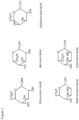
- Glycuronidation is a post-translational polypeptide modification resulting from covalent attachment of a glycuronic acid (also known as uronic acid) to a primary amine group, such as the side chain of a lysine residue.
- a glycuronic acid also known as uronic acid
- glucuronic acid also known as uronic acid
- iduronic acid e.g., galacturonic acid
- mannuronic acid e.g., mannuronic acid
- guluronic acid Figure 1
- modification of primary amines by glucuronic acid, iduronic acid, galacturonic acid can occur.
- US 2019/234964 provides a method for identifying glucuronylation of a protein by deglycosylating the protein and treating the deglycosylated protein with an enzyme and subjecting the resulting peptides to reverse phase liquid chromatography/mass spectroscopy analysis.
- the chromatographic support comprises a support material with a positively charged surface modifier.
- the hydrophobic stationary phase is linked to the surface modifier.
- the hydrophobic stationary phase comprises an alkyl, alkenyl, alkynyl or aryl functional group.
- the hydrophobic stationary phase comprises a C18 functional group.
- the separated peptides are analyzed by using mass spectrometry.
- the methods described herein comprise the identification of glucuronidated, iduronidated, and/or galacturonidated peptides.
- the peptides are identified by their respective chromatographic retention time and mass spectra.
- the methods described herein comprise the relative distribution of glucuronidation, iduronidation, and/or galacturonidation being determined by integrating the respective peaks of liquid chromatograms corresponding to the separated peptides as monitored by UV absorbance.
- the relative distribution of glucuronidation, iduronidation, and/or galacturonidation is determined by integrating the respective peaks of ion chromatograms extracted from the mass spectrometry analysis.
- the weak acid employed in the context of the methods described herein is formic acid or acetic acid.
- the acidic mobile phase employed in the methods described herein is at a pH where greater than 50% of the carboxylic acid moieties associated with glucuronidation, iduronidation, or galacturonidation are in a deprotonated state.
- the weak acid mobile phase gradient used in the context of the methods described herein has a pH>3.
- the weak acid mobile phase gradient has a pKa value of about 4.5.
- the mass spectrometry employed in the context of the methods described herein is electrospray ionization tandem mass spectrometry (ESI-MS/MS).
- the present description relates to methods for determining the relative distribution of glucuronidation, iduronidation, and/or galacturonidation of polypeptides. Specifically, the present description relates to stereoselective LC-MS methods that achieve simultaneous separation and relative quantitation of glucuronidation, iduronidation, and/or galacturonidation of polypeptides.
- the term “about” or “approximately” means within an acceptable error range for the particular value as determined by one of ordinary skill in the art, which will depend in part on how the value is measured or determined, i.e., the limitations of the measurement system. For example, “about” can mean within 3 or more than 3 standard deviations, per the practice in the art. Alternatively, “about” can mean a range of up to 20%, preferably up to 10%, more preferably up to 5%, and more preferably still up to 1% of a given value. Alternatively, particularly with respect to biological systems or processes, the term can mean within an order of magnitude, preferably within 5-fold, and more preferably within 2-fold, of a value.
- polypeptide refers generally to peptides and proteins having more than about ten amino acids.
- the polypeptides can be homologous to the host cell, or preferably, can be exogenous, meaning that they are heterologous, i.e., foreign, to the host cell being utilized, such as a human protein produced by a Chinese hamster ovary cell, or a yeast polypeptide produced by a mammalian cell.
- mammalian polypeptides polypeptides that were originally derived from a mammalian organism
- are used more preferably those which are directly secreted into the medium.
- protein is meant to refer to a sequence of amino acids for which the chain length is sufficient to produce the higher levels of tertiary and/or quaternary structure. This is to distinguish from “peptides" or other small molecular weight drugs that do not have such structure.
- the protein herein will have a molecular weight of at least about 15-20 kD, preferably at least about 20 kD.
- proteins encompassed within the definition herein include all mammalian proteins, in particular, therapeutic and diagnostic proteins, such as therapeutic and diagnostic antibodies, and, in general proteins that contain one or more disulfide bonds, including multi-chain polypeptides comprising one or more inter- and/or intrachain disulfide bonds.
- antibody is used herein in the broadest sense and encompasses various antibody structures including, but not limited to, monoclonal antibodies, polyclonal antibodies, monospecific antibodies (e.g., antibodies consisting of a single heavy chain sequence and a single light chain sequence, including multimers of such pairings), multispecific antibodies (e.g., bispecific antibodies), and antibody fragments so long as they exhibit the desired antigen-binding activity.
- monospecific antibodies e.g., antibodies consisting of a single heavy chain sequence and a single light chain sequence, including multimers of such pairings
- multispecific antibodies e.g., bispecific antibodies
- antibody fragments so long as they exhibit the desired antigen-binding activity.
- the methods for relative distribution and/or identification of glucuronidation, iduronidation, and/or galacturonidation of polypeptides described herein comprise: a) contacting a polypeptide with a protease to generate peptides; b) contacting the peptides to a chromatographic support comprising a hydrophobic stationary phase and a positive surface charge; c) contacting the chromatographic support with a weak acid mobile phase gradient to separate the peptides; and d) analyzing the separated peptides to determine the relative distribution of glucuronidation, iduronidation, and/or galacturonidation of the peptides.
- the methods outlined herein provide for the direct determination of the relative distribution of glucuronidation, iduronidation, and/or galacturonidation of polypeptides. These methods contrast with other approaches for investigating the glucuronidation, iduronidation, and/or galacturonidation of polypeptides. For example, approaches that measure the level of glucuronic acid in cell culture fluids do not necessarily correlate with the level of glucuronidation of polypeptides produced by such cultures, let alone provide any information concerning the distribution or identity of the modified amino acids of such polypeptides.
- the presently described approach also differs from methods requiring the release of glycuronic acids from peptides in the detection process, e.g., Lin et al., Eur. J Biochem, 106:341-351 (1980 ) and Spiro, JBC, 252(15): 5424-5430 (1977 ), as such approaches do not allow for the direct identification of the distribution or location of modified amino acids.
- the protease is an aspartic, cysteine, metallo-, serine or threonine protease.
- Exemplary proteases useful in connection with the instant disclosure are known in the art, e.g., Verhamme et al. Proteases: Pivot Points in Functional Proteomics, Methods Mol Biol. 2019; 1871: 313-392 , which is incorporated by reference in its entirety.
- the protease is trypsin.
- the protease is lys-C.
- the protease is Glu-C.
- the protease is Asp-N.
- the chromatographic support comprises a support material with a positively charged surface modifier.
- the surface modifier can be attached to a chromatographic support base material via derivatization, coating, and/or crosslinking, thereby imparting the chemical character of the surface modifier to the base material of the chromatographic support.
- Exemplary surface modifiers are identified in U.S. Patent No. 7,223,473 , which is hereby incorporated by reference in it is entirety.
- the surface modifier may be an organotrihalosilane, such as octyltrichlorosilane or octadecyltrichlorosilane.
- the chromatographic support comprises a hydrophobic stationary phase.
- the hydrophobic stationary phase is linked, covalently or non-covalently, to the surface modifier.
- the surface modifier can comprise one or more alkyl, alkenyl, alkynyl, aryl functional groups as the hydrophobic stationary phase.
- the functional groups include, but are not limited to C 1 -C 30 alkyl, such as octyl (C 8 ), octadecyl (C 18 ), and triacontyl (C 30 ); alkaryl, e.g., C 1 -C 4 -phenyl groups.
- the chromatographic support can be a Charged Surface Hybrid (CSH TM ) stationary phase.
- the chromatographic support can be a CSH TM C18 stationary phase.
- the acidic mobile phase is at a pH where greater than 50% of the carboxylic acid moieties associated with glucuronidation, iduronidation, and/or galacturonidation are in a deprotonated state.
- the weak acid is formic acid or acetic acid.
- the weak acid mobile phase gradient has pH>3. In certain embodiments, the weak acid mobile phase gradient has a pKa value of about 4.5.
- the separated peptides are analyzed by using mass spectrometry.
- the mass spectrometry is electrospray ionization tandem mass spectrometry (ESI-MS/MS).
- the methods of presently disclosed subject matter further comprise the identification of glucuronidated, iduronidated, and/or galacturonidated peptides.
- the peptides are identified by their respective chromatographic retention time and/or mass spectra.
- the relative distribution of glucuronidation, iduronidation, and/or galacturonidation is determined by integrating the respective peaks of liquid chromatograms corresponding to the separated peptides as monitored by UV absorbance.
- the relative distribution of glucuronidation, iduronidation, and/or galacturonidation is determined by integrating the respective peaks of ion chromatograms extracted from the mass spectrometry analysis.
- the polypeptide is an antibody.
- the antibody can be a monoclonal antibody.
- the antibody can be a multispecific antibody, e.g., a bispecific or a trispecific antibody.
- Example 1 Assay for Determining the Relative Distribution of Glucuronidation, Iduronidation, and Galacturonidation of Polypeptides
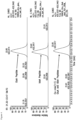
- Antibody A polypeptides were digested using a protease (such as trypsin, lys-C, Glu-C, or Asp-N). The resulted peptides were separated by using a CSH TM C18 column. The stereoselective separation was based on a charge-charge interaction between the negative charge from glycuronic acid and the positive surface charge from the stationary phases and a hydrophobic interaction between the glycuronidated peptides and the hydrophobic stationary phase.
- a mobile phase gradient using weak acids such as formic or acetic acid, but not trifluoroacetic acid
- Antibody A polypeptides were digested using a protease (such as trypsin, lys-C, Glu-C, or Asp-N). The resulted peptides were analyzed by using a BEH TM C18 column, whose stationary phase is not positively charged. A mobile phase gradient using trifluoroacetic acid in the mobile phases (pH ⁇ 3) was employed, where trifluoroacetic acid is a commonly used ion pair reagent to improve peak shape for improved chromatographic separation. As shown in Figure 4 , the stereoselective separation cannot be achieved on the BEH TM C18 column.
- a protease such as trypsin, lys-C, Glu-C, or Asp-N
- the eluted peptides were subsequently analyzed by ESI-MS/MS.
- the identity of glucuronidated, iduronidated, and galacturonidated peptides was confirmed by their respective retention time from the chromatographic separation ( Figures 2 and 3 ) and by their mass spectra collected from the ESI-MS/MS analysis.
- the relative distribution of glucuronidation, iduronidation, and galacturonidation was determined by integrating the respective peaks on the liquid chromatograms (monitored by UV absorbance) or on the extracted ion chromatograms (based on the molecular mass, Figures 2 and 3 ).
Landscapes
- Health & Medical Sciences (AREA)
- Life Sciences & Earth Sciences (AREA)
- Engineering & Computer Science (AREA)
- Immunology (AREA)
- Molecular Biology (AREA)
- Chemical & Material Sciences (AREA)
- Biomedical Technology (AREA)
- Hematology (AREA)
- Urology & Nephrology (AREA)
- Physics & Mathematics (AREA)
- General Physics & Mathematics (AREA)
- Biochemistry (AREA)
- General Health & Medical Sciences (AREA)
- Analytical Chemistry (AREA)
- Pathology (AREA)
- Medicinal Chemistry (AREA)
- Food Science & Technology (AREA)
- Microbiology (AREA)
- Cell Biology (AREA)
- Biotechnology (AREA)
- Proteomics, Peptides & Aminoacids (AREA)
- Bioinformatics & Cheminformatics (AREA)
- Bioinformatics & Computational Biology (AREA)
- Spectroscopy & Molecular Physics (AREA)
- Biophysics (AREA)
- Dispersion Chemistry (AREA)
- Other Investigation Or Analysis Of Materials By Electrical Means (AREA)
- Peptides Or Proteins (AREA)
- Measuring Or Testing Involving Enzymes Or Micro-Organisms (AREA)
- Investigating Or Analysing Biological Materials (AREA)
Claims (17)
- Procédé de détermination de la distribution relative de la glucuronidation, de l'iduronidation et de la galacturonidation d'une population de polypeptides, le procédé comprenant :a) la mise en contact de la population de polypeptides avec une protéase pour générer des peptides ;b) la mise en contact des peptides avec un support chromatographique comprenant une phase stationnaire hydrophobe et une charge de surface positive ;c) la mise en contact du support chromatographique avec un gradient de phase mobile acide faible pour séparer les peptides ;d) l'analyse des peptides séparés pour déterminer la distribution relative de la glucuronidation, de l'iduronidation et/ou de la galacturonidation des peptides.
- Procédé selon la revendication 1, dans lequel la protéase est la trypsine, la lys-C, la Glu-C ou l'Asp-N.
- Procédé selon la revendication 1, dans lequel le support chromatographique comprend un matériau de support avec un modificateur de surface chargé positivement.
- Procédé selon la revendication 3, dans lequel la phase stationnaire hydrophobe est liée au modificateur de surface.
- Procédé selon la revendication 4, dans lequel la phase stationnaire hydrophobe comprend un groupe fonctionnel alkyle, alcényle, alcynyle ou aryle.
- Procédé selon la revendication 5, dans lequel la phase stationnaire hydrophobe comprend un groupe fonctionnel en C18.
- Procédé selon la revendication 1, dans lequel les peptides séparés sont analysés en utilisant la spectrométrie de masse.
- Procédé selon la revendication 1, comprenant l'identification de peptides glucuronidés, iduronidés et galacturonidés.
- Procédé selon la revendication 7, dans lequel les peptides sont identifiés par leurs temps de rétention chromatographique et spectres de masse respectifs.
- Procédé selon la revendication 1, dans lequel la distribution relative de la glucuronidation, de l'iduronidation et de la galacturonidation est déterminée par l'intégration des pics respectifs de chromatogrammes liquides correspondant aux peptides séparés tels que surveillés par absorbance UV.
- Procédé selon la revendication 1, dans lequel la distribution relative de la glucuronidation, de l'iduronidation et de la galacturonidation est déterminée par l'intégration des pics respectifs de chromatogrammes ioniques extraits de l'analyse de la spectrométrie de masse.
- Procédé selon la revendication 1, dans lequel l'acide faible est l'acide formique ou l'acide acétique.
- Procédé selon la revendication 1, dans lequel la phase mobile acide est à un pH où plus de 50 % des fractions acides carboxyliques associées à la glucuronidation, à l'iduronidation ou à la galacturonidation sont dans un état déprotoné.
- Procédé selon la revendication 1, dans lequel le gradient de phase mobile acide faible a un pH>3.
- Procédé selon la revendication 1, dans lequel le gradient de phase mobile acide faible a une valeur de pKa d'environ 4,5.
- Procédé selon la revendication 1, dans lequel la spectrométrie de masse est une spectrométrie de masse en tandem avec une ionisation par électrospray (ESI-MS/MS).
- Procédé selon la revendication 1, dans lequel le polypeptide est un anticorps.
Applications Claiming Priority (2)
| Application Number | Priority Date | Filing Date | Title |
|---|---|---|---|
| US202063124320P | 2020-12-11 | 2020-12-11 | |
| PCT/US2021/062843 WO2022125922A1 (fr) | 2020-12-11 | 2021-12-10 | Procédés de détermination de la distribution relative de la glucuronidation, de l'iduronidation et de la galacturonidation de polypeptides |
Publications (3)
| Publication Number | Publication Date |
|---|---|
| EP4260071A1 EP4260071A1 (fr) | 2023-10-18 |
| EP4260071B1 true EP4260071B1 (fr) | 2025-03-05 |
| EP4260071C0 EP4260071C0 (fr) | 2025-03-05 |
Family
ID=80222098
Family Applications (1)
| Application Number | Title | Priority Date | Filing Date |
|---|---|---|---|
| EP21854830.3A Active EP4260071B1 (fr) | 2020-12-11 | 2021-12-10 | Procédés de détermination de la distribution relative de la glucuronidation, de l'iduronidation et de la galacturonidation de polypeptides |
Country Status (12)
| Country | Link |
|---|---|
| US (1) | US20230314389A1 (fr) |
| EP (1) | EP4260071B1 (fr) |
| JP (1) | JP7835756B2 (fr) |
| KR (1) | KR20230118608A (fr) |
| CN (1) | CN116601494A (fr) |
| AU (1) | AU2021396379A1 (fr) |
| CA (1) | CA3207750A1 (fr) |
| ES (1) | ES3028985T3 (fr) |
| IL (1) | IL303510A (fr) |
| MX (1) | MX2023006791A (fr) |
| PL (1) | PL4260071T3 (fr) |
| WO (1) | WO2022125922A1 (fr) |
Family Cites Families (5)
| Publication number | Priority date | Publication date | Assignee | Title |
|---|---|---|---|---|
| US6686035B2 (en) | 1999-02-05 | 2004-02-03 | Waters Investments Limited | Porous inorganic/organic hybrid particles for chromatographic separations and process for their preparation |
| WO2018223076A1 (fr) * | 2017-06-02 | 2018-12-06 | Genzyme Corporation | Procédés de quantification absolue de polypeptides à faible abondance à l'aide de la spectrométrie de masse |
| EP3746472A2 (fr) * | 2018-01-31 | 2020-12-09 | Regeneron Pharmaceuticals, Inc. | La glucuronylation comme modification post-translationnelle acide sur des anticorps monoclonaux therapeutiques |
| TW202411650A (zh) * | 2018-02-01 | 2024-03-16 | 美商再生元醫藥公司 | 治療性單株抗體之品質屬性的定量及模型化 |
| US20210255196A1 (en) * | 2020-01-17 | 2021-08-19 | Waters Technologies Corporation | Low binding surfaces for peptide mapping |
-
2021
- 2021-12-10 CA CA3207750A patent/CA3207750A1/fr active Pending
- 2021-12-10 EP EP21854830.3A patent/EP4260071B1/fr active Active
- 2021-12-10 PL PL21854830.3T patent/PL4260071T3/pl unknown
- 2021-12-10 MX MX2023006791A patent/MX2023006791A/es unknown
- 2021-12-10 JP JP2023535623A patent/JP7835756B2/ja active Active
- 2021-12-10 ES ES21854830T patent/ES3028985T3/es active Active
- 2021-12-10 AU AU2021396379A patent/AU2021396379A1/en active Pending
- 2021-12-10 WO PCT/US2021/062843 patent/WO2022125922A1/fr not_active Ceased
- 2021-12-10 CN CN202180082949.9A patent/CN116601494A/zh active Pending
- 2021-12-10 IL IL303510A patent/IL303510A/en unknown
- 2021-12-10 KR KR1020237022801A patent/KR20230118608A/ko active Pending
-
2023
- 2023-06-07 US US18/206,853 patent/US20230314389A1/en active Pending
Also Published As
| Publication number | Publication date |
|---|---|
| PL4260071T3 (pl) | 2025-06-02 |
| JP7835756B2 (ja) | 2026-03-25 |
| CA3207750A1 (fr) | 2022-06-16 |
| KR20230118608A (ko) | 2023-08-11 |
| IL303510A (en) | 2023-08-01 |
| CN116601494A (zh) | 2023-08-15 |
| JP2023553974A (ja) | 2023-12-26 |
| EP4260071A1 (fr) | 2023-10-18 |
| EP4260071C0 (fr) | 2025-03-05 |
| ES3028985T3 (en) | 2025-06-23 |
| WO2022125922A1 (fr) | 2022-06-16 |
| AU2021396379A1 (en) | 2023-07-06 |
| MX2023006791A (es) | 2023-06-20 |
| US20230314389A1 (en) | 2023-10-05 |
Similar Documents
| Publication | Publication Date | Title |
|---|---|---|
| JP5116837B2 (ja) | グリカンを評価するためのms法 | |
| Halim et al. | Assignment of saccharide identities through analysis of oxonium ion fragmentation profiles in LC–MS/MS of glycopeptides | |
| Huhn et al. | IgG glycosylation analysis | |
| EP2098859B1 (fr) | Procédé de quantification de peptide et de protéine | |
| US10281473B2 (en) | Compositions and methods for analysis of protein sequences and post-translational modifications | |
| Pasing et al. | N-glycoproteomics: mass spectrometry-based glycosylation site annotation. | |
| Mechref et al. | Comprehensive assessment of N‐glycans derived from a murine monoclonal antibody: A case for multimethodological approach | |
| US20090166224A1 (en) | Multi-lectin affinity chromatography and uses thereof | |
| US8568993B2 (en) | Detection of glycopeptides and glycoproteins for medical diagnostics | |
| Yang et al. | Improved online LC-MS/MS identification of O-glycosites by EThcD fragmentation, chemoenzymatic reaction, and SPE enrichment | |
| Baumann et al. | Techniques for studying protein heterogeneity and post-translational modifications | |
| Fallon et al. | Absolute quantification of human uridine-diphosphate glucuronosyl transferase (UGT) enzyme isoforms 1A1 and 1A6 by tandem LC-MS | |
| Ruel et al. | A capillary zone electrophoresis method for detection of Apolipoprotein C-III glycoforms and other related artifactually modified species | |
| US20100256011A1 (en) | Selective enrichment of post-translationally modified proteins and/or peptides | |
| EP4260071B1 (fr) | Procédés de détermination de la distribution relative de la glucuronidation, de l'iduronidation et de la galacturonidation de polypeptides | |
| US20110045989A1 (en) | Selective enrichment of n-terminally modified peptides from complex samples | |
| CN114705849A (zh) | 一种基于silac进行血清胱抑素c绝对定量的质谱方法 | |
| HK40097562A (zh) | 用於确定多肽的葡萄糖醛酸化、艾杜糖醛酸化和半乳糖醛酸化的相对分布的方法 | |
| Settineri et al. | Structural characterization of protein glycosylation using HPLC/electrospray ionization mass spectrometry and glycosidase digestion | |
| CN112285247B (zh) | 一种定量测定血浆中PEGylated-IL-2(1A)的方法及应用 | |
| Rea et al. | UHPLC for characterization of protein therapeutics | |
| Oliviero et al. | Easy, fast and reproducible analysis of host cell protein (HCP) in monoclonal antibody preparations | |
| CN117999485A (zh) | 用于表征生物的高分子量物质的基于质谱的策略 | |
| Ippoliti et al. | Online IEX-MS Characterization and Monitoring of mAb Charge Heterogeneity Using an Optimized Cation Exchange Resin and Compact TOF Mass Spectrometer | |
| Baker et al. | Protein analysis |
Legal Events
| Date | Code | Title | Description |
|---|---|---|---|
| STAA | Information on the status of an ep patent application or granted ep patent |
Free format text: STATUS: UNKNOWN |
|
| STAA | Information on the status of an ep patent application or granted ep patent |
Free format text: STATUS: THE INTERNATIONAL PUBLICATION HAS BEEN MADE |
|
| PUAI | Public reference made under article 153(3) epc to a published international application that has entered the european phase |
Free format text: ORIGINAL CODE: 0009012 |
|
| STAA | Information on the status of an ep patent application or granted ep patent |
Free format text: STATUS: REQUEST FOR EXAMINATION WAS MADE |
|
| 17P | Request for examination filed |
Effective date: 20230711 |
|
| AK | Designated contracting states |
Kind code of ref document: A1 Designated state(s): AL AT BE BG CH CY CZ DE DK EE ES FI FR GB GR HR HU IE IS IT LI LT LU LV MC MK MT NL NO PL PT RO RS SE SI SK SM TR |
|
| DAV | Request for validation of the european patent (deleted) | ||
| DAX | Request for extension of the european patent (deleted) | ||
| STAA | Information on the status of an ep patent application or granted ep patent |
Free format text: STATUS: EXAMINATION IS IN PROGRESS |
|
| 17Q | First examination report despatched |
Effective date: 20240429 |
|
| GRAP | Despatch of communication of intention to grant a patent |
Free format text: ORIGINAL CODE: EPIDOSNIGR1 |
|
| STAA | Information on the status of an ep patent application or granted ep patent |
Free format text: STATUS: GRANT OF PATENT IS INTENDED |
|
| INTG | Intention to grant announced |
Effective date: 20241113 |
|
| GRAS | Grant fee paid |
Free format text: ORIGINAL CODE: EPIDOSNIGR3 |
|
| GRAA | (expected) grant |
Free format text: ORIGINAL CODE: 0009210 |
|
| STAA | Information on the status of an ep patent application or granted ep patent |
Free format text: STATUS: THE PATENT HAS BEEN GRANTED |
|
| AK | Designated contracting states |
Kind code of ref document: B1 Designated state(s): AL AT BE BG CH CY CZ DE DK EE ES FI FR GB GR HR HU IE IS IT LI LT LU LV MC MK MT NL NO PL PT RO RS SE SI SK SM TR |
|
| REG | Reference to a national code |
Ref country code: GB Ref legal event code: FG4D |
|
| REG | Reference to a national code |
Ref country code: CH Ref legal event code: EP |
|
| REG | Reference to a national code |
Ref country code: DE Ref legal event code: R096 Ref document number: 602021027304 Country of ref document: DE |
|
| REG | Reference to a national code |
Ref country code: IE Ref legal event code: FG4D |
|
| U01 | Request for unitary effect filed |
Effective date: 20250311 |
|
| U07 | Unitary effect registered |
Designated state(s): AT BE BG DE DK EE FI FR IT LT LU LV MT NL PT RO SE SI Effective date: 20250319 |
|
| REG | Reference to a national code |
Ref country code: ES Ref legal event code: FG2A Ref document number: 3028985 Country of ref document: ES Kind code of ref document: T3 Effective date: 20250623 |
|
| PG25 | Lapsed in a contracting state [announced via postgrant information from national office to epo] |
Ref country code: RS Free format text: LAPSE BECAUSE OF FAILURE TO SUBMIT A TRANSLATION OF THE DESCRIPTION OR TO PAY THE FEE WITHIN THE PRESCRIBED TIME-LIMIT Effective date: 20250605 |
|
| PG25 | Lapsed in a contracting state [announced via postgrant information from national office to epo] |
Ref country code: NO Free format text: LAPSE BECAUSE OF FAILURE TO SUBMIT A TRANSLATION OF THE DESCRIPTION OR TO PAY THE FEE WITHIN THE PRESCRIBED TIME-LIMIT Effective date: 20250605 |
|
| PG25 | Lapsed in a contracting state [announced via postgrant information from national office to epo] |
Ref country code: HR Free format text: LAPSE BECAUSE OF FAILURE TO SUBMIT A TRANSLATION OF THE DESCRIPTION OR TO PAY THE FEE WITHIN THE PRESCRIBED TIME-LIMIT Effective date: 20250305 |
|
| REG | Reference to a national code |
Ref country code: GR Ref legal event code: EP Ref document number: 20250400912 Country of ref document: GR Effective date: 20250613 |
|
| PG25 | Lapsed in a contracting state [announced via postgrant information from national office to epo] |
Ref country code: SM Free format text: LAPSE BECAUSE OF FAILURE TO SUBMIT A TRANSLATION OF THE DESCRIPTION OR TO PAY THE FEE WITHIN THE PRESCRIBED TIME-LIMIT Effective date: 20250305 |
|
| PG25 | Lapsed in a contracting state [announced via postgrant information from national office to epo] |
Ref country code: CZ Free format text: LAPSE BECAUSE OF FAILURE TO SUBMIT A TRANSLATION OF THE DESCRIPTION OR TO PAY THE FEE WITHIN THE PRESCRIBED TIME-LIMIT Effective date: 20250305 |
|
| PG25 | Lapsed in a contracting state [announced via postgrant information from national office to epo] |
Ref country code: SK Free format text: LAPSE BECAUSE OF FAILURE TO SUBMIT A TRANSLATION OF THE DESCRIPTION OR TO PAY THE FEE WITHIN THE PRESCRIBED TIME-LIMIT Effective date: 20250305 |
|
| PG25 | Lapsed in a contracting state [announced via postgrant information from national office to epo] |
Ref country code: IS Free format text: LAPSE BECAUSE OF FAILURE TO SUBMIT A TRANSLATION OF THE DESCRIPTION OR TO PAY THE FEE WITHIN THE PRESCRIBED TIME-LIMIT Effective date: 20250705 |
|
| U20 | Renewal fee for the european patent with unitary effect paid |
Year of fee payment: 5 Effective date: 20251119 |
|
| REG | Reference to a national code |
Ref country code: CH Ref legal event code: U11 Free format text: ST27 STATUS EVENT CODE: U-0-0-U10-U11 (AS PROVIDED BY THE NATIONAL OFFICE) Effective date: 20260101 |
|
| PGFP | Annual fee paid to national office [announced via postgrant information from national office to epo] |
Ref country code: GB Payment date: 20251120 Year of fee payment: 5 |
|
| PLBE | No opposition filed within time limit |
Free format text: ORIGINAL CODE: 0009261 |
|
| STAA | Information on the status of an ep patent application or granted ep patent |
Free format text: STATUS: NO OPPOSITION FILED WITHIN TIME LIMIT |
|
| REG | Reference to a national code |
Ref country code: CH Ref legal event code: L10 Free format text: ST27 STATUS EVENT CODE: U-0-0-L10-L00 (AS PROVIDED BY THE NATIONAL OFFICE) Effective date: 20260114 |
|
| PGFP | Annual fee paid to national office [announced via postgrant information from national office to epo] |
Ref country code: GR Payment date: 20251121 Year of fee payment: 5 Ref country code: TR Payment date: 20251202 Year of fee payment: 5 |
|
| PGFP | Annual fee paid to national office [announced via postgrant information from national office to epo] |
Ref country code: PL Payment date: 20251124 Year of fee payment: 5 |
|
| 26N | No opposition filed |
Effective date: 20251208 |
|
| PGFP | Annual fee paid to national office [announced via postgrant information from national office to epo] |
Ref country code: ES Payment date: 20260102 Year of fee payment: 5 |
|
| PGFP | Annual fee paid to national office [announced via postgrant information from national office to epo] |
Ref country code: CH Payment date: 20260101 Year of fee payment: 5 |