EP4261679A1 - Verfahren zur sicheren ausführung von befehlen - Google Patents
Verfahren zur sicheren ausführung von befehlen Download PDFInfo
- Publication number
- EP4261679A1 EP4261679A1 EP22305537.7A EP22305537A EP4261679A1 EP 4261679 A1 EP4261679 A1 EP 4261679A1 EP 22305537 A EP22305537 A EP 22305537A EP 4261679 A1 EP4261679 A1 EP 4261679A1
- Authority
- EP
- European Patent Office
- Prior art keywords
- instruction
- data
- protected
- load
- processor
- Prior art date
- Legal status (The legal status is an assumption and is not a legal conclusion. Google has not performed a legal analysis and makes no representation as to the accuracy of the status listed.)
- Withdrawn
Links
Images

Classifications
-
- G—PHYSICS
- G06—COMPUTING OR CALCULATING; COUNTING
- G06F—ELECTRIC DIGITAL DATA PROCESSING
- G06F21/00—Security arrangements for protecting computers, components thereof, programs or data against unauthorised activity
- G06F21/70—Protecting specific internal or peripheral components, in which the protection of a component leads to protection of the entire computer
- G06F21/71—Protecting specific internal or peripheral components, in which the protection of a component leads to protection of the entire computer to assure secure computing or processing of information
- G06F21/72—Protecting specific internal or peripheral components, in which the protection of a component leads to protection of the entire computer to assure secure computing or processing of information in cryptographic circuits
-
- G—PHYSICS
- G06—COMPUTING OR CALCULATING; COUNTING
- G06F—ELECTRIC DIGITAL DATA PROCESSING
- G06F9/00—Arrangements for program control, e.g. control units
- G06F9/06—Arrangements for program control, e.g. control units using stored programs, i.e. using an internal store of processing equipment to receive or retain programs
- G06F9/30—Arrangements for executing machine instructions, e.g. instruction decode
- G06F9/30003—Arrangements for executing specific machine instructions
- G06F9/3004—Arrangements for executing specific machine instructions to perform operations on memory
- G06F9/30043—LOAD or STORE instructions; Clear instruction
-
- G—PHYSICS
- G06—COMPUTING OR CALCULATING; COUNTING
- G06F—ELECTRIC DIGITAL DATA PROCESSING
- G06F21/00—Security arrangements for protecting computers, components thereof, programs or data against unauthorised activity
- G06F21/60—Protecting data
- G06F21/62—Protecting access to data via a platform, e.g. using keys or access control rules
- G06F21/6218—Protecting access to data via a platform, e.g. using keys or access control rules to a system of files or objects, e.g. local or distributed file system or database
- G06F21/6245—Protecting personal data, e.g. for financial or medical purposes
-
- G—PHYSICS
- G06—COMPUTING OR CALCULATING; COUNTING
- G06F—ELECTRIC DIGITAL DATA PROCESSING
- G06F21/00—Security arrangements for protecting computers, components thereof, programs or data against unauthorised activity
- G06F21/70—Protecting specific internal or peripheral components, in which the protection of a component leads to protection of the entire computer
- G06F21/78—Protecting specific internal or peripheral components, in which the protection of a component leads to protection of the entire computer to assure secure storage of data
- G06F21/79—Protecting specific internal or peripheral components, in which the protection of a component leads to protection of the entire computer to assure secure storage of data in semiconductor storage media, e.g. directly-addressable memories
-
- G—PHYSICS
- G06—COMPUTING OR CALCULATING; COUNTING
- G06F—ELECTRIC DIGITAL DATA PROCESSING
- G06F9/00—Arrangements for program control, e.g. control units
- G06F9/06—Arrangements for program control, e.g. control units using stored programs, i.e. using an internal store of processing equipment to receive or retain programs
- G06F9/30—Arrangements for executing machine instructions, e.g. instruction decode
- G06F9/30003—Arrangements for executing specific machine instructions
- G06F9/30076—Arrangements for executing specific machine instructions to perform miscellaneous control operations, e.g. NOP
- G06F9/30079—Pipeline control instructions, e.g. multicycle NOP
-
- G—PHYSICS
- G06—COMPUTING OR CALCULATING; COUNTING
- G06F—ELECTRIC DIGITAL DATA PROCESSING
- G06F9/00—Arrangements for program control, e.g. control units
- G06F9/06—Arrangements for program control, e.g. control units using stored programs, i.e. using an internal store of processing equipment to receive or retain programs
- G06F9/30—Arrangements for executing machine instructions, e.g. instruction decode
- G06F9/30098—Register arrangements
- G06F9/3012—Organisation of register space, e.g. banked or distributed register file
- G06F9/30123—Organisation of register space, e.g. banked or distributed register file according to context, e.g. thread buffers
-
- G—PHYSICS
- G06—COMPUTING OR CALCULATING; COUNTING
- G06F—ELECTRIC DIGITAL DATA PROCESSING
- G06F9/00—Arrangements for program control, e.g. control units
- G06F9/06—Arrangements for program control, e.g. control units using stored programs, i.e. using an internal store of processing equipment to receive or retain programs
- G06F9/30—Arrangements for executing machine instructions, e.g. instruction decode
- G06F9/38—Concurrent instruction execution, e.g. pipeline or look ahead
- G06F9/3836—Instruction issuing, e.g. dynamic instruction scheduling or out of order instruction execution
-
- H—ELECTRICITY
- H04—ELECTRIC COMMUNICATION TECHNIQUE
- H04L—TRANSMISSION OF DIGITAL INFORMATION, e.g. TELEGRAPHIC COMMUNICATION
- H04L63/00—Network architectures or network communication protocols for network security
- H04L63/20—Network architectures or network communication protocols for network security for managing network security; network security policies in general
- H04L63/205—Network architectures or network communication protocols for network security for managing network security; network security policies in general involving negotiation or determination of the one or more network security mechanisms to be used, e.g. by negotiation between the client and the server or between peers or by selection according to the capabilities of the entities involved
Definitions
- the present invention relates to the field of securing software execution on an electronic device against attacks, and more particularly to a method for securing the execution of instructions by a processor of the electronic device.
- Electronic devices are now widely used to store data which must be protected against any unauthorized access by an attacker: personal data such as identity information, biometric data, banking information, secret data such as cryptographic keys etc. Therefore security measures are usually applied to such data in order to mitigate any fraudulent reading or modification.
- personal data such as identity information, biometric data, banking information, secret data such as cryptographic keys etc. Therefore security measures are usually applied to such data in order to mitigate any fraudulent reading or modification.
- Such data can be encrypted; their integrity can be increased by storing security information such as a signature, a checksum or hash value.
- Such a method enables to increase the security of the execution of the first instruction by enabling to keep data with a masked/encrypted form and/or to perform integrity check on it from memories of the electronic system up to the processor registers of the processor. It enables to do so without any additional requirements on the size of the bus connecting the memories and the processor by using separate operations for copying the data and their associated security information
- the method according to the first aspect may comprise, when the processor comprises a secure execution unit or secure coprocessor executing at least the step c. described above, and said electronic system comprises a requestor executing a second instruction, when an access to said data copied in the processor registers is requested by said second instruction, the following steps executed by the secure execution unit or secure coprocessor:
- load and store instructions may be selectively activated for some load and store instructions only.
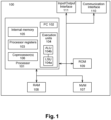
- Such an electronic system 100 comprises, as depicted on Figure 1 , a processor 101 for the execution of code comprising the first instruction.
- This processor comprises a program counter PC 102, processor registers 103 and execution units 104 which may include, a load and store unit LSU 104a and an arithmetic and logical unit ALU 104b.
- the processor may also include additional internal memories 105 such as cache memories, and one or more coprocessors 106, located for example on the same die or the same PCB than the processor, secure or not.
- a first main idea of the invention is, when executing this first instruction, to perform sequentially at least two operations which copy separately the data themselves, and the security information associated to it.
- security information do not only reside in memories outside the processor.
- the data can be accompanied by their security information also in the internal memories and registers of the processor, which enables to apply data protection such as masking of the data inside the processor, and to perform security checks, such as integrity check, on the data when they are stored in the processor.
- the width of the bus connecting the memories of the electronic system and the processor would have to be expanded in order to cope with the security information.
- the size of the bus may remain standard and no expansion of the bus width is required.
- a second main idea of the invention is to use a load and store unit LSU 104a, as a temporary buffer between the processor registers 103 of the processor and the at least one memory 107, 108, 109 of the electronic system located outside the processor.
- LSU 104a load and store unit
- it enables to perform operations on the data, such as unmasking it, deciphering it or checking their integrity, after their transfer from a memory to the LSU of the processor, but before their copy in the processor registers of the processor.
- Instructions to be protected may be identified by specific opcodes, added to the instruction set of the processor.
- the processor may determine if the first instruction is to be protected by determining whether an opcode of said instruction corresponds to a protected instruction or to an unprotected instruction.
- the protection may also be permanently activated for any instruction fetched to the processor, without the need to perform any action. In such a case, any load or store instruction fetched to the processor is considered as to be protected.
- the first instruction when the first instruction is not a load or store instruction, or when it is a load or store instruction but not identified as to be protected, as will be described further below, the first instruction may be executed by the processor as described in the State of the Art.
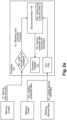
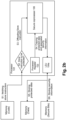
- the processor 101 executes sequentially at least a first operation in a fourth step S4, a second operation in a fifth step S5, and a third operation in a sixth step S6.
- the protected data and the associated security information are loaded separately to the load and store unit LSU 104a: at the fourth step S4, the first operation is a load operation for loading the protected data from the memory storing it to the load and store unit; and at the fifth step S5 the second operation is a load operation for loading the security information associated to these data from the memory storing it to the load and store unit (LSU) 104a.
- LSU load and store unit
- the third operation is a write operation for copying the loaded protected data and the associated security information from the load and store unit to the processor registers 103.
- These three operations may be executed in a different order; for example, the security information may be loaded before the protected data.
- the first instruction may also be a store instruction to be protected.
- a previous instruction may have generated output data and associated security information, both stored temporarily in the processor registers 103 of the processor.
- the protected data and the associated security information are first retrieved in the LSU 104a : at the fourth step S4, the first operation is a write operation for copying the protected data and the associated security information from the processor registers to the load and store unit.
- the processor may perform various actions such as activating countermeasures, raising an alert, preventing the copy of the checked data to the processor registers, deleting the checked data or moving it to a quarantine memory zone, performing a reset of the electronic system.
- the first instruction is a load instruction
- protected data and associated security information are loaded in the processor registers of the processor by a secure execution unit or a secure coprocessor.
- these data may be requested for executing a subsequent instruction, hereafter called second instruction, by another circuit of the electronic system hereafter called "requestor".
- a requestor of the data may for example be an execution unit of the processor 104, a coprocessor 106 of the processor or another processor or coprocessor of the electronic system.
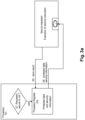
- the behavior of the secure execution unit or secure coprocessor in such a case may depend on whether the requestor of the data is considered as secure or not, as illustrated on Figures 3a and 3b . On these figures the requestor is shown as external to the processor but it may be included in it as discussed above.
- the requestor extends the secure perimeter including the electronic system memories and the secure execution unit or the secure coprocessor, and the data may remain as they are: masked/encrypted if they were masked/encrypted in the LSU and the processor registers, and accompanied by their security information for later unmasking/decrypting and/or verification of their integrity. Consequently, as shown on Figure 3a , when the requestor is determined as secure, the processor may, in an eighth step S8, transfer the requested data and the associated security information to the requestor and the requestor may execute the second instruction based on the transferred data and the transferred associated security information.
- the requestor may be able to process masked data and may not need to unmask it to perform the second instruction, for example, when such a masking is a XOR and that the second instruction is compatible with it (for example another XOR).
Landscapes
- Engineering & Computer Science (AREA)
- Theoretical Computer Science (AREA)
- Software Systems (AREA)
- Physics & Mathematics (AREA)
- General Engineering & Computer Science (AREA)
- General Physics & Mathematics (AREA)
- Computer Security & Cryptography (AREA)
- Computer Hardware Design (AREA)
- General Health & Medical Sciences (AREA)
- Health & Medical Sciences (AREA)
- Bioethics (AREA)
- Databases & Information Systems (AREA)
- Medical Informatics (AREA)
- Computing Systems (AREA)
- Computer Networks & Wireless Communication (AREA)
- Signal Processing (AREA)
- Mathematical Physics (AREA)
- Storage Device Security (AREA)
- Executing Machine-Instructions (AREA)
Priority Applications (6)
| Application Number | Priority Date | Filing Date | Title |
|---|---|---|---|
| EP22305537.7A EP4261679A1 (de) | 2022-04-13 | 2022-04-13 | Verfahren zur sicheren ausführung von befehlen |
| JP2024560484A JP2025513068A (ja) | 2022-04-13 | 2023-04-13 | 命令のセキュアな実行のための方法 |
| CN202380033299.8A CN118984987A (zh) | 2022-04-13 | 2023-04-13 | 用于安全执行指令的方法 |
| EP23717988.2A EP4508531A1 (de) | 2022-04-13 | 2023-04-13 | Verfahren zur sicheren ausführung von befehlen |
| US18/856,675 US20250377890A1 (en) | 2022-04-13 | 2023-04-13 | Method for a secure execution of instructions |
| PCT/EP2023/059711 WO2023198847A1 (en) | 2022-04-13 | 2023-04-13 | Method for a secure execution of instructions |
Applications Claiming Priority (1)
| Application Number | Priority Date | Filing Date | Title |
|---|---|---|---|
| EP22305537.7A EP4261679A1 (de) | 2022-04-13 | 2022-04-13 | Verfahren zur sicheren ausführung von befehlen |
Publications (1)
| Publication Number | Publication Date |
|---|---|
| EP4261679A1 true EP4261679A1 (de) | 2023-10-18 |
Family
ID=82701833
Family Applications (2)
| Application Number | Title | Priority Date | Filing Date |
|---|---|---|---|
| EP22305537.7A Withdrawn EP4261679A1 (de) | 2022-04-13 | 2022-04-13 | Verfahren zur sicheren ausführung von befehlen |
| EP23717988.2A Pending EP4508531A1 (de) | 2022-04-13 | 2023-04-13 | Verfahren zur sicheren ausführung von befehlen |
Family Applications After (1)
| Application Number | Title | Priority Date | Filing Date |
|---|---|---|---|
| EP23717988.2A Pending EP4508531A1 (de) | 2022-04-13 | 2023-04-13 | Verfahren zur sicheren ausführung von befehlen |
Country Status (5)
| Country | Link |
|---|---|
| US (1) | US20250377890A1 (de) |
| EP (2) | EP4261679A1 (de) |
| JP (1) | JP2025513068A (de) |
| CN (1) | CN118984987A (de) |
| WO (1) | WO2023198847A1 (de) |
Citations (4)
| Publication number | Priority date | Publication date | Assignee | Title |
|---|---|---|---|---|
| EP1331539A2 (de) * | 2002-01-16 | 2003-07-30 | Texas Instruments France | Sicherer Modus für Prozessoren, die Speicherverwaltung und Unterbrechungen unterstützen |
| US20130254494A1 (en) * | 2012-03-20 | 2013-09-26 | Krimmeni Technologies, Inc. | Method and system for process working set isolation |
| US20180373646A1 (en) * | 2017-06-22 | 2018-12-27 | Technion Research & Development Foundation Ltd | Cache unit useful for secure execution |
| US20210117342A1 (en) * | 2020-12-26 | 2021-04-22 | Intel Corporation | Encoded pointer based data encryption |
Family Cites Families (3)
| Publication number | Priority date | Publication date | Assignee | Title |
|---|---|---|---|---|
| JP4447977B2 (ja) * | 2004-06-30 | 2010-04-07 | 富士通マイクロエレクトロニクス株式会社 | セキュアプロセッサ、およびセキュアプロセッサ用プログラム。 |
| JP2007219802A (ja) * | 2006-02-16 | 2007-08-30 | Hitachi Global Storage Technologies Netherlands Bv | 記憶装置、そのコントローラ、および、その制御方法 |
| US8635415B2 (en) * | 2009-09-30 | 2014-01-21 | Intel Corporation | Managing and implementing metadata in central processing unit using register extensions |
-
2022
- 2022-04-13 EP EP22305537.7A patent/EP4261679A1/de not_active Withdrawn
-
2023
- 2023-04-13 CN CN202380033299.8A patent/CN118984987A/zh active Pending
- 2023-04-13 EP EP23717988.2A patent/EP4508531A1/de active Pending
- 2023-04-13 US US18/856,675 patent/US20250377890A1/en active Pending
- 2023-04-13 WO PCT/EP2023/059711 patent/WO2023198847A1/en not_active Ceased
- 2023-04-13 JP JP2024560484A patent/JP2025513068A/ja active Pending
Patent Citations (4)
| Publication number | Priority date | Publication date | Assignee | Title |
|---|---|---|---|---|
| EP1331539A2 (de) * | 2002-01-16 | 2003-07-30 | Texas Instruments France | Sicherer Modus für Prozessoren, die Speicherverwaltung und Unterbrechungen unterstützen |
| US20130254494A1 (en) * | 2012-03-20 | 2013-09-26 | Krimmeni Technologies, Inc. | Method and system for process working set isolation |
| US20180373646A1 (en) * | 2017-06-22 | 2018-12-27 | Technion Research & Development Foundation Ltd | Cache unit useful for secure execution |
| US20210117342A1 (en) * | 2020-12-26 | 2021-04-22 | Intel Corporation | Encoded pointer based data encryption |
Also Published As
| Publication number | Publication date |
|---|---|
| CN118984987A (zh) | 2024-11-19 |
| WO2023198847A1 (en) | 2023-10-19 |
| US20250377890A1 (en) | 2025-12-11 |
| JP2025513068A (ja) | 2025-04-22 |
| EP4508531A1 (de) | 2025-02-19 |
Similar Documents
| Publication | Publication Date | Title |
|---|---|---|
| De Clercq et al. | SOFIA: Software and control flow integrity architecture | |
| Gyselinck et al. | Off-limits: Abusing legacy x86 memory segmentation to spy on enclaved execution | |
| US20070276969A1 (en) | Method and device for controlling an access to peripherals | |
| CN110825672B (zh) | 用于联机加密处理的高性能自主硬件引擎 | |
| US11874925B2 (en) | Data processing method for coping with ransomware, program for executing the method, and computer-readable recording medium storing the program | |
| CN116982047A (zh) | 安全密码协处理器 | |
| EP4248340B1 (de) | Codeflussschutz mit fehlerfortpflanzung | |
| Milenković et al. | Using instruction block signatures to counter code injection attacks | |
| Ragel et al. | Micro embedded monitoring for security in application specific instruction-set processors | |
| Zhang et al. | Flash controller-based secure execution environment for protecting code confidentiality | |
| US20250377890A1 (en) | Method for a secure execution of instructions | |
| Lackner et al. | Countering type confusion and buffer overflow attacks on Java smart cards by data type sensitive obfuscation | |
| US20250013735A1 (en) | Method for a secure execution of a hardware instruction | |
| US12619712B2 (en) | Secure computer architecture using state machines | |
| CN112948863B (zh) | 敏感数据的读取方法、装置、电子设备及存储介质 | |
| Liu et al. | Tzeamm: An efficient and secure active measurement method based on trustzone | |
| Bouffard et al. | Heap Hop! heap is also vulnerable | |
| EP3195175B1 (de) | System und verfahren zum schutz einer vorrichtung vor angriffen auf verarbeitungsabläufe unter verwendung einer code-zeiger-ergänzung | |
| Fang et al. | Research and application of trusted computing platform based on portable TPM | |
| EP4357957A1 (de) | Verfahren zur sicherung gegen physische oder logische angriffe einer ausführung eines maschinensprachenbefehlscodes | |
| Yao et al. | Firmware Secure Coding Practice | |
| Lee et al. | A Study on White-Box Cryptography based Integrity Verification Techniques for On-Device AI Model and Their Performance | |
| Doku et al. | TRUSTCHECKPOINTS: Time Betrays Malware for Unconditional Software Root of Trust | |
| Inoue | Supporting a dynamic program signature: An intrusion detection framework for microprocessors | |
| JP2009515449A (ja) | 組み込みシステム上での暗号アルゴリズム実行中にデータを安全に処理するための方法 |
Legal Events
| Date | Code | Title | Description |
|---|---|---|---|
| PUAI | Public reference made under article 153(3) epc to a published international application that has entered the european phase |
Free format text: ORIGINAL CODE: 0009012 |
|
| STAA | Information on the status of an ep patent application or granted ep patent |
Free format text: STATUS: THE APPLICATION HAS BEEN PUBLISHED |
|
| AK | Designated contracting states |
Kind code of ref document: A1 Designated state(s): AL AT BE BG CH CY CZ DE DK EE ES FI FR GB GR HR HU IE IS IT LI LT LU LV MC MK MT NL NO PL PT RO RS SE SI SK SM TR |
|
| STAA | Information on the status of an ep patent application or granted ep patent |
Free format text: STATUS: THE APPLICATION IS DEEMED TO BE WITHDRAWN |
|
| 18D | Application deemed to be withdrawn |
Effective date: 20240419 |