EP4262303A1 - Suchraumkonfigurationsverfahren und -vorrichtung sowie vorrichtung und speichermedium - Google Patents
Suchraumkonfigurationsverfahren und -vorrichtung sowie vorrichtung und speichermedium Download PDFInfo
- Publication number
- EP4262303A1 EP4262303A1 EP21933689.8A EP21933689A EP4262303A1 EP 4262303 A1 EP4262303 A1 EP 4262303A1 EP 21933689 A EP21933689 A EP 21933689A EP 4262303 A1 EP4262303 A1 EP 4262303A1
- Authority
- EP
- European Patent Office
- Prior art keywords
- search space
- cell
- indication information
- carrier
- search
- Prior art date
- Legal status (The legal status is an assumption and is not a legal conclusion. Google has not performed a legal analysis and makes no representation as to the accuracy of the status listed.)
- Granted
Links
Images


Classifications
-
- H—ELECTRICITY
- H04—ELECTRIC COMMUNICATION TECHNIQUE
- H04W—WIRELESS COMMUNICATION NETWORKS
- H04W72/00—Local resource management
- H04W72/12—Wireless traffic scheduling
- H04W72/1263—Mapping of traffic onto schedule, e.g. scheduled allocation or multiplexing of flows
-
- H—ELECTRICITY
- H04—ELECTRIC COMMUNICATION TECHNIQUE
- H04L—TRANSMISSION OF DIGITAL INFORMATION, e.g. TELEGRAPHIC COMMUNICATION
- H04L5/00—Arrangements affording multiple use of the transmission path
-
- H—ELECTRICITY
- H04—ELECTRIC COMMUNICATION TECHNIQUE
- H04L—TRANSMISSION OF DIGITAL INFORMATION, e.g. TELEGRAPHIC COMMUNICATION
- H04L5/00—Arrangements affording multiple use of the transmission path
- H04L5/003—Arrangements for allocating sub-channels of the transmission path
- H04L5/0053—Allocation of signalling, i.e. of overhead other than pilot signals
-
- H—ELECTRICITY
- H04—ELECTRIC COMMUNICATION TECHNIQUE
- H04L—TRANSMISSION OF DIGITAL INFORMATION, e.g. TELEGRAPHIC COMMUNICATION
- H04L5/00—Arrangements affording multiple use of the transmission path
- H04L5/0091—Signalling for the administration of the divided path, e.g. signalling of configuration information
- H04L5/0094—Indication of how sub-channels of the path are allocated
-
- H—ELECTRICITY
- H04—ELECTRIC COMMUNICATION TECHNIQUE
- H04W—WIRELESS COMMUNICATION NETWORKS
- H04W72/00—Local resource management
- H04W72/20—Control channels or signalling for resource management
- H04W72/23—Control channels or signalling for resource management in the downlink direction of a wireless link, i.e. towards a terminal
-
- H—ELECTRICITY
- H04—ELECTRIC COMMUNICATION TECHNIQUE
- H04W—WIRELESS COMMUNICATION NETWORKS
- H04W72/00—Local resource management
- H04W72/20—Control channels or signalling for resource management
- H04W72/23—Control channels or signalling for resource management in the downlink direction of a wireless link, i.e. towards a terminal
- H04W72/232—Control channels or signalling for resource management in the downlink direction of a wireless link, i.e. towards a terminal the control data signalling from the physical layer, e.g. DCI signalling
Definitions
- the present application relates to the field of mobile communications, and in particular, to a method, apparatus for configuring a search space, a device and a storage medium.
- a network device configures a search space for a terminal device, and the terminal device performs Physical Downlink Control Channel (PDCCH) detection in the configured search space.
- PDCH Physical Downlink Control Channel
- the terminal device is located in a first cell and a second cell.
- the first cell as a Primary cell (Pcell)
- the second cell as a Secondary cell (Scell)
- the terminal device detects the downlink control information in the Pcell, and the detected downlink control information schedules the Pcell itself, but the Pcell cannot be scheduled by other cell(s). Therefore, a method for configuring a search space of a cell is urgently needed, so that the self-scheduled cell can also be scheduled by other cell(s).
- the embodiments of the present application provide a method, apparatus for configuring a search space, a device, and a storage medium, which not only expand the way of configuring the search space of a cell, but also expand the way that the cell is scheduled, thereby improving the communication effect.
- the technical solutions are as follows.
- a method for configuring a search space, applied to a terminal device includes:
- a method for configuring a search space, applied to a network device includes:
- an apparatus for configuring a search space which is arranged in a terminal device, and the apparatus includes:
- an apparatus for configuring a search space which is arranged in a network device, and the apparatus includes:
- a terminal device including: a processor; a transceiver connected to the processor; a memory for storing executable instructions of the processor; where the processor is configured to load and execute the executable instructions to implement the method for configuring a search space as described in the above aspects.
- a network device including: a processor; a transceiver connected to the processor; a memory for storing executable instructions of the processor; where the processor is configured to load and execute the executable instructions to implement the method for configuring a search space as described in the above aspects.
- a computer-readable storage medium an executable program code is stored in the readable storage medium, and the executable program code is loaded and executed by a processor to implement the method for configuring a search space as described in the above aspects.
- a chip the chip includes a programmable logic circuit and/or program instructions, and when the chip runs on a terminal device or a network device, the method for configuring a search space as described in the above aspects is implemented.
- an embodiment of the present application provides a computer program product, when the computer program product is executed by a processor of a terminal device or a network device, the method for configuring a search space as described in the above aspects is implemented.
- the terminal device determines at least one first search space configured by the network device for cross-carrier scheduling the second cell by the first cell, and the second cell supports self-scheduling, in the case that the second cell supports self-scheduling, it can also be scheduled by the first cell, which not only expands the way of configuring the search space of the cell, but also expands the way that the cell is scheduled, thereby improving the communication effect.
- the search space includes a Common search space (CSS) and a UE-specific search space (USS).
- the USS is used to transmit control information related to DL Synchronization Channel (DL-SCH) and UL-SCH.
- CSS is used to transmit control information related to Broadcast Control Channel (BCCH), paging, and ReAuthRequest (RAR).
- BCCH Broadcast Control Channel
- RAR ReAuthRequest
- the terminal can be configured with a plurality of Control resource sets (CORESETs), and the plurality of CORESETs are located in the Band Width Part (BWP). And each BWP can be configured with up to 4 CORESETs.
- CORESETs Control resource sets
- BWP Band Width Part
- each BWP can be configured with up to 4 CORESETs.
- PDCCH Physical Downlink Control Channel
- the frequency domain of one CORESET consists of Resource Blocks (RBs) of a first reference number, and the time domain consists of symbols of a second reference number.
- the first reference number and the second reference number are set by the network device, or set by the terminal, or set in other manners, which are not limited in the embodiments of the present application.
- the first reference number is 2, 3, 4 or other numerical values.
- the second reference number is 1, 2, 3 or other numerical values.
- the terminal currently performs PDCCH detection in the search space of the Primary cell (Pcell), and the detected PDCCH can schedule the resource of the Pcell or the resource of the Secondary cell (Scell).
- the PDCCH of the Scell cannot schedule the resource of the Pcell.
- the search space configured in the configuration information of the Scell can schedule the resource of the Scell, or schedule the resources of other Scells.
- the search space of the Pcell is independently configured, the search space of the Scell is independently configured, or the search space carried on the non-own carrier is configured by configuring the associated search space index.
- the independent configuration is to configure the index identifier, period, and search range of the search space.
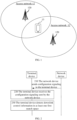
- FIG. 1 shows a block diagram of a communication system provided by an exemplary embodiment of the present application.
- the communication system may include: an access network 12 and a terminal device 13.
- the access network 12 includes several network devices 120.
- the network device 120 may be a base station, which is an apparatus deployed in an access network to provide a wireless communication function for the terminal device.
- the base station may include various forms of macro base station, micro base station, relay station, access point and so on.
- the names of devices with base station functions may be different.
- eNodeBs or eNBs In the LTE system, they are called eNodeBs or eNBs; in the 5G NR-U system, they are called gNodeBs or gNBs.
- the description of "base station” may change.
- the above-mentioned apparatuses for providing wireless communication functions for the terminal device 13 are collectively referred to as access network devices.
- the terminal device 13 may include various handheld devices with wireless communication functions, vehicle-mounted devices, wearable devices, computing devices or other processing devices connected to wireless modems, as well as various forms of user device, mobile stations (MS), terminal devices, etc.
- terminal devices For the convenience of description, the devices mentioned above are collectively referred to as terminal devices.
- the access network device 120 and the terminal device 13 communicate with each other through a certain air interface technology, such as a Uu interface.
- GSM Global System of Mobile communication
- CDMA Code Division Multiple Access
- WCDMA wideband Code Division Multiple Access
- GPRS General Packet Radio Service
- LTE Long Term Evolution
- FDD Frequency Division Duplex
- TDD Time Division Duplex
- LTE-A Advanced long term evolution
- NR New Radio
- UMTS Universal Mobile Telecommunication System
- WiMAX Worldwide Interoperability for Microwave Access
- WLAN Wireless Local Area Networks
- WiFi Wireless Fidelity
- the traditional communication systems support a limited number of connections, which are easy to be implemented.
- the mobile communication systems will not only support traditional communication, but also support, for example, Device to Device (D2D) communication, Machine to Machine (M2M) communication, Machine Type Communication (MTC), Vehicle to Vehicle (V2V) communication and Vehicle to Everything (V2X) system, etc.
- D2D Device to Device
- M2M Machine to Machine
- MTC Machine Type Communication
- V2V Vehicle to Vehicle
- V2X Vehicle to Everything
- the embodiments of the present application can also be applied to these communication systems.
- FIG. 2 shows a flowchart of a method for configuring a search space provided by an exemplary embodiment of the present application, which is applied to the terminal device and the network device shown in FIG. 1 , and the method includes at least part of the following contents.
- the network device sends a configuration signaling to the terminal device.
- the terminal device receives the configuration signaling sent by the network device.
- the network device configures a first search space for the terminal device through the configuration signaling sent to the terminal device, and the terminal device detects downlink control information in the search space configured by the network device.
- the first search space is used for cross-carrier scheduling a second cell by a first cell.
- the second cell is a self-scheduling cell.
- the self-scheduling cell refers to a cell that can schedule itself.
- the Physical Downlink Shared Channel (PDSCH) and the PDCCH related to the PDSCH are carried in the self-scheduling cell, or it can be understood that the PDCCH that schedules the PDSCH in the self-scheduling cell and the scheduled PDSCH are in the self-scheduling cell.
- the second cell can be scheduled by the second cell.
- a carrier where the first search space is located in the embodiment of the present application is the first cell.
- the at least one first search space belongs to a first search space group.
- the configuration information is further used for configuring at least one second search space, and the at least one second search space is used for the second cell to schedule the second cell, that is, the at least one second search space is used for the second cell to self-schedule the second cell.
- the carrier where at least one second search space is located is the second cell.
- the search space configured by the network device for the terminal device may belong to one search space group, or belong to two search space groups. That is, the network device may configure one search space group for the terminal device, and the search space group includes a search space for cross-carrier scheduling of the self-scheduling cell and a search space for self-scheduling the self-scheduling cell.
- the network device may configure one search space group for the terminal device, and the search space group includes a search space for cross-carrier scheduling of the self-scheduling cell and a search space for self-scheduling the self-scheduling cell.
- the first case the network device configures two search space groups for the terminal device.
- the at least one first search space belongs to a first search space group.
- the at least one second search space belongs to a second search space group.
- the first search space in the first search space group is indicated by an index identifier.
- the second search space in the second search space group is indicated by an index identifier.
- the configuration signaling includes a first index list including the index identifier(s) for indicating the first search space(s) in the first search space group.
- the terminal device parses the configuration signaling to obtain the first search space(s) in the first search space group indicated by the first index list.
- the terminal device can determine the first search spaces corresponding to the index identifiers 3, 4, 5, and 6.
- the embodiment of the present application only takes the configuration signaling including the first index list as an example for description.
- the configuration signaling further includes a period and a search range, where the period is used for indicating that the search is performed once every reference duration.
- the period is 4 symbols, 5 symbols, or other numerical values.
- the search range is used for indicating the search duration corresponding to each search.
- the search range is 2 symbols, 3 symbols, or other numerical values.
- the configuration signaling includes a second index list including index identifier(s) for indicating second search space(s) in the second search space group.
- the terminal device parses the configuration signaling to obtain the second search space(s) in the second search space group indicated by the second index list.
- the terminal device can determine the second search spaces corresponding to the index identifiers 1 and 2.
- the network device may configure the first search space group and the second search space group for the terminal device.
- the index identifiers in the first search space group and the second search space group include any of the following situations:
- the first search space and the second search space belong to different search space groups, and the first search space group and the second search space group are different search space groups. Regardless of whether the index identifiers in the first and second search space groups are the same, there will be no conflict between the search spaces indicated by the first and second index lists.
- the network device configures the first index list and the second index list by using other signaling of different names included in the configuration signaling.
- the network device sends bandwidth part-Downlink (BWP-Downlink) signaling to the terminal device, and two bandwidth part-Dedicated downlink (BWP-DownlinkDedicated) signalings included in the BWP-Downlink signaling configure the first search space and the second search space.
- BWP-Downlink bandwidth part-Downlink
- BWP-DownlinkDedicated bandwidth part-Dedicated downlink
- the first search space and the second search space are configured by two Physical Downlink Control Channel Configuration (PDCCH-config) signalings included in the BWP-DownlinkDedicated signaling.
- the first search space and the second search space are configured by two search space addition and modification list (searchSpacesToAddModList) signalings included in the PDCCH-config signaling.
- the first search space group includes index identifiers 1, 2, and 3, and the second search space group includes index identifiers 4, 5, and 6.
- the first search space group includes index identifiers 1, 2, and 3, and the second search space group includes index identifiers 3, 4, and 5.
- the configuration signaling may further include state indication information or carrier indication information of the first search space, and may also include state indication information or carrier indication information of the second search space, which is not limited in the embodiment of the present application.
- the second case may be referred to.
- the second case the network device configures one search space group for the terminal device.
- the at least one first search space belongs to the first search space group.
- at least one second search space belongs to the first search space group.
- the first search space in the first search space group is indicated by an index identifier.
- the second search space in the first search space group is indicated by an index identifier.
- the first search space group not only includes a search space for the second cell to perform self-scheduling, but also includes a search space that supports cross-carrier scheduling of the second cell by the first cell.
- the configuration signaling includes a third index list, and the third index list includes the index identifier of the first search space and the index identifier of the second search space.
- the network device may configure one first search space group for the terminal device.
- the index identifiers in the first search space and the second search space include any of the following situations:
- the configuration signaling includes first state indication information of at least one first search space, or first carrier indication information, and second state indication information of at least one second search space, or second carrier indication information.
- the first state indication information is used for indicating that the first search space carries downlink control information used for cross-carrier scheduling of the second cell by the first cell
- the second state indication information is used for indicating that the second search space carries downlink control information used for the second cell to schedule the second cell.
- the first carrier indication information is used for indicating a carrier where the first search space is located
- the second carrier indication information is used for indicating a carrier where the second search space is located.
- the first carrier indication information is used for indicating that the carrier where the first search space is located is the first cell
- the second carrier indication information is used for indicating that the carrier where the second search space is located is the second cell
- the configuration signaling includes the state indication information or the carrier indication information as an example for description.
- the configuration signaling includes the state indication information or the carrier indication information, and if the index identifiers of the first search space and the second search space are different, the configuration signaling does not need to include the state indication information or the carrier indication information.
- the network device may further configure at least one third search space to be released for the terminal, and the terminal device releases the determined third search space.
- the configuration signaling is also used for releasing at least one third search space.
- the at least one third search space is used for cross-carrier scheduling the second cell by the first cell, or the at least one third search space is used for the second cell to schedule the second cell.
- the carrier where the third search space is located is the first cell.
- the carrier where the third search space is located is the second cell.
- the at least one third search space belongs to a first releasing space group.
- the network device configures not only the released at least one third search space for the terminal device, but also configures the released at least one fourth search space for the terminal device.
- the configuration information is also used for releasing at least one fourth search space. And, if the third search space is used for cross-carrier scheduling the second cell by the first cell, at least one fourth search space is used for the second cell to schedule the second cell; or, if at least one third search space is used for the second cell to schedule the second cell, at least one fourth search space is used for the first cell to schedule the second cell.
- the network device configures the index identifier in the configuration signaling to indicate the search space.
- the configuration signaling includes an index identifier of at least one third search space and/or an index identifier of at least one fourth search space.
- the terminal device determines the indicated third search space and/or fourth search space according to the index identifier in the configuration signaling.
- At least one third search space and at least one fourth search space configured to be released by the network device for the terminal device may belong to the same releasing space group, or may belong to different releasing space groups.
- the above cases will be described.
- the first case at least one third search space belongs to the first releasing space group. At least one fourth search space belongs to the first releasing space group.
- the configuration signaling includes a fourth index list.
- the fourth index list includes an index identifier for indicating the third search space and an index identifier for indicating the fourth search space.
- the second case at least one third search space belongs to the first releasing space group. At least one fourth search space belongs to the second releasing space group.
- the configuration signaling includes a fifth index list and a sixth index list.
- the index identifier included in the fifth index list is used for indicating the third search space in the first releasing space group
- the index identifier included in the sixth index list is used for indicating the fourth search space in the second releasing space group.
- the network device configures the third search space and the fourth search space by using other signaling of different names included in the configuration signaling.
- the configuration signaling includes third state indication information of at least one third search space, or third carrier indication information, and fourth state indication information of at least one fourth search space, or fourth carrier indication information.
- the third state indication information is used for indicating that the third search space carries the downlink control information used for cross-carrier scheduling the second cell by the first cell
- the fourth state indication information is used for indicating that the fourth search space carries the downlink control information for the second cell to schedule the second cell
- the third carrier indication information is used for indicating the carrier where the third search space is located
- the fourth carrier indication information is used for indicating the carrier where the fourth search space is located.
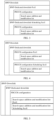
- FIG. 6, FIG. 7, and FIG. 8 show that the network device configures the first search space and the second search space by using signaling with different names.
- the search space addition and modification list-Scheduling secondary cell searchSpacesToAddModListSscell
- Physical downlink control channel configuration-Scheduling secondary cell PCCH-configSscell
- BWP-DownlinkDedicatedSscell Bandwidth part-Dedicated downlink scheduling secondary cell
- Physical downlink control channel configuration-Primary cell (PDCCH-configPcell) in FIG. 7 Physical downlink control channel configuration-Primary cell (PDCCH-configPcell) in FIG. 7
- Bandwidth part-Dedicated downlink primary cell (BWP-DownlinkDedicatedPcell) in FIG. 8 are used for configuring the second search space.
- the network device sends BWP-Downlink signaling to the terminal device, and the first search space and the second search space are configured by two BWP-DownlinkDedicated signalings included in the BWP-Downlink signaling.
- the first search space and the second search space are configured by two PDCCH-config (configuration) signalings included in the BWP-DownlinkDedicated signaling.
- the first search space and the second search space are configured by two search space addition and modification list (searchSpacesToAddModList) signalings included in the PDCCH-config signalings.
- the network device configures one space release group for releasing the search space for the terminal device
- the network device sends configuration signaling including searchSpacesToAddModList signaling to the terminal device to configure one search space group.
- the network device sends configuration signaling including Search space release list (searchSpacesToReleaseList) signaling to the terminal device to configure one space release group.
- searchSpacesToReleaseList Search space release list
- the network device sends a configuration signaling including Search space release list-Primary cell (searchSpacesToReleaseListPcell) signaling to the terminal device to configure one space release group, and the network device sends a configuration signaling including Search space release list-Scheduling secondary cell (searchSpacesToReleaseListSscell) to the terminal device to configure one space release group.
- searchSpacesToReleaseListPcell Search space release list-Primary cell
- searchSpacesToReleaseListSscell Search space release list-Scheduling secondary cell
- the network device sends configuration information including searchSpacesToReleaseList signaling to the terminal device to configure one search space group, and carrier indication information is also included.
- the network device sends configuration information including searchSpacesToReleaseList signaling to the terminal device to configure one search space group, and state indication information is also included.
- first cell and the second cell include any of the following cases.
- the network device may configure for the terminal device a search space group that supports the Scell scheduling the Pcell, which expands the way of configuring the search space of the Pcell, and further expands the way that the Pcell is scheduled, thereby improving the communication effect.
- the first cell is Scell
- the second cell is Scell
- the Scell of the first cell is different from the Scell of the second cell.
- the first cell is Pcell
- the second cell is Scell
- the network device configures for the terminal device a search space group that supports Scell scheduling Scell, or Pcell scheduling Scell, and the Scell can also self-scheduling, which expands the way of configuring the search space of the Scell, further expands the scheduling method of the Scell, thereby improving the communication effect.
- the terminal device detects downlink control information in at least one first search space.
- the terminal device after the terminal device determines at least one first search space, it can determine the resource for the network device to send downlink control information to the terminal device, and the terminal device detects the downlink control information on the determined resource to receive the downlink control information sent by the network device.
- the terminal device monitors the PDCCH in at least one first search space to detect the Downlink Control Information (DCI) carried in the PDCCH.
- DCI Downlink Control Information
- the configuration signaling sent by the network device is further used for configuring a second search space for the second cell to schedule the second cell, and the terminal device also detects downlink control information in at least one second search space.
- the network device can configure the terminal device with a first search space that supports cross-carrier scheduling of the second cell by the first cell, and can also configure the terminal device with a second search space that supports the second cell to schedule the second cell.
- the terminal device detects the downlink control information in these search space at the same time, and if the downlink control information is detected in the two search spaces, the second cell is scheduled not only by the second cell but also by the first cell, which extends the way in which the second cell is scheduled.
- the terminal device determines at least one first search space configured by the network device for cross-carrier scheduling of the second cell by the first cell, and the second cell supports self-scheduling, and in the case that the second cell supports self-scheduling, it can also be scheduled by the first cell, which not only expands the way of configuring the search space of the cell, but also expands the way that the cell is scheduled, thereby improving the communication effect.
- FIG. 14 shows a block diagram of an apparatus for configuring a search space provided by an exemplary embodiment of the present application.
- the apparatus is arranged in a terminal device, and the apparatus includes:
- the at least one first search space belongs to a first search space group.
- the configuration signaling is further used for configuring at least one second search space, and the at least one second search space is used for the second cell to schedule the second cell.
- the at least one second search space belongs to the first search space group.
- index identifiers of any two search spaces in the at least one first search space and the at least one second search space are different; or, index identifiers of at least two search spaces in the at least one first search space and the at least one second search space are the same.
- the configuration signaling includes first state indication information of the at least one first search space, or first carrier indication information, and second state indication information of the at least one second search space, or second carrier indication information;
- the at least one second search space belongs to a second search space group.
- index identifiers of any two search spaces in the first search space group and the second search space group are different; or, index identifiers of at least two search spaces in the first search space group and the second search space group are the same.
- the configuration signaling is further used for releasing at least one third search space, the at least one third search space is used for cross-carrier scheduling the second cell by the first cell, or the at least one third search space is used for the second cell to schedule the second cell.
- the at least one third search space belongs to a first releasing space group.
- the configuration signaling is further used for releasing at least one fourth search space
- the at least one fourth search space belongs to the first releasing space group.
- the at least one fourth search space belongs to a second releasing space group.
- the configuration signaling includes an index identifier of the at least one third search space and an index identifier of at least one fourth search space.
- the index identifiers of any two search spaces in the at least one third search space and the at least one fourth search space are different; or, index identifiers of at least two search spaces in the at least one third search space and the at least one fourth search space are the same.
- the configuration signaling includes third state indication information of the at least one third search space, or third carrier indication information, and fourth state indication information of the at least one fourth search space, or fourth carrier indication information;
- the first cell is an Scell, and the second cell is a Pcell; or, the first cell is an Scell, and the second cell is an Scell; or, the first cell is a Pcell, and the second cell is an Scell.
- Fig. 15 shows a block diagram of an apparatus for configuring a search space provided by an exemplary embodiment of the present application.
- the apparatus is arranged in a network device, and the apparatus includes:
- the at least one first search space belongs to a first search space group.
- the configuration signaling is further used for configuring at least one second search space, and the at least one second search space is used for the second cell to schedule the second cell.
- the at least one second search space belongs to the first search space group.
- index identifiers of any two search spaces in the at least one first search space and the at least one second search space are different; or, index identifiers of at least two search spaces in the at least one first search space and the at least one second search space are the same.
- the configuration signaling includes first state indication information of the at least one first search space, or first carrier indication information, and second state indication information of the at least one second search space, or second carrier indication information;
- the at least one second search space belongs to a second search space group.
- index identifiers of any two search spaces in the first search space group and the second search space group are different; or, the index identifiers of at least two search spaces in the first search space group and the second search space group are the same.
- the configuration signaling is further used for releasing at least one third search space, the at least one third search space is used for cross-carrier scheduling the second cell by the first cell, or the at least one third search space is used for the second cell to schedule the second cell.
- the at least one third search space belongs to a first releasing space group.
- the configuration signaling is further used for releasing at least one fourth search space
- the at least one fourth search space belongs to the first releasing space group.
- the at least one fourth search space belongs to a second releasing space group.
- the configuration signaling includes an index identifier of the at least one third search space and an index identifier of at least one fourth search space.
- the index identifiers of any two search spaces in the at least one third search space and the at least one fourth search space are different; or, index identifiers of at least two search spaces in the at least one third search space and the at least one fourth search space are the same.
- the configuration signaling includes third state indication information of the at least one third search space, or third carrier indication information, and fourth state indication information of the at least one fourth search space, or fourth carrier indication information;
- the first cell is an Scell, and the second cell is a Pcell; or, the first cell is an Scell, and the second cell is an Scell; or, the first cell is a Pcell, and the second cell is an Scell.
- FIG. 16 shows a schematic structural diagram of a communication device provided by an exemplary embodiment of the present application.
- the communication device includes: a processor 1601, a receiver 1602, a transmitter 1603, a memory 1604 and a bus 1605.
- the processor 1601 includes one or more processing cores, and the processor 1601 executes various functional applications and information processing by running software programs and modules.
- the receiver 1602 and the transmitter 1603 may be implemented as one communication component, which may be a communication chip.
- the memory 1604 is connected to the processor 1601 through the bus 1605.
- the memory 1604 may be configured to store at least one program code, and the processor 1601 is configured to execute the at least one program code, so as to implement various steps in the above method embodiments.
- the communication device may be a terminal device or a network device.
- the memory 1604 may be implemented by any type or combination of volatile or non-volatile storage devices including, but not limited to: a magnetic or optical disk, an electrically erasable programmable read-only Memory (EEPROM), an Erasable Programmable Read Only Memory (EPROM), a Static Radom Access Memory (SRAM), a Read Only Memory (ROM), a magnetic memory, a flash memory, a Programmable Read Only Memory (PROM).
- EEPROM electrically erasable programmable read-only Memory
- EPROM Erasable Programmable Read Only Memory
- SRAM Static Radom Access Memory
- ROM Read Only Memory
- magnetic memory a magnetic memory
- flash memory a Programmable Read Only Memory
- a computer-readable storage medium is also provided, and executable program codes are stored in the readable storage medium, and the executable program codes are loaded and executed by a processor to implement the method for configuring a search space performed by the communication device provided by the above-mentioned various method embodiments.
- a chip in an exemplary embodiment, includes a programmable logic circuit and/or program instructions, when the chip runs on a terminal device or a network device, the method for configuring a search space provided in the various method embodiments is implemented.
- a computer program product is provided, and when the computer program product is executed by a processor of a terminal device or a network device, the computer program product is used to implement the method for configuring a search space provided by each of the above method embodiments.
Landscapes
- Engineering & Computer Science (AREA)
- Signal Processing (AREA)
- Computer Networks & Wireless Communication (AREA)
- Mobile Radio Communication Systems (AREA)
Applications Claiming Priority (1)
| Application Number | Priority Date | Filing Date | Title |
|---|---|---|---|
| PCT/CN2021/084150 WO2022205009A1 (zh) | 2021-03-30 | 2021-03-30 | 搜索空间配置方法、装置、设备及存储介质 |
Publications (3)
| Publication Number | Publication Date |
|---|---|
| EP4262303A1 true EP4262303A1 (de) | 2023-10-18 |
| EP4262303A4 EP4262303A4 (de) | 2024-02-28 |
| EP4262303B1 EP4262303B1 (de) | 2025-02-12 |
Family
ID=83455462
Family Applications (1)
| Application Number | Title | Priority Date | Filing Date |
|---|---|---|---|
| EP21933689.8A Active EP4262303B1 (de) | 2021-03-30 | 2021-03-30 | Suchraumkonfigurationsverfahren und -vorrichtung sowie vorrichtung und speichermedium |
Country Status (4)
| Country | Link |
|---|---|
| US (1) | US12604308B2 (de) |
| EP (1) | EP4262303B1 (de) |
| CN (2) | CN118265162A (de) |
| WO (1) | WO2022205009A1 (de) |
Family Cites Families (15)
| Publication number | Priority date | Publication date | Assignee | Title |
|---|---|---|---|---|
| KR102127320B1 (ko) * | 2013-09-27 | 2020-06-26 | 주식회사 아이티엘 | 상향링크 스케줄링 및 harq 타이밍 방법 및 장치 |
| US11737081B2 (en) * | 2018-05-11 | 2023-08-22 | Electronics And Telecommunications Research Institute | Method for transmitting and receiving signals for ultra reliable low latency communication |
| CN110662228B (zh) * | 2018-06-29 | 2021-02-12 | 维沃移动通信有限公司 | 跨载波调度的pdcch候选分配方法、设备和存储介质 |
| CN110831020B (zh) * | 2018-08-10 | 2022-05-24 | 华为技术有限公司 | 检测dci的方法、配置pdcch的方法和通信装置 |
| PL3852458T3 (pl) * | 2018-09-10 | 2025-08-11 | Ntt Docomo, Inc. | Terminal użytkownika i sposób komunikacji bezprzewodowej |
| CN110932820B (zh) * | 2018-09-19 | 2022-01-14 | 华为技术有限公司 | 发送和接收上行控制信息的方法以及通信装置 |
| US11178618B2 (en) * | 2019-01-10 | 2021-11-16 | Qualcomm Incorporated | Adaptation of power parameter values in discontinuous reception |
| US11864186B2 (en) * | 2019-08-05 | 2024-01-02 | Ofinno, Llc | Cross carrier scheduling |
| CN111132344B (zh) * | 2019-12-27 | 2023-01-17 | 北京紫光展锐通信技术有限公司 | 跨载波调度方法、装置及存储介质 |
| CN111901869B (zh) * | 2020-02-12 | 2025-02-07 | 中兴通讯股份有限公司 | 一种调度主小区的配置方法、装置、设备及储存介质 |
| WO2022079609A1 (en) * | 2020-10-13 | 2022-04-21 | Lenovo (Singapore) Pte. Ltd. | Dual scheduling configuring |
| WO2022077334A1 (en) * | 2020-10-15 | 2022-04-21 | Zte Corporation | Method and device for cross-carrier scheduling primary cell |
| WO2022151432A1 (zh) * | 2021-01-15 | 2022-07-21 | 华为技术有限公司 | 资源调度的方法和通信设备 |
| US12075341B2 (en) * | 2021-03-19 | 2024-08-27 | Qualcomm Incorporated | Search space set group switching for cross-carrier scheduling |
| US12150119B2 (en) * | 2021-03-19 | 2024-11-19 | Qualcomm Incorporated | Techniques for control channel repetition across component carriers |
-
2021
- 2021-03-30 CN CN202410317941.1A patent/CN118265162A/zh active Pending
- 2021-03-30 CN CN202180074687.1A patent/CN116472764A/zh active Pending
- 2021-03-30 WO PCT/CN2021/084150 patent/WO2022205009A1/zh not_active Ceased
- 2021-03-30 EP EP21933689.8A patent/EP4262303B1/de active Active
-
2023
- 2023-07-17 US US18/222,647 patent/US12604308B2/en active Active
Also Published As
| Publication number | Publication date |
|---|---|
| CN116472764A (zh) | 2023-07-21 |
| EP4262303A4 (de) | 2024-02-28 |
| US12604308B2 (en) | 2026-04-14 |
| US20230362916A1 (en) | 2023-11-09 |
| EP4262303B1 (de) | 2025-02-12 |
| CN118265162A (zh) | 2024-06-28 |
| WO2022205009A1 (zh) | 2022-10-06 |
Similar Documents
| Publication | Publication Date | Title |
|---|---|---|
| US12483367B2 (en) | Secondary cell activation method, apparatus, device, and storage medium | |
| EP2944147B1 (de) | Gleichzeitige aufwärtsstreckenübertragungen in einem doppelmoduskonnektivitätsmodus | |
| EP4221047A2 (de) | Trägerumschaltverfahren, vorrichtung und system für mehrträgerkommunikation | |
| US20230133904A1 (en) | Enabling access for a reduced capability new radio (nr) device | |
| US20230094513A1 (en) | Transmission method and device | |
| CN111448840A (zh) | 数据传输方法、装置、通信设备及存储介质 | |
| US20230292375A1 (en) | Method for data transmission and terminal device | |
| US20250202658A1 (en) | Scheduling Restriction and Interruption for SRS Antenna Port Switching | |
| US12567934B2 (en) | TCI state determination method and apparatus | |
| US12604308B2 (en) | Search space configuration method and apparatus, and device and storage medium | |
| WO2022011568A1 (zh) | 随机接入资源的确定方法、装置、通信设备及存储介质 | |
| US12225544B2 (en) | Information determination method and apparatus, device, and storage medium | |
| EP4498741A1 (de) | Signalmessverfahren und -vorrichtung sowie vorrichtung, medium und programmprodukt | |
| US20230371041A1 (en) | Receiving method and apparatus, terminal device, and storage medium | |
| US12593341B2 (en) | Method for carrier determination, terminal device, and network device | |
| US20240031115A1 (en) | Method and apparatus for determining monitoring capability, device, and storage medium | |
| CN116711429B (zh) | 用于数据传输的方法、装置、设备及存储介质 | |
| US20250379708A1 (en) | Bandwidth boosting for downlink & uplink transmission | |
| KR20170037062A (ko) | Laa 시스템에서 상향링크 ofdma 전송을 위한 전송 타이밍 조절 방법 및 장치 |
Legal Events
| Date | Code | Title | Description |
|---|---|---|---|
| STAA | Information on the status of an ep patent application or granted ep patent |
Free format text: STATUS: THE INTERNATIONAL PUBLICATION HAS BEEN MADE |
|
| PUAI | Public reference made under article 153(3) epc to a published international application that has entered the european phase |
Free format text: ORIGINAL CODE: 0009012 |
|
| STAA | Information on the status of an ep patent application or granted ep patent |
Free format text: STATUS: REQUEST FOR EXAMINATION WAS MADE |
|
| 17P | Request for examination filed |
Effective date: 20230713 |
|
| AK | Designated contracting states |
Kind code of ref document: A1 Designated state(s): AL AT BE BG CH CY CZ DE DK EE ES FI FR GB GR HR HU IE IS IT LI LT LU LV MC MK MT NL NO PL PT RO RS SE SI SK SM TR |
|
| A4 | Supplementary search report drawn up and despatched |
Effective date: 20240130 |
|
| RIC1 | Information provided on ipc code assigned before grant |
Ipc: H04L 5/00 20060101ALI20240124BHEP Ipc: H04W 72/04 20230101AFI20240124BHEP |
|
| DAV | Request for validation of the european patent (deleted) | ||
| DAX | Request for extension of the european patent (deleted) | ||
| GRAP | Despatch of communication of intention to grant a patent |
Free format text: ORIGINAL CODE: EPIDOSNIGR1 |
|
| STAA | Information on the status of an ep patent application or granted ep patent |
Free format text: STATUS: GRANT OF PATENT IS INTENDED |
|
| RIC1 | Information provided on ipc code assigned before grant |
Ipc: H04L 5/00 20060101ALI20241007BHEP Ipc: H04W 72/04 20230101AFI20241007BHEP |
|
| INTG | Intention to grant announced |
Effective date: 20241028 |
|
| GRAS | Grant fee paid |
Free format text: ORIGINAL CODE: EPIDOSNIGR3 |
|
| GRAA | (expected) grant |
Free format text: ORIGINAL CODE: 0009210 |
|
| STAA | Information on the status of an ep patent application or granted ep patent |
Free format text: STATUS: THE PATENT HAS BEEN GRANTED |
|
| AK | Designated contracting states |
Kind code of ref document: B1 Designated state(s): AL AT BE BG CH CY CZ DE DK EE ES FI FR GB GR HR HU IE IS IT LI LT LU LV MC MK MT NL NO PL PT RO RS SE SI SK SM TR |
|
| REG | Reference to a national code |
Ref country code: GB Ref legal event code: FG4D |
|
| REG | Reference to a national code |
Ref country code: CH Ref legal event code: EP |
|
| REG | Reference to a national code |
Ref country code: DE Ref legal event code: R096 Ref document number: 602021026210 Country of ref document: DE |
|
| REG | Reference to a national code |
Ref country code: IE Ref legal event code: FG4D |
|
| P01 | Opt-out of the competence of the unified patent court (upc) registered |
Free format text: CASE NUMBER: APP_9756/2025 Effective date: 20250226 |
|
| PGFP | Annual fee paid to national office [announced via postgrant information from national office to epo] |
Ref country code: AT Payment date: 20250417 Year of fee payment: 5 |
|
| REG | Reference to a national code |
Ref country code: NL Ref legal event code: MP Effective date: 20250212 |
|
| PG25 | Lapsed in a contracting state [announced via postgrant information from national office to epo] |
Ref country code: RS Free format text: LAPSE BECAUSE OF FAILURE TO SUBMIT A TRANSLATION OF THE DESCRIPTION OR TO PAY THE FEE WITHIN THE PRESCRIBED TIME-LIMIT Effective date: 20250512 |
|
| PG25 | Lapsed in a contracting state [announced via postgrant information from national office to epo] |
Ref country code: FI Free format text: LAPSE BECAUSE OF FAILURE TO SUBMIT A TRANSLATION OF THE DESCRIPTION OR TO PAY THE FEE WITHIN THE PRESCRIBED TIME-LIMIT Effective date: 20250212 |
|
| PG25 | Lapsed in a contracting state [announced via postgrant information from national office to epo] |
Ref country code: PL Free format text: LAPSE BECAUSE OF FAILURE TO SUBMIT A TRANSLATION OF THE DESCRIPTION OR TO PAY THE FEE WITHIN THE PRESCRIBED TIME-LIMIT Effective date: 20250212 |
|
| PG25 | Lapsed in a contracting state [announced via postgrant information from national office to epo] |
Ref country code: ES Free format text: LAPSE BECAUSE OF FAILURE TO SUBMIT A TRANSLATION OF THE DESCRIPTION OR TO PAY THE FEE WITHIN THE PRESCRIBED TIME-LIMIT Effective date: 20250212 |
|
| REG | Reference to a national code |
Ref country code: LT Ref legal event code: MG9D |
|
| PG25 | Lapsed in a contracting state [announced via postgrant information from national office to epo] |
Ref country code: IS Free format text: LAPSE BECAUSE OF FAILURE TO SUBMIT A TRANSLATION OF THE DESCRIPTION OR TO PAY THE FEE WITHIN THE PRESCRIBED TIME-LIMIT Effective date: 20250612 Ref country code: NO Free format text: LAPSE BECAUSE OF FAILURE TO SUBMIT A TRANSLATION OF THE DESCRIPTION OR TO PAY THE FEE WITHIN THE PRESCRIBED TIME-LIMIT Effective date: 20250512 |
|
| PG25 | Lapsed in a contracting state [announced via postgrant information from national office to epo] |
Ref country code: NL Free format text: LAPSE BECAUSE OF FAILURE TO SUBMIT A TRANSLATION OF THE DESCRIPTION OR TO PAY THE FEE WITHIN THE PRESCRIBED TIME-LIMIT Effective date: 20250212 |
|
| PG25 | Lapsed in a contracting state [announced via postgrant information from national office to epo] |
Ref country code: HR Free format text: LAPSE BECAUSE OF FAILURE TO SUBMIT A TRANSLATION OF THE DESCRIPTION OR TO PAY THE FEE WITHIN THE PRESCRIBED TIME-LIMIT Effective date: 20250212 |
|
| PG25 | Lapsed in a contracting state [announced via postgrant information from national office to epo] |
Ref country code: PT Free format text: LAPSE BECAUSE OF FAILURE TO SUBMIT A TRANSLATION OF THE DESCRIPTION OR TO PAY THE FEE WITHIN THE PRESCRIBED TIME-LIMIT Effective date: 20250612 Ref country code: LV Free format text: LAPSE BECAUSE OF FAILURE TO SUBMIT A TRANSLATION OF THE DESCRIPTION OR TO PAY THE FEE WITHIN THE PRESCRIBED TIME-LIMIT Effective date: 20250212 |
|
| PG25 | Lapsed in a contracting state [announced via postgrant information from national office to epo] |
Ref country code: BG Free format text: LAPSE BECAUSE OF FAILURE TO SUBMIT A TRANSLATION OF THE DESCRIPTION OR TO PAY THE FEE WITHIN THE PRESCRIBED TIME-LIMIT Effective date: 20250212 Ref country code: GR Free format text: LAPSE BECAUSE OF FAILURE TO SUBMIT A TRANSLATION OF THE DESCRIPTION OR TO PAY THE FEE WITHIN THE PRESCRIBED TIME-LIMIT Effective date: 20250513 |
|
| REG | Reference to a national code |
Ref country code: AT Ref legal event code: MK05 Ref document number: 1767300 Country of ref document: AT Kind code of ref document: T Effective date: 20250212 |
|
| PG25 | Lapsed in a contracting state [announced via postgrant information from national office to epo] |
Ref country code: SE Free format text: LAPSE BECAUSE OF FAILURE TO SUBMIT A TRANSLATION OF THE DESCRIPTION OR TO PAY THE FEE WITHIN THE PRESCRIBED TIME-LIMIT Effective date: 20250212 |
|
| PG25 | Lapsed in a contracting state [announced via postgrant information from national office to epo] |
Ref country code: SM Free format text: LAPSE BECAUSE OF FAILURE TO SUBMIT A TRANSLATION OF THE DESCRIPTION OR TO PAY THE FEE WITHIN THE PRESCRIBED TIME-LIMIT Effective date: 20250212 |
|
| PG25 | Lapsed in a contracting state [announced via postgrant information from national office to epo] |
Ref country code: DK Free format text: LAPSE BECAUSE OF FAILURE TO SUBMIT A TRANSLATION OF THE DESCRIPTION OR TO PAY THE FEE WITHIN THE PRESCRIBED TIME-LIMIT Effective date: 20250212 |
|
| PG25 | Lapsed in a contracting state [announced via postgrant information from national office to epo] |
Ref country code: IT Free format text: LAPSE BECAUSE OF FAILURE TO SUBMIT A TRANSLATION OF THE DESCRIPTION OR TO PAY THE FEE WITHIN THE PRESCRIBED TIME-LIMIT Effective date: 20250212 |
|
| PG25 | Lapsed in a contracting state [announced via postgrant information from national office to epo] |
Ref country code: AT Free format text: LAPSE BECAUSE OF FAILURE TO SUBMIT A TRANSLATION OF THE DESCRIPTION OR TO PAY THE FEE WITHIN THE PRESCRIBED TIME-LIMIT Effective date: 20250212 |
|
| PG25 | Lapsed in a contracting state [announced via postgrant information from national office to epo] |
Ref country code: EE Free format text: LAPSE BECAUSE OF FAILURE TO SUBMIT A TRANSLATION OF THE DESCRIPTION OR TO PAY THE FEE WITHIN THE PRESCRIBED TIME-LIMIT Effective date: 20250212 Ref country code: CZ Free format text: LAPSE BECAUSE OF FAILURE TO SUBMIT A TRANSLATION OF THE DESCRIPTION OR TO PAY THE FEE WITHIN THE PRESCRIBED TIME-LIMIT Effective date: 20250212 |
|
| REG | Reference to a national code |
Ref country code: CH Ref legal event code: H13 Free format text: ST27 STATUS EVENT CODE: U-0-0-H10-H13 (AS PROVIDED BY THE NATIONAL OFFICE) Effective date: 20251023 |
|
| PG25 | Lapsed in a contracting state [announced via postgrant information from national office to epo] |
Ref country code: RO Free format text: LAPSE BECAUSE OF FAILURE TO SUBMIT A TRANSLATION OF THE DESCRIPTION OR TO PAY THE FEE WITHIN THE PRESCRIBED TIME-LIMIT Effective date: 20250212 |
|
| PG25 | Lapsed in a contracting state [announced via postgrant information from national office to epo] |
Ref country code: SK Free format text: LAPSE BECAUSE OF FAILURE TO SUBMIT A TRANSLATION OF THE DESCRIPTION OR TO PAY THE FEE WITHIN THE PRESCRIBED TIME-LIMIT Effective date: 20250212 |
|
| REG | Reference to a national code |
Ref country code: DE Ref legal event code: R097 Ref document number: 602021026210 Country of ref document: DE |
|
| PG25 | Lapsed in a contracting state [announced via postgrant information from national office to epo] |
Ref country code: LU Free format text: LAPSE BECAUSE OF NON-PAYMENT OF DUE FEES Effective date: 20250330 |
|
| REG | Reference to a national code |
Ref country code: BE Ref legal event code: MM Effective date: 20250331 |
|
| PLBE | No opposition filed within time limit |
Free format text: ORIGINAL CODE: 0009261 |
|
| STAA | Information on the status of an ep patent application or granted ep patent |
Free format text: STATUS: NO OPPOSITION FILED WITHIN TIME LIMIT |
|
| PG25 | Lapsed in a contracting state [announced via postgrant information from national office to epo] |
Ref country code: MC Free format text: LAPSE BECAUSE OF FAILURE TO SUBMIT A TRANSLATION OF THE DESCRIPTION OR TO PAY THE FEE WITHIN THE PRESCRIBED TIME-LIMIT Effective date: 20250212 |
|
| PG25 | Lapsed in a contracting state [announced via postgrant information from national office to epo] |
Ref country code: BE Free format text: LAPSE BECAUSE OF NON-PAYMENT OF DUE FEES Effective date: 20250331 |
|
| PG25 | Lapsed in a contracting state [announced via postgrant information from national office to epo] |
Ref country code: CH Free format text: LAPSE BECAUSE OF NON-PAYMENT OF DUE FEES Effective date: 20250331 |
|
| PG25 | Lapsed in a contracting state [announced via postgrant information from national office to epo] |
Ref country code: IE Free format text: LAPSE BECAUSE OF NON-PAYMENT OF DUE FEES Effective date: 20250330 |
|
| 26N | No opposition filed |
Effective date: 20251113 |
|
| PGFP | Annual fee paid to national office [announced via postgrant information from national office to epo] |
Ref country code: GB Payment date: 20260209 Year of fee payment: 6 |
|
| PGFP | Annual fee paid to national office [announced via postgrant information from national office to epo] |
Ref country code: DE Payment date: 20260204 Year of fee payment: 6 |
|
| PGFP | Annual fee paid to national office [announced via postgrant information from national office to epo] |
Ref country code: FR Payment date: 20260209 Year of fee payment: 6 |