EP4263171B1 - Joints de vulcanisat thermoplastique moulés par extrusion et méthodes de fabrication de tels joints - Google Patents
Joints de vulcanisat thermoplastique moulés par extrusion et méthodes de fabrication de tels joints Download PDFInfo
- Publication number
- EP4263171B1 EP4263171B1 EP21791548.7A EP21791548A EP4263171B1 EP 4263171 B1 EP4263171 B1 EP 4263171B1 EP 21791548 A EP21791548 A EP 21791548A EP 4263171 B1 EP4263171 B1 EP 4263171B1
- Authority
- EP
- European Patent Office
- Prior art keywords
- gasket
- thermoplastic
- thermoplastic vulcanizate
- weight
- tpv
- Prior art date
- Legal status (The legal status is an assumption and is not a legal conclusion. Google has not performed a legal analysis and makes no representation as to the accuracy of the status listed.)
- Active
Links
Images
Classifications
-
- B—PERFORMING OPERATIONS; TRANSPORTING
- B29—WORKING OF PLASTICS; WORKING OF SUBSTANCES IN A PLASTIC STATE IN GENERAL
- B29C—SHAPING OR JOINING OF PLASTICS; SHAPING OF MATERIAL IN A PLASTIC STATE, NOT OTHERWISE PROVIDED FOR; AFTER-TREATMENT OF THE SHAPED PRODUCTS, e.g. REPAIRING
- B29C48/00—Extrusion moulding, i.e. expressing the moulding material through a die or nozzle which imparts the desired form; Apparatus therefor
- B29C48/03—Extrusion moulding, i.e. expressing the moulding material through a die or nozzle which imparts the desired form; Apparatus therefor characterised by the shape of the extruded material at extrusion
- B29C48/12—Articles with an irregular circumference when viewed in cross-section, e.g. window profiles
-
- B—PERFORMING OPERATIONS; TRANSPORTING
- B29—WORKING OF PLASTICS; WORKING OF SUBSTANCES IN A PLASTIC STATE IN GENERAL
- B29C—SHAPING OR JOINING OF PLASTICS; SHAPING OF MATERIAL IN A PLASTIC STATE, NOT OTHERWISE PROVIDED FOR; AFTER-TREATMENT OF THE SHAPED PRODUCTS, e.g. REPAIRING
- B29C48/00—Extrusion moulding, i.e. expressing the moulding material through a die or nozzle which imparts the desired form; Apparatus therefor
- B29C48/16—Articles comprising two or more components, e.g. co-extruded layers
- B29C48/18—Articles comprising two or more components, e.g. co-extruded layers the components being layers
- B29C48/21—Articles comprising two or more components, e.g. co-extruded layers the components being layers the layers being joined at their surfaces
-
- C—CHEMISTRY; METALLURGY
- C08—ORGANIC MACROMOLECULAR COMPOUNDS; THEIR PREPARATION OR CHEMICAL WORKING-UP; COMPOSITIONS BASED THEREON
- C08L—COMPOSITIONS OF MACROMOLECULAR COMPOUNDS
- C08L23/00—Compositions of homopolymers or copolymers of unsaturated aliphatic hydrocarbons having only one carbon-to-carbon double bond; Compositions of derivatives of such polymers
- C08L23/02—Compositions of homopolymers or copolymers of unsaturated aliphatic hydrocarbons having only one carbon-to-carbon double bond; Compositions of derivatives of such polymers not modified by chemical after-treatment
- C08L23/16—Ethylene-propylene or ethylene-propylene-diene copolymers
-
- F—MECHANICAL ENGINEERING; LIGHTING; HEATING; WEAPONS; BLASTING
- F16—ENGINEERING ELEMENTS AND UNITS; GENERAL MEASURES FOR PRODUCING AND MAINTAINING EFFECTIVE FUNCTIONING OF MACHINES OR INSTALLATIONS; THERMAL INSULATION IN GENERAL
- F16J—PISTONS; CYLINDERS; SEALINGS
- F16J15/00—Sealings
- F16J15/02—Sealings between relatively-stationary surfaces
- F16J15/06—Sealings between relatively-stationary surfaces with solid packing compressed between sealing surfaces
- F16J15/10—Sealings between relatively-stationary surfaces with solid packing compressed between sealing surfaces with non-metallic packing
- F16J15/102—Sealings between relatively-stationary surfaces with solid packing compressed between sealing surfaces with non-metallic packing characterised by material
-
- F—MECHANICAL ENGINEERING; LIGHTING; HEATING; WEAPONS; BLASTING
- F16—ENGINEERING ELEMENTS AND UNITS; GENERAL MEASURES FOR PRODUCING AND MAINTAINING EFFECTIVE FUNCTIONING OF MACHINES OR INSTALLATIONS; THERMAL INSULATION IN GENERAL
- F16J—PISTONS; CYLINDERS; SEALINGS
- F16J15/00—Sealings
- F16J15/02—Sealings between relatively-stationary surfaces
- F16J15/06—Sealings between relatively-stationary surfaces with solid packing compressed between sealing surfaces
- F16J15/10—Sealings between relatively-stationary surfaces with solid packing compressed between sealing surfaces with non-metallic packing
- F16J15/104—Sealings between relatively-stationary surfaces with solid packing compressed between sealing surfaces with non-metallic packing characterised by structure
-
- F—MECHANICAL ENGINEERING; LIGHTING; HEATING; WEAPONS; BLASTING
- F16—ENGINEERING ELEMENTS AND UNITS; GENERAL MEASURES FOR PRODUCING AND MAINTAINING EFFECTIVE FUNCTIONING OF MACHINES OR INSTALLATIONS; THERMAL INSULATION IN GENERAL
- F16J—PISTONS; CYLINDERS; SEALINGS
- F16J15/00—Sealings
- F16J15/02—Sealings between relatively-stationary surfaces
- F16J15/06—Sealings between relatively-stationary surfaces with solid packing compressed between sealing surfaces
- F16J15/10—Sealings between relatively-stationary surfaces with solid packing compressed between sealing surfaces with non-metallic packing
- F16J15/108—Special methods for making a non-metallic packing
-
- B—PERFORMING OPERATIONS; TRANSPORTING
- B29—WORKING OF PLASTICS; WORKING OF SUBSTANCES IN A PLASTIC STATE IN GENERAL
- B29C—SHAPING OR JOINING OF PLASTICS; SHAPING OF MATERIAL IN A PLASTIC STATE, NOT OTHERWISE PROVIDED FOR; AFTER-TREATMENT OF THE SHAPED PRODUCTS, e.g. REPAIRING
- B29C48/00—Extrusion moulding, i.e. expressing the moulding material through a die or nozzle which imparts the desired form; Apparatus therefor
- B29C48/001—Combinations of extrusion moulding with other shaping operations
- B29C48/0022—Combinations of extrusion moulding with other shaping operations combined with cutting
-
- B—PERFORMING OPERATIONS; TRANSPORTING
- B29—WORKING OF PLASTICS; WORKING OF SUBSTANCES IN A PLASTIC STATE IN GENERAL
- B29C—SHAPING OR JOINING OF PLASTICS; SHAPING OF MATERIAL IN A PLASTIC STATE, NOT OTHERWISE PROVIDED FOR; AFTER-TREATMENT OF THE SHAPED PRODUCTS, e.g. REPAIRING
- B29C48/00—Extrusion moulding, i.e. expressing the moulding material through a die or nozzle which imparts the desired form; Apparatus therefor
- B29C48/022—Extrusion moulding, i.e. expressing the moulding material through a die or nozzle which imparts the desired form; Apparatus therefor characterised by the choice of material
-
- B—PERFORMING OPERATIONS; TRANSPORTING
- B29—WORKING OF PLASTICS; WORKING OF SUBSTANCES IN A PLASTIC STATE IN GENERAL
- B29L—INDEXING SCHEME ASSOCIATED WITH SUBCLASS B29C, RELATING TO PARTICULAR ARTICLES
- B29L2031/00—Other particular articles
- B29L2031/26—Sealing devices, e.g. packaging for pistons or pipe joints
- B29L2031/265—Packings, Gaskets
-
- C—CHEMISTRY; METALLURGY
- C08—ORGANIC MACROMOLECULAR COMPOUNDS; THEIR PREPARATION OR CHEMICAL WORKING-UP; COMPOSITIONS BASED THEREON
- C08L—COMPOSITIONS OF MACROMOLECULAR COMPOUNDS
- C08L2205/00—Polymer mixtures characterised by other features
- C08L2205/03—Polymer mixtures characterised by other features containing three or more polymers in a blend
- C08L2205/035—Polymer mixtures characterised by other features containing three or more polymers in a blend containing four or more polymers in a blend
-
- C—CHEMISTRY; METALLURGY
- C08—ORGANIC MACROMOLECULAR COMPOUNDS; THEIR PREPARATION OR CHEMICAL WORKING-UP; COMPOSITIONS BASED THEREON
- C08L—COMPOSITIONS OF MACROMOLECULAR COMPOUNDS
- C08L2312/00—Crosslinking
Definitions
- the present invention is directed to extrusion molded gaskets, and in particular to the use of thermoplastic vulcanizates in extrusion molded gaskets, especially, water-tight gaskets.
- Thermoset and other rubbers are conventionally used in washing machine door seal gaskets such as disclosed in US 8,262,092 .
- These gaskets are typically injection molded into the desired shape.
- front door gaskets for washing machines are typically manufactured using injection molding process.
- Once the gasket design is created an injection molding tool is cut and shaped for manufacturing these gaskets.
- the gaskets are typically made using single thermoplastic or thermoset elastomer due to process limitations. Once the gasket's design is finalized, it is difficult to modify the gasket for different or improved performance due to technical challenges and high cost.
- gaskets may contain organic and/or oleo-chemicals (e.g., slip agents) to reduce the coefficient of friction (COF) of the gasket surface and the surfaces are exposed to water and detergents thus making the COF-reducing agents prone to easily wash-off. This could result in increase in COF after wash and over the service life of the product.
- organic and/or oleo-chemicals e.g., slip agents
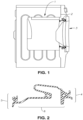
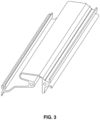
- an extrusion molded gasket comprising (or consisting of, or consisting essentially of) one or more annular sections configured to engage a door rim of a tub, one or more annular sections configured to engage the tub, and one or more sealing sections disposed therebetween, wherein the gasket comprises at least one thermoplastic vulcanizate (TPV) comprising at least 15 wt%, by weight of the TPV, of a cross-linkable ethylene-based elastomer and within a range from 5 to 30 wt%, by weight of the TPV, of at least one thermoplastic, the TPV having a Shore A Hardness within a range from 35 to 50D, and wherein the TPV is extrusion molded into the gasket.
- TPV thermoplastic vulcanizate
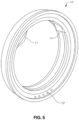
- Also disclosed is a method of making gasket comprising (or consisting of, or consisting essentially of) extrusion molding at least one TPV into a annular form having one or more annular sections configured to engage a door rim of a tub, one or more annular sections configured to engage the tub, and one or more sealing sections disposed therebetween, cutting the annular form to a desired length such that the annular form has two ends, and fusing one end of the annular form to other end to create a continuous annular gasket wherein at least one TPV comprises at least 15 wt%, by weight of the TPV, of a cross-linkable ethylene-based elastomer and within a range from 5 to 30 wt%, by weight of the TPV, of at least one thermoplastic, the TPV having a Shore A Hardness within a range from 35 to 50D.
- TPV materials containing silicone based, non-migratory type slip agent can be tailored for multiple hardness regions within the same gasket, and process limitations can be solved by changing manufacturing process to use an extrusion molding process.
- Such innovations allow for appliance gaskets that can be manufactured using extrusion process which is much more versatile and cost effective than injection molding processes.
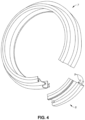
- TPVs of various hardness such as Shore 35A to 50D hardness can be co-extruded continuously and then can be cut into specified length and fused using a heat welding process or ultra-sound technique to make a continuous annular gasket for water tight appliance door seals.
- gaskets with multi-hardness cross sections can be formed that cannot be achieved with injection molding.
- the extrusion molding technique can provide design flexibility of using different hardness TPV grades and also provide ease changing and modify seal design as and when required by changing extrusion die.
- Gaskets are comprised of a homogeneous material, typically a low durometer (hardness) EPDM in the 40A to 45A Shore hardness range.
- the low hardness is needed for the seal to function properly by providing the compliance necessary to provide a watertight seal, allow large axial movements and to minimize vibration and noise transmission from the wash tub to the appliance frame.
- the softer material can be prone to premature abrasion failure and cut and tear failures.
- these gaskets having a three-dimensional shape and are injection molded in one piece.
- the use of TPV in combination with an extrusion molded design offers many benefits over a single material construction. First, multiple materials can easily be combined in the extrusion process.
- extrusion molding allows for lower cost tooling compared to injection molding which enables more design customization.
- the main body of the seal can be extruded in a continuous high speed process and automatically cut to the desired length.
- the ends of the extrusion are joined together in a separate molding process which allows the addition of 3D features, such as filler and detergent ports, and drains or even mounting tabs along the length of the gasket. Since the molded area is much smaller than the entire part, the tooling and equipment costs are much less than for the entire part when compared to injection molded gaskets. In addition, the molds for the joining process can be easily customized for various appliance models.
- some sort of joining or "fusing" process is required to form a complete annular ring.
- This can be done via various thermal welding processes or via insert injection molding where the ends of the extrudate are placed into a smaller injection mold where TPV material is injected and creating a chemical bond to the exdrudate they forming a complete finished part.
- the injection molded section may include added features to allow mounting locations, or ports where water, and detergent or other associated cleaning chemicals are introduced to, for instance, a washing machine.
- the molded section may be conducted at one or more locations on the part depending on the design needs.
- Extrusion molding is a manufacturing process used to make pipes, hoses, rods, fibers, and other annular or cylindrical articles.
- granules of the desired thermoplastic or thermoset material is formed into a melt or liquid which is forced through a die having the desired profile to form a long, linear, potentially complex-profiled, and/or tube-like shape.
- the shape of the die determines the shape of the tube.
- the extrudate is then cooled and forms a solid shaped article.
- the tube may be printed upon, and cut at equal intervals.
- the pieces may be rolled for storage or packed together.
- Shapes and profiles that can result from extrusion molding include T-sections, U-sections, square sections, I-sections, L-sections, circular sections, or much more complex profiles that lead to gaskets.
- Extrusion molding is distinct from injection molding, most importantly, in that injection molding processes are based on the molten die-casting method of manufacture. Such is absent from the extrusion molding process of making gaskets disclosed herein.
- a "thermoplastic vulcanizate” refers to a cured composition of at least a cross-linkable ethylene-based elastomer and an alpha-olefin-based thermoplastic wherein the cross-linkable ethylene-based elastomer has been cross-linked, most preferably a cured blend of ethylene-propylene-diene rubber and polypropylene, such curing preferably taking place simultaneously with blending the components.
- the TPV's can include other ingredients, most preferably oils such as paraffinic oils, curatives, resins, and fillers such as clays and carbon black, and other materials as described in more detail below.
- TPV's that are "distinct” can be achieved using a different amount of ingredients and/or a different identity in the materials and/or a different process (temperature, shear, residence time) of blending and curing, all of which can achieve distinct end properties such as tensile, modulus, hardness, color, etc.
- M n , M w , and M z molecular weight distribution
- the thermoplastic includes, in addition to a polypropylene resin, a polyethylene resin.
- this polyethylene resin includes at least 90%, or at least 95%, or at least 99% of the polymeric units derive from ethylene.
- this polyethylene resin is a polyethylene homopolymer.
- the polyethylene used in conjunction with the polypropylene may be characterized by an intrinsic viscosity as determined per ASTM D 1601 and D 4020 that is from 0.5 to 10 dl/g, or from 1.0 to 9.0 dl/g, or from 1.5 to 8.0 dl/g.
- the polyethylene used in conjunction with the polypropylene resin may be characterized by a density as measured per ASTM D4883 that is greater than 0.93 g/cm 3 , or greater than 0.94 g/cm 3 , or greater than 0.95 g/cm 3 .
- Polymers useful as the polyethylene used in conjunction with the polypropylene may be generally referred to as high density polyethylene resins.
- useful high density polyethylene resins include those available under the tradename HD7960.13 HDPE (ExxonMobil).
- thermoplastic comprises from 5 to 30 wt%, such as from 7 to 30 wt%, such as from 10 to 25 wt% of the total weight of the at least one TPV composition.
- the non-migratory polysiloxane comprises a non-migratory polysiloxane which is bonded to a thermoplastic material.
- the polysiloxane molecule is chemically attached to the thermoplastic molecule, preventing the physical migration of the siloxane molecule to the surface of the materials and is, therefore, referred as a non-migratory slip agent or non-migratory polysiloxane.
- a non-migratory slip agent or non-migratory polysiloxane When such molecule is present in the system it has now been found that migration of the polysiloxane to the surface is reduced, apparently by increasing its compatibility with the base polymeric material and yet the siloxane combination is very effective in reducing COF properties of a TPV formulation without effecting its bonding performance and surface quality.
- the non-migratory polysiloxane is reactively dispersed in a thermoplastic material, which may be any homopolymer or copolymer of ethylene and/or ⁇ -olefins such as propylene, 1-butene, 1-hexene, 1-octene, 2-methyl-1-propene, 3-methyl-1-pentene, 4-methyl-1-pentene, 5-methyl-1-hexene, and mixtures thereof.
- the thermoplastic material is a polypropylene homopolymer.
- Suitable methods of reactively bonding a polysiloxane to an organic thermoplastic polymer, such as a polyolefin, are disclosed in WO2015/132190 and WO2015/150218 , both of which are incorporated herein by reference.
- the functionality of the polysiloxane which is capable of reacting with the thermoplastic can be called a reactive functionality.
- This reactive functionality can be present in terminal groups. In other embodiments, the reactive functionality is present in pendant groups. In other embodiments, the reactive functionality is present in terminal and in pendant groups.
- the reactive functionality can for example contain at least one of the following groups: alkenyl, Si-H, amino.
- the polysiloxane can for example contain vinyl groups, or alternatively other alkenyl groups such as hexenyl or allyl groups.
- the alkenyl groups can be pendant and/or terminal groups in the polysiloxane.
- the reactive functionality of the polysiloxane can alternatively be Si-H functionality.
- the polysiloxane can contain hydrogen atoms pendant to Si atoms in the siloxane chain and/or hydrogen atoms attached to terminal Si atoms.
- the reactive functionality of the polysiloxane can alternatively be an amino functionality.
- the amino functionality can for example be present in organic groups R which are aminoalkyl groups.
- the aminoalkyl group can for example be of the formula R'-(NH-A') q -NH-A-wherein A and A' are each independently a linear or branched alkylene group having 1 to 6 carbon atoms and optionally containing an ether linkage; q is 0-4; R' is hydrogen or an alkyl or hydroxyalkyl group having 1 to 4 carbon atoms. Most preferably R' is hydrogen; q is 0 or 1; and A and A' (if present) each contain 2 to 4 carbon atoms.
- Examples of preferred aminoalkyl groups include -(CH 2 ) 3 NH 2 , -(CH 2 ) 4 NH 2 , - (CH 2 ) 3 NH(CH 2 ) 2 NH 2 , -CH 2 CH(CH 3 )CH 2 NH(CH 2 ) 2 NH 2 , -(CH 2 ) 3 NHCH 2 CH 2 NH(CH 2 ) 2 NH 2 , - CH 2 CH(CH 3 )CH 2 NH(CH 2 ) 3 NH 2 , -(CH2) 3 NH(CH 2 ) 4 NH 2 and -(CH 2 ) 30 (CH 2 ) 2 NH 2 .
- the aminoalkyl groups can be pendant and/or terminal groups in the polysiloxane.
- the polysiloxane may comprise siloxane units selected from M units of the formula R 3 Si0 1/2 , and/or D units of the formula R 2 Si0 2/2 , and/or T units of the formula RSi0 3/2 , and/or Q units of the formula Si0 4/2 , where each R represents an organic group or hydrogen atom bonded to silicon.
- Organic groups R in the polysiloxane other than the functional groups can for example be alkyl groups having 1 to 6 carbon atoms such as methyl or ethyl groups and/or aryl groups having 6 to 10 carbon atoms such as phenyl groups. If the unit bears more than one R, each R can be the same or different.
- the polysiloxane may comprise predominantly D and/or T units, although it will usually contain terminal M units. Predominantly means containing more than 50% molar units.
- the polysiloxane can for example be a polydiorganosiloxane comprising at least 95% molar D units, optionally at least 99% D units.
- a suitable polydiorganosiloxane is a vinyl-terminated polydimethylsiloxane.
- the polysiloxane in some embodiments has a high molecular weight such as a number average molecular weight Mn of above 100,000 g/mole.
- the polysiloxane can for example have Mn above 200,000 g/mole, for example 200,000 to 2,000,000 g/mole.
- the non-migratory polysiloxane may comprise predominantly D and/or T units and contains some alkenyl functionalities, which assist in the reaction with the polymer matrix. There is a covalent bond between the polysiloxane and the polypropylene.
- the non-migratory polysiloxane has a number average molecular weight of 200,000 to 2,000,000 g/mole.
- the number average molecular weight of the reaction product of the polysiloxane and the polymer matrix is normally at least 1.1 times, preferably at least 1.3 times, the number average molecular weight of the base polysiloxane.
- the non-migratory polysiloxane has a gum loading of between 20 and 50 wt%.
- HMB-0221 available in the form of a masterbatch from Dow Corning.
- the TPV composition described herein contains from 0.2 to 20 wt%, such as from 0.2 to 15 wt%, such as from 0.2 to 10 wt% of the non-migratory polysiloxane.
- the TPV composition describe herein may include any or all of the optional additives conventionally included in thermoplastic elastomer compositions.
- Fillers that may optionally be included include those reinforcing and non-reinforcing fillers or extenders that are conventionally employed in the compounding of polymeric materials.
- Useful fillers include carbon black, calcium carbonate, clays, silica, talc, and titanium dioxide.
- Plasticizers, extender oils, synthetic processing oils, or a combination thereof may also be optionally added to the blend.
- the extender oils may include, but are not limited to, aromatic, naphthenic, and paraffinic extender oils.
- Exemplary synthetic processing oils are polylinear ⁇ -olefins, polybranched ⁇ -olefins, and hydrogenated polyalphaolefins.
- the TPV's disclosed herein may include organic esters, alkyl ethers, or combinations thereof, such as disclosed in US 5,290,886 , and US 5,397,832 both of which are incorporated herein by reference.
- organic esters and alkyl ether esters to the compositions of the invention dramatically lowers the Tg of the polyolefin and elastomer components, and of the overall composition, and improves the low temperatures properties, particularly flexibility and strength.
- organic esters and alkyl ether esters generally have a molecular weight that is generally less than 10,000 g/mole. It is believed that the improved effects are achieved by the partitioning of the ester into both the polyolefin and elastomer components of the compositions.
- Particularly suitable esters include monomeric and oligomeric materials having an average molecular weight below 2000 g/mole, and preferably below 600 g/mole.
- the ester should be compatible, or miscible, with both the polyolefin and elastomer components of the composition; i.e., that it mix with the other components to form a single phase.
- the esters found to be most suitable were either aliphatic mono- or diesters or alternatively oligomeric aliphatic esters or alkyl ether esters.
- Polymeric aliphatic esters and aromatic esters were found to be significantly less effective, and phosphate esters were for the most part ineffective. Synthetic polyalphaolefins are also useful in lowering Tg.
- Polymeric processing additives may also optionally be added. These processing additives may include polymeric resins that have a very high melt flow index. These polymeric resins include both linear and branched molecules that have a melt flow rate that is greater than 500 dg/min, or greater than 750 dg/min, or greater than 1000 dg/min, or greater than 1200 dg/min, or greater than 1500 dg/min. Mixtures of various branched or various linear polymeric processing additives, as well as mixtures of both linear and branched polymeric processing additives may be used.
- the preferred linear polymeric processing additives are polypropylene homopolymers.
- the preferred branched polymeric processing additives include diene-modified polypropylene polymers. TPVs that include similar processing additives are disclosed in US 6,451,915 , which is incorporated herein by reference.
- the amounts of the cross-linkable elastomer, thermoplastic polymer, first and non-migratory polysiloxanes and optional additives are typically controlled to produce a TPV composition having a Shore A Hardness of less than 60, such as from 25 to 55 as measured by ASTM D2240.
- thermoplastic vulcanizate composition described herein is produced by supplying the cross-linkable elastomer, the thermoplastic polymer, the first and non-migratory polysiloxanes and any option additives to a mixer, such as screw extruder, and then mixing the components under conditions such that the thermoplastic polymer melts and the elastomer is at least partially cross-linked to produce a heterogeneous product comprising particles of the at least partially cross-linked elastomer dispersed in a matrix comprising the thermoplastic polymer.
- Suitable conditions include a temperature from 170 °C to 250°C, such as from 190 °C to 230°C.
- the non-migratory polysiloxane is supplied to the mixer together with the cross-linkable elastomer and the thermoplastic polymer as a first mixture, while other additives may be supplied to the mixer after at least partial melting of the thermoplastic polymer to form a second mixture. That is, the non-migratory polysiloxane along with the cross-linkable elastomer and the thermoplastic polymer are supplied to the mixer and well-mixed and at least partially melted to form a first mixture. For example, in the case of mixing in a screw extruder.
Landscapes
- Engineering & Computer Science (AREA)
- General Engineering & Computer Science (AREA)
- Mechanical Engineering (AREA)
- Chemical & Material Sciences (AREA)
- Health & Medical Sciences (AREA)
- Chemical Kinetics & Catalysis (AREA)
- Medicinal Chemistry (AREA)
- Polymers & Plastics (AREA)
- Organic Chemistry (AREA)
- Compositions Of Macromolecular Compounds (AREA)
Claims (15)
- Joint moulé par extrusion comprenant :une ou plusieurs sections annulaires configurées pour mettre en prise un rebord de porte d'une cuve, une ou plusieurs sections annulaires configurées pour mettre en prise la cuve, et une ou plusieurs sections d'étanchéité disposées entre celles-ci ;le joint comprenant au moins un vulcanisat thermoplastique comprenant au moins 15 % en poids, rapportés au poids du vulcanisat thermoplastique, d'un élastomère réticulable à base d'éthylène et de 5 à 30 % en poids, rapportés au poids du vulcanisat thermoplastique, d'au moins un thermoplastique, le vulcanisat thermoplastique ayant une dureté Shore mesurée selon la norme ISO 868 allant de 35A à 50D, etle vulcanisat thermoplastique étant moulé par extrusion pour produire le joint.
- Joint selon la revendication 1, ledit joint étant exempt de copolymères styréniques.
- Joint selon la revendication 1 ou la revendication 2, dans lequel le vulcanisat thermoplastique comprend en outre un polysiloxane non migratoire.
- Joint selon l'une quelconque des revendications précédentes, dans lequel :l'au moins un vulcanisat thermoplastique comprend en outre de 10 % en poids à 60 % en poids, rapportés au poids du vulcanisat thermoplastique, d'huile, et de préférencel'au moins un vulcanisat thermoplastique est constitué essentiellement dudit élastomère réticulable à base d'éthylène, de thermoplastique, d'huile, de résine, d'argile, de noir de carbone, d'un agent glissant de silicium non migratoire, et de durcisseurs.
- Joint selon l'une quelconque des revendications précédentes, le joint assurant une étanchéité à l'eau entre la cuve d'une machine contenant de l'eau et un rebord de porte qui s'ajuste de manière étanche contre la cuve de la machine, le joint assurant l'étanchéité entre la cuve de la machine et le rebord de porte.
- Joint selon l'une quelconque des revendications précédentes, dans lequel au moins un vulcanisat thermoplastique a un module à 100 % mesuré selon la norme ISO 37-2 d'au moins 1 MPa, et/ou au moins un vulcanisat thermoplastique a un coefficient de frottement inférieur à 2,2.
dans lequel le coefficient de frottement est déterminé à l'aide d'un échantillon traîneau lesté sur une surface en verre, la distance d'essai étant de 200 mm, la masse d'essai étant de 350 grammes, et le coefficient de frottement étant la force requise pour tirer le traîneau sous lequel est situé l'échantillon de matériau. - Joint selon l'une quelconque des revendications précédentes, dans lequel deux ou trois vulcanisats thermoplastiques distincts sont moulés par coextrusion pour former un profil de joint continu, lesdits deux ou trois vulcanisats thermoplastiques distincts ayant chacun une dureté Shore différente.
- Joint selon l'une quelconque des revendications précédentes, dans lequel un joint moulé par extrusion est extrudé en une forme annulaire, et dans lequel les extrémités sont fusionnées l'une à l'autre pour créer un joint annulaire continu.
- Procédé de fabrication d'un joint comprenant les étapes consistant à :mouler par extrusion au moins un vulcanisat thermoplastique en une forme annulaire ayant une ou plusieurs sections annulaires configurées pour mettre en prise un rebord de porte d'une cuve, une ou plusieurs sections annulaires configurées pour mettre en prise la cuve, et une ou plusieurs sections d'étanchéité disposées entre celles-ci,couper la forme annulaire à une longueur souhaitée, de façon à ce que la forme annulaire ait deux extrémités, etfusionner une extrémité de la forme annulaire avec l'autre extrémité pour créer un joint annulaire continu ;dans lequel au moins un vulcanisat thermoplastique comprend au moins 15 % en poids, rapporté au poids du vulcanisat thermoplastique, d'un élastomère à base d'éthylène réticulable et de 5 à 30 % en poids, rapportés au poids du vulcanisat thermoplastique, d'au moins un thermoplastique, le vulcanisat thermoplastique ayant une dureté Shore mesurée selon la norme ISO 868 allant de de 35A à 50D.
- Procédé selon la revendication 9, dans lequel le joint est exempt de copolymères styréniques.
- Procédé selon les revendications 9 et 10, dans lequel le vulcanisat thermoplastique comprend en outre un polysiloxane non migratoire.
- Procédé selon l'une quelconque des revendications 9 à 11, dans lequel :l'au moins un vulcanisat thermoplastique comprend outre 10 % en poids à 60 % en poids, rapportés au poids du vulcanisat thermoplastique, d'huile, et de préférencel'au moins un vulcanisat thermoplastique est constitué essentiellement dudit élastomère réticulable à base d'éthylène, de thermoplastique, d'huile, de résine, d'argile, de noir de carbone, d'un agent glissant de silicium non migratoire, et de durcisseurs.
- Procédé selon l'une quelconque des revendications 9 à 12, le joint assurant une étanchéité à l'eau entre la cuve d'une machine contenant de l'eau et un rebord de porte qui s'ajuste de manière étanche contre la cuve de la machine, le joint assurant une étanchéité entre la cuve de la machine et le rebord de porte.
- Procédé selon l'une quelconque des revendications 9 à 13, dans lequel au moins un vulcanisat thermoplastique a un module à 100 % mesuré selon la norme ISO 37-2 d'au moins 1 MPa, et/ou au moins un vulcanisat thermoplastique a un coefficient de frottement inférieur à 2,2.
dans lequel le coefficient de frottement est déterminé à l'aide à l'aide d'un échantillon traîneau lesté sur une surface en verre, la distance d'essai étant de 200 mm, la masse d'essai étant de 350 grammes, et le coefficient de frottement étant la force requise pour tirer le traîneau sous lequel est situé l'échantillon de matériau. - Procédé selon l'une quelconque des revendications 9 à 14, dans lequel deux ou trois vulcanisats thermoplastiques distincts sont moulés par coextrusion pour former un profil de joint continu, lesdits deux ou trois vulcanisats thermoplastiques distincts ayant chacun une dureté Shore différente.
Applications Claiming Priority (2)
| Application Number | Priority Date | Filing Date | Title |
|---|---|---|---|
| US202063126191P | 2020-12-16 | 2020-12-16 | |
| PCT/US2021/051713 WO2022132268A1 (fr) | 2020-12-16 | 2021-09-23 | Joints de vulcanisat thermoplastique moulés par extrusion et méthodes de fabrication de tels joints |
Publications (2)
| Publication Number | Publication Date |
|---|---|
| EP4263171A1 EP4263171A1 (fr) | 2023-10-25 |
| EP4263171B1 true EP4263171B1 (fr) | 2025-07-09 |
Family
ID=78179535
Family Applications (1)
| Application Number | Title | Priority Date | Filing Date |
|---|---|---|---|
| EP21791548.7A Active EP4263171B1 (fr) | 2020-12-16 | 2021-09-23 | Joints de vulcanisat thermoplastique moulés par extrusion et méthodes de fabrication de tels joints |
Country Status (4)
| Country | Link |
|---|---|
| US (1) | US12516733B2 (fr) |
| EP (1) | EP4263171B1 (fr) |
| CN (1) | CN116847969A (fr) |
| WO (1) | WO2022132268A1 (fr) |
Families Citing this family (2)
| Publication number | Priority date | Publication date | Assignee | Title |
|---|---|---|---|---|
| US11933442B2 (en) * | 2021-04-16 | 2024-03-19 | S & B Technical Products, Inc. | Method of manufacturing a two component sealing gasket for plastic pipe |
| CN118545453B (zh) * | 2024-07-24 | 2025-06-20 | 蔚来汽车科技(安徽)有限公司 | 电池包运输装置及含其的换电站 |
Citations (2)
| Publication number | Priority date | Publication date | Assignee | Title |
|---|---|---|---|---|
| EP2519581B1 (fr) * | 2009-12-30 | 2015-03-04 | ExxonMobil Chemical Patents Inc. | Procédé de préparation de produits de vulcanisation thermoplastiques |
| US20210040299A1 (en) * | 2018-01-18 | 2021-02-11 | Exxonmobil Chemical Patents Inc. | Thermoplastic Vulcanizates |
Family Cites Families (29)
| Publication number | Priority date | Publication date | Assignee | Title |
|---|---|---|---|---|
| US2972600A (en) | 1957-09-27 | 1961-02-21 | Schenectady Varnish Company In | Substituted phenols |
| NL291470A (fr) | 1961-11-24 | 1900-01-01 | ||
| US4159829A (en) * | 1976-07-30 | 1979-07-03 | A-Lok Products Corporation | Gasket seal between sewer pipe and manhole opening |
| US4311628A (en) | 1977-11-09 | 1982-01-19 | Monsanto Company | Thermoplastic elastomeric blends of olefin rubber and polyolefin resin |
| US4487421A (en) * | 1983-05-10 | 1984-12-11 | Hamilton Kent Manufacturing Company, Inc. | Pipe gasket with reinforcing means in its base self-energizing |
| US4540753A (en) | 1983-06-15 | 1985-09-10 | Exxon Research & Engineering Co. | Narrow MWD alpha-olefin copolymers |
| US4916799A (en) * | 1986-10-16 | 1990-04-17 | Press-Seal Gasket Corporation | Method of making a pipe joint seal with bistable elastomeric sealing projection |
| US5157081A (en) | 1989-05-26 | 1992-10-20 | Advanced Elastomer Systems, L.P. | Dynamically vulcanized alloys having two copolymers in the crosslinked phase and a crystalline matrix |
| US5100947A (en) | 1989-05-26 | 1992-03-31 | Advanced Elastomer Systems, L. P. | Dynamically vulcanized alloys having improved stiffness/impact balance |
| US5290886A (en) | 1993-04-20 | 1994-03-01 | Advanced Elastomer Systems, L.P. | Thermoplastic elastomers having improved low temperature properties |
| US5656693A (en) | 1995-06-14 | 1997-08-12 | Exxon Chemical Patents Inc. | Thermoplastic elastomers having improved cure |
| US5672660A (en) | 1995-12-01 | 1997-09-30 | Advanced Elastomer Systems, L.P. | Hydrosilylation crosslinking |
| US5952425A (en) | 1996-12-31 | 1999-09-14 | Advanced Elastomer Systems, L.P. | Preferred structure of phenolic resin curative for thermoplastic vulcanizate |
| US6399170B1 (en) * | 1997-12-24 | 2002-06-04 | Owens-Illinois Closure Inc. | Plastic closure with compression molded barrier liner |
| EP1098934A1 (fr) | 1998-07-01 | 2001-05-16 | Exxon Chemical Patents Inc. | Melanges elastiques contenant un polymere cristallin et des polymeres de propylene cristallisables |
| WO2001072894A1 (fr) | 2000-03-24 | 2001-10-04 | Advanced Elastomer Systems, L.P. | Elastomeres thermoplastiques possedant des proprietes basses temperatures ameliorees |
| US6437030B1 (en) | 2000-05-24 | 2002-08-20 | Advanced Elastomer Systems, L.P. | Thermoplastic vulcanizates and process for making the same |
| US7469905B2 (en) | 2000-11-30 | 2008-12-30 | Springseal Inc. | Permanently lubricated film gasket and method of manufacture |
| US6451915B1 (en) | 2000-12-29 | 2002-09-17 | Advanced Elastomer Systems, L.P. | Thermoplastic elastomers having improved processing and physical property balance |
| US20050242571A1 (en) * | 2002-12-06 | 2005-11-03 | Jon Houghton | Pipe fitting with composite gasket assembly |
| US7955540B2 (en) | 2007-01-19 | 2011-06-07 | Exxonmobil Chemical Patents Inc. | Extrusion of thermoplastic elastomers |
| KR101417784B1 (ko) | 2008-05-19 | 2014-07-09 | 삼성전자 주식회사 | 개스킷용 조성물과 개스킷 및 세탁기 |
| CA2882908C (fr) * | 2014-02-25 | 2018-01-30 | Press-Seal Gasket Corporation | Joint de tuyau ondule |
| CN106103577B (zh) | 2014-03-04 | 2020-03-27 | 美国陶氏有机硅公司 | 热塑性聚合物母料 |
| GB201405722D0 (en) | 2014-03-31 | 2014-05-14 | Dow Corning | Thermoplastic polymer compositions having low friction resistance |
| CN107973968B (zh) * | 2016-10-21 | 2021-05-11 | 中国石油化工股份有限公司 | 一种热塑性弹性体组合物及其制备方法和密封垫片以及制备皇冠盖中密封垫片的方法 |
| KR101999047B1 (ko) * | 2018-01-14 | 2019-07-10 | 최기면 | 복합 압출 가스켓 및 그 제조 방법 |
| WO2022173472A1 (fr) * | 2021-02-09 | 2022-08-18 | Celanese International Corporation | Compositions de vulcanisat thermoplastique comprenant des copolymères d'oléfine cyclique |
| US11933442B2 (en) * | 2021-04-16 | 2024-03-19 | S & B Technical Products, Inc. | Method of manufacturing a two component sealing gasket for plastic pipe |
-
2021
- 2021-09-23 EP EP21791548.7A patent/EP4263171B1/fr active Active
- 2021-09-23 WO PCT/US2021/051713 patent/WO2022132268A1/fr not_active Ceased
- 2021-09-23 CN CN202180093917.9A patent/CN116847969A/zh active Pending
- 2021-09-23 US US18/256,939 patent/US12516733B2/en active Active
Patent Citations (2)
| Publication number | Priority date | Publication date | Assignee | Title |
|---|---|---|---|---|
| EP2519581B1 (fr) * | 2009-12-30 | 2015-03-04 | ExxonMobil Chemical Patents Inc. | Procédé de préparation de produits de vulcanisation thermoplastiques |
| US20210040299A1 (en) * | 2018-01-18 | 2021-02-11 | Exxonmobil Chemical Patents Inc. | Thermoplastic Vulcanizates |
Also Published As
| Publication number | Publication date |
|---|---|
| CN116847969A (zh) | 2023-10-03 |
| WO2022132268A1 (fr) | 2022-06-23 |
| US20240035572A1 (en) | 2024-02-01 |
| EP4263171A1 (fr) | 2023-10-25 |
| US12516733B2 (en) | 2026-01-06 |
Similar Documents
| Publication | Publication Date | Title |
|---|---|---|
| US7622528B2 (en) | Process for preparing thermoplastic elastomers by dynamic vulcanization | |
| WO2008039599A1 (fr) | Compositions d'élastomères thermoplastiques, leurs procédés de fabrication et articles en étant faits | |
| WO2003059963A1 (fr) | Elastomeres thermoplastiques et leur procede de fabrication | |
| JPWO2007072949A1 (ja) | 成形複合体及びその製造方法 | |
| WO2016160083A1 (fr) | Procédé de production de vulcanisats thermoplastiques et vulcanisats thermoplastiques produits à partir de celui-ci | |
| US12516733B2 (en) | Extrusion molded thermoplastic vulcanizate gaskets and methods of making such gaskets | |
| EP3747945B1 (fr) | Composition d'élastomère modifiée, composition d'élastomère réticulée et article moulé à partir de celle-ci | |
| US20100119855A1 (en) | Thermoplastic Elastomer with Excellent Adhesion to EPDM Thermoset Rubber and Low Coefficient of Friction | |
| CN1831040B (zh) | 制备热塑性弹性体组合物的方法和安全气囊盖 | |
| US11359083B2 (en) | Thermoplastic vulcanizates | |
| US11939473B2 (en) | Thermoplastic vulcanizates | |
| EP3983483B1 (fr) | Caoutchoucs d'étanchéité automobiles formés avec des compositions de vulcanisat thermoplastique | |
| CN115922937A (zh) | 热塑性弹性体组合物的制造方法 | |
| JP2000095900A (ja) | 表皮部材用樹脂組成物及びその積層体 | |
| JP7147581B2 (ja) | 変性エラストマー組成物、架橋エラストマー組成物及びその成形体 | |
| CN115725140A (zh) | 热塑性弹性体组合物及汽车用密封条 | |
| KR100551787B1 (ko) | 자동차 내장재 표피재용 폴리프로필렌계 수지 조성물 | |
| JP7419826B2 (ja) | 動的架橋オレフィン系重合体組成物、それよりなる成形体及び自動車用部品 | |
| JP2004051670A (ja) | 有機重合体組成物、その組成物からなる架橋発泡体およびその製造方法 | |
| EP1591458B1 (fr) | Elastomères thermoplastiques | |
| JP2026504015A (ja) | 架橋性エチレンポリマーベース熱可塑性加硫物およびそれから製造される成形品 | |
| CN114058107A (zh) | 热塑性弹性体组合物 | |
| JP2001219511A (ja) | 接着用架橋熱可塑性エラストマー組成物及び積層体 | |
| JPH11217464A (ja) | 水硬化性エラストマー組成物及びその成形体 | |
| JP2003231781A (ja) | 熱可塑性エラストマー組成物およびその製造方法 |
Legal Events
| Date | Code | Title | Description |
|---|---|---|---|
| STAA | Information on the status of an ep patent application or granted ep patent |
Free format text: STATUS: UNKNOWN |
|
| STAA | Information on the status of an ep patent application or granted ep patent |
Free format text: STATUS: THE INTERNATIONAL PUBLICATION HAS BEEN MADE |
|
| PUAI | Public reference made under article 153(3) epc to a published international application that has entered the european phase |
Free format text: ORIGINAL CODE: 0009012 |
|
| STAA | Information on the status of an ep patent application or granted ep patent |
Free format text: STATUS: REQUEST FOR EXAMINATION WAS MADE |
|
| 17P | Request for examination filed |
Effective date: 20230714 |
|
| AK | Designated contracting states |
Kind code of ref document: A1 Designated state(s): AL AT BE BG CH CY CZ DE DK EE ES FI FR GB GR HR HU IE IS IT LI LT LU LV MC MK MT NL NO PL PT RO RS SE SI SK SM TR |
|
| P01 | Opt-out of the competence of the unified patent court (upc) registered |
Effective date: 20231025 |
|
| DAV | Request for validation of the european patent (deleted) | ||
| DAX | Request for extension of the european patent (deleted) | ||
| GRAP | Despatch of communication of intention to grant a patent |
Free format text: ORIGINAL CODE: EPIDOSNIGR1 |
|
| STAA | Information on the status of an ep patent application or granted ep patent |
Free format text: STATUS: GRANT OF PATENT IS INTENDED |
|
| RIC1 | Information provided on ipc code assigned before grant |
Ipc: F16J 15/10 20060101ALI20240902BHEP Ipc: B29L 31/26 20060101ALI20240902BHEP Ipc: B29C 48/21 20190101ALI20240902BHEP Ipc: B29C 48/12 20190101ALI20240902BHEP Ipc: F16J 15/00 20060101ALI20240902BHEP Ipc: C08L 23/16 20060101ALI20240902BHEP Ipc: B29C 48/00 20190101AFI20240902BHEP |
|
| INTG | Intention to grant announced |
Effective date: 20241001 |
|
| GRAJ | Information related to disapproval of communication of intention to grant by the applicant or resumption of examination proceedings by the epo deleted |
Free format text: ORIGINAL CODE: EPIDOSDIGR1 |
|
| STAA | Information on the status of an ep patent application or granted ep patent |
Free format text: STATUS: REQUEST FOR EXAMINATION WAS MADE |
|
| GRAP | Despatch of communication of intention to grant a patent |
Free format text: ORIGINAL CODE: EPIDOSNIGR1 |
|
| STAA | Information on the status of an ep patent application or granted ep patent |
Free format text: STATUS: GRANT OF PATENT IS INTENDED |
|
| INTC | Intention to grant announced (deleted) | ||
| INTG | Intention to grant announced |
Effective date: 20250226 |
|
| GRAS | Grant fee paid |
Free format text: ORIGINAL CODE: EPIDOSNIGR3 |
|
| GRAA | (expected) grant |
Free format text: ORIGINAL CODE: 0009210 |
|
| STAA | Information on the status of an ep patent application or granted ep patent |
Free format text: STATUS: THE PATENT HAS BEEN GRANTED |
|
| AK | Designated contracting states |
Kind code of ref document: B1 Designated state(s): AL AT BE BG CH CY CZ DE DK EE ES FI FR GB GR HR HU IE IS IT LI LT LU LV MC MK MT NL NO PL PT RO RS SE SI SK SM TR |
|
| REG | Reference to a national code |
Ref country code: GB Ref legal event code: FG4D |
|
| REG | Reference to a national code |
Ref country code: CH Ref legal event code: EP |
|
| REG | Reference to a national code |
Ref country code: IE Ref legal event code: FG4D |
|
| REG | Reference to a national code |
Ref country code: DE Ref legal event code: R096 Ref document number: 602021033877 Country of ref document: DE |
|
| PGFP | Annual fee paid to national office [announced via postgrant information from national office to epo] |
Ref country code: DE Payment date: 20250820 Year of fee payment: 5 |
|
| PGFP | Annual fee paid to national office [announced via postgrant information from national office to epo] |
Ref country code: GB Payment date: 20250822 Year of fee payment: 5 |
|
| PGFP | Annual fee paid to national office [announced via postgrant information from national office to epo] |
Ref country code: AT Payment date: 20251020 Year of fee payment: 5 Ref country code: FR Payment date: 20250820 Year of fee payment: 5 |
|
| REG | Reference to a national code |
Ref country code: NL Ref legal event code: MP Effective date: 20250709 |
|
| PG25 | Lapsed in a contracting state [announced via postgrant information from national office to epo] |
Ref country code: PT Free format text: LAPSE BECAUSE OF FAILURE TO SUBMIT A TRANSLATION OF THE DESCRIPTION OR TO PAY THE FEE WITHIN THE PRESCRIBED TIME-LIMIT Effective date: 20251110 |
|
| PG25 | Lapsed in a contracting state [announced via postgrant information from national office to epo] |
Ref country code: NL Free format text: LAPSE BECAUSE OF FAILURE TO SUBMIT A TRANSLATION OF THE DESCRIPTION OR TO PAY THE FEE WITHIN THE PRESCRIBED TIME-LIMIT Effective date: 20250709 |
|
| REG | Reference to a national code |
Ref country code: AT Ref legal event code: MK05 Ref document number: 1811465 Country of ref document: AT Kind code of ref document: T Effective date: 20250709 |
|
| PG25 | Lapsed in a contracting state [announced via postgrant information from national office to epo] |
Ref country code: IS Free format text: LAPSE BECAUSE OF FAILURE TO SUBMIT A TRANSLATION OF THE DESCRIPTION OR TO PAY THE FEE WITHIN THE PRESCRIBED TIME-LIMIT Effective date: 20251109 |
|
| PG25 | Lapsed in a contracting state [announced via postgrant information from national office to epo] |
Ref country code: NO Free format text: LAPSE BECAUSE OF FAILURE TO SUBMIT A TRANSLATION OF THE DESCRIPTION OR TO PAY THE FEE WITHIN THE PRESCRIBED TIME-LIMIT Effective date: 20251009 |
|
| REG | Reference to a national code |
Ref country code: LT Ref legal event code: MG9D |
|
| PG25 | Lapsed in a contracting state [announced via postgrant information from national office to epo] |
Ref country code: AT Free format text: LAPSE BECAUSE OF FAILURE TO SUBMIT A TRANSLATION OF THE DESCRIPTION OR TO PAY THE FEE WITHIN THE PRESCRIBED TIME-LIMIT Effective date: 20250709 |
|
| PG25 | Lapsed in a contracting state [announced via postgrant information from national office to epo] |
Ref country code: FI Free format text: LAPSE BECAUSE OF FAILURE TO SUBMIT A TRANSLATION OF THE DESCRIPTION OR TO PAY THE FEE WITHIN THE PRESCRIBED TIME-LIMIT Effective date: 20250709 |
|
| PG25 | Lapsed in a contracting state [announced via postgrant information from national office to epo] |
Ref country code: HR Free format text: LAPSE BECAUSE OF FAILURE TO SUBMIT A TRANSLATION OF THE DESCRIPTION OR TO PAY THE FEE WITHIN THE PRESCRIBED TIME-LIMIT Effective date: 20250709 |
|
| PG25 | Lapsed in a contracting state [announced via postgrant information from national office to epo] |
Ref country code: GR Free format text: LAPSE BECAUSE OF FAILURE TO SUBMIT A TRANSLATION OF THE DESCRIPTION OR TO PAY THE FEE WITHIN THE PRESCRIBED TIME-LIMIT Effective date: 20251010 |
|
| PG25 | Lapsed in a contracting state [announced via postgrant information from national office to epo] |
Ref country code: SE Free format text: LAPSE BECAUSE OF FAILURE TO SUBMIT A TRANSLATION OF THE DESCRIPTION OR TO PAY THE FEE WITHIN THE PRESCRIBED TIME-LIMIT Effective date: 20250709 |
|
| PG25 | Lapsed in a contracting state [announced via postgrant information from national office to epo] |
Ref country code: LV Free format text: LAPSE BECAUSE OF FAILURE TO SUBMIT A TRANSLATION OF THE DESCRIPTION OR TO PAY THE FEE WITHIN THE PRESCRIBED TIME-LIMIT Effective date: 20250709 |
|
| PG25 | Lapsed in a contracting state [announced via postgrant information from national office to epo] |
Ref country code: PL Free format text: LAPSE BECAUSE OF FAILURE TO SUBMIT A TRANSLATION OF THE DESCRIPTION OR TO PAY THE FEE WITHIN THE PRESCRIBED TIME-LIMIT Effective date: 20250709 Ref country code: BG Free format text: LAPSE BECAUSE OF FAILURE TO SUBMIT A TRANSLATION OF THE DESCRIPTION OR TO PAY THE FEE WITHIN THE PRESCRIBED TIME-LIMIT Effective date: 20250709 |
|
| PG25 | Lapsed in a contracting state [announced via postgrant information from national office to epo] |
Ref country code: RS Free format text: LAPSE BECAUSE OF FAILURE TO SUBMIT A TRANSLATION OF THE DESCRIPTION OR TO PAY THE FEE WITHIN THE PRESCRIBED TIME-LIMIT Effective date: 20251009 |
|
| PG25 | Lapsed in a contracting state [announced via postgrant information from national office to epo] |
Ref country code: ES Free format text: LAPSE BECAUSE OF FAILURE TO SUBMIT A TRANSLATION OF THE DESCRIPTION OR TO PAY THE FEE WITHIN THE PRESCRIBED TIME-LIMIT Effective date: 20250709 |
|
| PG25 | Lapsed in a contracting state [announced via postgrant information from national office to epo] |
Ref country code: RO Free format text: LAPSE BECAUSE OF FAILURE TO SUBMIT A TRANSLATION OF THE DESCRIPTION OR TO PAY THE FEE WITHIN THE PRESCRIBED TIME-LIMIT Effective date: 20250709 |
|
| PG25 | Lapsed in a contracting state [announced via postgrant information from national office to epo] |
Ref country code: SM Free format text: LAPSE BECAUSE OF FAILURE TO SUBMIT A TRANSLATION OF THE DESCRIPTION OR TO PAY THE FEE WITHIN THE PRESCRIBED TIME-LIMIT Effective date: 20250709 |
|
| REG | Reference to a national code |
Ref country code: DE Ref legal event code: R097 Ref document number: 602021033877 Country of ref document: DE |
|
| PG25 | Lapsed in a contracting state [announced via postgrant information from national office to epo] |
Ref country code: DK Free format text: LAPSE BECAUSE OF FAILURE TO SUBMIT A TRANSLATION OF THE DESCRIPTION OR TO PAY THE FEE WITHIN THE PRESCRIBED TIME-LIMIT Effective date: 20250709 |
|
| PG25 | Lapsed in a contracting state [announced via postgrant information from national office to epo] |
Ref country code: IT Free format text: LAPSE BECAUSE OF FAILURE TO SUBMIT A TRANSLATION OF THE DESCRIPTION OR TO PAY THE FEE WITHIN THE PRESCRIBED TIME-LIMIT Effective date: 20250709 |
|
| PG25 | Lapsed in a contracting state [announced via postgrant information from national office to epo] |
Ref country code: CZ Free format text: LAPSE BECAUSE OF FAILURE TO SUBMIT A TRANSLATION OF THE DESCRIPTION OR TO PAY THE FEE WITHIN THE PRESCRIBED TIME-LIMIT Effective date: 20250709 |
|
| PG25 | Lapsed in a contracting state [announced via postgrant information from national office to epo] |
Ref country code: SK Free format text: LAPSE BECAUSE OF FAILURE TO SUBMIT A TRANSLATION OF THE DESCRIPTION OR TO PAY THE FEE WITHIN THE PRESCRIBED TIME-LIMIT Effective date: 20250709 Ref country code: EE Free format text: LAPSE BECAUSE OF FAILURE TO SUBMIT A TRANSLATION OF THE DESCRIPTION OR TO PAY THE FEE WITHIN THE PRESCRIBED TIME-LIMIT Effective date: 20250709 |
|
| REG | Reference to a national code |
Ref country code: CH Ref legal event code: H13 Free format text: ST27 STATUS EVENT CODE: U-0-0-H10-H13 (AS PROVIDED BY THE NATIONAL OFFICE) Effective date: 20260504 |
|
| PLBE | No opposition filed within time limit |
Free format text: ORIGINAL CODE: 0009261 |
|
| STAA | Information on the status of an ep patent application or granted ep patent |
Free format text: STATUS: NO OPPOSITION FILED WITHIN TIME LIMIT |
|
| PG25 | Lapsed in a contracting state [announced via postgrant information from national office to epo] |
Ref country code: LU Free format text: LAPSE BECAUSE OF NON-PAYMENT OF DUE FEES Effective date: 20250923 |
|
| REG | Reference to a national code |
Ref country code: CH Ref legal event code: L10 Free format text: ST27 STATUS EVENT CODE: U-0-0-L10-L00 (AS PROVIDED BY THE NATIONAL OFFICE) Effective date: 20260521 |
|
| REG | Reference to a national code |
Ref country code: BE Ref legal event code: MM Effective date: 20250930 |
|
| 26N | No opposition filed |
Effective date: 20260410 |
|
| PG25 | Lapsed in a contracting state [announced via postgrant information from national office to epo] |
Ref country code: LT Free format text: LAPSE BECAUSE OF FAILURE TO SUBMIT A TRANSLATION OF THE DESCRIPTION OR TO PAY THE FEE WITHIN THE PRESCRIBED TIME-LIMIT Effective date: 20250709 Ref country code: MC Free format text: LAPSE BECAUSE OF FAILURE TO SUBMIT A TRANSLATION OF THE DESCRIPTION OR TO PAY THE FEE WITHIN THE PRESCRIBED TIME-LIMIT Effective date: 20250709 |
|
| PG25 | Lapsed in a contracting state [announced via postgrant information from national office to epo] |
Ref country code: CH Free format text: LAPSE BECAUSE OF NON-PAYMENT OF DUE FEES Effective date: 20250930 Ref country code: BE Free format text: LAPSE BECAUSE OF NON-PAYMENT OF DUE FEES Effective date: 20250930 Ref country code: IE Free format text: LAPSE BECAUSE OF NON-PAYMENT OF DUE FEES Effective date: 20250923 |