EP4264880B1 - Integration von legacy-authentifizierung mit cloud-basierter authentifizierung - Google Patents
Integration von legacy-authentifizierung mit cloud-basierter authentifizierung Download PDFInfo
- Publication number
- EP4264880B1 EP4264880B1 EP21823418.5A EP21823418A EP4264880B1 EP 4264880 B1 EP4264880 B1 EP 4264880B1 EP 21823418 A EP21823418 A EP 21823418A EP 4264880 B1 EP4264880 B1 EP 4264880B1
- Authority
- EP
- European Patent Office
- Prior art keywords
- authentication protocol
- cloud
- application
- security
- premise
- Prior art date
- Legal status (The legal status is an assumption and is not a legal conclusion. Google has not performed a legal analysis and makes no representation as to the accuracy of the status listed.)
- Active
Links
Images


Classifications
-
- H—ELECTRICITY
- H04—ELECTRIC COMMUNICATION TECHNIQUE
- H04L—TRANSMISSION OF DIGITAL INFORMATION, e.g. TELEGRAPHIC COMMUNICATION
- H04L9/00—Cryptographic mechanisms or cryptographic arrangements for secret or secure communications; Network security protocols
- H04L9/32—Cryptographic mechanisms or cryptographic arrangements for secret or secure communications; Network security protocols including means for verifying the identity or authority of a user of the system or for message authentication, e.g. authorization, entity authentication, data integrity or data verification, non-repudiation, key authentication or verification of credentials
- H04L9/321—Cryptographic mechanisms or cryptographic arrangements for secret or secure communications; Network security protocols including means for verifying the identity or authority of a user of the system or for message authentication, e.g. authorization, entity authentication, data integrity or data verification, non-repudiation, key authentication or verification of credentials involving a third party or a trusted authority
- H04L9/3213—Cryptographic mechanisms or cryptographic arrangements for secret or secure communications; Network security protocols including means for verifying the identity or authority of a user of the system or for message authentication, e.g. authorization, entity authentication, data integrity or data verification, non-repudiation, key authentication or verification of credentials involving a third party or a trusted authority using tickets or tokens, e.g. Kerberos
-
- H—ELECTRICITY
- H04—ELECTRIC COMMUNICATION TECHNIQUE
- H04L—TRANSMISSION OF DIGITAL INFORMATION, e.g. TELEGRAPHIC COMMUNICATION
- H04L63/00—Network architectures or network communication protocols for network security
- H04L63/02—Network architectures or network communication protocols for network security for separating internal from external traffic, e.g. firewalls
- H04L63/0227—Filtering policies
- H04L63/0236—Filtering by address, protocol, port number or service, e.g. IP-address or URL
-
- H—ELECTRICITY
- H04—ELECTRIC COMMUNICATION TECHNIQUE
- H04L—TRANSMISSION OF DIGITAL INFORMATION, e.g. TELEGRAPHIC COMMUNICATION
- H04L63/00—Network architectures or network communication protocols for network security
- H04L63/08—Network architectures or network communication protocols for network security for authentication of entities
- H04L63/0807—Network architectures or network communication protocols for network security for authentication of entities using tickets, e.g. Kerberos
-
- H—ELECTRICITY
- H04—ELECTRIC COMMUNICATION TECHNIQUE
- H04L—TRANSMISSION OF DIGITAL INFORMATION, e.g. TELEGRAPHIC COMMUNICATION
- H04L63/00—Network architectures or network communication protocols for network security
- H04L63/10—Network architectures or network communication protocols for network security for controlling access to devices or network resources
- H04L63/102—Entity profiles
-
- H—ELECTRICITY
- H04—ELECTRIC COMMUNICATION TECHNIQUE
- H04L—TRANSMISSION OF DIGITAL INFORMATION, e.g. TELEGRAPHIC COMMUNICATION
- H04L63/00—Network architectures or network communication protocols for network security
- H04L63/20—Network architectures or network communication protocols for network security for managing network security; network security policies in general
-
- H—ELECTRICITY
- H04—ELECTRIC COMMUNICATION TECHNIQUE
- H04L—TRANSMISSION OF DIGITAL INFORMATION, e.g. TELEGRAPHIC COMMUNICATION
- H04L9/00—Cryptographic mechanisms or cryptographic arrangements for secret or secure communications; Network security protocols
- H04L9/08—Key distribution or management, e.g. generation, sharing or updating, of cryptographic keys or passwords
- H04L9/0894—Escrow, recovery or storing of secret information, e.g. secret key escrow or cryptographic key storage
-
- H—ELECTRICITY
- H04—ELECTRIC COMMUNICATION TECHNIQUE
- H04W—WIRELESS COMMUNICATION NETWORKS
- H04W12/00—Security arrangements; Authentication; Protecting privacy or anonymity
- H04W12/08—Access security
- H04W12/084—Access security using delegated authorisation, e.g. open authorisation [OAuth] protocol
-
- H—ELECTRICITY
- H04—ELECTRIC COMMUNICATION TECHNIQUE
- H04L—TRANSMISSION OF DIGITAL INFORMATION, e.g. TELEGRAPHIC COMMUNICATION
- H04L67/00—Network arrangements or protocols for supporting network services or applications
- H04L67/01—Protocols
- H04L67/10—Protocols in which an application is distributed across nodes in the network
Definitions
- An on-premise application is a computer program (e.g., API, application, service) that runs on a computer at the premise of a user or organization using the program.
- An on-premise application is typically associated with a domain-based network.
- a domain-based network is a configuration of computing resources (e.g., servers, applications, storage, networks) and user accounts in which the user accounts and shared computing resources are registered in a centralized database typically located in a domain controller.
- the domain controller authenticates the users requesting access to a shared resource using a legacy authentication protocol.
- Cloud computing provides on-demand delivery of computing resources, such as servers, databases, storage, software, analytics, etc., over the Internet from virtually any Internet-connected device and from any location. Cloud computing is beneficial for reducing Information Technology (IT) infrastructure costs incurred in managing and maintaining a local data center and IT systems. Additionally, cloud computing provides scalability thereby allowing an organization to increase or decrease its IT resources as needed.
- IT Information Technology
- a cloud computing service typically contains an identity provider that utilizes a cloud-based authentication protocol to authenticate the identity of users seeking access to a shared resource from a publicly-accessible network.
- the cloud-based authentication protocol may utilize a more rigorous protocol that is not compatible with the legacy authentication protocols used in domain-based networks.
- US 2019/0007409 A1 relates to hybrid authentication systems and methods that enable users to seamlessly sign-on between cloud-based services and on-premises systems.
- a cloud-based authentication service receives login credentials from a user and delegates authentication to an on-premises authentication service proxy.
- the login credentials can be passed by the cloud-based authentication service to the on-premises authentication service proxy, for instance, as an access token in an authentication header.
- the access token can be a JavaScript Object Notation (JSON) Web Token that is digitally signed using JSON Web Signature.
- JSON JavaScript Object Notation
- Some embodiments utilize a tunnel connection through which the cloud-based authentication service communicates with the on-premises authentication service proxy.
- Some embodiments leverage an on-premises identity management system for user management and authentication. In this way, there is no need for a cloud-based system to separately maintain and manage a user identity management system and/or having to sync with an on-premises identity management system.
- WO 2019/243429 A1 relates to a system and method for providing secure access to a cloud service.
- the method comprises receiving a request to access a cloud service hosted on a cloud computing system from a tenant device of a tenant.
- the request comprises a tenant identifier associated with the tenant and a unique identifier associated with a cloud service.
- the requested cloud service is accessible via an application hosted on a third party server communicatively coupled to the cloud computing system.
- the method comprises authenticating the tenant to access the requested cloud service via the application based on the tenant identifier and the unique identifier associated with the cloud service.
- the method comprises generating a ticket indicating that the tenant is authorized to access the application.
- the ticket comprises a unique identifier associated with the application associated with the requested cloud service.
- the method comprises transmitting the ticket to the third party server communicatively coupled to the cloud computing system.
- the method comprises providing access to the cloud service to the tenant via the application hosted on the third party server in response to successful validation of the ticket by the third party server.
- the object of the invention to provide an enhanced authentication process for accessing an on-premise application by a client application. This object is solved by the subject matter of the independent claims. Preferred embodiments are defined in the dependent claims.
- a cloud computing service utilizes an identity provider to authenticate the identities of the users or client applications seeking to access on-premise applications that are subject to a legacy authentication protocol.
- the cloud computing service utilizes a cloud-based network authentication protocol that is incompatible with the legacy authentication protocol.
- the legacy authentication protocol is based on the Kerberos authentication protocol and the cloud-based network authentication protocol is based on OpenIdConnect (OIDC) and OAuth2.0 (“OAuth/OIDC").
- the identity provider of the cloud computing service generates a Kerberos security ticket upon successful authentication of the client application.
- An access token generated in accordance with the OAuth/OIDC protocol is generated by the identity provider with the Kerberos security ticket embedded in it.
- the client application or agent extracts the Kerberos security ticket from the access token and uses the legacy authentication protocol to obtain access to the on-premise application.
- the subject matter disclosed herein pertains to a cloud-based identity provider that manages the authentication and authorization of on-premise applications in a manner that does not alter the authentication process of the on-premise application, does not alter the on-premise application itself and enables the on-premise application to trust the authenticated users of the cloud computing service.
- Fig. 1 illustrates a block diagram of an exemplary system 100.
- the system 100 includes a user device 102 having a client application 140 and/or agent 142, communicatively coupled to a domain directory service 104 through network 150, and a cloud computing service 106 through network 126.
- a cloud computing service 106 is a computing environment for enabling convenient, on-demand network access to a shared pool of configurable computing resources that can be rapidly generated and released with nominal management effort or interaction with a provider of the service.
- the cloud computing service 106 allows a cloud consumer to obtain computing resources, such as networks, network bandwidth, servers, processing memory, storage, applications, virtual machines, and services as a service on an elastic and sometimes temporary basis.
- a cloud computing service 106 hosts resources 108A-108D ("108") of multiple tenants 110A-110N (“110").
- a tenant 110 is a directory that is associated with an enterprise, organization, group, user or entity that subscribes to the cloud computing service 106.
- a tenant 110 contains resources, such as virtual machines, applications, application programming interfaces (APIs), web APIs, storage accounts, services, etc. that are grouped into a subscription.
- a subscription is an object that represents a folder where the resources reside.
- a tenant 110 may have many subscriptions.
- a resource 108 is an entity that is managed by the cloud computing service 106.
- the cloud computing service 106 hosts the tenant's subscriptions and controls access to the resources contained within a subscription.
- a subscription may be fee-based or free and lasts for a designated length of time.
- Examples of a cloud computing service include without limitation, Microsoft Azure ® , Google Cloud Platform TM service, iCloud ® , and the like.
- the cloud computing service 106 includes servers that may be part of a data center that provides distributed computing services.
- a data center may provide pooled resources on which customers or tenants can dynamically provision and scale applications as needed without having to add servers or additional networking.
- the data center can be configured to communicate with local computing devices used by cloud consumers including personal computers, mobile devices, embedded systems, or other computing devices.
- computing devices can be configured as servers, either as standalone devices or individual blades in a rack of one or more other server devices.
- a tenant may initially use one virtual machine on a server to run an application.
- the data center may activate additional virtual machines on a server or other servers when demand increases, and the data center may deactivate virtual machines as demand drops.
- a data center may be an on-premise, private system that provides services to a single enterprise user or may be a publicly (or semi-publicly) accessible distributed system that provides services to multiple, possibly unrelated customers and tenants, or may be a combination of both. Further, a data center maybe contained within a single geographic location or may be distributed to multiple locations across the globe and provide redundancy and disaster recovery capabilities. For example, the data center may designate one virtual machine on a server as the primary location for a tenant's application and may activate another virtual machine on the same or another server as the secondary or back-up in case the first virtual machine or server fails.
- a tenant 110 may communicate with other devices, including each other or with devices located outside the cloud computing service 106 via a network 126, such as the internet.
- a tenant 110 may communicate with other devices via assigned network addresses, such as an assigned internet protocol (IP) address.
- IP internet protocol
- a user of a user device 102 can log into a tenant 110 and access resources 108.
- the resources 108 are available to authorized users, and the user may have further restrictions via permissions from a set of permission levels to each authorized user for each resource in the cloud computing service 106.
- the cloud computing service 106 utilizes an identity provider 112 to authenticate and authorize a user or application to access the resources of a tenant.
- the identity provider 112 includes an identity service 114, a Kerberos key distribution center 116, an authentication endpoint 118, a token endpoint 128, and an identity endpoint 138.
- the identity provider 112 is configured to support web-based services that apply REST (REpresentational State Transfer) API (Application Programming Interface) interfaces.
- the identity provider 112 applies protocols that can work with web-based services such as authentication/authorization protocols including Security Assertion Markup Language (SAML), OpenIDConnect (OIDC), an identity layer on top of the OAuth protocol, and Web Services Federation (WS-Federation).
- SAML Security Assertion Markup Language
- OIDC OpenIDConnect
- WS-Federation Web Services Federation
- the client application 140 communicates with the cloud computing service 106 through REST APIs.
- a REST API is used to request information or access to a resource from the cloud computing service 106 using a HyperText Transfer Protocol (HTTP) method.
- HTTP HyperText Transfer Protocol
- the cloud computing service 106 responds by returning an HTTP response.
- the REST APIs are transmitted to an endpoint of the cloud computing service 106.
- An endpoint is a port that connects a device to a service hosted by the cloud computing service 106.
- the endpoint is addressed by a uniform resource locator (URL) that the client application 140 uses to access a resource or service hosted by the cloud computing service 106.
- the cloud computing service 106 may have multiple endpoints 120.
- the endpoints 120 are API endpoints, each of which are configured to receive requests through a designated REST API. There is an authentication endpoint 118 that receives and processes authentication requests, a token endpoint 128 that receives and processes token requests, and an identity endpoint 138 that handles registration of tenants and users.
- the domain directory service 104 is an organization of resources of a domain-based network that provides authentication and authorization to applications, file services, printers and other on-premises resources.
- the domain directory service 104 includes a domain controller 120 that typically services the authentication/authorizations requests of all the users and computers in the domain-based network.
- the domain directory service 104 includes one or more servers 122A, 122N ("122"), each of which may host a respective on-premise application 124A, 124N ("124").
- An on-premise application e.g., web API, application, service
- the resources of the cloud computing service 106 may be physically stored in the cloud computing service, such as resource 108A, 108C, and other resources may be stored at the premise of the customer with on-premise data 108B, 108D, stored in the cloud computing service 106.
- the on-premise data 108B, 108D includes an application object that describes the authentication protocol used to access to the on-premise application, a service principal name associated with the on-premise application, cryptographic keys, and other data described in more detail below.
- the domain directory service 104 may use legacy authentication protocols such as Kerberos and New Technology Local Area Network Manager (NTLM) for authentication and Lightweight Directory Access Protocol (LDAP) to query and modify resources in the domain directory service.
- legacy authentication protocols such as Kerberos and New Technology Local Area Network Manager (NTLM) for authentication and Lightweight Directory Access Protocol (LDAP) to query and modify resources in the domain directory service.
- NTLM New Technology Local Area Network Manager
- LDAP Lightweight Directory Access Protocol
- the domain directory service 104 utilizes the Kerberos computer network authentication protocol. Kerberos relies on symmetric key cryptography and access tickets to verify an identity. Kerberos relies on a trusted third party, a Key Distribution Center (KDC) 130, to verify an identity.
- KDC Key Distribution Center
- the Key Distribution Center 130 includes an authentication server (AS) 144, a ticket granting server (TGS) 146, and a database 148 having IDs and passwords of users.
- a user/client application requests access to a resource through an authentication server.
- the request is partially encrypted with a secret key, the user's password.
- the user's password is a shared secret between the user and the authentication server.
- the authentication server decrypts the request and if the password is correct, the authentication server creates a ticket-granting ticket (TGT) and encrypts it with the ticket granting server's secret key.
- TGT ticket-granting ticket
- the TGS's secret key is shared between the authentication server and the TGS.
- the user sends the TKT to the TGS where the TGS decrypts it with the shared secret key. If the TKT is valid, the TGS issues a service ticket to the user.
- the user/client application sends the service ticket to the server associated with the resource.
- the server decrypts the service ticket with the secret key shared with the TGS. If the secret keys match, the file server allows the user to access the resource.
- the identity provider 112 uses the Oauth/OIDC protocol to authenticate a user/application and to authorize access to a resource.
- Oauth2.0 is a standardized protocol used to convey authorization decisions across a network of web-enabled applications and OIDC is a layer that is used with OAuth2.0 that authenticates the person or application requesting a login session.
- the Oauth/OIDC protocol does not use passwords to perform authentication or authorization. Instead, the Oauth/OIDC protocol uses an access token and an identifier (ID) token.
- ID token is a JSON web token (JWT) that contains claims about the identity of the authenticated user/application.
- JWT JSON web token
- a claim is a statement that one subject makes about itself or another subject. The statement may be a name, identity, key, group, privilege or capability. Claims are issued by an identity provider and given one or more values.
- the ID token is securely sent in HTTP requests.
- the ID tokens are signed, but they are not encrypted. The signature is used to prove that the ID token is authentic.
- the access token is used to grant access to authorized resources.
- the access token contains claims that are used to identify the granted permissions to a resource.
- the access token is signed and not encrypted.
- the identity provider 112 acts as the trusted party in the Kerberos realm and issues Kerberos tickets.
- the identity provider 112 includes a Kerberos key distribution center 116 that contains an authentication server 132, a ticket granting server 134, and a database 136 of passwords/secret keys and identifiers.
- Fig. 2 illustrates an exemplary method 200 for accessing a Kerberos-authenticated on-premise application using a cloud-based authentication protocol.
- Fig. 3 illustrates the authentication flow 300 between the client application/agent (i.e., user device) 302, the identity provider 304 using an authentication endpoint 306, a token endpoint 308, an identity endpoint 310, and the on-premise server 312.
- client application/agent i.e., user device
- the identity provider 304 using an authentication endpoint 306, a token endpoint 308, an identity endpoint 310
- the on-premise application in order to delegate identity and access management functions to the cloud computing service, the on-premise application needs to be registered with the cloud computing service.
- On-premise data associated with the on-premise application is stored in the tenant of the cloud computing service and contains data for authenticating users to access the on-premise application. (Collectively, block 202, line 314).
- a third-party 303 such as an automated tool or an administrator, registers the on-premise application with the identity provider 304 through a request to the identity endpoint 310.
- the identity service generates on-premise data for the on-premise application.
- the on-premise data includes an application object for the on-premise application, which contains a service principal object, that is stored in a tenant of the resource owner of the on-premise application. (Collectively, block 202, line 314).
- An application object is a globally unique identifier for the on-premise application.
- An application object is used as a template to create one or more service principal objects.
- a service principal object is created in every tenant where the on-premise application is used.
- the service principal object defines the access policy including the authentication protocol used by a resource.
- a service principal object is the local representation, or application instance, of an application object in a single tenant or directory.
- the service principal object defines what the on-premise application can actually do in the specific tenant, who can access the on-premise application, and what resources the on-premise application can access.
- the service principal object includes a service principal name.
- a service principal name (SPN) is a unique identifier of an instance of the on-premise application.
- the service principal object contains the cryptographic keys (e.g., secret key) used to access the on-premise application via the Kerberos authentication protocol. (Collectively, block 202, line 314).
- the storage of the on-premise data in the cloud computing service ensures that the on-premise application is not altered when authentication of the on-premise application is moved to the cloud computing service and also ensures that the on-premise application utilizes its existing authentication protocol.
- the on-premise data also contains the configuration settings and keys used in the Kerberos authentication thereby establishing a trust between the cloud computing service and the domain directory service. (Collectively, block 202, line 314).
- the authentication process starts with the client application/agent 302 issuing a request to the token endpoint 308 of the identity provider for an authentication access token to access the on-premise application with one or more permissions.
- the request includes the service principal name associated with the on-premise application and a unique identifier of the requestor. (Collectively, block 204, line 316).
- the identity provider 304 authenticates the client application or agent issuing the request and upon successful validation, the identity provider 304 generates an access token with a Kerberos ticket.
- the identity service invokes the ticket granting service of the cloud computing service's Kerberos key distribution center to generate a Kerberos ticket.
- the Kerberos ticket is embedded into the access token as a claim and returned to the client application. (Collectively, block 206, lines 318 - 320).
- the client application/agent 302 Upon receiving the access token, the client application/agent 302 extracts the Kerberos ticket from the access token and generates a Kerberos AP_REQ package.
- the AP_REQ package includes the Kerberos ticket. (Collectively, block 208, line 322).
- the AP_REQ package is sent to the on-premise server 312.
- the server 312 validates the Kerberos ticket and upon successful validation, returns an AP_REP package.
- the AP_REP package is an acknowledgment which enables the client application 302 with access to the on-premise application (Collectively, block 210, lines 324-326).
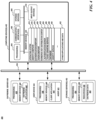
- FIG. 4 Attention now turns to a discussion of an exemplary operating embodiment.
- the aspects may be applied to an operating environment 400 that utilizes one or more computing devices 402 of a cloud computing service, an on-premise server 436, a user device 444, and one or more storage servers 452.
- the computing devices 402, the on-premise server 436, the user device 444 and the one or more storage servers 452 may be any type of electronic device, such as, without limitation, a mobile device, a personal digital assistant, a mobile computing device, a smart phone, a cellular telephone, a handheld computer, a server, a server array or server farm, a web server, a network server, a blade server, an Internet server, a work station, a mini-computer, a mainframe computer, a supercomputer, a network appliance, a web appliance, a distributed computing system, multiprocessor systems, or combination thereof.
- the operating environment 400 may be configured in a network environment, a distributed environment, a multi-processor environment, or a stand-alone computing device having access to remote or local storage devices.
- Each of the computing devices 402, the on-premise server 436, the user device 444 and the one or more storage servers 452 includes one or more processors 404, 438, 446, 454 and memory devices 410, 440, 448, 456.
- a processor 404, 438, 446, 454 may be any commercially available or customized processor and may include dual microprocessors and multi-processor architectures.
- Computing device 402 include one or more communication interfaces 406, one or more storage devices 408 and input/output devices 412.
- the communication interface 406 facilitates wired or wireless communications between a computing device 402 and other devices.
- a storage device 408 may be computer-readable medium that does not contain propagating signals, such as modulated data signals transmitted through a carrier wave. Examples of a storage device 408 include without limitation RAM, ROM, EEPROM, flash memory or other memory technology, CD-ROM, digital versatile disks (DVD), or other optical storage, magnetic cassettes, magnetic tape, magnetic disk storage, all of which do not contain propagating signals, such as modulated data signals transmitted through a carrier wave.
- the input/output devices 412 may include a keyboard, mouse, pen, voice input device, touch input device, display, speakers, printers, etc., and any combination thereof.
- the memory devices 410, 440, 448, 456 may be any non-transitory computer-readable storage media that may store executable procedures, applications, and data.
- the computer-readable storage media does not pertain to propagated signals, such as modulated data signals transmitted through a carrier wave. It may be any type of non-transitory memory device (e.g., random access memory, read-only memory, etc.), magnetic storage, volatile storage, non-volatile storage, optical storage, DVD, CD, floppy disk drive, etc. that does not pertain to propagated signals, such as modulated data signals transmitted through a carrier wave.
- the memory devices 410, 440, 448, 456 may also include one or more external storage devices or remotely located storage devices that do not pertain to propagated signals, such as modulated data signals transmitted through a carrier wave.
- Memory device 410 contains instructions, components, and data.
- the memory device 410 includes an operating system 414, an identity endpoint 416, an authentication endpoint 418, a token endpoint 420, a Kerberos key distribution center 422 having an authentication server 424, a ticket granting service 426, and database 428, an identity service 430 and other applications and data 432.
- Memory device 440 includes the on-premise application 442, memory device 448 includes the client application 450 and agent 451, and memory device 456 contains the resources 458 and on-premise data 460.
- the network 434 may be configured as an ad hoc network, an intranet, an extranet, a virtual private network (VPN), a local area network (LAN), a wireless LAN (WLAN), a wide area network (WAN), a wireless WAN (WWAN), a metropolitan network (MAN), the Internet, a portions of the Public Switched Telephone Network (PSTN), plain old telephone service (POTS) network, a wireless network, a WiFi ® network, or any other type of network or combination of networks.
- VPN virtual private network
- LAN local area network
- WLAN wireless LAN
- WAN wide area network
- WWAN wireless WAN
- MAN metropolitan network
- PSTN Public Switched Telephone Network
- POTS plain old telephone service
- a system comprising: at least one processor; and a memory that stores one or more programs that are configured to be executed by the one or more processors, the one or more programs including instructions that: transmit a first request to authenticate a client application, to access an on-premise application, the first request sent to an identity provider of a cloud computing service, the first request made through a cloud-based network authentication protocol, the on-premise application subject to a legacy network authentication protocol, the cloud-based network authentication protocol incompatible with the legacy network authentication protocol; in response to the first request, obtain a security token including a security ticket of the legacy network authentication protocol, the security ticket generated by the identity provider of the cloud computing service, the security token associated with the cloud-based network authentication protocol; transmit an authentication request using the legacy network authentication protocol to the on-premise application, the authentication request including the security ticket; and obtain access to the on-premise application.
- the one or more programs include further instructions that: extract the security ticket from the security token; and embed the security ticket into the authentication request.
- the on-premise application is part of a private domain directory service.
- the security token is a JavaScript Object Notation (JSON) web token
- the security ticket is embedded as a claim in the security token
- the legacy network authentication protocol is based on Kerberos
- the cloud-based network authentication protocol is based on OpenId Connect.
- a method comprising: requesting authentication to access an on-premise application from a cloud computing service using a cloud-based authentication protocol, wherein the on-premise application adheres to a legacy authentication protocol, the cloud-based authentication protocol adheres to a cloud-based authentication protocol, the legacy authentication protocol differs from the cloud-based authentication protocol; receiving a security token including a security ticket of the legacy network authentication protocol, the security ticket generated by an identity provider of the cloud computing service, the security token associated with the cloud-based network authentication protocol; transmitting an authentication request using the legacy network authentication protocol to the on-premise application, the authentication request including the security ticket; and obtaining access to the on-premise application.
- the method further comprises: extracting the security ticket from the security token; and embedding the security ticket into the authentication request.
- the on-premise application resides in a domain directory service outside of the cloud computing service
- the security token is a JavaScript Object Notation (JSON) web token
- the security ticket is embedded as a claim in the security token
- the legacy network authentication protocol is based on Kerberos
- the cloud-based network authentication protocol is based on OpenId Connect.
- a device comprising: at least one processor and a memory; wherein the at least one processor is configured to: receive an authentication request, at a cloud computing service, for access to an on-premise application, the authentication request associated with a cloud-based authentication protocol from a client application, the on-premise application associated with a legacy authentication protocol, the cloud-based authentication protocol differs from the legacy authentication protocol; upon successful verification of the authentication request, generate an authentication token of the cloud-based authentication protocol having an authentication ticket of the legacy authentication protocol; and provide the authentication token to the client application to authenticate to the on-premise application through the legacy authentication protocol using the authentication ticket.
- the on-premise application resides in a domain outside of the cloud computing service
- the cloud-based authentication protocol is based on Oauth/OPIC protocol
- the legacy authentication protocol is Kerberos-based.
- the at least one processor is further configured to: configure the cloud computing service with on-premise data of the on-premise application, the on-premise data specifying the legacy authentication protocol of the on-premise application. In an aspect, the at least one processor is further configured to: configure the cloud computing service with a ticket granting service that generates the security ticket.
Landscapes
- Engineering & Computer Science (AREA)
- Computer Security & Cryptography (AREA)
- Computer Networks & Wireless Communication (AREA)
- Signal Processing (AREA)
- Computer Hardware Design (AREA)
- Computing Systems (AREA)
- General Engineering & Computer Science (AREA)
- Storage Device Security (AREA)
- Computer And Data Communications (AREA)
Claims (14)
- System, das umfasst:mindestens einen Prozessor (446) eines Benutzergeräts (102, 444); undeinen Speicher (448), der ein oder mehrere Programme speichert, die konfiguriert sind, um von dem mindestens einen Prozessor ausgeführt zu werden, wobei das eine oder die mehreren Programme Anweisungen enthalten, die, wenn sie von dem mindestens einen Prozessor ausgeführt werden, den mindestens einen Prozessor konfigurieren zum:Übertragen (204, 316) einer ersten Anfrage zur Authentifizierung einer Client-Anwendung (140, 142, 450, 302), um auf eine Anwendung vor Ort (124) zuzugreifen, wobei die Client-Anwendung von dem mindestens einen Prozessor ausgeführt wird, die erste Anfrage an einen Identitätsanbieter (112, 304) eines Cloud-Computing-Diensts (106) gesendet wird, die erste Anfrage über ein Cloudbasiertes Netzwerkauthentifizierungsprotokoll erfolgt, die Anwendung vor Ort einem Legacy-Netzwerkauthentifizierungsprotokoll unterliegt und das Cloud-basierte Netzwerkauthentifizierungsprotokoll mit dem Legacy-Netzwerkauthentifizierungsprotokoll inkompatibel ist;als Reaktion auf die erste Anfrage Erhalten (206, 320) eines Sicherheitstokens, der ein Sicherheitsticket des Legacy-Netzwerkauthentifizierungsprotokolls umfasst, wobei das Sicherheitsticket vom Identitätsanbieter des Cloud-Computing-Diensts generiert wird und der Sicherheitstoken dem Cloud-basierten Netzwerkauthentifizierungsprotokoll zugeordnet ist;Übertragen (208, 322) einer Authentifizierungsanfrage unter Verwendung des Legacy-Netzwerkauthentifizierungsprotokolls an die Anwendung vor Ort, wobei die Authentifizierungsanfrage das Sicherheitsticket einschließt; undErhalten (210, 326) von Zugriff auf die Anwendung vor Ort.
- System nach Anspruch 1, wobei das eine oder die mehreren Programme ferner Anweisungen einschließen zum:Extrahieren des Sicherheitstickets aus dem Sicherheitstoken; undEinbetten des Sicherheitstickets in die Authentifizierungsanforderung.
- System nach Anspruch 1, wobei die Anwendung vor Ort Teil eines Verzeichnisdiensts privater Domänen ist.
- System nach Anspruch 1, wobei der Sicherheitstoken ein JavaScript Object Notation-, JSON-, Web-Token ist.
- System nach Anspruch 1, wobei das Sicherheitsticket als Forderung in den Sicherheitstoken eingebettet ist.
- System nach Anspruch 1, wobei das Legacy-Netzwerkauthentifizierungsprotokoll auf Kerberos basiert.
- System nach Anspruch 1, wobei das Cloud-basierte Netzwerkauthentifizierungsprotokoll auf Openld Connect basiert.
- Verfahren (200), das umfasst:Anfragen (204, 316) einer Authentifizierung durch eine Client-Anwendung (140, 450, 302) oder einen Agenten (142, 302) auf einem Benutzergerät (102, 444), um auf eine Anwendung vor Ort (124) von einem Cloud-Computing-Dienst (106) unter Verwendung eines Cloud-basierten Netzwerkauthentifizierungsprotokolls zuzugreifen, wobei die Anwendung vor Ort einem Legacy-Netzwerkauthentifizierungsprotokoll entspricht und sich das Legacy-Netzwerkauthentifizierungsprotokoll von dem Cloud-basierten Netzwerkauthentifizierungsprotokoll unterscheidet;Empfangen (206, 320) eines Sicherheitstokens durch die Client-Anwendung (140, 450, 302) oder den Agenten (142, 302), der ein Sicherheitsticket des Legacy-Netzwerkauthentifizierungsprotokolls einschließt, wobei das Sicherheitsticket von einem Identitätsanbieter (112, 304) des Cloud-Computing-Diensts generiert wird und der Sicherheitstoken dem Cloud-basierten Netzwerkauthentifizierungsprotokoll zugeordnet ist;Übertragen (208, 322) einer Authentifizierungsanfrage durch die Client-Anwendung (140, 450, 302) oder den Agenten (142, 302) unter Verwendung des Legacy-Netzwerkauthentifizierungsprotokolls an die Anwendung vor Ort, wobei die Authentifizierungsanfrage das Sicherheitsticket einschließt; undErhalten (210, 326) von Zugriff auf die Anwendung vor Ort durch die Client-Anwendung (140, 450, 302) oder den Agenten (142, 302).
- Verfahren nach Anspruch 8, das ferner umfasst:Extrahieren des Sicherheitstickets aus dem Sicherheitstoken; undEinbetten des Sicherheitstickets in die Authentifizierungsanfrage.
- Verfahren nach Anspruch 8, wobei sich die Anwendung vor Ort in einem Domänenverzeichnisdienst außerhalb des Cloud-Computing-Diensts befindet.
- Verfahren nach Anspruch 8, wobei der Sicherheitstoken ein JavaScript Object Notation-, JSON-, Web-Token ist.
- Verfahren nach Anspruch 8, wobei das Sicherheitsticket als Forderung in den Sicherheitstoken eingebettet ist.
- Verfahren nach Anspruch 8, wobei das Legacy-Netzwerkauthentifizierungsprotokoll auf Kerberos basiert.
- Verfahren nach Anspruch 8, wobei das Cloud-basierte Netzwerkauthentifizierungsprotokoll auf Openld Connect basiert.
Applications Claiming Priority (2)
| Application Number | Priority Date | Filing Date | Title |
|---|---|---|---|
| US17/123,622 US11870766B2 (en) | 2020-12-16 | 2020-12-16 | Integration of legacy authentication with cloud-based authentication |
| PCT/US2021/058872 WO2022132345A1 (en) | 2020-12-16 | 2021-11-11 | Integration of legacy authentication with cloud-based authentication |
Publications (2)
| Publication Number | Publication Date |
|---|---|
| EP4264880A1 EP4264880A1 (de) | 2023-10-25 |
| EP4264880B1 true EP4264880B1 (de) | 2024-09-18 |
Family
ID=78828040
Family Applications (1)
| Application Number | Title | Priority Date | Filing Date |
|---|---|---|---|
| EP21823418.5A Active EP4264880B1 (de) | 2020-12-16 | 2021-11-11 | Integration von legacy-authentifizierung mit cloud-basierter authentifizierung |
Country Status (4)
| Country | Link |
|---|---|
| US (1) | US11870766B2 (de) |
| EP (1) | EP4264880B1 (de) |
| CN (1) | CN117501729A (de) |
| WO (1) | WO2022132345A1 (de) |
Families Citing this family (13)
| Publication number | Priority date | Publication date | Assignee | Title |
|---|---|---|---|---|
| US11620363B1 (en) | 2021-03-15 | 2023-04-04 | SHAYRE, Inc. | Systems and methods for authentication and authorization for software license management |
| US11632362B1 (en) * | 2021-04-14 | 2023-04-18 | SHAYRE, Inc. | Systems and methods for using JWTs for information security |
| US11621830B1 (en) | 2021-06-28 | 2023-04-04 | SHAYRE, Inc. | Systems and methods for facilitating asynchronous secured point-to-point communications |
| US11726674B2 (en) | 2021-12-08 | 2023-08-15 | Google Llc | Bridging authorization standard for cloud storage |
| US11726673B2 (en) * | 2021-12-09 | 2023-08-15 | Sap Se | Holistic way of cloud connector integration on existing on-premise product |
| US20230283593A1 (en) * | 2022-03-02 | 2023-09-07 | Venafi, Inc. | Systems and methods for providing access to applications and services running on a private network |
| US20230336347A1 (en) * | 2022-04-13 | 2023-10-19 | Schweitzer Engineering Laboratories, Inc. | Token-based access control with authentication data |
| US12261833B2 (en) * | 2022-10-19 | 2025-03-25 | Delinea Inc. | System and method for safely relaying and filtering Kerberos authentication and authorization requests across network boundaries |
| CN116567052B (zh) * | 2023-07-11 | 2023-09-15 | 腾讯科技(深圳)有限公司 | 网络连接方法、装置、计算机设备和存储介质 |
| US12432190B2 (en) * | 2023-11-14 | 2025-09-30 | Lenovo (Singapore) Pte. Ltd. | Support for concurrent identities in an identity management solution |
| US20250317296A1 (en) * | 2024-04-09 | 2025-10-09 | Microsoft Technology Licensing, Llc | Piecewise generation and transmission of authentication tokens |
| DE102024120888A1 (de) * | 2024-07-23 | 2026-02-12 | Endress+Hauser Process Solutions Ag | Verfahren zur Authentifizierung an einem Feldgerät und entsprechendes System |
| US12438722B1 (en) * | 2025-03-10 | 2025-10-07 | Citibank, N.A. | Cross-platform access control |
Family Cites Families (12)
| Publication number | Priority date | Publication date | Assignee | Title |
|---|---|---|---|---|
| US7426642B2 (en) * | 2002-11-14 | 2008-09-16 | International Business Machines Corporation | Integrating legacy application/data access with single sign-on in a distributed computing environment |
| US20050108575A1 (en) | 2003-11-18 | 2005-05-19 | Yung Chong M. | Apparatus, system, and method for faciliating authenticated communication between authentication realms |
| US8910257B2 (en) | 2008-07-07 | 2014-12-09 | Microsoft Corporation | Representing security identities using claims |
| US9172694B2 (en) * | 2012-05-22 | 2015-10-27 | International Business Machines Corporation | Propagating delegated authorized credentials through legacy systems |
| US9509694B2 (en) * | 2013-12-31 | 2016-11-29 | EMC IP Holding Company LLC | Parallel on-premises and cloud-based authentication |
| US10749854B2 (en) * | 2015-11-12 | 2020-08-18 | Microsoft Technology Licensing, Llc | Single sign-on identity management between local and remote systems |
| US10454915B2 (en) * | 2017-05-18 | 2019-10-22 | Oracle International Corporation | User authentication using kerberos with identity cloud service |
| US11012441B2 (en) | 2017-06-30 | 2021-05-18 | Open Text Corporation | Hybrid authentication systems and methods |
| US10721222B2 (en) * | 2017-08-17 | 2020-07-21 | Citrix Systems, Inc. | Extending single-sign-on to relying parties of federated logon providers |
| US9948612B1 (en) * | 2017-09-27 | 2018-04-17 | Citrix Systems, Inc. | Secure single sign on and conditional access for client applications |
| EP3585026A1 (de) | 2018-06-19 | 2019-12-25 | Siemens Aktiengesellschaft | Verfahren und system zur bereitstellung des sicheren zugriffs auf einen cloud-dienst in einer cloud-computing-umgebung |
| US11645102B2 (en) * | 2019-05-20 | 2023-05-09 | Citrix Systems, Inc. | Connection leasing system and related methods for use with legacy virtual delivery appliances |
-
2020
- 2020-12-16 US US17/123,622 patent/US11870766B2/en active Active
-
2021
- 2021-11-11 WO PCT/US2021/058872 patent/WO2022132345A1/en not_active Ceased
- 2021-11-11 EP EP21823418.5A patent/EP4264880B1/de active Active
- 2021-11-11 CN CN202180085219.4A patent/CN117501729A/zh active Pending
Also Published As
| Publication number | Publication date |
|---|---|
| CN117501729A (zh) | 2024-02-02 |
| WO2022132345A1 (en) | 2022-06-23 |
| US11870766B2 (en) | 2024-01-09 |
| US20220191185A1 (en) | 2022-06-16 |
| EP4264880A1 (de) | 2023-10-25 |
Similar Documents
| Publication | Publication Date | Title |
|---|---|---|
| EP4264880B1 (de) | Integration von legacy-authentifizierung mit cloud-basierter authentifizierung | |
| JP7196174B2 (ja) | 委任アイデンティティを使用した認証方法、システム、プログラム | |
| JP6643373B2 (ja) | 情報処理システムと、その制御方法とプログラム | |
| US9699168B2 (en) | Method and system for authenticating a rich client to a web or cloud application | |
| CN102986190B (zh) | 资源访问管理 | |
| JP5570610B2 (ja) | 遠隔ユーザ・セッションのためのシングル・サインオン | |
| US8627409B2 (en) | Framework for automated dissemination of security metadata for distributed trust establishment | |
| US9690920B2 (en) | Secure configuration catalog of trusted identity providers | |
| US9038138B2 (en) | Device token protocol for authorization and persistent authentication shared across applications | |
| CN102638454B (zh) | 一种面向http身份鉴别协议的插件式单点登录集成方法 | |
| CN102265255B (zh) | 通过凭证的逐步到期来提供联合认证服务的系统和方法 | |
| US8332920B2 (en) | Token-based client to server authentication of a secondary communication channel by way of primary authenticated communication channels | |
| CN101331731B (zh) | 由身份提供商对联盟内的客户进行定制认证的方法、装置和程序产品 | |
| US9584615B2 (en) | Redirecting access requests to an authorized server system for a cloud service | |
| US20080072303A1 (en) | Method and system for one time password based authentication and integrated remote access | |
| EP2702744B1 (de) | Verfahren zur sicheren erzeugung einer neuen benutzeridentität in einem bestehenden cloud-konto in einem cloud-system | |
| US20100077208A1 (en) | Certificate based authentication for online services | |
| US20080263644A1 (en) | Federated authorization for distributed computing | |
| US9860223B2 (en) | Mapping the network file system (NFS) protocol to secure web-based applications | |
| CN104580184A (zh) | 互信应用系统间身份认证方法 | |
| WO2022262322A1 (zh) | 认证方法、装置、系统、电子设备及存储介质 | |
| JP5177505B2 (ja) | シングルサインオンによるグループ内サービス認可方法と、その方法を用いたグループ内サービス提供システムと、それを構成する各サーバ | |
| CN115150831B (zh) | 入网请求的处理方法、装置、服务器及介质 | |
| JP6240102B2 (ja) | 認証システム、認証鍵管理装置、認証鍵管理方法および認証鍵管理プログラム | |
| CN115189975B (zh) | 登录方法、装置、电子设备和存储介质 |
Legal Events
| Date | Code | Title | Description |
|---|---|---|---|
| STAA | Information on the status of an ep patent application or granted ep patent |
Free format text: STATUS: UNKNOWN |
|
| STAA | Information on the status of an ep patent application or granted ep patent |
Free format text: STATUS: THE INTERNATIONAL PUBLICATION HAS BEEN MADE |
|
| PUAI | Public reference made under article 153(3) epc to a published international application that has entered the european phase |
Free format text: ORIGINAL CODE: 0009012 |
|
| STAA | Information on the status of an ep patent application or granted ep patent |
Free format text: STATUS: REQUEST FOR EXAMINATION WAS MADE |
|
| 17P | Request for examination filed |
Effective date: 20230606 |
|
| AK | Designated contracting states |
Kind code of ref document: A1 Designated state(s): AL AT BE BG CH CY CZ DE DK EE ES FI FR GB GR HR HU IE IS IT LI LT LU LV MC MK MT NL NO PL PT RO RS SE SI SK SM TR |
|
| DAV | Request for validation of the european patent (deleted) | ||
| DAX | Request for extension of the european patent (deleted) | ||
| GRAP | Despatch of communication of intention to grant a patent |
Free format text: ORIGINAL CODE: EPIDOSNIGR1 |
|
| STAA | Information on the status of an ep patent application or granted ep patent |
Free format text: STATUS: GRANT OF PATENT IS INTENDED |
|
| RIC1 | Information provided on ipc code assigned before grant |
Ipc: H04L 9/08 20060101ALI20240321BHEP Ipc: H04L 9/40 20220101ALI20240321BHEP Ipc: H04L 67/10 20220101ALI20240321BHEP Ipc: H04W 12/084 20210101ALI20240321BHEP Ipc: H04L 9/32 20060101AFI20240321BHEP |
|
| INTG | Intention to grant announced |
Effective date: 20240419 |
|
| P01 | Opt-out of the competence of the unified patent court (upc) registered |
Effective date: 20240502 |
|
| GRAS | Grant fee paid |
Free format text: ORIGINAL CODE: EPIDOSNIGR3 |
|
| GRAA | (expected) grant |
Free format text: ORIGINAL CODE: 0009210 |
|
| STAA | Information on the status of an ep patent application or granted ep patent |
Free format text: STATUS: THE PATENT HAS BEEN GRANTED |
|
| AK | Designated contracting states |
Kind code of ref document: B1 Designated state(s): AL AT BE BG CH CY CZ DE DK EE ES FI FR GB GR HR HU IE IS IT LI LT LU LV MC MK MT NL NO PL PT RO RS SE SI SK SM TR |
|
| REG | Reference to a national code |
Ref country code: GB Ref legal event code: FG4D |
|
| REG | Reference to a national code |
Ref country code: CH Ref legal event code: EP |
|
| REG | Reference to a national code |
Ref country code: IE Ref legal event code: FG4D |
|
| REG | Reference to a national code |
Ref country code: DE Ref legal event code: R096 Ref document number: 602021019086 Country of ref document: DE |
|
| REG | Reference to a national code |
Ref country code: LT Ref legal event code: MG9D |
|
| PG25 | Lapsed in a contracting state [announced via postgrant information from national office to epo] |
Ref country code: NO Free format text: LAPSE BECAUSE OF FAILURE TO SUBMIT A TRANSLATION OF THE DESCRIPTION OR TO PAY THE FEE WITHIN THE PRESCRIBED TIME-LIMIT Effective date: 20241218 |
|
| PG25 | Lapsed in a contracting state [announced via postgrant information from national office to epo] |
Ref country code: GR Free format text: LAPSE BECAUSE OF FAILURE TO SUBMIT A TRANSLATION OF THE DESCRIPTION OR TO PAY THE FEE WITHIN THE PRESCRIBED TIME-LIMIT Effective date: 20241219 Ref country code: FI Free format text: LAPSE BECAUSE OF FAILURE TO SUBMIT A TRANSLATION OF THE DESCRIPTION OR TO PAY THE FEE WITHIN THE PRESCRIBED TIME-LIMIT Effective date: 20240918 |
|
| PG25 | Lapsed in a contracting state [announced via postgrant information from national office to epo] |
Ref country code: BG Free format text: LAPSE BECAUSE OF FAILURE TO SUBMIT A TRANSLATION OF THE DESCRIPTION OR TO PAY THE FEE WITHIN THE PRESCRIBED TIME-LIMIT Effective date: 20240918 |
|
| PG25 | Lapsed in a contracting state [announced via postgrant information from national office to epo] |
Ref country code: LV Free format text: LAPSE BECAUSE OF FAILURE TO SUBMIT A TRANSLATION OF THE DESCRIPTION OR TO PAY THE FEE WITHIN THE PRESCRIBED TIME-LIMIT Effective date: 20240918 |
|
| PG25 | Lapsed in a contracting state [announced via postgrant information from national office to epo] |
Ref country code: HR Free format text: LAPSE BECAUSE OF FAILURE TO SUBMIT A TRANSLATION OF THE DESCRIPTION OR TO PAY THE FEE WITHIN THE PRESCRIBED TIME-LIMIT Effective date: 20240918 |
|
| REG | Reference to a national code |
Ref country code: NL Ref legal event code: MP Effective date: 20240918 |
|
| PG25 | Lapsed in a contracting state [announced via postgrant information from national office to epo] |
Ref country code: RS Free format text: LAPSE BECAUSE OF FAILURE TO SUBMIT A TRANSLATION OF THE DESCRIPTION OR TO PAY THE FEE WITHIN THE PRESCRIBED TIME-LIMIT Effective date: 20241218 |
|
| PG25 | Lapsed in a contracting state [announced via postgrant information from national office to epo] |
Ref country code: RS Free format text: LAPSE BECAUSE OF FAILURE TO SUBMIT A TRANSLATION OF THE DESCRIPTION OR TO PAY THE FEE WITHIN THE PRESCRIBED TIME-LIMIT Effective date: 20241218 Ref country code: NO Free format text: LAPSE BECAUSE OF FAILURE TO SUBMIT A TRANSLATION OF THE DESCRIPTION OR TO PAY THE FEE WITHIN THE PRESCRIBED TIME-LIMIT Effective date: 20241218 Ref country code: LV Free format text: LAPSE BECAUSE OF FAILURE TO SUBMIT A TRANSLATION OF THE DESCRIPTION OR TO PAY THE FEE WITHIN THE PRESCRIBED TIME-LIMIT Effective date: 20240918 Ref country code: HR Free format text: LAPSE BECAUSE OF FAILURE TO SUBMIT A TRANSLATION OF THE DESCRIPTION OR TO PAY THE FEE WITHIN THE PRESCRIBED TIME-LIMIT Effective date: 20240918 Ref country code: GR Free format text: LAPSE BECAUSE OF FAILURE TO SUBMIT A TRANSLATION OF THE DESCRIPTION OR TO PAY THE FEE WITHIN THE PRESCRIBED TIME-LIMIT Effective date: 20241219 Ref country code: FI Free format text: LAPSE BECAUSE OF FAILURE TO SUBMIT A TRANSLATION OF THE DESCRIPTION OR TO PAY THE FEE WITHIN THE PRESCRIBED TIME-LIMIT Effective date: 20240918 Ref country code: BG Free format text: LAPSE BECAUSE OF FAILURE TO SUBMIT A TRANSLATION OF THE DESCRIPTION OR TO PAY THE FEE WITHIN THE PRESCRIBED TIME-LIMIT Effective date: 20240918 |
|
| REG | Reference to a national code |
Ref country code: AT Ref legal event code: MK05 Ref document number: 1725607 Country of ref document: AT Kind code of ref document: T Effective date: 20240918 |
|
| PG25 | Lapsed in a contracting state [announced via postgrant information from national office to epo] |
Ref country code: NL Free format text: LAPSE BECAUSE OF FAILURE TO SUBMIT A TRANSLATION OF THE DESCRIPTION OR TO PAY THE FEE WITHIN THE PRESCRIBED TIME-LIMIT Effective date: 20240918 |
|
| PG25 | Lapsed in a contracting state [announced via postgrant information from national office to epo] |
Ref country code: PT Free format text: LAPSE BECAUSE OF FAILURE TO SUBMIT A TRANSLATION OF THE DESCRIPTION OR TO PAY THE FEE WITHIN THE PRESCRIBED TIME-LIMIT Effective date: 20250120 Ref country code: IS Free format text: LAPSE BECAUSE OF FAILURE TO SUBMIT A TRANSLATION OF THE DESCRIPTION OR TO PAY THE FEE WITHIN THE PRESCRIBED TIME-LIMIT Effective date: 20250118 |
|
| PG25 | Lapsed in a contracting state [announced via postgrant information from national office to epo] |
Ref country code: RO Free format text: LAPSE BECAUSE OF FAILURE TO SUBMIT A TRANSLATION OF THE DESCRIPTION OR TO PAY THE FEE WITHIN THE PRESCRIBED TIME-LIMIT Effective date: 20240918 Ref country code: SM Free format text: LAPSE BECAUSE OF FAILURE TO SUBMIT A TRANSLATION OF THE DESCRIPTION OR TO PAY THE FEE WITHIN THE PRESCRIBED TIME-LIMIT Effective date: 20240918 |
|
| PG25 | Lapsed in a contracting state [announced via postgrant information from national office to epo] |
Ref country code: ES Free format text: LAPSE BECAUSE OF FAILURE TO SUBMIT A TRANSLATION OF THE DESCRIPTION OR TO PAY THE FEE WITHIN THE PRESCRIBED TIME-LIMIT Effective date: 20240918 |
|
| PG25 | Lapsed in a contracting state [announced via postgrant information from national office to epo] |
Ref country code: EE Free format text: LAPSE BECAUSE OF FAILURE TO SUBMIT A TRANSLATION OF THE DESCRIPTION OR TO PAY THE FEE WITHIN THE PRESCRIBED TIME-LIMIT Effective date: 20240918 Ref country code: AT Free format text: LAPSE BECAUSE OF FAILURE TO SUBMIT A TRANSLATION OF THE DESCRIPTION OR TO PAY THE FEE WITHIN THE PRESCRIBED TIME-LIMIT Effective date: 20240918 |
|
| PG25 | Lapsed in a contracting state [announced via postgrant information from national office to epo] |
Ref country code: CZ Free format text: LAPSE BECAUSE OF FAILURE TO SUBMIT A TRANSLATION OF THE DESCRIPTION OR TO PAY THE FEE WITHIN THE PRESCRIBED TIME-LIMIT Effective date: 20240918 Ref country code: PL Free format text: LAPSE BECAUSE OF FAILURE TO SUBMIT A TRANSLATION OF THE DESCRIPTION OR TO PAY THE FEE WITHIN THE PRESCRIBED TIME-LIMIT Effective date: 20240918 |
|
| PG25 | Lapsed in a contracting state [announced via postgrant information from national office to epo] |
Ref country code: IT Free format text: LAPSE BECAUSE OF FAILURE TO SUBMIT A TRANSLATION OF THE DESCRIPTION OR TO PAY THE FEE WITHIN THE PRESCRIBED TIME-LIMIT Effective date: 20240918 Ref country code: SK Free format text: LAPSE BECAUSE OF FAILURE TO SUBMIT A TRANSLATION OF THE DESCRIPTION OR TO PAY THE FEE WITHIN THE PRESCRIBED TIME-LIMIT Effective date: 20240918 |
|
| REG | Reference to a national code |
Ref country code: DE Ref legal event code: R097 Ref document number: 602021019086 Country of ref document: DE |
|
| REG | Reference to a national code |
Ref country code: CH Ref legal event code: PL |
|
| PG25 | Lapsed in a contracting state [announced via postgrant information from national office to epo] |
Ref country code: MC Free format text: LAPSE BECAUSE OF FAILURE TO SUBMIT A TRANSLATION OF THE DESCRIPTION OR TO PAY THE FEE WITHIN THE PRESCRIBED TIME-LIMIT Effective date: 20240918 |
|
| PG25 | Lapsed in a contracting state [announced via postgrant information from national office to epo] |
Ref country code: DK Free format text: LAPSE BECAUSE OF FAILURE TO SUBMIT A TRANSLATION OF THE DESCRIPTION OR TO PAY THE FEE WITHIN THE PRESCRIBED TIME-LIMIT Effective date: 20240918 |
|
| PG25 | Lapsed in a contracting state [announced via postgrant information from national office to epo] |
Ref country code: LU Free format text: LAPSE BECAUSE OF NON-PAYMENT OF DUE FEES Effective date: 20241111 |
|
| REG | Reference to a national code |
Ref country code: CH Ref legal event code: PL |
|
| PG25 | Lapsed in a contracting state [announced via postgrant information from national office to epo] |
Ref country code: CH Free format text: LAPSE BECAUSE OF NON-PAYMENT OF DUE FEES Effective date: 20241130 |
|
| PLBE | No opposition filed within time limit |
Free format text: ORIGINAL CODE: 0009261 |
|
| STAA | Information on the status of an ep patent application or granted ep patent |
Free format text: STATUS: NO OPPOSITION FILED WITHIN TIME LIMIT |
|
| 26N | No opposition filed |
Effective date: 20250619 |
|
| REG | Reference to a national code |
Ref country code: BE Ref legal event code: MM Effective date: 20241130 |
|
| PG25 | Lapsed in a contracting state [announced via postgrant information from national office to epo] |
Ref country code: SE Free format text: LAPSE BECAUSE OF FAILURE TO SUBMIT A TRANSLATION OF THE DESCRIPTION OR TO PAY THE FEE WITHIN THE PRESCRIBED TIME-LIMIT Effective date: 20240918 |
|
| PG25 | Lapsed in a contracting state [announced via postgrant information from national office to epo] |
Ref country code: BE Free format text: LAPSE BECAUSE OF NON-PAYMENT OF DUE FEES Effective date: 20241130 |
|
| PG25 | Lapsed in a contracting state [announced via postgrant information from national office to epo] |
Ref country code: IE Free format text: LAPSE BECAUSE OF NON-PAYMENT OF DUE FEES Effective date: 20241111 |
|
| PGFP | Annual fee paid to national office [announced via postgrant information from national office to epo] |
Ref country code: DE Payment date: 20251022 Year of fee payment: 5 |
|
| PGFP | Annual fee paid to national office [announced via postgrant information from national office to epo] |
Ref country code: GB Payment date: 20251022 Year of fee payment: 5 |
|
| PGFP | Annual fee paid to national office [announced via postgrant information from national office to epo] |
Ref country code: FR Payment date: 20251022 Year of fee payment: 5 |
|
| PG25 | Lapsed in a contracting state [announced via postgrant information from national office to epo] |
Ref country code: HU Free format text: LAPSE BECAUSE OF FAILURE TO SUBMIT A TRANSLATION OF THE DESCRIPTION OR TO PAY THE FEE WITHIN THE PRESCRIBED TIME-LIMIT; INVALID AB INITIO Effective date: 20211111 |
|
| PG25 | Lapsed in a contracting state [announced via postgrant information from national office to epo] |
Ref country code: CY Free format text: LAPSE BECAUSE OF FAILURE TO SUBMIT A TRANSLATION OF THE DESCRIPTION OR TO PAY THE FEE WITHIN THE PRESCRIBED TIME-LIMIT; INVALID AB INITIO Effective date: 20211111 |