EP4265232B1 - Verfahren zur herstellung saugfähiger hygieneartikel mit seitenteilen - Google Patents
Verfahren zur herstellung saugfähiger hygieneartikel mit seitenteilen Download PDFInfo
- Publication number
- EP4265232B1 EP4265232B1 EP23165172.0A EP23165172A EP4265232B1 EP 4265232 B1 EP4265232 B1 EP 4265232B1 EP 23165172 A EP23165172 A EP 23165172A EP 4265232 B1 EP4265232 B1 EP 4265232B1
- Authority
- EP
- European Patent Office
- Prior art keywords
- continuous
- side panels
- edges
- web
- band
- Prior art date
- Legal status (The legal status is an assumption and is not a legal conclusion. Google has not performed a legal analysis and makes no representation as to the accuracy of the status listed.)
- Active
Links
Images


Classifications
-
- A—HUMAN NECESSITIES
- A61—MEDICAL OR VETERINARY SCIENCE; HYGIENE
- A61F—FILTERS IMPLANTABLE INTO BLOOD VESSELS; PROSTHESES; DEVICES PROVIDING PATENCY TO, OR PREVENTING COLLAPSING OF, TUBULAR STRUCTURES OF THE BODY, e.g. STENTS; ORTHOPAEDIC, NURSING OR CONTRACEPTIVE DEVICES; FOMENTATION; TREATMENT OR PROTECTION OF EYES OR EARS; BANDAGES, DRESSINGS OR ABSORBENT PADS; FIRST-AID KITS
- A61F13/00—Bandages or dressings; Absorbent pads
- A61F13/15—Absorbent pads, e.g. sanitary towels, swabs or tampons for external or internal application to the body; Supporting or fastening means therefor; Tampon applicators
- A61F13/56—Supporting or fastening means
- A61F13/5622—Supporting or fastening means specially adapted for diapers or the like
- A61F13/5633—Supporting or fastening means specially adapted for diapers or the like open type diaper
-
- A—HUMAN NECESSITIES
- A61—MEDICAL OR VETERINARY SCIENCE; HYGIENE
- A61F—FILTERS IMPLANTABLE INTO BLOOD VESSELS; PROSTHESES; DEVICES PROVIDING PATENCY TO, OR PREVENTING COLLAPSING OF, TUBULAR STRUCTURES OF THE BODY, e.g. STENTS; ORTHOPAEDIC, NURSING OR CONTRACEPTIVE DEVICES; FOMENTATION; TREATMENT OR PROTECTION OF EYES OR EARS; BANDAGES, DRESSINGS OR ABSORBENT PADS; FIRST-AID KITS
- A61F13/00—Bandages or dressings; Absorbent pads
- A61F13/15—Absorbent pads, e.g. sanitary towels, swabs or tampons for external or internal application to the body; Supporting or fastening means therefor; Tampon applicators
- A61F13/15577—Apparatus or processes for manufacturing
- A61F13/15756—Applying tabs, strips, tapes, loops; Knotting the ends of pads
-
- A—HUMAN NECESSITIES
- A61—MEDICAL OR VETERINARY SCIENCE; HYGIENE
- A61F—FILTERS IMPLANTABLE INTO BLOOD VESSELS; PROSTHESES; DEVICES PROVIDING PATENCY TO, OR PREVENTING COLLAPSING OF, TUBULAR STRUCTURES OF THE BODY, e.g. STENTS; ORTHOPAEDIC, NURSING OR CONTRACEPTIVE DEVICES; FOMENTATION; TREATMENT OR PROTECTION OF EYES OR EARS; BANDAGES, DRESSINGS OR ABSORBENT PADS; FIRST-AID KITS
- A61F13/00—Bandages or dressings; Absorbent pads
- A61F13/15—Absorbent pads, e.g. sanitary towels, swabs or tampons for external or internal application to the body; Supporting or fastening means therefor; Tampon applicators
- A61F13/15577—Apparatus or processes for manufacturing
- A61F13/15707—Mechanical treatment, e.g. notching, twisting, compressing, shaping
- A61F13/15723—Partitioning batts; Cutting
-
- A—HUMAN NECESSITIES
- A61—MEDICAL OR VETERINARY SCIENCE; HYGIENE
- A61F—FILTERS IMPLANTABLE INTO BLOOD VESSELS; PROSTHESES; DEVICES PROVIDING PATENCY TO, OR PREVENTING COLLAPSING OF, TUBULAR STRUCTURES OF THE BODY, e.g. STENTS; ORTHOPAEDIC, NURSING OR CONTRACEPTIVE DEVICES; FOMENTATION; TREATMENT OR PROTECTION OF EYES OR EARS; BANDAGES, DRESSINGS OR ABSORBENT PADS; FIRST-AID KITS
- A61F13/00—Bandages or dressings; Absorbent pads
- A61F13/15—Absorbent pads, e.g. sanitary towels, swabs or tampons for external or internal application to the body; Supporting or fastening means therefor; Tampon applicators
- A61F13/15577—Apparatus or processes for manufacturing
- A61F13/15707—Mechanical treatment, e.g. notching, twisting, compressing, shaping
- A61F13/15747—Folding; Pleating; Coiling; Stacking; Packaging
-
- A—HUMAN NECESSITIES
- A61—MEDICAL OR VETERINARY SCIENCE; HYGIENE
- A61F—FILTERS IMPLANTABLE INTO BLOOD VESSELS; PROSTHESES; DEVICES PROVIDING PATENCY TO, OR PREVENTING COLLAPSING OF, TUBULAR STRUCTURES OF THE BODY, e.g. STENTS; ORTHOPAEDIC, NURSING OR CONTRACEPTIVE DEVICES; FOMENTATION; TREATMENT OR PROTECTION OF EYES OR EARS; BANDAGES, DRESSINGS OR ABSORBENT PADS; FIRST-AID KITS
- A61F13/00—Bandages or dressings; Absorbent pads
- A61F13/15—Absorbent pads, e.g. sanitary towels, swabs or tampons for external or internal application to the body; Supporting or fastening means therefor; Tampon applicators
- A61F13/45—Absorbent pads, e.g. sanitary towels, swabs or tampons for external or internal application to the body; Supporting or fastening means therefor; Tampon applicators characterised by the shape
- A61F13/49—Absorbent pads, e.g. sanitary towels, swabs or tampons for external or internal application to the body; Supporting or fastening means therefor; Tampon applicators characterised by the shape specially adapted to be worn around the waist, e.g. diapers, nappies
- A61F13/494—Absorbent pads, e.g. sanitary towels, swabs or tampons for external or internal application to the body; Supporting or fastening means therefor; Tampon applicators characterised by the shape specially adapted to be worn around the waist, e.g. diapers, nappies characterised by edge leakage prevention means
- A61F13/49406—Absorbent pads, e.g. sanitary towels, swabs or tampons for external or internal application to the body; Supporting or fastening means therefor; Tampon applicators characterised by the shape specially adapted to be worn around the waist, e.g. diapers, nappies characterised by edge leakage prevention means the edge leakage prevention means being at the crotch region
- A61F13/49413—Absorbent pads, e.g. sanitary towels, swabs or tampons for external or internal application to the body; Supporting or fastening means therefor; Tampon applicators characterised by the shape specially adapted to be worn around the waist, e.g. diapers, nappies characterised by edge leakage prevention means the edge leakage prevention means being at the crotch region the edge leakage prevention means being an upstanding barrier
- A61F13/4942—Absorbent pads, e.g. sanitary towels, swabs or tampons for external or internal application to the body; Supporting or fastening means therefor; Tampon applicators characterised by the shape specially adapted to be worn around the waist, e.g. diapers, nappies characterised by edge leakage prevention means the edge leakage prevention means being at the crotch region the edge leakage prevention means being an upstanding barrier the barrier not being integral with the top- or back-sheet
-
- A—HUMAN NECESSITIES
- A61—MEDICAL OR VETERINARY SCIENCE; HYGIENE
- A61F—FILTERS IMPLANTABLE INTO BLOOD VESSELS; PROSTHESES; DEVICES PROVIDING PATENCY TO, OR PREVENTING COLLAPSING OF, TUBULAR STRUCTURES OF THE BODY, e.g. STENTS; ORTHOPAEDIC, NURSING OR CONTRACEPTIVE DEVICES; FOMENTATION; TREATMENT OR PROTECTION OF EYES OR EARS; BANDAGES, DRESSINGS OR ABSORBENT PADS; FIRST-AID KITS
- A61F13/00—Bandages or dressings; Absorbent pads
- A61F13/15—Absorbent pads, e.g. sanitary towels, swabs or tampons for external or internal application to the body; Supporting or fastening means therefor; Tampon applicators
- A61F13/56—Supporting or fastening means
- A61F13/58—Adhesive tab fastener elements
-
- A—HUMAN NECESSITIES
- A61—MEDICAL OR VETERINARY SCIENCE; HYGIENE
- A61F—FILTERS IMPLANTABLE INTO BLOOD VESSELS; PROSTHESES; DEVICES PROVIDING PATENCY TO, OR PREVENTING COLLAPSING OF, TUBULAR STRUCTURES OF THE BODY, e.g. STENTS; ORTHOPAEDIC, NURSING OR CONTRACEPTIVE DEVICES; FOMENTATION; TREATMENT OR PROTECTION OF EYES OR EARS; BANDAGES, DRESSINGS OR ABSORBENT PADS; FIRST-AID KITS
- A61F13/00—Bandages or dressings; Absorbent pads
- A61F13/15—Absorbent pads, e.g. sanitary towels, swabs or tampons for external or internal application to the body; Supporting or fastening means therefor; Tampon applicators
- A61F13/56—Supporting or fastening means
- A61F2013/5683—Disposition or arrangement
-
- A—HUMAN NECESSITIES
- A61—MEDICAL OR VETERINARY SCIENCE; HYGIENE
- A61F—FILTERS IMPLANTABLE INTO BLOOD VESSELS; PROSTHESES; DEVICES PROVIDING PATENCY TO, OR PREVENTING COLLAPSING OF, TUBULAR STRUCTURES OF THE BODY, e.g. STENTS; ORTHOPAEDIC, NURSING OR CONTRACEPTIVE DEVICES; FOMENTATION; TREATMENT OR PROTECTION OF EYES OR EARS; BANDAGES, DRESSINGS OR ABSORBENT PADS; FIRST-AID KITS
- A61F13/00—Bandages or dressings; Absorbent pads
- A61F13/15—Absorbent pads, e.g. sanitary towels, swabs or tampons for external or internal application to the body; Supporting or fastening means therefor; Tampon applicators
- A61F13/56—Supporting or fastening means
- A61F13/58—Adhesive tab fastener elements
- A61F2013/586—Adhesive tab fastener elements on lateral flaps
Definitions
- the present invention relates to a method for producing absorbent sanitary articles.
- the invention relates to a method for producing absorbent sanitary articles comprising a central body and at least one pair of side panels fixed to at least one end region of the central body.
- the invention was developed in particular with a view of producing absorbent sanitary articles for incontinent adults, in particular, for persons suffering from obesity.
- Absorbent sanitary articles for incontinent adults generally comprise a central body or chassis with a rectangular shape elongated in a longitudinal direction and having a rear waist section, a front waist section and a crotch section extending between the rear waist section and the front waist section.
- the central body usually comprises an absorbent core sandwiched between a liquid-permeable topsheet which faces the wearer's skin in use, and a liquid-impermeable backsheet which faces the wearer's clothing in use.
- the central body may include an acquisition and distribution layer arranged between the topsheet and the absorbent core.
- the central body may also comprise a pair of elastic leg cuffs, which extend along the topsheet in a longitudinal direction, and which adhere to the user's legs in use.
- Absorbent sanitary articles for incontinent adults generally comprise a pair of rear side panels and, optionally, a pair of front side panels.
- the rear side panels and, if provided, the front side panels have respective proximal sides fixed to corresponding side edges of the rear or front section of the central body and in the condition of use they extend laterally outwards with respect to the central body.
- the side panels are generally provided at the respective distal ends with closing elements for closing the sanitary article around the user's waist.
- the side panels may have inclined sides to conform to the user's legs.
- the side panels may have a trapezoidal shape as described in EP-A-1941853 .
- the central body may have a length of about one meter and a width of about 90 cm, so that the circumference of the waistband may reach dimensions in the order of 180 cm and above.
- the side panels may have dimensions in the transversal direction that can reach 30 - 40 cm for each panel.
- US20150202091A by the same applicant describes a method for producing absorbent sanitary articles wherein the side panels are partially overlapped and joined together in a provisional manner, and are fixed to two side topsheet webs that are subsequently joined to a central topsheet web.
- EP1269949A describes a method for producing absorbent articles provided with side panels, which envisages longitudinally folding a continuous web in a generally Z-shaped configuration, separating single folded side panels from said Z-folded continuous web and attaching the folded side panels at predetermined intervals on a chassis tape.
- the object of the present invention is to provide a method for producing absorbent sanitary articles that satisfies the aforesaid need, and that solves the problems of the prior art.
- this object is achieved by a method for producing absorbent sanitary articles having the characteristics of claim 1.
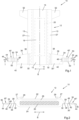
- the absorbent sanitary article 10 indicates an absorbent sanitary article.
- the absorbent sanitary article 10 comprises a central body 12 or chassis having an elongated shape along a longitudinal axis A.
- the central body 12 may have a rectangular shape, as illustrated in Figure 1 with two straight side edges 13 and parallel to the longitudinal axis A.
- the two side edges 13 may be shaped to conform to the user's legs.
- the central body 12 has a rear waist section 14, a front waist section 16 and a crotch section 18 which extends between the rear waist section 14 and the front waist section 16 and which - in use - is arranged between the legs of the user.
- the central body 12 comprises an absorbent core 20 sandwiched between a liquid-permeable topsheet 22, which faces the wearer's skin in use and a liquid-impermeable backsheet 24, which faces the wearer's clothing in use.
- the central body 12 may include an acquisition and distribution layer 26 arranged between the topsheet 22 and the absorbent core 20.
- the central body 12 may also comprise two leg cuffs 27, which extend longitudinally on the topsheet 22.
- Each leg cuff 27 comprises a non-woven strip having an outer edge 28 fixed to a corresponding side edge 13 of the central body 12 and an inner edge 29 in which at least one elastic thread tensioned in the longitudinal direction is arranged, so that - in use - the inner edge 29 of each leg cuff 27 adheres elastically against the user's legs.
- the absorbent sanitary article 10 comprises first and second rear side panels 30', 30" which - in the extended configuration of the absorbent sanitary article 10 - extend in a transverse direction towards the outside with respect to the central body 12.
- the first and second rear side panels 30', 30" have respective proximal edges 32 and respective distal edges 34.
- the first and second rear side panels 30', 30" may have transverse edges 36 shaped to conform to the user's legs in the condition of use.
- the rear side panels 30 may have a trapezium shape, in which the proximal edges 32 and the distal edges 34 form the major bases and the minor bases of the trapeziums, respectively.
- the proximal edges 32 of the first and second rear side panels 30', 30" are fixed to corresponding side edges 13 of the rear waist section 14 of the central body 12.
- the attachment area between the proximal edges 32 of the first and second rear side panels 30', 30" and the side edges 13 of the rear section 14 is indicated by 38 in Figure 2 .
- the proximal edges 32 of the first and second rear side panels 30', 30" may be fixed between corresponding outer edges of the backsheet 24 and the outer edges 28 of the leg cuffs 27.
- the fastening may be carried out by welding (for example, thermo-compression or ultrasonic) or by glue.
- proximal edges 32 of the first and second rear side panels 30', 30" may be fixed between corresponding outer edges of the backsheet 24 and of the topsheet 22.
- the absorbent sanitary article 10 comprises at least one extension band 40', 40" having a proximal edge 42 fixed to the distal edge 34 of a side panel 30', 30" and a distal edge 44 to which at least one closing element 46 is fixed.
- the absorbent sanitary article 10 comprises first and second extension bands 40', 40" having respective proximal edges 42 fixed to respective distal edges 34 of respective first and second side panels 30', 30".
- the absorbent sanitary article 10 comprises two extension bands 40', 40" but it is understood that what is described applies equally to the case wherein the absorbent sanitary article 10 comprises only one extension band 40', 40".
- the fastening areas between the proximal edges 42 of the first and second extension bands 40', 40" and the respective distal edges 34 of the side panels 30', 30" are indicated by 48.
- the fastening of the first and second extension bands 40', 40" to the respective first and second side panels 30', 30" may be carried out by welding, such as, for example, thermo-compression or ultrasonic welding, or by glue.
- first and second rear side panels 30', 30" and the first and second extension bands 40', 40" may be formed of different materials.
- first and second rear side panels 30', 30" may be formed of non-elastic material, for example from one or more non-woven layers.
- first and second extension bands 40', 40" may be made of elastic material, extensible in a transverse direction B.
- Each extension band 40', 40" may be formed from an elastic laminate comprising at least one elastic element sandwiched between two non-woven layers. In a resting condition, each of the first and second extension bands 40', 40" may have pleated outer surfaces.
- the proximal edge 42 and the distal edge 44 of each extension band 40', 40' may be non-elastic.
- Each extension band 40', 40" may have the shape of a strip elongated in a transverse direction, with two transverse sides 50 parallel to each other.
- the closing elements 46 fixed to the distal ends 44 of the extension bands 40', 40" may be closing elements with micro-hooks or adhesives, which allow a surface closure to be carried out with complementary closing elements to close the sanitary absorbent article 10 around the user's waist.
- the absorbent sanitary article 10 may comprise a pair of front side panels 52, which in the extended configuration of the absorbent sanitary article 10 extend in a transverse direction towards the outside with respect to the central body 12.
- the front side panels 52 may be fixed to corresponding side edges 13 of the front section 14 of the central body 12.
- the front side panels 52 may have outer surfaces configured to establish a surface closure with the closing elements 46.
- the closing elements 46 may establish surface closure with an outer surface of the front section 14 of the central body 12.
- the absorbent sanitary article 10 may be provided with a front panel (frontal tape) fixed centrally on the outer surface of the absorbent sanitary article 10 facing outwards in use, or rather, towards the clothing.
- the front panel is configured to establish a surface closure with the closing elements 46.
- each of the extension bands 40', 40" may have a dimension, at rest, in the transverse direction B of between 100 and 400 mm.
- the distance at rest in the transverse direction B between the distal edges 34 of the side panels 30', 30" may be between 600 and 900 mm. Consequently, the overall width at rest in the transverse direction B of the rear waistband of the absorbent sanitary article 10 may be between 800 and 1700 mm.
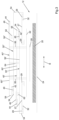
- Figures 3 and 4 schematically illustrate two embodiments of an absorbent sanitary article 10 in folded positions.
- the folded positions illustrated in Figures 3 and 4 are the positions in which the absorbent sanitary articles 10 are found at the outlet of a production line, and in the packages in which the absorbent sanitary articles 10 are marketed.
- first and second side panels 30', 30" and the first and second extension bands 40', 40" are folded over the rear section 14 of the central body.
- first and second side panels 30', 30" are folded around respective first fold lines 54 with respect to the respective proximal edges 32 fixed to the central body 12 and have respective first and second panel flaps 56', 56".
- the first and second extension bands 40', 40" are folded about respective second fold lines 58 with respect to the respective proximal edges 42 fixed to the respective first and second side panels 30', 30", and have respective first and second band flaps 60', 60" overlapped on respective first and second panel flaps 56', 56".
- the first panel flap 56' is overlapped on the topsheet 22 and the leg cuffs 27.
- the second panel flap 56" is overlapped on the first band flap 60'.
- first and second panel flaps 56', 56" and the first and second band flaps 60', 60" are held in the folded positions by temporary joining zones, which may be released with minimal peel force and without damaging the elements between which they extend.
- Temporary bonds with these characteristics are well known in the absorbent sanitary article industry and may be formed by light welds (known in the art as "technical welds") or by small amounts of glue.
- first temporary joining zones 62 extend between the first and second band flaps 60', 60" and the respective first and second panel flaps 56', 56".
- At least one second temporary joining zone 64 extends between the second band flap 60" and the first panel flap 56', through the second panel flap 56" and through the first band flap 60' .
- At least one third temporary joining zone 66 extends between the second band flap 60" and the topsheet 22, through the second panel flap 56", through the first band flap 60' and through the first panel flap 56'.
- two third temporary joining zones 66 are provided located on opposite sides with respect to the longitudinal axis A of the central body 12 of the absorbent sanitary article 10.
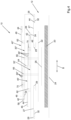
- FIG. 4 A second embodiment of an absorbent sanitary article in a folded configuration is illustrated in Figure 4 .
- the elements corresponding to those previously described are indicated with the same numerical references.
- the first and second band flaps 60', 60" are further Z-folded, and each of the band flaps 60', 60" has three flap sections 68', 69" overlapped on each other.
- first and second panel flaps 56', 56" and the first and second band flaps 60', 60" are held in the folded positions by temporary joining zones 62, 64, 66 as previously described.
- fourth temporary joining zones 70 may be provided, which extend between the first and second band flaps 60', 60" and the respective first and second panel flaps 56', 56" through the respective flap sections 68', 68" overlapped on each other.
- the closing elements 46 are uncovered and adjacent to the side edges 13 of the central body 12. To open the absorbent sanitary article into the position of use, it is sufficient to grasp the closing elements 46 and pull them in opposite directions outwards. In this way, the temporary joining zones 62, 64, 66, 68, which hold the first and second panel flaps 56', 56" and the first and second band flaps 60', 60" in the folded position yield, and the side panels 30', 30" and the respective first and second extension bands 40', 40” are arranged in the open position shown in Figure 1 .
- the absorbent sanitary article has a width equal to the width of the central body, which may be between 300 and 400 mm.
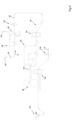
- Figures 5 , 6 and 7 schematically illustrate successive cross-sections of a method for producing absorbent sanitary articles 10 according to the present invention.
- the method envisages feeding a continuous laminate 80 in the direction of its longitudinal axis X by a first feeding device 82.
- the continuous laminate 80 may be stretchable elastically in a transverse direction perpendicular to the longitudinal axis X.
- a continuous closing tape 84 such as a micro-hook tape, is transversely cut in a first cut-and-slip unit 86 to form a row of closing elements (indicated by 46 in Figures 1-4 ).
- the first cut-and-slip unit 86 applies the closing elements along the side edges of the continuous laminate 80 in spaced apart positions along the longitudinal axis X.
- the closing elements may be fixed to the continuous laminate 80 in a first welding unit 88.
- the continuous laminate 80 is cut in the longitudinal direction in a first longitudinal cutting unit 89 to form two separate continuous webs 90, each of which has an array of closing elements at an outer edge.
- the two continuous webs 90 are folded in the longitudinal direction in a longitudinal folding unit 92 so as to form on each of the two continuous webs 90 a single U-shaped lateral fold (embodiment of Figure 3 ) or a U-shaped lateral fold and a central Z-fold (embodiment of Figure 4 ).
- the folded flaps of the two continuous webs 90 may be subjected to a compression step carried out in a compression unit 94.
- the two continuous webs 90 may be reversed in a first reversal unit 96, so that after the reversal the two continuous webs 90 have the respective closing elements along their respective edges facing each other.
- the two continuous webs 90 are cut transversely in a second cut-and-slip unit 98, so as to form two rows of folded extension bands, indicated with 40', 40" in Figures 3 and 4 .
- the method envisages feeding a continuous web 100 by a second feeding unit 102.
- the continuous web 100 may be of non-elastic material, for example, of non-woven fabric.
- the second cut-and-slip unit 98 applies pairs of folded extension bands onto the continuous web 100 at positions spaced apart from each other in the longitudinal direction.
- the pairs of folded extension bands are fixed to the continuous sheet 100 along respective outer edges.
- This fastening may be carried out by glue, which can be applied to the two continuous webs 90 upstream of the second cut-and-slip unit 98 by a glue dispensing device 104.
- the pairs of folded extension bands may be fastened to the continuous web 100 by thermal or ultrasonic welding.
- the pairs of folded extension bands fastened along their proximal edges to the continuous web 100 are then joined to the continuous web 100 in a temporary welding unit 106 to form the temporary joining zones indicated by 62 and 70 in Figures 3 and 4 .
- the continuous web 100 is cut in the longitudinal direction in a second longitudinal cutting unit 108 so as to form two separate continuous webs 110, each of which has a respective row of folded extension bands fixed to one of its outer edges and joined to it by temporary joining zones.
- the two continuous webs 110 may be reversed in a second inversion unit 112, so that after the inversion the two continuous webs 110 have the edges along which the folded extension bands are fixed facing each other.
- the two continuous webs 110 are cut in respective cutting units 114 so as to form two rows of side panels, indicated with 30', 30" in Figures 1-4 , each with a respective folded extension band 40', 40" fixed to one of its edges.
- each second side panel 30" with the respective second folded extension band 40" fixed thereto is partially overlapped on a first side panel 30' with the respective first folded extension band 40' fixed thereto.
- This overlapping may be done on an anvil wheel of a welding unit 116.
- the first and second side panels 30', 30" and the respective folded extension bands 40', 40" fixed thereto and overlapped on each other may be subjected to welding operations to form the temporary joining zones 64 ( Figures 3 and 4 ), which join together the second band flap 60" and the first panel flap 56' through the second panel flap 56" and through the first band flap 60'.
- the array of overlapping side panels thus formed is fed to a repitching unit 118, which spaces apart the side panels in the longitudinal direction.
- a leg cuff forming unit 120 forms two continuous strips of leg cuffs 122 provided with respective elastic bands and spaced apart from each other in the transverse direction.
- the repitch unit 118 applies the array of side panels overlapped on each other on the two continuous strips of leg cuffs 122.
- the proximal edges of the first and second side panels 30', 30' may be glued or welded to the respective continuous strips of leg cuffs 122.
- a continuous topsheet web 124 is fixed between the two continuous strips of leg cuffs 122 to form a continuous composite web 126 including the continuous strips of leg cuffs 122, the continuous topsheet web 124 and an array of first and second side panels 30', 30" with respective folded extension bands 40', 40".
- the proximal edges of the first and second side panels 30', 30" may be fixed by glue or by welding to respective outer edges of the topsheet 22.
- the continuous composite web 126 is made to advance in the X direction and acquisition and distribution layers may be applied thereon, indicated with 26 in Figures 1-4 , formed by a unit 128.
- At least one forming unit 130 forms absorbent cores, indicated by 20 in Figures 1-4 , which advance spaced apart in the X direction on a conveyor 132.
- two forming units 130 are provided, which form two rows of overlapped absorbent cores.
- the absorbent cores are sandwiched between the continuous composite web 126 and the continuous backsheet web 126 to form a continuous absorbent structure 136.
- Continuous leg elastic bands 138 may be applied between the continuous composite web 126 and the continuous backsheet web 134.
- the side edges of the continuous strips of leg cuffs 122 may be secured to corresponding side edges of the continuous backsheet web 134 so as to fasten the proximal edges 32 of the side panels 30', 30" between the side edges of the continuous strips of leg cuffs 122 and the side edges of the continuous backsheet web 134.
- the side edges of the continuous strips of leg cuffs 122 may be fixed to corresponding side edges of the continuous topsheet web 124 and the side edges of the continuous topsheet 124 and backsheet 134 webs may be fixed to each other so as to fix the proximal edges 32 of the side panels 30', 30" between the side edges of the continuous topsheet 124 and backsheet 134 webs.
- the continuous absorbent structure 136 is cut to form individual absorbent sanitary articles 10.
Landscapes
- Health & Medical Sciences (AREA)
- Engineering & Computer Science (AREA)
- Life Sciences & Earth Sciences (AREA)
- Biomedical Technology (AREA)
- Heart & Thoracic Surgery (AREA)
- Vascular Medicine (AREA)
- Epidemiology (AREA)
- Animal Behavior & Ethology (AREA)
- General Health & Medical Sciences (AREA)
- Public Health (AREA)
- Veterinary Medicine (AREA)
- Manufacturing & Machinery (AREA)
- Mechanical Engineering (AREA)
- Absorbent Articles And Supports Therefor (AREA)
Claims (10)
- Verfahren zur Herstellung saugfähiger Hygieneartikel, umfassend:- Bilden von Verlängerungsbändern (40', 40"), die jeweilige proximale Kanten (42), jeweilige distale Kanten (44), an denen jeweilige Verschlusselemente (46) befestigt sind, und jeweilige Bandlaschen (60', 60") aufweisen,- Überlappen der Verlängerungsbänder (40', 40") auf einer kontinuierlichen Bahn (100) in voneinander beabstandeten Positionen in einer Längsrichtung und Befestigen der proximalen Kanten (42) der Verlängerungsbänder (40', 40") an der kontinuierlichen Bahn (100),- Verbinden der Bandlaschen (60', 60") mit der kontinuierlichen Bahn (100) durch erste temporäre Verbindungszonen (62),- Schneiden der kontinuierlichen Bahn (100), um Seitenplatten (30', 30") zu bilden, die jeweilige proximale Kanten (32) und jeweilige distale Kanten (34) aufweisen, an deren distaler Kante (34) jeweils ein Verlängerungsband (40', 40") befestigt ist,- Befestigen der proximalen Kanten (32) der Seitenplatten (30', 30") entlang von Kanten einer kontinuierlichen Verbundstruktur (136), die eine kontinuierliche Oberschicht (124), eine kontinuierliche Unterschicht (134) und eine Vielzahl von saugfähigen Kernen (20) einschließt, die zwischen der kontinuierlichen Oberschicht (124) und der kontinuierlichen Unterschicht (134) eingeschlossen sind, und- Schneiden der kontinuierlichen Verbundstruktur (138), um einzelne saugfähige Hygieneartikel (10) zu bilden.
- Verfahren nach Anspruch 1, umfassend:- Bilden von Reihen von ersten und zweiten Verlängerungsbändern (40', 40"), die jeweilige erste und zweite Bandlaschen (60', 60") aufweisen,- Überlappen der ersten und zweiten Verlängerungsbänder (40', 40") auf einer kontinuierlichen Bahn (100) in voneinander beabstandeten Positionen in einer Längsrichtung und Befestigen proximaler Kanten (42) der ersten und zweiten Verlängerungsbänder (40', 40") entlang jeweiliger Seitenkanten der kontinuierlichen Bahn (100),- Verbinden der ersten und zweiten Bandlaschen (60', 60") der ersten und zweiten Verlängerungsbänder (40', 40") mit der kontinuierlichen Bahn (100) durch erste temporäre Verbindungszonen (62),- Schneiden der kontinuierlichen Bahn (100) in der Längsrichtung, um zwei voneinander getrennte kontinuierliche Bahnen (110) zu bilden, von denen jede eine jeweilige Reihe von ersten oder zweiten Verlängerungsbändern (40', 40") aufweist, die an einer Seitenkante befestigt sind, und- Schneiden der beiden kontinuierlichen Bahnen (110), um Paare von ersten und zweiten Seitenplatten (30', 30") zu bilden, wobei jeweilige erste und zweite Verlängerungsbänder (40', 40") an jeweiligen distalen Kanten (34) befestigt sind.
- Verfahren nach Anspruch 2, umfassend ein Überlappen der ersten und zweiten Seitenplatten (30', 30") mit den jeweils daran befestigten ersten und zweiten Verlängerungsbändern (40', 40"), und ein Verbinden der ersten und zweiten Seitenplatten (30', 30") durch zweite temporäre Verbindungszonen (64).
- Verfahren nach Anspruch 3, wobei in der Konfiguration, in der die ersten und zweiten Seitenplatten (30', 30") einander überlappen, die ersten und zweiten Verlängerungsbänder (40', 40") um jeweilige zweite Faltlinien (58) in Bezug auf die jeweiligen proximalen Kanten (42) gefaltet sind und jeweilige erste und zweite Bandlaschen (60', 60") aufweisen, die auf jeweiligen ersten und zweiten Plattenlaschen (56', 56") überlappt sind, und wobei die zweite Plattenlasche (56") auf der ersten Bandlasche (60') überlappt ist, und wobei jede der ersten und zweiten Bandlaschen (60', 60") durch jeweilige erste temporäre Verbindungszonen (62) mit der jeweiligen Plattenlasche (56', 56") verbunden ist.
- Verfahren nach Anspruch 3 oder Anspruch 4, umfassend ein Überlappen der ersten und zweiten Seitenplatten (30', 30"), die einander überlappen und miteinander verbunden sind, zu einer kontinuierlichen Oberschichtbahn (124), und ein Verbinden der ersten und zweiten Seitenplatten (30', 30") mit der kontinuierlichen Oberschichtbahn (124) durch dritte temporäre Verbindungszonen (66).
- Verfahren nach einem der Ansprüche 2-5, umfassend ein Z-Falten der ersten und zweiten Bandlaschen (60', 60"), so dass jede der ersten und zweiten Bandlaschen (60', 60") drei Laschenabschnitte (68', 68") aufweist, die einander überlappen, und ein Bilden von vierten temporären Verbindungszonen (70) zwischen den ersten und zweiten Bandlaschen (60', 60") und den jeweiligen ersten und zweiten Plattenlaschen (56', 56"), die sich durch jeweilige, einander überlappende Laschenabschnitte (68', 68") erstrecken.
- Verfahren nach einem der Ansprüche 2-6, umfassend ein Bilden von zwei kontinuierlichen Streifen von Beinbündchen (122) und ein Befestigen der proximalen Kanten (32) der ersten und zweiten Seitenplatten (30', 30") an jeweiligen kontinuierlichen Streifen von Beinbündchen (122), und anschließendes Befestigen der kontinuierlichen Streifen von Beinbündchen (122) an einer kontinuierlichen Unterschicht (134), so dass die proximalen Kanten (32) der ersten und zweiten Seitenplatten (30', 30") zwischen entsprechenden Seitenkanten der kontinuierlichen Unterschicht (134) und den kontinuierlichen Streifen von Beinbündchen (122) befestigt sind.
- Verfahren nach einem der Ansprüche 2-6, umfassend ein Befestigen der proximalen Kanten (32) der ersten und zweiten Seitenplatten (30', 30") an jeweiligen Seitenkanten einer kontinuierlichen Oberschichtbahn (124), und anschließendes Befestigen der kontinuierlichen Oberschichtbahn (124) an einer kontinuierlichen Unterschichtbahn (134), so dass die proximalen Kanten (32) der ersten und zweiten Seitenplatten (30', 30") zwischen entsprechenden Seitenkanten der kontinuierlichen Oberschichtbahn (124) und der kontinuierlichen Unterschichtbahn (134) befestigt sind.
- Verfahren nach einem der vorstehenden Ansprüche, wobei die ersten und zweiten Seitenplatten (30', 30") aus nicht elastischem Material gebildet sind, und wobei das mindestens eine Verlängerungsband (40', 40") aus einem in einer Querrichtung (B) elastisch dehnbaren Material gebildet ist.
- Verfahren nach einem der vorstehenden Ansprüche, umfassend ein Schneiden der ersten und zweiten Seitenplatten (30', 30"), um jeweilige quer geneigte oder geformte Kanten (36) zu bilden, die sich im Gebrauchszustand an die Beine eines Benutzers anpassen.
Applications Claiming Priority (1)
| Application Number | Priority Date | Filing Date | Title |
|---|---|---|---|
| IT102022000007979A IT202200007979A1 (it) | 2022-04-22 | 2022-04-22 | Procedimento per la produzione di articoli sanitari assorbenti con pannelli laterali |
Publications (3)
| Publication Number | Publication Date |
|---|---|
| EP4265232A1 EP4265232A1 (de) | 2023-10-25 |
| EP4265232B1 true EP4265232B1 (de) | 2025-01-29 |
| EP4265232C0 EP4265232C0 (de) | 2025-01-29 |
Family
ID=82694233
Family Applications (1)
| Application Number | Title | Priority Date | Filing Date |
|---|---|---|---|
| EP23165172.0A Active EP4265232B1 (de) | 2022-04-22 | 2023-03-29 | Verfahren zur herstellung saugfähiger hygieneartikel mit seitenteilen |
Country Status (5)
| Country | Link |
|---|---|
| US (1) | US12364627B2 (de) |
| EP (1) | EP4265232B1 (de) |
| ES (1) | ES3010262T3 (de) |
| IT (1) | IT202200007979A1 (de) |
| PL (1) | PL4265232T3 (de) |
Family Cites Families (7)
| Publication number | Priority date | Publication date | Assignee | Title |
|---|---|---|---|---|
| US6936129B2 (en) | 1998-06-12 | 2005-08-30 | First Quality Products, Inc. | Method of making a winged absorbent article |
| CN101340878B (zh) * | 2005-12-19 | 2012-07-04 | Sca卫生产品股份公司 | 多构型吸收制品 |
| DE602007003178D1 (de) | 2007-01-02 | 2009-12-24 | Fameccanica Data Spa | Verfahren zur herstellung von hygieneartikel mit seitenklappen |
| DE102009036796A1 (de) * | 2009-08-08 | 2011-02-10 | Paul Hartmann Ag | Gefalteter Inkontinenzartikel |
| IT1398206B1 (it) * | 2010-02-16 | 2013-02-14 | Fameccanica Data Spa | Procedimento per produrre articoli igienico-sanitari indossabili a guisa di mutandina ed articolo corrispondente. |
| JP6003004B2 (ja) | 2014-01-21 | 2016-10-05 | ファメッカニカ.データ エス.ピー.エー. | サイドパネルが備わっているパンツとして着用可能な衛生物品を製造するための方法および装置 |
| JP2020505977A (ja) * | 2017-01-20 | 2020-02-27 | エシティ・ハイジーン・アンド・ヘルス・アクチエボラグ | 使い捨て物品 |
-
2022
- 2022-04-22 IT IT102022000007979A patent/IT202200007979A1/it unknown
-
2023
- 2023-03-29 ES ES23165172T patent/ES3010262T3/es active Active
- 2023-03-29 EP EP23165172.0A patent/EP4265232B1/de active Active
- 2023-03-29 PL PL23165172.0T patent/PL4265232T3/pl unknown
- 2023-04-20 US US18/303,660 patent/US12364627B2/en active Active
Also Published As
| Publication number | Publication date |
|---|---|
| US20230338199A1 (en) | 2023-10-26 |
| US12364627B2 (en) | 2025-07-22 |
| IT202200007979A1 (it) | 2023-10-22 |
| EP4265232A1 (de) | 2023-10-25 |
| EP4265232C0 (de) | 2025-01-29 |
| ES3010262T3 (en) | 2025-04-01 |
| PL4265232T3 (pl) | 2025-03-24 |
Similar Documents
| Publication | Publication Date | Title |
|---|---|---|
| EP2025311B1 (de) | Verschlusselement mit elastischen Seitenteilen für absorbierende Hygieneprodukte, absorbierendes Hygieneprodukt und dessen Herstellung | |
| US8287512B2 (en) | Method for producing a closure element for absorbent sanitary products, absorbent sanitary product, and respective manufacturing method | |
| US5725714A (en) | Method for making components of absorbent undergarment | |
| US9398986B2 (en) | Pre-fastened and refastenable pant-type absorbent sanitary article and method for manufacturing the same | |
| CN106955196A (zh) | 能够重复扣紧的吸收制品 | |
| WO2010092935A1 (ja) | 使い捨て着用物品の製造方法 | |
| US20240366433A1 (en) | Method and apparatus for producing absorbent sanitary articles and relative absorbent sanitary article | |
| WO2013173260A1 (en) | Disposable absorbent pants with advantageous stretch and manufacturability features, and methods for manufacturing the same | |
| WO2014010340A1 (ja) | 複合伸縮部材、該複合伸縮部材の製造方法、該複合伸縮部材を用いた着用物品及び該着用物品の製造方法 | |
| JP2001340381A (ja) | 使い捨ておむつおよびその製造方法 | |
| JP5155827B2 (ja) | 使い捨ておむつ及びその製造方法 | |
| JP4025045B2 (ja) | オムツの製造方法 | |
| EP4265232B1 (de) | Verfahren zur herstellung saugfähiger hygieneartikel mit seitenteilen | |
| EP4265233A1 (de) | Absorbierender sanitärartikel mit seitenteilen | |
| JP2023094586A (ja) | 吸収性衛生物品の形成および折り畳み方法 | |
| JP4020904B2 (ja) | 吸収性物品の製造方法 | |
| EP4070769A1 (de) | Absorbierender hygieneartikel und verfahren zur herstellung davon | |
| JP3068293B2 (ja) | 使い捨てパンツの製造方法 | |
| EP4295826B1 (de) | Absorbierender sanitärartikel und verfahren zu seiner herstellung | |
| JPH08173476A (ja) | はかせる型おむつおよび製造方法 | |
| CN222341456U (zh) | 内裤型吸收性物品 | |
| EP4112022B1 (de) | Absorbierender hygieneartikel und verfahren zur herstellung davon | |
| CN112842700A (zh) | 吸收性卫生用品及其生产方法和设备 | |
| WO2018109812A1 (ja) | 使い捨ておむつ |
Legal Events
| Date | Code | Title | Description |
|---|---|---|---|
| STAA | Information on the status of an ep patent application or granted ep patent |
Free format text: STATUS: THE APPLICATION HAS BEEN PUBLISHED |
|
| PUAI | Public reference made under article 153(3) epc to a published international application that has entered the european phase |
Free format text: ORIGINAL CODE: 0009012 |
|
| AK | Designated contracting states |
Kind code of ref document: A1 Designated state(s): AL AT BE BG CH CY CZ DE DK EE ES FI FR GB GR HR HU IE IS IT LI LT LU LV MC ME MK MT NL NO PL PT RO RS SE SI SK SM TR |
|
| STAA | Information on the status of an ep patent application or granted ep patent |
Free format text: STATUS: REQUEST FOR EXAMINATION WAS MADE |
|
| 17P | Request for examination filed |
Effective date: 20240122 |
|
| RBV | Designated contracting states (corrected) |
Designated state(s): AL AT BE BG CH CY CZ DE DK EE ES FI FR GB GR HR HU IE IS IT LI LT LU LV MC ME MK MT NL NO PL PT RO RS SE SI SK SM TR |
|
| GRAP | Despatch of communication of intention to grant a patent |
Free format text: ORIGINAL CODE: EPIDOSNIGR1 |
|
| STAA | Information on the status of an ep patent application or granted ep patent |
Free format text: STATUS: GRANT OF PATENT IS INTENDED |
|
| RIC1 | Information provided on ipc code assigned before grant |
Ipc: A61F 13/58 20060101ALI20240920BHEP Ipc: A61F 13/56 20060101ALI20240920BHEP Ipc: A61F 13/15 20060101AFI20240920BHEP |
|
| INTG | Intention to grant announced |
Effective date: 20241002 |
|
| GRAS | Grant fee paid |
Free format text: ORIGINAL CODE: EPIDOSNIGR3 |
|
| GRAA | (expected) grant |
Free format text: ORIGINAL CODE: 0009210 |
|
| STAA | Information on the status of an ep patent application or granted ep patent |
Free format text: STATUS: THE PATENT HAS BEEN GRANTED |
|
| AK | Designated contracting states |
Kind code of ref document: B1 Designated state(s): AL AT BE BG CH CY CZ DE DK EE ES FI FR GB GR HR HU IE IS IT LI LT LU LV MC ME MK MT NL NO PL PT RO RS SE SI SK SM TR |
|
| REG | Reference to a national code |
Ref country code: GB Ref legal event code: FG4D |
|
| REG | Reference to a national code |
Ref country code: CH Ref legal event code: EP |
|
| REG | Reference to a national code |
Ref country code: DE Ref legal event code: R096 Ref document number: 602023001831 Country of ref document: DE |
|
| REG | Reference to a national code |
Ref country code: IE Ref legal event code: FG4D |
|
| U01 | Request for unitary effect filed |
Effective date: 20250203 |
|
| U07 | Unitary effect registered |
Designated state(s): AT BE BG DE DK EE FI FR IT LT LU LV MT NL PT RO SE SI Effective date: 20250207 |
|
| REG | Reference to a national code |
Ref country code: ES Ref legal event code: FG2A Ref document number: 3010262 Country of ref document: ES Kind code of ref document: T3 Effective date: 20250401 |
|
| U20 | Renewal fee for the european patent with unitary effect paid |
Year of fee payment: 3 Effective date: 20250327 |
|
| PG25 | Lapsed in a contracting state [announced via postgrant information from national office to epo] |
Ref country code: RS Free format text: LAPSE BECAUSE OF FAILURE TO SUBMIT A TRANSLATION OF THE DESCRIPTION OR TO PAY THE FEE WITHIN THE PRESCRIBED TIME-LIMIT Effective date: 20250429 |
|
| PGFP | Annual fee paid to national office [announced via postgrant information from national office to epo] |
Ref country code: ES Payment date: 20250401 Year of fee payment: 3 |
|
| PG25 | Lapsed in a contracting state [announced via postgrant information from national office to epo] |
Ref country code: IS Free format text: LAPSE BECAUSE OF FAILURE TO SUBMIT A TRANSLATION OF THE DESCRIPTION OR TO PAY THE FEE WITHIN THE PRESCRIBED TIME-LIMIT Effective date: 20250529 Ref country code: NO Free format text: LAPSE BECAUSE OF FAILURE TO SUBMIT A TRANSLATION OF THE DESCRIPTION OR TO PAY THE FEE WITHIN THE PRESCRIBED TIME-LIMIT Effective date: 20250429 |
|
| PG25 | Lapsed in a contracting state [announced via postgrant information from national office to epo] |
Ref country code: HR Free format text: LAPSE BECAUSE OF FAILURE TO SUBMIT A TRANSLATION OF THE DESCRIPTION OR TO PAY THE FEE WITHIN THE PRESCRIBED TIME-LIMIT Effective date: 20250129 |
|
| PG25 | Lapsed in a contracting state [announced via postgrant information from national office to epo] |
Ref country code: GR Free format text: LAPSE BECAUSE OF FAILURE TO SUBMIT A TRANSLATION OF THE DESCRIPTION OR TO PAY THE FEE WITHIN THE PRESCRIBED TIME-LIMIT Effective date: 20250430 |
|
| PG25 | Lapsed in a contracting state [announced via postgrant information from national office to epo] |
Ref country code: SM Free format text: LAPSE BECAUSE OF FAILURE TO SUBMIT A TRANSLATION OF THE DESCRIPTION OR TO PAY THE FEE WITHIN THE PRESCRIBED TIME-LIMIT Effective date: 20250129 |
|
| PG25 | Lapsed in a contracting state [announced via postgrant information from national office to epo] |
Ref country code: MC Free format text: LAPSE BECAUSE OF FAILURE TO SUBMIT A TRANSLATION OF THE DESCRIPTION OR TO PAY THE FEE WITHIN THE PRESCRIBED TIME-LIMIT Effective date: 20250129 |
|
| PG25 | Lapsed in a contracting state [announced via postgrant information from national office to epo] |
Ref country code: SK Free format text: LAPSE BECAUSE OF FAILURE TO SUBMIT A TRANSLATION OF THE DESCRIPTION OR TO PAY THE FEE WITHIN THE PRESCRIBED TIME-LIMIT Effective date: 20250129 |
|
| PLBE | No opposition filed within time limit |
Free format text: ORIGINAL CODE: 0009261 |
|
| STAA | Information on the status of an ep patent application or granted ep patent |
Free format text: STATUS: NO OPPOSITION FILED WITHIN TIME LIMIT |
|
| 26N | No opposition filed |
Effective date: 20251030 |
|
| PG25 | Lapsed in a contracting state [announced via postgrant information from national office to epo] |
Ref country code: IE Free format text: LAPSE BECAUSE OF NON-PAYMENT OF DUE FEES Effective date: 20250329 |
|
| PGFP | Annual fee paid to national office [announced via postgrant information from national office to epo] |
Ref country code: CZ Payment date: 20260311 Year of fee payment: 4 |
|
| PGFP | Annual fee paid to national office [announced via postgrant information from national office to epo] |
Ref country code: PL Payment date: 20260305 Year of fee payment: 4 |