EP4265592A1 - Procédé de production d'acide lévulinique - Google Patents
Procédé de production d'acide lévulinique Download PDFInfo
- Publication number
- EP4265592A1 EP4265592A1 EP23167849.1A EP23167849A EP4265592A1 EP 4265592 A1 EP4265592 A1 EP 4265592A1 EP 23167849 A EP23167849 A EP 23167849A EP 4265592 A1 EP4265592 A1 EP 4265592A1
- Authority
- EP
- European Patent Office
- Prior art keywords
- acid
- lignin
- levulinic acid
- process according
- previous
- Prior art date
- Legal status (The legal status is an assumption and is not a legal conclusion. Google has not performed a legal analysis and makes no representation as to the accuracy of the status listed.)
- Pending
Links
Images

Classifications
-
- C—CHEMISTRY; METALLURGY
- C07—ORGANIC CHEMISTRY
- C07C—ACYCLIC OR CARBOCYCLIC COMPOUNDS
- C07C51/00—Preparation of carboxylic acids or their salts, halides or anhydrides
- C07C51/42—Separation; Purification; Stabilisation; Use of additives
- C07C51/487—Separation; Purification; Stabilisation; Use of additives by treatment giving rise to chemical modification
-
- C—CHEMISTRY; METALLURGY
- C07—ORGANIC CHEMISTRY
- C07C—ACYCLIC OR CARBOCYCLIC COMPOUNDS
- C07C51/00—Preparation of carboxylic acids or their salts, halides or anhydrides
-
- C—CHEMISTRY; METALLURGY
- C07—ORGANIC CHEMISTRY
- C07C—ACYCLIC OR CARBOCYCLIC COMPOUNDS
- C07C59/00—Compounds having carboxyl groups bound to acyclic carbon atoms and containing any of the groups OH, O—metal, —CHO, keto, ether, groups, groups, or groups
- C07C59/185—Saturated compounds having only one carboxyl group and containing keto groups
Definitions
- the present disclosure relates to a process for producing levulinic acid. More particularly, the present disclosure relates to a method for producing levulinic acid from technical lignin.
- Levulinic acid also known as 4-oxopentanoic acid, is a white crystalline solid, soluble in water and polar organic solvents. It is relatively stable toward further chemical reaction under hydrolysis conditions. Levulinic acid is used as a precursor for pharmaceuticals, plasticizers, and various other additives. Processes have been developed to produce it from wood, cellulose, starch, or glucose.
- Technical lignin refers to the derivatives obtained as a result of the delignification process of the lignocellulosic biomass.
- technical lignin is obtained as a by-product of paper mills.
- Technical lignin being highly recalcitrant in nature and currently has no other use except burning to generate heat which is majorly a waste management strategy.
- One of the primary objectives of the present disclosure is to efficientlyze the technical lignin to value added products or bio-chemicals.
- US 3258481 describes a process of production of levulinic acid from bagasse, wood sawdust, wastepaper, starch, corncobs, sucrose, or molasses using a strong acid catalyst (hydrochloric acid, sulfuric acid, phosphoric acid, para-toluene sulfonic acid, and hydrobromic acid).
- a strong acid catalyst hydrochloric acid, sulfuric acid, phosphoric acid, para-toluene sulfonic acid, and hydrobromic acid.
- the recycling of exothermic heat containing vapors and volatile HCl, wash liquor (from washing of solids containing levulinic acid) and lactones claiming high yield of yellow colored levulinic acid.
- the recycling has been done through a pre-heater and is a multi-pot reaction (operating conditions: 1-5% w/v acid, 150-250°C temperature, 1s-3h).
- US 4897497 describes a process wherein a two-reactor continuous system in which furfural and levulinic acid are produced from lignocellulose (hardwood) at 5-25% solids. Furfural and lignin from first reactor (operating conditions: 1-10% w/v acid, 180-265°C temperature) are collected before entering into the second reactor (operating conditions: 1-15% w/v acid, 130-250°C temperature, 1-60 min). The furfural and levulinic acid yields were >75% and >55% respectively that theoretically can be derived.
- WO 2014/087015A1 describes that washing with a vapor condensate (obtained by vaporizing the raffinate directly after centrifugation) results in higher levulinic acid yields as compared to washing with normal water. Also, it describes that washing with aqueous phase (other than the organic solvent during extractions) results in a less compressible filter cake. Washing first with aqueous phase and subsequently with vapor condensate results in even higher levulinic acid yields.
- US 9174909B2 describes a 2-stage process wherein the first step extracted the pentosans while the second converts the hexosans to LA.
- the purpose of the two steps is to secure the pentosans and simultaneously reduce the humins.
- US 3065263 describes a process where three series of ten cyclic digestions were made for residence times of 15, 30 and 60 minutes. (Operating conditions: 4-10% w/v acid, 6-10% of recycled levulinic acid, 140-200°C temperature, 5min-60min). Total solids were 1-15% by weight.
- US 5608105 describes another biofine process featuring a two-reactor continuous system in which hydroxyl methyl furfural from first reactor (operating conditions: 1-5% w/v acid, 210-230°C temperature, 13-25 seconds) enters the second reactor (operating conditions: 3-7.5% w/v acid, 195-215°C temperature, 15-60 minutes) to yield levulinic acid.
- Liu et al, 2020 discussed the state of art of the mechanism, pretreatment, and catalytic systems of levulinic acid production from cellulose, lignocellulosic biomass & industrial production status. It discloses a method of producing levulinic acid from expensive substrates such as pure sugars (glucose, fructose), costly carbohydrates (starch, cellulose), and "cellulose-rich low-lignin” raw material/biomass (flour, pulp, paper, miscanthus, cotton, bagasse etc.). These substrates are composed of more than 60% sugar/carbohydrates and few of them are constitutive of 100% sugars.
- Tat Boonyakarn et. al, 2019 discloses a catalyst system for conversion of cellulose to levulinic acid.
- CN101648863 discloses a method for preparing levulinic acids by using straw biomass.
- CN104402722A discloses a lignocellulose biomass alcoholysis method for preparation of levulinate and furan derivatives. None of the cited prior arts provides a simple, one pot method to produce levulinic acid from high lignin (35-40%) and high ash (30-45%) containing waste, technical lignin.
- the primary object of the present disclosure is to develop a process for producing high value levulinic acid from technical lignin.
- Another object of the present disclosure is to provide a catalyst comprising a combination of mineral acid and lewis acid optimized to produce levulinic acid from technical lignin.
- Still another objective of the present disclosure is to provide a cost-effective process for obtaining improved yield of levulinic acid at high solid loading of cellulose substrate.
- the present disclosure provides a method where levulinic acid is produced from the technical lignin, which is a waste.
- the process of the present disclosure is advantageous over existing processes as it provides a process to valorize technical lignin to produce high value levulinic acid. This waste does not have any other use except incineration as a waste management practice.
- the present disclosure provides an economical and environment friendly process for producing levulinic acid from technical lignin.
- the present process enables cellulose purification from technical lignin waste using an optimized combination of formic acid and technical spirit at high temperature (160-180°C) for 30-60 minutes at autogenic pressure (15-20 bar). Further, the synergistic combination of a mineral acid and lewis acid as catalyst results in high yields of levulinic acid (65%) as compared to methods disclosed in prior art (30-40%). The method of the present disclosure works at high total solids (20-25%) as compared to 5-10 % available in prior art. Further, high purity (88%) levulinic acid is produced by the method of the present disclosure. The method of the present disclosure provides an optimized process with reduced biochar/humins generation and without any other byproduct formation such as furfurals, HMF, aldehydes etc. to aid in simple and low costs downstream processing. In view of above, the process of the present disclosure is a cost-effective process for the production of levulinic acid by utilizing the cheap waste technical lignin.
- the process of the present disclosure enables utilization of technical lignin, a waste residue, for levulinic acid production at high solid loadings and enables valorization of technical lignin.
- the present disclosure relates to a process for producing levulinic acid. Accordingly, the present disclosure provides a simple, one pot process for producing levulinic acid from the technical lignin.
- the technical lignin is recovered from 2G biorefinery after ethanol production and distillation.
- HPR high-pressure reactor
- a process for process for producing levulinic acid from technical lignin as described herein wherein the catalyst comprises of a combination of mineral acid and lewis acid.
- a process for process for producing levulinic acid from technical lignin as described herein wherein the cellulose is subjected to the catalyst treatment at a temperature of 80-200°C for 30-60 minutes.
- a process for producing levulinic acid from technical lignin as described herein wherein the solvent is selected from the group comprising of dichloromethane, diethyl ether and ethyl acetate.
- step c) there is provided a process for producing levulinic acid from technical lignin as described herein, wherein the levulinic acid containing liquid fraction and solvent in step c) are present in 1:3 ratio.
- levulinic acid from technical lignin as described herein, wherein mineral acid is selected from the group consisting of sulphuric acid, hydrochloric acid, nitric acid and phosphoric acid; and wherein lewis acid is selected from the group consisting of aluminium chloride, ferric chloride and chromium chloride.
- step b) of the process there is provided a process for producing levulinic acid from technical lignin as described herein, wherein 10-30% w/v of cellulose solid loading is used in step b) of the process.
- catalyst is a combination of sulphuric acid and ferric chloride added at a concentration of 4% (v/v) in 1 L HPR at 200°C.
- Technical lignin is derived mainly from lignocellulosic biomass. Traditionally, technical lignin is obtained as a by-product of paper mills. In a preferred aspect of the present disclosure, the residue generated after ethanol distillation and recovery is termed as 2-G Biorefinery waste residue or technical lignin.
- Technical lignin obtained after enzymatic hydrolysis, fermentation and distillation was stored in a cool and dried place directly after air drying, for the study.
- the technical lignin being highly recalcitrant in nature, does not have any other usage except burning in a boiler to generate heat and power. However, this is generally considered as a waste management practice instead of a valuable or economically profitable proposition for the 2G ethanol production technology.
- the chemical composition of technical lignin was determined, organosolv extraction of cellulose, screening of catalyst, catalyst concentration optimization, synergistic catalysis was determined, levulinic acid production process was optimized at 2 Kg scale.
- the technical lignin used in the process of the present disclosure comprises 10-25% cellulose, 0-5% hemicellulose, 25-55% lignin and 20-50% ash content.
- the present disclosure relates to a process for producing levulinic acid from technical lignin. Accordingly, the present disclosure provides a simple, one pot process for producing levulinic acid from the technical lignin .
- the present disclosure provides a process for producing levulinic acid from technical lignin, said process comprising: a) treating technical lignin with a combination of formic acid and technical spirit in a high-pressure reactor for obtaining cellulose and lignin; b) subjecting cellulose of step a) to treatment with a catalyst to obtain a slurry; c) centrifuging the slurry followed by mixing the levulinic acid containing liquid fraction with a solvent to obtain an organic mixture and acidic aqueous liquid waste; d) evaporating the solvent from the organic mixture to obtain levulinic acid; and e) recycling the acidic aqueous liquid waste of step c) and solvent of step d) for the next round of levulinic acid extraction and purification; wherein technical lignin comprises 10-25% cellulose, 0-5% hemicellulose, 25-55% lignin and 20-50% ash content.
- HPR high-pressure reactor
- a process for producing levulinic acid from technical lignin as described herein wherein the solvent is selected from the group comprising of dichloromethane, diethyl ether and ethyl acetate.
- step c) there is provided a process for producing levulinic acid from technical lignin as described herein, wherein the levulinic acid containing liquid fraction and solvent in step c) are present in 1:3 ratio.
- levulinic acid from technical lignin as described herein, wherein mineral acid is selected from the group consisting of sulphuric acid, hydrochloric acid, nitric acid and phosphoric acid; and wherein lewis acid is selected from the group consisting of aluminium chloride, ferric chloride and chromium chloride.
- step b) of the process there is provided a process for producing levulinic acid from technical lignin as described herein, wherein 10-30% w/v of cellulose solid loading is used in step b) of the process.
- catalyst is a combination of sulphuric acid and ferric chloride added at a concentration of 4% (v/v) in 1 L HPR at 200°C.
- the technical lignin used in the process of the present disclosure was purchased from a local vendor on non-commercial basis for research purposes.
- the chemical composition of technical lignin was determined by NREL protocol (NREL/TP-510-42618). Sugar and inhibitors concentration in the liquid hydrolysates were measured by HPLC following NREL LAP as described in Kapoor et al., 2017, using Bio-Rad Aminex HPX-87H column coupled with refractive index (RI) and Photo Diode Array (PDA) detector at a flow rate of 0.6 ml/min at column temperature of 50°C. The mobile phase was 0.005 N H 2 SO 4 .
- the chemical composition of technical lignin and their values vary depending upon the raw material, processing and the industry.
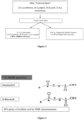
- the chemical composition of technical lignin is shown in Figure 1 of the present disclosure. From the results obtained, it was observed that technical lignin comprises 10-25% cellulose, 0-5% hemicellulose, 25-55% lignin, 20-50%
- Example 2 Cellulose extraction from technical lignin
- the cellulose is extracted from the technical lignin by an optimized organosolv processing by using a combination of formic acid and technical spirit present in a ratio of 1:1, in a high-pressure reactor at 160-180°C for 1 hour.
- the chemical composition of technical spirit obtained in ethanol production unit is depicted in table 1 below.
- Table 1 Chemical composition of technical spirit S.No. Component Content (%) 1 Ethanol 85.0%) 2 Water 5.0% 3 Acetic acid 5.0%. 4 Acetaldehyde 5.0%
- Example 3 Extraction of cellulose from technical lignin by organosolv [optimization of temperature (120-200°C)]
- Example 4 Catalyst screening and concentration optimization
- Levulinic acid was measured for each reaction by HPLC following proper dilution of samples using Bio-Rad Aminex HPX-87H column coupled with refractive index (RI) and Photo Diode Array (PDA) detector at a flow rate of 0.6 ml/min at column temperature of 50°C.
- the mobile phase was 0.005 N H 2 SO 4 .
- Substrate Solvent/ Catalyst Levulinic acid 1 Organosolv cellulose 1% H 2 SO 4 17.6 2 2% H 2 SO 4 20.7 3 3% H 2 SO 4 32.5 4 2% AlCl 3 3.4 5 2% FeCl 3 18.3 6 2% CrCl 3 16.5 7 2% H 2 SO 4 + 2% AlCl 3 40.4 8 2% H 2 SO 4 + 2% CrCl 3 43.3 9 2% H 2 SO 4 + 2% FeCl 3 49.6 10 4% H 2 SO 4 + 4% FeCl 3 65.6 11 4% HCL+ 4% FeCl 3 37.5 12 4% HNO 3 + 4% FeCl 3 3.3 13 4% H 3 PO 4 + 4% FeCl 3 49.3 14 5% H 2 SO 4 + 5% FeCl 3 56.2 15 8% H 2 SO 4 + 8% FeCl 3 56.7 16 10% H 2 SO 4 + 10% FeCl 3 57.3
- Levulinic acid production was studied at different solid loadings (10-30%, w/v) of organosolv cellulose recovered from technical lignin.
- the catalysts H 2 SO 4 & FeCl 3 ) were added at 4% (v/v) concentration in 1 L HPR (200°C).
- the yields were 65.1%, 62.6% and 34.7% at 10%, 20% and 25% total solids loadings, respectively, as shown in table 5 below.
- the levulinic acid containing liquid is mixed with selected solvent such as dichloromethane or diethyl ether or ethyl acetate in 1:3 ratio.
- the levulinic acid is preferentially distributed in the organic solvent layer which is extracted using a separating funnel and the acidic aqueous liquid waste is processed separately.
- the solvent was evaporated from the organic mixture by using rotavapor to recover the high purity (88%) levulinic acid and the solvent is recycled for the next round of levulinic acid extraction and purification, as shown in Figure 3 of the present disclosure.
Landscapes
- Chemical & Material Sciences (AREA)
- Organic Chemistry (AREA)
- Engineering & Computer Science (AREA)
- Oil, Petroleum & Natural Gas (AREA)
- Chemical Kinetics & Catalysis (AREA)
- General Chemical & Material Sciences (AREA)
- Organic Low-Molecular-Weight Compounds And Preparation Thereof (AREA)
Applications Claiming Priority (1)
| Application Number | Priority Date | Filing Date | Title |
|---|---|---|---|
| IN202221023739 | 2022-04-22 |
Publications (1)
| Publication Number | Publication Date |
|---|---|
| EP4265592A1 true EP4265592A1 (fr) | 2023-10-25 |
Family
ID=86007806
Family Applications (1)
| Application Number | Title | Priority Date | Filing Date |
|---|---|---|---|
| EP23167849.1A Pending EP4265592A1 (fr) | 2022-04-22 | 2023-04-13 | Procédé de production d'acide lévulinique |
Country Status (3)
| Country | Link |
|---|---|
| US (1) | US12492159B2 (fr) |
| EP (1) | EP4265592A1 (fr) |
| AU (1) | AU2023202311B2 (fr) |
Citations (10)
| Publication number | Priority date | Publication date | Assignee | Title |
|---|---|---|---|---|
| US3065263A (en) | 1959-11-17 | 1962-11-20 | Rayonier Inc | Process for the manufacture of levulinic acid |
| US3258481A (en) | 1962-03-21 | 1966-06-28 | Crown Zellerbach Corp | Preparation of levulinic acid from hexose-containing material |
| US4897497A (en) | 1988-04-26 | 1990-01-30 | Biofine Incorporated | Lignocellulose degradation to furfural and levulinic acid |
| US5608105A (en) | 1995-06-07 | 1997-03-04 | Biofine Incorporated | Production of levulinic acid from carbohydrate-containing materials |
| CN101648863A (zh) | 2009-07-08 | 2010-02-17 | 安徽丰原发酵技术工程研究有限公司 | 一种利用秸秆类生物质制备乙酰丙酸的方法 |
| WO2014087015A1 (fr) | 2012-12-07 | 2014-06-12 | Dsm Ip Assets B.V. | Procédé pour isoler de l'acide lévulinique et de l'acide formique |
| CN104292193A (zh) * | 2014-09-05 | 2015-01-21 | 中国科学院广州能源研究所 | 一种生物质分级处理后制备糠醛和两步制备乙酰丙酸的方法 |
| CN104402722A (zh) | 2014-09-24 | 2015-03-11 | 中国科学院广州能源研究所 | 一种木质纤维素类生物质醇解制备乙酰丙酸酯及呋喃衍生物的方法 |
| US9174909B2 (en) | 2012-02-02 | 2015-11-03 | Wisconsin Alumni Research Foundation | Two-stage, acid-catalyzed conversion of carbohydrates into levulinic acid |
| CN111393279A (zh) * | 2019-12-02 | 2020-07-10 | 南京林业大学 | 一种纤维素催化降解转化成乙酰丙酸的方法 |
-
2023
- 2023-04-13 EP EP23167849.1A patent/EP4265592A1/fr active Pending
- 2023-04-14 AU AU2023202311A patent/AU2023202311B2/en active Active
- 2023-04-14 US US18/135,054 patent/US12492159B2/en active Active
Patent Citations (10)
| Publication number | Priority date | Publication date | Assignee | Title |
|---|---|---|---|---|
| US3065263A (en) | 1959-11-17 | 1962-11-20 | Rayonier Inc | Process for the manufacture of levulinic acid |
| US3258481A (en) | 1962-03-21 | 1966-06-28 | Crown Zellerbach Corp | Preparation of levulinic acid from hexose-containing material |
| US4897497A (en) | 1988-04-26 | 1990-01-30 | Biofine Incorporated | Lignocellulose degradation to furfural and levulinic acid |
| US5608105A (en) | 1995-06-07 | 1997-03-04 | Biofine Incorporated | Production of levulinic acid from carbohydrate-containing materials |
| CN101648863A (zh) | 2009-07-08 | 2010-02-17 | 安徽丰原发酵技术工程研究有限公司 | 一种利用秸秆类生物质制备乙酰丙酸的方法 |
| US9174909B2 (en) | 2012-02-02 | 2015-11-03 | Wisconsin Alumni Research Foundation | Two-stage, acid-catalyzed conversion of carbohydrates into levulinic acid |
| WO2014087015A1 (fr) | 2012-12-07 | 2014-06-12 | Dsm Ip Assets B.V. | Procédé pour isoler de l'acide lévulinique et de l'acide formique |
| CN104292193A (zh) * | 2014-09-05 | 2015-01-21 | 中国科学院广州能源研究所 | 一种生物质分级处理后制备糠醛和两步制备乙酰丙酸的方法 |
| CN104402722A (zh) | 2014-09-24 | 2015-03-11 | 中国科学院广州能源研究所 | 一种木质纤维素类生物质醇解制备乙酰丙酸酯及呋喃衍生物的方法 |
| CN111393279A (zh) * | 2019-12-02 | 2020-07-10 | 南京林业大学 | 一种纤维素催化降解转化成乙酰丙酸的方法 |
Also Published As
| Publication number | Publication date |
|---|---|
| AU2023202311B2 (en) | 2024-06-06 |
| US20230339838A1 (en) | 2023-10-26 |
| US12492159B2 (en) | 2025-12-09 |
| AU2023202311A1 (en) | 2023-11-09 |
Similar Documents
| Publication | Publication Date | Title |
|---|---|---|
| US8901325B2 (en) | Method for producing furfural from lignocellulosic biomass material | |
| Zhang et al. | Organic solvent pretreatment of lignocellulosic biomass for biofuels and biochemicals: A review | |
| Peleteiro et al. | Furfural production from Eucalyptus wood using an acidic ionic liquid | |
| Chen et al. | One-pot selective conversion of lignocellulosic biomass into furfural and co-products using aqueous choline chloride/methyl isobutyl ketone biphasic solvent system | |
| US9346730B2 (en) | Process for the production of furfural and levulinic acid from lignocellulosic biomass | |
| EP2992041B1 (fr) | Procédés de traitement de matières lignocellulosiques | |
| US8426619B2 (en) | Continuous production of furfural and levulininc acid | |
| US20190153555A1 (en) | Sugar compositions | |
| Catrinck et al. | One-step process to produce furfural from sugarcane bagasse over niobium-based solid acid catalysts in a water medium | |
| Wang et al. | Rapid and simultaneous production of furfural and cellulose-rich residue from sugarcane bagasse using a pressurized phosphoric acid-acetone-water system | |
| US20170190682A1 (en) | Processes and apparatus for producing furfural, levulinic acid, and other sugar-derived products from biomass | |
| Zhang et al. | Pretreatment of Eucalyptus in biphasic system for furfural production and accelerated enzymatic hydrolysis | |
| US20150246865A1 (en) | Process for making levulinic acid | |
| US20170233362A1 (en) | One-step production of furfural from biomass | |
| US20160152779A1 (en) | Processes for producing lignin-based enzymatic hydrolysis enhancers, and compositions produced therefrom | |
| EP4265592A1 (fr) | Procédé de production d'acide lévulinique | |
| AU2024201711B2 (en) | An integrated process for the purification of levulinic acid from technical lignin | |
| US10899725B2 (en) | Process for the recovery of furfural | |
| CN119912413B (zh) | 一种秸秆联产糠醛、5-羟甲基糠醛和木质素的制备方法 | |
| BR102023007408A2 (pt) | Método para produção de ácido levulínico | |
| BR102023007296A2 (pt) | Método para produção de ácido levulínico | |
| Wang et al. | Fractionation of sugarcane bagasse with a p-toluene sulfonic acid pretreatment to co-produce glucose, furfural, and lignin-based cream | |
| Wang et al. | Influence of acetone co-solvent on furfural production and cellulose retention from lignocellulosic biomass | |
| EP3960816B1 (fr) | Procédé de valorisation de flux de déchets de bioéthanol 2g | |
| EP4549649A1 (fr) | Procédé de fractionnement d'organosolv pour fractionner une biomasse lignocellulosique |
Legal Events
| Date | Code | Title | Description |
|---|---|---|---|
| STAA | Information on the status of an ep patent application or granted ep patent |
Free format text: STATUS: THE APPLICATION HAS BEEN PUBLISHED |
|
| PUAI | Public reference made under article 153(3) epc to a published international application that has entered the european phase |
Free format text: ORIGINAL CODE: 0009012 |
|
| AK | Designated contracting states |
Kind code of ref document: A1 Designated state(s): AL AT BE BG CH CY CZ DE DK EE ES FI FR GB GR HR HU IE IS IT LI LT LU LV MC ME MK MT NL NO PL PT RO RS SE SI SK SM TR |
|
| STAA | Information on the status of an ep patent application or granted ep patent |
Free format text: STATUS: REQUEST FOR EXAMINATION WAS MADE |
|
| 17P | Request for examination filed |
Effective date: 20231218 |
|
| RBV | Designated contracting states (corrected) |
Designated state(s): AL AT BE BG CH CY CZ DE DK EE ES FI FR GB GR HR HU IE IS IT LI LT LU LV MC ME MK MT NL NO PL PT RO RS SE SI SK SM TR |