EP4266323A2 - Recrutement de patients pour des études sur des médicaments - Google Patents
Recrutement de patients pour des études sur des médicaments Download PDFInfo
- Publication number
- EP4266323A2 EP4266323A2 EP23190920.1A EP23190920A EP4266323A2 EP 4266323 A2 EP4266323 A2 EP 4266323A2 EP 23190920 A EP23190920 A EP 23190920A EP 4266323 A2 EP4266323 A2 EP 4266323A2
- Authority
- EP
- European Patent Office
- Prior art keywords
- drug
- computer
- participant
- studies
- information
- Prior art date
- Legal status (The legal status is an assumption and is not a legal conclusion. Google has not performed a legal analysis and makes no representation as to the accuracy of the status listed.)
- Withdrawn
Links
Images


Classifications
-
- G—PHYSICS
- G16—INFORMATION AND COMMUNICATION TECHNOLOGY [ICT] SPECIALLY ADAPTED FOR SPECIFIC APPLICATION FIELDS
- G16H—HEALTHCARE INFORMATICS, i.e. INFORMATION AND COMMUNICATION TECHNOLOGY [ICT] SPECIALLY ADAPTED FOR THE HANDLING OR PROCESSING OF MEDICAL OR HEALTHCARE DATA
- G16H10/00—ICT specially adapted for the handling or processing of patient-related medical or healthcare data
- G16H10/20—ICT specially adapted for the handling or processing of patient-related medical or healthcare data for electronic clinical trials or questionnaires
-
- G—PHYSICS
- G16—INFORMATION AND COMMUNICATION TECHNOLOGY [ICT] SPECIALLY ADAPTED FOR SPECIFIC APPLICATION FIELDS
- G16H—HEALTHCARE INFORMATICS, i.e. INFORMATION AND COMMUNICATION TECHNOLOGY [ICT] SPECIALLY ADAPTED FOR THE HANDLING OR PROCESSING OF MEDICAL OR HEALTHCARE DATA
- G16H40/00—ICT specially adapted for the management or administration of healthcare resources or facilities; ICT specially adapted for the management or operation of medical equipment or devices
- G16H40/20—ICT specially adapted for the management or administration of healthcare resources or facilities; ICT specially adapted for the management or operation of medical equipment or devices for the management or administration of healthcare resources or facilities, e.g. managing hospital staff or surgery rooms
-
- G—PHYSICS
- G06—COMPUTING OR CALCULATING; COUNTING
- G06Q—INFORMATION AND COMMUNICATION TECHNOLOGY [ICT] SPECIALLY ADAPTED FOR ADMINISTRATIVE, COMMERCIAL, FINANCIAL, MANAGERIAL OR SUPERVISORY PURPOSES; SYSTEMS OR METHODS SPECIALLY ADAPTED FOR ADMINISTRATIVE, COMMERCIAL, FINANCIAL, MANAGERIAL OR SUPERVISORY PURPOSES, NOT OTHERWISE PROVIDED FOR
- G06Q30/00—Commerce
- G06Q30/01—Customer relationship services
-
- G—PHYSICS
- G06—COMPUTING OR CALCULATING; COUNTING
- G06Q—INFORMATION AND COMMUNICATION TECHNOLOGY [ICT] SPECIALLY ADAPTED FOR ADMINISTRATIVE, COMMERCIAL, FINANCIAL, MANAGERIAL OR SUPERVISORY PURPOSES; SYSTEMS OR METHODS SPECIALLY ADAPTED FOR ADMINISTRATIVE, COMMERCIAL, FINANCIAL, MANAGERIAL OR SUPERVISORY PURPOSES, NOT OTHERWISE PROVIDED FOR
- G06Q30/00—Commerce
- G06Q30/018—Certifying business or products
-
- G—PHYSICS
- G06—COMPUTING OR CALCULATING; COUNTING
- G06Q—INFORMATION AND COMMUNICATION TECHNOLOGY [ICT] SPECIALLY ADAPTED FOR ADMINISTRATIVE, COMMERCIAL, FINANCIAL, MANAGERIAL OR SUPERVISORY PURPOSES; SYSTEMS OR METHODS SPECIALLY ADAPTED FOR ADMINISTRATIVE, COMMERCIAL, FINANCIAL, MANAGERIAL OR SUPERVISORY PURPOSES, NOT OTHERWISE PROVIDED FOR
- G06Q30/00—Commerce
- G06Q30/02—Marketing; Price estimation or determination; Fundraising
- G06Q30/0201—Market modelling; Market analysis; Collecting market data
-
- G—PHYSICS
- G06—COMPUTING OR CALCULATING; COUNTING
- G06Q—INFORMATION AND COMMUNICATION TECHNOLOGY [ICT] SPECIALLY ADAPTED FOR ADMINISTRATIVE, COMMERCIAL, FINANCIAL, MANAGERIAL OR SUPERVISORY PURPOSES; SYSTEMS OR METHODS SPECIALLY ADAPTED FOR ADMINISTRATIVE, COMMERCIAL, FINANCIAL, MANAGERIAL OR SUPERVISORY PURPOSES, NOT OTHERWISE PROVIDED FOR
- G06Q50/00—Information and communication technology [ICT] specially adapted for implementation of business processes of specific business sectors, e.g. utilities or tourism
- G06Q50/10—Services
- G06Q50/22—Social work or social welfare, e.g. community support activities or counselling services
-
- G—PHYSICS
- G16—INFORMATION AND COMMUNICATION TECHNOLOGY [ICT] SPECIALLY ADAPTED FOR SPECIFIC APPLICATION FIELDS
- G16H—HEALTHCARE INFORMATICS, i.e. INFORMATION AND COMMUNICATION TECHNOLOGY [ICT] SPECIALLY ADAPTED FOR THE HANDLING OR PROCESSING OF MEDICAL OR HEALTHCARE DATA
- G16H70/00—ICT specially adapted for the handling or processing of medical references
- G16H70/40—ICT specially adapted for the handling or processing of medical references relating to drugs, e.g. their side effects or intended usage
Definitions
- the present invention is concerned with recruiting patients for one or more drug studies.
- the subject matter of the present invention is a method, a system and a computer program product for recruiting patients for one or more drug studies using an individual identification feature that is applied to the packaging of a drug.
- drug studies refers to studies in which interventional or non-interventional effects of drugs are researched or proven and the benefit-risk ratio or the safety or effectiveness of the drugs are verified. Drug studies are a prerequisite for the approval of new drugs. Whether the drug meets the requirements and expectations is tested in different phases, in phase I on healthy volunteers (test subjects) and in phases II and III on patients.
- phase IV studies further information is obtained on tolerability, therapeutic efficiency, product profiling and the processing of specific questions (e.g. long-term tolerability, rare side effects, etc.). If an approved drug is tested in a new indication, by definition it enters phase II or III again; sometimes such studies are also referred to as phase V studies.
- a sponsor usually the pharmaceutical company pays all participants who take part in the study. This includes at least the participating patients and a doctor (an experimenter) who is responsible for supervising the patients.
- CRO contract research organizations
- CROs When recruiting patients, CROs access internal patient databases or potential patients are approached by doctors. There are also technical systems to support patient recruitment (see e.g US2008177573 , WO2004092912 , WO2015127245 , WO2018224156 ).
- a further subject of the present invention is the use of an individual identifier attached to an individual packaging of a drug for recruiting participants for a drug study, characterized in that a potential participant enters data of the individual identifier into a computer, the data is used to identify one or more drug trials and to display information about the one or more drug trials to the potential participant.
- participants for a drug study can be recruited easily and efficiently.
- participant refers to a person who uses medical services (patient) and voluntarily takes part in a drug study.
- patient refers to a person who uses medical services (patient) and voluntarily takes part in a drug study.
- participant includes female participants; the same applies to the terms “potential participant” and “patient”.
- the term “potential participant” is understood to mean a patient who is being examined and/or being examined as to whether he or she can participate in a drug study. If he is willing to take part in a drug study and meets the requirements for participation in the drug study, he can register for the drug study. By registering he becomes a participant. The registration includes his informed consent .
- drug study is understood to mean a study in which the interventional or non-interventional effects of one or more drugs are researched or demonstrated and/or the benefit-risk ratio and/or the safety and/or effectiveness of the drug(s) are verified becomes.
- the drug study for which patients are to be recruited is a non-interventional study.
- a "non-interventional study” is a study that analyzes findings from the treatment of people with medicines using epidemiological methods; The treatment, including diagnosis and monitoring, does not follow a predetermined test plan, but exclusively according to medical practice; If it is a medicinal product that is subject to authorization or approval, this will also be done in accordance with the information for its use specified in the approval or approval.
- the drug study for which patients are to be recruited is a phase IV study.
- the term “medicinal product” or, equivalently, “medication” means a substance or a composition of substances that is used to cure or prevent human illness Diseases or is suitable for influencing physiological functions or enables a medical diagnosis.
- the drug that is the subject of the study is an already approved drug that has already been placed on the market by a pharmaceutical company and can therefore be purchased by a patient, for example in a pharmacy.
- it is a prescription drug.
- the recruitment of patients according to the invention for one or more drug studies takes place with the help of an individual identification feature that is attached to an individual pack of a drug.
- the unique identifier includes the following data elements: product code, serial number, batch number and expiry date. In addition, this information is also written in plain text on the individual packaging.
- the product code can be used to specify the medicine, i.e. it can be determined which medicine it is.
- the combination of product code and serial number is unique for every pharmaceutical package worldwide (at least for a defined period of time).
- the data elements mentioned are printed on packaging of the medicinal product in the form of a machine-readable two-dimensional code (e.g. data matrix code).
- the packaging and the medicine contained therein form an individual pack that is individualized by the individual identification feature.
- the data elements of the unique identifier are additionally stored in a database (verification database). If an individual pack is given to a patient in a pharmacy, for example, the pharmacist must first read the two-dimensional code with a reader. This triggers a check of the product code and serial number against the verification database; It is checked whether the combination of product code and serial number is present and whether an individual pack with this combination is already noted as "issued” in the verification database. If the combination of product code and serial number is present and the individual pack has not yet been "dispensed", the pharmacist may dispense it to the patient. If the individual pack is handed in after positive feedback, the status of the individual pack is set to "delivered".
- the individual identification feature makes an individual individual pack recognizable. Since an individual pack is usually only used by a single person (particularly when it is a prescription drug), the unique identifier can be used to also identify the owner of the individual pack on which the unique identifier is applied ( identifiable).
- the individual identification feature it can be verified that a person is in possession of the corresponding drug on whose packaging the individual identification feature is applied. This person is usually a patient taking the medicine. This makes this person a potential participant in a drug study related to the drug.
- the individual identification feature on the individual pack is essentially a personal admission ticket that can be used to register the person for one or more drug studies.
- the individual identifier or an individual characteristic derived therefrom can also be used as a unique identifier of the person as a participant in one or more drug studies.
- the unique identifier can be used to use the product code to determine the corresponding drug and, if applicable, the indication for which the drug is approved.
- a potential participant in a drug study is provided, in a first step (preferably by the sponsor of the drug study), with a portal through which the potential participant can find out whether a drug study is planned, for which participants are being sought and/or in which he could participate.
- the portal can be made available to a potential participant, for example, as a web portal on a computer.
- the computer may be the potential participant's own computer.
- the computer can be designed, for example, as a desktop PC, portable PC, laptop, notebook, netbook, tablet PC or handheld (e.g. smartphone).
- the web portal can, for example, be accessed via a specific Internet address using a web browser. It is also conceivable that the portal is accessed in the form of a software application, whereby the software application is installed on the computer and can be executed.
- the portal can be accessed via a terminal (kiosk), which is set up in a hospital or pharmacy, for example.
- a computer carries out are distributed across several computers. It is conceivable, for example, that the potential participant has a computer that is connected via one or more networks (e.g. a mobile phone network, a WLAN and/or the Internet) to a server that the sponsor or the experimenter has. Data that the potential participant enters on their computer can be transferred to the server via the portal.
- networks e.g. a mobile phone network, a WLAN and/or the Internet
- a potential participant who is in possession of a single pack of a medicine with a unique identifier is asked to enter data for the unique identifier into the computer via the portal.
- the data to be entered is at least the product code and the serial number.
- the data can be entered by the user as alphanumeric characters, for example using an input device such as a keyboard, a mouse or a touchscreen. It is also conceivable that a microphone is used in combination with voice recognition software to enter the data.
- the potential participant preferably uses a reading device with which the machine-readable two-dimensional code of the individual identification feature, which includes the product code and the serial number, can be read automatically.
- the reader can be part of the computer used to access the portal, or it can be connected to this computer (via a cable connection or wirelessly, e.g. via Bluetooth or WLAN).
- the reading device is configured to read an individual identification feature. Since the individual identification feature is printed on the packaging of the medicine as a machine-readable two-dimensional code (e.g. as a QR code or data matrix code) in accordance with Delegated Regulation (EU) 2016/161, the reading device can be designed as a camera, for example. A camera is usually a component of smartphones and tablet computers.
- the reading device can also be a separate scanner/camera for two-dimensional codes.
- the two-dimensional code is interpreted by the reader and/or the computer. During interpretation, the two-dimensional code of the individual identifier is decoded into alphanumeric characters.
- the product code and serial number can be extracted from the alphanumeric characters.
- a further step it can be verified that the potential participant is in possession of an original individual pack of the medication. This can be done by checking whether the combination of product code and serial number is present in the verification database. If the combination of product code and serial number is present in the verification database, the individual pack is considered an "original single pack”. If the combination of product code and serial number is not present in the verification database, the individual pack is considered a "counterfeit”. Furthermore, the status of an original individual pack can be determined. If the status is set to "delivered”, the individual pack is considered “legally acquired”. If the status is set to "not surrendered", it is considered “not legally acquired”.
- only the potential participant receives information about one or more drug studies and/or only the potential participant who is in possession of an original individual pack can register and/or register for a drug study.
- only the potential participant receives information about one or more drug studies and/or only the potential participant who is in possession of a legally purchased individual pack can register and/or register for a drug study.
- only the potential participant receives information about one or more drug studies and/or only the potential participant who is in possession of a legally purchased and original individual pack can register and/or register for a drug study.
- the drug can be specified using the product code.
- the product code can also be used to determine the dosage form, strength, pack size and packaging type of the drug.
- the information can be read via the product code from a database (drug database), which can be part of the computer or which can be connected to the computer via one or more networks.
- drug database drug database
- the drug database and the verification database may be a single database or different databases.
- a (further) database can be used to search for drug studies for which people are being searched and/or in which a person taking the specified drug could take part.
- the drug study database may be part of the computer or may be connected to the computer via one or more networks.
- the drug study database and the drug database may be a single database or different databases.
- the identified drug trial(s) in which the potential participant may participate will be disclosed to the potential participant.
- Such an ad can For example, in text form, possibly accompanied by graphic elements or images on a screen.
- the screen can be part of the computer or connected to it. Voice output via a loudspeaker is also conceivable.
- the potential participant can register for one or more drug studies via the portal.
- the potential participant declares his or her consent to participate in the drug study and to process the resulting data. He usually gives his consent through what is known as “informed consent”, also known as “ informed consent”. He can give this informed consent, for example, through a digital or electronic signature via the portal. It is also conceivable that a corresponding document is displayed to him via the portal, which he can print out using a printer, sign and send by post to the sponsor or experimenter, or which he can read into the computer using a document scanner Portal can be transferred to the server.
- the participant upon registration for a drug trial, is associated with a unique identifier derived from a combination of product code and serial number of the unique identifier.
- the unique identifier comprises a numeric or alphanumeric sequence of not more than 20 characters, generated by a deterministic or non-deterministic randomization algorithm (the serial number).
- An individual pack of a drug can be clearly identified using the combination of the product code and the serial number. If this combination of product code and serial number (or an individual identifier derived from the combination) is linked to the (potential) participant who has the individual pack, the (potential) participant can be clearly identified using this combination (or an individual identifier derived from the combination). ) be identified. This means that it is not necessary to collect and store personal data such as the name or address of the (potential) participant - which is advantageous for data protection reasons. Instead, a clear assignment of drug study results to a participant can be made based on the combination of product code and serial number (or an individual identifier derived from the combination).
- the combination of product code and serial number can be the product code/serial number sequence, the serial number/product code sequence, a nesting of product code and serial number or some other combination of product code and serial number. It is also conceivable that the product code and serial number are subjected to a (mathematical) algorithm that generates a unique identifier from the product code and the serial number. For example, it is conceivable to generate a hash value or the like. It is also conceivable that in addition to the product code and the serial number, other data is included in the generation of a unique identifier. It is also conceivable that not the entire product code and/or the entire serial number is/are used to generate a unique identifier; it simply needs to be ensured that the unique identifier distinguishes a participant in a drug study from other participants.
- the respective participant can then be listed under the combination of product code and serial number or under the derived unique identifier.
- the product code and serial number combination and the derived unique identifier are preferably a numeric or alphanumeric code (character string).
- the participant in one or more drug studies is listed under a unique identifier that is generated when installing and/or accessing the portal for the first time and/or when registering for one (or the first) drug study.
- a participant in different drug trials is recorded under the same unique identifier.
- the advantage of using a unique identifier in multiple drug trials is that the results from the multiple trials can be correlated and cross-study analyzes can be performed.
- results of the drug study are recorded via the portal.
- PRO Patient Reported Outcome
- the term “Patient Reported Outcome” (abbreviation: PRO) is used as a generic term for many different concepts for measuring subjectively perceived health conditions. The common basis of these concepts is that the participant himself assesses and reports his condition. For example, it is conceivable that as part of the drug study the participant regularly and/or at defined times fills out a questionnaire to self-assess their health. Preferably, questions or fields to be filled out are displayed to the participant via the portal and he can answer or fill them out using an input device (e.g. a keyboard, a mouse, a touch-sensitive screen (touchscreen), a microphone and/or the like). It is conceivable that a chatbot could be used to make it easier for the patient to enter information.
- an input device e.g. a keyboard, a mouse, a touch-sensitive screen (touchscreen), a microphone and/or the like.
- a chatbot could be used to
- a participant receives instructions regarding the drug study via the portal.
- Such an instruction can, for example, be a request to take a portion of medication, to carry out a measurement (blood sugar measurement, blood pressure measurement, core body temperature measurement, body weight measurement and/or the like), to answer one or more questions, to carry out a self-assessment of the state of health and/or the like.
- Instructions can be displayed in text form (possibly accompanied by graphic elements or images) on the participant's computer.
- Such an instruction may, for example, be accompanied by a vibration alarm or an audible signal to inform the participant that an instruction has arrived.
- the reimbursement for a patient's participation in the drug study will be processed via the portal. Compensation can, for example, take the form of money or reimbursement of travel expenses, food or food vouchers, or other services. It is conceivable that bank details for transfers are transmitted via the portal, voucher codes (coupons) are transmitted, cryptocurrencies are paid out, invoices are transferred, times (for example for filling out questionnaires) are recorded, and the like.
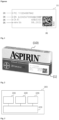
- Figure 1 shows schematically an example of a unique identifier in accordance with the European Commission Delegated Regulation (EU) 2016/161.
- EU European Commission Delegated Regulation
- the individual identification feature (1) includes alphanumeric characters (plain text) such as a product code (2), a serial number (3), a batch number (4) and an expiry date (5).
- the product code (1) specifies the medicinal product.
- PPN Pharmacy Product Number
- the individual identification feature (1) shown further comprises a data matrix code (6) in which the product code (2), the serial number (3), the batch number (4) and the expiry date (5) are encoded in a machine-readable manner.
- Figure 2 shows an individual pack (10) of a drug on which the individual identification feature (1) appears Figure 1 is printed.
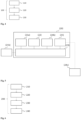
- FIG. 3 shows schematically an embodiment of the system according to the invention.
- the system (20) comprises an input unit (21), an output unit (22), a control unit (23) and a database (24).
- the control unit (23) is configured to cause the input unit (21) to receive data from an individual identification feature that is applied to an individual pack of a drug from a potential participant in a drug study, and to use the received data to initiate one or more drug studies in the Identify database (24) and cause the output unit (22) to display information about the one or more identified drug studies to the potential participant.
- Figure 4 shows schematically in a flow chart an embodiment of the method according to the invention, which is carried out with the in Figure 3 shown system can be executed.
- FIG. 5 shows schematically a further embodiment of the system according to the invention.
- the system (20) comprises an input unit (21a), a reading device (21b) for machine-readable two-dimensional codes, an output unit (22), a control unit (23), a drug study database (24b) and a transmitting and receiving unit (25).
- the reader (21b) is typically used by a potential participant in a drug trial to capture the machine-readable two-dimensional code of an individual identifier on a single pack of a drug.
- the control unit (23) is configured to receive the captured data from the reading device (21b). Depending on the design, the captured data can be a digital image recording of the two-dimensional code or the alphanumeric data decoded from it (product code, serial number and the like). If it is a digital image recording of the two-dimensional code, the control unit (23) is configured to decode the two-dimensional code.
- Control commands and/or further data can be entered via the input unit (21a).
- the control unit (23) is configured to extract the product code and the serial number from the data received from the reading device (21b).
- the control unit (23) is configured to verify that the potential participant is in possession of an original individual pack of the medication. To do this, the control unit (23) verifies that the combination of product code and serial number is present in the verification database (24c).
- the control unit (23) can also be configured to verify that the original individual pack was legally purchased. To do this, the control unit (23) verifies that the status “delivered” is entered for the individual pack in the verification database (24c).
- the control unit (23) is further configured to identify one or more drug studies in the drug study database (24b) based on the data received from the reader (in particular based on the product code), and to cause the output unit (22) to provide information about the one or more identified drug studies to the potential participant.
- Figure 6 shows schematically in a flow chart an embodiment of the method according to the invention, which is carried out with the in Figure 5 shown system can be executed.
- FIG. 7 shows schematically a further embodiment of the system according to the invention.
- the system (20) comprises a first computer (30), a second computer (40), a reader (31b) for two-dimensional, machine-readable codes, a drug database (44a) and a drug study database (44b).
- the first computer (30) comprises an input unit (31a), an output unit (32), a control unit (33) and a transmitting and receiving unit (35).
- the second computer (40) comprises a control unit (43) and a transmitting and receiving unit (45).
- the first computer (30) and the second computer (40) are connected to one another via a network or via several networks (represented by the dashed line between the transmitting and receiving unit (35) of the first computer (30) and the transmitting and receiving unit (45) of the second computer (40)).
- the second computer (40) is connected to the drug database (44a) and the drug study database (44b) via a network or via several networks (represented by the dashed lines between the transmitting and receiving unit (45) of the second computer (40) and the Drug database (44a) or the drug study database (44b)).
- the reader (31b) is connected to the first computer (30) and is usually used by a potential participant in a drug trial to capture the machine-readable two-dimensional code of an individual identifier on an individual pack of a drug and to send the captured data to the first computer (30). ) to transmit.
- the control unit (33) of the first computer (30) is configured to receive the captured data from the reading device (31b).
- the captured data can be a digital image recording of the two-dimensional code or the alphanumeric data decoded from it (product code, serial number and the like). If it is a digital image recording of the two-dimensional code, the control unit (33) of the first computer (30) is configured to decode the two-dimensional code.
- Control commands and/or further data can be entered into the computer (30) via the input unit (31a) of the first computer (30).
- Information can be output to a potential participant via the output unit (32) of the first computer (30).
- Data can be transmitted from the first computer (30) to the second computer (40) via the transmitting and receiving unit (35) of the first computer (30) and data can be received from the second computer (40).
- Data can be received from the first computer (30) via the transmitting and receiving unit (45) of the second computer (40) and data can be transmitted from the second computer (40) to the first computer (30). Furthermore, data can be read out from the drug database (44a) and the drug study database (44b) via the transmitting and receiving unit (45) of the second computer (40).
- the drug database (44a) is a combined database in which a drug database and a verification database are combined in one database. It is conceivable that the control unit (43) of the second computer (40) is configured to verify that the individual pack is a legally purchased, original individual pack.
- Figure 8 shows schematically in a flow chart an embodiment of the method according to the invention, which is carried out with the in Figure 7 shown system can be executed.
- Figure 9 shows an example of an embodiment for the in Figure 7
- the first computer (30) is designed as a smartphone.
- the camera usually found in a smartphone is used as a reading device for the machine-readable two-dimensional code.
- the camera creates an image (6') of the machine-readable two-dimensional code and displays it on a smartphone screen.
- the smartphone is configured to decode the two-dimensional code.
- the product code and serial number are identified.
- This data can be transmitted to the second computer (40) via a cellular network and the Internet (represented by the cloud).
- the second computer (40) is designed as a server.
- the server is connected to the drug database (44a) and the drug study database (44b) via various networks. Using the product code, the server can determine information about the drug and the indication in which it is used in the drug database (44a).
- the server can identify one or more drug studies in the drug study database (44b) that deal with the indication and/or the drug.
- Information about the drug study can be transmitted from the server to the smartphone via the Internet and the mobile network and displayed on the screen to a potential participant.
- the drug database (44a) is a combined database in which a drug database and a verification database are combined in one database. It is conceivable that the control unit (43) of the second computer (40) is configured to verify that the individual pack is a legally purchased, original individual pack.
- Figure 10 shows schematically in a flow diagram a further embodiment of the method according to the invention, which is carried out with one of the in the Figures 3 , 5 , 7 and 9 systems shown can be carried out.
- Figure 11 shows schematically in a flow chart further optional steps of the method according to the invention, which is carried out with one of the in the Figures 3 , 5 , 7 and 9 systems shown can be carried out.
- Steps (510) to (550) can take place, for example, after step (330) or (350) or (420) or (450).
- Figure 12 shows schematically in a flow chart further optional steps of the method according to the invention, which is carried out with one of the in the Figures 3 , 5 , 7 and 9 systems shown can be carried out.
- Steps (610) to (640) can take place, for example, after step (240) or (370) or (450) or (550).
- Figure 13 shows schematically in a flow chart further optional steps of the method according to the invention, which is carried out with one of the in the Figures 3 , 5 , 7 and 9 systems shown can be carried out.
- Steps (710) to (740) can take place, for example, after step (370) or (450) or (550) or (630).
Landscapes
- Business, Economics & Management (AREA)
- Engineering & Computer Science (AREA)
- Health & Medical Sciences (AREA)
- General Business, Economics & Management (AREA)
- Strategic Management (AREA)
- General Health & Medical Sciences (AREA)
- Primary Health Care (AREA)
- Development Economics (AREA)
- Accounting & Taxation (AREA)
- Finance (AREA)
- Epidemiology (AREA)
- Medical Informatics (AREA)
- Public Health (AREA)
- Physics & Mathematics (AREA)
- General Physics & Mathematics (AREA)
- Economics (AREA)
- Theoretical Computer Science (AREA)
- Marketing (AREA)
- Entrepreneurship & Innovation (AREA)
- Tourism & Hospitality (AREA)
- Bioinformatics & Cheminformatics (AREA)
- Pharmacology & Pharmacy (AREA)
- Toxicology (AREA)
- Medicinal Chemistry (AREA)
- Chemical & Material Sciences (AREA)
- Human Resources & Organizations (AREA)
- Child & Adolescent Psychology (AREA)
- Biomedical Technology (AREA)
- Data Mining & Analysis (AREA)
- Game Theory and Decision Science (AREA)
- Medical Treatment And Welfare Office Work (AREA)
Applications Claiming Priority (3)
| Application Number | Priority Date | Filing Date | Title |
|---|---|---|---|
| EP19152557 | 2019-01-18 | ||
| PCT/EP2020/050635 WO2020148199A1 (fr) | 2019-01-18 | 2020-01-13 | Recrutement de patients pour des études sur des médicaments |
| EP20700168.6A EP3912167A1 (fr) | 2019-01-18 | 2020-01-13 | Recrutement de patients pour des études sur des médicaments |
Related Parent Applications (1)
| Application Number | Title | Priority Date | Filing Date |
|---|---|---|---|
| EP20700168.6A Division EP3912167A1 (fr) | 2019-01-18 | 2020-01-13 | Recrutement de patients pour des études sur des médicaments |
Publications (2)
| Publication Number | Publication Date |
|---|---|
| EP4266323A2 true EP4266323A2 (fr) | 2023-10-25 |
| EP4266323A3 EP4266323A3 (fr) | 2024-01-24 |
Family
ID=65199305
Family Applications (2)
| Application Number | Title | Priority Date | Filing Date |
|---|---|---|---|
| EP20700168.6A Ceased EP3912167A1 (fr) | 2019-01-18 | 2020-01-13 | Recrutement de patients pour des études sur des médicaments |
| EP23190920.1A Withdrawn EP4266323A3 (fr) | 2019-01-18 | 2020-01-13 | Recrutement de patients pour des études de médicaments |
Family Applications Before (1)
| Application Number | Title | Priority Date | Filing Date |
|---|---|---|---|
| EP20700168.6A Ceased EP3912167A1 (fr) | 2019-01-18 | 2020-01-13 | Recrutement de patients pour des études sur des médicaments |
Country Status (4)
| Country | Link |
|---|---|
| US (1) | US20220093219A1 (fr) |
| EP (2) | EP3912167A1 (fr) |
| CN (1) | CN113316821A (fr) |
| WO (1) | WO2020148199A1 (fr) |
Citations (4)
| Publication number | Priority date | Publication date | Assignee | Title |
|---|---|---|---|---|
| WO2004092912A2 (fr) | 2003-04-15 | 2004-10-28 | Joseph Sameh | Systeme de messagerie sur internet pour le recrutement de volontaires pour des essais cliniques medicaux |
| US20080177573A1 (en) | 2007-01-18 | 2008-07-24 | Brescia Bonnie A | System and method for gathering, managing, and analyzing patient recruitment |
| WO2015127245A1 (fr) | 2014-02-21 | 2015-08-27 | President And Fellows Of Harvard College | Procédés et systèmes pour identifier ou sélectionner des patients de grande valeur |
| WO2018224156A1 (fr) | 2017-06-08 | 2018-12-13 | Clinerion Ltd. | Procédé de recrutement de patient et système de recrutement de patient |
Family Cites Families (10)
| Publication number | Priority date | Publication date | Assignee | Title |
|---|---|---|---|---|
| US7251609B1 (en) * | 1999-04-29 | 2007-07-31 | The Trustees Of Boston University | Method for conducting clinical trials over the internet |
| US20100211411A1 (en) * | 2000-10-31 | 2010-08-19 | Emergingmed.Com | System and method for matching users with a service provider, program, or program site based on detailed acceptance criteria |
| GB0115414D0 (en) * | 2001-06-23 | 2001-08-15 | Glaxo Group Ltd | Clinical trials process |
| US20090134211A1 (en) * | 2005-06-08 | 2009-05-28 | Nycomed Gmbh | Method |
| DE102006060065A1 (de) * | 2006-12-19 | 2008-06-26 | Giesecke & Devrient Gmbh | Authentisieren eines Produkts |
| US20120278096A1 (en) * | 2011-04-28 | 2012-11-01 | David Anthony Holness | Methods and systems for prescription drug authentication in supply chain and market distribution |
| US8606595B2 (en) * | 2011-06-17 | 2013-12-10 | Sanjay Udani | Methods and systems for assuring compliance |
| EP3031029A1 (fr) * | 2013-08-08 | 2016-06-15 | Clinical Trials Mobile Application | Système et procédé de détection, d'enregistrement, de suivi de patient et de gestion de documents associés pendant des essais cliniques |
| US10510437B2 (en) * | 2015-03-03 | 2019-12-17 | Verified Clinical Trials | Method for creating and using registry of clinical trial participants |
| US11094407B2 (en) * | 2019-06-13 | 2021-08-17 | International Business Machines Corporation | Electronics miniaturization platform for medication verification and tracking |
-
2020
- 2020-01-13 US US17/423,056 patent/US20220093219A1/en not_active Abandoned
- 2020-01-13 EP EP20700168.6A patent/EP3912167A1/fr not_active Ceased
- 2020-01-13 EP EP23190920.1A patent/EP4266323A3/fr not_active Withdrawn
- 2020-01-13 CN CN202080009280.6A patent/CN113316821A/zh active Pending
- 2020-01-13 WO PCT/EP2020/050635 patent/WO2020148199A1/fr not_active Ceased
Patent Citations (4)
| Publication number | Priority date | Publication date | Assignee | Title |
|---|---|---|---|---|
| WO2004092912A2 (fr) | 2003-04-15 | 2004-10-28 | Joseph Sameh | Systeme de messagerie sur internet pour le recrutement de volontaires pour des essais cliniques medicaux |
| US20080177573A1 (en) | 2007-01-18 | 2008-07-24 | Brescia Bonnie A | System and method for gathering, managing, and analyzing patient recruitment |
| WO2015127245A1 (fr) | 2014-02-21 | 2015-08-27 | President And Fellows Of Harvard College | Procédés et systèmes pour identifier ou sélectionner des patients de grande valeur |
| WO2018224156A1 (fr) | 2017-06-08 | 2018-12-13 | Clinerion Ltd. | Procédé de recrutement de patient et système de recrutement de patient |
Also Published As
| Publication number | Publication date |
|---|---|
| CN113316821A (zh) | 2021-08-27 |
| EP3912167A1 (fr) | 2021-11-24 |
| US20220093219A1 (en) | 2022-03-24 |
| EP4266323A3 (fr) | 2024-01-24 |
| WO2020148199A1 (fr) | 2020-07-23 |
Similar Documents
| Publication | Publication Date | Title |
|---|---|---|
| Stevens et al. | Enhancing Quality of Provider Practices for Older Adults in the Emergency Department (EQU i PPED) | |
| DE102008002920A1 (de) | Systeme und Verfahren für klinische Analyseintegrationsdienste | |
| Leikola et al. | Comprehensive medication reviews for elderly patients: findings and recommendations to physicians | |
| Danovich et al. | Effect of New York state electronic prescribing mandate on opioid prescribing patterns | |
| EP1349099A2 (fr) | Procédé de collecte automatique des actions-patients | |
| Zhen et al. | The impact of prescriptions audit and feedback for antibiotic use in rural clinics: interrupted time series with segmented regression analysis | |
| Greiner et al. | Separation of prescription and treatment in health care markets: A laboratory experiment | |
| US20200143925A1 (en) | Forensic system and method for detecting fraud, abuse, and diversion in the prescriptive use of controlled substances | |
| Germack | States should remove barriers to advanced practice registered nurse prescriptive authority to increase access to treatment for opioid use disorder | |
| DE19536204A1 (de) | System zur personenbezogenen Übertragung und Speicherung medizinischklinischer Daten und eine IC-Karte für ein derartiges System | |
| DE112005000317T5 (de) | Verfahren zum Rekrutieren von Patienten für eine klinische Studie | |
| Moreland et al. | Assessing the needs of front-line providers in addressing the opioid crisis in South Carolina | |
| Savino et al. | Medicaid/medicare fraud | |
| DE202021102756U1 (de) | Elektronisches Veranstaltungsticket mit einem Gesundheitsindikator und Ticketshop zum Erzeugen eines elektronischen Veranstaltungstickets | |
| Nourani et al. | A clinical data management system for diabetes clinical trials | |
| CH709951B1 (de) | Computerimplementiertes Patientendatensystem und Verfahren, welches davon Gebrauch macht. | |
| WO2020148199A1 (fr) | Recrutement de patients pour des études sur des médicaments | |
| EP1102193A1 (fr) | Système médical pour l'acheminement/transfer de données du patient | |
| Doran et al. | A cost‐effectiveness analysis of buprenorphine‐assisted heroin withdrawal | |
| CH712285B1 (de) | Daten-Netzwerk zur Umwandlung personalisierter persönlicher Daten in de-personalisierte persönliche Daten und Übermittlung der de-personalisierten Daten an einen Server. | |
| Hawk et al. | Capabilities Among Emergency Departments Participating in a Nationwide Quality Improvement Learning Collaborative to Care for Patients With Opioid Use Disorder: 2020 to 2024 | |
| JP2003050870A (ja) | 診療行為分析方法およびそのプログラム | |
| Silva III | When to embrace meaningful use? | |
| DE202021002794U1 (de) | Elektronische Heilmittelverordnung Abk., E-Heilmittelverordnung odere-Verordnung | |
| DE102011002018B4 (de) | Verfahren und Vorrichtung zur elektronischen Verwaltung von einem Leistungsnehmer von einer Verordnungsstelle individuell zugeordneter Behandlungseinheiten bei Inanspruchnahme bei einem Leistungsanbieter |
Legal Events
| Date | Code | Title | Description |
|---|---|---|---|
| PUAI | Public reference made under article 153(3) epc to a published international application that has entered the european phase |
Free format text: ORIGINAL CODE: 0009012 |
|
| STAA | Information on the status of an ep patent application or granted ep patent |
Free format text: STATUS: THE APPLICATION HAS BEEN PUBLISHED |
|
| AC | Divisional application: reference to earlier application |
Ref document number: 3912167 Country of ref document: EP Kind code of ref document: P |
|
| AK | Designated contracting states |
Kind code of ref document: A2 Designated state(s): AL AT BE BG CH CY CZ DE DK EE ES FI FR GB GR HR HU IE IS IT LI LT LU LV MC MK MT NL NO PL PT RO RS SE SI SK SM TR |
|
| PUAL | Search report despatched |
Free format text: ORIGINAL CODE: 0009013 |
|
| AK | Designated contracting states |
Kind code of ref document: A3 Designated state(s): AL AT BE BG CH CY CZ DE DK EE ES FI FR GB GR HR HU IE IS IT LI LT LU LV MC MK MT NL NO PL PT RO RS SE SI SK SM TR |
|
| RIC1 | Information provided on ipc code assigned before grant |
Ipc: G16H 10/20 20180101ALI20231220BHEP Ipc: G06Q 50/22 20180101ALI20231220BHEP Ipc: G16H 40/20 20180101AFI20231220BHEP |
|
| STAA | Information on the status of an ep patent application or granted ep patent |
Free format text: STATUS: REQUEST FOR EXAMINATION WAS MADE |
|
| 17P | Request for examination filed |
Effective date: 20240521 |
|
| RBV | Designated contracting states (corrected) |
Designated state(s): AL AT BE BG CH CY CZ DE DK EE ES FI FR GB GR HR HU IE IS IT LI LT LU LV MC MK MT NL NO PL PT RO RS SE SI SK SM TR |
|
| STAA | Information on the status of an ep patent application or granted ep patent |
Free format text: STATUS: EXAMINATION IS IN PROGRESS |
|
| 17Q | First examination report despatched |
Effective date: 20250730 |
|
| STAA | Information on the status of an ep patent application or granted ep patent |
Free format text: STATUS: THE APPLICATION HAS BEEN WITHDRAWN |
|
| 18W | Application withdrawn |
Effective date: 20251203 |